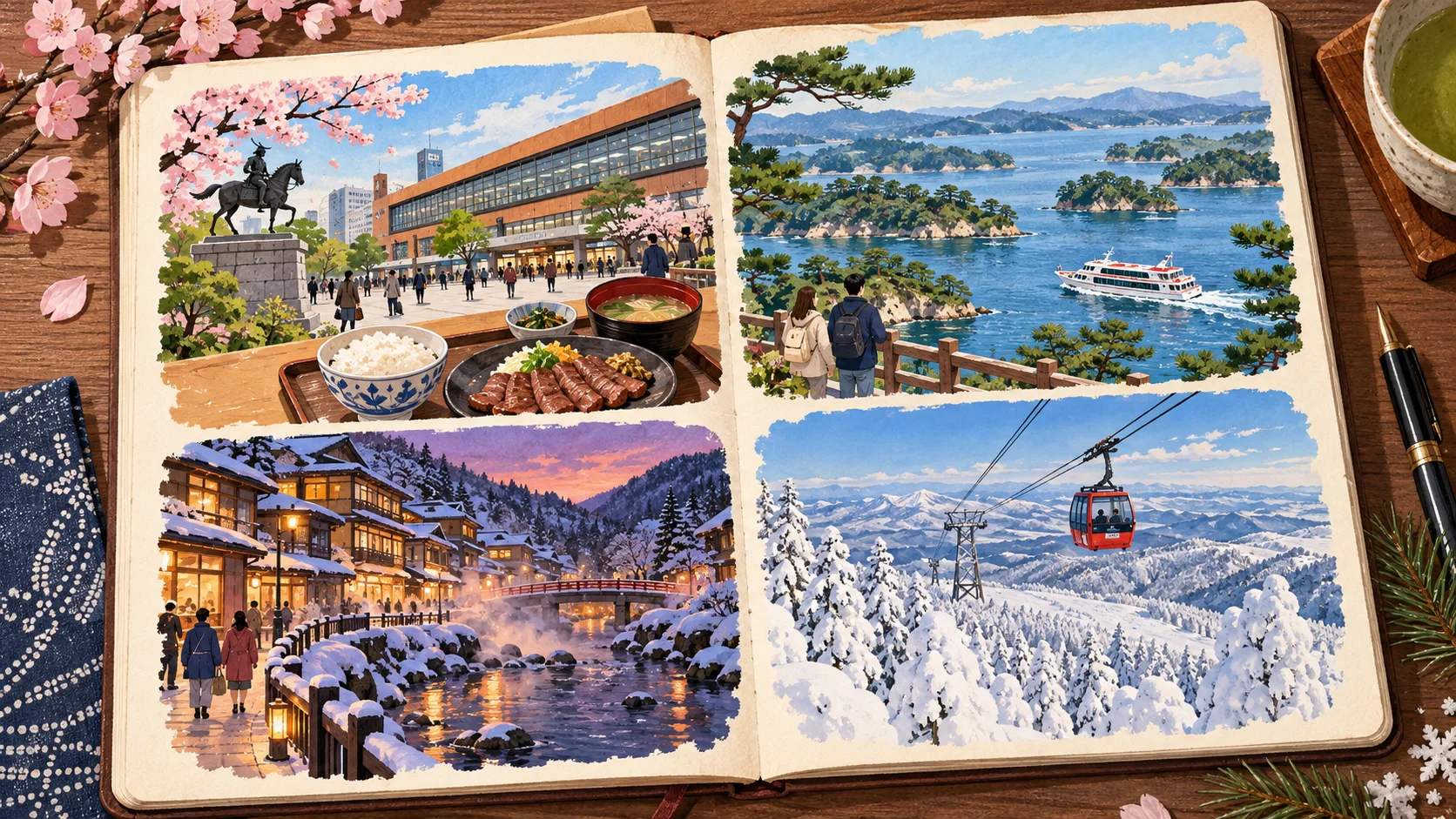
Use Sendai for arrival, departure and city meals, then choose a main goal: Matsushima's coast, a Ginzan overnight stay, Zao's snow or autumn walks at Yamadera and Naruko. The easiest mistake is combining different seasons, ticket types and hotel shuttles into one day. This guide organizes the choices around workable bases and returns, so you can choose the evening you want before booking rooms, tickets and an alternative day.
Choose your starting point: city and coast, a night in Ginzan, Zao snow or autumn walks
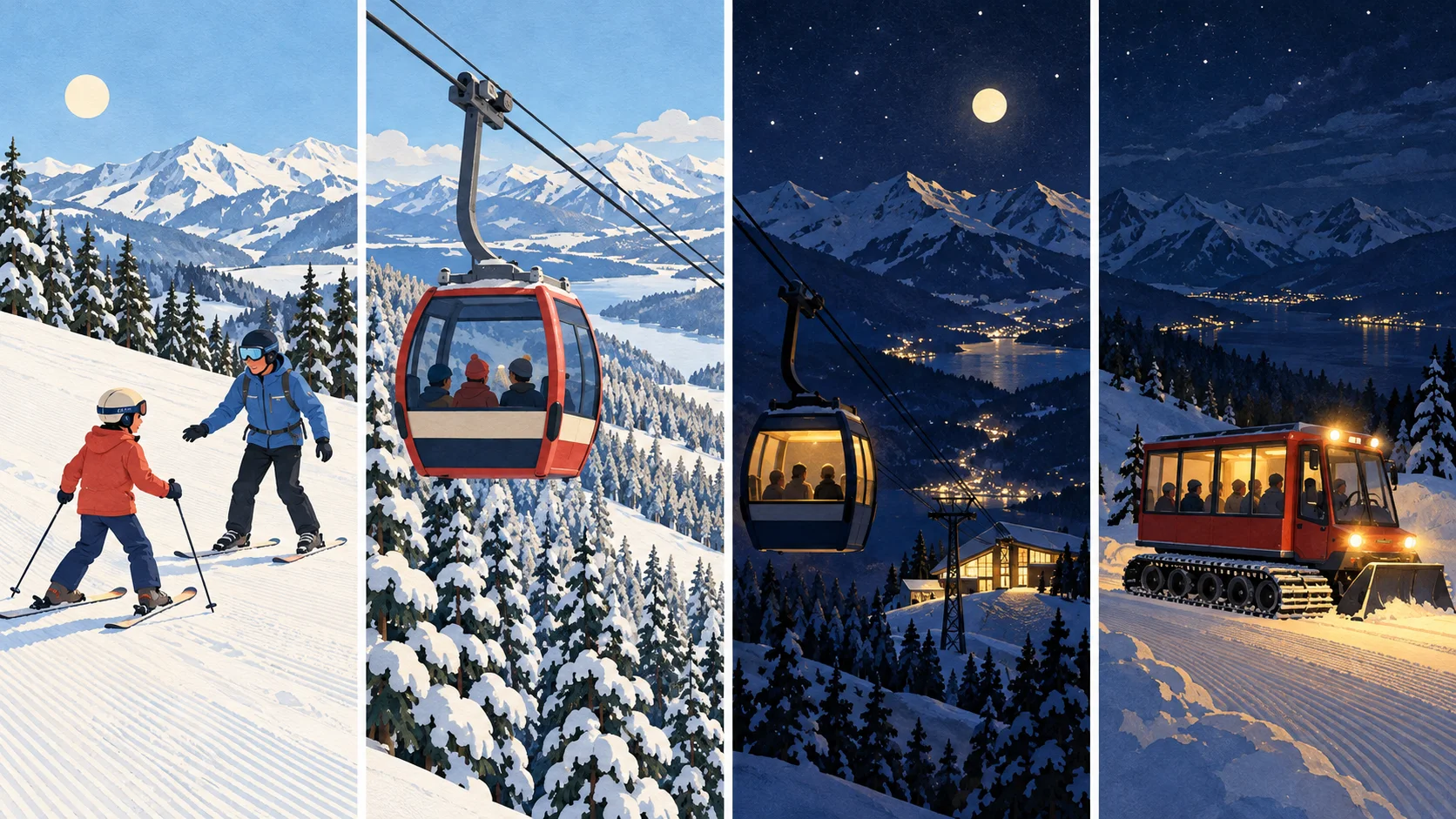
With only three or four days, keep Sendai and Matsushima, then choose one main destination toward Yamagata. For city meals and the bay, jump to eating in Sendai and a day on the Matsushima coast. If an onsen stay is already your priority, compare Sakan in Akiu with staying overnight or visiting Ginzan. For snow, start with Zao's four different winter experiences: skiing, a gondola trip and a ride in a tracked snow vehicle require different transport, meals and return plans.
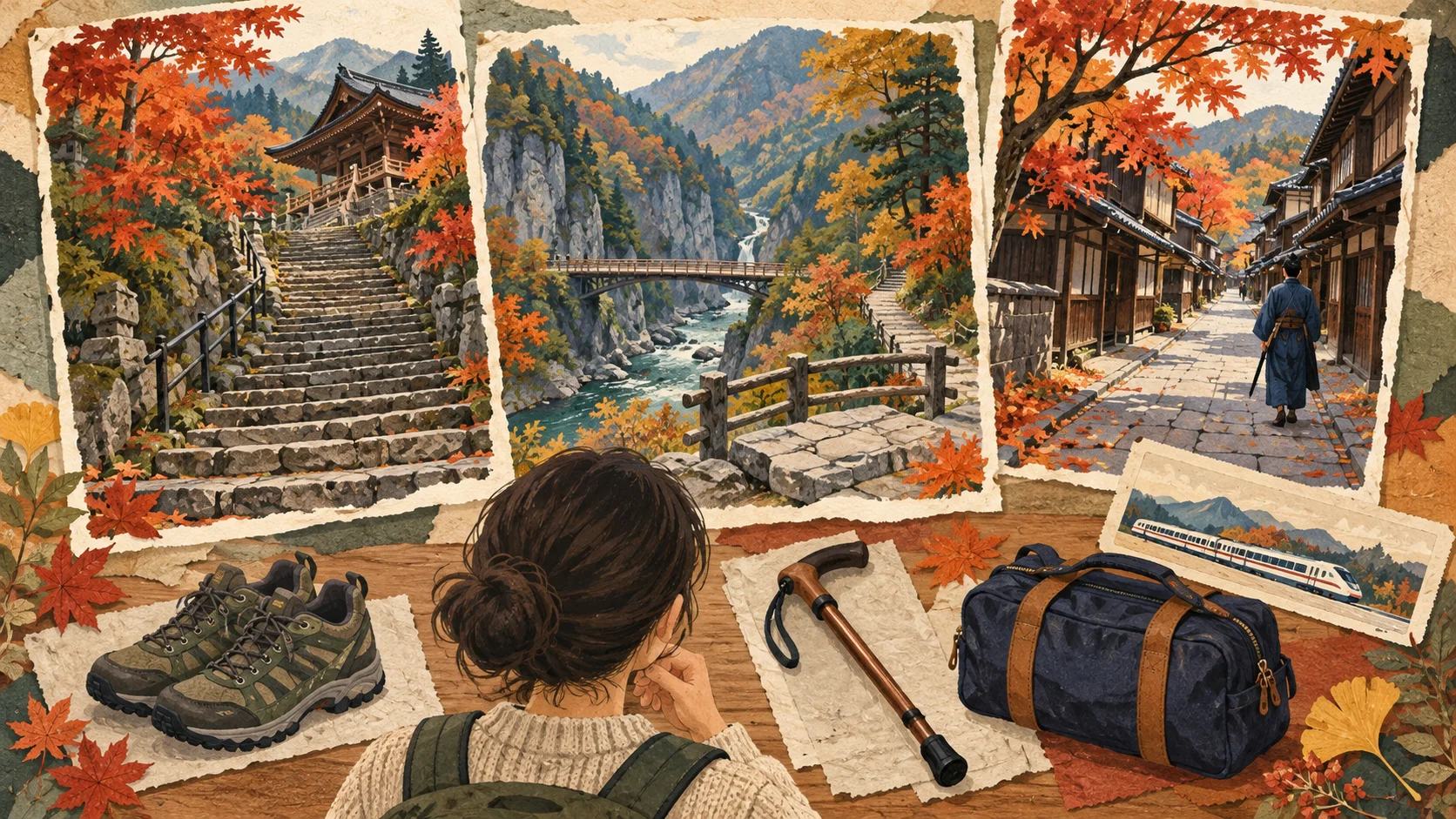
You can also read by overnight base. For flights and frequent changes of direction, start with Sendai Station's east and west exits. Yamagata Station can work as a transfer base for Yamadera and Zao; Ginzan requires a separate check of Oishida Station and your inn's shuttle. In autumn, choose one outing from Yamadera's stone steps, getting to Naruko Gorge and whether Kakunodate justifies a longer journey. A list covering all of Tohoku is not a reason to cross prefectural boundaries every day.
This guide uses official public information read on October 21, 2026; all amounts are in yen. Sample routes, rest breaks and budget allowances are editorial planning choices. Check room rates and availability for your dates. Autumn 2026 announcements are separated from winter 2026–27 products: Ginzan's next winter page still carries a draft label, so provisional rules must not be treated as tickets already on sale. If this is your first longer independent trip, use a method for fixing arrival cities and main overnight stops before choosing the modules below.
Sendai or Yamagata as a base: change hotels once or return to the same station?
Sendai is in Miyagi Prefecture. Yamagata city, Yamadera and Zao Onsen are in Yamagata Prefecture, while Ginzan Onsen is in Obanazawa. They fit within one Tohoku trip, but direct services do not link every doorstep. Several nights in Sendai make it easy to leave your bags and separate the city from Matsushima. For two consecutive days on Zao, or an early start at Yamadera, a hotel by Yamagata Station or in Zao can reduce repeated intercity travel. Compare the entire hotel-to-destination journey, including waits, uphill walking and collecting luggage.
The intercity highway bus is one option. Miyagi Kotsu's current Sendai–Yamagata service lists an adult one-way fare of ¥1,100; sales of multiple-ride tickets ended on June 30, 2026. Cash and specified transit IC cards are accepted on board, while traffic can still affect arrival. Two separate single fares total ¥2,200. Repeating that round trip on three days costs ¥6,600 before mountain or onsen connections. Paying more for one night at a different base may therefore make financial sense.
For a four-night trip, a starting allocation is two nights in Sendai, one in Ginzan or Zao, then one in Sendai or Yamagata, adjusted to your flights. If you have only one onsen night, decide which evening matters most: meals and baths in Akiu, the riverside streets in Ginzan, or finishing a snowy Zao day without rushing downhill. When dinner has a fixed arrival time, secure a feasible shuttle before booking afternoon activities. An unreserved taxi should not be treated as a dependable nightly connection.
From Sendai Airport to your hotel: identify the station exit before the bus stop
The Sendai Airport Access Line connects the airport with Sendai Station. Separate the rail journey from checking in: verify the destination and luggage space of your actual train, then follow your hotel's entrance route after arrival rather than immediately heading down to street level. Metropolitan Sendai East's official arrival guidance gives about 25 minutes as a reference airport rail journey. That is not a door-to-door promise covering immigration, waiting or walking. For a late landing, keep the actual timetable and your hotel's late-arrival contact together.
The east–west distinction directly affects shuttles. From the Shinkansen area, the East hotel can be reached through Mori no Dining in S-PAL East on the third floor; conventional-line arrivals have another entrance on the second floor. Sakan's free shuttle leaves from the east side, whereas the specified scheduled bus toward Akiu uses the west side. Loople boards at west-side stop 16. Save screenshots that show the side, level and stop as well as departure time: finding the right place inside the station can use up your transfer margin.
With large bags, a stroller or limited walking ability, find an elevator route instead of judging proximity by a straight line on a map. Even a station-side hotel can have a separate building entrance and a reception on another floor. The hotels and Akiu pickup below each have their own arrangements; ‘meet at Sendai Station’ does not mean one universal point. For Shinkansen connections, use ticket and seat choices based on the journeys you will actually take, leaving time separately for the large station and the mountain shuttle.
An east-side hotel example: does the East Premier Twin work for four people?
Hotel Metropolitan Sendai East's Premier Twin measures 40 square meters and has two permanent beds, each 120 × 206 cm. Three- and four-person bookings use additional beds; the official maximum is four guests. It is a useful candidate for a group sharing one room and wanting a separate bathroom and toilet, but ‘Twin’ does not mean four identical permanent beds. The Premier Twin's published bed and bathroom details also note that layouts vary. Confirm the exact room category, placement of the third and fourth beds and remaining walking space.
A bathtub, rain shower and separate bathroom and toilet can make taking turns with children easier. This is still a city hotel's room bathroom, not an onsen bath. If someone gets up frequently at night, whether an extra bed blocks the bathroom route matters more than how spacious the promotional photograph looks. For older guests, wheelchair users or anyone with a walking aid, ask about door width, bathroom thresholds and suitable room categories. A separate bathroom alone is not an accessibility guarantee.
Standard check-in is 15:00 and check-out 11:00, subject to the booked plan. Before check-in, you can visit the fourth-floor desk to confirm arrangements and leave bags; after check-out, luggage storage is handled by the Bell Captain Desk. That can simplify a light-bag city or Matsushima day. If a longer stay requires laundry or drying snow clothes, ask about equipment, opening hours and permitted items before booking. A large station hotel should not automatically be assumed to have self-service washing machines.
A west-side hotel example: distinguish a genuine twin, extra beds and a Small Twin
Hotel Metropolitan Sendai's main building is on the west side, described officially as a one-minute walk from Sendai Station. Its Standard Twin is 27.9 square meters, with two 120 × 195 cm beds and a maximum of three guests; the third uses an extra bed. The Large Twin corner room is 33.6 square meters for up to four, again with extra beds for the third and fourth guests. The main building's room capacities and bed arrangements answer a search for a Sendai triple room more usefully than the name alone: capacity for three does not necessarily mean three permanently installed beds.
The same page's Small Twin is just 23.8 square meters. For two guests it uses one 140 × 195 cm bed plus a second supplementary bed. If both adults want a similar sleeping surface, compare the Standard Twin first. The Universal Twin is 27.5 square meters with two 110 × 195 cm beds, a maximum of two and an accessible wet area listed. That category is the appropriate starting point for questions about wheelchair turning space, transfers and equipment. A larger four-person room is not automatically easier to use with a wheelchair.
The west side is convenient for city restaurants and Loople, while the east-side direct connection can suit rail-focused stays. Both buildings are near the station; decide using the actual room and meeting point. For one night before an early departure, establish acceptable beds before comparing prices. If relatives arrive at different times, confirm who can check in first, when extra beds will be ready and whether everyone is listed on the reservation. If a child needs a separate bed rather than sharing existing bedding, confirm before booking whether one can be provided and what it will cost; do not wait until arrival to request it.
Sendai accommodation tax, children sharing beds and cancellation terms
East's FAQ allows one preschool child per bed to share without an accommodation charge. Children of Japanese primary-school age or older, and preschool children needing their own bed, are charged the adult amount. These are East's conditions, not rules automatically applicable to the main building or an Akiu inn. Also check whether breakfast is included in your chosen plan. A child with no room charge does not automatically receive meals, an extra bed and every service free. List each person's age and needs for a bed, meals and towels before paying.
Since January 13, 2026, Sendai levies ¥300 per person per night where the accommodation-only price, excluding consumption tax, is at least ¥6,000. The ¥300 consists of ¥200 for the city and ¥100 for the prefecture. Sendai's current tax and exemption rules do not test whether the entire room costs more than ¥6,000, and there is no blanket exemption for all children. Two qualifying people staying two nights pay 300 × 2 × 2 = ¥1,200. Let the property calculate the accommodation component of a meal-inclusive plan under the rules rather than dividing a breakfast-inclusive total yourself.
East's general FAQ lists cancellation charges of 50% two days before arrival, 80% the day before, and 100% on the day or for a no-show without notice. Special conditions, prepaid plans or different booking channels may take precedence; these percentages are not universal across Sendai. Canceling your city hotel because mountain weather is poor does not automatically entitle you to free changes or a refund. Record contacts and cancellation deadlines, then put prepaid snow activities in the same calendar to see when costs become committed.
For an onsen stay near Sendai: Sakan's beds, tatami rooms and capacities
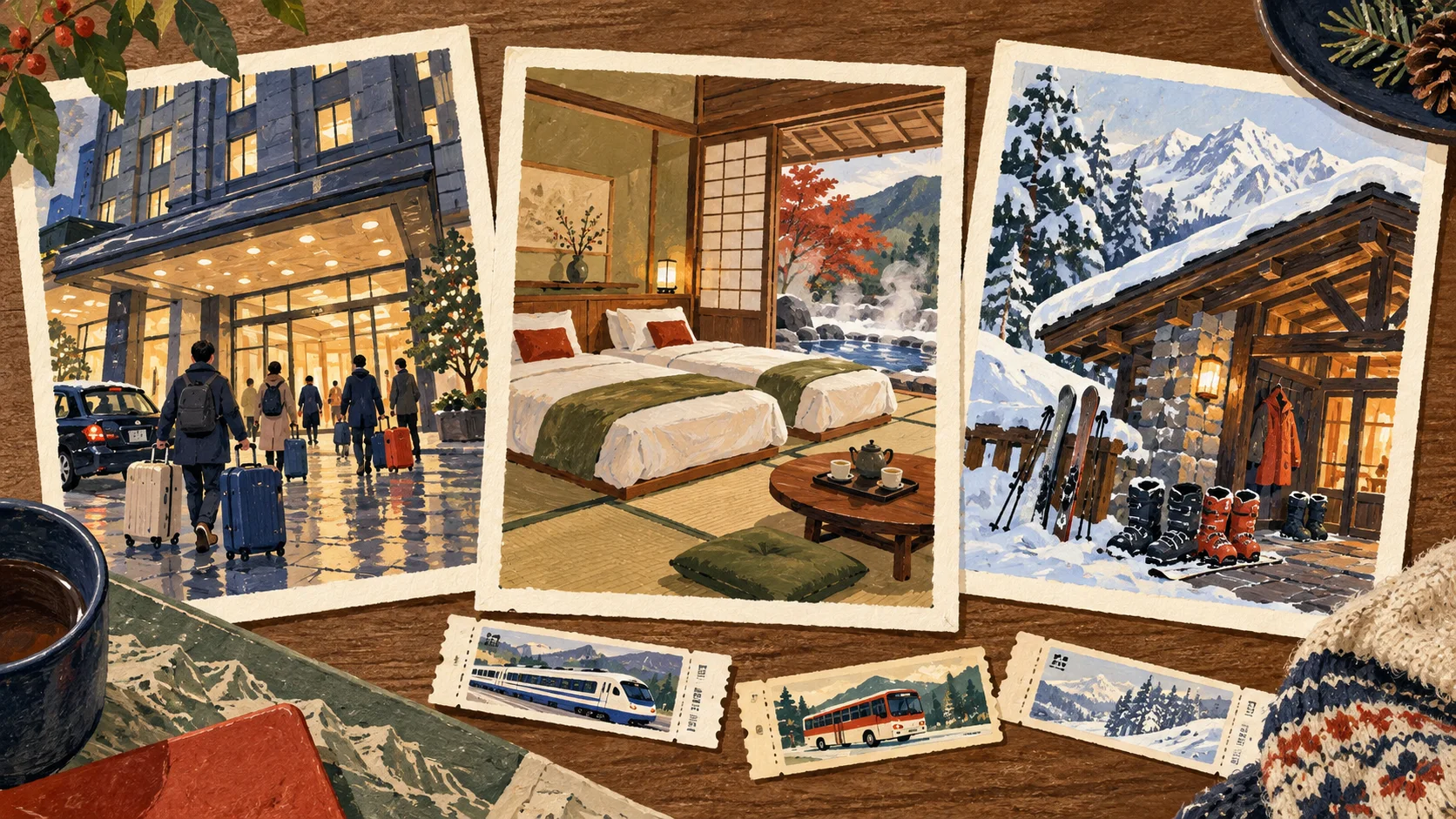
If a hot-spring stay is your main accommodation requirement, Akiu is a closer match than a station-area city hotel, but it needs its own return transport. At Densho Sennennoyado Sakan, Kagetsukan's Japanese-style room with beds combines an eight-tatami area with twin beds, each 120 cm wide, and an official capacity of six. This specific Japanese-style room with beds is a useful starting point for a multigenerational booking. Six-person capacity is not six permanent beds: ask the inn about bedding, placement and charges for the third guest onward. Reserve the beds for those who need them if getting up from the floor is difficult.
Kagetsukan also has regular Japanese-style rooms, whose sizes and capacities vary by category. Spacious tatami in a photograph does not make every room suitable for the same number of people. For families, children's ages, meal and bedding needs and booking channel affect the price. Sakan's terms distinguish child calculations for travel-agency reservations and direct bookings. Ask the property to price the complete party rather than extrapolating from an advertised rate for two adults.
A bathroom in the room's equipment list does not prove that every bathtub uses hot-spring water. For private bathing, ask about the room bath's water source, any reservable separate bath and the actual walking route. Guests needing bathing assistance should also check changing and transfer arrangements. Ask separately about self-service laundry, cleaning baby bottles or diaper disposal if needed. A large onsen hotel should not be assumed to provide every family facility.
Akiu transport and dinner: a free shuttle still requires a reservation
Sakan's current free-shuttle instructions and meeting point require guests to reserve online themselves; telephone shuttle reservations are not accepted. Departures from Sendai Station's east side are 11:00 and 15:30, with expected arrivals at 11:45 and 16:15. Returns leave the inn at 10:00 and 14:30, with expected arrivals in Sendai at 10:45 and 15:15. Seats are limited, departures fixed, and intermediate boarding or alighting is not allowed. These arrangements serve individual travelers; groups of more than ten should inquire about a paid bus rather than assume access to the same free vehicle.
If you cannot use that shuttle, the hotel also lists a scheduled Akiu-bound bus from west-side stop 8. The journey takes about 40–60 minutes to Yumoto, followed by roughly one minute on foot. Its stop, fares and departures differ from the east-side hotel shuttle. Before combining Matsushima with an Akiu overnight stay, work backward from the 15:30 pickup. If you want to remain by the sea into the evening, choose compatible transport and a suitable meal plan rather than expect the hotel to delay dinner and its shuttle.
Sakan's terms generally allow room use from 15:00 to 11:00 the next day and list dinner service from 18:00 to 21:00. That service window is not a promise that a full dinner can begin at 21:00. For parties of fourteen or fewer, the arrival-contact clause and cancellation table list 30% three and two days before, 50% the day before, and 100% on the day or for a no-show, subject to applicable special terms. The terms allow the inn to treat a booking as terminated if a guest has neither contacted it nor arrived by 20:00; if an expected arrival time was specified in advance, the cutoff is two hours after that time. This is not a promise to hold dinner until 20:00. Contact the inn about delays and obtain a specific meal response.
Eating in Sendai: save gyutan for a city dinner rather than a tight connection
For Sendai's grilled beef tongue, set aside a meal at Tanya Zenjiro's Ekimae Honten and use other meals for smaller snacks. The current shared menu prices the three-piece, six-slice gyutan set at ¥2,475 including tax and the four-piece, eight-slice set at ¥3,080, with possible branch differences. Do not pair a four-piece photograph with the three-piece price. The published gyutan portions and prices let you choose a suitable amount before adding dishes. Two people each ordering the three-piece set start at ¥4,950, with drinks and extras separate.
Ekimae Honten is about two minutes on foot from Sendai Station's west exit, on the third floor of the AK Building. The main restaurant's current hours and reservation limits list 11:00–23:00, last orders at 22:30 and closure on New Year's Day. Reservable seating times are limited to weekdays 11:00–11:30 and 15:00–19:00, with table reservations made by telephone. Those are seating windows, not telephone answering hours. Weekends and public holidays are excluded, with further exceptions during major holiday periods; availability on every weekday is not guaranteed. Check your arrival-day eating window and use another branch or meal if queues would make you miss the last shuttle.
A gyutan set suits people willing to eat beef and its accompanying dishes. Rice and soup do not make it compatible with every dietary requirement. For allergies, consult the ingredient information and identify specific restrictions; for children, ask about portions, cutting and available dishes. Do not assume the stock is beef-free, gluten-free or suitable for vegans. Here, a recommendation for Sendai food is based on location, portions and reservation constraints, rather than treating the highest online rating or longest queue as proof of quality.
Sasa-kamaboko and zunda: two smaller food stops on a city walk
If a large set meal at every stop is too much, consider sasa-kamaboko and hyotan-age while walking in central Sendai. Abe Kamaboko's main shop serves hyotan-age, a battered, deep-fried fish-paste product rather than a vegetarian hot dog. The Sendai tourism listing for the main shop and snack helps identify the location. It can work as a light lunch snack or shared bite, but fish, batter and preparation-area allergens still matter. The tourism page lists ¥400 per skewer, 10:00–18:30 and closure on New Year's Day. Check the day's shop price and whether it has sold out instead of relying on an old promotion.
Zunda is mashed edamame used with mochi or in a shake. Zunda Saryo's product and branch descriptions introduce zunda mochi and a vanilla-flavored shake mixed with the shop's edamame paste. Edamame contains soy; if you need to avoid dairy products, ask the branch to confirm the ingredients and allergen labeling for the drink served that day. At the third-floor Zunda Komichi branch in Sendai Station, retail and café hours differ; the website lists café service from 10:00 with last orders at 18:00. Check the specific branch even if you only want a drink. Not every station counter keeps the same hours.
One workable pattern is gyutan after returning to Sendai, with a small snack around Aoba-dori or inside the station during the day. Matsushima or Yamadera lunch then need not be constrained by a long ‘must-eat’ list. If soy, milk, eggs, wheat or fish are a concern, show staff the Japanese names and ask about current ingredients and shared utensils. On an inn dinner day, avoid an oversized late-afternoon meal followed by a missed serving window. Let food choices support the journey instead of packing every specialty into one day.
The Loople Sendai day pass: two rides do not break even; three do
Loople Sendai runs in one direction, with no counterclockwise return loop. It boards at west-side stop 16 at Sendai Station; the first station departure is 9:00 and the last 16:00, with a full circuit taking about 70 minutes. The current page lists departures every 20 minutes on weekdays and 15 minutes on weekends and holidays, with daily 15-minute service in August. Loople's stops, frequency and current tickets also warn that crowding may mean waiting for the next bus. For Zuihoden and Sendai Castle, follow the loop's order rather than mistake a full circuit back to an earlier stop for a short transfer.
Adult single rides cost ¥300 and the Loople-only day pass ¥700; child fares are ¥150 and ¥350. A combined day pass covering Loople and both the Namboku and Tozai subway lines costs ¥1,000 for adults and ¥500 for children. Two adult rides cost ¥600, ¥100 less than the Loople-only pass. Three cost ¥900, making the pass ¥200 cheaper. To assess the subway combination, add only the subway journeys you will actually make. A more comprehensive name is not a reason to buy the most expensive ticket.
The Loople-only day pass cannot be used on ordinary scheduled buses and has nothing to do with fares to Akiu, Yamagata or Naruko Gorge. Single rides accept cash, specified IC cards and other listed methods. Check the particular child and young-child rules rather than apply one twelve-year cutoff to every ticket. If you only walk around the station and shopping streets, you may not need a loop-bus ticket at all. List the relevant legs, then use a budget based on your actual number of rides, instead of buying a pass first and adding sights to justify it.
| Rides actually taken | Single fares total | Comparison with Loople-only day pass |
|---|---|---|
| One | ¥300 | Single fare saves ¥400 |
| Two | ¥600 | Single fares save ¥100 |
| Three | ¥900 | Day pass saves ¥200 |
| Four | ¥1,200 | Day pass saves ¥500 |
A half day in Sendai: allow for slopes and steps at Zuihoden and the castle site
For a city half day, take Loople to Zuihoden, continue to the Sendai Castle site, then return downtown for a meal. There is no need to get off at every stop. Sendai's official sample route toward Aobayama suggests roughly three to four hours for this area. That is a selection guide, not a guarantee covering your own bus waits, photographs or coffee breaks. Zuihoden's visitor information lists standard admission of ¥570 for adults, ¥410 for high-school students and ¥210 for primary and lower-secondary pupils, using Japanese school-stage categories; adults showing a Loople day pass pay ¥460. Last entry is 16:30 from February through November and 16:00 in December and January, with closing twenty minutes later. Everything closes on December 31; on January 1 only Zuihoden opens, while other mausoleums and the museum close. A running bus does not mean every building still admits visitors.
There is still walking and stair climbing between the Zuihoden bus stop and the visitor area, and arriving at the castle stop does not complete a tour of the entire site. Zuihoden's official guidance says wheelchair visitors need multiple people to assist them. For strollers, sore knees or wheelchair users, ask about workable entrances, assistance and alternative stops. A sightseeing bus is not evidence of a level route throughout. As daylight fades, shorten the uphill sightseeing and return for city dining or station shopping. If the previous day involved Yamadera's steps, leave room to adjust the next day's stair-heavy visits to everyone's energy.
In autumn, add city walks and changing tree colors; in winter, retain indoor meals and the option of returning early to the hotel. An autumn 2026 foliage estimate is not a report that leaves are already red on your date. Summer timing also cannot simply copy a winter sunset itinerary. This is a city half day, not a promise of easy same-day transport to another area such as the fox village. To extend the Tohoku route, give Hiraizumi's temples and an Ichinoseki transfer their own full day rather than append them to the castle as another local stop.
A Matsushima day trip: pair a bay cruise with Zuiganji
Keep Matsushima separate from your Sendai city day. Take the Senseki Line from Sendai to Matsushima-Kaigan, then walk between the shore, cruise and Zuiganji. Matsushima Station on the Tohoku Main Line is not another exit from Matsushima-Kaigan. The temple's access guidance gives about ten minutes on foot from Matsushima-Kaigan and twenty-five from Matsushima Station. Leave bags at your accommodation or confirm storage before boarding the train; do not assume the coastal station will have an empty oversized locker.
An editorial starting plan is to reach the coast in the morning, select a cruise according to sea conditions and operations, visit Zuiganji after lunch, then leave room for a shoreline walk and return to Sendai. If the temple matters most and winter brings an early closing time, visit it first and move the cruise later. Two main paid visits already make a worthwhile day; crossing back to Sendai for lunch and then returning to Matsushima adds little. With a wheelchair or stroller, ask the boat operator and temple separately rather than only checking for a station elevator.
A Matsushima overnight stay buys a quieter coastal morning and evening, especially if you are not hurrying onward to Yamagata. If the next day involves a Ginzan hotel pickup, staying in Sendai or moving to Yamagata early usually simplifies bags and connections. For a named rest stop, Zunda Saryo's Matsushima-Kaigan Station branch is on the station's second floor. Its website lists 10:00–17:00, with café last orders at 16:30. A dessert or drink suits a walking break but does not replace everyone's required meal. Select a seafood lunch according to the day's shops and dietary needs without assuming oysters, allergy arrangements or available seats. If weather cancels boats, extend the temple and shore walk and keep an early return to Sendai available.
Matsushima's Nio Maru cruise: a fifty-minute loop and one fewer winter departure
Matsushima Shima Meguri's Nio Maru route departs from and returns to Matsushima in about 50 minutes. It is not a transport boat to another overnight base. The Nio Maru's regular departures and fares list hourly sailings from 09:00 to 16:00; the 16:00 sailing does not run in winter, and a medium-size vessel may be used at 09:00 in winter. Wind and sea conditions can cause short-notice cancellations. Do not buy a boat ticket and only then discover that the day's last onward bus or train is your sole return option. Use an earlier sailing if you need an inn dinner.
The standard adult fare, for the lower-secondary level and above under Japan's school system, is ¥1,500; primary-school pupils pay ¥750. Younger children are generally free, but charges may apply when they outnumber accompanying guardians. The upstairs Green observation area is purchased on board for an extra ¥600 per adult or ¥300 per primary-school pupil, without advance upstairs reservations. Children of primary-school age or younger cannot travel or use the upper deck as an unaccompanied child-only group. Two adult standard tickets total ¥3,000; upgrading both adds ¥1,200, for ¥4,200 altogether. This uses regular listed prices without assuming a changing reservation promotion.
Boarding follows the order of the pier queue. Buying a ticket does not reserve a window seat, and late arrivals at busy times may stand. Contact the operator early if your group needs to sit together or needs assistance, checking the actual vessel, boarding method and available arrangements. Without the winter 16:00 sailing, ‘visit the temple, then take the last boat’ may no longer work. Order the day using the timetable for your date. Read the conditions of the actual boat ticket before paying rather than borrow cancellation rules from a hotel or another operator.
Zuiganji admission and closing times: visit earlier in winter and check wheelchair limits
Zuiganji's current standard adult admission, including high-school students, is ¥1,000; primary and lower-secondary pupils pay ¥500. These are Japanese school-stage categories. Older articles may show an outdated price. The temple's admission and monthly opening table lists an 08:30 opening, with closing at 17:00 in April–September, 16:30 in March and October, 16:00 in February and November, and 15:30 in January and December. Admission ends thirty minutes before closing. Arriving at 15:30 in November puts you at the admission deadline, with no spare time for finding your way, storing bags or queuing.
The temple gives about thirty to forty minutes for an ordinary visit. Allow longer for reading information, the treasure museum and breaks if you want, but that extra allowance is your choice rather than an official guarantee. Consider boat departures and temple closing together: in winter, the temple, lunch, an earlier cruise and then a walk can work. If a special evening event exists for your dates, check its dates, tickets and areas separately. Daytime admission conditions cannot simply be extended into the evening.
Accessibility limits matter before buying tickets. The temple explicitly limits wheelchair visits to the treasure museum; wheelchairs cannot be used in the main hall or kuri. This can change whether someone wants a ticket, how a party splits up and where to meet. Do not wait until the ticket counter to assume a National Treasure site must have an accessible route through everything. Ask about individual assistance, then decide whether to prioritize the temple, coastline or boat views. A route everyone can share is more useful than forcing one complete checklist on the whole party.
Where is Ginzan Onsen? Choose a street visit or an overnight meal-and-bath stay
Ginzan Onsen is in Obanazawa, Yamagata Prefecture, with Oishida Station a common rail transfer point. It is not a shopping street beside Sendai or Yamagata Station: buses or shuttles are still required, and winter roads and visitor controls add constraints. A day visit may suit riverside architecture, walking and photographs. Staying overnight makes more sense if the inn's dinner and a quiet morning are important. Decide whether you want street time, meals or private bathing before selecting a room, rather than booking solely because an inn tops a ‘best Ginzan ryokan’ list.
Ginzanso and the centrally located Fujiya, Notoya and Showakan differ in distance and slope between the door and the main streets. Ginzanso's FAQ gives about five to six minutes to the onsen street entrance and ten to the center, with a slope. Fujiya is within the street area, but private-car parking is near the entrance. Ten minutes pulling a case along a snowy winter road is not equivalent to ten minutes on a dry city sidewalk. Ask about pickup, luggage and footwear instead of comparing map pins alone.
For an independent Ginzan trip, the first booking should be a workable combination of accommodation and access. Inn shuttles usually need advance arrangements, and day visitors and overnight guests may face different entry procedures. An available room does not mean you can catch its last pickup; a packaged tour does not necessarily include your chosen inn. From a Sendai-based trip, give Ginzan its own overnight stop or full day rather than attempt Zao in the morning, Ginzan in the afternoon and Sendai again that evening across snowy connections.
Booking a Ginzan ryokan: list the room you need and the limits you cannot accept
Start a Ginzan accommodation search with dates, party size, permanent beds versus floor bedding and whether an in-room bath is essential. Then check each property's official plans. A lowest-price search for two adults cannot be expected to cover two additional children and dinner at the same rate. If popular dates are full, try a weekday, a different room category or a Yamagata Station hotel with a day visit. An intermediary cannot create rooms the inn is not selling. Before booking, verify the travel business's identity, actual property and cancellation terms, and distinguish an unconfirmed waiting list from a confirmed reservation.
Ginzanso and Fujiya are useful first comparisons for room bathrooms and bedding, followed by Notoya and Showakan for a more traditional Japanese-style stay. Their beds, baths, rooms and shuttles differ, so assess the complete booking. For children, ask about accepted ages, bed sharing, meals and bathing-area rules. For mobility needs, check steps, elevators and bathroom thresholds from pickup to room. If a longer winter stay requires washing or drying clothes, get specific equipment and use conditions before paying.
Booking release dates and sales windows may differ by inn. There is no single rule that all Ginzan rooms must be secured a fixed number of months ahead. Keep two acceptable dates, one alternative base and the last cancellation deadline alongside the price. If you book a nonrefundable room before winter transport is finalized, understand who bears the risk. Use the first-ryokan booking checklist to turn meal, bedding and bath preferences into questions the inn can answer individually.
Ginzanso's newer rooms: a semi-open-air reclining bath does not turn a twin into a family room
Ginzanso's current Japanese room page lists its semi-open-air reclining-bath room for one or two guests. Two queen beds sit side by side, totaling 320 × 195 cm, with a two-person semi-open-air reclining bath. It explicitly says futons cannot be added. The current Japanese room and bedding restrictions define this category. Descriptions of other rooms do not raise its limit to four guests. Ask the property whether children sharing beds are accepted within that category and occupancy.
The ceramic-bath suite has a living room, two bedrooms and three queen beds in total, yet lists a capacity of two or three. Bed-sharing examples elsewhere in the description do not override that limit or authorize an expanded party. Snow guards are installed in winter to protect against falling snow and can obstruct the view. Separate the benefit of private bathing from an expectation of an uninterrupted riverside outlook. A bright-window photograph does not guarantee the same view during your snowy stay.
For two to six people in one room, compare the Standard Japanese-style room: ten tatami mats, bathroom and washlet toilet, with an official capacity of two to six. A conventional bathroom equipment list still does not establish a hot-spring water supply; confirm separately. Ginzanso uses a large dining room and private dining rooms allocated by the property. Only designated plans guarantee private dining, so not every reservation includes meals in the room or a private space. Confirm room category, bedding, meal location and pickup together to see whether a higher price solves your actual needs.
Fujiya's eight rooms: a privately used onsen bath differs from a room bathtub
Ginzan Onsen Fujiya has eight rooms in types A, B and C. Type A includes Western-bed and Japanese-futon configurations; the website warns that the precise room number or bed-versus-futon preference cannot be guaranteed. If floor bedding is unsuitable, obtain an acceptable room response before paying. In Fujiya's Japanese and English room descriptions, the English explanation explicitly says the Type A room bath is not natural hot-spring water. A bathtub inside a Ginzan inn is not enough to call it an in-room onsen.
Check the individual facilities of the Type B and C Japanese-style rooms rather than describe every room as having a private bath. Separately, the inn has five types of hot-spring bath for private use. Fujiya's explanation of the onsen baths elsewhere in the inn says they may be used when vacant; this is a different option from a room bathtub. Ask about young-child acceptance and bedding before booking, instead of treating room photographs as all-age admission terms. For anyone unable to manage steps, check the actual entrance-to-room and bath route. An eight-room inn is not necessarily easy to walk through simply because it is small.
Fujiya's official winter clip can help convey the inn and street atmosphere, but its pictures do not verify your booked room, current snow cover or today's bath entitlements. Confirm the room and acceptable bedding first, then coordinate Oishida pickup and dinner. Where older terms and current pages describe some use times differently, do not adopt the longer hours yourself. Ask the inn to confirm arrival, dining and bathing times for your actual plan and retain the response.
Notoya and Showakan: traditional riverside stays with different layouts and information
Notoya Ryokan's own room page distinguishes its main building and annex. The onsen association lists fifteen rooms, check-in at 14:00 and check-out at 10:30. The association's basic Notoya listing identifies the inn, but its wooden exterior does not prove that every room has a river view, beds or an in-room onsen. Notoya's own access page confirms an Oishida Station pickup; ask the property directly about departures and seats rather than borrow another inn's schedule. Select an actually bookable room, even if the building itself is your main attraction. Booking ‘main building’ alone does not specify a floor, view and bathroom.
The onsen association lists Showakan with thirteen rooms, check-in at 15:00 and check-out at 10:30. All rooms have a toilet and washbasin, and the property has men's and women's indoor baths plus a rooftop-view bath. Showakan's published room and facility basics support those amenities, not a bathtub, private onsen or elevator access in every room. If you want to bathe without leaving your room, a photograph of the property's observation bath is not evidence of room facilities. Ask again about children's meals, bedding sets and acceptable floors for the actual category.
These two inns suit travelers who prioritize the historic streetscape and a traditional Japanese-style stay. If permanent twin beds, guaranteed private bathing or comprehensive accessibility matter most, get detailed answers before comparing them with Ginzanso and Fujiya. Obtain the bed widths, cancellation percentages or laundry details you need, then verify the conditions on the booking itself. Unspecified facilities or services are not automatically included or free.
Ginzan winter access 2026–27: the official page was still a draft when consulted on October 21, 2026
When consulted on October 21, 2026, the onsen association's 2026–27 winter transport page was explicitly labeled a production draft in its footer. Implementation dates, charges, schedules and reservation links still awaited final confirmation. Proposed prices and booking links under preparation are not finalized ticket information. You can use the draft to anticipate designated shuttles and visitor-flow management, but return to the final announcement before paying and confirm whether your category is overnight guest, day visitor or group.
The draft specifically warns against walking the roughly two kilometers from Taisho Roman-kan to bypass winter shuttle arrangements. Snow narrows the road; without a usable sidewalk, pedestrians can be pushed into traffic amid poor visibility and falling-snow hazards. Within the streets, follow local warnings and keep away from roof edges when photographing. Use the formally arranged transport and leave waiting time. Without the right ticket, or in unsuitable weather, change the visit rather than assume you can simply walk in.
Other draft proposals include specified return departures for some day visitors and possible transfers from scheduled buses to shuttles at Taisho Roman-kan for passengers without advance entry reservations. Await final confirmation: unrestricted entry and exit at any time cannot be promised. A confirmed room does not automatically include external shuttles, parking or admission for relatives joining as day visitors. Overnight guests should confirm snow-season entry and luggage arrangements with their inn; day visitors should wait for final reservation information before buying the relevant product. Keeping a city or indoor alternative day is more useful than securing a room and only later finding its transport unworkable.
Day bathing and sold-out Ginzan rooms: an evening street visit is not an overnight substitute
Ginzanso's day-use page says bathing resumed on May 11, 2026. Hours are 11:30–14:00, last admission 13:30, with closure on Thursdays and other specified dates; adults pay ¥1,500 and children ¥1,000, in cash. The day-bathing page also lists a ¥200 towel for purchase and ¥300 bath-towel rental, with no advance reservation and roughly one hour's bathing from reception. The homepage also displays a suspension notice. Reconfirm operation for the day rather than infer daily availability from one line on either page.
Day bathing ends in the early afternoon. It cannot be scheduled after viewing the nighttime streets, and it does not imply lunch or use of a guest room. Two adults pay ¥3,000 for entry; buying a small towel and renting a bath towel each adds ¥1,000, totaling ¥4,000 before transport. Ask the inn which ages qualify for the child rate rather than copy another property's primary-school rule. Winter visitor controls can also limit your time, so ensure access and bathing hours fit before paying.
When Ginzan rooms are unavailable, stay near Yamagata Station and make only a day visit with a real return connection, or move the onsen night to Akiu or Zao. Those alternatives may better satisfy a wish for inn dinner and hot-spring bathing. If snowy riverside buildings are the main goal, wait for Ginzan's final winter access announcement. A city hotel plus an unconfirmed night bus does not reproduce a Ginzan stay's morning, meals and pickup rights. Preserve the experience that matters most, then remove the combinations that cannot work together.
Ginzan arrivals, meals and cancellation: use the shuttle belonging to your inn
Ginzanso's shuttle FAQ lists free Oishida Station pickups at 11:10, 13:40 and 15:45, by reservation. Its usual latest arrival is 19:00, with contact required for later arrival. In contrast, Fujiya's own pickup and access instructions give reserved Oishida pickups around 13:30 and 15:30 and a return departure around 10:30. The schedules are not interchangeable. A late train does not entitle you to another inn's shuttle. If you arrive after dinner begins, obtain a specific answer about meal service; permission to call about late arrival is not a dinner guarantee.
Fujiya's private-car parking is in its own lot near the onsen entrance. Contact the inn on arrival for pickup; the website gives about eight minutes on foot from the lot to the inn. This does not promise permission to drive into the streets. Notoya's shuttle requires its own confirmation. Mention large bags, strollers and snow clothes when booking, checking the pickup place, luggage quantity and contact arrangements for road disruption. Scheduled-bus users should also check that day's services and winter diversions instead of treating an ordinary timetable as authorization to enter during traffic controls.
Read cancellation charges for the particular inn, channel and dates rather than apply one percentage table across Ginzan. Special offers, groups, shortened stays and no-shows may differ; snowfall itself does not automatically waive fees. If older terms conflict with your current plan, establish which conditions actually apply instead of selecting whichever version is more favorable. Confirm included meals, latest arrival, when cancellation fees begin and treatment of transport disruption. Then compare total costs using a budget that separates rooms, cancellation exposure and transfers.
Choose the right Zao product: skiing, daytime snow monsters, night gondola or Night Cruiser
Zao Onsen Ski Resort is in the mountains of Yamagata city. ‘Zao snow monsters’ may refer to an all-mountain ski pass, a daytime sightseeing ropeway to Jizo Sancho, an illuminated evening return trip or the Juhyo Illusion Night Cruiser tracked vehicle. These have different physical demands, arrival points, age rules and reservation requirements. Nonskiers should usually compare sightseeing ropeway options first; beginners need an instructor and suitable practice area. For the tracked vehicle, read that product directly rather than buy the most expensive ski pass and hope it covers everything.
The Zao Ropeway Sanroku Line reaches Juhyo Kogen, where the Sancho Line continues to Jizo Sancho. Ordinary daytime sightseeing can reach the summit, and illumination trips have their own specified night return area. The Night Cruiser instead includes a Sanroku Line return and the tracked-vehicle trip, not Jizo Sancho. The official Juhyo Illusion description and seasonal poster distinguish the products. To combine two experiences, check the times and need for separate tickets; similar names do not imply mutual inclusion.
Snow-monster formation and visibility depend on weather. Even within the operating dates, fully formed ice-covered trees are not guaranteed. Check actual operations and mountain conditions before setting out, accepting changes during strong winds, poor visibility or collapsing ice formations. A prepaid hotel should not pressure you into an unsuitable ascent. When comparing skiing elsewhere in Japan or a different Tohoku winter base, evaluate slopes, lessons and door-to-door access as well as the cheapest day pass. Parties with nonskiers especially benefit from choosing a shared overnight base separately from daytime activities.
| Product | Main purpose or area | Check before purchasing |
|---|---|---|
| All-mountain ski pass | Applicable ski lifts and ropeways | Seasonal price, lessons, equipment and open ski routes |
| Daytime sightseeing ropeway | Sanroku–Juhyo Kogen–Jizo Sancho | Actual operation, last ascent and viewing weather |
| Snow-monster illumination ropeway | Specified nighttime sightseeing area | The 31 announced nights and last uphill departure |
| Juhyo Illusion Night Cruiser | Sanroku Line return plus tracked vehicle at Juhyo Kogen | Reservation, ages and meeting time; does not reach Jizo Sancho |
Zao ski passes 2026–27: match your date to regular, peak and spring prices
Zao Onsen Ski Resort plans to open on December 12, 2026, with skiability dependent on snow. Published 2026–27 adult all-mountain day passes cost ¥8,000 in the regular season, ¥9,000 at peak, ¥7,000 in spring and ¥4,800 in the opening and closing periods. Regular dates are December 19–25, January 4–29 and March 1–14; peak dates are December 26–January 3 and January 30–February 28; spring is March 15–31. The opening period through December 18 and closing period from April 1 to no later than May 5 remain subject to usable snow. Read the official seasonal fare and date table against your travel dates rather than remember only the ¥4,800 minimum.
Adult four-hour passes are ¥6,600 regular, ¥7,400 peak and ¥5,700 spring, with no such pass in the opening or closing periods. They can suit a half day, but lesson registration, boot fitting, uphill transport and lunch may not fit inside the four hours you imagine. Child day passes cover pupils through the third year of Japanese lower-secondary school and cost ¥4,000 regular, ¥4,500 peak, ¥3,500 spring or ¥2,400 opening/closing. Pupils in the high-school category in Japan's school system and guests aged sixty or over have separate prices and proof requirements. Those categories differ from the illumination ropeway's ages six–eleven and the Night Cruiser's child price beginning at age one.
The all-mountain page lists ordinary daytime operation at 08:30–17:00 and night skiing at 17:00–21:00, subject to daylight and weather; upper facilities may finish earlier. These are operating windows, not a promise that every slope and lift is open. The page's upper section still contains 2025–26 online-sales dates and old links. New prices lower down do not establish that every 2026–27 online product is on sale. Verify season, date, ticket, collection and refund terms when buying. Two- and three-day passes are valid on consecutive days, not one day this week and another next week. Applicable night-ski use of the all-mountain pass does not include the separate illumination or tracked-vehicle sightseeing products.
Zao for beginners and families: choose the lesson meeting area before the hotel
Zao has several ski areas and ropeway entrances. A first-time skier should not use the summit's snow monsters as a first practice route. Find your lesson's actual meeting place, then select nearby equipment and accommodation. Uwanodai, Yokokura and the Chuo Ropeway area are not one entrance simply because all are called Zao. The official rental-shop location list pairs shops with ski areas, helping avoid collecting equipment on the wrong side of the resort from your instructor. Children carrying skis along snow-covered paths need additional time.
Decide whether children will take lessons, play in snow or only ride a sightseeing ropeway. The child categories for passes, lessons and equipment do not necessarily match; a child outside a course's age range cannot be left with that class merely because a ski ticket calls them a child. If one adult accompanies children while another skis farther away, agree a lunch meeting point and phone contact. Beginners should not follow friends onto slopes beyond their ability. Different activities in one base are convenient, but separate tickets and equipment are real costs.
Without a car, take the scheduled Zao Onsen bus from Yamagata Station stop 1. The operator's current ordinary route lists ¥1,200 one way for adults and ¥600 for children, without a round-trip discount or reservations. Buy your ticket and queue; in busy periods the operator recommends arriving at least twenty minutes early. From Zao Onsen Bus Terminal you must still reach the actual lesson or lift entrance. The terminal is not every ski area's meeting point. Do not schedule an early first lesson tightly after traveling from Sendai through Yamagata: delays reduce changing, fitting and registration time. For a full practice day, stay in Zao or reach Yamagata early. Nonskiers can choose a sightseeing ropeway and onsen-town walk instead of being given an unnecessary ski pass. Learning to stop, turn and finish the lesson safely is a more useful beginner goal than covering every area. Check a new-season announcement for the direct Sendai seasonal bus: the currently linked direct-service information still covers December 20, 2025–March 15, 2026, and cannot be relabeled as confirmed winter 2026–27 service.
A Zao equipment example: Yokokura's full set does not include every accessory
Zao Ropeway's rental page lists centers including Yokokura, Omori and Astoria. An adult full set costs ¥12,000 for one day and includes clothing, skis, boots and poles; the skis/boots/poles set costs ¥6,000 and clothing alone ¥7,000. The operator's rental table and item definitions provide a representative option around Yokokura. If you own suitable clothing, do not pay twice merely because the full set sounds convenient. Conversely, ¥6,000 for equipment is not the complete cost of arriving empty-handed for a ski day.
The full-set wording does not list gloves, goggles, a helmet, base layers and socks as all included. Ask item by item before booking. A child's full set is ¥10,000 a day and skis/boots/poles ¥5,000, but confirm the rental center's age definition rather than copy the ski pass's lower-secondary-school category. Check children's boot sizes, head measurements and helmet availability in advance. Stocking a type of equipment does not guarantee the right size, and unsuitable boots should not be accepted simply to avoid being late for a lesson.
Equipment, lessons and ski passes are usually three separate transactions with their own reservations and change or cancellation rules. Read your actual booking's free-cancellation deadline and ask about resort closure, a personal no-show or changing dates. For a longer stay, confirm storage, drying space and return time if leaving equipment at a shop or hotel. A hotel near the slopes does not automatically return rentals for free. Arranging this in advance can avoid repeating the entire collection process the next morning.
Instructors and language: ZAO Utopia's six-to-ten-year-old class has a specific age limit
ZAO Utopia Ski School receives guests at Yokokura Ski Center, with reception 08:30–13:15. Usual lesson sessions are 10:00–12:00 and 13:30–15:30. The school's published classes and registration details list regular lessons at ¥5,500 for a half day or ¥7,000 for a full day. Private lessons for up to two people cost ¥23,000 half-day or ¥27,000 full-day, with a separate group option for up to six. These representative prices are not a Zao-wide rate and do not automatically include passes and rentals.
The children's course is restricted to ages six–ten and costs ¥10,000 for a half day. An eleven-year-old or a child under six cannot be entered in that course simply because a ski pass gives them a child fare. The page also warns that busy days may sell out. For Chinese- or English-language instruction, confirm the actual instructor, language, ability grouping, meeting time and cancellation rules before paying. Have the specified language written in the booking confirmation; an English website button does not guarantee an English-speaking instructor.
Two adults trying a half day can compare sharing a private instructor with a regular group class, but should first check similar abilities and acceptance of that party size. Pairing a complete beginner with someone already skiing may be ineffective. State experience and goals when reserving rather than merely saying ‘some experience.’ Allow time for boots and changing before registration. If weather worsens, a different ski area or refund is governed by that course's terms, not another school's policy.
The daytime Zao snow-monster ropeway: check the summit line and last ascent
For daytime sightseeing, take the Sanroku Line from Zao Sanroku to Juhyo Kogen, then the Sancho Line to Jizo Sancho. The ordinary fare page currently lists a summit return at ¥4,400 for adults, meaning the lower-secondary level and above under Japan's school system, and ¥2,200 for primary-school pupils. Returns only to Juhyo Kogen are ¥2,200 and ¥1,100 respectively. The ordinary ropeway fares and operating guidance are the standing page read for this guide; recheck the applicable fare for your winter date. The ¥4,600 on a separate 2026–27 illumination poster must not be rewritten as a year-round daytime price.
The standing page lists the Sanroku Line at 08:30–17:00 and Sancho Line at 08:45–16:45. For a Jizo Sancho return, the last uphill departure from the base is 16:00, subject to weather and daylight adjustments. Approximately seven minutes on the Sanroku Line and ten on the Sancho Line are ride times, not inclusive of queues or transfers. During the snow-monster peak, arrive early and inspect the actual wait. Seventeen minutes of riding does not mean an afternoon arrival leaves ample time to ascend, linger and return.
The daytime priority-boarding product applies only to a specified uphill Sanroku Line departure. Other sections still use ordinary queues, and the printed time does not guarantee boarding at that exact moment. The priority ticket's scope and refund rules prohibit cancellation and refunds after purchase except when the ropeway stops operating; this should not be applied automatically to every ordinary walk-up ticket or snow-vehicle booking. Use current official mountain information rather than old videos to judge the snow monsters. In poor conditions, rest in the onsen town and reassess the next day if time permits.
Zao illumination 2026–27: 31 specified nights, with the last ascent at 19:45
The operator's winter poster schedules snow-monster illumination on 31 specified nights between December 26, 2026 and February 23, 2027, from 17:00 to 21:00, with the final uphill departure from the base at 19:45. It does not run every night in that span. Check the yellow-highlighted dates on the seasonal illumination announcement and calendar poster. New Year and weekend travelers can easily confuse ‘within the season’ with an operating night. Verify while your hotel is still cancelable rather than discover the closure after reaching the mountain.
The announced night return from the base to Jizo Sancho costs ¥4,600 for adults and ¥2,300 for children aged six–eleven, a different child definition from the all-mountain ski pass. Skis and snowboards cannot be taken for night skiing on this sightseeing trip, and you cannot walk or ski down the runs. Stay within the open ropeway and station-side viewing areas. Queues, both journeys and winter clothing take time: 19:45 is not a time to leave your hotel. Agree the descent and hotel return beforehand instead of assuming a last photograph at the summit will still connect with dinner.
Blizzards, wind and collapse of the ice formations can change operations and views. An illumination ticket does not guarantee the poster's scenery. A local Zao stay with an earlier dinner, or a confirmed plan without dinner, usually makes the evening easier. To return to Yamagata or Sendai, establish an actual usable night connection and pickup point with the accommodation or transport operator. If the return is uncertain, a daytime ropeway preserves the mountain-view goal in a more workable form.
Juhyo Illusion Night Cruiser: about 75 minutes, without a Jizo Sancho summit visit
Juhyo Illusion is a separate reserved product offered between December 26, 2026 and February 23, 2027. Check its own vehicle calendar and bookable dates rather than borrow the illumination ropeway's calendar. The seasonal poster lists ¥8,000 for adults and ¥7,000 for children from age one through Japanese primary school, including a Sanroku Line return and the Night Cruiser tracked vehicle. The vehicle travels around Juhyo Kogen and turns above summit-line support tower 4, without reaching Jizo Sancho Station. The Illusion route and fare information suit people seeking a tracked-vehicle ride close to an illuminated snow forest, not a more comprehensive summit ticket.
Each departure takes up to thirty-six guests, at 17:00, 18:00, 19:00 and 20:00, with meeting twenty minutes beforehand. The official page describes about seventy-five minutes overall; the poster gives roughly seventy–eighty, including around thirty minutes in the vehicle. These are overlapping descriptions, not times to add together. Reservations open seven days before use, and telephone bookings are not accepted. Consult the actual departure's sales and cutoff instructions. Ask the operator about ages and physical needs: a child fare starting at one year is not a physical suitability assessment for every infant or toddler.
The official booking link leads to the sales system. Before paying, read that departure's cancellation charges, shutdown refunds, lateness and meeting rules, and save the confirmation page rather than only a booking URL. Do not import the daytime priority ropeway's nonrefundable terms to the snow vehicle. If some companions take the illumination ropeway and others the Night Cruiser, establish their different descent times and meeting point. Sharing a hotel does not mean you can get off halfway through a vehicle tour to join another group.
Staying at Zao Kokusai Hotel: third-person bedding, tatami rooms and bath water
Zao Kokusai Hotel's Deluxe Twin is 39 square meters for one to three guests. The third uses a mattress, requiring advance contact with the hotel. The South Building's Japanese-style room has fourteen tatami mats and accommodates one to five. The hotel's currently named room categories include Junior Suites and other choices; compare the actual extra-bedding method. ‘Large twin room’ does not promise an identical bed for everyone, nor does a maximum of three automatically permit a fourth child sharing a bed. Confirm occupancy and bedding together when reserving.
The hotel's FAQ explicitly says room bathrooms are not hot springs, and some Deluxe Twins have only a shower. For onsen bathing, look at the communal and privately reservable baths, not a room bathtub photograph. Reservations for the three private baths are taken after arrival on a first-come, first-served basis. Mori no Megumi holds three and costs ¥2,200 for 45 minutes; Yama no Megumi holds seven at ¥4,400; Sato no Megumi holds six at ¥3,300. The private baths' own capacities and equipment are the relevant comparison for private onsen use. Neither availability nor your preferred time is guaranteed.
Sato no Megumi lists a step-free changing-to-bath route, but ask about individual transfer needs. An accessible changing room for a communal bath also does not eliminate risks inside a wet bathing area. The hotel FAQ has separate rules for tattoos and the age at which children may enter a bathing area for the other sex; check the actual party's requirements. The existence of private baths does not automatically authorize every need. For laundry, drying snow boots or storing rentals during a longer stay, ask about specific facilities and hours rather than infer them from a hotel's rating.
Zao hotel dinners and shuttles: a night excursion may require a no-dinner plan
Zao Kokusai Hotel generally checks guests in at 14:00 and out at 10:00. Guests with two meals should arrive by 19:00; those without dinner by 21:00. Dinner starts between 17:30 and 19:00, while breakfast runs from 07:00 and ends at 09:00. The hotel's meal, late-arrival and cancellation FAQ also requires requests to add dinner by 17:00 the preceding day. For a 17:00 snow-vehicle trip or a full illumination visit, ask how meals can fit and choose a no-dinner plan if necessary. A fixed dinner and unrestricted late return cannot both be assumed.
The free Yamagata Station shuttle requires a reservation three days before use. Listed west-exit departures are 10:30 and 14:00, with expected arrivals in Zao at 11:10 and 14:40; returns leave at 09:30 and 13:00, with expected arrivals in Yamagata at 10:10 and 13:40. The hotel's seasonal pickup locations explain that other vehicles are commissioned for winter, December 12–March 15, with a different meeting point. Even identical departure times do not justify following a summer pickup photograph. This timetable has no night return; contact the hotel about a missed or changed service.
For parties of fourteen or fewer, cancellation charges begin three days before arrival; read the applicable terms and order. That does not mean cancellation three days before is free. Food allergies must be reported five days ahead. The FAQ lists “wheat, soy (when seasonings also cannot be used)” among restrictions it cannot accommodate. Confirm directly with the hotel how this condition applies to your allergy; same-day changes cannot be guaranteed. Yamagata city has also announced a 3% accommodation tax from April 1, 2027. The formal start date and rate apply within that city, not Sendai's ¥300 rule or Ginzan in Obanazawa. Recheck the bill for a Zao spring-ski stay crossing that date.
Autumn at Yamadera: 1,015 steps mean planning for the descent too
Yamadera is Hojusan Risshakuji, reached from Yamadera Station, rather than a flat sightseeing stop anywhere in central Yamagata. The temple lists 1,015 stone steps. As an editorial allowance, start with about two hours for finding the route, resting, worship and photographs, then adjust to your party. This is not an official time guarantee for every fitness level. The Godaido view requires climbing. Consider knees, balance and cardiovascular limits before committing; reaching a photograph's viewpoint is little comfort if descending becomes much harder.
Risshakuji's current fees and seasonal visiting hours list ¥500 for adults from Japanese lower-secondary-school age and ¥200 for children aged four and older, payable in cash. Hours are 08:00–16:00 in April–September, 08:00–15:30 in October–November and 08:30–15:00 in December–March. Winter closing is 16:00 and can be earlier with weather. A 16:00 closure does not mean you can leisurely begin climbing after 15:00. Check the temple and actual observations for foliage; this guide does not promise a particular week as autumn 2026's reddest.
From either Sendai or Yamagata, check that day's Senzan Line trains and returns, and keep Yamadera as a main daylight outing. In rain, ice or slippery conditions, shorten the visit, rest near the station or return to the city. There is no promise of a wheelchair route all the way up or completely cleared winter steps. If Naruko's longer trail is also planned, put a lighter city day between them when needed. Tohoku foliage can be experienced at different physical intensities without packing every climb and long walk into consecutive days.
Naruko Gorge access in 2026: a rail closure and a date-limited foliage bus
The Naruko tourism association's October 7, 2026 announcement says heavy-rain damage has closed the Rikuu East Line between Naruko-Onsen and Shinjo, with replacement buses. An old guide's ordinary train to Nakayamadaira is therefore not a workable assumption, nor can you expect to photograph trains crossing the gorge. This year's gorge transport and trail announcement says both the popular train-window view and trains passing through the gorge are unavailable. From Sendai, verify actual connections through Furukawa, Naruko-Onsen and the replacement service instead of timing the trip from an old rail map.
The temporary Koyo-go foliage bus runs daily from October 26 to November 8, 2026. A single fare from Naruko-Onsen Station is ¥450 to Narukokyo Nakayamadaira-guchi and ¥550 to Nakayamadaira-Onsen Station. For the viewpoint, Rest House and Ofukasawa trail, use Nakayamadaira-guchi, not the similarly named Narukokyo Naruko-guchi. Payment is cash without change; only ¥1,000 notes can be exchanged aboard, and credit cards and transit IC cards are not accepted. The ¥450 leg costs ¥900 return. Prepare coins before reaching the door.
The official 2026 poster's last Naruko-bound departure from Nakayamadaira-guchi is 16:34, with arrival at Naruko Station expected at 16:48. Do not make it your only possible return on an autumn mountain day. Planning for 14:59 or an earlier departure can leave a margin for congestion, but verify actual operations and onward trains. Outside the foliage-bus dates, do not wait using this timetable; compare a reserved taxi or another day. The association gives about four kilometers and seventy minutes on foot from Naruko Station to the Rest House, not a suitable fallback walk for everyone.
Naruko Gorge trails: two out-and-back sections are not a through-route
For a lower-effort foliage visit, start with views near the Rest House and decide afterward whether to descend a trail. The official 2026 map shows the Nakayamadaira-guchi path as an outward walk of roughly 350 meters to Kaikobashi, where you turn back, and the Naruko-guchi side as roughly 230 meters before turning back. Both open 09:00–16:00. They do not form a continuous valley-floor route between the two ends. Read this year's open sections and hours with on-site closure notices. Older photographs of people passing through do not authorize crossing a barrier.
The Ofukasawa trail is a separate loop from the Rest House, about 2.2 km, with roughly fifty minutes shown on the official map as a general walking reference. Rain, slippery leaves, children and photo stops can make it longer. The descent from Nakayamadaira-guchi has elevation change and bends; you must also be able to climb back. Stay in the observation area if you do not want the ascent. ‘Only 350 meters’ does not remove the physical demand. Confirm the return bus before adding the whole loop so you are not still down in the valley near closing.
The association gives mid-October to early November as the usual foliage period, but color changes daily and a running foliage bus is not a leaf-color guarantee. For drivers, the Rest House parking lot lists ¥500 for ordinary cars from October 10 to November 30, 2026, subject to changes; peak traffic can be heavy. Both drivers and bus users should keep an earlier exit available. Winter is not simply the autumn trail map with different clothing. Confirm openings and surfaces before attempting a winter gorge walk.
Kakunodate is in Akita: price both Shinkansen journeys before chasing evening foliage
Kakunodate's samurai district is in Semboku, Akita Prefecture, not a local Yamagata detour. From Sendai, investigate the Akita Shinkansen, including a separate longer-distance fare, reserved-seat costs and cross-prefecture travel time. From Yamagata or Zao, first reach the main rail connection. If you only want an autumn streetscape, compare the entire day's cost with Yamadera or Naruko. Being within Tohoku does not make it an easy after-lunch addition. JR's Sendai timetable toward the Akita Shinkansen is a starting point; confirm actual trains and seats for your date.
An editorial budget can initially reserve ¥20,000 for a Sendai–Kakunodate return, then replace it with the actual quoted fare. This is an allowance, not a fixed official fare or a guaranteed discount. With a rail pass, still verify the area, validity dates and seat reservations. Already buying a pass does not make time spent on trains costless. For evening streets, one night in Kakunodate or nearby may suit the purpose better than rushing back by night Shinkansen, but that extra night changes luggage movements and the following day's direction.
The tourism association's 2026 article lists samurai-street autumn illumination on October 16–November 23, 16:30–22:00. Viewing from the street does not grant nighttime admission to the individual samurai houses. A 2024 table remains farther down the page; use the 2026 article text without mixing old dates, and remember that actual foliage is unknown. Recheck the organizing tourism association's current-year announcement before travel, following any newer announcement or on-site changes. Cherry blossoms, food and craft shopping need their own seasonal and business-hour planning, with sufficient time to stay.
Five autumn days and four nights: Sendai, the coast and one main foliage outing
For a first autumn visit, use day one to arrive in Sendai, eat near the station and rest; day two for Matsushima, the Nio Maru and Zuiganji; and day three for selected Loople stops at Zuihoden and Sendai Castle followed by gyutan downtown. These days avoid hotel changes, helpful after arrival or with children. If you land early and feel well, move the city half day forward, but do not erase airport, luggage and meal time merely to fit more sights. Every day should have a point where you can go straight back to the hotel.
On day four, choose Yamadera or Naruko Gorge according to weather and fitness. Yamadera requires steps and Senzan Line planning; Naruko requires the 2026 rail-closure workaround, temporary-bus dates and out-and-back trail limits. On flight day five, keep only station breakfast and shopping rather than another prefecture. To add a Ginzan night, remove a city day or extend the trip instead of keeping every sight and turning the night into another long transfer. Use seasonal pacing and weather-alternative planning to distinguish hoped-for foliage from an event's fixed dates.
Kakunodate works better with another night or a separate route continuing into Akita. Sharing a foliage theme does not make it an afternoon second stop after Naruko Gorge. Interprefectural fares, return seats and evening activities need separate calculations. Without ideal leaf color, temples, coast and streets can still reward a visit. Avoid a last-minute long drive or an unverified trail simply to chase a current photograph. This itinerary compares the places covered here; it is not a complete map of Tohoku's foliage destinations.
Five winter days and four nights: make dinner fit before linking Ginzan and Zao
One winter starting point is a Sendai arrival night, one in Ginzan and two in Zao or Yamagata. Alternatively, choose only one onsen destination and keep more nights in Sendai. A version with one night each in Ginzan and Zao cannot be built by placing two night photographs next to each other. Day two must fit Oishida pickup; day three must leave Ginzan and connect through Yamagata to Zao. Be particularly conservative if booking a lesson or snow vehicle that day. A shuttle's estimated arrival is not an on-time guarantee.
Two Zao nights work better for a ski lesson on one day and sightseeing ropeway on another, or for weather flexibility around illumination. Yamagata Station is convenient for Yamadera, but every mountain trip adds transport. Nonskiers need not buy matching ski passes: ropeway sightseeing, the onsen streets and rest can be separate choices. With only one mountain visit, select your highest-priority product and make the others optional. All-mountain skiing, daytime snow monsters, illumination and the tracked vehicle should not all become mandatory in one day.
Spend the last night before departure at a base with a dependable airport connection, leaving room to adjust to snow delays. Ginzan's final winter controls were still pending when its page was consulted on October 21, 2026. Zao illumination runs on only thirty-one nights; recheck both while accommodation remains changeable. Before next winter's formal sales details appear, you may choose a suitably cancelable room and await announcements. A nonrefundable offer leaves the uncertainty with you. That is a booking-order trade-off, not a promise that a platform or inn will waive cancellation charges.
Recalculate three separate budgets: city days, ski days and accommodation taxes
For a city day, list actual purchases: two adult Loople-only day passes cost ¥1,400 and two three-piece gyutan sets ¥4,950, totaling ¥6,350 before admissions, other meals and accommodation. A Matsushima day has two standard boat tickets at ¥3,000 plus two Zuiganji entries at ¥2,000, totaling ¥5,000; an upstairs upgrade of ¥600 each makes ¥6,200. Separating items lets you remove an unnecessary upgrade directly instead of applying an all-inclusive ‘daily Sendai budget’ to every family.
A sample ski day combines a regular adult day pass at ¥8,000, skis/boots/poles at ¥6,000 and a regular half-day lesson at ¥5,500, totaling ¥19,500. With the ¥12,000 clothing-inclusive full set, it becomes ¥25,500. A peak pass adds ¥1,000, making those totals ¥20,500 and ¥26,500. Transport, food and unlisted accessories such as goggles or a helmet are excluded; availability and class operation are not promised. Sightseers need not accept a full ski budget merely because they are already there. Compare the ropeway ticket they actually need.
Enter real accommodation quotes separately, distinguishing per-room and per-person amounts, included meals, service charges and tax. For two qualifying guests over two nights, Sendai accommodation tax is ¥1,200. Yamagata city follows its separate 3% rule from April 1, 2027, and neither city rule can simply be applied to Ginzan. Check bathing tax, children's facility charges, parking and luggage transport on each order, without adding included items twice. Replace allowances with actual prices once booked and retain cash for weather changes and one backup transport leg.
| Item and unit | Calculation | Subtotal |
|---|---|---|
| City passes plus gyutan; two adults | 700×2 + 2,475×2 | ¥6,350 |
| Matsushima boat plus temple; two adults | 1,500×2 + 1,000×2 | ¥5,000 |
| Regular skiing, equipment and half-day lesson; one adult | 8,000 + 6,000 + 5,500 | ¥19,500 |
| Regular skiing, full rental set and half-day lesson; one adult | 8,000 + 12,000 + 5,500 | ¥25,500 |
Before paying: decide what can be dropped before buying what cannot be changed
Write the main experience in one sentence: an inn dinner followed by a bath, a child's first ski lesson or unhurried temple foliage. Then confirm dates, reachable bases, room needs and companions' restrictions before adding boats, ropeways and snacks. This order keeps the trip coherent even if one activity is canceled. Buying every nonrefundable ticket first makes a transport or weather change more likely to unravel the whole day.
Keep reservation names, meeting points, latest arrivals and cancellation deadlines on one sheet. Recheck Ginzan's final winter announcement, Zao's actual operations, Naruko's temporary buses and open paths, and temple closing times separately. Official videos add environmental context but do not replace current prices or safety instructions. Social photographs do not establish your day's snow or foliage. Where a new announcement conflicts with an older page, confirm information matching the actual date and product rather than selecting the most convenient sentence.
Retain a shortened version without another intercity transfer: food near Sendai Station, a land-based Matsushima visit, staying lower in Zao, Naruko's observation area or simply resting at the inn. Complete the group's main activity before adding more according to energy and weather. Continuing into Iwate warrants a full Hiraizumi or Ichinoseki day; continuing to Akita requires a separate Kakunodate calculation. Establish each destination's transport, room, ticket and return before combining them into your own Tohoku journey.
A few useful answers
Do I need to change hotels every night on a four- or five-day Sendai and Yamagata trip?
No. Several Sendai nights suit separate city and Matsushima days. Consecutive Yamadera and Zao outings may justify one or more nights in Yamagata or Zao. Compare shuttles, dinner and luggage costs before changing bases instead of turning every sight into a new overnight stop.
Does a Sendai triple room have three permanent beds?
Not necessarily. The main Metropolitan's Standard Twin uses an extra bed for the third person; the East Premier Twin uses additional beds for the third and fourth. Capacity and permanent bed count are different conditions. Check the complete room category.
Does Sendai accommodation tax apply whenever the whole room costs over ¥6,000?
No. The current ¥300 charge applies per person per night when the accommodation-only price before consumption tax reaches ¥6,000. It includes ¥200 city and ¥100 prefectural tax. The property handles meal allocation and exemptions under the rules; a whole-room meal-inclusive total is not the test.
How many Loople rides make the day pass worthwhile?
An adult single ride is ¥300 and the Loople-only day pass ¥700. Two rides still cost less at ¥600; three cost ¥900, making the pass ¥200 cheaper. The ¥1,000 subway combination requires a separate calculation of actual subway use.
Can I visit Zuiganji and take a Matsushima cruise in one day?
They fit in one coastal day. Nio Maru takes about 50 minutes return and Zuiganji gives around 30–40 minutes for an ordinary visit, with transport, lunch and walking added. Winter removes the 16:00 sailing and brings earlier temple closing, so put the main priority first.
Are Ginzan's winter 2026–27 shuttle prices final?
When consulted on October 21, 2026, the official page explicitly said it was a production draft, with dates, prices, schedules and reservation links awaiting final confirmation. Proposed prices do not mean tickets are already on sale. Recheck the formal announcement and your inn's guest pickup before paying.
If Ginzan rooms are full, can I use Ginzanso's day bath after seeing the evening streets?
Not under the hours listed on its day-bathing page: 11:30–14:00, last admission 13:30, closed Thursdays and other specified dates. Night views, day bathing and an overnight stay confer different access, and transport must be checked separately.
Do I need an all-mountain ski pass to see Zao's snow monsters?
For sightseeing, compare the sightseeing ropeway instead. Daytime ropeways, night illumination and the Juhyo Illusion tracked vehicle have separate tickets and conditions. Similar names do not mean one includes the others.
Does Zao snow-monster illumination run every night in winter 2026–27?
No. It is announced on 31 specified nights between December 26, 2026 and February 23, 2027, 17:00–21:00, with the last uphill departure at 19:45. A scheduled date still does not guarantee ice formations, visibility or uninterrupted operation.
Does the Juhyo Illusion Night Cruiser reach Jizo Sancho?
No. It includes a Sanroku Line return and a tracked-vehicle trip around Juhyo Kogen, turning in its designated area rather than reaching Jizo Sancho. It needs a separate reservation: ¥8,000 for adults, ¥7,000 from age one through Japanese primary school. Read the actual departure's change and cancellation terms.
Can I take a train to Nakayamadaira-Onsen for Naruko Gorge in 2026?
The official announcement read for this guide lists a Naruko-Onsen–Shinjo rail closure with replacement buses. The separate foliage bus runs October 26–November 8; Naruko to Nakayamadaira-guchi is ¥450, cash without change. An older ordinary-train itinerary does not apply.
Should Yamadera, Naruko Gorge and Kakunodate share one day?
That is not recommended. Yamadera has 1,015 steps, Naruko needs the current bus and open out-and-back trails, and Kakunodate is in Akita Prefecture with separate long-distance rail, a full travel day and possibly another overnight stay. Choose one main foliage outing according to fitness and priorities.
Check with the source
Schedules, availability and rules can change. These official sources are the place to confirm details before you book.
- Miyagi Kotsu: Sendai–Yamagata departures, fares and payment
- Metropolitan Sendai East: children, arrival, luggage and cancellation FAQ
- Metropolitan Sendai East: Premier Twin room
- Metropolitan Sendai: main-building rooms and beds
- Sendai city: current accommodation-tax threshold and rate
- Akiu Sakan: Kagetsukan Japanese-style room with beds
- Akiu Sakan: shuttle reservations and east/west station access
- Akiu Sakan: accommodation terms and cancellation table
- Tanya Zenjiro: current gyutan menu
- Tanya Zenjiro: Ekimae Honten opening and reservations
- Sendai tourism: Abe Kamaboko main shop and hyotan-age
- Zunda Saryo: edamame sweets, shakes and branches
- Loople Sendai: loop direction, timetable and tickets
- Sendai tourism: Aobayama half-day sample route
- Zuiganji: admission, opening, accessibility and access
- Matsushima Shima Meguri: Nio Maru departures and fares
- Ginzanso: current Japanese room categories, beds and occupancy
- Ginzan Fujiya: rooms, bedding and bathrooms
- Ginzan Fujiya: privately used hot-spring baths
- Ginzan Onsen association: Notoya Ryokan basics
- Ginzan Onsen association: Showakan basics
- Ginzan Onsen association: unfinalized winter 2026–27 transport draft
- Ginzanso: current page on resumed day bathing in 2026
- Ginzan Fujiya: Oishida shuttle and parking pickup
- Zao Ropeway: Juhyo Illusion and official winter 2026–27 poster
- Zao Ropeway Association: 2026–27 all-mountain ski prices and seasons
- Zao Ropeway Association: rental locations by ski area
- Zao Ropeway: rental prices at Yokokura and other centers
- ZAO Utopia: lessons, ages, prices and registration
- Zao Ropeway: standing ordinary fares and last ascent
- Zao Ropeway: priority-boarding product and refund scope
- Zao Ropeway: winter 2026–27 illumination announcement and calendar
- Zao Kokusai Hotel: named rooms and third-person bedding
- Zao Kokusai Hotel: three reservable private baths
- Zao Kokusai Hotel: meals, bath water, children and cancellation FAQ
- Zao Kokusai Hotel: Yamagata Station shuttle and winter meeting point
- Yamagata city: accommodation tax starting April 2027
- Hojusan Risshakuji: admission, seasonal hours and visiting
- Naruko tourism association: gorge, trails and transport in 2026
- JR East: Sendai Station timetables by line
- Tazawako–Kakunodate tourism association: autumn 2026 illumination
- Metropolitan Sendai East: official arrival video and access
- Ginzan Fujiya: official winter video and inn homepage
- Zuihoden Foundation: admission, seasonal closing and closure dates
- Ginzanso: slopes, shuttle and arrival FAQ
- Notoya Ryokan: own access and Oishida pickup
- Yamagata Kotsu: ordinary Yamagata–Zao bus, stops, fares and no reservations
- Yamako Bus: old winter 2025–26 Sendai–Zao service, not a new-season promise