Plan your 2026-27 winter trip to Zao Onsen Ski Resort using official Zao Ropeway Association and Zao Onsen Tourism Association data: opening dates, full all-mountain lift pass prices, the Snow Monster ropeway and night illuminations, bathing in pH 1.9 sulphur hot springs, and Yamagata Station access.
- Region & Focus
- Yamagata, Zao and Ginzan Onsen
- Reading Scope
- 18 min read · 6 chapters · 7 Q&As
- Official Verification
- 7 official sources checkedUpdated 20 November 2026
- Key Topics
- WinterHot springsTohoku
Chapter Route Map (tap any stop)
- Opening dates and seasonal pricing tiers: fares follow the snow
- All-mountain lift pass prices: one-day to multi-day rates
- Seeing the snow monsters: two ropeway stages, peak months and weather risks
- Staying in the onsen town: bathing in acidic sulphur springs and picking a ryokan
- Transport and timing: Yamagata Station, airport shuttles and driving
- Fitting Zao into a winter itinerary: practical combinations
- Quick Q&A
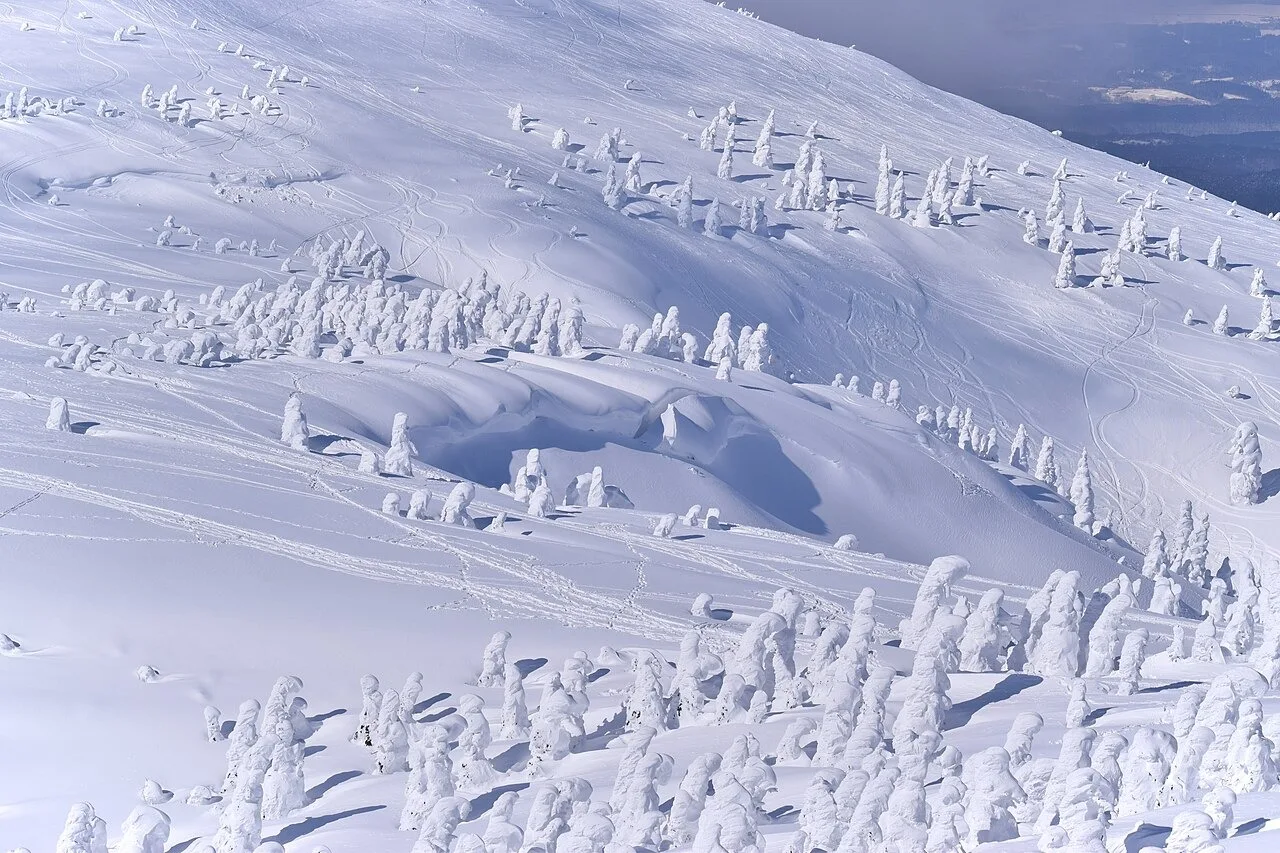
Few ski resorts in Japan pack high-altitude pistes, towering frost-covered trees, and a 1,900-year-old hot spring into the same day. At the base sits a steaming sulphur-scented spa town; two ropeway stages above it, at more than 1,600 metres, lies a plateau of sculpted snow monsters. Drawing on official 2026-27 data from the Zao Ropeway Association and the Zao Onsen Tourism Association, this guide breaks down four key planning calls: when the lifts open, how lift pass prices shift across the winter calendar, which month and time slot give you the best shot at the snow monsters, and how to link Yamagata transit, skiing, and hot-spring stays smoothly. With Yamagata Prefecture featured on National Geographic's Best of the World 2026 list—and Zao at the heart of its winter draw—here is how to time every day from the 12 December opening through spring snow.
Opening dates and seasonal pricing tiers: fares follow the snow
The official opening ceremony for the 2026-27 winter season is set for 12 December 2026, though which runs open first depends entirely on snow depth. If natural snowfall arrives early in the first third of December, selected slopes may open ahead of schedule; equally, holding the ceremony does not unlock the whole mountain overnight. Always check the official Course and Slope Status page before setting out. At the far end of the calendar, operations can run right through to 5 May 2027 (a Japanese national holiday), with the Spring Snow Final Season beginning on 1 April—making Zao one of the longest-running ski areas in Japan for April and pre-Golden Week turns.
All-mountain lift pass pricing tracks snow conditions across four distinct tiers. From opening day until 18 December is the Opening Season, when an adult one-day all-mountain pass costs just ¥4,800—the lowest entry point of the winter. Regular Season rates take over on 19 December, while Peak Season applies across two stretches: 26 December to 3 January and 30 January to 28 February. Prices step down to Spring Season rates from 15 to 31 March before dropping back to the ¥4,800 special rate from 1 April onwards. The gap between an Opening Season and Peak Season adult day pass reaches ¥4,200—nearly double—so travellers with flexible dates can save substantially by skiing in mid-December or late March.
That pricing grid creates an unavoidable trade-off: peak snow monster formation overlaps almost completely with the highest lift fares. Official ropeway guidance classifies January as the growth phase and February as the height of the phenomenon, yet the entire month of February sits inside the ¥9,000 Peak Season band. If you want dramatic snow monsters without paying top-tier rates, aim for late January—when the ice formations already stand tall and regular ¥8,000 day passes still apply until 29 January—or choose the first half of March at ¥7,000 to catch the formations as they begin to thaw. After mid-March, most snow monsters collapse and melt, turning the mountain over purely to spring skiing.
Look at the trail map and Zao divides into sectors with clear personalities. Chuo Gelande and Utopia Gelande rise directly above the onsen town as the main hub for beginners and intermediates; Paradise Gelande opens out on mid-mountain slopes towards Shobunuma; and high above, the Juhyogen plateau and the Zange-zaka / Juhyogen Course link into a long-distance descent back down to the base. Lower sectors include Omori, Hyakuman-nin, Kurohime—with its Super Giant and Connection variations—Diamond Valley, and Takatori. The official slope status page updates frequently throughout the winter, and it pays to check it both the night before and first thing in the morning: high-altitude connecting runs close quickly when wind or snow picks up, and a wrong turn into a closed link can force a long detour back to town.
The most common first-timer mistake at Zao is trying to ski the entire mountain in a single day. A steadier plan does the opposite: treat the lower slopes as your base camp for equipment hire, lessons, and warm-up laps, tackle the snow monster plateau and summit sightseeing during the calmer morning weather window, and drop back to mid-mountain runs as soon as afternoon winds or fog roll in. Note also that the lower descent along the Zange-zaka / Juhyogen Course demands at least intermediate skiing ability. Base stations and trailheads separate sightseeing ropeway passengers from skiers carrying gear, so following the posted signage keeps both crowds moving cleanly.
Plan your 2026-27 winter trip to Zao Onsen Ski Resort using official Zao Ropeway Association and Zao Onsen Tourism Association data: opening dates, full all-mountain lift pass prices, the Snow Monster ropeway and night illuminations, bathing in pH 1.9 sulphur hot springs, and Yamagata Station access.
All-mountain lift pass prices: one-day to multi-day rates
Zao Onsen Ski Resort operates a unified all-mountain pass covering both ropeways and chairlifts across the mountain; the table below shows official tax-included fares for the 2026-27 season. Adults are defined as senior high school students (aged 16) and above, while child rates cover up to junior high school year three (aged 15). Seniors aged 60 and over and senior high school students qualify for the same concession tier, provided they present photo proof of age or a student ID at the ticket counter when purchasing or collecting passes.
When planning several consecutive days on the slopes, run the numbers by month before buying a multi-day pass. In Peak Season, a three-day adult pass at ¥26,800 versus three single-day tickets totalling ¥27,000 saves only ¥200 over three days. In the Regular Season, the three-day pass drops to ¥23,800—saving ¥3,200 compared with three peak-rate single-day tickets, though only ¥200 against three regular-season day tickets. Travellers who prefer shorter, split sessions can buy the Season 10-Hour Ticket for ¥17,000, deducted in one-hour blocks and valid for night skiing, or the ZAO Exciting 10-Day Ticket for ¥55,000, covering any 10 non-consecutive days across the winter for repeat visitors to Tohoku. Yamagata Prefecture residents also receive local 1-day discounts (¥7,000, ¥8,000, or ¥6,000 depending on season) with proof of residence, which visiting travellers can skip.
Queueing at the ticket window is no longer the only way onto the lifts. The resort encourages booking online in advance and scanning the resulting QR code at automated kiosks by the resort ticket offices. Two official web channels handle sales: WAmazing sells passes from 1 November 2026 through 31 March 2027, while Asoview opens on 18 November 2026 and includes the Monster Pass bundling lift access with extra perks. Both platforms run periodic early-bird promotions, so comparing the two before you pay is worthwhile. Note that early-bird season passes for 2026-27 were only on sale from 1 to 17 November 2026 and have closed; if you want the lowest season-long rate next winter, set a reminder for early November.
Beyond the main table sit a few niche tickets that can save money on light days. Visitors who only want a handful of lift rides to test their legs can buy Point Tickets (¥600 per single point for adults, ¥300 for children, or ¥4,800 for a 10-point booklet), which works out far cheaper than a full-day pass. Night skiing runs independently on the Kaminodai slope from 17:00 to 21:00 JST, with standalone Nighter Tickets priced at ¥3,000 for adults and ¥1,500 for children—though anyone holding a valid same-day one-day pass through to a season pass can keep skiing through the evening at no extra cost. Official fare sheets also list school-trip group passes for parties of 50 or more (¥9,000 for two nights and three days; ¥11,600 for three nights and four days), underscoring how central student ski groups remain to Zao's winter rhythm.
Equipment hire and ski or snowboard lessons have dedicated directory pages on the official resort website. The rental directory lists ski, snowboard, and outerwear shops across both the onsen town and slopeside bases, while the school directory covers group classes and private instructors across multiple disciplines with school-set fees. Beginners keep budgets under control best by estimating gear hire, tuition, and lift passes as three separate line items. Most ski schools meet around the Sanroku base area, making it easy to finish a morning lesson and take the ropeway up to see the snow monsters in the afternoon. Sizing for children's boots and minimum age rules vary considerably between shops and schools, so confirming online or by phone beforehand beats trudging from shop to shop in the snow.
| Pass Type | Regular Season | Peak Season | Spring Season | Opening / Spring Special |
|---|---|---|---|---|
| Adult 1-Day Pass | ¥8,000 | ¥9,000 | ¥7,000 | ¥4,800 |
| Child 1-Day Pass | ¥4,000 | ¥4,500 | ¥3,500 | ¥2,400 |
| Senior / High School 1-Day Pass | ¥7,200 | ¥8,100 | ¥6,300 | — |
| 2-Day Pass (Adult) | ¥15,900 | ¥17,900 | ¥13,900 | — |
| 3-Day Pass (Adult) | ¥23,800 | ¥26,800 | ¥20,800 | — |
Seeing the snow monsters: two ropeway stages, peak months and weather risks
The main artery up to the snow monsters is the Zao Ropeway. Starting from Zao Sanroku Station beside the onsen town, the Sanroku Line climbs to Juhyo Kogen Station at 1,331 metres, where you transfer to the twin-cable Funitel gondolas of the Sancho Line for the final ascent to Jizo Sancho Station at 1,661 metres. The Sanroku Line operates from 8:30 to 17:00 JST and the Sancho Line from 8:45 to 16:45 JST, with the last uphill departure from Sanroku Station towards the summit at 16:00 JST—leaving plenty of reason to watch the clock around sunset. Ropeway-only tickets to Jizo Sancho Station cost ¥4,400 for an adult return (¥2,200 single), compared with ¥2,200 return just to Juhyo Kogen Station. Because the densest snow monsters cluster near the summit, buying all the way to Jizo Sancho Station is the only sensible choice. Skiers and snowboarders may carry one set of skis or a snowboard on board free of charge, which is how riders reach the top of the Zange-zaka / Juhyogen Course.
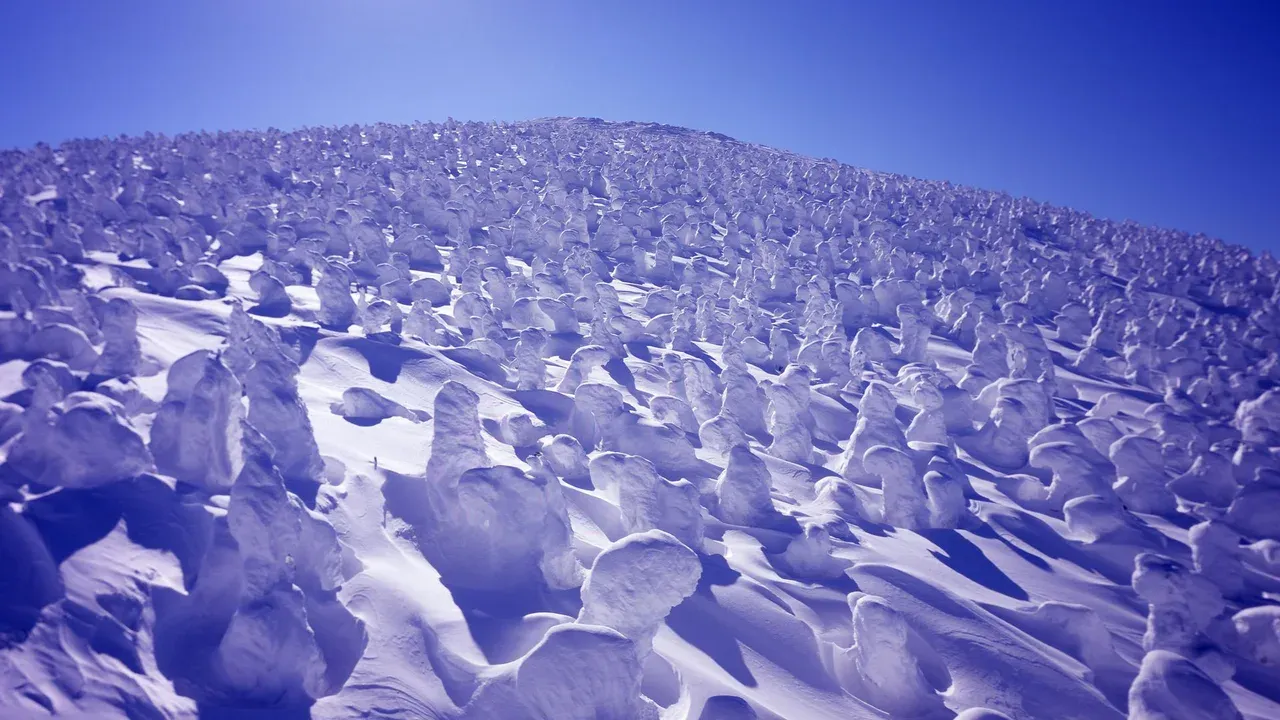
Whether the snow monsters grow tall and dramatic comes down to punishing winter weather. In February, Zao is swept by fierce west-northwesterly monsoon winds averaging 10 to 15 metres per second in temperatures between -10°C and -15°C. Supercooled water droplets carried inside winter clouds freeze onto Aomori Todomatsu fir needles, building windward "shrimp tail" ice crystals that fuse with repeated layers of snow into colossal shapes. That meteorology leaves travellers with two hard realities: clear blue skies make for the finest photographs, yet blizzard days are when the trees actually grow fastest; and whenever summit gusts or fog exceed safety thresholds, the ropeway stops without notice. Never leave your snow monster ascent for your final morning in Yamagata—slot it into the middle of your stay so you have a backup day.
Across the winter calendar, early formations begin in November and December, shrimp-tail ice thickens rapidly through January, and February delivers the densest coverage before warming temperatures in March trigger thawing and collapse—sometimes within days after a bout of spring rain. Beyond daytime viewing, selected winter dates feature the Night Snow Monster Light-up, washing the frozen figures around Zao Terrace in coloured spotlights, alongside ticketed rides aboard the heated Night Cruiser snowcat into the illuminated grove. Night sessions carry two strict rules: full extreme-cold layering for temperatures below -10°C is essential, and skis, snowboards, and snow gear are prohibited on the evening ropeway.
Travellers aiming for festival atmosphere can anchor their trip around the Zao Juhyo Festival, held each January and February. The 61st edition ran from 27 December 2025 to 23 February 2026, headlined by the Taimatsu Kasso torchlight ski descent on Kaminodai on 7 February (registration from 17:00 JST, departure at 20:00 JST, followed by roughly five minutes of winter fireworks). Exact dates for 2027 are released seasonally by the Yamagata City Tourism Association. Participation in the torchlight descent requires advance sign-up, and staying in the onsen town makes walking over on the night effortless.
Once you step out at the summit, the viewing experience splits into two layers. Immediately outside Jizo Sancho Station, a groomed snow path lets you walk beside the towering formations and inspect how the shrimp-tail ice needles lean uniformly into the west-northwesterly wind—far more rewarding than grabbing a quick snapshot by the exit. Next to the station stands Zao Terrace, a timber viewing deck overlooking the plateau and the Zao mountain range that has become the summit's most popular spot on clear days. Because the terrace is kept separate from the skier gear-up zone, photographers and riders stay out of each other's way. If a sudden whiteout blows across the ridge, the indoor rest lounge inside the summit station offers a warm refuge while waiting for the ride back down.
Managing alpine weather risk comes down to keeping a flexible plan. The official live operations page lists the Sanroku Line and Sancho Line separately, so refresh it before leaving your room and again as you approach the base station. Structure your itinerary with the snow monsters in the middle of your stay and prioritise morning ascents, when wind speeds and fog probability are typically lower than in the afternoon. Even if high winds close the summit completely, the hot-spring town at your feet gives you an immediate Plan B: soak in the historic acidic baths, stroll the steaming lanes, and linger over Yamagata beef and soba noodles so the day never feels wasted.
Staying in the onsen town: bathing in acidic sulphur springs and picking a ryokan
Zao Onsen's strongly acidic sulphur water ranks among the most potent in Japan, measuring 50.8°C at the source with a flow of roughly 735 litres per minute and a pH of 1.9. Its high acidity gives it natural exfoliating and antibacterial properties, earning the springs two traditional nicknames: "the beautifying bath" and "the soap-free bath", as vigorous lathering is unnecessary. That potency also brings clear cautions. The first two points of the official Seven Zao-Style Bathing Rules matter most: pour plenty of warm bath water over your body (kakeyu) before entering to acclimatise to the heat and acidity, and never scrub your skin hard while soaking. Travellers with sensitive skin, a history of photosensitivity, acute inflammatory conditions, or those in early or late pregnancy are advised by official guidance not to bathe or to consult a doctor first.
The official accommodation directory groups stays into ryokan and hotels, pensions, minshuku guesthouses, and slopeside lodges, complete with a "winter-only" filter—reflecting the many Zao properties that open exclusively for the ski season right beside the runs. Listed examples illustrate how varied the options are: Zao Astoria Hotel lets guests step straight onto the snow behind the building, Bokunouchi highlights free-flowing source water, and Ebiya Ryokan is a small bathhouse inn running 100 per cent natural source flow. Choosing where to stay comes down to three practical questions: how many minutes you are willing to walk to a ropeway or lift, whether you want half-board meals included, and whether you plan to dine in-house or head out into town. Checking the Yamagata City Tourism Association and Zao Onsen official directories often turns up smaller family-run inns absent from major booking platforms.
For day-trippers thinking of an open-air soak, the best-known name is the historic Zao Onsen Dai-Rotenburo set beside a mountain stream. Its natural stone pools include separate men's and women's baths alongside a mixed-bathing pool where rented yukata robes may be worn, though the facility operates mainly in the green season: in 2026 it opened from 25 April, running 9:30 to 17:00 JST on weekdays (last entry 16:30 JST) and until 18:00 JST on weekends and holidays (last entry 17:30 JST). Deep-winter openings depend strictly on snow conditions and official notices, so do not assume it will be open on a January or February ski trip. During winter, stick to the three public bathhouses in the town centre or ryokan day-entry baths, all fed by the same authentic acidic sulphur spring.
A few small details save discomfort before you step into the water. Sulphur reacts rapidly with metal, turning silver jewellery, necklaces, and rings black almost on contact—lock every piece away in the changing room beforehand. Contact lens wearers should remove lenses before bathing, as a single splash of pH 1.9 water causes sharp stinging. For timing, late afternoon brings the post-ski rush to both public bathhouses and hotel baths, so an early morning soak before breakfast offers far quieter atmosphere. Expect the unmistakable sulphur aroma across the whole town and every bath, much like Akita's Tamagawa Onsen or Gunma's Kusatsu Onsen—it is the hallmark of genuine spring water rather than poor ventilation.
Room rates and availability swing sharply with the winter calendar. Early December opening weeks and mid-January weekdays bring generous room choices and moderate tariffs, whereas the Juhyo Festival and February weekends sell out properties near Sanroku Station weeks in advance. Do not be puzzled if certain inns show "closed for winter" in the directory: Zao has a split hospitality pattern where some lodges run only in winter and others only in the green season. Sort out dinner plans when booking, too. Independent restaurants in the town centre are relatively few—specialising in Yamagata beef, imoni taro hotpot, and soba—so choosing a half-board stay or at least a breakfast-included plan saves valuable morning time if you plan to catch the 8:30 JST first ropeway.
Transport and timing: Yamagata Station, airport shuttles and driving
For most travellers arriving from Tokyo or flying into the region, JR Yamagata Station is the main gateway. Yamako Bus services depart directly from the station bus terminal and climb out of the city to Zao Onsen in roughly 40 minutes. Weekend ski buses fill up quickly, so check the last return departure first and work backwards when planning your afternoon on the mountain. Because certain timetable pages on the Yamako Bus website can occasionally fail to load from overseas connections, confirm seasonal schedules once in Japan or directly at the Yamagata Station Tourist Information Centre. Luggage racks on standard route buses are modest; if you are travelling with bulky ski bags or large suitcases you do not need uphill, storing spare bags in Yamagata Station coin lockers makes the climb far easier.
Travellers flying directly into Yamagata Airport have an even simpler official option. The Yamagata Airport Liner is a fully reservation-based shared taxi linking Yamagata Airport straight to Zao Onsen, cutting out the double transfer and baggage haul via Yamagata city centre whenever your flight schedule aligns. Drivers planning to rent a car should note that resort car parks charge daily fees throughout winter and fill rapidly on weekends, so check the official live car-park status page before driving up. Snowploughed lanes inside the hot-spring village are narrow and prone to black ice—once you arrive, leave the car parked at your accommodation and get around on foot or by shuttle. Free resort Wi-Fi is available around the ski area (SSID: ZAOONSENSKI, with the password published on the official site), though summit reception drops in bad weather, so save timetables and trail maps offline.
If winter weather forces ropeway closures, road restrictions, or festival schedule changes, calling the right local office beats trawling social media. Contact the Zao Onsen Tourism Association Information Centre on 023-694-9328 for town and general visitor enquiries, the Zao Ropeway Association on 023-694-9617 for all-mountain ski area and lift operations, Zao Ropeway on 023-694-9518 for the two-stage snow monster ropeway, and the Yamagata City Tourist Information Centre on 023-647-2266 for the Juhyo Festival and city events. The official transport page also lists the ski patrol rescue hotline—save it to your phone before heading onto the pistes.
Deciding between rail-plus-bus and driving comes down to winter road confidence. Taking the JR Yamagata Shinkansen from Tokyo to Yamagata Station and boarding the Yamako Bus is the stress-free choice for families and older travellers. Driving across the mountains from Sendai is quicker on paper, yet the uphill stretch of Prefectural Route 12 (the Zao Park Line) and the tight, steep lanes of the onsen town become demanding in fresh snow and ice, making proper winter tyres and snow chains non-negotiable. On busy weekends, attendants redirect overflow cars to outer car parks. Many experienced drivers split the difference: park at a reasonably priced hotel in central Yamagata and ride the first morning bus up unencumbered for early light on the snow monsters.
When mapping out each day's schedule, factor in early winter sunset. December brings short daylight hours, the sharpest side-lit photography on the snow monsters falls just before dusk, and the final uphill ropeway leaves Sanroku Station at 16:00 JST—meaning anyone arriving at the base after 15:00 JST catches little more than twilight and the downhill crowd. Conversely, travellers hoping to beat queues and photograph snow monsters in crisp morning backlight should check the official opening-hours page during busy periods for early-morning extra departures before heading out.
Fitting Zao into a winter itinerary: practical combinations
If you only have two days and one night, keep the sequence tight. Arrive at JR Yamagata Station before midday on day one, catch the bus up to drop your bags, and spend the afternoon on the open lower and mid-mountain runs—especially in mid-December when upper links may still be closed—before returning to town for a sulphur-spring soak and a multi-course kaiseki dinner. On day two, queue for the 8:30 JST first Sanroku Line departure straight to the Juhyogen plateau and Zao Terrace while light and visibility are at their best, check out at midday for the bus down, and spend the afternoon visiting Yamadera in winter snow or eating in Yamagata city before boarding the Shinkansen.
Families with three days and two nights to spare should build their calendar around Ski Children's Day. During the 2026-27 season, designated 2027 family dates fall on 16, 17, 23, and 24 January; 11 and 23 February; and 6, 7, 13, 14, 20, 21, 27, and 28 March, with 22 March observed as a substitute public holiday. On every one of those dates, a child's one-day pass drops to ¥1,000 and remains valid for night skiing, delivering major savings when you book accommodation around those weekends. Between 25 December and 28 February, Kaminodai runs night skiing daily from 17:00 to 21:00 JST (¥3,000 for adults), allowing families to pair evening laps with a scheduled snow monster illumination on the same night. Children skiing more than a week across the season can also price out 10-day passes or group options on the official site.
Zao slots smoothly into wider Tohoku or northern Japan routes: fly or take the Shinkansen via Sendai with an overnight in Yamagata, then continue north to Akita's Nyuto Onsen, Yokote's kamakura snow huts, or Aomori's Hakkoda snow monsters—or reverse the loop by flying from Sapporo into Yamagata Airport at the end. Compare inter-prefecture pacing and lodging splits in our guides to Sendai and Yamagata onsen itineraries and Akita winter festival stays; weigh snow quality and tree-ice formations against other northern resorts in Hakkoda Ski Resort and Bandai and Nekoma ski stays; or pair city winter lights at the start of the trip using our route for Sapporo White Illumination's seven venues.
Seen alongside the full fare table and access logistics, the best window for Zao depends on what you value most. First-time visitors who want the ¥4,800 pass in mid-December or April paired with classic hot-spring bathing get extraordinary value. Return visitors split neatly into two camps: committed skiers chasing long peak-season runs and night sessions, and photographers targeting late January through February when the snow monsters peak—paying higher lift and room rates for Zao at full winter strength. Regulars making three or more trips a season can trim per-day costs with a 10-day or 10-hour ticket, and checking the official slope and ropeway status page each morning keeps this historic Tohoku mountain remarkably easy to navigate.
- Opening: Ceremony scheduled for 12 December 2026, with open runs subject to snow depth; all-mountain one-day pass is ¥4,800 through 18 December
- Fare tiers: Peak season (26 Dec–3 Jan, 30 Jan–28 Feb) adult one-day pass ¥9,000; regular season ¥8,000; spring season ¥7,000
- Snow monsters & ropeway: Growth in January, peak in February; Zao Ropeway Sanroku Line opens at 8:30 JST, Sancho Line at 8:45 JST, last uphill ride at 16:00 JST
- Night skiing: Kaminodai slope daily 25 Dec–28 Feb plus 6–7 March, 17:00–21:00 JST, ¥3,000 for adults
- Hot spring water: Strongly acidic pH 1.9 sulphur spring at 50.8°C at source; rinse thoroughly before entering and avoid scrubbing skin
- Access & connectivity: Yamako Bus from JR Yamagata Station; advance-booking-only shared taxi from Yamagata Airport; free resort Wi-Fi SSID is ZAOONSENSKI
A few useful answers
When does the 2026-27 ski season open, and when are lift passes cheapest?
The official opening ceremony for the 2026-27 winter season is scheduled for 12 December 2026, though actual open runs depend on snow depth. The lowest all-mountain one-day pass rate of ¥4,800 for adults runs from opening day until 18 December 2026, and returns from 1 April 2027 during the spring season. The priciest peak season runs from 26 December to 3 January and from 30 January to 28 February, when an adult one-day pass costs ¥9,000.
Which month is best for seeing the snow monsters, and which ropeway ticket should I buy?
January is the growth stage and February is the peak month for fully formed snow monsters (juhyo). Take the Zao Ropeway on its two-stage route from the Sanroku Line to the Sancho Line up to Jizo Sancho Station (¥4,400 adult return). Because the ropeway suspends service in high winds or thick fog, place your snow monster visit in the middle of your trip so you have a spare day if weather closes in.
How much is a one-day lift pass, and are multi-day passes worth it?
An adult one-day all-mountain pass costs ¥8,000 in the regular season, ¥9,000 in peak season, and ¥7,000 in the spring season. Multi-day passes offer the largest apparent saving against peak single-day rates when bought in the regular season (a three-day pass at ¥23,800 saves ¥3,200 against three peak-rate day tickets), whereas a peak-season three-day pass at ¥26,800 saves just ¥200. For short, flexible sessions, consider the ¥17,000 Season 10-Hour Ticket, deducted in one-hour blocks and valid for night skiing.
Is night skiing available every day?
Night skiing operates on the Kaminodai slope every evening from 25 December 2026 to 28 February 2027, plus extra openings on 6 and 7 March 2027, from 17:00 to 21:00 JST. Standalone night tickets cost ¥3,000 for adults and ¥1,500 for children, while skiers holding a valid same-day one-day pass through to a season pass can ski through the evening at no extra charge.
Can non-skiers still enjoy Zao Onsen?
Yes. A full two-day, one-night trip works comfortably without touching skis: ride the Zao Ropeway to Jizo Sancho Station to see the snow monsters, take in the views from Zao Terrace, join a seasonal night illumination session, and soak in the onsen town's three public bathhouses or a ryokan day bath. Bear in mind that the Zao Onsen Dai-Rotenburo operates primarily in the green season, so check winter announcements before counting on it.
How do I get to Zao Onsen from Tokyo or Sendai?
From Tokyo, take the JR Yamagata Shinkansen to JR Yamagata Station and transfer outside the station to a Yamako Bus for the 40-minute climb to Zao Onsen. If you are flying directly into Yamagata Airport, you can pre-book the Yamagata Airport Liner shared taxi straight to the hot-spring town without hauling luggage through a bus transfer.
Is the strongly acidic hot spring harsh on skin, and what precautions should I take?
Zao's water is a strongly acidic sulphur spring at pH 1.9 and 50.8°C at the source, prized for natural exfoliation and antibacterial qualities that earned it the nickname "soap-free bath". Pour warm water thoroughly over yourself before stepping in, avoid scrubbing your skin, keep your soaks short and staggered, and remove metal jewellery and contact lenses beforehand. Anyone with sensitive skin, photosensitivity, acute inflammation, or in early or late pregnancy should avoid soaking.
Official information and references
Sources used in this guide.
- Zao Onsen Ski Resort Official All-Mountain Lift Pass Fare Table (Zao Ropeway Association / Zao Onsen Tourism Association)
- Zao Ropeway Official Fares and Operating Hours Guide
- Zao Snow Monsters: Formation Mechanism and Growth Timeline (Zao Ropeway Official)
- Zao Juhyo Festival (Yamagata City Tourism Association ZAO Information)
- Zao Onsen Dai-Rotenburo Open-Air Bath (Zao Onsen Kanko Official)
- Yamagata Airport to Zao Onsen Shared Taxi (Yamagata Airport Official)
- Zao Onsen Ski Resort Course and Slope Latest Status