When are the Zao snow monsters (juhyo) at their best in Yamagata? Compare icing, growth and thaw from November to March, plus all 31 illumination and snowcat dates for 2026–27, ropeway fares and return buses.
- Region & Focus
- Yamagata, Zao and Ginzan Onsen
- Reading Scope
- 20 min read · 8 chapters · 6 Q&As
- Official Verification
- 18 official sources checkedUpdated 22 November 2026
- Key Topics
- WinterSeasonsHot springs
Chapter Route Map (tap any stop)
- Best months to see the Zao snow monsters
- How wind builds ice and snow onto firs
- Two checks before heading up, even in sunshine
- How much time to allow for a daytime ascent
- All 31 illumination and snowcat dates for 2026–27
- Day trip from Yamagata vs staying overnight
- Which ski runs pass through the snow monsters
- Reading snow-monster shapes in poor light
- Quick Q&A
For a first trip to Yamagata hoping to see whole hillsides packed with snow monsters in daylight, aim for February and set aside two interchangeable daytime windows for Jizo Sancho Station. If you would rather watch rime ice extending sharp, wind-sculpted tails along individual branches, January is already well worth the journey. For the 2026–27 winter season, Zao Ropeway's scheduled night illuminations and heated snowcat tours run across 31 designated evenings from 26 December 2026 to 23 February 2027. Once you pick your month, time your daytime ascent around summit weather and plan evenings around the event calendar and last return transport.
Best months to see the Zao snow monsters
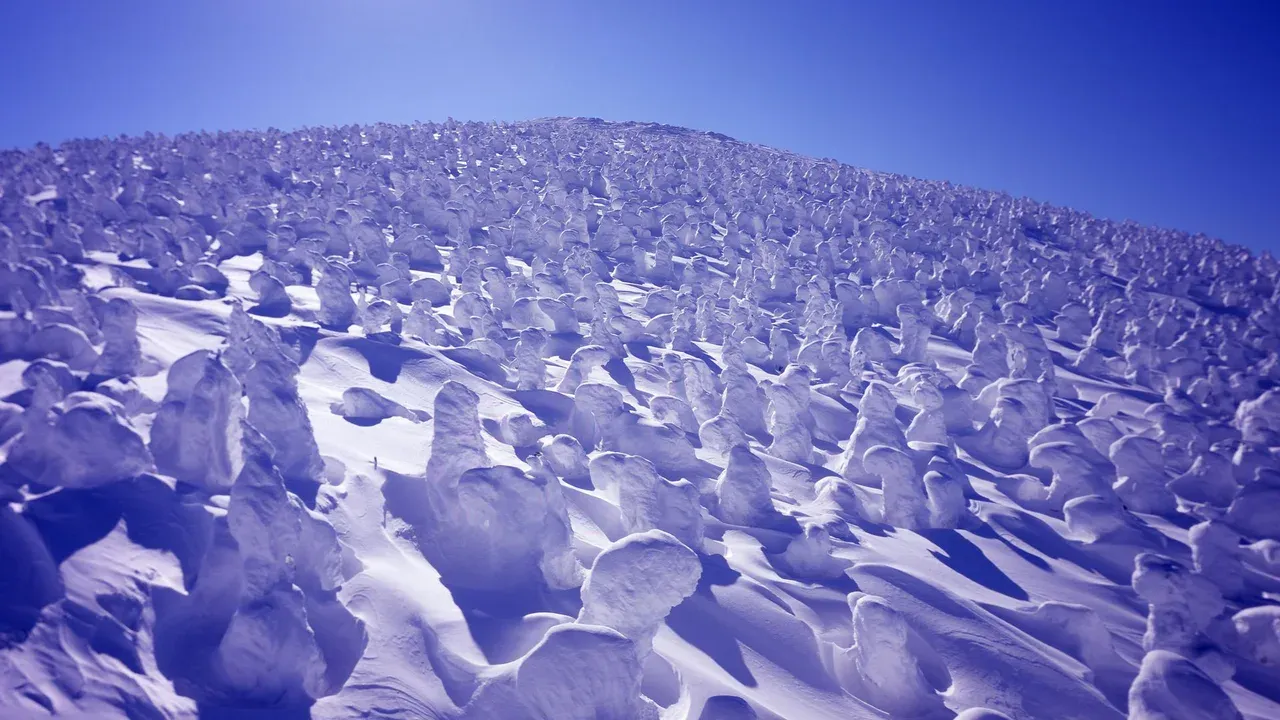
February is the first choice for first-time visitors wanting photos of an unbroken hillside of snow monsters. Zao Ropeway's growth chart classifies February as peak season, when ice and snow keep building until separate clumps along the branches fuse into solid masses that swallow the outlines of the limbs. Aiming for early to mid-February keeps both daytime viewing and night events on the table. Visitors focusing only on daytime views can keep two mornings free and save the clearer one for Jizo Sancho Station. If you only have a single day, put the summit ahead of lunch and other stops.
January suits travellers curious to see how the snow monsters take shape. The ropeway company's calendar labels it the growth period: the longer the windward 'shrimp tails' grow, the more easily blown snow catches among the needles and twigs. To spot sharp-tailed branches, half-covered trees and fully bulked-up figures side by side on the same ascent, frame your shots around how adjacent trees differ. To pair January viewing with illuminations, 22–24 or 29–31 January each offer three consecutive event nights. Staying two nights across two event dates gives you room to shuffle night bookings and daytime ascents.
November and December mark the early icing and snow-coating stage. On the lower slopes you will see a blanket of white, often with the branches of smaller trees still clearly visible. The seasonal brochure puts the daytime viewing window roughly from late December to early March. Those keen to ride the ropeway over freshly snowed-in woods and spot the first coat of ice between branches can start planning from late December. Anyone travelling chiefly for hillsides packed with full-grown snow monsters should hold their dates for February. Late-December illuminations open on 26 December; the first event night simply marks when the lights switch on, while trees on the slope keep growing as temperatures, wind and snowfall build.
Trips spanning late December into early January are especially prone to relying on last season's timetable. This season leaves a gap on 28 and 29 December between night events, followed by three consecutive nights starting on New Year's Day. If your accommodation is already booked, move night sessions to 30 or 31 December or an open January date and keep the unlit evenings' days for daytime viewing. Adjust expectations to how far growth has progressed on the mountain. If you only find patches of white frost on arrival, save a second ascent for a clearer spell later in the trip to see whether fresh snow has thickened the crowns.
In March, keep your daytime ascent flexible enough to slot into the best weather window. Warmer air thins the outer crust of ice and snow, and rain can bring down whole clusters quickly. At this time of year, check the ropeway company's recent summit photos and their capture dates—especially straight after mild rain. If unbroken stands still appear in recent images, head straight up to Jizo Sancho during good light and visibility. When only scattered remnants survive, travellers interested in late-season thaw details can still head up for close-ups. If full snow-monster slopes were your main reason to come, switching an early-spring day to hot springs or skiing comes down to the focus of your trip. Night events this season finish on 23 February.
Even within the same month, snow monsters develop unevenly across the slope. Check which station a news photo was taken from: Jizo Sancho Station sits roughly 330 metres higher than Juhyo Kogen Station at the transfer. The slopes beneath the ropeway hold both wind-exposed trees and sheltered ones tucked behind terrain contours. For scale, look out across the broad hillside; for early- or late-stage texture, pick out a few differently shaped trees from the viewing area rather than hunting only for the biggest one.
When are the Zao snow monsters (juhyo) at their best in Yamagata? Compare icing, growth and thaw from November to March, plus all 31 illumination and snowcat dates for 2026–27, ropeway fares and return buses.
How wind builds ice and snow onto firs
Zao's snow monsters form on Aomori firs—known in Japanese as Aomori-todomatsu or Oshirabiso. Growing naturally in the subalpine belt of the Zao mountain range, they occur between roughly 1,300 and 1,700 metres above sea level according to Yamagata Prefecture. Their needles and twigs give fine ice something to grip first, while sturdy woody trunks support the mounting weight that follows. Only once the ropeway climbs well above the hot-spring town does this subalpine fir belt open up outside the cabin windows.
According to Zao Ropeway, winter's north-westerly monsoon sweeps across the Sea of Japan, picks up moisture over the water, rises over the Asahi mountains to drop snow, crosses the Yamagata Basin and climbs again up the Zao range. Cloud droplets on the mountain can remain liquid even below 0°C. The wind drives these supercooled droplets against the firs, where they freeze on contact with needles and branches. Because the windward side intercepts far more droplets, ice builds outward into the wind—creating slender spikes called 'shrimp tails' that are easiest to spot on newly iced branch tips.
Next, wind-borne snowflakes wedge into the gaps between the ice spikes. The trapped snow and ice bond together and compact through a process called sintering. Research from Yamagata University notes that small clumps form on individual branch tips before merging into larger masses. Seen from the side, distinct lobes show up first, then snow fills the hollows until the whole tree takes on a rounded white silhouette. When you spot early shrimp tails, trace the side jutting furthest into the wind, then look at a thicker tree nearby where the original branch tiers remain only as subtle bulges.
Snow depth on the ground matters just as much. Yamagata Prefecture lists sufficient snowpack among the key conditions for formation. Even as snow piles up below, live branches must stay exposed above the surface to keep catching ice and snow, which is why slopes with living trees develop completely different shapes from wind-scoured snowdrifts. Riding the Sancho Line up from Juhyo Kogen Station, watch how the snow monsters cluster in bands along the hillside. Looking straight down a slope flattens trees together, so shifting slightly to the side makes individual silhouettes easier to pick out.
When Japanese notices mention 'muhyo' (rime ice), photos help show how far growth has come. Yamagata University also treats the tail-like rime formed instantaneously by freezing supercooled droplets as part of the snow-monster family. The figures famous at Zao, however, are trees where rime ice and packed snowflakes have fused into heavy blocks. Early in the season, seeing rime along the route lets you spot which branches have already started merging into shared masses. Look first for hard, glossy ice nearby, then pick out the darker shaded hollows—both textures still read clearly on overcast days.
Early field studies took place right around Jizo Sancho Station. Yamagata University uncovered photographs from the 1960s and 1970s around Jizo-goya, where researchers behind the Zao Jizo statue tracked how the formations grew and examined ice and snow microstructures under microscopes. That work links what you see on the hillside today to tiny physical steps. Standing in the viewing area and tracing a tree from its sharp crown through its hollows to its broad base makes it clear how one coat of ice creates pockets for the next snowfall.
Changes to the trees themselves also reshape the snow monsters. Research published by Yamagata University in 2025 reports that insect damage has killed some of Zao's firs, leaving bare trunks without foliage that hold far less ice and snow. Comparing years, researchers found the formations growing noticeably slimmer from 2019 onwards. Yamagata Prefecture and Japan's Forestry Agency are running forest regeneration efforts, and the prefecture announced sapling-transplanting work for 2026. When comparing silhouettes across older and newer photos, look not just at that winter's temperature and snowfall, but also at stand density and tree width—and stick to designated viewing zones so live trees and young saplings keep their snow cover undisturbed.
Two checks before heading up, even in sunshine
Start with the ropeway company's operating status ('Unko Joho'). The Sanroku Line and Sancho Line report separately, so seeing cabins moving uphill from town may only mean the lower section is running. If your destination is Jizo Sancho Station, confirm the Sancho Line is open too. When only the Sanroku Line operates and the upper line is suspended, short-route tickets run return to Juhyo Kogen Station. If your goal for the day is the full snow-monster field from the summit, wait in town for the next update or move your summit day to tomorrow rather than queuing for a half-way ride only to regroup back at the base.
Next, gauge summit visibility. The live camera on Zao Ropeway's website shows the Sanroku base side—useful for snowfall and light near the entrance—so pair it with the day's mountain weather forecast or upper-slope updates from the ropeway operator. Zao Onsen Ski Resort also hosts live cameras; check the zone label first, such as the Juhyo Kogen Station feed facing the Sancho Line boarding platform, to see wind and snow at the transfer. When nearby firs start showing crisp detail, even a brief clearing lets you compare trees at different stages of growth; if distant slopes also come into view, spend extra time beside the station taking in the panorama. Zao Ropeway describes January and February mountain weather as featuring north-westerly to westerly winds and frequent snowstorms—sunshine down in the hot-spring town often coincides with cloud socking in Jizo Sancho.
Think of each forecast horizon as serving a different decision. Use monthly averages when booking leave, recent mountain photos and forecasts in the days before arrival, and live operating updates once you are in the village to decide which leg to ride first. Fresh snowfall takes time to pack onto branches, whereas drifting fog blocks views immediately. If heavy snow overnight clears briefly in the morning while the Sancho Line is running, bump the ascent to the top of your day and push lunch and hot-spring baths to later.
Once at Jizo Sancho Station, inspect the closest formations in the designated viewing area first. When whiteout conditions erase the horizon, stay within the open station perimeter where buildings, barrier ropes and the way back indoors remain clearly visible, saving wider viewpoints along the slope for brief clearings. If blowing snow cuts visibility down to a few metres, duck back inside the station to warm up or ride back down. Even warmly dressed visitors struggle to judge slopes and spot skiers in near-whiteout light, so treat the marked station boundary as your limit.
Dress for summit cold before leaving the base. Zao Ropeway warns that night-time temperatures hover around -10°C, and wind chills exposed ears and hands fast. Wear a warm base layer, a windproof shell and insulated boots with grippy soles, and pull your hood up before stepping outside at the top. If anyone in your group needs frequent warm-up breaks indoors, agree which side of the station hall to meet on while photographers pop in and out briefly. Tuck spare gloves and traction cleats into an outer pocket of your daypack so your hands stay free to steady yourself at transfers.
How much time to allow for a daytime ascent
Walk from Zao Onsen village to Zao Sanroku Station, ride the Sanroku Line for about 7 minutes to Juhyo Kogen Station, and transfer to the Sancho Line for roughly 10 minutes to Jizo Sancho Station. The ropeway operator lists those two upper stations at 1,331 metres and 1,661 metres respectively. Those 17 minutes cover only riding time; queues at the base, changing cabins mid-mountain, walking between platforms and time on the summit all add up. Weekend travellers catching a Shinkansen later that day should block out half a day for the round trip and sightseeing, and target an earlier downhill bus ahead of their train connection. When upper visibility is sharp, arriving early at the base also gives you breathing room to wait out a short queue rather than rushing your summit photos.
All operating hours run on Japan Standard Time (JST). Zao Ropeway lists Sanroku Line hours as 8:30–17:00 and Sancho Line hours as 8:45–16:45, with the last daytime ascent from Zao Sanroku Station for Jizo Sancho at 16:00. Anyone wanting to view the snow monsters from two angles should set off several cabins earlier. Boarding the very last uphill departure leaves you changing cabins straight into the countdown for the final descent, with half your attention on the clock. If clouds only lift in the afternoon, check the day's posted notices at Sanroku Station and weigh queue times, ride times and viewing time before choosing how far up to go.
The 2026–27 winter brochure lists daytime adult return fares from Sanroku to Jizo Sancho Station at ¥4,600, and ¥2,300 for children. The main viewing area sits beside the summit station, so buy through to the top if you want the sweeping hillside panorama. Visitors who prefer booking daytime tickets ahead can check the automated ticket-exchange procedure at Zao Sanroku Station on the ropeway's booking page. If you are waiting for the Sancho Line to resume service, hold off until both sections' status is clear before buying for the furthest open station—especially with older relatives or young children, saving everyone an extra round trip back to the ticket hall.
Priority boarding tickets sold on the official website cover only the uphill ride on the Sanroku Line. Once you reach Juhyo Kogen Station, both the upper ascent and all downhill legs use the regular queues. Travellers locked into a single fixed date with an early departure the next morning may appreciate cutting wait time on that first leg. If you have left a second sunny morning spare, read the official ticket terms first: once purchased, priority tickets cannot be cancelled or refunded unless the ropeway suspends operations. If the summit is merely fogged in, weigh that fixed booking against keeping your weather options open.
Around the summit station, use the large Zao Jizo statue as a landmark to keep your bearings. Check the marked viewing boundaries on arrival before deciding how long to stay out in the cold. In clear visibility, look across the steeper slope angles first and save the close-up trees near the station for the walk back. Keep watching the hillside from inside the cabin too: as the ropeway rises and drops relative to the terrain, the windows give a clear view of where trees thin out or cluster down the ridge. If you only have one day for the snow monsters, eating lunch down at the base or in the hot-spring village is easier to schedule than dining at the summit.
When pinning locations on a map, save both 'Zao Ropeway Zao Sanroku Station' and 'Zao Onsen Bus Terminal'. Several lifts leave from different corners of the village, and the daytime ascent to Jizo Sancho starts specifically from Zao Sanroku Station. Drop large suitcases at your accommodation or a locker before heading up. To compare other lifts, public bathhouses and warm-up spots around town, follow the village walking route in our non-skier's one-day Zao snow monster guide.
All 31 illumination and snowcat dates for 2026–27
Zao Ropeway's seasonal poster released on 4 October schedules both night experiences across the same set of dates, making it straightforward to match hotel nights to open evenings. All session times and check-in windows are in Japan Standard Time (JST).
The illuminated ropeway runs from 17:00 to 21:00. The seasonal poster lists 19:45 as the final uphill departure from Zao Sanroku Station, and the resort brochure gives 20:30 as the last downhill departure from Jizo Sancho Station. Return tickets from the base to the summit cost ¥4,600 for adults and ¥2,300 for children aged 6–11. You can see the lit-up slopes from inside the Sancho Line cabins as well as from the designated viewing zone around Jizo Sancho Station. Leave skis and snowboards at your accommodation in the evening, take an earlier ascent if you want unhurried outdoor photo time, and stick to the lit paths and marked barriers.
The 'Juhyo Illusion Corridor Tour' rides a heated snowcat up the mountain. Four nightly departures—at 17:00, 18:00, 19:00 and 20:00—check in and depart from Zao Sanroku Station, with check-in required 20 minutes beforehand. Round-trip Sanroku Line fares are included: you ride the ropeway up to Juhyo Kogen Station before boarding the snowcat, which climbs above Tower 4 of the Sancho Line and turns back. The full programme lasts roughly 70–80 minutes, including around 30 minutes aboard the snowcat, priced at ¥8,000 for adults and ¥7,000 for children aged 1 to primary-school age, capped at 36 passengers per departure. Book online via the button or QR code on the official event page; tickets generally go on sale seven days prior at 14:00 JST.
Choose the illuminated ropeway for an evening of summit floodlights against dark mountain ridges, or the snowcat tour to inspect iced-up branches close up from a warm cabin window. Families with young children can also decide by pace: illumination nights let you step in and out of the summit viewing zone at your own rhythm, whereas the snowcat follows fixed check-in and group departure times. Private charters or sold-out slots can narrow available snowcat times. If members of your group want different activities, meet at Zao Sanroku Station beforehand—illumination riders continue onto the Sancho Line while snowcat guests join their tour group at Juhyo Kogen Station.
Decide which view matters most before committing to two nights. Daytime riding plus one illumination evening already captures both natural daylight textures and coloured night lighting from different vantage points. Add a second night only if you also want close-up shots from the snowcat route—that way you can save the clearer summit evening for spending longer outdoors under the floodlights and take the fixed-schedule snowcat on the other night. Operators cancel evening sessions in severe weather or if snow monsters along the route collapse, in which case simply reclaim the evening for dinner and a hot-spring soak at your inn.
- 26, 27, 30 and 31 December 2026.
- 1–3, 9–11, 16–17, 22–24 and 29–31 January 2027.
- 5–7, 10–14 and 19–23 February 2027.
Day trip from Yamagata vs staying overnight
If you are using public transport for daytime viewing only, take the Z90 route bus from Stop 1 outside Yamagata Station to Zao Onsen Bus Terminal (¥1,200 adult, ¥600 child one way). Both uphill and return buses carry seated passengers up to capacity, so full departures mean waiting for the next bus. Standard timetables split weekday and weekend/holiday columns. Travellers connecting back to the Yamagata Shinkansen should work backwards from the C2 return timetable and board an earlier bus downhill to leave margin for walking through the village and queuing at Sanroku Station. Watch out for similar-sounding stops such as 'Chuo Ropeway-mae' on the bus timetable—get off at the stop matching the ropeway entrance you plan to use.
Yamako Bus currently lists the last C2 departure from Zao Onsen Bus Terminal at 19:50, reaching Yamagata Station at 20:27. Anyone relying on that last bus for an illumination night should ride up as soon as lighting starts at 17:00 and build two ropeway descents, transfer queues and the walk back to the terminal into their plan. Missing the final bus carries far more disruption than cutting short a few photos, so set a firm turn-back time while you are at the summit. For the snowcat tour, add 80 minutes plus walking time to your departure slot: even the 18:00 tour finishes around 19:20 with very little cushion, while the 19:00 and 20:00 departures require an overnight stay or pre-booked private transport meeting near Zao Sanroku Station or your hotel.
Coming from Sendai, a winter express bus operates from Stop 76 at Sendai Station East Exit to Zao Onsen Bus Terminal from 19 December 2026 to 14 March 2027 (¥2,800 adult, ¥1,400 child one way, reserved seating). The last bus back to Sendai leaves the hot-spring village at 17:30, which suits a full daytime visit; stay overnight in Zao if you want evening sessions and catch your booked return bus the next day. Drivers crossing from Miyagi into Yamagata in winter should detour via the Yamagata Expressway, as Miyagi Prefecture closes the Zao Echo Line mountain pass from 17:00 on 4 November 2026 until an expected reopening at 11:00 on 23 April 2027.
If your whole trip approaches Zao from Yamagata, using central Yamagata as a daytime base avoids lugging bags uphill; if snowcat tours or illuminations are the main event, staying in the hot-spring village frees up far more viewing time. On a one-night stay, head straight up if visibility is good on day one, return down for dinner or check-in, then go back out for your booked night slot. If cloud covers the summit on arrival day, save the big daytime panorama for check-out morning and leave bags at your inn until you come back down. Late arrivals work best the same way: treat evening one as check-in and night viewing, leaving a clear morning for the slopes.
To give yourself two interchangeable illumination nights, book two consecutive stays across a multi-day block. Blocks such as 10–14 February or 19–23 February string several event nights together, whereas checking in on 14 February leaves 15 February dark—staying 13 and 14 February instead preserves two active evenings. Note also that 11 February is a Japanese national holiday within that 10–14 February window. Guests spanning a weekend and weekday can place fixed bookings on arrival night and save daytime summit viewing for check-out morning; with two nights, put the snowcat on night one and decide on night two's illumination according to visibility.
When combining Zao with other day trips on the same itinerary, keep one full spare day free to swap around. Any excursion run from Yamagata Station brings its own bus and transfer windows, so trying to squeeze a morning ascent before an afternoon booking elsewhere leaves only the earliest hours for the snow monsters. If you are also exploring other spots across Miyagi and Yamagata, see our Sendai and Yamagata hot-spring and seasonal itineraries and schedule fixed-transport days after your second weather-backup morning.
Which ski runs pass through the snow monsters
Skiers and snowboarders planning to ride down through the snow monsters should first check Zao Onsen Ski Resort's live course status ('Course & Gelande Information') for the 'Zange-zaka & Juhyo-gen Course'. Stepping out of Jizo Sancho Station onto Zange-zaka puts you straight into the famous upper piste feeding the snow-monster run. The resort grades Zange-zaka as intermediate, though the track feels narrower than photos suggest, and sightseers often slow down to look around. On mornings with low visibility or icy crust, warm up on gentler runs that match your ability while waiting to see whether upper conditions open or soften. Ropeway passenger operations and ski-run openings appear on separate official pages, so check both before setting a meet-up time.
The resort lists the full link-up from Zange-zaka across the Juhyo-gen Snow Monster Course, past Utopia and Hyakuman-nin down to Yokokura as roughly 8 kilometres. Check the season trail map for junctions before setting off from top to bottom. Connecting tracks also branch toward areas such as Kurohime, so groups splitting onto different exits should factor traverse times into any rendezvous. Save scenic pauses for a clear run rather than stopping abruptly in tight sections for photos; when you do stop to frame a shot, pull well aside at a safe, visible spot so faster riders have room to pass.
Lift-pass pricing also pairs neatly with your choice of month. For 2026–27, the all-mountain pass prices 4–29 January as regular season at ¥8,000 for a one-day adult pass, rising to ¥9,000 in peak season from 30 January to 28 February. Travellers wanting early branch-tip ice alongside lower ski-pass rates can pick January event dates in the regular window, such as 22–24 January. If fully developed February snow monsters are the priority, budget the ¥9,000 peak lift pass for skiers and return ropeway fares for non-skiers. Regular rates return for 1–14 March before dropping to ¥7,000 from 15–31 March—if you ski in the second half of March, inspect that week's summit photos to see where rime still clings and pick open runs accordingly.
When a group splits between skiers and sightseers, choose the Sanroku base station or a fixed cafe in town as your meeting point. Skiers descend straight via the pistes while non-skiers take the ropeway both ways, each timing their own return. If the Sancho Line suspends operations, sightseers can head down to the village while skiers spend half a day on open lower zones until upper lifts resume. For full pass options, mountain sectors and village stays, read our Zao Onsen Ski Resort guide.
Reading snow-monster shapes in poor light
In clear sunshine, start with a wide frame across the hillside. Trace the direction the formations lean—side light draws crisp shadows that anchor each snow monster on the slope. Then drop to an approved viewpoint with a bit of elevation change for close-ups showing a hard, iced-over tip above a pocket filled with powder snow. Snow scenes easily meter grey on automatic cameras, so take a test shot and dial up exposure slightly to keep highlights bright on the tips. On January and February slopes where thick and thin trees stand side by side, your photos will show which trunks still reveal branches and which have fused into solid shapes. During the March thaw, document continuity across the mountain too: pair a wide base-to-summit shot with a closer view showing exposed needles, and note the station and date so individual trees stay easy to place later.
In flat whiteout fog, work close. From inside the open station viewing area, place a single tree's crown towards the edge of the frame so the protruding ice tiers show which way the wind blows. Shooting illuminated trees from inside a ropeway cabin, hold the lens close to the glass to cut reflections, switch off the flash and check bright highlights for clipping. Use a brisk shutter speed while the cabin is moving, saving longer exposures for steady ground beside the station. Warm, dexterous gloves beat carrying a second camera body, and phone shooters should set a quick-launch camera shortcut beforehand to avoid fumbling through menus in freezing wind.
Before stepping from sub-zero slopes back into a heated station or lodge, seal your camera inside an airtight bag so the body warms gradually without condensation forming on cold glass and electronics. Keep spare batteries in an inside pocket and keep handling brief outdoors. If a second clear window opens the following day, pull up the previous day's close-ups and match similar silhouettes—first spotting where branches caught their initial ice, then stepping back to see how packed snow bridged the slope.
A few useful answers
Which month is best to see the Zao snow monsters?
February usually brings the thickest snow monsters, ideal for seeing full hillsides packed with formations. January is best for spotting windward 'shrimp tails' and half-coated branches. November and December mark the early icing and snow stage, while March starts the thaw, when warm rain can quickly bring formations down.
Why do the Zao snow monsters lean to one side?
Supercooled liquid cloud droplets below 0°C freeze on contact with Aomori firs, building windward ice spikes known as 'shrimp tails'. Blown snow then wedges into the gaps and compacts with the ice, thickening each tree into an asymmetrical mass.
Do the Zao snow monster illuminations run every night in 2026–27?
No—both evening programmes share 31 scheduled nights between 26 December 2026 and 23 February 2027. Illuminations run 17:00–21:00, with the last uphill cabin from Zao Sanroku Station at 19:45 and the last downhill ride from Jizo Sancho Station at 20:30. All seasonal dates are listed by month above.
How far in advance should I book the Zao snowcat tour?
Online bookings open on Zao Ropeway's website seven days before your travel date, generally at 14:00 JST. Arrive at the Zao Sanroku Station counter 20 minutes before your scheduled departure.
Can I still catch a bus back to Yamagata Station after the illuminations?
Yamako Bus timetables list the last C2 departure from Zao Onsen Bus Terminal at 19:50. To make it back the same evening by public bus, ride up as soon as lighting begins at 17:00 and allow plenty of time for two ropeway descents, transfers and walking to the terminal. Later snowcat departures suit overnight stays or pre-arranged transport.
What is the difference between Juhyo Kogen Station and Jizo Sancho Station?
In daytime, you ride the Sanroku Line up to Juhyo Kogen Station to transfer onto the Sancho Line for Jizo Sancho Station, where the main hillside snow-monster viewing area sits. At night, the snowcat tour boards at Juhyo Kogen Station and climbs past Tower 4 of the Sancho Line before turning back.
Official information and references
Sources used in this guide.
- Zao Ropeway: How Snow Monsters Form, Typical Growth Stages & Illumination Poster
- Zao Ropeway: 2026–27 Snow Monster Illumination Operations Notice
- Zao Ropeway: Juhyo Illusion Corridor Snowcat Tour, Seasonal Poster & Booking Portal
- Zao Ropeway: Operating Hours, Ride Times & Station Elevations for Both Lines
- Zao Ropeway: Online Ticketing, Exchange & Priority Boarding Terms
- Zao Mountain Resort: 2026–27 Winter Guide, Sightseeing Fares & Trail Map
- Zao Onsen Ski Resort: Live Course & Slope Status
- Zao Onsen Ski Resort: Live Webcams & Juhyo Kogen Station Feed
- Zao Onsen Ski Resort: 2026–27 All-Mountain Lift Pass Price List
- Yamagata City Tourist Association: Zange-zaka & Juhyo-gen Course Guide
- Yamagata University: Jizo-goya Field Surveys & Early Snow-Monster Research
- Yamagata University: Research on Fir Bark-Beetle Damage & Slimming Snow Monsters
- Yamagata Prefecture: Formation Conditions for Zao's Snow Monsters
- Yamagata Prefecture: Aomori Fir Forest Regeneration Plan & 2026 Sapling Transplanting Notice
- Yamako Bus: Yamagata Station to Zao Onsen Route Bus Timetable & Fares
- Yamako Bus: Zao Onsen to Yamagata Station C2 Weekday & Holiday Timetable
- Yamako Bus: Sendai to Zao Onsen 2026–27 Winter Express Bus
- Miyagi Prefecture: Winter Road Closure Notice