From 19 December 2026 to 7 March 2027, day-trippers driving to Ginzan Onsen must park and transfer at Taisho Roman-kan. Check shuttle fares, ticket release dates, priority return slots, and routes via Oishida Station, Yamagata Airport and ryokan transfers.
- Region & Focus
- Yamagata, Zao and Ginzan Onsen
- Reading Scope
- 24 min read · 11 chapters · 6 Q&As
- Official Verification
- 19 official sources checkedUpdated 22 November 2026
- Key Topics
- WinterRail travelHot springs
Chapter Route Map (tap any stop)
- Choosing Your Winter Route to Ginzan Onsen
- Driving Day-Trips: Parking at Taisho Roman-kan
- Shuttle Fares and Release Dates by Taisho Roman-kan Departure
- Which Booking Date to Save, Late Arrivals and Changing Plans
- The 90-Minute Priority Return: How Much Time Do You Actually Get?
- Taking the Shinkansen and Connecting to the Oishida Station Bus
- Working Backwards from the Shinkansen for Your Return from Oishida
- Oishida Direct Tours, Authorised Taxis and Ryokan Pick-Ups
- Starting from Yamagata Airport, Sendai or Tendo Onsen
- Dusk Walks from Shirogane Bridge and Daytime Baths
- Snow Diversions, Sold-Out Slots and Rescuing the Day
- Quick Q&A
The updated Ginzan Onsen winter traffic controls are scheduled from 19 December 2026 to 7 March 2027. Day-trippers arriving by car must park at Taisho Roman-kan and transfer to a paid shuttle bus. Travellers taking the Yamagata Shinkansen from Tokyo to Oishida Station can connect to Hanagasa Bus services or book a direct ryokan-association tour. Guests staying overnight in the hot spring town follow their ryokan's designated car park or station pick-up instructions. If you want to stay until the gas lamps are lit, secure your return transport before choosing an outbound departure.
Choosing Your Winter Route to Ginzan Onsen
Start by checking the address on your accommodation booking. Guests staying in Ginzan Onsen itself may use the car park designated by their ryokan, and several inns also offer pick-ups from Oishida Station. If you are staying around Yamagata Station, Tendo Onsen or Sendai and heading up just for the snowy streetscape or a daytime bath, you count as a day-tripper on arrival. That distinction determines how far you can drive. Splitting a hire car four ways looks economical on paper, yet you still need to factor in the per-person shuttle fare and transfer time for the final stretch.
If you are travelling from Tokyo and returning the same evening, check the Tokyo-bound Yamagata Shinkansen departures from Oishida Station first, pick a local bus that connects comfortably with a fallback option, and then plan your outbound journey. Coming from Yamagata City with a hire car and winter driving experience, you can set Taisho Roman-kan directly as your destination. If you want an unhurried dusk stroll without an overnight room in Ginzan Onsen, consider the reserved-seat direct tours from Oishida Station or the evening tour from Tendo, both of which include guaranteed return transport.
This season's restricted zone covers Prefectural Route 188 between Taisho Roman-kan and Ginzan Onsen. Day-trip hire cars, private vehicles, chartered coaches, motorcycles and bicycles are all diverted under Traffic Control Office rules. Along this roughly two-kilometre stretch, deep snow makes pavements unusable, pushing pedestrians into curved sections shared with moving vehicles. In winter, enter the hot spring street by bus or shuttle and wait at Taisho Roman-kan when queueing. Keeping the road clear for ambulances and fire engines is the core purpose of these restrictions.
| Travel style | Where you enter from | What to arrange in advance |
|---|---|---|
| Self-drive day-trip | Transfer to shuttle at Taisho Roman-kan | Pre-book timed return shuttle tickets |
| Shinkansen day-trip | Take Hanagasa Bus from Oishida Station | Check both outbound/return bus times and association entry notices |
| Oishida Station package tour | Meet at West Exit for direct bus to Ginzanso | Book seats ahead; return journey is included |
| Overnight ryokan stay | Ryokan-designated car park or pick-up point | Register transfers with your inn and save the exact address |
| Designated pre-booked taxi | Direct entry from approved pick-up points | Contact an authorised operator to fix both legs and meeting spots |
From 19 December 2026 to 7 March 2027, day-trippers driving to Ginzan Onsen must park and transfer at Taisho Roman-kan. Check shuttle fares, ticket release dates, priority return slots, and routes via Oishida Station, Yamagata Airport and ryokan transfers.
Driving Day-Trips: Parking at Taisho Roman-kan
Set your sat-nav to 'Taisho Roman-kan', located along the prefectural road in the Kamiyanagiwatado and Jubuichi area of Obanazawa City, Yamagata Prefecture. Typing 'Ginzan Onsen' tends to route you straight into the hot spring town, while 'Ginzan Onsen Public Car Park' sends you to a stop further inside the restricted zone. During the control period, day-trip cars must park at Taisho Roman-kan and transfer. Standard bays are allocated on arrival, whereas your shuttle booking ties you to a specific departure slot. Even with a 15:00 ticket, pulling into the car park at 15:00 leaves no time to disembark, walk to the bus stop and join the queue.
The shuttle runs from Taisho Roman-kan via the Ginzan Onsen Public Car Park to the stop outside Ginzanso in about 10 minutes. From Ginzanso down to the entrance of the hot spring street is a sloped road that the Traffic Control Office estimates takes roughly 10 minutes on foot in winter. It is downhill going in and uphill coming back, so allow time for both. When travelling with older relatives, choose a departure that leaves room for pauses along the way, and if you walk all the way to Shirogane Falls, add the riverside walk back before that uphill climb. Take note of the return bus stop on arrival so you are not hunting for destination boards in the evening crowd.
Winter tyres are mandatory for driving in the snow season. The Ginzan Onsen Ryokan Association's access page advises drivers to avoid Prefectural Route 29 over Seaburi Pass from Murayama City. If your sat-nav suggests National Route 347 over Nabekoshi Pass from the Miyagi side, check Yamagata Prefecture's road status updates before committing to the route towards Obanazawa. Save Taisho Roman-kan's coordinates and your return route before leaving the rental branch, and calculate refuelling and car-return buffers from the moment you get back to your parked car. If you have an evening drop-off deadline, take a daytime shuttle and build road conditions into the schedule.
If you are driving a campervan or hiring a nine-seater, check the vehicle's overall length in your rental paperwork. From 12 to 31 January 2027, Taisho Roman-kan is trialling advance parking reservations for large vehicles—including trailers or rigs reaching 6 metres in total length—specifically for arrivals starting between 14:00 and 17:00. You can book a 30-minute priority entry window; arriving early or late reverts to first-come, first-served. Notices list a base parking fee of ¥2,000 per vehicle plus the booking system's service charge. That reservation secures the parking space only; shuttle seats for everyone on board must be purchased separately.
Shuttle Fares and Release Dates by Taisho Roman-kan Departure
The shuttle operated by Ginzanso runs every 20 minutes. Departures from Taisho Roman-kan start at 09:00, leaving at :00, :20 and :40 past each hour until the final outbound bus at 18:00. Return buses from outside Ginzanso start at 09:10, departing at :10, :30 and :50 past each hour until the last bus at 19:30. Fares are charged as a return ticket based on your outbound departure band, with advance bookings saving ¥300 over same-day tickets. Midday pricing begins at 11:00, and afternoon pricing kicks in from 14:00.
Departing between 11:00 and 13:59 offers the lowest fare and suits a relaxed stroll, architectural viewing and a daytime soak. Comparing 13:40 against 14:00, pre-booking saves ¥500 per person while shifting your priority return slot by just 20 minutes. Whether keeping those 20 minutes matters depends on how your lunch or bath schedule lines up. If your goal is dusk lighting, work backwards from when you want to leave the town and pick an outbound bus that gets you there before dark with time to walk back up to Ginzanso.
Departures before 14:00 go on sale on 1 November 2026 at 09:00 JST for the entire control period. Departures from 14:00 onwards are released in three batches: 19–31 December slots open on the same day at 09:00 JST, January 2027 afternoon and evening slots open on 1 December 2026 at 00:00 JST, and 1 February–7 March slots open on 1 January 2027 at 00:00 JST. When opening the booking calendar, check whether your chosen departure band has already gone on sale.
Online bookings require a credit card and carry a ¥165 system fee per application. Children of primary school age and younger travel free up to one child per paying adult in the same group—for instance, two adults may bring two eligible children at no extra fare. Two adults with two qualifying children booking an 11:00 advance slot pay ¥1,565 in total. Ryokan bathing fees and public bathhouse admission are separate. Confirm your final headcount before checking out, as association rules do not allow adding people to an existing order; latecomers must place a separate booking.
| Taisho Roman-kan departure | Online advance booking | Same-day ticket (subject to availability) |
|---|---|---|
| 09:00–10:59 | ¥1,000 | ¥1,300 |
| 11:00–13:59 | ¥700 | ¥1,000 |
| 14:00–18:00 | ¥1,200 | ¥1,500 |
Which Booking Date to Save, Late Arrivals and Changing Plans
Open the booking calendar from the Ryokan Association's winter access page, choose your travel date and outbound departure from Taisho Roman-kan, then verify the bus slot on the payment screen. Advance sales close at 17:00 JST the day before travel. Association notices warn that if your device is set to a time zone behind Japan, the ticketing platform may display the 'participation date' field as the previous day. Always confirm your travel date from the product title and the 'event date' field, and read departure times in JST as printed on the ticket. After checkout, save the travel date, outbound time, priority return time and order reference on your phone and share the same details with your group.
Travellers without an advance ticket can use the ticket machines at Taisho Roman-kan to buy same-day timed tickets if seats remain. The Traffic Control Office warns that walk-up queues can sometimes exceed an hour. If only late slots are left when you arrive, calculate the walk from Ginzanso to the street and back before the final shuttle. For pre-paid guests running late, association rules allow staff to place you on an available later departure depending on on-site capacity. If you miss your outbound bus, show your original ticket to staff, confirm which outbound and return slots you can still board, and adjust how long you spend in town.
Booked time slots cannot be modified directly. To switch slots, cancel through your account page on the ticketing site and buy a new ticket; cancellations are not accepted by phone or at the counter. Traffic Control Office cancellation fees depend on days before the booked date: 20% at 20–8 days out, 30% at 7–2 days out, 50% the day before, and 100% on the day. If other plans shift, check the calendar for alternative dates with open seats before cancelling your original booking. If you fly into Tohoku on the same day with tight flight and car-hire connections, leave the arrival afternoon open and visit Ginzan Onsen the next morning.
The 90-Minute Priority Return: How Much Time Do You Actually Get?
Your ticket's priority return slot is automatically set to 90 minutes after your outbound departure, with no extra priority fee required. On a 16:00 departure from Taisho Roman-kan, your priority return from outside Ginzanso is 17:30. Allowing around 10 minutes for the bus ride and 10 minutes for the walk down, you reach the street entrance at roughly 16:20. Factoring in the uphill walk back and arriving 10 minutes early to board, you have about 50 minutes in the hot spring street itself. Falling snow, icy paths, traffic delays or queues at shop entrances will chip into those 50 minutes.
For a day-trip focused on the evening lights, concentrate around Shirogane Bridge and the stretch by Notoya Ryokan. The Obanazawa City Tourism and Products Association notes that the gas lamps begin lighting up around 16:30 in winter. Taking the 16:00 shuttle usually lets you reach the riverside as dusk settles and still make the 17:30 return bus. If you want time for a sit-down meal before night photos, book a later priority slot or plan dinner back in Yamagata, Tendo or Obanazawa. A 17:00 outbound bus pairs with an 18:30 return, while the last 18:00 outbound matches the final 19:30 return—if you walk slowly or need breaks, shift one or two slots earlier.
If you want to leave early, join the standard queue to board when spare seats open up; if you miss your priority slot, you also drop back into the regular standby queue. At that point, the posted frequency only tells you when the next bus is due—if it fills up, you wait for the following one. Decide your cut-off time in town based on the latest you can comfortably reach the car park. If your hotel has a fixed dinner seating or your rental branch has a strict closing time, treat your priority bus as a hard departure deadline. When pacing yourself, stop one bridge short and keep that margin for the uphill walk and boarding queue.
Taking the Shinkansen and Connecting to the Oishida Station Bus
From Tokyo, Ueno or Omiya, look for Yamagata Shinkansen 'Tsubasa' services that call at Oishida Station. Enter Oishida Station when searching timetables, as some Tsubasa trains terminate at Yamagata and require a local train change towards Shinjo. From Yamagata Station itself, JR services also connect straight up to Oishida; compare both Shinkansen and local train arrival times when picking departures. Long-distance Tsubasa trains from Tokyo operate with all seats reserved, so line up your candidate bus and train times at Oishida before booking rail seats.
At Oishida Station, head to the station-front bus stop marked for 'Ginzan Onsen' to catch the Hanagasa Bus. Regular services take roughly 26 to 43 minutes, while the winter express takes about 30 minutes. The adult single fare is ¥1,000, paid in cash on board, and the operator notes that change is only given for ¥1,000 notes. Children, passengers with disabilities and one qualifying companion pay ¥500 single. Keep ¥1,000 notes and coins ready for the queue, separate from the credit card used for shuttle bookings. Ryokan pick-ups and tour buses also board out front, so check the operator name and destination sign—and show your booking to the driver if several minibuses arrive together.
Hanagasa Bus tickets operate on a first-come, first-served basis, while town entry is managed under the Ryokan Association's winter crowd-control flow. The Traffic Control Office classifies the Oishida bus as a regular local route. In the same season's notice, the Ryokan Association states that local-bus passengers without advance entry bookings may be directed to disembark at Taisho Roman-kan and transfer to the shuttle, adding that even buses reaching the town side may give priority entry to shuttle riders during peak crowds. Ask the driver at Oishida which stop your bus serves and where to queue for entry. If you must catch a specific evening train back from Oishida, take an earlier outbound bus so any transfer or entry wait happens well before dusk. Those who prefer guaranteed seats both ways can book the package tour with priority entry, while overnight guests should reserve their ryokan's station pick-up.
Hanagasa Bus's Ginzan Line timetable lists winter extra services above the regular schedule. From 1 December to 31 March, seasonal express buses leave Oishida at 12:25, 15:30 and 17:35, with seasonal returns from Ginzan at 13:05, 16:10 and 18:10. On the standard table, check the origin column for the 06:40 and 07:50 runs—both start from Obanazawa City Hall and leave the Oishida column blank. Over the New Year period from 31 December to 3 January, a New Year suspension marker indicates specific cancelled runs, such as the 17:45 outbound and the 18:21 return from Ginzan. Read every remaining column against its applicable day-of-week and date footnotes.
Working Backwards from the Shinkansen for Your Return from Oishida
The trickiest part of staying until dark is the bus back from Ginzan to Oishida. Using the operator's published times as a guide, the 16:35 local bus is scheduled into Oishida at 17:11, whereas the 18:10 winter extra arrives at 18:40. That is nearly an hour and a half difference in arrival time, so decide upfront whether you want that margin in the hot spring street or at the station. On a day-trip where missing one train means a long wait for the next Shinkansen, taking the earlier bus is the safer call. The operator also flags the 18:21 departure as prone to heavy crowding; if visitor numbers surge or snowfall intensifies, leaving one slot earlier avoids an extra wait.
For Tokyo-bound trains, select the Yamagata and Fukushima (Tokyo-bound) direction on JR East's Oishida Station timetable page, switch to the weekday or weekend tab for your travel date, and check operating calendars for any seasonal trains. After stepping off the bus, leave time to cross levels, find your platform and collect rail tickets. If you need to pick up reserved-seat tickets from an Oishida ticket machine, do it on arrival outbound if you have a spare moment. JR East publishes a station map for Oishida—handy if you are wheeling luggage or travelling with anyone needing step-free routes. Save your return train options before leaving Tokyo so you can check live Shinkansen status on your phone if snow delays the bus. Because bus and rail are run independently, leaving a one-train buffer beats relying on a tight paper connection.
If Oishida Station is already crowded when you arrive in the afternoon, check how many viable return departures remain before boarding an outbound bus. Travellers staying in Yamagata City can leave Ginzan slightly earlier and have dinner back in the city, dodging the rush when everyone leaves the riverside at once after dark. If you must return to Tokyo the same night and still want a dusk walk, compare Shinkansen connections against the tour bus's return arrival first. If the last train transfer looks uncomfortably tight, swap the Tokyo day-trip for a night in Yamagata, which also sets you up neatly for Zao or other outings the next day.
Oishida Direct Tours, Authorised Taxis and Ryokan Pick-Ups
The direct tour from Oishida Station sold by the Ginzan Onsen Ryokan Association is scheduled from 25 December 2026 to 7 March 2027 at ¥5,500 per person. The 14:30 departure reaches Ginzanso at 15:10, departs at 17:20 and returns to Oishida at 18:00. The 16:10 departure arrives at 16:50, leaves at 19:00 and gets back to the station at 19:40. Both meet at the Oishida Station West Exit bus roundabout—check in 10 minutes early—and accept online card bookings until 17:00 JST the day before. You walk into the street from Ginzanso and regroup there for the return. Children occupying a seat pay full fare; only under-threes sitting on a lap travel free. The earlier tour covers late afternoon into dusk, while the later tour is mostly after dark and requires planning onward trains from 19:40.
The Ryokan Association lists three authorised taxi firms for direct entry: Tsubasa Taxi, Shinonome Taxi and Obanazawa Taxi. Pre-booking an eligible taxi from Yamagata Airport, Oishida Station or central Obanazawa is required for direct access into the restricted area. When calling, give your exact date, pick-up point, passenger count and luggage volume, and ask where the drop-off and return pick-up points will be. If anyone in your party struggles with snowy slopes, ask the driver how close to the street they can set down and collect. If you plan to stay until the lamps are lit, book the return taxi at the same time and head straight to the agreed meeting point when leaving.
Overnight guests should follow the specific access instructions sent by their ryokan. Ginzanso lists free pick-ups from Oishida Station departing at 11:10, 13:40 and 15:45. Kosekiya Annex also offers Oishida Station transfers when requested at least one day ahead. To use a ryokan shuttle, send your arrival train details in advance and confirm where luggage is handed over. Because winter paths into the street are snow-packed, families with large suitcases, pushchairs or limited mobility should spell out each person's needs so the ryokan can confirm exactly how far its vehicle can pull up.
Even within the same ryokan group, parking arrangements vary by property. Ginzanso instructs driving guests to pull up briefly outside its entrance, whereas Kosekiya uses a designated car park just past Ginzanso and asks guests to call on arrival for a lift to the entrance. Kosekiya Annex's access page also includes a diagram showing the roughly 50-metre walk left out of the Oishida Station ticket gates towards the bus roundabout. If your inn drops you back at the station on departure, confirm the morning pick-up spot at check-in so you do not haul bags to the public bus stop by mistake. Save both the car park pin and drop-off point sent by your inn before setting off, and if arriving late on a half-board plan, ask when dinner service begins so your train or drive allows enough time.
Starting from Yamagata Airport, Sendai or Tendo Onsen
Landing at Yamagata Airport, check the airport's Obanazawa and Ginzan Onsen access page first. Hanagasa Bus runs an airport sightseeing bus with cash payment on board and no reservation required, priced at ¥2,000 one way for adults to Ginzan Onsen. On the operator's winter timetable from 25 October 2026 to 27 March 2027, the 09:40 and 15:20 airport departures list arrival times at Ginzan Onsen, whereas the 18:45 service terminates at Obanazawa City Hall. Although all three sit on the same table, late arrivals need a different plan depending on where they are sleeping. Inform your ryokan of your flight number if staying overnight; guests based in Yamagata City can head into town first and approach via Oishida the next day.
An alternative is the airport's pre-booked shared taxi, the Oishii Yamagata Airport Kanko Liner, which takes bookings until 17:00 JST the day before and times departures to flight arrivals. If your trip combines an arrival-day check-in with a holiday-timetable flight home, check both the outbound and return airport schedules separately. When return flight check-in sits uncomfortably close to the sightseeing bus arrival at the airport, visit Ginzan Onsen the day before and travel straight to the airport from your hotel on departure day.
By public transport from Sendai, take the Yamako Bus bound for Shinjo and change at Obanazawa Waiting Room to a Hanagasa Bus for Ginzan Onsen. Shinjo-bound Yamako buses leave from Stop 23 outside Sendai Station. Special timetables apply on New Year's Day, with weekend and public-holiday schedules in effect from 29 to 31 December and 2 to 3 January. Check both operators' tables separately for the outward and return legs—especially whether buses leaving Ginzan actually call at Obanazawa Waiting Room, as some late express runs stop at Obanazawa City Hall and skip the waiting room. If you are returning to Sendai the same night, plan your walk around a realistic Ginzan departure; arriving late morning or midday leaves far more breathing room.
If you are staying in Tendo Onsen and just want an evening wander after dark, look at DMC Tendo Onsen's winter night tour. According to the association's tour listing, the group meets at the Tendo Onsen Tourist Lounge at 15:15 and departs at 15:25, with entry included at a standard adult fare of ¥9,800. It works smoothly when Tendo is your base. Travellers originally planning to stay in Yamagata City should check late-evening connections back from Tendo before booking, then decide whether to sleep in Tendo, use the Oishida rail route or make Ginzan a daytime trip.
Dusk Walks from Shirogane Bridge and Daytime Baths
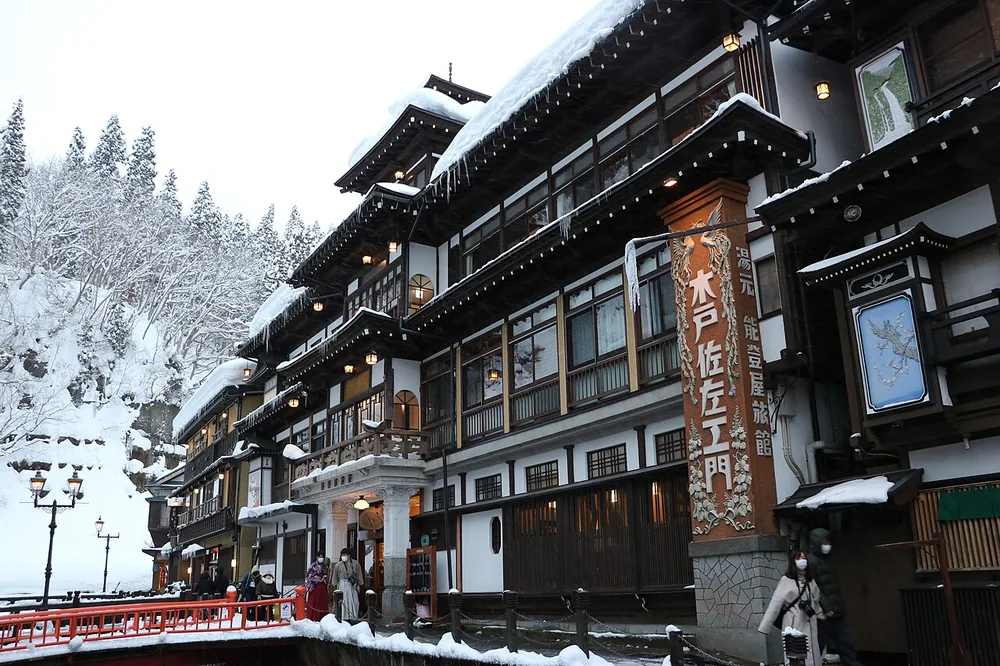
The hot spring street stretches along the Ginzan River. On a first visit, check where the uphill road back to the shuttle sits near Shirogane Bridge before strolling past Kozankaku and Notoya Ryokan. While daylight lasts, it is easier to make out the plaster relief art (kote-e) on Kozankaku's facade and the timber window frames along the inns. Once the lamps come on, step back towards the bridge to frame the river and both banks of ryokan together. In snowy conditions, the diamond-patterned paving down the centre marks the walkway boundary: keep towards the river side and leave the eaves side clear for falling roof snow. Pick wider spots when stopping for photos, then clear the path for people walking both ways.
Shirogane Falls sits at the far end of the street; walking all the way up and turning back adds extra riverside distance before you even reach the exit hill. If you have young children or older relatives and only one priority return bus booked, decide around Notoya Ryokan whether to push on to the falls. If your priority is enjoying the snow rather than covering every metre, enjoy the riverside views first and pick a turnaround point that matches the day's underfoot pace. Obanazawa City currently lists the Silver Mine Cave as temporarily closed for safety inspections. Plan a winter loop covering the wooden inns, bridges and Shirogane Falls, and turn back if you meet a path-closure sign.
For a daytime bath, plan around each bathhouse's daytime reception window. The Obanazawa City Tourism and Products Association lists the public bathhouse Shirogane-yu as open 09:00–15:00, closed Wednesdays, at ¥500 for adults. Takimikan admits day guests 11:00–14:30 (closed Thursdays, open on public holidays), and Kosekiya Annex admits 11:30–13:00 (closed Saturdays, Sundays and public holidays), both listed at ¥1,000 for adults. Soaking and changing eat into your window before a priority return bus, so midday shuttle riders are best off bathing first and strolling with the time left over. If queues are long or your departure is close, sit at the Waraku Footbath on the street instead—just pack a small towel to dry your feet before pulling warm socks back on.
If you want to stay for blue-hour photos while others in your group would rather not wait until full dark, agree a meeting time near the town entrance before walking up to the bus stop. The Ginzanso stop sits above the street: slower walkers can start up the slope early while photographers finish along the river and follow straight behind. Wear touchscreen-friendly gloves so you can still pull up tickets on your phone. With children, use the toilets at Taisho Roman-kan before boarding the shuttle; the other public toilets in town sit ahead of Shirogane Falls.
Snow Diversions, Sold-Out Slots and Rescuing the Day
If you plan to take the Oishida local bus, check both the bus operator's same-day service notices and JR East's train status before setting out, alongside the Ryokan Association's winter entry guidance. Snow can disrupt either leg; even if you arrive smoothly, missing one return bus can knock out dinner or hotel check-in. As soon as you step off at Ginzan, verify the exact boarding point for your journey back. If you came up with one operator and plan to leave with another, note both stops—the last shuttle outside Ginzanso returns to Taisho Roman-kan, which still leaves a distance to Oishida.
Package tours use their own meeting spots and cut-off times, so rejoin the group exactly where your tour leader indicates on arrival. Independent travellers splitting up for photos after taking different buses should send each other a quick photo of the correct return stop showing both the destination board and the operator name.
If evening shuttle slots for drivers are sold out, check the calendar for a midday return ticket instead—you still see the timber ryokan and can fit in a bath before heading back to your hotel for dinner. If seeing the gas lamps lit is non-negotiable, switch dates, check remaining seats on the package bus, or book an evening tour with guaranteed return transport. If you arrive in the morning only to find no usable shuttle seats left, step inside Taisho Roman-kan to regroup. Rather than waiting until late afternoon for a stray return slot, swapping your Ginzan Onsen day with the next day's Yamagata City or Tendo plans often opens up fresh availability and cleaner connections.
For trips close to 7 March 2027, track both the official restriction dates and actual snow cover. The Ryokan Association notes that controls may be extended depending on snowfall, with any extension update expected in early February. Equally, even after timed winter shuttle sales end, Obanazawa City tourism guidance notes that the public car park can still close due to heavy snow—check Taisho Roman-kan's current operating status before booking a hire car. For March itineraries, keep Oishida in reserve as your rail hub and pick between the local bus, park-and-ride shuttle or ryokan transfer once your dates are locked.
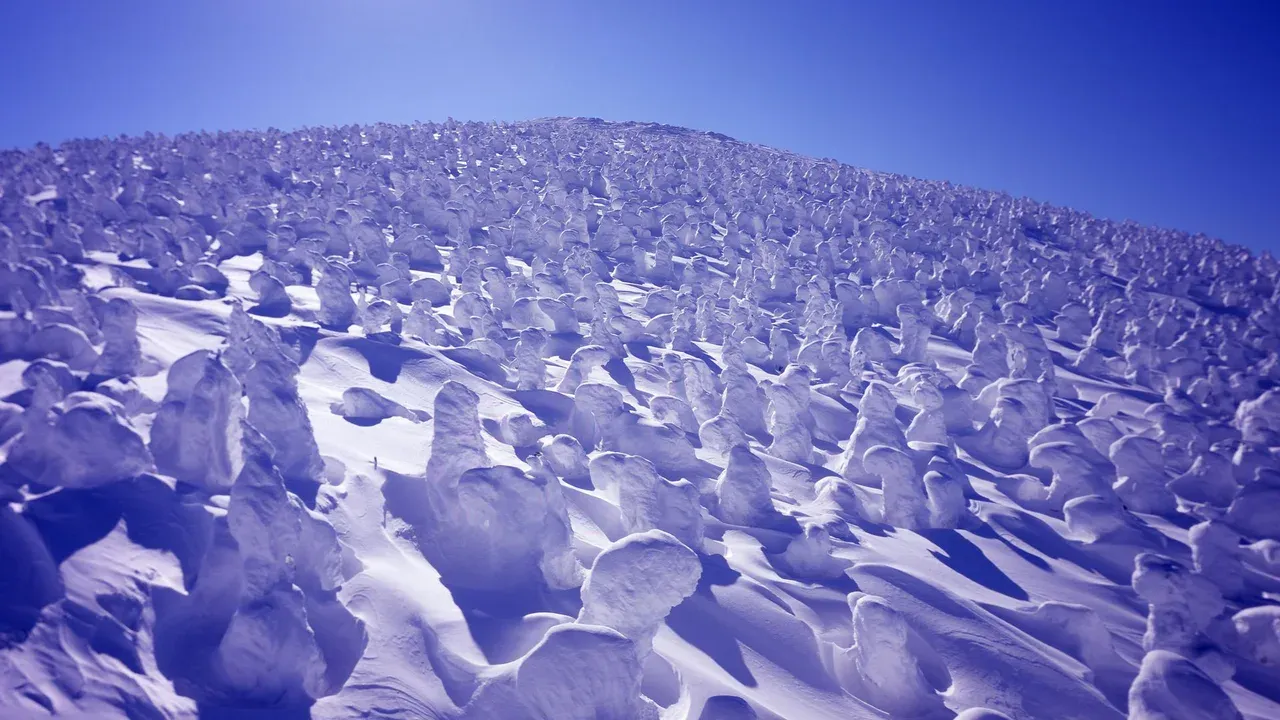
If you are also hoping to see the Zao snow monsters on the same trip, keep your Ginzan bus day and Zao ropeway day separate so you can swap them if mountain weather closes in. On a multi-day itinerary between Yamagata and Sendai, place the timed Ginzan excursion before switching hotels rather than hauling large cases through snow transfers. To compare city bases and hot spring routes, continue with our Sendai, Yamagata and onsen itinerary guide.
A few useful answers
What are the 2026–27 Ginzan Onsen winter traffic control dates?
They are scheduled from 19 December 2026 to 7 March 2027, with day-trip vehicles transferring at Taisho Roman-kan. If heavy snow requires an extension, the Ginzan Onsen Ryokan Association expects to announce an update in early February 2027.
Can I buy self-drive shuttle bus tickets on the day?
Yes. Ticket machines at Taisho Roman-kan sell timed slots on the day subject to availability. Online advance sales run until 17:00 JST the day before travel, cost ¥300 less than same-day fares, and add a ¥165 system fee per booking.
Can I choose my own return time on the shuttle ticket?
Your priority return bus is automatically assigned 90 minutes after your outbound departure. If you want to leave earlier or you miss your priority bus, you can join the standard queue and board when empty seats become available.
Is the bus from Oishida Station the same ticket as the Taisho Roman-kan shuttle?
No. The Hanagasa Bus from Oishida Station charges regular local-bus fares paid in cash on board, whereas the Taisho Roman-kan shuttle sells timed return tickets. The Ryokan Association also publishes separate winter transfer and entry guidance for local-bus passengers.
Do buses still run between 31 December and 3 January?
Yes. On the Hanagasa Bus timetable, specific runs marked with the New Year suspension symbol do not operate—such as the 17:45 departure from Oishida and the 18:21 return from Ginzan. Check the applicable timetable column to choose services without the suspension mark.
What time should I arrive to see the gas lamps lit in Ginzan Onsen?
The Obanazawa City Tourism and Products Association notes that winter lighting begins around 16:30. Drivers can aim for a shuttle from Taisho Roman-kan around 16:00 while allowing walking time to and from Ginzanso. Rail travellers should lock in their return bus and Shinkansen from Oishida first.
Official information and references
Sources used in this guide.
- Ginzan Onsen Ryokan Association: 2026–27 Winter Access, Bookings & Entry Guide
- Obanazawa City Traffic Control Office: Shuttle Route, Priority Returns & Cancellation Fees
- Obanazawa City Traffic Control Office: Regulated Vehicles & Large-Vehicle Parking Reservations
- Obanazawa City Traffic Control Office: Rail, Winter Driving & Airport Access
- Ginzan Onsen Ryokan Association: Access Routes & Prefectural Road Advisories
- Hanagasa Bus: Oishida Station–Ginzan Line & Seasonal Services
- Hanagasa Bus: October 2026–March 2027 Timetable
- JR East: Oishida Station Timetable
- JR East: Oishida Station Map & Accessibility Information
- JR East: Yamagata Shinkansen & Tsubasa Seating
- Ginzan Onsen Ryokan Association: Oishida Direct Tours & Authorised Taxis
- Ginzanso: Oishida Station Pick-Ups & Guest Parking
- Kosekiya Annex: Guest Access & Shuttle Reservations
- Yamagata Airport: Ginzan Onsen Sightseeing Bus & Shared Liner
- Yamako Bus: Sendai–Shinjo Line & Obanazawa Waiting Room
- Yamagata Prefecture: National Route 347 Nabekoshi Pass Road Information
- Obanazawa City Tourism & Products Association: Gas Lamps, Bathhouses & Walking Route
- Obanazawa City: Silver Mine Cave Status & Town Facilities
- Obanazawa City: Ginzan Onsen Public Car Park