From December 19, 2026 to March 7, 2027, day-trippers driving to Ginzan Onsen must park and transfer at Taisho Romankan. Check shuttle fares, release dates, priority return buses, and routes from Oishida Station, Yamagata Airport, and ryokan pickups.
- Region & Focus
- Yamagata, Zao, and Ginzan
- Reading Scope
- 24 min read · 11 chapters · 6 Q&As
- Official Verification
- 19 official sources checkedUpdated November 22, 2026
- Key Topics
- WinterRail travelHot springs
Chapter Route Map (tap any stop)
- How to Choose Your Winter Route to Ginzan Onsen
- Day-Trippers by Car: Parking at Taisho Romankan
- Shuttle Fares and On-Sale Dates by Taisho Romankan Departure Time
- Which Date to Save After Booking, and How Delays or Changes Work
- The 90-Minute Priority Return Window: How Much Time Do You Really Get?
- Taking the Shinkansen to Ginzan Onsen via Oishida Station
- Planning Your Return to Oishida Around the Shinkansen Schedule
- Oishida Direct Tour Buses, Designated Taxis, and Ryokan Pickups
- Approaching from Yamagata Airport, Sendai, or Tendo Onsen
- Start Your Dusk Walk at Shirogane Bridge; Save Day Baths for Daytime
- Snow Detours and Sold-Out Shuttles: How to Salvage the Day
- Quick Q&A
Ginzan Onsen's updated winter traffic restrictions are scheduled to run from December 19, 2026 to March 7, 2027. Day-trippers arriving by car must park at Taisho Romankan and transfer to a paid shuttle bus. Travelers taking the Yamagata Shinkansen from Tokyo to Oishida Station can connect to the Hanagasa Bus or book a direct tour run by the local ryokan association. Overnight guests follow their inn's designated parking or station pickup instructions. If you want to stay until the gas lamps light up, lock in your return ride before choosing your outbound departure.
How to Choose Your Winter Route to Ginzan Onsen
Start with the address on your hotel confirmation. Guests staying overnight in Ginzan Onsen can use their ryokan's designated parking lot, and several inns pick up directly at Oishida Station. If you are staying near Yamagata Station, Tendo Onsen, or Sendai and heading up just for snow views or a day bath, you count as a day-tripper upon arrival. That distinction determines how close you can drive. Splitting a rental car four ways may look cheap, but you still have to factor in per-person shuttle fares and transfer times for the final stretch.
If you are coming from Tokyo and returning the same night, check northbound and southbound Yamagata Shinkansen schedules at Oishida Station first, pick a route bus that leaves a backup train option, and then plan your inbound trip. If you are driving from Yamagata City with a rental car and winter driving experience, set Taisho Romankan directly as your destination. Want to linger through dusk in the snow without an overnight room in the valley? Reserved direct bus tours from Oishida Station and evening tours from Tendo both include guaranteed return transport, making it easy to lock in your exit time.
This season's restricted zone covers Prefectural Route 188 between Taisho Romankan and Ginzan Onsen. Day-tripper rental cars, private vehicles, chartered buses, motorcycles, and bicycles are all routed according to the traffic control office's rules. Once snow piles up along this roughly 2-kilometer stretch, sidewalks become impassable and pedestrians end up walking in traffic along blind curves. In winter, take a vehicle into the hot spring town and wait at Taisho Romankan while queuing for the shuttle. Keeping the road clear for ambulances and fire trucks is the entire reason for the restriction.
| Travel Style | Where You Enter | What to Arrange First |
|---|---|---|
| Day-tripper by car | Transfer to shuttle at Taisho Romankan | Pre-purchase timed round-trip shuttle tickets |
| Day-tripper by Shinkansen | Board Hanagasa Bus at Oishida Station | Check round-trip bus times and association entry notices for your travel date |
| Oishida Station package tour | Meet at West Exit; direct bus to Ginzanso | Book seats in advance; return ride is included |
| Overnight ryokan guest | Ryokan-designated lot or station pickup | Register pickup with your inn and save the meeting or parking address |
| Designated reserved taxi | Direct entry from designated pickup points | Contact an eligible taxi company to arrange pickup points and round-trip rides |
From December 19, 2026 to March 7, 2027, day-trippers driving to Ginzan Onsen must park and transfer at Taisho Romankan. Check shuttle fares, release dates, priority return buses, and routes from Oishida Station, Yamagata Airport, and ryokan pickups.
Day-Trippers by Car: Parking at Taisho Romankan
Enter "Taisho Romankan" into your GPS, located along the prefectural road in the Kamiyanagiwatado / Jubunichi area of Obanazawa City, Yamagata Prefecture. Searching for "Ginzan Onsen" tends to route drivers straight into the restricted hot spring street, while "Ginzan Onsen Kyodo Parking" points to an inner stop further up the road. During the control period, day-trip passenger cars must park at Taisho Romankan and transfer. Standard car spaces are assigned on arrival, whereas your shuttle reservation is tied to a specific departure slot. Even with a 15:00 ticket, pulling into the parking lot at 15:00 will not leave enough time to park, walk to the bus stop, and line up.
The shuttle departs Taisho Romankan, passes the Ginzan Onsen Kyodo Parking area, and reaches the front of Ginzanso in about 10 minutes. From Ginzanso to the hot spring street entrance is a sloped walk that the traffic control office estimates at roughly 10 minutes in winter. It is downhill going in and uphill coming back, so budget time for both. If you are traveling with older adults, choose a departure time that leaves room for slow walking and rests; anyone walking all the way to Shirogane Falls also needs to add the riverside walk back to the entrance before tackling the hill. Take note of the return bus stop when you get off so you are not hunting for your bus destination in the dusk crowd.
Winter driving requires snow tires. The Ginzan Onsen Ryokan Association's access page advises drivers to avoid Prefectural Route 29 over Seaburi Pass from Murayama City. If your GPS routes you from Miyagi via National Route 347 over Nabekoshi Pass, check Yamagata Prefecture's road conditions for that section before committing to the Obanazawa approach. Save Taisho Romankan's location and your return route before setting out in a rental car, and count refueling and car-return time from the moment you get back to your parked car. If you have an evening rental drop-off deadline, stick to daytime shuttle slots and build road-condition buffers into your return drive.
If you are driving a camper van or renting a 9-seater, check the vehicle's total length in your rental paperwork. From January 12 to 31, 2027, Taisho Romankan is trialing reservations for oversized vehicles—defined as vehicles 6 meters or longer including towed trailers—specifically for arrivals starting between 14:00 and 17:00. You can book a 30-minute priority entry window; arrivals outside that window are handled first-come, first-served. The notice lists a base fee of ¥2,000 per vehicle plus the booking system's handling fee. This reservation secures only the parking space; shuttle seats for passengers must still be purchased separately.
Shuttle Fares and On-Sale Dates by Taisho Romankan Departure Time
Operated by Ginzanso, the shuttle runs every 20 minutes. Departures from Taisho Romankan start at 9:00 and leave at :00, :20, and :40 past each hour until the final bus at 18:00. Return buses depart from in front of Ginzanso starting at 9:10, running at :10, :30, and :50 past the hour until the last bus at 19:30. Fares are charged round-trip based on your outbound time slot, and pre-purchasing online saves ¥300 over same-day tickets for the same slot. Midday pricing starts at 11:00, and afternoon pricing kicks in at 14:00.
Departures between 11:00 and 13:59 are the cheapest, ideal for strolling, admiring the historic facades, and soaking in a day bath. Choosing between 13:40 and 14:00 comes down to a ¥500-per-person difference in advance pricing for just a 20-minute shift in your priority return slot. Whether those extra 20 minutes matter depends on how they line up with your lunch or bath schedule. If you are aiming for twilight, work backward from when you want to leave the valley and pick a bus that gets you in before dark with enough time to walk back up to Ginzanso.
Departures before 14:00 go on sale on November 1, 2026 at 9:00 JST for the entire winter control season. Departures from 14:00 onward are released in three batches: December 19–31 goes on sale November 1 at 9:00 JST; January 2027 evening slots open December 1, 2026 at 0:00 JST; and February 1–March 7 slots open January 1, 2027 at 0:00 JST. When browsing the booking calendar, always check whether the release window for your chosen departure time has already opened.
Online purchases require a credit card and incur a ¥165 system fee per transaction. Elementary-school children and younger ride free on a one-to-one basis with paying adults in the same booking—for example, two adults can bring two eligible children at no charge. Two adults with two eligible children booking the 11:00 slot in advance pay ¥1,565 total. Inn baths and the public bathhouse are paid separately. Confirm your headcount before checking out: the association states that you cannot add passengers to an existing order, so latecomers must place a separate booking.
| Departure from Taisho Romankan | Online Advance | Same-Day (If Available) |
|---|---|---|
| 9:00–10:59 | ¥1,000 | ¥1,300 |
| 11:00–13:59 | ¥700 | ¥1,000 |
| 14:00–18:00 | ¥1,200 | ¥1,500 |
Which Date to Save After Booking, and How Delays or Changes Work
Access the reservation calendar from the Ryokan Association's winter access page, choose your travel date and outbound departure from Taisho Romankan, and review the schedule on the payment screen. Advance sales close at 17:00 JST the day before travel. The association warns that on devices set to time zones behind Japan, the ticketing platform may display the participation date one day early. Always verify your actual travel date against the product name and the event date field, and read departure times in JST as printed on your ticket. After checkout, save your travel date, outbound departure, priority return time, and order confirmation on your phone, and share the exact same details with everyone in your group.
Without an advance ticket, you can buy a same-day timed ticket from the vending machine at Taisho Romankan while seats remain. The traffic control office warns that walk-up visitors sometimes wait over an hour. If only late departures are left when you arrive, calculate the walk from Ginzanso down to the street and back up before the final return bus. If you already paid and arrive late, the association states that staff will place you on an available bus based on on-site conditions. Show your original ticket to staff, confirm which outbound and return buses you can take, and plan your time in the valley around that updated window.
Ticket time slots cannot be modified directly. To switch times, cancel your booking through your account page on the ticketing site and buy a new ticket—cancellations are not accepted by phone or at the counter. Cancellation fees set by the traffic control office are calculated from your scheduled travel date: 20% at 20 to 8 days out, 30% at 7 to 2 days out, 50% the day before, and 100% on the day of travel. If your plans shift, check the calendar for open slots on your new date before canceling your original ticket. If you are flying into Tohoku and picking up a rental car the same day on a tight connection, keep your arrival afternoon flexible and save Ginzan Onsen for the next day.
The 90-Minute Priority Return Window: How Much Time Do You Really Get?
Your ticket automatically assigns a priority return bus 90 minutes after your outbound departure, with no extra priority fee required. Take the 16:00 shuttle from Taisho Romankan, and your priority return departs Ginzanso at 17:30. Factoring in about 10 minutes for the bus ride and 10 minutes to walk down, you reach the hot spring street around 16:20. Since the return involves walking uphill and lining up about 10 minutes before departure, you get roughly 50 usable minutes on the street. Snow, icy footing, traffic delays, or a line at the entrance will cut directly into those 50 minutes.
If your main goal is seeing the lamps lit, focus your walk around Shirogane Bridge and the stretch in front of Notoya Ryokan. The Obanazawa City Tourism and Products Association notes that the gas lamps generally come on around 16:30 in winter. Catching the 16:00 shuttle usually gives you time to watch twilight settle along the river before heading back up for the 17:30 bus. If you want to eat first and photograph the street after full dark, pick a later priority return—or save dinner for Yamagata, Tendo, or Obanazawa. A 17:00 departure pairs with an 18:30 return, while the final 18:00 outbound bus lines up with the 19:30 last return; anyone walking at a slower pace should move up one or two slots.
To leave earlier, join the general standby line for open seats; if you miss your priority bus, you also move to the general standby line. At that point, the posted schedule only tells you when the next bus pulls up—if it fills before your turn, you wait for the next one. When you need to leave the valley depends on the latest you can get back to your car. If your hotel has a fixed dinner check-in or your rental agency has a strict drop-off cutoff, treat your priority return bus as a hard deadline. When traveling with someone who needs breaks, skip the extra bridge and save your energy for the uphill walk and wait.
Taking the Shinkansen to Ginzan Onsen via Oishida Station
From Tokyo, Ueno, or Omiya, look for Yamagata Shinkansen Tsubasa services that stop at Oishida Station. Search specifically with Oishida as your destination: some Tsubasa trains terminate at Yamagata Station, requiring a transfer onto a local or Shinjo-bound train to reach Oishida. If you are starting from Yamagata Station, JR timetables show both Shinkansen and local rail connections to Oishida so you can compare arrival times. Because long-distance Tsubasa cars from Tokyo are all-reserved seating, map out your Oishida bus options before locking in your round-trip Shinkansen seats.
From Oishida Station, head to the station-front bus stop marked for Ginzan Onsen to catch the Hanagasa Bus. Regular buses take about 26 to 43 minutes, while winter express services take roughly 30 minutes. The adult one-way fare is ¥1,000, paid in cash upon boarding; the operator notes that change machines only accept ¥1,000 bills. Children, passengers with disabilities, and one eligible companion pay ¥500 one-way. Bring ¥1,000 notes and coins in your pocket, separate from the credit card you use for shuttle bookings. Ryokan pickups and package tour buses also load out front, so check the operator name and destination sign—and show your confirmation to the driver if multiple minibuses pull in at once.
Bus boarding follows Hanagasa Bus's first-come, first-served rules, while entry into the valley follows the Ryokan Association's winter flow. The traffic control office classifies the Oishida route bus as standard public transit. However, the Ryokan Association's winter notice states that route-bus riders without advance entry reservations may be required to disembark at Taisho Romankan and transfer to the shuttle, and warns that even buses reaching the town side may see shuttle riders admitted first during peak crowds. When boarding at Oishida, confirm with the driver where your specific bus drops off and where to queue. If you must catch a train back the same evening, take an earlier inbound bus so potential transfers and entry lines happen before dusk. Travelers who want guaranteed round-trip entry can book the priority-access package tour, while overnight guests should reserve their ryokan's station pickup.
Hanagasa Bus lists winter-only express departures separately above the regular timetable. From December 1 to March 31, seasonal express buses leave Oishida at 12:25, 15:30, and 17:35, with return trips from Ginzan at 13:05, 16:10, and 18:10. On the regular timetable, watch the 6:40 and 7:50 columns carefully: those buses originate at Obanazawa City Hall, leaving the Oishida Station cell blank. From December 31 to January 3, individual runs marked for year-end suspension do not operate—including the 17:45 outbound and 18:21 inbound buses. Read every column against its date footnotes before finalizing your plan.
Planning Your Return to Oishida Around the Shinkansen Schedule
The trickiest part of watching dusk settle in Ginzan Onsen is getting back to Oishida Station afterward. On the published timetable, the 16:35 regular bus gets you back to Oishida at 17:11, whereas the 18:10 winter express arrives at 18:40—a gap of nearly 90 minutes. Decide up front whether you want that time on the hot spring street or as a buffer at the station. Day-trippers facing a long wait for the next Shinkansen are often better off taking the earlier return bus. The bus operator also warns that the 18:21 departure tends to get crowded; on heavy snow days or peak weekends, leaving one slot earlier saves you a long cold wait.
For trains back toward Tokyo, open JR East's Oishida Station timetable under the "Yamagata / Fukushima (Upbound)" direction, match the weekday or weekend/holiday calendar for your travel date, and check operating notes for seasonal trains. Once the bus drops you at the station, factor in time to cross the concourse, reach the right platform, and pick up tickets. If you need to collect reserved seats from a ticket machine at Oishida, do it during a quiet moment when you first arrive. JR East publishes an Oishida Station map online, which is worth checking ahead of time if you have heavy luggage or companions needing elevator access. Save your return train details before leaving Tokyo so you can check live Shinkansen status on your phone if snow slows down the buses. Buses and trains run independently—booking a Shinkansen one train later than the tightest connection is far more reliable than cutting it to the minute.
If you arrive at Oishida in the afternoon and find a long bus line, verify that enough return buses remain before getting on an outbound ride. Travelers staying in Yamagata City can leave Ginzan a little earlier and eat dinner back in town instead of squeezing onto the same post-dusk bus as everyone else. If you have to return to Tokyo the same night and still want a twilight stroll, compare the package tour bus's return arrival against the evening Shinkansen departures first. When the final train transfer looks too tight, turning the trip into an overnight stay in Yamagata City lets you move on to Zao or other stops the next morning.
Oishida Direct Tour Buses, Designated Taxis, and Ryokan Pickups
The Ginzan Onsen Ryokan Association's direct bus tours from Oishida Station are scheduled for December 25, 2026 through March 7, 2027 at ¥5,500 per person. The 14:30 departure reaches Ginzanso at 15:10, departs at 17:20, and returns to Oishida at 18:00. The 16:10 departure reaches Ginzanso at 16:50, departs at 19:00, and returns to the station at 19:40. Both meet at the bus rotary outside Oishida Station's West Exit with check-in 10 minutes prior; online credit card sales close at 17:00 JST the day before. You walk into the valley from Ginzanso and return there to board. Children occupying a seat pay full fare; only children under age 3 sitting on a lap ride free. The first tour captures daylight turning to dusk, while the second gives you mostly nighttime views—use the 19:40 return as your baseline when picking a train.
The Ryokan Association lists three designated taxi companies: Tsubasa Taxi, Shinonome Taxi, and Obanazawa Taxi. Only qualifying rides booked through these three operators from Yamagata Airport, Oishida Station, or central Obanazawa qualify for direct vehicle entry. When calling to reserve, give your exact date, pickup location, passenger count, and luggage count, and ask where they drop off and pick up inside the valley. If anyone in your group struggles on snowy hills, ask how close the driver can safely pull up. If you plan to leave after the lamps are lit, lock in your return pickup when booking and walk to that agreed spot when it is time to leave.
Overnight guests should follow their specific ryokan's access instructions. Ginzanso's website lists free pickups from Oishida Station at 11:10, 13:40, and 15:45. Kosekiya Annex also offers Oishida Station transfers if requested at least one day before arrival. Give your ryokan your exact arrival train number in advance and ask where luggage will be handed off. Because snow covers the final walking approach, families with large suitcases, strollers, or anyone with limited mobility should tell the inn directly and ask precisely how far the shuttle vehicle can reach.
Even within the same ryokan group, parking rules vary by property. Ginzanso directs driving guests to pull up briefly at its main entrance, whereas Kosekiya uses a designated parking lot just before Ginzanso and sends staff to guide guests from there once notified. Kosekiya Annex's access page even maps out the roughly 50-meter walk—turn left out of Oishida Station's ticket gate toward the bus rotary. If your inn drops you back at the station on departure day, confirm the next morning's pickup spot at check-in so you do not drag bags to the public bus stop by mistake. Before getting behind the wheel, save both the parking lot and drop-off point sent by your ryokan on your map. Arriving late? Check your half-board dinner start time first and count backward for the mountain drive.
Approaching from Yamagata Airport, Sendai, or Tendo Onsen
If you land at Yamagata Airport, start with the airport's Obanazawa and Ginzan Onsen access page. Hanagasa Bus runs an unreserved, cash-only airport sightseeing bus to Ginzan Onsen for ¥2,000 one-way per adult. On the published winter timetable running October 25, 2026 to March 27, 2027, the 9:40 and 15:20 airport departures continue to Ginzan Onsen, while the 18:45 departure terminates at Obanazawa City Hall. All three appear on the same chart, so late arrivals must plan onward transport based on where they are sleeping. Overnight guests in Ginzan should let their ryokan know their flight number; guests staying in Yamagata City can head into town first and enter Ginzan via Oishida the next morning.
Another option is the airport's reservation-only shared taxi, the Oishii Yamagata Airport Kanko Liner, which accepts bookings until 17:00 JST the day before and schedules pickups around flight arrivals. If your itinerary combines a flight arrival with check-in—or a holiday bus schedule on departure day—check both the inbound and outbound airport timetables separately. When flight check-in deadlines cut too close to the sightseeing bus's arrival at the airport, visit Ginzan Onsen the day before and travel directly from your hotel on departure day.
From Sendai by public transit, ride Yamako Bus's Sendai–Shinjo highway route and transfer at the Obanazawa Waiting Area (Obanazawa Machiaijo) to a Hanagasa Bus bound for Ginzan. Shinjo-bound Yamako buses board at Stop 23 outside Sendai Station. Special schedules run on New Year's Day, with weekend/holiday timetables in effect from December 29 to 31 and January 2 to 3. Check both operators' tables separately for the trip back, paying close attention to whether your bus from Ginzan actually stops at the Obanazawa Waiting Area—several late express buses stop at Obanazawa City Hall and bypass the waiting area, so do not assume City Hall times work for that transfer. If you are returning to Sendai the same day, build your stroll around a confirmed return bus; arriving by late morning gives you far more flexibility.
Staying in Tendo Onsen with companions who just want a short evening walk after dusk? Look into DMC Tendo Onsen's winter night tour. The association's tour page lists check-in at 15:15 at the Tendo Onsen Tourist Lounge and departure at 15:25, with entry included at a standard adult rate of ¥9,800. It works cleanly when you are based in Tendo. If you planned to stay in Yamagata City, factor in the late-night trip back from Tendo before deciding whether to switch hotels to Tendo, take the Oishida train route instead, or visit Ginzan at midday.
Start Your Dusk Walk at Shirogane Bridge; Save Day Baths for Daytime
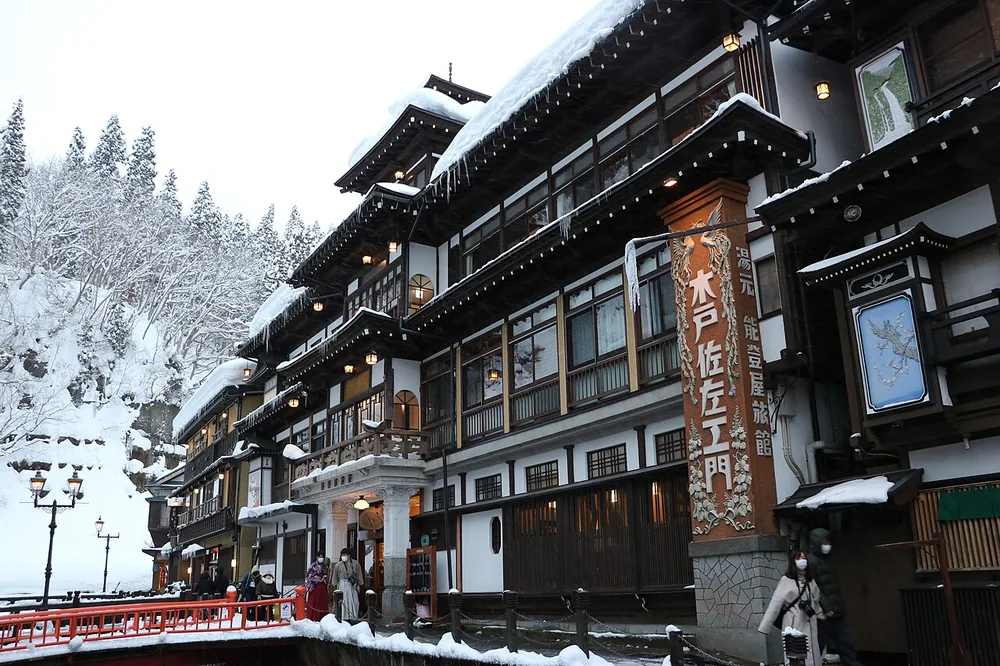
Ginzan Onsen lines both banks of the Ginzan River. On your first visit, pause near Shirogane Bridge to get your bearings and note which side leads back up the hill before walking toward Kozankaku and Notoya Ryokan. Daylight makes it easier to spot the plaster relief art on Kozankaku's facade and the carved wooden window frames along the inns. Once the streetlamps come on, returning near the bridge frames both rows of ryokan and the river in one view. When snow is falling, the diamond-patterned stone strip down the center of the street marks the walking zone—stay toward the river side and leave the area under the eaves clear for sliding roof snow. Step into wider spots when framing photos, then keep the path moving in both directions.
Shirogane Falls marks the far end of the street; walking all the way there adds an extra stretch along the river before you even begin the climb out. If you are with children or older relatives and locked into one priority return bus, decide around Notoya Ryokan whether to push on to the falls. To maximize snow-viewing time without rushing the uphill walk, focus on the riverside inns first and set your turnaround point based on how fast your group walks on packed snow. Obanazawa City currently lists the Silver Mine Cave as closed for safety inspections, so keep your winter walk along the historic street, bridges, and Shirogane Falls, turning back at any trail closure signs.
If you want a day soak, plan around daytime bath hours. The Obanazawa City Tourism and Products Association lists the public bathhouse Shirogane-yu as accepting bathers from 9:00 to 15:00 (closed Wednesdays; ¥500 for adults). Takimikan accepts day guests from 11:00 to 14:30 (closed Thursdays, except national holidays), and Kosekiya Annex from 11:30 to 13:00 (closed Saturdays, Sundays, and national holidays); the association lists both inns at ¥1,000 for adults. Soaking and changing clothes eat straight into your window before a priority return bus, so midday shuttle riders should bathe first and stroll afterward. If lines are long or your return bus is close, stop at the outdoor Waraku Footbath on the main street instead—just pack a small towel to dry your feet before pulling warm socks back on.
If you want twilight photos while others in your group prefer not to wait until full dark, set a meeting time near the valley entrance and confirm when to walk up to the bus stop. Since the Ginzanso pickup sits uphill above the hot spring street, older travelers can head up early while photographers double back along the river straight to the bus. Make sure you can operate your phone and pull up your ticket while wearing gloves. Families with young kids should use the restrooms at Taisho Romankan before boarding the shuttle; the only other public restrooms in town sit just in front of Shirogane Falls.
Snow Detours and Sold-Out Shuttles: How to Salvage the Day
If your plan relies on the Oishida route bus, check the bus operator's daily service updates alongside JR East's train status before heading out, then review the Ryokan Association's winter entry guidance. Both legs are vulnerable to heavy snow—even if your inbound connection holds, missing one return bus can disrupt your hotel check-in or dinner. As soon as you arrive in Ginzan, locate your exact return bus stop before wandering off. If you ride different operators up and down the mountain, keep track of each stop separately: the last shuttle from Ginzanso heads back to Taisho Romankan, leaving you miles short of Oishida Station if you board the wrong one.
Package tours have their own meeting spots and schedules; once you split up to explore, return strictly to the point your tour guide indicated when you stepped off the bus. Independent travelers mixing different transit options who separate for photos should snap a picture of their return bus stop—making sure both the destination and operator name are visible—and send it to their companions.
If evening driving shuttles are sold out, look for a midday round-trip slot on the booking calendar instead—you still get time for the wooden ryokan facades and a hot bath, then dinner back near your hotel. If seeing the gas lamps is non-negotiable, shift your dates, look for open seats on the Oishida package tour, or book an evening tour with guaranteed return transport. If you show up in the morning only to find no shuttle seats available, step back inside Taisho Romankan to regroup. Rather than waiting around until late afternoon for a slim chance at a ride, swapping Ginzan Onsen with your Yamagata City or Tendo plans for the next day often opens up fresh tickets and cleaner transit.
For trips near March 7, 2027, track both the official restriction dates and actual snow cover. The Ryokan Association notes that the control period may be extended depending on snowfall, with an update expected in early February. Even after winter timed tickets stop selling, Obanazawa City tourism notices warn that the Kyodo Parking lot can still close due to heavy snow, so check Taisho Romankan's current operations before booking a rental car for a day trip. Keep Oishida Station as your rail base for early March trips, and wait until your dates firm up to choose between the route bus, park-and-ride shuttle, or a ryokan pickup.
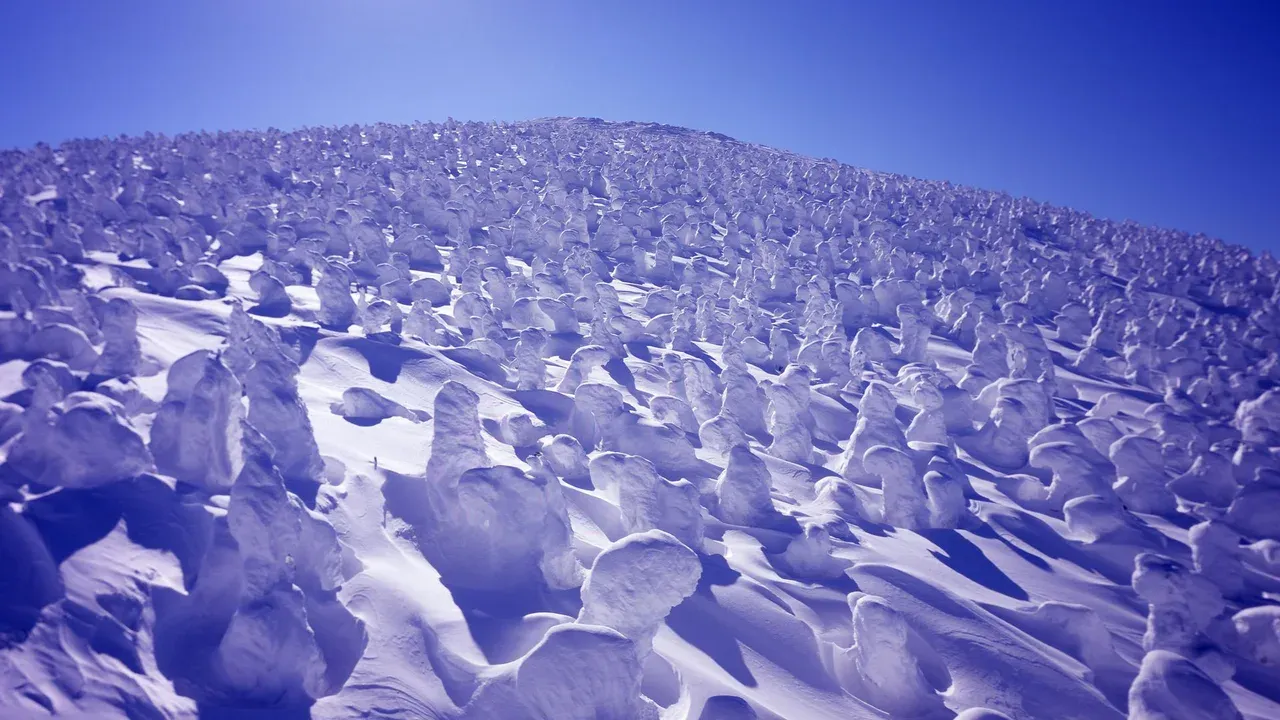
Planning to see the Zao snow monsters on the same trip? Keep your Ginzan bus day and your Zao Ropeway day separate so you have room to swap days if storms roll in. On a multi-day itinerary between Yamagata and Sendai, finish your time-sensitive Ginzan visit before switching hotels rather than hauling big suitcases through snowy shuttle transfers. To compare city bases and hot spring loops, continue with our Sendai, Yamagata, and hot spring itinerary guide.
A few useful answers
What are the dates for Ginzan Onsen's 2026–27 winter traffic restrictions?
The restrictions are scheduled from December 19, 2026 to March 7, 2027, requiring day-trip vehicles to transfer at Taisho Romankan. If snowfall forces an extension, the Ginzan Onsen Ryokan Association plans to post an update in early February 2027.
Can I buy day-tripper shuttle tickets at Taisho Romankan on the day of my visit?
Yes. Ticket vending machines at Taisho Romankan sell timed tickets on the day of travel as long as seats remain. Online advance bookings are open until 17:00 JST the day before, save ¥300 per ticket over walk-up prices, and carry a ¥165 system fee per order.
Can I choose my own return time on the shuttle ticket?
Your ticket automatically assigns a priority return bus 90 minutes after your outbound departure. If you want to leave earlier or miss your priority slot, you can join the general standby queue and board when seats open up.
Do Oishida Station buses and the Taisho Romankan shuttle use the same ticket?
No. Hanagasa Bus services from Oishida Station charge standard route-bus cash fares onboard, while the Taisho Romankan shuttle sells timed round-trip tickets. The Ryokan Association also publishes separate winter transfer and entry rules for route-bus passengers.
Do buses still run between December 31 and January 3?
Yes, though select Hanagasa Bus departures marked for year-end suspension do not operate—such as the 17:45 bus from Oishida and the 18:21 return from Ginzan. Check the operator's seasonal timetable carefully to pick round-trip runs that remain in service.
What time should I arrive to see the gas lamps lit in Ginzan Onsen?
The Obanazawa City Tourism and Products Association lists winter lamp lighting at roughly 16:30. Drivers can aim for a shuttle around 16:00 from Taisho Romankan, leaving enough time to walk to and from Ginzanso, while rail travelers should lock in their return bus and train from Oishida first.
Official information and references
Sources used in this guide.
- Ginzan Onsen Ryokan Association: 2026–27 Winter Access, Reservations & Entry Guide
- Obanazawa City Traffic Control Office: Shuttle Route, Priority Return & Cancellation Fees
- Obanazawa City Traffic Control Office: Vehicle Rules & Oversized Vehicle Parking Reservations
- Obanazawa City Traffic Control Office: Rail, Winter Driving & Airport Access
- Ginzan Onsen Ryokan Association: Access Routes & Prefectural Road Advisories
- Hanagasa Bus: Oishida Station–Ginzan Line & Seasonal Services
- Hanagasa Bus: October 2026–March 2027 Route Timetable
- JR East: Oishida Station Timetable
- JR East: Oishida Station Map & Accessibility Info
- JR East: Yamagata Shinkansen & Tsubasa Seating
- Ginzan Onsen Ryokan Association: Oishida Direct Tours & Designated Reserved Taxis
- Ginzanso: Oishida Station Pickups & Ryokan Parking Instructions
- Kosekiya Annex: Guest Access & Shuttle Reservations
- Yamagata Airport: Ginzan Onsen Sightseeing Bus & Shared Liner
- Yamako Bus: Sendai–Shinjo Line & Obanazawa Waiting Area
- Yamagata Prefecture: National Route 347 Nabekoshi Pass Road Information
- Obanazawa City Tourism and Products Association: Gas Lamps, Baths & Walking Routes
- Obanazawa City: Silver Mine Cave Status & Hot Spring Street Facilities
- Obanazawa City: Ginzan Onsen Kyodo Parking