Skiing at Hakkoda splits across two distinct sites: three groomed pistes at Hakkoda International Ski Resort for beginners, and two ungroomed snow-monster runs via the Hakkoda Ropeway for intermediates and experts. Compare lift passes and ropeway fares, the 15:40 last winter ascent, the 80-minute JR Bus ride from Aomori Station, and Sukayu Onsen's revised Hiba Sennin Buro bath fees to plan a day trip or overnight stay.
- Region & Focus
- Aomori and Oirase
- Reading Scope
- 18 min read · 9 chapters · 7 Q&As
- Official Verification
- 9 official sources checkedUpdated 20 November 2026
- Key Topics
- ItinerariesSeasonsHot springs
Chapter Route Map (tap any stop)
- Two Separate Ski Areas: Groomed Base Pistes vs Ropeway Snow Monsters
- Separate Ticketing: Base Lift Passes vs Ropeway Fares
- 2026–27 Winter Timetable: Ropeway Opens at 09:00, Last Ascent at 15:40
- Where Beginners Start: Kansuizawa and Low-Key Equipment Hire
- Getting There: 80-Minute Winter JR Bus and ¥460 Sukayu Shuttle
- Stay on the Mountain or Return to Aomori? Evenings at Sukayu's Sennin Buro
- Other Mountain Stays and Afternoon Plans for Non-Skiers
- Weather Holds and Backups: Plan Before You Climb
- Three Ready-Made Day Plans by Ability
- Quick Q&A
Before clipping into your skis at Mount Hakkoda in Aomori, understand that the mountain is split into two separate operations. At the base, Hakkoda International Ski Resort is the only area with groomed runs—three pistes where beginners must start. Higher up, the Hakkoda Ropeway carries skiers to the Direct and Forest snow-monster runs, both entirely ungroomed and strictly for intermediates and experts confident in deep powder. Non-skiers are equally well served by summit snow-monster viewing and the historic cypress baths of Sukayu Onsen. Anchor your itinerary around three fixed winter timings: the first ropeway at 09:00, the final uphill ascent at 15:40, and the 80-minute JR Bus ride from Aomori Station.
Two Separate Ski Areas: Groomed Base Pistes vs Ropeway Snow Monsters
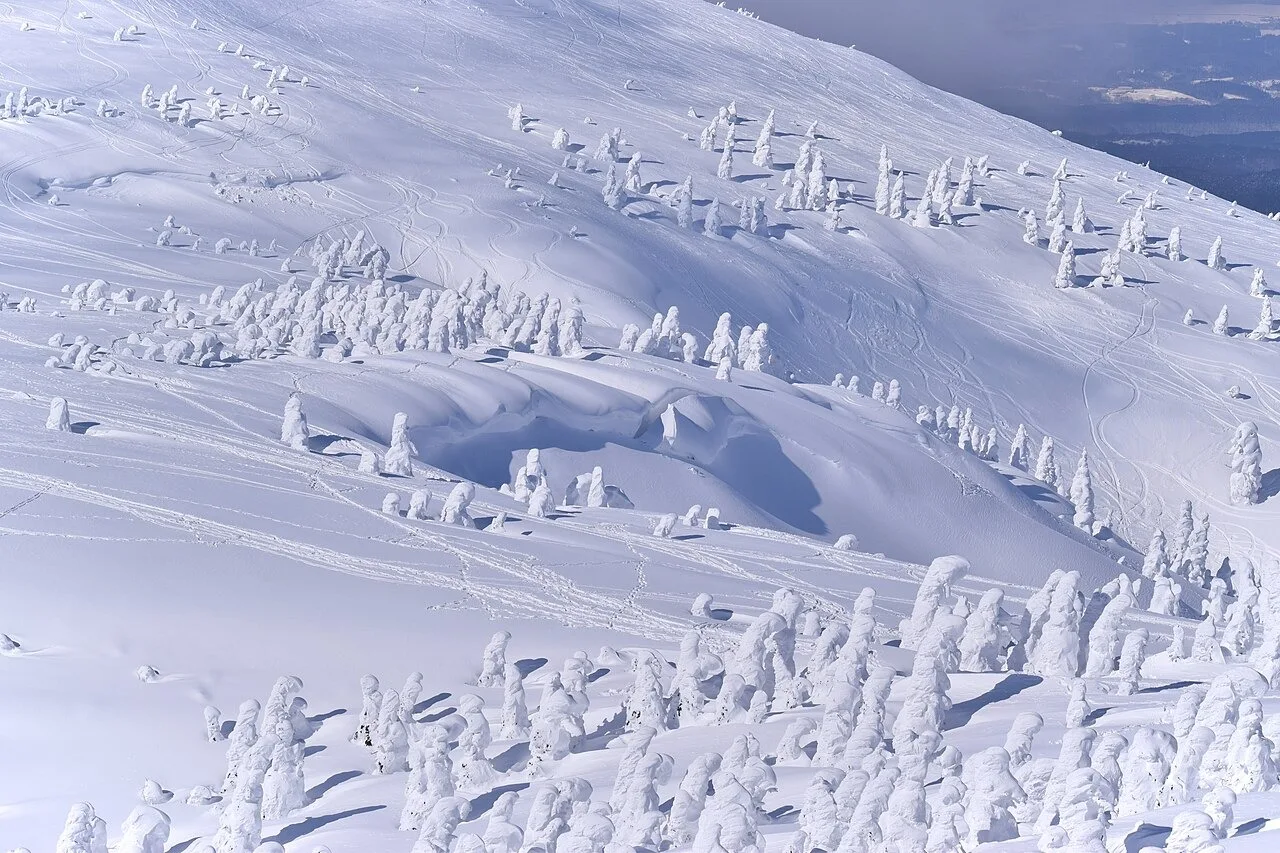
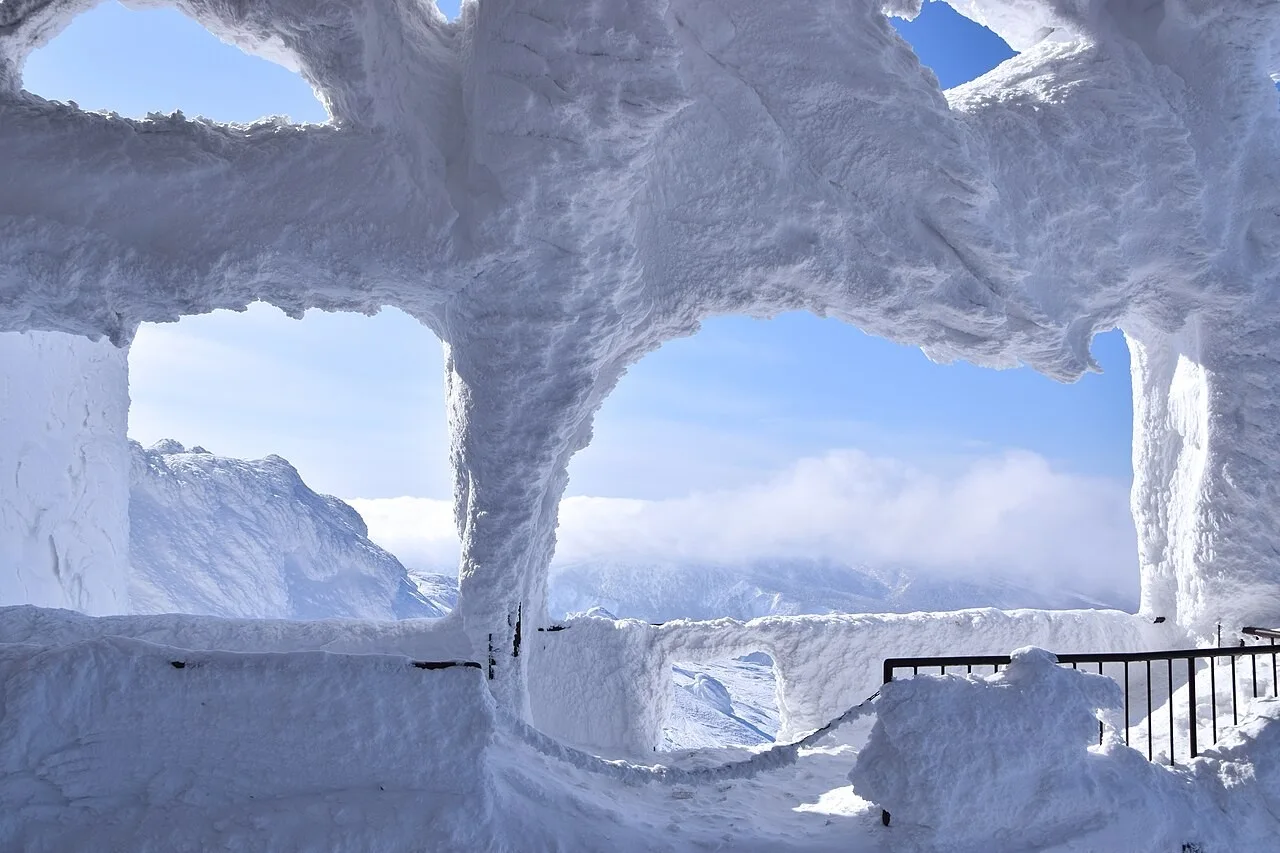
Skiing on Mount Hakkoda is split between two independent facilities that happen to share the same mountain base. Set around Kansuizawa just below the ropeway terminal, Hakkoda International Ski Resort is the only place on the entire mountain with mechanically groomed pistes—a point its website states plainly as "the only ski area on Mount Hakkoda where you can enjoy groomed runs". Its season runs for five full months from late November through Golden Week in early May, with a dedicated Snow Park opening from April. Next door, the Hakkoda Ropeway climbs to the summit of Mount Tamoyachidake in 10 minutes, feeding two ungroomed routes that weave through dense clusters of snow monsters—officially reserved for intermediate and advanced skiers. Tickets for the two areas are entirely separate and cannot be combined. Many regulars spend the morning warming up on the groomed base runs before riding the big ropeway after lunch for summit powder. First snow arrives between late October and November, and skiing continues from December until mid-May—far longer than the winters around Tokyo—making the 10-minute aerial glide above the frost-covered trees one of Aomori's signature winter sights.
Comparing the piste statistics makes it easy to gauge where you belong. Of the three groomed trails at Hakkoda International Ski Resort, the gentlest is Kansuizawa at 1,100 metres long with a maximum gradient of 23 degrees; Furikozaka runs 700 metres at up to 27 degrees, and Slalom spans 700 metres at up to 30 degrees. From the top of the ropeway, the Direct Course averages 11 degrees over 3.5 kilometres, while the Forest Course averages 8 degrees over 5 kilometres, though both pitch up to 30 degrees at their steepest. Direct hugs the surreal snow-monster formations from top to bottom, whereas Forest drops down a steep opening kilometre before easing into a long, rolling glade. First-time alpine skiers at Hakkoda are wise to spend the whole morning finding their balance on Kansuizawa. Do not head up the ropeway until you can link smooth turns in deep, uncompacted powder—falling in waist-deep snow drains your legs simply trying to stand back up.
Beyond the two in-bounds summit runs, six backcountry mountain-traverse routes descend towards Sukayu Onsen, Hotel Jogakura, and neighbouring valleys—all lying outside the managed ski boundary. Resort authorities warn of severe cornice collapses and hidden crevasses, strictly prohibiting solo entry into the backcountry. Since the 2018–19 winter season, the Mt Hakkoda Local Rules have stipulated that anyone rescued outside the patrolled area must bear the full cost of the operation. Among these routes, Miyayama, Chuo, and Jogakura typically open in early March, while Dozo, Hakkoda Onsen, and Hokibadai wait until early April. Unless you are travelling with a qualified mountain guide, stay firmly within the marked pistes and never follow tracks ducking under boundary ropes.
Compared with family-oriented resorts such as Kuju in Kyushu (which highlights graded family lessons, free shuttles, and English tuition, opening 11 December for 2026–27) or Mount Rokko in Kansai (which packages snow play zones, Snoil Kids classes, and international visitor lessons into all-in-one tickets), Hakkoda's character could not be more different. There are no children's snow-play parks or tidy package bundles here; in return, you get dry high-altitude powder, a five-month season, and the thrill of skiing straight through a forest of snow monsters 10 minutes after boarding a cable car. Confident skiers capable of parallel turns will love it, whereas families hoping to build snowmen or go sledging with toddlers will have a far easier day at Kuju or Mount Rokko.
Skiing at Hakkoda splits across two distinct sites: three groomed pistes at Hakkoda International Ski Resort for beginners, and two ungroomed snow-monster runs via the Hakkoda Ropeway for intermediates and experts. Compare lift passes and ropeway fares, the 15:40 last winter ascent, the 80-minute JR Bus ride from Aomori Station, and Sukayu Onsen's revised Hiba Sennin Buro bath fees to plan a day trip or overnight stay.
Separate Ticketing: Base Lift Passes vs Ropeway Fares
Skiing the groomed slopes at the base requires a Hakkoda International Ski Resort lift pass, while riding the big cable car to view snow monsters or ski powder requires a Hakkoda Ropeway ticket—the two systems are completely separate. For the December 2026 to May 2027 season, International Ski Resort rates are: 1-day pass ¥5,000 for adults and ¥3,500 for children; 4-hour pass ¥4,000 for adults and ¥2,800 for children; an 11-ride pass is priced identically to the 4-hour ticket and suits skiers planning only a handful of laps; a single ride costs ¥500; and a season pass is ¥50,000 (valid until 6 May 2027). Visitors aged 19 to 22 eligible for the Yuki Maji campaign receive two free rides, followed by half-price day passes at ¥2,500. Tickets are sold inside the Hutte Buna World shop, with deposits calculated separately from pass types, so sort out equipment hire before buying your pass.
The Hakkoda Ropeway introduced revised fares on 1 August 2026: adults (junior high school age and above) pay ¥1,550 one-way or ¥2,500 return; children pay ¥450 one-way or ¥700 return; pre-schoolers travel free. Multi-ride books consist of single-journey tickets and are strictly non-transferable: adults pay ¥7,050 for a 6-ride book or ¥12,000 for an 11-ride book (children's 6-ride book is ¥2,150). Groups of 20 or more receive discounted adult fares of ¥1,450 one-way and ¥2,300 return. Holders of a disability certificate pay ¥600 one-way and ¥950 return, with Type 1 or Grade 1 holders permitted one companion at the same reduced fare. Dedicated powder skiers can buy a ropeway season pass for ¥72,500 (valid 1 December to 5 May), separate from the base resort pass; all season passes require a 2.5 × 3.5 cm ID photograph, which can be taken on site for ¥200.
Sightseers heading up strictly to admire the snow monsters simply need a return ropeway ticket. Keep in mind that the summit nature trails outside Summit Park Station are closed under deep snow throughout winter, leaving only a small cleared terrace beside the station building. Non-skiers who want to step into the Aomori fir and beech forests for close-up photographs can book a guided Hakkoda Snow Hiking walk, which needs no prior snow-sports experience. Skiers should calculate ropeway fares by individual descents: because both snow-monster trails run all the way back down to the base station, each lap uses one single-journey ticket, making a multi-ride book worthwhile if you plan three or more descents in a day. Note also that skiing directly beneath the base resort's chairlift cables is strictly forbidden—stay on the prepared pistes rather than cutting under the pylons.
From April onwards, the spring Snow Park switches to a standalone pass: visitors hiking up under their own steam pay ¥2,000 for adults or ¥1,000 for children, though anyone holding a 1-day or 4-hour lift pass is already covered. Travellers hoping to combine late-season spring skiing in Tohoku with cherry-blossom viewing should check the resort's spring announcements before setting off, as summit sightseeing and spring runs both stay open well into April. For a family of two adults and two children budgeting for a single day, full-day base lift passes total ¥17,000 (or ¥13,600 for 4-hour passes), plus ¥6,400 for return ropeway tickets—putting total lift and cable car admission at just over ¥20,000 before equipment hire and meals.
If you prefer not to coordinate winter bus connections and last-departure cut-offs yourself, the Hakkoda Ropeway website links directly to organised snow-monster coach day trips operated by agencies such as Club Tourism. Independent travellers who want full control over their ski tempo will get far more out of the mountain by tracking the bus and ropeway timetables themselves.
| Ticket Type | Adult | Child | Notes |
|---|---|---|---|
| International Ski Resort 1-Day Pass | ¥5,000 | ¥3,500 | Dec–May winter season |
| International Ski Resort 4-Hour Pass | ¥4,000 | ¥2,800 | Same price as 11-ride pass |
| International Ski Resort Season Pass | ¥50,000 | — | Valid until 6 May 2027 |
| Ropeway Single (One-Way) | ¥1,550 | ¥450 | Effective from 1 August 2026 |
| Ropeway Return | ¥2,500 | ¥700 | For sightseeing & snow monsters |
| Ropeway 6-Ride Book | ¥7,050 | ¥2,150 | One-way tickets, non-transferable |
| Ropeway Season Pass | ¥72,500 | — | 1 December – 5 May |
2026–27 Winter Timetable: Ropeway Opens at 09:00, Last Ascent at 15:40
Every day on Hakkoda ticks to the rhythm of the ropeway timetable. During the winter schedule from mid-November to the end of February, the first car departs at 09:00 and the final uphill car leaves at 15:40, only extending to 16:20 between March and early November. Cars generally run every 15 to 20 minutes for the 10-minute climb, opening directly onto the snow monsters and powder start gates at Summit Park Station. The operator describes winter here as "bitterly cold": services suspend immediately whenever wind gusts exceed 25 metres per second or when dense fog and blizzard conditions set in. On top of the regular mechanical overhaul in early November, mid-November includes scheduled closure days for Tohoku Electric Power maintenance, making the NEWS page on the official website far more reliable than a generic weather app during the week before you travel.
Working backwards from the 15:40 final ascent shows how much earlier Hakkoda winds down than most resorts on Honshu. Because the ungroomed snow-monster runs turn heavy and damp by mid-afternoon, experienced skiers aim to board the opening cars between 09:00 and 10:00, log two or three clean laps, and wrap up around 14:00—leaving a sensible buffer in case high winds halt the cable car early. While the Kansuizawa base pistes do not rely on the ropeway's last ascent, once late afternoon arrives, the mountain offers only two realistic options: soaking in a hot spring or catching a bus back into Aomori.
Conditions vary sharply between the start and end of the season. Opening in late November relies entirely on natural snowfall, so available pistes and operating hours shift with early-winter storms; wait for confirmed opening notices before locking in non-refundable mountain accommodation. By April, snow softens into wet spring slush, the Snow Park shifts to hike-and-ride sessions, and closing times adjust accordingly. Between those two extremes, mid-January to late February delivers peak deep powder and towering snow monsters at the same time. Even though the ropeway season pass begins on 1 December, December is still a snow-building month—if you want Hakkoda at its most dramatic, aim for mid-January onwards.
Mountain dining keeps equally early hours. Resthouse Hakkoda at the base closes temporarily from 8 November until the ski area officially opens; the ropeway base canteen serves hot soba noodles and curry, while the summit station offers simple plates of curry and rice. Groups wishing to pre-order bento lunches must telephone the resort office in advance on 017-728-7135. Once 15:00 passes, there is little else open on the mountainside, making a late-afternoon soak at Sukayu Onsen the natural finish to the day.
The colossal snow monsters do not appear overnight. Supercooled droplets and wind-driven snow blown in by fierce north-westerly gales freeze onto the Aomori Todomatsu firs layer by layer throughout deep winter until each tree swells into an ice monolith. Late November shows only the earliest crusting, and by March rising temperatures cause the formations to melt and fracture. That leaves mid-January through February as the true prime window for aerial sightseeing—and whether you come for the views or the powder, everything happens within the tight six-and-a-half-hour window from 09:00 to 15:30.
Where Beginners Start: Kansuizawa and Low-Key Equipment Hire
First-timers and skiers still finding their feet in deep snow should head straight for the three groomed runs at Kansuizawa. All three sit right beside the base station with gradients between 23 and 30 degrees; there is no gentler magic-carpet beginner slope and no fenced snow-play enclosure. Young children who cannot yet control their speed or brake independently will need an adult skiing right beside them. This setup differs sharply from Mount Rokko Snow Park's dedicated snow-play zone and international visitor classes or Kuju Ski Resort's structured, level-by-level ski school, both of which are far better suited to families simply wanting toddlers to sledge and play in the snow.
Base equipment hire is modest in scale, operating on a ticketed queue inside Hutte Buna World. Weekend mornings in peak season bring noticeable waits, so arriving early pays off. The operator asks guests to wear a mask or face covering inside the rental shop, and reminds skiers to pack away personal gloves and goggles carefully before returning hired gear. Instruction is handled independently by the 1920 Mt Hakkoda Ski School, whose membership passes go on sale from 15 June, covering lessons and guided mountain tours from opening day until 31 March (separate fees apply from April). If you only want a single introductory lesson, ask for separate quotes covering tuition, gear hire, and lift passes—Hakkoda does not sell bundled beginner packages.
Once you ride the ropeway to the snow-monster runs at the summit, there is no hire counter and no ski school upstairs—the resort's ski information page states explicitly that neither rentals nor lessons are available on site. Put on every piece of kit at the base and carry your skis or snowboard straight onto the cabin. Alongside sunscreen, goggles, and spare gloves, pack an extra insulating mid-layer: windchill at the exposed summit feels several notches colder than at the car park below. Taking a couple of tumbles in the ungroomed summit powder and retreating to the groomed pistes of Kansuizawa for the afternoon is nothing to be embarrassed about—in fact, it is standard practice for most first-time visitors.
Even on Kansuizawa, beginners often underestimate how quickly snow conditions change between morning and lunchtime. Freshly groomed 23-degree corduroy holds an edge reliably at 09:30, but by midday the surface softens and slows, lengthening your braking distance without warning. Rather than forcing yourself onto the 27-degree Furikozaka run too soon, spend your first afternoon repeating the lower section of Kansuizawa until speed control feels automatic. If you do fall on a groomed piste, gather your skis promptly and move to the edge of the trail—Hakkoda's runs are relatively narrow, and sitting in the middle of the slope creates a blind hazard for faster skiers coming down behind you.
Dividing your kit into two bags makes transitions effortless: keep spare goggles, gloves, and an extra thermal layer in a small backpack you carry on the slopes, and leave dry socks, hand warmers, and high-calorie snacks in a daypack at the base rest area. While both base and summit stations provide heated indoor seating, hot food rarely goes beyond soba and curry, so pick up rice balls and snacks at a supermarket in Aomori before boarding the morning bus. Smartphone batteries also plummet in sub-zero air—tuck your power bank inside an inner jacket pocket close to body heat.
Getting There: 80-Minute Winter JR Bus and ¥460 Sukayu Shuttle
For travellers without a car, JR Bus Tohoku is the sole public transport lifeline up the mountain. In summer, the ride from Aomori Station to Hakkoda Ropeway Station takes around 60 minutes; once deep winter closes parts of the mountain pass, services switch to a shortened Aomori Station–Sukayu Onsen route, extending the journey to roughly 80 minutes at ¥1,290 one-way. Guests staying at Sukayu Onsen can ride the same bus between the inn and the ropeway station in about 15 minutes for ¥460 each way. With only a handful of winter departures per day, lock in both your outbound and return bus times before planning how many hours to ski. Autumn bus patterns are covered in our Hakkoda autumn foliage guide, but winter frequencies and last departures are completely different, and Aomori City buses to Hakkoda follow separate winter schedules too. Moreover, the mountain road onwards to Lake Towada shuts completely for winter, so combining Hakkoda with Oirase Gorge is not possible during the ski season.
Drivers follow National Route 103—known as the Hakkoda–Towada Gold Line—for roughly 40 minutes (24 km) from central Aomori, or under an hour from Aomori Airport; the nearest expressway exit is Aomori Chuo IC (about 19 km away). Winter tyres are mandatory on the snowbound mountain climb, and snow chains must be fitted whenever police controls require them; check posted rules in the car park beside the ropeway station before leaving your vehicle. For groups of two or three wanting to bypass sparse bus schedules, flat-rate taxis operate from multiple points across Aomori Prefecture to the ropeway base. With fixed fares and zero transfers, splitting the ride often costs little more than bus tickets—and serves as a vital fallback if you miss the final bus down.
Flat-rate taxi zones cover Aomori Airport, city railway stations, and major hubs across the prefecture, with exact fares published on the official website. Sharing a cab among two or three skiers saves hauling heavy board bags onto crowded buses and lets you set your own morning departure. If you opt to self-drive, check your rental contract carefully for winter tyre and chain clauses: meltwater on the Gold Line refreezes rapidly into black ice as shadows lengthen in late afternoon, making bends treacherous, so allow at least 20 extra minutes for the descent.
Travellers landing on an early flight at Aomori Airport sometimes hope to drive straight to the slopes for a half-day session, but the clock rarely cooperates. Even though the drive takes under an hour, once you add baggage claim, climbing the snowy pass, queuing at the rental desk, and facing the 15:40 final ropeway ascent, you are often left with less than two hours on snow. Any slight flight delay wipes out the afternoon—far better to check into a hotel in central Aomori, enjoy a relaxed seafood dinner, and head up refreshed first thing the next morning.
One small logistical habit prevents major headaches when taking the bus down: once the final public bus departs, only pre-booked flat-rate taxis or hotel shuttles remain. If a group of three or more splits across different runs, agree on your exact return bus time and meeting bus stop in a pinned group message before setting off. Remember to pack skis and poles inside ski bags before boarding—winter mountain route buses lack spacious underfloor luggage bays, and loose gear quickly blocks the aisle during busy departures unless laid flat or secured upright as directed by the driver.
Stay on the Mountain or Return to Aomori? Evenings at Sukayu's Sennin Buro
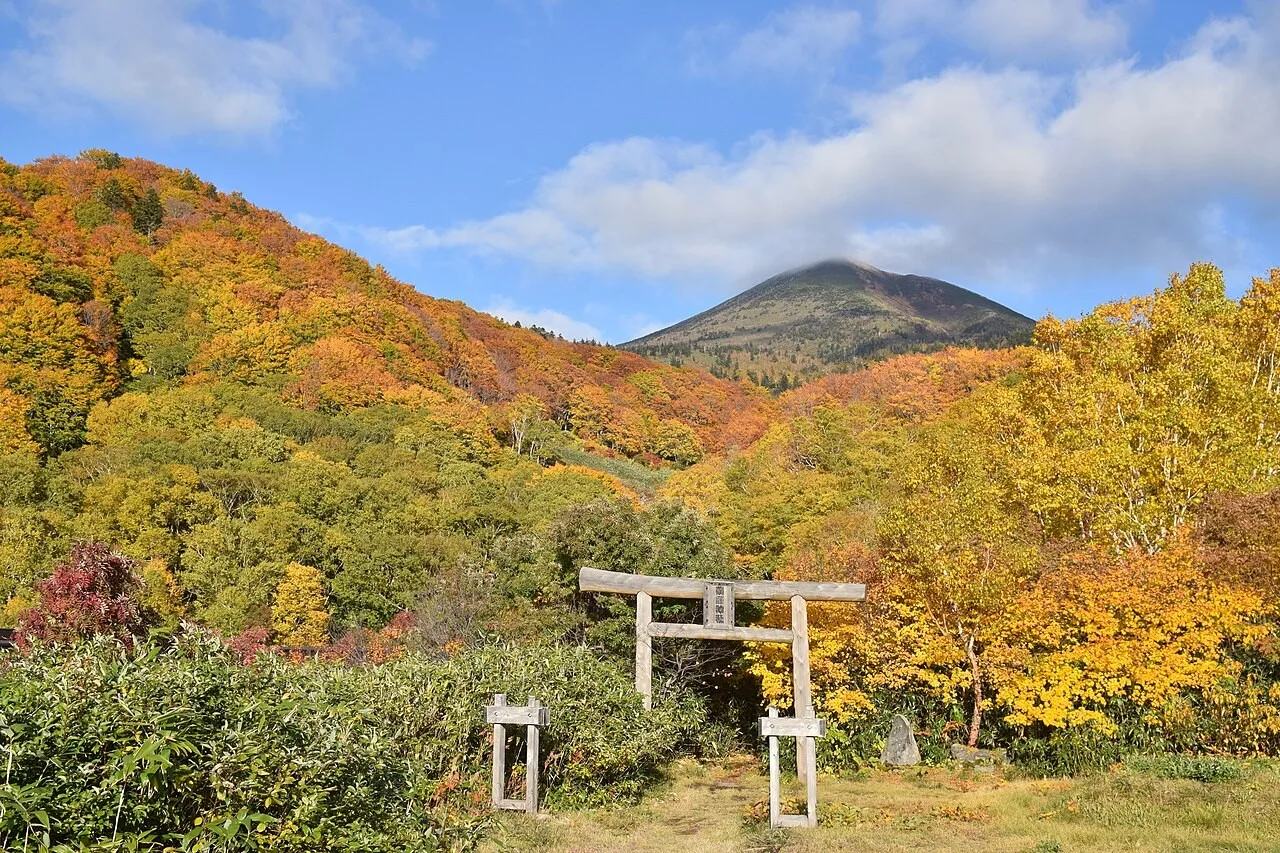
Perched at roughly 925 metres on Hakkoda's western flank, Sukayu Onsen opened in 1684 and became Japan's first designated National Health Onsen Resort in 1954. Its centrepiece is the Hiba Sennin Buro, a 160-tatami-mat mixed-sex grand hall built entirely of fragrant hiba cypress, fed simultaneously by four distinct hot-spring sources. Day trippers must note the revised hours and admission taking effect on 1 December 2026: day bathing runs from 09:00 to 16:00 (last entry 15:30), with admission rising to ¥1,500 for adults (junior high school and above) and ¥500 for primary school children (pre-schoolers free), now including both a bath towel and a souvenir hand towel. Until 30 November, the old schedule of 07:00 to 18:00 and ¥1,000 adult entry remains in force. Admission covers the Sennin Buro, the Tamanoyu bath, and access to two relaxation lounges: Otaka-taka Salon and the Nebuta Lobby.
Anyone nervous about mixed bathing has straightforward alternatives: Hiba Sennin Buro reserves 08:00 to 09:00 daily as a women-only hour, while the separate Tamanoyu offers conventional gender-split baths all day from 09:00 to 17:00. Day-bath tickets are purchased exclusively with cash from vending machines—cards are not accepted. If you plan to visit over two or three days, a ¥5,000 book of six tickets can be shared among companions and pays for itself quickly. Overnight stays can be booked directly via the Sukayu Onsen website or by calling 017-738-6400; finishing your last ski run, riding the 15-minute bus to the inn, soaking in the cypress steam before a hot dinner, and turning in early feels deeply restorative.
Choosing between staying in central Aomori and sleeping up on the mountain comes down to trading 160 minutes of daily bus travel against evening convenience. If Hakkoda is simply one day of a broader Aomori itinerary, basing yourself in the city keeps options wide open—ski by day, then return to Aomori Station for scallops and local ramen, following the routes in our guide to Aomori Station's markets and local food. Conversely, travellers coming strictly for deep powder and heritage hot springs will prefer Sukayu Onsen, skipping the morning commute to catch the 09:00 first ropeway onto untouched snow—accepting quiet evenings with no convenience stores and patchy mobile reception.
Ticket maths settles the season-pass question cleanly: at ¥72,500, the Hakkoda Ropeway season pass only breaks even if you ski more than 10 days. For a typical three-day trip based at Sukayu, a ¥7,050 6-ride book delivers strong value, while sightseers or single-lap skiers are better off with ¥2,500 return or single-journey tickets. The ropeway also sells a 1-month pass for ¥40,000 aimed at remote workers or dedicated powder hunters spending an extended winter stint in Aomori.
Timing your soak around bus and lift schedules keeps the day unhurried. Although Hiba Sennin Buro's women-only hour runs from 08:00 to 09:00, trying to use it when you also want the 09:00 opening ropeway creates an impossible rush—use Tamanoyu (09:00–17:00) instead or save Sennin Buro for after your afternoon ski. Day trippers can also linger for half an hour over tea in Otaka-taka Salon or the Nebuta Lobby before strolling out to meet the return bus to Aomori Station.
Nights at Sukayu are tranquil and self-contained, with dinner and breakfast served in-house; pick up any favourite beers or late-night snacks in Aomori before heading up the hill. In return, overnight guests enjoy an unmatched morning routine: an early soak before breakfast (with the 08:00 women's slot right on hand), a steaming Japanese breakfast, and stepping out at 08:40 to queue comfortably for the 09:00 first ropeway in crisp mountain air.
Other Mountain Stays and Afternoon Plans for Non-Skiers
Beyond iconic Sukayu Onsen, Hakkoda offers several distinct places to stay. Hidden inside a virgin beech forest, Hotel Jogakura pairs Scandinavian-style timber architecture with floor-to-ceiling woodland baths; Hakkoda Hotel is a grand Western-style log resort whose gas lamps glow warmly at dusk; Berjaya Hakkoda Ski Resort stays open year-round with forest hot springs outside ski season; and Hakkoda Sanso combines an outdoor gear shop with mountain guiding services, serving as a practical staging post for backcountry skiers. Note that Hakkoda Onsen is currently closed, so strike it from your shortlist when searching for rooms or backup day baths.
When skiing Hakkoda's powder, keep just as close an eye on leg fatigue as on wind holds. The ungroomed Forest Course stretches a full 5 kilometres, and constantly turning and balancing in soft snow drains your thighs far faster than an equivalent distance on groomed pistes. Treat a third afternoon run as a bonus "only if my legs still feel fresh", rather than pushing up just because the 15:40 cut-off hasn't passed. Straying out of bounds can mean hours of exhausting post-holing just to regain the trail—exactly why rescue costs outside the managed zone fall entirely on the skier.
Non-skiers in your party have plenty to fill an afternoon around the mountain. A five-minute walk from Sukayu Onsen leads to steaming Jigokunuma (Hell Pond), whose mineral-green waters contrast strikingly with autumn foliage or winter snowdrifts; wear waterproof winter boots with good grip and watch for icy paths. Within Towada-Hachimantai National Park, Jogakura Bridge commands sweeping gorge views in every season, while roadside stops such as Kayano Chaya, Tashiro Kogen Chaya, and Matabee no Chaya serve miso oden and char soba—with Matabee no Chaya adding a free thermal footbath. Note that popular Suirennuma Marsh closes under heavy snow in winter, so adjust self-drive photo stops along the Gold Line to open viewpoints only.
Stepping into the Hakkoda mountains also brings you face to face with a solemn landmark: the Snow March Disaster Memorial Statue. Standing around 7 metres tall, it commemorates the January 1902 tragedy in which 210 soldiers of the Imperial Japanese Army's 5th Infantry Regiment perished in a ferocious Hakkoda blizzard, depicting Corporal Fusanosuke Goto, who was found frozen upright in deep snow and survived. In winter, this history is no mere roadside curiosity—every strict ban on solo backcountry travel and boundary warning on the mountain reflects lessons paid for in blood.
Anyone eager to explore deep into the snow-monster groves or South Hakkoda's powder bowls should book with a licensed local outfitter rather than following strangers' tracks. The Hakkoda Mountain Guide Club runs snowshoe treks, backcountry ski tours, and summer canoeing across South Hakkoda and Aomori; visitors who simply want a hassle-free look at the frost trees can also reserve packaged bus-and-ropeway snow-monster tours directly through the ropeway website.
Weather Holds and Backups: Plan Before You Climb
The Hakkoda Ropeway suspends operations far more frequently than most ski lifts on Honshu: gusts topping 25 metres per second, whiteout fog, or heavy blizzards can halt the line at short notice, alongside scheduled mechanical checks in early November, Tohoku Electric Power outage closures in mid-November, and occasional spring-thaw shutdowns. Instead of obsessing over long-range forecasts three days ahead, check the official website's NEWS page before going to sleep for any planned maintenance, then verify live wind speeds first thing in the morning before setting out.
Writing a "Plan B if the ropeway closes" into your itinerary prevents wasted mornings at the base. Car-free visitors staying in central Aomori can pivot effortlessly to the Aomori Museum of Art, the station-side fish market, or a train excursion down to Hachinohe. Drivers can still cross Jogakura Bridge—which remains open through winter—and drop down to Sukayu Onsen for a long soak in Hiba Sennin Buro. Bear in mind that whenever road closures shorten JR Bus routes to Sukayu, onward winter buses towards Hachinohe are also disrupted, so avoid scheduling tight cross-prefecture rail connections on the morning after a mountain storm.
Windchill at the summit bites far harder than temperatures down in Aomori city, accelerating heat loss several times faster than at sea level. Three small habits decide whether everyone enjoys the afternoon: packing a dry spare mid-layer in case you get damp on a fall, keeping your phone power bank inside a warm inner pocket, and identifying the heated base canteen or summit cafe early on for non-skiing companions. Scheduling deliberate warm-up breaks indoors beats soldiering on until everyone is shivering.
During severe snowstorms, even mountain JR Bus departures can be thinned out or cancelled, while drivers caught by sudden road closures may face long waits for snowploughs to clear the pass. Local Aomori car-hire desks routinely advise keeping bottled water, a flask of hot drink, and thermal blankets in the boot throughout winter. Prepare two clear scripts before breakfast—"clear-sky snow-monster day" and "blizzard pivot day"—so one glance out of the hotel curtains tells you immediately which plan to run.
Three Ready-Made Day Plans by Ability
Match your day on Hakkoda to your group's ski level using one of three straightforward templates. For beginners on groomed runs: catch the 09:00 bus up, arrive around 09:50 and head straight into equipment hire, spend the morning mastering Kansuizawa, try Furikozaka after lunch if your legs feel steady, and return your kit before 15:30 to catch the bus back to Aomori for dinner. For intermediates and experts chasing snow monsters: board the first 09:00 ropeway to the summit, alternate laps down the ungroomed Direct and Forest courses with hot coffee breaks at Summit Park Station, finish your final run around 14:30, pack away by 15:00, and either soak at Sukayu Onsen or ride straight back to town. For non-skiing sightseers: ride the 09:00 ropeway up for an hour among the snow monsters and alpine panoramas, descend to Sukayu Onsen well before the 15:30 last entry for an unhurried soak in Hiba Sennin Buro, and take an early-evening bus back to the city.
If your family mixes strong skiers, first-timers, and older relatives simply out for the views, designate the Hakkoda Ropeway base ticket hall as your shared meeting hub. Groomed pistes, summit runs, and bus stops all radiate from this single building, making it effortless to regroup whenever someone finishes early. Allow a full one-hour buffer when hiring children's kit, as peak-season rental queues move slower than lift lines; if anyone plans only a half-day on snow, peg the group's return bus to the earliest finisher. The simpler your logistics, the less disruption sudden mountain squalls can cause.
Before leaving your hotel, save offline screenshots of these three timings on your phone so weak mountain reception never leaves you guessing. Whereas missing half a day at Kuju or Mount Rokko is easy to replace with city activities, Hakkoda's snow monsters and deep powder have no substitute—yet if high winds or a missed 15:40 cable car call time early, lean into a slow hot-spring soak and dinner, saving your legs for first tracks the following morning.
A few useful answers
Is Hakkoda suitable for beginner skiers?
Beginners are best served at Hakkoda International Ski Resort at the foot of the mountain, the only area with groomed pistes on Hakkoda. Its gentlest trail, the Kansuizawa Course, runs 1,100 metres with a maximum gradient of 23 degrees. By contrast, both snow-monster runs from the top of the Hakkoda Ropeway are completely ungroomed and designated strictly for intermediate and advanced skiers. All equipment hire and ski lessons operate exclusively at the base, with neither rentals nor instruction available at the summit.
Which ticket do I need to ride the ropeway and see the snow monsters?
Sightseers heading up solely for the snow monsters should purchase a return ticket for the Hakkoda Ropeway, priced from 1 August 2026 at ¥2,500 for adults and ¥700 for children (pre-schoolers ride free). In winter, the first departure is at 09:00 and the last uphill departure leaves at 15:40. Because the summit nature trails are buried under heavy snow in winter, sightseeing is limited to the cleared area around Summit Park Station unless you book a guided Hakkoda Snow Hiking tour, which requires no skiing experience.
When is the best time to see the Hakkoda snow monsters?
The snow monsters (juhyo) form gradually as Aomori fir trees accumulate layers of supercooled water droplets and wind-driven snow through deep winter. They are at their most dramatic from mid-January to late February, just a 10-minute ropeway ride from the base. The wider ski season stretches from late November through Golden Week in early May, with the International Ski Resort season pass valid until 6 May 2027.
How do I get to Hakkoda from Aomori Station?
Without a hire car, take the JR Bus Tohoku. In winter, snow closures shorten the route to run between Aomori Station and Sukayu Onsen, making the ride to Hakkoda Ropeway Station around 80 minutes (¥1,290 one-way). As departures are sparse, check the winter timetable before setting off. Drivers take National Route 103 in around 40 minutes (winter tyres mandatory), while flat-rate taxis from central Aomori and Aomori Airport provide a reliable backup if you miss the last bus.
How much does day bathing at Sukayu Onsen's Sennin Buro cost?
From 1 December 2026, day-bathing admission at Sukayu Onsen rises to ¥1,500 for adults and ¥500 for primary school children (free for pre-schoolers), including a bath towel and a take-home hand towel, with hours set at 09:00–16:00 (last entry 15:30). Until 30 November, the previous rate of ¥1,000 for adults (07:00–18:00) applies. Hiba Sennin Buro is mixed-sex with a women-only hour from 08:00 to 09:00, alongside the gender-separated Tamanoyu baths. Ticket vending machines accept cash only.
What skill level is required for the snow-monster ski runs?
Direct measures 3.5 km (average gradient 11 degrees) and Forest stretches 5 km (average gradient 8 degrees); both reach a maximum steepness of 30 degrees and remain ungroomed along their entire length. You should be comfortable linking controlled turns in deep, uncompacted powder before attempting either run. The six backcountry routes beyond the pistes lie outside the managed boundary: solo entry is prohibited, and skiers who require mountain rescue are billed the full cost.
Should I visit Hakkoda as a day trip or stay overnight on the mountain?
For a first visit—especially if you want to explore Aomori's seafood markets and city sights—staying near Aomori Station and commuting up by bus for the day offers the greatest flexibility. If your priority is deep powder and classic hot springs, staying overnight at Sukayu Onsen saves 160 minutes of daily travel, lets you catch the 09:00 first ropeway onto fresh snow, and puts the cypress baths steps from your room.
Official information and references
Sources used in this guide.
- Hakkoda Ropeway | Operating Hours & Fares (August 2026 Fare Revision)
- Hakkoda Ropeway | Access (Winter JR Bus Operations & Flat-Rate Taxis)
- Hakkoda Ropeway | Ski Information (Snow-Monster Runs & Backcountry Rules)
- Hakkoda Ropeway | Official Homepage (Winter Schedule & Suspension Notices)
- Hakkoda Ski Resort | Hakkoda International Ski Resort (Groomed Runs & Lift Passes)
- Hakkoda Ski Resort | Season Passes & Ski School Membership Notices
- Sukayu Onsen | Day-Bathing Guide (New Fees from December 2026)
- Sukayu Onsen | Official Homepage (Hiba Sennin Buro & History)
- JR Bus Tohoku | Aomori, Hakkoda & Towada Gold Line (Timetable)