Should you stay on Takayu-dori, near Zao Sanroku Station, or at Uwanodai in Zao Onsen? Compare baths, stairs, meal times, and shuttles across four ryokan and hotels, with Yamagata bus details, 2026–27 night illumination hours, and a one-night snow itinerary.
- Region & Focus
- Yamagata, Zao and Ginzan Onsen
- Reading Scope
- 23 min read · 10 chapters · 5 Q&As
- Official Verification
- 26 official sources checkedUpdated 22 November 2026
- Key Topics
- Where to stayRyokanHot springs
Chapter Route Map (tap any stop)
- Pick Your Area by Your First Stop Next Morning
- Baths, Stairs, and Walking Distances at Four Properties
- Factor Dinner, Bath Rules, and Private Soaks Into the Rate
- Take the Z90 from Yamagata Station and the C2 Back
- Direct Buses from Sendai or Driving Winter Mountain Roads
- Daytime Snow Monsters and Where Priority Tickets Help
- Night Illumination and Snowcat Tours Need Different Schedules
- Ski Stays: Lock In Your Slope Entrance Before Your Lift Pass
- Public Bathhouses vs. Dai-rotenburo Are Two Different Outings
- Fitting Two Mountain Windows Into a One-Night Stay
- Quick Q&A
If you plan to see the snow monsters lit up at night, staying near Zao Sanroku Station makes getting back to your room effortless. For pre-dinner strolls along Takayu-dori and dips in the public bathhouses, pick the stretch between the bus terminal and Kamiyu. Skiers should lock in the slope entrance where their lessons or rentals start first, because Uwanodai, Nakamori, and Yokokura each have separate meeting points. For a one-night stay, settle your inbound bus and your ryokan's final dinner cut-off before anything else, leaving a clear daytime window up the mountain on each of your two days.
Pick Your Area by Your First Stop Next Morning
When booking Zao Onsen for the first time, mark two pins on your map: your hotel entrance and the very first place you need to reach the following morning. You will likely walk that stretch in snow boots, sometimes carrying skis or dragging luggage. Booking platforms lump everything under "Zao Onsen", yet the same map hides several separate ropeway stations and ski-slope entrances. Check walking routes using the exact Japanese station or slope names first, then look at which hill you will have to climb and whether a shuttle can replace the walk in heavy snow.
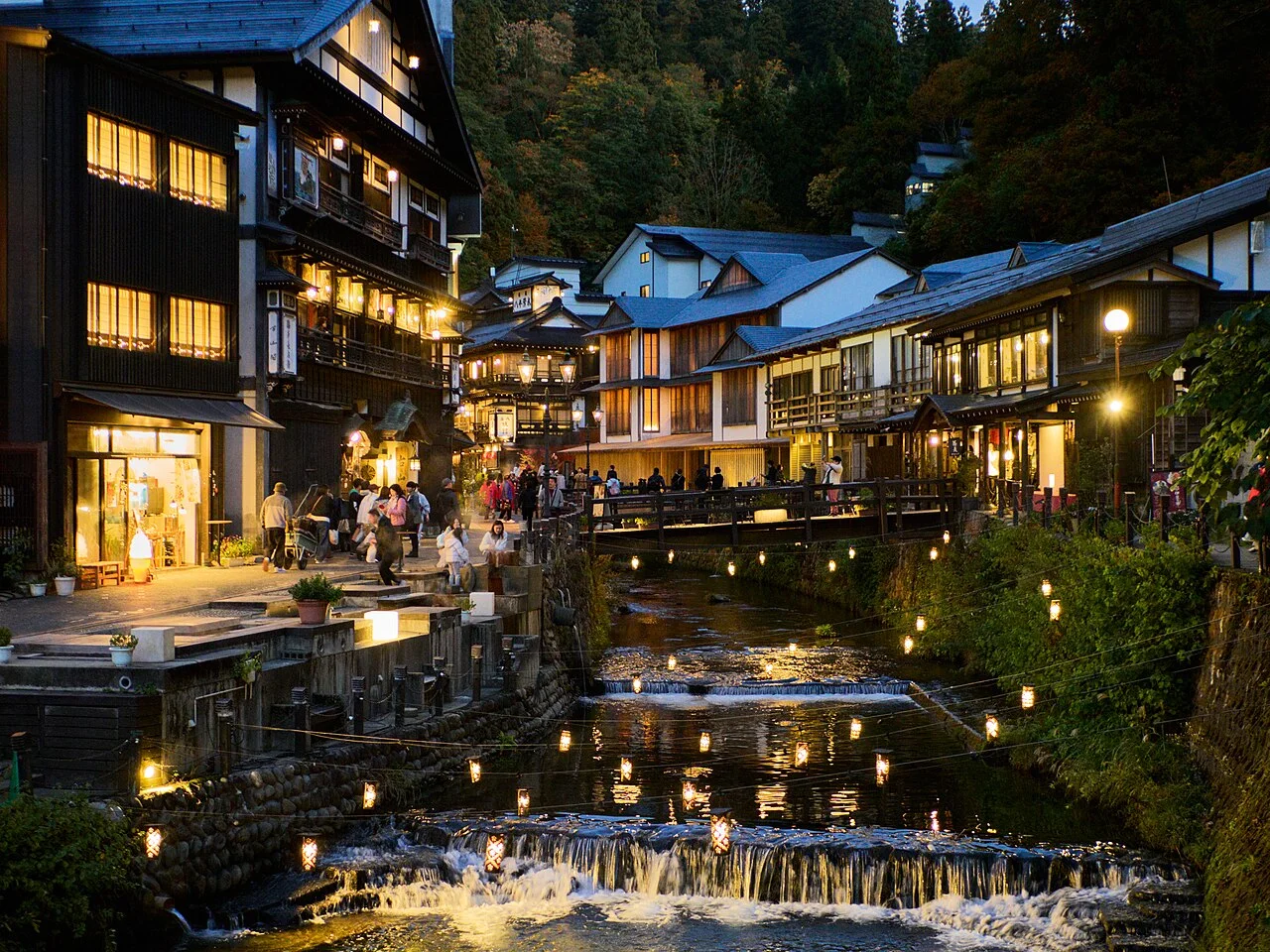
If your trip centres on soaking and strolling, the strip from the bus terminal into Takayu-dori works best. Shimoyu, Kamiyu, and Kawarayu all sit within the hot-spring quarter, with Sukawa Onsen Shrine further up along Takayu-dori. Staying in town lets you drop your bags in the afternoon, wander out with a towel to a public bathhouse, and return in time for dinner. Inns at the upper end of the street or on raised terraces involve gradients and stone steps, so a straight-line distance from the terminal understates how hard it is to haul a suitcase. Between a ryokan near Kamiyu and one beside the bus terminal, the decisive comparison is that final stretch after stepping off the bus.
If seeing the snow monsters is your main goal, save "Zao Sanroku Station" (Zao Sanroku-eki) in your phone. This is the base of the Zao Ropeway connecting up to Juhyo Kogen Station and Jizo Sancho Station, right next to the Yokokura slope. Anyone heading straight back after the evening illumination will find a walkable stay here far simpler than hunting for a ride back to the far end of town at night. If you stay on this side and still want to browse Takayu-dori, fit the street stroll into your arrival afternoon before returning to your hotel for a soak and dinner.
If your first ski lesson meets at Uwanodai, search along "Uwanodai Slope" (Uwanodai Gerende) or "Zao Base Center Jupeer". Jupeer is the base-area rest and meeting complex, and Uwanodai offers gentle slopes suited to practice. To stay near Nakamori instead, anchor your map on "Zao Chuo Ropeway Onsen Station", the gateway for the Chuo Ropeway. When a ski school specifies a base-area meeting point, showing the exact address to your hotel saves trouble—realising you are at the wrong entrance once you are already in ski boots makes a cross-town walk far more tiring than in regular shoes.
When travelling as a group where someone is not skiing at all, and two properties sit in a similar price bracket, pick the one where each person can easily head back to the room mid-day. Staying near Uwanodai lets skiers nip back for spare gloves while non-skiers stroll down into town for a soak. Around Zao Sanroku Station, both groups can meet at the ropeway entrance for Jizo Sancho and decide separately whether to ride up with a ski pass or sightseeing ticket. Agree on the full name of your meeting spot—and a fallback meeting point if bad weather cuts the day short.
| Main Plan | Map Anchor | Route to Check Before Booking |
|---|---|---|
| Public bathhouses & town strolls | Zao Onsen Bus Terminal, Takayu-dori | Gradient, stone steps, and shuttles from the terminal |
| Daytime snow monsters & night lighting | Zao Sanroku Station, Yokokura Slope | Walk back from Zao Sanroku Station after dark |
| Ski lessons & family practice | Uwanodai Slope, Jupeer | Walk from hotel to lesson meeting point and rentals |
| Nakamori slopes & Chuo Ropeway | Nakamori Slope, Zao Chuo Ropeway Onsen Station | Walk or shuttle between Nakamori entrance and hotel |
Should you stay on Takayu-dori, near Zao Sanroku Station, or at Uwanodai in Zao Onsen? Compare baths, stairs, meal times, and shuttles across four ryokan and hotels, with Yamagata bus details, 2026–27 night illumination hours, and a one-night snow itinerary.
Baths, Stairs, and Walking Distances at Four Properties
Miyama-so Takamiya sits on a hillside terrace deep inside the hot-spring street. Drawing from its own hot-spring source, the ryokan offers Choju-no-Yu and the open-air Seseragi-no-Yu, suiting guests who check in early and take their time moving between several baths. Once you arrive at Zao Onsen Bus Terminal, you can ring the ryokan for a complimentary pick-up. Its official access page notes that vehicles cannot pull right up to the front door: there are roughly 20 stone steps before the entrance, and stairs inside lead up to guest rooms. That short climb affects daily comfort far more than shaving a few minutes off the ride from Yamagata. Anyone travelling with a pushchair, heavy ski gear, or sore knees should factor in the flights between guest room and bath.
For a one-night stay right on Takayu-dori, look at Omiya Ryokan. The property estimates a five-minute walk from the bus terminal and features an oval wooden Tamago-buro alongside an indoor strongly acidic sulphur spring fed directly from the source, so winter guests can still enjoy natural thermal water indoors. Its open-air bath closes for snow each year roughly from late November until early April. Guest rooms have no private bathrooms, the building has no lift, and children must be of primary-school age or older. If anyone in your party cannot manage stairs or you are travelling with pre-schoolers, move straight on to other candidates.
Zao Kokusai Hotel sits beside Yokokura; its official site notes that crossing the bridge from the hotel car park puts you directly on the Yokokura slope. This makes it handy for exploring from the Sanroku side, while bathing centres on Hachiemon-no-Yu's indoor and open-air baths. The hotel's FAQ notes barrier-free access extends as far as the changing room, though bathhouse floors can still turn slippery from mineral deposits (yunohana). If someone in your group needs accessible fixtures inside the bathing area itself, ask in advance about the hotel's accessible private bath (kashikiri-buro) to confirm handrails and entry arrangements—waiting until check-in risks finding your preferred slot already booked.
Zao Shiki no Hotel puts the walk to the Zao Ropeway at around five minutes on its official site. To bathe in the natural hot-spring water, however, guests cross the street to the detached bathhouse "Hanareyu Hyakuhappo", which houses a timber indoor bath and a stone open-air pool open from 06:00 to 23:00. Inside the main hotel, Shirakaba-no-Yu uses a mildly alkaline mineral water listed by the property, while natural Zao spring water supplies Hyakuhappo. If you want to step indoors on a freezing night and soak in source water under the same roof, weigh that outdoor crossing carefully. Putting photos of both bath areas side by side makes it easy to gauge the walk between entrance and water.
If your budget priority is two full days on the snow, simpler lodges right beside the slope entrances are worth checking too. For multi-night stays, ask where skis are stored overnight, whether boot dryers are available, and whether you can leave bags and change on your first morning before check-in. If you only need a shower or soak after your final day on the piste, check specifically whether day-use bathing is available after check-out and what extra fee applies. Whether a lower room rate delivers equivalent convenience comes down to how much gear you haul each day and which entrance you ski from.
| Property | Why Book Here | Logistics to Plan Around |
|---|---|---|
| Miyama-so Takamiya | Upper Takayu-dori setting, private spring source | Roughly 20 stone steps before entrance; stairs to rooms |
| Omiya Ryokan | Town strolls, source-fed wooden indoor bath | No lift or en-suite bathrooms; primary-school age and up only |
| Zao Kokusai Hotel | Yokokura slope access, Hachiemon-no-Yu | Slippery floors past changing room; ask about accessible private bath |
| Zao Shiki no Hotel | Close to snow-monster ropeway, Hanareyu Hyakuhappo | Must walk across the street for source-fed hot-spring baths |
Factor Dinner, Bath Rules, and Private Soaks Into the Rate
A half-board rate (ippaku nishoku) includes dinner and next morning's breakfast, so anyone taking an afternoon bus up the mountain should verify the latest check-in and last dinner seating first. At Omiya Ryokan, for example, half-board guests are asked to arrive by 19:00, with dinner starting between 17:30 and 19:00. Room-only or bed-and-breakfast guests may check in up to 21:00, and anyone wishing to add dinner must get in touch by 17:00 the day before. Breakfast slots at the same ryokan are chosen from 07:00, 07:30, or 08:00. If you want an early ropeway ride, line up an early breakfast, luggage storage, and your route to Sanroku Station together.
Visitors heading up for the night illumination should check the earliest seating at their hotel dining room before choosing a ropeway departure time. Coming back on one of the final gondolas rarely pairs well with a late half-board dinner. If you switch to a breakfast-only plan instead, line up an evening restaurant in advance and verify its last-order time and weekly closing days. Travelling with fussy children? Pick up snacks to keep for the evening before leaving Yamagata Station, which double as provisions while queuing the next morning. Hotel dining and eating out suit completely different departure schedules.
For groups of three or more, enter the exact number of beds, meal portions, and children's ages before comparing rates. Floor futons in Japanese-style rooms and extra beds in Western rooms eat into walking space, yet you still need room to spread out ski jackets and suitcases. When booking a Japanese-Western room with older relatives, think through who sleeps on raised beds versus futons and how clear the path is to the toilet at night. If two small families share a one-night trip and want to turn in separately after bathing, compare one large room against two doubles—lining up children's meal rates, private-bath fees, and cancellation deadlines on a single tally.
An in-room bathtub, an in-room open-air hot-spring bath, and a separate bookable private bath are three completely different specs. If soaking in genuine Zao spring water inside your room matters, inspect the room description for the bath's name, water supply notes, and winter availability. If using another bathroom in the building works just as well, look for a "kashikiri-buro" (private reservable bath), typically booked by the time slot. For an anniversary trip focused on a quiet soak and a good dinner, compare a standard room with dinner plus one private-bath slot against paying an all-night premium for an en-suite tub you will only use once.
Whenever anyone in your party has specific bathing needs, ask about exact facilities before booking. Zao Kokusai Hotel restricts tattoos in its communal Hachiemon-no-Yu, though it offers several private kashikiri-buro options—enquire directly about eligibility and available slots. For drop-in day bathing elsewhere, check each bathhouse's entry rules in advance. Parents travelling with young children of the opposite sex who cannot accompany them into gender-separated communal baths should factor family-friendly private-bath availability, surcharges, and booking windows straight into their comparison.
Once a room is reserved, note both the hotel's cancellation deadline and any transport refund cut-offs. Staying two nights in Zao gives you the flexibility to keep the same room as a snowy-weather backup on day two, whereas moving down to Yamagata on night two requires extra planning for luggage and the descent. Priority ropeway tickets also carry stricter refund terms than most hotels. Lock in a room with suitable cancellation terms first, then book ropeway tickets once you see how your two daytime windows, ticket sales, and preferred time slots line up.
Take the Z90 from Yamagata Station and the C2 Back
Arriving on the Yamagata Shinkansen from Tokyo or the JR Senzan Line from Sendai brings you to JR Yamagata Station. Exit via the East Exit and board the Z90 local bus from Stop 1 ("Yamagata Ekimae"), a roughly 40-minute ride terminating at "Zao Onsen Bus Terminal". On the return leg to Yamagata Station, check the C2 route. Yamako Bus outbound timetables and inbound timetables split into weekday and weekend/holiday schedules, with 29 December to 3 January running on weekend/holiday timings. Buses operate strictly by seated capacity—once every seat is filled, no further passengers can board. When racing dinner cut-offs or a reserved Shinkansen seat, aim for at least the second-to-last bus.
The same route sheet also lists stops such as Chuo Ropeway-mae, Zao Ropeway-mae, and Katta Sancho. Although Katta Sancho appears in the route heading, Yamako Bus has announced that the Katta Sancho service concludes in fiscal 2026. If you are staying in the hot-spring quarter, simply read the column for the bus you intend to catch and check the timed stops. Travelling up in winter with suitcases, setting "Zao Onsen Bus Terminal" as your drop-off before walking or calling your hotel's shuttle is the easiest way to keep your group together.
Ryokan shuttles from Yamagata Station run separately from public buses. At Zao Kokusai Hotel, for instance, the complimentary guest shuttle departs from the West Exit of Yamagata Station and must be reserved at least three days ahead. The hotel's site lists outbound departures at 10:30 and 14:00, with return trips to Yamagata Station at 09:30 and 13:00. During winter (12 December to 15 March), pick-up remains at the West Exit but uses a different boarding point from spring and autumn; save your train arrival time, reserved shuttle slot, and boarding map in one note on your phone so you know where to walk straight out of the station. Hotel shuttle boarding map
Local shuttles from Zao Onsen Bus Terminal are a separate service again. Zao Shiki no Hotel states that guests ring upon reaching the terminal for a three-minute shuttle ride (compared with a ten-minute walk), and Miyama-so Takamiya likewise asks arrivals to telephone from the terminal. If you are travelling with a mobile plan from home, save the property's phone number before setting off and check that your roaming plan—or a travelling companion's phone—can place calls within Japan. When snow is falling, leave family members sheltered inside the terminal with the bags while one person handles the call or walk.
If you are changing trains at Yamagata Station on the way down, keep dinner near the station as an easy buffer. Arrive smoothly and you have time for a proper meal; if snow slows the bus, you still have margin before your Shinkansen. If you spend a night in Yamagata first and want to travel up the mountain with just an overnight pack, ask your Yamagata hotel about holding large suitcases across nights. Sorting out where big bags sleep on a split Yamagata-and-Zao trip saves you an unnecessary round trip between the hot-spring street and the terminal.
Direct Buses from Sendai or Driving Winter Mountain Roads
From 19 December 2026 to 14 March 2027, a direct winter highway bus links Sendai Station East Exit Stop 76 with Zao Onsen Bus Terminal. Scheduled journey time is 85 minutes, at ¥2,800 one way for adults and ¥1,400 for children. Seats are reservation-only: inbound buses up to Zao must be booked by the day before travel, while afternoon departures back to Sendai can be reserved up to 12:00 on the day of travel. An additional 10:30 return bus to Sendai operates on designated dates, so book ahead if you want a morning departure. The 07:00 early bus from Sendai and 10:30 return from Zao run only on weekends, holidays, and 28 December to 5 January. Telephone reservations are handled by Miyagi Kotsu, opening at 09:00 one month prior to travel.
Anyone staying near Sendai Station who plans to ski should align both outbound and return tickets together. The last scheduled direct bus back to Sendai on Yamako's seasonal timetable leaves Zao at 17:30, which means viewing the night illumination works best with an overnight stay in Zao. To return to the city the same evening, head up during daylight and allow ample time for both the ropeway descent and the walk back to the bus terminal. If you already have a Zao hotel booked, put your return bus in the following afternoon—leaving morning open for one more ropeway ride or lunch in town after check-out. On dates without convenient direct buses, ride the JR Senzan Line to Yamagata and connect to the local bus.
Drivers coming from Sendai in winter should enter via the Yamagata Expressway onto the Yamagata side, taking either the Yamagata-Zao IC onto the Nishi-Zao Kogen Line or the Yamagata-Kaminoyama IC onto Prefectural Route 21 depending on where your hotel sits. The Zao Echo Line crossing between Miyagi and Yamagata prefectures entered winter closure at 17:00 on 4 November 2026, with reopening scheduled for 11:00 on 23 April 2027. Save Okama Crater for the open season. Set your satnav first to your hotel's recommended motorway exit and approach road rather than letting a shortest-route algorithm send you up the closed side of the mountain.
Make driving your primary option only if you have winter-driving experience. Confirm snow tyres are fitted at pick-up and check that the car carries a scraper and brush for clearing snow off windows. Check road-closure notices before climbing the pass. In heavy snowfall, transferring passengers and luggage from the car park into reception often takes longer to predict than the drive from the motorway exit itself. Navigate directly to your hotel's car park, send one person to the front desk, and ask when booking whether pre-check-in parking is allowed and where to move the car if you ski after check-out—leaving your car nearby means far less gear to carry when changing back at the end of the day.
Daytime Snow Monsters and Where Priority Tickets Help
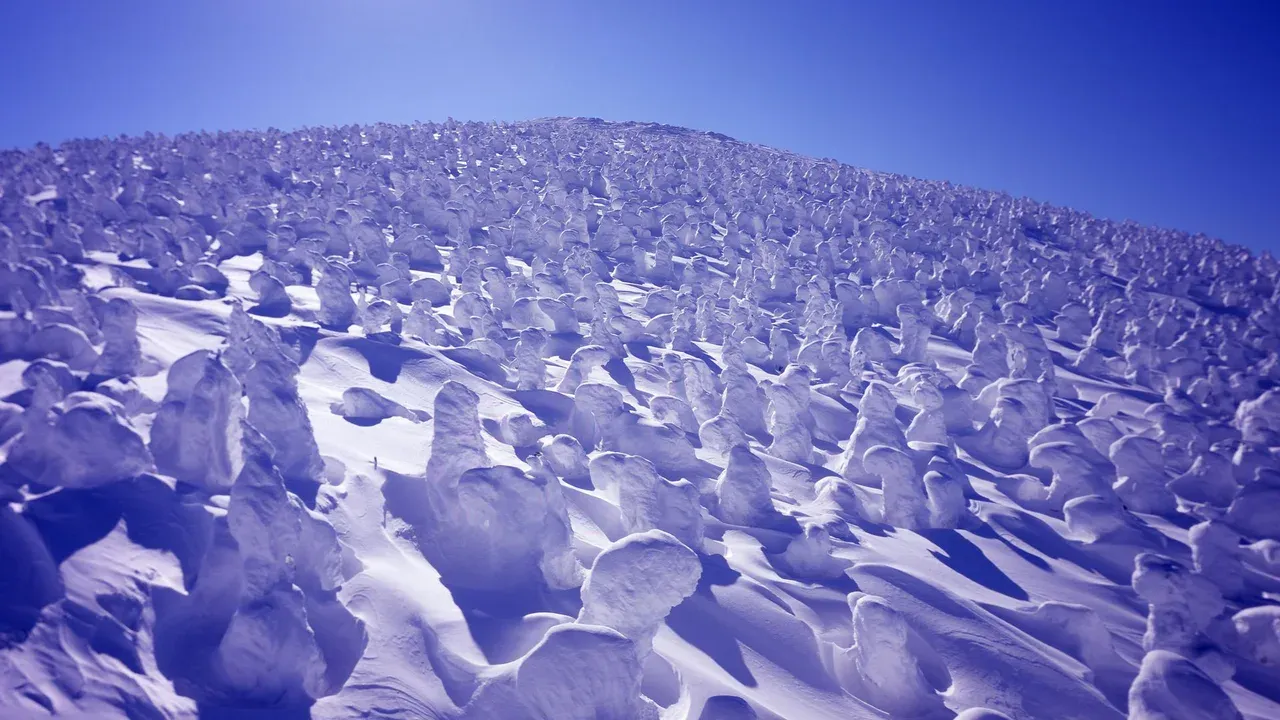
To reach the snow monsters, ride the Sanroku Line from Zao Sanroku Station to Juhyo Kogen Station, then change to the Sancho Line up to Jizo Sancho Station. The city tourism association cites a minimum combined riding time of roughly 18 minutes, not counting queues, the transfer, putting on outer layers, or walking out to the viewing area. General winter operating guidance lists the last uphill departure from Sanroku Station to Jizo Sancho Station at 16:00, so aim for a morning ascent if you can. Going up early gives you slack to wait out passing weather and leaves time to come down for lunch or a stroll through the hot-spring town.
If you buy the Sightseeing Round-Trip Priority Ticket online, it covers one round-trip across both ropeway sections, but priority boarding applies only to the first uphill leg from Zao Sanroku Station to Juhyo Kogen Station. The second uphill leg and both downhill legs use the regular queues. The time printed on the ticket is an estimated priority boarding window, and priority lanes may be suspended during heavy crowds or operational changes. Online ticketing terms state that tickets are non-refundable and cannot be cancelled unless the ropeway suspends service. If you are staying two nights and have flexibility over which day to ride up, weigh both days' forecasts before locking yourself into a dated priority ticket.
February is typically peak season for the snow monsters. The ropeway operator classifies January as the growth period, while warming temperatures in March gradually melt the formations. It is common for the summit to sit in cloud even when sunshine hits the base. Check the live summit camera and the status of both ropeway sections over breakfast; if only the Sanroku Line is running and you want photos of the full snow-monster plateau, stroll around town instead and re-check in the afternoon. If the upper line opens briefly, agree with your group on a strict turn-back time and head down early if the transfer queue looks unmanageable.
Put on your windproof shell, warm hat, gloves, and high-grip footwear before stepping outside Jizo Sancho Station into the designated viewing zone. For children seeing heavy snow for the first time, take in the view from the gondola windows before making a brief stop outside; companions who feel the cold quickly can wait inside the station building. Stay inside the safety ropes when taking photos—framing close-up snow monsters against the distant slope works without stepping out of bounds. The viewing area sits right next to ski runs, so watch the signage and never step onto the piste to chase better light.
Anyone travelling with a wheelchair, pushchair, or companions who need frequent seated rests should treat the trip as a straightforward scenic ride up and down. Walking is involved when entering the base station, transferring at Juhyo Kogen Station, and stepping out at Jizo Sancho Station. In clear weather, pick a single open viewpoint; in high winds or blowing snow, keep outdoor time brief. For families, an easy half-day trip that brings everyone back to the hotel with energy for a soak and unhurried meals beats trying to cover every corner of the summit.
Night Illumination and Snowcat Tours Need Different Schedules
Zao Ropeway's 2026–27 winter illumination announcement lists 31 operating evenings between 26 December 2026 and 23 February 2027, running only on the dates highlighted in yellow on the official poster. Hours are 17:00–21:00, with the last uphill departure from Zao Sanroku Station at 19:45. A night round-trip between Sanroku Station and Jizo Sancho Station costs ¥4,600 for adults and ¥2,300 for children aged 6–11. If you are spending two nights in Zao, check which evening falls on an illumination date first, then arrange your dinners and daytime plans around it. Zao Ropeway 2026–27 illumination calendar
Viewing during the night ropeway hours is limited to the gondolas, inside the stations, and the immediate station perimeter; the operator strictly prohibits bringing skis or snowboards aboard, and no night skiing takes place on those runs. If you ski during the day and plan to see the lights that night, head back to your hotel to change into dry base layers, socks, and boots, leaving your boards in the drying room. Summit winds bite harder at night, and standing still for photos cools you down far faster than walking. Wear proper non-slip footwear you can also walk home in—not lightweight sightseeing boots you would want to change out of straight after leaving the station.
The "Juhyo Illusion Corridor" uses heated snowcats and operates on a completely different booking and meeting system from the standard night ropeway. If only part of your group wants to ride the snowcat, you can split up for the evening and meet back at Sanroku Station or your hotel afterwards. Anyone hoping to experience both the ropeway lights and the snowcat tour should separate them across two nights after checking transport and dinner windows so neither clashes with meal times. Snowcat tour dates and reservations
Staying near Zao Sanroku Station is the easiest choice for night viewing, though a farther hotel works fine if a return shuttle is confirmed. Walk the route from your room to the station in daylight before going out at night, noting stretches without shopfronts or streetlights. If your return climb crosses Takayu-dori and finishes up stone steps, build that extra effort into your evening timeline. If weather cancels the illumination, you can still enjoy an unhurried dinner and a hot soak at your hotel, keeping the following morning's daytime ropeway as your second chance.
Ski Stays: Lock In Your Slope Entrance Before Your Lift Pass
Zao Onsen Ski Resort has several distinct entry points across the same mountain. Uwanodai sits closest to the hot-spring town and pairs naturally with Jupeer as a meeting hub. Nakamori lies below the Chuo Ropeway, making stays near Zao Chuo Ropeway Onsen Station convenient; Yokokura and Omori form another flank anchored by the Yokokura slope and surrounding car parks. Cross-check any "ski-in/ski-out" or "near the slopes" claim on a map—verify the actual walk in ski boots to the first chairlift and which piste or road leads back to your door. If the run beside your hotel is too steep for beginners in your group, allow time for a shuttle or walk back.
If beginners are taking just one lesson, work backwards from the slope entrance. Once your instructor confirms the meeting time and ski school base, decide whether to collect rental gear the evening before or first thing that morning. Ask the rental shop in advance about helmets, children's sizing, and day bag storage. Walking up stairs in ski boots and bulky outerwear slows everyone down, so guests with their own boards staying in lift-free ryokan should check for a ground-floor drying room. Having your meeting point, rental shop, and hotel all on the same side of the resort makes day one go far more smoothly than buying a pass that covers lifts you will never reach.
Snow conditions govern whether inter-area connecting trails and upper chairlifts open. The official resort site displays separate status boards for individual lifts and courses, so check both your intended connecting run and lift before heading out. If links are closed, stay and practise near your base entrance, or check seasonal shuttle info before switching zones. Even if your accommodation borders a ski trail, thin snow cover may force a walk back along cleared vehicle roads. Factoring the return route into your pass choice and lesson timing helps you decide whether an extra night is worthwhile.
Often part of a group skis during the day while others ride up solely to see the snow monsters. Skiers buying the ski-type priority ticket between Sanroku Station and Juhyo Kogen Station are required by the operator to also hold a valid ski lift pass for that day, whereas non-skiers should buy the sightseeing round-trip ticket through to Jizo Sancho Station. To meet up at Juhyo Kogen Station, choose a clear indoor landmark and agree on a Plan B for getting down if the Sancho Line stops running or someone runs late. For full piste and pass breakdowns, see our Zao Onsen Ski Resort Guide.
Public Bathhouses vs. Dai-rotenburo Are Two Different Outings
The three public bathhouses—Kamiyu, Shimoyu, and Kawarayu—operate year-round; the tourism association currently lists hours of 06:00–22:00 and admission at ¥300 for adults and ¥100 for children, paid into an honesty box at the entrance. Bring exact coins and a small towel, and pick the bathhouse closest to your return walk. If you plan to browse shops or catch a bus afterwards, pack a pouch for a damp towel and wet socks. Entering and leaving bathhouses in winter exposes you to sharp temperature drops, so stow your coat neatly before undressing and dry your hair and skin thoroughly before stepping back outside.
Each bathhouse sits on a slightly different approach. Entering Takayu-dori from the bus terminal end brings you past Shimoyu before climbing towards Kamiyu, which sits closer to Sukawa Onsen Shrine. Kawarayu lies just off the main street—follow the lane signs reading "Kawarayu Kyodo Yokujo" so you do not mistake it for the similarly named day-use spa next door. If a side lane looks icy at the corner, simply turn back onto Takayu-dori and use one of the other two. Guests staying along the main street typically return to their ryokan for dinner afterwards, so visiting one public bath in the afternoon and saving your second soak for the inn's own baths keeps the pace relaxed.
Zao Onsen Dai-rotenburo is a separate seasonal open-air bath tucked beside a mountain stream. On 21 November 2026, the operator announced that heavy snow forced an early end to the season, cancelling the originally scheduled final day of 23 November. To soak outdoors in acidic sulphur water during winter, book a hotel whose open-air bath remains open in snow or check day-use spas running that day. Save Dai-rotenburo for a warmer trip—check its opening calendar and last-entry cut-off on the operator's site beforehand, and keep in mind that entry involves descending stairs, making street-level bathhouses better for anyone with knee trouble.
Before stepping into Zao's strongly acidic sulphur water, wash thoroughly and pour warm water over your body (kakeyu) to acclimatise. Omiya Ryokan's bathing guide advises removing metal jewellery beforehand, keeping water out of your eyes, never drinking from the bath, and watching your footing on slippery rims. Dry off properly before getting dressed. For your first soak in Zao, starting at your hotel's bath—where full changing and washing stations are on hand—is easiest; if you want to experience the historic timber bathhouses, pop into one while strolling the street and keep the rest of your schedule for the mountain.
Fitting Two Mountain Windows Into a One-Night Stay
Coming up from Yamagata Station, aim to reach Zao Onsen Bus Terminal by late morning or midday on day one and drop your bags at your hotel. Omiya Ryokan's FAQ explicitly allows luggage storage both before check-in and after check-out upon visiting reception; if staying elsewhere, confirm the same arrangement in advance. Provided summit winds are manageable and both ropeway lines are running, head up to see the daytime snow monsters that afternoon. If you arrive late or the ropeway is nearing last boarding, visit a public bathhouse first before checking in for dinner—leaving the full morning window on day two clear for the mountain.
If you plan to catch the night illumination after dinner, spend day-one afternoon strolling the hot-spring street and save the ascent for after dark. The final uphill gondola departs at 19:45, so leave time after eating to change into snow boots, walk to the station, and queue. Anyone in your group who prefers to stay warm can remain at the hotel to bathe, while those heading out carry a room key and confirm late-entry doors. On a one-night trip with only one hotel dinner booked, place half-board on the night you are certain to arrive on time, and use day-two lunch for the local restaurants along Takayu-dori.
Check the weather before checking out on day two. If you missed the mountain on day one, make the morning ropeway your top priority. If you already saw the snow monsters, use the morning for a ski lesson, a final soak, or a slow walk up Takayu-dori. Anyone catching a train back from Yamagata must finish gear returns, boot changes, and luggage pick-up before their bus departure—or walk to the exact hotel shuttle meeting point if booked. Heading onward to Ginzan Onsen on the same Tohoku itinerary deserves a separate transit day; see our Sendai & Yamagata Onsen and Seasonal Day-Trip Guide.
If your trip revolves around one full day of skiing, flip the overnight order. On arrival day, fit rentals, pay fees, or collect lift passes near the slope entrance, then unwind in your hotel baths that evening. Next morning, leave main luggage at reception, ski with just a daypack, and decide by lunchtime whether to keep skiing into the afternoon. If your bath-focused ryokan sits up a slope from the ski area, remember paths freeze fast around dusk and allow extra walking time—or skip the night illumination when starting lessons the next morning so everyone gets a proper night's sleep.
For a pure day trip from Yamagata, pick one main goal rather than trying to cram everything in. To see the snow monsters, catch an early morning bus up, fit in a quick public bath afterwards if time permits, and catch a C2 bus back to Yamagata. If you only want hot springs—or hit a ropeway maintenance closure—stick to open day-use baths, stroll Takayu-dori, have lunch, and head down. Anyone wanting both daytime and illuminated snow monsters will find an overnight stay in town far more comfortable, returning to Yamagata or Sendai the next day without having to race the final summit gondola against a long-distance coach.
A few useful answers
For a one-night stay in Zao Onsen, should I stay near the bus terminal or the Zao Ropeway?
Stay between the bus terminal and Kamiyu if public bathhouses and strolling Takayu-dori are your focus. For the night snow-monster illumination, Zao Sanroku Station and the Yokokura area give the easiest walk home. Skiers should start from the meeting point given by their instructor or ski school, as Uwanodai and Yokokura sit at separate entrances.
Can I still catch the direct bus back to Sendai after seeing the night illumination?
No—on the 2026–27 timetable, the last direct bus from Zao back to Sendai departs at 17:30, whereas the night illumination only begins at 17:00. If returning to Sendai the same day, stick to daytime snow-monster viewing; to see the lights, stay overnight and catch a reserved bus down the next day.
Is Zao Onsen Dai-rotenburo open in winter?
Dai-rotenburo is a seasonal facility, and on 21 November 2026 the operator announced an early closure due to snow. In winter, use year-round public bathhouses such as Kamiyu, Shimoyu, and Kawarayu, or book accommodation with a winter-open outdoor bath.
Do public buses and hotel shuttles use the same exit at Yamagata Station?
No. The Yamako Z90 local bus departs from Stop 1 ("Yamagata Ekimae") outside the East Exit. By contrast, Zao Kokusai Hotel's pre-booked guest shuttle picks up from the West Exit, at a different winter boarding spot from spring and autumn. Once your shuttle booking is confirmed, save the property's map and departure time on your phone.
We are travelling with both young children and older relatives—what should we rule out first?
Check minimum child age policies and whether stairs separate guest rooms, the dining room, and the baths. Omiya Ryokan only accepts children of primary-school age and up and has no lift. If a property offers private kashikiri-buro baths, ask in advance about capacity, available slots, and bath-entry accessibility.
Official information and references
Sources used in this guide.
- Zao Onsen Tourism Association | Water Quality & Public Bathhouses
- Zao Onsen Tourism Association | Hot-Spring Town Walking Map
- Zao Onsen Tourism | Dai-rotenburo 2026 Early Seasonal Closure Notice
- Yamagata City Tourism Association | Zao Snow Monsters & Viewing Safety
- Zao Ropeway | Jizo Sancho Station Operating Hours & Timetables
- Zao Ropeway | Snow Monster Growth Stages & Night Events
- Zao Ropeway | 2026–27 Night Illumination Official Poster
- Zao Ropeway | Daytime Online Tickets & Priority Boarding Terms
- Zao Ropeway | Juhyo Illusion Corridor Snowcat Tour
- Zao Onsen Ski Resort | Lift & Trail Status by Area
- Zao Onsen Tourism | Uwanodai & Jupeer Base Information
- Yamako Bus | Z90 Bus: Yamagata Station to Zao Onsen
- Yamako Bus | C2 Bus: Zao Onsen to Yamagata Station
- Yamako Bus | 2026–27 Sendai–Zao Onsen Reserved Direct Bus
- Miyagi Prefecture | Zao Echo Line Winter Road Closures
- Miyama-so Takamiya | Private Spring Source & Baths
- Miyama-so Takamiya | Entrance Steps & Terminal Shuttle
- Omiya Ryokan | Check-In, Meal Times, Baths & Child Age Policy
- Omiya Ryokan | Facilities & Lift Information
- Omiya Ryokan | Indoor Baths, Winter Open-Air Closure & Bathing Etiquette
- Omiya Ryokan | Access from Zao Onsen Bus Terminal
- Zao Kokusai Hotel | Yokokura Slope, Bath Access & Entry Rules
- Zao Kokusai Hotel | Hachiemon-no-Yu & Private Baths
- Zao Kokusai Hotel | Yamagata Station Shuttle Reservations & Pick-Up Point
- Zao Shiki no Hotel | Walking Distance & Shuttle Arrangements
- Zao Shiki no Hotel | Hanareyu Hyakuhappo & Shirakaba-no-Yu