Complete guide to the 46th Sapporo White Illumination (2026–2027–2027) based on official Sapporo Tourist Association data: schedule and lighting hours for all seven venues, new Odori Park installations, the 25th Munich Christmas Market, ENESS's world premiere at Nakajima Park, subway exit pairings, and single-evening walking routes.
- Region & Focus
- Sapporo
- Reading Scope
- 18 min read · 6 chapters · 8 Q&As
- Official Verification
- 7 official sources checkedUpdated November 27, 2026
- Key Topics
- SeasonsItinerariesHokkaido
Chapter Route Map (tap any stop)
- Seven Venues at a Glance: One Opening Night, Staggered Finales
- Odori Park and the Munich Christmas Market: The Main Event
- Ekimae-dori and Minami 1-jo-dori: Two Avenues, Two Moods
- The North Cluster: Station Plaza, Red Brick Office, and Akapla
- Nakajima Park's SNOWFISH: A January-Only Art Premiere
- Routes, Subway Exits, and Planning Your Stay
- Quick Q&A
Entering its 46th edition in 2026, the Sapporo White Illumination is undergoing its biggest footprint expansion in years. Long anchored by five downtown sites centered on Odori Park and nearby avenues, the event adds two new venues—the Former Hokkaido Government Red Brick Office and Nakajima Park—to form a seven-venue light network running from November 20, 2026, through mid-March 2027. Drawing on official announcements from the organizing committee (Sapporo Tourist Association), this guide maps out all seven schedules, lighting hours, Odori's new centerpiece installations, the 25th Munich Christmas Market, subway exit pairings, and practical walking routes. What began in 1981 with roughly 1,000 bulbs in Odori Park Nishi 2-chome has grown into the backbone of Sapporo's entire winter calendar, linking December's Christmas market, January's contemporary art installations, and February's Snow Festival into one continuous season.
Seven Venues at a Glance: One Opening Night, Staggered Finales
Except for Nakajima Park's January-only run, all six downtown venues switch on together on Friday, November 20, 2026, before closing on staggered dates through mid-March. Match the lighting calendar to your travel month before locking in an itinerary so you do not miss your target displays.
Looking at the schedule side by side, clear seasonal routes emerge. Visitors arriving for December's Christmas season get six venues at once, enough to link Odori Park, Ekimae-dori, Minami 1-jo-dori, the Red Brick Office, Kita 3-jo Plaza (Akapla), and Sapporo Station South Exit Plaza in a single evening. By January, Odori Park has wrapped up, shifting the spotlight to Minami 1-jo-dori, Ekimae-dori, the Red Brick Office, and Nakajima Park's art installation opening January 9. From February's Sapporo Snow Festival—which shares the exact same Odori Park grounds in a seamless seasonal handoff—through early March, Sapporo Station South Exit Plaza stays lit until 24:00 nightly as the city's final late-night anchor. To catch ENESS's premiere at Nakajima Park, your dates must fall strictly within the 20-day window from January 9 to 28, 2027.
Official listings include a standard caveat across most sites: switch-on times shift slightly with sunset and may change without notice. In December, sunset in Sapporo hits before 16:00, so the 16:30 switch-on lands right in blue hour. By late January, later sunsets push actual illumination a few minutes past the printed time. Be in position before 16:30 if you want the exact moment the lights flip on, or wait until around 17:00—when the last gray fades out of the sky—for maximum contrast between the LEDs and a deep navy backdrop.
Four decades of local history explain how this festival grew to anchor the winter. It launched in 1981 as a modest experiment of about 1,000 light bulbs in a single square at Odori Park Nishi 2-chome, expanding over the years alongside Sapporo's winter nightlife into hundreds of thousands of LEDs stretching from late November to mid-March. The Sapporo White Illumination Executive Committee runs the event out of the Sapporo Tourist Association (7th floor of the Hokkaido Economic Center near the station), publishing updates, weather adjustments, and pop-up performance notices first on the official Yokoso Sapporo portal.
What makes 2026 a structural expansion year is how the two additions redraw the event map. For years, the five core sites kept visitors within a tight corridor between JR Sapporo Station and Susukino. Elevating the Red Brick Office into an independent projection venue turns the historic brick facade from a passive backdrop behind Akapla into a primary stop, while Nakajima Park introduces interactive contemporary art and daytime hours starting at 10:00. Return visitors following old five- or six-venue guides will miss two major highlights if they stick to past routes.
| Venue | Dates | Lighting Hours |
|---|---|---|
| Odori Park Venue | Nov 20–Dec 25, 2026 | 16:30–22:00 (until 24:00 on Dec 23–25) |
| Ekimae-dori Venue | Nov 20, 2026–Feb 11, 2027 | 16:30–22:00 (until 24:00 on Dec 23–25) |
| Minami 1-jo-dori Venue | Nov 20, 2026–Mar 14, 2027 | 16:30–22:00 (until 24:00 on Dec 20–25) |
| Kita 3-jo Plaza (Akapla) Venue | Nov 20, 2026–Mar 14, 2027 | 16:30–22:00 (adjusted by sunset) |
| Red Brick Office Venue | Nov 20, 2026–Feb 28, 2027 | 16:30–22:00 (adjusted by sunset) |
| Sapporo Station South Exit Plaza Venue | Nov 20, 2026–Mar 14, 2027 | 16:30–24:00 (adjusted by sunset) |
| Nakajima Park Venue | Jan 9–Jan 28, 2027 | 10:00–20:00 |
Complete guide to the 46th Sapporo White Illumination (2026–2027–2027) based on official Sapporo Tourist Association data: schedule and lighting hours for all seven venues, new Odori Park installations, the 25th Munich Christmas Market, ENESS's world premiere at Nakajima Park, subway exit pairings, and single-evening walking routes.
Odori Park and the Munich Christmas Market: The Main Event
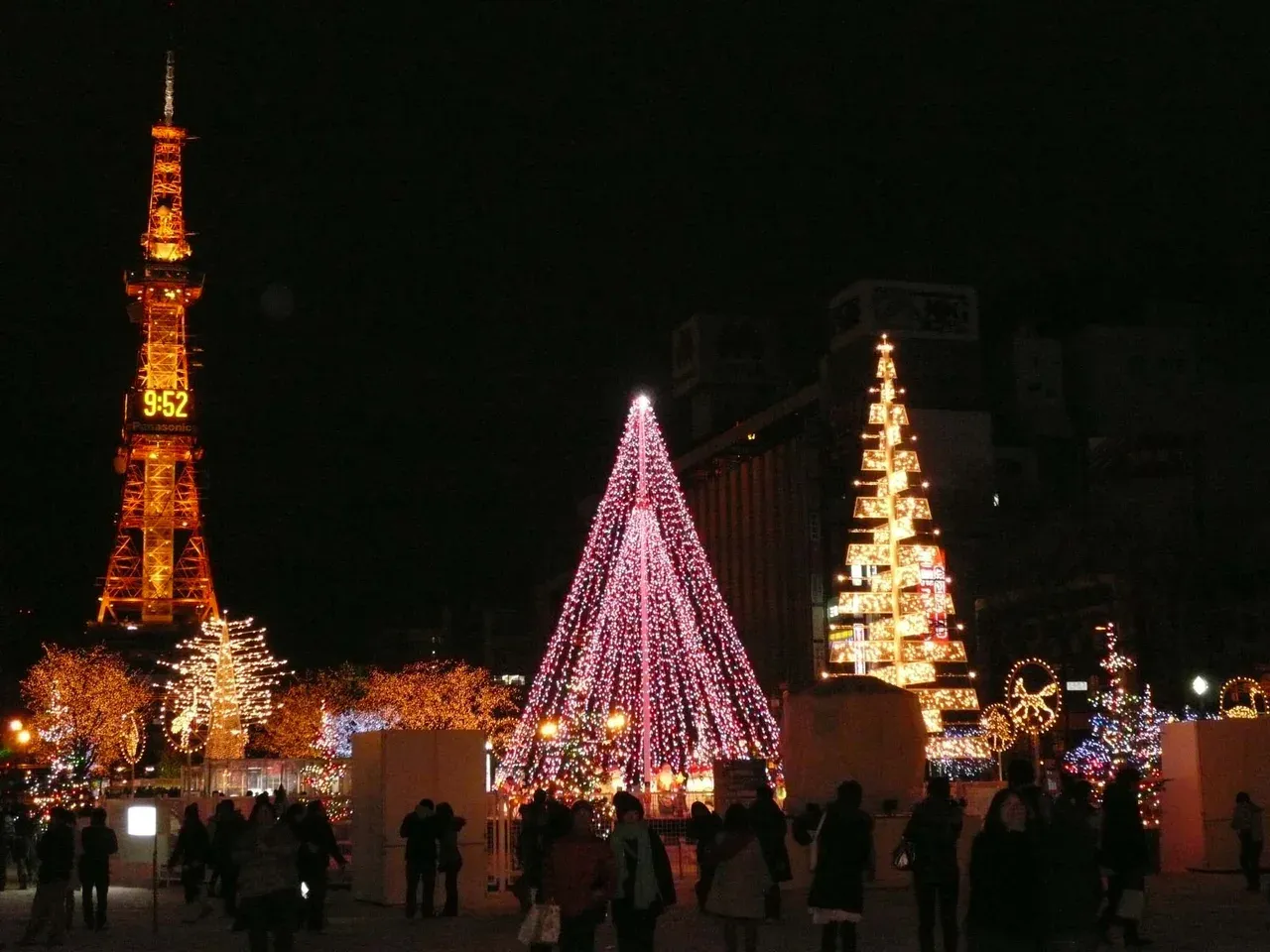
Open from November 20 to December 25, Odori Park is the hub of the entire festival, and its biggest refresh in 2026 arrives in 3-chome. After eight years of Winter Blossoms displays, 3-chome debuts a brand-new centerpiece called Wonder Streams (Spring of Light), using shifting, flowing light patterns to evoke a luminous spring. Two interactive pieces join it in the same block: a playable keyboard installation where notes trigger synchronized flashes of light, and More Stars, which shifts colors based on real-time temperature and humidity. Instead of a passive stroll past static trees, families can easily spend half an hour playing with the installations here.
Running on the exact same dates in Odori Park 1-chome and 2-chome, the 25th Munich Christmas Market in Sapporo marks a quarter-century of sister-city ties between Sapporo and Munich. Launched in 2002, it is a full-scale winter institution rather than a temporary pop-up, operating daily from 11:00 to 21:00 (last order at 20:45). Those steady hours make it an easy fallback any evening of a multi-night stay in Sapporo.
Over in 1-chome, Lichterbogen Square leans into atmosphere and family activities. A real live-wood Christmas tree known as the Lichterbaum stands at the center, ringed by four carved wooden arches crafted in traditional German style. Relief panels along the arches depict scenes of Christmas from dawn to midnight, unfolding like a three-dimensional storybook as you walk the loop. Adjacent Hütte wooden stalls host scheduled Santa meet-and-greets, hands-on craft workshops, and daily rotating stage performances—enough to occupy kids for an entire afternoon.
Cross the street into 2-chome's Twinkle Market and the focus shifts straight to food, drinks, and holiday crafts. Stalls pour steaming glühwein and serve German sausages, hearty stews, and baked treats alongside ornament and craft booths. Like markets in Germany, hot drinks typically use a reusable-cup deposit system—return your empty mug to the stall to get the deposit back. December evenings in Sapporo feel markedly colder than Tokyo's, so cradling a hot mug of mulled wine or soup in the sub-zero air doubles as an appetizer and a practical hand warmer.
The easiest way to pair the market with the illuminations is to follow the fading daylight. Arrive in 2-chome before 16:00 while daytime crowds are thinner to grab hot food, move into 3-chome in time for the 16:30 switch-on of Wonder Streams, stroll west through the remaining illuminated blocks of Odori Park, and circle back to the market for one last hot drink before the 21:00 close. Families with young children do better flipping the pace: tackle the 1-chome workshops and Santa photos in daylight, catch the 16:30 switch-on, and head back to the hotel before the deep freeze sets in. From December 23 to 25, Odori stays lit until 24:00—expect peak holiday atmosphere alongside the longest food lines of the month.
Ekimae-dori and Minami 1-jo-dori: Two Avenues, Two Moods
Running straight south from JR Sapporo Station to Susukino, the Ekimae-dori venue (November 20–February 11, 2027) strings roughly 270,000 LEDs across median trees along a 1.5-kilometer corridor. Rather than a stop-and-stare plaza, this avenue is designed as an illuminated transit spine: step out of the station toward Susukino for dinner or shopping and the lights walk with you the entire way. New for 2026, programmed lighting sequences along the Odori-to-Susukino stretch replace static warm-white bulbs with shifting, saturated tones rippling down the tree canopy as you walk.
Minami 1-jo-dori (November 20–March 14, 2027) operates at the opposite scale. Concentrated between Minami 1-jo Nishi 1-chome and Nishi 3-chome, it wraps around 70,000 LEDs onto 46 ginkgo trees lining both sidewalks to form a dense 300-meter corridor of light. Compact and packed with bulbs, it rewards stopping to frame shots. It is also one of three venues staying lit until March 14, taking over as downtown's main evening walk once Odori Park closes, and it starts its late-night holiday run earlier than the rest—staying open until 24:00 for six straight nights from December 20 to 25.
On foot, the two avenues and Odori Park form a tight downtown triangle. Leave JR Sapporo Station via the South Exit and head down Ekimae-dori under the lit median trees, turn into Odori Park at the 4-chome intersection for the market and main displays—or keep walking straight to Susukino—then cross one block south from Odori Park and walk two blocks west to hit Minami 1-jo-dori's ginkgo corridor. Everything sits within easy walking range, and whenever a cold snap hits, you can duck down into the Sapporo Underground Walkway (Chi-Ka-Ho) or Odori Underground Shopping Mall between blocks using the clearly marked exits on the official map.
Ekimae-dori also brings an everyday city rhythm that sets it apart. As the only venue running directly along Sapporo's main commuter artery, it puts office workers heading home under the exact same canopy as travelers looking up with cameras. Guests staying near Sapporo Station do not even need to carve out dedicated time for Ekimae-dori—you will pass through it naturally on morning transits and late-night ramen runs to Susukino. Running through February 11, its 270,000 LEDs also bridge straight into early February's Sapporo Snow Festival, serving as a glowing extension of the main sculpture grounds.
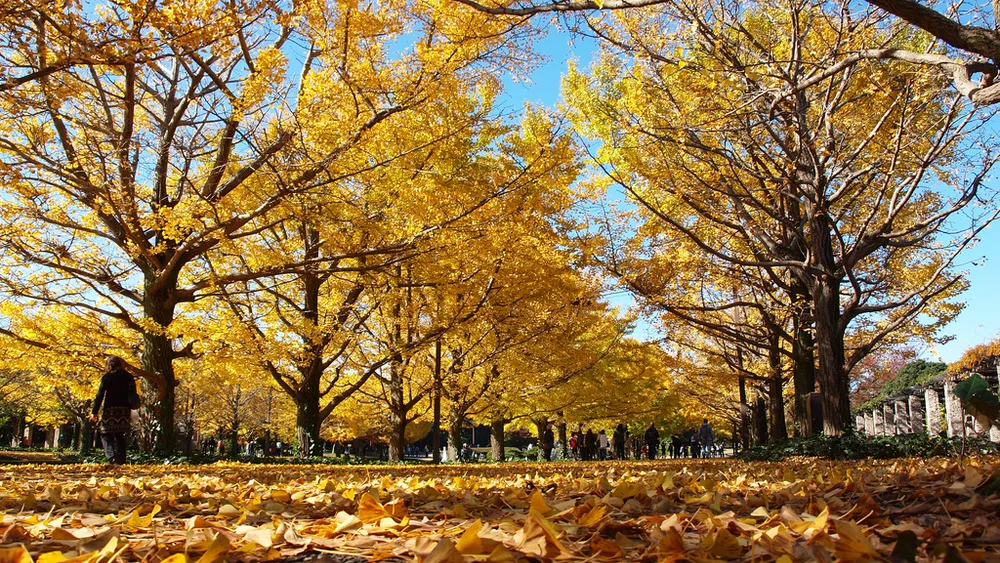
Those 46 ginkgo trees along Minami 1-jo-dori deliver a distinctively Hokkaido seasonal look. Ginkgo leaves turn yellow in late October and drop completely in November, leaving bare branches by the time the lights switch on November 20. Instead of illuminating foliage, the 70,000 LEDs trace the naked branch skeletons along both sides of the street. Once fresh snow settles onto those twigs, the snow catches and scatters the tiny points of light, turning the sidewalk into a crisp, layered tunnel. Brisk walkers can clear the 300-meter stretch in five minutes, yet most people end up lingering twenty minutes for photos—and the midnight hours from December 20 to 25 make it an ideal post-soup-curry or late-ramen stroll.
The North Cluster: Station Plaza, Red Brick Office, and Akapla
The venue with the latest nightly hours is Sapporo Station South Exit Plaza (November 20–March 14, 2027), glowing from 16:30 to 24:00—two full hours past most other sites. Its centerpiece features interactive installations including a programmed Color Wall across the wide open plaza, giving photographers room to step back for wide-angle shots. Travelers arriving on late flights or returning to the station after a late dinner can still catch the plaza lit up without rushing.
Newly elevated to a standalone venue in 2026, the Red Brick Office venue (November 20–February 28, 2027) washes the historic Former Hokkaido Government Red Brick Office in deep blue projection lighting. Warm red masonry set against cool cobalt light creates a sharp warm-cool contrast that looks dramatically different from tree-wrapped avenues, especially during snowfall. Here the architecture itself is the subject: stand on the front garden side to frame the full facade, or walk just east into adjacent Kita 3-jo Plaza (Akapla) to align the illuminated ginkgo trees in the foreground with the blue-lit brick hall behind them in a single shot.
Open through March 14, 2027, Kita 3-jo Plaza (Akapla) adopts the theme "Luminous Resonance" for 2026, making it the only venue in the north cluster centered on synchronized light-and-music shows. Short multi-minute sequences trigger at scheduled intervals throughout the evening; once early dusk sets in from mid-December onward, shows concentrate heavily between 17:00 and 21:00. Stand near the center of the plaza on the edge closest to the Red Brick Office so you can frame both the glowing ginkgo colonnade and the historic silhouette overhead.
For travelers short on time—or anyone overnighting near the station between transfers—this north cluster of Station Plaza, Akapla, and the Red Brick Office delivers the highest return per minute. All three sit three to five minutes apart on foot, completely inside the JR Sapporo Station South Exit walking radius. Start at the Station Plaza Color Wall, walk south into Akapla for a light-and-sound show, and finish facing the Red Brick Office—or reverse the loop walking north back to your hotel from Odori Park.
The north cluster also wins on crowd flow. After 19:00, Odori Park and the Christmas market often remain packed with dinner-hour visitors, whereas foot traffic around Akapla and the Red Brick Office drops off quickly. If you want space to stand quietly through a synchronized light show or shoot architecture and portraits without dodging passersby, shifting your evening walk north makes for a much calmer night out.
Nakajima Park's SNOWFISH: A January-Only Art Premiere
The second 2026 addition, Nakajima Park (January 9–28, 2027, 10:00–20:00), breaks completely from the downtown tree-light mold. Curated by the Sapporo International Art Festival (SIAF2027), the venue stages the world premiere of SNOWFISH by Australian art-and-technology studio ENESS. Inspired by schooling fish and Hokkaido sea urchins, the monumental inflatable sculptures integrate AI sensors that shift light and sound in real time as visitors move past—and with gates opening at 10:00, it is the sole White Illumination venue designed for daytime visits as well as night.
ENESS is a fixture on the international museum and public-art circuit and previously exhibited at the 2024 Sapporo International Art Festival. Because SIAF2027's main edition opens in 2027, this Nakajima Park showcase acts as a curated prelude—and organizers have already announced that ENESS's giant installation IWAGUMI Air Scape will follow at the Sapporo Snow Festival's Odori Park Nishi 2-chome site from February 4 to 21, 2027. Together, the two dates map out a neat art trail across consecutive winter months: SNOWFISH in late January, then IWAGUMI at February's Snow Festival.
Getting there could not be simpler: ride the Namboku Subway Line to Nakajima Koen Station, whose exits open right onto the park grounds—just one stop and a few minutes from Susukino after dinner. Nakajima Park is one of Sapporo's oldest public parks, home to a Japanese garden, the historic Hoheikan, and the Hassouan teahouse, so wandering among glowing inflatables scattered across open snowfields feels far more like a winter park walk than a city plaza. Keep in mind that late-January night temperatures often plunge toward minus 10°C, and wind cuts harder across open snow than down building-lined avenues, so add an extra thermal layer before heading in.
Treat daytime and nighttime at Nakajima Park as two distinct experiences. Natural light from 10:00 onward lets you inspect the texture and scale of the inflatables against crisp snow, while dusk through 20:00 turns the park into a glowing sound-and-light playground. ENESS actively invites visitors to step inside its largest sculptures, a huge hit with kids—just watch how long children stay out in sub-zero afternoon air as they move between sheltered interiors and windy paths. Weekend afternoons bring the longest entry queues, so aim for weekday mornings or right around the 10:00 opening for unhurried access.
If your priority is classic romantic street lights and contemporary inflatable art holds little appeal, you can comfortably skip Nakajima Park in January and save your evenings for Minami 1-jo-dori, Ekimae-dori, and the Red Brick Office. Conversely, for repeat visitors who have already seen Odori's December displays—or January travelers arriving after Odori wraps—SNOWFISH brings welcome fresh energy to Sapporo's midwinter lull.
Routes, Subway Exits, and Planning Your Stay
Picking the right subway exits saves considerable time out in the wind. Odori Station serves three lines—Tozai, Namboku, and Toho—with exits dropping you directly onto specific park blocks: Exit 2 for 5-chome, Exit 5 for 4-chome, Exits 6 and 8 for 3-chome (use Exit 8 for the elevator if you have a stroller or luggage), and Exit 27 straight into 1-chome. In short, head out Exit 27 for the Munich Christmas Market and Exits 6 or 8 for Wonder Streams and the interactive keyboard. Elsewhere, Nakajima Koen Station on the Namboku Line opens straight onto Nakajima Park, the Red Brick Office and Akapla sit within easy walking distance between Nishi-11-chome and Odori stations, and Ekimae-dori traces the entire surface stretch above the Namboku Line between Sapporo and Susukino stations.
If you only have one December evening, knock out the core route in a single sweep: surface at Exit 27 around 16:00 to warm up with hot food in Odori's 1-chome and 2-chome Christmas market, catch the 16:30 switch-on and walk into 3-chome for the new centerpiece, then turn north onto Ekimae-dori around 17:30 toward Sapporo Station South Exit Plaza for the Color Wall, detouring briefly into the Red Brick Office and Akapla for blue-lit brick and synchronized ginkgo shows before catching your train. That loop covers roughly 4 to 5 kilometers outdoors, so dress accordingly—or drop bags at a station hotel before 19:00, dine in Susukino, and walk back up Ekimae-dori's light corridor afterward.
Visitors coming in January or later with two nights can spread things out at an easier pace. Dedicate night one to the downtown cluster of Minami 1-jo-dori's light tunnel, the Red Brick Office, and Akapla; on day two, visit Nakajima Park in afternoon daylight for SNOWFISH, ride the Namboku Line one stop north to Susukino for dinner once dark falls, and stroll back along Ekimae-dori. From January 9 to 28, SNOWFISH takes center stage; from January 29 to February 11, you catch Ekimae-dori's final weeks alongside Snow Festival buildup. Arrive in early March and only Minami 1-jo-dori, Akapla, and Station Plaza remain—a quiet early-spring night walk with none of the peak-season crowds.
Save the official phone numbers before leaving: the main event hotline during November 20–December 25 is 080-5830-6001; outside those dates, call the Sapporo Tourist Association office at 011-281-6400 (weekdays 8:45–17:15); and Nakajima Park operates a dedicated line at 011-211-2314. Check official social feeds or call ahead if heavy snow threatens schedule adjustments. Casual photography is welcome across all venues, though Akapla's music-light shows and Odori's programmed color runs follow posted schedules—check daily showtimes before staking out a tripod spot. To expand your trip across Hokkaido or northern Honshu, pair February dates with the Sapporo Snow Festival's three venues, map out city-plus-day-trip pacing with our four-day Sapporo and Otaru itinerary, plan a king or hairy crab dinner via the Sapporo crab restaurant guide, add southern Hokkaido lights with Hakodate's night views and Christmas season, or hop across the strait for snow monsters and slopes at Zao Onsen Ski Resort.
Cold-weather gear and battery prep dictate how long you actually enjoy the walk. Sapporo windchills regularly sit between minus 5°C and minus 10°C in December and dip toward minus 15°C in January, and outside the underground walkways every link between venues is exposed to open air. Dress two notches warmer than you would for Tokyo winter illuminations: thermal base layers, a fleece mid-layer, a windproof down coat, gloves, and a knit cap are non-negotiable, especially when standing still for several minutes during an Akapla light show. For photography, keep three habits in mind: cold drains phone and camera batteries fast, so tuck your power bank inside an inner coat pocket; check daily showtimes before waiting for Odori or Akapla's color sequences; and do not retreat indoors when snow starts falling—flurry nights give the Red Brick Office's blue floodlights their richest depth.
Budgeting is straightforward because admission to all seven venues is free. You only pay for food and drinks at the Munich Christmas Market, where a mug of glühwein or a hot plate generally runs a few hundred yen up to ¥1,000, making cold-weather gear and meals your real expenses rather than tickets. Compared with winter illuminations elsewhere in Japan, Sapporo stands out for three walkable downtown axes that cost nothing to enter—the tradeoff being biting cold and darkness before 16:00. Match your travel month to the open venues, layer up properly, and use the underground walkways to thaw out between blocks, and all seven sites fit effortlessly into a Hokkaido winter trip.
- Six downtown venues open Nov 20, 2026; staggered closings: Odori Dec 25, Ekimae-dori Feb 11, Red Brick Office Feb 28, and Minami 1-jo-dori, Akapla, and Station Plaza Mar 14, 2027
- Standard lights turn on at 16:30; Station Plaza stays lit until 24:00, Odori and Ekimae-dori extend to 24:00 Dec 23–25, and Minami 1-jo-dori extends to 24:00 Dec 20–25
- Munich Christmas Market: Nov 20–Dec 25, 2026, 11:00–21:00 (last order 20:45) in Odori Park 1-chome and 2-chome
- Nakajima Park SNOWFISH: Jan 9–28, 2027, 10:00–20:00; ENESS world premiere with walk-in inflatable sculptures
- Odori Station exits: Exit 2 to 5-chome, Exit 5 to 4-chome, Exits 6 & 8 to 3-chome (elevator at Exit 8), Exit 27 to 1-chome
- Official hotlines: 080-5830-6001 (Nov 20–Dec 25) / Sapporo Tourist Association 011-281-6400 (weekdays 8:45–17:15) / Nakajima Park 011-211-2314
A few useful answers
What are the dates and lighting hours for the 2026–2027 Sapporo White Illumination?
Except for Nakajima Park, all venues of the 46th edition switch on November 20, 2026. Odori Park runs through December 25 (16:30–22:00, extended to 24:00 on December 23–25); Ekimae-dori through February 11, 2027; the Former Hokkaido Government Red Brick Office through February 28, 2027; and Minami 1-jo-dori, Akapla, and Sapporo Station South Exit Plaza through March 14, 2027 (the South Exit Plaza stays lit until 24:00 nightly). Nakajima Park runs exclusively from January 9 to 28, 2027 (10:00–20:00).
When is the Munich Christmas Market open?
The 25th Munich Christmas Market runs November 20 through December 25, 2026, in Odori Park 1-chome and 2-chome, open daily 11:00–21:00 (last order 20:45). Daytime hours pair neatly with the evening lights: 1-chome features a live-wood Lichterbaum centerpiece, four carved wooden arches, Santa meet-and-greets, and craft workshops, while 2-chome is lined with stalls serving glühwein and German holiday dishes.
Which station is best to stay near for the illuminations?
Odori Station connects directly to the core downtown venue (Exit 2 for 5-chome, Exit 5 for 4-chome, Exits 6 and 8 for 3-chome, and Exit 27 for 1-chome). Staying near either Odori Station or JR Sapporo Station puts the main venues within easy walking distance. For Nakajima Park, the venue links directly to Nakajima Koen Station on the Namboku Subway Line, just one stop from Susukino.
What is SNOWFISH at Nakajima Park?
SNOWFISH is a world-premiere interactive installation created by Australian art-and-tech collective ENESS and curated by the Sapporo International Art Festival (SIAF2027). Inspired by schooling fish and Hokkaido sea urchins, these large-scale, AI-equipped inflatables shift light and sound in response to visitors' movements, and guests can step inside the largest pieces. It runs January 9–28, 2027, from 10:00 to 20:00.
Are any illuminations still on if I visit in January or later?
Yes. Although Odori Park wraps up on December 25, Minami 1-jo-dori, Akapla, and Sapporo Station South Exit Plaza stay illuminated through March 14, 2027, Ekimae-dori runs through February 11, and the Red Brick Office runs through February 28. Between January 9 and 28, you can also catch the SNOWFISH installation at Nakajima Park.
Do lighting hours change?
Yes. Official listings note that switch-on times track sunset and hours may change without prior notice due to weather. During the main run (November 20–December 25), call the inquiry hotline at 080-5830-6001. Outside those dates, contact the Sapporo Tourist Association office at 011-281-6400 (weekdays 8:45–17:15) or check the official social channels for same-day updates.
Can I pair the illuminations with the Sapporo Snow Festival or skiing?
Yes. The Sapporo Snow Festival takes over the same stretch of Odori Park in February 2027 with its own nighttime lighting, and ENESS's giant installation IWAGUMI Air Scape will appear in Odori Nishi 2-chome from February 4 to 21, 2027. If you want to combine illuminations with skiing on the same trip, you can connect down to Honshu for Zao Onsen Ski Resort, which opens December 12.
Do you need tickets for the Sapporo White Illumination?
All seven venues—including Odori Park, Ekimae-dori, Minami 1-jo, Akapla, the Former Hokkaido Government Red Brick Building, Sapporo Station South Exit, and Nakajima Park SNOWFISH—are free to enter. Only food, drinks, and crafts at the Munich Christmas Market (Odori 1–2-chome) cost extra, with hot drinks using a refundable mug deposit.
Official information and references
Sources used in this guide.
- Sapporo White Illumination Official Site (Venues, Dates, Lighting Hours)
- Odori Venue (Wonder Streams, Keyboard Installation, More Stars)
- Munich Christmas Market in Sapporo 2026 (25th Edition, Hours, Layout)
- Ekimae-dori Venue (Approx. 1.5 km, 270,000 LEDs, Lighting Program)
- Minami 1-jo-dori Venue (46 Ginkgo Trees, Approx. 70,000 LEDs, 300 m)
- Nakajima Park Venue (ENESS "SNOWFISH", Curated by SIAF2027)
- Access Guide (Subway Exit Pairings)