How to time Japan's 2026 ginkgo peak across Tokyo, Kyoto, Osaka, Sapporo, and three more cities, with Gaien and Showa Kinen Park lighting schedules, fees, and rain-day backup routes.
- Region & Focus
- Sapporo
- Reading Scope
- 20 min read · 10 chapters · 5 Q&As
- Official Verification
- 42 official sources checkedUpdated November 22, 2026
- Key Topics
- SeasonsItinerariesHokkaido
Chapter Route Map (tap any stop)
- City Forecasts, Sample Trees, and On-Site Photos: What Each Tells You
- Choosing Between Seven Japanese Cities in 2026
- Only Half a Day in Tokyo? Where to Walk in Gaien, Shinjuku Gyoen, and Tachikawa
- Showa Kinen Park: Choose Your Gate First, Then Check Night Tickets
- Sapporo: Aim for Kita 13-jo Gate and Line Up a Warm Indoor Stop
- Nagoya: Central Tsuruma Park or Inazawa Sobue
- Kyoto's Nishi-Honganji and Evening Walks Along Osaka's Midosuji
- Yokohama in Half a Day: Harborfront Strolls and Inland Wind Shelters
- Fukuoka Later in the Season: Walk From Maizuru Park's Ninomaru to Ohori
- Leave One Flexible Half-Day for Live Foliage Conditions
- Quick Q&A
If you have already booked flights for autumn 2026 and are trying to catch Japan's peak ginkgo season, put Meiji Jingu Gaien at the top of your Tokyo list for late November, or head to the Inazawa Sobue Ginkgo Yellow Leaves Festival near Nagoya. Further west, Japan Meteorological Corporation forecasts city-level yellow-leaf dates of November 30 for both Kyoto and Fukuoka, while Hokkaido University's ginkgo avenue in Sapporo typically peaks roughly a month earlier. Lock in your hotel by city and week first, then pick the exact street on the day of your visit using the latest photos from each site's management office. On November 19, 2026, wind and rain pushed Showa Kinen Park's two main avenues past peak even as ginkgo trees in the park's playground zone remained bright yellow.
City Forecasts, Sample Trees, and On-Site Photos: What Each Tells You
When searching Japanese foliage updates for ginkgo, look for the terms "koyo" (yellow leaves) or "icho" (ginkgo) rather than red maple forecasts. In its third seasonal forecast released on November 4, 2026, Japan Meteorological Corporation lists red maples and yellow ginkgoes in separate columns by city. Tokyo is projected for November 29 for ginkgo and November 30 for maples, while Kyoto stands at November 30 for ginkgo and December 14 for maples. That gap matters when planning leave: in Tokyo, a single hotel stay can cover both colors, whereas in Kyoto, booking for mid-December maple season risks missing the specific ginkgo tree you came to see.
City forecast tables follow the Japan Meteorological Agency (JMA) sample-tree standard, which marks the first day most of a specimen tree's leaves turn yellow as the yellow-leaf date, and the first day roughly 80% of leaves have dropped as the leaf-fall date. Reading both dates side by side tells you two separate things: how full the canopy still is, and when a yellow carpet may cover the ground. In 2026, Akita's sample ginkgo turned yellow on November 4 and reached leaf-fall on November 14, while its sample maple did not turn red until November 18. For a single weekend in Tohoku, choosing separate spots for ginkgo and maples works better than expecting both trees to peak together in the same park.
JMA observation logs and private weather company forecasts do not always line up. The November 4, 2026 city forecast placed Sapporo's ginkgo date on November 1, yet JMA's seasonal yellow-leaf table showed missing observation data for Sapporo that year. If your goal is Hokkaido University, rely on campus avenue photos and university notices instead. Whenever a local meteorological office table shows a blank cell or dash, skip extrapolating from neighboring cities and check the venue's own current update.
When reviewing on-site photo updates, check the shoot date first and the sub-area label under each image second, since blog posts are often published days after photos are taken and may mix dates in one gallery. Search the spot name together with the year, find the newest report, and check whether the status reads "irozuki hajime" (starting to turn), "migoro" (at peak), or "migoro sugi" (past peak). If a caption says only "rakuyo" (leaves falling), inspect the branches and pavement in the frame: if the whole avenue is nearly bare, making a special rail detour rarely pays off compared with passing through a street already on your route.
If your trip overlaps a Japanese national holiday, verify access rules after checking foliage status. November 23, 2026 is Labor Thanksgiving Day, which falls on a Monday—travelers hoping for quiet Monday crowds will need another weekday. At Meiji Jingu Gaien, holiday traffic restrictions start earlier at 10:00 AM, while Shinjuku Gyoen shifts its usual Monday closure to the next weekday. Two spots in the same city can run on completely different holiday schedules. Saving dates, hours, and the latest photos in your phone lets you pivot immediately if rain, wind, or crowds hit.
How to time Japan's 2026 ginkgo peak across Tokyo, Kyoto, Osaka, Sapporo, and three more cities, with Gaien and Showa Kinen Park lighting schedules, fees, and rain-day backup routes.
Choosing Between Seven Japanese Cities in 2026
If ginkgo viewing is your main goal and your dates are flexible, target Sapporo from late October to early November. For the third week of November, pick Nagoya, adding a side trip out to Inazawa Sobue if you want orchard-town views. Save the final week of November for Tokyo, Kyoto, or Osaka, and slot Fukuoka around late November alongside existing plans in Tenjin or Ohori Park. The dates in the table below come from Japan Meteorological Corporation's November 4 city forecast; Yokohama uses street recommendations from local tourism guidance and works easily as a day trip from a Tokyo hotel.
If you are already booked into Tokyo for mid-November, put Showa Kinen Park in Tachikawa at the top of your shortlist. Park photos on November 12, 2026 showed Katarai Ginkgo Avenue just reaching peak, and by November 19 the same stretch was already past peak—both official milestones well ahead of Tokyo's November 29 city forecast. If you only have three or four free hours in central Tokyo, though, swapping last-minute to Meiji Jingu Gaien is far easier than persuading your group to make the extra rail trip out to Tachikawa.
Trips over New Year's fall into winter event season, not autumn foliage. In 2026, the Midosuji Illumination runs until late night on December 31; although the broader Festival of the Lights in Osaka continues through January 31, 2027, the Midosuji section itself ends at year-end. For autumn 2027 planning, pick your week from each site's typical seasonal window, choose a city worth visiting even in rain if you have two weekends to choose from, and book refundable or changeable hotel rates. Hold off on reserved train seats and timed night-entry tickets until event dates are officially announced.
When your route and flights are already locked in, use leaf-fall timing to reorder what you do first rather than rebooking trains. On a late-November Kyoto and Osaka trip, knock out Nishi-Honganji during afternoon daylight before its gates close, keep another sunny slot for outdoor time in Osaka, and save Midosuji's illuminated trees for an evening arrival. If you fly into Fukuoka a week later, pair Maizuru Park directly with Ohori Park or Tenjin plans. When updates say your target spot won't peak until the following week, swap in trees already turning yellow along the same street and station line instead of rewriting your whole itinerary.
| City | Nov 4, 2026 City Forecast | Local Ginkgo Spots to Plan Around |
|---|---|---|
| Sapporo | November 1 | Hokkaido University Kita 13-jo Avenue |
| Nagoya | November 16 | Tsuruma Park, Inazawa Sobue |
| Osaka | November 27 | Midosuji (Yodoyabashi, Honmachi, or Shinsaibashi sections) |
| Tokyo | November 29 | Meiji Jingu Gaien, Shinjuku Gyoen, Showa Kinen Park |
| Kyoto | November 30 | Nishi-Honganji (in front of Goeido Hall) |
| Fukuoka | November 30 | Maizuru Park (Ninomaru area) |
| Yokohama | Timed to Nihon Odori and Yamashita Park Street conditions | Nihon Odori and Yamashita Park Street |
Only Half a Day in Tokyo? Where to Walk in Gaien, Shinjuku Gyoen, and Tachikawa
For grand urban street scale in central Tokyo, take Exit 4a from Gaiemmae Station on the Ginza Line, or Exit 1 from Aoyama-itchome Station and walk along Aoyama-dori. Aoyama-itchome also connects the Hanzomon and Oedo lines, letting you skip a Ginza Line transfer. Enter the ginkgo avenue from the Aoyama-dori side and walk about 300 meters inward toward the circular road. Search specifically for "Jingu Gaien Ginkgo Avenue" in maps—setting "Meiji Jingu" near Harajuku Station drops you at a different precinct across town. For wheelchair users or strollers, Aoyama-itchome Station's Exit 1 (Kita-Aoyama side) has an elevator straight to street level heading toward Aoyama-dori.
The Tokyo Metropolitan Government's 2026 Meiji Jingu Gaien ginkgo illumination runs November 21–29 from 4:30 PM until around 7:30 PM daily. Visit on a weekday daytime if you want space, snap a handful of photos, and walk on toward Omotesando for a meal. If you come specifically for the lights, walk the sidewalk before dusk to see the canopy clearly, then frame shots from the outer edges once the lights come on. Partial road closures apply during the 2026 season—posted notices list 12:00 PM–9:00 PM on weekdays and 10:00 AM–9:00 PM on weekends and holidays—so arriving by subway beats hunting for parking. When shooting portraits, have companions stand near the outer edge of the tree line to keep the center clear for passersby. Looking north from Aoyama-dori frames the Seitoku Memorial Picture Gallery at the end of the vista, though the gallery itself is closed for seismic retrofitting and conservation work through late May 2027; take the subway one stop over if you need an indoor backup afterward.
If you want autumn color, benches to rest on, and an indoor option in one place, choose Shinjuku Gyoen instead. From October 1 through March 14, standard hours are 9:00 AM–4:30 PM with last entry at 4:00 PM. General admission is ¥500; the garden is normally closed on Mondays (moving closure to the following weekday if Monday is a national holiday), except during the November 1–15 chrysanthemum exhibition when it stays open daily. Exit 1 of Shinjukugyoemmae Station on the Marunouchi Line puts you at Okido Gate in about five minutes, right near the greenhouse. While the garden has ginkgo trees, note that the long, formally lined avenue of turning trees in the French Formal Garden is actually London plane trees—grab an autumn park map to find specific ginkgo spots faster than navigating by photos.
Stick to central Tokyo if you are catching a Shinkansen or heading to the airport the same day. Gaien fits neatly as a walk between two subway stations, and at Shinjuku Gyoen you can limit your loop to Okido Gate and the greenhouse area, whereas Showa Kinen Park requires significant transit and walking time inside the grounds. Staying in Shinjuku and aiming for both central spots? Visit Shinjuku Gyoen in the morning, exit from whichever gate—Okido or Shinjuku—aligns best with your train, and reach Gaien around dusk. If you only have one evening with bags stored at Tokyo Station, walking Gaien before boarding beats hauling luggage out to Nishi-Tachikawa and back.
Showa Kinen Park: Choose Your Gate First, Then Check Night Tickets
Showa Kinen Park has two main ginkgo avenues. For the 300-meter Katarai Ginkgo Avenue with overlapping canopies, ride the JR Chuo Line to Tachikawa and transfer one stop on the Ome Line to Nishi-Tachikawa; Nishi-Tachikawa Gate is about two minutes from the station, followed by roughly 730 meters inside the park to the trees. For the neatly trimmed 200-meter Canal Ginkgo Avenue beside the reflecting pool, walk about 300 meters from Tachikawa Gate—entering via Nishi-Tachikawa Gate instead turns that into roughly a 1,000-meter walk inside the park. Dedicated photographers can link both, while visitors with older relatives, toddlers, or limited evening time should stick to whichever avenue sits closest to their gate. Note that Nishi-Tachikawa Gate to the Japanese Garden is still about 1.6 kilometers each way, so factor the return walk in before trying to hit all three zones.
Standard daytime hours from November through February are 9:30 AM–4:30 PM. General park admission is ¥450 for high school students and adults, ¥210 for seniors 65 and older with proof of age, and free for junior high students and younger. In 2026, the Autumn Night Walk event runs October 29–November 29, with lighting from 4:30 PM to 8:30 PM and park closure at 9:00 PM. Late arrivals should enter via Nishi-Tachikawa Gate or Tachikawa Gate, where night ticket sales continue until 8:15 PM. Standard park admission covers the illuminated ginkgo avenues—you can even visit the Japanese Garden during the day, exit the garden before 4:00 PM, and head straight to the avenues for the lights.
Evening entry to the Japanese Garden requires a separate ticket. Advance online garden-only tickets go on sale one week ahead at ¥1,200 for adults and seniors 65+, ¥600 for elementary and junior high students, and free for preschool children. Online combo tickets including park entry cost ¥1,600 for adults and ¥1,410 for seniors 65+. Same-day tickets at the gate are ¥1,300 for adults and ¥700 for elementary and junior high students, cash only, and are not sold if the online allotment sells out. If you already toured the garden in daylight or want to save, spend your evening solely along the ginkgo avenues. To cut down walking, the evening shuttle runs between Nagame no Terrace and Nihon Teien-mae at ¥400 one-way for adults and ¥200 for elementary and junior high students (cashless payment only; wheelchairs and strollers must be folded). Departures start at 5:30 PM from Nagame no Terrace, with the final bus leaving Nihon Teien-mae at 8:30 PM—save enough energy to walk back to your exit gate if you stay until the last lights.
On weekends and national holidays from November 14 to 29, 2026, Katarai Ginkgo Avenue switches to one-way foot traffic from north to south between 4:30 PM and 8:30 PM. For the illumination, walk first to the Keiryu Hiroba Restaurant side and follow the avenue south toward Akishima Gate. If you enter via Nishi-Tachikawa Gate on a tight round-trip schedule, arrive early enough for two-way daytime access, or switch to Canal Avenue near Tachikawa Gate. On rainy evenings, two-way walking remains open.
On November 19, 2026, park staff reported that both Canal Avenue and Katarai Avenue had moved past peak after wind and rain, while ginkgoes in the Wanpaku Playground zone were still at peak. Families with kids can shift directly toward the playground, or visit the Japanese Garden during the day for maples. If full golden canopies are your priority, check the park's latest bloom report before committing to the trip out to Nishi-Tachikawa. For gate maps and loop planning, see our Showa Kinen Park autumn routes guide.
Sapporo: Aim for Kita 13-jo Gate and Line Up a Warm Indoor Stop
Hokkaido University lists late October to early November as the typical peak for its Sapporo campus ginkgo avenue—roughly 70 trees lining a 380-meter stretch along Kita 13-jo Street. Walking in through Kita 13-jo Gate from Kita-12-jo Station on the Sapporo Subway Namboku Line puts the ginkgo trees first. If you are staying near Sapporo Station, enter via the Main Gate instead, follow the main north-south campus road past the Hokkaido University Museum, and turn east through the avenue on your way out. Walking from Sapporo Station saves a subway transfer in mild weather, while cold rain or wet snow makes a quick in-and-out trip via Kita-12-jo Station the smarter move.
University restrictions close Kita 13-jo Gate to vehicles—including bicycles—on October 31, 2026 from 9:30 AM to 9:30 PM and on November 1 from 9:30 AM to 8:30 PM, and sightseeing vehicles are prohibited on campus year-round. Set any taxi drop-off outside the campus gates, and avoid using Hokkaido University Hospital's outpatient parking lot. For clean wide shots, walk on a sunlit weekday morning while keeping campus lanes clear for students, staff, and service vehicles; on festival nights, walking out to the subway station beats waiting for a ride near restricted intersections. Pair this route with our Hokkaido University ginkgo avenue guide for campus landmarks.
If temperatures plunge, anchor your outing around the Hokkaido University Museum in the same campus block. Admission is free, with regular hours from 10:00 AM to 5:00 PM; it closes on Mondays, or on the next weekday when Monday is a national holiday. Warm up inside the exhibits first and save the tree-lined street for a brief midday break in rain or snow so companions prone to cold hands and feet aren't left standing at the gate. If you fly out of New Chitose Airport the next morning, schedule this campus half-day on the afternoon before departure and stick to quick stops near Sapporo Station after checkout. Dry light is the scarcest resource for Hokkaido autumn foliage—if early morning brings icy pavement, wait for a warmer window instead of forcing the full walk.
Nagoya: Central Tsuruma Park or Inazawa Sobue
If you only have an hour in central Nagoya, enter Tsuruma Park's main gate directly outside JR Tsuruma Station or Exit 4 of Tsuruma Station on the Subway Tsurumai Line. Walk in through the front plaza and follow the park map toward Aki no Ike (Autumn Pond) to sample different autumn trees, keeping your route right next to rail transit if weather shifts. Japan Meteorological Corporation's November 4 update puts Nagoya's city ginkgo forecast at November 16; even in full color, urban parks like Tsuruma highlight scattered groves along paths and ponds rather than endless tunnels. If one traveler wants to stroll while another prefers to sit, Tsuruma is far easier than heading out of town.
For a full ginkgo-farming landscape, ride the Meitetsu Line from Meitetsu Nagoya toward Meitetsu Ichinomiya, transfer to the Bisai Line bound for Tsushima, and get off at Yamazaki Station. In Sobue, golden trees weave among country lanes, Yusen-ji Temple, and farm fields; walking from Sobue Ginnan Park to Yusen-ji takes you past working orchards and veteran trees over 200 years old. The 29th Sobue Yellow Leaves Festival runs November 21–29, 2026, though evening illuminations at Yusen-ji and the park run only through November 28 from 5:00 PM to 8:00 PM—plan a daytime visit if you go on the final day, November 29. The local commerce association posted field photos on November 22; match each photo caption to its exact block before choosing whether to start near the temple or the park.
Drivers should note that the paved parking lot at Sobue Ginnan Park east of Yamazaki Station is closed to general parking from November 19 through December 3 for festival setup and teardown, with overflow directed to the Nishijima Ballpark temporary lot; arriving by Meitetsu train drops you directly inside the festival zone at Yamazaki Station. Check evening Bisai Line departures back to Meitetsu Ichinomiya on your phone before deciding whether to stay until the 8:00 PM lights-out. If you arrive in Nagoya from Tokyo with luggage on the same day, store bags before heading out of the city—or if you get in late, visit Tsuruma Park that afternoon and shift Sobue to the next morning, saving central stops for departure day.
Kyoto's Nishi-Honganji and Evening Walks Along Osaka's Midosuji
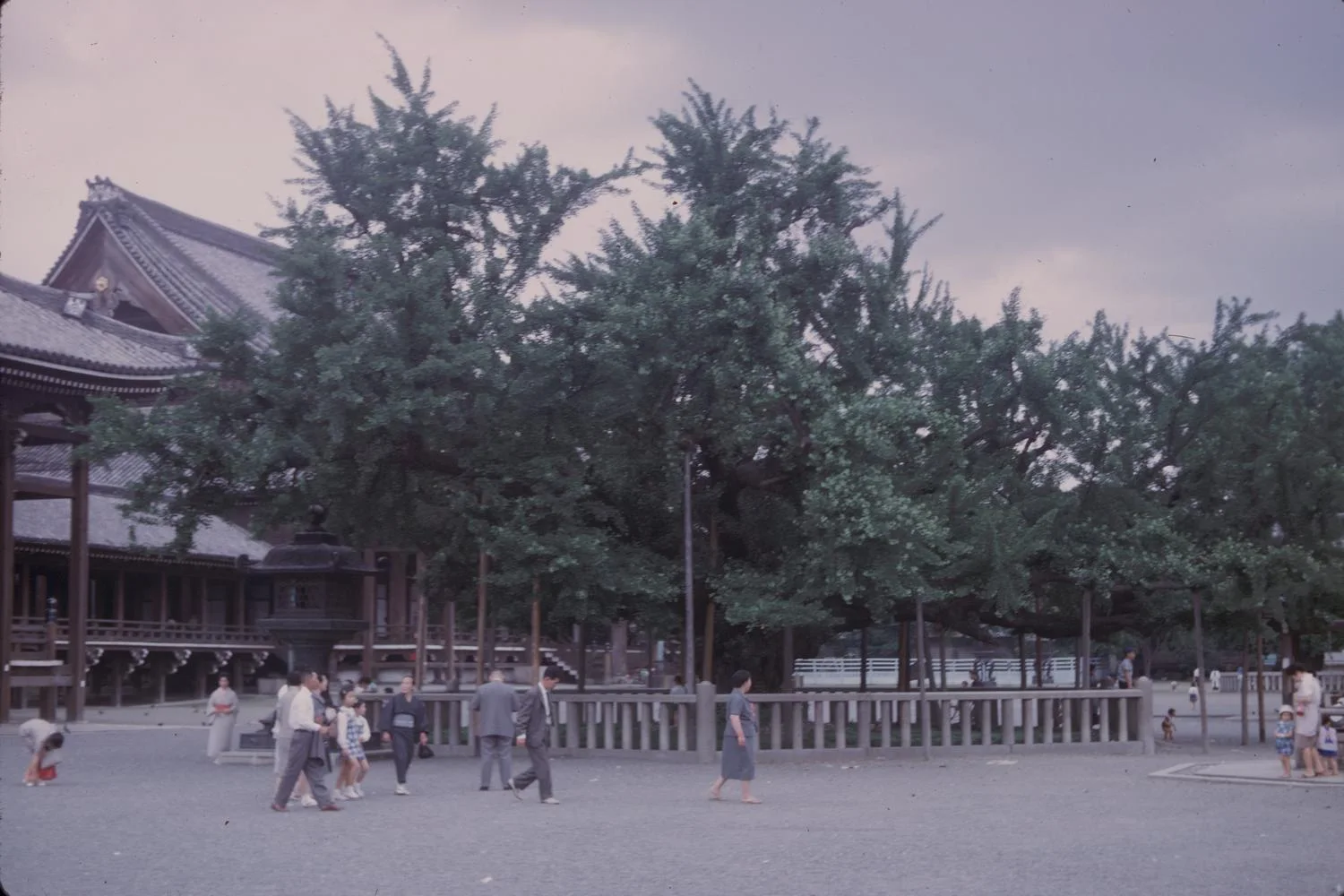
In front of Goeido Hall at Nishi-Honganji stands a roughly 400-year-old ginkgo with wide horizontal branches known by the temple as "Sakasa Ginkgo" (upside-down ginkgo), a designated Natural Monument of Kyoto City. From the front of Kyoto Station, take Kyoto City Bus 9, 28, or 75 to Nishi-Honganji-mae, or catch Keihan Bus 311 or 312 from the Hachijo Exit to Nishi-Honganji. On the temple's November 22, 2026 schedule, gates open at 5:30 AM and close at 5:00 PM—visit early to pair it with stops south of Kyoto Station, and if saving it for afternoon, go before sunset in Higashiyama rather than backtracking to Horikawa-dori too late. Step back into the open courtyard to frame the sweeping canopy alongside Goeido Hall's roofline, and yield central walkways to worshippers whenever services are underway.
Nishi-Honganji blends temple worship and foliage in a single stop: in light rain, view the courtyard ginkgo first and step inside the hall to cut down your time outdoors. If your group prefers shady avenues over lingering quietly on temple grounds, spend a daytime window on Kyoto Gyoen and city ginkgo spots and save Nishi-Honganji for the day you pass through Kyoto Station. On a three- or four-day Kansai itinerary, there is no need to cram multiple ancient temple trees and gardens into one morning—pick one tree silhouette you care about and spend the afternoon in neighborhoods you already planned to visit. Because Japan Meteorological Corporation's 2026 forecast puts Kyoto maples later than ginkgoes, check recent photos to confirm which gardens have actually turned red before heading from Kyoto Station over to Higashiyama.
If Nishi-Honganji's canopy is already thinning, Kyoto Gyoen National Garden gives you several alternatives. The Ministry of the Environment's November 13, 2026 report noted the giant ginkgo at the former Ichijo Residence turning yellow, alongside the large tree at the former Gyokado site and the row of ginkgoes north of the Kan'innomiya Residence. For the south end, take the Karasuma Subway Line to Marutamachi Station and walk from Exit 1 toward the Kan'innomiya Residence—the ginkgo row sits right on its north side. The northern Ichijo Residence sits closer to Imadegawa Station; picking one end cuts down stroller or rolling-bag distance across gravel paths. Kyoto Gyoen's outdoor grounds are free and open 24 hours, while the free Kan'innomiya Residence exhibition rooms generally admit visitors 9:00 AM–4:00 PM (closing at 4:30 PM; closed Mondays, open on national holidays)—handy shelter if a shower catches you on the south side before heading back to Marutamachi.
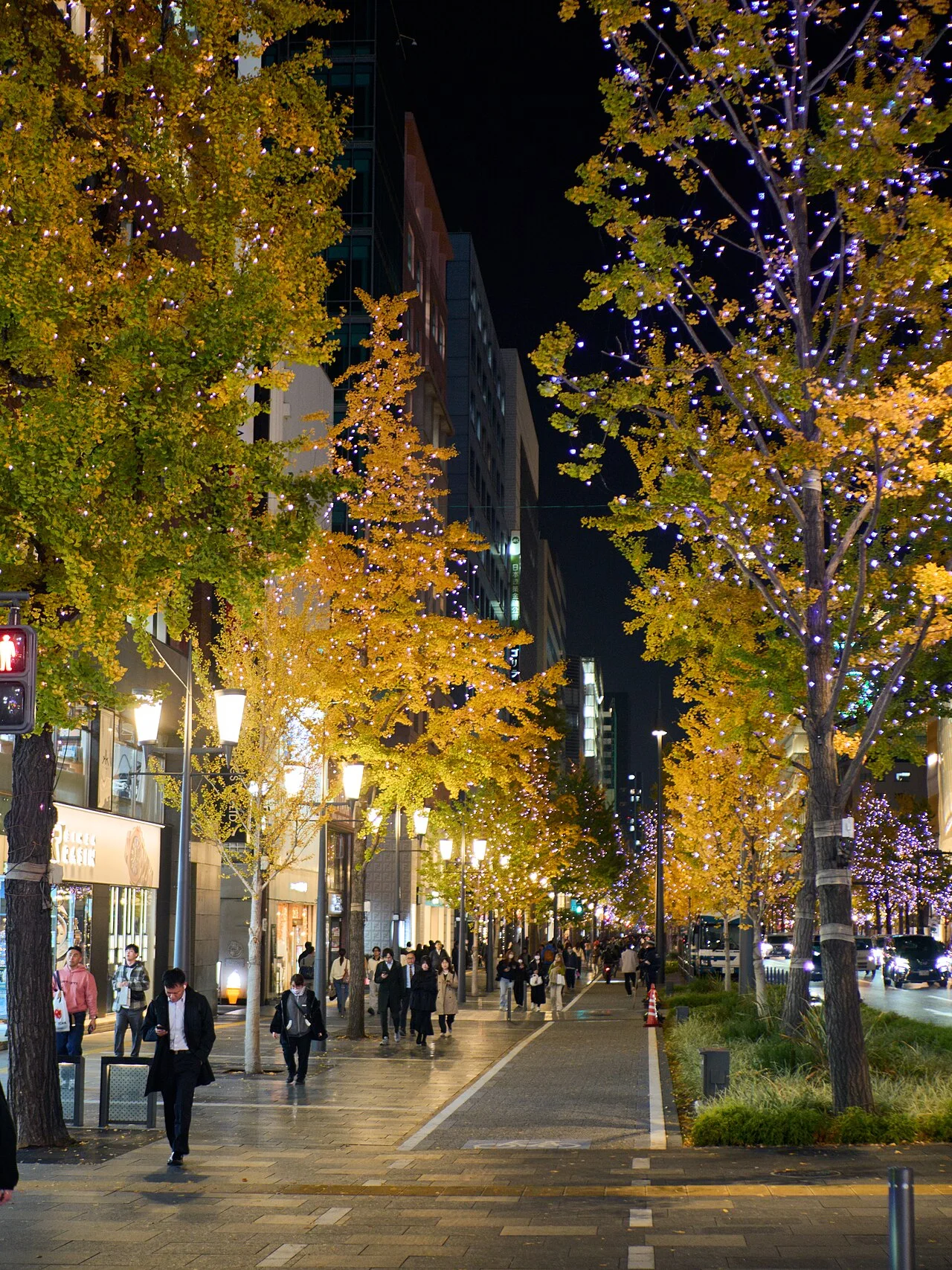
Split Osaka's Midosuji Boulevard into separate day and night sessions. If you are staying near Yodoyabashi or Honmachi, photograph trees framed by office towers during the day and ride the Midosuji Line back after dark for the lights; if based in Namba, stroll the Shinsaibashi-to-Namba stretch and hop on the subway at the nearest station once tired. The 2026 Midosuji Illumination runs November 3–December 31 from roughly 5:00 PM to 1:00 AM daily, stretching about 4 kilometers from Hanshin-mae Intersection south to Namba West Exit Intersection. Track last-train times separately rather than relying on the 1:00 AM shutoff, and in rain duck through covered shopping arcades until a break lets you step one block over to Midosuji. See our Midosuji ginkgo and illumination walk guide to pick start and end stations.
To frame Osaka ginkgoes against stone castle walls or moat water, spend daytime at Osaka Castle Park and save Midosuji for after dinner. The park's 2026 autumn festival map places ginkgo viewing from late November through early December, clearly separating the East Outer Moat and Honmaru zones. Entering the park's south side from Morinomiya Station Exits 1 or 3-B and walking along the East Outer Moat toward JR Osakajokoen Station works well if you only want trees; add extra time for walking into Honmaru and buying museum tickets if anyone wants to climb the main keep. Afterward, return to Morinomiya and take the Chuo Line to Honmachi to link castle grounds and evening lights in one day with room to rest in between. After rain along the East Outer Moat, stay on paved footpaths rather than stepping onto slick slopes for low-water angles.
Yokohama in Half a Day: Harborfront Strolls and Inland Wind Shelters
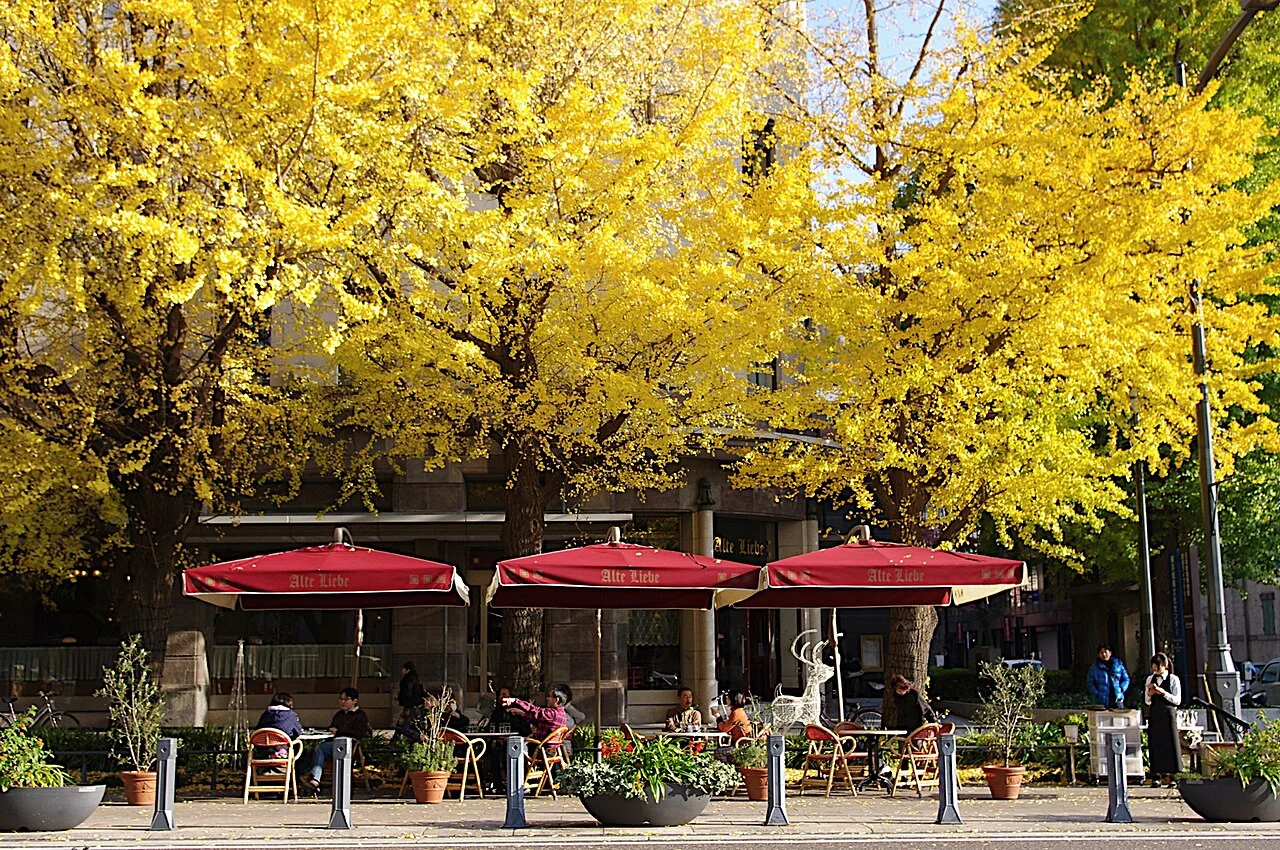
Step off the Minatomirai Line at Nihon-odori Station and you are right on the avenue linking Yokohama Park and the harborfront. Ginkgoes line both sides of Nihon Odori against historic brick and stone buildings—walk from the Yokohama Park end toward the port, lingering wherever color is thickest, then continue toward Yamashita Park for the waterfront tree line. The Poree Bridge between Yamashita Park and the Yokohama Doll Museum offers an elevated view down the canopy; if anyone's legs tire, keep walking along the sidewalk to Motomachi-Chukagai Station instead of backtracking.
For a convenient indoor stop along Nihon Odori, pick the Yokohama Archives of History, roughly a two-minute walk from Nihon-odori Station Exit 4. Standard hours are 9:30 AM–5:00 PM with last entry at 4:30 PM; it is closed Mondays (shifting to the next weekday if Monday is a holiday). When only Exhibition Rooms 1 and 2 are open, admission is ¥200 for high school students and adults and ¥100 for elementary and junior high students; special exhibitions cost ¥500 and ¥250 respectively, so check which schedule is running before heading over. Once rain clears, step right out onto Nihon Odori toward Yamashita Park—or if dusk is falling when you exit, skip the gusty waterfront stretch and head straight back via Nihon-odori Station.
If dense golden foliage is all you need, compare current leaf reports for Yokohama and central Tokyo and pick whichever looks better rather than forcing both into one day. For ginkgo frames with period streetscapes right next to a station, Yokohama's Nihon Odori works smoothly as a final-morning outing before heading back to Tokyo. If harbor gusts start flipping umbrellas near Yamashita Park, stick to the sheltered side of Nihon Odori and cut inland to Chinatown for lunch; conversely, if you are staying in Minato Mirai, stroll down to Yamashita Park toward dusk and ride back from Motomachi-Chukagai Station rather than walking the windy waterfront twice. Check stations, bridges, and block layout in our Yokohama ginkgo walk guide.
Fukuoka Later in the Season: Walk From Maizuru Park's Ninomaru to Ohori
Fukuoka Regional Headquarters' average yellow-leaf date for its sample ginkgo is November 20, while Japan Meteorological Corporation's 2026 city forecast places Fukuoka at November 30. Even neighboring spots are worth checking separately: Maizuru Park's seasonal map pinpoints its large ginkgo in the Ninomaru bailey, so aim straight for Ninomaru first on a late-autumn trip and decide afterward whether to climb up to the Honmaru stone walls. Coming from Tenjin, enter from the Akasaka Subway Station side; if you are already having lunch around Ohori Park, walk over from Ohorikoen Station or the lake's east shore. Park guidance also notes Nishitetsu bus stops such as Fukuoka Castle / Korokan-mae and Fukuoka Art Museum East Exit, each about a five- to eight-minute walk into the grounds.
Because Ohori Park and Maizuru Park sit side by side, you can easily sample both in one block of time. When paths are dry and stone steps aren't slick, head up into the castle ruins to frame ginkgo trees against stone walls; after rain, stay along the lower path from Ninomaru toward Ohori, and duck into the Fukuoka Art Museum if lakeside winds pick up. The museum's 2026 schedule lists regular hours from 9:30 AM to 5:30 PM, about a 10-minute walk from Ohorikoen Station Exits 3 or 6. The Kuko Subway Line connects directly back to Tenjin, Hakata Station, and Fukuoka Airport, making it easy to stash bags near your departure station and fit in a short park loop on your last day.
Leave One Flexible Half-Day for Live Foliage Conditions
On a five-day Tokaido route spanning Tokyo, Nagoya, Kyoto, and Osaka, dedicate at most two weather-dependent half-day blocks specifically to ginkgoes. Slot Meiji Jingu Gaien into whichever half-day fits best in Tokyo, leave town for Sobue near Nagoya only when festival dates and weather line up, and keep the rest of your Kyoto and Osaka plans intact. Because Kyoto and Osaka share nearly identical late-November forecast dates, staying in one base and riding intercity trains between them usually beats changing hotels for a single boulevard. Traveling with seniors or young kids on a two-night Osaka stay, take one morning train up to Kyoto and keep evening plans on whichever Midosuji block sits closest to your hotel.
Before scrolling through photo updates, agree on what view everyone actually cares about. For continuous overhead canopies, remaining leaves on the branches and tree spacing matter far more than fallen leaves below; for a golden carpet on the ground, half-bare branches still work, though puddles, street sweepers, and pavement type can change the look overnight. When a single ancient temple tree is the centerpiece and turns out half-green, frame the whole tree with the courtyard and wooden halls so architecture fans still get their reward. Choosing between parks, temples, and city streets also determines whether you have nearby indoor shelter if rain rolls in, avoiding last-minute city changes.
After wind and rain, outsole grip matters more than waterproof uppers—especially where crushed ginkgo nuts mix with wet leaves. Crouch along the edge of the walkway for low-angle leaf shots so foot traffic keeps flowing, and skip tripods on narrow illuminated sidewalks in favor of steady footing and higher ISO. If bright yellow leaves catch the light from beneath a shop arcade or roof eave, shoot a quick sequence before heading inside to wipe down your soles. With strollers, stick to the short Canal Avenue loop from Tachikawa Gate at Showa Kinen Park, or hop off the bus directly at Nishi-Honganji-mae in Kyoto so any walker can wrap up early.
Once your hotel is locked in and strong wind or rain hits, swap morning and afternoon plans within the same area rather than abandoning the city. In Tokyo, duck into Shinjuku Gyoen's greenhouse in the morning and wait for rain to clear before walking Gaien; in Kansai, push a Kyoto temple visit to the next dry morning and browse covered Osaka arcades first. Keep any timed indoor reservations as booked, hold one movable morning for natural light, and if rain lingers into the afternoon, stay central and walk to the nearest ginkgo street the moment the sky breaks.
A few useful answers
Do ginkgoes always peak one to two weeks after autumn maples?
It depends on the city and exact spot. For 2026, Japan Meteorological Corporation forecasts Kyoto ginkgoes on November 30 versus December 14 for red maples, whereas Tokyo's two forecasts sit just one day apart—and parks and street avenues within the same city move at their own pace.
For late November 2026 in Tokyo, should I prioritize Meiji Jingu Gaien or Showa Kinen Park?
Prioritize Meiji Jingu Gaien if you want full canopies on the main avenues. As of November 19, Showa Kinen Park already listed both Canal Avenue and Katarai Avenue as past peak, though ginkgoes in the playground area and maples in the Japanese Garden still offered color.
Do I need a Japanese Garden night ticket to see the illuminated ginkgoes at Showa Kinen Park?
No. Both ginkgo avenues are covered by standard park admission (¥450 for high school students and adults). You only need the separate evening viewing ticket if you enter the Japanese Garden after 4:30 PM.
What dates should I book hotels for 2027 ginkgo season?
Hokkaido University lists late October to early November as its typical peak. For central Tokyo and Kansai, look around late November, leave one flexible daytime window, and wait for annual illumination and festival announcements before locking down extra tickets.
With only half a day in Kansai at the end of November, where is easiest?
In Kyoto, pair Nishi-Honganji directly with Kyoto Station, since you can step inside the hall if it rains. If staying in Osaka, pick a single stop along the Midosuji Subway Line—Yodoyabashi, Honmachi, or Shinsaibashi—and walk straight out without wasting time on transfers.
Official information and references
Sources used in this guide.
- Japan Meteorological Corporation 2026 Third Autumn Foliage and Yellow-Leaf Forecast
- Japan Meteorological Agency Ginkgo Sample Tree Observations and Nationwide Records
- Akita Local Meteorological Office 2026 Phenological Observations
- Fukuoka Regional Headquarters Ginkgo Normals and Observations
- Tokyo Metropolitan Government Bureau of Construction 2026 Jingu Gaien Ginkgo Illumination
- Meiji Jingu Gaien Tennis Club Traffic Restrictions During Illumination
- Meiji Jingu Gaien Ginkgo Avenue
- Tokyo Metro Gaiemmae Station Exits and Facilities
- Tokyo Metro Aoyama-itchome Station Exits and Facilities
- Ministry of the Environment Shinjuku Gyoen Admission Guide and Open Days
- Ministry of the Environment Shinjuku Gyoen Plants and Gardens
- Showa Kinen Park Flower Report (November 12, 2026)
- Showa Kinen Park Flower Report (November 19, 2026)
- Showa Kinen Park Opening Hours
- Showa Kinen Park 2026 Autumn Night Walk (Admission, Night Tickets, and Shuttle)
- Hokkaido University Public Campus Facilities and Typical Ginkgo Avenue Peak
- Hokkaido University 2026 Autumn Traffic Restrictions on Kita 13-jo Street
- Visit Sapporo Official Guide to Hokkaido University Walking Route
- Hokkaido University Museum Visitor Information
- Tsuruma Park Main Gate and Subway Exit Park Map
- Sobue Chamber of Commerce 2026 Yellow Leaves Festival and Field Photos
- Aichi Now Official Guide 2026 Sobue Yellow Leaves Festival Access and Illumination
- Nishi-Honganji Temple Precincts Giant Ginkgo
- Nishi-Honganji Gate Hours and Worship Schedule
- Nishi-Honganji Access Information
- City of Osaka 2026 Midosuji Illumination and Festival of the Lights Dates
- Yokohama Visitors Guide Nihon Odori and Yamashita Park Street Autumn Foliage
- Maizuru Park Management Office Ninomaru Giant Ginkgo Seasonal Information
- Maizuru Park Subway, Bus Access, and Parking Information
- Fukuoka Art Museum 2026 Operating and Exhibition Calendar
- Ministry of the Environment Shinjuku Gyoen Gate Access and Walking Routes
- Ministry of the Environment Kyoto Gyoen November 13, 2026 Ginkgo Status
- Ministry of the Environment Kyoto Gyoen Kan'innomiya Residence Exhibition and Garden Guide
- Ministry of the Environment Kyoto Gyoen Hours and Visitor FAQ
- Ministry of the Environment Kyoto Gyoen Subway and Gate Access
- Osaka Castle Park 2026 Autumn Festival Foliage Map
- Osaka Castle Park Morinomiya Station Exits
- Yokohama Archives of History Access, Hours, and Admission Tickets
- Meiji Jingu Gaien Seitoku Memorial Picture Gallery Restoration Closure Through Late May 2027
- Showa Kinen Park Autumn Night Walk One-Way Avenue Control
- Cabinet Office of Japan National Holidays
- Japan Meteorological Agency 2025-2026 Sample Ginkgo Yellow-Leaf Table