Where to see Yokohama's ginkgo trees along Nihon Odori and Yamashita-koen-dori. Covers 2026 foliage timing, station exits, Kanagawa Prefectural Office rooftop and Hikawa Maru entry cutoffs, Nihon Odori illuminations, and rainy-day museum routes.
- Region & Focus
- Yokohama
- Reading Scope
- 20 min read · 9 chapters · 6 Q&As
- Official Verification
- 32 official sources checkedUpdated November 22, 2026
- Key Topics
- SeasonsNeighborhoodsRail travel
Chapter Route Map (tap any stop)
- When to Go in 2026: Full Canopies vs. Fallen Leaves
- Which Exit to Take at Nihon-odori Station
- Weekday Rooftop Views vs. Weekend Three-Tower Spotting
- Yamashita-koen-dori for Trees, Inside the Park for Hikawa Maru
- How Hikawa Maru's Entry Cutoff Shapes Your Afternoon
- Rainy-Day Indoor Stops Along Nihon Odori
- Pacing an Afternoon Walk, Illuminations, and Next-Morning Light
- Transfers from Tokyo and Whether the 1-Day Pass Pays Off
- Should You Combine Sankeien Garden on the Same Day?
- Quick Q&A
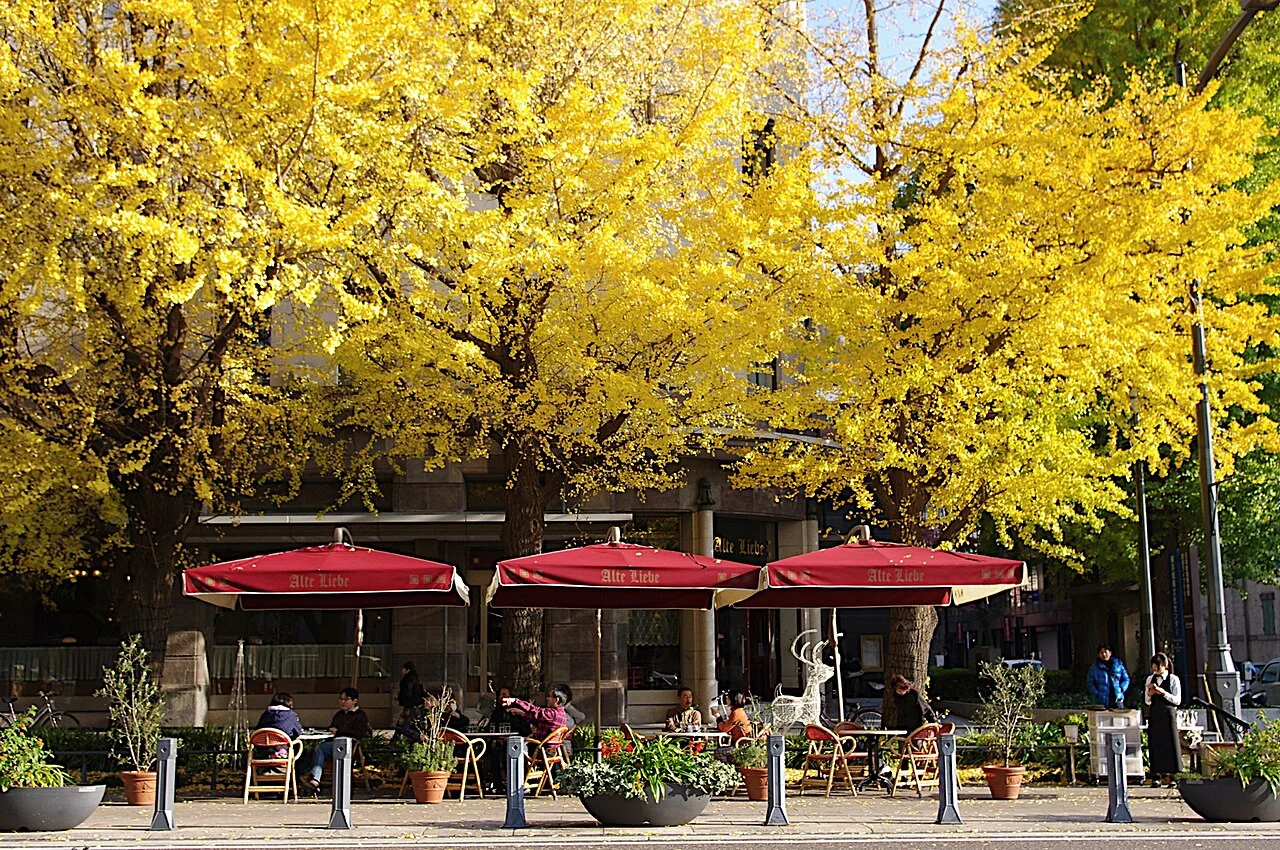
For a half-day Yokohama ginkgo walk, step out of Exit 1 at Nihon-odori Station on the Minatomirai Line, follow the tree-lined avenue toward the water, cut across Kaiko Hiroba onto Yamashita-koen-dori, and finish on the waterfront beside the Hikawa Maru. Each street has a distinct feel. Nihon Odori is short and framed by the Prefectural Government Building and historic facades, while Yamashita-koen-dori stretches along the harbor with easy crossings into the bayside park. As of November 19, 2026, photos from Naka Ward showed noticeably more yellow foliage than the week prior. If you are planning a visit between late November and early December, use the ward's ginkgo updates to time your trip: go on a weekday to climb the Prefectural Office roof, start in the afternoon to catch evening illuminations, and keep 16:30 in mind as the last entry for boarding the Hikawa Maru.
When to Go in 2026: Full Canopies vs. Fallen Leaves
Yokohama's official tourism guide lists both Nihon Odori and Yamashita-koen-dori among the city's top autumn foliage spots. Penciling in late November to early December is a solid starting point, then check Yokohama Naka Ward's 2026 Nihon Odori Ginkgo Report for current conditions. Photos from November 11 still showed heavy green; by the 16th more trees were turning, and the November 19 update showed yellow spreading further down the block. Those three dispatches reflect on-site checks along Nihon Odori. When viewing the photos, look at the distant treetops as well as the foreground, since a close-up of a single early tree can make the street look further along than it is. For Yamashita-koen-dori, check the street views on Yokohama's seasonal foliage page and compare both sides of the road in person.
If you want golden branches overhead, aim for a weekend when the mature trees have mostly turned and only a thin layer of leaves covers the pavement. If you prefer fallen-leaf carpets, visit a bit later and look across from one sidewalk near Kaiko Hiroba toward the opposite row that still holds its canopy. After a gusty day, you can sometimes frame a bare-branched tree beside a full one, which also opens up sightlines to the architecture. Foot traffic scatters fallen leaves quickly, and wind or street sweeping changes coverage by the hour. For low-angle shots, step to an inset stretch of sidewalk so pedestrians pass behind you. Wet leaves get slick after rain, so keep strollers and wheeled luggage on the exposed pavement edge.
For short trips with fixed dates, even the first one or two trees turning in mid-November make good photos. Frame the half-yellow, half-green foliage along the top edge against an older building for a tighter, sharper contrast than a wide street shot. Once leaves start dropping, continue down Yamashita-koen-dori to compare the park side with the hotel side. Both avenues share the same tree species but have different street widths and openings; if one corner sits in shadow or catches crosswinds, walking a block further usually saves time compared with waiting for better light in one spot.
On a day trip from Tokyo, a weekday morning works best for photographing Nihon Odori, leaving the afternoon for museums and indoor stops. If you want shops and evening illuminations, arrive after lunch and tour the Hikawa Maru first before its entry cutoff. Even if Nihon Odori is past peak and nearly bare, shift the focus from bright canopies to the port-era architecture and harbor views, pausing by the Prefectural Office, along Yamashita-koen-dori, and at the water's edge. Because the route runs all the way to the bay, it still delivers a complete half-day walk regardless of leaf volume.
Where to see Yokohama's ginkgo trees along Nihon Odori and Yamashita-koen-dori. Covers 2026 foliage timing, station exits, Kanagawa Prefectural Office rooftop and Hikawa Maru entry cutoffs, Nihon Odori illuminations, and rainy-day museum routes.
Which Exit to Take at Nihon-odori Station
Use Exit 1 (Kenchoguchi / Prefectural Office Exit) to start right at the Kanagawa Prefectural Government Building; this exit also has a street-level elevator. To shoot down the avenue from the inland end toward the harbor, take Exit 2 (Stadium Exit), walk toward Yokohama Park and Yokohama Stadium to reach the head of the boulevard, then head north toward the bay. Exit 3 (Media and Communications Center Exit) puts you near the Yokohama Museum of Urban Development. If you are short on time or meeting friends at the Yokohama Archives of History, take Exit 4 (Osanbashi Pier Exit), which the museum lists as about a 2-minute walk. Because map pins set simply to the station can leave you a block off underground, share the exact exit number or building name when coordinating meetups.
Nihon Odori stretches roughly 430 meters between Yokohama Park and Zou-no-hana Park. Walking from the inland side toward the bay takes you past the Prefectural Government Building and the Yokohama Archives of History before the street forks near the water. Turn into Zou-no-hana Park for wider harbor views, or angle across Kaiko Hiroba onto Yamashita-koen-dori for the next stretch of ginkgos. If you came mainly to photograph the tree-lined avenue, walk one sidewalk all the way to the end, look back at the facades and canopies, and cross at a signal for the return view. Waiting in one spot for an empty frame can eat up your walk, whereas each side of the street offers different foregrounds, from the Prefectural Office to vintage street-level cafes.
City street-tree records trace this boulevard to firebreak road planning after major fires in Yokohama, creating wide rights-of-way with room for planting. Today's ginkgos were planted in stages starting in 1927 during post-Great Kanto Earthquake reconstruction and are designated as important landscape trees. Along the walk you pass the Kanagawa Prefectural Government Main Building, the Yokohama District Court, and the Former Yokohama Commerce and Industry Promotion Hall. When branches obscure a facade, crossing to the opposite sidewalk lets you fit both the foliage and the full building into view. Leave clear space between the tree trunks and benches for passersby, and set up tripods only in open pockets along the curb.
Walking in from JR Kannai Station is another smooth option for travelers coming from Tokyo on the JR Keihin-Tohoku or Negishi lines. The prefectural website puts the walk from Kannai Station to the Main Building at about 10 minutes. Approaching from the stadium end sets you up naturally for the walk toward the harbor. If a group arrives on different lines—some via JR and others on direct trains from Shibuya—meeting in front of the Prefectural Building or outside the Archives of History is faster than hunting for each other underground. Kannai Station serves JR and the Yokohama Municipal Subway, while Nihon-odori Station serves the Minatomirai Line.
Weekday Rooftop Views vs. Weekend Three-Tower Spotting
Regular visitor hours for the Kanagawa Prefectural Government Main Building are Monday through Friday, 8:30 to 17:15, closed on Japanese national holidays and from December 29 to January 3. At the entrance, print a QR pass from the kiosk, slip it into one of the yellow lanyards provided on site, scan through the gate, follow the public route, and return the pass and lanyard as you leave. Groups of 10 or more must submit an advance group entry application to the prefecture. Small groups and families can ride up straight from Nihon-odori Station Exit 1, put the rooftop first, and decide on museums afterward. With shorter winter daylight, tackle time-limited indoor stops first if you arrive late in the afternoon.
The rooftop is an open-air observation deck overlooking Yokohama Port, the water beyond Osanbashi Pier, the Yokohama Bay Bridge, and the Minatomirai skyline, with the nearby towers of Yokohama Customs and the Yokohama Port Opening Memorial Hall easy to pick out. To see the full silhouette of the Prefectural Building's own "King" tower from above, the prefecture also points visitors to the 11th-floor terrace of the East Building, which faces the Main Building. Each deck looks out in a different direction. If you only want ginkgo canopy views, street-level gaps between trees and buildings along Nihon Odori work just as well, so save the elevator trip for anyone in your group wanting harbor panoramas. Because the roof has no indoor enclosure against wind or drizzle, head into the Yokohama Archives of History if the weather turns raw.
Yokohama's "Three Towers" sit between the Prefectural Office and the Customs building. "King" is the stout Kanagawa Prefectural Government Main Building, topped with a Japanese-style crown tower. "Jack" is the red-brick clock tower of the Yokohama Port Opening Memorial Hall, whose clock faces are clearest from the Honcho-dori side. "Queen" is the domed Yokohama Customs building closer to the water. Using the three landmarks to orient yourself is more practical than hunting for one vantage point that squeezes all three into a single frame. On weekends when a group has mixed interests, photographers can linger outside the Prefectural Office for foliage and stonework while others walk toward Zou-no-hana Park, reconvening at Kaiko Hiroba along the same route.
On Saturday, November 28, 2026, Yokohama Customs is holding a free open house from 10:00 to 16:00 (last entry 15:30), opening areas rarely accessible on weekdays such as the 7th-floor terrace. If you are coming that weekend specifically for ginkgos and elevated harbor views, start at the Customs open house and walk toward Yamashita Park afterward. While the Three Towers remain visible from street level year-round, that November 28 schedule applies strictly to this one-day event.
Yamashita-koen-dori for Trees, Inside the Park for Hikawa Maru
From the Yokohama Archives of History, follow Kaiko Hiroba toward Yamashita Park and Yokohama Marine Tower. Searching "Yamashita Koen Dori" in map apps routes you along the tree-lined street bordering the park, whereas searching "Yamashita Park" often sends you directly onto the park paths. Stay on either street sidewalk for the ginkgo rows, or cross at a signalized crosswalk when you want a bench facing the water. City planning records measure this ginkgo stretch at roughly 800 meters, planted during post-earthquake reconstruction. Even walking a couple of blocks gives you full rows of foliage, so there is no need to push to the far end.
If you want to cover both sides, walk out along the hotel side of Yamashita-koen-dori and return inside the park by the bay. The street side pairs yellow leaves with historic hotel facades, while the waterfront opens up views of the Hikawa Maru, Osanbashi Pier, and distant harbor terminals. Because the ship is moored along the seawall and the ginkgos line the street, finish your ship photos by the railing and cross back toward the street entrances if you want more foliage. Walking straight down the waterfront promenade skips the stretch facing the classic hotels. When a cold bay wind picks up, the streetward side of the park also gives quicker access to exits and warm cafes.
Exit 4 of Motomachi-Chukagai Station has an elevator and sits roughly a 3-minute walk from Yamashita Park according to city transit guides. It works equally well as an endpoint or as a reverse starting point. If you only have two hours in the morning, come up at Exit 4 to see the ship and waterfront first, then walk back along Yamashita-koen-dori toward Nihon-odori Station. That puts the exposed seawall walk while energy is high and leaves indoor museums and cafes for the end. If anyone plans to detour into Chinatown afterward, specify the Chinatown / Yamashita Park ticket gate at Motomachi-Chukagai Station, since the opposite gate opens toward Motomachi and Shinyamashita.
For travelers who need frequent breaks, aim for the central plaza inside Yamashita Park. Use the "Guardian Spirit of Water" fountain as a landmark, since it is easy to spot from both the street edge and the seawall. If someone needs an accessible restroom, check Yokohama's park facility map for multipurpose toilets inside the grounds. You can also start by bus: City Bus Route 26 from JR Sakuragicho Station stops at Yamashita-koen-mae right by the park. Arriving by bus and leaving via the Minatomirai Line saves longer underground transfers for the trip back, while visitors transferring to the Minatomirai Line in Yokohama can simply ride to the terminal stop and use Exit 4.
If an event draws heavy crowds along the water, stay on the Hotel New Grand side of Yamashita-koen-dori first and cross in smaller groups. When people split up to take photos, meet at the fountain or outside the ship's ticket booth rather than "under the ginkgos." With older family members, trim the walk to the short stretch between the Prefectural Office and the Archives of History, then pick one flat path inside Yamashita Park. Families with young kids do not need to walk end to end; give them 30 minutes to stretch out on an open lawn before heading back together via the elevator at Exit 4.
How Hikawa Maru's Entry Cutoff Shapes Your Afternoon
Completed in Yokohama in 1930, the NYK Hikawa Maru sailed the Seattle trans-Pacific route carrying both passengers and cargo. Admiring the hull from Yamashita Park is free; you only pay if you board to tour the passenger cabins, engine room, and crew quarters. Hours are 10:00 to 17:00, with last entry at 16:30. It normally closes on Mondays, stays open when Monday is a national holiday, and closes the following weekday instead. Because Monday, November 23, 2026 is a Japanese holiday, the ship is open that Monday and closed on Tuesday, November 24. The operator has also announced that the lower level of the engine room is closed from November 24 through December 23, 2026 for hull inspection, so plan outside those dates if that section is a priority.
Admission is ¥300 for adults, ¥200 for visitors 65 and older, and ¥100 for elementary through high school students, cash only. If you are also visiting the nearby Yokohama Doll Museum on the same day, keep your ticket stub for a ¥50 discount at the second venue. Families planning to go aboard should bring small bills or coins and agree on a pier-side meeting spot beforehand. Arriving at the gangway around 15:00 leaves enough time to tour the main decks comfortably; if you reach the park close to 16:30, take photos from the promenade and save boarding for another open day.
To preserve its original layout, the ship has no elevators. Wheelchair access is very limited, and tidal heights affect when boarding is possible, so the museum asks guests to contact them in advance and bring a companion. Larger groups can split up, with one group touring the ship while others sit by the water and meet back at the shore entrance. Parents pushing a sleeping toddler in a stroller can skip the ticket altogether, stroll the waterfront path, and head back to Yamashita-koen-dori or Chinatown at dusk. If you want to see the ship's engineering, head straight to the open sections of the engine room first before spending your remaining time in the passenger staterooms.
Rainy-Day Indoor Stops Along Nihon Odori
If rain closes out the rooftop, stay under cover along the Prefectural Building's edge and walk the short block to the Yokohama Archives of History for photographs and exhibits on Yokohama's port opening. Hours are 9:30 to 17:00 (last entry 16:30), normally closed Mondays or the Tuesday after a holiday Monday; a November 19 notice specifically lists Tuesday, November 24, 2026 as closed, so plan an outdoor-only stroll if you visit that day. Standard admission for Exhibition Rooms 1 and 2 is ¥200 for high schoolers and adults and ¥100 for elementary and junior high students, rising to ¥500 and ¥250 during special exhibitions. The 2026 ginkgo season overlaps with a special run featuring mid-1950s Yokohama street photographs by Motochika Hirose through December 27. Looking through vintage streetscapes before stepping back outside to see the modern boulevard beats riding transit across town for a rainy-day backup.
If downpours make even two blocks unpleasant, take Nihon-odori Station Exit 3 straight into the Yokohama Museum of Urban Development. The permanent exhibition costs ¥200 for adults and ¥100 for elementary and junior high students, open 9:30 to 17:00 (ticket sales end at 16:30), generally closed Mondays. It focuses on how Yokohama's city grid, port, and transit evolved, overlapping lightly with the early-port focus at the Archives of History—picking one is plenty for a half-day. Families can stow umbrellas and coats inside the station concourse, linger around the maps and scale models kids enjoy, and step back out for ginkgo photos once the rain eases. Trying to see both museums when you only reach the first one near 16:00 feels rushed, so arrive before noon if both are on your list.
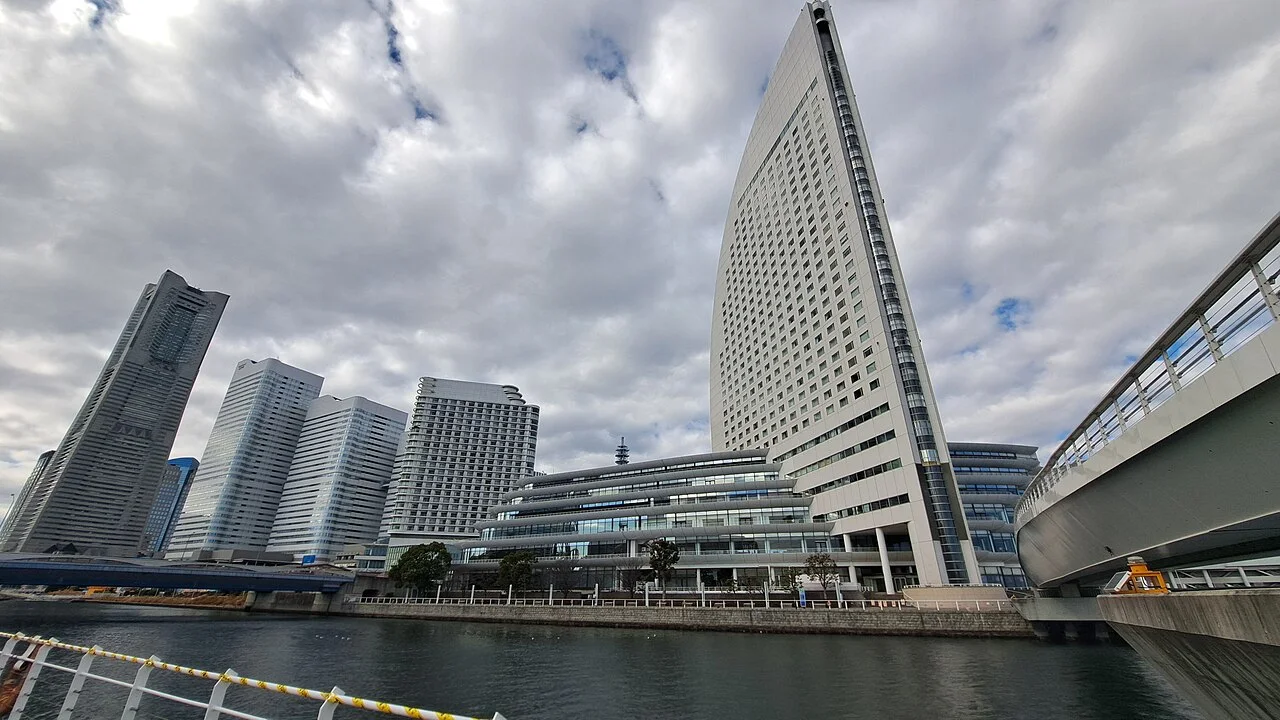
On a rainy Monday when museums are shut, ride one stop or walk to Queen's Square Yokohama at Minatomirai Station for lunch, dinner, and dry seating to sort out rain gear. Whenever the rain breaks, ride the Minatomirai Line back to Nihon-odori Station, step out of Exit 1 by the Prefectural Office for quick photos, and head back underground or over to Kannai for dinner. On long weekends, remember the holiday rule: museums open on holiday Mondays and shift their closure to the next weekday. Matching your indoor backup to the open-day calendar keeps you from dragging everyone in the rain from one locked door to the next.
Pacing an Afternoon Walk, Illuminations, and Next-Morning Light
For a half-day plan with one indoor stop on a weekday, aim to start around 13:00. Walk from Nihon-odori Station Exit 1 to the Prefectural Building, heading up to the rooftop first if the sky is clear before strolling the boulevard. Reach Yamashita-koen-dori around 15:00 so anyone boarding the Hikawa Maru can buy tickets in time while others rest along the water. Return to the ginkgo trees as daylight fades for the illuminations, or ride from Motomachi-Chukagai over to Minatomirai for dinner. On a weekend or holiday afternoon when both the Archives of History and Hikawa Maru share a 16:30 last entry, put your top-priority stop first and judge the clock before entering the second.
The 2026 Nihon Odori SDGs Illumination runs from November 20 to December 25, daily from 16:00 to 23:00. To capture deep blue twilight alongside the warm street lights, arrive at your chosen intersection just before 16:00 and stay through the first few minutes after switch-on. Because cars still use the roadway at dusk, keep children toward the inside of the sidewalk near the illuminated reindeer displays. If you already photographed the yellow canopies by day in late November, you only need to step back one block after dinner for night shots rather than retracing the whole avenue. Groups aiming for empty streets can also shoot the trees before breakfast the next morning and keep museums and shopping for the afternoon.
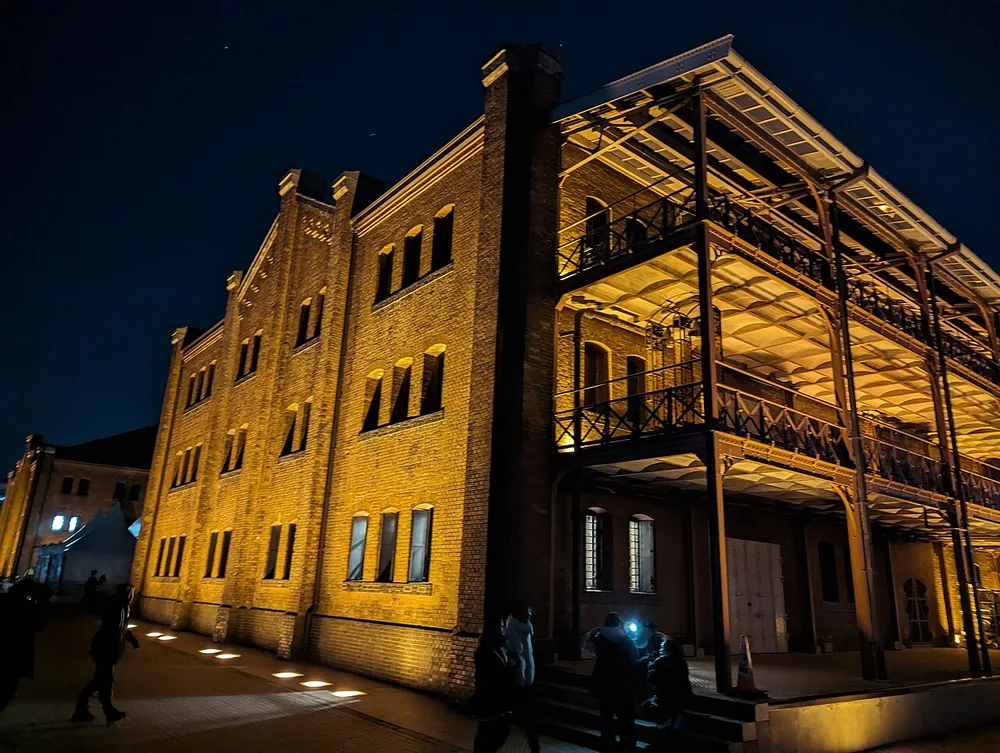
Along the harbor, the citywide "Yorunoyo 2026" light event runs from December 4 to December 30, 17:00 to 21:05, covering Osanbashi Pier, Yamashita Park, and adjacent waterfront zones. Although the dates overlap with Nihon Odori's lights, each uses different vantage points and station exits. If you only want one night stop, stay on Nihon Odori for illuminated ginkgos or head out to Osanbashi Pier for bayfront light installations and skyline views, exiting via Nihon-odori or Motomachi-Chukagai afterward. To continue toward the Red Brick Warehouse at night, follow the waterfront path past Zou-no-hana Park. If you are pairing this with the holiday stalls there, read the Yokohama Red Brick Warehouse Christmas Market guide separately so event entry timing does not clash with the street lights.
Even outside illumination dates, Osanbashi Pier works well as a standalone evening stop. The terminal operator notes that its rooftop plaza is open 24 hours a day for free, with marked sightlines pointing out Yokohama's Three Towers. Walking out in the late afternoon gives views across both sides of the harbor, and the gently sloped wooden boardwalks offer cleaner photo angles than waiting for traffic gaps on city streets. To reach the Red Brick Warehouse afterward, walk back through Zou-no-hana Park toward Shinko Pier. If you only want a quick look at the Yokohama Bay Bridge, pausing at the Yamashita Park railings saves the extra walk out and back along the pier.
The easiest way to lose an afternoon is chasing both bright ginkgo leaves and sunset colors everywhere at once, leaving only a few minutes at each stop. Pick one street intersection and one waterfront spot: shoot low foliage along Nihon Odori first, then shift toward the bay as the light drops. Anyone staying late on Osanbashi Pier will want a windproof layer against the harbor breeze. With young kids or older travelers, choose either the pier or Yamashita Park—Osanbashi gives wide Minatomirai skyline views, while Yamashita Park puts you next to Hikawa Maru and close to Motomachi-Chukagai Station for an early return or an easy walk into Chinatown for dinner.
Staying overnight lets you split photography between dusk and early morning. Hotel New Grand, right across from Yamashita Park, puts you steps from Hikawa Maru and Yamashita-koen-dori at sunrise, located a 1-minute walk from Motomachi-Chukagai Station Exit 1 or about 2 minutes via the Exit 2 elevator. If dinner and next-day shopping center on Minatomirai, The Yokohama Bay Hotel Tokyu connects directly to Minatomirai Station, making luggage transfers indoors effortless before taking a quick train hop to the trees. A day trip from Tokyo is plenty for just the two avenues, while staying after the lights naturally points toward picking a hotel near the next morning's starting point.
Transfers from Tokyo and Whether the 1-Day Pass Pays Off
From Tokyo or Shinagawa stations, take the JR Tokaido Line to Yokohama Station and transfer to the Minatomirai Line bound for Motomachi-Chukagai, getting off at Nihon-odori Station. For a single-seat ride near the start of the walk, take a JR Keihin-Tohoku / Negishi Line train from Tokyo or Shinagawa that runs through to Kannai Station and walk in from there. Staying in Shibuya? Check the destination boards on the Tokyu Toyoko Line for through-trains continuing onto the Minatomirai Line toward Motomachi-Chukagai so you skip the underground transfer at Yokohama Station altogether. Because some Toyoko Line trains terminate at or before Yokohama, confirm the train's final destination on the platform display rather than relying on the continuous line shown on transit maps.
The Minatomirai Line 1-Day Pass costs ¥460 for adults and ¥230 for children. Standard IC card fares for adults are ¥224 from Yokohama to Nihon-odori and ¥224 from Motomachi-Chukagai back to Yokohama, totaling ¥448—whereas two single paper tickets add up to ¥460. If you are walking between Nihon Odori and Yamashita Park, simply tap your IC card and skip the ticket machine. The pass pulls ahead once you add a stop in Minatomirai: Motomachi-Chukagai to Minatomirai and Minatomirai to Yokohama are ¥193 each by IC card, putting a three-leg loop at ¥610. Running that exact three-stop check makes it obvious when the pass saves money.
If you enter via JR Kannai Station and exit from Motomachi-Chukagai, you pay JR to Kannai, walk the entire ginkgo route, and tap the Minatomirai Line only on the return—a common pattern for visitors focused purely on the two avenues. When traveling with people unfamiliar with Japanese rail hubs, arriving via JR makes meeting at street level straightforward, while the Minatomirai Line gives more exit options near the park. Set your exit station roughly around Hikawa Maru or Nihon Odori before boarding and adjust as you go, rather than adding extra train rides just to break even on a day pass.
Keep in mind that the 1-Day Pass covers only the Minatomirai Line between Yokohama and Motomachi-Chukagai; on through-trains from Shibuya, the Tokyu Toyoko Line segment is billed separately. If you also plan to ride a bus to Sankeien Garden, map out which legs actually use the Minatomirai Line before buying a pass, since city buses are not included. When heading back to Tokyo in the evening, save your return route—JR via Yokohama or direct Toyoko Line to Shibuya—so you can walk to whichever waterfront station fits best. If friends stay in different parts of Tokyo, ride the shared through-train together before splitting up rather than crowding back through one transfer station.
Should You Combine Sankeien Garden on the Same Day?
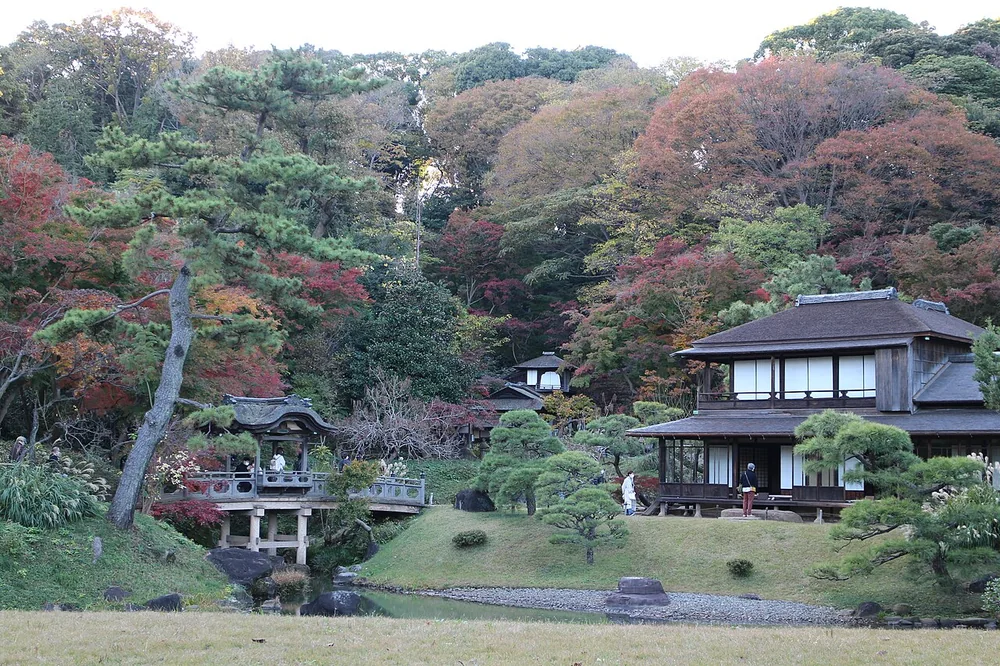
Down in Honmoku, Sankeien Garden offers Japanese maples, hillsides, and historic wooden buildings that feel completely different from Nihon Odori's urban avenues. To see both in one day, go to Sankeien in the morning. From the Nihon Odori area, board Yokohama Municipal Bus Route 8 bound for Honmoku Shako-mae from the "Nihon-odori-eki Kencho-mae" stop and ride to "Sankeien-iriguchi," then walk to the main gate. From Chinatown or Yamashita Park, Route 8 or Route 168 also runs from "Chukagai-iriguchi" and "Yamashitacho." On the return trip, check that your bus stop heads toward Kannai or Sakuragicho so you do not ride Route 8 back out toward the Honmoku depot. Factor in both walking and bus wait times so a tight transfer does not eat into afternoon entry cutoffs back downtown.
Daytime hours at Sankeien Garden are 9:00 to 17:00 with last entry at 16:30; admission is ¥900 for high schoolers and adults, ¥200 for elementary and junior high students, and ¥700 for Yokohama residents aged 65 and older. The maple trail behind Choshukaku opens from November 20 to December 13, 2026, from 9:00 to 16:00 daily. To walk that trail, head into the Inner Garden first for the maples and historic structures, then loop back around the Outer Garden pond for a view of the three-story pagoda before leaving. Garden staff noted on November 19 that leaf tips were just starting to turn; if you only have time for one area, check Naka Ward's updates for broad yellow avenues or Sankeien's own news page for garden foliage.
If part of your group wants the pagoda and historic buildings while others only want ginkgo avenues, split up at Kannai in the morning and meet for lunch in Chinatown. Buses returning from Honmoku pass right by Chinatown, while the downtown group can walk the Prefectural Office side of Nihon Odori and continue through Yamashita Park to the restaurant. Sankeien involves sloped paths and stairs to reach several viewpoints, whereas the bayside walk stays flat. If rain moves in, the Sankeien group can step off the narrow hillside trails and meet everyone back in town without waiting around in the open.
On a combined day, wait until you are back from Sankeien to decide on boarding the Hikawa Maru. If the bus drops you downtown close to 16:00, spending that time along Yamashita Park and staying for the Nihon Odori lights beats rushing through a last-minute ship tour. Sankeien's "Yaso" evening program runs on separate tickets and routes on Fridays, Saturdays, Sundays, and holidays from November 20 to December 20, 2026. Because staying for the night event means commuting back from Honmoku afterward, it works best as your final stop of the day; if you are staying in Tokyo and want dinner in Chinatown, Sankeien in the morning and downtown ginkgos in the afternoon makes for a much smoother pace.
A few useful answers
When is the best time to see ginkgo trees in Yokohama?
Aim for late November through early December. Yokohama Naka Ward's November 19, 2026 update on Nihon Odori showed more golden leaves than the week before; check the same photo log to track canopy progress down the street.
Which Nihon-odori Station exit should I use for the ginkgo trees?
Take Exit 1 for the Prefectural Government Building (this exit has a street-level elevator). Use Exit 2 to walk from Yokohama Park toward the harbor, or Exit 4 to start right at the Yokohama Archives of History. At the Yamashita Park end, use Motomachi-Chukagai Station Exit 4.
Is the Kanagawa Prefectural Government rooftop open on weekends?
Regular rooftop access is Monday to Friday from 8:30 to 17:15, closed on Japanese national holidays and from December 29 to January 3. Visitors print a QR entry pass from a kiosk at the entrance.
What is the last entry time for the Hikawa Maru?
Last entry is at 16:30, and the ship closes at 17:00. Admission is ¥300 for adults, ¥200 for seniors 65 and older, and ¥100 for elementary through high school students, cash only. It closes Mondays (or the following weekday if Monday is a national holiday). The lower engine room is closed from November 24 to December 23, 2026 for hull inspection.
What time do the 2026 Yokohama Nihon Odori illuminations turn on?
The Nihon Odori SDGs Illumination runs daily from November 20 to December 25, 2026, from 16:00 to 23:00. The waterfront Yorunoyo 2026 light show at Osanbashi Pier and Yamashita Park runs from December 4 to 30, from 17:00 to 21:05.
Do I need the Minatomirai Line 1-Day Pass for a ginkgo walk?
A round trip by IC card from Yokohama Station to Nihon-odori and back from Motomachi-Chukagai costs ¥448 for adults. Because the 1-Day Pass is ¥460, it only pays off if you add a third ride, such as a stop in Minatomirai.
Official information and references
Sources used in this guide.
- Yokohama Naka Ward 2026 Nihon Odori Ginkgo Report
- Yokohama Official Visitors Guide 2026 Autumn Foliage Spots
- City of Yokohama History of Street Trees and Post-Earthquake Replanting
- City of Yokohama Nihon Odori Important Landscape Tree Designation Notice
- City of Yokohama Yamashita-koen-dori District Survey
- Yokohama Minatomirai Railway Nihon-odori Station Map
- Yokohama Minatomirai Railway Accessible Station Exits
- Yokohama Minatomirai Railway Fares and 1-Day Pass
- JR East Kannai Station Lines and Timetable
- Kanagawa Prefectural Government Main Building Visitor Hours
- Kanagawa Prefectural Office QR Visitor Entry Procedure
- Yokohama Official Visitors Guide November 28, 2026 Yokohama Customs Open Day
- City of Yokohama Yamashita Park Map and Access
- City of Yokohama Yamashita Park Accessibility Facilities
- NYK Hikawa Maru Hours, Admission, and Accessibility Information
- History of NYK Hikawa Maru
- Yokohama Archives of History Visitor Information
- Yokohama Archives of History Current Exhibitions
- Yokohama Museum of Urban Development Hours and Tickets
- Yokohama Official Visitors Guide 2026–27 Illumination Feature
- City of Yokohama Yorunoyo 2026 Official Announcement
- Yokohama Port Osanbashi International Passenger Terminal Rooftop Plaza
- Hotel New Grand Station Exits and Access
- The Yokohama Bay Hotel Tokyu Access Information
- Yokohama Municipal Transportation Bureau Sankeien-iriguchi Bus Routes
- Sankeien Garden Bus Access from Chinatown and Yamashita Park
- Sankeien Garden Hours and Admission Fees
- Sankeien Garden 2026 Autumn Foliage Progress
- Sankeien Garden 2026 Choshukaku Trail Opening Notice
- Sankeien Garden 2026 Evening Special Event Yaso
- NYK Hikawa Maru Lower Engine Room Closure Notice
- Yokohama Archives of History November 24, 2026 Closure Notice