Compare Yokohama's four main hotel districts by Haneda Airport access, Minato Mirai night views, K-Arena concerts, or Chinatown dinners. Includes OMO5 Bashamichi and OMO7 Kannai room types, station exits, and 2026–2027 transit and event updates.
- Region & Focus
- Yokohama
- Reading Scope
- 19 min read · 10 chapters · 7 Q&As
- Official Verification
- 39 official sources checkedUpdated November 22, 2026
- Key Topics
- Where to stayNeighborhoodsBooking
Chapter Route Map (tap any stop)
- Filter the Four Districts by Rail Line and Evening Plans
- Yokohama Station: Choose Between the East and West Exits
- Minato Mirai View Rooms: Pick Your Window Orientation First
- K-Arena Concerts: Choose Your Hotel by the Exit Route
- OMO5 Bashamichi vs. OMO7 Kannai: Which Fits Your Trip?
- Chinatown, Motomachi & Yamashita Park: Stay on the Side You End Your Night
- Getting Between Tokyo, Haneda Airport, and Shin-Yokohama
- Where to Stay for One Night: Map Luggage & Timed Tickets First
- Winter Events & GREEN×EXPO 2027: How They Affect Location
- Four Things Worth Double-Checking on the Booking Screen
- Quick Q&A
For a first-time overnight in Yokohama, pick Minato Mirai or walkable Bashamichi if you want to linger around the Red Brick Warehouse and waterfront after dark. If you have an early flight out of Haneda or are linking Tokyo and Kamakura, staying by Yokohama Station saves an extra local transfer. Going to a concert at K-Arena? Compare Shin-Takashima against Yokohama Station's East Exit first. If you want to stroll back to your room after dinner in Chinatown, look near the Yamashita Park side of Motomachi-Chukagai Station. When room rates are close, compare the walk dragging luggage to check-in against the walk back after your last stop of the night.
Filter the Four Districts by Rail Line and Evening Plans
Moving north to south along the Yokohama waterfront, your main hotel zones run from Yokohama Station down through Minato Mirai, Kannai and Bashamichi, and finally Motomachi, Chinatown, and Yamashita Park. Booking sites routinely lump Sakuragicho, Bashamichi, Shinko, and Shin-Takashima into a generic "Minato Mirai" search filter. While those sights connect easily on foot, knowing which train line drops you there and which exit sits closest to your lobby matters far more when you are hauling large suitcases. Drop pins on a map for both the hotel address and the station exit, then add your last stop of the evening. When two properties both claim "Minato Mirai," that quick check reveals which one is actually convenient.
To read the map at a glance, anchor yourself on two parallel rail lines. The JR Keihin-Tohoku / Negishi Line runs south from Yokohama Station to Sakuragicho, Kannai, and Ishikawacho. Closer to the bay, the Minatomirai Line connects Yokohama Station to Shin-Takashima, Minato Mirai, Bashamichi, Nihon-odori, and Motomachi-Chukagai. Sakuragicho puts you right by the Nippon Maru and the Kishamichi Promenade, while Bashamichi feeds directly into Shinko's Cup Noodles Museum and Red Brick Warehouse area. Chinatown sits between two lines: Ishikawacho serves JR riders coming from eastern Tokyo, while Motomachi-Chukagai offers through-service from Shibuya on the Tokyu Toyoko Line.
On a one-night stay, put your hotel near whatever keeps you out late. Walking straight back to your room after a K-Arena show or an evening stroll through Yamashita Park saves more energy than trimming one short train hop the next morning. Flip that logic if you arrive late and depart early with luggage: stay at the rail hub and travel light into the waterfront during the day. For an early-morning Haneda airport bus, walking to YCAT beats waking up next to the Red Brick Warehouse.
| District | Primary Station & Exits | Best For |
|---|---|---|
| Yokohama Station | Yokohama Station (East, West, or Northwest Exit) | Haneda Airport, regional day trips, late arrivals & early departures |
| Minato Mirai | Minato Mirai or Sakuragicho (check Shin-Takashima or Yokohama East Exit for K-Arena) | Harbor view rooms, family attractions, concerts, PACIFICO Yokohama |
| Kannai & Bashamichi | JR Kannai; Minatomirai Line Bashamichi or Nihon-odori | Historic port district, Yokohama Stadium, Red Brick Warehouse, multi-night stays |
| Motomachi, Chinatown & Yamashita Park | Motomachi-Chukagai, JR Ishikawacho | Chinatown dinners, quiet morning harbor walks, Sankeien Garden |
Compare Yokohama's four main hotel districts by Haneda Airport access, Minato Mirai night views, K-Arena concerts, or Chinatown dinners. Includes OMO5 Bashamichi and OMO7 Kannai room types, station exits, and 2026–2027 transit and event updates.
Yokohama Station: Choose Between the East and West Exits
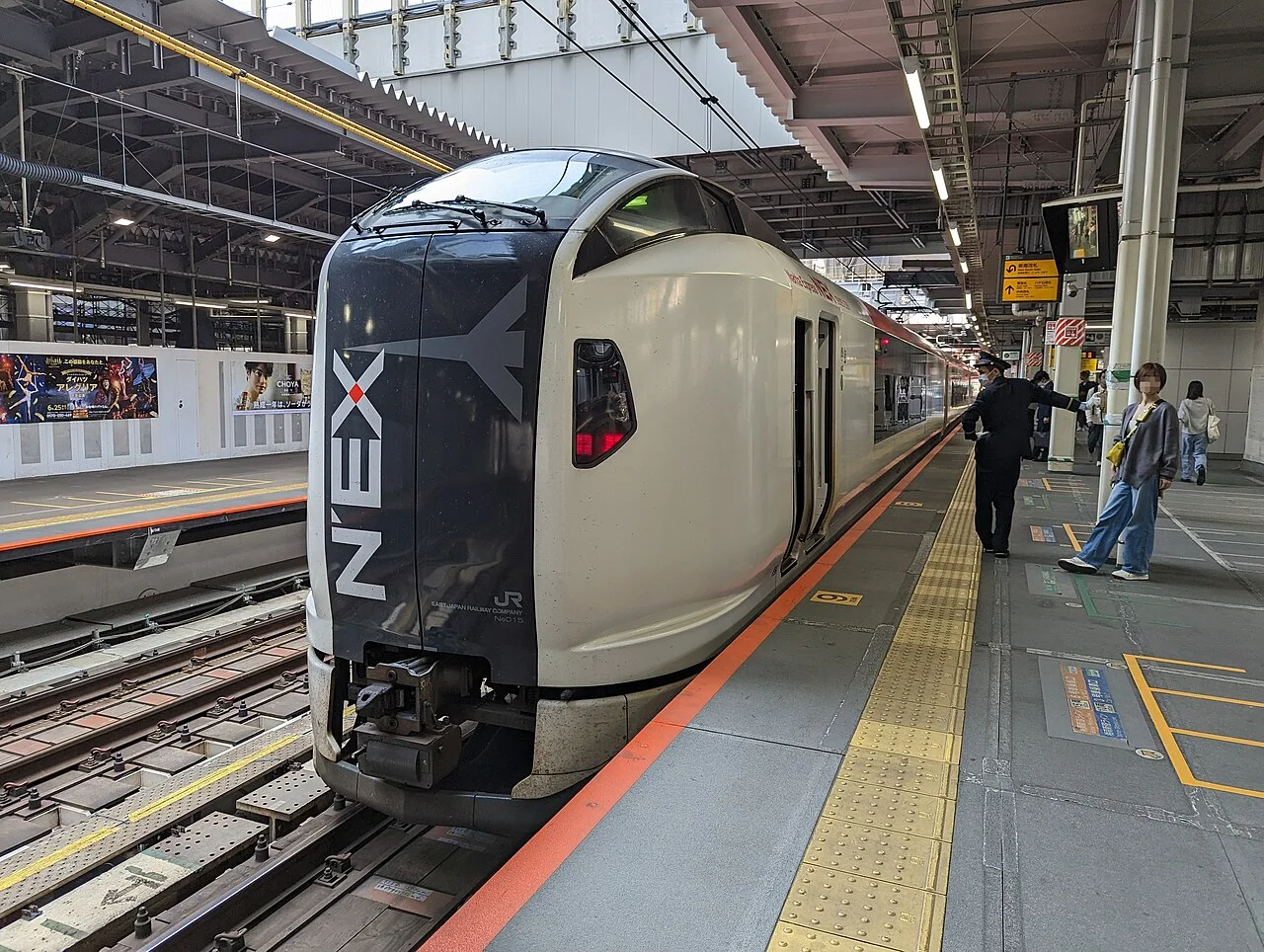
Yokohama Station is the strongest base if your itinerary reaches outside the city. Direct trains link straight to Tokyo Station, Shinagawa, Kamakura, and Haneda. For a morning run down to Kamakura, check the JR Yokosuka Line or Kamakura-bound Shonan-Shinjuku Line departures and board right from the station. Coming back late from Tokyo, you also skip waiting for a transfer onto the Minatomirai or Negishi Line. And if you only have half a morning left before catching a train, grabbing stored bags next to the platforms beats detouring to a waterfront hotel.
The East Exit feeds through the PORTA underground mall toward Sogo and the Yokohama City Air Terminal (YCAT), and it is also your launch point for walking to K-Arena. If you land on an airport bus and want to drop bags before grabbing a bite, start your search on the East side. The West Exit packs in department stores, dining, and Sotetsu Line connections. When comparing two West Exit hotels that both advertise a short walk, check which ticket gate the timer actually starts from—East Exit buses, north-side hotels, and West Exit restaurants all appear closer under a single "Yokohama Station" map pin than they feel on foot.
JR-East Hotel Mets Yokohama is a clear example. Its official site lists a 3-minute walk from the North Ticket Gate and Northwest Exit via the Hama Rail Walk, versus roughly 10 minutes from the Sotetsu Line or Municipal Subway. Visitors with strollers or heavy luggage arriving on JR are directed to the Central Ticket Gate to access inside elevators. Before locking in a stay near this hub, save a photo of the hotel entrance and the exact walkway name—it pays off when navigating back up from the underground shopping arcades at night.
Because the East Exit sits closer to the bay, you can walk past Shin-Takashima straight to the Yokohama Anpanman Children's Museum. If your main loop covers the Red Brick Warehouse and Chinatown, ride the Minatomirai Line in from Yokohama Station, walk south along the water, and catch the train back from Motomachi-Chukagai—one clean one-way sweep. If you plan to stroll along the water both days, staying in Minato Mirai or Bashamichi saves two daily commutes into the bayfront and makes midday rest stops easy.
Minato Mirai View Rooms: Pick Your Window Orientation First
Minato Mirai Station works best for travelers who want to return to their room at dusk and head back out after dark. When traveling with older family members, hotels clustered around Queen's Square or PACIFICO Yokohama keep walks short between indoor malls and the waterfront promenade. If you arrive on the JR Negishi Line, Sakuragicho Station's east side drops you right beside Landmark Tower, the Nippon Maru, and the Kishamichi Promenade, turning the walk to check-in into part of your first afternoon. Meanwhile, Shinko's Red Brick Warehouse and Cup Noodles Museum sit right by the water, making nearby Bashamichi hotels worth comparing on the same map if anyone wants an easy afternoon break.
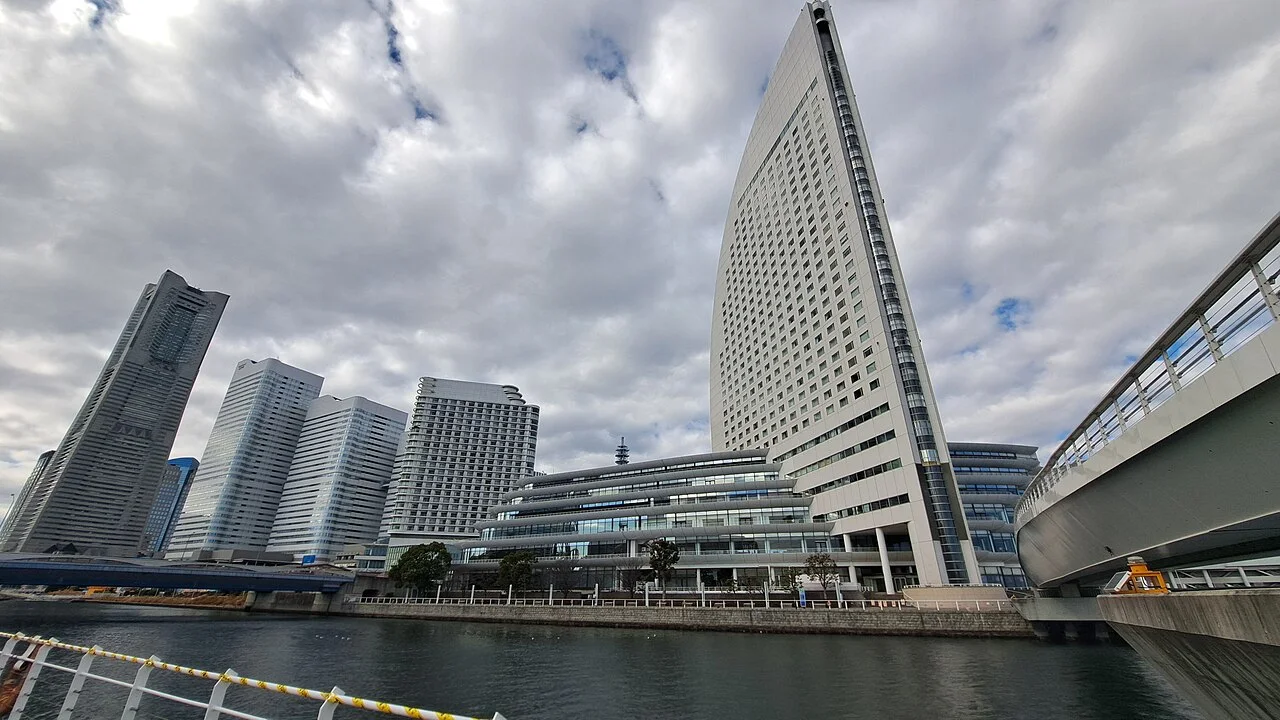
If the Cosmo Clock 21 Ferris wheel is your priority view, inspect the orientation photos on the hotel's room page before booking. At InterContinental Yokohama Grand, City View rooms face the amusement park and Minato Mirai skyline, while Harbor View rooms look out over the bay and Yokohama Bay Bridge. The property sits roughly 5 minutes from Minato Mirai Station and 12 minutes from JR Sakuragicho Station. Both Classic and Premium categories offer either orientation, with high-floor tiers on select rooms—pick City View first for the Ferris wheel, then decide if the high-floor surcharge is worth it. Choose Harbor View if you prefer watching ships move and catching morning light over the water.
At The Yokohama Bay Hotel Tokyu, Bay View rooms look toward the Bay Bridge and Red Brick Warehouse while still framing the Ferris wheel; Park View rooms face the Nippon Maru and Sakuragicho. Check each room page for balcony availability, bed configurations, and maximum occupancy, then compare rates under the exact same room category name. Located just 1 minute from Minato Mirai Station, it makes splitting up shopping and afternoon naps with young kids effortless.
Note that Yokohama Royal Park Hotel inside Yokohama Landmark Tower suspended hotel operations at the end of March 2025, with reopening slated for fiscal 2028. For high-rise night views in 2026–2027, compare InterContinental Yokohama Grand or OMO5 in Bashamichi instead. Separately, The Yokohama Bay Hotel Tokyu has announced a scheduled electrical maintenance power outage from 23:00 on January 12, 2027, through 07:00 the next morning. If you are visiting for a convention, confirm whether your event is in PACIFICO Yokohama's Conference Center, Exhibition Hall, or NORTH building: use the second-floor Queen's Square walkway from Minato Mirai Station for the Conference Center and Exhibition Hall, or take Exit 2 toward Keiyu Hospital for NORTH, and measure hotel distance to your specific venue hall.
Whether a view upgrade pays off comes down to how many hours you will actually spend in the room. Arrive mid-afternoon, dine nearby, and enjoy an unhurried morning, and you get both the city lights and sunrise. If you will be inside a venue all evening and out early for a flight, book a standard room, put the savings toward dinner or transit, and take in the bay views before your event starts. On a two-night stay, save the view room for the night you have a full evening free so the window becomes part of your itinerary.
K-Arena Concerts: Choose Your Hotel by the Exit Route
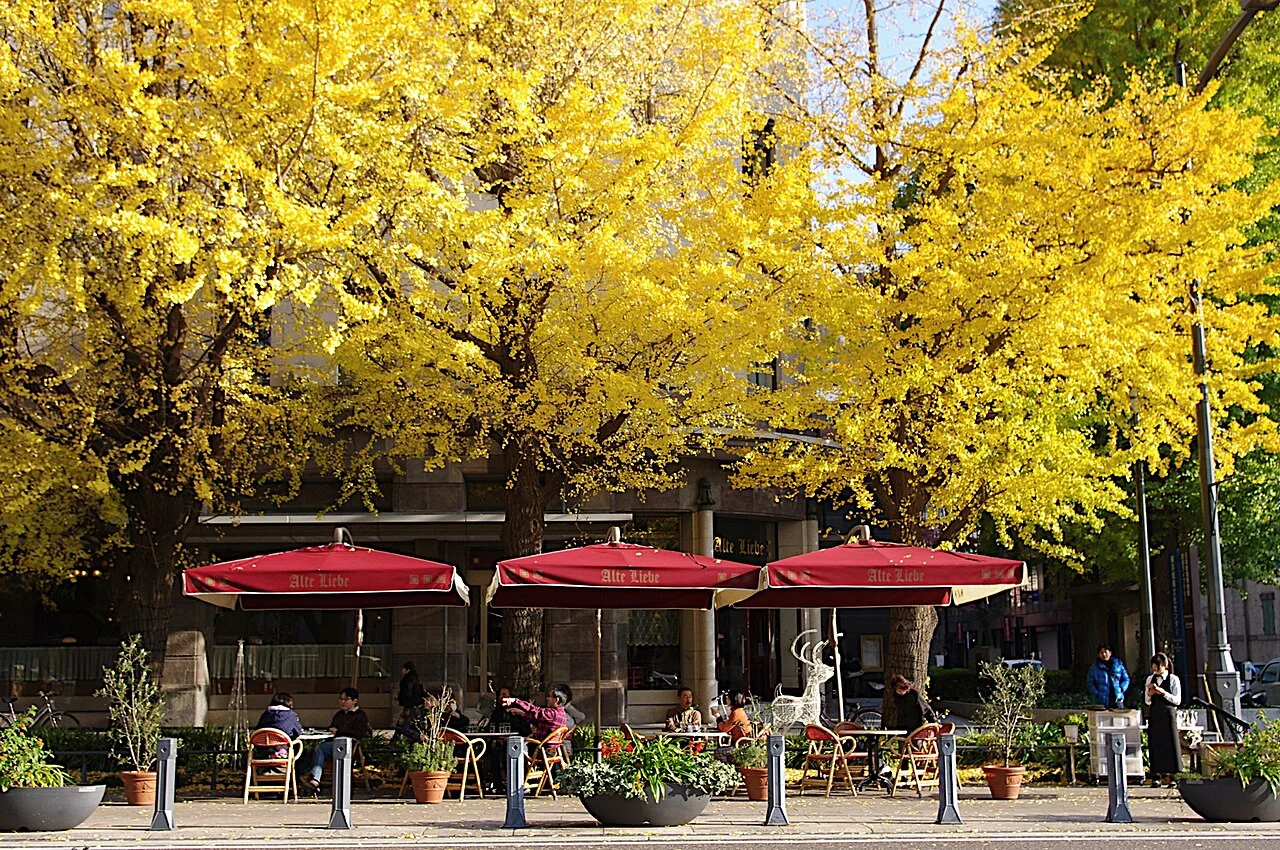
K-Arena sits in Minato Mirai 6-chome near Shin-Takashima and Yokohama Station's East Exit. On regular days, the venue lists walks of about 5 minutes from Shin-Takashima Station's Exit 4 (Rinko Park Gate), 9 minutes from Yokohama Station's East Exit, and 12 minutes from Minato Mirai Station's Exit 2 (Ginkgo Avenue Gate). Use those times for arrival, but budget extra time for post-show crowd control along organizer-mandated exit paths. Double-check your exact venue name on your ticket too: K-Arena Yokohama, PIA ARENA MM, and Yokohama Arena are three separate buildings. Shinkansen riders arriving at Shin-Yokohama who mistakenly book near Yokohama Arena face an unexpected cross-town train ride on concert night.
A February 2026 venue notice routes Yokohama Station foot traffic across the Takashima Waterfront Deck, while closing non-designated staircases at show end; crowds bound for Minato Mirai Station follow the Grand Mall pedestrian corridor. Even if your hotel is next door, pin your hotel entrance, designated exit gate, and post-show meetup spot separately. If your group enters separately, agree to meet outside your return station rather than at the base of a crowded exit staircase. Heading back to Kannai or Tokyo after the encore? Look up the final train that gets you all the way home on concert day and count backward to know when you must reach the platform.
To eliminate post-show transit altogether, start with Hilton Yokohama right next door, or check Yokohama Tokyu REI Hotel roughly 2 minutes from Shin-Takashima Exits 1 and 2. Tokyu REI is also about a 10-minute walk from Yokohama Station's East Exit—a practical advantage if you are coming from Haneda on show day with luggage in tow. Staying at Yokohama Station's East Exit lets you follow the Takashima Waterfront Deck back without queuing for a local train. If you stay in Bashamichi instead, watch train types on the Minatomirai Line—only Local trains stop at Shin-Takashima.
If you are lining up early for merch or ticket verification, eat an early dinner before doors open. Planning to eat after the show? Scout late-night restaurants ahead of time or grab food near your hotel for the room. Pick a check-in plan that fits your arrival window; if your show conflicts with the front desk's final check-in hour, drop by to check in before the concert starts. When traveling from another city for a show and flying out the next morning, build buffer time between arriving, dropping bags, eating, and entering the venue rather than working backward from a strict 9-minute map estimate.
OMO5 Bashamichi vs. OMO7 Kannai: Which Fits Your Trip?
Both Kannai and Bashamichi put Yokohama's historic port streets within easy walking distance, though their rail connections serve different routes. Kannai Station offers both the JR Negishi Line and the Municipal Subway; staying beside Yokohama Park lets you walk home from baseball games and catch JR south or north the next day. Bashamichi sits on the Minatomirai Line, giving riders from Shibuya a direct trip without transfers, and puts you squarely between the waterfront, Red Brick Warehouse, and Nihon-odori's heritage architecture. Flat sidewalks make it pleasant to stroll down to Yamashita Park and Chinatown, leaving only a short train ride back.
Hoshino Resorts' OMO5 Yokohama Bashamichi opened on January 15, 2026, directly connected to Exit 2a of Bashamichi Station on the Minatomirai Line. Every guest room includes a kitchen and a washer-dryer, with 15:00 check-in and 11:00 check-out. On a two- or three-night stay, heating milk at midnight for a toddler or washing daytime laundry beats having a one-night harbor view. Apartment-style layouts also unbundle meal schedules: one person can run downstairs for a quick breakfast while everyone else gets ready, avoiding the morning wait to seat a whole group at a restaurant.
Couples can start by comparing the Superior King (34–38 sqm, shower) and Superior Twin (36 sqm, bathtub). Groups of four can look at the one-bedroom OMO House, or step up to the two-bedroom OMO House Suite (max four guests) if separate sleeping quarters matter. Families of six can book the 136-square-meter, three-bedroom OMO House Corner Suite. Rather than booking two standard hotel rooms, price the apartment total against two rooms plus breakfast before deciding who gets which bed. Official policy allows children under 6 to share existing beds within room capacity limits—just enter exact child counts and ages when booking.
Opened April 21, 2026 inside the former Yokohama City Hall building, OMO7 Yokohama sits roughly 1 minute from JR Kannai Station right by Yokohama Stadium and Yokohama Park. It offers YAGURA rooms for three as well as suites sleeping up to six. Because some beds sit on raised loft levels, anyone who gets up at night or prefers avoiding stairs should check bed placement and floor levels before choosing a room. Pick OMO7 for the landmark architecture, ballgames, and strolling back after dinner; pick OMO5 when cooking and in-room laundry will pay off across two or three nights.
If you plan to bar-hop and eat through Noge's small alleys at night, look for rooms on the west side of Sakuragicho Station and walk under the tracks to the waterfront by day. Early morning events around Kannai are easiest to time from a hotel near JR Kannai Station. On multi-night stays, split your itinerary into waterfront walking days and a Sankeien Garden day—having a home base nearby to drop shopping bags and change shoes before walking to Nihon-odori or Chinatown for dinner is one of this neighborhood's biggest perks.
Chinatown, Motomachi & Yamashita Park: Stay on the Side You End Your Night
If dining in Chinatown anchors your trip, staying in Yamashita-cho saves end-of-night legwork: step out of the restaurant, stroll back to your lobby, and take an evening walk along Yamashita Park overlooking the harbor. To narrow your map search, pin your target restaurants or Chinatown gates first, then check whether a hotel sits closer to Motomachi-Chukagai Station or the Chinatown side of JR Ishikawacho Station's North Exit. The former connects smoothly to the bay and Minatomirai Line, while the latter gives you direct JR access. Morning walks through Motomachi Shopping Street or up to the Yamate bluff's historic Western-style homes involve slopes—map the Motomachi exit and hills ahead of time, and tackle the uphill strolls after dropping your luggage.
Right along the front row of Yamashita Park, Hotel New Grand lists a 1-minute walk from Motomachi-Chukagai Station's Exit 1 stairs, or a 2-minute walk using the Exit 2 elevator. Its Main Building preserves classic historic architecture, while Tower Wing rooms look toward the Bay Bridge and Osanbashi Pier. Photographers and early risers wanting quiet harbor views should lean toward Yamashita Park frontage and Tower Wing orientations. If dinner is your top priority, stay inside Chinatown and put more budget toward a sit-down banquet. Families putting kids to bed early should separate dining streets from hotel entrances: pick a room facing away from busy main avenues while keeping the lobby within an easy after-dinner stroll.
For anyone visiting Sankeien Garden on checkout day, staying between Chinatown and Yamashita Park lets you leave bags with the bell desk and catch the local bus right nearby. The garden's transit guide recommends taking Municipal Bus 8 or 168 from the Chukagai-Iriguchi or Yamashita-cho stop to Sankeien-Iriguchi. Spend half a day in the garden, then wander back through Yamashita Park and Chinatown. Heading to Kamakura the next morning? Catch the JR Negishi Line from Ishikawacho to Ofuna to transfer, or ride to Yokohama Station for the Yokosuka Line. Going to western Tokyo from a Minatomirai Line hotel is simplest on a through-train onto the Tokyu Toyoko Line, saving a long walk inside Yokohama Station.
Getting Between Tokyo, Haneda Airport, and Shin-Yokohama
From Tokyo Station or Shinagawa, the JR Tokaido Line is the most direct shot to Yokohama Station, taking roughly 25 minutes on local trains; following the March 14, 2026 fare revision, one-way adult fares from Tokyo Station are ¥530 by paper ticket or ¥528 with a transit IC card. If you are staying at Sakuragicho, Kannai, or Ishikawacho, take a southbound Keihin-Tohoku / Negishi Line train that serves your stop to avoid transferring at Yokohama Station—it makes more stops and takes longer, so weigh the seat time against your hotel's station. With two large suitcases, riding straight from Tokyo Station to Kannai is often easier than dragging bags across platforms at Yokohama.
From Shinjuku to Yokohama Station, catch the JR Shonan-Shinjuku Line. Coming from Shibuya to any hotel along the Minatomirai Line, board a Tokyu Toyoko Line through-train bound for Motomachi-Chukagai so your train continues seamlessly past Yokohama. Even when trains share that same terminal sign, stopping patterns differ—take a Local train for Shin-Takashima, Bashamichi, or Nihon-odori. If your hotel is right at Yokohama Station, compare JR and Tokyu from Shibuya based on both your walk to the Shibuya platform and which exit leaves you closest to your hotel in Yokohama.
From Haneda Airport, ride Keikyu toward Yokohama on a direct train, or transfer at Keikyu Kamata if your train splits. From Haneda Airport Terminal 1 & 2 Station to Yokohama Station, the adult fare is ¥400 by paper ticket or ¥397 by IC card; Terminal 3 flyers should check timetables from Terminal 3 Station to see if their departure runs through without changing. Staying near Yokohama Station's East Exit? Compare the train against the YCAT airport limousine bus (¥800 adult, ¥400 child one-way). Direct buses to select Yamashita Park and Minato Mirai hotels run ¥1,000 adult and ¥500 child, sparing you ticket gates, station elevators, and exit hunts with heavy bags.
For early-morning departures out of Haneda, work backward from your airline's check-in cutoff while accounting for your terminal, the walk to the station or bus stop, and the first morning departure. Guests near Yamashita Park can look into reservation-based airport buses departing the waterfront, while YCAT departures follow the bus operator's same-day ticket or IC tap rules. For late-night Haneda arrivals, the bus company operates late-night and early-morning departures to YCAT and Sakuragicho at ¥2,000 for adults—factor in immigration, baggage claim, and walking to the bus bay before picking a departure time.
Arriving from Kyoto or Osaka on the Tokaido Shinkansen puts you at Shin-Yokohama Station. From there, take the JR Yokohama Line toward Yokohama Station (checking whether your train continues past Higashi-Kanagawa to Yokohama), transfer at Kikuna to the Tokyu Toyoko through-line for Motomachi-Chukagai, or ride the Municipal Subway Blue Line straight down to Sakuragicho or Kannai. When shipping luggage ahead or meeting a pickup, write the full hotel address and exact meeting point clearly—and remember that JR local fares between Tokyo and Yokohama Station are separate from a Shinkansen ticket into Shin-Yokohama.
On the Minatomirai Line, single adult rides from Yokohama to Minato Mirai or Bashamichi cost ¥200 by paper ticket or ¥193 by IC card, and ¥230 paper / ¥224 IC to Nihon-odori or Motomachi-Chukagai. A Minatomirai Line one-day pass is ¥460 for adults and ¥230 for children and covers only that line. Since a round trip between Yokohama and Motomachi-Chukagai costs ¥460 on paper tickets or ¥448 via IC card, the pass only starts saving money if you make a third stop mid-day for lunch or a hotel break. If you are just walking the waterfront one way and riding back once, tap an IC card.
Where to Stay for One Night: Map Luggage & Timed Tickets First
For two adults arriving from Tokyo around noon, drop bags in Minato Mirai, walk the Kishamichi Promenade out to Shinko and the Red Brick Warehouse, return to your room for twilight skyline views, and head to Queen's Square or Shinko for dinner. The next morning, walk south from Bashamichi or Sakuragicho to Yamashita Park for sea views before catching the train from Motomachi-Chukagai. When picking up stored bags from your hotel, align that stop with the station you leave from next. If you want to stroll out to Yamashita Park before continuing straight to Kamakura, spend the night in Yamashita-cho instead so you can grab your bags and depart easily from Motomachi-Chukagai or Ishikawacho.
With young kids, build your itinerary around timed-entry tickets first and place hotel rest breaks around them. Floors 2 and 3 of the Yokohama Anpanman Children's Museum require dated, timed online tickets released at 10:00 AM JST 28 days before your visit, with admission changing to ¥2,200–¥2,800 starting September 20, 2026. The museum sits roughly 3 minutes from Shin-Takashima Exit 3 or 10 minutes from Yokohama Station's East Exit. Stay near Shin-Takashima if you want an early entry slot followed by an afternoon nap, or choose Yokohama Station's East Exit if you already made airport transfers on Day 1 and prefer a simple morning walk on Day 2.
The Cup Noodles Museum Yokohama sits in Shinko, about an 8-minute walk from either Minato Mirai or Bashamichi Station. Standard hours run 10:00–18:00 (last entry 17:00), closed Tuesdays (or the following day if Tuesday is a national holiday) and over the New Year period. Museum admission is ¥500 for adults and free for high school students and younger, while the My CUPNOODLES Factory workshop requires a separate slot at ¥500 per cup. Families aiming for the workshop should book the museum first and walk over to the Red Brick Warehouse afterward. If it is closed—or if heavy rain hits—shift indoors to Queen's Square, MARK IS Minato Mirai, or Yokohama World Porters so you are not crossing open-air bridges in bad weather.
Multi-generational groups staying two nights run on different clocks. Check bed counts, bathtubs, and whether doors separate sleeping areas when comparing Minato Mirai mall-connected hotels against Bashamichi apartments. Those needing naps or early bedtimes can stay in while others ride the Minatomirai Line down to the Red Brick Warehouse or Chinatown. Keeping everyone in one hotel for both nights is far easier than switching properties mid-trip, which leaves non-nappers without a home base between morning checkout and afternoon check-in. If you still want one night by the station and one night with a harbor view, put the hotel swap on a day you are already moving between districts and link bag storage to your lunch route.
Winter Events & GREEN×EXPO 2027: How They Affect Location
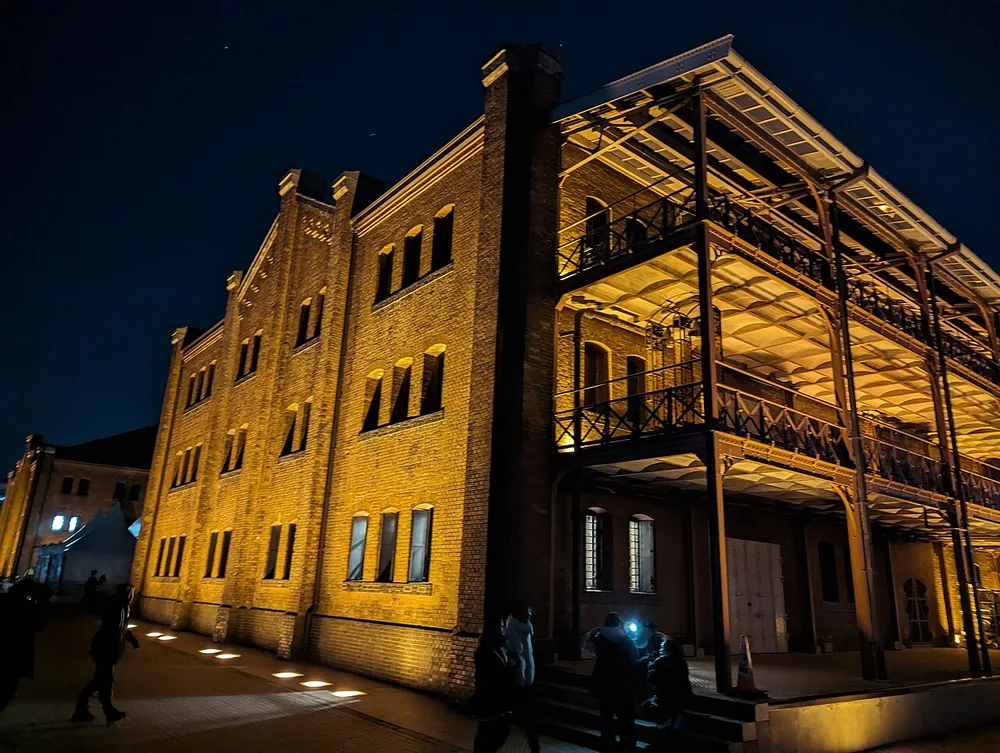
The 2026 Yokohama Red Brick Warehouse Christmas Market runs from November 20 to December 25, with the main grounds staying open until 22:00 (last food and drink order at 21:30) from December 5 onward. If you plan to linger late at the market, staying in Bashamichi or Shinko gives you a straight walk home, while staying near Minato Mirai Station puts the waterfront lights along your return route. Missed the market dates? YOKOHAMA MILIGHT illuminates the stretch from Yokohama Station's East Exit to Grand Mall Park from November 13, 2026 through March 28, 2027, making an evening stroll toward Minato Mirai easy even from a station-side hotel. See the Yokohama Red Brick Warehouse Christmas Market guide for ticket tiers and free-entry areas.
Cold winter harbor winds make after-dinner walks feel much longer than they did at noon. If your hotel sits near a station, walk from the Red Brick Warehouse to Yamashita Park earlier in the evening, and hop on the train at Nihon-odori or Motomachi-Chukagai if wind or rain picks up. Guests staying near Chinatown can keep evening walks confined to Yamashita Park and save the longer trek out to Shinko and Sakuragicho for the next morning. On New Year's Eve or overlapping concert nights, lock in a confirmed dinner spot first, then walk as far along the bay as energy allows without forcing an extra detour back to a transfer hub.
Running from March 19 to September 26, 2027, GREEN×EXPO 2027 (the International Horticultural Expo) takes place at the former Kamiseya Communications Facility. From Yokohama Station, ride the Sotetsu Main Line to Seya or Mitsukyo Station to catch a shuttle bus; organizers have also announced reservation-only shuttles from JR Yokohama Line's Tokaichiba Station and the Tokyu Den-en-toshi Line's Minami-Machida Grandberry Park Station. Spending two days at the expo? Stay near the Sotetsu Line side of Yokohama Station to cut a morning transfer, or separate expo days from Minato Mirai days if you want both. All four shuttle routes require advance reservations at ¥200 for adults and ¥100 for children one-way, alongside separate timed-entry expo tickets—sync both bookings before setting your hotel departure time, and leave cushion for the return shuttle and rail transfer.
Fireworks, baseball games, and major trade shows reshape foot traffic at night. If an event anchors your trip, confirm the exact venue and dates first, then trace your walk back to the hotel from there. Hotels near the border of Yokohama Station's East Exit and Shin-Takashima put several bayfront events within walking distance, whereas games at Yokohama Stadium pair best with JR Kannai or Minatomirai Line Nihon-odori. Use event calendars as a rate-checking tool too: compare the night before, the event night, and the following night for the exact same room type. For a one-night event trip where you depart right after the finale, dial in your checkout, bag drop, and transit order ahead of time.
Four Things Worth Double-Checking on the Booking Screen
Compare apples to apples first. Match exact dates, adult and child ages, meal plans, and cancellation terms, then compare the final all-in room total on each checkout page—factoring in whether two travelers share one room or a group splits across two. Weigh any rate savings at a farther-out hotel against extra train fares and the risk of leaving a concert or expo early for the last train. For multi-night bookings, inspect the nightly breakdown rather than just the average rate, which can mask a single peak-price night.
Record each room's maximum occupancy, true bed count, and bed widths. A triple room behaves very differently depending on whether it holds three full single beds, two beds plus a rollaway, or one double bed with a sofa bed. Verify crib availability, breakfast fees for co-sleeping kids, and whether the bathroom has a tub on the specific room and rate plan page. For view rooms, confirm orientation and floor tier—and select the explicit view category rather than relying on a booking comment alone. If anyone needs a step-free shower or wide corridor, cross-check the property's accessibility specs alongside station elevator access.
Once concert or winter market plans lock in, calendar the free-cancellation deadline—paying close attention to the exact JST cutoff. When one person pays for a group booking, verify that every guest is listed on the reservation and check whether changing headcount triggers a repricing. Arriving from Tokyo with luggage? Pick a hotel offering pre-check-in bag storage, or use lockers along the route you will pass on departure day. If you expect a late arrival, enter your ETA during booking and confirm the front desk's latest check-in cutoff before setting out.
On a Tokyo-based trip, keeping bags in your Tokyo room lets you hop down by JR or private rail for a Yokohama waterfront and Chinatown day trip. Reserve a Yokohama overnight when you want to walk back to bed after a Friday-night show or catch an early Saturday family ticket slot. Even travelers staying long-term in Tokyo can pack a single overnight bag for the night with the cleanest transit links. Just avoid backtracking to Tokyo for luggage if you head straight to Kamakura or Haneda the next morning—moving your bags the night before keeps the route linear.
A few useful answers
Should first-time visitors stay near Yokohama Station or Minato Mirai?
Choose Yokohama Station if you are linking Tokyo, Kamakura, or an early Haneda flight. Pick Minato Mirai or Bashamichi if you want to stay out past dark for waterfront views and the Red Brick Warehouse with a shorter trip back to your room.
Where should I stay for a K-Arena Yokohama concert?
Compare hotels right beside the venue, near Minatomirai Line Shin-Takashima Station, or by Yokohama Station's East Exit. Regular daytime walks take about 5 minutes from Shin-Takashima Exit 4 and 9 minutes from Yokohama East Exit; after the show, follow the organizer's designated exit paths.
For Minato Mirai night views, should I book City View or Bay View?
To see the Cosmo Clock 21 Ferris wheel, look at City View at InterContinental Yokohama Grand or Bay View at The Yokohama Bay Hotel Tokyu. Always verify orientation photos on each hotel's official room page before comparing prices.
Does OMO5 Yokohama Bashamichi have kitchens and laundry machines?
Yes—every room comes with a kitchen and a washer-dryer. The four-person OMO House has one bedroom and a living area, while the Corner Suite fits up to six guests across three bedrooms and a living room.
How many rides make the Minatomirai Line one-day pass worth it?
The adult pass is ¥460. Since a round trip between Yokohama and Motomachi-Chukagai costs ¥448 via IC card, the pass only pays off if you also hop off mid-day for lunch or a hotel break.
Which exit has an elevator for hotels near Yamashita Park with luggage?
Using Hotel New Grand as a benchmark, Motomachi-Chukagai Station Exit 2 has an elevator and puts you about a 2-minute walk from the lobby, whereas Exit 1 uses stairs for a 1-minute walk.
Which Shinkansen station serves Yokohama?
The Tokaido Shinkansen stops at Shin-Yokohama Station. From there, take the JR Yokohama Line toward Yokohama Station, or ride the Municipal Subway Blue Line directly to Sakuragicho and Kannai.
Official information and references
Sources used in this guide.
- JR East Yokohama Station Timetable & Lines
- JR East Fare Revision Date & Conventional Line Fare System
- JR East Ordinary Fare Comparison from Tokyo Station
- Minatomirai Line Ordinary Fares & One-Day Pass
- Minatomirai Line Train Types, Stops & Tokyu Through-Service
- Keikyu Railway Haneda Airport Access Guide & Fares
- Keikyu Bus Haneda Airport to Yokohama Station (YCAT) Schedule & Fares
- Keikyu Bus Haneda Airport to Yamashita Park, Minato Mirai & Red Brick Warehouse
- K-Arena Yokohama Station Exits & Walking Distances
- K-Arena Yokohama Takashima Waterfront Deck Entry/Exit Notice
- Hilton Yokohama Location & Adjacent Venues
- Yokohama Tokyu REI Hotel Station Exits & Walking Routes
- JR-East Hotel Mets Yokohama Access Guide by Line
- InterContinental Yokohama Grand Room Orientations
- InterContinental Yokohama Grand Access Guide
- The Yokohama Bay Hotel Tokyu Room View Categories
- Tokyu Hotels Yokohama Area Access Overview
- Yokohama Royal Park Hotel Closure & Reopening Notice
- Hoshino Resorts OMO5 Yokohama Bashamichi Opening Information
- Hoshino Resorts OMO5 Yokohama Bashamichi Access & Stay Policies
- Hoshino Resorts OMO5 Yokohama Bashamichi Apartment Rooms & Kitchen Facilities
- Hoshino Resorts OMO7 Yokohama Former City Hall, Rooms & Access
- Hotel New Grand Main Building & Tower Wing Rooms
- Hotel New Grand Station Exits & Elevator Routes
- Yokohama Sankeien Garden Transit FAQ
- Yokohama Anpanman Children's Museum Timed-Entry Ticket FAQ
- Yokohama Anpanman Children's Museum September 2026 Price Revision Notice
- Yokohama Anpanman Children's Museum Walking Routes from Stations
- Cup Noodles Museum Yokohama Hours, Admission & Access
- Cup Noodles Museum Yokohama Admission & Workshop FAQ
- Yokohama Visitors Bureau 2026 Red Brick Warehouse Christmas Market Dates & Hours
- Yokohama Visitors Bureau 2026–2027 Winter Illumination Schedule
- GREEN×EXPO 2027 Dates & Venue Overview
- GREEN×EXPO 2027 Four-Station Shuttle & Reservation Information
- YCAT Walking Route from Yokohama Station East Exit via PORTA
- Yokohama Municipal Subway Blue Line Stations
- PACIFICO Yokohama Exhibition Hall & NORTH Venue Layout
- PACIFICO Yokohama NORTH Access from Minato Mirai Station
- The Yokohama Bay Hotel Tokyu January 2027 Electrical Maintenance Power Outage Notice