On a first Yokohama visit, connect a harbor walk, a Chinatown meal and the activity you really want. With an overnight, leave breakfast, Motomachi or Sankeien for day two. Understanding stations, tickets, closing days and room conditions lets you shorten the plan for weather and energy, and know which costs need separate calculation.
Yokohama in a day or overnight: leave room for the harbor, dinner and morning
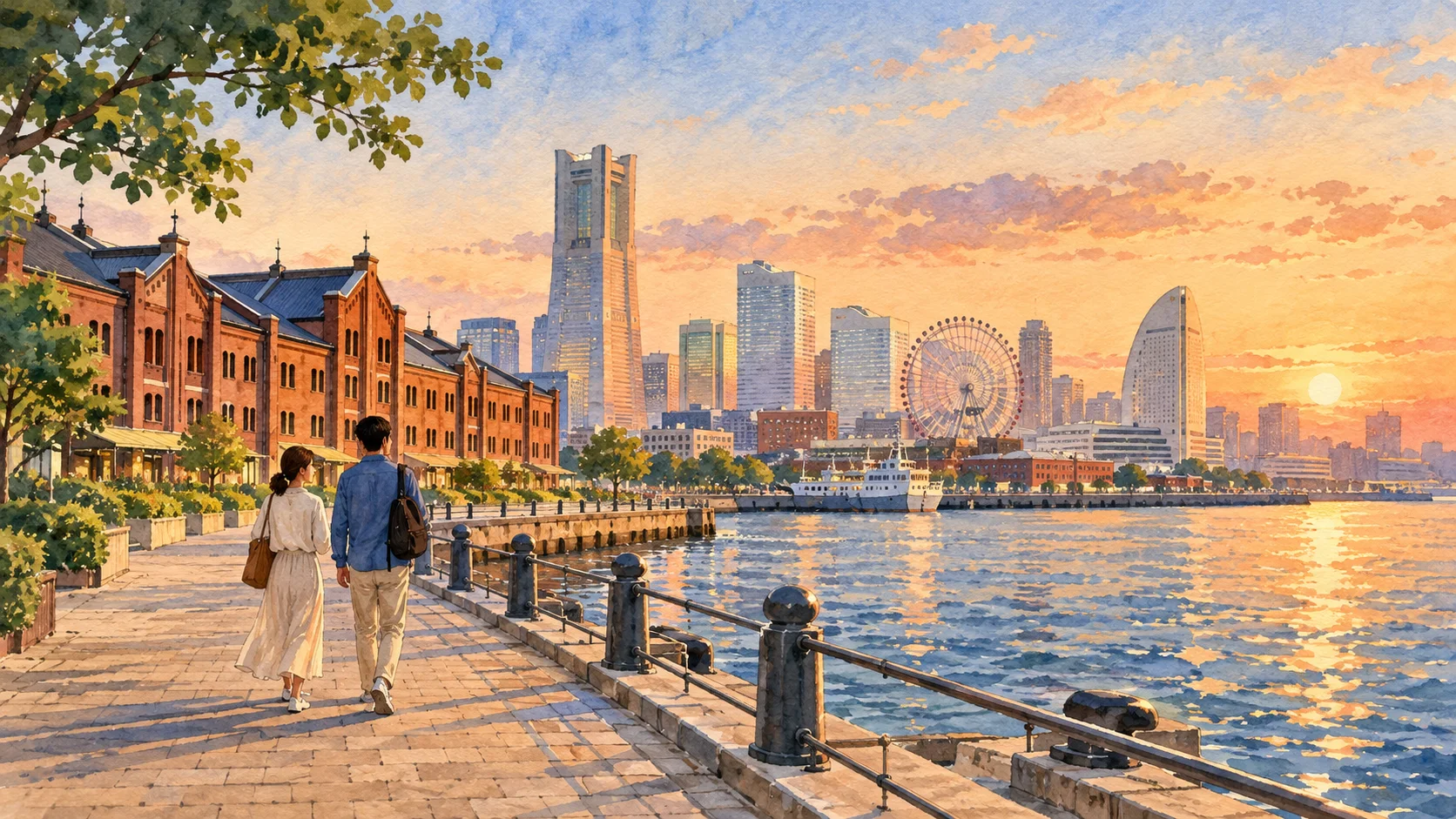
For a first day trip from Tokyo, concentrate on Sakuragicho, Shinko, Yamashita Park and Chinatown, with a waterfront walk and a proper seated meal. Adding Motomachi shopping, cup-noodle making and the evening lights is easier with a night in town. Before choosing accommodation, write down what you want to do after dinner and the following morning. If neither period has a particular appeal, returning to Tokyo that day usually saves moving your luggage between hotels.
An overnight does not require filling two complete days. Arrive in the afternoon, leave your bags, walk by the harbor toward evening, then choose Motomachi or Sankeien after breakfast. That creates a different pace from Tokyo’s dense neighborhood itineraries. People interested in clothing can keep time for shops; families can prioritize the workshop and rests. Let each person name one activity worth keeping, so queues or changing weather make it clear which stop to remove.
This guide uses official information read on October 21, 2026, with all prices in yen. Suggested route times and meal allowances are planning examples, rather than a personally walked route, a same-day quote or guaranteed departures. If you are still choosing a Tokyo base, use the neighborhood comparison for accommodation and travel to arrange the nights around this trip, then decide whether you actually need to change hotels in Yokohama.
Know the stations: Yokohama Station is not automatically your waterfront starting point
Yokohama Station is a base for connections and shopping; Sakuragicho gives access along Kishamichi to Shinko. Minatomirai serves the central commercial district, while Bashamichi and Nihon-odori can shorten the approach to the red-brick warehouses and waterfront. Motomachi-Chukagai suits dining, Motomachi and the Yamashita Park end. Match the station name to your first destination before buying an imagined universal Yokohama ticket. The official Minatomirai Line connection map helps check line names and through-service directions.
From Tokyo Station or the Shinagawa area, first compare JR trains to Yokohama, followed by a connection to Sakuragicho or the Minatomirai Line. Near Shibuya, compare Tokyu Toyoko Line services toward Motomachi-Chukagai. New Grand’s arrival instructions from Tokyo, Shinagawa and Shibuya illustrate two different approaches to the city. Your particular train still depends on the day: enter the full station name into a journey search, rather than just “Yokohama.”
Shin-Yokohama is another district. Arriving by shinkansen still requires a connection into the center. The Shin-Yokohama Ramen Museum, Yokohama Station shopping and Yamashita Park are not three adjoining stops outside the same station. If another long-distance train follows, decide your departure station first, then work backward through luggage collection and station entry. This prevents treating every address described as “near Yokohama” as a short walk.
| Station or area | Best task | What follows |
|---|---|---|
| Yokohama | Connections, concentrated purchases and east-exit underground shopping | Connect to harbor transport, or depart after shopping |
| Sakuragicho | Kishamichi, Shinko and JR connections | Walk one direction through the harbor to Chinatown |
| Bashamichi / Nihon-odori | Shorter access to warehouses and waterfront | A shorter version or leaving partway |
| Motomachi-Chukagai | Yamashita Park, Chinatown and Motomachi | Leave after dinner or stay nearby |
| Shin-Yokohama | Shinkansen connections | Add central-city transfer and luggage collection |
A day’s route: arrive at Sakuragicho and leave from Motomachi-Chukagai
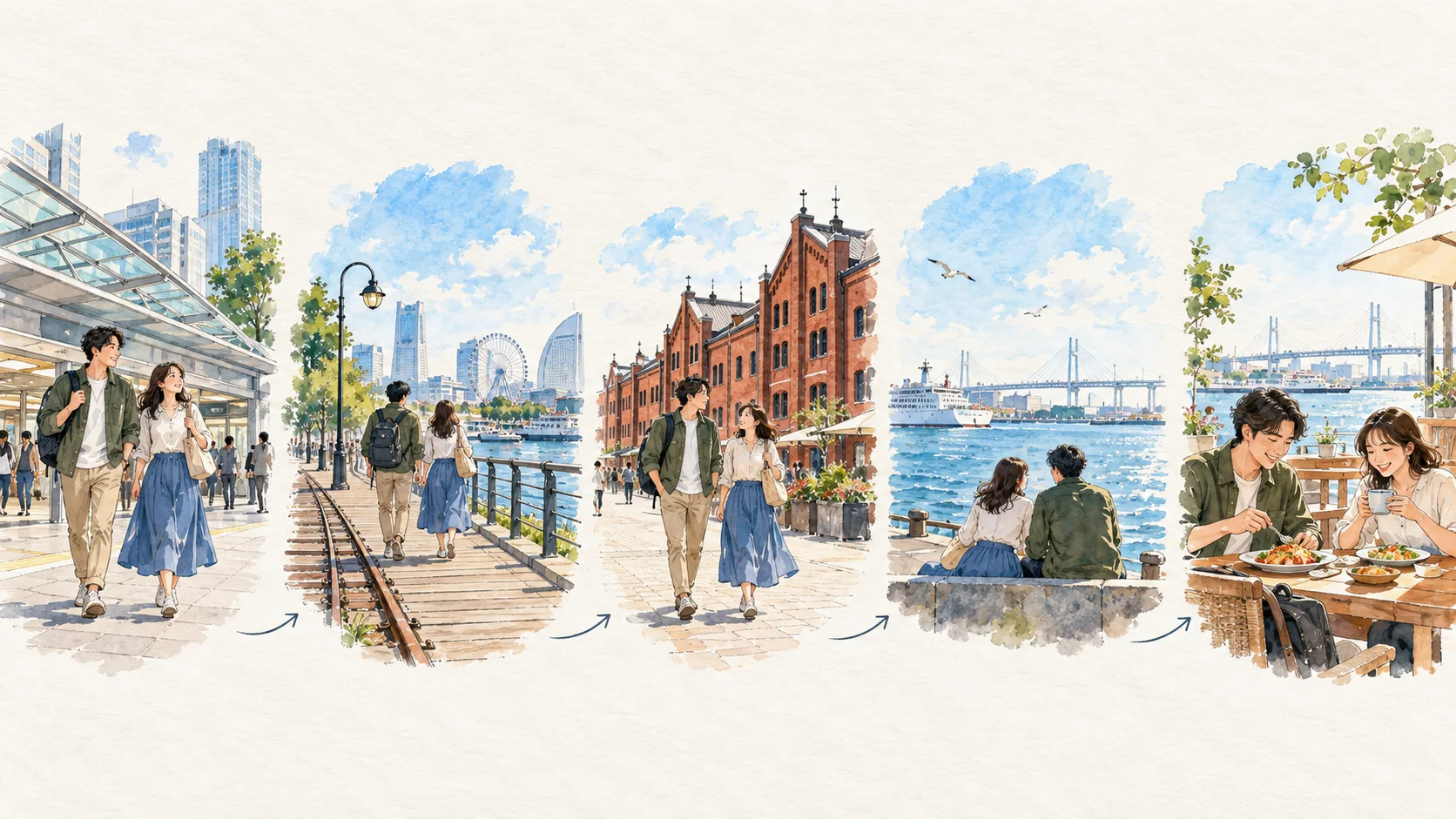
An adaptable sequence starts at Sakuragicho in the morning, crosses Kishamichi into Shinko, has lunch around the red-brick warehouses, then follows the waterfront to Osanbashi and Yamashita Park. Eat in Chinatown toward evening and leave from Motomachi-Chukagai. This is a geographical suggestion in one direction, not a checklist that everyone must finish. If the harbor and dinner are the priorities, begin at Nihon-odori or the Motomachi-Chukagai end instead.
For cup-noodle making, first fix the session you obtained, then fit lunch, the warehouses and the waterfront around it. A morning gap may not accommodate another museum requiring a long visit. The official approximately fifteen-minute walk from Sakuragicho to the warehouses via Kishamichi covers only getting there. Photography, bathrooms, shops and finding a seat take additional time. Treating those fifteen minutes as enough for the entire area makes the plan unreliable.
With a Chinatown restaurant reservation, save the restaurant entrance on your phone’s map, rather than only the district’s gate. If dinner is an hour away and the group is already tired, skip Osanbashi’s long platform and take a nearer street or station toward the meal. Evening views can follow a short walk after dinner. Keeping the original sequence is not a reason to hurry hungry companions across the city.
Arriving at lunch or visiting for half a day: keep one walk and one meal
Leaving Tokyo in the afternoon, shorten Yokohama to a Chinatown lunch or early dinner, Yamashita Park and one waterfront section. One station for arrival and departure reduces cross-town travel. If the red-brick warehouses matter more, use Bashamichi or Nihon-odori, eat around Shinko and leave Motomachi for another visit. For half a day, choose a dining area and walking area that sit close together.
Check restaurant breaks and shop openings. An early harbor walk does not mean the whole shopping complex is operating, and not every Chinatown restaurant accepts seated guests at three or four in the afternoon. For example, Saiko Shinkan takes a break between lunch and dinner, when only its shop remains available. If you were counting on it for a rest then, find a cafe whose opening you have confirmed.
Before leaving, check the return all the way to your accommodation door, rather than only arrival at a large Tokyo station. With children, the last stop can be somewhere near the exit with water and a bathroom. A restaurant booking back in Tokyo calls for a shorter Yokohama version. An evening that already requires a rushed return rarely suits adding another paid experience high above the city.
Choosing a Yokohama day pass: compare the operator before counting journeys
Yokohama passes cover different networks. A Minatomirai Line day pass costs ¥460 for adults and ¥230 for children, useful for repeated journeys along that line between Yokohama and Motomachi-Chukagai. The municipal Minato Burari Ticket costs ¥700/¥350 and covers specified municipal subway, municipal bus and Kanachu areas, including Akai Kutsu and BAYSIDE BLUE. Neither bundles unlimited Tokyo round-trip travel, JR, cable car and boats. Compare the rail pass’s current fares with the municipal validity areas.
For one ride into the harbor area, a walk and one ride out, add the two single fares first. Going elsewhere for a rest, collecting luggage and returning to the water may increase a pass’s value. Do not add an unwanted stop just to make a ticket pay for itself. Count the journeys you actually expect, and keep paper-ticket and IC-card fares separate in the calculation. Minatomirai’s purchase and refund conditions allow an unused ticket within its validity to be refunded for a ¥190 fee; extra tickets bought as insurance also have a cost.
From Shin-Yokohama, compare the municipal Wide version at ¥750 for adults and ¥380 for children. It adds boarding and alighting at Shin-Yokohama, but specified intermediate stations between it and the harbor area are not unrestricted stops. The basic version toward Sankeien likewise restricts intermediate stops between areas. Before treating either as a pass for exploring residential neighborhoods, read the boarding and alighting restrictions between zones, rather than relying on Sankeien’s name appearing on the ticket.
| Ticket | Adult / child, yen | Coverage and limits |
|---|---|---|
| Minatomirai Line day pass | 460 / 230 | Repeated rides on that line; Tokyo round-trip travel and JR separate |
| Basic Minato Burari | 700 / 350 | Specified municipal subway/bus areas, including Akai Kutsu and BAYSIDE BLUE |
| Minato Burari Wide | 750 / 380 | Adds Shin-Yokohama; specified intermediate stops restricted |
| Q SKIP travel-and-food ticket | Adult 3,300 | Tokyu and Minatomirai day passes plus one participating shop’s voucher; not unrestricted cash credit |
IC cards, Akai Kutsu and passes: know how to present your fare
An IC card is convenient for paying per ride; a day pass bought beforehand is a separate way to pay for travel. Choose which you will use before boarding, avoiding a card debit when you already hold a pass. Akai Kutsu currently charges ¥220 per adult or ¥110 per child per boarding and runs from Sakuragicho around major sightseeing areas. The official instructions specify front-door boarding, payment on entry and rear-door exit; pass users show the valid date as directed. These details are more useful than simply saying to take the tourist bus.
An adult ¥700 pass bought for only two Akai Kutsu rides compares with ¥220 × 2 = ¥440, or ¥260 less. Four rides total ¥880, ¥180 above the pass. This example uses Akai Kutsu’s current single fare and only adult rides actually taken on that bus, with no other services or facility discounts included. Add subway travel or Sankeien and you must list your own journeys again. Consider intervals and congestion too: a fare difference does not automatically equal time saved.
The municipal Akai Kutsu page includes an official twentieth-anniversary video introducing the bus and sightseeing along its route. Read that page’s current notices for operating routes, stops, timetables and diversions. The video is not a live bus-position display. To reduce walking, compare waiting with reaching the next subway station; the same form of transport need not serve every part of the day.
Chinatown transport-and-meal tickets: choose the restaurant before buying
A search for a food-and-transport ticket brings up Tokyu’s Yokohama Chukagai Tabi Gourmet Kippu. The current adult Q SKIP product costs ¥3,300 and includes Tokyu and Minatomirai day passes plus a participating-establishment voucher, to be used within sixty days of purchase. It is not cash credit for any restaurant and any order in Chinatown, and grants neither a reservation nor priority seating. Before seeking a saving, confirm that you actually want the specified offering.
Check the particular set covered by the voucher, closing day, midday break and reservation requirements instead of comparing only the ordinary menu. Each voucher serves one person at one establishment; companions without one pay separately. Activate the transport ticket before using the dining voucher. Do not mark it used on your phone ahead of time: the official usage instructions say doing so before presenting it to staff invalidates it. Wait for their confirmation before operating the screen, rather than relying on an image saved earlier.
Under Q SKIP’s QR travel and refund rules, a printed or captured QR cannot replace the valid display. If an empty battery prevents showing the ticket, the normal fare must be paid separately. Refunds require every component unused and the validity period still running, with a ¥220 fee. Decide before purchase whether to commit the day to that meal choice. Separate fares and individual menu orders may cost more, but can accommodate different appetites and tastes more easily.
Kishamichi and the red-brick warehouses: separate walking, shopping and events
Between Sakuragicho and Shinko, Kishamichi provides a transition to the water and port architecture. At the red-brick warehouses, you can split the exterior, shops and food according to the group’s interests. For the building and one souvenir, choose a shop first without allocating an entire shopping day. If a particular event appeals, list its entry, queue and payment time separately.
Ordinary admission to the warehouses is free. Building 1 normally opens 10:00–19:00 and Building 2 11:00–20:00; restaurants, cafes, performance spaces and events have their own arrangements. The warehouse’s opening and free-entry answers distinguish entering the commercial building from every activity being free. At ten in the morning, use the already open Building 1 or outside space, without scheduling Building 2 purchases at the same time.
The official access guide gives approximately six minutes on foot from Bashamichi or Nihon-odori and twelve from Minatomirai. Choose your exit according to what follows. With shopping bags, you can leave from the nearer station or return to the hotel to store them. Avoid discovering only after a large purchase that the itinerary still includes Osanbashi’s long platform and Chinatown dinner, leaving you carrying everything all the way.
Where to shop: give Shinko, Motomachi and Yokohama Station different jobs
Shopping has three possible roles: Shinko combines harbor views, design goods and meals; Motomachi allows shop-by-shop browsing for clothing and household items; Yokohama Station suits concentrated final purchases before departure. Decide what you need, then choose one area. Visiting every shopping district in a day often leaves time only to pass through each. For a particular brand or size, check the branch’s stock and address instead of assuming a large city has everything available.
Reach Motomachi’s shopping street from the Motomachi side of Motomachi-Chukagai or JR Ishikawacho’s Motomachi exit. The shopping association’s access information identifies entrances and pedestrian-only periods on weekends and holidays. That does not give every shop the same opening hours or provide a continuous roof in rain. For companions who like browsing slowly, leave Motomachi for the second day after an overnight, keeping the harbor day trip less fragmented.
For indoor purchases or dinner near Yokohama Station, compare Yokohama PORTA’s shops and restaurants, in the underground arcade connected to the east exit. General hours are 10:00–21:00 for shops and 11:00–23:00 for restaurants; individual businesses still need checking. Visit on arrival or departure rather than coming back from Yamashita Park to the station, then retracing the journey to Chinatown for dinner. Tax-free shopping, promotions, availability and payments follow the store’s rules on the day.
Osanbashi after dark: rooftop, lobby and cruise boarding are separate
Osanbashi offers a view toward Minatomirai and a section of a harbor walk. Its rooftop plaza is normally free and open twenty-four hours; the second-floor lobby operates 9:00–21:30, and shops and restaurants have separate hours. The terminal’s official questions and answers distinguish these spaces clearly. Late rooftop access does not mean finding coffee, shopping and every indoor service at any hour.
It is also a passenger terminal, but sightseeing on foot and boarding a cruise require different plans. If your order specifies Daikoku or Shinko, do not turn up at Osanbashi just because all are in Yokohama’s port. The operator also says regular local harbor sightseeing cruises do not currently depart here. For a boat trip, use the shipping operators listed by the terminal to check the actual product and boarding point. Seeing a large passenger ship does not mean you can buy a ticket and board spontaneously.
Walk slowly on the wooden deck. The operator warns of splinters if someone falls while running, particularly relevant when children become excited about ships. With wind, rain or someone sensitive to cold, omit this section extending over the water and choose shorter streets. For night photography, set the time you want to return to the hotel rather than relying on nearby businesses staying open indefinitely while you wait for the view.
Yamashita Park and Chinatown: protect the dinner time first
Combining Yamashita Park with Chinatown puts a seated meal after the waterfront and makes departure from Motomachi-Chukagai straightforward. Let the restaurant booking set the walk’s length: arrive from the park side for an early meal, or keep a short section after dinner for the lights. With children, include bathroom stops, coats and stroller organization. A short map distance does not mean the family actually completes the movement in a few minutes.
When reserving in Chinatown, check the restaurant name, branch and address. Similar names may distinguish a main building, new building or second establishment. A confirmed table does not mean any similarly named branch will accept you. Save the order, address and a written description of ingredients to avoid. Electronic transport tickets have their own valid-display rules; do not confuse a useful restaurant-reservation screenshot with a screenshot that permits travel.
For a comfortable meal, choose seated dining first, then decide afterward whether to buy a takeout snack. Treating every stall as compulsory can fill everyone up before the main meal without providing a proper rest. When seeking Yokohama food recommendations, establish whether you need breakfast, a shared lunch or dinner, or a departure bento. The following three named options serve different meals.
Saiko Shinkan: consider dim sum or Cantonese dishes for a group
Saiko Shinkan is on Chinatown’s Shanghai Road at Yamashitacho 192. The Chinatown association’s listing identifies Cantonese cooking and describes dim sum and group dining space. Consider it for a meal where you study the menu and share dishes; solo diners can ask about suitable portions. This choice follows cuisine and meal arrangements, rather than a firsthand taste score or an assumption that the restaurant’s promotional language suits everyone.
Saiko Shinkan’s published hours, marked updated June 2026, give Monday, Wednesday, Thursday and Friday lunch at 11:30–15:30, with last orders at 14:30. Weekend and holiday lunch is 11:00–15:30, last orders 15:00. Dinner runs 17:00–21:30, last orders 20:30, and Tuesday is closed. Check special dates directly. Arriving in Chinatown at 14:30 on a weekday is not a reason to browse leisurely before coming here for lunch.
With children or a group, ask about seats, reservations and whether each guest needs a set menu before comparing price. Shared dishes do not mean every diner pays the same fixed individual amount. Nor should a vegetarian assume removing meat from a meat-based set makes the meal appropriate. If the restaurant is full, choosing a nearby seated option with checked opening hours and preserving the post-meal walk is usually more workable than chasing three consecutive queues.
Shatenki Nigoten: make breakfast or a bowl of congee a separate meal
Shatenki Nigoten is on the ground floor of the Tatsumi Building, Yamashitacho 189-9, and the district association lists it as a Chinese rice-congee specialist. The information for this particular branch describes a base cooked with dried scallop, dried oyster and chicken. A white-looking porridge does not guarantee vegetarian or seafood-free food. With an allergy, ask about the base, toppings and shared kitchen, rather than deciding from an absence of visible shrimp in the bowl.
Shatenki Nigoten’s current district listing, updated June 2026, gives Monday, Tuesday, Thursday and Sunday 8:30–15:00 and 17:00–20:30. Friday and Saturday dinner extends to 21:30; Wednesday is closed. Before starting the second day with Chinatown breakfast, check the closing day, then arrange checkout and luggage storage. Do not apply these hours to another similarly named Shatenki or take the official schedule as a promise of no waiting.
A congee meal can sit apart from a larger dim-sum meal, giving an overnight trip’s meals different purposes. If you want to sleep later, use hotel breakfast and another lunch rather than gathering before opening to complete a food checklist. What a child can eat and how much depends on the actual ingredients and family needs. Rice porridge should not be presented as universal food suitable for every toddler.
A shumai bento for departure: check storage and where you may eat
Kiyoken’s Shiumai Bento is an option before leaving town. The current product page lists ¥1,180 including tax, with five shumai, rice and assorted side dishes. That is the specified item’s price, not every Kiyoken bento’s price. Look separately for a shop near your departure station; one lunch box does not require retracing the whole harbor area.
When buying a same-day bento, read the package’s deadline and storage conditions and allow for when you can eat it. Being sold at room temperature does not mean it can accompany an entire warm day’s walking. Shop hours and stock are not continuously guaranteed by the product page either. If this is your only dinner plan, keep a nearby meal alternative with confirmed opening. After purchase, find a seat where eating is allowed rather than presuming urban commuter carriages are dining spaces.
The bento contains meat, fish and several sides. Read Kiyoken’s complete product and allergen information together. For halal, vegan or strict allergy needs, ask the operator about suitable products. Giving the shumai to someone else does not automatically resolve the composition. If a full Chinatown dinner is already booked, leave the bento for another occasion instead of buying something you then feel obliged to finish.
Before making cup noodles, separate admission, a session and the per-cup charge
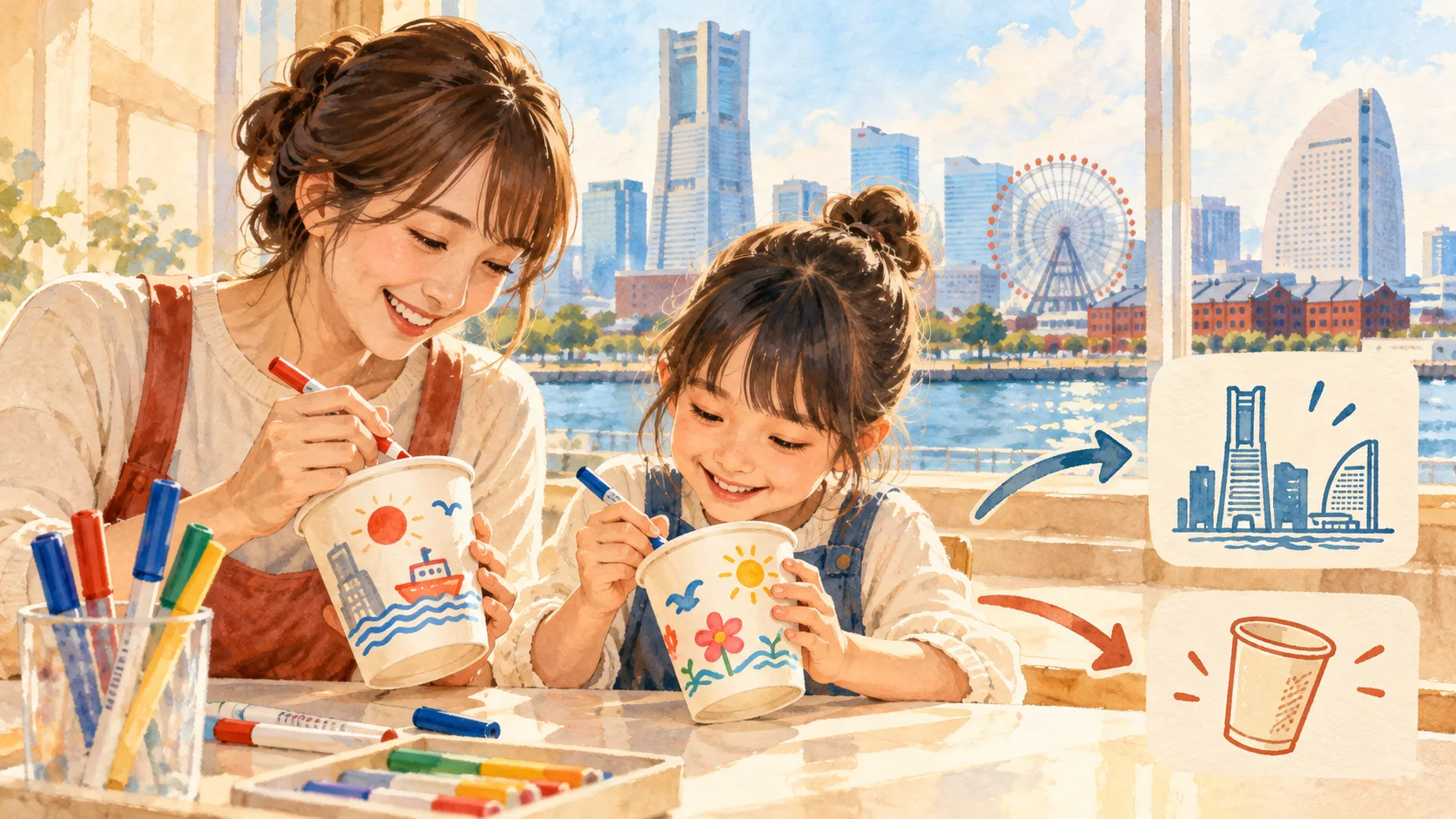
Cup Noodles Museum Yokohama lists adult admission, university students and above, at ¥500, with high-school students and below admitted free. Making each cup costs another ¥500. The official fee table separates admission from activities, so a child’s free entry does not include the cup they make. Two adults making one each pay 2 × 500 admission plus 2 × 500 for the cups, totaling ¥2,000. Visiting the exhibits without making anything requires only the applicable admission.
Making cup noodles requires a same-day numbered ticket or an admission ticket with participation voucher bought beforehand. The official participation procedure says same-day tickets are distributed in arrival order only if places remain. Advance tickets are limited, available until 24:00 the previous day, with no advance-sale allocation for the same day. A price on a webpage does not guarantee you can participate on arrival. If this is the child’s most anticipated activity, obtain the appropriate place before arranging lunch across town.
The museum’s making instructions estimate about forty-five minutes to completion, rather than the total time from station to departure. The visit-duration answer separately estimates about an hour for exhibits alone. For both, allow roughly two hours as a planning buffer, adjusting to the ticket’s time. Follow the stated storage instructions when taking the result home. A beautifully decorated cup still contains food and should not be treated only as a long-term display souvenir.
Museum ages, closing days and luggage: read the family rules again
Normal opening is 10:00–18:00, with admission ending at 17:00. The museum closes on Tuesdays, or the following day when Tuesday is a holiday; it also closes over the year-end/New Year period. Read the operating calendar and opening information before treating this as a spontaneous rain option that operates every day. The last check-in for making noodles differs from last museum entry. Arriving late, confirm availability and procedure rather than using one activity’s later time as every facility’s cutoff.
The official age answers impose no age limit on My Cup Noodles making. Chicken Ramen Factory accepts elementary-school pupils and older; Cup Noodles Park accepts children from age three through the end of elementary school, at least 90 cm tall. These are three activities with different qualifications. With a preschool child, choose suitable participation such as decorating a cup. Buying one activity does not mean you can automatically exchange it for another with a different age threshold.
The museum’s luggage and food rules say it cannot keep large suitcases or strollers that will not fit the lockers, and asks visitors not to bring in food or drinks. Hotel guests should store bags first and arrange lunch outside, making the family day easier. Choose among the museum’s three station approaches: approximately eight minutes on foot from Minatomirai or Bashamichi, and twelve from Sakuragicho. Those are official arrival estimates, without family preparation or stops along the way.
Use the official making video for the process, then check current tickets
The museum’s making page embeds a video from the Nissin Foods Group’s official channel, introducing cup drawing, soup and ingredient selection, and sealing. The museum’s written process also distinguishes choices made by visitors from steps handled by staff. Understanding the activity beforehand leaves more time to draw, instead of reaching the front of the line and only then discussing whether to participate.
The video explains the form of the experience; fees, limits and places that day follow current museum information and your order. With allergies, read the current soups, toppings and questions rather than treating a selection shown on video as guaranteed. If a child does not want to make anything, see exhibits or use the shop under the museum’s shopping answer. Being in the building does not require paying for every experience.
For families, follow this stop with lunch and a short waterfront section, then decide by energy whether to continue to Chinatown. Finishing one activity is more practical than hurrying to another distant facility before lunch. For a child more interested in characters, use the separate-day choices for Tokyo animation and character attractions to decide whether to stay in Tokyo all day instead. Indoor attractions in both cities do not have to share one Yokohama day.
The cable car is optional, rather than a shortcut guaranteed to operate
YOKOHAMA AIR CABIN links Sakuragicho and Unga Park. The official locations of its two stations show it serves just a small part of the harbor area. Under the Japanese fares and school-stage definitions, adults from junior high pay ¥1,000 one way or ¥1,800 round trip; children from three through elementary school pay ¥500 or ¥900. Under-threes ride free. Check the Japanese school boundary, especially for a twelve-year-old still in elementary school, rather than copying another facility’s adult category.
For a one-direction walk, a single journey fits more easily with continuing into Shinko. Two adults and an eight-year-old elementary pupil pay 1,000 × 2 + 500 = ¥2,500 one way; round-trip tickets cost 1,800 × 2 + 900 = ¥4,500, a ¥2,000 difference. The example uses AIR CABIN’s one-way and round-trip fares and only the cable tickets, without queue time or other bundles. Before buying round-trip tickets, decide whether you will actually come back to Unga Park; two directions are not automatically more useful.
The cable car’s official operating page displayed an all-day suspension due to strong winds when checked for this guide. That is the captured situation, not a permanent future closure. Weather and maintenance change operations, so retain walking or ground transport as a substitute. Children through elementary school cannot ride alone; each cabin needs at least one paying adult. With fear of heights or feeling unwell, skip it: the waterfront route still works.
Sky Garden is suspended: choose a night view that remains workable
Sky Garden is a stop where old guides can mislead. Landmark Tower’s current announcement states a temporary closure for major repairs, with reopening planned for 2028 or later and details awaiting a formal decision. That does not establish a particular opening date in 2028, and a 2026 itinerary should not retain buying a level-69 ticket as its main evening activity. After finding an old sightseeing route, check with the facility itself.
For harbor lights, weather-permitting Osanbashi or a waterfront walk can provide an uncomplicated option. For a view from your room, book a specified direction. Height, proximity to water and city lights offer different scenes: choose what you want before spending. Staying beside the harbor does not give every room a Ferris-wheel view, and the city panorama differs from a harbor view toward open water.
If the trip’s main purpose is Tokyo observation decks, art or boat trips, assign another complete period using the booking comparison for Tokyo views, exhibitions and cruises. Keeping this Yokohama evening for dinner and walking removes another weather-dependent reservation. For sunset, check the date’s time and fit the meal and return around it, rather than treating five o’clock as darkness throughout the year.
A rainy Yokohama plan: choose an indoor base and shorten the outside section
Separate weather that still allows short walks from strong wind and heavy rain. In the first case, keep one indoor activity, food nearby and short movements; in the second, concentrate on one commercial area or change the day. The noodle museum and Yokohama Station’s underground shops can be separate indoor bases, but transport still connects them. Do not describe the whole waterfront route as continuously covered.
With an activity ticket, read your own amendment and refund terms first: ordinary rain does not automatically refund every attraction. Without a booking, decide by checked openings rather than walking Osanbashi in strong winds just to keep the original plan. For shopping and food, check the east-side underground arcade’s businesses and hours before deciding to leave the harbor for tomorrow. A rain alternative need not become an even longer attraction list.
With a stroller, wheelchair or older companion, prioritize elevator exits and places to sit, including the final station-to-street section. New Grand’s access page distinguishes Motomachi-Chukagai exit 1 by stairs and exit 2 by elevator. The choice of exit affects the approach with bags or a stroller. This example applies to reaching that hotel; it does not establish step-free access along every harbor street.
A family day: set meals, rests and one activity first
Write down lunch, rest and the return before adding an activity the child wants. A morning at the noodle museum, lunch and a short warehouse or waterfront section are easier to adjust than also adding Motomachi purchases and the long platform. This is energy-management advice, rather than one compulsory routine for every age. If making noodles does not appeal, choose a free-form walk and keep the money for meals or accommodation.
Read each child definition separately. The noodle museum’s adult admission category starts with university students, while the cable car distinguishes age three and school stages. Railways also have age and school-entry exceptions. Minatomirai’s child table treats twelve and over as adults, but an elementary pupil under thirteen remains a child; at six before entering elementary school, the preschool category still applies. One operator’s “child” category should not determine every charge that day.
For a family restaurant, first check reservation availability, shareable portions and ingredients the child eats, then ask about high chairs and stroller storage. Cartoon characters in a photograph do not replace those checks. Accommodation likewise needs the true number of adults and children entered. Free bed-sharing has limits for age, people per bed and breakfast. Asking only after booking whether an extra guest fits can leave fewer options.
Where to stay: compare the dinner endpoint with tomorrow’s departure station
Choose the base by evening and morning needs. Sakuragicho suits JR connections to Tokyo and walking into Shinko; Minatomirai serves travelers wanting more harbor views and large commercial facilities; Yamashita Park and Motomachi-Chukagai allow a slow walk back after dinner. An early shinkansen still requires the connection to Shin-Yokohama. Being near Yokohama Station does not eliminate that movement.
Compare the same date, party, room and breakfast, then tax-inclusive totals and cancellation deadlines. A weekend, exhibition or event price does not represent the year, and a search result’s per-person minimum should not simply be doubled into a breakfast-inclusive double-room cost. An overnight’s value also includes luggage storage, a manageable walk after dinner and whether bags must travel across districts the following morning.
The following three hotels are compared only through officially checkable named categories and conditions, without a firsthand room score or live quote for a specific date. For a night view, put the direction in the chosen product; for a family, first check the child’s bed and charge. These needs can require different categories. A hotel facade or city label does not guarantee both.
| Hotel and category | Official specifications | Check before booking |
|---|---|---|
| Hotel Mets Premier Sakuragicho Superior Twin | 23 m²; one bed 120 cm wide and one 140 cm wide | Elementary pupils charged as adults; cancellation follows booking-conclusion date |
| New Grand main-building Grand Twin | 27 m²; listed for one or two | Different from tower view rooms; confirm bed-sharing, breakfast and actual guests |
| InterContinental Yokohama Premium 2 Singles | 38 m²; two 120×200 cm beds | City View and Harbor View face different directions; additional guests need checking |
Hotel Mets beside Sakuragicho: read the room and reservation date together
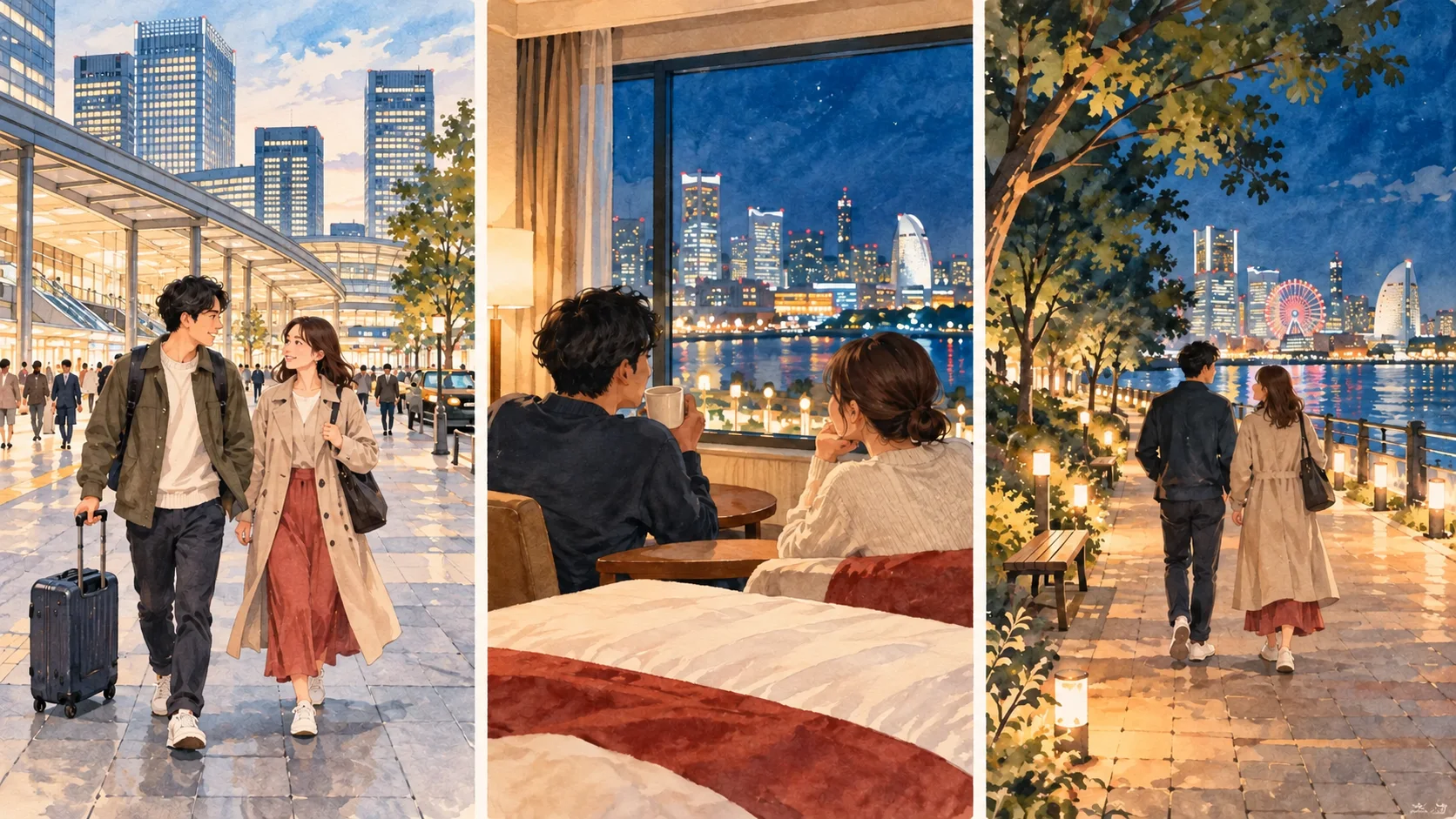
JR-East Hotel Mets Premier Yokohama Sakuragicho’s Superior Twin is 23 m² with beds 120 and 140 cm wide, listed for one to three guests. Every room has a bathroom washing area. The named category and bed widths help establish sleeping space before comparing prices. This is not a harbor view guarantee in every room: the hotel’s view answer says view rooms are limited and requests cannot be promised.
The room page’s child conditions allow one preschool child aged five or under to share each bed free. From Japanese elementary school, accommodation and breakfast are charged at adult rates. The hotel’s arrival and FAQ information gives about one minute from JR Shin-Minami’s City Hall exit, but that gate closes after 22:30; the west exit then means about two minutes on foot. For a late return after dinner, save the west-side route. Beside the station does not mean every gate stays open all night.
Cancellation particularly depends on when the reservation was concluded. For bookings made from October 1, 2026, up to seven people, the previous day, arrival day and no-show all incur 100%. For bookings made by September 30 of the same year, up to nine people, the previous day incurs 20%, and arrival day or no-show 100%. The two reservation-period tables also allow differences by channel and plan. Do not copy only the former 20% day-before fee; read your new booking’s final confirmation.
New Grand facing Yamashita Park: main building, tower and bed-sharing
Hotel New Grand can suit dinner around the Yamashita Park and Chinatown end. The main-building Grand Twin is listed at 27 m² for one or two guests. The tower has separate floor and view categories, including a 32 m² Bay View Hollywood Twin. For sea views, different beds or the historic building, open the particular product rather than treating a tower photograph as every room’s actual outlook.
According to the hotel’s child and stay answers, children through Japanese elementary school can share a bed without a room charge, with breakfast paid separately. Using a separate bed incurs the adult rate. This differs from Hotel Mets’s elementary-pupil charges. Confirm actual occupancy, beds available for sharing and breakfast with the full family registered. Free bed-sharing is not permission to omit a child from the reservation.
New Grand’s general booking FAQ gives cancellation at 20% the previous day, 80% on arrival day and 100% for no-show, with plan-specific conditions possible. Normal check-in is 14:00 and checkout 11:00; an individual plan’s times take priority. If you want a room after lunch, confirm your rate really allows 14:00 rather than using the brand’s general hours to contradict the order. Save the elevator approach from Motomachi-Chukagai exit 2 separately from stairway exit 1.
InterContinental: the Ferris-wheel city side differs from the harbor side
InterContinental Yokohama Grand’s official room introduction distinguishes City View toward the Minatomirai city side from Harbor View toward the port and Bay Bridge. For city lights from the room, check the booked direction. A harbor view does not automatically substitute for a Ferris-wheel view. If a product names the room without promising direction, ask the hotel or select a rate explicitly specifying the view.
The room specifications give Premium 2 Singles at 38 m² with two 120 × 200 cm beds; Classic 1 King is 31 m² with one 180 × 200 cm bed. Area and bed counts differ, so use the same category for a price comparison. Two Premium beds do not establish a free third adult or elementary pupil. Occupancy, extra bed, breakfast and available rates still need confirming at reservation.
This sort of stay suits travelers who include time in the room and its view in the itinerary. If you will be out all day and want only sleep after dinner, first compare station-side rooms and put the difference toward the experience that matters. Either choice can work when the category answers your needs. This guide does not rank service quality by stars, price or the official website’s adjectives.
Accommodation tax and totals: do not import another town’s number
For Yokohama accommodation tax, distinguish discussion, decision and implementation. The city’s June 30, 2026 press-conference transcript quotes the mayor saying a range of revenue sources, including accommodation tax, will continue to be studied. That does not announce an effective Yokohama rate, and the ¥350 mentioned about Hakone in the question cannot become a ¥350 nightly Yokohama surcharge. Keep the tax’s jurisdiction separate when changing cities.
Actual payment depends on your stay date, the current official system and the booking’s tax-inclusive total. Check local payments, whether charged per person or room, breakfast and child fees. This article does not infer permanent tax exemption from one press conference or add an unverified amount to the budget. Where platform and hotel differ, save the offer screen and ask the original booking channel to confirm what is due.
To compare staying in Tokyo and Yokohama, list the same night’s room price, round-trip transport and luggage-moving time, then add confirmed local charges. The itemized method for a Japan travel budget helps distinguish fixed admissions, variable rooms and personal allowances. An apparently precise daily average should not hide differences in cancellation and breakfast.
The second morning: choose Motomachi or Sankeien as the main theme
After Shinko on the first afternoon and dinner in Chinatown, browse Motomachi slowly or return to the water for a shorter second day. For a Japanese garden, plan Sankeien separately. It has its own admission, bus journey and visit time; it is not a free port park just across a street from Yamashita. Decide whether the garden is the trip’s purpose before assigning it the second morning.
Sankeien normally opens 9:00–17:00, with final entry at 16:30, and closes December 26–31. Individual admission is ¥900 for high-school students and above and ¥200 for elementary and junior-high pupils. The garden’s opening and admission conditions note possible changes for events and natural disruptions. Two adults and an eight-year-old elementary pupil pay 900 × 2 + 200 = ¥2,000. Transport, garden meals and other paid items are separate; that figure is not the family’s entire half-day cost.
Check Sankeien’s official arrival information and the current municipal timetable. Before using a ¥700 basic Minato Burari Ticket, read the restriction on intermediate stops between the harbor and garden zones. For an afternoon shinkansen or flight, calculate checkout, storage, returning for bags and station entry first. Without enough time, choose a short Motomachi walk rather than reducing the garden to a gate photograph and immediate departure.
Overnight luggage and bookings: resolve the inflexible parts first
After booking, confirm storage before check-in and after checkout and when bags must be collected, then arrange cup making and dinner. Hotel Mets lists storage before arrival and until 24:00 on the checkout date. The service’s same-day limit helps evaluate an evening departure, but does not apply automatically to every hotel or include long-term or refrigerated storage.
Day visitors need large-luggage arrangements too, especially when passing through between cities. The noodle museum’s large-item policy does not offer storage beyond locker capacity, and carrying bags along the waterfront affects energy and shopping. Compare the original Tokyo hotel, tonight’s Yokohama hotel and a confirmed storage point on one route. Before checking space, “the station will certainly have an available locker” is not a completed arrangement.
If Yokohama is your first stop after entering Japan, immigration, connectivity, baggage and transport can take longer than expected. Do not set an inflexible making session that first day. Use the arrival and connection sequence for Tokyo’s two airports to decide how much spare time to retain. Putting a strict booking on day two is more adaptable than betting a timed ticket on the fastest possible airport arrival.
One adult’s cost example: separate official unit prices and personal allowances
Suppose a visitor qualifying for the museum’s adult category buys a ¥700 basic harbor pass, ¥500 museum admission and one ¥500 cup-making activity: 700 + 500 + 500 = ¥1,700. Those unit prices come from the municipal basic ticket and the museum’s separate charges. This illustrates selected activities, not a claim that the pass must beat your single fares, and does not include a Tokyo round trip.
Then hypothetically allow ¥1,500 for lunch, ¥2,000 for dinner and ¥800 for water and snacks: ¥4,300 for food, or ¥6,000 including the earlier ¥1,700. These meal amounts are planning allowances, not a named restaurant’s menu quote. Add more for a full set meal, alcohol or repeated coffee stops. With an adult single cable-car ticket at ¥1,000, the example becomes ¥7,000, still excluding shopping, accommodation and Tokyo round-trip transport.
To spend less, first remove paid experiences that do not interest you or use only the single journeys actually needed, then choose acceptable meals. Averaging free waterfront space, paid activities and uncertain shopping does not prove everyone spends the same daily figure. For a more concrete food bill, choose the restaurant and menu before recalculating. Set a spending ceiling first, then decide whether the rest belongs to the room or souvenirs.
Two adults and a child: age changes individual budget items
For two adults and an eight-year-old elementary pupil, basic harbor passes cost 700 × 2 + 350 = ¥1,750. Museum admission is 500 × 2 = ¥1,000; three cups cost 500 × 3 = ¥1,500. These three items total ¥4,250. Free admission through high school and the charge per cup must be separated: free child entry does not cancel their making charge. If one adult watches without making, subtract ¥500.
Adding the family’s one-way cable-car journey at ¥2,500 brings those fixed items to ¥6,750. A hypothetical family lunch of ¥3,500, dinner ¥5,000 and water/snacks ¥1,500 gives a ¥10,000 food allowance and ¥16,750 day example. Food is a family-set budget, not a verified named restaurant product; Tokyo round-trip travel, shopping and accommodation remain excluded. For a second-day Sankeien visit, add admission and actual day-two transport rather than reusing yesterday’s day pass.
With an overnight, add room category, the child’s bed and breakfast individually. The elementary-child bed-sharing charges at Hotel Mets and New Grand differ, so a minimum two-adult rate is not automatically the three-person total. Put age, beds, breakfast and cancellation on one line to make the price difference meaningful. It also shows whether the overnight removes luggage movements and a late return, or merely adds a night without anything you want to do.
On event days, recheck roads, timetables and your own order
Major port events may affect buses, traffic, walking and hotel arrival. As an example close to this guide’s check, the Yokohama Marathon’s official traffic notice lists October 25, 2026 restrictions on ordinary roads around 6:30–15:30 and expressways around 4:00–16:30. Individual areas and bus changes require the detailed maps and notices. This is a specified date, not every road closing for every minute of the interval or a yearly rule for the same date.
Before leaving, check what can change the day: whether your booking remains valid, the facility opens, the transport you most want operates, the restaurant’s last-order time and the hotel’s record of every guest. Save addresses and orders that can be kept offline; electronic tickets requiring a live valid display need power and connectivity. Checking need not dominate the day: focus on leaving the hotel and before moving between districts.
If strong wind, closure or someone feeling unwell is already known that morning, choose the half-day or indoor version, protecting dinner and the return to your accommodation. Bring one main route, an acceptable shorter version and the checked departure station name. Harbor walks, food and shopping each have a suitable pace. Keeping time to sit down is more useful than completing another place that does not interest you.
A few useful answers
Is one day enough for a first Yokohama visit?
Concentrate on the harbor and Chinatown with one paid activity. For Motomachi, cup making and a leisurely dinner, a night gives more room. Keep Sankeien separate on day two rather than adding it to the waterfront walk.
Are Yokohama, Shin-Yokohama and Sakuragicho the same station?
No. Yokohama is a connection and shopping base, Shin-Yokohama has the shinkansen, and Sakuragicho suits walking toward Shinko. Use full station names for the first destination and return; “near Yokohama” does not mean walking distance.
Can a Yokohama day pass pay for the cable car?
The Minatomirai Line pass and basic Minato Burari Ticket compared here do not include AIR CABIN. Buy that separately, and compare different urban operators and Tokyo round-trip travel separately too.
Does making a cup cost only ¥500?
Each cup costs ¥500, but adult admission, university students and above, is another ¥500. High-school students and below enter free but still pay ¥500 for their cup. You also need a same-day numbered ticket or advance admission with participation voucher; places are not guaranteed.
Can I visit Landmark Sky Garden in 2026?
The current announcement checked for this guide lists a suspension, with reopening planned for 2028 or later and details undecided. A 2026 plan should not assume buying admission to level 69. Depending on weather, consider the waterfront or Osanbashi instead.
Must a Chinatown meal be all-you-can-eat?
No. Research Saiko Shinkan for shared Cantonese dishes, Shatenki Nigoten for breakfast or congee, and Kiyoken for a departure bento. Choose by meal, portion, ingredients and reservation rules first.
Can I travel on a screenshot of the Q SKIP meal ticket?
No. The valid travel screen is required; a QR screenshot or printout is invalid. Do not mark the food voucher used before showing staff. Refunds require the whole set unused and within validity, with a ¥220 fee.
Do all elementary pupils share beds free at Yokohama hotels?
No. Hotel Mets charges adult rates from Japanese elementary school. New Grand’s FAQ allows bed-sharing free through elementary school, breakfast extra; a separate bed is charged as an adult. Confirm category, every guest and your order’s conditions.
When does Osanbashi close at night?
The rooftop plaza normally opens free twenty-four hours, while the second-floor lobby is 9:00–21:30 and businesses keep their own hours. Weather, events and management restrictions need checking. Rooftop access does not make every indoor service available all night.
Is Yokohama still worth visiting in rain?
In light rain, choose one indoor activity, nearby food and short movements. Strong wind or heavy rain calls for one indoor district or another date. Check the noodle museum’s operating days and cable-car status; no continuous roof covers the whole harbor route.
Can the harbor pass be used for Sankeien?
The basic Minato Burari Ticket covers specified Sankeien-area stops, with restrictions on intermediate boarding and alighting between that zone and the harbor. Garden admission is separate. Check the municipal validity map and garden access instructions before departure.
Should I add ¥350 per person in Yokohama accommodation tax now?
The city press conference found for this guide concerns revenue research; ¥350 in the question refers to Hakone, not an effective Yokohama rate. Check the current official system for your stay date, included taxes and local payments shown in your booking.
Check with the source
Schedules, availability and rules can change. These official sources are the place to confirm details before you book.
- Yokohama Municipal Transportation: harbor day ticket and validity areas
- Yokohama Municipal Transportation: Akai Kutsu fares, route and official video
- Minatomirai Line: current fares, child categories and day pass
- Minatomirai Line: day-pass purchase and refund
- Minatomirai Line: official route and connection map
- YOKOHAMA AIR CABIN: fares, school categories and operating notices
- YOKOHAMA AIR CABIN: both station locations
- Yokohama Red Brick Warehouse: hours, free entry and events
- Yokohama Red Brick Warehouse: walking, buses and water transport
- Osanbashi: rooftop plaza and wooden-deck precautions
- Osanbashi: free access, opening and passenger-terminal distinctions
- Cup Noodles Museum Yokohama: opening, admission and activity fees
- Cup Noodles Museum Yokohama: making participation and official video
- Cup Noodles Museum Yokohama: age, bags and eating rules
- Cup Noodles Museum Yokohama: station walks and access
- Landmark Tower: Sky Garden temporary-closure announcement
- Yokohama Chinatown association: Saiko Shinkan
- Yokohama Chinatown association: Shatenki Nigoten
- Kiyoken: current Shiumai Bento price and contents
- Tokyu Q SKIP: Chinatown travel-and-food ticket restrictions
- Motomachi shopping street: official access and pedestrian hours
- Yokohama PORTA: east-exit underground shops and hours
- JR-East Hotel Mets Premier Yokohama Sakuragicho: rooms and stay rules
- JR-East Hotel Mets Premier Yokohama Sakuragicho: cancellation by booking date
- Hotel New Grand: named main-building and tower rooms
- Hotel New Grand: bed-sharing, breakfast, cancellation and arrival
- Hotel New Grand: station exits and Tokyo access
- InterContinental Yokohama Grand: view directions and room specifications
- Sankeien: admission, age categories and opening days
- Sankeien: public transport and arrival
- City of Yokohama: accommodation-tax discussion on June 30, 2026
- Yokohama Marathon 2026: October 25 traffic restrictions