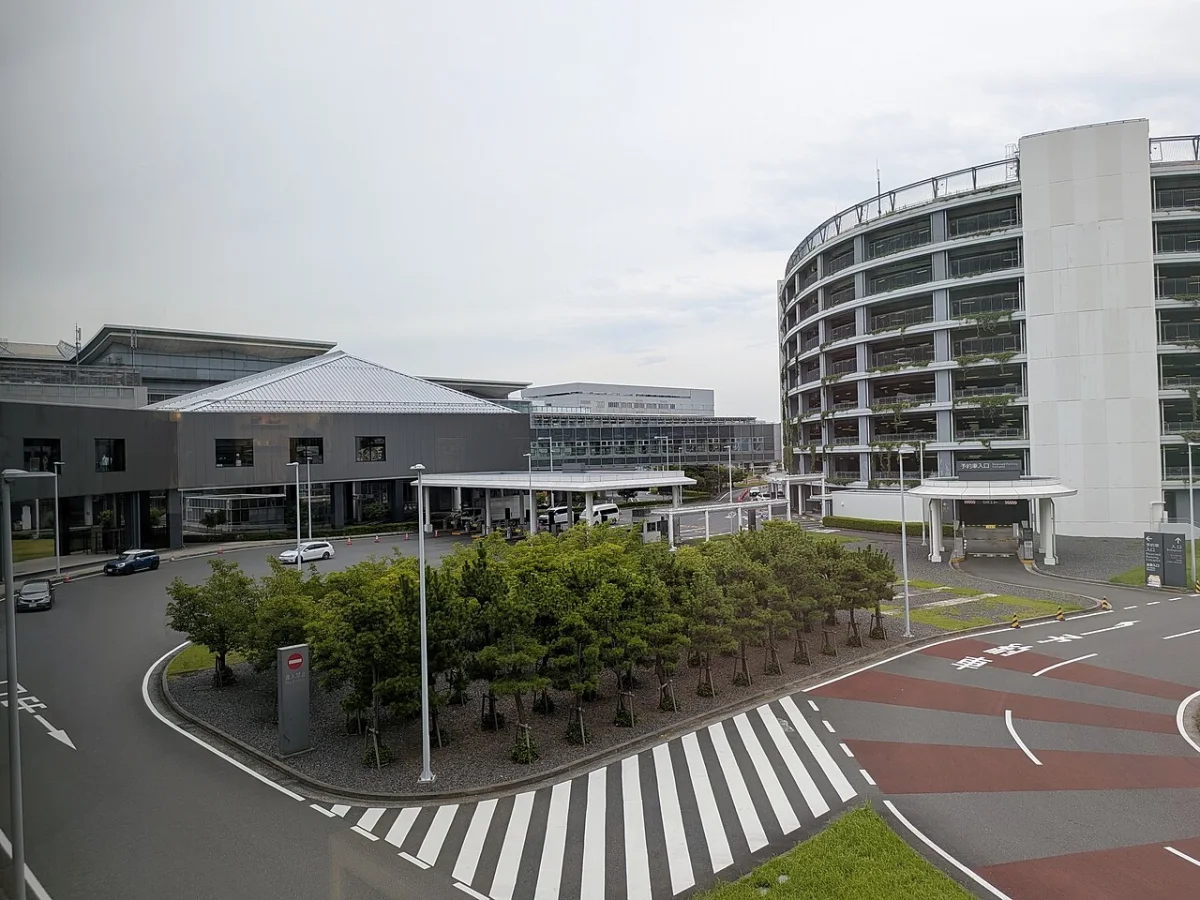
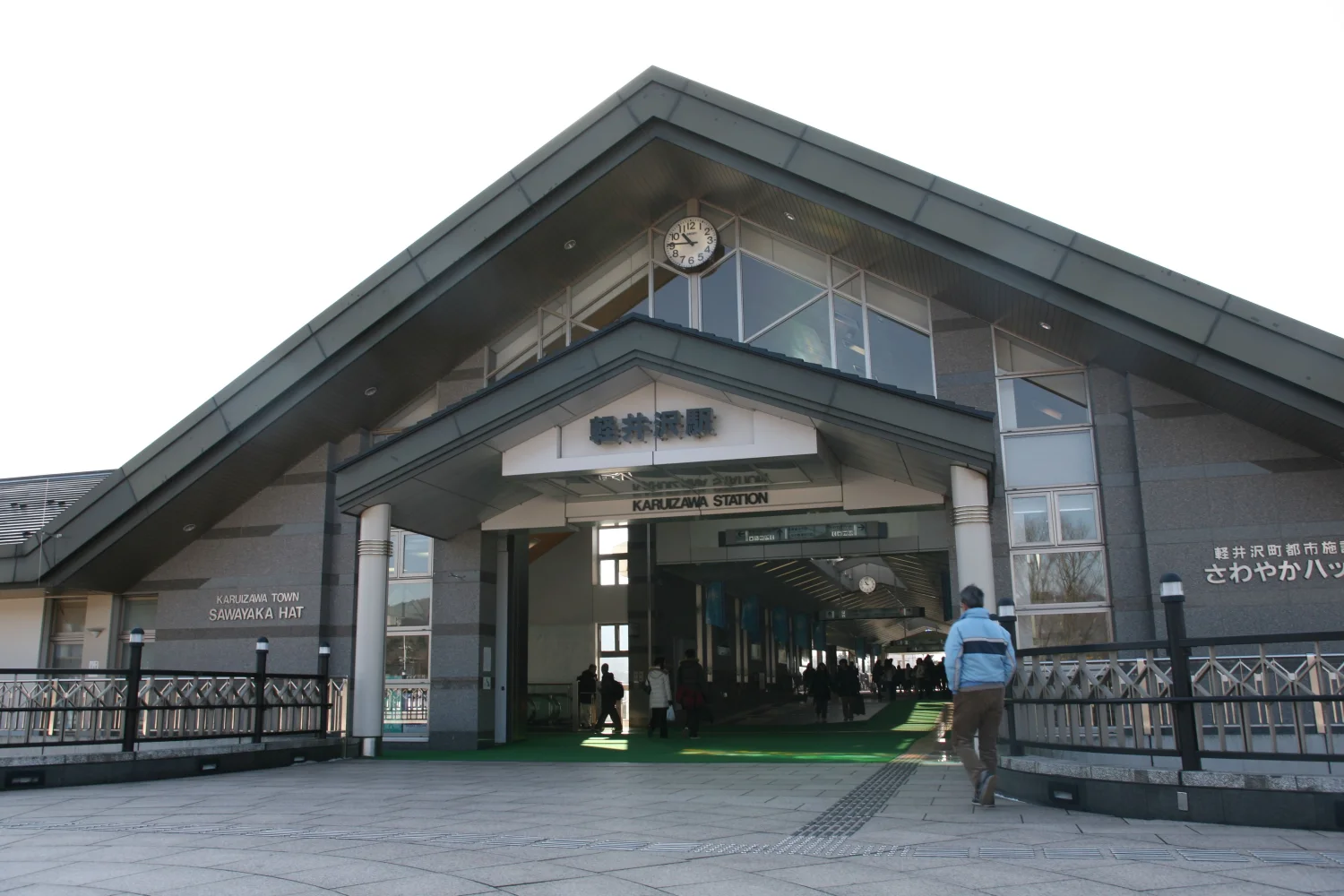
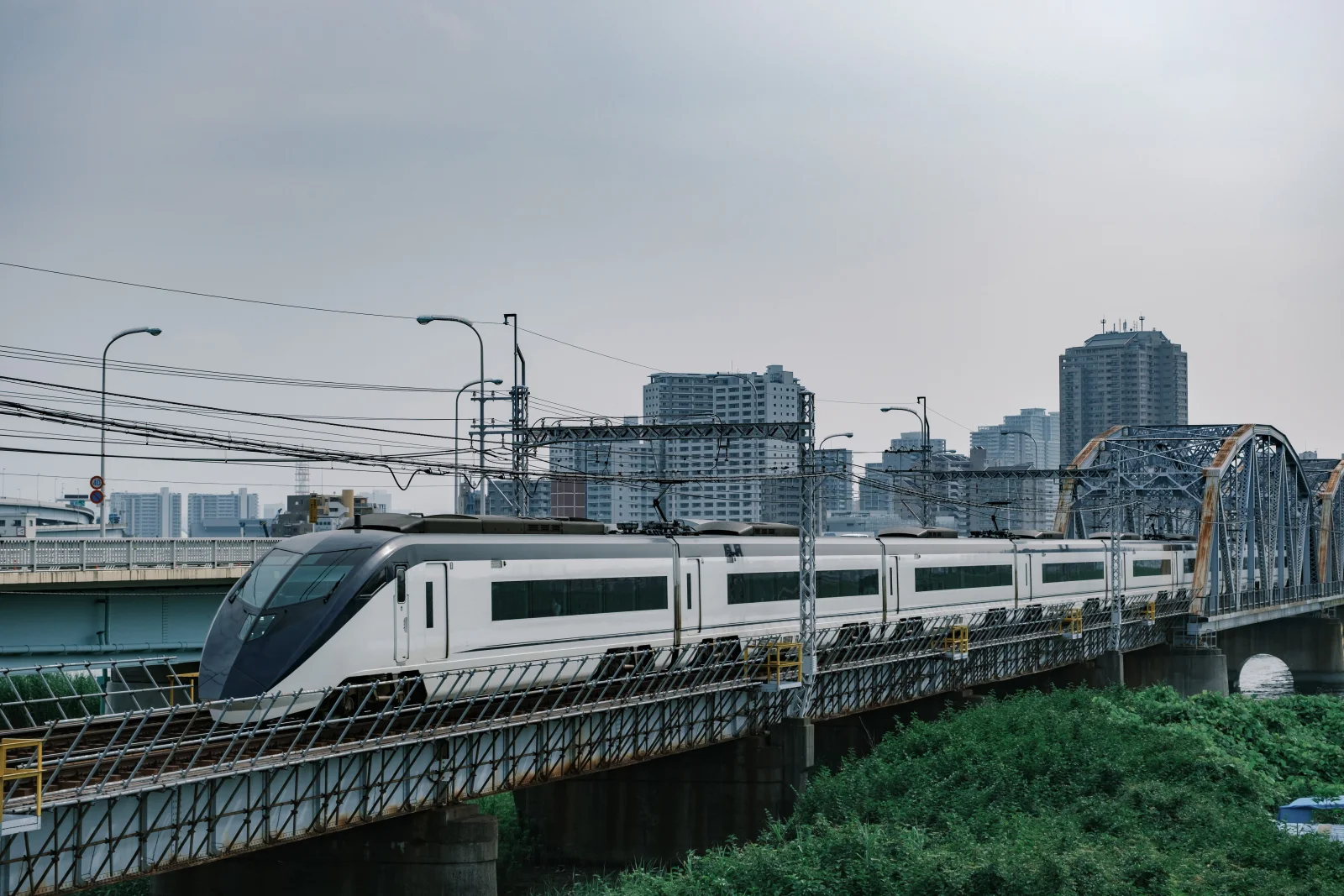
Staying in Shinjuku, Shibuya, Tokyo Station, or Yokohama? Learn N'EX one-way fares, the ¥5,200 14-day round-trip ticket rules, Terminal 3 station access, and what to do if you miss your train.
- Region & Focus
- TokyoTransportation and passes
- Reading Scope
- 19 min read · 10 chapters · 6 Q&As
- Official Verification
- 29 official sources checkedUpdated November 22, 2026
- Key Topics
- Rail travelAirport transfersBooking
Chapter Route Map (tap any stop)
- Match Your N'EX Stop to Your Hotel Location First
- One-Way Fares vs. the ¥5,200 Round-Trip Ticket
- The 14-Day Window, Travel Direction, and JR Transfers
- Buying Online, Airport Pickup, and Your First Seat Reservation
- Getting From All Three Narita Terminals to the Two JR Stations
- Flight Delays, Missed Trains, and Sold-Out Seats
- Seating With Kids, Wheelchairs, or Oversized Luggage
- Navigating Tokyo, Shinagawa, and Shinjuku Stations
- Red-Eye Arrivals, Service Disruptions, and Airport Bus Alternatives
- Already Have a JR TOKYO Wide Pass?
- Quick Q&A
The Narita Express (N'EX) runs directly from Narita Airport to Tokyo, Shinagawa, Shibuya, Shinjuku, and Yokohama, reaching Tokyo Station from Terminal 1 in as little as 53 minutes. One-way adult Ordinary Car reserved fares are ¥3,140 to Tokyo Station and ¥3,330 to Shinjuku. Non-Japanese passport holders arriving and departing Narita within 14 days can buy the ¥5,200 round-trip ticket. Before buying, match your hotel's nearest station exit for arrival and your departure terminal for the trip back—those two details determine which train and station you need.
Match Your N'EX Stop to Your Hotel Location First
Hotels near Shinjuku South Exit, Shibuya, or Shinagawa Station make the direct Narita Express (N'EX) convenient when rolling luggage. Check your booking's street address and nearest station exit before looking up train times. Properties with "Shinjuku" in their name are sometimes closer to Tochomae or Shinjuku-sanchome. Mapping the walk from the actual station exit to your hotel entrance—and comparing it with airport limousine bus drop-off points—gives a far more reliable sense of the walk than a booking site's "minutes from Shinjuku Station" claim.
Inbound N'EX trains split into two main branches: Shinjuku and Ofuna. Both stop at Tokyo Station; the Shinjuku branch continues to Shibuya, while the Ofuna branch serves Musashi-Kosugi, Yokohama, and Totsuka. Shinagawa sits on both routes, though some trains pass through without stopping. Select departures also make extra stops at Narita, Sakura, Yotsukaido, or Chiba. Expand the full stop list on the timetable and confirm an arrival time is listed for Shinagawa if you are staying there.
When a timetable lists a split service bound for both Ofuna and Shinjuku, two train sets couple together between Narita Airport and Tokyo Station before separating for their respective destinations. If you are heading to Shibuya, board the exact car number printed on your seat ticket at the airport so you don't end up in the Yokohama-bound half. If a family ends up booked in different cars, ask a ticket counter agent to check train numbers, destinations, and open seats to move everyone into the same section before entering the gates.
Near Tokyo Station, confirm whether your hotel sits on the western Marunouchi side or the eastern Yaesu side. N'EX arrives at the underground Sobu platforms, so heading out through the wrong side adds a long walk across the station complex. If you are transferring immediately to the Tokaido Shinkansen toward Nagoya or Kyoto and your N'EX stops at Shinagawa, include Shinagawa in your transfer search as well. The Tohoku Shinkansen toward Sendai transfers at Tokyo Station.
Yokohama Station and Shin-Yokohama Station are two separate hubs. Stay near Yokohama Station to take a direct N'EX; if you need the Shinkansen at Shin-Yokohama, plan a local transfer or change to the Tokaido Shinkansen at Tokyo or Shinagawa instead. Hotels in Minatomirai or Sakuragicho also require a short onward hop past Yokohama Station. For your return trip from Yokohama, N'EX typically departs from JR Platform 10—check the station departure boards on travel day for the exact train and time.
If you are staying in Ueno, check whether Keisei Ueno Station puts you within walking distance of your hotel, or take the Keisei Skyliner and transfer to JR at Nippori. Keisei advertises a fastest time of 36 minutes from Airport Terminal 2 to Nippori, while JR advertises 53 minutes from Narita Airport Terminal 1 to Tokyo Station. Those benchmarks measure different endpoints. Compare total door-to-door time from the same arrival terminal and immigration exit all the way to your hotel lobby, factoring in transfers and wait times.
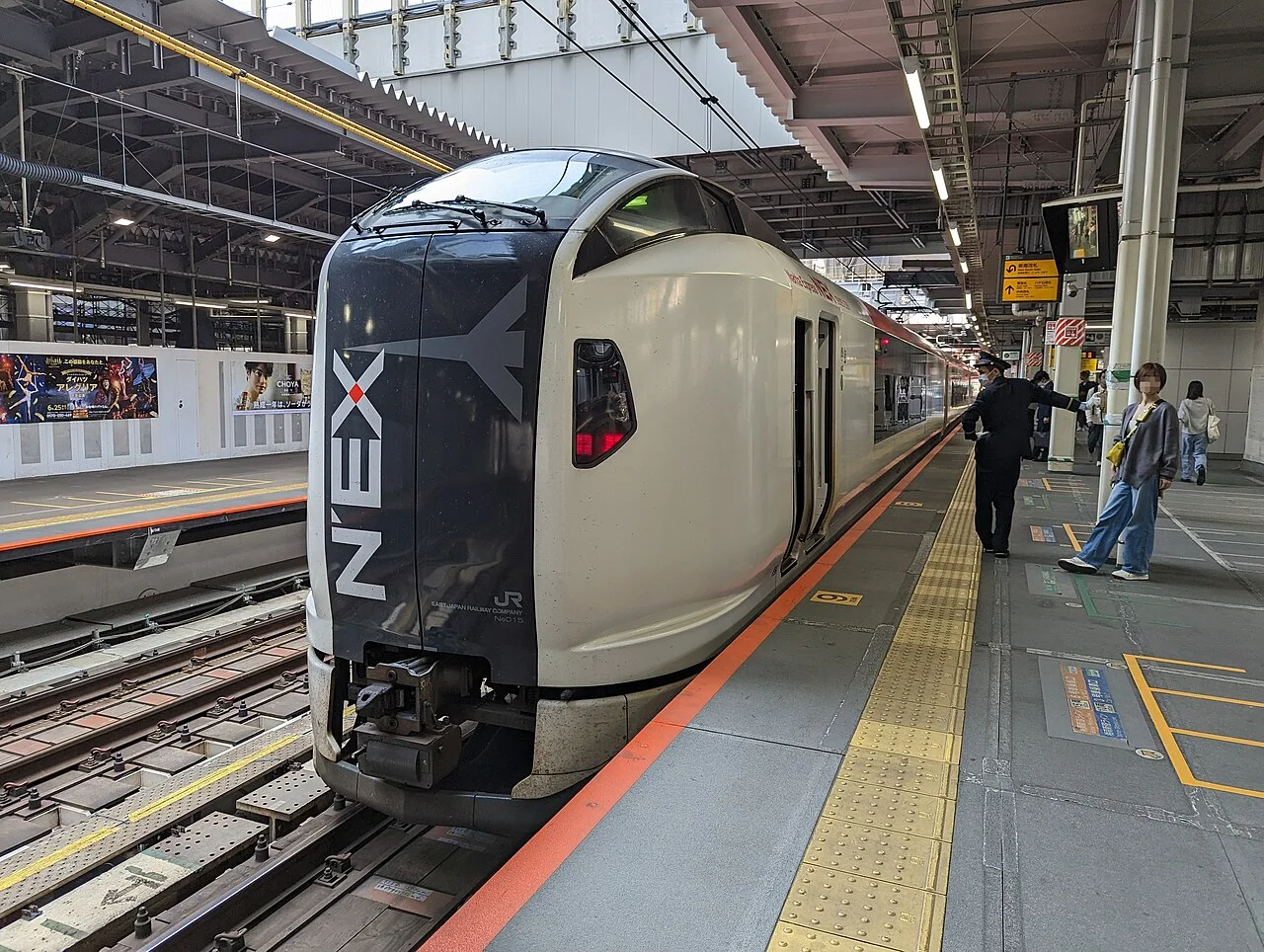
Staying in Shinjuku, Shibuya, Tokyo Station, or Yokohama? Learn N'EX one-way fares, the ¥5,200 14-day round-trip ticket rules, Terminal 3 station access, and what to do if you miss your train.
One-Way Fares vs. the ¥5,200 Round-Trip Ticket
The table below shows JR East's published adult Ordinary Car reserved-seat fares from either airport rail station (Narita Airport Terminal 1 or Airport Terminal 2). One-way totals combine the base fare and limited express surcharge. Compared with buying two separate one-way tickets to the same station, the round-trip pass saves ¥1,080 from Tokyo Station, ¥1,460 from Shinagawa, Shibuya, or Shinjuku, and ¥3,760 from Yokohama. Use those savings to weigh N'EX against Keisei or airport buses, especially if you only need N'EX in one direction.
If you take N'EX straight to Shinjuku on Day 1 and fly out of Narita on your last day—but plan to ride the Skyliner back from Ueno—buy a single ¥3,330 N'EX one-way ticket inbound and a separate Keisei ticket outbound. Conversely, if you stay in Shinjuku first and move to Yokohama for the end of your trip, riding N'EX both ways lets you use one round-trip pass. Two individual tickets would cost ¥3,330 plus ¥4,480 (¥7,810 total), or ¥2,610 more than the ¥5,200 round-trip ticket. Changing neighborhoods does not forfeit the discount because the pass allows different arrival and departure stations within the zone.
If you fly into Narita and depart from Haneda, just buy a one-way N'EX ticket to your hotel station. For direct airport-to-airport transfers, N'EX takes you to Shinagawa, where you can buy a Keikyu ticket to Haneda. Because the N'EX round-trip pass only covers return trips back to Narita, don't force it into an open-jaw itinerary.
For Green Car (first class), compare actual quoted totals directly. JR East lists a one-way Green Car fare to Tokyo Station at ¥3,910 versus ¥3,140 for an Ordinary Car. If you already hold the ¥5,200 round-trip ticket and want to ride Green Car, you must pay separately for both the limited express reserved-seat fee and the Green Car surcharge—your round-trip pass only covers the base fare portion on that segment. When booking online, selecting the express-ticket-only option prevents paying the base fare twice.
| Tokyo Area Station | One-Way | Two One-Way Tickets | N'EX Adult Round-Trip Ticket |
|---|---|---|---|
| Tokyo | ¥3,140 | ¥6,280 | ¥5,200 |
| Shinagawa, Shibuya, Shinjuku | ¥3,330 | ¥6,660 | ¥5,200 |
| Yokohama | ¥4,480 | ¥8,960 | ¥5,200 |
| Ofuna | ¥4,810 | ¥9,620 | ¥5,200 |
The 14-Day Window, Travel Direction, and JR Transfers
The N'EX TOKYO Round Trip Ticket is restricted to non-Japanese passport holders, and staff check your passport at pickup. It costs ¥5,200 for adults and ¥2,600 for children ages 6 to 11. You must use the outbound leg from Narita Airport into the city first, followed by the return leg from inside the valid zone back to Narita. If your trip starts in central Tokyo and your first N'EX ride is to the airport, you cannot use the pass in reverse order.
The 14-day validity period includes your chosen start date. For example, a pass activated on December 20 expires on January 2; returning on January 3 requires buying a separate ticket. If you plan to ride immediately upon landing, set your local Japanese arrival date as Day 1. On overnight flights, use your scheduled arrival date in Japan rather than your departure date so you do not burn a day of validity in the air.
After getting off the outbound N'EX, you can stay inside JR East's fare gates to transfer to another JR train within the designated Tokyo area at no extra base charge. On the return leg, you can enter at any JR station inside that zone and transfer to N'EX inside the gates. Staying in Ikebukuro, for instance, you can ride N'EX to Shinjuku, switch to the Yamanote Line inside the JR gates, and exit at Ikebukuro—and do the reverse on your way back to Narita. Check JR's official coverage map against your hotel route; switching to Tokyo Metro or private railways requires a separate fare.
If you step outside the JR fare gates at Tokyo Station to meet friends, buy food, or use lockers, your N'EX leg ends right there. Re-entering to reach your final stop requires a new local ticket. To meet someone en route, agree on a platform sign or transfer indicator inside the paid area. If they are coming from outside the station, meet outside the exit gates at your final stop so nobody pays extra or wastes time crossing gates twice.
Buying Online, Airport Pickup, and Your First Seat Reservation
Individual reserved seats can be checked and purchased through JR-EAST Train Reservation, or in person at a JR EAST Travel Service Center, JR Ticket Office (Midori-no-Madoguchi), or Reserved Seat Ticket Vending Machine. Seats generally go on sale one month before departure. At a counter, show your travel date, origin, destination, and party size along with your preferred train or time window. Because there are two airport stations, confirm your terminal before selecting a station.
To buy the round-trip pass online, select "Purchase a pass" on JR-EAST Train Reservation, then pick the N'EX TOKYO Round Trip Ticket and your start date. You can reserve Ordinary Car seats for both directions once plans are firm, or book the return leg early and pick your inbound train at the airport after clearing immigration. Book the return seat separately with the exact departure station, date, and airport terminal station—especially if you arrive and depart from different terminals. Groups should check available seats on a single train before deciding to sit together, split into pairs, or take the next departure.
Online round-trip passes must be picked up in paper form at Narita Airport Terminal 1 Station or Airport Terminal 2 Station (shared by Terminals 2 and 3). At both stations, JR Ticket Offices and passport-scanning Reserved Seat Ticket Vending Machines operate from 06:30 to 21:45. The JR EAST Travel Service Center runs 08:30 to 19:00 at Terminal 1 and 08:30 to 20:00 at Terminal 2. Walk-up purchases of the round-trip pass must go through the Travel Service Centers. If your flight lands after the Travel Service Center closes and you already bought online, head straight to the open ticket office window or passport-reading machine.
To use a passport-reading machine, bring your physical IC-chip passport along with your pickup QR code, pickup code, or the credit card used to pay. At a staffed counter, present your pickup code or original credit card together with your passport. JR's pickup rules require every traveler named on the booking to be present at collection, so gather outside the Travel Service Center before queuing at the machine or counter.
The QR code from the booking site is strictly for ticket collection, not boarding. Once paper tickets print out, verify the date, origin, train number, car, and seat, and keep each passenger's seat ticket paired with their fare ticket. Pass through the fare gates one person at a time and line up at the matching car mark on the platform. If you are leaving Tokyo for other regions before flying home, pick up your pre-reserved return seat ticket at a JR East station ahead of time so you don't have to queue on departure day.
For single rides, JR East also sells a ticketless "Express Train e-ticket (basic fare required)." This covers only the limited express surcharge; you pay the base fare with a Suica or compatible IC card (or a separate paper base-fare ticket). Make sure your IC card has enough balance, tap the same card in and out of the JR gates, and pull up your reservation online on board to verify your seat. Standard paper-ticket orders still require pickup, and the round-trip pass always uses airport paper pickup—you can only walk straight onto the train when you specifically buy the ticketless e-ticket.
Getting From All Three Narita Terminals to the Two JR Stations
Terminal 1 connects to Narita Airport Terminal 1 Station (Narita-kuko), while Terminal 2 connects to Airport Terminal 2 Station (Kuko Dai-2 Biru). Follow the train signs downstairs from the arrivals hall until you reach the fork between JR and Keisei, then head to the JR side for N'EX. At Terminal 1 Station, JR Track 1 handles most limited express trains and Track 2 handles Rapid services. At Airport Terminal 2 Station, both inbound and outbound JR trains share tracks—check the board to make sure you board a Tokyo-bound N'EX rather than following passengers onto a train going one stop back to Terminal 1.
Terminal 3 passengers also board at Airport Terminal 2 Station. You can walk with your luggage along the terminal's train signs and indoor access corridor, or take the free terminal shuttle bus from Terminal 3 North Exit 1 to Terminal 2 and follow the red signs down to the B1 rail gates. Walking avoids waiting for a bus, while the shuttle saves hauling bags; both routes end at the exact same JR station.
On your return to Narita, airport guidelines estimate a 5-minute walk from the train stations to Terminals 1 and 2, and about 10 minutes from Airport Terminal 2 Station to Terminal 3. Heading to Terminal 3 from the station, follow the blue signs on the first floor and take the escalator or elevator up to the second-floor connecting walkway. International check-in is on 4F at Terminal 1, 3F at Terminal 2, and 2F at Terminal 3. Factor terminal walks, elevators, and bag drop into your return schedule—the arrival time printed on your train ticket is only when the train pulls in.
When searching station names, watch out for "Narita Station," which sits in downtown Narita City well away from the airport. When booking systems distinguish between Narita Airport Terminal 1 and Airport Terminal 2, match the station to your flight's terminal. Travelers flying out of Terminal 3 frequently misbook Terminal 1 by mistake—double-check that your confirmation specifies Terminal 2/3 before paying. If you fly into one terminal and out of another, keep both station names alongside your flight numbers in your itinerary.
Flight Delays, Missed Trains, and Sold-Out Seats
Solo travelers with flexible schedules can easily wait until after baggage claim to buy an inbound ticket. If a group wants to sit together, pre-book a train while leaving realistic buffer time between touchdown, immigration, baggage claim, and ticket pickup. Immigration lines vary widely by flight. At Terminal 3, if your departure is minutes away and you still have to walk to Airport Terminal 2 Station to pick up tickets, booking the next train beats sprinting to a counter for a last-minute exchange.
Your JR-EAST Train Reservation account lists separate buttons to cancel a seat reservation or cancel the entire pass. If your flight is delayed—and both your round-trip pass and seat were booked on the same site without being picked up yet—you can cancel the seat reservation for free up to 6 minutes before departure and reserve a later train. Canceling the inbound seat leaves your return reservation intact. If paper tickets are already printed, take them with the original credit card to an eligible JR ticket counter.
Uncollected round-trip passes qualify for a full refund if canceled by 23:50 JST the day before the start date. After that deadline, online-eligible cancellations incur a ¥560 per-person handling fee on JR-EAST Train Reservation. To refund an entire unused pass, cancel before the first reserved train departs—no refunds are issued after departure. Canceling the pass automatically cancels any seat bookings attached to it.
For regular one-way reserved tickets bought on the same site, the free cancellation cutoff is 21:00 JST the day before travel. Within the remaining online cancellation window after that cutoff, the fee is ¥320 per person for the reserved-seat ticket, plus ¥220 per person if a base-fare ticket was purchased in the same order. Travelers who bought only the Express Train e-ticket to pair with Suica have no paper base-fare ticket to refund.
If your reserved train has already left, JR East policy lets you board a later N'EX on the same day, on the same route, and within the same fare bracket using any unreserved empty seat in an Ordinary Car. Your seat assignment does not carry over, so you must move if a passenger with a reservation for that seat boards. If you have not bought a ticket yet and want same-day flexibility, buy a "Non-Reserved Seat Ticket" (Zaseki Mishi-teiken) for the same price as a standard reserved express ticket: you can claim an open seat for free once you pick a train on the day of travel, or stand in the vestibule if the car is full.
If a delay pushes you past the last N'EX of the night, pull up live Keisei and airport limousine bus schedules and buy a separate ticket for whatever is still running. Getting into Tokyo is only half the battle—if you land at Keisei Ueno, verify that connecting metro or local lines are still operating to your hotel. If you end up staying overnight near the airport and heading in the next morning, rebook for the new travel date and keep your original confirmations and paper tickets to explain unused segments at a JR counter.
Seating With Kids, Wheelchairs, or Oversized Luggage
The N'EX round-trip child fare (ages 6 to 11) is ¥2,600. Children 5 and under ride free on an adult's lap, though booking their own reserved seat requires a child ticket. On standard one-way fares, a single adult or child traveler may bring up to two infants/toddlers for free; a third young child requires a child ticket. Decide who needs an individual seat before searching inventory—two adults with two kids can easily book two adjacent pairs in the same car rather than skipping an available train just to find four seats in a single row.
Large suitcases go in the dedicated luggage racks near each car's doors with no reservation required. The racks have combination dial locks, and both doors and storage areas have security cameras. Keep your train tickets and passport in a small bag at your seat rather than locking them inside a suitcase. Take out kids' snacks, jackets, or charging cables before boarding so you don't block the doorway repacking. Every seat has a power outlet, making it easy to load transfer maps for Shinagawa or Tokyo Station during the ride.
If you travel with a common suitcase model, tie a bright strap to the handle so it stands out. When seated away from the doors, remember which end of the car holds your bags and walk over after the second-to-last stop. Boarding from intermediate stations like Shibuya or Shinjuku, snap a photo of your car number and line up at the matching platform marker—rolling multiple bags along the outside of the train at the last second holds up passengers getting off.
JR East's standard carry-on allowance is two bags per person, each up to 250 cm in combined length, width, and height, at most 2 meters on the longest side, and up to 30 kg, provided you can carry them yourself without blocking aisles. Airline check-in acceptance for ski bags or oversized trunks does not override rail limits. If you are connecting to the Tokaido Shinkansen at Tokyo or Shinagawa with baggage measuring 161 cm to 250 cm in total dimensions, follow JR Central's oversized baggage rules and book a seat with an oversized baggage area.
N'EX trains feature wheelchair-accessible spaces and spacious accessible restrooms. If you need boarding assistance, a wheelchair space, or adjacent companion seating, tell the JR ticket agent your boarding, transfer, and destination stations when buying tickets so staff can coordinate the route. Estimate transfer times around elevator locations. At Shinjuku, for instance, a wheelchair transfer to the Yamanote Line typically routes along the Saikyo/Shonan-Shinjuku platform and up the south concourse elevator with station staff guidance.
Navigating Tokyo, Shinagawa, and Shinjuku Stations
For Narita-bound N'EX trains at Tokyo Station, follow signs for the "Sobu Underground" platforms. JR station maps place Narita Express on Underground Sobu Tracks 1 to 4, completely separate from the Keiyo Line underground complex heading to Maihama. Entering from the Yaesu side, head for the Sobu Underground area first and check the departure board for your track. Arriving from Narita to catch a Shinkansen, head upstairs toward the Tokaido or Tohoku/Joetsu/Hokuriku Shinkansen transfer gates. JR maps list a standard transfer time of 15 minutes between the Sobu/Yokosuka platforms and the Shinkansen—add extra minutes for heavy bags, elevators, or picking up Shinkansen tickets.
At Shinagawa, JR East lists an 8-minute standard transfer between the Sobu/Yokosuka tracks and the Shinkansen. If you are heading west toward Kansai and your N'EX stops at Shinagawa, check transfer connections at both Tokyo and Shinagawa to see which gives you more breathing room. Westbound Tokaido/Sanyo Shinkansen trains toward Kyoto typically depart from Tracks 23 and 24—confirm your train number on the gate displays. For Haneda Airport, follow the Keikyu Line signs and purchase that airport segment separately.
At Shinjuku, N'EX uses Tracks 5 and 6. From street level, enter via the New South Gate, Koshu-kaido Gate, or Miraina Tower Gate—all three are marked as step-free routes to Tracks 5 and 6 on JR's station map. Entering from the north side of Shinjuku Station adds a substantial trek across the complex. If transferring from the Yamanote Line, check the connecting corridor and elevator signs early. Having paper tickets already in hand lets you head straight for the platform without stopping at a ticket counter.
Staying near Sakuragaoka or Shibuya Stream? Enter Shibuya Station via the southern New South Gate and follow signs to the Saikyo/Shonan-Shinjuku platform used by N'EX. Coming from Dogenzaka, compare the walking distance to the Hachiko Gate versus the New South Gate. If you switch hotels on departure day and store bags in lockers, pin the exact gate name (New South Gate/Shinnan-guchi or Hachiko Gate) on your map so you don't walk out the wrong exit and lose your lockers.
If you arrive via Shinjuku and depart from Tokyo Station, save separate station maps on your phone for each leg. Arrival is simply getting off the train, clearing the gates, and walking to your hotel; departure reverses the problem—finding the right entrance from the street and reaching the airport-bound platform with luggage. Accommodation maps often mark only one exit, so check both the street entrance and your car boarding marker before setting your departure alarm.
Red-Eye Arrivals, Service Disruptions, and Airport Bus Alternatives
For early-morning landings, start from your arrival terminal, look up the first N'EX of the day, and verify when ticket pickup counters open. If you reach the station before counters open, compare JR Rapid trains, Keisei services, or buses already running. With heavy bags and a Shinjuku hotel, grabbing breakfast in the terminal while waiting for the first direct N'EX can beat hauling luggage through a transfer at Nippori—just factor that meal and wait into your hotel arrival time if you have morning plans.
On JR East's December 2026 weekday schedule, evening N'EX departures from Terminal 1 for Ofuna and Shinjuku leave at 20:44 and 21:44—one hour apart. If your luggage doesn't come off the belt until 21:30, ticket machines stay open until 21:45, but you still have to reach B1, print your tickets, and board before the 21:44 departure. If you land at Terminal 2 or 3, check the Airport Terminal 2 Station timetable instead.
Holiday schedules can also add temporary stops to search results. JR East's winter timetable shows select N'EX trains making extra stops at downtown Narita Station from January 1 to January 3, 2027. That can offer a direct ride if you booked a hotel in Narita City, while airport-bound passengers from Tokyo should simply stay on board until their ticketed airport terminal station.
Partial suspensions and full-line shutdowns require different detours. During JR tunnel construction in November 2026, for example, N'EX trains turned around at Tokyo Station—keeping Narita-to-Tokyo running while suspending direct service to Shinjuku and Ofuna. Whenever you see a service notice, check JR East's live train status and timetable for your exact travel date. If trains stop at Tokyo Station, look for onward JR city lines; if disruptions hit the Narita end, check Keisei and airport bus departures instead.
If an Airport Limousine Bus stops directly at your hotel, boarding at the terminal eliminates dragging bags from underground platforms up to street level. Conversely, if the bus only serves a distant hub or skips your terminal, factor in the extra walk or taxi ride. With two large suitcases, verify the bus carrier's baggage limit and exact stop list so you have a ready backup for rain, late-night landings, or rail closures. Road traffic affects bus times, so keep a rail fallback in mind if you have a strict check-in cutoff.
To cut costs near Tokyo Station, compare the AIRPORT BUS TYO-NRT. Standard adult one-way fares from Narita to Tokyo Station are ¥1,500 versus ¥3,140 on N'EX—a ¥1,640 savings. Inbound buses drop off at Tokyo Station's Nihombashi Exit, while airport-bound buses board at Stops 7 and 8 outside the Yaesu South Exit. If you trade N'EX speed for the lower fare, measure the walk from the Nihombashi Exit to your hotel and leave extra buffer time if you have a reserved long-distance train connection.
Work backward from your airline's check-in deadline for the return leg. Narita Airport recommends arriving at least 2 hours before international flights, and you still have a walk from the rail station to the terminal counters—longer via the Terminal 3 corridor. If a search leaves you cutting it close, book an earlier train and grab breakfast or shop past security instead. Coming from Yokohama, Ofuna, or Shinjuku, run a backup search via Tokyo Station to see if switching to an earlier N'EX there gets you to the airport sooner.
Already Have a JR TOKYO Wide Pass?
The JR TOKYO Wide Pass costs ¥16,000 for adults and covers 3 consecutive days of travel, including reserved Ordinary Car seats on the Narita Express within its valid area. If you arrive and head to Shinjuku on Day 1, visit Nikko on Day 2, and take another regional day trip on Day 3—an itinerary that already justifies the pass—your inbound N'EX ride is covered at no extra charge. If you fly out on Day 6, just buy a single return ticket rather than adding an N'EX round-trip pass on top of an already covered arrival leg.
On the other hand, if you spend your first two days inside Tokyo and start side trips on Day 3, activating the pass at Narita will waste coverage and force you to pay out of pocket for a long-distance return on Day 5. Price out both options by totaling your planned side trips, transfers, and airport legs. Because the pass runs on consecutive calendar days, travelers hoping to cover a Day 5 airport return should count backward to find the ideal activation day.
If you hold a wider JR East rail pass covering the Narita corridor, simply bring the pass to reserve your N'EX seats. Paper tickets, IC cards, and rail passes each work differently at the fare gates, so double-check which one you are tapping or inserting before stepping up. For itineraries mixing Haneda and Narita or splitting stays across neighborhoods, compare routes in our Tokyo Airport Arrivals and Rail Passes guide before locking in your N'EX tickets.
A few useful answers
Can I just tap a Suica card at the gate to ride the Narita Express?
A Suica card covers the base fare, but you still need a separate limited express ticket. When you buy JR East's ticketless Express Train e-ticket, you can tap your IC card through the gates and sit in the seat shown on your online reservation.
With the N'EX round-trip pass, can I return from a different station than I arrived at?
Yes. You can take the inbound train from Narita to Shinjuku and return from Yokohama to Narita, for example. Just reserve each leg separately and complete the return trip within the 14-day validity window.
Can I pick up an online N'EX round-trip pass at Shinjuku Station?
No. Online round-trip passes must be collected at Narita Airport Terminal 1 Station or Airport Terminal 2 Station. Bring your passport to a JR ticket office or a passport-reading Reserved Seat Ticket Vending Machine.
My flight departs from Terminal 3. Which station should I book on the N'EX?
Book Airport Terminal 2 Station (Kuko Dai-2 Biru), which serves both Terminals 2 and 3. From the station, follow the indoor walkway or take the free airport shuttle bus to Terminal 3.
If I miss my reserved N'EX train, can I still sit in my original seat on the next one?
You can ride a later N'EX on the same day, along the same route, and within the same fare zone by taking any open Ordinary Car seat. Your original seat reservation does not transfer, so you must give up the seat if a ticketed passenger arrives.
Does the N'EX round-trip ticket cover travel all the way to Ofuna?
Yes, Ofuna is included in the round-trip pass zone. On arrival, board a train scheduled to stop at Ofuna; for the return trip, choose an Ofuna departure bound for Narita Airport.
Official information and references
Sources used in this guide.
- JR East Narita Express Route Map, Onboard Facilities, and FAQ
- JR East N'EX Ordinary and Green Car Fares, Reserved and Non-Reserved Tickets
- JR East N'EX TOKYO Round Trip Ticket Pricing, Pickup, and Refund Rules
- JR-EAST Train Reservation Changes, Cancellations, and Refunds Guide
- JR-EAST Train Reservation Pass and Paper Ticket Collection Guide
- JR East Ticketless Express Train e-ticket User Guide
- JR East Policy for Missed Reserved-Seat Limited Express Trains
- Narita Airport Rail Station to Terminal Walking Times
- Narita Airport Terminal 2 Station to Terminal 3 Walkway and Shuttle Guide
- Narita Airport International Departures and Check-In Guidelines
- JR East Narita Airport Terminal 1 Station Map
- JR East Airport Terminal 2 Station Map
- JR East Tokyo Station Map and Standard Transfer Times
- JR East Shinagawa Station Map and Standard Transfer Times
- JR East Shinjuku Station Map and Accessible Transfers
- JR East Shibuya Station Map and Exit Guide
- JR East Yokohama Station Map
- JR East Narita Airport Terminal 1 Station Timetables
- JR East December 2026 Weekday N'EX Timetable from Narita Airport Terminal 1
- JR East Narita Express Winter Timetable and January 1, 2027 Temporary Stops
- JR East Narita Express Service Status and Suspension Updates
- JR East Yokosuka and Sobu Rapid Line Tunnel Work Partial Suspension Notice
- JR East Carry-On Baggage Rules
- JR Central Tokaido Shinkansen Oversized Baggage Policy
- JR TOKYO Wide Pass Validity Dates and Coverage Area
- Keisei Electric Railway Skyliner Route and Fastest Travel Times
- Airport Limousine Bus Routes and Timetables
- Keisei Bus AIRPORT BUS TYO-NRT Fares and Timetables
- AIRPORT BUS TYO-NRT Tokyo Station Stop Locations