The Hokuriku Shinkansen runs from Tokyo to Karuizawa in about an hour for ¥5,600 unreserved. Compare reserved seats, the JR Tokyo Wide Pass, Shinjuku/Ikebukuro/Shibuya buses, driving Usui Pass, and station exits.
- Region & Focus
- TokyoTransportation and passes
- Reading Scope
- 24 min read · 11 chapters · 8 Q&As
- Official Verification
- 28 official sources checkedUpdated November 22, 2026
- Key Topics
- Rail travelBookingItineraries
Chapter Route Map (tap any stop)
- Check Shinkansen Stops First, Then Pick Tokyo, Ueno, or Omiya
- Fares Start at ¥5,600 One-Way: When Is a Reserved Seat Worth It?
- e-Tickets, Suica Cards, and How to Split Up at the Gates
- JR Tokyo Wide Pass Math: Look at Your Other Rides
- Highway Buses from Shinjuku, Ikebukuro, and Shibuya
- North Exit or South Exit Lockers: Let Your Last Stop Decide
- Give the Hoshino Area Half a Day; Plan Return Buses from Shiraito Falls
- Drive Straight to Karuizawa or Detour via Usui Pass to Megane Bridge
- Yokokawa Bus Transfer over Usui Pass: Read Both Timetables Together
- Ski, Autumn Foliage, and Summer Escapes: Where to Pad Transit Time
- Day Trip, Overnight, or Kusatsu Onsen: Plan Your Return Leg by Endpoint
- Quick Q&A
For a day trip from Tokyo to Karuizawa, the Hokuriku Shinkansen is the fastest option by far. From Tokyo Station, an Asama train or a Hakutaka service stopping at Karuizawa gets you there in just over an hour for ¥5,600 one-way in an unreserved ordinary car. Staying near Shinjuku or Ikebukuro and willing to trade half a day for lower fares? Look at the Chikuma Line highway bus. Only rent a car if you plan to hit Usui Pass, the Hoshino Area, and spread-out sights in one day. Once your outbound ride is locked in, map out your arrival exit and return train together--especially if you have ski lessons or a connecting bus to Kusatsu Onsen.
Check Shinkansen Stops First, Then Pick Tokyo, Ueno, or Omiya
Direct Hokuriku Shinkansen trains from Tokyo Station reach Karuizawa in about 1 hour to 1 hour 20 minutes. When searching fares, enter Tokyo to Karuizawa directly and pick an Asama train or a Hakutaka train that stops at Karuizawa. Kagayaki trains run on the same tracks, but they skip Karuizawa altogether. At a ticket counter, asking for Karuizawa is clearer than just saying Nagano. On station departure boards, check the train's stop list for Karuizawa before queuing up.
JR East's Tokyo Station timetables list the Hokuriku Shinkansen separately from the Tokaido Shinkansen. Coming off the subway or a local JR line, follow the Shinkansen signs pointing toward Hokuriku and Nagano. If it is your first time navigating Tokyo Station, you need to pick up paper tickets, or you are rolling luggage toward elevators, build extra transfer time into your meeting plan. If your outbound ticket says Ueno, head straight to the Ueno Shinkansen gates. Keep a screenshot of your booking on your phone showing at least your departure station, departure time, train number, and seat.
Staying around Ueno or Okachimachi? Search departures from Ueno. If you are in Saitama or can reach Omiya faster than Tokyo Station, search from Omiya. Always search using the exact station where you plan to board so the system filters out trains that do not stop there. Starting at Tokyo Station gives you one clear perk: many trains originate there, making it easier to line up early for unreserved seats. From Shinjuku, factor in the crosstown ride to Tokyo or Ueno, especially with family and suitcases. Because the same train departs these three stations at different times, drop the train number into your group chat if everyone is boarding separately.
When comparing two trains, look at the Karuizawa arrival time. If you have ski lessons, a hotel shuttle, or a Kusatsu bus booked, place that departure time side by side with your train arrival and add walking time to the North or South Exit. Staying overnight with no timed reservations? Pick whatever train lines up cleanly with hotel checkout. On the way back to Tokyo, if you are catching a flight or connecting to the Tokaido Shinkansen, pick the train that leaves the widest transfer buffer. Check the JR East Tokyo Station timetable for separate weekday and weekend/holiday columns, and use the Karuizawa Station timetable for trains back toward Omiya and Tokyo.
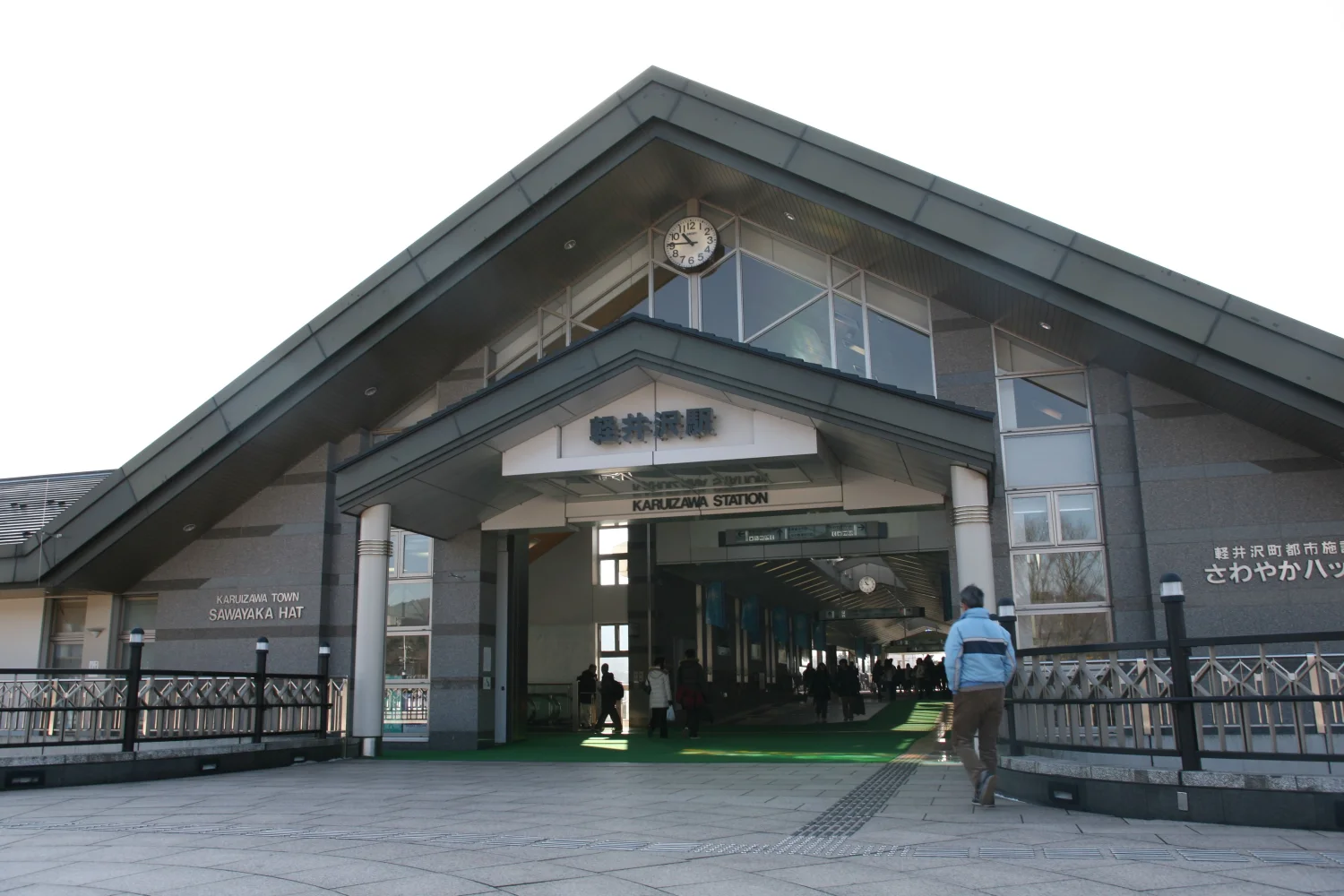
The Hokuriku Shinkansen runs from Tokyo to Karuizawa in about an hour for ¥5,600 unreserved. Compare reserved seats, the JR Tokyo Wide Pass, Shinjuku/Ikebukuro/Shibuya buses, driving Usui Pass, and station exits.
Fares Start at ¥5,600 One-Way: When Is a Reserved Seat Worth It?
Following JR East's March 14, 2026 fare revision, an adult one-way ticket from Tokyo Station to Karuizawa Station is ¥5,600 for an unreserved ordinary car seat and ¥6,130 for a regular-season paper reserved ordinary seat (¥2,750 base fare plus ¥3,380 limited express surcharge). Using the basic Shinkansen e-Ticket cuts ¥200 off the reserved surcharge, bringing the regular-season fare to ¥5,930, while unreserved e-Tickets match the ¥5,600 paper price. Departures from Ueno or Omiya and peak or off-peak reserved seasons carry their own rates.
A standard round-trip from Tokyo Station runs ¥11,200 unreserved. On regular-season dates, two paper reserved seats total ¥12,260, and two basic e-Ticket reserved seats total ¥11,860. Compare transit options on an apples-to-apples basis first, then tack on subway fares to the station and local transit inside Karuizawa. If you see both ¥5,600 and ¥6,130 quoted, both cover the full single ride to Karuizawa. Paper tickets sometimes print as two separate slips (base fare and express surcharge), though reserved-seat ticket machines can issue both together.
Unreserved seats work best if your schedule is flexible, you travel light, and your group does not mind splitting up. Boarding at Ueno or Omiya means competing for seats with passengers who got on at Tokyo Station. Trying to save ¥530 only to leave kids or older relatives standing in the aisle during rush periods rarely pays off. For a compromise, reserve seats outbound to hit timed activities and take an unreserved train back. Year-end holidays and extra seasonal trains sometimes alter which cars are unreserved, so check platform markers and your booking screen before lining up.
Reserved seats at station ticket machines generally go on sale at 10:00 AM JST one month before travel. On busy weekends, treat outbound and return bookings separately: prioritize arrival time going out, and focus on adjacent seats coming home. If a popular train only has scattered single seats left, shift your search one train earlier or later and decide whether more time in town or sitting together matters more. On a one-hour ride, ordinary cars are plenty for most travelers. If you are hauling skis or snowboards over the New Year break, reach the platform early and spot your car boarding line so you are not sprinting with long gear bags at departure.
e-Tickets, Suica Cards, and How to Split Up at the Gates
Either a physical Suica card or Mobile Suica can serve as your boarding pass. Purchase and pay for your Shinkansen e-Ticket first, then link each seat to its own transit IC card or Mobile Suica. Every traveler taps their own card at the gate, so anyone managing a group booking on one phone still needs to assign each person's card number individually. Even unreserved e-Tickets require advance purchase and card linking. Regular stored-value Suica balances cover Tokyo's local trains, but riding the Hokuriku Shinkansen requires a linked Shinkansen ticket.
Transferring from a local JR line to the Shinkansen? Tap the same linked IC card at the Shinkansen transfer gate. Entering directly from outside Tokyo Station? Tap the linked card straight onto the Shinkansen ticket gate. If you rode a local train using a paper ticket, feed the paper ticket into the transfer gate first, then tap your linked IC card. A Shinkansen e-Ticket only covers the booked Shinkansen stations; local rides from your hotel to the station are charged separately. If an adult is holding cards for kids, hand each child their own card before stepping up to the gates. Double-check the departure station and date before tapping in, especially when family members are boarding from different stations and sharing screenshots.
Families booking together who prefer handling everything at the station can pick up paper tickets from a reserved-seat machine or counter. Keep outbound and return tickets in separate pockets, and buy Shinano Railway tickets separately once you arrive in Karuizawa. If you book online, verify whether your product is a card-linked e-Ticket, a paper ticket requiring machine pickup, or a rail pass seat reservation. Pickup rules, schedule changes, and refund terms depend on where you bought the ticket, whether it has been printed, and how close it is to departure. If your return plans might shift, check the change deadline right on the booking screen rather than relying on a generic refund rule. The JR East Shinkansen e-Ticket guide details fares, IC card linking, and paper ticket handling.
JR Tokyo Wide Pass Math: Look at Your Other Rides
The JR Tokyo Wide Pass costs ¥16,000 for adults and ¥8,000 for children ages 6 to 11, valid for 3 consecutive calendar days for travelers holding non-Japanese passports. It covers the Hokuriku Shinkansen ordinary cars between Tokyo and Karuizawa, including reserved seats. It also covers select non-JR lines shown on the JR East Tokyo Wide Pass page route map. Once in Karuizawa, onward rides on the Shinano Railway to Naka-Karuizawa, local town buses, and Kusatsu Onsen buses cost extra.
If you are only doing a Tokyo-Karuizawa round-trip, the pass leaves a ¥3,740 gap compared with regular-season paper reserved tickets, or a ¥4,140 gap against basic e-Ticket reserved seats. Map out your full itinerary first and see if other eligible rides within the same 3-day window cover that difference. Staying overnight in Karuizawa and spending two days on foot around town usually means only one round-trip from Tokyo--an extra night does not add pass value on its own. If day 3 already includes Nikko via eligible JR lines or designated through-trains, add that fare before deciding.
Combining Karuizawa and Echigo-Yuzawa on one trip involves two different Shinkansen lines out of Tokyo: the Hokuriku and the Joetsu. You can connect between them at Takasaki based on same-day schedules by checking Karuizawa-to-Takasaki and Takasaki-to-Echigo-Yuzawa separately. If transferring makes for an exhausting dawn-to-dusk day, split them across two days. Because the 3-day pass runs on consecutive calendar days--starting Friday means Sunday is day 3--a Monday return requires a separate ticket. If you also have airport transfers at either end, list the exact dates and eligible lines before picking your activation day.
Buying the pass and reserving seats are two separate steps. Once you hold the pass, you still need to book your specific reserved seats, and pickup or display rules vary by sales channel. Keep your physical passport handy if local verification is required in Japan. Two travelers booking the same leg under separate logins will likely end up in different rows, so reserve seats together. To compare eligible routes and plan a 3-day loop, check our JR Tokyo Wide Pass guide.
Highway Buses from Shinjuku, Ikebukuro, and Shibuya
From Busta Shinjuku or Ikebukuro, check Seibu Bus's joint-operated Chikuma Line and select departures stopping at Karuizawa Station Mae. The Chikuma Line page mixes Ueda and Saku services in the same chart, so locate Karuizawa Station Mae first and read upward along that column to check Tokyo pickup stops. For example, the published Karuizawa 1 departure leaves Shinjuku at 06:45, Ikebukuro Station East Exit at 07:15, and reaches Karuizawa Station Mae at 10:12--about 3 hours 27 minutes from Shinjuku or 2 hours 57 minutes from Ikebukuro. Later buses may skip either Ikebukuro or Shinjuku, and select departures leave from Ikebukuro Sunshine City Prince Hotel.
Seibu adult standard one-way fares between Shinjuku or Ikebukuro Station East Exit and Karuizawa fall into three price tiers (A, B, and C): ¥2,900, ¥2,600, and ¥2,400. Paying online via Hassha O-rai Net drops those to ¥2,840, ¥2,550, and ¥2,350. Different departures on the same day can use different tiers, with the fare calendar and tier chart posted together on the operator's site. Some Seibu services continue to Prince Hotel West, Hoshino Onsen Tombo-no-yu, or Naka-Karuizawa, letting you step off closer to your hotel or destination without transferring at the station. See the Seibu Bus Chikuma Line timetable and fares.
From Shibuya, the Tokyu and Keio Karuizawa-Kusatsu Line boards at Shibuya Mark City 5F Stop 91, with a pickup at Nakano-sakaue as well. Official schedules checked for the route show an outbound 09:20 Shibuya departure reaching Karuizawa Station at 12:35, while the 08:20 Keio departure runs straight to Kusatsu. Coming back, a 16:30 Keio bus departs Karuizawa Station, whereas the evening Tokyu departure on that table skips Karuizawa. Peak-season buses may detour via Prince Hotel West or Tokyu Harvest Club Kyu-Karuizawa, so check your exact stop list on the booking page.
The Shibuya route is all-reserved, with bookings opening one month ahead. Adult online fares to Karuizawa run ¥3,000 to ¥3,500, while counter and onboard fares are ¥3,500. If you want dinner in Karuizawa without rushing for the 16:30 bus, take the bus out and ride the Shinkansen home. Travelers staying in western Tokyo near Tachikawa can also look at the Chikuma Bus Tachikawa Line, which runs from Tachikawa Station North Exit via Tamagawa-josui to Karuizawa Station North Exit. Check arrival and return times in both directions before committing to a pickup point. View Tokyu Bus schedule and booking info.
When the Chikuma Line sells out, check Shoei Kotsu's Dotcom Liner. Its timetable lists daytime departures from Busta Shinjuku stopping at Karuizawa Station North Exit and Naka-Karuizawa. The North Exit bus stop sits a short walk past the station plaza intersection, and different operators use different bays around the North Exit, so follow the exact stop listed on your ticket for the return trip. Note that Shoei's overnight Nagano buses run via Matsumoto and Azumino and do not stop in Karuizawa. If you need morning slopeside time, take an early Shinkansen or stay in Karuizawa the night before.
For a bus day trip, write down your arrival and return boarding times side by side. Arriving at 10:12 and leaving at 16:30 gives you 6 hours 18 minutes station-to-station, including locker drops, lunch, and getting back to the stop. Arriving at 12:35 leaves under 4 hours, which works best if you stick to one walkable zone. Weekend highway traffic happens, so leave plenty of slack before your first timed booking. Taking the bus up and the Shinkansen back is a practical middle ground that trims transit costs while keeping your evening free.
North Exit or South Exit Lockers: Let Your Last Stop Decide
A classic day trip starts at the North Exit for Kumoba Pond and Kyu-Karuizawa Ginza, then finishes at the South Exit for Karuizawa Prince Shopping Plaza. The loop path around Kumoba Pond is roughly 1 km. Walking from the North Exit to the old town adds a stretch along Karuizawa Hondori; if you walk slowly or want to save your legs, take a bus out to Kyu-Karuizawa and walk back via Kumoba Pond to the station. Traveling with a stroller? Use the station elevators down to the North Exit. In rain or icy winter conditions, browse the covered shops along the main street first and save Kumoba Pond for a drier day.
Karuizawa Prince Shopping Plaza lists a roughly 3-minute walk from the South Exit, though reaching specific wings from the first entrance takes longer. If you are shopping with bags, pick the two wings you care about on the directory map and check where lockers sit inside the complex. Heading back to the North Exit for a return bus later? Stash bags in North Exit lockers so you can board straight from there. Spending the whole afternoon on the south side before catching the Shinkansen? Leave bags somewhere along your path back to the station. Inside the North Exit ground-floor building Sawayaka Hut, coin lockers line both the east and west sides with rates tiered by size. On hotel checkout day, use hotel luggage storage if available, then factor pickup time into your return train booking.
Bringing skis or a snowboard on the Shinkansen? JR East's standard free carry-on limit allows up to two pieces per person, each under 30 kg, with length plus width plus height totaling 250 cm or less and a standard max length of 2 m. Sports equipment must be packed in a dedicated bag and stored upright if it exceeds standard length limits. Hokuriku Shinkansen luggage racks do not require reservations--just place items in designated onboard spaces. When boarding with both ski bags and hard-shell suitcases, check rack space first before settling into your seat. Taking a highway bus with gear? Review the luggage policy of the exact operating carrier listed on your ticket. For a single day on the slopes, renting gear at the resort lets you travel light with just clothes and protective wear.
Before an evening train back to Tokyo, agree at lunchtime where your bags are stored, where to grab snacks, and which side of the station to meet at. Once return seats are reserved, it is easy to underestimate the time needed to retrieve luggage. If you are eating before departure, use the first South Exit mall entrance or a specific North Exit bus bay as your meetup spot. Staying in Kyu-Karuizawa with an early Shinkansen the next morning? Drop your bags at the station right after checkout rather than backtracking later.
Give the Hoshino Area Half a Day; Plan Return Buses from Shiraito Falls
To reach Harunire Terrace and Tombo-no-yu, board a Seibu Kanko bus at Karuizawa Station North Exit Stand 1 for the roughly 20-minute ride to Hoshino Onsen Tombo-no-yu. Multiple routes share that stop, so check the destination sign on the bus before boarding. Alternatively, ride the Shinano Railway one stop (about 5 minutes) to Naka-Karuizawa and walk about 17 minutes from its North Exit to the Hoshino Area. That adds up to roughly 22 minutes of transit and walking, plus wait time for the connection. If your hotel reservation includes shuttle instructions, follow the pickup bay on your confirmation; day-trippers can follow the standard public routes on Hoshino's access page.
There are no coin lockers in the Hoshino Area. If you arrive from Tokyo with overnight bags, drop them at Karuizawa or Naka-Karuizawa Station before heading over for lunch and hot springs. If you plan to ride back from Naka-Karuizawa to Karuizawa for the Shinkansen anyway, storing bags at Karuizawa Station prevents backtracking. Eating dinner around Hoshino? Cross-check the last return bus against your Shinkansen departure and build buffers on both ends. If the last bus leaves too early, take the Shinano Railway from Naka-Karuizawa or call a taxi--taking a cab straight from Hoshino to Karuizawa Station also cuts out an extra bag transfer.
For Shiraito Falls, catch a Kusakaru Kotsu bus from Karuizawa Station North Exit bound for Shiraito-no-taki, or a Kita-Karuizawa or Kusatsu bus that stops at the falls. A short footpath links the bus stop to the waterfall, while traveling onward between the falls and Kyu-Karuizawa requires a separate bus leg. Pairing only the falls and old town? Visit the falls first and ride the bus back down to Kyu-Karuizawa in time for lunch. During snowy weather, Kusakaru Kotsu suspends service along the Shiraito Highland Way when roads close. If you are already in Karuizawa on a closure day, pivot to Kyu-Karuizawa and the outlet mall instead of waiting on mountain buses.
Drive Straight to Karuizawa or Detour via Usui Pass to Megane Bridge
Drivers from Tokyo typically take the Kan-Etsu Expressway to Fujioka JCT, merge onto the Joshin-etsu Expressway, and exit at the Usui-Karuizawa IC into town. Set your GPS to your exact first parking lot. Shopping at the outlets? Pull into the lot closest to your target wing. Heading to the Hoshino Area? Set your destination to Hoshino Onsen Tombo-no-yu. Hoshino's official site estimates about 25 minutes from Usui-Karuizawa IC, and also notes an ETC-only route via Sakudaira Smart IC. You can check toll rates between interchanges on NEXCO East and budget them separately from rental, fuel, and parking fees. Splitting costs among four people makes driving attractive, though factor in driver fatigue and car pickup/return time; if your group is staying strictly around the station, driving from Tokyo rarely saves much walking.
Usui-Karuizawa IC, the Usui Bypass, and the National Route 18 Old Road each refer to different roads. To see the Usui Third Bridge (Megane Bridge), set your GPS to the Megane-bashi parking area in Annaka City, Gunma, reached via the National Route 18 Old Road. From Tokyo, exit the Joshin-etsu Expressway early at Matsuida-Myogi IC to visit Yokokawa and Megane Bridge before continuing into Karuizawa. The Old Road is winding and parking beside the bridge is tight; if you want a longer walk, park near Lake Usui or Kumanodaira. Stopping just for the bridge and a short tunnel walk fits easily into a daytime break. Walking the full Abt Road (Apt-no-michi) between Yokokawa and Kumanodaira covers roughly 6.3 km one-way--Annaka City lists about 125 minutes outbound and 96 minutes back, which calls for half a day.
When the Shinkansen between Takasaki and Nagano opened in 1997, the old Shin-etsu Main Line section from Yokokawa to Karuizawa closed. Abt Road preserves the bridges, tunnels, and Former Maruyama Substation from an even earlier rack-railway era over the pass. At Megane Bridge, you can view the brick arches from roadside or follow Annaka City's trail map right onto the top of the bridge deck. City guidelines note that tunnel lighting runs from 07:00 to 18:00; in autumn or winter afternoons, pick a short section you can finish before dark. Rail fans can start at the Usui Pass Railway Heritage Park right next to Yokokawa Station at the foot of the pass.
When renting a car in winter, reserve snow tires and confirm how to fit tire chains if needed. NEXCO East flags the stretch between Shimonita and Usui-Karuizawa for sudden weather shifts. Even when Tokyo is clear and dry at departure, mountain roads can ice over by late afternoon. If road alerts close the Old Road or nobody in your group has winter mountain driving experience, skip Megane Bridge for another trip and stick to the main expressway or take the Shinkansen. Already on the road and still hoping to detour? Keep GPS detours clear of closed roads and make reaching the expressway interchange before nightfall your turnaround rule. Check the NEXCO East winter driving guide for tire, chain, and winter road advisories.
Yokokawa Bus Transfer over Usui Pass: Read Both Timetables Together
Rail history fans with half a day or more can ride JR trains from Tokyo to Takasaki, transfer to the Shin-etsu Main Line to Yokokawa, and board JR Bus Kanto's Usui Line over the pass to Karuizawa Station. Because you transfer at both Takasaki and Yokokawa, jot down your Yokokawa bus departure before leaving Tokyo and work backward to pick the right train out of Takasaki. If your only goal is reaching Karuizawa, a direct Shinkansen skips two transfers. If you specifically want to see the Railway Heritage Park in Yokokawa, take an earlier train, grab lunch in Yokokawa, and ride the bus up into the mountains. This route works without a rental car, and if you take the Shinkansen back to Tokyo, you never have to backtrack to Yokokawa.
The standard Usui Line connects Yokokawa Station and Karuizawa Station nonstop between endpoints. To get off at Megane Bridge, look at the separate Megane Bus column on JR Bus Kanto's timetable. Because it runs only on select operating days, verify the calendar first and save both outbound and return stop times. On days without Megane Bus service, walk along Abt Road from Yokokawa and turn back. Carrying luggage through the pass into Karuizawa? Leave big bags in Tokyo or ship them ahead to your Karuizawa hotel so you are not hauling them on the trail. See the JR Bus Kanto route page for both schedules.
Ski, Autumn Foliage, and Summer Escapes: Where to Pad Transit Time
On summer and autumn foliage weekends, lock in whichever train leg everyone must make on time first. If your arrival connects to a fixed lunch reservation or hotel shuttle, book an outbound reserved seat. If your return connects to evening plans in Tokyo, aim one train earlier than the absolute last option and leave time to collect luggage before dinner. Just strolling the North Exit and shopping at the South Exit? Knock out the outdoor North Exit loop first, then move to the outlet mall in the afternoon where it is easy to cut shopping short or linger. Here mainly to shop? Save your favorite stores along the path back toward the station and skip the detour to the old town in the morning.
Karuizawa Prince Hotel Snow Resort sits about a 10-minute walk from Karuizawa Station South Exit, with a free, unreserved seasonal shuttle linking the South Exit and the ski center. For the 2026–27 ski season, the resort lists October 31, 2026 to March 31, 2027 for the Ski Center and East area, with the West area scheduled for December 19, 2026 to March 22, 2027. If your trip revolves around a specific beginner slope, lift, or kids' snow park, confirm which areas are open on your travel dates. Arriving by highway bus at Prince Hotel West? Factor in the walk or shuttle from the hotel to the rental counter and ski school meetup spot.
On mornings with ski lessons, finish changing, rentals, and finding your instructor before class starts. Splitting up with non-skiers in your group? Skiers should head straight to the slopes with their gear and check-in details, leaving shoppers free for breakfast or browsing around the South Exit. Returning rental gear and changing out of boots takes time at the end of the day, so book a return Shinkansen comfortably after lessons end. Skiing two days in a row or traveling with toddlers who need afternoon naps? Stay on the South Exit side or along the ski shuttle route so you are not hauling gear back and forth from Tokyo. Compare summer stays, old-town walks, and ski lodging in our Karuizawa town and ski itinerary guide.
Day Trip, Overnight, or Kusatsu Onsen: Plan Your Return Leg by Endpoint
On a Shinkansen day trip, jot down three trains in your itinerary: your outbound train, your target return train, and one later fallback train. That later option is your safety buffer--just exchange reserved tickets before boarding if plans slip. Ending your day at the South Exit? Pick a final restaurant or shop along the walk back to the gates instead of dashing from the far end of the outlet park. Ending at the North Exit or Hoshino Area? Put local bus times on the same schedule sheet. Looking for the last train? Karuizawa Station timetables mark train names, final destinations, and operating-day notes so you can pick services running all the way to Tokyo.
For an overnight trip, a smooth flow is dropping bags on arrival from Tokyo, exploring Kyu-Karuizawa or the outlets on day 1, and spending half of day 2 in the Hoshino Area. Book your afternoon return train based on how long it takes to retrieve your bags, using your hotel and station locations to pick the best locker spot. Staying in Naka-Karuizawa? Leave time for the Shinano Railway or bus ride back before your Shinkansen. In winter, hotel shuttles serve different Prince Hotel entrances, so check the full hotel name on your booking confirmation rather than looking for any bus marked "Prince." If your hotel sits far from the station, consider getting off an inbound highway bus near your hotel and taking the Shinkansen home.
Continuing the next night to Kusatsu Onsen? From Karuizawa Station North Exit, check Kusakaru Kotsu buses running via Shiraito Falls and Kita-Karuizawa, or Seibu Kanko buses via Naka-Karuizawa and Hoshino toward Manza. Routes, stops, and travel times differ, and several Kusakaru Kotsu buses turn around at Shiraito-no-taki. Overnight guests should prioritize direct buses to Kusatsu Onsen Bus Terminal, then plan the final walk or hotel shuttle from there. Do not book a tight transfer between a mountain bus and a Tokyo-bound Shinkansen; if you want a relaxed lunch in the hot spring town, look up direct buses back to Tokyo from Kusatsu instead. Check our Kusatsu Onsen stay guide to compare distances between Yubatake, the bus terminal, and hotels.
Trying to cram Megane Bridge, the Hoshino Area, Shiraito Falls, and Kyu-Karuizawa into one day means chasing four separate bus and train schedules; staying one night makes the pace far easier. Coming in from Yokokawa on day 1? Visit Megane Bridge outdoors in daylight and spend the evening near your hotel. On day 2, pick either the Hoshino Area or Shiraito Falls based on the bus schedule, then finish with shopping by the South Exit or an easy bag pickup at the station. With only one day and a stroller, use Karuizawa Station as your midday rest hub between the North Exit old town and South Exit outlets. Both Shiraito Falls and the Hoshino Area require separate return transit down from the hills, so giving just one of them a full half-day is usually plenty.
A few useful answers
Which Shinkansen goes from Tokyo to Karuizawa?
Take the Hokuriku Shinkansen Asama or a Hakutaka train that stops at Karuizawa. Direct trains from Tokyo Station take about 1 hour to 1 hour 20 minutes. Kagayaki trains do not stop at Karuizawa.
How much is the Shinkansen from Tokyo to Karuizawa?
For adults between Tokyo and Karuizawa stations, an unreserved ordinary car seat is ¥5,600 one-way, a regular-season paper reserved ticket is ¥6,130, and a basic Shinkansen e-Ticket reserved seat is ¥5,930. A round-trip on regular-season e-Ticket reserved seats costs ¥11,860.
Does the JR Tokyo Wide Pass cover the trip to Karuizawa?
Yes. It covers the Hokuriku Shinkansen on this route, including ordinary car reserved seats. The pass costs ¥16,000 for adults and is valid for 3 consecutive days. Local Shinano Railway rides to Naka-Karuizawa and town buses require separate fares.
Where do direct buses to Karuizawa depart from Shinjuku?
Go to Busta Shinjuku and book a Seibu Bus joint-operated Chikuma Line departure that stops at Karuizawa Station Mae. If you are boarding in Ikebukuro, search for Ikebukuro Station East Exit and verify your chosen bus stops there.
Which Karuizawa Station exit goes to the outlet mall?
Take the South Exit for an approximately 3-minute walk to Karuizawa Prince Shopping Plaza. Kyu-Karuizawa Ginza, Kumoba Pond, and most local town buses depart from the North Exit side.
How should I plan transit to ski and shop at the outlets in one day?
Take an early Shinkansen out of the South Exit straight to the ski resort for rentals or check-in, then hit the outlet mall in the afternoon if you have the energy. If your group splits up, meet back at the South Exit so everyone stays close to both spots.
Can I visit Megane Bridge on Usui Pass without renting a car?
Yes. Take the Shin-etsu Main Line from Takasaki to Yokokawa and walk up Abt Road (Apt-no-michi) to Megane Bridge. On select operating days, the Megane Bus also runs past the bridge. The regular Usui Line bus between Yokokawa and Karuizawa uses a separate schedule from the Megane Bus.
Where do buses from Karuizawa to Kusatsu Onsen depart?
Head to Karuizawa Station North Exit. Kusakaru Kotsu buses run via Shiraito Falls and Kita-Karuizawa, while Seibu Kanko buses run via Naka-Karuizawa and the Hoshino Area toward Manza. Match your hotel booking with a bus that goes directly to Kusatsu Onsen Bus Terminal.
Official information and references
Sources used in this guide.
- JR East | Tokyo Station Shinkansen Timetable
- JR East | Karuizawa Station Shinkansen Timetable
- JR East | 2026 Fare Revision and Sample Route Calculator
- JR East | Shinkansen e-Ticket Rules
- JR East | Reserved Seat Ticket Release Schedule
- JR East | JR Tokyo Wide Pass
- JR East | Shinkansen Oversized Baggage Rules
- Seibu Bus | Chikuma Line Timetable, Fares, and Reservations
- Tokyu Bus | Shibuya to Karuizawa and Kusatsu Line
- Karuizawa Tourist Association | Access and Local Town Buses
- Karuizawa Town Promotion Corporation | Station Lockers and Parking
- Karuizawa Prince Shopping Plaza | Public Transit Access
- Karuizawa Hoshino Area | Bus, Shinano Railway, Driving, and Lockers
- Kusakaru Kotsu | Karuizawa, Shiraito Falls, and Kusatsu Route Buses
- Kusatsu Onsen Tourist Association | Shinkansen Fares and Kusatsu Transfers
- Chikuma Bus | Tachikawa to Karuizawa Highway Bus Timetable
- Seibu Bus | Karuizawa and Kusatsu Local Bus Timetables
- Annaka City | Abt Road Map, Walking Times, and Tunnel Lighting
- Annaka City | Usui Pass Railway Heritage Park and Rail History
- JR Bus Kanto | Usui Line and Select-Date Megane Bus
- NEXCO East | Winter Expressway Driving Guidelines
- NEXCO East | Nagano Area Winter Expressway Caution Map
- Karuizawa Prince Hotel Snow Resort | Access and South Exit Shuttle
- Karuizawa Prince Hotel Snow Resort | 2026–27 Ski Season Operating Areas
- JR East | e-Ticket Tap Order When Transferring from Local Lines to Shinkansen
- Shoei Kotsu | Dotcom Liner Daytime and Overnight Timetables
- Shoei Kotsu | Karuizawa Station North Exit Boarding Location
- Karuizawa Tourist Association | Kumoba Pond Walking Route