Daytime admission at Yokohama's Sankeien Garden is ¥900 for adults and ¥200 for elementary and junior high students. Covers the 2026 Choshukaku trail and Yasou night event, 2027 pagoda restoration, Negishi and Yokohama Station buses, plus rainy-day and family half-day routes.
- Region & Focus
- Yokohama
- Reading Scope
- 29 min read · 9 chapters · 6 Q&As
- Official Verification
- 27 official sources checkedUpdated November 22, 2026
- Key Topics
- SeasonsItinerariesNeighborhoods
Chapter Route Map (tap any stop)
- See the Maples and Ginkgo Trees Separately
- Daytime Hours, Admission & Transit Budget
- Taking the Bus from Yokohama, Negishi & Chinatown
- Main Gate to the Inner Garden, Then Around the Outer Garden
- Choshukaku Stone Steps & the 2027 Pagoda Restoration
- Buying Yasou Night Tickets & Catching the Last Shuttle
- Strollers, Wheelchairs & Rainy-Day Plans
- Pairing Sankeien with Nihon-Odori Ginkgos & Yamashita Park
- Where to Stay in Yokohama
- Quick Q&A
For a first autumn visit to Yokohama's Sankeien Garden, spend the morning at Choshukaku Pavilion and Rinshunkaku Pavilion in the Inner Garden, then stroll back toward the Main Gate along the Outer Garden's Great Pond. In 2026, the stone-step trail behind Choshukaku is open daily through December 13 until 4:00 PM JST. Visit during the day to photograph the maples in natural light, or buy a separate "Yasou" ticket for the evening light and sound program. The seasonal trail will reopen in autumn 2027, though the hilltop Three-Story Pagoda will be covered by scaffolding starting in April 2027—shift your framing to Choshukaku, the ginkgo trees, and Rinshunkaku instead.
See the Maples and Ginkgo Trees Separately
Sankeien Garden sits in Yokohama's Honmoku district, a short bus ride from the Yamashita Park waterfront. Visiting during daylight pays off because of how the grounds are laid out. The Outer Garden's Great Pond opens up wide, giving you clear sightlines up toward the hills from the water's edge. Step into the Inner Garden, and the view shifts: Rinshunkaku spreads along the water, then narrows into a steep valley hemmed in by slopes around Choshukaku. Even on a single day, the pondside, valley, and ginkgo groves look completely different, so you can order your stops by which leaves are peaking.
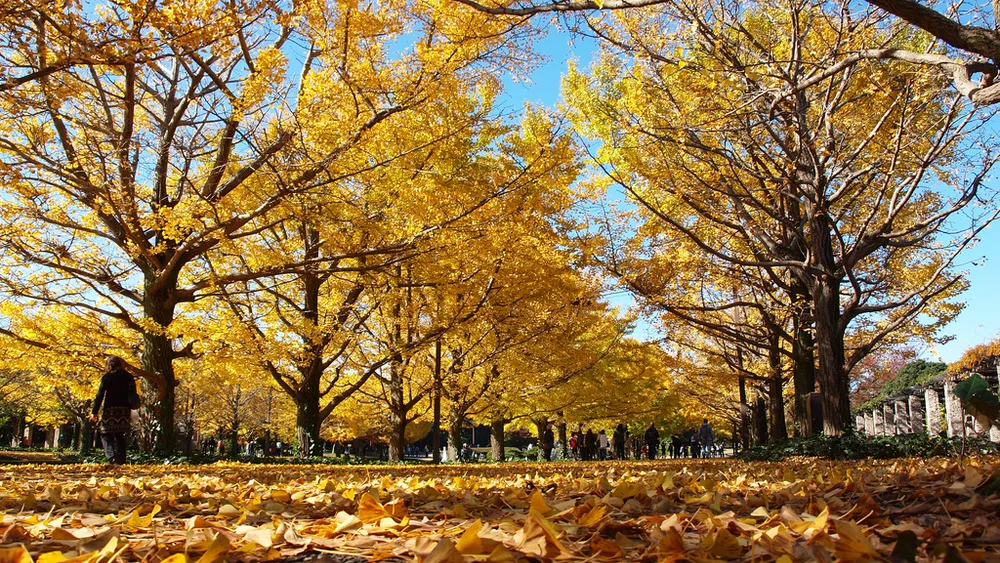
The garden lists peak autumn color from late November through early December, while Yokohama's official autumn guide gives a broader mid-November to mid-December window. In 2026, the garden reported maples just beginning to turn at the branch tips on November 19, while the giant ginkgo beside the Former Tenzui-ji Juto Oido was already nearing peak color by November 22. Those two updates track different trees in different areas. If you visit in late November and want golden canopies, head to the Oido first. If you can hold out until early December for the Choshukaku maples, check the separate Inner and Outer Garden photos on the garden's official foliage updates page and pick a morning with a clear half-day window.
Mark the seasonal trail's opening dates on your calendar first, then check leaf color. The autumn trail runs on a fixed schedule and closes an hour earlier than the rest of the garden. On a short trip with only one day to spare, finish the ginkgo and stone steps on a weekday morning and head back downtown after lunch. If you plan to stay for Yasou on a Friday, weekend, or holiday, wrap up your daytime sightseeing before 3:00 PM so you have time to rest, eat, and re-enter. Arriving in the second half of December? Focus on the historic wooden buildings and pond reflections, and pair the visit with a walk down Nihon-Odori or Yamashita Park.
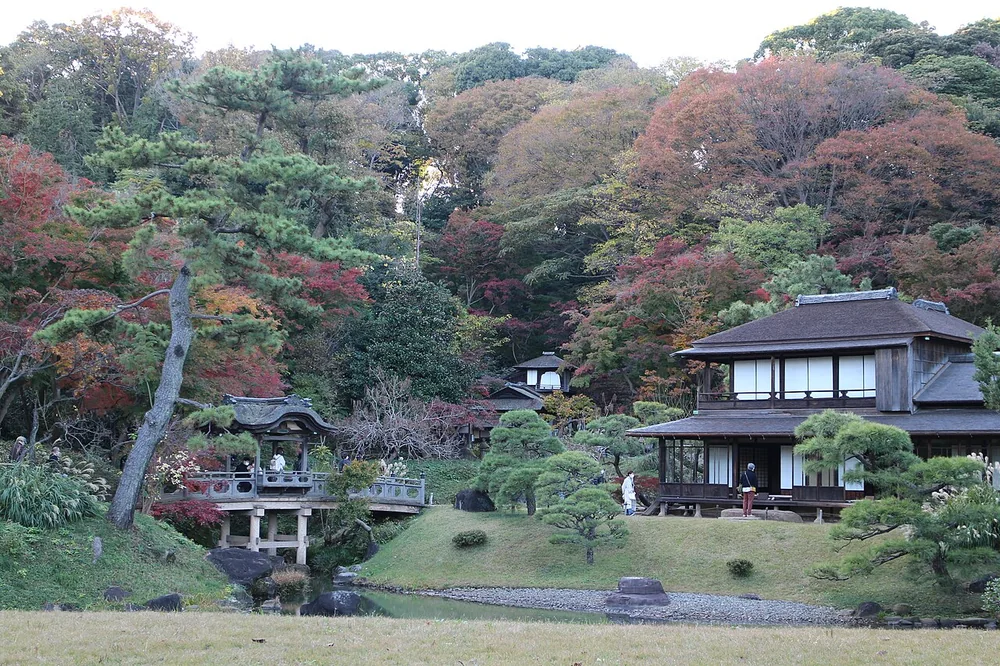
Daytime admission at Yokohama's Sankeien Garden is ¥900 for adults and ¥200 for elementary and junior high students. Covers the 2026 Choshukaku trail and Yasou night event, 2027 pagoda restoration, Negishi and Yokohama Station buses, plus rainy-day and family half-day routes.
Daytime Hours, Admission & Transit Budget
Sankeien Garden is generally open 9:00 AM–5:00 PM (last entry at 4:30 PM) and closes annually from December 26 to 31. Daytime admission is ¥900 for high school students and adults, and ¥200 for elementary and junior high students. Yokohama residents aged 65 and older pay ¥700 with proof of address and date of birth. Groups of 10 or more receive discounted rates of ¥800 for adults and ¥100 for elementary and junior high students. Visitors presenting an accepted disability certificate at the ticket window receive free daytime admission for themselves and one companion.
Once your dates are set, you can buy daytime e-tickets through the garden's visitor guide page to skip paying at the gate. Visitors holding a Sankeien discount coupon or the Yokohama City Transportation Bureau's Minato Burari Ticket can buy discounted tickets at the window for ¥800 (adults) or ¥100 (elementary and junior high students). Discounts cannot be combined. Ticket windows also accept Suica and other transit IC cards for daytime entry. Pull up your e-ticket page and return bus stop name on your phone ahead of time so everyone in your group can find the right gate easily.
If you only take the Yokohama Municipal Bus to and from the garden, two single rides at ¥220 each plus daytime admission come to ¥1,340 for an adult, before train fare to Yokohama and lunch. The ¥700 Minato Burari Ticket covers designated municipal buses and subway lines in the bay area, including the "Sankeien" and "Sankeien-iriguchi" stops. Taking two bus rides with that pass plus the discounted garden ticket totals ¥1,500. Add a third eligible municipal bus ride, though, and single fares plus full admission would cost ¥1,560—that is the break-even point where the day pass starts saving money. Note that travelers coming via JR Negishi Station and the "Honmoku" stop must pay that bus leg separately, as only the two Sankeien stops are listed in the pass zone.
When planning a full day, tally each expense separately: daytime entry, the evening event ticket, standard bus fares, and any waterfront attractions. Stepping aboard the NYK Hikawa Maru at Yamashita Park costs an extra ¥300 for adults, cash only. If you prefer just walking and dining by the harbor, put that budget toward a teahouse break inside the garden instead. If you spend a lot of time photographing architecture, setting aside half an hour to sit down and eat will carry you through the day better than squeezing in one more paid attraction.
| Ticket Type | High School & Adults | Elementary & Junior High |
|---|---|---|
| Daytime General Admission | ¥900 | ¥200 |
| 2026 Yasou At-the-Door Ticket | ¥1,000 | ¥500 |
| 2026 Yasou Online Ticket | ¥900 | ¥400 |
Taking the Bus from Yokohama, Negishi & Chinatown
If you are staying near Yokohama Station or arriving on the Tokaido Line and want minimal transfers, head out the East Exit toward SOGO to the bus terminal's Platform 2. Municipal Bus Route 8 or 168 takes about 40 minutes to "Sankeien-iriguchi," followed by a 5-minute walk to the Main Gate. Starting from a hotel on the West Exit side? Factor in extra time to cross the station and get down to the terminal. On weekends and holidays, the direct "Burari Sankeien Bus" departs from the same platform and pulls right into the "Sankeien" stop in the garden's parking lot, right beside the Main Gate.
The "Burari Sankeien Bus" runs on Saturdays, Sundays, and Japanese national holidays. From Sakuragicho Station, board it at Bus Stop 2 outside the station, or take Route 8 to "Sankeien-iriguchi." If you are staying around Motomachi, Chinatown, or Yamashita Park, catch Route 8 or 168 from "Chukagai-iriguchi" or "Yamashita-cho" for a 15–20 minute ride straight to "Sankeien-iriguchi" without backtracking to Yokohama Station. For dinner in Chinatown afterward, take a Yokohama Station-bound Route 8 or 168 from "Sankeien-iriguchi" and get off at "Chukagai-iriguchi." Always check both the bus's destination display and stop sign, since both routes run in opposite directions along the same street.
Coming from Tokyo or Shinagawa Station and want to cover most of the distance by rail? Take JR to Yokohama Station, then transfer to the Keihin-Tohoku / Negishi Line toward Ofuna and ride five stops south to Negishi Station. From Platform 1 at the Negishi Station bus terminal, board Route 58 or 101 toward Honmoku for a 10-minute ride to "Honmoku," then walk about 600 meters (around 10 minutes) to the garden. According to Sankeien's access guide, walking the whole way from Negishi Station takes roughly 30 minutes—handy to keep in mind if it rains or someone in your party walks slowly, in which case grab a taxi at the station.
Watch out for three easily confused bus stops. Regular Routes 8 and 168 stop at "Sankeien-iriguchi," which connects to the Main Gate. The weekend direct bus stops inside the Main Gate lot at "Sankeien." The free 2026 Yasou shuttle drops off at "Sankeien Minamimon-iriguchi" (South Gate Entrance) on the opposite side of the grounds. When leaving, head toward the gate matching your bus from the junction between the Inner and Outer Gardens. If you stored bags in a Main Gate locker, pick them up there before deciding on your exit route so you do not walk out the South Gate empty-handed.
If driving from Tokyo or central Yokohama, exit via Honmoku-futo IC or Shin-Yamashita IC, as the Sankeien IC has no usable exit from that direction. The Main Gate paid lot has 60 spaces for passenger cars at ¥1,000 for the first two hours and ¥200 per additional 30 minutes (the payment machine takes ¥1,000 bills and coins). On peak foliage weekends with older relatives, account for the walk from overflow lots if the main one fills up. Yasou organizers also list the Honmoku Shimin Park and Honmoku Citizens Pool lots near the South Gate—enter your chosen parking lot directly into your navigation.
Main Gate to the Inner Garden, Then Around the Outer Garden
Sankei Hara (born Tomitaro Hara) built his fortune in silk reeling and raw silk trade, creating this garden in Honmoku's Sannotani valley. He opened the Outer Garden to the public in 1906 while keeping the Inner Garden as his private residence. Today, the 175,000-square-meter grounds hold historic buildings relocated from Kyoto, Kamakura, and beyond. Inside the Main Gate, the Great Pond and hilltop pagoda anchor the Outer Garden's sweeping views. Pass through the Gomon Gate into the Inner Garden, and waterside shoin halls, teahouses, and stone steps draw the scenery closer—well worth lingering over.
From the Main Gate, follow the Great Pond toward the Sankeien Memorial Hall and enter the Inner Garden through the Gomon Gate. If you want to catch the seasonal trail before it closes, head straight for Choshukaku first. Save Rinshunkaku and the Former Tenzui-ji Juto Oido for the return loop so you do not lose track of closing time taking photos near the entrance. Rinshunkaku's three connected wings step along the water; walk just a short way along the bank and watch how the overlapping rooflines shift. If you want to see how Hara placed this villa relocated from Osaka, the Memorial Hall displays his art collection alongside original sliding-door paintings from the buildings—check the gallery labels for current rotations.
Give yourself two vantage points for the giant ginkgo next to the Oido. While golden leaves still cling to the canopy, frame them against the wooden eaves; once they drop, the yellow carpet and stone steps below take center stage. When crowds gather under the tree, step back to the wider path so people can pass through. From there, loop back out toward the Outer Garden's Great Pond. To skip climbing the hill, you can frame the Three-Story Pagoda, forest, and water in a single shot right from the pondside path, or find the view of Kanshinbashi Bridge and the pagoda from across Tenmangu Shrine using the garden map.
To see the pagoda's tiled eaves up close, add Shofukaku and the Former Tomyo-ji Three-Story Pagoda to the second half of your Outer Garden loop. Built in 1457 at Tomyo-ji in Kyoto's Kizugawa area and moved here in 1914, it remains the oldest structure in the garden, its three tiered roofs tapering toward the sky. Walk back down to the Former Tomyo-ji Main Hall to compare the roof tiles and scale of its sister building, which arrived more than 70 years later in 1987. If you would rather skip the climb and spend that time by the Great Pond, the Inner Garden, or a teahouse, both the pagoda and main hall are still clearly visible from below in 2026.
The official in-depth walking route takes 90–120 minutes. To climb the stone-step trail, step inside a specially opened temple hall, and sit down for tea, set aside half a day rather than rushing every building in five minutes. From November 8 to December 13, 2026, the Former Tokei-ji Buddha Hall in the Outer Garden opens its interior from 10:00 AM to 3:00 PM with regular daytime admission, alongside chrysanthemum displays through November 23. Meanwhile, the Former Yanohara House is closed for thatch re-roofing and seismic retrofitting through the projected end of work in late March 2027, so prioritize the Buddha Hall if you want an interior look in autumn 2026.
Two buildings also offer a window into the Hara family's daily life. Right beside the Gomon Gate, Hakuuntei was Sankei Hara's retirement home—compare it with Rinshunkaku along the pond to see the difference in scale between a private residence and a reception villa. Out in the Outer Garden, Kakushokaku served as the main Hara residence and a gathering place where painters stayed and worked. Pairing those exteriors with the Memorial Hall's exhibition notes shifts your focus from relocation dates back to the people who actually lived and worked here in Yokohama.
If you want architectural context as you walk, join a free daytime guided tour. Japanese-language tours depart from the Inner Garden entrance at 11:00 AM and 1:30 PM (about one hour in the Inner Garden). An English-language tour meets at 1:30 PM in front of the garden map board near the Main Gate (about one hour). Tours pause annually from December 26 to January 3. Only have an hour to spare? Study the map outside the Gomon Gate and group the historic buildings in one zone. If you want both the afternoon tour and the seasonal stone steps, walk the trail before the tour or right after it ends rather than assuming you can beat the 4:00 PM cutoff for both.
Choshukaku Stone Steps & the 2027 Pagoda Restoration
In 2026, the trail behind Choshukaku is open daily from November 20 to December 13, 9:00 AM–4:00 PM, included with daytime admission (Choshukaku itself is viewed from the outside). Looping the stone-step path through the narrow gorge takes about five minutes of walking, plus extra time for photos. According to the garden, Hara arranged this valley with boulders brought in from Nara. Climb up the slope and look back: Choshukaku sits in the mid-ground with the Three-Story Pagoda rising on the hill behind it and maple branches reaching in from the sides. If a wide-angle lens pulls in too much sky, frame tighter from a safe spot off the path to keep both the pavilion and hillside in shot.
Before heading up, take a moment to study Choshukaku's silhouette from below. Garden records note that according to the Inaba clan, Tokugawa Iemitsu had the pavilion built at Kyoto's Nijo Castle in 1623 before gifting it to Kasuga no Tsubone. Hara relocated it to Honmoku in 1922, creating the steep hillside backdrop you see today. Anyone in your group curious about the interior can open the 360-degree viewer on the garden's Choshukaku webpage to peek inside the compact tearoom, then compare it on the trail with the exterior views framed by slopes, branches, and eaves.
If you miss the 4:00 PM cutoff, view Choshukaku from the open walkway out front, or loop back to Rinshunkaku and the Great Pond. When pressed for time, decide whether you just want a flat-ground look at the pavilion or the elevated view pairing it with the pagoda. The flat view works during normal garden hours; the elevated shot requires reaching the trailhead, climbing stone steps, and giving walkers ahead of you room to move. If companions prefer to avoid stairs, meet them in front of Rinshunkaku or at the Central Plaza so nobody is left waiting in the narrow bottleneck.
The garden's 2027 calendar schedules the autumn foliage trail for November 20 through December 12, again from 9:00 AM to 4:00 PM. The garden has also announced major restoration work on the Former Tomyo-ji Three-Story Pagoda starting in April 2027, which will wrap the entire pagoda in protective scaffolding. In autumn 2027, focus your valley photos on Choshukaku and the stream, then head to Rinshunkaku by the pond. Visitors entering from the Main Gate can also shift the time normally spent climbing the pagoda hill to the flat pondside paths or the giant ginkgo beside the Oido.
Visiting earlier in spring 2027? The calendar schedules a fresh-greenery opening of the trail behind Choshukaku from April 10 to May 9, ideal for moss-covered rocks, stream views, and young maple leaves. If you want to see the Three-Story Pagoda unobstructed before scaffolding goes up, plan your trip before April work begins. Because the preservation project spans multiple years, the following autumn will favor the ground-level pavilions and foliage.
Buying Yasou Night Tickets & Catching the Last Shuttle
"Yokohama Sankeien Yasou" is the 2026 evening illumination and sound event. It runs across 16 select nights—Fridays, Saturdays, Sundays, and national holidays—between November 20 and December 20, from 5:15 PM to 9:00 PM (last entry at 8:30 PM). The final weekend falls on December 18–20, after the daytime stone-step trail closes for the season. To pair both the seasonal trail and the evening program in a single day, pick a Yasou date on or before December 13.
Yasou requires a dedicated event ticket; daytime admission, annual passes, complimentary passes, and discount coupons are not valid. Same-day tickets at the Main and South Gates cost ¥1,000 for adults and ¥500 for elementary and junior high students (preschoolers are free). Online tickets sold through the organizer's site are ¥900 for adults and ¥400 for elementary and junior high students. Visiting both day and night on the same date costs ¥1,900 total for an adult buying at the gate, or ¥1,800 with an online night ticket; for elementary and junior high students, the combined total is ¥700 at the gate or ¥600 with an online night ticket.
Organizers concentrate the evening installations at the plaza in front of the teahouses, the Gomon Gate, the Rinshunkaku shoreline, the area in front of Choshukaku, the bamboo grove near Renge-in, Kaiganmon Gate, and the wisteria trellis, pairing the walk with live kotsuzumi drum, shamisen, and string music. Reserve daylight hours for photographing maple foliage in natural light. If you only come for Yasou, following the illuminated path past the pond and gates is plenty—no need to retrace daytime trail angles. Shooting handheld keeps you moving with your group, and tripods, monopods, and selfie sticks are prohibited in the Inner Garden regardless.
On event nights, a free shuttle bus runs between JR Negishi Station Platform 9 and "Sankeien Minamimon-iriguchi." According to the organizer's timetable, outbound buses start at 4:50 PM with the final departure at 8:10 PM; return shuttles from the South Gate run from 6:20 PM, with the last two departures at 9:00 PM and 9:20 PM. Buses run roughly every 20 minutes, with slightly irregular spacing around 7:00 PM. Save the stop name and timetable on your phone before arriving, and note the path between the South Gate and the shuttle stop on your way in before wandering deep into the Inner Garden.
If you are traveling with kids or heading back to Tokyo that night, aim for the 7:40 PM or 8:00 PM return shuttle so you still have backup buses if you miss one. Staying until the 9:00 PM close? Walk straight to the South Gate for the 9:20 PM final departure. Visitors finishing a daytime loop from the Main Gate who plan to re-enter around 5:15 PM can rest near the Central Plaza, retrieve locker items before daytime closing, and line up at their chosen entrance. If you want a sit-down dinner downtown, eat after leaving the garden or have an early meal in Chinatown before heading over for Yasou.
Strollers, Wheelchairs & Rainy-Day Plans
For strollers and wheelchairs, stick to the Main Gate, Great Pond, Gomon Gate, Sankeien Memorial Hall, Rinshunkaku, and Central Plaza. The garden's accessible route takes 90–120 minutes with minimal elevation change, though unpaved gravel paths can take extra effort to push yourself. Let walkers in your group tackle the Choshukaku stone steps and the uphill climb to the Three-Story Pagoda on their own, and plan to meet by the teahouses at the Central Plaza so nobody has to wait standing along a narrow path.
Free wheelchair loans are available—four at the Main Gate window and one at the South Gate—limited to one per group with no advance reservations. Wheelchair-accessible restrooms are located at the Main Gate parking lot, near the South Gate entrance, at the Central Plaza, and inside the Sankeien Memorial Hall. If you have toddlers, stop at the Central Plaza restrooms before entering the Inner Garden; it is also an easy landmark if someone needs to double back for jackets or snacks. Free lockers sit beside the Main Gate ticket booth—if you plan to exit via the South Gate, keep your gear with you rather than backtracking across the garden.
In light rain, center your visit on the Great Pond, the level paths in front of Rinshunkaku, and the Memorial Hall. Wet soles lose traction on stone steps, wooden bridges, and leaf-strewn slopes, so skip the high viewpoints while it is raining. Through December 8, 2026, the Memorial Hall exhibits tea utensils and calligraphy belonging to Sankei Hara and his tea circle, included with daytime admission. If you decide to head downtown early, make the museum near the entrance your last stop before catching the bus.
Yasou runs as scheduled in light rain, though severe weather can trigger cancellations posted on the event's official Instagram. If rain downtown has not let up, swap in the Yokohama Doll Museum, about a 3-minute walk from Exit 4 of Motomachi-Chukagai Station on the Minatomirai Line. Normally open 9:30 AM–5:00 PM (last entry at 4:30 PM), it displays Japanese and international dolls; permanent exhibition entry is ¥400 for adults and ¥200 for elementary and junior high students, with special exhibitions ticketed separately. The Hikawa Maru also has covered cabin exhibits, though an indoor museum avoids walking back and forth across open ship decks.
Eating and drinking are allowed in the Outer Garden, but prohibited in the Inner Garden. Pack a bento to eat on an Outer Garden bench and carry out your trash; picnic sheets, tents, and folding tables or chairs are not permitted. Beside the Central Plaza sit Sankeien Saryo and Karigane Chaya, while Taishunken near the Former Tomyo-ji Main Hall serves "Sankeien soba," a dish said to have been inspired by Sankei Hara. To avoid backtracking with hungry kids, decide which shop you are stopping at after the trail so you can rest there and walk straight out along the Great Pond to the Main Gate.
Garden restaurants keep shorter hours than the park itself. The official dining page lists both Sankeien Saryo and Karigane Chaya as open 11:00 AM–3:00 PM, neither taking reservations; Sankeien Saryo accepts credit cards and Suica, while Karigane Chaya takes Japanese yen cash only. During the 2026 autumn season, Chakura SAKURA also runs pop-up sessions at Saron Bototei in the Memorial Hall lobby, with last order at 4:00 PM on operating days. Arriving in the afternoon and want a full meal? Eat lunch in Chinatown first and save the garden for a cup of tea. If you are only going for Yasou, eat dinner before boarding the shuttle so you are not limited by daytime teahouse hours.
Pairing Sankeien with Nihon-Odori Ginkgos & Yamashita Park
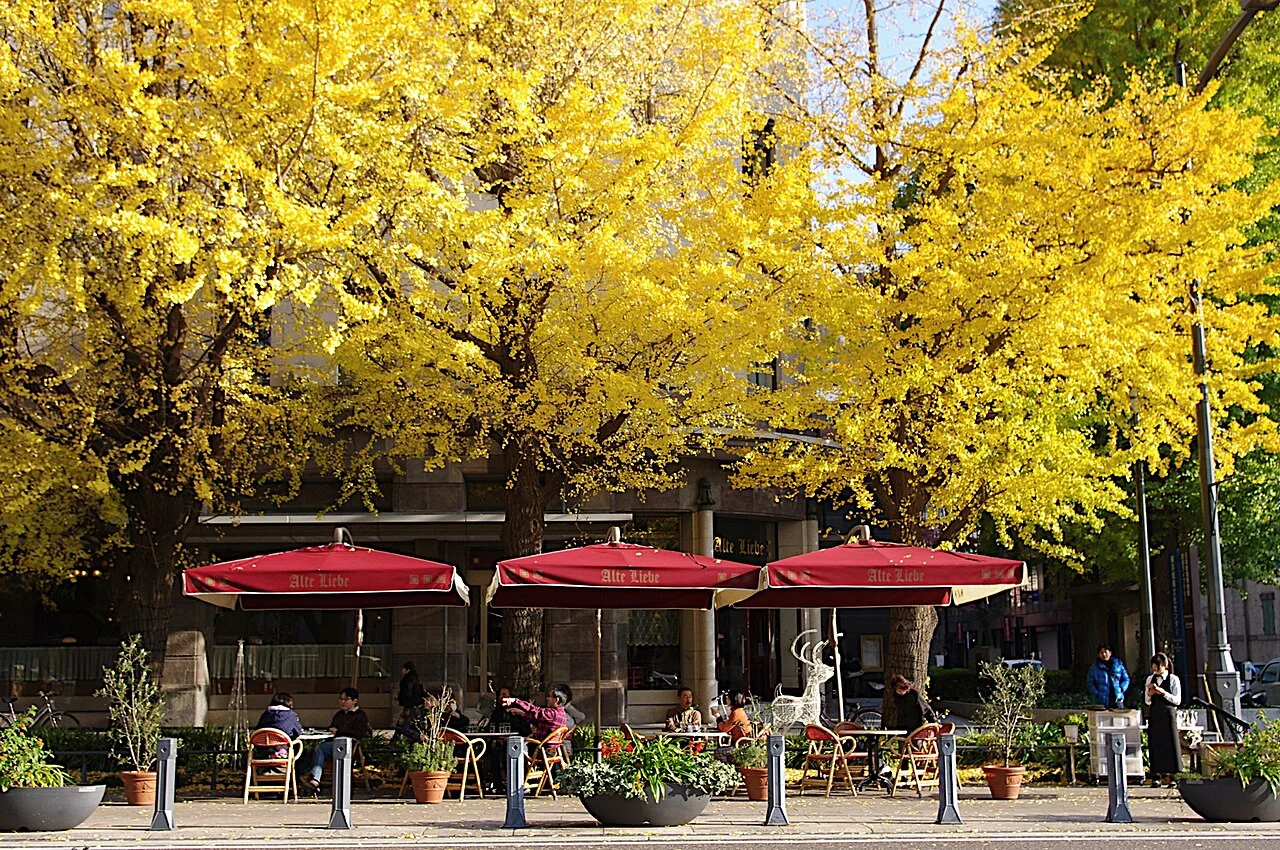
Seeing Sankeien Garden in the morning and linking it with Nihon-Odori and Yamashita Park in the afternoon is the cleanest full-day route for a first autumn visit to Yokohama. In Honmoku, red maples layer up the hillsides; by afternoon on Nihon-Odori, golden ginkgos line the boulevard past the Kanagawa Prefectural Government Office and the Yokohama Archives of History. Yokohama's tourism board lists Nihon-Odori's typical peak from mid-November to early December, right outside Nihon-odori Station on the Minatomirai Line. Because street trees and garden maples peak on different schedules, one side still delivers classic architecture and harbor views even if the other is past peak.
Walk from the Main Gate to "Sankeien-iriguchi" and take a Yokohama Station-bound municipal bus to "Chukagai-iriguchi." From there, stroll through Yamashita Park toward Nihon-Odori, or stop in Chinatown for lunch first. Want to tour the Hikawa Maru? Board the ship before walking up to Nihon-Odori. The ship is usually open 10:00 AM–5:00 PM (last entry at 4:30 PM) and closes Mondays, or the following weekday when Monday is a holiday. Pairing Sankeien's relocated wooden heritage buildings with the Hikawa Maru's preserved cabins and engine rooms gives a single day plenty of contrast.
On a weekday, aim to reach the Main Gate by 9:30 AM or 10:00 AM, finish both garden zones before noon, grab lunch in Chinatown, and save the afternoon for one waterfront sight plus the ginkgo avenue. On a weekend combining daytime and Yasou, have lunch downtown first, arrive at the garden around 2:00 PM, and cover the seasonal trail and Great Pond. If the Former Tokei-ji Buddha Hall is a priority, visit before its 3:00 PM close and then walk Choshukaku; if natural light on the maples matters more, move your arrival earlier. Want to stretch the evening into a full Minato Mirai harbor walk instead? Skip Yasou and save the night for the waterfront. See our Yokohama walk, food, and stay guide for connecting bayfront routes.
Only have two or three hours on short notice? Factor in the walk to the bus stop and wait times before committing. Starting at Yokohama Station in the morning with an afternoon train back to Tokyo, catch the direct bus to the Main Gate and spend your time at the Great Pond, Rinshunkaku, and whichever spot has the best color. Already near Yamashita Park with a fixed departure time? Stay along Nihon-Odori and the waterfront so you spend your minutes walking rather than waiting on transfers—a smart fallback during Sankeien's year-end closure week as well.
If you want to keep your half-day centered on Honmoku, the garden maps out a 40–60 minute route from the Main Gate out the South Gate into Honmoku Shimin Park. It crosses the Great Pond and Outer Garden, making it a nice option if you want extra park time and an exit on the far side. Decide before leaving the daytime loop whether to double back to the Main Gate for buses or exit through the South Gate toward your next stop. If you just want to get straight to the downtown ginkgos afterward, leave from whichever gate has the bus route you know best to avoid crossing the grounds twice.
Where to Stay in Yokohama
Because Sankeien Garden sits a bus ride away from central Yokohama, pick a hotel based on your first morning bus and last evening walk. If you are catching an early train toward Tokyo, Odawara, or Haneda Airport the next morning, staying around Yokohama Station keeps large luggage at your main rail hub. JR-East Hotel Mets Yokohama is about a 3-minute walk via pedestrian deck from the JR North Gate and Northwest Exit. In the morning, cross back to the East Exit SOGO side for the regular Sankeien bus; at night, returning from Negishi Station on JR after the Yasou shuttle puts you right back on that same walkway.
If your daytime plans include the Yokohama Red Brick Warehouse, Minato Mirai, and Sankeien, Sakuragicho bridges waterfront strolls and the JR Negishi Line. JR-East Hotel Mets Premier Yokohama Sakuragicho sits about a minute from the New South Exit. Catch the municipal bus right outside Sakuragicho Station during the day, then ride JR back from Negishi Station after Yasou without crossing Yokohama Station's east-west concourse. It works especially well if the next morning starts with a canal walk or another JR train. If an after-dinner stroll along Yamashita Park sounds better, look around Motomachi and Chinatown instead.
Hotel New Grand faces Yamashita Park directly, about a 1-minute walk from the stairs at Motomachi-Chukagai Station Exit 1, or 2 minutes using the elevator at Exit 2 with luggage. This base suits travelers eating dinner in Chinatown and catching nearby buses to Sankeien during the day. Note that returning from Yasou via the South Gate shuttle to Negishi requires transferring to the Minatomirai Line or another route back to the waterfront. Guests staying through the end of Yasou will find Sakuragicho or Yokohama Station smoother, while those prioritizing quiet morning and evening harbor walks save steps around Yamashita Park.
When comparing room rates, check total prices for the exact same dates and guest count. Families of two adults and one child should enter the child's age upfront, since existing-bed and extra-bed policies vary by plan. A hotel one step closer to your rail transfer often saves more energy than being one stop closer to a single sight. Travelers staying in Tokyo who only want daytime foliage can easily do Sankeien as a Yokohama half-day trip. Book an overnight stay if you plan to stay for Yasou and wake up early for the waterfront ginkgos—that is when staying in Yokohama actually saves you the round-trip rail haul back to Tokyo.
A few useful answers
When is the best time to see autumn foliage at Sankeien Garden?
Peak color typically runs from late November to early December. On November 22, 2026, the garden reported the giant ginkgo at the Former Tenzui-ji Juto Oido nearing peak color; check the latest Inner and Outer Garden photos on the same update page to time your visit for the maples.
How much is daytime admission to Sankeien Garden?
Daytime admission is ¥900 for adults (high school and older) and ¥200 for elementary and junior high students. Yokohama residents aged 65 and older pay ¥700 with proof of address and age.
Which bus stop should first-time visitors use for Sankeien Garden?
From Yokohama Station East Exit Platform 2, take Bus 8 or 168 to "Sankeien-iriguchi" and walk about 5 minutes. From JR Negishi Station Platform 1, take Bus 58 or 101 to "Honmoku" and walk about 10 minutes. The free Yasou shuttle from Negishi Station departs from Platform 9.
Does a daytime ticket cover the Yasou night event?
No. Yasou requires a separate event ticket—in 2026, ¥1,000 for adults and ¥500 for elementary and junior high students at the gate (¥100 less online; preschoolers are free). Daytime visitors must exit the garden before re-entering with a Yasou ticket.
Can you still photograph the Three-Story Pagoda in autumn 2027?
The garden plans to erect protective scaffolding around the Three-Story Pagoda starting in April 2027 for restoration, which will cover the exterior. The 2027 autumn trail still runs November 20 through December 12, so plan on framing Choshukaku, Rinshunkaku, and the giant ginkgo by the Oido instead.
Is the autumn trail behind Choshukaku stroller-friendly?
No, that trail has continuous stone steps. Stick to the Main Gate, Great Pond, Rinshunkaku, and Central Plaza areas with a stroller. The garden also marks a low-step accessible route, though it still includes unpaved gravel paths.
Official information and references
Sources used in this guide.
- Sankeien Garden Visitor Guide (Admission, Hours, Parking & Services)
- Sankeien Garden Access & Bus Stop Locations
- Sankeien Garden FAQ (Bus Stops, Dining & Photography Rules)
- Yokohama City Transportation Bureau Sightseeing Buses & Single Fares
- Yokohama City Transportation Bureau Minato Burari Ticket Prices & Eligible Stops
- Sankeien Garden 2026 Autumn Foliage Status
- Sankeien Garden 2026 Autumn Foliage Trail & Seasonal Events
- Sankeien Garden 2026 Autumn Foliage Highlights Map
- Sankeien Garden Grounds Map & Historic Building Locations
- Sankeien Garden Choshukaku Architecture & 360-Degree Interior View
- Sankeien Garden History (Outer Garden Opening, Hara Residences & Relocation Dates)
- Sankeien Garden In-Depth Walking Course & Honmoku Shimin Park Route
- Sankeien Garden Pondside Accessible Route
- Sankeien Garden Teahouses & Dining
- Sankeien Garden Former Tokei-ji Buddha Hall Special Opening
- Sankeien Garden Former Yanohara House Closure Notice
- Sankeien Garden 2027 Former Tomyo-ji Three-Story Pagoda Restoration Notice
- Sankeien Garden 2027 Flower & Event Calendar
- Sankeien Garden 2026 Yasou Event Announcement
- Yasou Organizer Official Page (Program, Online Tickets & Access)
- Yasou Organizer Free Shuttle Bus Timetable
- Yokohama Official Visitors' Guide 2026 Autumn Foliage (Nihon-Odori & Sankeien)
- NYK Hikawa Maru Visitor Information
- Yokohama Doll Museum Visitor Guide & Nearest Subway Exit
- JR-East Hotel Mets Yokohama Access & Reservations
- JR-East Hotel Mets Premier Yokohama Sakuragicho Access
- Hotel New Grand Yokohama Access