Sankeien Garden in Yokohama costs ¥900 for adults and ¥200 for school pupils in the daytime. Covers the 2026 Choshukaku trail and Yasou evening event, 2027 pagoda repairs, buses from Negishi and Yokohama stations, plus rainy-day and family half-day routes.
- Region & Focus
- Yokohama
- Reading Scope
- 29 min read · 9 chapters · 6 Q&As
- Official Verification
- 27 official sources checkedUpdated 22 November 2026
- Key Topics
- SeasonsItinerariesNeighbourhoods
Chapter Route Map (tap any stop)
- Viewing maples and ginkgoes separately at Sankeien
- Daytime hours, admission and transport budget
- Buses from Yokohama, Negishi and Chinatown
- Entering via the Main Gate: Inner Garden first, then Outer Garden
- Choshukaku stone steps and 2027 pagoda repairs
- Yasou tickets and last shuttle times
- Pushchairs, wheelchairs and rainy-day routes
- Pairing Sankeien with Nihon-odori and Yamashita Park
- Where to stay in Yokohama
- Quick Q&A
For a first autumn visit to Sankeien Garden in Yokohama, spend the morning around Choshukaku and Rinshunkaku in the Inner Garden, then stroll back towards the Main Gate alongside the Outer Garden's Great Pond. In 2026, the stone-step trail behind Choshukaku opens daily until 16:00 through 13 December. Visit in daylight for true-to-life leaf colours, or add a separate ticket for the 'Yasou' evening light and sound event. The autumn trail will open again in 2027, though scaffolding will enclose the hilltop Three-Storey Pagoda from April that year, shifting photo focus to Choshukaku, the ginkgo tree and Rinshunkaku.
Viewing maples and ginkgoes separately at Sankeien
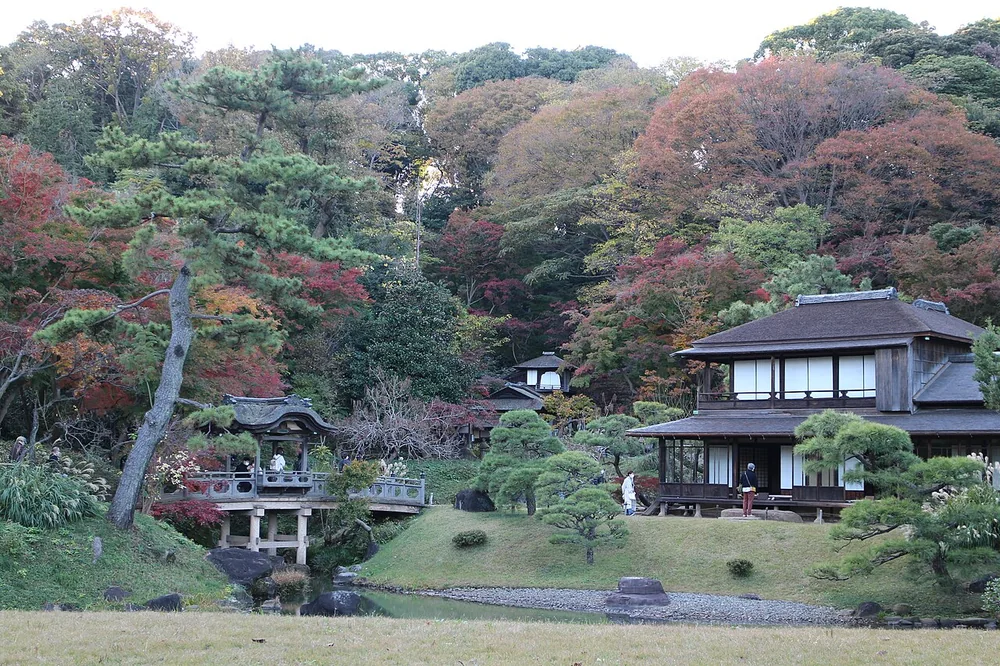
Located in Yokohama's Honmoku district, Sankeien Garden is a short bus ride from the Yamashita Park waterfront. Autumn is well worth a daytime visit because of the garden's topography. The Outer Garden centres on an open Great Pond with clear views up towards the hills. Once inside the Inner Garden, Rinshunkaku stretches along the water before the landscape narrows into a steep valley cradling Choshukaku. Even on a single day, the pond edge, valley and ginkgo groves offer three distinct scenes, so you can order your stops according to which colours are at their best.
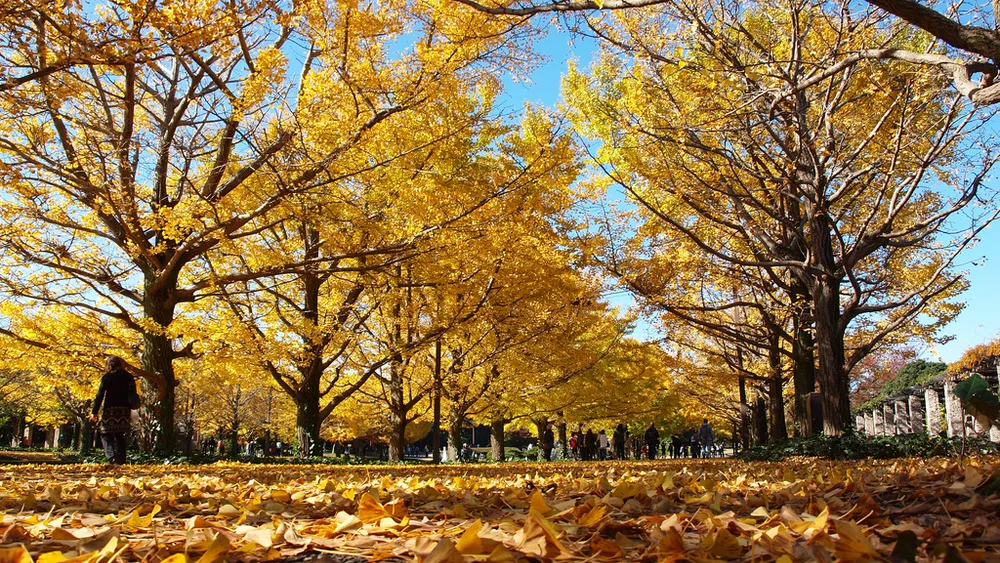
Garden staff place peak autumn foliage between late November and early December, while Yokohama City's autumn guide lists mid-November to mid-December. In 2026, the garden reported maples beginning to turn at the branch tips on 19 November, followed on 22 November by news that the large ginkgo beside the Former Tenzuiji Juto Oido was nearing its peak. Each update refers to different trees and spots. If you arrive in late November, head to the Juto Oido first for golden canopies. Those visiting in early December for Choshukaku's maples should compare the separate Inner and Outer Garden photos on the garden's foliage updates page before picking a clear morning.
Mark the seasonal trail's opening dates on your calendar before checking leaf conditions, as it runs on fixed dates and closes an hour earlier than the rest of the grounds. On a tight itinerary with only one free day, a weekday morning covers the ginkgo and stone steps with time left for lunch and an afternoon in the city. If you plan to stay for the Yasou evening event on a Friday, weekend or public holiday, finish your daytime sightseeing before 15:00 so you have time to rest, eat and re-enter. Later in December, treat the historic buildings and pond views as the main draw and pair the garden with a walk along Nihon-odori or Yamashita Park.
Sankeien Garden in Yokohama costs ¥900 for adults and ¥200 for school pupils in the daytime. Covers the 2026 Choshukaku trail and Yasou evening event, 2027 pagoda repairs, buses from Negishi and Yokohama stations, plus rainy-day and family half-day routes.
Daytime hours, admission and transport budget
Sankeien Garden generally opens from 09:00 to 17:00, with last entry at 16:30, and closes annually from 26 to 31 December. Standard daytime admission is ¥900 for high school students and adults, and ¥200 for elementary and junior high school pupils. Yokohama residents aged 65 or over pay a reduced ¥700 upon showing proof of address and date of birth. Group rates for 10 or more people are ¥800 for adults and ¥100 for elementary and junior high pupils. Visitors presenting an accepted disability certificate at the ticket window receive free daytime entry for themselves and one companion.
Once your schedule is set, you can buy daytime e-tickets via the garden's visitor guide page to skip payment at the booth. Visitors holding a Sankeien discount voucher or the Yokohama City Transportation Bureau's Minato Burari Ticket can present them at the window for ¥800 adult entry and ¥100 child entry; discounts cannot be combined. Ticket booths accept Suica and other transport IC cards for daytime tickets. Having your e-ticket page and return bus stop name ready on your phone also makes it easier for companions to regroup at the entrance.
Taking two standard Yokohama municipal bus rides strictly to and from the garden costs ¥220 each way for adults, bringing your bus-plus-admission total to ¥1,340 before train fares to Yokohama and lunch. The ¥700 adult Minato Burari Ticket covers designated municipal buses and underground lines in the port area, including rides to the 'Sankeien' and 'Sankeien-iriguchi' stops. With just two bus rides and the discounted garden entry, that pass comes to ¥1,500—whereas adding a third qualifying municipal bus ride puts single tickets plus full-price admission at ¥1,560, which is where the day pass starts paying off. Note that travellers transferring from JR Negishi Station via the 'Honmoku' stop must pay that bus fare separately, as the pass only lists those two Sankeien stops.
When budgeting a full day, list each fare and entry fee separately—daytime garden admission, the evening event ticket, standard bus rides and any harbour attractions. Stepping aboard the NYK Hikawa Maru at Yamashita Park costs an extra ¥300 for adults and is cash-only. If you prefer a simple waterfront stroll and lunch, save that budget for a garden teahouse instead. Visitors focused on photography and architecture often get more out of a half-hour tea break than squeezing in another paid museum.
| Ticket type | High school & adults | Elementary & junior high |
|---|---|---|
| Standard daytime ticket | ¥900 | ¥200 |
| 2026 Yasou on-the-day ticket | ¥1,000 | ¥500 |
| 2026 Yasou online ticket | ¥900 | ¥400 |
Buses from Yokohama, Negishi and Chinatown
If you are staying near Yokohama Station or arriving on the JR Tokaido Line and want minimal transfers, head out the East Exit towards SOGO to Bus Terminal Stop 2. Municipal bus routes 8 and 168 take roughly 40 minutes to 'Sankeien-iriguchi', about a 5-minute walk from the Main Gate. If starting from a West Exit hotel, allow extra time to cross the station and walk down to the bus terminal. On weekends and public holidays, the direct 'Burari Sankeien Bus' departs from the same stop and pulls right into the 'Sankeien' stop inside the garden car park beside the Main Gate.
The 'Burari Sankeien Bus' runs on Saturdays, Sundays and Japanese national holidays. From Sakuragicho, catch it from Bus Stop 2 outside the station, or take route 8 to 'Sankeien-iriguchi'. If staying around Motomachi, Chinatown or Yamashita Park, board route 8 or 168 at 'Chukagai-iriguchi' (Chinatown Entrance) or 'Yamashita-cho' for a 15 to 20-minute ride straight to 'Sankeien-iriguchi' without backtracking to Yokohama Station. For dinner in Chinatown on the way back, catch route 8 or 168 bound for Yokohama Station from 'Sankeien-iriguchi' and alight at 'Chukagai-iriguchi'. Check both the bus destination display and stop signage, as both directions run along the same road.
From Tokyo or Shinagawa stations, if you prefer to cover most of the distance by rail, ride JR to Yokohama Station and change to the JR Keihin-Tohoku / Negishi Line towards Ofuna as far as Negishi Station—the fifth stop south of Yokohama. From Bus Stop 1 outside Negishi Station, take route 58 or 101 bound for Honmoku for about 10 minutes to the 'Honmoku' stop, then walk roughly 600 metres (around 10 minutes) to the garden. According to the garden's access guide, walking all the way from Negishi Station takes about 30 minutes, so consider taking a taxi from the station rank in wet weather or with slower walkers.
Watch out for three easily confused stop names. Regular routes 8 and 168 mainly serve 'Sankeien-iriguchi', a short walk from the Main Gate. The holiday direct bus uses 'Sankeien' inside the Main Gate car park. Meanwhile, the 2026 Yasou free shuttle stops at 'Sankeien Minamimon-iriguchi' (South Gate Entrance) on the opposite side of the grounds. When you reach the junction between the Inner and Outer Gardens on your way out, head towards the gate matching your return bus. If you stored bags in the Main Gate lockers, retrieve them there before setting off for your next stop rather than walking out the South Gate empty-handed.
Drivers approaching from central Yokohama or Tokyo should exit at Honmoku Wharf or Shin-Yamashita IC, as Sankeien IC has no usable exit from that direction. The paid car park at the Main Gate holds 60 spaces, charging ¥1,000 for the first two hours and ¥200 per 30 minutes thereafter; the payment machine accepts ¥1,000 notes and coins. On peak autumn weekends, especially with older companions, factor in extra walking distance in case the Main Gate lot is full. The Yasou organisers also list Honmoku Shimin Park Car Park and Honmoku Shimin Pool Car Park near the South Gate, so set your satnav directly to your chosen lot.
Entering via the Main Gate: Inner Garden first, then Outer Garden
Tomitaro Hara—known as Sankei Hara—built his fortune in silk reeling and raw silk trading, laying out this garden in Honmoku's Sannotani valley. He opened the Outer Garden to the public in 1906, while the Inner Garden served as his private grounds. Today, the roughly 175,000-square-metre estate brings together historic structures relocated from Kyoto, Kamakura and beyond. Inside the Main Gate, the Great Pond and hilltop pagoda define the broad sweep of the Outer Garden; pass through Gomon Gate, and waterside shoin halls, teahouses and stone steps draw the focus inward, rewarding an unhurried loop.
From the Main Gate, follow the Great Pond towards the Sankeien Memorial Museum and enter the Inner Garden via Gomon Gate. If you want to catch the seasonal trail before it closes, head straight towards Choshukaku first, then stop at Rinshunkaku and the Former Tenzuiji Juto Oido on the way back—this manages closing times much better than spending half an hour taking photos near the entrance. Rinshunkaku comprises three pavilions staggered along the pond; walking a short stretch along the bank shifts how each wing overlaps the next. To trace how Hara arranged this shoin complex moved from Osaka, step inside the Memorial Museum to see his art collection and original painted sliding doors, checking the room labels for current rotating displays.
Plan two vantage points around the large ginkgo next to the Juto Oido. While golden leaves remain in the canopy, frame them together with the timber eaves; once they fall, the carpet of leaves and the stone steps below the building take centre stage. When crowds gather under the tree, step back to the wider path to leave the foreground clear for passers-by. Next, loop back into the Outer Garden towards the Great Pond. To skip the uphill climb, the pondside paths easily line up the Three-Storey Pagoda, trees and water in one view, and the viewpoint opposite Tenmangu Shrine looks across Kanshinbashi Bridge towards the pagoda—worth finding with the garden map.
To see the pagoda's tiled eaves up close, include Shofukaku and the Former Tomyoji Three-Storey Pagoda in the latter half of your Outer Garden walk. Built in 1457 for Tomyoji Temple near Kizugawa in Kyoto Prefecture and relocated here in 1914, it remains the oldest structure in the garden, its three tiered roofs tapering upwards. Walking back down to the Former Tomyoji Main Hall lets you compare the tiled roofline and scale of two buildings from the same temple; the hall was moved here in 1987, more than seventy years after the pagoda. If you prefer to skip the steep climb, spend that time along the pond, in the Inner Garden or at a teahouse—throughout 2026, both the pagoda and hall remain clearly visible from lower ground.
The garden's official in-depth walking course allows 90 to 120 minutes. If you want to walk the stone-step trail, step inside a specially opened temple hall and sit down for tea, set aside half a day rather than rushing every building in five minutes. From 8 November to 13 December 2026, the Former Tokeiji Buddha Hall in the Outer Garden opens from 10:00 to 15:00 with standard daytime admission, alongside chrysanthemum displays running until 23 November. Meanwhile, the Former Yanohara House is closed for thatch roof replacement and seismic reinforcement until work is scheduled to finish at the end of March 2027—so for interior viewing in autumn 2026, prioritise the Buddha Hall.
Two residences inside Sankeien also illuminate the Hara family's daily life. Hakuuntei, beside Gomon Gate, was Sankei Hara's retirement home; comparing it with waterside Rinshunkaku highlights the contrast in scale between private quarters and a formal reception hall. In the Outer Garden, Kakushokaku served as the main Hara residence and a retreat where artists stayed to paint and exchange ideas. Reading the museum labels after seeing the exteriors shifts perspective from relocation dates back to Yokohama itself, where people lived and worked inside these moved buildings.
For architectural context as you walk, join one of the free daytime guided tours. Japanese-language tours start from the Inner Garden entrance, usually at 11:00 and 13:30, covering the Inner Garden in about an hour. The English-language tour departs at 13:30 from the garden map board near the Main Gate and also lasts around an hour; all scheduled tours pause from 26 December to 3 January. If you only have an hour in the garden, check the map outside Gomon Gate to cluster your stops. Visitors joining the afternoon tour who also want to climb the seasonal steps should tackle the trail before the tour or straight after it finishes, rather than leaving it until 16:00.
Choshukaku stone steps and 2027 pagoda repairs
In 2026, the trail behind Choshukaku opens from 20 November to 13 December, daily from 09:00 to 16:00, included in daytime admission. Choshukaku itself is viewed from the outside. Walking the narrow valley loop of stone steps takes roughly five minutes without stops, so allow extra time for photography. Garden records note that Hara landscaped this gorge with rocks brought from Nara. Looking back from higher up the slope puts Choshukaku in the mid-ground, the Three-Storey Pagoda on the ridge behind and maple branches framing the edge; if a wide-angle lens pulls in too much sky, zoom in slightly from a safe spot beside the path to keep both pavilion and hillside in frame.
Take a moment near the base of Choshukaku to study its silhouette. According to garden records, Inaba family tradition holds that the pavilion was built at Kyoto's Nijo Castle around 1623 during Shogun Tokugawa Iemitsu's visit to the capital and later given to Kasuga no Tsubone. Hara relocated it to Honmoku in 1922, creating its present setting against the wooded slope. If anyone in your group is curious about the interior, open the 360-degree virtual view on the garden's Choshukaku webpage to peek inside the compact tearoom, then compare it on the daytime trail with how the slope, branches and eaves frame the outlook from outside.
If you miss the 16:00 trail cut-off, view Choshukaku from the open path in front of the pavilion or head back towards Rinshunkaku and the Great Pond. When pressed for time, decide whether you are happy seeing the pavilion at ground level or specifically want the elevated view pairing Choshukaku with the pagoda. The former fits normal opening hours; the latter requires reaching the trailhead, climbing stone steps and leaving space for visitors ahead of you. Companions who prefer to avoid climbs can wait near Rinshunkaku or at the Central Square rather than standing around at the narrow trail entrance.
The garden's 2027 calendar schedules the autumn trail from 20 November to 12 December, again from 09:00 to 16:00. However, major conservation repairs on the Former Tomyoji Three-Storey Pagoda begin in April 2027, wrapping the entire structure in protective scaffolding. On a 2027 valley walk, frame Choshukaku and the gorge foliage as your main subjects, followed by Rinshunkaku along the pond. Visitors entering from the Main Gate can also redirect the time normally spent climbing Pagoda Hill to the level pondside paths or the big ginkgo beside the Juto Oido.
If you visit earlier in spring 2027, the calendar also opens the trail behind Choshukaku for fresh greenery from 10 April to 9 May—ideal for rocks, running water and young maple leaves. Anyone hoping to see the Three-Storey Pagoda before scaffolding goes up will need to visit prior to April's start of works. As the conservation project spans more than one calendar year, the following autumn's best photography will focus on the pavilions and trees that remain unobstructed from ground level.
Yasou tickets and last shuttle times
'Yokohama Sankeien Yasou' is the garden's 2026 evening event. It runs for 16 nights on Fridays, Saturdays, Sundays and public holidays between 20 November and 20 December, from 17:15 to 21:00 with last admission at 20:30. The final weekend falls on 18–20 December—you can still book these nights for the evening programme even though the daytime stone-step trail has closed by then. To combine both daytime and evening visits on a single day, choose a Yasou date on or before 13 December.
Yasou requires its own dedicated event ticket; daytime tickets, annual passes, complimentary passes and discount vouchers are not valid. On-the-day tickets at the Main and South Gates cost ¥1,000 for adults and ¥500 for elementary and junior high pupils, with free entry for pre-schoolers. Online tickets via the organiser's portal are ¥900 for adults and ¥400 for school pupils. Visiting both daytime and evening on one day with standard tickets totals ¥1,900 per adult—or ¥1,800 if you buy the Yasou ticket online—and ¥700 per school pupil, dropping to ¥600 with an online evening ticket.
Evening lighting and installations concentrate around the Teahouse Square, Gomon Gate, Rinshunkaku's waterside, the front of Choshukaku, the bamboo grove and Rengein area, Kaiganmon Gate and the Wisteria Trellis. Soundscapes weaving in kotsuzumi hand drums, shamisen and strings accompany the walk. Save daylight hours for photographing maple leaves in natural light; if you only come for Yasou, following the lit route along the pond and gates is plenty without doubling back for daytime trail angles. Shooting handheld keeps pace with your group, and tripods, monopods and selfie sticks are prohibited in the Inner Garden anyway.
Free shuttle buses operate on event nights between Bus Stop 9 outside JR Negishi Station and 'Sankeien Minamimon-iriguchi' (South Gate Entrance). According to the organiser's timetable, outbound buses start at 16:50 with the final departure at 20:10; return shuttles from the South Gate run from 18:20, with the last two departures at 21:00 and 21:20. Services run roughly every 20 minutes, with slightly varied intervals around 19:00. Save the stop name and timetable on your phone before arriving, and take note of the path between the South Gate and the bus stop as you enter so your walk into the Inner Garden stays relaxed.
Visitors with young children or heading back to Tokyo the same night can aim for the 19:40 or 20:00 return shuttle, leaving later buses as a buffer. If you stay until the 21:00 closing before walking out to the South Gate, plan on the 21:20 departure. If you finished a daytime loop from the Main Gate and want to re-enter around 17:15, take a break near the Central Square, collect anything from the Main Gate lockers before daytime closing, and queue at your chosen gate for re-entry. For a sit-down dinner in town, eat either after leaving the garden or earlier in Chinatown before heading over for Yasou.
Pushchairs, wheelchairs and rainy-day routes
For pushchairs and wheelchairs, focus on the Main Gate, Great Pond, Gomon Gate, Sankeien Memorial Museum, Rinshunkaku and Central Square. The garden's accessible route takes 90 to 120 minutes with minimal elevation changes, though stretches of unpaved gravel can make self-propelling tiring. Anyone in the group eager to tackle the Choshukaku stone steps or the climb to the Three-Storey Pagoda can split off independently and meet back by the teahouses in the Central Square, letting everyone else rest comfortably rather than waiting beside a path.
Four free wheelchairs are available to borrow at the Main Gate and one at the South Gate—limited to one per group and first come, first served, with no advance booking. Wheelchair-accessible toilets are located at the Main Gate car park, near the South Gate entrance, at the Central Square and inside the Sankeien Memorial Museum. With toddlers, stop at the Central Square toilets before entering the Inner Garden; it is also an easy landmark if someone heads back for coats or snacks. Free lockers sit beside the Main Gate ticket booth, so if you plan to exit via the South Gate, keep essentials with you to avoid a long backtrack.
In light drizzle, stick to the Great Pond, the level path in front of Rinshunkaku and the Sankeien Memorial Museum. Wet soles lose grip quickly on stone steps, wooden bridges and leaf-strewn slopes, so skip elevated viewpoints whenever rain picks up. Until 8 December 2026, the Memorial Museum displays tea utensils and calligraphy associated with Sankei Hara and his tea circle, included with daytime entry. If you decide to head back into central Yokohama early, saving the museum near the gate for last lets you step straight out to the bus.
Yasou goes ahead in light rain, though organisers may cancel in severe weather via announcements on the official Yasou Instagram account. If heavy rain keeps you in town, the Yokohama Doll Museum is a 3-minute walk from Exit 4 of Motomachi-Chukagai Station on the Minatomirai Line. It displays Japanese and international dolls, typically opening 09:30–17:00 with last entry at 16:30; the permanent exhibition is ¥400 for adults and ¥200 for school pupils, with separate fees for special exhibitions. While the NYK Hikawa Maru also has covered interior cabins, an indoor museum avoids repeated walks across open ship decks.
Eating and drinking are permitted in the Outer Garden but prohibited in the Inner Garden. You may eat packed lunches on Outer Garden benches provided you take your rubbish home; picnic mats, tents, tables and chairs are not allowed. Beside the Central Square stand Sankeien Saryo and Karigane Chaya, while Taishunken near the Former Tomyoji Main Hall serves 'Sankei Soba', reportedly inspired by Sankei Hara himself. To avoid doubling back once children get hungry, pick your teahouse before tackling the trails so you can rest there and stroll back along the Great Pond towards the Main Gate.
Garden teahouses keep shorter hours than the grounds. According to the garden's dining page, Sankeien Saryo and Karigane Chaya open from 11:00 to 15:00 with no reservations; Sankeien Saryo accepts cards and Suica, whereas Karigane Chaya takes Japanese yen cash only. For the 2026 autumn season, Chakura SAKURA is also running pop-up sessions at Saron Bototei inside the Memorial Museum lobby with last orders at 16:00 on operating days. If you arrive in the afternoon and want a proper meal, lunch in Chinatown first and save the garden for a cup of tea; Yasou-only visitors should eat before boarding the shuttle so teahouse closing times do not restrict dinner.
Pairing Sankeien with Nihon-odori and Yamashita Park
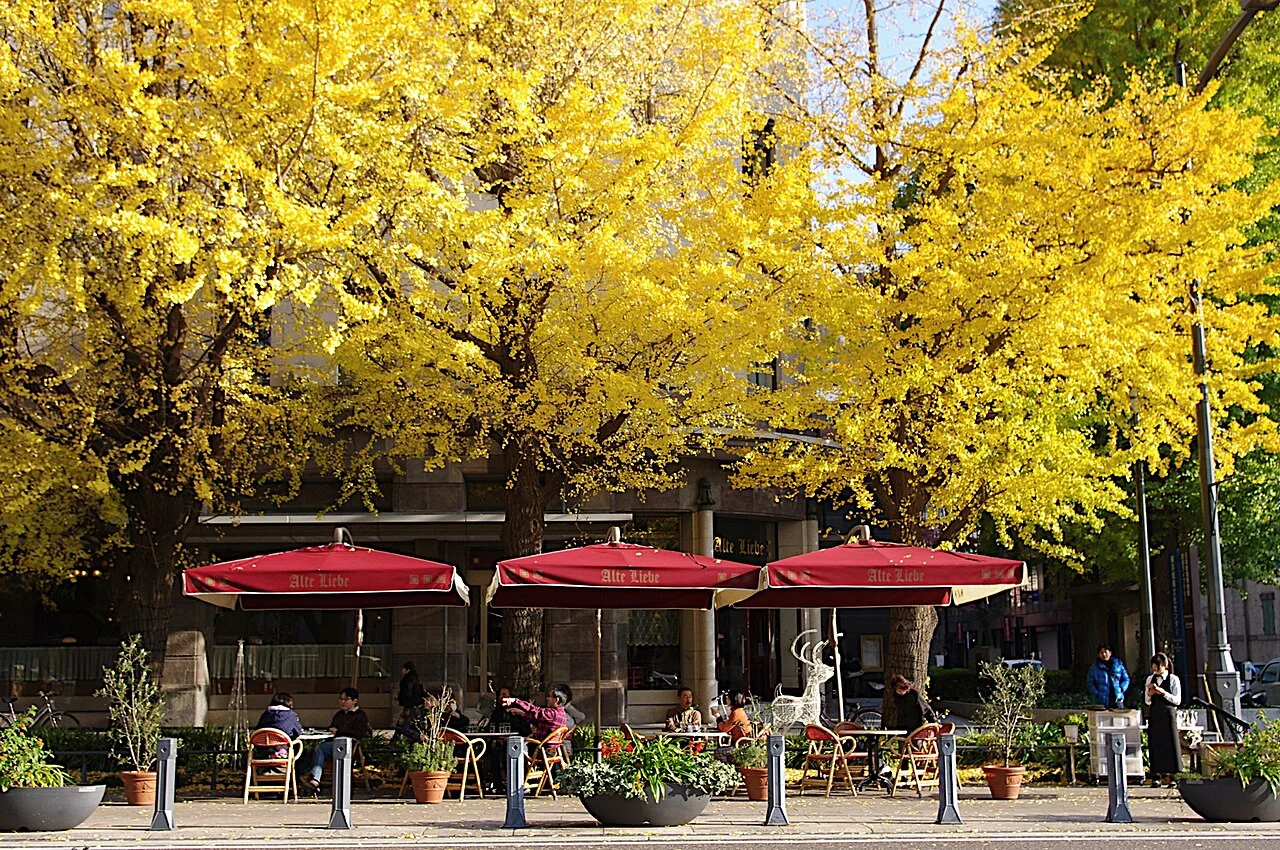
Combining a morning at Sankeien Garden with an afternoon along Nihon-odori and Yamashita Park makes the smoothest first-time autumn day in Yokohama. In Honmoku, maples layer up wooded hillsides; down on Nihon-odori, ginkgo trees form a crisp avenue past the Kanagawa Prefectural Government Building and the Yokohama Archives of History. Yokohama City's foliage guide puts Nihon-odori's usual peak from mid-November to early December, right outside Nihon-odori Station on the Minatomirai Line. Because street and garden leaf timings differ, even if one site is past or ahead of peak, the other still rewards a walk with historic buildings and harbour views.
Walk from the Main Gate to 'Sankeien-iriguchi' and catch a municipal bus towards Yokohama Station, getting off at 'Chukagai-iriguchi'. From there you can wander through Yamashita Park onto Nihon-odori, or stop in Chinatown for lunch first. If you plan to board the NYK Hikawa Maru, visit the ship before walking up to Nihon-odori; it generally opens 10:00–17:00 (last entry 16:30) and closes Mondays, or the following weekday when Monday is a public holiday. Pairing Sankeien's relocated wooden architecture with Hikawa Maru's intact ship cabins and engine rooms gives a full day plenty of visual contrast.
On a weekday, aim to reach the Main Gate by 09:30 or 10:00, cover the highlights of both gardens before noon, have lunch in Chinatown and keep the afternoon for one waterfront landmark plus the ginkgo avenue. On a weekend combining daytime and Yasou, eat lunch around the harbour first, arrive around 14:00 to walk the trail and Great Pond, and stay into the evening. If the Former Tokeiji Buddha Hall is a priority, visit it before 15:00 ahead of Choshukaku; if natural daylight on the maples matters more, move your arrival earlier. To include a full Minato Mirai promenade instead, swap the evening lighting for harbour night views—see our Yokohama walking, food and hotel guide for waterfront routing.
If you only have two or three hours to spare, factor in both bus rides and waiting time. Starting from Yokohama Station with an afternoon train back to Tokyo, take the holiday direct bus to the Main Gate if running, and focus on the Great Pond, Rinshunkaku and whichever trees show the best colour. If you are already near Yamashita Park with a fixed return train, staying along Nihon-odori and the waterfront trades transfer time for extra walking—also a handy fallback during Sankeien's year-end closure week.
If you want to keep your half-day focused on Honmoku, the garden suggests a 40 to 60-minute route running from the Main Gate through the South Gate into neighbouring Honmoku Shimin Park. It passes the Great Pond and Outer Garden, ideal for walkers keen to add extra parkland and exit from the far side. Before leaving in the daytime, decide whether you will loop back to the Main Gate for the bus or continue out via the South Gate; if you simply want ginkgoes along Nihon-odori afterwards, returning via your most familiar bus stop saves crossing the grounds twice.
Where to stay in Yokohama
Because Sankeien sits a bus ride away from central Yokohama, choose your hotel district around your first bus out or final walk back. If you have an early train the next morning towards Tokyo, Odawara or Haneda Airport, staying by Yokohama Station keeps large luggage anchored at the main rail hub. JR-East Hotel Mets Yokohama is roughly a 3-minute walk via the pedestrian deck from the JR North Ticket Gate and North-West Exit; in the morning, cross back to the East Exit SOGO side for the Sankeien bus, and at night the station links smoothly if you return from Negishi Station after Yasou.
If your daytime plans pair the Red Brick Warehouse and Minato Mirai with Sankeien, Sakuragicho bridges waterfront walks and the JR Negishi Line. JR-East Hotel Mets Premier Yokohama Sakuragicho sits about 1 minute from the New South Gate. You can catch municipal buses right outside Sakuragicho Station in the morning and ride JR straight back from Negishi Station after Yasou without crossing between Yokohama Station's east and west exits. It suits anyone planning canal walks and rail connections the next day, whereas travellers keen on post-dinner strolls through Yamashita Park are better placed around Motomachi and Chinatown.
Hotel New Grand faces Yamashita Park directly, roughly a 1-minute walk up the stairs from Exit 1 of Motomachi-Chukagai Station, or 2 minutes via Exit 2 with a lift if you have luggage. This base works well for dining in Chinatown and taking nearby daytime buses to Sankeien. If you take the Yasou South Gate shuttle back to Negishi Station at night, however, you will need a rail transfer onto the Minatomirai Line or another route towards your hotel. Visitors staying until Yasou closes often find Sakuragicho or Yokohama Station smoother, while those prioritising quiet morning and evening harbour walks save steps around Yamashita Park.
When comparing room rates, check totals for the exact same dates and guest count. Families with two adults and one child should enter the child's age on the booking page, as sharing existing beds versus adding an extra bed falls under different rate plans. A hotel with fewer transfers can save more energy than one a stop closer to a single sight. Visitors staying in Tokyo who only want daytime autumn foliage can easily manage Sankeien as a half-day trip, whereas staying one night in Yokohama genuinely pays off if you stay for Yasou and want an early start for harbourside ginkgoes the next morning.
A few useful answers
When are the autumn leaves usually at their best in Sankeien Garden?
Peak colour typically falls between late November and early December. On 22 November 2026, the garden reported that the large ginkgo beside the Former Tenzuiji Juto Oido was nearing peak, and you can check the latest Inner and Outer Garden photos on the same updates page to time a maple visit.
How much is daytime admission to Sankeien Garden?
Standard daytime entry is ¥900 for adults (high school age and above) and ¥200 for elementary and junior high school pupils. Yokohama residents aged 65 or over pay ¥700 upon showing proof of address and age.
Which bus stop should first-time visitors use for Sankeien Garden?
From Yokohama Station East Exit Stop 2, take municipal bus route 8 or 168 to 'Sankeien-iriguchi', about a 5-minute walk from the Main Gate. From JR Negishi Station Stop 1, take route 58 or 101 to 'Honmoku', roughly a 10-minute walk; the free Yasou evening shuttle departs from Negishi Station Stop 9.
Can a daytime ticket be used to stay on for the Yasou evening event?
No—Yasou requires a separate event ticket. In 2026, on-the-day tickets are ¥1,000 for adults and ¥500 for elementary and junior high pupils, or ¥100 less when bought online, with free entry for pre-schoolers. Daytime visitors must exit before re-entering with a Yasou ticket.
Will the Three-Storey Pagoda be visible during the 2027 autumn season?
Major repair works are scheduled to begin in April 2027, enclosing the pagoda in protective scaffolding. The 2027 autumn trail still runs from 20 November to 12 December, so plan photos around Choshukaku, Rinshunkaku and the large ginkgo beside the Juto Oido instead.
Is the autumn trail behind Choshukaku suitable for pushchairs?
No, that trail has continuous stone steps. Pushchair users are better off sticking to the Main Gate, Great Pond, Rinshunkaku and Central Square; the garden also publishes a step-free route, though stretches of gravel path remain.
Official information and references
Sources used in this guide.
- Sankeien Garden Visitor Guide (Tickets, Opening Hours, Parking and Services)
- Sankeien Garden Access and Bus Stop Locations
- Sankeien Garden FAQ (Bus Stops, Dining and Photography Rules)
- Yokohama City Transportation Bureau Sightseeing Buses and Single Fares
- Yokohama City Transportation Bureau Minato Burari Ticket Fares and Valid Stops
- Sankeien Garden 2026 Autumn Foliage Status Updates
- Sankeien Garden 2026 Autumn Trail Opening and Seasonal Events
- Sankeien Garden 2026 Autumn Foliage Highlight Map
- Sankeien Garden Grounds Map and Historic Building Locations
- Sankeien Garden Choshukaku Architecture and 360-Degree Interior View
- Sankeien Garden History (Outer Garden Opening, Hara Residences and Relocation Dates)
- Sankeien Garden In-Depth Walking Course and Honmoku Shimin Park Route
- Sankeien Garden Pondside Accessible Route
- Sankeien Garden Teahouses and Dining
- Sankeien Garden Former Tokeiji Buddha Hall Special Opening
- Sankeien Garden Former Yanohara House Temporary Closure
- Sankeien Garden 2027 Former Tomyoji Three-Storey Pagoda Repair Notice
- Sankeien Garden 2027 Flower and Event Calendar
- Sankeien Garden 2026 Yasou Evening Event Announcement
- Yasou Event Organiser (Programme, Online Tickets and Access)
- Yasou Event Organiser Free Shuttle Bus Timetable
- Yokohama Official 2026 Autumn Foliage Guide (Nihon-odori and Sankeien Garden)
- NYK Hikawa Maru Visitor Information
- Yokohama Doll Museum Visitor Guide and Nearest Underground Exit
- JR-East Hotel Mets Yokohama Access and Bookings
- JR-East Hotel Mets Premier Yokohama Sakuragicho Access
- Hotel New Grand Yokohama Access