2026 family guide to Cup Noodles Museum Yokohama. Compare My CUPNOODLES Factory advance bundles and same-day tickets, Chicken Ramen Factory age and booking rules, and a half-day route from the exhibits and Noodles Bazaar to the Red Brick Warehouse and cable car.
- Region & Focus
- Yokohama
- Reading Scope
- 14 min read · 7 chapters · 6 Q&As
- Official Verification
- 28 official sources checkedUpdated 22 November 2026
- Key Topics
- First tripFoodBooking
Chapter Route Map (tap any stop)
- Decide whether you want a custom cup or handmade noodles first
- My CUPNOODLES Factory: from sketching your cup to carrying it out
- Chicken Ramen Factory: kneading noodles with a partner
- 2F highlights: Instant Noodles History Cube, the work shed and Momofuku Theatre
- 4F lunch: start with two half-size noodle bowls
- CUPNOODLES PARK: become a noodle on the production line
- Walking in from Minatomirai or Bashamichi, then on to the Red Brick Warehouse and cable car
- Quick Q&A
Visiting Cup Noodles Museum Yokohama with an eight-year-old for the first time works best starting at My CUPNOODLES Factory. Children decorate their own cup and choose the soup base and toppings. Normally, you pump air into a clear pouch to sling the sealed cup over your shoulder, though from October 2026 the 15th-anniversary campaign switches to a limited-edition cardboard box. If you want to make noodles from flour from scratch, pick the Chicken Ramen Factory on the same third floor. That session lasts roughly 70 minutes, and pupils in elementary Years 1 to 3 must pair up with a participant of junior high school age or older. Book your top-priority workshop first, then leave time for the Instant Noodles History Cube, half-size bowls on the fourth floor or the Yokohama Red Brick Warehouse.
Decide whether you want a custom cup or handmade noodles first
The museum's official name is Momofuku Ando Instant Ramen Museum Yokohama, located at 2-3-4 Shinko, Naka-ku, Yokohama. You can start your day at the workbenches on 3F or simply browse the exhibits on 2F. The museum estimates around an hour for the galleries alone, while adding one hands-on workshop and a noodle lunch comfortably takes two to three hours. Families planning to spend most of the day in the Shinko district might consider a second workshop, leaving breathing room for moving between floors, waiting for lifts and sitting down for lunch.
The easiest approach is for one adult and a child to pick a single 3F slot. Children who enjoy drawing and inventing their own noodle name should choose My CUPNOODLES Factory. Those curious about how dough turns into thin strands, or who already love kneading at home, will prefer Chicken Ramen Factory. If you are travelling with a toddler, My CUPNOODLES Factory has no age restriction: little ones can draw wherever they can reach, with companions helping on the trickier steps. Families with wildly different spice tolerances can each make their own cup and compare flavours back home.
Admission is handled on the ground floor (1F); visitors who only want to see the exhibits can enter on the day, as there is no advance sale for admission-only tickets. Entry is ¥500 for university students and adults, and free for high school students and younger. Children enter the museum for free, though making their own cup still costs ¥500 per experience. One adult and one elementary school pupil making a cup each pay ¥1,500 in total for admission plus the workshop. If both do Chicken Ramen Factory instead, that comes to ¥500 admission plus ¥1,200 for the adult and ¥600 for the elementary pupil, totalling ¥2,300. When comparing the two, calculate the cost per person actively taking part.
Opening hours are 10:00–18:00, with last admission at 17:00. The museum closes every Tuesday, or the following day if Tuesday falls on a Japanese public holiday. It has a special closure on 23 November 2026, followed by its regular Tuesday closure on 24 November. Over the New Year period, plan other Yokohama stops between 29 December 2026 and 2 January 2027, when the museum shuts for five days. There is also a maintenance closure from 12 to 15 January 2027. Official museum calendar and notices
Paid workshops, exhibitions and dining each have their own cut-off times. If you arrive in the afternoon, tackle your child's top pick first, especially as the 4F play area stops admitting guests at 17:00. For a quick rainy-day stop without waiting for a workshop, heading straight to 2F saves the most time. The 1F souvenir shop can be entered separately, handy if you want to pick up gifts on your way out. Visitors who have already entered can pop across the road for lunch and re-enter on the same day using their admission ticket. If you still have a workshop check-in afterwards, keep your ticket handy and factor in walking and re-entry time.
Bring a few ¥100 coins and small-denomination yen notes before arriving. Admission, same-day workshop desks and the play area are handled at different counters, and NOODLES BAZAAR uses ticket vending machines at each stall. The museum's service guide notes that credit cards are accepted at the 1F shop, and online bundle tickets can be paid by card. Pushchair users can use the lifts, and there is a nursing room plus coin lockers beneath the main 1F staircase, though staff cannot store oversized luggage or prams that do not fit inside. If you have just arrived in Yokohama, leave cabin bags at the station or your hotel so you only carry daily essentials up to 3F.
| Item | Tax-included fee | How to enter or purchase |
|---|---|---|
| Museum entry & 2F permanent exhibits | ¥500 for university students and adults; free for high school students and younger | Enter on 1F on the day; last admission at 17:00 |
| My CUPNOODLES Factory | ¥500 per cup (one per person) | Same-day numbered ticket plus empty cup, or advance timed bundle |
| Chicken Ramen Factory | ¥600 for elementary pupils; ¥1,200 for junior high and older | Book in advance, then pay at the 3F workshop counter |
| CUPNOODLES PARK | ¥500 per child | Buy same-day slot at the 4F counter; last entry at 17:00 |
| NOODLES BAZAAR | ¥500 per half-size bowl; ¥250 for Mini Chicken Ramen | Ticket vending machine at each 4F stall; last order at 17:30 |
2026 family guide to Cup Noodles Museum Yokohama. Compare My CUPNOODLES Factory advance bundles and same-day tickets, Chicken Ramen Factory age and booking rules, and a half-day route from the exhibits and Noodles Bazaar to the Red Brick Warehouse and cable car.
My CUPNOODLES Factory: from sketching your cup to carrying it out
If you have already promised your child they can make a cup before setting off, book the admission bundle with a workshop voucher in advance. The listing is titled "Admission Ticket with My CUPNOODLES Factory Voucher" on the ticketing site. It costs ¥1,000 for adults and ¥500 for high school students and younger. Choose the same date and time slot, and enter the exact number of people making a cup. If only the child is taking part while an adult supervises, buy the bundle just for the child and pick up a standard admission ticket for the adult on arrival. Tickets for the following month go on sale at 10:00 JST on the 1st of each month, and remaining spots can be bought until 24:00 JST the day before. Official online ticketing
A bundle time slot is a check-in window. With an 11:00–11:20 ticket, for example, you can enter early and browse 2F, provided you reach the 3F workshop entrance within those 20 minutes. On the day, enter the application number from your confirmation email into the 1F machine to print both your admission and workshop vouchers. Scan the admission QR code at the 2F gate and show the workshop voucher to staff on 3F. Ticket machines operate from 9:50 to 17:00 on the day. Allowing for the walk from the station, ticket collection, heading upstairs and finding the entrance, having the confirmation email saved on your phone is far quicker than rummaging through your inbox at the counter.
Spontaneous visitors can queue for same-day numbered tickets. Collect one in order of arrival at the 1F reception desk, choose from the remaining slots, and buy a ¥500 empty cup from the vending machine once inside the workshop. Grabbing a numbered ticket right after opening gives you more slot choices than touring a whole floor first. Distribution closes as soon as the day's capacity is filled. The museum's attraction page lists workshop hours as 10:00–18:00, with last admission at 17:30. The final online bundle check-in window is 16:30–16:50, and if you plan to collect a ticket at the counter, remember museum entry closes at 17:00. Same-day workshop availability
Once inside the work area, collect or purchase your cup, sanitise your hands and sit down to decorate it. If you want it to feel like a travel keepsake, let your child brainstorm a flavour name on paper beforehand to copy onto the cup. An eight-year-old aiming to draw a giant Ferris wheel or two faces should sketch the main motif on the front in a few bold strokes first, then fill the remaining space with a name and date. Before turning the cup to draw on the back, stand it upright to check alignment so you can spot your own cup straight away after sealing.
Finished cups move on to noodle filling. Staff place the inverted cup over a noodle block and flip it right way up. In mass production, the cup tapers towards the base while the noodle block is slightly wider so it wedges securely in the middle; lowering the cup from above keeps the noodles centred without tilting. Next, pick one soup base from the regular line-up—original, curry, seafood or chilli tomato—plus four toppings from 12 choices. Chick-shaped fishcakes, sweetcorn and prawns are easy to recognise from the picture signs. One adult can choose first so the child has time to study the topping board and point when it is their turn. Staff also allow four portions of the same topping, so fans of the chick design can load up on chick fishcakes.
Staff seal the lid and wrap the cup in shrink film. With the finished product in hand, you normally slip it into a clear inflatable pouch, pump the sides taut and tie on a strap to wear it out. Curious children can compare the feel of the film before and after inflation and see how the cushion suspends the cup in the centre. To take the cup out at home, the museum instructs inserting a drinking straw into the inflation valve and gently pressing to release the air. It is best eaten within one month of production.
From 1 October 2026, the museum switches to a 15th-anniversary cardboard box, capped at 150,000 units until stocks run out. During the campaign, every cup receives the box at the same ¥500 price. The final step becomes folding the box yourself, which opens to reveal illustrations of a skateboarding ninja and a kimono-clad figure taking a smartphone selfie. If your child has their heart set on slinging the inflatable bag over their shoulder, let them know about this switch beforehand. 15th-anniversary box announcement
If anyone in your party has specific dietary restrictions, check the itemised ingredient chart on the attraction page first. Noodles, soup powders and toppings are listed separately: the noodles themselves contain wheat, milk ingredients and chicken, for example, while crab-flavoured kamaboko contains crab. Swapping out a single topping still leaves the base noodles and soup allergens intact, so an alternative is accompanying the family to make cups and choosing another meal on 4F. The official site estimates 45 minutes for the workshop, while the ticketing page allows 45 to 60 minutes. If your child likes to colour carefully, push your next timed commitment back accordingly. Process, flavours and ingredients
Chicken Ramen Factory: kneading noodles with a partner
This workshop sends you home with bagged Chicken Ramen. After entering, put on the museum's apron and chick bandana, and remove watches and jewellery. Working in pairs at each table, you knead wheat flour into dough, then roll it thin and cut it into strands using a pasta-style machine. Taking turns cranking the handle and catching the dough sheet lets a child feel how a thick lump gradually becomes a thin sheet; one person holds the sheet steady while the other turns the crank so the cut strands are caught cleanly.
The cut noodles go into a sieve basket for staff to steam. While they steam, participants decorate the outer paper packet, then loosen, season and place the noodles into moulds. Staff handle the flash-frying behind glass, where you can watch oil bubbling around the noodles. Momofuku Ando used this step to drive out moisture rapidly, leaving tiny pores in the dried strands so boiling water penetrates them again at home. If a child asks why frying in oil helps noodles soften in hot water, suggest opening the packet at home to inspect the surface.
Check school years and pair sizes before booking. Elementary pupils in Years 1 to 3 must pair with a paying participant of junior high school age or older, with school years updating on 1 April. One adult bringing an eight-year-old books for two. Two lower-elementary children with one adult only form one valid pair, so for both children to take part you need two eligible partners. Because the workshop runs in pairs, book in even numbers wherever possible; solo bookings are not accepted. Groups of four or more can book the same session, though seats may be split across tables, so agree on pairings ahead of time.
Pre-schoolers and non-participating companions cannot enter the workshop room, including babies in carriers. Two adults visiting with an eight-year-old and a toddler can send one adult and the eight-year-old into the classroom while the other adult takes the toddler to 2F to spot animal-themed noodle packets. You can also watch progress through the exterior glass. Decide on a meeting spot before booking, such as the 3F workshop exit. Parents photographing from outside the glass can wait until their child's turn at the bench so other waiting families can share the window view.
Individual bookings for up to 20 people open at 10:00 JST three months to the day before the session and close at 18:00 JST the day prior, or earlier if full. If the release date falls on a closed day, bookings open at 10:00 JST on the next open day; if that month has no matching date, they open at 10:00 JST on the first open day of the following month. Online booking requires registering a museum account; reservation and payment are separate steps, with the fee settled at the 3F workshop counter. Telephone bookings are also available. Chicken Ramen Factory availability and booking
Standard start times run in the morning at 10:15, 11:00 and 11:45, and in the afternoon at 13:15, 14:00, 14:45, 15:30 and 16:15. Securing a morning slot lines up neatly with lunch right afterwards. If only 16:15 remains, flip the order and visit the Red Brick Warehouse beforehand so hungry children are not waiting out a late class. The museum keeps no waitlist; same-day slots only open if someone cancels, so enquire at the 3F counter before deciding how long to spend on other floors.
On open days between 30 January and 28 February 2027, the Chicken Ramen Factory turns out heart-shaped noodles. Sessions appear on the same booking page, still opening three months ahead. If you come across older travel blogs quoting lower prices, note that from 31 January 2026 the fee for junior high school students and older rose to ¥1,200, while elementary pupils remain ¥600. Heart-shaped noodle dates
Each Chicken Ramen Factory session lasts 70 minutes, and you take home both the finished packets and your bandana. Even when two packets hold the same flavour, the drawings on your wrappers make it easy to tell whose is whose back home. Anyone with food allergies should note the museum's listed ingredients—egg, milk ingredients, wheat, soy, chicken and sesame—before choosing this workshop. Schedule, fees and participation rules
2F highlights: Instant Noodles History Cube, the work shed and Momofuku Theatre
Step into the Instant Noodles History Cube on 2F and you are met by wall-to-wall rows of more than 3,000 boxed and bagged instant noodles. Start by finding the original Chicken Ramen, then trace when packaging grew taller and shifted into cups. The display includes brands and countries worldwide, giving children plenty of familiar ingredients, lettering and packets to hunt down. Exploring as a family, parents and children can each point out packaging they remember from childhood and scan along the same shelf for colour variations.
Momofuku's Work Shed recreates the shack in Ikeda, Osaka, where Momofuku Ando experimented with Chicken Ramen. The exhibit preserves a modest workspace and everyday utensils—some of the tools and supplies were even hauled in by bicycle. Rather than reciting dates, ask your child how you might make cooked noodles keep until next month using a single workbench, and still soften instantly in hot water. When you head up to 3F to watch the steaming and drying demonstrations, they will have a puzzle in mind to look out for.
The Momofuku Ando Story exhibit also links three milestone inventions along one timeline: bagged Chicken Ramen in 1958, Cup Noodles in 1971—which built the container into the eating experience—and space ramen in 2005. Museum notes describe how Ando saw people in the United States breaking noodles into a mug, pouring in hot water and eating with a fork. If your child has just picked up their own cup at the counter, ask them to spot how jobs normally done with a saucepan and a bowl all happen inside one cup. For space travel, Nissin thickened the broth and cut the noodles into bite-sized pieces so they could be eaten in zero gravity. Three inventions featured by the museum
If you are short on time and want just one interactive gallery, 2F also houses Creative Thinking Boxes. Each box turns a shift in perspective into a physical space, inviting children to take a step sideways and look again. That habit carries naturally to the floor above: holding a cup in a classroom and watching a machine align cup rims with noodle blocks on the assembly line mean staring at the same object, yet noticing two completely different questions. Creative Thinking Boxes exhibition
Momofuku Theatre sits on the same floor, a red screening room showing the roughly 14-minute CG animation "MOMOFUKU TV". Structured like a television programme, it traces Ando's life and dramatises key moments behind his inventions, after which you can loop back to the History Cube to spot the products shown on screen. The theatre page notes that multilingual audio guide rentals are currently suspended, while the service guide lists a smartphone audio guide in Japanese, English, Simplified Chinese and Korean. You can preview a few key items outside the hall using the museum's exhibition notes before stepping in for the film.
When you only have a short gap before a workshop check-in, treat 2F as a stop you can dip in and out of. Browse one wall of the History Cube first and return after your workshop to check international packaging. Before entering the theatre, double-check your next entry window, allowing extra minutes for entering, exiting and changing floors. If two children work at different speeds, agree to regroup outside the replica work shed and compare the packaging shapes you guessed once everyone has finished decorating their cups. Even on a one-hour gallery-only visit, carving out time for the theatre beats racing past every wall in five minutes. Momofuku Theatre
4F lunch: start with two half-size noodle bowls
NOODLES BAZAAR on 4F serves from 11:00, with last orders at 17:30. Inside, stalls are arranged in a set modelled on an Asian night market. To taste the differences across regions, start with two bowls between two people before deciding whether to order more. Each half-size serving costs ¥500, so two come to ¥1,000. Children are easily drawn to the food photos at the counter; ask them to pick one lighter-looking broth and one bowl with a completely different noodle shape. Ordering a different dish for everyone lets the whole table compare noodle length and thickness.
The official website shows photos and spice ratings for eight noodle dishes. Children used to tomato pasta can start with the Italian stall's pasta. To contrast dry and soupy styles, pair Indonesian mie goreng with Vietnamese pho—their aromas could not be further apart, one seasoned with sweet soy sauce and the other lifted by fish sauce and coriander. Adults after heat and tang can look to Thai tom yum goong noodles or Malaysian laksa; laksa's spiced coconut-milk broth stands out clearly against the sharp citrus and lemongrass of the Thai soup. If a child wants a spicy bowl, check the menu's heat rating first and consider sharing.
Korean cold noodles offer another clean contrast, built around beef-bone broth and chewy texture. Kazakh lagman shows how the museum presents Central Asian mutton-based noodles, while Lanzhou beef noodles cater to beef-broth fans. Once several bowls arrive, ask your child which one they would eat again and have them point out its stall photo. For cautious eaters, the ¥250 Mini Chicken Ramen is an easy fallback while adults order half-size regional bowls for themselves. Resist filling the entire table on round one—the point of half portions is leaving appetite for a second pick.
Each stall sells meal tickets via its own vending machine, which you hand to the counter staff. Keep an eye out for a table first, then let one adult queue with a child for the stall in front of you while everyone else stays seated. International desserts are ¥400, and juices or the drink bar are ¥250 each, according to the museum's Japanese price list. Food must be eaten inside the bazaar; takeaway and outside packed lunches are not permitted. Anyone managing food allergies should ask stall staff for the museum's allergen chart before inserting coins, rather than guessing broths or sauces from dish names.
If you only have a brief gap between two workshops, prioritise finishing your craft and checking in on time, bringing your packaged cup upstairs just to scope out seating. Finding a table, choosing flavours and collecting bowls from separate stalls eats up minutes quickly. Budget 45 minutes as a baseline, or treat lunch as a full stop if the family wants three or four dishes plus drinks. Big appetites can top up with a second meal across at Yokohama World Porters afterwards, avoiding a hunt for sit-down food while heading for the cable car. Bazaar menu and opening hours
CUPNOODLES PARK: become a noodle on the production line
CUPNOODLES PARK on 4F turns the noodle-making sequence into a climbing and sliding playground. Children scramble through yellow noodle-making nets, dive into a ball pit to be "seasoned" with soup, cross a floor projecting sizzling frying bubbles, pass through a tumbling tunnel, catch toppings on touchscreens and finally "ship out" down roller slides beside cardboard boxes. If they have already made a cup downstairs, ask which zone represents lowering the cup onto the noodle block on 3F; once outside, they can point to their cup and match each topping to its stage.
Entry is open to children aged three through elementary school who measure at least 90 cm tall. Same-day tickets cost ¥500 on 4F for a 30-minute session, including 25 minutes of play. It opens at 10:30, with last entry at 17:00 and closing at 17:30. At busy times, head straight up after a 3F workshop and check how long until the next slot relative to lunch—eating first is calmer than sitting hungry, sweaty children down right after a run-around. Advance bookings are not taken; check the 4F counter or the museum's live status page for remaining same-day slots.
Pre-schoolers require a supervising parent or guardian, who enters free of charge. Children under three cannot enter, pregnant visitors cannot act as accompanying guardians, and pushchairs must stay outside the play zone. If you are bringing two children of different ages, decide which adult goes inside before meeting back on 4F. Because the course involves climbing nets and active movement, wear closed-toe trainers with good grip; sandals, loose shoes and slippery footwear are prohibited, and shoe rentals are not available. For an energetic eight-year-old with room for just one extra paid activity, these 25 minutes are plenty without squeezing in another workshop. Play zones and entry requirements
If part of your group wants a breather, one adult can take a child into the park while others stay on 4F for noodles or head down to 2F for the exhibits. Agree on a floor and entrance to regroup beforehand, and leave inflatable cup pouches with whoever is waiting outside. From here, gauge everyone's remaining energy for the waterfront walk—those ready to sit and take in harbour views can aim for the cable car, while kids who still want to run can head over to Akarenga Park first.
Walking in from Minatomirai or Bashamichi, then on to the Red Brick Warehouse and cable car
On the Minatomirai Line, the museum estimates an eight-minute walk from either Minatomirai Station or Bashamichi Station. From Minatomirai Station, exit towards Queen's Square, follow Kokusai-dori towards the giant Ferris wheel and Kokusai Bridge, and cross into the Shinko district to spot the square red-brick building. From Bashamichi Station, take Exit 4 (Bankokubashi Exit), cross Bankokubashi Bridge towards Yokohama World Porters and continue via Kokusai Bridge to the museum. Both routes run outdoors, so allow extra minutes for crossing junctions with a pushchair. Official area walking map
By JR or municipal underground to Sakuragicho Station, the museum estimates a 12-minute walk. Follow the waterside Kishamichi Promenade towards Unga Park and the Shinko district. If you want to ride the cable car, the cabin station is about a minute from Sakuragicho Station's East Exit, followed by an estimated five-minute walk from Unga Park Station. For fixed morning workshop check-ins, walking is easiest to time reliably, leaving the cable car for the return leg when you can buy tickets on a whim. Note for pushchair users at Minatomirai Station: railway notices state that the lift between the central ticket gates and platform is out of service from 6 October to mid-December 2026, with lift work between the gates and Exit 4 scheduled from 8 January to mid-March 2027. Ask station staff for accessible detours or use Bashamichi Station instead. Minatomirai Station lift notice
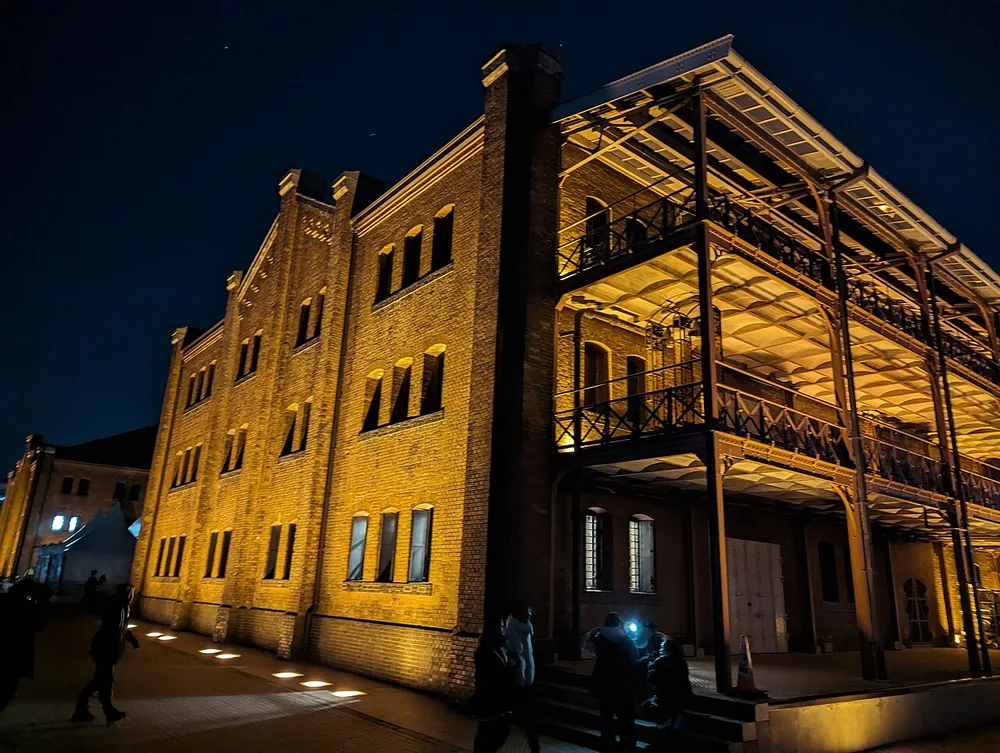
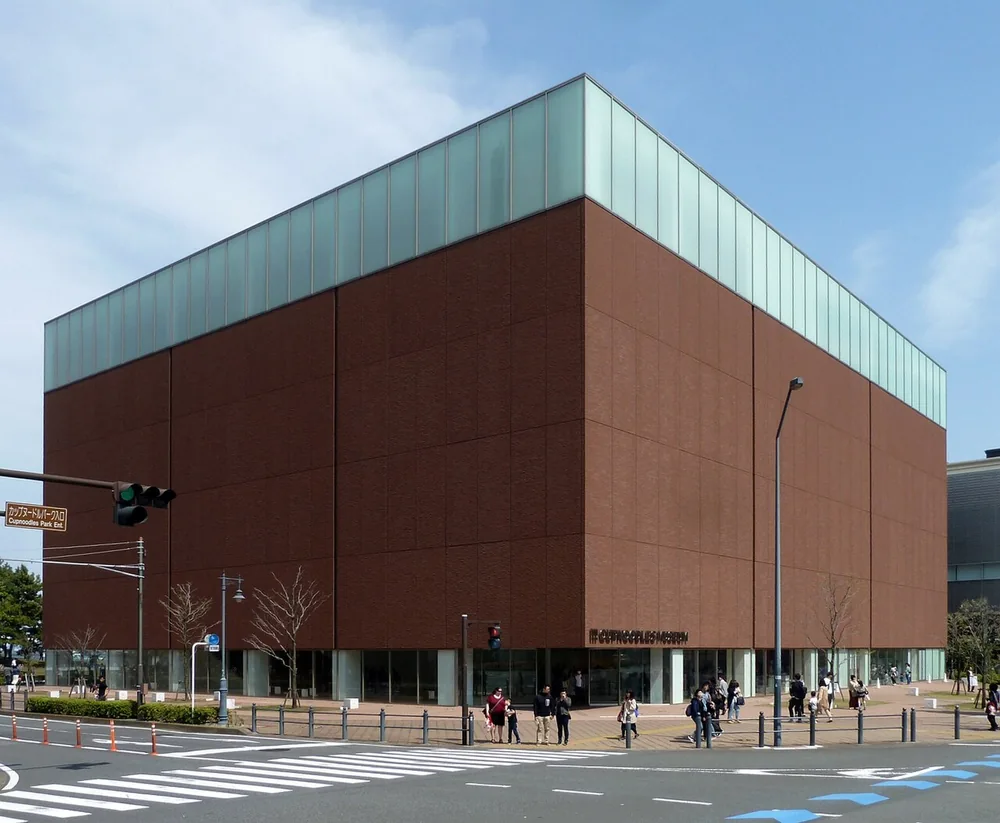
After making your cups, stroll along Shinko's streets to the Yokohama Red Brick Warehouse, whose pitched roofs sit in sharp contrast to the museum's boxy brick facade. Head to Akarenga Park by the water first to look out towards Osanbashi Pier and the Yokohama Bay Bridge. If anyone is hungry, duck into Building 2 for shops and restaurants, while Building 1 hosts exhibitions and events. Treat this post-museum stretch as an unhurried walk, letting children check out the brick exteriors and harbour before deciding how long to stay; in winter, check ticket types and entry gates in advance if you plan to visit the Christmas market. Yokohama waterfront walks and dining, Yokohama Red Brick Warehouse Christmas Market
Before leaving the museum grounds completely, walk past the glass showcase along the Kokusai-dori side. It holds a free-to-view Cup Noodles marble run where red glass marbles race down tracks inside a miniature factory. Every time the giant central cup tips over, a fresh cascade of marbles pours from the top—an easy street-side stop that needs no re-entry. Outdoor marble run and hours
To connect back to JR from the warehouse area, walk to Unga Park Station and take the YOKOHAMA AIR CABIN one way to Sakuragicho. Riding in daylight lets children spot the bridges and waterfront paths you just walked from above. Single fares are ¥1,000 for junior high school age and older, ¥500 for ages three through elementary school, and free for under-threes, with at least one paying passenger of junior high age or older required per cabin. Services depend on weather and maintenance, so check same-day status on the official homepage first; if high winds halt operations or queues stretch out, walk straight back to Sakuragicho via Unga Park and Kishamichi Promenade. If you are returning directly via the Minatomirai Line, Bashamichi Station is an estimated six-minute walk from the Red Brick Warehouse. Cable car status and ticketing
Families arriving in the morning can book a 10:30–10:50 My CUPNOODLES Factory slot, eat noodles on 4F afterwards, dip into a few 2F exhibits and wander out to Akarenga Park to see the harbour. Saving Momofuku Theatre for after lunch works well if children want extra time to draw. If you book the 11:00 Chicken Ramen Factory session instead, class wraps up at 12:10; arrive early to view the noodle wall and work shed on 2F, then head straight to lunch after class. Either route leaves the afternoon free for the cable car without doubling back for a 3F slot.
When scheduling two workshops on the same day, lock in Chicken Ramen Factory first and fit My CUPNOODLES Factory and lunch around it. A 10:15 Chicken Ramen session finishes at 11:25, leaving a 12:30–12:50 My CUPNOODLES slot with comfortable margin for finding lunch and waiting for lifts. If you decorate a cup first instead, never book Chicken Ramen exactly 45 minutes after your cup slot begins—your child may still be picking toppings with shrink-wrapping and bagging yet to come. Where check-in windows cannot be spaced cleanly, keep the workshop your child cares about most and use the other block for exhibits or lunch.
| Starting point | Museum-estimated walk | Landmarks on the way |
|---|---|---|
| Minatomirai Line – Minatomirai Station | Approx. 8 minutes | Queen's Square, Kokusai Bridge, giant Ferris wheel area |
| Minatomirai Line – Bashamichi Station | Approx. 8 minutes | Bankokubashi Exit, Bankokubashi Bridge, Yokohama World Porters |
| JR / Municipal Underground – Sakuragicho Station | Approx. 12 minutes | Kishamichi Promenade, Unga Park, Shinko district |
| YOKOHAMA AIR CABIN – Unga Park Station | Approx. 5 minutes | Head along the Shinko district towards the museum after alighting |
A few useful answers
Do I need a booking just to visit Cup Noodles Museum Yokohama?
General visitors can enter on the day without booking. Admission is ¥500 for university students and adults, and free for high school students and younger. If you want to book ahead, the ticketing site sells admission bundles that include a timed slot for My CUPNOODLES Factory.
Can I still make a custom cup on the day if online bundles sell out?
Yes—check for same-day numbered tickets. The museum distributes them on a first-come, first-served basis for available slots; once you have a ticket, head into the workshop and buy an empty cup from the vending machine. Arriving at opening time on busy days gives you the widest choice of slots.
Can a Year 2 elementary pupil join Chicken Ramen Factory alone?
Elementary pupils in Years 1 to 3 must pair with a paying participant of junior high school age or older. Both must be booked: ¥600 for the elementary pupil and ¥1,200 for the partner, plus standard adult museum admission. Pre-schoolers can join My CUPNOODLES Factory instead.
Can you eat your custom Cup Noodles or handmade Chicken Ramen inside the museum?
Workshop creations are meant to be taken home and prepared later; the museum recommends eating them within one month of production. For a hot bowl on site, head to 4F NOODLES BAZAAR for Mini Chicken Ramen or half-size international noodle dishes.
Do parents and children both need tickets to enter CUPNOODLES PARK?
Eligible children—aged three through elementary school and at least 90 cm tall—pay ¥500 per session. Pre-school children must be accompanied by a parent or guardian, who enters free of charge.
How long should we allow for one workshop plus the Yokohama Red Brick Warehouse?
Set aside two to three hours inside the museum to cover one workshop, selected 2F exhibits and lunch on 4F. Afterwards, walk over to the Red Brick Warehouse at your own pace, then continue to Unga Park Station if you fancy riding the cable car back to Sakuragicho.
Official information and references
Sources used in this guide.
- Official opening hours, admission and attraction fees
- Official notice on the 23 November 2026 special closure
- Official notice on year-end/New Year and January 2027 maintenance closures
- My CUPNOODLES Factory process, ingredients and numbered tickets
- Official e-tix bundle prices, release schedule and ticket collection hours
- Chicken Ramen Factory fees and pair-participation rules
- Official Chicken Ramen Factory reservations and slot availability
- Official attraction FAQs and same-day reception rules
- Official same-day attraction availability and crowd status
- Momofuku Ando invention timeline and museum overview
- Instant Noodles History Cube and global packaging exhibit
- Momofuku's Work Shed exhibition
- Momofuku Theatre screening length and audio guide notice
- Museum lockers, nursing rooms and accessibility services
- NOODLES BAZAAR menu and opening hours
- CUPNOODLES PARK age, height and footwear rules
- Official access guide and 2026 walking route map
- Yokohama Minatomirai Railway lift maintenance notice at Minatomirai Station
- Official City of Yokohama Shinko walking route and Akarenga Park
- Yokohama Red Brick Warehouse station exits and walking times
- YOKOHAMA AIR CABIN operations and fares
- Access between both YOKOHAMA AIR CABIN stations
- Official announcement on 15th-anniversary limited-edition carry boxes
- Official 2026 fee revision for Chicken Ramen Factory
- Nissin Foods Momofuku Ando chronology and noodle-making process
- Official announcement on heart-shaped Chicken Ramen dates
- Creative Thinking Boxes exhibition and themed installations
- Outdoor Cup Noodles marble run and operating hours