See Yokohama's ginkgo avenues along Nihon Odori and Yamashita Koen-dori in 2026, with foliage updates, station exits, Hikawa Maru and prefectural rooftop hours, illuminations, and wet-weather stops.
- Region & Focus
- Yokohama
- Reading Scope
- 20 min read · 9 chapters · 6 Q&As
- Official Verification
- 32 official sources checkedUpdated 22 November 2026
- Key Topics
- SeasonsNeighbourhoodsRail travel
Chapter Route Map (tap any stop)
- When to Visit in 2026: Full Canopies or Fallen Leaves
- Which Exit to Take at Nihon-odori Station
- Prefectural Rooftop on Weekdays, the Three Towers from the Street at Weekends
- Ginkgos Line the Roadside of Yamashita Koen-dori, While Hikawa Maru Sits Inside the Park
- Hikawa Maru Boarding Hours Shape Your Afternoon Schedule
- Indoor Alternatives Around Nihon Odori When It Rains
- Planning a Half-Day Afternoon Walk, Evening Illuminations, and the Next Morning
- Where to Change Trains from Tokyo and Whether the One-Day Pass Pays Off
- Is It Worth Adding Sankeien Garden on the Same Day?
- Quick Q&A
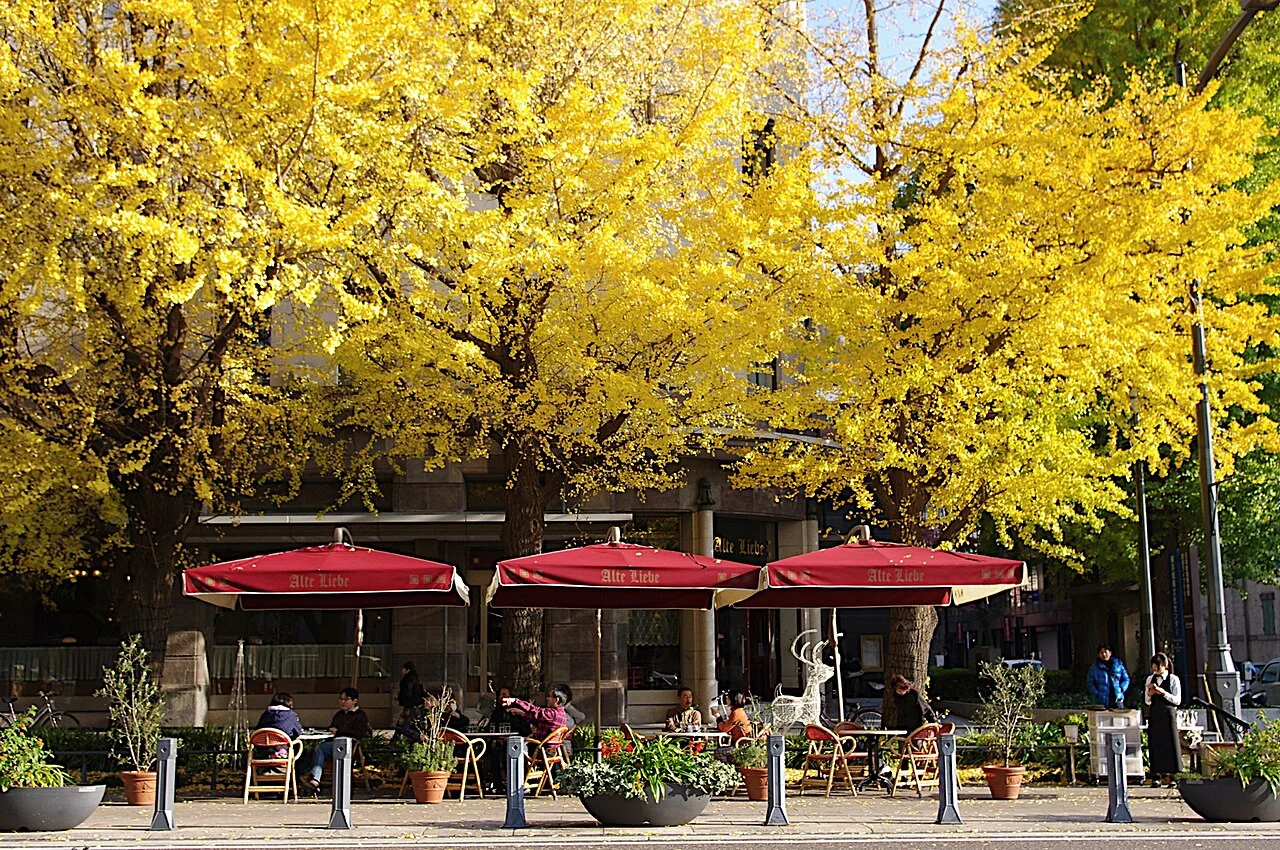
For a half-day Yokohama ginkgo walk, come up from Exit 1 at Nihon-odori Station on the Minatomirai Line, start on the tree-lined boulevard stretching toward the sea, continue from Kaiko Hiroba Square along Yamashita Koen-dori, and finish on the waterfront beside the NYK Hikawa Maru. Each avenue has its own character: Nihon Odori is compact and flanked by the prefectural office and heritage buildings, while Yamashita Koen-dori runs alongside the harbour so you can cross at any time to sit by the water. Photos taken by Yokohama's Naka Ward on 19 November 2026 showed noticeably more yellow foliage than the week before. If you are visiting between late November and early December, use the Naka Ward ginkgo updates to pick your date. Go on a weekday for the prefectural office rooftop, start in the afternoon to catch the evening illuminations, and treat 16:30 as the cut-off for boarding the Hikawa Maru.
When to Visit in 2026: Full Canopies or Fallen Leaves
Yokohama's official tourism guide lists both Nihon Odori and Yamashita Koen-dori among the city's top autumn foliage spots. When planning your trip, aim for late November to early December, then check Naka Ward's 2026 Nihon Odori Ginkgo Updates to track progress. Photos from 11 November still showed plenty of green leaves; by 16 November more trees had started turning, and the 19 November batch showed the yellow advancing further. Those three updates are on-the-ground observations of Nihon Odori. When looking at the photos, check whether the distant tree canopies are also turning yellow, as close-ups of a single tree can make the street appear further along than it really is. For Yamashita Koen-dori, check the street views and locations on Yokohama Tourism's autumn colour page before comparing the canopies on both sides in person.
If you prefer canopies packed with yellow leaves, aim for a weekend when the mature trees are mostly coloured and only a thin layer of leaves lies underfoot. If you like carpets of fallen leaves, visit slightly later and look across from one pavement near Kaiko Hiroba Square toward the opposite row of trees that still hold their foliage. After a gust of wind, you can sometimes capture the contrast between one tree still in full leaf and another pared back to sparse branches, making the surrounding architecture easier to see. Fallen leaves quickly scatter under foot traffic and shift with the wind and street sweeping. For low-angle shots, find a stretch of pavement with a bit of setback so main pedestrian flow passes behind you. Wet leaves after rain are slippery, so pushchairs and wheeled luggage are best kept along the bare-paving side.
For short-stay travellers whose dates are fixed, even one or two trees turning early in mid-November are enough for good photos. Stand in front of an older building and frame the half-yellow, half-green branches along the top edge of the shot; a tighter frame brings out that colour contrast far better than shooting the whole avenue from afar. Once leaves begin dropping, walk further along Yamashita Koen-dori to compare the park side with the hotel side. Both streets share the same tree species, yet their blocks and sightlines differ. If a junction is shaded or windy, walking on to the next corner usually saves more time than waiting at one spot for the light to change.
On a day trip from Tokyo, weekday mornings suit concentrating your outdoor photography along Nihon Odori while leaving a longer indoor stretch for the afternoon. If you want shops and evening illuminations, arrive after lunch and visit the Hikawa Maru first before its last-admission deadline. Even if Nihon Odori is nearing the end of leaf fall on the day you go, you can shift the focus from bright yellow canopies to port-opening architecture and harbour views, stopping by the prefectural office, Yamashita Koen-dori, and the waterfront. Because this walking route extends all the way to the bay, it still makes a complete half-day outing even when the foliage is modest.
See Yokohama's ginkgo avenues along Nihon Odori and Yamashita Koen-dori in 2026, with foliage updates, station exits, Hikawa Maru and prefectural rooftop hours, illuminations, and wet-weather stops.
Which Exit to Take at Nihon-odori Station
To begin at the prefectural office, take Exit 1 (Kencho-guchi), which also has a street-level lift. If you want to shoot from the inland end of the avenue toward the sea, take Exit 2 (Stadium-guchi), walk toward Yokohama Park and Yokohama Stadium to reach the start of the boulevard, then head north toward the harbour. Exit 3 (Joho Bunka Center) brings you out right near the Yokohama Urban Development Memorial Hall. If you do not have time to walk the entire avenue or are meeting someone at the Yokohama Archives of History, choose Exit 4 (Osanbashi-guchi), marked by the museum as roughly a 2-minute walk. Setting your map pin simply to the station can leave you a block off at street level, so share the exact exit number or building name when arranging to meet.
Nihon Odori stretches for roughly 430 metres, bookended by Yokohama Park and Zou-no-hana Park. Walking from the inland side toward the water, you pass the Kanagawa Prefectural Government Main Building and the Yokohama Archives of History before the route opens out at the harbour. Turn into Zou-no-hana Park for wider bay views, or veer onto Yamashita Koen-dori around Kaiko Hiroba Square for the next stretch of ginkgos. If you came mainly to photograph the full avenue of trees, walk all the way down one side first, look back along the architecture and tree line, then cross at the pedestrian lights to return on the other side. Waiting for an empty frame in one spot can eat up your walk; each pavement offers a different foreground, so you can split your angles between the prefectural building and the vintage cafés.
City street-tree records trace this broad avenue to firebreak road planning following Yokohama's Great Fire, which separated city blocks and left room for roadside planting. The ginkgos seen today were planted in stages from 1927 as part of reconstruction after the Great Kanto Earthquake and have since been designated as landmark landscape trees. Along the street stand the Kanagawa Prefectural Government Main Building, the Yokohama District Court, and the former Yokohama Chamber of Commerce and Industry Building. When foliage obscures part of a facade, stepping across to the opposite pavement makes it much easier to capture both the ginkgos and the architecture together than shooting steeply upward from the same side. Leave space between the tree trunks and benches for passers-by, and set up tripods or cameras where the kerbside widens.
Walking in from Kannai Station is also straightforward if you are travelling from Tokyo on the JR Keihin-Tohoku or Negishi Line. The prefectural website lists Kannai Station as roughly a 10-minute walk from the Main Building. Approaching Nihon Odori from the stadium end naturally aligns your walk from the park toward the sea. If your group is arriving from different lines—some by JR and others from Shibuya—meet outside the prefectural office front entrance or the Archives of History rather than trying to find each other in the underground concourse. Kannai serves JR and the Yokohama Municipal Subway, whereas Nihon-odori Station is on the Minatomirai Line.
Prefectural Rooftop on Weekdays, the Three Towers from the Street at Weekends
General public access to the Kanagawa Prefectural Government Main Building runs Monday to Friday from 8:30 to 17:15, closed on Japanese national holidays and from 29 December to 3 January. Inside the entrance, print a QR entry pass from the kiosk, slip it into one of the yellow lanyard holders provided, pass through the gates, keep to the open areas, and return the pass and holder when leaving. Groups of 10 or more must submit a group entry application to the prefecture in advance. Small families can come straight up Exit 1 at Nihon-odori Station, visit the rooftop early in the route, and decide afterwards whether to add a museum. Daylight fades quickly in winter, so if you arrive with only an hour or two left, prioritise places with closing times.
The rooftop is an open-air observation deck looking out toward Yokohama Port, the water beyond Osanbashi Pier, Yokohama Bay Bridge, and the Minato Mirai skyline, with Yokohama Customs and the Yokohama Port Opening Memorial Hall easy to spot by their towers nearby. To see the full silhouette of the 'King' tower atop the Main Building itself, the prefecture also recommends the 11th-floor terrace of the East Building, which faces back toward the Main Building. Each spot offers a different angle. If your only goal up high is viewing the ginkgo canopies, you can frame the trees between buildings from street level along Nihon Odori and save the rooftop visit for companions keen on harbour views. Because the rooftop has no indoor shelter from wind, heading into the Yokohama Archives of History is much more comfortable in drizzle or brisk sea winds.
The famous Yokohama Three Towers stand between the prefectural office and the customs house. 'King' is the Kanagawa Prefectural Government Main Building, notable for its solid masonry and Japanese-style roofed tower. 'Jack' is the red-brick clock tower of the Yokohama Port Opening Memorial Hall, whose clock faces are easiest to spot as you walk toward Honcho-dori. 'Queen' is the domed Yokohama Customs building closer to the sea. Using these three landmarks to orient yourself is far more practical than hunting for a single spot that squeezes all three into one shot. On weekends, if people in your group have different priorities, keen photographers can stay outside the prefectural building for treetops and facades while others head toward Zou-no-hana Park for harbour views, meeting back up at Kaiko Hiroba Square on the same route.
On Saturday 28 November 2026, Yokohama Customs is holding a free open house from 10:00 to 16:00 (last entry 15:30), opening areas rarely accessible on weekdays such as its 7th-floor terrace. If you are coming that weekend specifically for ginkgos and elevated port views, start at the Customs open house and continue along Nihon Odori toward the park. Once autumn foliage fades, the three towers remain visible from the street year-round, whereas the 28 November visiting hours apply solely to this one-day event.
Ginkgos Line the Roadside of Yamashita Koen-dori, While Hikawa Maru Sits Inside the Park
Once you reach the vicinity of the Yokohama Archives of History, follow Kaiko Hiroba Square toward Yamashita Park and Yokohama Marine Tower. Searching for 'Yamashita Koen-dori' on a map app routes you along the road facing the park, while searching for 'Yamashita Park' often takes you straight inside the grounds. Stay on the roadside pavements for the tree canopy, or cross at a pedestrian signal into the park whenever you want a bench. City records measure this row of ginkgos at around 800 metres, planted during post-earthquake reconstruction. Walking just one stretch already gives you an unbroken canopy, so there is no need to extend your walk all the way to the far end.
If you want to experience both sides of the tree-lined boulevard, walk the hotel side of Yamashita Koen-dori on the way out and return along the water inside the park. The street side showcases classic hotels beneath the roadside trees, whereas the waterfront opens up clear views of the Hikawa Maru, Osanbashi Pier, and the wider port. Because the ship is moored on the seaward side, you can photograph it from the park railings, whereas the Yamashita Koen-dori ginkgos stand along the inland roadway—so once you finish photographing the ship, head back toward the street-side park entrances for full golden canopies. Pushing straight down the waterfront path skips the stretch lined with historic hotel facades. When a cold breeze picks up off the bay, the street-side edge of the park also makes it easier to find exits and spots to rest.
Exit 4 at Motomachi-Chukagai Station has a lift and is marked by the city as roughly a 3-minute walk to Yamashita Park. This exit works equally well as the finish line or as a starting point in reverse. If you only have two hours in the morning, come up at Exit 4 to see the ship and park first, then walk back along Yamashita Koen-dori toward Nihon-odori Station. That puts the open waterfront at the start when your energy is highest and saves the street blocks with more indoor stops for later. If anyone plans to visit Chinatown afterwards, arrange to meet on the Chinatown/Yamashita Park side of Motomachi-Chukagai Station rather than just naming the station, as the opposite ticket gates lead toward Motomachi and Shin-Yamashita.
If anyone in your party needs frequent breaks to sit down, plan a mid-walk pause at the central plaza inside Yamashita Park. Use the Guardian Deity of Water (Mizu no Shugoshin) fountain as a landmark—it is easy to locate from either the street-side path or the waterfront. For accessible toilets, check the city's park facilities map for multi-purpose restrooms. If you prefer arriving by bus, catch Route 26 outside JR Sakuragicho Station to 'Yamashita Koen-mae', which drops you right beside the park. Taking the bus in and leaving via the Minatomirai Line keeps the longer underground transfers for the journey home. If you are already transferring onto the Minatomirai Line from Tokyo, staying on to the terminus and using Exit 4 is simpler.
When events around the park crowd the waterfront, walk down the opposite pavement by Hotel New Grand first and cross the road in smaller groups. If people split up to take photos, pick the fountain or the ship's ticket entrance as your meeting point rather than saying 'under the ginkgos'. If you are accompanying older relatives who just want two easy autumn viewpoints, limit Nihon Odori to the block between the prefectural office and the Archives of History, then choose a flat path in Yamashita Park. Families with young children do not need to walk end to end; give the kids half an hour in an open plaza, then head back together via Exit 4's lift so different walking paces stay comfortable.
Hikawa Maru Boarding Hours Shape Your Afternoon Schedule
Completed in Yokohama in 1930, the NYK Hikawa Maru once carried both passengers and cargo on the North Pacific route to Seattle. Viewing the hull from Yamashita Park is free; you only need a ticket if you want to step aboard to tour the staterooms, engine room, and crew quarters. Opening hours are 10:00 to 17:00, with last admission at 16:30. It normally closes on Mondays, except when Monday is a national holiday, in which case it opens on the Monday and closes on the following weekday. Since Monday 23 November 2026 is a Japanese public holiday, you can visit the ship on the Monday, and it will close on Tuesday 24 November instead. The museum has also announced that the lower level of the engine room will be closed from 24 November to 23 December 2026 for a hull inspection, so anyone keen to see the lower deck should visit outside those dates.
Admission to the Hikawa Maru is ¥300 for adults, ¥200 for visitors aged 65 and over, and ¥100 for primary to high school students, payable in cash only. If you are also visiting the nearby Yokohama Doll Museum on the same day, keep your ticket stub from the first venue to get a ¥50 discount at the second. Families just wanting a look inside the cabins can have coins ready and agree on a meeting point ashore beforehand. Arriving at the ship around 15:00 still gives you time to tour several sections at an easy pace. If you reach the waterfront close to 16:30, admire the exterior from the park and save the paid tour for another open day rather than rushing.
To preserve its original layout, the ship has no lifts. Wheelchair access is very limited, and tidal levels affect when boarding and disembarking are possible; the museum asks wheelchair users to contact them in advance and bring an accompanying person. In a larger group, one party can board while others relax by the sea in Yamashita Park and reunite outside the pier entrance. For families with a sleeping child in a pushchair, skip the ticket, stroll along the waterfront promenade, and head back to Yamashita Koen-dori or Chinatown after dusk. Visitors keen on the ship's engineering should start with the open sections of the engine room before moving on to the passenger cabins, so you do not spend too long in the first exhibition room.
Indoor Alternatives Around Nihon Odori When It Rains
If rain rules out the rooftop, stay at street level to admire the architecture and walk the short distance along the side of the prefectural building to the Yokohama Archives of History, which displays photographs and documents from Yokohama's port opening and early modern harbour district. Hours are 9:30 to 17:00 (last entry 16:30), normally closed on Mondays or the day after a Monday holiday. On 19 November, the museum listed Tuesday 24 November 2026 as a closed day, so plan an outdoor-only walk along Nihon Odori if you visit then. Standard admission when only Rooms 1 and 2 are open is ¥200 for high school students and adults and ¥100 for primary and junior high students, rising to ¥500 and ¥250 during special exhibitions. The 2026 autumn leaf season coincides with a special exhibition period featuring Hajime Hirose's photographs of Yokohama streets around the mid-1950s, running until 27 December. Taking your time over archival street scenes before stepping back outside to spot the same avenues, waterfront, and blocks saves you a train ride to a distant wet-weather backup.
If the rain is too heavy for even a two-block walk, take Exit 3 from Nihon-odori Station straight to the Yokohama Urban Development Memorial Hall. Permanent exhibition tickets are ¥200 for adults and ¥100 for primary and junior high students; hours are 9:30 to 17:00 with last ticket sales at 16:30, and it generally closes on Mondays. This museum focuses on how the city expanded and how its port and transport evolved, overlapping slightly with the early harbour history at the Archives of History—picking one is plenty for a half-day trip. With children, sort out umbrellas and coats inside the station first, linger over maps or scale models that catch their interest, and step back out for the ginkgos when the rain eases. If you want to see both museums in one go, arriving near 16:00 leaves little margin, so aim for Nihon Odori in the morning instead.
If rain hits on a Monday when the museums are closed, Queen's Square Yokohama—directly connected to Minatomirai Station—offers an easy indoor stop for lunch, dinner, and drying off. Whenever the rain pauses briefly, ride the Minatomirai Line to Nihon-odori Station, step out of Exit 1 for the view beside the prefectural office, then hop back on the train or head to Kannai for a meal. Over a holiday weekend, museum opening days hinge on the 'open on holiday Monday, closed next weekday' rule. Checking which backup spots are actually open keeps you from dragging the whole group through the rain from one shut door to the next.
Planning a Half-Day Afternoon Walk, Evening Illuminations, and the Next Morning
For a half-day walk that includes one indoor stop, starting around 13:00 works well on weekdays. Begin at Exit 1 of Nihon-odori Station by the prefectural office; if the weather is clear, put the rooftop and avenue stroll first. Reach Yamashita Koen-dori around 15:00 so anyone boarding the Hikawa Maru can buy tickets as soon as the ship comes into view while others rest along the promenade. As daylight fades, walk back to the avenue for the illuminations or ride from Motomachi-Chukagai to Minato Mirai for dinner. On a holiday afternoon, both the Archives of History and the Hikawa Maru have a 16:30 last entry, so visit whichever one matters most to you first and check the clock before deciding on the second.
The 2026 Nihon Odori SDGs Illumination runs daily from 20 November to 25 December, 16:00 to 23:00. To catch both twilight sky and glowing trees in one frame, arrive at your chosen corner just before 16:00 and linger briefly after the lights come on. Traffic still moves along the roadway at that hour, so keep children on the inner side of the pavement when viewing the illuminated stag displays. If you already photographed the canopies by daylight in late November, you only need to walk back a single block after dinner to enjoy the lights rather than retracing the entire route. On busy weekends, if everyone wants quieter street shots, save the tree photography for before breakfast the next morning and keep museum visits and shopping in the afternoon.
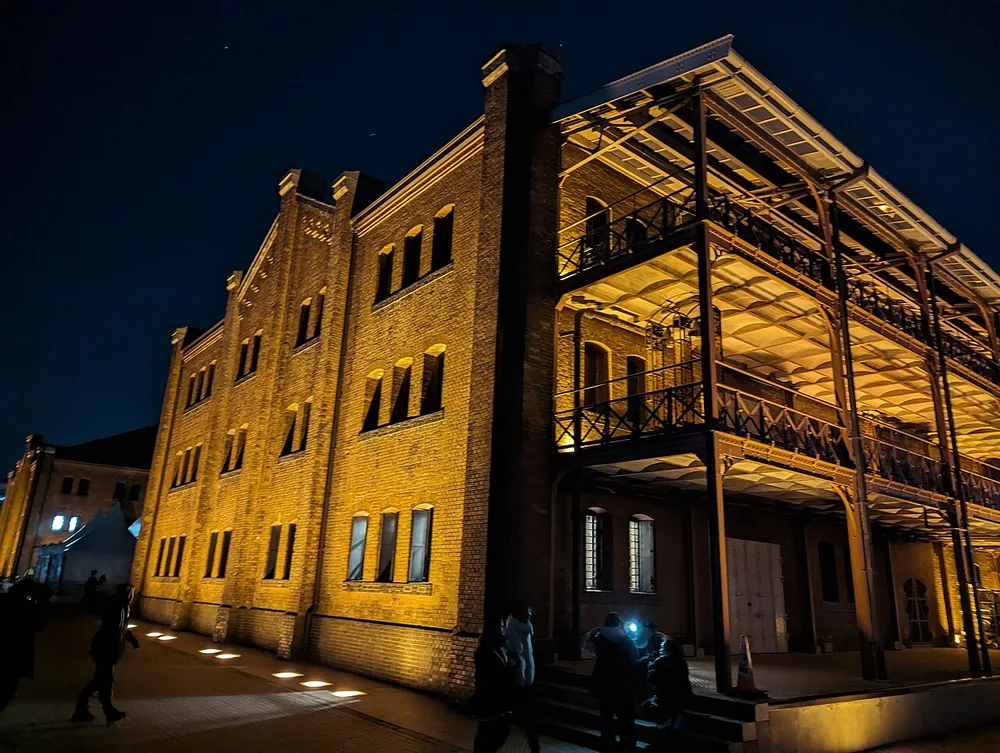
Along the waterfront, 'Yorunoyo 2026' runs from 4 to 30 December, 17:00 to 21:05, spanning Osanbashi Pier, Yamashita Park, and other coastal areas. While the dates overlap with the avenue lights, the exits and best viewing spots differ. If you only have energy for one night stop, stay on Nihon Odori for illuminated ginkgos or head out onto Osanbashi Pier for wide harbour views and large-scale light projections. Both Osanbashi and Yamashita Park connect easily from this walking route, and from either one you can head home via Nihon-odori or Motomachi-Chukagai Station. If you are continuing to the Red Brick Warehouse at night, take the waterfront path from the Zou-no-hana side. For the Christmas event there, see our Yokohama Red Brick Warehouse Christmas Market guide and plan its entry rules separately from the street illuminations.
Even outside the Yorunoyo dates, Osanbashi Pier makes a rewarding evening stop on its own. According to the terminal operator, the rooftop plaza is free and open 24 hours a day, with floor markers showing the best angles for viewing the Yokohama Three Towers. Walking across from Kaiko Hiroba Square in the afternoon gives you views of both sides of the port, and the gently sloped wooden deck outside the terminal building is far easier to frame photos on than waiting for gaps in street traffic. If you are heading on to the Red Brick Warehouse, walk back from the pier past Zou-no-hana Park into Shinko. If you just want a quick look at Yokohama Bay Bridge, pausing by the railings in Yamashita Park saves the detour out along the pier and back.
The easiest way to lose time on a photo walk is waiting for both peak ginkgo colour and sunset light everywhere, leaving only a few minutes at each stop. Pick one street junction and one waterfront spot: shoot lower branches on Nihon Odori first, then move toward the bay as dusk settles. If you plan to linger on Osanbashi Pier late into the evening, bring a windproof coat for the sea breeze. Travelling with young children or older relatives, choose either the pier or the park: Osanbashi gives you the Minato Mirai skyline, while Yamashita Park puts you right beside the Hikawa Maru with an easy early exit via Motomachi-Chukagai Station. If you are eating in Chinatown in the evening, the Yamashita Park branch also cuts down on backtracking.
Staying overnight lets you split your photography between late afternoon and the following morning. Hotel New Grand, directly across from Yamashita Park, puts you right on the doorstep of the Hikawa Maru and Yamashita Koen-dori—the hotel notes a 1-minute walk from Exit 1 of Motomachi-Chukagai Station, or around 2 minutes via the lift at Exit 2. If dinner and the next day's shopping are centred in Minato Mirai, The Yokohama Bay Hotel Tokyu connects straight to Minatomirai Station, making luggage transfers effortless indoors before you hop a short train ride to see the ginkgos. If you are coming from Tokyo solely for these two avenues, a day trip is plenty; if you already plan to stay past the evening illuminations, choose your hotel based on which neighbourhood you want to wake up in.
Where to Change Trains from Tokyo and Whether the One-Day Pass Pays Off
From Tokyo or Shinagawa Station, take the JR Tokaido Line to Yokohama Station and transfer to the Minatomirai Line bound for Motomachi-Chukagai, getting off at Nihon-odori Station. If you prefer a single train to the start of the walk, board a JR Keihin-Tohoku Line service through-running onto the Negishi Line from Tokyo or Shinagawa that goes to Kannai, then walk to Nihon Odori. If you are staying in Shibuya, check train destinations on the Tokyu Toyoko Line for through services onto the Minatomirai Line to Motomachi-Chukagai to avoid changing to the underground platforms at Yokohama Station. Some Toyoko Line trains terminate at or before Yokohama, so follow platform signs for through trains rather than relying solely on the multi-company line shown on a map.
The Minatomirai Line One-Day Pass costs ¥460 for adults and ¥230 for children. With a transport IC card, an adult fare from Yokohama to Nihon-odori is ¥224, and the return leg from Motomachi-Chukagai back to Yokohama is also ¥224—¥448 in total, whereas two paper tickets come to ¥460. If you walk between Nihon Odori and Yamashita Park, simply tapping your IC card saves time at the ticket machines. However, if you add a stop in Minato Mirai on the way—Motomachi-Chukagai to Minatomirai and Minatomirai to Yokohama are ¥193 each for adults on an IC card, bringing three rides to ¥610—the one-day pass saves money. Working out your exact legs makes it easy to see when the pass is worth buying.
If you start at Kannai and leave from Motomachi-Chukagai, you pay JR to Kannai, walk the entire route, and only tap the Minatomirai Line once on the return leg—a common pairing for visitors focusing solely on the two ginkgo avenues. When travelling with companions unfamiliar with Japanese stations, JR has the advantage of clear ground-level meeting points, while the Minatomirai Line gives you more exit choices along the route. Agree before boarding whether you will finish near the Hikawa Maru or back on Nihon Odori, then adjust as you go—let your route choose the station, rather than adding an extra stop just to break even on a day pass.
The one-day pass covers only the Minatomirai Line between Yokohama and Motomachi-Chukagai; if you ride straight through from Shibuya, the Tokyu Toyoko Line fare still applies separately. If you also plan to take a bus to Sankeien Garden, decide first which legs actually use the Minatomirai Line before buying the pass, as municipal buses are not covered and require separate fares. Before heading back to Tokyo in the evening, save your return station in your phone so you know whether you are taking JR via Yokohama or a direct Toyoko Line train to Shibuya, then walk to whichever waterfront station is closest. If members of your group are staying in different parts of Tokyo, you can ride the shared through-train leg together and part ways at the junction.
Is It Worth Adding Sankeien Garden on the Same Day?
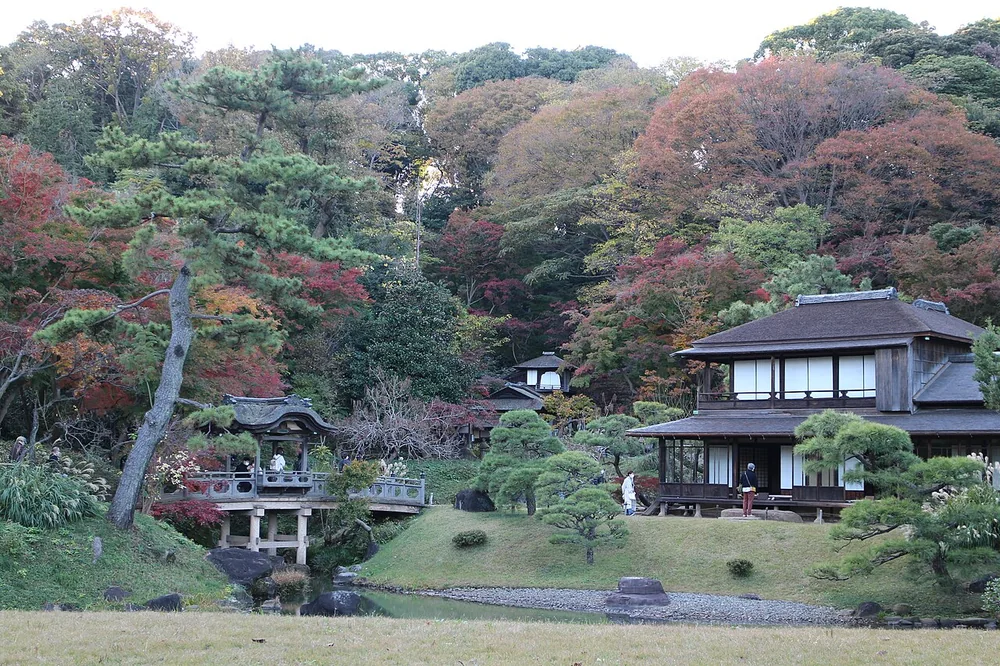
Sankeien Garden sits in Honmoku, offering Japanese maples, hillsides, and historic wooden architecture quite different from Nihon Odori's streetscapes. To fit both in, visit Sankeien in the morning. From the Nihon Odori area, board Yokohama Municipal Bus Route 8 bound for Honmoku Shako-mae from the 'Nihon-odori Station Kencho-mae' stop, alight at 'Sankeien-iriguchi', and walk to the main gate. If you are already near Chinatown or Yamashita Park, you can also take Route 8 or Route 168 from 'Chukagai-iriguchi' or 'Yamashitacho'. When returning to the city centre, make sure the bus stop is facing Kannai or Sakuragicho so you do not board the same route heading back toward Honmoku Depot. Allow for both waiting time and the walk from the bus stop so a tight connection does not cut into your next museum admission.
Sankeien Garden is open from 9:00 to 17:00 (last entry 16:30); admission is ¥900 for high school students and adults, ¥200 for primary and junior high students, and ¥700 for Yokohama residents aged 65 and over. The autumn foliage path behind Choshukaku opens from 20 November to 13 December 2026, daily from 9:00 to 16:00. To include it, head to the Inner Garden first to see the maples and historic pavilions on the slope, then loop back to the Outer Garden pond for a view of the three-storey pagoda before leaving. On 19 November, the garden reported that leaves were only just beginning to turn at the tips. If you only have time for one area, check Naka Ward's street reports for sweeping ginkgo avenues, or follow the garden's own updates for traditional landscaping and heritage buildings.
If part of your group wants the three-storey pagoda while others only want the ginkgo avenues, split up at Kannai in the morning and meet for lunch in Chinatown. Buses returning from Honmoku pass right by that area, giving the city-centre group time to walk the prefectural office side of Nihon Odori and stroll through Yamashita Park before meeting up. Parts of Sankeien involve slopes and stepped paths, whereas the harbour walk stays flat along the waterfront. Should rain arrive, the Sankeien group can leave the hillsides and narrow garden trails early and meet straight back downtown without extra back-and-forth waiting.
When combining both in one day, decide whether to board the Hikawa Maru as soon as you get back from Sankeien. If your return bus nears 16:00, your remaining daylight is better spent in Yamashita Park and at the avenue illuminations than rushing a ship tour. Sankeien's evening event, 'Yaso', uses separate ticketing and routes, running Fridays, Saturdays, Sundays, and public holidays from 20 November to 20 December 2026. Attending the night opening means travelling back from Honmoku afterwards, so it works best as your final stop of the day. If you are staying in Tokyo and planning dinner in Chinatown, visiting Sankeien in the morning and the ginkgo avenues in the afternoon is far more relaxed than squeezing two night events back to back.
A few useful answers
When is the best month to see ginkgos in Yokohama?
Plan for late November to early December. Naka Ward's 19 November 2026 update for Nihon Odori already showed more yellow leaves than the previous week, and you can follow the photo log on the same page to track the full avenue canopy.
Which exit at Nihon-odori Station should I take for the ginkgos?
Use Exit 1 (which has a street-level lift) to start at the prefectural office, Exit 2 to walk from Yokohama Park toward the sea, or Exit 4 to go straight to the Yokohama Archives of History. At the Yamashita Park end, use Exit 4 at Motomachi-Chukagai Station.
Is the Kanagawa Prefectural Government rooftop open at weekends?
Regular public access is limited to Monday to Friday from 8:30 to 17:15, excluding national holidays and 29 December to 3 January. Print a QR entry pass from the kiosk at the entrance when you go in.
What is the last admission time for the NYK Hikawa Maru?
Last admission is 16:30 and the ship closes at 17:00. Tickets are ¥300 for adults, ¥200 for ages 65 and over, and ¥100 for primary to high school students, cash only. It is closed on Mondays (or the next weekday if Monday is a public holiday), and the lower engine room is closed from 24 November to 23 December 2026 for a hull inspection.
What time do the 2026 Nihon Odori illuminations turn on?
The Nihon Odori SDGs Illumination runs daily from 20 November to 25 December between 16:00 and 23:00. Along Osanbashi Pier and Yamashita Park, the Yorunoyo illumination runs from 4 to 30 December between 17:00 and 21:05.
Do I need a Minatomirai Line One-Day Pass to see the ginkgos?
A return trip using an IC card from Yokohama to Nihon-odori and back from Motomachi-Chukagai to Yokohama costs ¥448 for adults, compared with ¥460 for the one-day pass. The pass only saves money if you add a third leg, such as stopping at Minato Mirai.
Official information and references
Sources used in this guide.
- Yokohama City Naka Ward: 2026 Nihon Odori Ginkgo Updates
- Yokohama Official Visitors' Guide: 2026 Autumn Colour Spots
- City of Yokohama: History of Street Trees and Post-Earthquake Replanting
- City of Yokohama: Nihon Odori Landmark Landscape Tree Designation
- City of Yokohama: Yamashita Koen-dori District Survey
- Yokohama Minatomirai Railway: Nihon-odori Station Map
- Yokohama Minatomirai Railway: Accessible Entrances and Exits
- Yokohama Minatomirai Railway: Fares and Minatomirai Line One-Day Pass
- JR East: Kannai Station Lines and Timetables
- Kanagawa Prefectural Government: Main Building Public Visiting Hours
- Kanagawa Prefectural Government: QR Entry Pass Procedure
- Yokohama Official Visitors' Guide: 28 November 2026 Customs Open House
- City of Yokohama: Yamashita Park Map and Access
- City of Yokohama: Yamashita Park Accessibility Facilities
- NYK Hikawa Maru: Opening Hours, Admission, and Accessibility
- NYK Hikawa Maru: Ship History
- Yokohama Archives of History: Visitor Information
- Yokohama Archives of History: Current Exhibitions
- Yokohama Urban Development Memorial Hall: Opening Hours and Tickets
- Yokohama Official Visitors' Guide: 2026–27 Illuminations
- City of Yokohama: Yorunoyo 2026 Press Release
- Osanbashi Yokohama International Passenger Terminal: Rooftop Plaza
- Hotel New Grand: Station Exits and Access
- The Yokohama Bay Hotel Tokyu: Access Information
- Yokohama Municipal Transportation Bureau: Sankeien-iriguchi Bus Routes
- Sankeien Garden: Bus Access from Chinatown and Yamashita Park
- Sankeien Garden: Opening Hours and Admission
- Sankeien Garden: 2026 Autumn Foliage Progress
- Sankeien Garden: 2026 Choshukaku Foliage Trail Opening Notice
- Sankeien Garden: 2026 Night Event 'Yaso'
- NYK Hikawa Maru: Lower Engine Room Closure Notice
- Yokohama Archives of History: 24 November 2026 Closure Notice