Pick your Umeda hotel by the station and exit you will use most. Compare direct JR Osaka Station access, Chayamachi and Nakatsu, and Higashi-Umeda and Sonezaki, plus Kansai Airport transfers, Kyoto/Kobe/Nara day trips, family rooms, and rainy-day routes.
- Region & Focus
- OsakaHotels and stays
- Reading Scope
- 17 min read · 11 chapters · 5 Q&As
- Official Verification
- 35 official sources checkedUpdated November 22, 2026
- Key Topics
- Where to stayNeighborhoodsRail travel
Chapter Route Map (tap any stop)
- Pick Your Primary Station First
- Direct JR Osaka Station Access: Check the Central and West Gates First
- Chayamachi, Nakatsu, and Nakazakicho: Which Walk Does Each Save?
- Higashi-Umeda, Sonezaki, and Nishi-Umeda: Navigating the Walk Back at Night
- Kansai Airport to Umeda: Choose Your Drop-Off Point First
- Quad Rooms, Quiet Rooms, and Extended Stays: Compare by Room Specs
- Price the Full Trip, and Budget for Osaka's Per-Person, Per-Night Accommodation Tax
- Day Trips to Kyoto, Kobe, and Nara from Umeda: Let Your Destination Pick the Rail Line
- Umeda or Namba? Three Itineraries That Make the Choice Clear
- Rainy Days with Kids, or Moving at an Older Relative's Pace
- One Evening in Umeda: End at the Floating Garden Before Walking Back
- Quick Q&A
Start your Umeda hotel search with the trains you plan to ride. If you are taking the HARUKA express from Kansai Airport or making day trips to JR Kyoto Station and Universal Studios Japan, stay near JR Osaka Station. If your itinerary leans toward Kyoto-Kawaramachi or Kobe-Sannomiya, a room in Chayamachi near Hankyu saves steps. Higashi-Umeda and Sonezaki suit travelers riding the Tanimachi Line or staying in Kita Ward for dinner. Before comparing room rates, translate every listing's vague "5-minute walk from Umeda Station" into a specific rail operator, ticket gate, and hotel entrance.
Pick Your Primary Station First
The area around Osaka Station connects JR, Hankyu, Hanshin, and Osaka Metro lines. Searching for "Osaka-Umeda Station" pulls up both Hankyu and Hanshin under the same name, even though their entrances sit on opposite sides. Hankyu sits by Chayamachi and the major department stores, serving Kyoto-Kawaramachi, Kobe-Sannomiya, and the Takarazuka Line. Hanshin's platforms sit underground and offer another direct route to Kobe. On the subway, Umeda Station serves the Midosuji Line, Higashi-Umeda serves the Tanimachi Line, and Nishi-Umeda serves the Yotsubashi Line. JR Kitashinchi is a separate station altogether on the JR Tozai Line. Typing the specific rail operator into your map app saves far more confusion than searching "Umeda" alone.
Use ward names and street addresses only for a rough first pass. Pick the single ticket gate for the line you will ride most often, then trace the walk to the hotel lobby—counting crosswalks, elevators, and mall floor transfers. If you have a stroller or large suitcases, map out a street-level route you can navigate at night. Treat 10 minutes as your nightly limit for walking back; when you are dealing with ramps, rain, or multi-level mall connections, shaving minutes off the station-to-lobby walk matters more than saving a few minutes on the train.
If your itinerary locks in an early train you cannot miss, match that morning's wake-up time to the right gate. For example, if you have a four-night stay with an early Shinkansen out of Shin-Osaka on your final morning, staying near JR Osaka's Central Gate or Midosuji Line Umeda Station keeps your transfer to one quick hop. Bullet trains depart from Shin-Osaka Station, which you can reach from Osaka Station via the JR Kyoto Line or from subway Umeda Station via the Midosuji Line. When booking Shinkansen tickets toward Tokyo or Nagoya, always enter "Shin-Osaka" as your departure station.
| Primary Rail Line | Best Neighborhoods to Search | Key Gate or Landmark for Hotel Mapping |
|---|---|---|
| HARUKA, JR Kyoto Line, Universal Studios Japan | JR Osaka Station core, West side | JR West Gate, Central Gate, or Bridge Gate |
| Hankyu Kyoto Line or Hankyu Kobe Line | Chayamachi, south side of Midosuji Line Nakatsu Station | Hankyu Osaka-Umeda Chayamachi Gate or 2F Central Gate |
| Tanimachi Line, dinners in Sonezaki | Higashi-Umeda to Sonezaki | Passages connecting Higashi-Umeda Station to Whity Umeda |
| Yotsubashi Line, West-side airport limousine bus stops | Nishi-Umeda, Umeda 2-chome | Nishi-Umeda Station, HERBIS OSAKA |
Pick your Umeda hotel by the station and exit you will use most. Compare direct JR Osaka Station access, Chayamachi and Nakatsu, and Higashi-Umeda and Sonezaki, plus Kansai Airport transfers, Kyoto/Kobe/Nara day trips, family rooms, and rainy-day routes.
Direct JR Osaka Station Access: Check the Central and West Gates First
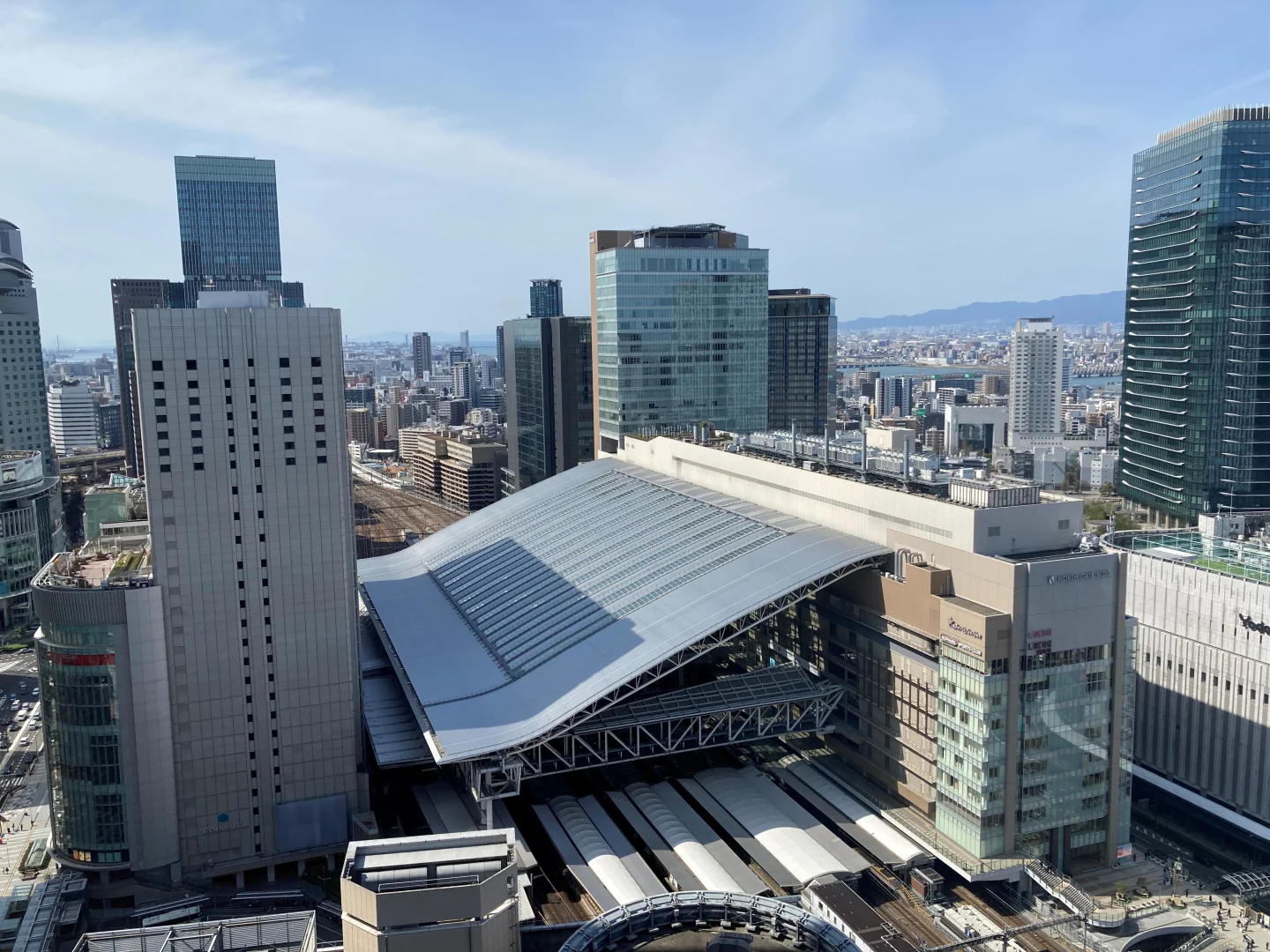
JR Osaka Station's upper-level Bridge Gate (Renrakubashi), street-level Central Gate, and West Gate feed into completely different hotel clusters. The HARUKA express arrives at underground platforms, which connect internally to the West Gate. If your hotel sits on the west side, follow the inside station signs straight to the West Gate before tapping out so you do not have to orient yourself outdoors. If you are staying near the Central Gate, factor in the extra walk up from the underground platforms. JR's Osaka Station map lays out transfer corridors level by level, and its accessibility guide specifies which gates and platforms have elevator access.
THE OSAKA STATION HOTEL sits inside JP Tower Osaka, the same complex as KITTE Osaka. From JR Osaka's West Gate, you can walk directly to the ground-floor hotel entrance and ride up to the 29th-floor lobby. Arriving via HARUKA, follow the underground platform passageway to the West Gate and head straight into the building. If you take the airport limousine bus from Kansai Airport, the hotel lists HERBIS OSAKA as a roughly two-minute walk. Because both arrival routes stay on the west side of the station, you keep that final stretch short and sheltered during heavy rain or when traveling with older relatives.
Hotel Granvia Osaka also connects directly to Osaka Station, but it sits on the south side. The shortest walk runs through the Central Gate or Sakurabashi Gate and uses stairs or escalators. If you are pushing a stroller or using a wheelchair, switch the hotel's access page to its step-free route and take the elevators via the Bridge Gate as directed. For arrivals on the HARUKA or Kuroshio limited express, the hotel's directions start from the West Gate. Commit to one primary walking route before you book instead of trying to juggle four different station gates in your schedule.
To the north, Hotel Hankyu RESPIRE OSAKA occupies Yodobashi Umeda Tower, with a 9th-floor lobby, a 2nd-floor indoor entrance, and a 1st-floor main entrance with a vehicle drop-off zone. The hotel puts the walk at about three minutes from JR Osaka's 3rd-floor Bridge Gate, about six minutes from the Umekita Underground Exit, and about five minutes from the North Gate of subway Umeda Station. If you grab dinner at LUCUA or GRAND FRONT OSAKA on the north side, you can head straight back up to your room from the same cluster. For taxis, enter the hotel's full name and 1st-floor entrance; rolling suitcases through the mall entrance means hunting for an extra bank of elevators.
You will also see Hotel Hankyu GRAN RESPIRE OSAKA in search results. Despite sharing most of the name, the "GRAN" property sits in a different location. If people in your group are arriving separately, send everyone the exact Japanese hotel name and street address from your reservation confirmation and meet at the hotel front desk rather than saying "above Yodobashi" or "Osaka Station North Exit."
Chayamachi, Nakatsu, and Nakazakicho: Which Walk Does Each Save?
Chayamachi works best if you board Hankyu trains in the morning and dine around Umeda at night. Hankyu Osaka-Umeda Station's Chayamachi Gate sits on the 2nd floor, separate from the 2nd-floor Central Gate and 3rd-floor ticket gates. Hotel Hankyu International, for instance, lists a walk of about three minutes from the Hankyu Chayamachi Gate and about three minutes from Exit 4 of Midosuji Line Nakatsu Station—versus about 10 minutes from JR Osaka's Midosuji Gate and about 15 minutes from the Umekita Underground Exit. If you spend a night in Kyoto-Kawaramachi before returning to Umeda, rolling bags via Hankyu is effortless; if you commute through JR every night, that same room adds noticeably to your daily walk.
When browsing hotels in Nakatsu, separate "Midosuji Line Nakatsu" from "Hankyu Nakatsu." Midosuji Line Nakatsu sits one subway stop north of Umeda and gives you direct metro access to Shin-Osaka, Honmachi, and Shinsaibashi. Hankyu Nakatsu is a different station on the map; if you are heading out on the Hankyu Kyoto Line, it is easier to just walk down to Osaka-Umeda Station to board. If you plan to ride one stop from Nakatsu to Umeda and transfer to JR, count the platform descent, wait time, gate exit, and inter-station walk in your commute math. In good weather, walking straight down the main avenue to Hankyu or JR may actually feel faster.
Nakazakicho sits one stop north of Higashi-Umeda on the Tanimachi Line. Osaka's tourism board highlights its preserved nagaya row houses, many converted into cafes and independent boutiques. If exploring that neighborhood is already on your itinerary, pick a hotel along a main road or near a subway exit so you can easily continue toward Tenjinbashisuji and Tenma in the morning. For small guesthouses tucked down back alleys, separate your luggage days from your sightseeing days: a charming corner when walking empty-handed is easy to overshoot at night while dragging two suitcases. Pin the final main intersection before the alley turnoff and check where a taxi can pull over.
All three sit on Umeda's northeast side, with Chayamachi hugging Hankyu and Nakazakicho anchored to the Tanimachi Line. You can walk between them at street level, so if you have early JR departures, let the walking distance to your primary rail gate break the tie. If one travel partner wants an early train start while the other prefers sleeping in for brunch nearby, staying on the department-store side of Chayamachi makes splitting up easy.
Higashi-Umeda, Sonezaki, and Nishi-Umeda: Navigating the Walk Back at Night
Higashi-Umeda connects directly into the Whity Umeda underground mall. From the Northeast or Northwest gates of Tanimachi Line Higashi-Umeda Station, follow signs toward Exit 1 to enter the concourse. Midosuji Line Umeda Station feeds in via its South Gate toward Exit 13, while Hanshin Osaka-Umeda connects through its East Gate. All three corridors double as easy dining zones, though if your hotel is in Sonezaki, note your nearest street-level exit too. Check the underground concourse map to find the closest stairs, and if you have heavy luggage, verify which exit has an elevator to street level before routing through Izumi no Hiroba.
Hotels in Sonezaki near the Tanimachi Line often appear under "Osaka Umeda" in booking filters. Hotel Elcient Osaka Umeda, located in Sonezaki 1-chome, lists walking times of five minutes from JR Kitashinchi Station, seven minutes from Higashi-Umeda, and 12 minutes from JR Osaka Station. You still have to walk to JR Osaka for the Kyoto Line, so the Kitashinchi proximity mainly benefits Tozai Line riders. If you plan to eat along Sonezaki Ohatsu Tenjin-dori at night, walk the shopping arcade by daylight to memorize the turn toward your hotel. Light sleepers should cross-check room orientation alongside the nighttime route, watching for major boulevards, bar entrances, and late-night delivery bays.
Umeda 2-chome and Nishi-Umeda are straightforward to reach if you step off the airport bus at HERBIS OSAKA. Staying on this side also puts you right on the Yotsubashi Line for daytime trips to Honmachi or Yotsubashi. If you book dinner in Chayamachi, plan for a cross-station walk back at night—or keep one dinner inside the malls on the west side of the station. When traveling with older adults, save map pins for the West Gate, HERBIS OSAKA, and your hotel's driveway so arriving by train and departing by bus use the same familiar side of the complex.
During heavy rain, the underground concourses spare you most of the umbrella shuffle. For late-night returns, save a street-level intersection with clear building numbers near your hotel door, because department store walkways and mall passages that stay open all day close at set hours at night. Pick up late-night snacks along the walk between the station and your lobby so you do not have to head back out once you drop your bags.
Kansai Airport to Umeda: Choose Your Drop-Off Point First
Both the JR HARUKA limited express and the Kansai Airport Rapid train serve Osaka Station. The HARUKA pulls into and departs from the underground platforms, using Platform 21 for airport-bound trains; riding this limited express requires both a base fare ticket and a limited express ticket, so book reserved seats if your group wants to sit together. The Kansai Airport Rapid departs for the airport from elevated Platform 1. Some departures couple a Kansai Airport Rapid section with a Kishuji Rapid section that splits at Hineno Station—board the front four cars marked for Kansai Airport. On your return trip with shopping bags in tow, double-check which gate and platform level you need before entering, and read the train destination board on Platform 1 since Osaka Loop Line and Yamatoji Line trains share the same track.
Standard one-way fares on the Osaka Station-bound airport limousine bus are ¥1,800 for adults and ¥900 for children. Check HERBIS OSAKA for the west side, Hankyu Sanbangai for Chayamachi and Hankyu-side hotels, and Candeo Hotels Osaka The Tower for select Dojima-bound departures. Because outbound and return timetables differ, check the "From Kansai Airport" schedule when matching stops to your hotel. Note that daytime departures leaving Terminal 1 between 8:45 AM and 7:30 PM and Terminal 2 between 9:12 AM and 7:17 PM skip Hankyu Sanbangai; if you arrive during those hours for a Chayamachi hotel, compare walking from a train station against riding the bus to HERBIS OSAKA and taking a short taxi.
Late-night buses run on separate rules. Kansai Airport Transportation announced an extension starting June 30, 2026, with late-night departures at 12:02 AM (listed as 24:02) from Terminal 2 and 12:15 AM (24:15) from Terminal 1, reaching Hankyu Sanbangai in roughly one hour. This service stops only at Sanbangai, costs ¥2,700 for adults and ¥1,350 for children, and accepts cashless payment only. If you board after midnight, book your hotel starting on the calendar night your flight lands—for example, if you land on the evening of December 3 and catch the 12:15 AM bus, you will reach Umeda in the early hours of December 4, so your reservation check-in date must be December 3. Message your estimated arrival time to the front desk ahead of time and check any after-hours entrance or late check-in cutoff.
If your flight lands at Terminal 2, catching a train requires taking the free 7-to-9-minute shuttle bus from the 1st floor to Aeroplaza and walking across to Kansai Airport Station. For late evening arrivals where immigration, baggage claim, or the shuttle could push you past the last train, map out both a rail plan and a late-night bus backup based on your landing time. If you have an early morning flight out, consider spending your final night near the airport so the middle nights stay smoothly centered in Umeda. Standard round-trip bus tickets cost ¥3,300 for adults and remain valid for 14 days from the first ride, which only pays off if you ride the standard bus both ways—if one leg uses the HARUKA or the late-night bus, price each leg separately. See our Kansai Airport transfer comparison for more options.
Quad Rooms, Quiet Rooms, and Extended Stays: Compare by Room Specs
For family bookings, enter the exact count and ages of every adult and child on the search page before filtering room types. For a group of four, count the actual beds: two double beds, two twins plus two extra rollaways, and four permanent beds leave very different amounts of aisle and suitcase-opening space at night. Hotel Hankyu RESPIRE OSAKA's 47-square-meter Quad Room fits four 110 cm-wide beds alongside a separate bathroom, toilet, and washbasin—far more practical than a nice view when four people are taking turns showering and brushing their teeth. If quad rooms are sold out, compare the combined rate of two twin rooms; book an explicit connecting-room plan if you need an interior door, or message the hotel to request rooms on the same floor or next door.
One adult traveling with two kids—or three generations sharing—often hits snags with Japanese child bed-sharing (soine) policies. Check the exact age cutoffs, how many children may share per bed, and how breakfast fees are billed, and book with the true headcount so you are not forced into extra beds or rebooking at check-in. Scan room photos for aisle clearance beside the beds and around the bathroom doorway; if someone uses a wheelchair or folding stroller, email the property with your required doorway width, threshold clearance, and bedside space. An elevator to the ticket gate only gets you so far if the last doorway into the room or bath is too tight.
For uninterrupted sleep, check which way your windows face. Rail tracks beside Osaka Station, Sonezaki's bar streets, and wide arterial roads each carry different noise patterns. Ask for a room facing away from the tracks if train rumble bothers you, or request a room away from elevators, ice machines, and street-level entrances if hallway footsteps wake you. Even high-floor listings should be checked for window orientation. Light sleepers should favor rate plans that let you lock in a specific side or room type over generic "request noted" bookings. If a child needs daytime naps, check blackout curtain coverage and whether the sleeping zone has any partition.
Umeda works well as a multi-night base where suitcases stay put and you carry only a daypack to Kyoto or Kobe. If you expect to do laundry around day five, inspect the hotel floor guide to see whether rooms have washer-dryers or if you are relying on coin laundry or valet service. At RESPIRE OSAKA, for example, the 24th-floor coin laundry runs 24 hours with a standard 120-minute wash-and-dry cycle for ¥700, easy to run while resting in the room. If you book an apartment-style stay with a kitchen, verify check-out times, cookware lists, and extra cleaning fees. On a short trip, one corner for bags is plenty; for a week-long stay where you open suitcases daily, shelving, laundry access, and seating for breakfast justify spending a bit more.
If you land before check-in, choose a hotel that holds luggage so you can start sightseeing straight from the nearest station. At RESPIRE OSAKA, standard check-in is 3:00 PM and check-out is 12:00 PM—arriving from Kansai Airport in the morning lets you drop bags and ride the Midosuji Line to Namba by lunchtime. On your final day with an afternoon flight, verify post-checkout luggage storage rules and pickup hours on the same confirmation, and leave buffer time in your itinerary to take the hotel elevator back down and find your airport platform.
Price the Full Trip, and Budget for Osaka's Per-Person, Per-Night Accommodation Tax
Osaka Prefecture's current accommodation tax tiers took effect on stays from September 1, 2025. Rates under ¥5,000 per person per night are exempt; stays from ¥5,000 to under ¥15,000 incur ¥200; ¥15,000 to under ¥20,000 incur ¥400; and ¥20,000 or more incur ¥500. The taxable base covers the room rate and service charges for the stay itself, while separable items like meals and consumption tax are excluded. Two guests sharing a room-only stay with a taxable nightly charge of ¥24,000 are assessed at ¥12,000 per person, totaling ¥400 for the night; multi-night stays with different weekday and Saturday rates are calculated night by night. If your booking screen notes "payable at the property," set aside the yen cash or card charge accordingly.
Compare total trip costs by factoring in all room nights, breakfast, both airport transfers, and cancellation terms together. If only station-adjacent hotels offer true quad rooms on your dates, weigh one quad room against two twin rooms farther out. Paying a little more next to the station can easily pay for itself if three straight mornings require early trains and lots of gear, whereas if you only move luggage on arrival night and ride Osaka Metro the rest of the trip, widening your search to Nakatsu or Higashi-Umeda cuts room rates cleanly. Always compare quotes using the exact same guest count, currency, and cancellation policy so the savings are real.
If you arrive late in Osaka, are waiting on flight schedules, or might shift dates, start with a refundable rate and log the exact cancellation deadline in Japan Standard Time (JST). For group blocks and multi-night discounts, check how early departures are repriced. If you are attending a concert or evening event, pick a hotel along the easiest post-show route back, then check total prices shifted one day earlier or later. Check weekday versus weekend swings directly on the hotel's own calendar rather than assuming one side of Umeda is always cheaper.
Day Trips to Kyoto, Kobe, and Nara from Umeda: Let Your Destination Pick the Rail Line
For Kyoto itineraries starting around Kyoto Station—such as Toji Temple or transferring to other JR lines—take the JR Kyoto Line from Osaka Station. If your day centers on Kiyomizu-dera, Gion, and shopping or dining around Shijo-Kawaramachi, compare taking Hankyu straight to Kyoto-Kawaramachi instead. Note that Hankyu Osaka-Umeda's Kyoto Line platforms also dispatch trains toward Kita-Senri, so verify both destination and train class on the platform board before boarding. Guests in Chayamachi can enter through the Chayamachi Gate in the morning and return to the exact same exit after dinner; if you start at Kyoto Station in the morning and finish in Kawaramachi at night, taking JR out and Hankyu back keeps you moving east without backtracking to Kyoto Station.
Kobe's two main central stations sound nearly identical: JR calls its station "Sannomiya," while Hankyu and Hanshin both use "Kobe-Sannomiya." Stay near JR Osaka's West Gate for quick access to the JR Kobe Line, Chayamachi for the Hankyu Kobe Line, or next to Hanshin Osaka-Umeda for the Hanshin Main Line. If your waterfront walk takes you from Motomachi over to Kobe Harborland, you can easily return to Umeda on a different line. Adding Arima Onsen means treating the Sannomiya-to-Arima leg as its own transfer segment and leaving margin to get back to Umeda for dinner—if you stay out shopping or soaking until evening, decide which station side you will arrive back into and book dinner along that walk. Pair city plans with our Kobe harbor evening itineraries.
For a Nara day trip out of JR Osaka Station, catch the Yamatoji Rapid direct from Platform 1 to JR Nara Station, then walk or take a local bus toward Nara Park. To arrive closer to the park at Kintetsu-Nara Station, ride the Midosuji Line from Umeda to Namba and transfer to Kintetsu at Osaka-Namba Station. You can also split the two stations into an open-jaw day—arriving near the park and strolling down Sanjo-dori back to JR Nara Station for the ride home. With toddlers or older relatives, a single-seat JR ride from hotel to platform followed by a short Nara bus ride usually beats multi-line underground transfers.
Save Wakayama for a full day. Underground platforms at Osaka Station dispatch the Kuroshio limited express toward Wakayama and Shirahama, while elevated platforms handle the Kishuji Rapid to Wakayama city; just be careful not to mix up JR Wakayama Station with Nankai Wakayamashi Station. For Nankai trains out to Kada, check schedules and transfers on the Nankai network. If you plan to soak in Shirahama and explore the coast, staying overnight beats doubling back to Umeda the same evening and buys you a quiet morning by the ocean. If your Umeda stay only covers Kyoto, Kobe, and Nara, tally up individual point-to-point fares first: the 5-consecutive-day JR Kansai Wide Area Pass costs ¥12,000 for adults and mostly makes sense when you add longer JR runs like Shirahama, while Hankyu, Hanshin, Kintetsu, and subway fares remain separate.
Umeda or Namba? Three Itineraries That Make the Choice Clear
If you land at Kansai Airport on night one, head to Kyoto on day two, visit Kobe on day three, and explore central Osaka on day four, Umeda makes an ideal single base. You can catch early trains to Kyoto and Kobe, then pick up souvenirs around the station at night before heading upstairs. Lock in your rail operator across those two day-trip mornings first: pick the JR Osaka side if both days use JR, or Chayamachi if both use Hankyu. If only a single Nara trip uses Kintetsu, taking one extra subway transfer beats dragging suitcases to switch hotels.
If most of your evenings center on Dotonbori and Namba—or you plan to ride Nankai trains to and from the airport on both ends—base yourself in Namba instead. Nankai's Rapi:t limited express and Airport Express connect Nankai Namba Station directly with Kansai Airport. Even in Namba, check exact hotel exits carefully because Osaka Metro, Kintetsu, and JR all run separate stations under the Namba name. From Namba, occasional trips up to Umeda's department stores are an easy ride back down the Midosuji Line, and you can simply absorb one slightly longer morning commute for a single Kyoto day trip. Our Namba stay areas guide breaks down Nankai versus the other Namba stations.
If you have two or more full days in Kyoto and want early-morning temple visits or evening walks along the Kamogawa River, split off a couple of nights in Kyoto. When weighing the hotel move, count packing time, check-out, luggage forwarding or storage, and the new property's check-in window. One clean sequence is finishing Osaka, Kobe, and Universal Studios Japan from Umeda first, then moving your bags to Kyoto for two nights before continuing to your next city. For central Shijo and Kawaramachi sightseeing, see Kyoto Karasuma stays. If four travelers share one family room and moving bags feels like a chore, keeping Umeda as a single base still works—just map those morning and evening Kyoto rides into your clock.
If you are considering switching hotels within Osaka itself, make sure the move unlocks a real change of pace. Wanting one quiet evening walk along the river while staying on the north side is easy enough to do as a half-day stroll or short transit hop to Nakanoshima from Umeda. Only book a riverside hotel as your main base if slow riverfront mornings, jogging paths, and minimal intercity rail travel define your trip.
Rainy Days with Kids, or Moving at an Older Relative's Pace
On clear mornings for Universal Studios Japan, head to JR Osaka Station Platform 1. Board a direct Universal City train if listed on the departure board; otherwise ride to Nishikujo and transfer following JR Yumesaki Line signs. To arrive ahead of park opening, grab breakfast items the night before or check when your hotel breakfast buffet opens—staying steps from a JR gate skips an extra morning subway hop when every minute counts for timed-entry queues. If you stay through dinner, pick a restaurant near your return station so tired kids can sit down the moment they step off the train.
Save a heavy rain day for Osaka Aquarium Kaiyukan: take the Midosuji Line from Umeda to Hommachi and transfer to the Chuo Line to Osakako Station, where Exit 1 puts you roughly five minutes on foot from the entrance. With a stroller, follow elevator signs during the Hommachi transfer so you only open umbrellas for that short final block in Osakako. If rain hits only in the afternoon, stay inside the north-side Umeda malls for lunch and shopping, or walk between Umeda and Higashi-Umeda via Whity Umeda until skies clear. Before shuffling rainy-day plans, check ticket change rules on any timed-entry bookings and confirm availability at your backup indoor spot. See Osaka Aquarium Kaiyukan family tickets for entry details.
When meeting older relatives in Umeda, photo landmarks beat vague "meet at the exit" messages every time. Agree to meet at a hotel's ground-floor entrance before riding up to a restaurant floor together rather than asking everyone to locate a specific department store counter on their own. Station elevators are heavily shared with luggage-toting travelers, so pad extra time whenever a route requires two floor changes. Keep a screenshot of JR Osaka's station layout (showing gates, platforms, and elevators) and Osaka Metro's street-level elevator map saved on your phone—if anyone gets separated, reporting an exact landmark like "outside the JR West Gate" gets you reunited fast.
Osaka Metro offers a 30-minute out-of-station transfer rule between Umeda (Midosuji Line), Higashi-Umeda, and Nishi-Umeda for eligible tickets and routes. If you want to stop for dinner in the underground malls partway through, end your first trip and start a fresh fare when you re-enter. Transfers between JR and Osaka Metro, Hankyu, or Hanshin each charge separate operator fares even when you walk through connected underground passages, so treat those walks as meal or shopping breaks rather than squeezing them into tight train connections.
One Evening in Umeda: End at the Floating Garden Before Walking Back
The Umeda Sky Building sits northwest of Osaka Station. If your hotel is on the station's west side, drop your bags first and walk over for sunset. Ticket counters sit on the 39th floor; enter through the dedicated observatory entrance outside the building rather than following office-tower commuters into their elevators. Standard hours run 9:30 AM to 10:30 PM with last entry at 10:00 PM; admission is ¥2,000 for adults, ¥500 for children ages 4 through elementary school, and free under age 4. Note that an official inspection closes the observatory early on April 18, 2027 at 6:00 PM (last entry 5:30 PM)—if you will be in Kyoto all afternoon that day, move the sky deck to another evening.
If you are heading up after dark for city lights, pick up water or snacks on the north side of Osaka Station before crossing toward the Umeda Sky Building. On stormy or windy nights, save the open-air rooftop for another evening and dine near Umeda Station or browse the South Building of GRAND GREEN OSAKA instead. Travelers staying on the west side can eat around the west or north side of JR Osaka Station and collect stored luggage on the walk back to the hotel. If it is your final night and low clouds roll in, swap the deck for dinner north of the station—and if you have an early JR train the next morning, scout your Kyoto- or Kobe-bound platform entrance on your walk home.
A few useful answers
For a first stay in Umeda, should I pick JR Osaka Station or Chayamachi?
Stay near JR Osaka Station if you are riding the HARUKA airport express or taking JR trains to Kyoto Station and Universal Studios Japan. Pick Chayamachi near the Hankyu gate if you plan to ride Hankyu frequently to Kyoto-Kawaramachi and Kobe-Sannomiya.
Are Osaka Station and Shin-Osaka Station the same place?
No. Osaka Station sits in Umeda, while Shinkansen bullet trains stop at Shin-Osaka Station. From Umeda, take the JR Kyoto Line from Osaka Station or the Midosuji Line from subway Umeda Station one stop north to Shin-Osaka.
Which Kansai Airport bus stop in Umeda should I choose?
Check HERBIS OSAKA for hotels on the west side of Osaka Station, Hankyu Sanbangai for Chayamachi, and Candeo Hotels Osaka The Tower for select Dojima stops. Daytime departures from the airport skip Hankyu Sanbangai during mid-day hours, while the late-night extended bus stops only at Sanbangai.
How should I book a quad room in Umeda?
Enter the exact number of guests and children's ages first, then compare four permanent beds against two double beds or two separate twin rooms. Check each hotel's specific age cutoffs, per-bed child limits, and meal rules for bed-sharing.
Do I need to transfer trains to reach Nara from Umeda?
No transfer is needed if you take the Yamatoji Rapid direct from JR Osaka Station to JR Nara Station. To arrive at Kintetsu-Nara Station instead, ride the Midosuji Line to Namba and transfer to Kintetsu at Osaka-Namba Station.
Official information and references
Sources used in this guide.
- JR-WEST | Osaka Station Premises Map, Ticket Gates, and Platforms
- JR-WEST | Osaka Station Step-Free and Accessible Routes
- JR-WEST | Shin-Osaka Station Map for Shinkansen Transfers from Osaka
- Hankyu Railway | Osaka-Umeda Station Map, Timetables, and Directions
- Hanshin Electric Railway | Osaka-Umeda Station
- Osaka Metro | Out-of-Station Transfers Among the Three Umeda Stations
- Osaka Metro | Nakatsu Station and the Midosuji Line
- Osaka Metro | Tanimachi Line Nakazakicho Station Premises Map
- Osaka Chikagai | Whity Umeda Access and Exits
- Osaka Convention & Tourism Bureau | Nakazakicho
- THE OSAKA STATION HOTEL | JR Osaka Station West Gate and Airport Bus Access
- Hotel Granvia Osaka | JR Ticket Gates and Step-Free Access Routes
- Hotel Hankyu RESPIRE OSAKA | Walking Times from Station Exits
- Hotel Hankyu RESPIRE OSAKA | Entrance Floors, Check-In Hours, and Coin Laundry
- Hotel Hankyu RESPIRE OSAKA | Quad Room
- Hotel Hankyu GRAN RESPIRE OSAKA | Hotel Location and Access
- Hotel Hankyu International | Routes from Chayamachi Gate, Nakatsu, and JR Osaka Station
- Hotel Elcient Osaka Umeda | Sonezaki Address and Walking Times to Nearby Stations
- Kansai Airport Transportation | Osaka Station-Bound Bus Timetable, Stops, and Fares
- Kansai Airport Transportation | Continuation of Late-Night Osaka Station-Bound Service from June 30, 2026
- JR-WEST | HARUKA, Kansai Airport Rapid, and Hineno Train Splitting Guide
- Nankai Electric Railway | Kansai Airport and Namba Access
- Osaka Prefecture | Current Accommodation Tax Tiers and Effective Date
- Osaka Prefecture | Accommodation Charges and Tax Calculation FAQ
- JR-WEST | Kansai Wide Area Pass Price and Valid Routes
- Universal Studios Japan | Rail Access
- Osaka Aquarium Kaiyukan | Osakako Station Exit and Walking Time
- Umeda Sky Building | Floating Garden Observatory Hours, Admission, and Dedicated Entrance
- GRAND GREEN OSAKA | South Building Floor Guide
- Hankyu Railway | Hankyu Nakatsu Station Lines Served
- THE OSAKA STATION HOTEL | Interior Floors and West Gate Entrance
- Kansai International Airport | Free Terminal 2 Shuttle Bus
- JR-WEST | Yamatoji Rapid November 2026 Train Timetable
- JR-WEST | Kuroshio Limited Express and Shirahama Station Timetable
- Nankai Electric Railway | Wakayamashi Station to Kada Access