Compare hotels around Tennoji's JR East Exit, Abeno HARUKAS, Tennoji Park, and Shitennoji-mae Yuhigaoka for airport arrivals, family midday naps, and Nara day trips, with room specs, subway exits, and 2026 transit fares.
- Region & Focus
- OsakaHotels and stays
- Reading Scope
- 18 min read · 8 chapters · 5 Q&As
- Official Verification
- 34 official sources checkedUpdated November 22, 2026
- Key Topics
- Where to stayNeighborhoodsBooking
Chapter Route Map (tap any stop)
- Work Backward From Your First Morning Walk to Pick the Right Side
- Room Layouts, Bathrooms, and Late-Night Access at Three Station Hotels
- Factoring Osaka Accommodation Tax, Breakfast, and Cancellation Rules Into the Total
- Getting To and From Kansai Airport on the HARUKA and Kansai Airport Rapid
- Take JR to Nara Park, and Osaka-Abenobashi to Yoshino
- Timing Tennoji Park, Zoo Gates, and Keitakuen Garden
- HARUKAS 300 at Sunset, Rainy-Day Backups, and Winter Kotatsu Bookings
- How to Split Stays Across Tennoji, Namba, and Umeda
- Quick Q&A
If it's your first time staying in Tennoji and you have large suitcases or early JR departures, start with hotels near the JR Tennoji East Exit. Families planning around the zoo will have an easier time getting back for midday naps if they book near the Tennoji Park entrance. Reserve the higher budget for Abeno HARUKAS only if waking up to an Osaka skyline view in your room is a priority. While these three areas sit right next to each other on a map, daily life feels very different depending on how many major roads you cross, which ticket gate you use, and whether you can stay indoors when it rains. From Tennoji, direct JR trains connect straight to Kansai Airport in one direction and Nara Station in the other.
Work Backward From Your First Morning Walk to Pick the Right Side
Before booking, mark three separate stations on your map: JR Tennoji Station, Osaka Metro Tennoji Station, and Kintetsu Osaka-Abenobashi Station. JR handles Kansai Airport, Nara City, and the Osaka Loop Line. The subway serves two lines: the Midosuji Line (M23) for Namba, Shinsaibashi, and Umeda, and the Tanimachi Line (T27) for Shitennoji-mae Yuhigaoka, Tanimachi 4-chome, and Higashi-Umeda. Kintetsu's gates sit around Abeno HARUKAS and mainly run along the Minami-Osaka Line. Underground passages link all three stations, yet exiting the wrong subway gate with heavy luggage adds an unnecessary detour.
Kintetsu's August 2026 station map lists standard step-free transfer times from the middle of the platform via the West Gate: about 6 minutes to the JR gates, 5 minutes to the Midosuji Line, and 7 minutes to the Tanimachi Line. Those times only get you to the next set of fare gates. If you are returning from Yoshino at night and heading to Namba for dinner, exit the Kintetsu West Gate and head straight for the Midosuji Line—the Tanimachi Line is a longer walk and doesn't go to Namba. If you are simply walking back to a hotel near the East Exit, pull up the hotel's street entrance on your map rather than routing through the JR gates first.
The JR East Exit suits travelers treating Tennoji primarily as a rail hub. Miyako City Osaka Tennoji's official access guide puts it about a 1-minute walk from the JR East Exit and right beside Midosuji Line Exit 3. You can use the exact same stretch for day trips to Nara and your return trip to the airport. The JR Central Gate makes more sense if you spend most of your time heading toward Tennoji Park, Kintetsu Department Store, or Abenosuji. Whenever a hotel listing simply pins "Tennoji Station," check the property's own access diagram to see whether it routes guests to the East Exit, Central Gate, or Kintetsu West Gate.
Pick Abeno HARUKAS on the south side of the station if you want shopping, dining, and your room under one roof. Osaka Marriott Miyako Hotel occupies the upper floors of the tower; its official JR directions start from the Central Gate and lead to dedicated elevators up to the 19th-floor lobby. For couples who care about skyline views, the room rate buys you quiet evenings watching the city lights after dinner. If older family members in your group are taking JR trains every morning, factor in the extra elevator transfer and walk down to the platforms.
For park days with kids, set Tenshiba—the main gateway to Tennoji Park—as your walking destination on the map. The lawn plaza, the zoo's Tenshiba Gate, and the Osaka City Museum of Fine Arts are three distinct stops, and you still have a walk inside the park after leaving the station. Staying near the park entrance or on the Chausuyama-cho side makes morning entry and post-lunch nap breaks much smoother. However, if your family is only visiting the zoo once and riding JR on all other days, saving your energy on station transfers with luggage usually wins out.
If daily morning walks around Shitennoji Temple appeal to you, look around Shitennoji-mae Yuhigaoka Station. The temple lists the walk as roughly 5 minutes south from Yuhigaoka, compared with about 12 minutes north from JR Tennoji. Basing yourself in Yuhigaoka gives you easy access to the temple, the Tanimachi Line, and the eastern edge of Nipponbashi, though catching the HARUKA airport express requires taking the Tanimachi Line one stop or walking back to Tennoji. When comparing two hotels, trace three routes for each: check-in, your last dinner return, and checkout. Only add that extra walk if the neighborhood itself is the draw.
| Hotel Zone | Best-Fit Itinerary | Landmarks to Check First |
|---|---|---|
| JR Tennoji East Exit | Large suitcases, direct airport rail, JR Yamatoji Line to Nara | JR East Exit or Midosuji Line Exit 3 |
| Abeno HARUKAS & Asahimachi | Department store dining, high-floor views, Kintetsu trains to Yoshino | Kintetsu West Gate, tower lobby entrance, or Apollo Building |
| Near Tennoji Park Entrance | Tennoji Zoo, midday nap breaks, Osaka City Museum of Fine Arts | Tenshiba entrance or Abechika underground mall |
| Shitennoji-mae Yuhigaoka Area | Morning temple walks and Tanimachi Line trips | Shitennoji-mae Yuhigaoka Station and hotel entrance |
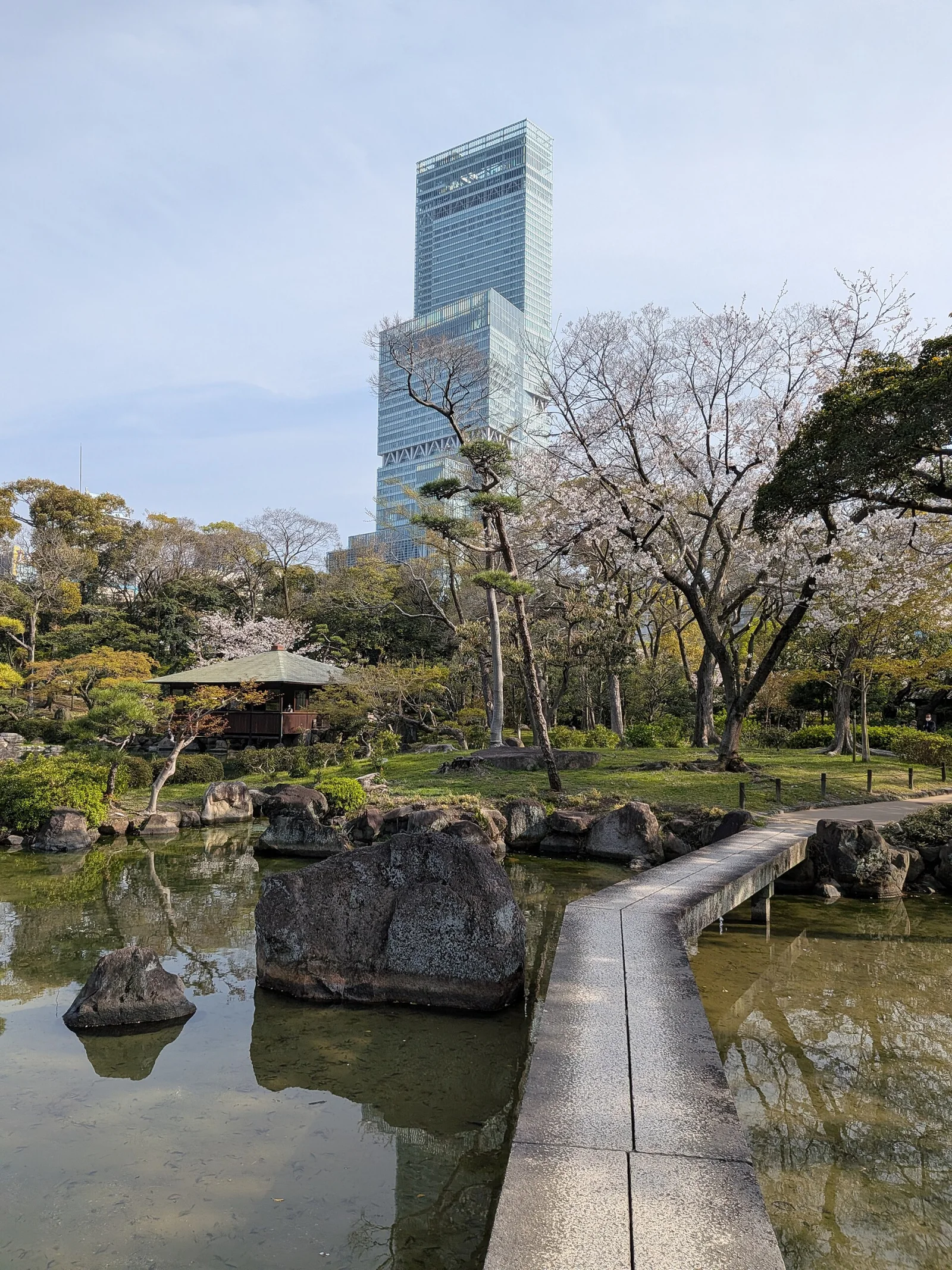
Compare hotels around Tennoji's JR East Exit, Abeno HARUKAS, Tennoji Park, and Shitennoji-mae Yuhigaoka for airport arrivals, family midday naps, and Nara day trips, with room specs, subway exits, and 2026 transit fares.
Room Layouts, Bathrooms, and Late-Night Access at Three Station Hotels
Multigenerational groups can start with the room lineup at Miyako City Osaka Tennoji. Standard Twins measure 24 sq m for 2 guests, while Standard Triples offer 27 sq m for 3 guests. Select 27 sq m Superior Twins can accommodate a third guest with a paid extra bed, so compare both room types alongside extra-bed rates when booking. The Quadruple Room is listed at 37 sq m for 4 guests with a separate bath and toilet, making morning routines far less rushed. According to the hotel's FAQ, standard check-in starts at 15:00 and checkout is 11:00, with front-desk luggage storage available both before check-in and after checkout—handy if you want to drop bags and walk west to the park on arrival morning.
Via Inn Abeno Tennoji sits in Asahimachi, listed on its website as roughly a 2-minute walk from Midosuji Line Tennoji Station Exit 5. Its two twin layouts differ sharply. The 15 sq m Compact Twin fits two 90 cm beds and a unit bath, which works fine for an overnight stay with carry-on bags. The 20 sq m Twin steps up to two 100 cm beds plus a separate bath and toilet. If you need room for a child's step stool or prefer soaking in the tub, those extra 5 square meters of floor space matter far more than upgrading to a higher view floor. Both twin rooms cap occupancy at 2 guests, so groups of three needing separate beds should search directly for triples or two connecting rooms.
Via Inn's 26 sq m Accessible Room sleeps 2 and must be booked by phone. If someone in your party needs to roll a wheelchair into the bathroom, provide the wheelchair width and transfer side when calling and ask the hotel to confirm doorway clearances and bedside space before finalizing. For longer stays, coin laundry is located on the 10th floor and a microwave is in the 7th-floor lounge. The main automatic doors lock between 01:00 and 06:00, requiring a room key card for entry. If an evening flight lands late, notify the front desk in advance with your arrival date and estimated time—even if you arrive after midnight, register it under the original night of your reservation.
Osaka Marriott Miyako Hotel makes sense when high-rise views are part of the experience. Enter the tower from the Kintetsu Department Store side at Osaka-Abenobashi and take the elevator to the 19th-floor lobby; standard hours are 15:00 check-in and 12:00 checkout. If you are only staying one night before an early-morning flight, you will barely get one evening by the window; save the splurge for a stay where you can linger over breakfast and wait out overcast skies. When comparing room tiers, check view direction, bed configuration, and maximum occupancy separately. If a child needs their own bed, factor the extra person and rollaway into the rate before deciding on square footage.
Osaka Marriott offers a limited number of connecting Superior Twin and Superior King/Double rooms, which must be requested at booking. Parents splitting up with one kid per room who still want an interior door between rooms should ask about this setup early. Per the hotel's policy, children under 12 stay free when sharing existing beds, while children needing an individual bed are charged as an adult; cribs are free to borrow with advance notice. Because room rates also swing depending on breakfast inclusion, search using your children's exact ages and sleeping arrangements.
The same budget can also be split strategically. For four adults with four large suitcases, compare the multi-night total of one quad room against two twin rooms. Two rooms buy a second bathroom and let early sleepers and night owls keep different schedules, while a single room makes supervising young kids and sharing luggage simpler. Before booking two rooms, add a request for the same floor or adjacent rooms, and assign anyone needing close assistance to the same room. If you plan to do laundry or warm up meals regularly, compare where each hotel puts its shared machines—doing laundry every other day is easy with one coin-op floor, whereas heating baby food daily makes microwave floor access part of your routine.
Light sleepers should check a station map to see which street their window faces. Busy station-front avenues, train tracks, and hallway elevators all create different background noise. Book an explicitly non-smoking room with a defined view side and request a unit away from elevators and main roads. Even in the quiet side streets near Shitennoji, plan your walk back after dark: returning from dinner in Shinsekai with bags or tired kids is much easier along well-lit main roads or via the subway than cutting through the park.
Factoring Osaka Accommodation Tax, Breakfast, and Cancellation Rules Into the Total
Osaka Prefecture levies an accommodation tax per person, per night based on the room rate. Current tiers exempt stays under ¥5,000, then charge ¥200 for ¥5,000 to under ¥15,000, ¥400 for ¥15,000 to under ¥20,000, and ¥500 for ¥20,000 and above. These brackets took effect for stays from September 1, 2025 onward and apply by check-in date regardless of when you booked or paid. Mandatory bedding and service charges count toward the taxable rate, while meals and consumption tax are excluded.
For two adults staying three nights, a taxable rate of ¥12,000 per person per night adds ¥1,200 in total accommodation tax, while ¥17,000 per person per night adds ¥2,400. When reviewing OTA quotes, enter your exact guest count and dates first, then check the final checkout screen to see what is prepaid online versus collected at the front desk. When two rates sit within a few hundred yen, late checkout, included breakfast, and free date changes usually carry more real value. On stays spanning weekdays and weekends, compare the nightly breakdown rather than relying on the headline average.
For Golden Week, cherry blossom weekends, or New Year holidays, lock in rooms requiring three or more beds early. Choose a free-cancellation rate when possible, save the deadline in Japan Standard Time (JST) on your calendar, and re-check prices once flights and headcounts are finalized. If you are coming from Nara or Kyoto before Tennoji, luggage forwarding lets you travel light on transfer day—just verify the hotel's reception window so your bags arrive smoothly. Value in Tennoji is best judged across the whole itinerary: a well-sized triple room on a busy Saturday can beat paying for two twin rooms one stop away.
Cancellation fees can also differ between a hotel's standard direct rates and third-party agency packages. Osaka Marriott Miyako Hotel's FAQ notes standard penalties of 20% for canceling the day before arrival, 80% on check-in day, and 100% for a no-show without notice, though individual promotional plans carry their own terms. If you are still waiting on flight confirmations or work schedules, rely on your specific booking confirmation's cancellation clause rather than general FAQ guidelines. Should an overnight flight get rescheduled, update your check-in date or notify the hotel of a late arrival right away so the front desk doesn't mark your first night as a no-show.
Check your morning departure times before paying extra for hotel breakfast. If you catch a train before dining hours open, save the money for the airport or grab pastries the night before—the B1 food hall at Kintetsu Department Store sells Japanese and Western sweets plus bakery items that make an easy morning meal. On days when you leave luggage at the front desk and swing back later, try to enter and exit through the same station gate side in one loop. Station coin lockers run out of large sizes fast, leaving you hunting across exits on a tight departure schedule.
Getting To and From Kansai Airport on the HARUKA and Kansai Airport Rapid
Kansai Airport Station serves both JR and Nankai lines; if your hotel is near JR Tennoji, head through the JR ticket gates. Both the HARUKA limited express and the Kansai Airport Rapid run straight to Tennoji without transfers—roughly 30 minutes on the HARUKA and about 50 minutes on the Rapid, plus extra time for waiting, picking up tickets, and exiting the station. When landing with two or more large suitcases or traveling with someone who tires easily standing, prioritize the HARUKA if timing and seats line up. Otherwise, compare real arrival times against the next departing Rapid—the train already waiting on the platform often gets you to the hotel sooner.
Riding the HARUKA requires both a base fare and a limited express ticket. Under JR West's discounted HARUKA one-way ticket for eligible short-term foreign visitors, the Kansai Airport–Tennoji segment costs ¥1,600 for adults and ¥800 for children ages 6 to 11. Select Tennoji specifically when buying, as Osaka, Shin-Osaka, and Kyoto have separate fare zones. A transit IC card covers the Kansai Airport Rapid directly at the gate, whereas boarding the HARUKA still requires a valid limited express ticket or qualifying pass. Keep everyone's paper or mobile tickets ready before reaching the gates and double-check headcounts and car numbers together.
Going back to the airport on the Kansai Airport Rapid, watch out for combined trains paired with the Kishuji Rapid, which uncouple at Hineno Station. Ride in the front four cars facing the direction of travel for Kansai Airport, checking both the platform signs and train side displays before boarding. If a car says Wakayama, walk forward along the Tennoji platform right away so you aren't hauling suitcases through the train at Hineno. For the HARUKA to Kansai Airport, check the JR station map for Platform 15; Rapid services depart from other tracks too, so follow the live departure board for your specific train rather than walking on autopilot. For full line options and terminal connections, see our Kansai Airport transfers guide.
Build your hotel-to-terminal timeline from the door out: collecting bags, taking elevators down, walking to the platform, waiting for the train, and transferring between terminals. If you fly out of Terminal 2, exit Kansai Airport Station and head to the Aeroplaza 1st-floor bus stop for the free shuttle—a 7- to 9-minute ride plus wait time. On late-night arrivals, put the final JR departure times and your hotel's front-desk hours on the same itinerary sheet, and call ahead if your flight is delayed. When facing an ultra-early flight home, moving just your final night closer to the airport beats commuting from a far-off district for your entire trip if your first three nights are built around Tennoji, Nara, and Namba.
Take JR to Nara Park, and Osaka-Abenobashi to Yoshino
For Nara Park and Todai-ji Temple, aim for JR Nara Station by boarding a Yamatoji Rapid bound for Nara or Kamo from JR Tennoji. Check the departure board's final destination first, as trains terminating at Oji require a transfer. JR Nara sits farther from the park's western entrance than Kintetsu-Nara, which works well if you want lunch along Sanjo-dori before strolling in; to save your legs for Todai-ji and the park's gentle hills, catch a local bus outside JR Nara straight to the park area. Coming back, you can also board the Kintetsu Nara Line to Osaka-Namba and switch to the Midosuji Line back to Tennoji.
This split holds true even when staying right inside Abeno HARUKAS. To reach Nara City, come down from the hotel elevators and walk over to JR rather than entering the Kintetsu gates downstairs just because you see the sign. Kintetsu Osaka-Abenobashi runs the Minami-Osaka Line, which connects onto the Yoshino Line for Kashiharajingu-mae, Asuka, and Mount Yoshino—also in Nara Prefecture, but on a completely separate rail corridor from Nara Park. If your itinerary pairs cherry blossoms in Yoshino on one day with deer in Nara Park the next, staying near the JR Central Gate or Abeno lets you walk smoothly to whichever platform each morning calls for.
Heading to Kyoto from JR Tennoji, you can catch a Kyoto-bound HARUKA directly. Regular commuter options mean taking the Osaka Loop Line to Osaka Station and transferring to a Kyoto Line Special Rapid, leaving a few extra minutes to change platforms. If your trip includes two separate mornings in Kyoto, consider moving one night near Kyoto Station or shifting your base to Umeda to trim daily commuting. For a single Kyoto day trip, keeping one base at Tennoji saves half a day of packing, checking out, and storing bags.
Trips south toward Sakai depend on your exact stop. From JR Tennoji, take the Hanwa Line to Mozu Station; walking about 350 meters west brings you to the Mozu Tombs Visitor Center beside Daisen Park (open 09:00–18:00, closed over year-end and New Year holidays). On weekends and Japanese national holidays from March 20, 2026 through March 28, 2027 (suspended January 1–3, 2027), a free shuttle bus links the Visitor Center with Sakai Risho no Mori and Sakai Old Port—ideal for pairing ancient tumuli with tea culture in one day. If you only want Sumiyoshi Taisha Shrine, exit Tennoji Subway Exit 11 for the Hankai Tramway's Tennoji-ekimae stop and ride about 16 minutes to Sumiyoshi-toriimae for an easy half-day loop.
Timing Tennoji Park, Zoo Gates, and Keitakuen Garden
With preschoolers in tow, check Tennoji Zoo's operating calendar first and plan for morning. Standard hours run 09:30–17:00 with last entry at 16:00, though several animals go off exhibit after 15:00. Admission is ¥800 for adults, ¥200 for elementary and junior high students living outside Osaka City, and free for preschoolers. The zoo typically closes Mondays, shifting to Tuesday when Monday falls on a public holiday, with special openings listed on its 2026 fiscal calendar for spring break and New Year's Day. Around year-end holidays, verify closed dates directly on the April 2026–March 2027 calendar rather than assuming a standard Monday pattern.
To reach the zoo's Tenshiba Gate from Tennoji Station, follow the zoo's walking or elevator routes from the JR Central Gate, Midosuji Line West Gate, or Kintetsu Osaka-Abenobashi West Gate. Plan on 5–10 minutes on foot or 10–15 minutes using elevators. If you only want to see one or two animal zones, circle those habitats and nearby restrooms on the park map ahead of time and exit back through the same gate toward your hotel. If you are continuing into Shinsekai for a meal, exit from the opposite Shinsekai Gate instead of backtracking across the park—and walk over to the shopping arcade before peak lunch rush if anyone needs to turn back early for a rest.
When a family splits up in the morning to grab breakfast, meet back at the lawn plaza by the park entrance. Tenshiba—the park's entry zone—is generally open 07:00–22:00, though individual cafes and shops keep their own hours. Inside the entrance area, Tenshiba Plus houses restrooms and nursing rooms open 06:00–24:00, useful for a quick stop with little kids before entering the zoo. If you stay out late in Shinsekai for dinner, walk back along main streets outside the park or take the Midosuji Line after 22:00 so you don't run into locked park gates.
For dinner in Shinsekai, ride the Midosuji Line one stop north from Tennoji (M23) to Dobutsuen-mae (M22). Step-free street directions to the zoo's Shinsekai Gate use Exit 1, while elevator users follow the zoo's signage from the East Gate; JR also serves Shin-Imamiya Station via its Tsutenkaku (East) Exit. If adults head back at different times after dinner, agree on which station entrance everyone will use beforehand. Returning by subway from Dobutsuen-mae, take the train toward Showacho and Nakamozu—Tennoji is the very next stop.
Another solid rhythm puts Shitennoji Temple in the morning and Tennoji Park in the afternoon. The temple halls, Central Precinct (Chushingaran), and Gokuraku-jodo Garden generally open at 08:30, closing at 16:30 from April through September and 16:00 from October through March, while the outer grounds remain accessible around the clock. Central Precinct admission is ¥500 for adults, ¥300 for high school students, and free for elementary and junior high students. Buy tickets early if you want to step inside the Golden Hall and five-story pagoda precinct, or simply stroll the outer grounds before a final meal in town. The Central Precinct offers free entry on the 21st and 22nd of each month—pick another morning if you prefer smaller crowds.
Monday and Tuesday stays require careful scheduling between the park and temple. Both Tennoji Zoo and the Osaka City Museum of Fine Arts normally close Mondays, each with its own holiday makeup rules. When both are closed, pair Shitennoji Temple with Kintetsu Department Store instead. If you visit between January 1 and February 7, 2027, Shitennoji's Treasure House holds its New Year exhibition daily without closing days (08:30–16:00, last entry 20 minutes before closing, with extended hours on January 21)—a reliable cultural stop when other venues are shut.
If you only have an afternoon left and want the classic garden angle shown at the top of this guide, head to Keitakuen Garden beside the Osaka City Museum of Fine Arts. Located inside Tennoji Park about a 5-minute walk from the station, it generally opens 09:30–17:00 (last entry 16:30) for ¥300 per adult. Pair a regular museum collection visit with the garden using the ¥600 adult combo ticket, or show a special exhibition ticket at the garden counter for ¥100 off garden admission. Late in the day, choose either the museum or the pond stroll rather than rushing both before last entry.
HARUKAS 300 at Sunset, Rainy-Day Backups, and Winter Kotatsu Bookings
From Kintetsu Station or the department store, enter Abeno HARUKAS and take the shuttle elevator to the 16th-floor ticket counter before riding up to the observation floors. HARUKAS 300 generally operates 09:00–22:00 with last admission at 21:30, selling same-day tickets on the 16th floor. Effective July 23, 2026, same-day admission is ¥2,200 for adults and ¥900 for children (elementary and junior high students), while official online advance tickets bought by the day before drop to ¥1,980 and ¥810. Preschoolers under 6 enter free, and 15-year-olds still in junior high qualify for the child rate; advance QR codes scan directly on the 16th floor and are non-refundable once issued.
Wait until after dinner if you strictly want night views. To catch both daylight and twilight, arrive 45 to 60 minutes before local sunset to absorb elevator and ticket lines. Because single-entry tickets don't allow re-entry, grab a bite at street level first so you can enjoy the entire transition in one visit. Families planning to eat on the 58th floor should separate the deck's last entry from kitchen hours—food service typically wraps up around 21:00, an hour before the observatory closes. When photographing through glass, hold your lens close to the windowpane to cut indoor light and phone screen glare.
On an all-day rainout with poor tower visibility, start at the Osaka City Museum of Fine Arts next to the park (generally 09:30–17:00, last entry 16:30; ¥500 adults for collection exhibitions, special exhibitions priced individually). Traveling with a baby and wanting to stay indoors? Spend the afternoon in Kintetsu Department Store instead: baby and toddler goods sit on the 8th floor, dining spans floors 12–14, and free stroller and wheelchair rentals are available on the 2nd floor of both the Tower and Wing buildings. Retail floors close at 20:00, while restaurant floors run until 23:00 on paper, though many kitchens close by 22:00 or earlier—pick a restaurant and verify its last order before heading down, and only buy observatory tickets if the skies clear.
From October 29, 2026 through March 28, 2027, the 58th-floor Sky Garden runs its seasonal heated kotatsu dining tables. Posted hours start at 17:00 on weekdays (until 21:45) and 11:30 on weekends and Japanese national holidays, with last orders at 21:30. The oden set costs ¥2,480 per adult (two-guest minimum, elementary-age kids and up must order a meal), plus separate observatory admission—making a two-adult total with advance deck tickets ¥8,920 before drinks. If you want this as a highlight dinner over New Year's, book your table before buying observatory passes, and keep in mind outdoor seating may be canceled in severe weather.
Smart pacing keeps everyone comfortable on winter evenings. Start on the enclosed 60th-floor glass deck first, let anyone craving crisp air step out to the 58th-floor open courtyard, and keep cold-sensitive companions indoors. If sitting outside in winter sounds chilly, book an indoor weekday dinner instead and simply ride up for the view afterward. Guests already booked in a city-facing tower room can visit the observatory one evening, enjoy the lights from their room the next, and save a third sunset for Shinsekai's neon streets or Shitennoji.
How to Split Stays Across Tennoji, Namba, and Umeda
On a three-night trip—landing from Kansai Airport on day one, visiting the zoo and Shitennoji on day two, and heading to Nara on day three—staying in Tennoji for all three nights eliminates an extra hotel move. On the Midosuji Line, Namba is just three direct stops north (Dobutsuen-mae, Daikokucho, Namba) with zero transfers. If you only plan one evening in Dotonbori, keep Tennoji as your base and ride the same line back after dinner. If you expect multiple late nights around Shinsaibashi and Dotonbori or want a one-seat Nankai ride to Kansai Airport, base yourself in Namba—just be sure to check the distances among Nankai, Kintetsu/Hanshin, subway, and JR stations there.
If most of your day trips head toward Kyoto, Kobe, or Shinkansen lines, compare Umeda or Shin-Osaka first. When one person in a group wants a Kyoto morning while others visit the zoo, Tennoji still lets everyone split up smoothly and meet back at Kintetsu Department Store or Tennoji MIO. Always set a specific store floor or cafe counter as your meeting point rather than saying "outside Tennoji Station." If your itinerary wraps up with an evening in Shinsekai before flying out, choose a hotel near the Midosuji West Gate or JR Central Gate so grabbing bags and catching the airport train feel effortless.
Anyone pushing a wheelchair, stroller, or heavy suitcase repeatedly should trace a single elevator route between their hotel door and daily platform. Exiting the Midosuji Line West Gate, follow the accessible path to Exit 7 for north-side street level or Exit 10's elevator toward Abeno; from the East Gate toward Kintetsu, Exit 4 connects to the Kintetsu plaza elevator. Count how many crosswalks and elevator transfers stand between your room and the train each morning. During busy holiday or weekend crowds, meet outside the ticket gates so kids and older relatives can head straight to the hotel while others follow separately.
For a one-night stay, book beside the rail line you are taking the next morning instead of crossing stations to retrieve stored luggage. On four- or five-night stays, weigh dinner access alongside where to buy next-day breakfast, laundry timing, and whether everyone can rest comfortably in the room layout. If weekend rates spike, check whether keeping one continuous room type across weekdays and weekends saves more travel hassle than switching hotels mid-trip. Walking back from Yuhigaoka adds extra distance, which pays off when peaceful morning strolls are part of your plan—otherwise, keep station-front rooms for early departures, strollers, and midday breaks.
A few useful answers
Which side of Tennoji should first-time visitors pick?
Pick the JR Tennoji East Exit if you have large suitcases and frequent JR trips. Families who want easy midday nap breaks back at the room should look near the Tenshiba entrance of Tennoji Park, while travelers prioritizing skyline views should choose Osaka Marriott Miyako Hotel inside Abeno HARUKAS.
Should I take JR or Kintetsu from Tennoji to Nara Park?
Take the JR Yamatoji Rapid bound for Nara or Kamo from JR Tennoji to JR Nara Station, then walk or hop on a local bus. Kintetsu Osaka-Abenobashi serves Kashiharajingu-mae, Asuka, and Mount Yoshino—not Nara Park.
Do trains from Tennoji to Kansai Airport require a transfer?
No—both the HARUKA limited express and the Kansai Airport Rapid run direct. Note that combined Kansai Airport/Kishuji Rapid trains split at Hineno Station, so board the front four cars facing the direction of travel for Kansai Airport.
Are there Tennoji hotel rooms that fit four adults together?
Yes. Miyako City Osaka Tennoji offers a 37 sq m Quadruple Room for up to 4 guests with a separate bath and toilet. It is also worth comparing its nightly total against booking two separate twin rooms.
How should I plan a rainy Monday half-day when museums are closed?
Browse Kintetsu Department Store's shops and dining floors first, then head up to the 16th floor to check visibility before buying same-day HARUKAS 300 tickets. You can also take the Tanimachi Line to Shitennoji Temple, whose halls generally open 08:30–16:00 from October through March.
Official information and references
Sources used in this guide.
- JR-West Tennoji Station Premises Map and Platforms
- Osaka Metro Tennoji Station Exits and Area Map
- Osaka Metro Tennoji Station Elevators and Line Info
- Osaka Metro Station Guide and Route Map
- JR-West HARUKA One-Way Ticket
- JR-West Kansai Airport Rail Usage Guide
- JR-West HARUKA Weekday and Holiday Timetable
- Kintetsu Osaka-Abenobashi Station Map and Transfer Times
- Miyako City Osaka Tennoji Guest Rooms
- Miyako City Osaka Tennoji Access and Luggage Storage FAQ
- Via Inn Abeno Tennoji Guest Rooms and Facilities
- Via Inn Abeno Tennoji Station Exit Access Guide
- Via Inn Abeno Tennoji Nighttime Entry and Laundry FAQ
- Osaka Marriott Miyako Hotel Walking Directions to the 19th-Floor Lobby
- Osaka Marriott Miyako Hotel Rooms and Check-In Hours
- Osaka Prefecture Accommodation Tax Brackets
- Tennoji Zoo Hours, Tickets, Gates, and Elevator Routes
- Tennoji Zoo FY2026 Operating Calendar
- Shitennoji Temple Hours, Fees, and 2027 Treasure House New Year Exhibition
- Shitennoji Temple Official Walking Times From Nearby Stations
- Osaka City Museum of Fine Arts Hours, Admission, and Combo Tickets
- Osaka Convention & Tourism Bureau Keitakuen Garden Info and Combo Tickets
- HARUKAS 300 Observatory Hours and 2026 Ticket Prices
- HARUKAS 300 Winter Kotatsu Dining Event Details
- Abeno HARUKAS Kintetsu Main Store Floor Guide and Services
- Abeno HARUKAS Kintetsu Main Store Stroller Rental Service
- Abeno HARUKAS Kintetsu Main Store Restaurant Hours
- Kintetsu Railway Minami-Osaka, Yoshino, and Nara Line Route Map
- Osaka Marriott Miyako Hotel Connecting Rooms, Child Policy, and Cancellation FAQ
- Kansai International Airport Terminal 2 Shuttle Bus Stop and Travel Time
- Tennoji Park Entrance Area Hours and Nursing Room Schedule
- Sakai City Mozu Tombs Visitor Center and Weekend Shuttle Bus
- Hankai Tramway Travel Time From Tennoji-ekimae to Sumiyoshi-toriimae
- Sakai City World Heritage Shuttle Bus Schedule and Suspension Notice