2026 Tokyo Subway Ticket 24/48/72-hour revised fares, QR boarding, and paper ticket exchanges. Compare IC cards against passes using real routes across Ueno, Asakusa, Shinjuku, and Roppongi, plus airport through-train boundaries.
- Region & Focus
- TokyoTransport and passes
- Reading Scope
- 19 min read · 11 chapters · 10 Q&As
- Official Verification
- 17 official sources checkedUpdated 22 November 2026
- Key Topics
- Rail travelFirst tripTravel budget
Chapter Route Map (tap any stop)
- 2026 Fares and Break-Even Thresholds
- 13 Underground Lines Across Two Operators—JR and Buses Cost Extra
- Same Day Out, Different Bills: ¥565 vs ¥1,005
- Structuring a 48-Hour Pass and When Day 3 Justifies Another ¥500
- Validity Runs Continuously: Different Start Triggers for Paper, QR, and PASMO
- QR Tickets vs QR Exchange Vouchers: Which Gate to Use
- Where Overseas Visitors Can Buy Tickets and Central Counter Hours
- Collecting Narita Skyliner Bundles and Paying Haneda Through-Trains
- Comparing Tokyo Metro 24-Hour, Toei One-Day, and IC Cards
- Walk Between Nearby Sights Before Starting Your Next Paid Leg
- Ages and Fares When Travelling with Children
- Quick Q&A
The Tokyo Subway Ticket increased in price in March 2026. Adult 24-, 48-, and 72-hour passes now cost ¥1,000, ¥1,500, and ¥2,000 respectively, covering all Tokyo Metro and Toei Subway lines. A three-leg day linking Ueno, Asakusa, and Ginza costs just ¥565 on an IC card. Only when you spend two full days hopping across multiple central neighbourhoods—and mixing in Toei lines—does the 48-hour pass reliably save money. Map out your route from your hotel to the first stop and back from the last before deciding which ticket to buy.
2026 Fares and Break-Even Thresholds
The commonly cited ¥800, ¥1,200, and ¥1,500 prices were the pre-revision adult fares. From 14 March 2026, the three durations increased to ¥1,000, ¥1,500, and ¥2,000. Tokyo Metro's official website lists paper passes and QR tickets separately, though both carry the exact same price. Travel platforms also bundle attraction tickets or airport trains into packages, so compare what is included, the pass duration, and the redemption steps side by side.
Using the standard ¥178 adult IC fare for short central hops, five rides cost ¥890 and six cost ¥1,068—meaning a 24-hour pass only starts saving money on the sixth ride. The 48-hour pass has to beat eight rides at ¥1,424, breaking even on the ninth at ¥1,602. The 72-hour pass must beat 11 rides at ¥1,958, coming out ahead on the 12th ride at ¥2,136. These benchmarks assume equal short hops; for longer journeys, plug in the actual point-to-point fares.
For adult fares, most Tokyo Metro short hops cost ¥178 on an IC card or ¥180 for a paper ticket, rising to ¥209 and ¥210 in the next distance band. Toei Subway short hops similarly start at ¥178 (IC) and ¥180 (paper), stepping up to ¥220 for both in the next band. When a journey planner displays both paper and IC fares, pick one column and tally it consistently; if you normally tap Suica or PASMO, compare against IC prices.
You also need to count qualifying cross-operator transfers as a single journey. A qualifying transfer between Tokyo Metro and Toei Subway reduces the adult fare by ¥70, applied automatically when tapping the same IC card. Two ¥178 legs become ¥286 as one continuous trip. If you plan to exit the gates at a transfer station for a meal or shopping before continuing, calculate them as separate rides. Paper-ticket riders can buy a corresponding transfer ticket at their starting station.
Once every leg is tallied, look for the day with the highest fare total. Bracket the busiest subway window first, then see whether an adjacent half-day fits inside the same pass. Reworking an itinerary after buying a pass often means walking longer underground passages or swapping direct JR trains for two-change detours just to save a few hundred yen. Price out the route you already plan to take, and the choice usually makes itself.
| Pass Type | Adult | Child | Adult Break-Even at ¥178 per Ride |
|---|---|---|---|
| 24-Hour | ¥1,000 | ¥500 | 6 rides (¥1,068) |
| 48-Hour | ¥1,500 | ¥750 | 9 rides (¥1,602) |
| 72-Hour | ¥2,000 | ¥1,000 | 12 rides (¥2,136) |
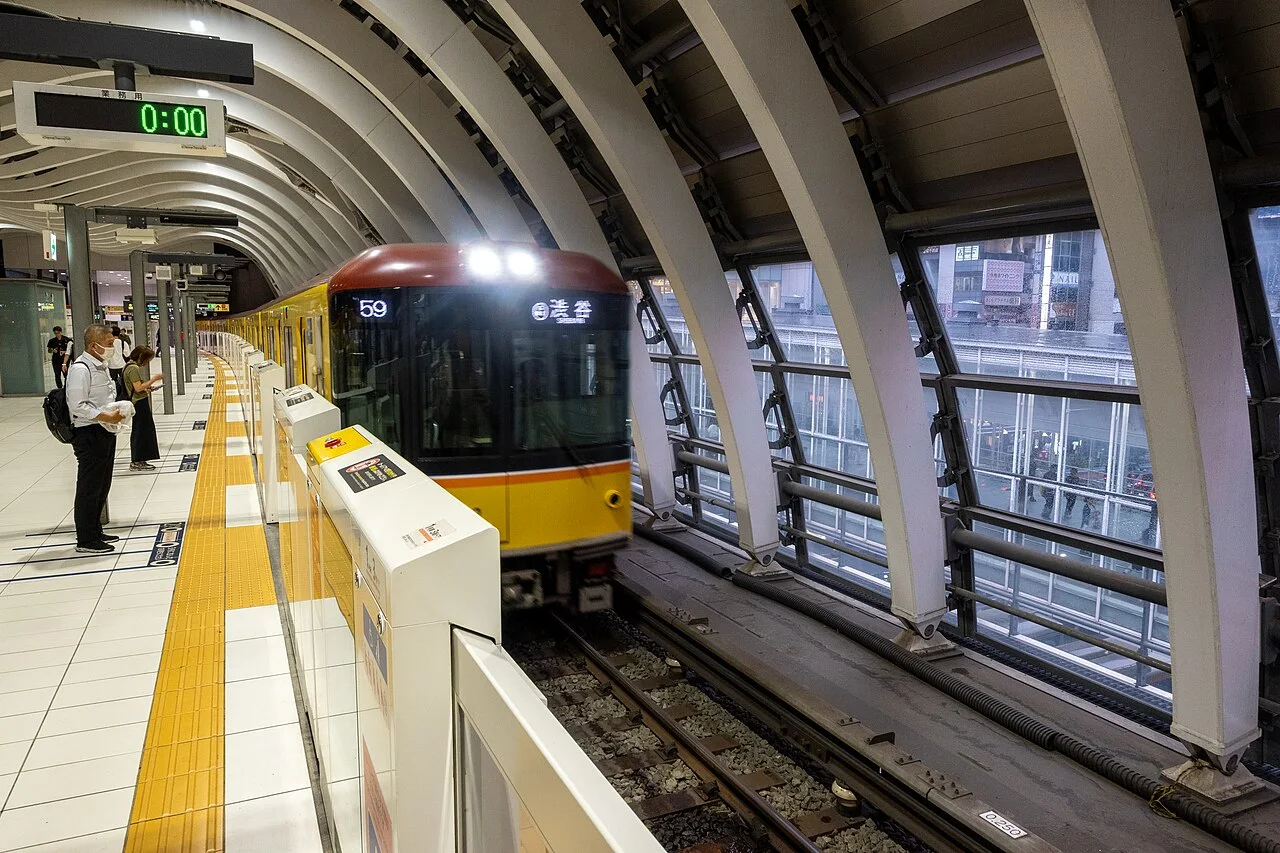
2026 Tokyo Subway Ticket 24/48/72-hour revised fares, QR boarding, and paper ticket exchanges. Compare IC cards against passes using real routes across Ueno, Asakusa, Shinjuku, and Roppongi, plus airport through-train boundaries.
13 Underground Lines Across Two Operators—JR and Buses Cost Extra
Tokyo Metro operates nine lines: Ginza, Marunouchi, Hibiya, Tozai, Chiyoda, Yurakucho, Hanzomon, Namboku, and Fukutoshin. Toei Subway operates four: Asakusa, Mita, Shinjuku, and Oedo. All 13 lines are covered by the pass. When reading maps, check both the destination name and the line letter beside the station—such as G for Ginza, A for Asakusa, Z for Hanzomon, and E for Oedo.
A destination like "Asakusa" has several ways in. You can ride the Tokyo Metro Ginza Line direct from Ueno, or take the Toei Asakusa Line from Nihombashi or Higashi-ginza. To continue to Tokyo Skytree, ride the Toei Asakusa Line from Asakusa to Oshiage, or ride direct from Shibuya on the Hanzomon Line to Oshiage. Boarding the Tobu train from Asakusa to Tokyo Skytree Station puts you on the Tobu Railway, which costs extra. For walking approaches, see our Senso-ji Temple visiting route.
Read full station names carefully around Shinjuku too. Returning from Shibuya towards Shinjuku, the Tokyo Metro Fukutoshin Line stops at Shinjuku-sanchome. To take the Toei Oedo Line from Shinjuku to Roppongi, note that "Shinjuku" and "Shinjuku-nishiguchi" are two distinct stations. If you are meeting for dinner on one side or transferring to JR or a bus, pick your station and exit accordingly—ticket validity depends on whose gates you actually walk through.
JR's Yamanote, Chuo, and Keiyo lines, private railways (Tokyu, Tobu, Odakyu, Keio, Keisei, and Keikyu), plus the Yurikamome, Rinkai Line, and Tokyo Monorail all charge separate fares. The Toei Subway network also excludes Toei Buses, the Tokyo Sakura Tram, and the Nippori-Toneri Liner. You can take the underground to Shimbashi and switch to the Yurikamome for Odaiba, but you must pay separately from Shimbashi. Heading to Tokyo Disneyland likewise requires paying the final JR Keiyo Line leg to Maihama.
When picking a hotel, work backwards from your likely first train each morning. Staying near a Fukutoshin Line entrance in Ikebukuro gives direct rides to Shinjuku-sanchome and Shibuya, whereas staying on the Ueno Park side often makes JR Ueno Station more convenient than detouring to the underground gates. When meeting travel companions at different stations, message the operator, line, station number, and exit—especially at Asakusa, Ueno, Shimbashi, and Shinjuku, where it is easy to walk into the wrong operator's station.
Same Day Out, Different Bills: ¥565 vs ¥1,005
Stay in Ueno, take the Ginza Line to Asakusa for Senso-ji in the morning, ride back along the same line to Ginza for lunch, and return to Ueno in the evening. An IC card deducts ¥178, ¥209, and ¥178 in turn for a total of ¥565—and even buying three single paper tickets costs only ¥570. With every stop on one line, IC is cheapest, and you can spontaneously detour after Ginza without chasing extra rides to justify a pass.
Contrast that with staying in Shibuya: morning Fukutoshin Line to Ikebukuro and then Shinjuku-sanchome, walking to Oedo Line Shinjuku for Roppongi, taking the evening Oedo Line to Shiodome for dinner around Shimbashi, and returning to Shibuya on the Ginza Line. Those five legs cost ¥209, ¥178, ¥220, ¥220, and ¥178—totalling ¥1,005. Stopping in Roppongi before re-entering for Shiodome triggers a fresh fare. Here, a 24-hour pass saves ¥5 over IC, so pick whichever is easier to obtain.
If you end up staying longer in Roppongi and taking the Hibiya Line straight back to your hotel instead of going to Shiodome and Shimbashi, both evening fares drop off the tally. When the price gap is only a handful of yen, forcing a fifth ride just to break even vanishes the moment plans change. Keep the return leg in your calculation only if dinner near Shimbashi or Shiodome is already locked in.
West-side half-days often lead travellers to mistake walking stretches for paid rides. Ride the Fukutoshin Line from Shibuya to Meiji-jingumae, stroll along Omotesando after visiting the shrine, and take the underground back from Omotesando Station—that is only two paid rides. Choosing entry and exit stations around your approach and meeting point often lets you cover Harajuku and Omotesando on foot, making an IC card's flexibility ideal.
| Itinerary | Adult IC Total | 24-Hour Pass |
|---|---|---|
| Ueno → Asakusa → Ginza → Ueno | ¥565 | ¥1,000 (costs ¥435 more) |
| Shibuya → Ikebukuro → Shinjuku-sanchome, walk to Shinjuku → Roppongi → Shiodome, walk to Shimbashi → Shibuya | ¥1,005 | ¥1,000 (saves ¥5) |
Structuring a 48-Hour Pass and When Day 3 Justifies Another ¥500
Suppose you stay in Shibuya throughout. On Friday at 09:00 you take the Ginza Line to Asakusa, continue on the same line to Ueno and Ginza, and return to Shibuya after dinner: four IC fares of ¥252, ¥178, ¥178, and ¥209 come to ¥817. On Saturday at 09:30 you leave Shibuya for the five-leg Ikebukuro, Shinjuku, Roppongi, and Shiodome loop at ¥1,005. Two days on IC total ¥1,822, while a 48-hour pass costs ¥1,500—saving ¥322.
Buying separate single-day tickets for the same schedule—a ¥700 Tokyo Metro 24-hour ticket on Day 1 plus a ¥1,000 joint pass on Day 2—costs ¥1,700. Shift Friday's first ride to 14:30, however, and that single-operator Metro pass also covers Saturday morning's rides to Ikebukuro and Shinjuku-sanchome. Switching to IC from Oedo Line Shinjuku onwards (¥618 for the final three legs) brings the two-day total down to ¥1,318. Moving your first departure time by a few hours can flip the better option.
A 48-hour pass started at 14:30 on Friday remains valid until nearly 14:30 on Sunday. If you take the underground from Shibuya to Ginza for Sunday lunch and tap in both ways before expiry, both legs fit on the same pass. Start that 48-hour pass at 09:00 on Friday instead, and it expires around 09:00 on Sunday, leaving lunch rides out of pocket.
Upgrading to a 72-hour pass comes down to how much travel remains after the 48-hour mark. If you reach Ginza before lunch and only the evening return to Shibuya falls outside, pay the single ¥209 leg on IC. If you visit Ginza, Tokyo Station, and Ikebukuro before returning to Shibuya after expiry, those Marunouchi, Fukutoshin, and Ginza Line legs (¥209, ¥178, ¥209, and ¥209) total ¥805. Paying ¥500 extra for the 72-hour pass beats adding a ¥700 Tokyo Metro 24-hour ticket—and across all three days, ¥2,627 on IC versus ¥2,000 saves ¥627. If only two ¥209 legs remain, pay ¥418 on IC.
A day trip outside Tokyo still eats into the pass clock. Starting a 48-hour pass on Friday afternoon, spending all of Saturday in Kamakura, and riding in Tokyo on Sunday evening leaves Sunday evening beyond the 48-hour window. When two city days are separated by an excursion and lean heavily on one operator, separate single-operator passes or pay-as-you-go IC fares often win—though if the second city day runs Sunday morning into early afternoon, check your exact gate times against 48 hours.
Changing hotels mid-trip alters the numbers too. Moving from Shibuya to Ueno removes one return trip to Shibuya and adds a luggage transfer, while walking distance to nearby gates affects which trains you prefer. Before booking around Keisei-Ueno, read how to choose between Ueno, Keisei-Ueno, and Okachimachi hotels, then tally fares from the station gates you will use each day.
Validity Runs Continuously: Different Start Triggers for Paper, QR, and PASMO
Paper passes have two timelines to watch. After buying or exchanging your ticket, check the valid-from window printed on the back; only your first gate entry within that window starts the 24-, 48-, or 72-hour countdown. A 24-hour paper ticket first tapped in at 17:40 on Friday remains valid until around 17:40 on Saturday. Arriving from Narita on the Skyliner and walking from Keisei-Ueno starts the clock only when you tap into Tokyo Metro Ueno Station.
QR tickets give you 90 days from purchase to begin using them. On the day you set out, tap "Start Use" on your mobile ticket page and pass through a gate that same day—the gate entry timestamp starts the 24-, 48-, or 72-hour window. To stretch an evening ride past dinner the next day, check your actual entry time against the ticket screen rather than counting calendar days. Companions arriving later activate their own QR passes on their own first entry.
Passes loaded onto a physical PASMO card at designated sales points start running from the exact moment of purchase. Buy at 08:00 at a Toei Tourist Information Centre and wait until 12:00 for your first ride, and a 24-hour pass still expires around 08:00 the next morning. If you want it to last until noon the following day, ask about purchase rules in the morning and buy right before boarding—or pick a paper or QR ticket instead.
Pre-ordered paper exchange vouchers give you a booking confirmation or redemption code first. Tokyo Metro notes that redemption deadlines vary by sales channel, so keep a note of the deadline on your order and check the printed dates once you collect the physical ticket. When ordering separately for family members, label each booking by name or travel date so you do not pull up the wrong code at the ticket machine.
| Ticket Format | How to Begin | Clock Start Trigger |
|---|---|---|
| Paper ticket | Collect or buy within the validity window | First gate entry |
| QR ticket | Tap Start Use within 90 days of purchase and enter a gate that day | First gate entry |
| Loaded onto PASMO | Issued at designated counters, active immediately | Time of purchase |
QR Tickets vs QR Exchange Vouchers: Which Gate to Use
Check the product name carefully before buying. A digital pass labelled "Tokyo Subway Ticket (QR)" lets you board directly: open your order or member page, select the ticket, tap "Start Use", and hold the QR code up to the gate scanner. Use the exact same mobile ticket page on both entry and exit. Because QR tickets record entry and exit journeys, tapping a Suica on the way out leaves the system with no matching entry—return to your QR ticket or ask station staff to resolve it.
QR exchange vouchers work differently. Take the redemption code from your booking to a ticket machine equipped with a QR reader or a designated exchange counter; only the physical ticket printed out works at the gates. Use the Toei Subway QR ticket exchange machine map to find a convenient station near your hotel and locate the machine inside. If you have an early start out of Tokyo, collect the paper ticket the previous afternoon rather than searching for a machine with bags in tow.
The Tokyo Metropolitan Bureau of Transportation's QR launch notice lists incompatible gates including Oshiage on the Asakusa Line, as well as the Hanzomon Line and Fukutoshin Line gates at Shibuya. At gates without a QR scanner, speak to station staff first, then tap "QR Scan" on your mobile ticket page to scan the station's posted entry or exit code. If no staff are nearby, use the intercom beside the gate instructions.
Digital passes require loading the live ticket page. Screenshots and printouts are not accepted, and if your phone dies or breaks, you must buy a single ticket for that journey. Check your account login, ticket sharing, and mobile data before leaving your hotel. Two adults splitting up for the day should keep their passes on separate phones; if children do not have phones, paper tickets avoid the hassle of switching screens at every gate.
Keep paper tickets accessible through both entry and exit gates. At dual IC-and-slot gates, insert the paper ticket and pick it up again as you walk through. When travelling with older relatives, confirm everyone has their own ticket in hand before heading through. If a gate rejects a ticket, hold onto it and ask station staff to check its validity or entry record rather than tapping an IC card in frustration.
Where Overseas Visitors Can Buy Tickets and Central Counter Hours
International visitors can access official paper and QR sales portals through Tokyo Metro's visitor ticket pages. Online paper tickets and airport bundles usually specify designated collection points. Landing late and riding the underground only after reaching the city? Buy a QR ticket beforehand so you can head straight for the gates after dropping your bags. Prefer a paper pass and staying next to a metro station? Choose a collection station on the official map along your first route.
To buy in person in central Tokyo, visit the Toei Tourist Information Centres at Shimbashi Station (Asakusa Line), Shinjuku-nishiguchi Station (Oedo Line), or Ueno-okachimachi Station (Oedo Line), all open 08:00–20:00 daily. Toei verifies overseas visitor eligibility with your passport at these counters. Toei also lists Minowabashi Omoidekan (open 10:00–18:00; closed Tuesdays and Wednesdays except on Japanese public holidays, and closed 29 December to 3 January). To load a pass onto a PASMO, use the physical PASMO service at tourist information centres—Mobile PASMO is not eligible.
Alongside overseas visitors, Tokyo Metro offers passes for domestic travellers visiting from outside the Greater Tokyo area (Tokyo, Kanagawa, Saitama, Chiba, Ibaraki, Tochigi, Gunma, and Yamanashi). If you are meeting friends or relatives who live in the capital region, each person should buy the ticket tier they qualify for. Tokyo Metro also sells attraction-bundled passes with no residency restrictions—if you already plan to visit that attraction, compare the bundle price against buying both separately.
Unused, unexpired paper tickets purchased at Tokyo Metro pass offices or tourist information centres can be refunded at the original point of purchase for a ¥220 handling fee per ticket; bring the sleeve showing the sales office and date. Orders from other vendors, digital tickets, attraction bundles, and airport packages follow their own refund policies. Adjust passenger numbers in your basket before paying to avoid cancellation fees.
The Tokyo Metropolitan Bureau of Transportation also partners with selected hotels and travel desks. If your hotel reception sells passes, buying on the way out is the most convenient option. Still undecided on where you are staying or how many city days you will have? Stick with an IC card until your plans settle. If a paper ticket needs refunding later, check your receipt to find the issuing counter or travel platform.
Collecting Narita Skyliner Bundles and Paying Haneda Through-Trains
The Keisei Skyliner & Tokyo Subway Ticket package combines the Narita airport express with an underground pass. Adult one-way bundles listed by the Tokyo Metropolitan Bureau of Transportation cost ¥3,100 (24-hour), ¥3,600 (48-hour), or ¥4,100 (72-hour), while return bundles cost ¥5,100, ¥5,600, or ¥6,100. Decide first whether you would take the Skyliner anyway and which subway pass duration fits; if you stay in Ueno with only one light subway day, a standard airport ticket plus pay-as-you-go IC fares is easier to benchmark than focusing on bundle discounts alone.
Keisei sells and exchanges bundles at both Narita Terminal 1 and the shared Terminal 2–3 station. The SKYLINER & KEISEI INFORMATION CENTER opens 07:00–21:00 with multilingual assistance, while the Skyliner Ticket Counters at both stations operate 07:00–23:30—Keisei directs late arrivals there once the information centre closes. For online Keisei bookings, bring your redemption code or QR code plus your passport to Narita Airport Station; these codes cannot be redeemed at Nippori or Keisei-Ueno. Keisei's FAQ confirms exchanged subway passes must be activated within six months and do not have to start immediately, though evening train choices still depend on flight arrival, immigration, and timetables.
At Keisei-Ueno, exit the Keisei ticket gates before walking to Tokyo Metro Ueno Station for the Ginza or Hibiya lines. If your hotel is within walking distance of Ueno, pocket your paper subway ticket for the next morning's ride to Asakusa instead of burning several overnight hours on arrival night. For JR transfers at Nippori or late-night arrivals, check Tokyo airport arrivals and city transfers.
On Haneda trains running via Keikyu straight onto the Toei Asakusa Line to Asakusa or Oshiage, the network boundary is Sengakuji. Under QR ticket rules, changing operators on a through-service means exiting at the boundary station and re-entering with the next ticket: pay the Keikyu fare from Haneda to Sengakuji, step out at Sengakuji, and tap back in with your Toei pass. Paper-pass holders planning to stay on the same train across the boundary should speak to station staff before boarding and follow their instructions to settle the cross-operator fare.
If you are hauling luggage straight to Higashi-ginza or Asakusa and want to stay in your seat, tap a compatible IC card for the entire airport journey and save your paper or QR pass for your next underground ride. On Keisei through-trains from Narita onto the Toei network, the boundary station on the opposite side is Oshiage. Note that a standalone Tokyo Subway Ticket never covers the Tokyo Monorail, Skyliner, Narita Express (N'EX), or airport buses—keep airport legs separate from city rides when working out break-even on your return day.
Comparing Tokyo Metro 24-Hour, Toei One-Day, and IC Cards
When you spot a "24-Hour Ticket" at Tokyo Metro machines, read the full name. The Tokyo Metro 24-Hour Ticket costs ¥700 for adults (¥350 for children) and covers Tokyo Metro lines only. Four ¥178 IC rides total ¥712, so it already saves money; even adding a single ¥178 Toei ride (¥878 total) stays cheaper than the ¥1,000 joint pass. If a west-side day around Shibuya, Ikebukuro, and Shinjuku-sanchome sticks mostly to the Fukutoshin Line, price out the Metro-only pass first.
The two operators also offer a joint Tokyo Metro & Toei Subway Common 1-Day Ticket at ¥1,100 for adults (¥550 for children), covering the same 13 lines for one calendar operating day. Residents or travellers ineligible for the tourist pass can compare it against pay-as-you-go fares for a busy day out, though eligible visitors get better value—and overnight flexibility across midnight—from the rolling-hour Tokyo Subway Ticket.
If your plans centre on the Oedo Line, Toei Buses, or the Tokyo Sakura Tram, look at Toei's 1-Day Pass ("Toei Marugoto Kippu") at ¥700 for adults (¥350 for children). It covers Toei Subway, standard Toei Buses, the Tokyo Sakura Tram, and the Nippori-Toneri Liner for one calendar day. Factor in any extra Tokyo Metro fares separately, or simply pay single bus fares around Yanaka or Sugamo to keep walking and underground options open.
Suica and PASMO are stored-value IC cards that work across operators and calculate fares automatically at the gates. On days mixing JR, underground lines, and Odaiba, paying non-subway segments on IC is usually simplest. When carrying a pass, match paper, QR, and IC cards to their respective segments—decide before tapping in, exit with the same ticket, and follow transfer-gate signage where operators share a station.
For a single day mixing JR lines within Tokyo's 23 wards, both subway networks, and Toei Buses, consider the ¥1,720 adult Tokyo Free Kippu, valid for one calendar day across designated central JR routes, Toei services, and Tokyo Metro. Check route boundaries carefully if heading towards Maihama or Narita, as long cross-border fares cannot be rolled into it.
Walk Between Nearby Sights Before Starting Your Next Paid Leg
Take Ginza as an example. Underground passages link directly through to Hibiya and Yurakucho, so picking the Hibiya Line or Ginza Line often comes down to which entrance sits closest to your hotel. Strolling from Ginza to Hibiya and boarding the Chiyoda Line to Meiji-jingumae saves an unnecessary train change. On wet days, mark department stores, galleries, and sheltered exits on your map—count underground walks as pedestrian stretches, and add an extra fare only if heavy rain forces a short ride.
Around Ueno Station, keep track of the exact buildings and exits: Tokyo Metro Ueno, JR Ueno, and Keisei-Ueno serve different networks. Going from Asakusa to the Tokyo National Museum? Take the Ginza Line to Ueno and walk into Ueno Park. If you head to Ameyoko or Okachimachi afterwards, walk between the two districts and tap in at whichever underground station is closest for your next leg.
Toei's Kuramae Station requires a street-level transfer between the Asakusa and Oedo lines, following signs for Kuramae and the Oedo Line to a separate entrance. If anyone in your group avoids stairs, check which side each station lift serves and how far the street walk runs. Even when holding a pass, taking a direct IC route or boarding from another station can beat hauling suitcases up and down staircases for the sake of saving a few minutes on a map.
When entering major stations during commuter rush hours, agree on an obvious meeting point first—such as a staffed gate or a colour-coded line entrance—especially with children or older relatives. Check last train times separately for late evenings, particularly if taking the Hibiya Line to connect with the Oedo Line back to your hotel; catching the first train does not guarantee the final connection is still running. A pass valid until tomorrow only covers entry—you still depend on tonight's timetable.
Ages and Fares When Travelling with Children
Tokyo Metro classifies riders aged 12 and over as adults, though 12-year-olds still in primary school qualify for child fares. Ages 6–11 pay child fares, while 6-year-olds not yet attending primary school count as young children. Each fare-paying adult or child may bring up to two young children free of charge, with child fares starting from the third; infants under 1 ride standard subways free. Reserved express seats follow separate rules, so check whether a child needs a seat ticket on Skyliner bundles.
On the three-leg Ueno, Asakusa, and Ginza loop, a school-age child IC card deducts ¥89 + ¥104 + ¥89 = ¥282, compared with ¥500 for a 24-hour child pass. Two adults plus one fare-paying schoolchild pay ¥1,412 on IC versus ¥2,500 on passes. If your child qualifies to ride free as an accompanied young child, count only the adults' fares—and whenever bundles advertise "half-price child", check the maths against single child fares too.
With children on multi-day trips, evening plans change most often: tiring early or swapping Ginza lunch for Asakusa easily drops two rides from the day. Price out non-negotiable trips first—such as the morning departure and return to the hotel—then tally optional stops separately. Only treat a pass as a queue-skipping convenience once your core rides already approach or exceed its cost; when the gap is small, buying just enough for your main itinerary makes more sense.
If your party splits up, agree beforehand who holds which paper tickets or send QR passes to separate phones. Every rider needs their own ticket, and activation times can be staggered—if one parent heads to Ueno early with a child while another leaves at noon, the two passes will expire hours apart the next day. Keep an eye on each ticket's expiry time before splitting up for the journey back.
A few useful answers
How much is the Tokyo Subway Ticket in 2026?
The 24-hour pass is ¥1,000 for adults and ¥500 for children; 48-hour is ¥1,500 (adult) and ¥750 (child); 72-hour is ¥2,000 (adult) and ¥1,000 (child). These revised fares took effect on 14 March 2026.
How many rides do I need to break even on the Tokyo Subway Ticket?
Total up your planned subway fares within the validity window. Based on a typical ¥178 adult IC short hop, the 24-, 48-, and 72-hour passes save money from the 6th, 9th, and 12th ride respectively. For a day spent solely on Tokyo Metro, also compare the ¥700 Tokyo Metro 24-Hour Ticket.
Does the Tokyo Subway Ticket cover the JR Yamanote Line or Toei Buses?
No, JR Yamanote Line trains and Toei Buses require separate fares. The pass covers Tokyo Metro's 9 lines and Toei Subway's 4 lines. For days heavy on Toei Buses and Toei Subway, compare the ¥700 Toei 1-Day Pass.
Does the pass start from purchase or from first use?
Paper tickets start from your first gate entry within their validity window. QR tickets require tapping 'Start Use' within 90 days of purchase and entering a gate that same day, starting the clock on first entry. Passes loaded onto a physical PASMO at designated counters start immediately at the time of purchase.
Do I have to exchange an online ticket for a paper pass?
If your order is a 'Tokyo Subway Ticket (QR)', you can open the digital ticket on your phone browser and ride directly. If you bought a paper ticket exchange voucher, take the order QR code to a designated ticket machine or counter to collect your physical ticket before entering the gates.
Where can I buy or collect a pass right after landing?
At Narita Airport, Keisei Skyliner bundles can be bought or collected at designated Keisei counters. Standalone QR passes can also be bought online in advance and activated once you reach Tokyo. In central Tokyo, Toei Tourist Information Centres at Shimbashi, Shinjuku-nishiguchi, and Ueno-okachimachi sell passes daily from 08:00 to 20:00 (passport required for overseas visitors).
Can I use the pass all the way on Narita or Haneda through-trains to Asakusa?
The Toei Asakusa Line covers the section between Sengakuji and Oshiage, while Keikyu and Keisei sections cost extra. With a QR ticket, you must exit at the boundary station and re-enter using your next ticket. To stay on the same train without exiting at the boundary, pay the full journey with a compatible IC card.
Can a 72-hour pass be split across three non-consecutive days?
No, the 72 hours run continuously. If you plan a full-day excursion outside Tokyo in the middle, compare paying single fares on the two city days, buying two 24-hour passes, or fitting both city windows inside one 48-hour period.
From what age do children need a ticket?
Children aged 6–11 generally require a child ticket (12-year-olds still attending primary school count as children, while 6-year-olds not yet in primary school count as young children). Each fare-paying adult or child may bring up to two young children free; a third pays child fare.
What should I do if I cannot find a QR-compatible gate at Oshiage or Shibuya?
Go to the staffed ticket gate and follow station staff instructions to open the 'QR Scan' feature on your mobile ticket page. Shibuya has separate gates for the Ginza Line versus the Hanzomon and Fukutoshin lines, so double-check your intended line first.
Official information and references
Sources used in this guide.
- Tokyo Metro Visitor Tickets: Current Fares, Paper and QR Sales Portals
- Tokyo Metro Value Tickets: Start Triggers and Refund Rules for Paper, PASMO, and QR
- Tokyo Metropolitan Bureau of Transportation: Tokyo Subway Ticket Counters and Pick-Up Map
- Tokyo Metropolitan Bureau of Transportation & Tokyo Metro: 14 March 2026 Fare Revision Notice
- Tokyo Metropolitan Bureau of Transportation & Tokyo Metro: QR Rollout, Boundary Stations, and Gate Instructions
- Tokyo Metro: 2026 IC and Paper Fare Table Between Major Stations
- Tokyo Metro: Standard Tickets and Out-of-Gate Transfers
- Tokyo Metro: ¥70 Cross-Operator Transfer Discount
- Tokyo Metropolitan Bureau of Transportation: Toei Subway Standard Fares
- Tokyo Metropolitan Bureau of Transportation: Toei Subway Station Distances and Fare Chart
- Tokyo Metro: Fares for Children, Young Children, and Infants
- Tokyo Metropolitan Bureau of Transportation: Skyliner & Tokyo Subway Ticket Bundle Fares
- Keisei Electric Railway: Narita Skyliner Sales and Exchange Counter Hours
- Keisei Electric Railway: Skyliner E-Ticket and Bundle Exchange FAQ
- Tokyo Metro: Airport Transfer Bundles and Haneda Keikyu Coverage
- Tokyo Metro: Tokyo Metro 24-Hour Ticket, Common 1-Day Ticket, and Tokyo Free Kippu
- Tokyo Metropolitan Bureau of Transportation: Toei 1-Day Pass and Covered Lines