Compare hotels around Meiji Jingu by entrance, room type and luggage access — whether you want early mornings at Harajuku, Yoyogi's north gate, or Cat Street and Omotesando.
- Region & Focus
- TokyoAccommodation
- Reading Scope
- 19 min read · 8 chapters · 8 Q&As
- Official Verification
- 25 official sources checkedUpdated 22 November 2026
- Key Topics
- Where to stayNeighbourhoodsBooking
Chapter Route Map (tap any stop)
- Pick Your Entrance First, Then Your Neighbourhood
- Comparing Harajuku, Cat Street, Shibuya Jinnan and Aoyama
- Where Yoyogi, Shinjuku South Exit and Sangubashi Save Transfers
- Station Exits, Lifts and Luggage Routes
- Timing Breakfast, the Inner Garden and the Museum
- Pairing the Other Half of Your Day with Parks, Shopping or Events
- Checking Room Layouts and Arrival-Day Logistics
- One-Night Stays vs Multi-Night Bases
- Quick Q&A
Choosing where to stay near Meiji Jingu starts with which gate you want to use. If you plan an early walk along the southern approach followed by Harajuku, Takeshita Street or Yoyogi Park, look around JR Harajuku Station's Omotesando Gate and Tokyo Metro Meiji-jingumae Station. If you only intend to visit the shrine once and most of your days start from Shinjuku, staying in Yoyogi or near Shinjuku's south exit saves legwork — you can simply enter via the Yoyogi Gate on the morning you visit. Those prioritising cafés, shopping and dinner should also compare Cat Street, Shibuya Jinnan and Omotesando. When booking, measure the distance from your hotel entrance separately from the shrine gate: each of the three entrances is roughly a 10-minute walk from the main sanctuary, and pins marked 'close to Meiji Jingu' on booking maps often only measure to the outer perimeter.
Pick Your Entrance First, Then Your Neighbourhood
Harajuku Gate is the south entrance, right beside JR Harajuku Station and Tokyo Metro Meiji-jingumae (Harajuku) Station. The shrine lists both stations as a 1-minute walk from the gate. This side works best for stringing together a morning visit, Harajuku shopping and the park into a half-day, with the option to pop back to your room to drop off bags. For a quick early visit, simply cross Jingubashi Bridge outside the station and step straight into the woods. If you also want to buy omamori charms, visit the Inner Garden or see an exhibition, leave extra time in your schedule — the walking time from your hotel to the first torii only gets you to the outer gate.
The shrine's north gate sits on the Yoyogi side and is officially called Yoyogi Gate. Meiji Jingu lists both JR / Toei Subway Yoyogi Station and Fukutoshin Line Kitasando Station as about a 5-minute walk away. Staying here gives you daily access to the JR Yamanote Line, the Chuo-Sobu Line local service and the underground. One particularly practical route is to enter via the north gate after breakfast, walk through the shrine and exit at the Harajuku Gate for lunch in Omotesando, avoiding any backtracking. If you need to be back at your hotel for a 10:00 check-out, stick to an out-and-back loop from the north gate and save the south side for the afternoon.
The west gate is on the Odakyu Line Sangubashi Station side, listed by the shrine as a 5-minute walk. If your itinerary runs between Odakyu Shinjuku and Yoyogi-Uehara, or your hotel happens to be near Sangubashi, use the west gate as your starting point. If your main focus is the museums on the Harajuku side and Omotesando, staying to the west works best by entering from the west, exiting to the south and returning by train or along the outer roads. Plan evening routes back to your hotel using the streets outside the shrine walls; once Meiji Jingu closes, the daytime footpaths through the grounds are shut.
When searching for hotels on a map, set your destination to "Meiji Jingu Harajuku Gate", "Meiji Jingu Yoyogi Gate" or "Meiji Jingu Sangubashi Gate" rather than just "Meiji Jingu". If your satnav routes to the main sanctuary, break out the stretch from the hotel front door to the torii before you book. One property may require a lift down from the street, while another means waiting through two sets of traffic lights at a junction — two hotels both advertised as "five minutes from Harajuku Station" can suit very different meeting points. If your group is split across different hotels, meet by the torii beside Jingubashi Bridge rather than at a vague "Harajuku Station exit".
| Entrance | Nearest Stations (per Shrine) | Best Base Areas |
|---|---|---|
| Harajuku Gate (South) | Harajuku / Meiji-jingumae (Harajuku), approx. 1 min walk | Harajuku Station to Jingumae Crossing; pairs well with Harajuku or Yoyogi Park |
| Yoyogi Gate (North) | Yoyogi / Kitasando, approx. 5 min walk | Yoyogi, Kitasando, Shinjuku South Exit; walk the north approach or exit south |
| Sangubashi Gate (West) | Odakyu Line Sangubashi, approx. 5 min walk | Around Sangubashi; suited to travellers relying on the Odakyu Line |
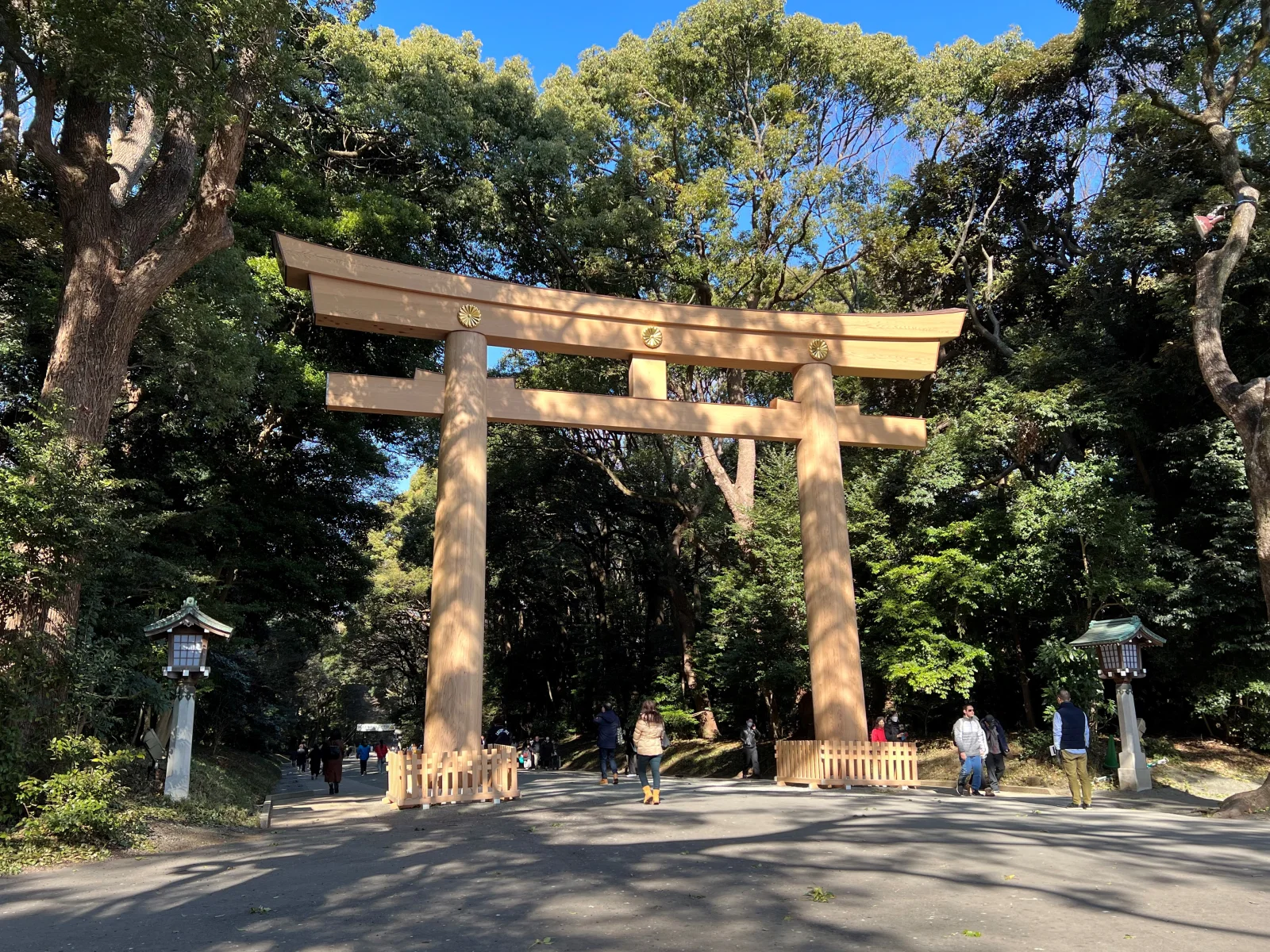
Compare hotels around Meiji Jingu by entrance, room type and luggage access — whether you want early mornings at Harajuku, Yoyogi's north gate, or Cat Street and Omotesando.
Comparing Harajuku, Cat Street, Shibuya Jinnan and Aoyama
Hotels listed under "Harajuku" can sit in Jingumae 1-chome, along Omotesando or in backstreets closer to Shibuya. For a first visit, drop a pin on Jingubashi Bridge first, then locate Jingumae Crossing where Meiji-dori meets Omotesando. Staying between those two points keeps both the south gate and Harajuku Station on a single straightforward walk. Looking south of Jingumae Crossing means factoring in short walks along Meiji-dori and Cat Street. Frame your comfortable walking radius from the gate first, then compare rooms for your exact dates and guest count — this is far more reliable than relying on booking-platform district tags.
TRUNK(HOTEL) CAT STREET sits in Jingumae 5-chome. The hotel lists walking times of 7 minutes from Meiji-jingumae Station Exit 7, 5 minutes from Shibuya Station Exit B1 and 12 minutes from Omotesando Station Exit B2. It is a convenient two-station base if you want Harajuku by day and dinner in Shibuya. For an early shrine visit, walk up Cat Street towards Harajuku and cross Jingubashi Bridge to the south gate. If you end up with heavy shopping bags in Shibuya during the afternoon, head straight back via Exit B1 to drop them off rather than hauling them back to Harajuku Station. When travelling with older relatives, meet at Meiji-jingumae Exit 2 by the shrine first, then walk back towards the hotel via the Exit 7 side afterwards. On days when you plan an afternoon rest, Cat Street makes it easy to browse on the way back to your room before heading into Shibuya for dinner, saving you from walking all the way up to Harajuku every time.
Hotels in Shibuya Jinnan lead along Koen-dori towards Yoyogi National Stadium and Harajuku. Take Shibuya Tobu Hotel as an example: its official site lists a 7-minute walk from Shibuya Station's Hachiko Exit, with an uphill stretch after Jinnan 1-chome Crossing that you will feel when wheeling luggage from the JR lines. The hotel has announced plans to close around the end of February 2027, so for trips from spring onwards, compare other properties along Koen-dori or look at the southern end of Cat Street instead. If you are eating in Shibuya at night and only visiting the shrine once, whether you want to walk that hill twice matters more than being a couple of blocks closer to Meiji Jingu.
If you want to stay in Shibuya with a shorter luggage drag off the train, compare Shibuya Tokyu REI Hotel. Located on the Miyamasuzaka side, the hotel lists roughly 2 minutes on foot from the JR and Tokyo Metro Ginza Line exits, or underground Exit B2 from the Hanzomon, Fukutoshin and Tokyu lines. If you arrive on the underground with heavy suitcases, the hotel's walking map notes lift 21 next to the B2-4 stairs; once at street level, cross at the Miyamasuzaka-shita junction. From here, you can ride the Fukutoshin Line one stop from Shibuya to Meiji-jingumae and skip the Koen-dori hill altogether. On the way back, stroll down Cat Street into Shibuya via Miyashita Park so your morning and evening routes do not repeat.
Shopping around Omotesando and staying near Omotesando Station pulls your daily routine towards Aoyama. If you plan to use the Ginza Line for Ginza or Ueno, or expect to spend evenings in Aoyama, include both Omotesando and Gaiemmae stations in your search. Tokyu Stay Aoyama Premier lists its location as roughly 2 minutes from Gaiemmae Exit 1a and 8 minutes from Omotesando Exit A4. From there, you can stroll down Omotesando towards Meiji-jingumae and the Harajuku Gate in good weather. When it rains or your legs are tired, take the Chiyoda Line one stop from Omotesando to Meiji-jingumae and exit at Exit 2 towards Jingubashi Bridge.
If you plan to shop in Harajuku at the weekend and want to drop purchases in your room straight away, measure hotels against Takeshita Street or Omotesando Hills. The main shopping-street entrances are the easiest landmarks to orient by, and when narrow lanes get crowded, take the wider pavements on neighbouring streets back to your hotel. Check the hotel entrance and nearest main road on Street View at night as well, especially if you are checking in late on your first evening. Light sleepers should ask the hotel directly for a room facing away from main roads, railway tracks or the hotel bar — stating the noise source you want to avoid works far better than simply requesting a "high floor".
Where Yoyogi, Shinjuku South Exit and Sangubashi Save Transfers
On the Yamanote Line, Harajuku is one stop from Shibuya, while going north takes you first to Yoyogi and then Shinjuku. Yoyogi looks like just one short stop from Harajuku on a transit map, yet when your goal is Meiji Jingu's sanctuary, walking straight into Yoyogi Gate means you are already on the shrine grounds — and you do not have to funnel back through Harajuku Station every evening. If your itinerary also includes Akihabara or Ryogoku, the JR Chuo-Sobu local line runs straight through Yoyogi. Check walking routes to both the north gate and the closest platform before booking: some hotels near Yoyogi Station are actually smoother to reach with luggage via Shinjuku's south exit on arrival day.
Hotel Century Southern Tower is a prime example of a property serving both stations. It lists a 3-minute walk from JR Shinjuku Station's New South Gate or Koshu-kaido Gate, and 4 minutes from JR Yoyogi Station's North Exit. From Shinjuku Southern Terrace you enter on the 2nd floor and take the lift to the 20th-floor reception; arriving from Toei Shinjuku Station Exit A1, or by shuttle bus or taxi, the hotel directs guests to the 1st-floor entrance. Saving the hotel name is not enough — screenshot the entrance diagrams for both levels so anyone in your group arriving by different transport can meet directly at reception.
If you only want one early morning at Meiji Jingu, yet have two days of early trains departing Shinjuku, staying by Shinjuku's south exit makes far more sense than shifting luggage just for the shrine. On shrine day, walk in from Yoyogi Station via the north gate, then return the same way for lunch or to pick up bags. If your evenings revolve around Shinjuku-sanchome rather than JR Shinjuku South, the Fukutoshin Line offers another option: take a local train to stop at Kitasando (F14), as express and commuter express services pass straight through. For Meiji-jingumae (F15), the Tokyo Metro route map shows both express tiers stopping. Checking train stopping patterns on the way back is far more reliable than just looking for "Shinjuku-bound" on the destination blind.
Sangubashi works well if you want the western approach as your morning entrance, particularly if you are already riding the Odakyu Line on neighbouring days. However, if your evenings regularly end in Shibuya, getting back to Sangubashi adds an extra ride or walk. Test-run your final night's route on a map: count the transfers from restaurant to hotel and check whether you can get back without changing lines if you have children in tow. If you will only use the west side on the morning of your visit, keep your main base by the station you use most and simply take a train to Sangubashi on that one day. And if a Sangubashi hotel sits across the tracks from the shrine entrance, always route from the hotel's actual front door.
Station Exits, Lifts and Luggage Routes
For the Harajuku Gate, leave JR Harajuku Station via the West Exit of the Omotesando Gate; for Omotesando avenue itself, use the East Exit from the same ticket barrier, while Takeshita Street has its own Takeshita Gate. JR East's accessibility guide places the step-free routes between platforms and street level at the Omotesando Gate, so head straight there with large suitcases or pushchairs. When arranging to meet someone at Harajuku Station, write out "Omotesando Gate West Exit" or "Takeshita Gate" in full — otherwise you can arrive at the exact same station and still wait at different street corners.
On the underground, the official station name is Meiji-jingumae (Harajuku), where the Chiyoda Line (C03) and Fukutoshin Line (F15) meet. Exit 2 has a lift to street level and is the one to use for the Harajuku Gate and Yoyogi Park's Harajuku Gate. If your hotel is on the Meiji-dori side, Chiyoda Line passengers can follow the Meiji-dori ticket gate to Exit 6's street lift, which Tokyo Metro lists as operating from 06:00 to 24:00. Arriving on the Fukutoshin Line, you can also follow station signs towards the Yoyogi Park ticket gate for Exit 2 — check the lift signage before committing to a street exit. Keep two images saved on your phone: the station concourse map and the street-level route from your chosen exit to the hotel entrance, so you can check each stage quickly on arrival.
Omotesando Station is a separate underground hub served by the Ginza, Chiyoda and Hanzomon lines. For a lift to street level, Tokyo Metro's accessibility guide lists Exit B3. Even if your hotel's directions mention Exit A4 or a shop lists Exit A2, it is often easier to come up at B3 and cross the road above ground. After a long flight in the rain, skipping even one flight of stairs makes a difference. On the Chiyoda Line, be careful not to mix up Yoyogi, Yoyogi-koen (Yoyogi Park) and Yoyogi-uehara: they are three distinct stations in different locations, and getting off just because you spotted "Yoyogi" on the board will leave you well off course with your bags.
Meiji Jingu's approaches are laid with deep gravel, which is tough on small suitcase wheels — having lifts all the way from the platform to the torii does not fix the surface beyond it. Store your luggage before entering the grounds. Families with pushchairs can time afternoon naps for the walk back and pack only half-day essentials for the shrine, avoiding heavy pushing across long gravel paths and the Inner Garden. For three-generation trips, treat the official 10-minute walk from the gate to the main sanctuary as a baseline, remember you have the same distance back out, and factor in time to sit and rest. If your group splits up to explore, set your meeting point at a clearly visible torii or the end of Jingubashi Bridge, and specify whether you mean inside or outside the gate.
If your hotel is some distance from the nearest train station, Shibuya Ward's Hachiko Bus "Jingu no Mori" route runs during the day, stopping at Meiji Jingu (Harajuku Station), Meiji-jingumae Station and Omotesando Station, as well as Sendagaya Station (Tokyo Metropolitan Gymnasium), Sangubashi and Yoyogi Station. The ward's timetable lists a flat ¥100 fare per ride, paid on board via Suica, PASMO or cash. Because it is a loop route where several stops appear in both directions, check the next stop shown on the bus-stop sign before boarding at Omotesando. It is handy for saving a daytime walk, though for late-night returns or early shrine opening you should rely on trains or walking. Per ward guidelines, pushchairs should generally be folded before boarding, and travellers arriving from the airport with large suitcases are better off picking a railway station with a lift.
Timing Breakfast, the Inner Garden and the Museum
Entry to Meiji Jingu's main grounds is free, with opening and closing hours shifting each month according to sunrise and sunset. From May to August the gates generally open at 05:00; in November hours are 06:10 to 16:10, in December 06:40 to 16:00, and standard January hours are 06:40 to 16:20. If you arrive in Tokyo on a winter afternoon and finish dropping bags close to closing time, you may only manage a photo at the gate — shifting the full visit to before breakfast the next morning gives you a proper walk. In summer, if you want a walk through the forest before breakfast, pick a hotel close to an entrance for an easy return, or book a later breakfast slot so you are not rushing back.
The Inner Garden (Meiji Jingu Gyoen) charges a ¥500 maintenance contribution. Usual hours are 09:00 to 16:30 from March to October and 09:00 to 16:00 from November to February, extending to 08:00 to 17:00 in June for the iris season (and until 18:00 on Saturdays and Sundays). If you are visiting for the June irises, time your shrine walk a little earlier so you reach the garden as it opens. If you simply want a quiet stroll to the sanctuary at 05:00, there is no need to linger in the woods until 08:00 or 09:00 — walk to the main hall, head back to your hotel for breakfast, and visit the park later. Only make the full approach walk twice if you have separate sights planned for each trip.
The Meiji Jingu Museum sits on the southern approach side, roughly a 5-minute walk from Harajuku Station's Omotesando Gate West Exit or underground Exit 2. Standard opening hours are 10:00 to 16:30 (last entry 16:00), closed Thursdays (open on public holidays) and during exhibition changeovers. Admission is ¥1,000 for adults, ¥900 for high school students and younger, free for pre-school children, with primary-school children and younger required to enter with a parent or guardian. If you want both the museum and the sanctuary on a winter afternoon, walk to the main hall first and return south to the museum afterwards rather than risking dusk inside the grounds. Staying on the south side also makes it easier to drop off a pushchair or wet umbrellas between the museum and your hotel.
New Year hatsumode visits require factoring crowd queues into your accommodation plan. Meiji Jingu's dedicated hatsumode page lists typical peak congestion from 22:00 on New Year's Eve until 03:00 on 1 January, and after 10:00 from 1 to 3 January. If you want to experience the midnight visit, book a room within walking distance of an entrance, agree on a meeting point in advance, and plan your walk home using that year's one-way shrine route and road-closure map. If you simply want a New Year shrine visit without the crush, aim for early daytime hours or wait until 4 January onwards. As of 22 November 2026, the shrine had published Reiwa 9 (2027) booking details for corporate and group New Year prayers — that notice covers formal prayer reservations only, while 2027 general gate hours are posted on the year's hatsumode page. Do not use a previous year's timetable to plan your New Year's Eve walk or trains.
Pairing the Other Half of Your Day with Parks, Shopping or Events
Yoyogi Park borders Meiji Jingu: after visiting the sanctuary from the Harajuku side, walk back towards Jingubashi Bridge and turn into the park's Harajuku Gate. The Tokyo Metropolitan Park Association lists Yoyogi Park as open 24 hours with free admission, though specific facilities have separate fees and hours. If you check into your hotel near 16:00 in winter and still want some fresh air, stick to the park's clear main paths first and save the shrine for the next morning. Families with energetic children should visit the park after leaving the Harajuku Gate, as running and exercise without permission are prohibited on Meiji Jingu's approaches. When clear weather only lasts a short window, choose one side first — walking both grounds back-to-back plus the hotel return adds far more steps than the adjacent map pins suggest.
For an afternoon in Omotesando and Shibuya, leave via the Harajuku Gate, cross the bridge and head east along Omotesando to Jingumae Crossing, where you can decide between Takeshita Street, continuing towards Aoyama, or turning down Cat Street to Shibuya. Save Takeshita Street for when shops are open, entering directly from Harajuku Station's Takeshita Gate. If Omotesando Hills is your main focus, keep either Meiji-jingumae or Omotesando Station as your route home. After browsing Cat Street and having dinner in Shibuya, guests staying in Harajuku can ride the Yamanote Line one stop back to Harajuku or take the Fukutoshin Line to Meiji-jingumae depending on which exit sits closest to their hotel — splitting morning and evening routes avoids trudging back up the whole shopping street when tired.
On rainy days, split your half-day between indoor stops and one brief outdoor stretch. If rain is light in the morning, make a quick shrine visit, return to your room to dry off, and head out once the museum or Omotesando shops open. If the museum is closed, take the underground from near your hotel to Aoyama or Shibuya and wait for department stores to open. Street-level shopping between Omotesando and Meiji-jingumae stations still involves walking outdoors between doorways, even though both stations have street exits, so you will repeatedly open and close umbrellas. When travelling with older relatives in heavy rain, pick a single complex with dining and toilets rather than changing trains and hopping down wet pavements — and save the Inner Garden's gravel and narrow paths for another day.
If you are in town for a concert or match, check the exact venue name on your ticket first. Yoyogi National Stadium's First and Second Gymnasiums stand right by Harajuku and Meiji-jingumae stations, so staying in Harajuku or Shibuya Jinnan lets you walk back along the outer roads after the show. MUFG Stadium (the National Stadium) is over in Gaien, where operators list JR Sendagaya and Shinanomachi stations at a 5-minute walk each, alongside Kokuritsu-kyogijo Station on the Toei Oedo Line. Tokyo Metropolitan Gymnasium is a separate venue beside Sendagaya Station. Pin your venue's exact entrance on your hotel map so you walk up on the right side, and follow exterior streets if walking home after a late finish. Staying in Yoyogi or Kitasando on event night also lets you enter Meiji Jingu via the north gate the next morning without changing hotels for a single show.
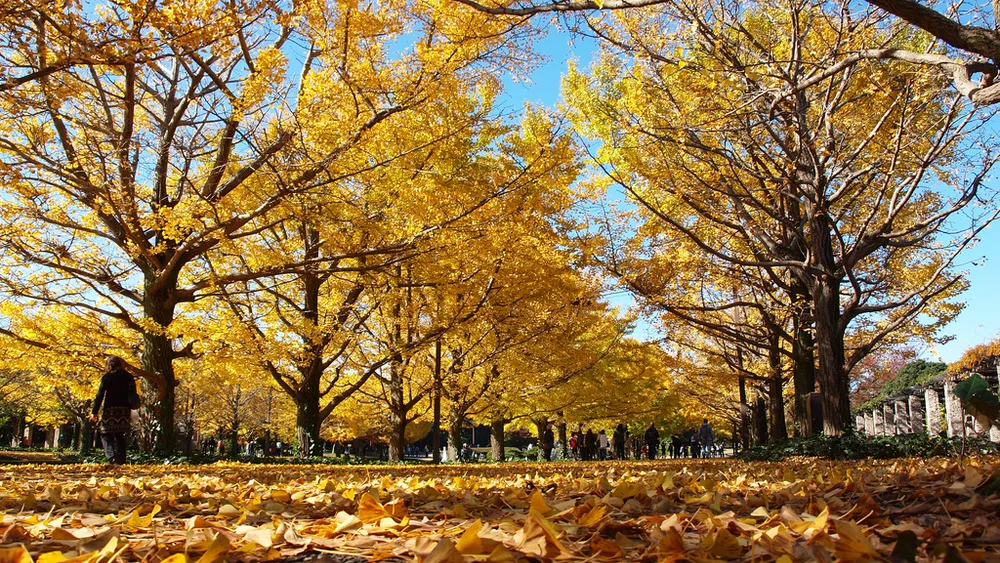
If autumn ginkgo foliage in Meiji Jingu Gaien is also on your list, pin the Gaien "Icho Namiki" (Ginkgo Avenue) separately. The ginkgo trees sit along Gaien and Aoyama-dori, making them a separate outing from entering Meiji Jingu's sanctuary via Harajuku. Staying in Aoyama or Omotesando lets you walk the ginkgo avenue straight from your hotel and keep the shrine for another half-day paired with Shibuya. Gaien also lends itself to a one-way walk: start at Gaiemmae or Aoyama-itchome on the Ginza Line, stroll the ginkgo avenue past the Meiji Memorial Picture Gallery, and depart from Sendagaya Station. If you are based in Yoyogi, Sendagaya is just one stop away on the Chuo-Sobu local line — leaving one morning for Gaien foliage or a match and another for the shrine's north gate. If walking stamina is limited, pin both Icho Namiki and Harajuku Gate to compare distances before choosing. For cherry blossoms with a family picnic, Yoyogi Park and the Harajuku Gate share convenient station exits, making it easy to pick up food and nip back to the hotel for a nap. For more seasonal routes, pair your hotel choice with our Tokyo cherry blossom routes by area or Tokyo autumn foliage area plans rather than cramming every seasonal spot into a single morning.
Checking Room Layouts and Arrival-Day Logistics
Enter the exact number of guests and all children's ages first so search results only show rooms that actually fit your party. Twin rooms suit two travellers sleeping separately better than doubles, though two single beds can still fill most of the floor space. Groups of three adults should filter for true triple-occupancy rooms first, then compare total prices across sofa-bed setups, extra beds, two separate rooms or family rooms. Selecting real ages for children reveals whether kids' bedding and breakfast are included in the quoted rate. If you have multiple suitcases, inspect floor plans and room photos for clear aisle space to open bags rather than guessing from total square metres — photos showing the walkway make it much easier to tell whether you will have to pack in shifts.
Tokyu Stay Aoyama Premier spells out its room layouts in detail. Both Moderate and Comfort rooms measure 17 square metres for up to two guests, with a 140 cm bed, an in-room washer-dryer and a microwave. Residential rooms expand to 21 square metres for two guests with the same 140 cm bed plus a kitchenette. Travellers needing laundry can compare those tiers directly, then check twin rooms if two people want separate beds. For consecutive nights, the hotel provides light cleaning on request via a door tag, with a full room clean once a week for stays of seven nights or more. Over five nights, washing clothes in the room genuinely cuts packing; if you head out early every day, run the laundry when you return in the evening and keep mornings free for the shrine. A two-week stay changes the maths again: if you plan to buy simple groceries and cook in your room, check specifically which categories list a kitchenette, whereas a three-night stay where you just warm up convenience-store breakfasts lets you pick a smaller room with a microwave and put the savings towards a wider bed or fewer train transfers.
When two-night rates look close, weigh breakfast timing, luggage storage and cancellation terms together. If you plan to visit Meiji Jingu at 05:00 or 06:00 and hotel breakfast starts late, book room-only or schedule breakfast for after your walk. For late-night flights, factor in immigration, baggage reclaim, final train connections and the hotel's check-in cut-off. If you have an evening concert or match the next day, stay at the same hotel across consecutive nights so your bags stay put; when rates spike only on the event night, moving one stop further out can pay for the twin beds or extra space you actually need. Compare identical dates, identical cancellation policies and the full stay total — and with more than one guest, add extra train fares and luggage-hauling time into the equation.
On your first night flying into Tokyo, plan the luggage route before picking a corner hotel. Arriving at Haneda via the Keikyu Line onto JR, Shinagawa makes a clean transfer onto the Yamanote Line. From Narita on the Narita Express to Shinjuku or Shibuya, booking near one of those major hubs lets you drop bags immediately before hopping a short train to Harajuku — choosing a side street requiring two extra changes just to be near the shrine at dawn often costs more time on arrival night than it saves the next morning. If you still want to stay close to the south gate, trace the exact final stretch from your airport rail stop to the hotel lobby: underground passages, lift locations and uphill streets often only show up once you zoom right in. Combining a Shinjuku Narita Express departure with an early shrine visit on your final day is exhausting if you drag suitcases to three places; pack the night before, leave bags at the hotel in the morning, pin the hotel as your return point on your phone, and walk towards Shinjuku Station from the same direction. If luggage storage sits on a different floor from the street entrance, account for the lift and ticket gate you will need when collecting bags. For Narita Express tickets, check that your service stops at Shinjuku or Shibuya — airport trains for both run towards Shinjuku, whereas services marked for Ofuna route via Shinagawa and Yokohama. If you are still weighing transfer options, read our Tokyo airport transfers guide and test the last leg against your flight times.
One-Night Stays vs Multi-Night Bases
If you land on a late flight with just one night to spare, staying near Shinjuku's south exit lets you drop bags, slip in and out of Yoyogi Gate early the next morning, and check out before moving on. The priority here is the shrine visit itself: if you also want the museum before breakfast, bear in mind it does not open until 10:00, so it is often smoother to visit the shrine after breakfast and leave your bags at reception until midday. Travellers catching a midday train should stick to the main sanctuary and a stroll back out via the Harajuku Gate. When you have a fixed departure time, work backwards from the latest moment you must be back at the hotel for your luggage so the shrine walk has a clear finish line.
With two full days, dedicate day one to Harajuku and Shibuya. Enter Meiji Jingu via the south gate in the morning, pick either the Inner Garden or the museum, move on to Omotesando and Cat Street after lunch, and finish with dinner in Shibuya. Day two is where your hotel location really earns its keep: if you are heading across eastern Tokyo to Hibiya or Otemachi, the Chiyoda Line gets you there directly once you pick the right exit; if your plans target Shinjuku-sanchome or Ikebukuro, take the Fukutoshin Line. Groups splitting into two parties can agree to meet back at the hotel or dinner restaurant and head out from whichever station exit fits each route. For details on the gates, Inner Garden and southern approach, pair this guide with our Meiji Jingu and Harajuku half-day walk.
On a four- or five-night trip where Meiji Jingu takes just one morning, map your hotel against the first stop of every day. Day trips from Tokyo Station, shopping days in Ikebukuro and games in Gaien all pull on different rail lines. If three or more days rely on the same line, stay near an exit on that line and simply ride over or switch entrances on shrine morning. If you are still comparing Ueno, Tokyo Station or other hubs, check our Tokyo neighbourhoods guide to find the best all-round base. Families planning midday hotel naps can also split Harajuku, Yoyogi Park and Omotesando across two half-days — walk the approach and park in the morning, rest at the hotel, then pop back out of another Meiji-jingumae exit for afternoon shopping. When getting back to your room is effortless, everyone in your group can pace the day around their own energy.
A few useful answers
Should I stay in Harajuku or Yoyogi for Meiji Jingu?
Choose Harajuku if you want to enter via the southern approach and continue straight on to Takeshita Street or Yoyogi Park. Stay in Yoyogi or near Shinjuku's south exit if most of your days start from Shinjuku or you plan to enter via the Yoyogi Gate.
Which exit at Harajuku Station goes to Meiji Jingu?
Leave JR Harajuku Station via the Omotesando Gate West Exit. On the underground, use Exit 2 at Meiji-jingumae (Harajuku) Station, which has a lift to street level.
If I stay in Kitasando, can I take the Fukutoshin Line express straight home?
Take a local train for Kitasando (F14). Express and commuter express services stop at Meiji-jingumae (F15) and pass straight through Kitasando.
Can I visit Meiji Jingu at 06:00 in December?
Standard December hours are 06:40 to 16:00, so have breakfast first or schedule your visit after opening. Check the shrine's official announcement for that year's New Year hatsumode hours.
How do I get to Meiji Jingu from a hotel in Omotesando?
Either walk along Omotesando to Jingubashi Bridge or take the Chiyoda Line one stop from Omotesando to Meiji-jingumae and follow Exit 2 towards the Harajuku Gate.
Can I wheel luggage through Meiji Jingu to get to another gate?
The approaches are covered in gravel and the grounds close at night. With suitcases, take outer streets or public transport, store your bags first, and visit the shrine on foot.
If I am only visiting Meiji Jingu once, should I move hotels from Shinjuku to Harajuku?
No — you can walk from Yoyogi Station to Meiji Jingu's Yoyogi Gate in the morning and head back the same way. If your trips mostly depart from Shinjuku, stay put in one hotel.
For an event at the National Stadium, should I book next to Harajuku Station?
If your ticket says Yoyogi National Stadium, Harajuku and Meiji-jingumae stations are right next door. If it says the National Stadium or MUFG Stadium, use Sendagaya, Shinanomachi, Kokuritsu-kyogijo or Gaiemmae stations instead.
Official information and references
Sources used in this guide.
- Meiji Jingu Entrances and Access
- Meiji Jingu Grounds Map
- Meiji Jingu Monthly Gate Hours and Visiting Rules
- Meiji Jingu Inner Garden (Gyoen) Hours and Admission
- Meiji Jingu Museum Visitor Information
- Meiji Jingu Hatsumode (New Year) Information
- Meiji Jingu News and Reiwa 9 Corporate and Group New Year Prayers
- JR East Harajuku Station Map and Step-Free Access
- Tokyo Metro Meiji-jingumae Station Lift Routes
- Tokyo Metro Omotesando Station Lift Routes
- Tokyo Metro Fukutoshin Line Stopping Patterns
- Shibuya Ward Hachiko Bus Jingu no Mori Route and Fares
- Tokyo Metropolitan Park Association Yoyogi Park Access and Hours
- Yoyogi National Stadium Access
- MUFG Stadium (National Stadium) Access
- Meiji Jingu Gaien Access Map
- TRUNK(HOTEL) CAT STREET Access
- Shibuya Tobu Hotel Access
- Shibuya Tobu Hotel Closure Notice
- Shibuya Tokyu REI Hotel Access
- Tokyu Stay Aoyama Premier Access
- Tokyu Stay Aoyama Premier Rooms and Cleaning Policy
- Hotel Century Southern Tower Access
- JR East Narita Express Routes
- Keikyu Haneda Airport Line Shinagawa Transfers