Compare room layouts, bed configurations and station exits at Imperial Hotel Tokyo, The Peninsula Tokyo, remm Hibiya and THE BLOSSOM HIBIYA for Imperial Palace walks, theatre nights and Tokyo Station or airport transfers.
- Region & Focus
- TokyoAccommodation
- Reading Scope
- 16 min read · 10 chapters · 7 Q&As
- Official Verification
- 40 official sources checkedUpdated 22 November 2026
- Key Topics
- Where to stayBookingNeighbourhoods
Chapter Route Map (tap any stop)
- Start by mapping your first stop each day
- Imperial Hotel Tokyo: pick the right wing and aspect
- The Peninsula Tokyo: direct underground entry and connecting rooms
- Comparing remm Hibiya and THE BLOSSOM HIBIYA
- Keep Hibiya, Yurakucho and Uchisaiwaicho stations distinct
- Limit arrival and departure days to one complex transfer
- Morning walks: Hibiya Park, the Outer Gardens or the East Gardens
- Rainy days, older relatives and late shows
- How to plan around a performance or conference
- Compare total cost across length of stay and cancellation rules
- Quick Q&A
Choosing a hotel in Hibiya starts with the direction you will head each morning. If you want Hibiya Park, the Imperial Palace Outer Gardens and hotel dining within the same day, start with Imperial Hotel Tokyo beside the park. For Takarazuka performances, Ginza shopping and JR access to other districts, look at remm Hibiya on Theatre Street. Travellers keen to avoid outdoor walks with luggage should compare The Peninsula Tokyo, which connects directly to Hibiya Station. If your plans revolve around Shimbashi, Shiodome or arriving from Haneda Airport, include THE BLOSSOM HIBIYA at the southern end. All four hotels are within walking distance of Hibiya Park, though they differ meaningfully in room space, rail lines and the walk from the station.
Start by mapping your first stop each day
On the eastern edge of Hibiya Park runs Hibiya-dori Avenue, leading south towards Uchisaiwaicho and north across Hibiya Crossing to the Imperial Palace Outer Gardens. Cross the avenue to the east and you reach the Tokyo Takarazuka Theater and Tokyo Midtown Hibiya, with Ginza just beyond the JR railway viaduct. Marunouchi and Tokyo Station sit directly north of Yurakucho. When scanning booking maps, keep these pockets distinct: a hotel listed under "Hibiya" may sit closer to Shimbashi, while a Yurakucho address can put you right beside the Hibiya underground exits.
If your mornings start with meetings in Kasumigaseki and your evenings end with dinner in Ginza, both Imperial Hotel Tokyo and remm Hibiya fit easily. When events at the Tokyo International Forum come first, prioritise properties near JR Yurakucho Station. The Forum's official guide puts the walk from JR Yurakucho Station at 1 minute, and its basement concourse also links to Tokyo Station's Keiyo Line area. Keep a note of the exact hall name on your event notice: while you can walk straight into the Glass Building at street level, registration desks may sit in another wing or underground, making the walk from your hotel only part of the journey.
For a one- or two-night stay centred on Ginza and the Imperial Palace, picking a hotel where you can drop back into your room mid-day beats switching hotels just for the next train leg. On longer stays with early mornings to Yokohama or Shinkansen departures from Tokyo Station, list your first train of each day before comparing properties. Being able to board near your hotel with a single straightforward interchange usually matters more than the shortest journey time shown on a route planner. If two people are splitting up during the day, agree on the final station where you will ride together rather than forcing one hotel to sit beside everyone's separate destinations.
To keep more of your budget for shopping or theatre tickets, compare same-date rates on the Theatre Street and Yurakucho side first. If your entire day runs between Ginza Chuo-dori and Higashi-Ginza, check Ginza stays for a closer base and save Hibiya for an afternoon stroll or evening show. If the following morning takes you to offices around Toranomon Hills or Kamiyacho, Toranomon stays will narrow the search around your workplace. Short walks feel effortless empty-handed, yet carrying shopping bags or travelling with older relatives quickly makes a mid-day rest before dinner worthwhile.
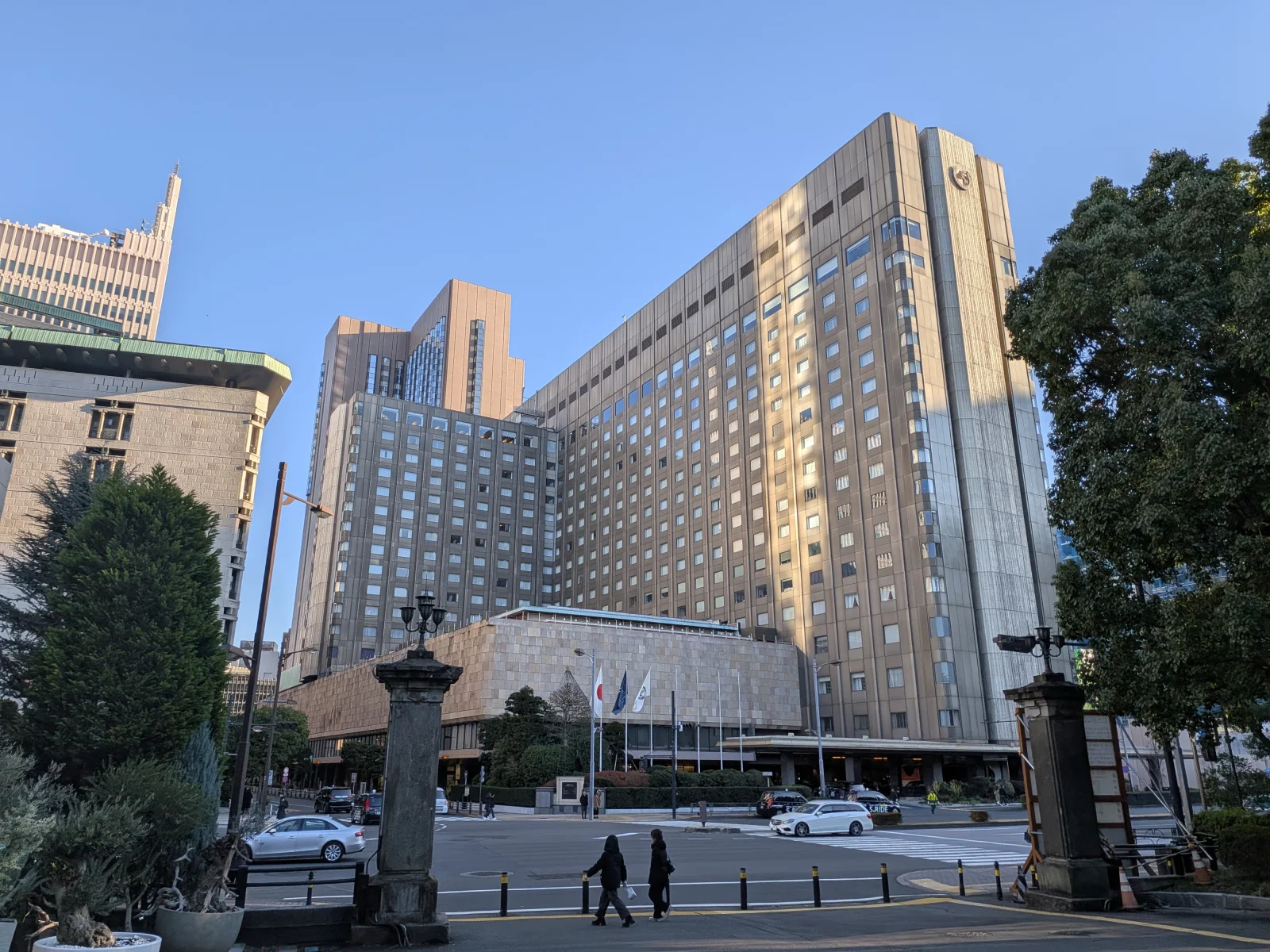
Compare room layouts, bed configurations and station exits at Imperial Hotel Tokyo, The Peninsula Tokyo, remm Hibiya and THE BLOSSOM HIBIYA for Imperial Palace walks, theatre nights and Tokyo Station or airport transfers.
Imperial Hotel Tokyo: pick the right wing and aspect
The hotel's official name is Imperial Hotel, Tokyo, at 1-1-1 Uchisaiwaicho, Chiyoda-ku. Its access guide lists a walk of roughly 3 minutes from Hibiya Station Exit A13 or Uchisaiwaicho Station Exit A5, around 5 minutes from JR Yurakucho Station and about 7 minutes from JR Shimbashi Station. Reception is on the 1st floor of the Main Building. Save the pin for the Main Building's front entrance when arriving by car or taxi—especially late at night or with companions who should not haul luggage—so you are not dropped at a banquet entrance and left reorienting yourself.
If you are booking specifically for the park view, the official site offers the Main Building's Regular Floor Deluxe Park View at 42 sq m for one to three guests, with a choice of king or twin beds. A separate 42 sq m Regular Floor Deluxe category has its own booking page, so double-check the exact room name on your reservation. For space to chat over snacks or let companions rest in turns, compare the 59 sq m Regular Floor Junior Suite with the same park aspect. When three adults share a room, enter all three guests in the search filter and inspect the bed layout; if everyone needs a separate bed, check twin-plus-extra-bed configurations before weighing floor height or view.
The Imperial Floors occupy floors 14 to 16 of the Main Building, where the Imperial Floor Deluxe Park View is also listed at 42 sq m. Compare them against Regular Floor rooms by checking the floor level, included services and total nightly rate line by line. If your main priorities are morning greenery, space for two suitcases and twin beds, a Regular Floor park-view room already gives you a fair benchmark; moving up makes sense mainly when you plan to spend more hours inside the hotel. Look at the official window-view photos for each category to see whether you prefer tree-canopy framing or a wider skyline before allocating budget to higher floors or extra square metres.
If you come across older travel guides, note the updated redevelopment schedule for the Tower wing. In 2026, Imperial Hotel revised its plan to target the start of Tower demolition around the end of fiscal year 2030, continuing to operate all Tower guest rooms and banquet halls until work begins. Although the Tower and Main Building belong to the same hotel, rooms are still listed separately by wing. If you stay in the Tower while dining or attending a wedding reception in the Main Building, note both your wing and the banquet floor beforehand; the hotel's floor map marks the Main Building's 1st-floor banquet exit for crossing between wings. Keeping separate lines for breakfast venue, meeting point and taxi pick-up is especially helpful when a group is split across two rooms.
Guests spending half a day on site can meet in the Main Building's 1st-floor lobby, pick up pastries and savoury treats from Gargantua on the same level, then head up to the 17th-floor Imperial Lounge Aqua. The Imperial Hotel Arcade sits one level down on B1. If you are visiting solely for afternoon tea or gifts, plan directly around each shop or restaurant's opening hours. Chilled cakes are best shared back in your room the same day, while boxed souvenirs for the flight home are easier to choose separately.
The Peninsula Tokyo: direct underground entry and connecting rooms
The Peninsula Tokyo stands at Hibiya Crossing, with its access map showing direct links to Hibiya Station Exits A6 and A7, a roughly 2-minute walk from JR Yurakucho Station's Central West Exit and about 3 minutes from Ginza Station Exit C4. Check exit hours if you arrive early or return late: the hotel's map lists Exit A7 as open from 06:30 to 23:00. Tokyo Metro's step-free guide routes passengers from the Hibiya Park ticket gates to Exit A6, where the lift sits inside The Peninsula itself. Travellers needing lifts all the way to street level should verify both segments—platform to gates, and gates to street—before choosing which station to alight at.
The hotel's Grand Premier Park Room pages highlight views across the Imperial Palace Outer Gardens and Hibiya Park. Families with children or three generations travelling together can check bed counts and floor plans under the hotel's Connecting Family Suite offer. When adults need to take turns watching younger children while others turn in early, an internal connecting door between two bedrooms is far more practical than simply requesting two rooms on the same floor. Enter every guest into the booking engine to confirm the number of beds and whether both rooms have separate bathrooms, then weigh the package total against two standalone rooms.
For early-morning flight arrivals or late-evening departures, The Peninsula offers Peninsula Time. Under its 2026 updated terms, the benefit applies to bookings made through the official website, the hotel's reservations team or partner travel advisors. Subject to room availability, guests can check in from 06:00 and check out as late as 22:00, provided the hotel receives expected arrival and departure times at least 24 hours before arrival. If you are counting on that window for children to catch up on sleep, send your flight details and arrival time ahead and wait for confirmation before scheduling your first outing. The Tokyo hotel lists 23 December 2026 to 1 January 2027 as blackout dates; if arriving over New Year, plan to leave bags and have breakfast first, or book the preceding night and inform the hotel of your actual arrival time.
Comparing remm Hibiya and THE BLOSSOM HIBIYA
remm Hibiya opens onto Theatre Street, with official times of roughly 1 minute from Hibiya Line Exit A5, about 2 minutes from Chiyoda Line Exit A13 and around 4 minutes from JR Yurakucho Station's Hibiya Exit. Staying here makes evening shows at the Tokyo Takarazuka Theater or nearby cinemas effortless to walk back from. Exit A5 operates from 06:00 until the last train, and for taxis you can ask for "Remu Hibiya", the hotel's Japanese name. The entrance is on the 1st floor, with reception and lockers on the 2nd floor; guests may use free lockers on check-in and check-out days between 08:00 and 24:00 for up to 16 hours, an easy fit if you plan to spend half a day in Ginza after checking out.
At remm, the Semi-Double Room measures 15.1 sq m with a 140 cm bed for one or two guests and a shower-only bathroom. The Twin Room expands to 23.5 sq m with two 110 cm beds and a bathtub. Solo travellers with cabin bags, or couples who return only after dinner, will find the Semi-Double easy to manage, whereas two people opening full-size suitcases or wanting a soak should start from the 23.5 sq m Twin. If separate beds are the only priority, compare the Compact Twin on the 3rd and 4th floors, which fits two 100 cm beds and a shower booth. For guests with accessibility needs, the hotel lists its Universal Room as request-based at booking—specify bathroom requirements and wheelchair dimensions at that stage.
THE BLOSSOM HIBIYA sits in Shimbashi 1-chome, a 5-minute walk from JR Shimbashi Station's Hibiya Exit and 2 minutes from Toei Mita Line Uchisaiwaicho Station Exits A2 or A5. Even though it carries Hibiya in its name, walking to the north end of Hibiya Park, The Peninsula or the Tokyo International Forum starts from a noticeably more southern point. If your evenings cluster around Shimbashi or Shiodome and your daytime JR trips head south, that location works in your favour. When using it as a base for Haneda Airport, remember that the Toei Asakusa Line Shimbashi Station uses separate ticket gates from JR Shimbashi.
This hotel rewards choosing by aspect and sleeping setup. The official room guide places the 25 sq m Superior Twin on the Shimbashi side facing south-west with city views. For a Hibiya-facing outlook and dual-aspect natural light, look at the 31 sq m Deluxe Corner King on floors 20 to 24, facing north-east for two guests. Three adults can book the 34 sq m Deluxe Corner Twin on the Shimbashi side, which pairs two 120 cm beds with a 95 × 190 cm third bed; taller guests should check whether that third-bed length suits them or compare the price of two separate rooms. An accessible 31 sq m Universal Queen Room for two guests on the 19th floor is also listed on the rooms page.
Keep Hibiya, Yurakucho and Uchisaiwaicho stations distinct
Hibiya Station serves three underground lines: the Tokyo Metro Hibiya Line (H08), Chiyoda Line (C09) and Toei Mita Line (I08). Ginza is one stop towards Kita-Senju on the Hibiya Line, while Kasumigaseki is one stop in the opposite direction—and also one stop away on the Chiyoda Line. In the other direction on the Chiyoda Line lies Nijubashimae (Marunouchi), though you can equally walk into Marunouchi along the Imperial Palace Outer Gardens. From Imperial Hotel Tokyo or remm Hibiya, western Ginza spots such as Sukiyabashi and Ginza 4-chome are often faster on foot, saving the Hibiya Line for trips out to Tsukiji Outer Market.
Tokyo Metro's Yurakucho Line stops at Yurakucho Station (Y18), which connects underground to Hibiya Station. JR Yurakucho is a separate station complex and gate system serving the Yamanote and Keihin-Tohoku lines. Whenever someone texts "meet at Yurakucho", clarify whether they mean JR or Metro and name the exit—JR Hibiya Exit works best for remm, while the Central West Exit aligns with The Peninsula. JR East's accessibility map marks lift routes to platforms from the Central and Kyobashi exits; rely on the official lift diagram when travelling with wheelchairs or heavy suitcases, as your luggage exit may differ from the one you use empty-handed.
To reach Tokyo Station from Yurakucho, take the inner-loop Yamanote Line one stop north. During hours when Keihin-Tohoku Line rapid trains run, they skip Yurakucho, so check the platform indicator to avoid watching trains pass without stopping. If you are connecting to a Shinkansen at Tokyo Station, transfer inside the station following the signs for your line, and specify the Marunouchi or Yaesu side when meeting others. When taking a taxi from Hibiya to Tokyo Station, tell the driver which train or entrance you need rather than just saying "Tokyo Station", or you may be dropped on the opposite side with a long trek across the concourse.
For Tokyo Disney Resort, the JR Keiyo Line to Maihama departs from Tokyo Station or Hatchobori Station. Guests staying near The Peninsula or JR Yurakucho can walk to the Tokyo International Forum during the day and use the B1 passage connecting directly to Tokyo Station's Keiyo Underground Marunouchi Exit. From Hibiya Station, you can also ride the Hibiya Line to Hatchobori and change to JR for Maihama. Both routes involve one walk or transfer; if travelling with a pushchair while someone goes ahead empty-handed to queue, either take the lift-equipped route together or meet just outside Maihama Station's ticket gates. For pre-opening queue strategy, see our Tokyo Disneyland guide.
Limit arrival and departure days to one complex transfer
From Haneda Airport on the Tokyo Monorail, change at Hamamatsucho onto the Yamanote Line for Shimbashi or Yurakucho. If you take the Keikyu Line and Toei Asakusa Line, check the train's destination and stopping pattern for services calling at Shimbashi. Guests booked at THE BLOSSOM HIBIYA can weigh the short final walk from Shimbashi, whereas those staying at the northern end of Hibiya Park can ride through to JR Yurakucho or take a short taxi from Shimbashi. When a group is juggling several large suitcases, compare total door-to-door walking, station transfers and taxi drop-off points rather than airport-to-city rail time alone.
For Narita departures with a reserved Narita Express seat, riding the Yamanote Line from Yurakucho to Tokyo Station is the simplest link. At Tokyo Station, follow signs for the "Sobu Line / Sobu Underground" platforms used by the Narita Express—separate from the Keiyo Underground concourse for Maihama. If your group separates easily, save the train number, car, seat and departure station on everyone's phone before entering Tokyo Station. For Airport Limousine Buses, check timetables by travel date and exact stop name: Imperial Hotel Tokyo's access page currently marks direct Haneda buses as suspended while listing Narita services as available. Travellers with older parents should compare transfer counts and lift locations before deciding how to move bags, and can check further options in our Tokyo airport arrivals guide.
If you plan to browse Ginza on your departure afternoon, Imperial Hotel Tokyo guests can leave luggage before check-in or after check-out at the Main Building's 1st-floor Bell Captain Desk. Main Building check-in is typically 14:00 and check-out 12:00, making it easy to have lunch nearby before picking up your bags. If your final stop is meeting friends in Marunouchi and departing from Tokyo Station, calculate whether doubling back south to your hotel makes sense—it is often cleaner to bring your bags to Tokyo Station in the morning and use station lockers or luggage storage, keeping lunch near whichever spot holds your bags.
Morning walks: Hibiya Park, the Outer Gardens or the East Gardens
With just half an hour before breakfast, guests near Hibiya Crossing can step straight across into Hibiya Park. Exits A10 and A14 from Hibiya Station sit on the park edge, and Exit B2 works well from the Kasumigaseki side. To see the flowerbeds, Shinjike Pond and the historic Old Park Office, enter from the Hibiya Crossing side. When sections of park path are cordoned off for works, stick to the open loops and exit the same way back to your hotel; if you want to cut through towards Kasumigaseki, check the Tokyo Metropolitan Park Association's map for open gates—especially handy on major event days.
For stone castle walls, historic gates and manicured pines, walk from Hibiya into the Imperial Palace Outer Gardens towards Nijubashi Bridge before looping back. Runners can follow the Ministry of the Environment's designated jogging map along the outer moat, switching to a walk through busy pedestrian paths around the Kusunoki Masashige statue. Loop anti-clockwise around the inner moat and give way to walkers on narrow stretches. If you have a breakfast reservation and want time for a shower afterwards, run a short out-and-back leg along the moat from the Hibiya side and factor in photo stops and traffic-light waits.
To explore Edo Castle remains such as the Tenshudai keep base and Ninomaru Garden, head to the Imperial Palace East Gardens. You can walk north along the eastern side of the Outer Gardens to Otemon Gate, or take the metro to Otemachi Exit C13a for a roughly 5-minute walk to the entrance. Entry is free with no reservation required, though the gardens normally close on Mondays, Fridays and from 28 December to 3 January (with exceptions on public holidays). From November to February, opening hours are 09:00 to 16:00 with last entry at 15:30. If the East Gardens are your main goal for the day, visit in the morning before shopping, check how everyone handles the gravel paths and slopes before adding the climb up Tenshudai, and use the Ote Rest House area as a meeting point.
From 28 November to 6 December 2026, during the autumn opening of the Imperial Palace Inui-dori Avenue, the Imperial Household Agency converts Otemon Gate to exit-only. On those dates, visitors touring the East Gardens alone should enter via Hirakawamon Gate or Kitahanebashimon Gate, with special openings also scheduled on 30 November and 4 December. Families staying in Hibiya with older relatives who prefer less walking can take a train directly to a station near an entry gate, or dine in Marunouchi first and leave via Otemon Gate to walk back to Hibiya through the Outer Gardens. Bookmark the Imperial Household Agency's seasonal notice page rather than relying on a standard weekday route.
Rainy days, older relatives and late shows
In wet weather, Hibiya Station Exit A11 connects directly into Tokyo Midtown Hibiya, where B1 and 1st-floor entrances open from 08:00 for the 4th-floor cinema, while most shops open at 11:00. Once the rain clears, take the lift to the 6th-floor outdoor Park View Garden for an elevated look over Hibiya Park. If rain disrupts a morning plan for the East Gardens, swap in a film, lunch or indoor browsing first and save a bench break in the park for brighter skies. When you have timed bookings for afternoon tea or a screening, allow for the short uncovered stretches outside hotel doors—crossing the avenue from Imperial Hotel Tokyo or walking Theatre Street from remm.
When travelling with older relatives, screenshot three details onto a single itinerary note: which ticket gate to exit from the platform, where the lift to street level sits, and which side of the street the hotel entrance faces. On Tokyo Metro's station map, the Nakameguro-bound Hibiya Line platform has a lift to the Hibiya Park ticket gates leading to Exit A6, while the Chiyoda Line has a mid-platform lift to the Hibiya Crossing gates for Exit A11; if riding the Toei Mita Line, open the Toei Transportation station map to pinpoint your platform lift. Request grab rails or shower chairs for a specific room category in advance, and for light sleepers or frequent bathroom trips, check the path from bedside to bathroom for steps and ensure two open suitcases will not block the way.
After an evening performance at the Tokyo Takarazuka Theater or a late cinema screening, check restaurant last-order times against the curtain call before booking dinner. Eating near department stores straight after shopping feels very different from hunting for a late supper in Ginza after the final act. If someone in your group needs to catch a JR train back to another ward afterwards, agree to meet in the hotel's ground-floor lobby or outside the station ticket gates instead of debating street-level versus underground routes while walking in a crowd. Browse our Hibiya dining guide for nearby restaurants, or check our Hibiya shopping guide to decide whether to start at Midtown or Yurakucho; if staying on the park side, picking up next morning's breakfast on the walk home beats hunting for an open cafe with luggage.
If street noise worries you, zoom the booking map down to block level to see whether a property faces the park, a main road, the JR viaduct or a theatre entrance, and cross-reference room aspect and floor height. The park edge carries Hibiya-dori traffic, while Theatre Street sees brisk crowds as shows let out. Request a room away from lifts and service pantries when booking. If one person wakes easily in the night while another has a pre-dawn departure, two separate rooms often solve the problem better than earplugs; light sleepers should put room orientation and flexible cancellation dates ahead of minor discounts.
How to plan around a performance or conference
The Tokyo Takarazuka Theater's access page directs Hibiya Line passengers to Exit A5 and Chiyoda Line passengers to Exits A11 or A13. If you are booking a hotel only after securing show tickets, work backwards from the theatre doors. Guests at remm Hibiya can drop bags in the 2nd-floor lockers, eat at Tokyo Midtown Hibiya and stroll back to Theatre Street for curtain-up. Companions who prefer to shop can head towards the hotel or restaurant shortly before the performance ends, choosing a named storefront or lobby as a clear rendezvous. Leaving souvenir shopping until the morning before check-out also keeps you from carrying extra bags into the auditorium.
When visiting Hibiya solely for a performance in an unfamiliar pocket of town, lock in your show schedule first. Regular Tokyo Takarazuka Theater performances sell same-day tickets only when seats remain, so travellers who book accommodation before buying tickets should check remaining availability on each production's ticketing page. Between a matinee and an evening show, limit Ginza browsing to one or two shops on the western edge before venturing as far as Chuo-dori. Save chilled patisserie purchases for a quieter day rather than making an extra trip back to the hotel before the curtain rises, and if requesting early room access for a one-night stay, state your arrival time, show time and expected return together.
For morning registration at the Tokyo International Forum, staying on the Yurakucho side lets you eat breakfast before walking over. When daytime seminars and evening dinners sit in different districts, heading north along Marunouchi Naka-dori or cutting beneath the viaduct towards Hibiya creates two distinct return routes. If meeting visiting colleagues at a hotel, pick the reception floor and name the exact wing. On evenings when you need quiet time in your room for calls, pick a dinner spot along the walk back so you still have an uninterrupted stretch to work. Remember that Imperial Hotel Tokyo has its own conference and banquet facilities—if your invitation names the Imperial Hotel, follow its wing and banquet-hall details rather than heading to the Tokyo International Forum.
If a morning show is rescheduled or a sudden downpour interrupts a walk, duck into the Hibiya Library & Museum on the southern edge of Hibiya Park, roughly 3 minutes from Kasumigaseki Station Exit B2 or Uchisaiwaicho Station Exit A7. Standard hours are 10:00 to 22:00 Monday to Friday, until 19:00 on Saturdays and until 17:00 on Sundays and public holidays, closing on the third Monday of each month and from 29 December to 3 January (exhibition rooms keep separate hours). Guests staying on the Shimbashi side can start here before walking on to the theatre or their hotel, giving two families or travel companions an easy way to split up for an hour and stroll through the park at their own pace.
Compare total cost across length of stay and cancellation rules
When comparing all four hotels, enter the exact same guest count and dates first so only rooms with suitable beds and occupancy remain. Twin beds, an extra bed for a third adult, included breakfast and single-occupancy rates all shift the final bill considerably. Booking one night in a park-view room and cheaper nights elsewhere sounds appealing when you are out early and back late, yet mid-trip packing, check-out and second check-in eat into your day. On a two- or three-night trip—especially with companions who appreciate an afternoon rest—putting the budget into one well-matched room for the whole stay usually pays off.
Tokyo's accommodation tax is charged per person, per night based on the room rate. Until 31 March 2027, stays under ¥10,000 are exempt, rates from ¥10,000 to under ¥15,000 incur ¥100, and ¥15,000 or above incur ¥200. From 1 April 2027, the exemption threshold rises to ¥13,000, with stays at or above that threshold taxed at 3%. When comparing breakfast-inclusive packages, remember the tax is calculated on the accommodation portion and may be collected separately at reception. Stays straddling late March and early April 2027 will be assessed night by night under each regime, so keep a nightly rate breakdown alongside your booking total for easier checking.
Multiply any price gap between advance-purchase and flexible rates across your full number of nights before deciding. On multi-room or multi-night bookings, save a confirmation copy listing the cancellation deadline, billing currency and exact bed configuration. Before booking hotel dinners, afternoon tea or spa and bath slots, verify whether they are bundled into the room rate or carry separate restaurant cancellation terms. If forwarding luggage ahead, confirm the hotel's accepted delivery window and match the reservation name clearly, then pack your first night's essentials in your carry-on. If you have an evening show on arrival day, keep your tickets and evening items with you so you can drop bags and head straight to the theatre.
When theatre tickets or conference dates are fixed, secure a refundable room matching your party size alongside your planned arrival route. If the price difference between two room aspects at the same hotel roughly equals one meal, weigh how many waking hours you will actually spend indoors. Lingering over breakfast inside the hotel or gazing out at the park all afternoon justifies the upgrade; if you are merely sleeping after a late show, spending that difference on a second proper bed or a shorter walk back from the theatre brings a clearer return the next morning.
A few useful answers
Which Hibiya hotel is easiest for a first-time stay?
Pick Imperial Hotel Tokyo if hotel dining and park walks sit high on your list. Start with remm Hibiya for frequent JR journeys or theatre nights. Choose The Peninsula Tokyo for direct underground station access, and THE BLOSSOM HIBIYA if your days run south from Shimbashi.
How do I book a Hibiya Park view at Imperial Hotel Tokyo?
Search for the Main Building's Regular Floor Deluxe Park View or Imperial Floor Deluxe Park View. Both measure 42 sq m, and you can select king or twin beds when booking.
Do any Hibiya hotels sleep three adults in one room?
Imperial Hotel Tokyo's Regular Floor Deluxe Park View accommodates up to three guests. At THE BLOSSOM HIBIYA, the Deluxe Corner Twin sleeps two to three guests using two twin beds plus a 95 × 190 cm third bed.
Where do I catch the train from Hibiya to Tokyo Disneyland?
Take the JR Keiyo Line towards Maihama from either Tokyo Station or Hatchobori Station. From Hibiya Station, ride the Hibiya Line to Hatchobori to change onto JR; from northern Yurakucho, walk through Tokyo International Forum B1 directly into the Keiyo Line concourse at Tokyo Station.
Which Hibiya Station exits have lifts for heavy luggage?
Exit A6 inside The Peninsula Tokyo has a lift connecting to the Hibiya Park ticket gates, with a platform lift on the Nakameguro-bound Hibiya Line platform. On the Chiyoda Line, a mid-platform lift leads to the Hibiya Crossing gates and Exit A11; check Toei Transportation's station map for Mita Line lift routes.
Can I visit the Imperial Palace East Gardens on a Friday while staying in Hibiya?
The East Gardens normally close on Fridays, though the Imperial Household Agency calendar lists occasional public openings. If closed, walk through the Imperial Palace Outer Gardens towards Nijubashi Bridge or spend time in Hibiya Park and Tokyo Midtown Hibiya.
How will Tokyo's accommodation tax work in Hibiya from spring 2027?
From 1 April 2027, Tokyo's accommodation tax is charged per person, per night on the room rate: stays under ¥13,000 are exempt, and stays at or above ¥13,000 are taxed at 3%. Stays spanning late March and early April are calculated night by night under the rate in force on each date.
Official information and references
Sources used in this guide.
- Imperial Hotel, Tokyo | Access & Airport Transfers
- Imperial Hotel, Tokyo | Rooms & Suites
- Imperial Hotel, Tokyo | Regular Floor Deluxe Park View
- Imperial Hotel, Tokyo | Floor Map & Inter-Wing Access
- Imperial Hotel, Tokyo | Main Building Guest Services & Luggage Storage
- Imperial Hotel, Tokyo | Tower Redevelopment Schedule
- Imperial Hotel, Tokyo | Hotel Facilities FAQ
- Imperial Hotel, Tokyo | Gargantua Shop
- Imperial Hotel, Tokyo | Imperial Lounge Aqua
- The Peninsula Tokyo | Access Map
- The Peninsula Tokyo | Guest Rooms & Park Views
- The Peninsula Tokyo | Connecting Family Suite
- The Peninsula Hotels | Peninsula Time Terms & Blackout Dates
- remm Hibiya | Access
- remm Hibiya | Room Types & Bed Configurations
- remm Hibiya | Semi-Double Room
- remm Hibiya | Twin Room
- remm Hibiya | Reception Floor & Luggage Lockers
- THE BLOSSOM HIBIYA | Shimbashi & Uchisaiwaicho Exits
- THE BLOSSOM HIBIYA | Room Aspects, Extra Beds & Accessible Rooms
- Tokyo Metro | Hibiya Station Exits
- Tokyo Metro | Hibiya Station Lift Access
- Tokyo Metro | Hibiya Line Stations
- Tokyo Metropolitan Bureau of Transportation | Mita Line Hibiya Station
- JR East | Yurakucho Station Map
- JR East | Yurakucho Station Timetable
- JR East | Tokyo Station Keiyo & Sobu Underground Areas
- Tokyo International Forum | Access Map & Underground Concourse
- Tokyo Disney Resort | Rail Access to Maihama Station
- Keikyu Corporation | Haneda Airport to Central Tokyo Stops
- Tokyo Metropolitan Park Association | Hibiya Park Map & Notices
- Ministry of the Environment | Imperial Palace Outer Gardens Visitor Guide
- Ministry of the Environment | Imperial Palace Running Course
- Imperial Household Agency | East Gardens Hours, Gates & Calendar
- Imperial Household Agency | Autumn 2026 East Gardens Special Opening
- Tokyo Midtown Hibiya | Underground Access & Opening Hours
- Tokyo Takarazuka Theater | Station Exits
- Tokyo Takarazuka Theater | Same-Day Ticket Rules
- Chiyoda City Library | Hibiya Library & Museum
- Tokyo Metropolitan Government Bureau of Taxation | Accommodation Tax & 2027 Reform