Not sure where to base yourself in Ginza? Compare Ginza Station, Higashi-Ginza, Yurakucho and the Shimbashi side, alongside four hotels' exits, room layouts, laundry facilities and public baths, plus connections from Haneda, Narita and Tokyo Station.
- Region & Focus
- TokyoAccommodation
- Reading Scope
- 19 min read · 10 chapters · 9 Q&As
- Official Verification
- 33 official sources checkedUpdated 22 November 2026
- Key Topics
- Where to stayNeighbourhoodsBooking
Chapter Route Map (tap any stop)
- Which Side of Ginza Suits Your Trip
- Turning Walking Times into Luggage-Friendly Routes
- Four Ginza Hotels Worth Comparing
- Triple Rooms, Travelling with Children and Sleep Quality
- Comparing Total Stay Costs and Nightly Accommodation Tax Across April 2027
- From Haneda to Higashi-Ginza, and Narita via Ginza Bus or Tokyo Station
- Planning Around an Evening Performance at Kabukiza
- Breakfast in Tsukiji and Wet-Weather Underground Passages
- Sending Large Suitcases Ahead Before Planning Shopping Days
- Sample Plans: One Night or Split Shopping Days
- Quick Q&A
If you plan to shop in Ginza and drop bags back in your room midway through the day, look between the Ginza 4-chome crossing and GINZA SIX around Ginza Station. For evening performances at Kabukiza, breakfast in Tsukiji the next morning, or direct Keikyu through-trains on the Asakusa Line to and from Haneda, search around Higashi-Ginza. If you rely heavily on JR lines and will be wheeling luggage to Tokyo Station, prioritise the Yurakucho side. Ginza is one of the easiest neighbourhoods in Tokyo to misjudge on a map. Before you book, set the map pin to the hotel's actual street entrance rather than its block, and trace the route from the specific exit served by your arrival line.
Which Side of Ginza Suits Your Trip
Ginza 4-chome has a straightforward landmark: Chuo-dori and Harumi-dori intersect right beside Wako and Ginza Mitsukoshi. If most of your days revolve around Chuo-dori, start your hotel search from this crossing south towards 6-chome and 7-chome. From Ginza Station Exit A3, the walk to GINZA SIX is estimated at around 2 minutes on the mall's official site. The real advantage of staying along this stretch kicks in after your first round of shopping: if you still have luggage space and want to keep browsing, you can drop your bags upstairs and head towards Itoya or Matsuya Ginza hands-free. Conversely, if you are travelling light with a single tote and only visiting one department store, paying extra for proximity to the flagship malls rarely pays off.
Heading east from the 4-chome junction along Harumi-dori shifts the centre of gravity to Higashi-Ginza Station. Kabukiza stands right beside Exit 3, and both the Hibiya Line and the Toei Asakusa Line stop here. If you have fixed dates for a performance, start looking on this side—especially if someone in your group wants to turn in early while others stay for the full evening bill. The next morning, you can walk straight over to Tsukiji, fitting breakfast and check-out into the same morning. On days spent in Shinjuku or Shibuya, you can still set out from Ginza Station and pick whichever return stop sits closest to where you finish the evening.
On the Yurakucho side, what matters is the walk from the JR Ginza Exit to your hotel door. Early departures from Tokyo Station or frequent evening returns by JR become noticeably smoother when you stay near the Yurakucho intersections, and the Sukiyabashi junction gives easy access to both Ginza and Hibiya stations. Some Yurakucho hotels technically sit inside Chiyoda Ward without 'Ginza' in their street address, yet remain right on the edge of the shopping district. The same principle holds at the southern end: hotels in Ginza 7-chome and 8-chome towards Shimbashi often work better using Shimbashi Station as your secondary hub. If your itinerary splits evenly between the underground and JR, measure both walks before deciding which hotel actually saves effort.
If you have already booked several nights in Shinjuku, Ueno or around Tokyo Station and only plan to spend half a day in Ginza, simply commuting in and out is enough. Switching hotels into Ginza makes sense when at least two conveniences line up—such as walking back after an evening theatre performance, heading to Tsukiji for breakfast the next morning, or dropping off bulky purchases mid-afternoon. If your final two days pack in an intercity train, a flight and major shopping, lock in your hotel around whichever leg has the least flexible departure time; the other two can usually be adjusted around it.
| Search Area | Best For | What to Check Before Booking |
|---|---|---|
| Ginza Station (4-chome to 6-chome/7-chome) | Shopping along Chuo-dori and dropping bags mid-day | The walk from 4-chome junction or Exit A3 to the hotel entrance |
| Higashi-Ginza Station | Kabukiza, Tsukiji breakfast and Haneda through-trains | Separate ticket gates to street level for Hibiya and Asakusa lines |
| Yurakucho and Sukiyabashi | Frequent JR rides plus Hibiya or Tokyo Station access | Routes from the JR Ginza Exit and Ginza Station Exit C1 |
| Ginza 7-chome/8-chome near Shimbashi | South of 6-chome and next-day departures via Shimbashi | Night-time walking routes and weekend taxi drop-off points |
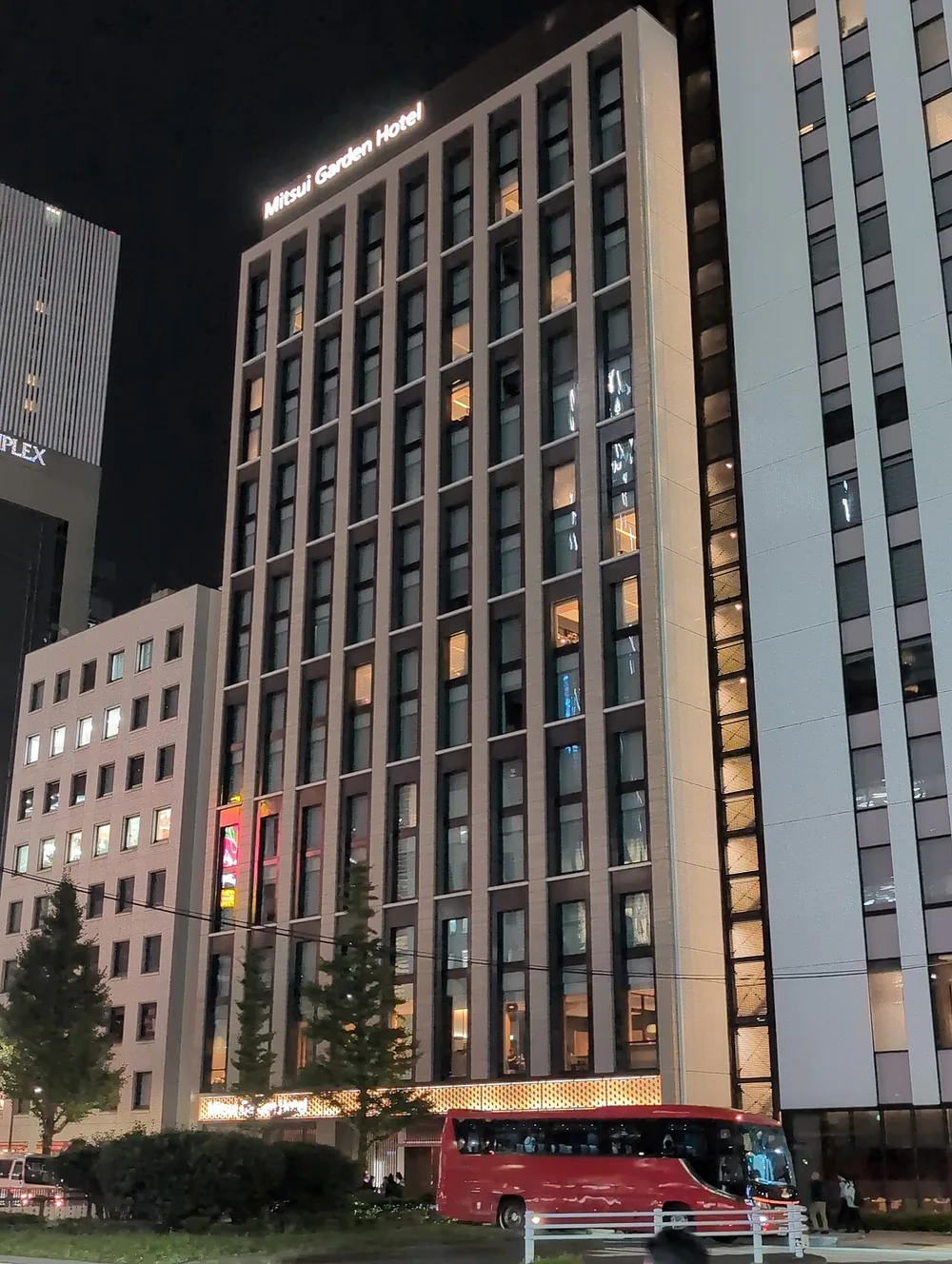
Not sure where to base yourself in Ginza? Compare Ginza Station, Higashi-Ginza, Yurakucho and the Shimbashi side, alongside four hotels' exits, room layouts, laundry facilities and public baths, plus connections from Haneda, Narita and Tokyo Station.
Turning Walking Times into Luggage-Friendly Routes
Walking times on booking sites almost always start at the street-level exit. Arrive on the Marunouchi Line with suitcases, however, and you still have to navigate the platform, ticket gates and underground passages just to reach that same staircase. Ginza Station serves the Ginza, Marunouchi and Hibiya lines, each with its platforms and gates positioned in different spots. Saving the exact line, ticket gate and exit together is far more useful than saving a single Street View screenshot. A street-level stretch with overhead cover and no major road crossings can matter more than saving a hundred metres on paper.
Tokyo Metro's accessibility map for Ginza Station routes step-free Ginza Line access through the Ginza 4-chome Crossing Gate towards lifts at Exit A7 or B2, with the B2 lift operating from 06:00 to 22:00. The Hibiya Line's Central Gate also connects to the B2 lift. If you are taking the Marunouchi Line, switch to that line on the same station page to match your platform to the right gate. For pre-dawn departures, late-night check-ins, or days with planned lift maintenance, fall back to another working exit on the same line and save the surface detour in advance. Travellers using wheelchairs should also confirm the path from the hotel entrance to the guestroom door, including any lobby steps, bathroom doorway widths and transfer space.
Higashi-Ginza Station's layout mixes plain numbered exits such as Exit 3 with lettered ones like A1, using a completely separate numbering system from Ginza Station's A-exits. Tokyo Metro's Hibiya Line accessibility guide shows a lift from the middle of the platform up to the Central Gate and onwards to Exit 3. If you are arriving from Haneda on the Toei Asakusa Line, check Toei Transportation's station diagram for the lifts serving your specific track. Once you walk the route to Kabukiza's entrance, you can always switch to a shorter stair route when travelling without bags, while sticking to the clearest lift-equipped entrance on check-in day.
Ginza-itchome Station on the Yurakucho Line also pops up frequently in hotel directions. Staying around 1-chome puts you directly on the line for Ikebukuro or Shin-Kiba. Street-level lifts for the Yurakucho Line run via the Ginza-dori direction gates, and since 29 August 2025 Tokyo Metro has added a new street-level lift inside the new building connected to Exit 6. If your trips also require the Ginza, Hibiya or Marunouchi lines, follow the underground transfer signs once to learn which surface entrance sits closest to your hotel. When travelling companions arrive separately, meet at the hotel reception rather than a 'Ginza Station exit', which almost always leads to re-checking locations by phone.
Four Ginza Hotels Worth Comparing
Mitsui Garden Hotel Ginza Gochome suits travellers planning an evening performance who want a soak back at the hotel afterwards. The hotel lists walking times of 1 minute from Higashi-Ginza Station and 4 minutes from Ginza Station, versus around 11 minutes from the Ginza or Central exits of JR Yurakucho Station. On a flat map all three look close, yet with heavy suitcases that difference feels very real. The second-floor public bath is free for guests from 06:00 to 09:00 and from 15:00 to 01:00 the next morning, using towels brought down from your room. After a late show, you have time for dinner first as long as you are in the bath before 01:00. The hotel has lifted tattoo restrictions for the public bath, and children aged 7 and over must use the bath corresponding to their gender; if you prefer bathing in your room, check the bathroom layout on each room page.
Hotel Gracery Ginza sits right beside GINZA SIX, roughly 3 minutes from Ginza Station Exit A3 and 8 minutes from the Ginza Exit of JR Shimbashi Station. Reception is on the third floor, reached by lift from the ground-floor entrance. Standard Double rooms measure 15 square metres with a 140 cm bed, Comfort Doubles offer 21 square metres with a 160 cm bed, and Standard Twins span 23 square metres with two 110 cm beds. Solo travellers with a suitcase they can tuck away between uses can start with the 15-square-metre option; couples with two large cases, or pairs where one person sleeps while the other repacks shopping, should compare the floor plans of the Twin and Comfort Double to see where luggage can actually stay open.
THE GATE HOTEL TOKYO by HULIC is anchored in Yurakucho. Official directions put it around 1 minute from Ginza Station Exit C1 and Hibiya Station Exit A1, and roughly 3 minutes from JR Yurakucho Station's Ginza Exit—letting you choose between the underground and JR depending on the day's plans. For guests with pushchairs arriving on the Ginza or Hibiya lines, the hotel's route guide recommends Exit B7. Three adults sharing a room will find a dedicated Triple listed in the Classy category alongside twin layouts and a Universal Design Twin, so double-check the exact bed configuration at checkout; securing three proper beds is often simpler than stretching a higher-tier two-person room.
Tokyu Stay Ginza currently lists 2 minutes from Higashi-Ginza Station Exit A1 and 3 minutes from Ginza Station Exit A7; older blog posts often cite Exit A2, so save the current access route when booking. Its real differentiator is in-room equipment. The 25-square-metre Residential Double accommodates two guests and includes a washer-dryer, microwave and kitchenette. The Superior Twin is also 25 square metres for two separate beds and comes with a microwave, though no washer-dryer; if you want both in-room laundry and a larger bathroom, look at the 33-square-metre Executive Double with a separate bath and toilet. Early risers who want to run laundry overnight should test a cycle on the first night to gauge drying times before check-out, and finish any final wash the evening before packing up for the next city.
For a single overnight stay with an early morning departure, an extra five or six square metres rarely changes much; focus instead on pre-check-in luggage storage, how easy the street entrance is to spot, and a clean morning walk to your departure station. Once you stay four nights or longer, towel service, desk space, fridge capacity and laundry begin shaping your daily routine. If you need to catch up on work, check desk depth and power socket placement. For two travellers on staggered morning schedules, a layout that separates hair-drying, showering and repacking matters far more than an extra window view.
Triple Rooms, Travelling with Children and Sleep Quality
If three adults are sharing, start your booking search with three guests selected from the outset. Hotel Gracery Ginza lists both a Standard Triple and a Standard Twin with an added sofa bed, so those who want proper mattresses should check bed counts and widths carefully. When two double rooms cost nearly the same as a single triple and everyone needs to leave at the same hour, having two separate bathrooms cuts morning queues. If everyone is carrying bulky suitcases and separate souvenirs, confirm clear floor space to open bags before squeezing three people into one room.
When booking with children, enter their exact ages and compare hotels using the same occupancy setup. Co-sleeping versus giving a child their own bed changes permitted occupancy, bedding and breakfast charges. If you plan to eat breakfast in Tsukiji instead, consider adding hotel breakfast only from your second morning onwards. Because Tsukiji's general shopper hours start from 09:00, early-rising children will fare better with a nearby spot confirmed to open earlier. And if you need lifts from the platform to street level for a pushchair, check on your way back whether the next morning's hotel exit involves any surprise flights of steps.
For quieter sleep, request an inward-facing room away from the lifts and verify whether the hotel accepts room preferences or sells dedicated room categories. Rooms facing Chuo-dori or Harumi-dori frame street lights and evening traffic nicely, so if you prefer turning in early, check window orientation and whether the glass fronts a main thoroughfare. Rooms near JR tracks also vary markedly by floor, direction and layout. Light sleepers bothered by corridor noise should prioritise distance from lifts and ice machines over a high floor; similarly, if one person wakes earlier than the other, the positioning of the beds relative to the bathroom helps far more than picking a quiet street.
Comparing Total Stay Costs and Nightly Accommodation Tax Across April 2027
Compare rates using identical dates, guest counts, bed types and breakfast inclusions, then factor in service fees, taxes and cancellation terms. Whenever a listing shows a 'from' nightly rate, click through to the pre-payment breakdown before logging the price. Narrowing your shortlist to two properties—one at your primary station exit and a backup one block over—keeps things simple. If you will be out until late every night and only need a comfortable bed and easy transit, putting the price difference towards dining or activities makes sense; if you plan midday rests or bag drops, tally how many extra walks you save across the stay before paying for prime blocks.
Tokyo's accommodation tax is charged per person, per night based on the taxable room rate. Through 31 March 2027, stays under ¥10,000 are exempt, rates from ¥10,000 up to ¥14,999 incur ¥100, and ¥15,000 or more incur ¥200. From stays on or after 1 April 2027, stays under ¥13,000 are exempt, while rates of ¥13,000 or more are taxed at 3%. On a ¥14,000 per-person nightly taxable rate, for instance, the tax rises from ¥100 under the old tier to ¥420 under the new percentage rate. If your stay straddles 1 April 2027, each night is calculated under the rule in effect on that date.
When your schedule hinges on Kabukiza tickets or a hard-to-get restaurant booking, hold a refundable rate with free cancellation until your seats are confirmed. Save the local Japan Standard Time (JST) cancellation deadline in your calendar alongside the booking number and fee terms. On pre-paid plans, check the hotel's no-show and multi-night policies before shifting your arrival date backwards. If your onward flights or trains are already locked in, keep the fixed nights steady and adjust only the flexible early portion of the trip.
Room categories within the same hotel often carry nearly identical names, so store screenshots of room size, bed setup and occupancy alongside your reservation confirmation. If a multi-night stay is split across two separate bookings at the same property, ask reception in advance to verify that both match the same room type and can be linked so you stay put. Where a room change is unavoidable, confirm luggage handling between check-out and re-check-in beforehand so you are not stuck waiting around in the lobby during sightseeing hours.
From Haneda to Higashi-Ginza, and Narita via Ginza Bus or Tokyo Station
From Haneda Airport to Higashi-Ginza, look for Keikyu through-trains continuing onto the Toei Asakusa Line that stop at Higashi-Ginza. Toei's timetables distinguish between 'Kaitoku' (Rapid Limited Express) services that stop at every Asakusa Line station and 'Airport Kaitoku' trains that pass straight through Higashi-Ginza. Always check the actual stopping pattern into central Tokyo rather than assuming every train labelled 'Kaitoku' stops there. If you are staying in Ginza 8-chome near Shimbashi, alighting at Shimbashi depending on the service pattern can save doubling back from Higashi-Ginza. Guests in Yurakucho can also compare taking Keikyu to Shinagawa and transferring to JR—it adds a change, yet drops you right beside the hotel.
For Narita Airport, AIRPORT BUS TYO-NRT operates direct coaches, though only select departures serve Ginza Station. Keisei's published standard fare is ¥1,500 for adults and ¥750 for children, with official transit estimates from Ginza of roughly 67 minutes to Terminal 3, 70 minutes to Terminal 2 and 75 minutes to Terminal 1 on direct services (services via Tokyo Station take longer). All services operate on unreserved seating on a first-come, first-served basis, with double fares applying on designated early-morning and late-night departures. If you rely on an early bus from Ginza to catch a flight, factor in the walk to the stop, queue time and the gap to the next bus alongside terminal walking times.
The Ginza boarding stop sits near Sukiyabashi; the operator's walking map leads out of Exit C4, turning left past the police box (koban). If a coach fills up, you must wait for the next departure, and luggage bay rules generally allow one suitcase per person within 158 cm in combined outer dimensions (length + width + height). If you are carrying two large cases apiece after shopping, boxed goods or ski gear, send the excess ahead by courier or switch to a rail option with better luggage space. Scout the bus stop the evening before departure so your morning walk from Higashi-Ginza feels routine, and use the Sukiyabashi police box as a clear meeting point if your group walks over separately.
If you prefer guaranteed departure times and reserved seats for Narita, use the Narita Express (N'EX) from Tokyo Station. Tokyo Station's concourse places N'EX platforms on the underground Sobu Line level, separate from the Tokaido Shinkansen platforms for Kyoto and Shin-Osaka. Guests staying on the Yurakucho side can ride the Yamanote Line one stop from JR Yurakucho to Tokyo Station, while those near Ginza Station's Marunouchi Line platforms can take one stop directly to Tokyo and follow JR transfer signs. If you plan to catch a taxi straight from your N'EX arrival into central Tokyo, note which street-level taxi rank aligns with your exit so you do not drag bags across to the far side of the station.
For late-evening landings, build generous buffer time for immigration, baggage claim and transit into town. Mitsui Garden Hotel Ginza Gochome asks guests expecting to arrive more than two hours past their stated check-in time to contact the property. Keep the reservation name and hotel phone number handy so you can call or message while you still have signal if a flight is delayed. Always keep a backup transit plan between the airport and your hotel—if your first choice is a bus, note a late-running rail alternative, and if public transport has stopped for the night, arrange a ride straight to the hotel's street entrance.
Planning Around an Evening Performance at Kabukiza
If you are attending an evening performance at Kabukiza, work backwards from the curtain time to schedule dinner. For the December 2026 Grand Kabuki programme running from 2 to 25 December (dark on 9 and 17 December), Part 1 starts at 11:00, Part 2 at 14:30 and Part 3 at 18:00, with Part 3 officially estimated to finish around 20:30. Audience members booked into Part 3 can either have an early dinner before entering or book a restaurant still seating after 20:30. General ticket sales for December open at 10:00 JST on 14 November; for other months, check Kabukiza's official schedule for on-sale dates, dark days and finishing estimates before locking in hotel nights.
Standard check-in around 15:00 overlaps directly with Part 2 if you arrive the same day. Leaving your suitcases at reception beforehand lets you head straight to the theatre unburdened, whereas guests hoping to rest or change in their room first will find the evening bill much easier to manage. If one member of your party walks more slowly while others hold the tickets, agree to meet at the street-level entrance near Exit 3 along a clear route from the hotel. After the curtain falls, guests staying in Yurakucho can walk back along Harumi-dori or hop on the Hibiya Line from Higashi-Ginza to Ginza or Hibiya to exit on the hotel's side of the street.
If you only want to watch a single act, look at the fourth-floor Single Act Seats (Hitomakumi-seki). Since 2 October 2026, even the same-day box-office allocation—previously unreserved—has switched to reserved seating. Same-day tickets go on sale at the ground-floor window from 10:00 JST for each act, payable by cash or credit card, limited to one ticket per person with seat selection at purchase. There are no restaurants or shops on the fourth floor, and tickets cannot be changed or refunded once bought. Companions wanting to sit near one another should queue together and allow time in the morning schedule; if your preferred act sells out, Chuo-dori is an easy stroll from Higashi-Ginza for an afternoon of shopping or an early dinner instead.
Breakfast in Tsukiji and Wet-Weather Underground Passages
Tsukiji Outer Market designates 06:00 to 09:00 primarily for trade buyers and 09:00 to 14:00 for general visitors, making a 09:00 breakfast run followed by Ginza department store browsing a natural fit. Staying a night on the Higashi-Ginza side lets you head over completely unencumbered. The market asks visitors to leave suitcases in station lockers—or better yet, at your hotel—and to avoid bringing long umbrellas or shopping bags into the narrow lanes. Even on days when the wholesale market is closed, many Outer Market stalls remain open; check individual shop listings in advance so you have one or two confirmed breakfast options before setting out.
At GINZA SIX, regular hours run 10:30 to 20:30 for shops and cafes, and generally 11:00 to 23:00 for restaurants (with individual last-order times). If you arrive late on day one, save shopping for the following morning. In heavy rain, underground walkways from both Ginza and Higashi-Ginza stations connect straight into the B2 basement of GINZA SIX. To continue from the mall over to Hibiya, ride the Hibiya Line one stop—Tokyo Midtown Hibiya connects directly to Hibiya Station. When hopping between buildings without underground links, batch outdoor errands together and duck back to your room before heading out for dinner, making sure you know which exit emerges closest to your hotel.
Note the New Year schedule at GINZA SIX: the complex closes on 1 and 2 January 2027, closes B2-5F shops and cafes early at 18:00 on 31 December 2026, and runs 10:30 to 20:00 on those floors on 3 January 2027. On the morning of 3 January, initial entry is via the 1F Chuo-dori entrance on the 4-chome side, with the underground link opening only after the opening queue clears. If you are staying over New Year with only half a day to shop, prioritise stores open earlier in the holiday and save closure days for pre-booked plans—or arrive after the opening-day queue disperses on 3 January if you want to stay entirely underground.
Ginza-dori's weekend pedestrian zone runs from 1-chome to 8-chome on Saturdays, Sundays and public holidays from noon until 18:00 (April to September) or 17:00 (October to March). While it makes for pleasant strolling along Chuo-dori, any car or taxi drop-offs must use surrounding open streets. If you arrive on a weekend, ask the hotel beforehand for the nearest taxi drop-off corner and share that pin with your group alongside the hotel facade. For shopping meet-ups at department stores, specify which street face you mean: GINZA SIX's ground-floor Ginza Passage cuts between Chuo-dori and Mihara-dori, so checking which road you are facing clears up most missed connections.
Sending Large Suitcases Ahead Before Planning Shopping Days
If you plan to forward suitcases directly to the airport, check cut-off deadlines before structuring your final day. Yamato Transport's Airport Takkyubin typically requires drop-off two days before departure (three days from certain areas), ahead of the counter's daily dispatch deadline. That pushes full suitcase packing forward by a day: if you only check into Ginza for your last two nights, you will send bags off on arrival and keep two days' clothes plus any final purchases in carry-on luggage. On flight day, collect your bags at the designated terminal counter before airline check-in, keeping travel documents, medication and same-day essentials with you.
When forwarding luggage from a previous city to your Ginza hotel, match the recipient name and full hotel address exactly to your booking. Mitsui Garden Hotel Ginza Gochome asks senders to write both the check-in date and guest name in English spelling matching the reservation; if you are staying at two hotels from the same chain on one trip, include both the street address and full branch name. To ensure bags beat you to check-in, ship them a day early and pack an overnight change of clothes in your daypack. If companions split purchases across multiple boxes, decide who holds the tracking slips so nothing goes missing mid-trip.
On heavy Ginza shopping days when fragile items end up alongside clothes, stop back at the hotel after lunch to test-pack your suitcase while keeping a small tote free for refrigerated treats or short-shelf-life snacks. For short-term holding during the day, the Sagawa Express counter inside GINZA SIX generally operates 10:30 to 20:30 for both delivery and temporary luggage storage—just confirm its hours fit your collection window. On check-out day heading to Tokyo Station, routing straight from your hotel luggage desk to the train is almost always easier than doubling back to station coin lockers.
When connecting to the Shinkansen for Kyoto or Osaka, save your meeting point and Shinkansen gate inside Tokyo Station before buying bento boxes once past the barriers. From the Yurakucho side, it is one stop by JR with clear indoor transfer signage; from Higashi-Ginza with heavy bags and an early train, compare taking a cab directly to the Yaesu side of Tokyo Station against walking to Ginza Station for the Marunouchi Line. Always budget time from your hotel lobby to the Shinkansen platform, and finish department store shopping the evening before if your morning already includes collecting tickets, storing bags or meeting companions at the station.
Sample Plans: One Night or Split Shopping Days
For a single-night theatre trip arriving in the afternoon, book right by Higashi-Ginza Station. On an 18:00 curtain night, drop your bags at the hotel on arrival, grab an early bite or browse a pre-picked shop while waiting for your room, and return around 16:00 to freshen up before walking to Kabukiza. The following morning, head to Tsukiji for breakfast, walk past the 4-chome crossing if you have spare time before collecting your bags, and wrap up any shopping the evening prior if you are heading straight to Tokyo Station around midday.
With two nights dedicated to clothes and gifts, split Chuo-dori by direction across the two days. Start the first morning walking north towards 1-chome to hit stores right at opening, return to your room in the afternoon to unload, and stroll south from 6-chome towards Shimbashi if you still have energy. Dedicate day two to Hibiya and Marunouchi—especially easy from Yurakucho via Sukiyabashi. Choosing your hotel becomes straightforward once you know which day requires more room trips: stay on the side you will return to most often, and lean on station-connected malls if heavy rain hits.
For stays of three nights or more with a day trip to Yokohama or other outlying spots, keep the day-trip schedule whole and slot Ginza shopping into the evening before or the following afternoon back in town. When companions split up, have everyone note a secondary station close to the hotel—taking the Ginza Line back from Shibuya, or Yurakucho or Shimbashi when returning via JR. If everyone flies out on the same day, choose a hotel whose morning walk leads cleanly to your airport bus stop, platform or pick-up point. You can weigh Ginza against other central districts in our Tokyo Neighbourhoods Accommodation Guide, or pair your arrival route with our Tokyo Airport Transfers Guide.
A few useful answers
Which station should first-time visitors to Tokyo pick in Ginza?
If you plan a full day of shopping in Ginza, look between the Ginza 4-chome junction and GINZA SIX around Ginza Station. For evening Kabukiza shows or direct Asakusa Line trains to and from Haneda, pick Higashi-Ginza. If you rely on JR trains to Tokyo Station or across the city, start on the Yurakucho side.
Where are the lifts for heavy luggage at Ginza Station?
It depends on your line. From the Ginza Line, use the 4-chome Crossing Gate to reach the lifts at Exit A7 or B2; from the Hibiya Line Central Gate, take the lift at Exit B2 (which operates from 06:00 to 22:00). For the Marunouchi Line, consult Tokyo Metro's line-specific accessibility diagram.
Are there true triple rooms in Ginza for three adults?
Yes. THE GATE HOTEL TOKYO by HULIC offers a Classy Triple, and Hotel Gracery Ginza lists both a Standard Triple and a Standard Twin with a sofa bed—always check the bed setup and floor plan before paying.
Which Ginza hotel has in-room laundry facilities?
Tokyu Stay Ginza includes a washer-dryer, microwave and kitchenette inside its Residential Double. Its Superior Twin (with separate beds) has a microwave without a washer-dryer, so check individual room listings or other branches if you need both twin beds and in-room laundry.
Can I take a single direct train from Haneda Airport to Higashi-Ginza?
Yes—catch a Keikyu train running through onto the Toei Asakusa Line that stops at Higashi-Ginza. Check the stopping pattern before boarding, as the Toei Asakusa Line's Airport Kaitoku passes straight through Higashi-Ginza without stopping.
Is there a direct bus from Ginza to Narita Airport?
Yes, the AIRPORT BUS TYO-NRT serves Ginza on select departures. Standard one-way fares are ¥1,500 for adults and ¥750 for children, with unreserved first-come seating; if you need guaranteed reserved seats, take the Narita Express from Tokyo Station instead.
How is Tokyo's accommodation tax calculated?
It is charged per person, per night based on the taxable room rate. Through 31 March 2027, rates from ¥10,000 to ¥14,999 incur ¥100 and ¥15,000 or more incur ¥200; from 1 April 2027, rates of ¥13,000 or more are taxed at 3%.
Can I fit Tsukiji Outer Market breakfast into my check-out morning?
If your departure schedule allows, yes—head over light-handed after 09:00 and collect your bags back at the hotel afterwards. If you have an early flight or morning Shinkansen, move Tsukiji to another day.
Are fourth-floor Single Act Seats at Kabukiza still sold as unreserved tickets on the day?
No—since 2 October 2026, same-day fourth-floor tickets sold at the box office have also become reserved seats. Tickets go on sale from 10:00 JST on the day, limited to one per person, payable by cash or credit card.
Official information and references
Sources used in this guide.
- Tokyo Metro Ginza Station Accessibility Guide
- Tokyo Metro Higashi-Ginza Station Accessibility Guide
- Tokyo Metro Ginza-itchome Station Exit 6 Lift Notice
- Toei Transportation Higashi-Ginza Station and Asakusa Line Timetable
- Keikyu Haneda Airport Terminal 3 Station Information
- Toei Asakusa Line Higashi-Ginza Weekday Timetable (Haneda Bound)
- Mitsui Garden Hotel Ginza Gochome Access
- Mitsui Garden Hotel Ginza Gochome Public Bath
- Mitsui Garden Hotels Children's Public Bath Policy
- Mitsui Garden Hotel Ginza Gochome Rooms and Courier Policy
- Hotel Gracery Ginza Access
- Hotel Gracery Ginza Room Types
- THE GATE HOTEL TOKYO by HULIC Access
- THE GATE HOTEL Ginza and Hibiya Line Arrival Guide
- THE GATE HOTEL TOKYO by HULIC Classy Rooms
- Tokyu Stay Ginza Current Access and Entrances
- Tokyu Stay Ginza In-Room Facilities
- Tokyo Metropolitan Government Revised Accommodation Tax Notice
- AIRPORT BUS TYO-NRT Ginza Station Timetable and Boarding Guide
- AIRPORT BUS TYO-NRT Ginza Bus Stop Location
- AIRPORT BUS TYO-NRT Luggage and Capacity Rules
- Keisei Bus Narita Airport Express Bus Fares
- JR East Tokyo Station Map
- Kabukiza Access, Programme and Performance Times
- Kabukiza December 2026 Grand Kabuki Programme
- Shochiku Same-Day Reserved Single Act Seat Announcement
- Tsukiji Outer Market Hours, Market Holidays and Etiquette
- GINZA SIX Opening Hours and Services
- GINZA SIX Underground Access and Transport Information
- GINZA SIX 2026–2027 New Year Trading Hours
- Ginza-dori Federation Pedestrian Zone Hours
- Tokyo Midtown Hibiya Access
- Yamato Transport Airport Takkyubin Sending and Terminal Collection