Choosing where to stay in Nakameguro? Compare four hotels across Aobadai along the Meguro River, Higashiyama, Yutenji, and Ebisu, with Nakameguro Station exits, cherry blossom booking tips, and Tokyo's 2027 accommodation tax.
- Region & Focus
- TokyoAccommodation
- Reading Scope
- 21 min read · 8 chapters · 9 Q&As
- Official Verification
- 39 official sources checkedUpdated 22 November 2026
- Key Topics
- Where to stayBookingNeighbourhoods
Chapter Route Map (tap any stop)
- Pin Nakameguro Station on the Map Before Picking a Hotel
- Four Hotels Across Aobadai, Higashiyama, Yutenji, and Ebisu
- Where the Toyoko Line and Hibiya Line Take You
- Checking In With Luggage: Exits, Storage, and Arrival
- Separating Cherry Blossom Nights From Your Walking Route
- Comparing Room Rates: Accommodation Tax, Beds, and Longer Stays
- Walking Back Along the River, Daikanyama, or Ebisu
- Early Morning Flights: Work Backwards From Your Terminal
- Quick Q&A
Choosing a base in Nakameguro starts with which train line you will use most. If you want to visit Daikanyama or Shibuya by day and stroll back to your room at night, look between Nakameguro Station and the Meguro River. For early-morning riverside walks, try Aobadai. If you prefer a residential neighbourhood slightly away from the station, consider KKR Hotel Nakameguro in Higashiyama. Families wanting in-room laundry and simple self-catering on longer stays will find clearly specified room setups in Yutenji. And if most of your day trips start on JR lines, staying directly in Ebisu saves a transfer.
Pin Nakameguro Station on the Map Before Picking a Hotel
Searching "Meguro" on booking platforms often pulls up hotels clustered around Meguro Station, Nakameguro Station, and Yutenji all at once. If you plan to rely on the Hibiya Line and walk along the water, search specifically for Nakameguro Station and pin each shortlisted hotel's entrance on your map. The river stretches a long way in both directions, so spotting the same stretch of water is only step one. Trace the route back from the front door: which bridge and which pedestrian crossing will you use, and which ticket gate do they feed into? The closer your hotel sits to your daily walking direction, the more you will actually enjoy staying beside the river.
The Front Gate (Shomen Kaisatsu) leads to East Exit 1 and West Exit 1, while the South Gate (Minami Kaisatsu) leads to East Exit 2 and West Exit 2. Tokyu's station map plots all exits alongside Yamate-dori on a single diagram. On your first arrival, orient yourself from the Front Gate if you are heading for the main avenue outside the station or upstream towards Aobadai. If you are bound for the residential lanes of Kamimeguro south of the tracks, check which side of the South Gate puts you closer to your street address. Translate any listing's "minutes on foot from Nakameguro Station" into the actual route from the station lift to the hotel's main entrance so pushchairs and large suitcases can follow one continuous path.
Evaluating riverside properties comes down to two separate checks. First, confirm which bank your entrance sits on and whether getting back to your room requires crossing an extra bridge. Second, verify which way the room windows face. If the listing photos were taken from a communal corridor, rooftop terrace, or nearby bridge, treat that view strictly as a neighbourhood reference. Anyone hoping to look out over the river from inside the room should ask the property—quoting the exact booked room category—which direction the windows face, whether a floor can be chosen, and whether another building stands directly opposite. If the hotel only accepts floor requests as non-binding notes, judge the address by your street-level walking time instead.
If you treat the river simply as a pleasant final stretch on the way home in the evening, the crossing points outside the station matter more than your window view. That difference becomes obvious late at night after an exhibition in Roppongi or dinner in Shibuya. In the side lanes, entrances are sometimes tucked along the flank of a residential block, while properties on Yamate-dori may have a separate doorway from the ground-floor shops. Save the Japanese street address, a photo of the entrance, and the hotel's telephone number on your phone so you can find the right door on arrival and explore the backstreets the next day.
| Trip Plan | Where to Search First | Most Useful Map Starting Point |
|---|---|---|
| Roppongi, Ginza, or Ueno via the Hibiya Line | Around Nakameguro Station | H01 Nakameguro Station |
| Quiet residential hillside with a shared hotel bath | Higashiyama | Nakameguro Station Front Gate, shuttle stop |
| Frequent upstream walks and Den-en-toshi Line use | Aobadai, Ikejiri-ohashi | Hotel entrance and Ikejiri-ohashi Station |
| Multi-night stays, laundry, light in-room cooking | Yutenji | TY04 Yutenji Station |
| Frequent JR journeys or heavy luggage | Around Ebisu Station | JR Ebisu Station West Exit, Hibiya Line exits |
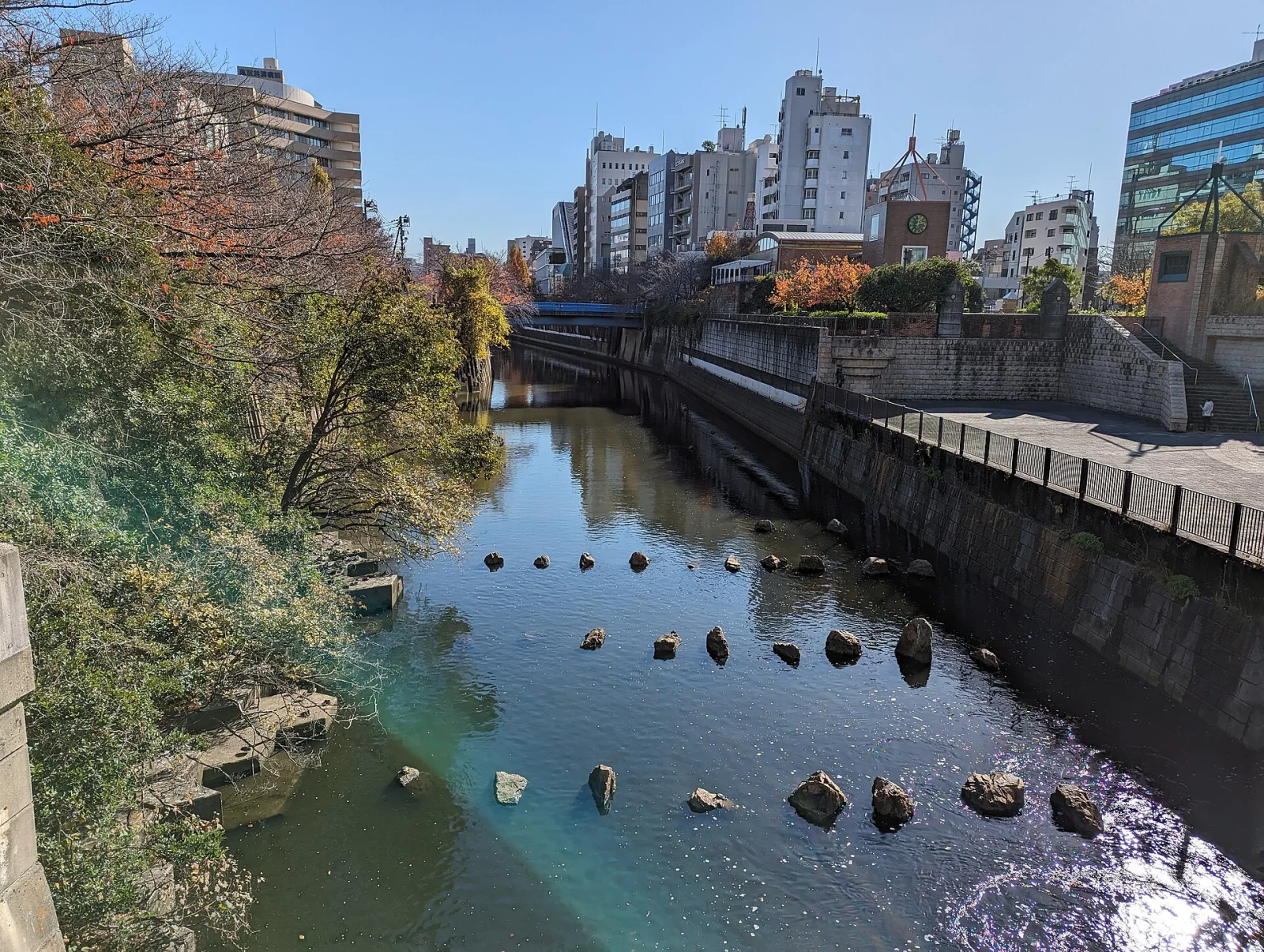
Choosing where to stay in Nakameguro? Compare four hotels across Aobadai along the Meguro River, Higashiyama, Yutenji, and Ebisu, with Nakameguro Station exits, cherry blossom booking tips, and Tokyo's 2027 accommodation tax.
Four Hotels Across Aobadai, Higashiyama, Yutenji, and Ebisu
Walking upstream along the river takes you towards Aobadai and Ikejiri-ohashi, while heading downstream brings you past the Meguro River and Jabegawa confluence towards Funairiba and Nakameguro Park. First-time visitors often assume "along the river" feels much the same in either direction. If your Aobadai base sits between Nakameguro and Ikejiri-ohashi, each station serves a distinct purpose. Dormy Inn EXPRESS Meguro Aobadai, for example, lists a 10-minute walk from Nakameguro Station and an 8-minute walk from Ikejiri-ohashi Station. You can return via Nakameguro on the Hibiya Line or head out from Shibuya on the Den-en-toshi Line via Ikejiri-ohashi—saving both final walking routes separately on your phone pays off.
At this Dormy Inn branch, Superior Twin and Triple rooms come equipped with an in-room washer-dryer, and the hotel operates split bathing hours for its communal bath: 15:00-20:00 for women and 20:30-10:00 the following morning for men. Travellers visiting Roppongi galleries in the late afternoon can stop back for a soak before heading out to dinner. The private cypress bath opens for reservations from 14:00 on the day of stay in 40-minute slots until 01:00. If you arrive late at night or travel with companions on different shower and sleep schedules, choosing the right en-suite bathroom and bed configuration matters far more than browsing communal facility photos.
From 26 October 2026 to 29 January 2027, Dormy Inn Meguro Aobadai has announced maintenance works on rooftop equipment and around the ground-floor perimeter on weekdays from 11:00 to 15:00, with no work on Saturdays, Sundays, or Japanese public holidays. If you plan to take work calls in the room, nap midday, or care for young children, schedule outings during those hours or compare one of the other properties.
Still using Nakameguro Station, staying in Higashiyama offers a very different rhythm. KKR Hotel Nakameguro sits on elevated residential ground in Higashiyama 1-chome, listed on its official site as a 13-minute walk from Nakameguro Station. On weekday mornings when you need an early train, factor that walk from your door to the platform into your departure time. The hotel runs a shuttle bus departing Nakameguro Station every 30 minutes from 15:00 to 22:00, excluding Sundays, Mondays, and mornings. Because the shuttle covers only specific afternoon and evening arrivals, plan to walk or take a taxi on early check-out mornings.
The shuttle pick-up sits just outside the station. Exit Nakameguro Station's Front Gate, stay on that side of the road, and walk roughly 100 metres to the right towards the Meguro Ginza shopping street sign; saving the street-corner photo from the hotel's access page makes it easy to spot. Leisure travellers book through the general public ("Ippan Riyosha") portal on the official website. Its 9.1-square-metre Single Out Bath rooms include a washbasin and toilet but rely on the shared bath, while standard en-suite single rooms are also available. The communal bath on the ground floor of the annexe opens 15:00-24:00 and 06:00-09:00, and guests bring towels from their rooms—if you like showering at any hour or bathing past midnight after packing, book an en-suite room.
When a proper kitchenette is a priority, move one stop south. Tokyu Stay Meguro-Yutenji stands in Yutenji 2-chome, roughly a 3-minute walk from East Exit 1 of Yutenji Station's Central Gate on the Toyoko Line. On the official room specs, the 18-square-metre Standard Double is listed for single occupancy with a microwave, whereas the 20-square-metre Comfort Double accommodates two guests and adds both a mini kitchen and a washer-dryer alongside the microwave. The 25-square-metre Superior Twin sleeps up to four with the same appliances, with Japanese-style or Western layouts assigned by the hotel. If you need space for a baby bath or clear floor area to open suitcases, check your actual sleeping setup and bag count before booking.
From Yutenji, a local Toyoko Line train reaches Nakameguro in one stop, where you can change onto the Hibiya Line for Roppongi or Tsukiji. Staying in Yutenji trims the street walk to your nearest station on luggage days, at the cost of one extra Toyoko Line hop whenever your itinerary relies on the Hibiya Line. On a four-night stay with only one day in Ginza, having in-room laundry and cooking space easily outweighs one transfer. If all four days revolve around the Hibiya Line, keeping a hotel within walking distance of Nakameguro Station back near the top of your list makes more sense.
Frequent JR users can look straight to Ebisu. Opening in March 2026, Tokyu Stay Shibuya Ebisu lists a 1-minute walk from Hibiya Line Ebisu Station. Its 13-square-metre Comfort Double fits two guests, while the 17-square-metre Superior Queen is the entry tier with a washer-dryer. The 26-square-metre Deluxe Twin sleeps three using a trundle bed, and the 38-square-metre Family Room sleeps four with a sofa bed—both include a washer-dryer and mini kitchen. Since Ebisu is just one Hibiya Line stop from Nakameguro, staying there still lets you keep cherry blossom strolls and dinners in Nakameguro.
If your evenings naturally centre around restaurants in Ebisu or frequent trips via Shinagawa, basing yourself in Ebisu eliminates that nightly underground hop. If you only plan one dinner in Ebisu and want to walk home beside the Meguro River on the other nights, Nakameguro is the better fit. When comparing the two districts, run searches with identical dates, bed layouts, and cancellation terms. Even when two platforms both label a room "Double", check the floor plan to see whether it means one shared bed or two singles before comparing rates.
Where the Toyoko Line and Hibiya Line Take You
Heading north towards Shibuya on the Toyoko Line, Local trains stop at Daikanyama first, making Shibuya two stops away, whereas Express, Commuter Express, and Limited Express services skip Daikanyama and reach Shibuya in one stop. Going one stop south to Yutenji or north to Daikanyama both require a Local train. When travelling south towards Yokohama, check the train's destination: beyond Hiyoshi, Tokyu services split between the Yokohama route and the Shin-Yokohama route. For Yokohama Station, Minatomirai, or Motomachi-Chukagai, board a Yokohama-bound through train to avoid an unnecessary change.
Nakameguro is the terminus of the Hibiya Line; heading towards Kita-Senju, the first stop is Ebisu, followed by Hiro-o, Roppongi, Hibiya, Ginza, Higashi-ginza, Tsukiji, and Ueno. You can pair a daytime museum visit in Roppongi with dinner in Ginza on a single line without changing. Reaching Asakusa generally requires one further transfer, so pick your interchange station around your exact destination. If you need a base with direct trains into eastern Tokyo almost every day, check your first stop for each day of the trip alongside Tokyo neighbourhoods for accommodation and transit.
Because the two lines are run by different operators, factor cross-company journeys into your fare planning. The Tokyo Subway Ticket covers Tokyo Metro and Toei Subway services—including Hibiya Line rides from Nakameguro to Roppongi, Ginza, and Ueno—while Toyoko Line trips to Daikanyama, Shibuya, or Yutenji are charged separately. Both paper and QR passes are sold in 24-, 48-, and 72-hour versions starting from first use. Only buy the pass if your daily Hibiya Line and eastern Tokyo single fares add up to more than the ticket price; if half your outings head to Shibuya or Yokohama, tapping an IC card keeps things simple without extra fare adjustments near your hotel.
Travellers using the QR version of the Tokyo Subway Ticket at Nakameguro Station need to speak with gate staff. Tokyo Metro's QR boarding guidance lists Nakameguro among the stations requiring manned-gate assistance. If you ride the Hibiya Line and continue onto the Toyoko Line, keep your QR pass screen and IC card ready separately, tell the station attendant where you boarded and where you are heading, and settle the Tokyu portion at the barrier.
Both lines share the same station complex and ticket barriers, though interchange platforms differ by direction. Coming south on the Toyoko Line from Shibuya to join the Hibiya Line uses a different platform layout than arriving northbound from Yokohama. Tokyu's 3D station diagram places Shibuya-bound Toyoko Line trains and Kita-Senju-bound Hibiya Line trains on opposite faces of the same island platform, whereas trains arriving from Shibuya pull into the other island platform—watch the in-station transfer and lift signs closely. Returning Hibiya Line trains terminate at Track 2 (alighting only), so even though you use the same station out and back, your walking route to the exit can still change.
If a group arrives on separate trains, agree to meet outside a specific ticket gate rather than simply saying "Nakameguro Station East Exit", which could mean either East Exit 1 or East Exit 2. If someone takes a detour for a lift, trying to pinpoint where you are standing over the phone adds yet another wrong turn. Before booking, capture your chosen meeting spot, your main departure station, and the hotel entrance on one saved map image so everyone works from the same three landmarks.
Checking In With Luggage: Exits, Storage, and Arrival
Tokyu lists step-free lifts inside the ticket gates alongside accessible toilets. Follow the accessible routes marked on the station map when changing trains, then exit through the gate closest to your pavement route. If you emerge from a west exit and realise your hotel sits across Yamate-dori, cross at a signalised junction so you can wheel bags along one flat pavement. When travelling with pushchairs or anyone avoiding stairs, check Tokyo Metro's live lift outage page for your travel dates. Before booking, verify that the hotel lift runs uninterrupted from street level to guest floors, and ask directly about any front-door steps, split annexes, or lift door widths.
If an early flight lands before check-in, dropping bags at the hotel first makes the initial stroll far easier. Coin lockers next to the shop outside Nakameguro Station's ticket gates accept IC cards only, with five large and two extra-large lockers listed on Tokyu's facility page. Groups travelling with multiple hard-shell suitcases should not spend the morning hunting for empty station lockers. Confirm whether your hotel holds bags on check-in day and share an arrival window. For self-check-in apartments, obtain the drop-off address in advance—if luggage storage is in another building or limited to certain hours, build that detour into your morning.
When moving from another hotel the night before, let the contents of your bags dictate how you transfer them. Tokyu Stay's official policy allows luggage storage at reception before check-in and on check-out day, provided valuables and fragile items stay with you. If forwarding bags from your previous hotel to Yutenji or Ebisu, write the lead guest name and check-in date clearly on the delivery slip so reception can match the booking. Tokyu Stay also asks guests arriving after 22:00 to notify the front desk—failing to make contact past midnight can result in cancellation. Even when your suitcases are already waiting at the hotel, message them before boarding a late flight.
Late-night arrival snags usually happen right at the front door. At staffed hotels, add your estimated arrival time and contact details when booking. For self-check-in properties that email or message access instructions via the booking platform, report flight delays promptly and download the street number, keypad guide, and support phone number offline beforehand. In mixed residential or commercial buildings, follow the property's entrance diagram rather than buzzing random intercoms. If companions land on different flights, leave the booking reference and approved check-in procedure with whoever arrives first so both parties can meet inside.
On hotel-change days, position your luggage drop along the direction of your next journey. If you arrive from western Tokyo in the morning, browse Daikanyama at midday, and sleep in Ebisu, leave bags in Ebisu first rather than stashing them at Nakameguro and doubling back before closing time. Once you know both your departure station and your hotel doorway, you can tell whether a slightly cheaper nightly rate is genuinely worth the extra detour or locker fee.
Separating Cherry Blossom Nights From Your Walking Route
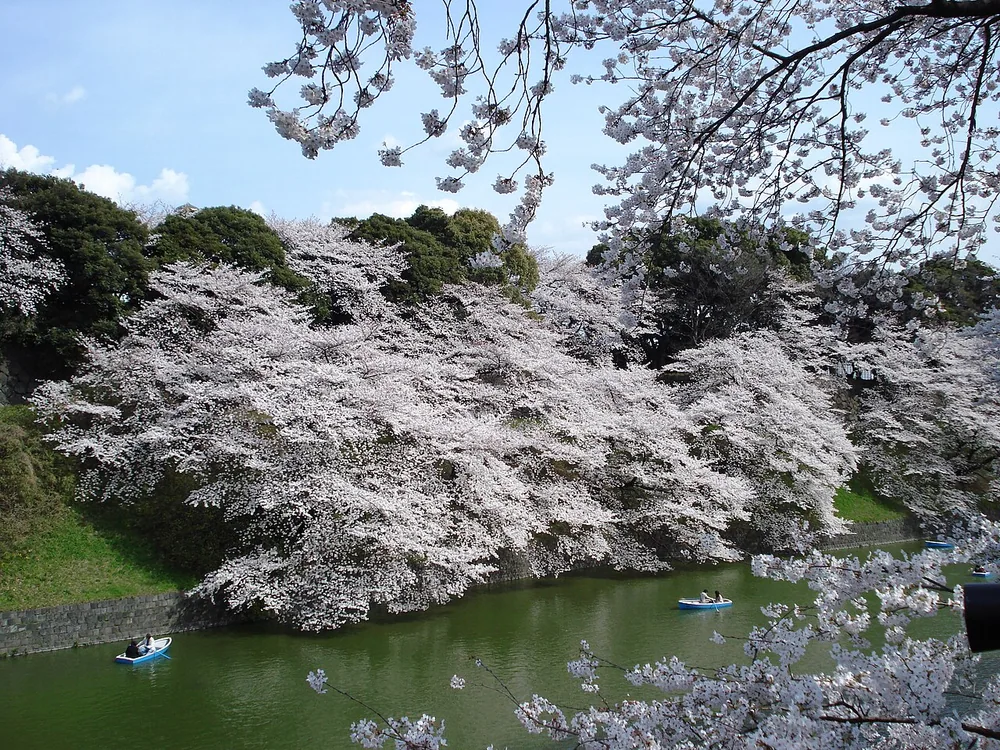
During ordinary weeks you can wander beside the river at leisure, but peak cherry blossom season follows strict crowd controls. In 2026, Meguro City advised visitors heading from Nakameguro Station to the riverbanks to follow one-way pedestrian marshalling without stopping on the paths, and asked crowds to spread out via Ikejiri-ohashi or Meguro stations and visit in the morning. The junction from Nakameguro Station to the nearest bridge funnels commuters, arriving visitors, and photographers into one tight bottleneck—even for early check-in, avoid wheeling suitcases through controlled sections and take main roads straight to your hotel.
If the Meguro River is a centrepiece of your trip, dedicate the morning to the water and head up to Daikanyama after lunch. Companions walking at different paces should pick a meeting spot near the station well clear of the bridges rather than waiting in a moving queue. Approaching from Ikejiri-ohashi puts you straight onto the quiet upstream stretch, while walking downhill along Meguro-dori from Meguro Station to Meguro Shinbashi Bridge avoids the Nakameguro Station bottleneck altogether. Follow one-way signs during peak hours and loop back to your room via outer streets.
In 2026, the Nakameguro Cherry Blossom Festival ran on 28-29 March at the River Confluence Playground. Because bloom timing, festival weekends, and riverside illuminations each run on their own schedule, lock in hotel dates around your confirmed trip first. For spring 2027 bookings, map out your wider Tokyo days, slot half a day for the Meguro River, and check seasonal notices from the local shopping association and Meguro City closer to departure before planning evening walks. If remaining rooms sit across the main avenue, you can still enjoy the river by day without shuffling hotels mid-trip to chase one event.
Blossom forecasts and booking cancellation windows run on two separate clocks. Once your travel dates are fixed, pick a location you genuinely want to stay in and note the free-cancellation date, the cut-off time in Japan Standard Time (JST), and how many nights' penalty applies afterwards. Only compare adjacent weekdays or an extra week either side if your flights are still flexible, factoring rail tickets and airfares alongside room rates. A cheaper room that forces new train bookings, or a river-view upgrade that refuses early bag drop, often eats away the savings.
If you are staying in Yutenji or Ebisu for just one riverside visit, keep the same room and ride one stop to Nakameguro in the morning. Leaving bags in place lets you pivot to Roppongi or Ebisu if weather or blossoms disappoint. Where the Meguro River is your group's non-negotiable priority, pick a hotel reachable via non-riverside streets so heavy crowds never delay dinner or bedtime. For wider route planning across Tokyo's blossom spots, see Tokyo cherry blossom area routes.
Comparing Room Rates: Accommodation Tax, Beds, and Longer Stays
Always compare the total tax-inclusive price for the exact room category, checking maximum occupancy, bed count, and any cleaning fees side by side. For two guests in one room, verify whether the quote is per room or per person. If you plan a week-long stay and want to prepare breakfast indoors, confirm the kitchenette includes an induction hob and cookware; microwave-only rooms are strictly for reheating ready meals. For four guests sharing, check whether unfolding a sofa bed or trundle blocks the entrance door or bathroom path, and compare the cost against booking two separate doubles.
Tokyo's accommodation tax rules change on 1 April 2027. According to the Tokyo Metropolitan Government Bureau of Taxation, up to 31 March 2027 hotels and ryokan are taxed per person per night on the room-only charge: exempt below ¥10,000, ¥100 from ¥10,000 to under ¥15,000, and ¥200 at ¥15,000 or above. From 1 April 2027, stays costing ¥13,000 or more per person per night incur a flat 3% tax, expanding to simple lodging houses and legally registered private lodging (minpaku) properties. Some hotels collect this tax separately at reception outside package or platform totals.
Take a room for two guests whose room-only taxable rate is ¥28,000 per night—¥14,000 per person. At a standard hotel or ryokan, that comes to ¥200 total tax on the night of 31 March 2027, rising to ¥840 total on 1 April 2027. If breakfast is bundled into the nightly rate, subtract the meal portion before calculating the tax tier. For bookings straddling the changeover date, each individual night is taxed according to the date and per-person room charge for that night.
Weekday multi-night stays also carry local licensing rules. Meguro City's Private Lodging Business Ordinance prohibits registered minpaku apartments from operating between noon on Sunday and noon on Friday, and the ward publishes an official register of licensed properties. Before booking a whole apartment from Tuesday to Saturday, verify its licence category before looking at photos. If you need weekday stays with proper cooking facilities, start with licensed hotels that list kitchenettes explicitly—such as the Comfort Double in Yutenji—and save residential-style rentals for Friday and Saturday nights, noting caretaker contacts, bin locations, and check-out steps.
In-room laundry cuts down on luggage bulk, while housekeeping schedules shape how a longer stay actually feels. Tokyu Stay Meguro-Yutenji's room guide lists light eco-cleaning on request via door magnet—replacing towels, bath mats, and sleepwear and emptying bins—with full room cleaning once a week on stays of seven nights or more. Before grocery shopping for a kitchenette stay, inspect the fridge size, supplied pans, and waste-sorting rules; practical details like those matter far more than vague filters like "apartment-style" or "extended stay".
Even if you arrive early, there is no need to haul a full week's groceries back on day one. Tokyu Store Nakameguro Honten sits in Kamimeguro 1-chome, handy for picking up next-morning breakfast, bottled water, and snacks for children once you see how much fridge space you have. Guests in Aobadai or Yutenji can treat the supermarket outside their daily home station as their regular stop—juggling an umbrella and heavy shopping bags in the rain is effort enough without buying ingredients days before you need them.
Walking Back Along the River, Daikanyama, or Ebisu
Walking upstream from Nakameguro Station leads along the river towards Aobadai, where you can turn back at leisure or exit via Ikejiri-ohashi Station. Footbridges and narrow lanes cross the canal at regular intervals, so use the bridge nearest your hotel bank as an easy turnaround marker. If one person wants to keep walking while another prefers to head back early, knowing which bridge links to your street makes splitting up effortless. With children, save unhurried strolling for the downstream path: Meguro City's riverside route passes the Jabegawa confluence and Funairiba on the way to Nakameguro Park, whose lawns and flower beds sit roughly a 12-minute walk from the station.
To walk all the way from Nakameguro to JR Meguro Station, follow Meguro City's official "Green Walking Route". The full published circuit takes around 80 minutes via Shogakuji Temple, Chayazaka, and Gonnosukezaka, and can be trimmed to match your group's stamina. Because the final stretch climbs uphill towards Meguro Station, tackle that gradient without luggage rather than before a train journey. If you just want a gentle morning constitutional near your hotel, looping back from Nakameguro Park gives you plenty of variety across two different mornings.
Daikanyama fits best into the first half of the day. Walking up from the river involves a noticeable climb, so save energy for browsing shops by taking a Local Toyoko Line train one stop from Nakameguro to Daikanyama and strolling downhill back towards the canal. Tokyu's walking guide lists Daikanyama Station to Nakameguro Station at roughly 700 metres (9 minutes) and Daikanyama Station to Ebisu Station at roughly 800 metres (10 minutes), plus whatever distance separates your hotel door from the station. Daikanyama T-SITE is a 5-minute walk from Daikanyama Station, with the bookshop open 09:00-22:00 and the in-house Starbucks opening at 07:00—ideal for a crisp morning coffee before the shelves open at nine. If you book lunch in Ebisu, check the restaurant's exact pin first, as dining near Ebisu West Exit and over at Yebisu Garden Place sit a fair walk apart.
For a rainy afternoon in Ebisu, the Tokyo Photographic Art Museum makes an easy indoor anchor. The museum lists roughly a 7-minute walk from JR Ebisu Station East Exit or 10 minutes from Hibiya Line Ebisu Station, including a step-free indoor approach. It normally closes on Mondays (or the following weekday when Monday is a public holiday), and lists scheduled closures from 28 December 2026 to 1 January 2027 and from 18 January to 4 February 2027. If New Year rain coincides with those dates, swap in open bookshops or department stores. After spending the day around Ebisu, riding the Hibiya Line one stop home after dinner beats navigating dark riverside slopes on foot.
With only half a day spare on arrival, split the neighbourhood across two mornings. Drop bags at 14:00, wander downstream to Nakameguro Park, and return for check-in or dinner; the next day, check the sky before choosing between climbing up to Daikanyama or riding one stop to Ebisu. Guests based in Aobadai can keep morning walks upstream and continue towards Nakameguro Station before branching elsewhere, cutting out repeated backtracking along the same riverbank.
Separate light drizzle from heavy downpours in your contingency plan. In light rain, stick to the shortest pavement route from the station, or swap the canal walk for indoor stops if pushing a buggy. Meguro City operates river water-level alerts, live river cameras, and published flood hazard maps. If the ward issues an evacuation order, your hotel relays a warning, or river alarms sound, leave the waterfront immediately and follow staff and official instructions. Guests concerned about ground-floor rooms or basement-level passageways can check the hotel's exact address on the ward hazard map and confirm evacuation routes with reception.
Early Morning Flights: Work Backwards From Your Terminal
A straightforward rail route to Haneda Airport starts on the Hibiya Line from Nakameguro to Ebisu, switches gates to the JR Yamanote Line towards Meguro and Shinagawa, and continues from Shinagawa on a Keikyu train bound for Haneda Airport. Because the underground and JR networks use separate ticket gates at Ebisu—with another transfer waiting at Shinagawa—build transfer walking time into your schedule. Terminal 3 and Terminals 1 & 2 are served by different Haneda stations, so check your airline's terminal before leaving and add extra buffer for getting from your hotel door to the first platform and wheeling bags to check-in.
Staying the final night in Ebisu lets you board the JR Yamanote Line straight to Shinagawa without that first Hibiya Line leg, whereas staying in Yutenji adds a wait for a Local Toyoko Line train at the start of the morning. For early departures, plug your travel date and target terminal arrival time into each railway's timetable to verify early-morning connections. For very early flights, consider moving your final night to Shinagawa or near Haneda—you can still spend the daytime around Nakameguro with bags stored at the hotel and ride out after dinner, while light backpack travellers with daytime flights can check out directly.
For Narita Airport, take the Hibiya Line from Nakameguro to Ueno, exit the underground gates, and walk across to Keisei-Ueno Station for the Keisei Skyliner. Because Tokyo Metro Ueno and Keisei-Ueno require an out-of-gate transfer and all Skyliner seats are reserved, leave ample margin to walk and collect tickets before picking a departure. Add another train buffer if your hotel walk begins uphill or if companions need to check bags at Narita; alternatively, enjoy a final meal around Ueno before walking to Keisei-Ueno. Match your departure station and luggage plan against Tokyo airport transfers for your exact terminal.
Run the same reverse calculation for your arrival in Tokyo. On an evening landing, check the last Hibiya Line or Toyoko Line departures after immigration and baggage claim, then compare them against your hotel's final check-in cut-off. If you only plan to sleep on night one, move your Nakameguro stroll to the following morning and enjoy two or three full days in the neighbourhood. When companions land separately near the last train, agree on a final airport departure time so delayed flights still have a clear meeting plan.
A few useful answers
Should I stay right by Nakameguro Station or in Aobadai?
If you ride the Hibiya or Toyoko lines every day, prioritise hotels within an easy walk of Nakameguro Station. If you prefer strolling along the upper Meguro River or also use the Den-en-toshi Line, compare Aobadai—Dormy Inn EXPRESS Meguro Aobadai, for instance, lists 10 minutes on foot from Nakameguro Station and 8 minutes from Ikejiri-ohashi Station.
What is the difference between Nakameguro Station and Meguro Station?
Nakameguro Station serves the Tokyu Toyoko Line (TY03) and Tokyo Metro Hibiya Line (H01). Meguro Station serves the JR Yamanote Line, Tokyu Meguro Line, Tokyo Metro Namboku Line, and Toei Mita Line. You can walk between the two along the river and up the slope towards Meguro Station, though with luggage you should stick to whichever station your hotel lists as closest.
Are all trains from Nakameguro to Shibuya just one stop?
On the Toyoko Line, Local trains stop at Daikanyama first before reaching Shibuya, making it two stops. Express and Limited Express trains skip Daikanyama and reach Shibuya in one stop. If you are travelling to Daikanyama or Yutenji, board a Local service.
Where can I stay nearby with in-room laundry and cooking facilities?
Tokyu Stay Meguro-Yutenji, a 3-minute walk from Yutenji Station, equips its Comfort Double and Superior Twin rooms with a washer-dryer, mini kitchen, and microwave. You can also compare Tokyu Stay Shibuya Ebisu, whose triple and quadruple rooms include both a kitchen and a washer-dryer.
Do I need to stay right outside Nakameguro Station during cherry blossom season?
If you want to step straight out onto the riverside, base yourself in Aobadai or nearby residential blocks so daytime blossom walks and evening returns stay separate. If you only plan half a day by the river, Yutenji or Ebisu works just as well. In 2026, Meguro City asked blossom visitors to follow one-way walking routes without stopping and recommended arriving via Ikejiri-ohashi or Meguro stations to ease crowding.
How is Tokyo's accommodation tax calculated across 1 April 2027?
It is calculated separately per person for each individual night. Up to 31 March 2027, applicable hotels and ryokan charge ¥0, ¥100, or ¥200 per person per night depending on the room rate. From 1 April 2027, hotels, ryokan, simple lodging houses, and licensed or certified minpaku properties charge 3% on room rates of ¥13,000 or more per person per night.
If my flight lands late at Haneda, should I head to Nakameguro or stay near the airport?
Normally you can take Keikyu to Shinagawa, change to the JR Yamanote Line to Ebisu, and ride one Hibiya Line stop to Nakameguro. On late arrivals, work backwards from baggage claim, station transfers, and your hotel's check-in deadline; if any link looks tight, spend the first night near Haneda, Kamata, or Shinagawa.
Are there luggage lockers at Nakameguro Station?
Yes. Tokyu lists coin lockers beside the shop outside the ticket gates, accepting IC cards only, with five large and two extra-large compartments. If you are travelling with multiple large suitcases or visiting during cherry blossom season, arrange luggage storage with your hotel instead.
Can I book a whole apartment in Meguro City for a weekday stay?
Under Meguro City's Private Lodging Business Ordinance, minpaku properties registered under the Housing Accommodation Business Act cannot operate from noon on Sunday to noon on Friday. For weekday stays with cooking facilities, choose a licensed hotel room that explicitly lists a kitchenette.
Official information and references
Sources used in this guide.
- Tokyu Railways: Nakameguro Station Facilities, Map, and Timetables
- Tokyu Railways: Nakameguro Station 3D and Floor Diagrams
- Tokyu Railways: Toyoko Line Route and Train Destinations
- Tokyu Railways: Nakameguro Station Coin Lockers
- Tokyo Metro: Hibiya Line Route Map
- Tokyo Metro: Nakameguro Station Transfers and Lift Information
- Dormy Inn EXPRESS Meguro Aobadai: Access, Communal Bath, and Rooms
- Dormy Inn EXPRESS Meguro Aobadai: 2026-2027 Construction Notice
- Tokyu Stay Meguro-Yutenji: Access
- Tokyu Stay Meguro-Yutenji: Room Types, Appliances, and Extended-Stay Cleaning
- Tokyu Stay Shibuya Ebisu: Access and Room Types
- JR East: Ebisu Station Information
- Meguro City: 2026 Meguro River Cherry Blossom Crowd Guidance
- Nakameguro Station Shopping Association: 40th Cherry Blossom Festival Notice
- JR East: Walking Route from Meguro Station to the Meguro River
- Tokyo Metropolitan Government Bureau of Taxation: Accommodation Tax and 2027 Reform
- Tokyu Store: Nakameguro Honten
- Meguro City: Green Walking Route
- Meguro City: Municipal Parks and Nakameguro Park Access
- Daikanyama T-SITE: Opening Hours and Access
- Tokyo Photographic Art Museum: Closure Information
- Tokyo Photographic Art Museum: Access and Step-Free Indoor Route
- Meguro City: Flood Hazard Maps
- Meguro City: Flood Prevention and River Monitoring Information
- Keikyu Corporation: Haneda Airport Rail Access
- Keisei Electric Railway: Skyliner Seating and Ticketing
- KKR Hotel Nakameguro: Walking Access
- KKR Hotel Nakameguro: Shuttle Stop and Timetable
- KKR Hotel Nakameguro: Out Bath Rooms and General Public Bookings
- KKR Hotel Nakameguro: Communal Bath
- Dormy Inn EXPRESS Meguro Aobadai: Bathing Hours and Private Bath Reservations
- Tokyu Stay Meguro-Yutenji: Route from Central Gate East Exit 1
- Tokyu Stay: Late Check-In and Luggage Storage Guidance
- Tokyo Metro: Tourist Passes
- Tokyo Metro: QR Ticket Guidance and Nakameguro Station Handling
- Meguro City: Minpaku Operating Day Restrictions
- Meguro City: Register of Private Lodging Businesses
- Tokyu Railways: Daikanyama and Neighbouring Stations Walking Map
- KKR Hotel Nakameguro: Accommodation and Room Selection