How to choose where to stay in Ginza: compare Ginza Station, Higashi-Ginza, Yurakucho, and the Shinbashi side across exits, room layouts, laundry, public baths, and Haneda, Narita, and Tokyo Station access.
- Region & Focus
- TokyoHotels and stays
- Reading Scope
- 19 min read · 10 chapters · 9 Q&As
- Official Verification
- 33 official sources checkedUpdated November 22, 2026
- Key Topics
- Where to stayNeighborhoodsBooking
Chapter Route Map (tap any stop)
- Which Side of Ginza to Stay On
- Turn Map Walking Times into Suitcase Routes
- Four Ginza Hotels Compared
- Triple Rooms, Family Stays, and Quiet Sleep
- Comparing Total Stay Costs and the April 2027 Accommodation Tax Shift
- Haneda to Higashi-Ginza, Narita via Ginza Bus or Tokyo Station
- Planning Around Evening Kabukiza Performances
- Tsukiji Breakfasts and Rainy-Day Underground Walkways
- Forwarding Large Suitcases and Timing Your Shopping
- One Night Only or Splitting Shopping Across Days
- Quick Q&A
If you plan to shop in Ginza and drop bags back in your room midday, look between the Ginza 4-chome intersection and GINZA SIX. For evening Kabukiza Theatre performances, early-morning Tsukiji breakfasts, or direct Keikyu-Asakusa Line trains to Haneda Airport, base yourself in Higashi-Ginza. If you ride JR lines often or have a suitcase bound for Tokyo Station, start your search on the Yurakucho side. Ginza looks deceptively compact on a single map. Before booking, set your map pin to the hotel's actual entrance and check the exact station exit your arrival line serves.
Which Side of Ginza to Stay On
Ginza 4-chome gives you an easy anchor where Chuo-dori and Harumi-dori cross beside Wako and Ginza Mitsukoshi. If most of your days center on Chuo-dori, look from this junction down toward 6-chome and 7-chome. From Ginza Station Exit A3, GINZA SIX lists about a 2-minute walk. Staying on this stretch pays off after your first round of shopping: you can drop bags in your room while you still have luggage space, then head toward Itoya or Matsuya Ginza empty-handed. If you are only carrying one small tote or visiting a single department store, paying extra for proximity to the shops matters much less.
Head east from the 4-chome crossing along Harumi-dori and the lodging center of gravity shifts toward Higashi-Ginza Station. Kabukiza Theatre sits right beside Exit 3, served by both the Hibiya Line and the Toei Asakusa Line. Start here if you have tickets for a fixed-date show, especially if part of your group wants to turn in early while others stay through the final curtain. Walking over to Tsukiji lets you combine breakfast and checkout on the same morning. On days you spend in Shinjuku or Shibuya, you can still depart from Ginza Station and pick whichever stop drops you closest to dinner on the way back.
The Yurakucho side revolves around the walk from JR Yurakucho Station's Ginza Exit to your hotel door. If you need an early start at Tokyo Station or return frequently on JR lines, a block near Yurakucho cuts out an extra cross-district walk, while the Sukiyabashi intersection gives quick access to both Ginza and Hibiya stations. Some Yurakucho hotels technically sit in Chiyoda Ward without "Ginza" in the address, yet remain right on the edge of the shopping grid. Conversely, hotels in Ginza 7-chome and 8-chome toward Shinbashi often pair more naturally with Shinbashi Station as a backup hub. If your itinerary splits evenly between subway and JR days, measure the walk from both stations before deciding.
If you already have several nights booked in Shinjuku, Ueno, or near Tokyo Station and only plan a half-day in Ginza, commuting in is enough. Switching hotels to Ginza makes sense when you will use at least two of its advantages—such as walking back after an evening performance, grabbing breakfast in Tsukiji, or stashing bulky afternoon purchases in your room. When the final two days of a trip pack in an intercity train, a flight, and shopping, book your hotel around the leg with the least flexible schedule first; the other two pieces are usually easier to adjust.
| Area to Search | Best Fit For | What to Check Before Booking |
|---|---|---|
| Ginza 4-chome to 6- and 7-chome | Chuo-dori shopping with midday bag drops | Walk from the 4-chome crossing or Exit A3 to the hotel entrance |
| Higashi-Ginza Station | Kabukiza shows, Tsukiji breakfast, direct Haneda trains | Surface routes from both Hibiya and Asakusa line ticket gates |
| Yurakucho and Sukiyabashi | Frequent JR rides, Hibiya, and Tokyo Station access | Paths from JR Ginza Exit and Ginza Station Exit C1 to the lobby |
| Ginza 7- and 8-chome near Shinbashi | South of 6-chome shopping and morning Shinbashi departures | Late-night walk back and weekend taxi drop-off spots |
How to choose where to stay in Ginza: compare Ginza Station, Higashi-Ginza, Yurakucho, and the Shinbashi side across exits, room layouts, laundry, public baths, and Haneda, Narita, and Tokyo Station access.
Turn Map Walking Times into Suitcase Routes
Booking sites usually calculate walking times from street-level exits. If you arrive on the Marunouchi Line, you still have to wheel your bags along the platform, through the ticket gates, and down underground concourses just to reach that exit. Ginza Station serves the Ginza, Marunouchi, and Hibiya lines, and each has platforms and gates in different places. Saving the exact route—line, gate, and exit—is far more useful than a street-view screenshot. A covered stretch on the surface or avoiding a major crosswalk often matters more than saving 100 meters on a map.
Tokyo Metro's Ginza Station accessibility map routes step-free Ginza Line access through the Ginza 4-chome Crossing Gate to elevators at Exits A7 and B2, with the B2 elevator operating from 6:00 to 22:00. The Hibiya Line Central Gate also connects to the B2 elevator. If you are riding the Marunouchi Line, switch to that line on the same station map to match your platform to the right gate. For pre-dawn departures, late-night arrivals, or days when an elevator is out of service, pick an alternate exit on the same line and save the street detour in advance. Wheelchair users should also confirm step-free entry from the street to the room door, bathroom doorway width, and transfer space.
Higashi-Ginza Station maps list plain numbered exits like Exit 3 alongside lettered exits like A1—a separate numbering system from Ginza Station's A-exits. Tokyo Metro's Hibiya Line accessibility page shows an elevator in the middle of the platform leading to the Central Gate and then Exit 3. Arriving from Haneda on the Toei Asakusa Line, check Toei's station map for the elevator serving your platform. Once you walk the route past Kabukiza Theatre without bags, you can switch to shorter surface shortcuts on later trips, keeping the elevator route for check-in day.
Hotel listings also frequently cite Ginza-itchome Station on the Yurakucho Line, which gives direct rides toward Ikebukuro or Shin-Kiba if you stay around 1-chome. The Yurakucho Line's street-level elevator sits on the Ginza-dori Gate side, and on August 29, 2025, Tokyo Metro opened a new street-level elevator in the building connected to Exit 6. If you will also transfer to the Ginza, Hibiya, or Marunouchi lines, follow the transfer signs once on arrival so you know which street entrance is closest on future walks. When companions arrive separately, meet at the hotel front desk rather than a "Ginza Station exit," which almost always leads to re-coordinating by phone.
Four Ginza Hotels Compared
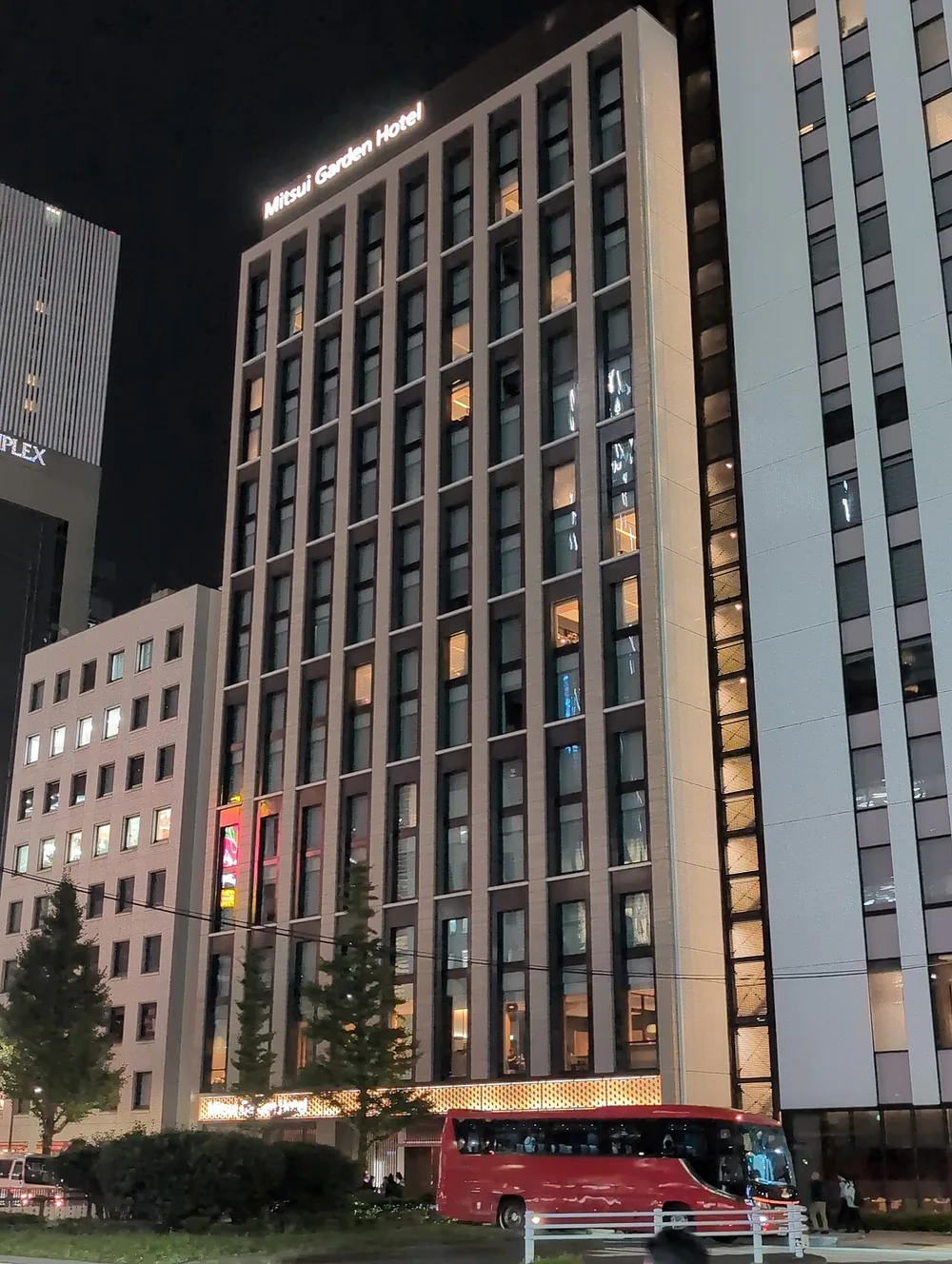
Mitsui Garden Hotel Ginza Gochome works well if you want evening theater plans and a soak afterward. Official listings put it 1 minute on foot from Higashi-Ginza Station, 4 minutes from Ginza Station, and about 11 minutes from JR Yurakucho Station's Ginza or Central exits. All three look walkable on a map, but you will feel that gap when rolling suitcases. Guests get free access to the second-floor public bath from 6:00 to 9:00 and 15:00 to 1:00, bringing towels from the room. After an evening show, you can eat dinner first as long as you return in time to bathe before 1:00. The hotel has lifted tattoo restrictions for the public bath, and children aged 7 and older must use the bath for their own gender; check individual room pages if you prefer bathing in-room.
Hotel Gracery Ginza stands right next to GINZA SIX, about 3 minutes from Ginza Station Exit A3 and 8 minutes from JR Shinbashi Station's Ginza Exit. You enter from street level and take an elevator up to the third-floor lobby. Standard Double rooms measure 15 sq m with a 140 cm bed, Comfort Doubles are 21 sq m with a 160 cm bed, and Standard Twins are 23 sq m with two 110 cm beds. Solo travelers who pack compactly can start by comparing the 15 sq m option. Two people with large suitcases—or one early sleeper while the other packs purchases—should compare the floor plans of the Twin and Comfort Double to see where bags actually open.
THE GATE HOTEL Tokyo by HULIC sits on the Yurakucho side. Its official access page lists 1 minute from both Ginza Station Exit C1 and Hibiya Station Exit A1, and about 3 minutes from JR Yurakucho Station's Ginza Exit, making it easy to switch between subway and JR depending on the day. For guests arriving with strollers on the Ginza or Hibiya lines, the hotel's route guide recommends Exit B7. Three adults sharing a room can look for the Classy series Triple, alongside Twin and Universal Design Twin layouts. Select the exact bed setup on the booking screen; securing three fixed beds is often simpler than upgrading to a higher-tier two-bed room.
Tokyu Stay Ginza currently lists 2 minutes from Higashi-Ginza Station Exit A1 and 3 minutes from Ginza Station Exit A7. Older write-ups often mention Exit A2, so save the current routes when booking. What sets this property apart is in-room equipment: the 25 sq m Residential Double fits two guests with an in-room washer-dryer, microwave, and kitchenette, while the 25 sq m Superior Twin trades the washer-dryer for two beds while keeping the microwave. If you want both a washer-dryer and a larger bathroom, compare the 33 sq m Executive Double, which separates the bath and toilet. Early risers planning overnight laundry should test a wash cycle on the first night to gauge drying times, and run the final load the night before packing for your next city.
For a one-night stay with a morning departure, an extra 5 or 6 sq m rarely pays off; prioritize luggage storage on arrival, an easy-to-spot street entrance, and a direct walk to your departure station. On stays of four nights or longer, towel service, desk space, fridge capacity, and laundry quickly shape daily comfort. Remote workers should check desk depth and outlet placement. For two travelers on staggered morning schedules, a layout that separates hair-drying, showering, and packing beats paying for a better window view.
Triple Rooms, Family Stays, and Quiet Sleep
For three adults, set your search filter to three guests from the start. Hotel Gracery Ginza lists both a Standard Triple and a Standard Twin with an extra sofa bed, so check bed counts and widths if everyone wants a proper mattress. If two doubles cost roughly the same as one triple and everyone leaves at the same time in the morning, two bathrooms cut down the wait. When everyone carries heavy luggage and souvenirs, make sure there is floor space to open suitcases before squeezing three people into one room.
When booking with children, enter exact ages so every hotel quotes on the same occupancy. Choosing between bed-sharing and separate beds changes headcount limits, bedding, and breakfast pricing. If you plan to eat breakfast in Tsukiji, add hotel breakfast only from the second morning onward. Early-rising kids can eat near the hotel first if you find a spot open before Tsukiji Outer Market's general-visitor shopping hours begin at 9:00. When returning with a stroller via station elevators, check whether the walk from that exit back to the lobby hides a short flight of stairs.
For lighter sleepers, request an interior-facing room away from the elevators and verify whether the hotel accepts room-location requests or sells quiet tiers separately. Street-facing rooms along Chuo-dori or Harumi-dori offer city lights at night, so ask which direction windows face and whether they sit directly over a major avenue if you turn in early. Near JR tracks, floor height, orientation, and room layout all affect noise. If hallway footsteps wake you, prioritize distance from elevators and ice machines over a high floor. When one person wakes earlier than the other, the placement of the beds relative to the bathroom matters more than the street outside.
Comparing Total Stay Costs and the April 2027 Accommodation Tax Shift
Compare quotes using identical dates, guest counts, bed types, and breakfast options, then factor in fees, taxes, and cancellation rules. On sites showing a starting nightly rate, click through to the pre-payment breakdown before recording prices. Narrow your shortlist to two options: one right by your main station exit and a backup one block or district over. If you only return late to sleep, save the price difference for meals and activities. If you will return midday to rest or drop bags, estimate how many walks you save over the whole stay to judge what being a few blocks closer to the shops is worth.
Tokyo's accommodation tax is charged per person, per night based on the taxable room rate. Through March 31, 2027, stays under ¥10,000 are exempt, rates from ¥10,000 to under ¥15,000 carry ¥100, and ¥15,000 or more carry ¥200. Starting with nights on or after April 1, 2027, stays under ¥13,000 are exempt, and rates of ¥13,000 or more are taxed at 3%. For example, a ¥14,000 per-person nightly rate incurs ¥100 under the old tier versus ¥420 under the new rate. Multi-night stays crossing April 1 are calculated night by night under each rule.
If your schedule hinges on Kabukiza tickets or a hard-to-get restaurant reservation, hold a refundable rate first and finalize once seats are confirmed. Save the cancellation deadline in JST on your calendar alongside the cancellation fee terms and booking reference. For prepaid stays where your arrival slips by a day, read the no-show and multi-night retention clauses carefully. When return flights or Shinkansen seats are already locked in, keep those inflexible nights fixed and adjust the still-fluid front end of the trip.
Similar room names within the same hotel can hide different layouts, so screenshot the room size, bed setup, and occupancy together with your confirmation. If a stay is split across two separate bookings at the same property, ask the front desk in advance to confirm both use the same room type and can be linked without moving. If a room change is required, confirm luggage storage between checkout and re-check-in so you are not stuck waiting in the lobby during sightseeing hours.
Haneda to Higashi-Ginza, Narita via Ginza Bus or Tokyo Station
From Haneda Airport to Higashi-Ginza, take a Keikyu train running through onto the Toei Asakusa Line that stops at Higashi-Ginza. Toei timetables separate regular "Limited Express" (Kaitoku) trains that make all stops on the Asakusa Line from "Airport Limited Express" (Airport Kaitoku) trains that pass through Higashi-Ginza without stopping. Check the station stop list for downtown-bound trains rather than relying on the "Limited Express" label alone. If you are staying in Ginza 8-chome near Shinbashi, getting off at Shinbashi on matching train patterns avoids doubling back from Higashi-Ginza. Yurakucho guests can also compare taking Keikyu to Shinagawa and transferring to JR; it adds a transfer, but can put you closer to your hotel on exit.
From Narita Airport, AIRPORT BUS TYO-NRT serves Ginza Station on selected departures, with Keisei Bus listing standard one-way fares at ¥1,500 for adults and ¥750 for children. Direct outbound buses from Ginza are listed at roughly 67 minutes to Terminal 3, 70 minutes to Terminal 2, and 75 minutes to Terminal 1, while services routing via Tokyo Station take longer. Official timetables note all seats are unreserved on a first-come, first-served basis, with double fares on designated early-morning and late-night runs. If you are staying in Ginza for an early flight, factor in the walk to the stop, boarding lines, a buffer for the next bus if one fills up, and terminal walking time.
The Ginza Station boarding stop sits near Sukiyabashi; the operator's walking guide leads from Exit C4, turning left out of the exit and around the police box (koban). If a bus fills up, you wait for the next one, and luggage bay rules generally allow one suitcase per person with total linear dimensions up to 158 cm. Travelers hauling two large bags apiece, cardboard boxes, or ski gear after shopping should ship oversized items ahead or use a rail route with more baggage flexibility. Scope out the stop the evening before departure so walking over from Higashi-Ginza in the morning feels routine, or use the Sukiyabashi koban as a meetup spot if splitting up.
If you want reserved departure times and seats, take the Narita Express (N'EX) from Tokyo Station. Tokyo Station maps place the N'EX platforms in the underground Sobu Line area, separate from the Tokaido Shinkansen tracks toward Kyoto and Shin-Osaka. Guests on the Yurakucho side can ride one stop on the Yamanote Line from JR Yurakucho to Tokyo Station, while those near Ginza's Marunouchi Line platforms can take that line one stop to Tokyo and follow JR transfer signs. On arrival, if you plan to hail a taxi after getting off the N'EX, check which street-level taxi stand aligns with your exit before hauling bags across the station.
On late-night flights, pad your estimated check-in time to cover immigration, baggage claim, and the transit into central Tokyo. Mitsui Garden Hotel Ginza Gochome asks guests arriving more than two hours past their stated time to contact the property. Keep your reservation name and hotel phone number handy to call or message while you still have mobile data if a flight is delayed. Always keep a backup transit plan between the airport and your hotel—if you aim for the bus, save a viable late-evening rail route, and if public transit stops running, arrange a car directly to the hotel entrance.
Planning Around Evening Kabukiza Performances
For evening Kabukiza Theatre shows, plan dinner around the curtain time. For December 2026's Grand Kabuki (December 2 to 25, dark December 9 and 17), Part 1 starts at 11:00, Part 2 at 14:30, and Part 3 at 18:00, with Part 3 scheduled to end around 20:30. Attending Part 3 means either eating an early dinner before curtain or booking a restaurant that stays open past 20:30. General tickets for December go on sale November 14 at 10:00 JST; for other months, check Kabukiza's official schedule for on-sale dates, dark days, and estimated end times before locking in your hotel nights.
If you check in the same day, standard 15:00 check-in times overlap with Part 2. Leaving bags with the front desk lets you head straight to the theater, while Part 3 works better if you want to settle into your room and change first. If one member of your party walks more slowly while others hold tickets, meet right at the street-level entrance by Exit 3 so everyone has a straightforward path from the hotel. Guests staying in Yurakucho can walk back along Harumi-dori after the show, or take the Hibiya Line from Higashi-Ginza to Ginza or Hibiya and emerge on the hotel's side of the street.
To watch just a single act, buy a fourth-floor Single Act ticket (Hitomakumi-seki). Starting October 2, 2026, even same-day window tickets switched from unreserved to reserved seating. The box office opens at 10:00 JST for all acts that day, accepts cash and credit cards, limits purchases to one ticket per person, and lets you pick your seat at purchase. There are no restaurants or shops on the fourth floor, and tickets cannot be changed or refunded after purchase. If you want seats next to a companion, arrive together and build queue time into your morning. If your preferred act sells out, you can easily pivot to walking down Harumi-dori toward Chuo-dori for shopping or an early dinner.
Tsukiji Breakfasts and Rainy-Day Underground Walkways
Tsukiji Outer Market designates 6:00 to 9:00 primarily for wholesale trade buyers and 9:00 to 14:00 for general visitors. Travelers heading over for breakfast can time arrival from 9:00 onward before walking back to Ginza's department stores. Staying a night on the Higashi-Ginza side makes it easy to walk over empty-handed. Market guidelines ask visitors to leave suitcases in lockers—leaving them at your hotel is even better—and to keep long umbrellas and bulky shopping bags out of the narrow alleys. Even on days the central wholesale market is closed, many Outer Market stalls stay open; check the official shop directory for one or two confirmed open spots before making the walk.
GINZA SIX generally opens shops and cafes from 10:30 to 20:30 and restaurants from 11:00 to 23:00, with last orders varying by venue. If you arrive late on day one, save shopping for the next morning. In heavy rain, underground concourses link both Ginza and Higashi-Ginza stations directly to GINZA SIX's B2 floor. To continue toward Hibiya dry, take the Hibiya Line one stop—Tokyo Midtown Hibiya connects directly to Hibiya Station. Group any disconnected street-level stops into a single run before heading back to your room, then step out again just for dinner. Even if you stay right in central Ginza, know which exit stairs emerge closest to your hotel door in a downpour.
Over New Year's, GINZA SIX closes on January 1 and January 2, 2027. On December 31, 2026, shops and cafes from B2 to 5F close early at 18:00, and on January 3, 2027, those floors operate from 10:30 to 20:00. At opening on January 3, entry is routed through the ground-floor Chuo-dori 4-chome entrance first, with the underground concourse opening only after the initial entry line clears. If you only have half a day to shop over New Year's, target open stores on earlier days and save closure days for pre-booked sights. To reach GINZA SIX entirely underground on the morning of January 3, arrive after the opening queue disperses.
The Ginza Association's Pedestrian Paradise closes Chuo-dori from 1-chome to 8-chome to vehicles on Saturdays, Sundays, and national holidays starting at noon—until 18:00 from April through September, and until 17:00 from October through March. While great for strolling along Chuo-dori, cars and taxis cannot pick up or drop off along the avenue during these hours. If you arrive on a weekend, ask your hotel front desk for the nearest vehicle drop-off corner and share that pin with your group. When meeting companions at a mall, specify which street side: GINZA SIX's indoor Ginza Passage links Chuo-dori and Mihara-dori, so double-check which avenue you are facing if you miss each other.
Forwarding Large Suitcases and Timing Your Shopping
If you plan to forward suitcases straight to the airport, check cutoffs before finalizing your last day. Yamato Transport's Airport TA-Q-BIN typically requires drop-off two days before departure—three days from some areas—before the counter's same-day cutoff, pushing your main packing day earlier. If you only move into Ginza for your final two nights, you will need to ship big bags upon arrival and keep two days of clothes plus last-minute purchases in a carry-on. On flight day, follow the carrier's instructions to collect bags at your terminal counter before checking in with your airline, keeping passports, medication, and day-of essentials on you.
When shipping bags to your Ginza hotel from a previous stop, address them with the registered guest's name and the hotel's full address. Mitsui Garden Hotel Ginza Gochome asks senders to include the check-in date and guest name spelled exactly as on the reservation. If your trip uses two hotels from the same chain, write out the full branch name and street address clearly on the waybill. Ship slightly early if you want bags waiting at check-in, and carry a single night's change of clothes just in case. When splitting shopping across multiple boxes with companions, decide beforehand who holds the tracking slips so nothing gets misplaced in transit.
If you are packing fragile items alongside clothes on a Ginza shopping day, do a test pack in your room after lunch, and save chilled or short-shelf-life foods for a separate carry bag the next day. For short-term holding, the Sagawa Express counter inside GINZA SIX generally operates from 10:30 to 20:30 for parcel shipping and temporary baggage storage—just verify its hours match when you need to collect. After checking out en route to Tokyo Station, picking up bags held at your hotel on the way to the train is usually easier than backtracking to station coin lockers.
When catching a Shinkansen to Kyoto or Osaka, save your meeting spot and Shinkansen transfer gate at Tokyo Station first, then grab bento boxes once inside the concourse. Staying near Yurakucho lets you ride JR one stop and follow interior transfer signs straight through. If you are in Higashi-Ginza with heavy bags for an early train, compare the time of a direct taxi to Tokyo Station's Yaesu side against walking to Ginza Station for the Marunouchi Line. Budget total door-to-platform minutes rather than just train time, and finish department-store shopping the evening before if you still need to pick up tickets, store bags, or meet companions at the station.
One Night Only or Splitting Shopping Across Days
Arriving in the afternoon for a single night around a theater show, book near Higashi-Ginza Station. For an 18:00 curtain, drop your bags on arrival, eat or visit one targeted shop while waiting for your room, then return around 16:00 to freshen up before the performance. Grab breakfast in Tsukiji the next morning, with time for a stroll past the 4-chome intersection before picking up your bags. If you head straight for Tokyo Station at midday, pick up any must-buy items on the theater afternoon so you are not waiting on store openings at 10:30.
With two nights for clothes and gifts, split Chuo-dori by direction across the two days. Start the first morning walking toward 1-chome to hit stores with early opening times, drop purchases in your room in the afternoon, and stroll south from 6-chome toward Shinbashi if you still have energy. Focus the second day on Hibiya or Marunouchi—guests on the Yurakucho side can cross through Sukiyabashi straight into Hibiya. Choose your hotel based on whichever day you are likeliest to pop back to the room, and swap street-level boutiques for station-connected department stores if rain settles in.
On stays of three nights or more that include a day trip to Yokohama or the suburbs, keep that excursion day intact and slot shopping into the evening before or after you return. If travel companions split up, have everyone note the second-closest station to the hotel: take the Ginza Line back from Shibuya, or use Yurakucho and Shinbashi when returning along JR corridors. When flying out together on checkout day, walk directly from your lobby to the airport bus stop, subway platform, or JR gate. For other Tokyo neighborhoods, compare options in the Tokyo Neighborhoods Guide, or pair your transit leg with our Tokyo Airport Arrivals Guide.
A few useful answers
Which station should first-time visitors choose in Ginza?
If you plan a full day of Ginza shopping, search between the Ginza 4-chome intersection and GINZA SIX. For evening Kabukiza performances or direct Asakusa Line trains to Haneda, choose Higashi-Ginza. If you rely heavily on JR trains to Tokyo Station or across the city, start on the Yurakucho side.
Where are the elevators at Ginza Station if I have large suitcases?
It depends on your line. From the Ginza Line, use the Ginza 4-chome Crossing Gate for elevators at Exits A7 or B2; from the Hibiya Line Central Gate, use B2. The B2 elevator runs from 6:00 to 22:00. For the Marunouchi Line, check Tokyo Metro's line-specific accessibility map before arriving.
Are there Ginza hotel rooms that fit three adults?
Yes. THE GATE HOTEL Tokyo by HULIC offers a Classy Triple, and Hotel Gracery Ginza offers both a Standard Triple and a Standard Twin with a sofa bed. Always verify the exact bed configuration and floor plan before paying.
Which Ginza hotel has in-room laundry?
Tokyu Stay Ginza's Residential Double includes an in-room washer-dryer, microwave, and kitchenette. The two-bed Superior Twin has a microwave without a washer-dryer, so filter by specific room type or alternative hotels if in-room laundry is essential.
Can I take a single direct train from Haneda Airport to Higashi-Ginza?
Yes—take a Keikyu train running through onto the Toei Asakusa Line that stops at Higashi-Ginza. Check the stop list before boarding, because Toei Asakusa Line Airport Limited Express (Airport Kaitoku) trains pass through Higashi-Ginza without stopping.
Is there a direct bus from Ginza to Narita Airport?
Yes, AIRPORT BUS TYO-NRT serves Ginza on selected departures, with standard one-way fares of ¥1,500 for adults and ¥750 for children on a first-come, first-served basis. If you need a guaranteed reserved seat, take the Narita Express from Tokyo Station instead.
How is the Tokyo accommodation tax calculated?
It is charged per person, per night based on the room rate. Through March 31, 2027, stays from ¥10,000 to under ¥15,000 add ¥100, and ¥15,000 or more add ¥200. Starting April 1, 2027, stays of ¥13,000 or more are taxed at 3%.
Can I visit Tsukiji Outer Market on my checkout morning from Ginza?
If your schedule allows, leave your bags at the hotel, visit empty-handed after 9:00, and collect your luggage afterward. If you have an early flight or morning Shinkansen, move Tsukiji to another day.
Are Kabukiza Single Act tickets still sold as unreserved seats on the day?
No. Starting October 2, 2026, same-day box office fourth-floor tickets also switched to reserved seating. The window opens at 10:00 JST, accepts cash and credit cards, and limits sales to one ticket per person.
Official information and references
Sources used in this guide.
- Tokyo Metro Ginza Station Accessibility Facilities
- Tokyo Metro Higashi-Ginza Station Accessibility Facilities
- Tokyo Metro Ginza-itchome Station Exit 6 Elevator
- Toei Transportation Higashi-Ginza Station and Asakusa Line Timetable
- Keikyu Railway Haneda Airport Terminal 3 Station Information
- Toei Asakusa Line Weekday Timetable from Higashi-Ginza Toward Haneda
- Mitsui Garden Hotel Ginza Gochome Access
- Mitsui Garden Hotel Ginza Gochome Public Bath
- Mitsui Garden Hotels Public Bath Rules for Children
- Mitsui Garden Hotel Ginza Gochome Rooms and Parcel Delivery Rules
- Hotel Gracery Ginza Access
- Hotel Gracery Ginza Room Types
- THE GATE HOTEL Tokyo by HULIC Access
- THE GATE HOTEL Ginza and Hibiya Line Arrival Guide
- THE GATE HOTEL Tokyo by HULIC Classy Room Types
- Tokyu Stay Ginza Current Access and Entrances
- Tokyu Stay Ginza In-Room Facilities
- Tokyo Metropolitan Government Notice on Revised Accommodation Tax
- AIRPORT BUS TYO-NRT Ginza Station Timetable and Boarding Guide
- AIRPORT BUS TYO-NRT Ginza Station Boarding Location
- AIRPORT BUS TYO-NRT Baggage and Capacity Rules
- Keisei Bus Narita Airport Bus Fares
- JR East Tokyo Station Map
- Kabukiza Theatre Access, Programs, and Showtimes
- Kabukiza Theatre December 2026 Grand Kabuki
- Shochiku Notice on Same-Day Reserved Seating for Single Act Tickets
- Tsukiji Outer Market Hours, Market Holidays, and Etiquette
- GINZA SIX Operating Hours and Services
- GINZA SIX Underground Passages and Access
- GINZA SIX 2026–2027 Year-End and New Year Hours
- Ginza Association Pedestrian Paradise
- Tokyo Midtown Hibiya Access
- Yamato Transport Airport TA-Q-BIN Sending and Airport Pickup