Staying in Tsukiji for market breakfasts, walks to Ginza, or the Keiyo Line to Maihama? Compare hotels across the Outer Market, Higashi-ginza, Shintomicho and Hatchobori, from room layouts and lift exits to New Year market closures.
- Region & Focus
- TokyoAccommodation
- Reading Scope
- 19 min read · 11 chapters · 6 Q&As
- Official Verification
- 32 official sources checkedUpdated 22 November 2026
- Key Topics
- Where to stayNeighbourhoodsBooking
Chapter Route Map (tap any stop)
- Choose Your Area by Your First Trip Out and Last Trip Back
- Two Hotels Near the Market with In-Room Laundry
- Business, Apartment and Connecting Family Rooms by Shintomicho
- Map Lift Exits and Station Ticket Gates Together
- Getting There from Haneda, Narita or the Shinkansen
- Plan Market Breakfasts Around 09:00 and the Market Calendar
- Have a Seated Breakfast Backup for Market Holidays and Rain
- How Many Mornings to Split Between Tsukiji and Toyosu
- Head West After Breakfast, or Pair with Tsukiji Hongwanji and Hamarikyu
- Keep Breakfast Separate from an Early Start to Maihama
- Compare Rates and Room Terms on Like-for-Like Bookings
- Quick Q&A
You can decide what to eat at the market on the day. When booking a hotel in Tsukiji, work out first which mornings you will actually have time for an unhurried meal: general visitors are advised to visit the Outer Market between 09:00 and 14:00, and when the Central Wholesale Market closes, individual Outer Market stalls follow their own schedules. If breakfast is your priority, stay just outside Monzeki-dori. If you plan to spend evenings in Ginza or catch a through-train via the Keikyu Line and Toei Asakusa Line to Haneda Airport, look at Higashi-ginza first. For family rooms with a kitchen or an early start to Maihama, widen your search to Shintomicho and Hatchobori.
Choose Your Area by Your First Trip Out and Last Trip Back
If you want two mornings in the Outer Market, start with Tsukiji 4-chome. When searching for hotels near Tsukiji Station, check which end of the station connects to your hotel exit. One end of Tsukiji Station leads towards the market and Tsukiji Hongwanji, while the other heads towards Shintomicho and Irifunebashi. Mark the market entrances near Harumi-dori and Shin-Ohashi-dori on your map before dropping in your hotel's main entrance. Staying just outside Monzeki-dori means anyone who wants to drop bags back in the room after breakfast can meet the rest of the group at Tsukiji Hongwanji or along Harumi-dori.
Between Higashi-ginza and Tsukiji lies a straightforward street walk, with the Kabukiza Theatre on Harumi-dori serving as the most reliable landmark. If you browse the Outer Market by day and see a performance or dine in Ginza by night, you will walk this stretch twice. Staying between Higashi-ginza and the market lets anyone heading back early walk straight to the hotel while others carry on in town. On the Hibiya Line towards Naka-meguro, Higashi-ginza is the next stop after Tsukiji, followed by Ginza itself. Even if a hotel has 'Ginza' in its name, check whether it puts you on the Kabukiza side or under the Chuo-dori department stores.
When choosing family rooms between Shintomicho and Hatchobori, decide which station you need for longer journeys. Shintomicho's Yurakucho Line runs directly to Tsukishima and Toyosu, as well as Yurakucho and Nagatacho. Hatchobori connects the Hibiya Line with the JR Keiyo Line, saving travellers bound for Maihama the long walk to the Keiyo platforms inside Tokyo Station. If you only plan to visit Tsukiji once for breakfast and have a full day at Tokyo Disney Resort, the walk from your hotel to JR Hatchobori matters more than shaving a few minutes off the walk to the market.
Start by pinning down your most frequent journeys. Tsukiji's strength is keeping market mornings, the Kabukiza Theatre and Ginza dinners within one walkable neighbourhood. If two out of three nights are spent browsing shops in Shibuya, plot the final stop of your Shibuya shopping route on the same map. Moving hotels in Tsukiji just for a single market breakfast means juggling two sets of check-out, check-in and luggage storage times, easily splitting half a day into fragments.
| Search area | Main rail connections | Best suited for |
|---|---|---|
| Around the Outer Market, Tsukiji 4-chome | Tsukiji Station (Hibiya Line), Tsukijishijo Station (Oedo Line) | Two mornings at the market, or quick trips back to drop off shopping |
| Higashi-ginza, around Kabukiza | Higashi-ginza Station (Hibiya Line, Toei Asakusa Line) | Ginza dinners, Kabukiza shows, or direct Haneda trains stopping at Higashi-ginza |
| Shintomicho, Tsukiji 3-chome | Shintomicho Station (Yurakucho Line), Tsukiji Station (Hibiya Line) | Using both underground lines, or finding family rooms and kitchenettes |
| Hatchobori, north side of Shintomicho | Hatchobori Station (Hibiya Line, JR Keiyo Line) | Catching JR trains to Maihama, or returning straight there at night |
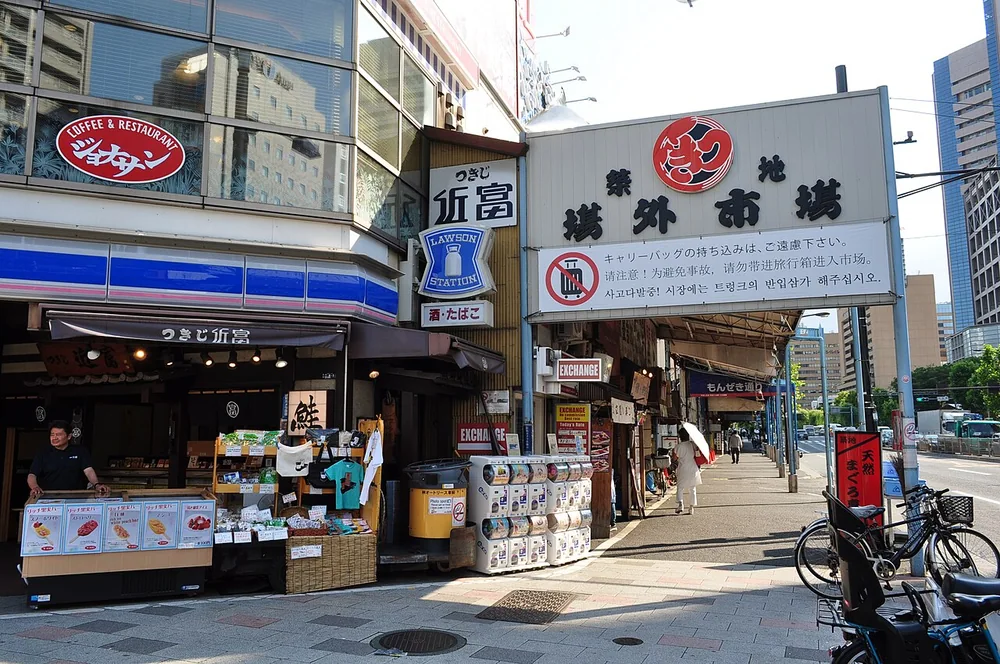
Staying in Tsukiji for market breakfasts, walks to Ginza, or the Keiyo Line to Maihama? Compare hotels across the Outer Market, Higashi-ginza, Shintomicho and Hatchobori, from room layouts and lift exits to New Year market closures.
Two Hotels Near the Market with In-Room Laundry
Tokyu Stay Tsukiji sits at 4-11-5 Tsukiji, around a four-minute walk from Tsukiji Station Exit 1 or Tsukijishijo Station Exit A1. For a short stay for two, the 15-square-metre Moderate room comes with an in-room washer-dryer and microwave. If you are staying several nights and want to cook with market ingredients, look up to the 18-square-metre Residential Double or 26-square-metre Superior Twin, which the hotel lists with a kitchenette and IH hob. Each bed in the twin room is 120 cm wide, and the official capacity is two guests, so search with your exact party size.
On Tokyu Stay Tsukiji's official site, partner breakfast venues in the Outer Market include Uogashi Shokudo, Sushizanmai Honten and Bekkan, and Hoshino Coffee Tsukiji, listed overall from 07:00 to 11:00 depending on each shop. According to a hotel notice, the older in-room Japanese and Western breakfast set 'Stay Morning Plus' runs until early December 2026, with existing bookings transferring to a new service. Anyone staying over the New Year period should check the meal plans for their exact dates before booking. If you have an early start for the Toyosu auction or Maihama, calculate how many included breakfasts you will actually be around to use.
Packing a week's worth of clothes for Tokyo takes far less space when you can throw a load into an in-room washer-dryer after dinner. At Tokyu Stay Tsukiji, daily light housekeeping is provided on request via a door tag and covers towel and pyjama changes plus rubbish collection. Full room cleaning is scheduled once a week for stays of seven nights or more. Having dedicated space for backpacks, a pushchair, damp laundry and snacks matters much more once you are eating breakfast in the room or travelling with small children.
Mitsui Garden Hotel Ginza Tsukiji is also in Tsukiji 4-chome, at 4-7-1, neatly positioned between Higashi-ginza and Tsukiji stations. Every room includes a washer-dryer and microwave, and the property has a communal bath for guests. It works well when one traveller wants an early market start and the other plans to stay out later in Ginza. If you intend to cook daily, compare it against Tokyu Stay's kitchenette rooms with IH hobs and tableware or an apartment hotel. Since Mitsui operates several Ginza properties including Ginza-gochome and Ginza Premier, send the full 'Ginza Tsukiji' name and street number to companions so everyone meets at the right hotel.
If you plan to take daytime calls, catch up on sleep or schedule a child's nap in the room, check Tokyu Stay Tsukiji's exterior maintenance notice. An update on 1 November noted that facade works originally slated for 1 December 2026 to 31 March 2027 have been postponed, with revised dates to be announced later. Planned working hours were listed as 09:00 to 18:00, with noise and odours most noticeable between 11:00 and 15:00 on weekdays. If you book a flexible rate, wait for the updated schedule before deciding whether to plan daytime outings around it or switch to another hotel nearby.
Business, Apartment and Connecting Family Rooms by Shintomicho
Ginza Capital Hotel operates two wings: Akane and Moegi. Its access page lists a one-minute walk from Tsukiji Station Exit 3, with Shintomicho Exit 4 close by. Both buildings sit in Tsukiji 3-chome, Akane at 3-1-5 and Moegi at 3-3-1. Digital maps sometimes display the same brand pin for both, so match the wing name on your reservation to the street address. The hotel specifically notes that Akane's main entrance sits in the neighbouring building on the main road; if your navigation brings you to the Lawson convenience store, follow the avenue to find Akane's lobby entrance.
Akane's official room list covers single, triple and universal-design accessible rooms. Moegi offers an exterior-door connecting family room for five to seven guests, pairing a Comfort Twin and a Deluxe Twin for 51.3 square metres in total. A party of five adds one extra bed in the larger room, while six- and seven-guest bookings bring the sofa beds in both rooms into use. Having two separate rooms is handy when some of the group turn in early and others come back late. Both wings post standard check-in at 15:00 and check-out at 10:00; if a late flight means arriving after 22:00, notify the front desk before transferring from the airport.
For a full kitchen and dining table, MIMARU Tokyo Ginza East stands at 1-4-4 Shintomi, listed as roughly three minutes from Shintomicho Exit 2 and six minutes from Hatchobori Exit A3. The 39-square-metre Family Apartment has two single beds and a bunk bed. The 55-square-metre Superior Family Apartment sleeps six across four single beds and one bunk bed, with two washbasins, one toilet and one bathroom. On the official booking engine, guests aged seven and above count as adults, while children aged zero to six who do not need a bed are entered separately. When booking for two children, enter each child's age alongside their bedding needs.
Every MIMARU apartment comes with a kitchen, dining table and cookware, while these two family layouts share coin-operated laundry facilities on site. When a family eats breakfast at different paces before heading out, a proper dining table beats squeezing around a twin room with one extra chair. Conversely, if six people need to shower at the exact same hour every morning, a single bathroom creates a queue. Compare the total price of one six-person apartment against two triple rooms, weighing the kitchen and separate sleeping space against having two bathrooms.
When booking two rooms, check both bed configurations and cancellation terms separately. If reservations are made under two different accounts, log the lead guest name, hotel wing and free-cancellation deadline in a shared itinerary. Should one friend cancel or rebook their room, the second reservation remains active. To request rooms on the same floor, contact the hotel directly with both booking numbers rather than relying on a brief note on each separate order.
| Hotel | Key layouts to check | Location |
|---|---|---|
| Tokyu Stay Tsukiji | In-room laundry in double rooms; kitchenette in select double and twin rooms | Tsukiji 4-chome, beside the Outer Market |
| Mitsui Garden Hotel Ginza Tsukiji | Washer-dryer and microwave in every room; communal guest bath | Tsukiji 4-chome, easy walk to Higashi-ginza |
| Ginza Capital Hotel Akane / Moegi | Single and triple rooms at Akane; connecting family rooms at Moegi | Tsukiji 3-chome, near Shintomicho and Tsukiji stations |
| MIMARU Tokyo Ginza East | Kitchen and dining table in every unit; four- and six-person family apartments | Shintomi 1-chome, walkable to Hatchobori |
Map Lift Exits and Station Ticket Gates Together
The Tsukiji Outer Market access guide for Tsukiji Uogashi estimates five minutes from Tsukiji Station Exits 1 and 2 on the Hibiya Line, eight minutes from Higashi-ginza Exits 5 and 6, and two minutes from Tsukijishijo Exit A1. Those times end at Tsukiji Uogashi, so reaching a specific stall can mean walking another side street further. When comparing hotels, trace a fresh route from the exact line and exit you expect to use, searching by street number to see which road the front door faces.
Tsukiji Station allows a street-level transfer to Shintomicho Station, and Tokyo Metro maps both stations and the surface transfer route on a single station diagram. In heavy rain, walking straight from your hotel to the line you actually want is usually easier than entering one station and following transfer arrows to another. Tsukiji Station has street-level lifts at Exits 1, 2 and 3b, so verify which ticket gate connects to your travel direction. Shintomicho Station has a street-level lift at Exit 1, leaving a short pavement walk to hotels closest to Exit 4. Even if a listing advertises a one-minute walk from an exit, re-measure the route via the lift exit when rolling suitcases.
At Hatchobori Station, Tokyo Metro's accessibility diagram marks street-level lifts at Exits A2 and A3 outside the Sakuragawa Park ticket gate. For JR services, consult JR East's separate Hatchobori station map, as each operator labels its own platforms and gates. If you are aiming for park opening in Maihama, scout the station entrance and the Maihama-bound ticket gate the evening before so you can walk straight there in the morning. When travelling with older relatives and two large suitcases, compare stations by step-free lift routes rather than staircase shortcuts.
The same check applies inside the room. Ginza Capital Hotel Moegi's Universal Twin room measures about 23.7 square metres, fits two guests and includes bathroom handrails. If someone in your party uses a wheelchair or walking frame, check the floor plan and ask the hotel about clear bathroom doorway width, threshold steps and space beside the beds. Once the room details are confirmed, save the lift route from Tsukiji Exit 3b or Shintomicho Exit 1 on your phone instead of judging convenience by the nearest stair exit.
For check-in and check-out with luggage, approach along the wider avenues around the edge of the market and save the inner lanes for when your hands are free. From Higashi-ginza to Tsukiji 4-chome, follow Harumi-dori and turn into the street where your hotel entrance sits. From Shintomicho towards the market, check the map for pavements and pedestrian crossings linking onto Harumi-dori. If your booking confirmation notes that reception is on an upper floor, pinpoint the street-level lift entrance so late arrivals can follow the same landmarks without wandering through alleys.
Getting There from Haneda, Narita or the Shinkansen
From Haneda Airport, look up Keikyu Airport Line services that run directly onto the Toei Asakusa Line and stop at Higashi-ginza. When the timetable shows a through-train, you stay aboard all the way to Higashi-ginza. Search using your arrival terminal, expected customs exit time and hotel address to confirm your train stops there. After collecting bags late at night, cutting the final pavement walk short matters more than saving a single stop's fare. Higashi-ginza Exit 3 has a street-level lift beside the Kabukiza Theatre; if your hotel is on the opposite side of Harumi-dori, check the station map to decide whether to take the lift and cross above ground or use a closer exit.
Arriving via Narita Airport, choose between transferring to the Hibiya Line at Ueno or taking a Keisei and Toei Asakusa Line service that calls at Higashi-ginza, depending on your hotel's location. With large suitcases and children, factor in the walking corridors and level changes at Ueno. If you are staying near Shintomicho and landing late on the first night, taking a taxi after your main airport train is a sensible backup; keep the hotel's Japanese name and street address ready to show the driver. On arrival night, the only goal is dropping bags and keeping dinner within a few blocks.
From Tokyo Station, Hatchobori is one stop away on the JR Keiyo Line. If you arrive by Shinkansen, note that JR East lists Tokyo Station's Keiyo platforms in their own deep underground concourse, so allow extra transfer time inside the station. For hotels in Tsukiji 4-chome or Higashi-ginza, or when nobody wants to haul cases up and down stairs, taking a taxi from Tokyo Station's street rank is a clean alternative. On the return leg, work backwards from the specific Shinkansen gate you need to reach at Tokyo Station.
If you send large suitcases ahead by luggage forwarding for one night of your trip, keep overnight essentials, medication, onward train tickets and the next day's clothes in a carry-on bag. Flights, express trains and courier deliveries run on separate schedules, so use the hotel's street address and include both your check-in date and booking name on the waybill. Mitsui Garden Hotel Ginza Tsukiji explicitly asks inbound parcels to list both details; write your name exactly as it appears on your passport so reception can match it to your reservation.
Plan Market Breakfasts Around 09:00 and the Market Calendar
The Tsukiji Outer Market official website designates 06:00 to 09:00 as priority hours for trade buyers, with 09:00 to 14:00 recommended for general visitors. Fresh food stalls on the ground floor (1F) of both Tsukiji Uogashi buildings also prioritise trade buyers from 05:00. Early risers can visit Tsukiji Hongwanji first or sit down at a restaurant with posted early opening hours. If you want to browse dried goods, nori seaweed and fresh fish counters at leisure, enter via Monzeki-dori after 09:00 when more stalls are open in a single sweep.
For a seated meal before 09:00, look at Uogashi Shokudo on 3F of the Tsukiji Uogashi Odawarabashi Building. The official listing states opening hours of 07:00 to 19:00 with last orders at 18:00, though individual kitchens keep their own hours. Eating and drinking are prohibited on the ground floor (1F) of Tsukiji Uogashi, so carry purchases from downstairs up to the rooftop plaza or the 3F seating area in the Odawarabashi Building. When visiting with children or older travellers, check whether a stall has seating before joining its queue, and finish tamagoyaki or hot snacks in the shop's designated eating spot before moving on.
Tsukiji Uogashi generally follows the opening and closing days of the Tokyo Metropolitan Central Wholesale Market. Stalls along Monzeki-dori and the surrounding Outer Market lanes set their own schedules, and a number of eateries remain open on official market holidays. If you have one specific shop in mind, keep its name, street address, planned date and posted opening hours together in your notes. Even branches of the same sushi or rice-bowl chain just streets apart can have different closing days, and hotel-affiliated breakfast venues must also be checked for the exact morning you stay.
The turn of 2026 to 2027 illustrates how the calendar works. The Central Market calendar on the Outer Market site marks 27 December 2026 as a special open day, 28 to 30 December as open, and 31 December as closed. From 1 to 4 January 2027 it stays closed, reopening on 5 January, while on 6 January seafood trades open and fruit and vegetables remain closed. Anyone visiting in late December should separate fresh seafood, dried goods and simple breakfast stops by checking the Outer Market December 2026 calendar and the Tokyo 2027 category calendar. That 6 January split is especially relevant if you are heading to Toyosu for seafood.
For a one-night stay ending with a market morning, compare your check-out time against stall opening hours. With a 10:00 check-out, pack up, check out and leave bags with the hotel under its storage rules before heading to the market, or shift your market visit to an early lunch afterwards. If some of the group want raw fish while children only eat cooked dishes, read the menu and check seating before joining a queue—there is no need for everyone to stand in the same line if a neighbouring shop fits better.
Have a Seated Breakfast Backup for Market Holidays and Rain
On a short stay between 1 and 4 January 2027, prioritise a hotel with in-house breakfast or an apartment with a kitchen if you want a sit-down morning meal. If you are set on eating in the market, confirm a restaurant that has published New Year opening hours and plan that meal specifically. On mornings when you need to catch an early train, choose your room rate around the earliest breakfast slot available—or book room-only and pick up snacks the night before.
In winter or wet weather, favour places where the whole family can sit down together with room to fold or park a pushchair. With children eating hot soup or thick tamagoyaki, locate the shop's designated eating area first and stay put until everyone has finished. Staying nearby lets a group split up: one person can browse ahead while another brings the children straight to a seated restaurant. For an in-house breakfast, Ginza Capital Hotel's buffet starts at 06:30 in Akane and 07:00 in Moegi, running until 10:00 with last entry at 09:30—check whether breakfast, check-out and your walk to Hatchobori fit before an early train.
If you decide to pop into the Outer Market after checking out, coin lockers are available on the ground floor (1F) of the Senjagaku Building. The Outer Market association lists large locker interior dimensions at 34.5 cm wide, 57.5 cm deep and 84 cm high; include wheels and handles when measuring large cases, and retrieve everything before 16:00 on the same day. When lockers are full or you need to store a pushchair, ask about paid storage during opening hours at the 'Plat Tsukiji' general information centre in the same building. It opens at 08:00 on weekdays and Saturdays and 10:00 on Sundays, public holidays and market holidays, closing at 14:00 on all open days. If you are only collecting luggage in the afternoon for a Shinkansen, leaving bags at your hotel is usually more convenient.
In heavy rain, walk along Harumi-dori to Higashi-ginza Station first. Kabukiza connects directly to Higashi-ginza Exit 3, though the stretch between the market and the station remains outdoors. From there, take the Hibiya Line one stop to Ginza Station and use the underground passages matched to your department store exit. When combining market dining, department stores and theatre tickets in half a day, factor in lift queues and traffic-light waits at major junctions.
If someone feels the cold and wants to fetch an extra coat mid-morning, visit the busiest food stall first before walking towards the fresh-fish halls and dried-goods shops further inside. With less mobile companions, one person can queue for shopping while the other waits seated nearby, meeting outside at an agreed time. Always ask stallholders before photographing fish displays or staff at work, and put your camera away if photography is declined—wholesale buyers and delivery trolleys share the same narrow lanes.
How Many Mornings to Split Between Tsukiji and Toyosu
Tsukiji's former Central Wholesale Market moved to Toyosu in 2018, while the Outer Market shopping district stayed behind on its original streets. To see the tuna auction, plan for an open market day in Toyosu. Ride the Yurikamome Line to Shijo-mae Station and follow the floor signs to the public viewing walkways in the Fisheries Wholesale building. General walkways are open without a booking, whereas the closer observation deck requires a successful advance lottery entry. On market holidays, Toyosu's viewing corridors and the restaurants and shops inside the market close as well, so check the Tokyo Metropolitan market calendar for seafood trading days.
From Shintomicho, take the Yurakucho Line through Tsukishima to Toyosu Station, then change to the Yurikamome Line for Shijo-mae. Starting from Tsukijishijo Station on the Toei Oedo Line, ride to Tsukishima and transfer to the Yurakucho Line. If you need to enter Toyosu before dawn, check the first train time against your check-in window. Travellers who win an early-morning auction slot can book a taxi from Tsukiji or stay near Toyosu Market the night before; those arriving later in the morning for the general gallery and a meal can check routes and auction details in our Toyosu Market guide.
Putting Tsukiji and Toyosu on separate mornings lets you start around 09:00 for Tsukiji and time Toyosu strictly around whether you are viewing the auction. With only one morning to spare—especially if you have Kabukiza or Ginza shopping lined up next—staying by Tsukiji lets you loop through the Outer Market and walk west straight afterwards. If seeing the wholesale floor is your main priority, place your hotel on the same rail link as Shijo-mae Station and plan your transport and viewing window before picking a Toyosu breakfast spot.
Head West After Breakfast, or Pair with Tsukiji Hongwanji and Hamarikyu
Tsukiji Hongwanji sits just across Harumi-dori from the market. The main hall is normally open for worship from 06:00 to 16:00, closing after the evening service, so early arrivals can look around before heading over for breakfast. Designed by Chuta Ito in an ancient Indian and pan-Asian Buddhist style, the temple is unmistakable from Harumi-dori. According to Tokyo's official accessible sightseeing guide, visitors can take the lift from the Naka-meguro-bound Hibiya Line platform to Tsukiji Station Exit 1 and enter the grounds via a ramp; nursing rooms are available in the main hall and the information centre.
If you are seeing a kabuki performance, let your ticket time dictate when you eat. Kabukiza's official access guide lists direct connection from Higashi-ginza Exit 3 and roughly a five-minute walk from Ginza Exit A7. For early matinees, eat at the hotel, enter the theatre on time, and have lunch or dinner back around Tsukiji afterwards. Afternoon or midday curtain times pair well with an early market visit: pick one breakfast stop and one souvenir shop, then walk towards the theatre before a second queue eats into your entry time.
Hamarikyu Gardens are roughly a seven-minute walk from Tsukijishijo Station to the Otemon Gate, according to the park authority. Standard opening hours are 09:00 to 17:00 with last admission at 16:30, and the gardens close for the year-end holiday from 29 December to 1 January. To visit both the gardens and the market in one morning, eat hot food first and leave chilled shopping until just before heading back to your hotel. If you prefer entering the gardens at opening time and eating lunch in Tsukiji afterwards, shortlist a restaurant that stays open past midday so you are not left with only snacks.
When splitting Tsukiji Hongwanji, Hamarikyu Gardens and Kabukiza across two days, pair the temple and gardens into one morning and save the theatre and Ginza for the next afternoon. Being able to pop back to your room easily for a camera or an umbrella matters more than drawing a tidy loop on a map. Staying between Higashi-ginza and Tsukiji also lets you decide on the day whether to walk or duck underground depending on the weather.
Keep Breakfast Separate from an Early Start to Maihama
For Tokyo Disneyland, board a JR East Keiyo Line or Musashino Line train bound for Maihama from Hatchobori Station, checking that the service stops at Maihama. Tokyo Disney Resort lists around a five-minute walk from JR Maihama Station to Tokyo Disneyland. For Tokyo DisneySea, walk from Maihama to Resort Gateway Station and ride the Disney Resort Line monorail about nine minutes to Tokyo DisneySea Station. Hatchobori cuts out the long corridor walk inside Tokyo Station, though guests staying west of Tsukijishijo Station still need to count the walk over to JR Hatchobori.
When aiming for park opening, grab a portable breakfast in your room or near the station and save a leisurely Tsukiji Outer Market visit for another morning after 09:00. If members of your group want to head to Maihama later, travel separately and meet up inside the park gates. Once your park day is fixed, check ticket types, entry rules and route tips in our Tokyo Disneyland ticket guide.
If you stay until park closing, plan dinner and the final walk from Hatchobori Station before setting off. When part of the family returns early to rest, staying near a clearly signed exit at JR Hatchobori makes the solo journey back straightforward. If Disney is only one day out of a trip otherwise focused on Ginza and Tsukiji dining, it makes more sense to base yourself in Higashi-ginza and walk to Hatchobori just for that morning—let the route you will use most often guide which side of the district you pick.
Compare Rates and Room Terms on Like-for-Like Bookings
Compare prices using the exact same dates, guest count and number of beds you need. Double and twin rooms often sit side by side on booking grids, so two friends wanting separate beds should filter directly for twins. When travelling with older relatives who need clear space to the bathroom, review floor area, room diagrams and accessible-entrance photos together. Anyone keeping large suitcases open should look closely at the clearance between the foot of the bed and the room door, while travellers returning repeatedly during the day should weigh nearby lifts, in-room seating and rail links.
Check the full breakdown separately: prepaid room charges, any fees collected at the property, breakfast, extra beds and late check-out. Across a multi-night stay, a kitchenette pays off only if you estimate how many meals your group will actually prepare; if you only plan to bring market takeaway back once, a dining table or microwave may be plenty. For weekend or New Year stays, compare only the room types genuinely available on those nights so price gaps between Tsukiji, Ginza and Shintomicho reflect real options.
Match your cancellation terms to the least predictable part of your trip. When theatre or theme-park tickets are already locked in, compare non-refundable and flexible rates on the exact same room category. If flights could still shift, check the free-cancellation cut-off in local Japan Standard Time (JST) alongside any deposit rules, tracking each room individually on multi-room bookings. On a split-stay where you switch hotels after a market morning, pick a property where luggage storage and your onward station sit on the same side.
Before paying, mark your hotel entrance, nearest station lift and first-morning breakfast stop on a map. If you are continuing into Ginza or Tsukiji Hongwanji straight after eating, plot that onward direction too, or save the JR entrance and Maihama-bound platform details if staying in Hatchobori. Once your address and room type are confirmed, keep the hotel wing name, guest count and cancellation deadline in your confirmation notes so everyone in your group can follow the exact same directions.
A few useful answers
For a first stay in Tsukiji, is the Outer Market side or Higashi-ginza more convenient?
Choose Tsukiji 4-chome if you want two market mornings or plan to drop shopping back at your hotel. Choose between Higashi-ginza and Harumi-dori if your evenings revolve around Ginza dining, the Kabukiza Theatre, or direct trains to Haneda Airport.
What time should I go to Tsukiji Outer Market for breakfast?
General visitors are best served between 09:00 and 14:00. To sit down earlier, try Uogashi Shokudo on 3F of the Tsukiji Uogashi Odawarabashi Building, which is officially listed as open from 07:00, with individual kitchens setting their own hours.
Is Tsukiji Outer Market always closed on Wednesdays?
Tsukiji Uogashi generally follows the Central Wholesale Market calendar, while Outer Market street stalls set their own days off. Check the official monthly market calendar for your dates, then verify the specific restaurant's opening schedule.
Which Tsukiji hotels have rooms for a family of four or six?
MIMARU Tokyo Ginza East offers four- and six-person family apartments with kitchens and dining tables, plus shared coin laundry. For five to seven guests, look at the connecting family rooms at Ginza Capital Hotel Moegi.
Where do I catch the train from Tsukiji to Tokyo Disneyland?
Walk to JR Hatchobori Station and board a Keiyo Line or Musashino Line train towards Maihama, ensuring your train stops at Maihama. Allow time for walking both to the JR ticket gates in Hatchobori and from Maihama Station to the park entrance.
Are Tsukijishijo Station and Tsukiji Station the same station?
No. Tsukijishijo Station is on the Toei Oedo Line, with Exit A1 closest to Tsukiji Uogashi; Tsukiji Station is on the Tokyo Metro Hibiya Line, where Exits 1 and 2 lead to Tsukiji Hongwanji and the Outer Market. Match both the line name and exit number to your hotel's address when booking.
Official information and references
Sources used in this guide.
- Tsukiji Outer Market Shopping District Promotion Association | Opening Hours and Market Etiquette
- Tsukiji Outer Market | Central Wholesale Market Calendar (December 2026)
- Tsukiji Outer Market | Central Wholesale Market Calendar (January 2027)
- Tsukiji Outer Market | Tsukiji Uogashi Hours, Food Court and Station Distances
- Tsukiji Outer Market | Plat Tsukiji Information Centre Services and Hours
- Tsukiji Outer Market | Coin Locker Dimensions and Collection Times
- Tokyo Metropolitan Central Wholesale Market | Tsukiji Closure and Toyosu Opening Record
- Tokyo Metropolitan Central Wholesale Market | 2027 Seafood and Produce Trading Calendar
- Tokyo Metropolitan Central Wholesale Market | Toyosu Market Viewing Hours and Routes
- Tokyo Metro | Tsukiji and Shintomicho Station Map
- Tokyo Metro | Higashi-ginza Exits, Lifts and Street Landmarks
- Tokyo Metro | Hatchobori Station Accessibility Facilities
- JR East | Hatchobori Station Map
- JR East | Hatchobori Station Timetable towards Maihama
- JR East | Tokyo Station and Keiyo Line Station Map
- Keikyu Corporation | Direct Rail Route Map from Haneda Airport
- Tokyu Stay Tsukiji | Room Facilities and Housekeeping Policy
- Tokyu Stay Tsukiji | Access and Breakfast
- Tokyu Stay Tsukiji | December 2026 Breakfast Plan Notice
- Tokyu Stay Tsukiji | Facade Repair Postponement (1 November Update)
- Mitsui Garden Hotel Ginza Tsukiji | Guest Room Facilities
- Mitsui Garden Hotel Ginza Tsukiji | Communal Guest Bath
- Ginza Capital Hotel | Akane and Moegi Room Types and Check-in Times
- Ginza Capital Hotel | Wing Locations and Nearest Station Exits
- Ginza Capital Hotel Moegi | Connecting Family Room and Breakfast
- Ginza Capital Hotel Moegi | Universal Twin Room
- MIMARU Tokyo Ginza East | Room Types, Capacity and Access
- GO TOKYO (Official Tokyo Travel Guide) | Tsukiji Hongwanji Visiting Hours and Access
- GO TOKYO Accessible Guide | Tsukiji Hongwanji Architecture, Lifts and Facilities
- Shochiku Kabuki-bito | Kabukiza Theatre Access
- Tokyo Metropolitan Park Association | Hamarikyu Gardens Opening Hours and Entrances
- Tokyo Disney Resort | Rail Access from Maihama Station to Both Parks