Compare hotels in Marunouchi, Yaesu and Kyobashi around Tokyo Station by Shinkansen, Narita and Haneda access, family rooms, rainy-day routes and Tokyo's 2027 accommodation tax.
- Region & Focus
- TokyoAccommodation
- Reading Scope
- 21 min read · 9 chapters · 8 Q&As
- Official Verification
- 38 official sources checkedUpdated 22 November 2026
- Key Topics
- Where to stayNeighbourhoodsBooking
Chapter Route Map (tap any stop)
- Pick Your Tokyo Station Exit Before Choosing a Hotel
- Two Direct-Access Hotels in Marunouchi Sit at Opposite Ends of the Station
- Family Rooms and Overnight Transits in Yaesu
- Kyobashi Works Best When the Ginza Line Is Your Daily Baseline
- Which Level Serves the Shinkansen, Narita Express and Keiyo Line
- Narita Express Underground, Haneda Buses from Tekko Building
- Comparing Multi-Night Rates on Like-for-Like Room Terms
- Rainy-Day Exits and Late-Night Dinner Options
- Tailoring Rooms for a One-Night Transit vs a Multi-Day Tokyo Stay
- Quick Q&A
If you have an early Shinkansen the next morning, choose your Tokyo Station hotel by the exit it connects to first. For trains to Kyoto or Osaka, look around the Yaesu Central or Yaesu South exits; for Sendai or Kanazawa, focus on the Nihombashi Exit. If you want to stay inside the red-brick station building or stroll towards the Imperial Palace, pick the Marunouchi side. When you are only taking the Shinkansen once and spending the rest of your trip in Ginza or Asakusa, staying beside Kyobashi Station works better. Keep in mind that the walking times on booking pages start from the relevant exit, not from your train platform.
Pick Your Tokyo Station Exit Before Choosing a Hotel
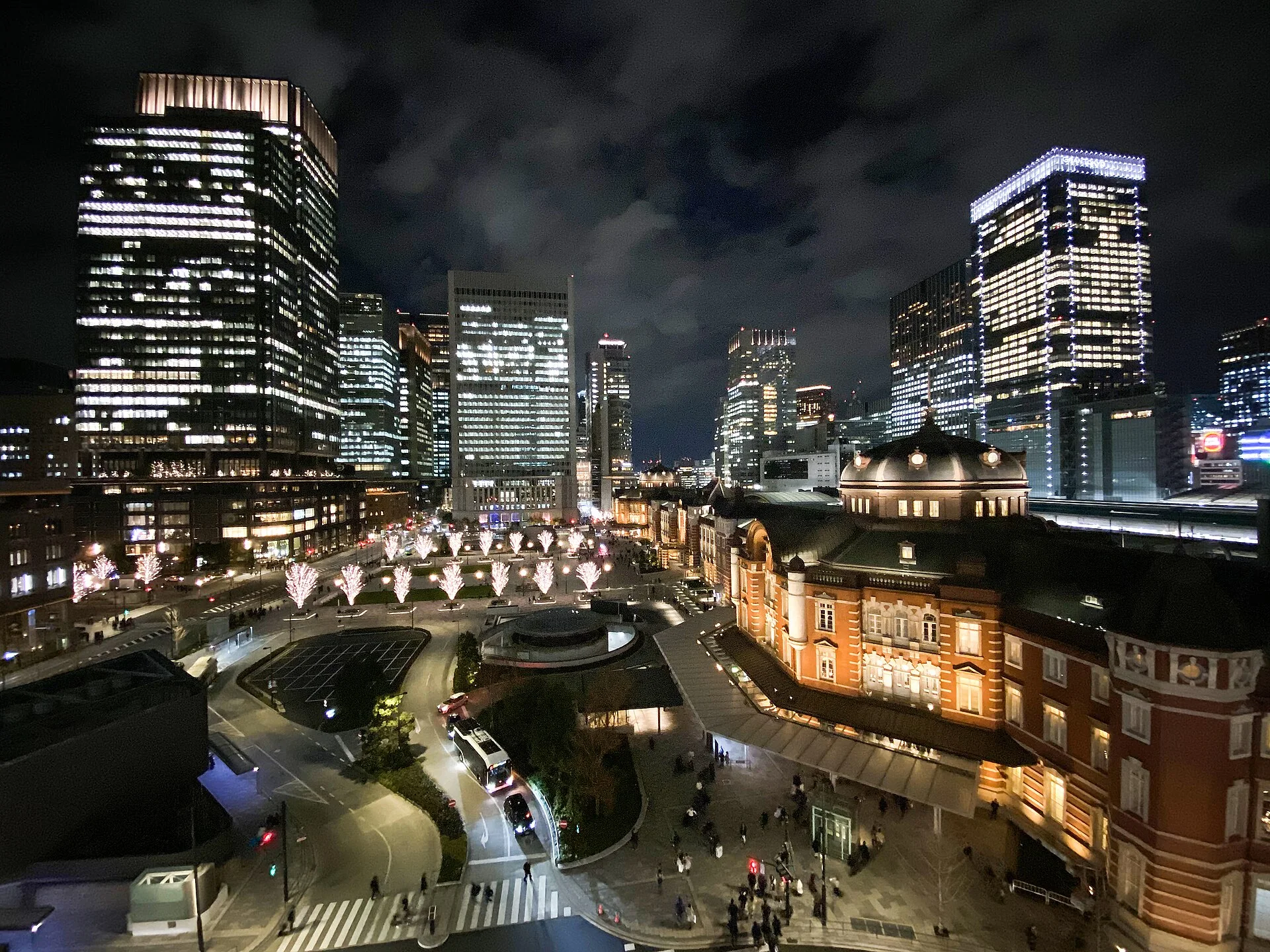
The Marunouchi side sits on the west of the station complex. Step out of the ground-level Marunouchi Central Exit and the station square looks straight down Gyoko-dori Avenue towards the Imperial Palace; the Marunouchi South Exit links directly to The Tokyo Station Hotel, while the North Dome houses the entrance to Tokyo Station Gallery. If you plan to walk to the Imperial Palace Outer Gardens or combine museum visits, cafés and the red-brick facade in a single half-day, staying on the west side lets you set off on foot straight from your lobby. This side also sits above the Sobu Underground platforms, so you can head downstairs for the Narita Express without crossing the station.
Yaesu forms the east side. Its North Exit sits near the Tekko Building and streets leading to Nihombashi, the Central Exit feeds straight into the Yaesu Underground Shopping Mall (Yaechika), and the South Exit meets the Narita airport bus stops. If you are arriving in the afternoon from another city and want an easy family dinner nearby, Yaesu lets you drop your bags first and walk back to Yaechika or First Avenue Tokyo Station to eat. Heading out through that same exit the next morning also makes timing your departure far easier.
Kyobashi borders Ginza-itchome to the south. Mitsui Garden Hotel Kyobashi sits between the Yaesu Central Exit and Kyobashi Station on the Ginza Line, whereas remm Tokyo Kyobashi is closer to Kyobashi Station itself and uses the Yaesu South Exit for Tokyo Station. Both give you easy Ginza Line access, though Mitsui Garden offers a more direct walk if you will be carrying shopping back from the Yaesu Central Exit each day. If the Ginza Line is your main daily route, orient yourself from Exit 6 of Kyobashi Station right outside remm.
Measure the full walk from platform to hotel door using your hotel's own access page. From the Marunouchi South Exit, The Tokyo Station Hotel is just a few paces away, yet you still have an indoor walk after coming downstairs from the Shinkansen platforms. If your train arrives on the east side and you are staying in Marunouchi, leave via the Yaesu North Exit and take the northern free passage through to the west side; the southern east-west free passage is still under construction. Treat a hotel listing's Yaesu South Exit and Marunouchi South Exit as two completely separate doors so you do not drag suitcases the wrong way.
For a four- or five-night stay in Tokyo, count how many times you will actually use Tokyo Station each day. If you have multiple Shinkansen journeys, the Narita Express or regional trains departing from here, staying beside the station saves luggage hauling and early-morning margin. If most of your days centre on Nihombashi, Ginza and Asakusa, compare Kyobashi and Nihombashi together. If you will be spending your days in Shinjuku, Shibuya or Ueno with only one intercity trip in the middle, stay in those districts instead—and check train times before deciding whether moving to Tokyo Station for your final night is worth the pack-up. For how each area compares at night and on the underground, see our guide to Tokyo's hotel neighbourhoods.
| First Journey the Next Morning | Where to Look First | Gate or Entrance to Locate on the Map |
|---|---|---|
| Tokaido-Sanyo Shinkansen (Nagoya, Kyoto, Osaka) | Around Yaesu Central and Yaesu South exits | JR Central Shinkansen ticket gates |
| Tohoku, Hokkaido, Joetsu or Hokuriku Shinkansen | Around Nihombashi and Yaesu North exits | JR East Shinkansen entrance at the Nihombashi Exit |
| Narita Express (N'EX) | Marunouchi-side hotels with easy access down to the Sobu Underground platforms | Marunouchi Underground ticket gates and Sobu Line signs |
| Haneda Airport Bus | Around Yaesu North Exit | Tekko Building ground floor, bus stop 2 |
| Several days using the Ginza Line | Kyobashi | Ginza Line Kyobashi Station Exits 6 or 7 |
Compare hotels in Marunouchi, Yaesu and Kyobashi around Tokyo Station by Shinkansen, Narita and Haneda access, family rooms, rainy-day routes and Tokyo's 2027 accommodation tax.
Two Direct-Access Hotels in Marunouchi Sit at Opposite Ends of the Station
To stay inside the red-brick station building itself, book The Tokyo Station Hotel (1-9-1 Marunouchi). It connects directly to the JR Marunouchi South Exit, with standard check-in at 15:00 and check-out at 12:00. Step out at ground level from the South Exit to find the hotel's main entrance, which is the route to use with suitcases or a wheelchair. Because the hotel's floor map marks the basement B1 access via stairs, aim for the ground-floor main entrance first if you are coming through the underground passage and need a step-free route.
Before paying extra for a room tier, check what the window actually faces. Dome Side rooms look inward towards the station's South Dome, taking in the relief sculptures and commuters below—ideal if you care about the architecture. For Marunouchi street views, book a room explicitly labelled Palace View or another named exterior outlook. On an early train departure, a view upgrade really only buys you the evening before, whereas a post-noon departure lets you make proper use of the 12:00 check-out for an unhurried breakfast and walk.
The station opened in 1914 and the hotel followed in 1915; after restoration work returned the red-brick facade and twin domes to their historic form in 2012, the hotel reopened in October that year. If you simply want to admire the building, walking from the Marunouchi South Exit to the North Exit and looking back from the square is plenty. Stay overnight for the dome-facing rooms or breakfast; if you are out until late and leaving at dawn, staying in Yaesu or Kyobashi still lets you fit the facade in before dinner.
Hotel Metropolitan Tokyo Marunouchi sits closer to the northern end of the station complex. From the JR Tokyo Station Nihombashi Exit, it connects into Sapia Tower, where you take the lift up to the 27th-floor lobby. Note that this 'Nihombashi Exit' is a JR Tokyo Station exit, not the Tokyo Metro Nihombashi Station. When a group is arriving separately, agree to meet at the 27th-floor reception or the tower entrance so anyone coming out on the Marunouchi side still has a clear meeting point.
Check-in at Hotel Metropolitan Tokyo Marunouchi is typically 15:00 and check-out is 12:00, with luggage storage available on the 27th floor before and after your stay; the hotel asks guests arriving past midnight on their check-in date to contact reception in advance. Renovation works scheduled from 1 November 2026 to 31 March 2027 close guest rooms on the 29th and 30th floors, with noisy work announced for 10:00–17:00. Travellers landing on a red-eye flight who plan to sleep during the day should weigh those construction hours against their arrival schedule.
The hotel has also announced a temporary closure of its gym, coin laundry and meeting rooms from 1 November 2027 to 31 March 2028. You will rarely need those facilities on a one-night transit, yet if you are spending a week in Tokyo with only three or four days of clothes, plan your laundry spot from the first evening. In Kyobashi, remm has coin-operated washing machines on the 12th floor, letting you relax in your room while a load finishes if packing light is part of your plan.
If you are looking for moat views, separate Palace Hotel Tokyo from the two station-linked options above. Palace Hotel faces Otemachi and the Imperial Palace, connects underground to Otemachi Station Exit C13b and offers balcony rooms overlooking Wadakura Fountain Park. That space and balcony pay off if you are touring the Imperial Palace on day one and lingering at the hotel the next morning. If you only need a bed before an early train, factor in the walk and station entry from Palace Hotel rather than comparing room rates directly against being steps from the Marunouchi South Exit.
Family Rooms and Overnight Transits in Yaesu
karaksa hotel TOKYO STATION stands at 1-5-3 Yaesu, around a five-minute walk from the Yaesu North Exit according to the hotel's directions. The same group also runs karaksa hotel colors Tokyo Yaesu, which directs guests from the Yaesu Central Exit. When forwarding luggage the night before or giving directions to a taxi driver, show both the exact property name and street address from your booking confirmation. Turning up at the wrong branch still leaves you dragging cases along another stretch of the station's east side.
If three travellers all need proper beds, compare a standard twin with an extra bed against the 29-square-metre Family Triple. The third bed in the standard twin is a 90 cm sofa bed, whereas the Family Triple uses a 100 cm extra bed. Check the floor plan with all beds extended if you will be opening two or three large suitcases every evening. Two adults with a teenager face the same squeeze as three adults, so judge comfort by the actual extra-bed dimensions.
Groups of five or six can book adjoining connecting rooms with an internal door—make sure you enter the full headcount when searching so the connecting configuration appears. Two ordinary twin rooms on the same floor still force you out into the corridor to check on each other. The hotel also offers Japanese-style family rooms for four or six guests with futons laid on tatami mats. If someone in your party needs a raised bed edge to stand up, or carers want sleeping and bathing in separate rooms, connecting rooms are easier to live with.
To keep children's room costs down, decide upfront whether they are sharing existing beds or need a bed of their own. At karaksa, general bed-sharing applies to children aged six and under, extending up to age 12 when booked through the hotel's official website, capped at one child per permanent bed and two per room. Any child aged six or under occupying a separate bed is charged the adult rate. When piecing rooms together for a larger family, search by the real number of beds needed rather than under-entering occupancy, or the final quote will shift back up.
Even a luxury hotel with Marunouchi in its name can use the east side for access. Four Seasons Hotel Tokyo at Marunouchi has a 1-11-1 Marunouchi address, yet its official directions guide walkers from the Yaesu South Exit—roughly four minutes on foot—alongside an underground link to Tokyo Station. Double-check the full English hotel name before setting off: it is a completely separate property from Four Seasons Hotel Tokyo at Otemachi, with different station exits, drop-off points and meeting spots.
Kyobashi Works Best When the Ginza Line Is Your Daily Baseline
Mitsui Garden Hotel Kyobashi lists three straightforward approaches on its website: about five minutes on foot from the JR Yaesu Central Exit, about one minute from Exit 24 of the Yaesu Underground Shopping Mall, and about two minutes from Exit 7 of Kyobashi Station. In heavy rain, you can stay underground for most of the way and only step outside for the final stretch from Exit 24. If two people are arriving separately via JR and the Ginza Line, meet directly at the hotel entrance rather than navigating in and out of the same station.
remm Tokyo Kyobashi sits right outside Exit 6 of Kyobashi Station, around seven minutes on foot from Tokyo Station's Yaesu South Exit, with typical check-in at 14:00 and check-out at 12:00. Aiming for Exit 6 gets you to the door, though if you have suitcases on the Ginza Line, save Tokyo Metro's station accessibility map for the lift route. As at many Tokyo underground stations, the closest stair exit to a hotel is often different from the step-free lift exit.
Even among twin rooms at remm, floor area and bathroom layout vary noticeably. The Economy Twin measures 18.4 square metres, has a shower room without a bath and faces an internal lightwell. If you want a bathtub or room to open two large suitcases, look at the 23-square-metre Twin, which includes a bath separate from the toilet, while the Casual Twin adds a bathtub while still facing the internal atrium. Comparing room size, bath setup and window outlook side by side often matters more over a multi-night stay than shaving a couple of minutes off the walk to JR.
From a Kyobashi base, morning journeys on the Ginza Line take you straight towards Asakusa in one direction or through Ginza and Shimbashi to Shibuya in the other. If you only need the Shinkansen once during your stay, stepping straight down into Kyobashi Station each morning keeps things simple. If you plan repeated JR day trips out of Tokyo Station, however, you will repeat that hotel-to-station walk twice a day, so weigh hotels near the Nihombashi or Yaesu North exits as well.
Which Level Serves the Shinkansen, Narita Express and Keiyo Line
For Nagoya, Kyoto, Shin-Osaka and Hakata, follow signs for the Tokaido-Sanyo Shinkansen, which uses platforms 14 to 19 at Tokyo Station. Walking towards the JR Central ticket gates from Yaesu, make sure everyone's IC card is assigned to their own digital ticket before you reach the barrier. When four or five people walk over from the hotel together and sort out e-tickets at the gates, half the group ends up through while others have to turn back. Anyone collecting paper tickets should check the relevant ticket office location and opening hours the evening before.
For Shin-Aomori, Shin-Hakodate-Hokuto, Akita, Yamagata, Niigata, Nagano and Kanazawa, look for the JR East Shinkansen on platforms 20 to 23. Coming down from Hotel Metropolitan Tokyo Marunouchi via the Nihombashi Exit brings you straight towards this northern Shinkansen concourse. If you are transferring at Tokyo Station from Kyoto onto a Sendai train, JR East's standard station transfer time between the two Shinkansen zones is eight minutes. Build in extra margin if you intend to exit the barriers to collect stored luggage, buy food or pop back to your hotel.
Returning from Kyoto or Osaka with a suitcase whose combined length, width and height falls between 160 cm and 250 cm, you must book seats with an oversized baggage area on the Tokaido-Sanyo Shinkansen. JR Central states that bringing oversized luggage on board without a reservation incurs a ¥1,000 fee and requires placing the bag where the conductor directs. On a first night by Tokyo Station, securing a train with baggage seats and checking whether you make hotel dinner often matters more than picking the exit closest to your lobby.
The N'EX Narita Express departs from the Sobu Underground platforms—follow signs for the Sobu Line (Rapid) and Yokosuka Line. JR East's station map also includes the separate Keiyo Underground area, and both underground zones have platforms numbered 1 to 4. If you only remember 'underground' or look only at the platform number, you can easily head down to the wrong end of the station. When connecting from a Shinkansen to the Narita Express, allow for that walk and level change before planning time to buy bento boxes or gifts.
Trains for Maihama leave from the opposite extreme. The Keiyo Line sits on deep underground platforms at the southern end of Tokyo Station, reached via a long connecting corridor from the other JR platforms. Staying near the northern Yaesu exits gives very different convenience for the Shinkansen versus Maihama. If you are visiting Tokyo Disney Resort on two consecutive days and rushing for park opening with children, compare staying in Maihama instead; for a single day trip with dinner back around Tokyo Station, factor the walk down to the Keiyo Line into your morning schedule rather than counting only the train ride.
Narita Express Underground, Haneda Buses from Tekko Building
The Narita Express takes as little as 53 minutes between Narita Airport and Tokyo Station according to JR East. Standard single fares between Tokyo Station and Narita Airport (Terminal 1) or Airport Terminal 2 (serving Terminals 2 and 3) are ¥3,140 in an ordinary car and ¥3,910 in a Green Car. You can pay the base fare with a Suica card, though a separate Limited Express ticket is still required. Check your flight's terminal before buying: Terminal 1 uses Narita Airport Station, while Terminals 2 and 3 use Airport Terminal 2 Station, with a further transfer from the station to Terminal 3.
If you have large bags, each Narita Express carriage has luggage racks that do not require a reservation. When two or more people travel together, note your car number on your paper or digital ticket beforehand so you can walk straight to the right boarding point on the platform. If you need to buy a Limited Express ticket in person at Tokyo Station, pick it up the evening before so you can walk straight through the gates after check-out. Those connecting via Ueno on Keisei trains should compare Ueno hotels too, especially if you want a final meal around Ueno.
If your flight uses Narita Terminal 3, the airport estimates a 13-minute walk from the Airport Terminal 2 Station ticket gates to the information counter in the Terminal 3 second-floor departures hall. Allow extra time on top if you are checking bags or taking children to the lavatory. Holders of non-Japanese passports flying both ways through Narita can buy the N'EX TOKYO Round Trip Ticket at ¥5,200 for adults and ¥2,600 for children aged six to 11, covering the ride into Tokyo and the return to Narita within 14 days. You collect it at JR stations inside Narita Airport by presenting your passport.
For a lower-fare Narita transfer, use the AIRPORT BUS TYO-NRT. Departures from Tokyo Station leave from ground-level stops 7 and 8 outside the Yaesu South Exit, whereas arrivals from Narita drop off at the Nihombashi Exit. Because the pick-up and drop-off points differ, hotels near the Yaesu North Exit are handier on arrival, while your return trip needs time to walk down to the South Exit. Standard fares from Tokyo Station are ¥1,500 for adults and ¥750 for primary-school children, rising to ¥3,000 for adults and ¥1,500 for children on designated late-night and early-morning services.
TYO-NRT services from Tokyo Station to Narita currently operate with unreserved seating and do not accept advance bookings. Travellers with Suica or PASMO can queue directly and tap on board, while those paying by cash or card during standard hours buy a ticket at the JR Highway Bus ticket counter first. For early departures between 05:00 and 06:00 before the counter opens, cash passengers go straight to the bus stop, and credit cards are not accepted at that hour. From Narita into Tokyo, you normally buy a timed ticket at the airport terminal counter first; if a coach fills up, you wait for the next one, so avoid relying on a single bus departure when catching a flight.
Luggage hold rules on the TYO-NRT airport bus generally limit each passenger to one suitcase measuring up to 158 cm across length, width and height combined, and exclude surfboards, bicycles, ski gear and large musical instruments. Measure your case at home including wheels and handles. If your bag sits right on that threshold—or one person is carrying two cases—compare rail or luggage delivery upfront, because saving a few stairs at a Tokyo Station hotel helps little if a bag is turned away at the coach bay.
For Haneda Airport, catch the limousine bus from bay 2 of the ground-floor bus terminal inside the Tekko Building, just off the Yaesu North Exit. Keikyu Bus lists fares at ¥1,200 for adults and ¥600 for children, accepts transport IC cards, and opens online bookings from one month ahead until five minutes before departure, with same-day boarding if seats remain. Departures from Tokyo Station cluster during the day; for late-night or early-morning flights, or to avoid road congestion, take JR to Hamamatsucho for the Tokyo Monorail or to Shinagawa for the Keikyu Line, choosing the station that fits your flight's Haneda terminal—especially if outbound and return airlines differ.
If a ticket mentions 'Bus Terminal Tokyo Yaesu Underground A' or 'Underground B', that refers to the subterranean long-distance coach terminal used by other routes. Underground A, which opened on 20 March 2026, sits in TOFROM YAESU TOWER, while Underground B is on the Tokyo Midtown Yaesu side; reach both by following the A or B signs through the Yaesu Underground Shopping Mall. Keep those distinct from stops 7 and 8 at street level for the TYO-NRT Narita bus and the Tekko Building for Haneda—typing only 'Tokyo Yaesu Bus Stop' into a map app can easily send you to the wrong complex.
Comparing Multi-Night Rates on Like-for-Like Room Terms
Compare hotel prices using identical dates, guest counts, bed setups and cancellation rules. For three guests, enter three occupants from the start so you see the true total with an extra bed or triple room. Over peak holidays, consider locking in a refundable rate, noting the exact cut-off date in Japan Standard Time (JST), while rail tickets and companions' plans firm up. If switching hotels mid-stay saves money, weigh that saving against the midday gap between check-out and check-in—especially if you would spend an afternoon leaving all your bags at reception.
Through 31 March 2027, Tokyo's accommodation tax is charged per person, per night based on the room-only rate: stays under ¥10,000 are exempt, ¥10,000 to under ¥15,000 incur ¥100, and ¥15,000 or more incur ¥200. From stays on 1 April 2027 onwards, the exemption rises to under ¥13,000, while nightly room-only rates of ¥13,000 or more are taxed at 3%. Official guidance applies the calculation to the pure accommodation charge excluding meals, so if your stay straddles late March and early April, check the nightly breakdown date by date.
For example, two adults sharing a room priced at ¥24,000 per night room-only pay ¥12,000 per person: under the pre-April 2027 brackets that totals ¥200 per night, whereas from April 2027 it falls under the ¥13,000 exemption. At ¥30,000 room-only per night—¥15,000 per person—the old tax totals ¥400 per night while the 3% rate comes to ¥900. Where a booking includes breakfast, fluctuates night by night or collects tax at checkout, inspect the itemised room charge and tax lines separately.
When pairing a multi-night stay with an early train, check whether you will actually sit down for hotel breakfast. If you need to be through the ticket barriers by 07:00, a room-only rate makes more sense, letting you pick up breakfast inside the station or for the train. If you depart around midday, a 12:00 check-out gives you time for a morning walk in the Imperial Palace Outer Gardens and a calm pack-up without storing bags twice. Where two nights vary sharply in price and you want one night inside The Tokyo Station Hotel plus a simpler hotel alongside it, put the landmark stay on your final night in Tokyo, visit the gallery or a café after checking out of the first hotel, and check in later that afternoon.
Over the New Year peak, treat train bookings and hotel rates as separate tracks. On the Tokaido Shinkansen, certain SmartEX products allow pre-registration up to one year ahead, though specific train and seat assignments are only confirmed one month before travel. Use your provisional train schedule to sketch hotel check-out timing in the meantime. If you are carrying oversized luggage, need seats together or want to minimise platform walking, re-check the confirmed train details once seat allocation opens rather than locking down non-refundable hotel breakfasts and tight transfers too early.
Rainy-Day Exits and Late-Night Dinner Options
When it rains, break your route down into four stages: platform, concourse outside the barriers, street exit and hotel door. Yaechika and First Avenue Tokyo Station both sit on the Yaesu side, meaning you can step straight out of the ticket gates into the shops. Coming from Marunouchi outside the ticketed area, use the northern free passage first. Note that even from Yaechika Exit 24, Mitsui Garden Hotel Kyobashi still has a short outdoor walk, and if you have a pushchair or wheelchair, mark the nearest lift on the station map in advance because the step-free exit may leave a slightly different outdoor distance than the hotel's headline walking time.
In a heavy downpour, plan more of the evening inside the station complex. On the Yaesu side, First Avenue Tokyo Station lists core hours of 10:00–20:30 for Tokyo Character Street and 10:30–23:00 (generally last orders at 22:30) for Tokyo Ramen Street, though individual shops vary. Late arrivals who still want character merchandise should browse those shops before sitting down to eat. If younger children are already tired, drop the bags at the hotel first and send one person back to fetch dinner rather than keeping everyone standing in a restaurant queue; for an early train next morning, pick up breakfast and souvenirs that same evening.
At the Marunouchi North Exit, the entrance to Tokyo Station Gallery sits right inside the dome, so if you just want an hour of architecture between trains, walking from the South Exit to the North Exit covers the station building neatly. If rain hits while you are staying in Kyobashi, swap an Imperial Palace walk for the Artizon Museum. Entry is by timed-date ticket, roughly a five-minute walk from either the Yaesu Central Exit or Kyobashi Station Exits 6 and 7. Keep an eye on your onward Shinkansen time when picking an entry slot so you still have an unhurried window to collect bags from the hotel.
Save the Imperial Palace East Gardens for dry weather on the Marunouchi side. Leave via the ground-level Marunouchi Central Exit, cross the station square along Gyoko-dori Avenue and enter through Otemon Gate. The Imperial Household Agency generally closes the East Gardens on Mondays, Fridays and over the New Year period (with public-holiday exceptions); entry is free with no advance booking. From November to February, opening hours are 09:00–16:00 with last entry at 15:30, so on a winter afternoon arrival count backwards from that 15:30 cut-off first—if you land later, stick to the station square and Marunouchi Naka-dori and save the gardens for the following day.
Tailoring Rooms for a One-Night Transit vs a Multi-Day Tokyo Stay
Arriving from Kyoto in the evening before heading north to Sendai the next morning, the easiest move is a hotel near the Nihombashi or Yaesu North exits that holds luggage smoothly. Decide that same evening which gate you will enter through the next morning. At Hotel Metropolitan Tokyo Marunouchi, learn the short path between the lobby lifts and the Nihombashi Exit; if your Kyoto train pulls in towards the central or southern end and your hotel is in Yaesu, walk along the east side of the station to spot tomorrow's meeting gate on the way, and eat dinner on the east side so children do not have to cross the entire station twice.
When a family arrives in Tokyo with half a day before rooms are ready, leave the suitcases at reception and let the children's energy set the length of the walk. A three-generation group can admire the station building under the North Dome, let keen walkers head on towards the Imperial Palace Outer Gardens and send anyone tired back to Yaesu for a snack. Always meet at the hotel itself—naming the exact property—rather than 'Tokyo Station Central Exit', where travellers coming off JR and the Marunouchi subway line can easily end up on opposite sides of the complex.
On red-eye or early-morning arrivals, separate luggage drop-off from guaranteed early room access. If everyone can hold out until mid-afternoon, leave the bags, find breakfast nearby and do light indoor sightseeing or a stroll. If older relatives need a few hours' sleep straight away, Hotel Metropolitan Tokyo Marunouchi notes that guaranteeing early access requires booking from the night before and notifying reception of your arrival time. By the same logic, landing after midnight can make a first night near the airport and a daytime train into Tokyo far easier than navigating half-asleep.
On your final day, try to handle your bags only once. With a morning check-out and an afternoon train from Tokyo Station, leave luggage at your hotel and eat or walk on that same side of the station. If your hotel sits on the west side but you are taking the evening TYO-NRT bus to Narita from the Yaesu South Exit, using a coin locker on the east side saves doubling back—just photograph the locker bank, floor and nearest shop name. Over busy holidays, with outsized bags or on a tight schedule, keeping luggage with your hotel from start to finish is simpler; see luggage forwarding and storage in Japan for comparing same-day storage with intercity courier delivery.
A few useful answers
Should I stay in Marunouchi, Yaesu or Kyobashi near Tokyo Station?
Choose Marunouchi for the red-brick station building, walks towards the Imperial Palace or easy access down to the Narita Express platforms. Choose Yaesu for the exit closest to the Tokaido Shinkansen or airport buses. Pick Kyobashi for multi-night stays centred on the Ginza Line.
What is the difference between the two hotels directly connected to Tokyo Station?
The Tokyo Station Hotel occupies the historic red-brick station building itself and connects directly to the Marunouchi South Exit. Hotel Metropolitan Tokyo Marunouchi sits inside Sapia Tower by the JR Tokyo Station Nihombashi Exit, with its reception on the 27th floor.
Can I walk underground between the Marunouchi South Exit and Yaesu South Exit?
Outside the ticket barriers, walk between Marunouchi and Yaesu via the northern free passage. The southern east-west free passage is an ongoing JR East construction project.
Which exit do airport buses use for Narita and Haneda from Tokyo Station?
The AIRPORT BUS TYO-NRT for Narita departs from street-level stops 7 and 8 outside the Yaesu South Exit. Joint Keikyu and Airport Limousine services for Haneda depart from bay 2 on the ground floor of the Tekko Building near the Yaesu North Exit.
Can a group of five or six stay together in one room set?
Yes. karaksa hotel TOKYO STATION offers connecting rooms for up to six guests as well as Japanese-style family rooms for four or six. Search using your exact total headcount so connecting rooms with an internal door appear.
Can you walk from Kyobashi hotels to Tokyo Station completely underground?
Mitsui Garden Hotel Kyobashi is about a one-minute walk above ground after coming out of Yaechika Exit 24. remm Tokyo Kyobashi sits directly outside Exit 6 of Kyobashi Station, around seven minutes on foot from Tokyo Station's Yaesu South Exit.
How will Tokyo's accommodation tax be calculated in 2027?
From 1 April 2027, nightly room-only rates under ¥13,000 per person are exempt, and rates of ¥13,000 or more are taxed at 3% of the room-only charge. Through 31 March 2027, the existing ¥100 and ¥200 nightly brackets still apply.
Is Hotel Metropolitan Tokyo Marunouchi open during winter 2026–2027?
Yes, the hotel remains open. Renovation work on the 29th and 30th floors is scheduled from 1 November 2026 to 31 March 2027, closing guest rooms on those two floors with daytime work hours of 10:00–17:00.
Official information and references
Sources used in this guide.
- JR East | Tokyo Station Map, Platforms and Transfer Times
- JR East | Tokyo Station South East-West Free Passage Development
- The Tokyo Station Hotel | Access and Check-In
- The Tokyo Station Hotel | Dome Side Guest Rooms
- The Tokyo Station Hotel | Station Building and Hotel History
- The Tokyo Station Hotel | Floor Guide and Entrance Map
- Hotel Metropolitan Tokyo Marunouchi | Access, Check-In and Luggage
- Hotel Metropolitan Tokyo Marunouchi | 2026-2027 Guest Room Renovations
- Hotel Metropolitan Tokyo Marunouchi | 2027-2028 Partial Facility Closures
- Palace Hotel Tokyo | Otemachi Access
- Palace Hotel Tokyo | Guest Rooms and Balcony Views
- Four Seasons Hotel Tokyo at Marunouchi | Yaesu South Exit Walking Route
- karaksa hotel TOKYO STATION | Access and Property Details
- karaksa hotel colors Tokyo Yaesu | Access and Property Details
- karaksa hotel TOKYO STATION | Room Layouts
- karaksa hotel TOKYO STATION | Check-In and Child Bed-Sharing Policy
- Mitsui Garden Hotel Kyobashi | Access
- Mitsui Garden Hotel Kyobashi | Rooms, Check-In and Check-Out
- remm Tokyo Kyobashi | Access
- remm Tokyo Kyobashi | Twin Room Types, Check-In and Check-Out
- Tokyo Metro | Ginza Line Kyobashi Station Accessibility
- JR Central | Shinkansen Oversized Baggage Rules
- SmartEX | Tokaido, Sanyo and Kyushu Shinkansen Advance Pre-Reservation
- JR East | Narita Express Journey Times and Luggage Facilities
- JR East | Narita Express Fares
- JR East | N'EX TOKYO Round Trip Ticket Eligibility and Pick-Up
- Narita Airport | Walking Route from Airport Terminal 2 Station to Terminal 3
- AIRPORT BUS TYO-NRT | Tokyo Station Pick-Up and Drop-Off Stops
- AIRPORT BUS TYO-NRT | Fares and Ticket Purchase
- AIRPORT BUS TYO-NRT | Baggage Restrictions
- Keikyu Bus | Tokyo Station to Haneda Airport Fares, Timetable and Stops
- Bus Terminal Tokyo Yaesu | 2026 Underground A Opening and Areas A & B
- Tokyo Metropolitan Government Bureau of Taxation | Accommodation Tax Revision
- First Avenue Tokyo Station | Shop Hours and Ticket Gates
- Tokyo Station Gallery | Marunouchi North Exit Entrance
- Artizon Museum | Timed Ticket Reservations
- Artizon Museum | Kyobashi and Yaesu Approaches
- Imperial Household Agency | Imperial Palace East Gardens Opening Days and Hours