Deciding where to stay in Shinagawa? Compare hotels at the Takanawa Exit, Konan Exit and Takanawa Gateway, check early Keikyu trains to Haneda, and plan Tokaido Shinkansen transfers, family rooms and luggage storage.
- Region & Focus
- TokyoAccommodation
- Reading Scope
- 20 min read · 11 chapters · 7 Q&As
- Official Verification
- 34 official sources checkedUpdated 22 November 2026
Chapter Route Map (tap any stop)
- Shinagawa Station's Two Exits: Choose by Tomorrow's Route
- Takanawa Exit Hotels: Level Crossings vs Uphill Walks
- Konan Exit, Direct-Access Hotels and Meeting Venues
- Where Takanawa Gateway Station and the Takanawa Exit Actually Are
- Early Haneda Flights: Working Backwards from the Terminal
- Late-Night Arrivals and Whether to Switch Hotels
- Tokaido Shinkansen Bookings, Peak Periods and Large Luggage
- Family Rooms, Connecting Two Rooms and Useful Amenities
- Luggage Storage, Forwarding and Last-Minute Souvenirs
- Staying in Oimachi, Tennozu Isle or Ariake Instead
- Comparing Rates Alongside Check-In Terms and Final Transfers
- Quick Q&A
When booking a hotel in Shinagawa, start with which ticket gate you will use the next morning. If you are taking luggage on the Keikyu Line to Haneda Airport, look around the Takanawa Exit first. For the Tokaido Shinkansen to Nagoya, Kyoto or Shin-Osaka, the Konan Exit side puts you closer to the bullet train gates. Takanawa Gateway has its own JR station, so staying there adds an extra hop to Shinagawa. If you have a 06:00 flight from Haneda, prioritise a hotel within walking distance of your terminal the night before, or pre-book a car transfer.
Shinagawa Station's Two Exits: Choose by Tomorrow's Route
When scanning hotel maps, picture Shinagawa Station as an east-west central concourse. At the west end sits the Takanawa Exit, home to the Keikyu Line and the cluster of Prince hotels opposite the station. At the east end is the Konan Exit, linked to office towers and elevated walkways. Both the North and South gates for the Tokaido Shinkansen sit inside the station towards the Konan side. Leaving a train to reach your hotel and returning to catch the next one are two separate journeys: the first ends at the hotel entrance, the second at the specific ticket gate you need.
A common mistake on a first visit is spotting the green JR signs along the concourse, assuming they lead straight to the Shinkansen, and only checking the booking screen at the gates. If you are walking in from a hotel with just a Shinkansen ticket, follow the 'Tokaido Shinkansen' signs to the North or South Gate. If you arrive on a local JR line such as the Yamanote Line and have already tapped in, follow the 'Shinkansen Transfer' signs to switch inside the paid area.
A hotel listing that says 'two minutes' walk from Shinagawa Station' is almost always measured from one specific exit. Arriving on a late flight means walking from the Keikyu platform through its gate to hotel reception; catching a morning bullet train means going from reception across the concourse to the Shinkansen gate and platform. Tracing both routes on a station map tells you far more about how much effort a hotel saves than comparing walk times on a booking site.
If you have a pushchair or large suitcases, check one step further. JR East and Keikyu publish separate Shinagawa Station maps and accessibility guides, so verify lift locations for the exact line you are using. On the hotel side, look at entrance photos and access instructions on the official website. On the Konan side, elevated walkways, street-level plazas and office lobbies sit on different levels, so arriving at the map pin still requires finding the right floor to enter.
If one overnight stay has to bridge both Keikyu and the Shinkansen—for example, landing at Haneda and heading to Kyoto early the next morning—build around the harder leg to recover from. If you can take your time checking in at night but cannot risk missing a reserved morning train, stay on the Konan side. Conversely, if someone in your party needs minimal walking after a long flight and your train leaves later the next day, staying outside the Takanawa Exit makes more sense.
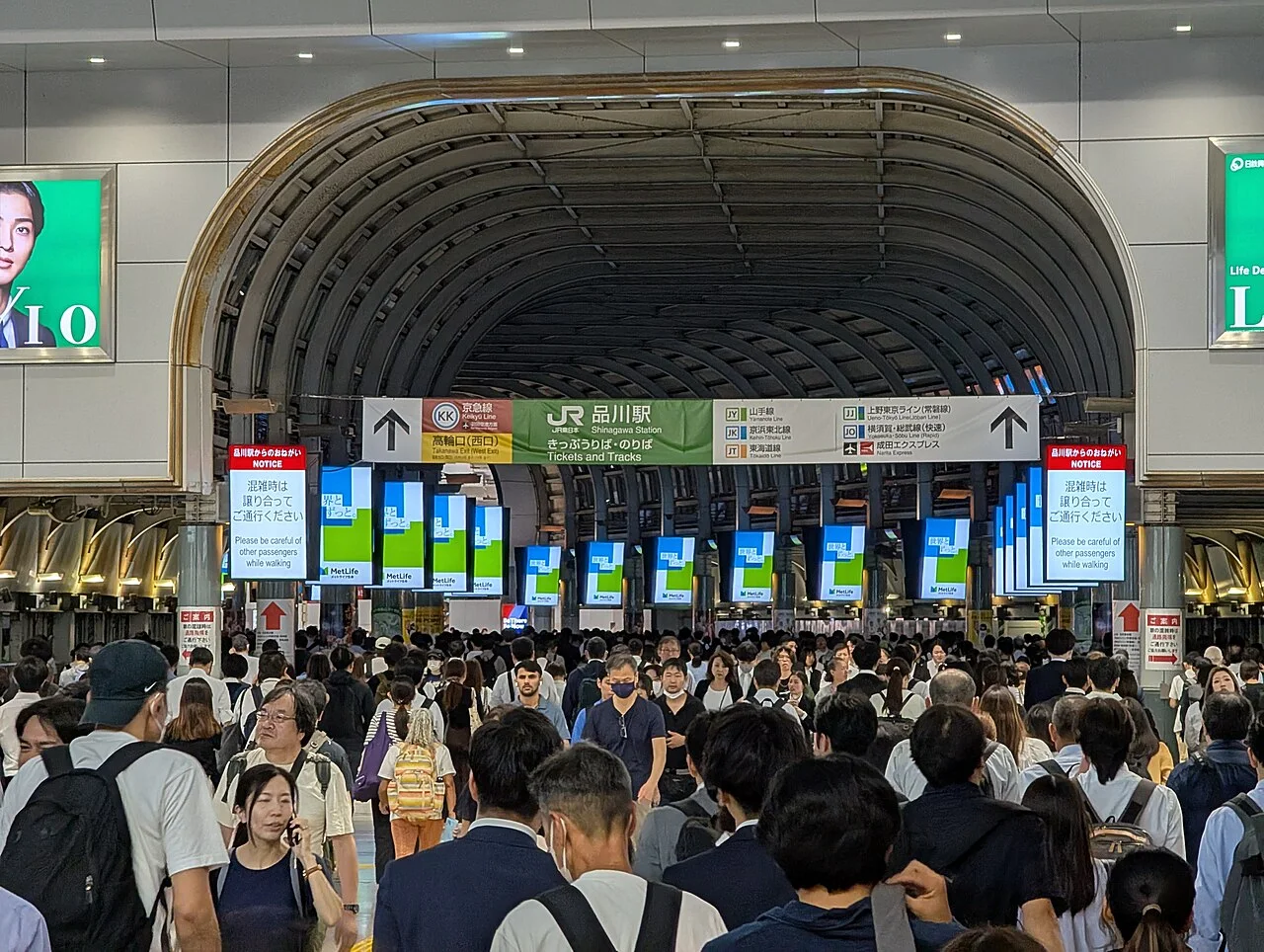
Deciding where to stay in Shinagawa? Compare hotels at the Takanawa Exit, Konan Exit and Takanawa Gateway, check early Keikyu trains to Haneda, and plan Tokaido Shinkansen transfers, family rooms and luggage storage.
Takanawa Exit Hotels: Level Crossings vs Uphill Walks
Shinagawa Prince Hotel sits directly opposite the Takanawa Exit, listed on its official site as roughly a two-minute walk, though once across the road each tower has its own entrance. The Main Tower, Annex Tower, East Tower and N Tower each operate separate receptions: Main Tower and East Tower are on the ground floor (1F), Annex Tower is on the 7th floor (7F), and N Tower is on the 2nd floor (2F). If two bookings land in different towers, send the tower names and registered guest names to your travelling companions ahead of time. Before anyone has keycards, meeting outside the Main Tower's front entrance is far clearer than saying 'the hotel lobby'.
Also at the Takanawa Exit is Keikyu EX Hotel Takanawa, listed on its official site at about three minutes on foot. When comparing the two for a late-arrival, early-departure stay, focus on bed layout, suitcase floor space and cancellation terms that fit your schedule. Even a slightly larger room that lets you open two suitcases at once before heading out makes a real difference on the final night of a long trip.
Further up the hill sits Grand Prince Hotel New Takanawa. From the Takanawa Exit, you cross Dai-ichi Keihin Avenue and climb Zakurozaka slope; the hotel's official walking guide quotes roughly five minutes and notes an uphill stretch of about 400 metres. With two large cases, a pushchair or companions who struggle with hills, take the free Prince Hotels Takanawa Area shuttle bus from outside the Shinagawa Prince Hotel Main Tower entrance to skip the climb. Match the shuttle timetable against your arrival time before booking, and budget for walking or a taxi if they do not line up.
If you are attending a wedding reception or dinner at one of the Takanawa hotels, staying in the same property saves an uphill walk after changing into formal wear. For relatives arriving separately, message both the hotel and floor of the banquet hall and the specific tower where your room is booked. If the ceremony is at New Takanawa while guests are staying in Shinagawa Prince Main Tower, plan transfers via the shuttle or Zakurozaka slope. Double-check the full hotel name and street address on your booking confirmation—several nearby properties share similar names, and both map apps and ride-hailing screens make it easy to tap the wrong one.
Konan Exit, Direct-Access Hotels and Meeting Venues
For an indoor walk straight from Shinagawa Station, look at The Strings by InterContinental Tokyo. Its official directions guide you right out of the Konan Exit along a pedestrian bridge into Shinagawa East One Tower, where hotel lifts take you up to reception on the 26th floor. This suits travellers arriving off the Shinkansen with heavy bags, anyone avoiding open streets in the rain, or visitors with meetings nearby. Because the entrance sits inside an office complex, enter the full hotel or building name when booking a taxi rather than using 'Shinagawa Station East Exit' as your pin.
When travelling for conferences, save the venue's exact building name and floor in your notes. 'Shinagawa business district' can mean the office towers off the Konan Exit or conference venues around Takanawa Gateway. When comparing hotel prices, measure your morning commute to the visitor entrance and your evening return along pedestrian routes that stay open after a reception ends. If a single complex has multiple entrances, use the map attached to your event invitation.
The Konan Exit's elevated walkways make an easy meeting point with colleagues after work, though late arrivals heading out for dinner should watch last-order times. Lunch spots inside office buildings often keep shorter hours in the evening or at weekends, so on a Saturday return either eat while passing through the station or pick a restaurant and hotel at the same end of the concourse. If you choose a hotel with dining downstairs, check both last orders and takeaway options for eating in your room.
The same Konan Exit hotel can be worth a very different premium depending on your itinerary. Hauling suitcases to the Shinkansen straight after packing down an exhibition stand makes a covered walkway worth paying for, saving you from hunting for entrances twice. If you will be dining in Shinjuku every night with no daytime plans in Konan, that extra budget may go further near Shinjuku Station instead. Compare the final walk back from dinner to your room rather than looking only at train times between Shinagawa and Shinjuku.
Where Takanawa Gateway Station and the Takanawa Exit Actually Are
The Takanawa Exit is the west exit of Shinagawa Station. Takanawa Gateway is a separate JR station one stop north on the Yamanote Line or Keihin-Tohoku Line trains that call there. Booking platforms frequently label both areas simply as 'Takanawa', so search by the exact station or full hotel name on maps. If your confirmation specifies the Takanawa Exit, head for the west side of Shinagawa Station; if you are heading to NEWoMan Takanawa, start directly at Takanawa Gateway Station.
For JW Marriott Hotel Tokyo, official directions advise turning left out of Takanawa Gateway Station's South Gate and staying on the deck walkway for about a minute into the white latticed building. That convenience works well for multi-night stays or resting up right after exploring the new district. If you have a specific Shinkansen booked the next morning, either ride one stop back to Shinagawa to transfer or check the outdoor walking route and station exits in advance.
Half a day around Takanawa Gateway easily covers the shopping complex, a meal and an exhibition at MoN Takanawa. Guests based at Shinagawa Station can leave bags at their hotel and head over hands-free. To plan venues, exhibitions and walking routes between the two hubs, see our Takanawa Gateway half-day guide. If you are flying out in the afternoon, leave shopping for the night before so you only need to collect bags in Shinagawa and board the Keikyu Line.
Early Haneda Flights: Working Backwards from the Terminal
Keikyu runs direct trains from Shinagawa to Haneda Airport. Check that the destination board reads 'Haneda Airport', as trains sharing the same direction also head towards Yokohama and elsewhere. Trains call at Terminal 3 Station first, then the shared Haneda Airport Terminal 1 & 2 Station, where you must follow the correct exit signs for Terminal 1 or Terminal 2. Match your flight number against departure boards carefully—Haneda Terminal 2 also handles international flights.
Keikyu adjusted its weekend and holiday timetable on 21 November 2026 and its weekday timetable on 24 November 2026. Under the revised schedule, the 05:09 Limited Express for Haneda leaves Shinagawa and reaches Terminal 3 Station at 05:29 and Terminal 1 & 2 Station at 05:32. On weekends and holidays, the 06:01 Express reaches Terminal 3 at 06:20 and Terminal 1 & 2 at 06:23, followed by the 06:11 Express arriving at 06:31 and 06:34 respectively. When testing these timings, remember they measure arrival at the train platform—still a walk away from check-in desks.
Suppose your airline requires you at Terminal 3 bag drop by 05:50: catching the 05:09 train leaves just 21 minutes on paper. Those 21 minutes have to cover stepping off the train, waiting for a lift, heading upstairs, finding your counter and joining the queue. If you also need to return a pocket Wi-Fi router, split check-in across family members or face an existing line, that margin disappears fast. On mornings that rely on the very first train, staying at the terminal or pre-booking a taxi is far more realistic.
For Terminal 3 departures, look at The Royal Park Hotel Tokyo Haneda, which connects directly to the 3rd-floor (3F) departure lobby. For Terminal 2, Haneda Excel Hotel Tokyu links to the 2nd-floor (2F) domestic departure lobby, and its website details the ground-floor (1F) night-time route when the main connecting doors close overnight. If your hotel is at a different terminal from your flight, check exact inter-terminal transfer times on Haneda's official site: under the free shuttle timetable effective from 18 August 2026, the first bus from Terminal 3 to Terminals 1 and 2 departs at 04:47, and both the ride and walk to departures must be factored in.
When terminal hotels are sold out, Tenkubashi is a strong fallback. Keikyu EX Inn Haneda Innovation City sits about two minutes' walk from the HICity Exit at Tenkubashi Station and runs a free morning guest-only shuttle—no reservation needed—to all Haneda terminals. For late-night arrivals, you will need public transport or a taxi to reach the hotel. Save the full property name in your phone, as the 'KEIKYU EX INN' sign visible from the station belongs to the separate Keikyu EX Inn Haneda nearby.
Shinagawa Station hotels make sense for morning flights when several Keikyu departures can comfortably get you to check-in on time. Pick your target train and check the arrival time of the following service so you know your buffer if you miss the first one. Before turning in for the night, check which station exit and lift you will use in the morning. If you opt for a private car or taxi instead, set the pick-up point at the hotel's main entrance, confirm boot space for large cases and pushchairs, and count backwards from when you need to reach the airline desk.
Late-Night Arrivals and Whether to Switch Hotels
If you land late at Haneda, check train options starting from your actual arrival terminal's Keikyu station. Factor in disembarking, immigration, baggage claim and the walk to the platforms—and remember evening headways differ from daytime schedules. When your realistic boarding time approaches the last train, note the latest workable departure and keep a backup plan ready for a taxi or staying inside the airport. Guests booked at The Strings are asked in the hotel FAQ to notify the team in advance if arriving after 22:00.
From Narita Airport, the Narita Express serves Shinagawa—check official timetables for trains that stop there and enter your exact airport terminal station when searching. Even if you buy tickets at Narita, message your Shinagawa arrival time and the specific hotel entrance to companions arriving earlier. If the next departure terminates at Tokyo Station or does not align with your landing, compare changing onto a local JR train at Tokyo Station to reach Shinagawa. For a full rail comparison between both airports, see getting into Tokyo from Haneda and Narita.
Consider a classic transit scenario: landing at Haneda at night with one large suitcase and a 10:00 Shinkansen the following morning. Taking Keikyu straight to a Shinagawa hotel lets you walk to the bullet train gates after breakfast. If your flight lands too late for the last Keikyu train, sleeping at the airport and riding straight to Shinagawa in the morning to catch the Shinkansen works just as smoothly—just buy your rail tickets in advance and leave extra transfer time at Shinagawa.
By contrast, on a six-night Tokyo trip focused on city sightseeing with an afternoon flight out of Haneda, staying in one hotel throughout is usually better. Moving to Shinagawa for the final night adds an extra check-out, transit leg, bag drop, check-in and repack. Unless you face an early-morning departure or need to shepherd a large group onto an early Shinkansen, splitting your stay rarely saves effort—especially if you plan to dine in your original neighbourhood on the last night.
If you book the same hotel for your first and last nights in Tokyo, keep both confirmation numbers handy. Ask in advance about leaving luggage between stays—confirm drop-off dates, your return check-in date and any per-bag fees—before deciding whether to travel light outside Tokyo. At Shinagawa Prince Hotel, for example, staying guests can pre-register same-day bag storage online for drop-off at the Main Tower ground-floor (1F) cloakroom; for multi-day trips away, arrange approved long-term hold with the hotel or use luggage forwarding set to your return date.
Tokaido Shinkansen Bookings, Peak Periods and Large Luggage
When booking Shinkansen tickets to Kyoto, Shin-Osaka or Nagoya, select 'Shinagawa' as your departure station—and verify your return arrival station too. Check the train type and calling pattern, particularly on 'Hikari' services that vary in their intermediate stops. If your hotel is in central Osaka, remember to add the metro or JR transfer from Shin-Osaka onto your schedule, as arriving at Shin-Osaka platform still leaves a final leg before you drop your bags.
On the Tokaido and Sanyo Shinkansen, 'Nozomi' trains operate as all-reserved-seat services from 25 December 2026 to 5 January 2027, as well as from 9 to 11 January and 20 to 22 March 2027. If family or friends want to sit together during these periods, book your specific trains and seats early. 'Hikari' and 'Kodama' services continue to offer unreserved cars on the same dates, though reserving seats remains much easier for groups of three or four travelling with large suitcases.
Set up your SmartEX boarding method before leaving the hotel. If multiple passengers share one booking and plan to tap through with IC cards, assign each person's card individually and match the physical card or mobile transit card in their phone before heading out. For QR tickets, print each passenger's code or load them into separate Apple Wallets and look for Shinkansen gates marked 'QR'. If you enter on a local JR line using an IC card, scan the Shinkansen QR code at the transfer gate first, then tap your IC card to settle the local fare. If collecting paper tickets, allow extra time for ticket machines—especially on tight mornings.
JR Central requires a reservation for 'Seats with an Oversized Baggage Area' whenever a suitcase's total dimensions (length + width + height) exceed 160 cm up to 250 cm; anything over 250 cm must go by luggage courier or be split into smaller bags. Measure each case individually, including protruding wheels. Even on carriages trialling non-reserved door-side luggage racks, bags exceeding 160 cm still require an oversized baggage reservation. Pushchairs can be brought on board under standard rules, though you should reserve the oversized baggage space if you intend to stow one there.
If you plan to return to Shinagawa the same evening, link the end of your dinner or meeting across three legs: venue to Shin-Osaka, the Shinkansen back to Shinagawa, and the walk to your hotel. Check SmartEX fare rules carefully, as ticket types carry different change conditions. When an event's finish time is unpredictable, choose a more flexible fare or spend the night in Kansai. Stacking a late return train onto an early Haneda flight the next morning only doubles your schedule risk.
Family Rooms, Connecting Two Rooms and Useful Amenities
For two adults and one child, always search using the child's exact age on the check-in date. In Shinagawa Prince Hotel's Main Tower, 26.5-square-metre Corner Twin rooms on the 28th to 34th floors offer triple-occupancy plans using a sofa bed for the third guest. Browsing twin-room rates without selecting three guests will show different pricing from the triple plan. Under the hotel's bed-sharing policy, one child under six may share each existing bed free of charge, provided you declare this when booking and at check-in.
With two children—especially if anyone needs their own bed—compare a four-person room side by side against two twin rooms. Look at the tax-inclusive total alongside how many bathrooms you need and how many people will pack at once. Two rooms placed on different floors add a lift ride whenever you check on the kids at night. If you want adjoining or connecting rooms, select a guaranteed plan rather than leaving a request in the booking comments, or confirm availability directly with the hotel.
Travellers using pushchairs, wheelchairs or walking at a gentler pace should factor in the route between the guestroom and reception as well. Before booking, ask the hotel for exact door widths, bathroom step heights and grab-rail layouts around the bath or shower. The Strings lists accessible rooms that can be arranged by prior inquiry. If family members are arriving from different terminals, pick a seated indoor meeting spot first and check in together.
When an early flight means skipping hotel breakfast on your final night, put the price difference towards a larger room or buy portable breakfast items the evening before. If you do want breakfast at the hotel, check opening hours against your departure time. On stays of two nights or more with only one early start, check if breakfast can be added on individual days. If children are going to bed late, avoiding a morning buffet queue can save more energy than shaving two minutes off the station walk.
Luggage Storage, Forwarding and Last-Minute Souvenirs
Shinagawa Prince Hotel offers same-day luggage storage at the Main Tower ground-floor (1F) cloakroom for staying guests. According to the hotel site, you register your name and pick-up time online to receive a QR code, then present it alongside your booking confirmation at the counter. Arriving with bags in the morning, you can schedule afternoon collection, head out for lunch or explore Takanawa Gateway, and combine bag pick-up with check-in on your return. If you are coming back from a meeting on the Konan side, remember to budget time to cross the station.
If you are forwarding large suitcases to your next hotel the night before departure, align your drop-off with the hotel's acceptance rules, courier cut-off times and delivery dates. Shinagawa Prince Hotel states that incoming luggage must be sent prepaid with the check-in date, reservation name, contact details and tower name clearly marked, and recommends keeping your shipping receipt. Keep passports, medication, charging cables and the next day's clothes in your daypack.
Sending bags straight to Haneda for your flight requires extra lead time. Yamato Transport's Airport Takkyubin typically closes two days before departure—or three days from certain regions. Enter the exact terminal your airline uses, then check Haneda's luggage delivery page for the counter's floor and opening hours. If the airport courier desk opens later than your airline's bag-drop cut-off, bring your suitcases with you to the airport instead.
Station coin lockers work best for a quick stopover before moving on—just choose one on the side you will leave from later. Leaving bags inside the JR gates when you plan to walk straight to the Keikyu Line from the street adds an unnecessary gate entry. Snap a single photo showing the locker bank, number and nearest ticket gate so you can head straight back to the right entrance, and keep the receipt or note which IC card you tapped.
The smoothest time to buy bento boxes or souvenirs at ecute Shinagawa is right as you step off a JR train while still inside the JR East paid area. Returning solely to shop from your hotel requires buying a platform ticket or tapping in with a compatible IC card. Individual shops set their own hours—the official site notes that concourse convenience stores inside the gates generally do not open until 05:50. If you are catching the 05:09 Keikyu train mentioned earlier, buy ambient snacks and breakfast the night before.
Save chilled or perishable souvenirs for the day you fly out, and follow the storage guidance on the packaging. When you are juggling a cool bag, two suitcases and a pushchair, shopping outside the gates right before boarding your train is far easier. Rather than buying gifts first and crossing the station to collect bags from your hotel, pick up your luggage first and finish your shopping on the same side to avoid hauling everything across the concourse twice.
Staying in Oimachi, Tennozu Isle or Ariake Instead
One stop south of Shinagawa on the Keihin-Tohoku Line, Oimachi offers a direct interchange onto the Rinkai Line. For Tokyo Big Sight, search rail routes to Kokusai-Tenjijo Station on the Rinkai Line or Tokyo Big Sight Station on the Yurikamome Line; Tokyo Teleport Station is closer to Odaiba's malls and leaves one more stop east to the exhibition halls. From a Shinagawa base, you can change to the Rinkai Line at Osaki as well as Oimachi—choose whichever route involves less lugging based on your hall entrance.
Opened on 28 March 2026, Hotel Metropolitan Oimachi Tracks connects directly to JR Oimachi Station's Tracks Exit and offers self-service luggage storage on the 5th floor (5F). Travellers with large bags can hop one stop north on the Keihin-Tohoku Line to catch the Shinkansen at Shinagawa, or switch straight onto the Rinkai Line for events in Ariake. Since July 2026, Haneda Airport buses have also served the north rotary on the ground floor (1F) of Oimachi Tracks, giving late-night arrivals a direct alternative to changing trains at Shinagawa.
If you have three days of trade shows around Ariake and evening dinners with colleagues nearby, stay in Ariake or along the Rinkai Line. Keep Shinagawa strictly for your arrival night off the Shinkansen or your departure morning to the airport. When an event spans a weekend, compare the full multi-night total and amendment rules. If exhibition entry times are still unconfirmed, a flexible cancellation window matters more than locking in the lowest non-refundable rate.
Tennozu Isle suits travellers spending an afternoon along the canals and galleries. The Rinkai Line and Tokyo Monorail stations have separate entrances here; before returning to Shinagawa, pin the right Rinkai Line entrance so you can transfer cleanly at Oimachi. If you are heading straight to Haneda next, check which Tokyo Monorail services call at Tennozu Isle. On days involving boat rides, galleries and waterside dining with bags in tow, use hotel bag storage as your pivot and pick up cases after sightseeing.
Combining Odaiba and Toyosu easily fills half to a full day; start at whichever end matches your target shops or market schedule. If you plan to visit the market, check Toyosu Market's opening days and visitor routes first before deciding whether to stop for dinner on the way back. With an early flight the next morning, eat on the same side of Shinagawa Station as your hotel and stock up on water, breakfast and essentials before heading upstairs.
If your itinerary already takes you to Yokohama, consider staying there on your final night. For a daytime visit in Yokohama followed by an afternoon flight from Haneda, compare direct Keikyu trains from Yokohama to the airport and the distance from your hotel to the platform. Only pull the group back to Shinagawa if someone else needs Tokyo Station that evening while you fly out the next morning—list each traveller's departure times first so your hotel choice follows the real itinerary.
Comparing Rates Alongside Check-In Terms and Final Transfers
When comparing rates, enter the exact same check-in date, guest count and bed configuration on both the hotel's official site and booking platforms. Some screens quote per person per night while others show the full room rate, so line up taxes, breakfast, third-guest extra-bed fees and pay-at-property charges side by side. If a room is purely a stopover before an early flight, factor in any pre-booked taxi, missed shuttle legs and the rail fare saved by sleeping at the terminal.
Nightly pricing swings can also shift the best booking strategy. When one night is cheap and the next jumps sharply for the same room type, compare a single multi-night package against two separate nightly bookings. If you end up with two confirmation numbers, check whether the hotel can keep you in the same room without visiting reception mid-stay. Shinagawa Prince Hotel advises noting consecutive stays in the remarks when booking two separate plans for the same room type—and if your bookings fall in different towers, plan for a room change.
If you need to collect stored bags in Ueno or eastern Tokyo before heading west to Kansai, remember the Tokaido Shinkansen also boards at Tokyo Station. After four nights near Tokyo Station, there is no reason to drag suitcases down to Shinagawa just to catch the exact same train. Conversely, if you are meeting companions coming in from Haneda at Shinagawa, arrange to meet outside the Shinkansen gates before tapping through separately. If you need to change your boarding station after booking, update your reservation through the platform you bought it on.
For bookings tied to unconfirmed flights, exhibition dates or meeting schedules, convert cancellation and amendment deadlines to Japan Standard Time (JST) and save them on your phone. Some plans charge in full immediately, while others trigger fees after a set date; if you book your first and final nights separately, track each deadline by its own check-in date. Should you hold two refundable rooms while plans firm up, cancel the spare booking promptly once settled and keep the cancellation email.
Solo travellers or couples hoping to spend evenings dining and strolling should trace the journey back from their final stop or restaurant to the hotel. Shinagawa connects directly to Shibuya and Shinjuku on the Yamanote Line, and to Ginza via JR to Shimbashi followed by a short walk or metro change. If your days rely heavily on the Tokyo Metro and run late into the night, use our Tokyo neighbourhood transport comparison to pick a better-connected base, reserving Shinagawa solely for an ultra-early departure.
Once booked, save all key details on a single screenshot on your phone: the hotel's Japanese name for late-night taxis, the exact Shinagawa Station exit, the main entrance or tower name, and your estimated arrival time. Keep a second screen ready for departure with Keikyu times and your terminal, or your Shinkansen train number, platform direction and seat. For groups with small children or slower walkers, always meet outside the ticket gates before heading in together rather than trying to regroup inside the concourse.
A few useful answers
Should I stay at the Takanawa Exit or Konan Exit in Shinagawa?
For early-morning Keikyu trains to Haneda Airport, look first at hotels within walking distance of the Takanawa Exit. For the Tokaido Shinkansen or meetings and offices in the Konan district, start at the Konan Exit. If travelling in the rain with heavy bags, compare whether each property offers covered walkways or requires crossing streets.
Can I stay in Shinagawa for a 06:00 flight from Haneda?
The 05:09 Keikyu Limited Express from Shinagawa reaches Terminal 3 Station at 05:29, leaving just 31 minutes before a 06:00 departure. Choose a hotel connected to your departure terminal instead, or pre-book an early-morning taxi, working backwards from your airline's check-in and bag-drop cut-off times.
How far is Takanawa Gateway Station from Shinagawa Station?
It is one stop away on the JR Yamanote Line and stopping Keihin-Tohoku Line services. If you are heading to NEWoMan Takanawa or JW Marriott Hotel Tokyo, select Takanawa Gateway Station for both navigation and rail tickets; Keikyu trains to Haneda and the Tokaido Shinkansen depart from Shinagawa Station.
How do I enter Shinagawa Station for the Shinkansen from a nearby hotel?
Walk towards the Konan Exit side and follow signs for the Tokaido Shinkansen North or South Gate. If transferring from a local JR line inside the station, follow the 'Shinkansen Transfer' signs instead. Depending on your SmartEX ticket type, tap through using your linked IC card or scan your QR ticket.
What room options exist in Shinagawa for three guests?
At Shinagawa Prince Hotel, for example, 28th-to-34th-floor Corner Twin rooms in the Main Tower offer a triple plan using a sofa bed for the third guest. Enter the exact number of adults and children when searching, then compare one triple room against the combined cost of two separate rooms.
Is Shinagawa a good first-night stop after landing at Narita Airport?
Yes, especially if you are catching the Tokaido Shinkansen from Shinagawa the following morning—just make sure your Narita Express service calls at Shinagawa. If you are staying in eastern Tokyo for the rest of your trip, heading straight to your main hotel on arrival night saves an extra move and check-in.
Is Shinagawa practical as a multi-night Tokyo base?
It works smoothly if your itinerary follows JR lines, involves business in Konan, or bridges an airport transfer and a Kansai Shinkansen leg from one base. If you head out early and spend most evenings in Shibuya or Shinjuku, check the late-night journey back to your hotel before deciding whether to split only your first or final night.
Official information and references
Sources used in this guide.
- JR East Shinagawa Station Map and Accessibility Facilities
- JR Central Shinagawa Station Shinkansen Gate Map
- Keikyu Shinagawa Station Map, Timetables and Fares
- Keikyu November 2026 Timetable Revision and Early Haneda Services
- Haneda Airport Inter-Terminal Access and Shuttle Bus Timetable
- Haneda Airport Terminals and Check-In FAQ
- JR East Narita Express (N'EX) Stations and Boarding Guide
- JR Central FY2026 Nozomi All-Reserved-Seat Schedule Notice
- JR Central Shinkansen Oversized Baggage Rules
- SmartEX Boarding with a Transit IC Card
- SmartEX Boarding with a QR Ticket
- Shinagawa Prince Hotel Access and Shuttle Bus
- Shinagawa Prince Hotel Guestrooms by Tower and Occupancy
- Shinagawa Prince Hotel Check-In, Child Bed-Sharing and Parcel FAQ
- Shinagawa Prince Hotel Cloakroom Storage and Luggage Delivery
- Keikyu EX Hotel Takanawa Access Guide
- Grand Prince Hotel New Takanawa Walking Route and Shuttle
- The Strings by InterContinental Tokyo Access and Entrance
- The Strings by InterContinental Tokyo Check-In and Rooms FAQ
- Takanawa Gateway City Official Access Guide
- JW Marriott Hotel Tokyo Official Overview and Access Information
- The Royal Park Hotel Tokyo Haneda Terminal 3 Access
- Haneda Excel Hotel Tokyu Terminal 2 Access
- ecute Shinagawa Inside-Gate Location and Opening Hours
- Tokyo Big Sight Access and Nearest Stations
- Rinkai Line Official Route and Stations
- Keikyu EX Inn Haneda Innovation City Access and Shuttle
- Yamato Transport Airport Takkyubin Deadlines and Collection
- Haneda Airport Baggage Delivery Counters by Terminal
- Hotel Metropolitan Oimachi Tracks Opening Announcement
- Hotel Metropolitan Oimachi Tracks Access and Haneda Airport Bus
- Hotel Metropolitan Oimachi Tracks Facilities and Self-Service Luggage Storage
- Tokyo Monorail Tennozu Isle Station Guide and Timetable
- Keikyu Rail Access to Haneda Airport from Shinagawa and Yokohama