How to pick a hotel in Shinagawa: compare Takanawa Exit, Konan Exit, and Takanawa Gateway stays, early-morning Keikyu trains to Haneda, Tokaido Shinkansen access, family rooms, and luggage storage.
- Region & Focus
- TokyoHotels and stays
- Reading Scope
- 20 min read · 11 chapters · 7 Q&As
- Official Verification
- 34 official sources checkedUpdated November 22, 2026
Chapter Route Map (tap any stop)
- Two Sides of Shinagawa Station: Pick by Tomorrow's Route
- Takanawa Exit Hotels: Flat Crosswalks or an Uphill Walk
- Konan Exit, Covered Skybridges, and Meeting Venues
- Takanawa Gateway Station vs. Shinagawa's Takanawa Exit
- Early Haneda Flights: Work Backward from Check-In
- Late-Night Arrivals and Whether to Split Your Stay
- Tokaido Shinkansen Bookings, Peak Periods, and Large Bags
- Family Rooms, Connecting Options, and Practical Amenities
- Luggage Storage, Delivery, and Last-Minute Souvenirs
- Staying Nearby in Oimachi, Tennozu Isle, or Ariake
- Comparing Rates, Split Stays, and Your Final Morning Move
- Quick Q&A
Before booking a hotel in Shinagawa, decide which station gate you will use the next morning. If you are rolling luggage onto the Keikyu Line for Haneda Airport, prioritize the Takanawa Exit side. If you are catching the Tokaido Shinkansen to Nagoya, Kyoto, or Shin-Osaka, stay on the Konan Exit side, closer to the bullet train gates. Takanawa Gateway has its own separate JR station, so hotels there add an extra rail hop to reach Shinagawa. And if you have a 6:00 a.m. departure out of Haneda, book a terminal hotel you can walk from or arrange a pre-booked car the night before.
Two Sides of Shinagawa Station: Pick by Tomorrow's Route
When checking a hotel map, picture Shinagawa Station as a single east-west pedestrian concourse. On the west end is the Takanawa Exit, home to the Keikyu Line gates and the cluster of Prince Hotels across the street. On the east end is the Konan Exit, linked directly to office towers and elevated walkways. Both the North and South Tokaido Shinkansen gates sit inside the station closer to the Konan side. Getting to your hotel upon arrival and catching a train the next morning are two different routes: one ends at your hotel entrance, the other at the specific fare gate you need.
First-time visitors often make the same mistake: spotting a green JR sign along the main concourse, assuming it leads straight to the bullet train, and only pulling up their reservation at the wrong gate. If you are walking in from a hotel holding only a Shinkansen ticket, follow the "Tokaido Shinkansen" signs to either the North or South gate. If you arrive on a local JR line like the Yamanote Line and already tapped in with an IC card, stay inside the paid area and follow the "Shinkansen Transfer" signs instead.
A hotel listing that claims "2 minutes on foot from Shinagawa Station" usually measures from one specific exit. After a late-night flight, your actual path runs from the Keikyu platform through the fare gate to the front desk; in the morning, it runs from the front desk through the concourse to the Shinkansen gate and platform. Tracing both lines on a station map tells you far more about how effortless a stay will feel than comparing walk times on a booking site.
If you are traveling with a stroller or large suitcases, check one step further. JR East and Keikyu publish separate Shinagawa Station maps and accessibility guides, so verify the elevator locations for the exact line you are riding. On the hotel side, check the official website's entrance photos and access notes. Around Konan, skybridges, street-level plazas, and office lobbies often sit on different floors, meaning you can stand right on the map pin and still need to find the right level to get inside.
When one overnight stay involves both Keikyu and the Shinkansen—say, landing at Haneda in the evening and catching an early train to Kyoto—optimize for the leg with less margin for error. If you can take your time checking in at night but must make a reserved morning train, stay on the Konan side. If someone in your group needs the shortest possible walk after a long-haul flight and your morning train departs late, staying right outside the Takanawa Exit makes just as much sense.
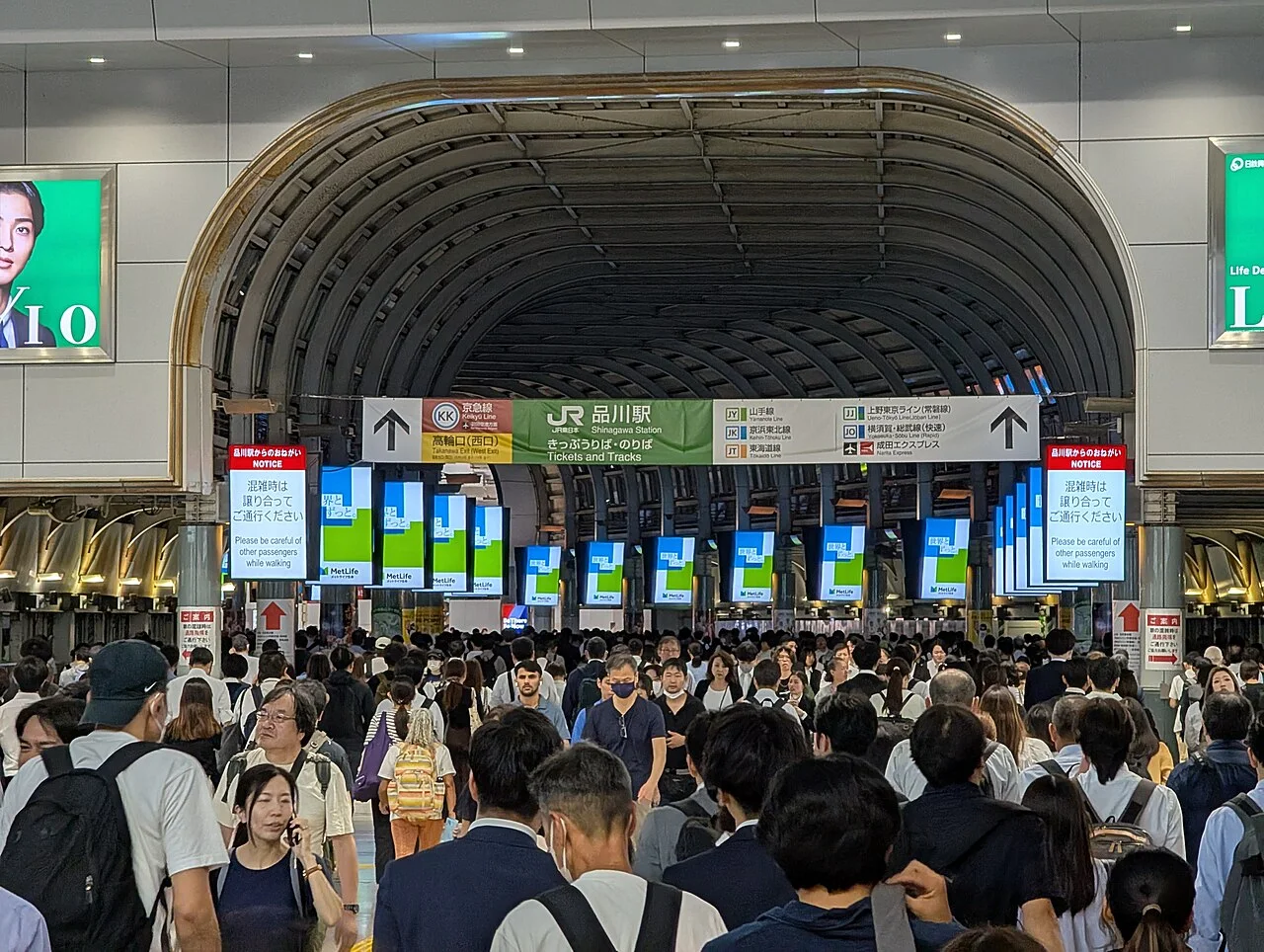
How to pick a hotel in Shinagawa: compare Takanawa Exit, Konan Exit, and Takanawa Gateway stays, early-morning Keikyu trains to Haneda, Tokaido Shinkansen access, family rooms, and luggage storage.
Takanawa Exit Hotels: Flat Crosswalks or an Uphill Walk
Shinagawa Prince Hotel sits directly across the street from the Takanawa Exit, about a two-minute walk according to its official site, though your exact entrance depends on your tower. Main Tower, Annex Tower, East Tower, and N Tower each run separate check-in desks: Main and East are on the 1st floor, Annex is on the 7th floor, and N Tower is on the 2nd floor. If your party holds two reservations in different towers, text both tower names and registered guest names to everyone in advance. Before you have room keys in hand, meeting outside the Main Tower entrance is far clearer than saying "meet in the lobby."
On the same Takanawa Exit side, compare rates with Keikyu EX Hotel Takanawa, which lists roughly a three-minute walk from the exit. For a quick late-in, early-out overnight, look for a room with enough floor space for your bags and cancellation terms that fit your schedule. Even a small bump in square footage—enough to open two suitcases at once before heading out—makes a real difference on the final night of a long trip.
Further up the hill sits Grand Prince Hotel Shin Takanawa. From the Takanawa Exit, you cross Dai-ichi Keihin Avenue and climb Zakuro-zaka slope; the hotel's official access page estimates a five-minute walk and notes an uphill stretch of about 400 meters. When hauling two large suitcases, pushing a stroller, or traveling with anyone who prefers to skip inclines, catch the complimentary Prince Hotels Takanawa-area shuttle loop from outside the Shinagawa Prince Hotel Main Tower entrance. Check the shuttle timetable against your arrival time before booking, and budget for walking or a taxi if the schedule does not line up.
If you are attending a wedding banquet or dinner at one of the Takanawa Prince properties, booking the same building saves you from walking uphill in formalwear. When relatives arrive separately, send both the banquet hotel name and floor as well as the tower where they are sleeping. If the ceremony is at Shin Takanawa while guests are booked at Shinagawa Prince Main Tower, plan the transfer around either the shuttle loop or the Zakuro-zaka walk. Double-check the full hotel name and street address on every confirmation email—with several similarly named properties clustered together, it is easy to pick the wrong one in a maps app or ride-hailing screen.
Konan Exit, Covered Skybridges, and Meeting Venues
For a weatherproof walk straight from the station to your hotel, look at The Strings by InterContinental Tokyo. Its official directions guide you right out of the Konan Exit, across a pedestrian bridge into Shinagawa East One Tower, and up the hotel elevator to the 26th-floor lobby. It works well if you are rolling luggage off the Shinkansen, dodging rain, or attending meetings nearby. Because the entrance sits inside an office tower, enter the full hotel or building name when booking a taxi or rideshare rather than dropping a pin at the station's east exit.
For business conferences, save the exact venue name and floor in your notes. "Shinagawa office district" can refer either to the towers outside the Konan Exit or to event spaces over by Takanawa Gateway. When comparing hotel rates, trace your morning commute to the building's visitor entrance and your evening walk back after dinner or receptions. If a complex has multiple street and skybridge entrances, use the map attached to the event invitation.
The Konan skybridge level is straightforward for meeting colleagues right after work, but late check-ins require watching kitchen hours. Many lunch-oriented spots inside office towers close early on weeknights or run reduced weekend schedules; on a Saturday night return, eat as you pass through the station or pick a restaurant on the same side of the concourse as your hotel. If your hotel has dining downstairs, check last-order times and whether takeout to your room is available.
Whether a Konan hotel justifies its premium depends on how you are traveling. If you are breaking down a trade-show booth and rolling heavy cases straight to the Shinkansen, direct skybridge access saves you from hunting for entrances twice. If you plan to eat in Shinjuku every evening and have no daytime commitments in Konan, that extra budget may go further near Shinjuku Station. Price the walk back from dinner at the end of the night, not just the train ride between Shinagawa and Shinjuku.
Takanawa Gateway Station vs. Shinagawa's Takanawa Exit
The Takanawa Exit is the west exit of Shinagawa Station; Takanawa Gateway is a separate JR station one stop north on the Yamanote Line or Keihin-Tohoku Line trains that stop there. Booking sites frequently label both areas simply as "Takanawa," so search maps using the exact station name or full hotel name. If your reservation mentions the Takanawa Exit, walk out the west side of Shinagawa Station; if you are heading to NEWoMan Takanawa, start directly at Takanawa Gateway Station.
For JW Marriott Hotel Tokyo, official directions guide you out of Takanawa Gateway Station's South Gate, to the left, and straight along the elevated walkway for about one minute into the white lattice-patterned building. That setup suits a multi-night stay or winding down right after exploring the new complex. If you have a reserved Shinkansen the next morning, either hop one stop back to Shinagawa to transfer or check the outdoor walking route and station entrances in advance.
Half a day around Takanawa Gateway is plenty to browse the shops, grab a meal, and catch a current program at MoN Takanawa. Guests staying by Shinagawa Station can leave bags at their hotel first and explore hands-free. For venues, exhibitions, and walking routes linking both sides, see our Takanawa Gateway half-day guide. If you have an afternoon flight the same day, do your shopping the night before so you only have to swing back to Shinagawa for your bags and step onto the Keikyu train.
Early Haneda Flights: Work Backward from Check-In
Keikyu runs direct trains from Shinagawa to Haneda Airport. Before boarding, check the destination board for "Haneda Airport"—trains toward Yokohama share the same direction. Trains stop first at Terminal 3 Station, then at the shared Terminal 1 & 2 Station, where you follow signs to either Terminal 1 or Terminal 2. Match your flight number on your booking to the airport's departure terminal information, keeping in mind that Terminal 2 also handles international flights.
Keikyu updated its weekend and holiday timetable on November 21, 2026, and its weekday timetable on November 24, 2026. Under the revised schedule, the 5:09 a.m. Limited Express direct to Haneda from Shinagawa reaches Terminal 3 Station at 5:29 a.m. and Terminal 1 & 2 Station at 5:32 a.m. On weekends and holidays, the 6:01 a.m. Express arrives at Terminal 3 at 6:20 a.m. and Terminal 1 & 2 at 6:23 a.m., followed by the 6:11 a.m. Express at 6:31 a.m. and 6:34 a.m. Remember that these times get you to the underground station platform, not the check-in counter.
Suppose your airline sets a 5:50 a.m. bag-drop cutoff at Terminal 3: taking the 5:09 a.m. train leaves just 21 minutes on paper. That window has to cover getting off the train, waiting for an elevator, heading upstairs, finding your airline zone, and standing in line. Add returning a pocket Wi-Fi router, splitting up a family check-in, or an existing queue, and the margin disappears. For mornings that depend on catching the very first train, staying at a terminal hotel or booking a pre-arranged car is far more realistic.
For Terminal 3 departures, look at The Royal Park Hotel Tokyo Haneda, which connects directly to the 3rd-floor departures lobby. For Terminal 2, Haneda Excel Hotel Tokyu connects to the 2nd-floor domestic departures lobby, and its website notes a 1st-floor nighttime route when the main concourse link closes late at night. If your hotel is in a different terminal from your flight, verify transfer times on Haneda's official inter-terminal transport page: under the free shuttle timetable effective August 18, 2026, the first bus from Terminal 3 to Terminals 1 and 2 departs at 4:47 a.m., and you still need to count the walk after getting off.
When terminal hotels sell out, check Tenkubashi. Keikyu EX Inn Haneda Innovation City is about a two-minute walk from Tenkubashi Station's HICity Exit and runs a complimentary, reservation-free morning shuttle for guests to all Haneda terminals. Because the shuttle is outbound only, plan to arrive at night by train or taxi. Save the full hotel name before heading out—another "KEIKYU EX INN" sign visible from the station belongs to the separate Keikyu EX Inn Haneda nearby.
If multiple morning Keikyu departures comfortably beat your airline's check-in deadline, staying outside Shinagawa Station works well. Pick your target train and check the arrival time of the next one behind it so you know your backup cushion if you miss the first. Scope out your morning station exit and elevator location the night before checking in. If you book a private car instead, set the pickup point at the hotel's main entrance, confirm trunk space for large bags and strollers, and count backward from when you must stand at the airline counter.
Late-Night Arrivals and Whether to Split Your Stay
When landing late at Haneda, plan your train trip starting from the Keikyu station at your actual arrival terminal. Factor in deplaning, immigration, baggage claim, and the walk down to the platform, as well as wider late-night train headways. If your timing brushes up against the last train, look up the exact final departure you can realistically catch and keep a taxi or airport-side stay as a backup. If you book The Strings, the hotel FAQ asks guests arriving after 10:00 p.m. to contact the property in advance.
From Narita Airport, the Narita Express runs to Shinagawa on select services—check the official timetable for trains scheduled to stop at Shinagawa and search from your actual airport terminal station. Even if you buy tickets at Narita, send your arrival time at Shinagawa along with the exact hotel entrance to anyone already waiting. If the next train terminates at Tokyo Station or misses your window, compare transferring to a local JR line at Tokyo Station instead. For a full rail breakdown across both airports, read getting into Tokyo from Haneda and Narita.
Consider a classic transit scenario: landing at Haneda at night with one large suitcase and catching a 10:00 a.m. Shinkansen the next day. Riding Keikyu straight to a Shinagawa hotel lets you walk right to the bullet train gate in the morning. If a delayed flight lands after the last Keikyu train, sleeping at the airport and riding straight to Shinagawa the next morning for your Shinkansen transfer works just as cleanly—keep your tickets purchased ahead of time and leave extra cushion for the station transfer with luggage.
By contrast, on a six-night Tokyo trip with an afternoon flight home from Haneda and central sightseeing every day, staying in one hotel is almost always better. Switching to Shinagawa just for the final night adds an extra round of packing, checking out, storing bags, checking in, and unpacking, plus extra transit if you are eating in the same neighborhood anyway. Splitting off a night in Shinagawa only pays off when you face an early-morning flight or need to herd a group onto a morning Shinkansen.
If you plan to stay at the same hotel at the start and end of your trip, keep both separate reservation confirmations handy. Ask in advance about overnight luggage storage—confirm exact drop-off dates, your return check-in date, and whether fees apply per bag—before deciding to travel light with a small pack outside Tokyo. Shinagawa Prince Hotel, for instance, offers same-day guest storage reservations at the Main Tower 1st-floor cloakroom; for multi-day trips out of town, confirm multi-day storage terms with the hotel directly or ship large bags ahead via delivery service with a scheduled arrival date.
Tokaido Shinkansen Bookings, Peak Periods, and Large Bags
When heading to Kyoto, Shin-Osaka, or Nagoya from Shinagawa, set your departure station to "Shinagawa" during booking and verify your return arrival station as well. Check the train type and intermediate stops closely, especially on Hikari services with varying stopping patterns. If your final destination is central Osaka, factor in the local JR or subway transfer after stepping off at Shin-Osaka—your train arrival time is still a distance from dropping off your bags.
During peak travel periods, JR Central operates Nozomi trains as all-reserved seating: official all-reserved dates include December 25, 2026 to January 5, 2027, January 9 to 11, 2027, and March 20 to 22, 2027. If your group wants to sit together on these dates, book specific trains and seats early. Hikari and Kodama trains continue running non-reserved cars on those days, though reserved seats are still far easier when traveling with three or four people and large luggage.
Set up your SmartEX boarding method before leaving your room. If multiple passengers share one reservation and plan to tap IC cards at the gate, register each person's individual transit IC card in advance and make sure everyone carries the exact physical card or Apple Wallet card linked to their ticket. If using QR tickets, print each passenger's code or load them into individual Apple Wallets, and look for Shinkansen gates marked with a QR scanner. When transferring from a local JR line using an IC card, scan your Shinkansen QR ticket first and then tap the IC card to settle the local fare; if picking up paper tickets at a machine, allow extra time before an early departure.
For suitcases whose total dimensions (length + width + height) exceed 160 cm and stay within 250 cm, JR Central requires booking seats with an oversized baggage area. Anything over 250 cm cannot go onboard and must be shipped or repacked. Measure each bag individually and include protruding wheels and handles. Even on cars trialing reservation-free baggage corners near the doors, bags over 160 cm still require an oversized baggage reservation. Strollers can be brought aboard under standard rules, though you should book an oversized baggage seat if you want dedicated space for one.
If you are returning to Shinagawa the same evening, link the end of your dinner or meeting across three segments: getting to Shin-Osaka, riding the Shinkansen to Shinagawa, and walking back to your hotel. SmartEX fare types carry different change rules, so for events with unpredictable end times, pick a flexible fare or stay an extra night in Kansai. Chaining a late-night Shinkansen return straight into an early-morning Haneda flight only multiplies the stress.
Family Rooms, Connecting Options, and Practical Amenities
For two adults and one child, always search using the child's exact age on the check-in date. At Shinagawa Prince Hotel, 26.5-square-meter Corner Twin rooms on floors 28 to 34 of the Main Tower convert a sofa bed into a third bed for triple-occupancy plans—a standard twin search without three guests selected will show different rates and availability. For co-sleeping children, the hotel's policy allows one child under age 6 per bed, and requires noting co-sleeping both at booking and upon arrival.
With two children or older kids who need separate beds, compare the total tax-included price of one quadruple-capacity room against two twin rooms, weighing bathroom count and space to open suitcases at the same time. Ask whether two rooms will sit on the same floor so you are not taking an elevator between rooms at night. If you need adjoining or connecting rooms, book a guaranteed connecting room plan rather than relying on a comment box—if only a request note is possible, message the hotel ahead to confirm.
Anyone pushing a stroller, using a wheelchair, or walking at a slower pace will repeat the path between the front desk and guestroom multiple times a day. Check clear doorway widths, bathroom step thresholds, and grab-bar layouts near the tub or shower with the hotel before booking; The Strings lists accessible rooms available by advance inquiry. If members of your group arrive from different airport terminals, pick an indoor meeting spot with seating before walking to the front desk together.
If your final morning starts too early for breakfast, put that budget toward a larger room or grab grab-and-go food the night before. When eating breakfast at the hotel, match restaurant opening hours against your departure train. On multi-night stays where only one morning is rushed, check if breakfast can be added per day instead of every night—after a late bedtime with kids, skipping the breakfast line is often more valuable than shaving two minutes off the walk to the station.
Luggage Storage, Delivery, and Last-Minute Souvenirs
Guests at Shinagawa Prince Hotel can use the Main Tower 1st-floor cloakroom for same-day luggage storage by submitting their name and pickup time online to generate a QR code, then presenting that QR code and booking confirmation at the counter. If you arrive in the morning, set an afternoon pickup window, head out for lunch or browse Takanawa Gateway, and handle bag pickup and check-in in one stop. If you end the afternoon at a meeting on the Konan side, remember to budget time to cross back through the station.
When forwarding large suitcases to your next city the night before checkout, line up the hotel's receiving rules, courier cutoff times, and target delivery dates. Shinagawa Prince Hotel states that bags shipped to the property must be prepaid, clearly labeled with check-in date, registered guest name, contact details, and tower name, and tracked with your shipping receipt. Keep passports, medications, charging cables, and next-day clothes in your daypack.
Shipping bags directly to Haneda Airport follows a separate clock. With Yamato Transport's Airport TA-Q-BIN, shipments generally must be dropped off before the cutoff two days prior to departure—or three days ahead from certain regions. Fill out your airline's exact departure terminal and check Haneda's delivery counter page for your courier's floor and opening hours; if the counter opens after your airline's bag-drop cutoff, bring your suitcase with you on the train.
Coin lockers suit travelers arriving by train who want to explore nearby before moving on—just choose a bank on the side you will exit from later. Storing bags inside the JR fare gates when you plan to walk straight to Keikyu from the street adds an unnecessary platform entry step. Snap a single photo showing your locker bank, locker number, and the nearest fare gate so you can walk straight back to it, and keep your paper receipt or remember which IC card you tapped.
The smoothest time to pick up bento boxes or gifts inside ecute Shinagawa is right as you arrive on a JR train while still inside the JR East fare gates. Heading back in specifically from a hotel requires buying a platform ticket or tapping an eligible IC card to enter. Individual shops keep varying hours, and the official guide notes that convenience stores inside the gates generally open at 5:50 a.m.—so if you are aiming for that 5:09 a.m. Keikyu train, buy shelf-stable snacks and breakfast the evening before.
Wait until departure day to buy chilled or refrigerated souvenirs and follow package storage instructions carefully. Carrying a cooler bag alongside two suitcases and a stroller is much easier when you can shop outside the gates and head straight to your train. Instead of buying gifts first and trekking across the concourse to retrieve bags from your hotel, collect your luggage first and finish your final shopping on the same side of the station.
Staying Nearby in Oimachi, Tennozu Isle, or Ariake
One stop south of Shinagawa on the Keihin-Tohoku Line, Oimachi Station connects directly to the Rinkai Line. For Tokyo Big Sight, search transit routes using Kokusai-Tenjijo Station on the Rinkai Line or Tokyo Big Sight Station on the Yurikamome—Tokyo Teleport Station is handy for Odaiba malls, but sits one stop west of the convention center. Staying right at Shinagawa also lets you transfer to the Rinkai Line at Osaki as well as Oimachi; pick whichever transfer requires less hauling on your event entry day based on your hall and gate.
Opened on March 28, 2026, Hotel Metropolitan Oimachi Tracks connects directly to JR Oimachi Station's Tracks Exit and offers self-service luggage storage on the 5th floor. Guests with large bags heading to the Shinkansen can hop one stop north to Shinagawa, while Tokyo Big Sight visitors can transfer straight onto the Rinkai Line. Starting July 2026, airport buses to and from Haneda also stop at the 1st-floor north rotary of Oimachi Tracks, giving late-night flight arrivals a direct bus option to compare against transferring via Shinagawa.
If you are exhibiting at Ariake for three straight days and eating nearby with colleagues each night, look directly at hotels in Ariake or along the Rinkai Line. Treat Shinagawa purely as a first- or last-night staging stay if you arrive by Shinkansen on day one or fly out after teardown. For trade shows spanning a weekend, compare full multi-night package totals and change policies—if exhibitor entry times are not finalized yet, flexible cancellation terms beat locking in the lowest non-refundable rate.
Tennozu Isle works well if you want an afternoon by the canals and waterfront galleries. Because the Rinkai Line and Tokyo Monorail serve separate station entrances at Tennozu Isle, bookmark the Rinkai entrance you need for returning to Shinagawa via Oimachi—or check Tokyo Monorail schedules if your next leg goes straight to Haneda. On days with luggage, use hotel bag storage as a clean break so you can explore the waterfront, see an exhibition, or dine hands-free before picking up your bags.
Combining Odaiba and Toyosu easily fills half a day to a full day, with your first stop from Shinagawa determined by which shops or market halls you are targeting. If the market is on your list, check Toyosu Market's open days and visitor routes before deciding whether to stay for dinner on the way back. When an early flight awaits the next morning, eat on your hotel's side of Shinagawa Station and pick up water, breakfast, and essentials before heading upstairs.
If your itinerary already takes you to Yokohama, staying your final night there can make just as much sense. For an afternoon flight out of Haneda after a morning in Yokohama, compare direct Keikyu train frequencies from Yokohama and the walk from your hotel to the platform. Only pull everyone back to Shinagawa if part of the group needs Tokyo Station that evening while others fly out the next day—list each traveler's departure time separately so your hotel location follows the real schedule.
Comparing Rates, Split Stays, and Your Final Morning Move
When comparing hotels, enter identical check-in dates, guest counts, and bed types across official websites and booking platforms. Watch out for rates displayed per person versus per room, and line up taxes, breakfast, third-guest sofa bed fees, and on-site charges on the same row. If a Shinagawa room only serves as a pre-flight overnight, add in any early-morning taxi fare or shuttle gaps and weigh the total against staying inside the airport.
Night-by-night rate swings can also change how you book. When one night is cheap and the next jumps in price for the exact same room type, compare a multi-night rate against two single-night bookings. Separate reservations generate two confirmation numbers, so check whether the hotel can keep you in the same room without returning to the front desk—Shinagawa Prince Hotel asks guests booking consecutive nights under two different plans in the same room type to note "consecutive stay" in the remarks, while different towers mean packing up for a room move.
Before heading back to Kansai, remember that the Tokaido Shinkansen also boards at Tokyo Station. If you spent four nights near Tokyo Station or Ueno on the east side, there is no reason to drag heavy luggage over to Shinagawa just to board the same train. Conversely, if you are meeting companions arriving from Haneda at Shinagawa, agree to meet outside the Shinkansen gates before tapping through separately. Need to change your boarding station after booking? Update the reservation through your original booking channel first.
Whenever flights, trade-show schedules, or meeting times might still shift, convert every cancellation and change deadline into Japan Standard Time (JST) and save it in your phone. Some rates charge your card immediately at booking, while others bill only after a cutoff date; separate start- and end-of-trip reservations follow each check-in date's own deadline. If you hold two refundable backup bookings while waiting on final dates, cancel the extra one as soon as your plan locks in and keep the cancellation email.
For solo travelers or couples who want evenings free for neighborhood dining and walks, map the return trip from your last dinner spot back to each candidate hotel. Shinagawa connects straight to Shibuya and Shinjuku on the Yamanote Line, and reaches Ginza via Shimbashi on JR plus a short walk or transfer. If you rely heavily on the subway and regularly stay out late, use our Tokyo neighborhood transit comparison to base yourself closer to where you spend your evenings, saving Shinagawa strictly for a particularly early departure night.
Once your booking is locked in, take one screenshot holding every key detail: the hotel's Japanese name for late-night drivers, your Shinagawa Station exit, the specific tower or main entrance name, and your estimated arrival time. Keep a second note ready for departure morning with your Keikyu train time and terminal—or your Shinkansen train number, platform direction, and seat numbers. With young kids or slower walkers in your group, meet outside the fare gates and walk in together rather than trying to regroup inside the concourse.
A few useful answers
Should I stay by the Takanawa Exit or Konan Exit in Shinagawa?
If you are catching a morning Keikyu train to Haneda Airport, prioritize hotels within walking distance of the Takanawa Exit. If you are taking the Tokaido Shinkansen or attending meetings in the Konan business district, look at the Konan Exit first. With heavy luggage in the rain, compare whether a hotel offers covered skybridge access or requires crossing street-level intersections.
Can I stay in Shinagawa for a 6:00 a.m. flight from Haneda?
The 5:09 a.m. Keikyu Limited Express from Shinagawa reaches Terminal 3 Station at 5:29 a.m., leaving only 31 minutes before a 6:00 a.m. takeoff. Book an airport terminal hotel you can walk from or reserve an early-morning car instead, working backward from your airline's published check-in and bag-drop cutoffs.
How far is Takanawa Gateway Station from Shinagawa Station?
It is one stop away on the JR Yamanote Line and on Keihin-Tohoku Line trains that stop there. If you are visiting NEWoMan Takanawa or staying at JW Marriott Hotel Tokyo, select Takanawa Gateway Station directly for maps and transit; use Shinagawa Station for Keikyu trains to Haneda and the Tokaido Shinkansen.
How do I reach the Shinkansen gates from a Shinagawa hotel?
Walking in from outside the station, head toward the Konan Exit side and look for the Tokaido Shinkansen North or South gates. If transferring from a local JR line, follow the "Shinkansen Transfer" signs inside the paid area. With a SmartEX booking, board using your linked transit IC card or QR ticket depending on your fare type.
What room options exist in Shinagawa for three guests?
At Shinagawa Prince Hotel, 26.5-square-meter Corner Twin rooms on floors 28 to 34 of the Main Tower offer triple-occupancy plans using a sofa bed for the third guest. Enter the exact number of adults and children when searching, then compare the total rate of one triple room against booking two separate rooms.
Is Shinagawa a good first-night stop when landing at Narita?
Yes, especially if you are catching the Tokaido Shinkansen from Shinagawa the next morning—just pick a Narita Express departure scheduled to stop at Shinagawa. If your remaining nights are all on the east side of Tokyo, going straight to your main hotel on arrival night avoids an extra move and check-in.
Is Shinagawa good as a multi-night Tokyo base?
It works smoothly if your itinerary follows JR lines, includes meetings around Konan, or uses one hotel before flying out or riding to Kansai. If you head out early and spend most evenings in Shibuya or Shinjuku, check your late-night return route before deciding whether to stay all week or split off just the first or last night.
Official information and references
Sources used in this guide.
- JR East Shinagawa Station Map and Accessibility Information
- JR Central Shinagawa Station Shinkansen Gate Map
- Keikyu Shinagawa Station Map, Timetables, and Fares
- Keikyu November 2026 Timetable Revision and Early-Morning Haneda Service
- Haneda Airport Inter-Terminal Transport and Shuttle Schedule
- Haneda Airport Terminals and Check-In FAQ
- JR East Narita Express Stops and Boarding Guide
- JR Central FY2026 Nozomi All-Reserved Seating Notice
- JR Central Shinkansen Baggage Rules
- SmartEX Boarding with a Transit IC Card
- SmartEX Boarding with a QR Ticket
- Shinagawa Prince Hotel Access and Shuttle Information
- Shinagawa Prince Hotel Tower Rooms and Occupancy
- Shinagawa Prince Hotel Check-In, Co-Sleeping, and Delivery FAQ
- Shinagawa Prince Hotel Cloakroom and Delivery Services
- Keikyu EX Hotel Takanawa Access Information
- Grand Prince Hotel Shin Takanawa Walking Route and Shuttle
- The Strings by InterContinental Tokyo Hotel Entrance and Location
- The Strings by InterContinental Tokyo Check-In and Room FAQ
- Takanawa Gateway City Official Access Guide
- JW Marriott Hotel Tokyo Official Overview and Access
- The Royal Park Hotel Tokyo Haneda Terminal 3 Entrance
- Haneda Excel Hotel Tokyu Terminal 2 Entrance
- ecute Shinagawa Inside-Gate Location and Opening Hours
- Tokyo Big Sight Access and Stations
- Rinkai Line Official Route and Stations
- Keikyu EX Inn Haneda Innovation City Access and Shuttle
- Yamato Transport Airport TA-Q-BIN Cutoffs and Pickup Guide
- Haneda Airport Delivery Counters by Terminal
- Hotel Metropolitan Oimachi Tracks Opening Announcement
- Hotel Metropolitan Oimachi Tracks Official Access and Haneda Bus
- Hotel Metropolitan Oimachi Tracks Facilities and Self-Service Luggage Storage
- Tokyo Monorail Tennozu Isle Station Guide and Timetable
- Keikyu Rail Access to Haneda Airport from Shinagawa and Yokohama