What to see in Toyosu Market's Fisheries, Produce, and Management buildings. Learn how the free tuna auction lottery works, where to watch without a ticket from the 2F viewing deck, how to check the ~114 annual closed days (most Wednesdays), and how to walk 4 minutes from Shijo-mae Station to Toyosu Senkyaku Banrai's late-night dining and free 9F footbath.
- Reading Scope
- 13 min read · 7 chapters · 4 Q&As
- Official Verification
- 7 official sources checkedUpdated November 20, 2026
- Key Topics
- FoodItinerariesTokyo & Kanto
Chapter Route Map (tap any stop)
- The 4 Buildings Explained: Where to Go for What
- Check Closed Days First: 114 Days Off a Year
- Watching the Tuna Auction: Lottery vs. Walk-In Deck
- Eating and Shopping Inside: 3F Dining, Uogashi Yokocho, and 4F
- Toyosu Senkyaku Banrai: The Complex Next Door
- Getting There and Parking: Yurikamome, BRT, and Buses
- Fitting Toyosu Into a Tokyo Day
- Quick Q&A
Before heading to Toyosu Market, keep two essentials in mind. First, it is a central wholesale market divided into four buildings—Fisheries Wholesale, Fisheries Intermediate Wholesale, Fruits and Vegetables, and Management—so navigating it feels completely different from a traditional shopping street. Second, it runs on a strict calendar: in 2026, the Fisheries Wholesale side closes 114 days a year, shutting down on Sundays, national holidays, and most Wednesdays, while opening at 5:00 AM on market days. Getting close to the tuna auction requires winning a free advance lottery capped at 100 visitors per day and 5 people per group; without a ticket, you can still watch for free through the windows along the 2F viewing corridor in the Fisheries Intermediate Wholesale Building, which also opens at 5:00 AM. Ride the Yurikamome Line to Shijo-mae Station and walk about 4 minutes along the covered pedestrian deck straight into the complex. Afterward, continue next door to Toyosu Senkyaku Banrai, which opened in 2024 and stays open daily with restaurants serving until 10:00 PM and a free 9F footbath. Because the Fruits and Vegetables Building follows a slightly different holiday schedule from the Fisheries buildings, checking the Tokyo Metropolitan Government's daily calendar beforehand saves a wasted trip.
The 4 Buildings Explained: Where to Go for What
Toyosu Market opened on October 11, 2018, taking over as the core hub of Tokyo's metropolitan wholesale seafood and produce trade. Its 2026 daily averages are massive: roughly 1,342 metric tons of seafood worth about ¥1.54 billion, alongside 997 metric tons of produce worth about ¥332 million. The complex consists of four buildings—Fruits and Vegetables, Fisheries Intermediate Wholesale, Fisheries Wholesale, and Management—though regular visitors spend almost all their time in three areas: the 3F restaurant zone and 4F dried-goods shops in the Fisheries Intermediate Wholesale Building, the 2F tuna and sea urchin auction viewing corridor in the Fisheries Wholesale Building, and the 3F PR Corner and restaurants in the Management Building.
Matching each building to an activity keeps you from getting lost. Head to the 3F of the Fisheries Intermediate Wholesale Building for kaisendon seafood bowls or a sushi breakfast, go up to 4F in the same building for nori seaweed and dried goods, walk the 2F viewing corridor of the Fisheries Wholesale Building for the early-morning auctions, and check in at the 3F PR Corner of the Management Building if you won the auction lottery or want an area brochure. The Fruits and Vegetables Building focuses on wholesale operations with limited visitor viewing, and the intermediate wholesale auction floors themselves are closed to retail shoppers—if you want to buy seafood or ingredients, stick to the designated retail areas.
Elevated walkways and skybridges link all four buildings, connecting directly to the covered pedestrian deck outside Shijo-mae Station on the Yurikamome Line. The smoothest order is to visit the Management Building's PR Corner or head straight to the 2F viewing corridor of the Fisheries Wholesale Building for the auction first, then loop back to the Fisheries Intermediate Wholesale Building for breakfast on 3F and shopping on 4F. If you eat breakfast first and head to the viewing corridor afterward, the morning auction will already be wrapping up, leaving only cleanup crews below the glass.
On-site signs and official floor maps use the Japanese building names, so noting each building's block and floor count ahead of time prevents backtracking. From the Shijo-mae Station deck, you first reach the Management Building (Block 7, 6 stories) and the Fisheries Intermediate Wholesale Building (Block 6, 5 stories), while the Fisheries Wholesale Building (Block 7) lies farther along the connecting walkway. The Fruits and Vegetables Building sits on the opposite side of the complex; if produce wholesaling interests you, budget 15 minutes after touring the two seafood buildings, though the main visitor flow stays within the seafood buildings and Management Building.
Strict rules apply along the viewing corridors: eating and drinking are prohibited throughout the walkways, and rolling large suitcases through the viewing areas is not allowed, so travelers with bulky luggage should leave bags at a hotel or station locker first. Photography is permitted from designated windows, provided you turn off flash and leave tripods behind, and visitors should keep voices down during the early-morning auction so as not to distract bidders and workers.
Families with young children or older travelers should adjust their arrival time and pacing. The viewing corridors are flat and step-free for strollers, but the 5:00 AM auction window brings cold air and concentrated crowds; with small kids, arriving after 9:00 AM to watch general floor activity and grab brunch on 3F works much better. For older companions, keep total walking time in mind: covering the main corridors takes roughly 20 to 30 minutes, and benches along the route are sparse, so plan a sit-down break before heading into a restaurant.
Looking down through the 2F glass windows at zipping turret trucks, rows of fresh and frozen tuna, and rapid-fire bidding hand signals puts the scale of over a thousand metric tons a day into perspective. Save the floor map to your phone beforehand and follow the building signs from the station exit to link auction viewing seamlessly with breakfast.
When picking a visit date, note that the Fisheries and Produce buildings do not share identical holiday calendars: in 2026, Fisheries Wholesale closes 114 days while Fruits and Vegetables closes around 118 days, differing on a handful of Wednesdays and special dates. Because every major visitor draw—the restaurants, Uogashi Yokocho, the dried-goods shops, and the tuna auction viewing corridor—sits in the Fisheries buildings or Management Building, base your trip on the Fisheries Wholesale operating calendar so a Produce-only closure does not throw off your plans.
| Building | Visitor Floors | What to See & Eat | Access Notes |
|---|---|---|---|
| Fisheries Intermediate Wholesale | 3F restaurants, 4F dried-goods shops | Kaisendon, sushi breakfast; nori and dried seafood shopping | Open on market days; no food or drink in corridors |
| Fisheries Wholesale | 2F viewing corridor | Free observation windows over the tuna auction floor | Opens at 5:00 AM; auction runs ~5:45 AM-6:25 AM |
| Management Building | 3F PR Corner, restaurants | Lottery check-in point, market info | PR Corner open 8:30 AM-2:30 PM (until 11:30 AM Sat) |
| Fruits and Vegetables | Wholesale operations focus | Limited viewing of produce wholesaling | Closed to retail shopping |
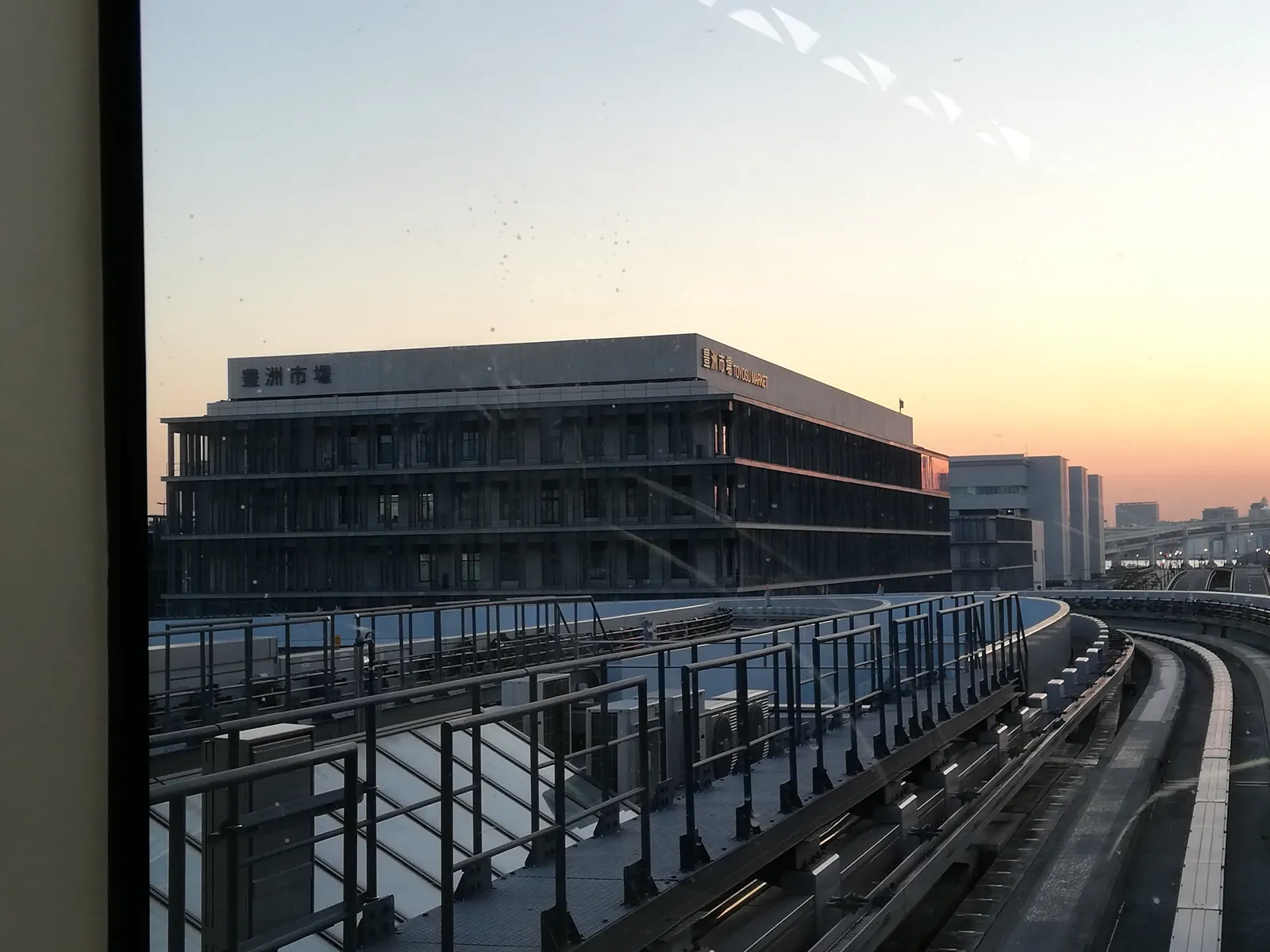
What to see in Toyosu Market's Fisheries, Produce, and Management buildings. Learn how the free tuna auction lottery works, where to watch without a ticket from the 2F viewing deck, how to check the ~114 annual closed days (most Wednesdays), and how to walk 4 minutes from Shijo-mae Station to Toyosu Senkyaku Banrai's late-night dining and free 9F footbath.
Check Closed Days First: 114 Days Off a Year
Toyosu Market does not simply close on weekends. In 2026, Fisheries Wholesale is closed for 114 days total, covering every Sunday, all national holidays, most Wednesdays, the New Year break (January 1 to 4 and December 31), and select Obon summer dates; the Fruits and Vegetables Building closes roughly 118 days. For travelers, picking the wrong date carries an immediate penalty: on a Fisheries closed day, not only are the auctions dark, but the 3F restaurants and 4F shops inside the complex shut completely.
Many visitors assume every Wednesday is closed, yet several exceptions appear each year. Seven Wednesdays stay open in 2026: May 6, August 12, September 23, October 14, November 4, November 25, and December 30. Since both the dining zone and auction viewing corridors fall under the Fisheries side, always confirm against the official Fisheries Wholesale annual calendar instead of guessing by a rough 'closed Wednesdays' rule.
Holiday weekends and substitute public holidays are easy to misread, because a Monday substitute holiday closes the market on a weekday while occasionally shifting a nearby Wednesday into an open day, as happens in October and November. The Tokyo Metropolitan Central Wholesale Market website publishes daily calendar PDFs in both Japanese and English; save a screenshot of your travel month offline, as showing the official PDF at a hotel front desk is much faster than explaining dates verbally.
Crowd levels differ sharply between weekdays and Saturdays. Because the market closes on Sundays and national holidays, Saturday is the only weekend day open to the public, making it the busiest morning of the week with long lines at popular sushi counters early on. For calmer wholesale viewing and shorter waits, target a weekday morning; if your schedule only allows Saturday, arriving right near the 5:00 AM to 6:00 AM opening gives you a clear edge.
Even if your Tokyo dates collide with a market closure, Toyosu is not a total dead end. Next door, Toyosu Senkyaku Banrai—which opened in 2024—operates every day of the year, keeping its outer seafood bowl eateries, souvenir shops, and free 9F footbath open as usual, while Toyosu Market's rooftop plaza also remains open until 11:00 PM on closed days. Without the indoor market restaurants absorbing diners, however, everyone funnels into Senkyaku Banrai, creating heavier lunch queues and tighter parking nearby.
To dodge closed-day crowds, eat an early lunch before 11:00 AM; if your itinerary is flexible, visiting Senkyaku Banrai after 3:00 PM on an open market day is the quietest window of all. Rather than braving packed outer stalls on a market holiday, you can pivot to Odaiba or a nearby Toyosu hot spring facility and save the wholesale market itself for the next open morning. Travelers spending four or five days in Tokyo over a weekend do best locking Toyosu into a Tuesday, Thursday, or Friday morning and leaving Sundays and holidays for city neighborhoods and department stores.
Watching the Tuna Auction: Lottery vs. Walk-In Deck
Standing on the close-range observation deck for the tuna auction requires entering Tokyo's advance lottery. Admission is completely free, limited to 100 people per day and up to 5 people per group; parties larger than five must split into separate applications. Winners check in at 5:30 AM at the 3F PR Corner in the Management Building, and staff escort the group to the lower viewing deck from 5:45 AM to 6:25 AM. Applications pause annually from December 25 through January 5, so year-end travelers need to apply during earlier open windows.
Missing out on the lottery does not mean missing the auction. The free 2F viewing corridor in the Fisheries Intermediate Wholesale Building opens at 5:00 AM with no reservation or headcount cap, letting you walk up and watch through the glass from above. The trade-off is angle and proximity: lottery winners stand closer to floor level with unobstructed views and stronger atmosphere, whereas the 2F walkway looks down from behind glass, requiring careful framing to avoid reflections in photos.
Because lottery results arrive before your trip, this is the only part of a Toyosu visit that needs locking in early. If you win, set your alarm for the 5:30 AM check-in; if you don't—or if you visit during the December 25 to January 5 blackout—head straight to the free 2F corridor at 5:00 AM to catch the full event. Even if dawn is too early, the viewing corridor stays open until 5:00 PM, and mid-morning unloading, cutting, and wholesale trading are still well worth seeing.
The early schedule moves fast: the corridor opens at 5:00 AM for claiming window spots, lottery winners gather at the PR Corner at 5:30 AM, and the tuna auction runs from 5:45 AM to 6:25 AM. Watching auctioneers chant prices while buyers signal bids across rows of fresh and frozen tuna is the centerpiece of the morning. Don't leave the moment bidding ends at 6:25 AM—crews immediately shift into filleting and carting fish below, so lingering a few extra minutes before heading down to 3F for breakfast lines you up nicely with the lively 7:00 AM dining rush.
If part of your group wins the lottery and the rest don't, you don't have to split up for long. Watch the end of the 6:25 AM auction from your respective areas and agree to meet at 6:30 AM outside the 3F restaurant entrance in the Fisheries Intermediate Wholesale Building to queue for breakfast together. Remember to disable phone flashes and video lights, keep quiet, and—for lottery winners—follow staff instructions throughout the escorted session.
Many first-time visitors assume they can buy a cut of tuna right after the auction, but the floor handles trade strictly between primary wholesalers and intermediate dealers, with zero retail sales to tourists. Treat the auction purely as a front-row look at market pricing in action, and save eating and buying seafood or dried goods for the 3F restaurants, Uogashi Yokocho, and 4F shops. Likewise, because the 2F viewing corridor remains open until 5:00 PM, walking through between 9:00 AM and noon still shows active intermediate wholesaling and transport carts rather than an empty hall.
Eating and Shopping Inside: 3F Dining, Uogashi Yokocho, and 4F
Restaurants inside the market sit in two clusters: the 3F dining zone of the Fisheries Intermediate Wholesale Building and a smaller group on 3F of the Management Building. Individual opening hours vary, though every venue follows the market calendar and closes on market holidays. The 3F lineup centers on kaisendon, sushi, and grilled fish set meals, with lines forming along the hallways before opening on busy days; arriving between 5:00 AM and 6:00 AM gives you the best shot at the first seating at headline sushi bars.
Matching restaurant style to your group size saves time. Solo diners and pairs move quickly through counter-only sushi spots, while groups of four or more—or families with kids—fit more comfortably in table-seating teishoku set-meal and kaisendon shops. Since dawn queues at famous spots are standard, agree ahead of time on how long your group is willing to wait before pivoting to a backup option so nobody loses patience. If you want to compare two marquee restaurants, split them across two separate market mornings rather than forcing two back-to-back meals.
Beyond sit-down meals, Uogashi Yokocho—managed by the intermediate wholesalers' association—packs roughly 70 specialty shops operating roughly from early morning through midday on open market days. Built originally for restaurant buyers, its lanes sell nori, bonito flakes, rolled tamagoyaki omelets, and professional kitchenware, and walk-in travelers can now pick up smaller retail packs. Fresh tamagoyaki and prepared bites are great for eating on-site later in a designated area, while nori and dried goods warrant checking shelf life and packaging; plan to browse before noon, as many dealers pull down their shutters around lunchtime.
One floor up in the Fisheries Intermediate Wholesale Building, 4F gathers dried-seafood and souvenir shops selling nori, kombu kelp, and assorted dried marine products under one roof. Stepping upstairs straight after a 3F breakfast or a Uogashi Yokocho stroll lets you compare wholesale-grade staples with travel-friendly gift packs in one sweep, wrapping up all your shopping before leaving the complex.
Keep two indoor boundaries clear: eating and drinking are banned along all viewing corridors, meaning snacks and drinks purchased in the shops cannot be consumed while walking and must wait for dining zones or designated rest areas. Likewise, the main intermediate wholesale floor is restricted to trade buyers, so regular visitors shop exclusively through Uogashi Yokocho and the 4F retail floor.
Payment policies differ by stall—some restaurants and shops accept credit cards or IC transit cards and mobile payments, yet early-morning trade still leans heavily toward cash. Bring small-denomination yen bills and coins before entering so checkout moves smoothly and a cash-only counter won't send you hunting for an ATM.
If you are unsure of the layout on your first visit, stop by the Management Building's 3F PR Corner after 8:30 AM (open until 2:30 PM on weekdays and 11:30 AM on Saturdays). Staffed counters stock site maps and foreign-language brochures, including Traditional Chinese, making it the quickest stop to confirm your route and check which operations are active that day before touring all four buildings.
Toyosu Senkyaku Banrai: The Complex Next Door
Right beside Toyosu Market, Toyosu Senkyaku Banrai opened on February 1, 2024, divided into the 'Toyosu Outer Market' retail zone and the 'Mekiki Yokocho' dining area. It fills what used to be Toyosu's biggest gap: while indoor market eateries close early and shut on holidays, Senkyaku Banrai stays open year-round with restaurants running from 10:00 AM to 10:00 PM, giving visitors a reliable place to eat and shop whether arriving at noon or on a market holiday.
Mekiki Yokocho gathers seafood restaurants and standing-counter stalls serving kaisendon, sushi, and grilled seafood, while Toyosu Outer Market feels like a bustling shopping arcade focused on sushi, seafood street bites, and small-pack souvenirs. The two zones keep slightly different schedules—restaurants stay open until 10:00 PM while retail stalls close according to individual shop hours—so check last-order and closing times if you plan an evening visit.
Pricing and atmosphere inside the market's 3F hall differ noticeably from Senkyaku Banrai: the indoor dining floor keeps the brisk rhythm of a dawn wholesale hub that winds down by midday, whereas Senkyaku Banrai is built like a lively food-and-shopping attraction running from lunch well into the night. If you want both experiences, eat an early breakfast inside on 3F and save Senkyaku Banrai for lunch, an afternoon snack, or dinner—neither overlaps the other.
Shopping splits cleanly between the two as well. Toyosu Market's 4F and Uogashi Yokocho lean toward bulk or trade-sized nori, kombu, and dried ingredients, while Senkyaku Banrai's Toyosu Outer Market carries more single-serve souvenirs and ready-to-eat snacks. If buying at both, follow an 'inside first, Senkyaku Banrai second' sequence so you carry heavy bags only at the end; in summer, keep transit time short if you buy chilled or perishable items.
When your feet need a break, take the elevator up to Senkyaku Banrai's free 9F footbath, open daily from 9:00 AM to 10:00 PM year-round, including on market closed days. Facing Tokyo Bay, it is especially pleasant around sunset and practical for older travelers after walking all four market buildings. Because the area only provides foot soaking with no showers, bringing a small towel saves hassle, though paid towels are available on-site per posted signs.
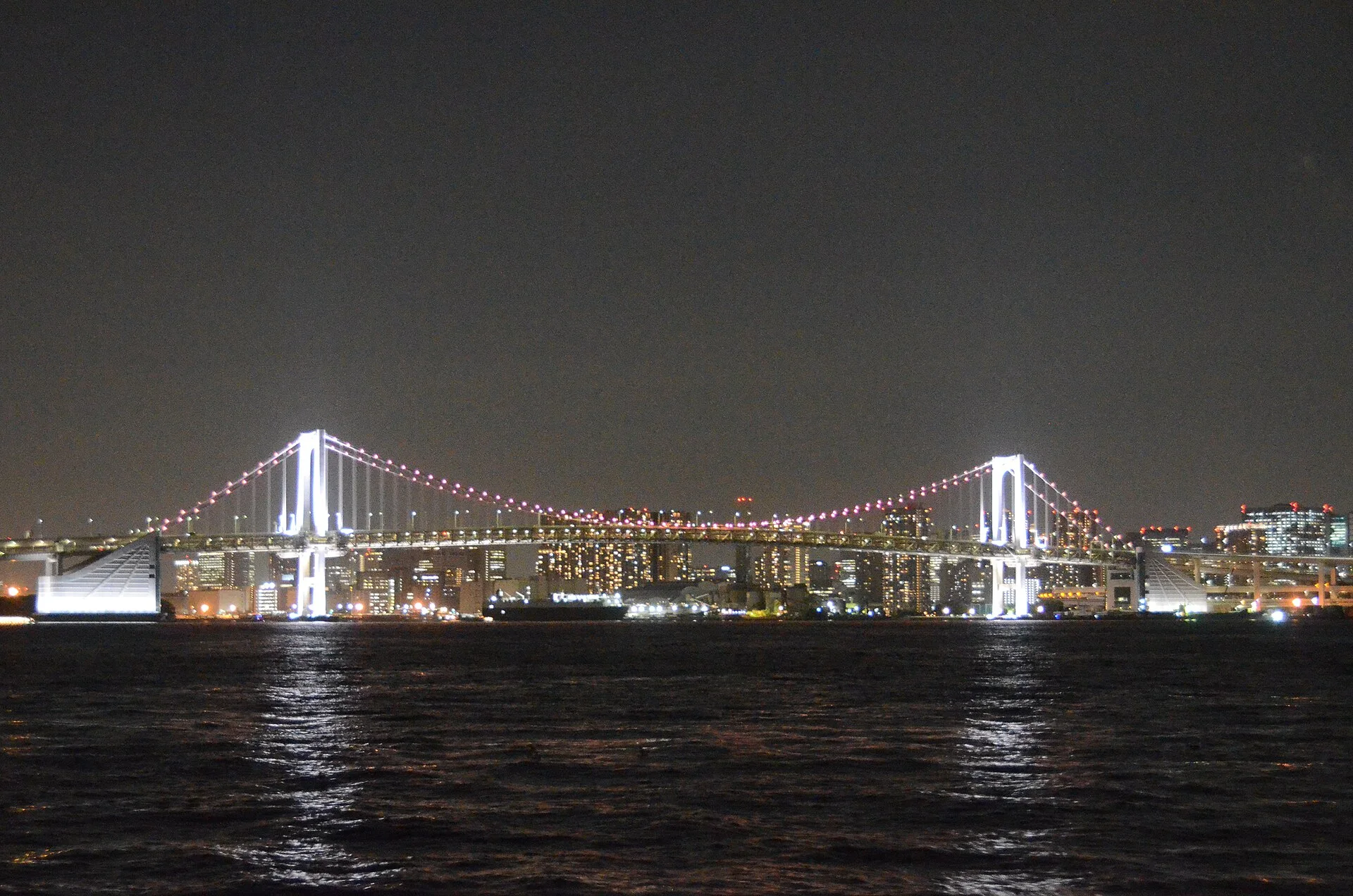
Both the area around Senkyaku Banrai and Toyosu Market's rooftop plaza double as strong night-view spots overlooking the waterfront and Rainbow Bridge, offering a completely different mood after dark. The market rooftop plaza stays open until 11:00 PM even on closed days, making an easy post-dinner loop for bay breezes and illuminated market views before heading back into central Tokyo.
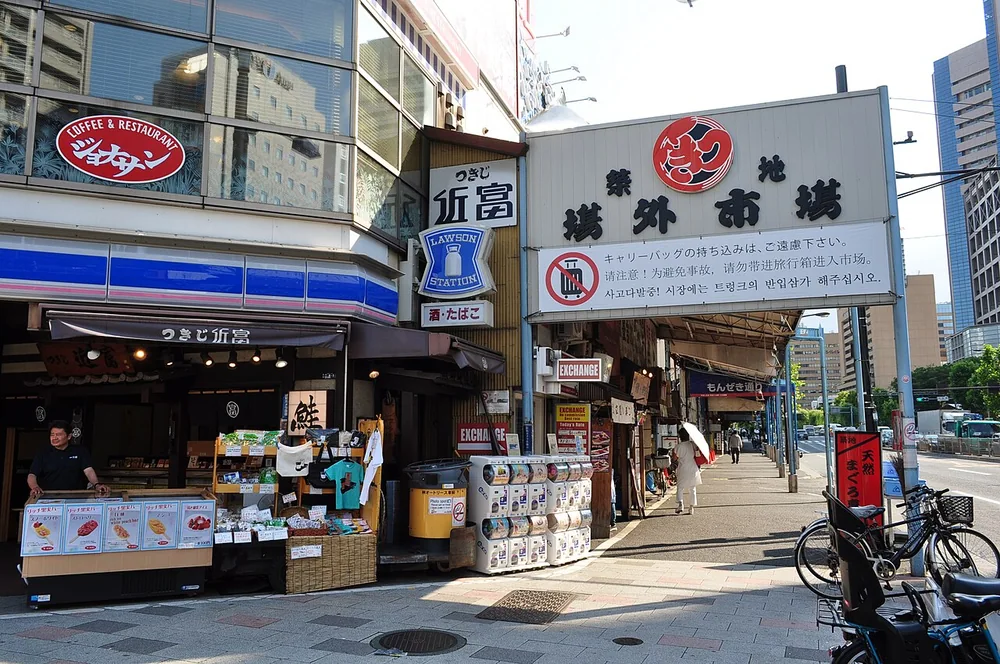
Finally, keep three easily confused names straight: 'Toyosu Market' refers to the central wholesale complex itself; the retail arcade inside Senkyaku Banrai is officially named 'Toyosu Outer Market'; and the historic shopping district still operating at Tsukiji is the independent 'Tsukiji Outer Market,' which runs its own website while syncing roughly with central market holidays. Checking these three locations separately on your map—auction viewing inside Toyosu, eating and browsing right next door at Toyosu Outer Market, and Tsukiji across town—keeps you from getting off at the wrong station or cramming two outer markets into one morning.
Getting There and Parking: Yurikamome, BRT, and Buses
The most straightforward public transit route to Toyosu Market is the Yurikamome Line to Shijo-mae Station. From the ticket gates, the covered skybridge reaches the market complex in about 4 minutes according to the official access page (about 5 minutes in the auction FAQ), keeping you out of the rain and off street crosswalks—a huge plus in bad weather or with strollers and kids. Riding from Shimbashi or Shiodome, Shijo-mae is one stop before Toyosu Station, and standard IC transit cards work directly at the gates.
Visitors staying near Tokyo Station or along the JR Yamanote Line have bus and BRT options that cut out transfers. From Shimbashi, the Rinkai BRT reaches Toyosu-Shijo-mae in roughly 8 minutes with minimal walking; Toei Bus routes include Shi 01 from Shimbashi, Yo 12-2 and Yo 12-3 from Toyocho, and To 05-2 linking Tokyo Station, Ginza, and Tsukiji. Because buses run less frequently than trains, simply pick whichever direct line matches your hotel neighborhood.
Drivers should note that Toyosu Market has no dedicated visitor parking lot. Both the market authority and the intermediate wholesalers' association direct private cars to paid hourly lots around Toyosu Station (such as Times), followed by a walk similar in length to coming from the Yurikamome station, while chartered drop-offs use designated perimeter zones since entrances prioritize pedestrians. If you plan to pair seafood with sake or beer inside or at Senkyaku Banrai, sticking to trains or buses makes the return trip effortless.
Only two times of day demand careful schedule checking: early dawn and late evening. For a 5:00 AM entry to the 2F viewing corridor or a 5:30 AM lottery check-in, first trains from many Tokyo neighborhoods won't get you there in time; staying the night before near Toyosu, Odaiba, or Yurakucho cuts dawn travel dramatically, or else verify the first Rinkai BRT departure from Shimbashi. At night after leaving Senkyaku Banrai past 9:00 PM, watch the last Yurikamome and BRT departures, or walk to Toyosu Station for easy east-west connections on the Tokyo Metro Yurakucho Line.
Matching your route to your hotel area keeps transit simple: stay in Odaiba or Kachidoki for a direct Yurikamome ride, stay around Shimbashi for the 8-minute Rinkai BRT, or stay along the Yurakucho Line and ride the subway to Toyosu Station before walking or transferring one stop on the Yurikamome. Save the first and last departure times to your phone so your round-trip stays clean and direct.
Factoring in rain or luggage makes Shijo-mae Station on the Yurikamome Line the safest bet of the three transit modes. Stepping off the platform onto the covered walkway straight into the Management and Fisheries Intermediate Wholesale buildings means zero umbrellas and zero street crossings, whereas BRT and Toei Bus riders face a short open-air walk from curbside stops—noticeably less comfortable with a carry-on in wind or heavy rain. On the flip side, if you are loaded down with nori, kombu, and dried goods heading back toward Ginza or Tokyo Station, hopping on the To 05-2 bus or transferring at Shimbashi can spare you stairs and long subway transfers.
Fitting Toyosu Into a Tokyo Day
If you are chasing the dawn auction, stay near Toyosu or Odaiba the night before. Enter the Fisheries Wholesale viewing corridor at 5:00 AM (or check in at the PR Corner at 5:30 AM), head down to 3F of the Fisheries Intermediate Wholesale Building at 6:30 AM for breakfast, browse Uogashi Yokocho and the 4F dried-goods floor at 7:30 AM, swing by Senkyaku Banrai at 9:00 AM for extra souvenirs or a footbath, and wrap up after 10:00 AM to head toward Odaiba or central Tokyo. Everything essential happens before mid-morning, leaving the entire afternoon free without forcing a half-day attraction into a full-day stay.
For a relaxed morning without dawn alarms, arrive via the Yurikamome Line just before 9:00 AM. Walk the viewing corridors to watch active floor operations and grab brochures at the Management Building PR Corner, sit down for brunch on 3F, and pick up dried goods in Uogashi Yokocho and 4F; shift over to Senkyaku Banrai around noon for a second round of seafood bites, soak in the free 9F footbath in the afternoon, and catch Tokyo Bay sunset views from the rooftop plaza. This unhurried loop covers both indoor and outdoor spots comfortably through early evening.
Two natural extensions follow a Toyosu visit. Heading north a few stops on the Yurikamome past Shin-Toyosu and Ariake brings you straight into Odaiba, pairing nicely as 'morning Toyosu plus an afternoon Odaiba waterfront stroll'—or flip the order into 'afternoon Odaiba, evening dinner at Senkyaku Banrai, and next-morning market entry,' since both areas have plenty of hotels depending on how early you want to wake up.
To pivot toward classic central neighborhoods, the Rinkai BRT runs from Toyosu back to Shimbashi in just 8 minutes—putting Ginza shopping and Tsukiji within easy reach—or take the Yurakucho Line directly from Toyosu Station into downtown. Just watch your pacing if you try combining 'morning Toyosu, daytime Ginza, and late-afternoon Tsukiji' in a single day: eating a full kaisendon in Toyosu leaves little appetite for similar seafood stalls a few hours later, so dedicating a day to one market usually makes for a better meal.
When companions have different sleep schedules, splitting into an 'early bird' group and a 'sleep-in' group keeps everyone happy. Early risers can enter at 5:00 AM for the auction and peak floor action, while late sleepers leave the hotel after 8:30 AM and meet at the Management Building PR Corner or the 3F restaurant entrance for brunch and dried-goods shopping—nobody forces a 4:00 AM wake-up or waits around hungry. Elevators and barrier-free walkways cover the complex well for strollers and wheelchairs, provided you steer clear of the tightest early-morning auction bottlenecks.
Weather affects the experience more than many expect. The rooftop plaza and sections of the connecting walkways sit outdoors or semi-outdoors, turning glaringly hot at midday in summer and bitingly windy at dawn in winter—standing still behind the 2F glass waiting for the auction gets chilly fast, so layer warmly in colder months. During rainy season or typhoons, severe weather can occasionally alter market operations or closures; check official Tokyo Metropolitan Government notices before leaving and treat Senkyaku Banrai's indoor dining zone as an easy rain shelter.
Overall, half a day is the sweet spot for Toyosu Market and Senkyaku Banrai combined. Indoor market viewing carries no admission fee—your real cost is time and early-morning energy—so once you have seen the auction, eaten the kaisendon you came for, stocked up on nori and dried goods, and rested your feet in the footbath, save the afternoon for Odaiba, Ginza, or another corner of Tokyo instead of stretching the visit out.
A few useful answers
When is Toyosu Market closed?
In 2026, Fisheries Wholesale is closed for 114 days, including all Sundays, national holidays, most Wednesdays, New Year holidays (January 1 to 4 and December 31), and select Obon dates. On closed days, the market and all indoor restaurants shut down completely; the seven Wednesdays open in 2026 are May 6, August 12, September 23, October 14, November 4, November 25, and December 30.
How can I watch the tuna auction?
Close-range viewing requires winning a free advance lottery capped at 100 visitors per day and up to 5 per group; winners meet at 5:30 AM at the Management Building 3F PR Corner for the 5:45 AM to 6:25 AM viewing, with applications paused from December 25 to January 5. Without a lottery ticket, you can watch for free through the glass on the 2F viewing corridor of the Fisheries Intermediate Wholesale Building, which opens at 5:00 AM with no reservation or headcount limit.
What is the difference between Toyosu Market and Tsukiji Outer Market?
Toyosu Market is Tokyo's indoor central wholesale market, whereas Tsukiji Outer Market is an independent retail shopping district remaining at the original Tsukiji site with its own website and holiday schedule tied roughly to the central market. Inside Toyosu Senkyaku Banrai, which opened in 2024 right beside Toyosu Market, the retail shopping area is officially named 'Toyosu Outer Market' to provide dedicated outer-market dining and browsing.
How do I get there without a car, and is it open on weekends?
Take the Yurikamome Line to Shijo-mae Station and walk about 4 minutes via the covered skybridge, or ride the Rinkai BRT from Shimbashi to Toyosu-Shijo-mae in about 8 minutes; Toei Bus routes also run from Shimbashi, Toyocho, and Tokyo Station. There is no visitor parking inside the market. On weekends, the market is open on Saturdays only and closed every Sunday and national holiday, as well as most Wednesdays.
Official information and references
Sources used in this guide.
- Tokyo Metropolitan Central Wholesale Market | Toyosu Market Overview (Opening, Volume, Closed Days)
- Tokyo Metropolitan Government | Toyosu Market Facility Guide (4-Building Layout and Floors)
- Tokyo Metropolitan Government | Viewing Corridors & Hours (5:00 AM-5:00 PM, PR Corner, Rooftop Plaza)
- Tokyo Metropolitan Government | Tuna Auction Viewing Lottery (100 Visitors, 5:45 AM-6:25 AM, Check-in)
- Tokyo Metropolitan Government | Toyosu Market Annual Holiday Calendar (2026 Daily Schedule)
- Toyosu Senkyaku Banrai | Facilities & Operating Hours (Toyosu Outer Market, Free Footbath)
- Uogashi Yokocho | Toyosu Market Intermediate Wholesalers Association (~70 Specialty Shops)