What can you see in Toyosu Market's fisheries, produce, and management buildings? Learn how the tuna auction lottery and free 2F viewing walkway work, why the market closes around 114 days a year (often Wednesdays), how to reach Shijo-mae Station in 4 minutes on the Yurikamome Line, and what stays open until 22:00 at Toyosu Senkyaku Banrai.
- Reading Scope
- 13 min read · 7 chapters · 4 Q&As
- Official Verification
- 7 official sources checkedUpdated 20 November 2026
- Key Topics
- FoodItinerariesTokyo & Kanto
Chapter Route Map (tap any stop)
- Understand the Four Buildings First: Matching Each Hall to Your Route
- Check Closure Days First: 114 Days Shut Each Year
- Watching the Tuna Auction: Lottery vs Queue-Free Viewing
- Eating and Shopping Inside: 3F Restaurants, Uogashi Yokocho, and 4F Dried Goods
- Toyosu Senkyaku Banrai: The Outer-Market Complex Opened in 2024
- Getting There and Parking: 4 Minutes via Yurikamome, BRT, and Buses
- Fitting Toyosu into a Tokyo Day
- Quick Q&A
Before heading to Toyosu Market, keep two essentials in mind. First, it is a central wholesale complex split across four buildings - Fisheries Wholesale, Fisheries Intermediate Wholesale, Fruit and Vegetable, and Management Facilities - so exploring it feels nothing like a traditional shopping street. Second, it runs on a strict closure calendar: in 2026, Fisheries Wholesale shuts for 114 days across Sundays, national holidays, and most Wednesdays, while open market days kick off at 05:00. Close-up viewing of the tuna auction requires a free advance lottery (100 visitors daily, up to five per group), though anyone without a ticket can watch free through the glass from the 2F observation walkway in the Fisheries Intermediate Wholesale Building from 05:00. Ride the Yurikamome Line to Shijo-mae Station for a four-minute covered walk straight in, then follow up at Toyosu Senkyaku Banrai (opened in 2024 and open daily), where restaurants trade until 22:00 and a free 9F footbath awaits. Because closure dates differ slightly between the produce and fisheries halls, checking the official Tokyo daily calendar beforehand saves a wasted trip.
Understand the Four Buildings First: Matching Each Hall to Your Route
Toyosu Market opened on 11 October 2018 as the core hub of the Tokyo Metropolitan Central Wholesale Market for seafood and fresh produce. Its 2026 daily averages are staggering: roughly 1,342 tonnes of seafood worth about ¥1.54 billion, alongside 997 tonnes of fruit and vegetables worth around ¥332 million. Four main buildings make up the complex - the Fruit and Vegetable Building, Fisheries Intermediate Wholesale Building, Fisheries Wholesale Building, and Management Facilities Building - though general visitors spend most of their time in three areas: the 3F restaurant zone and 4F dried-goods shops in Fisheries Intermediate Wholesale, the 2F tuna and sea urchin auction viewing walkway in Fisheries Wholesale, and the 3F PR Corner and restaurants in Management Facilities.
Matching each building to an activity stops you getting lost. Head to 3F of the Fisheries Intermediate Wholesale Building for seafood rice bowls or a sushi breakfast, go up to 4F in the same building for nori and dried goods, take the 2F walkway in Fisheries Wholesale for the morning auction, and report to the 3F PR Corner in Management Facilities for lottery check-in and leaflets. The Fruit and Vegetable Building focuses on wholesale trading with limited visitor access; likewise, the intermediate wholesale trading floor is off-limits to general shoppers, so stick to the retail zones for buying ingredients.
Elevated decks and walkways link all four buildings, and a sheltered pedestrian bridge runs straight from the Yurikamome Line's Shijo-mae Station into the complex. The smoothest order is to head straight to Management Facilities PR Corner or the 2F walkway in Fisheries Wholesale for the auction first, then double back to 3F of Fisheries Intermediate Wholesale for breakfast and 4F for shopping. Reverse that order and the morning auction will already have wrapped up, leaving only an empty floor being hosed down beneath the glass.
On-site signs and official floor plans use Japanese building names, so noting the blocks and floor numbers upfront saves backtracking. Stepping off the walkway from Shijo-mae Station brings you first to the Management Facilities Building (Block 7, six storeys) and Fisheries Intermediate Wholesale Building (Block 6, five storeys), while the Fisheries Wholesale Building (Block 7) lies slightly further along the connecting corridor. The Fruit and Vegetable Building sits on the opposite side of the site; visitors interested in produce wholesaling need only spare 15 minutes for a quick loop after finishing the two seafood buildings and Management Facilities.
Strict rules apply along every observation walkway: eating and drinking are banned throughout the corridors, and large suitcases may not be wheeled through, so leave bulky luggage at your hotel or in station lockers. Photography is welcome from designated viewing windows, provided you keep flash and tripods packed away, and morning auction visitors must stay quiet to avoid distracting auctioneers and floor staff.
Travellers with young children or older relatives should adjust both arrival times and walking pace. The viewing corridors are flat and step-free for pushchairs, yet the 05:00 auction window is chilly and crowded; with toddlers, arriving after 09:00 to watch general floor activity and have brunch on 3F is far more pleasant. Older visitors should budget for 20 to 30 minutes of walking to cover the main walkways - benches appear along the route, though sparingly, so take a breather before joining a restaurant queue.
Looking down through the 2F glass at zipping turret trucks, neatly lined rows of fresh and frozen tuna, and sharp auctioneer hand signals brings those thousand-tonne daily figures vividly to life. Save the floor plan to your phone and follow the building signs from the station to link market viewing and breakfast effortlessly.
When picking your travel dates, remember that the fisheries and produce halls do not share identical holiday schedules: in 2026, Fisheries Wholesale closes 114 days while Fruit and Vegetable closes around 118 days, diverging on a handful of Wednesdays and specific dates. Because visitors' main targets - the restaurants, Uogashi Yokocho, dried-goods shops, and the tuna auction walkway - all sit under the fisheries side and Management Facilities, base your calendar check on Fisheries Wholesale dates so a produce-only closure never tricks you into skipping the market.
| Building | Visitor Floors | What to See and Eat | Access Conditions |
|---|---|---|---|
| Fisheries Intermediate Wholesale Building | 3F restaurants, 4F dried-goods shops | Seafood rice bowls, sushi breakfast; nori and dried goods | Open on market days; no eating or drinking in walkways |
| Fisheries Wholesale Building | 2F observation walkway | Free viewing windows over the tuna auction floor | Open from 05:00; auction runs approx. 05:45-06:25 |
| Management Facilities Building | 3F PR Corner, restaurants | Lottery meet-up point, market information | PR Corner 08:30-14:30 (until 11:30 on Saturdays) |
| Fruit and Vegetable Building | Mainly wholesale operations | Limited viewing of produce wholesale | Closed to general retail shoppers |
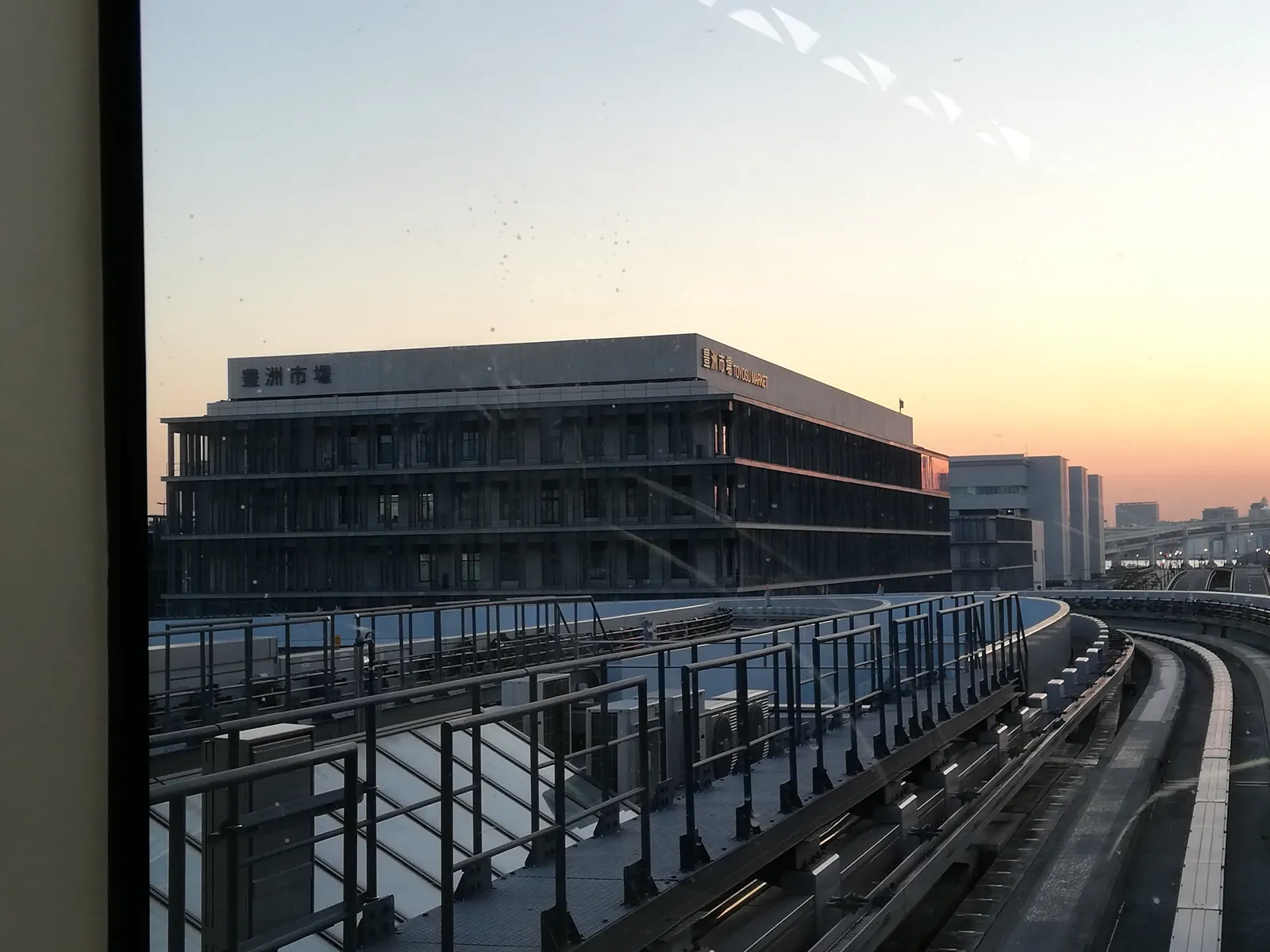
What can you see in Toyosu Market's fisheries, produce, and management buildings? Learn how the tuna auction lottery and free 2F viewing walkway work, why the market closes around 114 days a year (often Wednesdays), how to reach Shijo-mae Station in 4 minutes on the Yurikamome Line, and what stays open until 22:00 at Toyosu Senkyaku Banrai.
Check Closure Days First: 114 Days Shut Each Year
Toyosu Market's holiday schedule goes well beyond weekends. In 2026, Fisheries Wholesale is closed 114 days across the year, covering every Sunday, all national holidays, most Wednesdays, plus New Year (1-4 January and 31 December) and selected Obon dates; the Fruit and Vegetable Building closes roughly 118 days. Getting the date wrong has an immediate penalty: on any fisheries closure day, auctions halt and every 3F restaurant and 4F shop inside shuts its doors.
Many travellers assume Wednesdays are always closed, yet exceptions appear every year. In 2026, seven Wednesdays trade as normal: 6 May, 12 August, 23 September, 14 October, 4 November, 25 November, and 30 December. Because the dining floors and auction walkways follow the fisheries calendar, always check the official Fisheries Wholesale schedule rather than relying on a rough rule of thumb.
Long weekends and substitute public holidays are the easiest traps to miss, shifting closures onto regular weekdays or turning occasional Wednesdays back into trading days, as happens in October and November. The Tokyo Metropolitan Central Wholesale Market website publishes daily PDF calendars in both Japanese and English; save an offline screenshot of your travel month, as showing the official PDF at a hotel reception desk resolves date queries far faster than describing them.
Weekdays and Saturdays offer sharply different atmospheres. Since Sundays and public holidays are always shut, Saturday is the sole weekend trading day and inevitably draws the heaviest crowds, with long queues forming early outside well-known sushi counters. Aim for a weekday morning if you want breathing room to watch wholesale operations and shorter restaurant waits; if your schedule leaves only Saturday, arrive as close to the 05:00-06:00 opening window as you can.
Even if your Tokyo stay clashes with a closure day, Toyosu is not completely off-limits. Adjacent Toyosu Senkyaku Banrai, opened in 2024, operates 365 days a year: its outer-market seafood bowls, souvenir stalls, and free 9F footbath remain open as usual, and the market's rooftop plaza stays accessible until 23:00 on closed days too. Without indoor restaurants to spread out the footfall, however, everyone converges on Senkyaku Banrai, tightening lunchtime queues and nearby parking.
Beat closure-day lunchtime crowds by eating before 11:00, or visit Senkyaku Banrai after 15:00 on an open market day when footfall drops right down. Alternatively, spend a closure day around Odaiba or local hot-spring baths and save the market itself for an open morning. Travellers on a four- or five-day Tokyo trip spanning a weekend are best served pencilling Toyosu in for Tuesday, Thursday, or Friday morning, keeping Sunday and bank holidays for city neighbourhoods and department stores.
Watching the Tuna Auction: Lottery vs Queue-Free Viewing
To watch the tuna auction from the close-up floor-level deck, you must enter the Tokyo Metropolitan Government's advance free lottery. Daily capacity is capped at 100 visitors with up to five people per application, meaning larger groups have to split into separate entries. Successful applicants check in at 05:30 at the 3F PR Corner in the Management Facilities Building before staff escort the group to the viewing deck for the 05:45-06:25 auction. Note that applications close annually from 25 December to 5 January, so year-end travellers should apply within the earlier open windows.
Missing out on a lottery slot hardly spoils the morning. The free 2F observation walkway in the Fisheries Intermediate Wholesale Building opens at 05:00 with no booking or visitor cap, letting you look straight down through the glass as bidding unfolds. The trade-off comes down to angle and atmosphere: lottery winners stand close to floor level for unobstructed sightlines and acoustic immediacy, whereas the 2F walkway offers an overhead panorama where photographers need to angle around window reflections.
Because lottery notifications arrive well ahead of departure, this is the only piece of a Toyosu visit you have to settle in advance. Win a place and set your alarm for the 05:30 check-in; if you miss out - or visit during the 25 December-5 January suspension - simply head onto the free 2F walkway at 05:00 to see the full sequence. Even if dawn starts are out of the question, the walkway remains open until 17:00, with unloading, filleting, and wholesale trading still lively through the morning.
Those early hours move like clockwork: 05:00 for staking out a 2F window spot, 05:30 for lottery check-in at PR Corner, and 05:45-06:25 for the tuna auction itself. Seeing auctioneers rattle off bids as intermediate buyers flash hand signals and rows of fresh and frozen tuna change hands in minutes is the undeniable highlight. Stay put a little past 06:25 as cutting and hauling kick off immediately below, then head down to 3F around 07:00 just as the breakfast rush hits full stride.
When some members of a group win the lottery and others do not, you only need to part ways briefly. Watch the 06:25 finale from your respective decks and agree to meet at 06:30 outside the 3F restaurant zone in the Fisheries Intermediate Wholesale Building to queue for breakfast together. Remember to disable camera flashes and phone lights, keep voices low, and follow staff directions at all times if you are in the escorted lottery group.
First-timers often assume they can pick up a cut of tuna right after the auction, yet bidding is strictly business-to-business between primary wholesalers and licensed intermediate buyers, with zero retail sales on the floor. Treat the auction purely as a front-row look at market pricing and logistics, saving your appetite and shopping list for 3F restaurants, Uogashi Yokocho, and 4F shops. Similarly, because the 2F walkway stays open until 17:00, arriving between 09:00 and midday still rewards you with active intermediate wholesaling and turret-truck traffic rather than an empty hall.
Eating and Shopping Inside: 3F Restaurants, Uogashi Yokocho, and 4F Dried Goods
Indoor dining is clustered in two areas: the 3F restaurant zone of the Fisheries Intermediate Wholesale Building and a smaller group of eateries on 3F of the Management Facilities Building. Individual opening hours vary, though every venue follows the market calendar and closes entirely on market holidays. The 3F lineup centres on seafood rice bowls, sushi, and grilled fish set meals, with queues forming before opening; arriving between 05:00 and 06:00 gives you the best chance of catching the first seating at sought-after sushi counters.
Pick your restaurant according to party size and patience. Solo diners or pairs move quickest through counter-style sushi bars with brisk turnover, whereas groups of four or more or families with children fare better at table-service set-meal or kaisendon shops. Long dawn queues are standard at headline venues, so agree on a cut-off wait time beforehand and pivot to a backup spot before patience wears thin. If you want to compare two famous sushi counters, split them across two separate mornings rather than attempting back-to-back feasts.
Alongside sit-down dining, Uogashi Yokocho - operated by the Intermediate Wholesalers Association - packs roughly 70 specialist stalls trading roughly from early morning until around midday on market days. Built originally for restaurant buyers, its aisles are lined with nori, dried bonito flakes, rolled omelette (tamagoyaki), and professional cookware, all now sold in smaller packs to everyday visitors. Tamagoyaki and savoury bites make easy immediate snacks, while nori and dried goods warrant checking shelf life and packaging; aim to browse before midday, as many wholesalers begin pulling down shutters around lunch.
One floor above in the Fisheries Intermediate Wholesale Building sits the 4F dried-goods and souvenir floor, gathering nori, kombu kelp, and preserved seafood under one roof. Stepping straight up to 4F or into Uogashi Yokocho after breakfast lets you compare trade-grade staples alongside gift-ready packs in one sweep, saving extra trips out before you leave.
Keep two indoor boundaries in mind: eating and drinking remain strictly prohibited along observation walkways, meaning hot snacks and drinks must stay inside restaurant areas or designated spaces rather than being carried along corridors. Equally, the intermediate wholesale market floor admits trade buyers only, so stick to Uogashi Yokocho and the 4F retail zone for personal shopping.
Payment options vary from stall to stall: several restaurants and shops accept cards or electronic payments, yet early-morning trade still leans heavily toward cash. Carrying smaller yen notes and coins gets you through checkout briskly and saves an awkward hunt for a cash machine at long-standing cash-only counters.
First-time visitors unsure of their bearings can drop by the 3F PR Corner in the Management Facilities Building after 08:30 (open until 14:30 on weekdays and 11:30 on Saturdays). It stocks site maps and multilingual leaflets, and staff at the counter can confirm which sections are open that day so you can tackle the four buildings with confidence.
Toyosu Senkyaku Banrai: The Outer-Market Complex Opened in 2024
Sitting right beside Toyosu Market, Senkyaku Banrai opened on 1 February 2024, divided into the "Toyosu Jogai Market" (Toyosu Outer Market) retail zone and the "Mekiki Yokocho" dining hall. It neatly fills Toyosu's biggest blind spot: where indoor market restaurants wrap up early and shut completely on holidays, Senkyaku Banrai opens every day of the year with restaurants serving 10:00-22:00, giving late risers and closure-day visitors somewhere reliable to eat and shop.
Mekiki Yokocho brings together sit-down seafood restaurants and standing bars serving kaisendon, sushi, and charcoal-grilled seafood, while Toyosu Jogai Market recreates a bustling shopping lane packed with sushi bites, seafood street snacks, and compact souvenirs. Operating hours split between the two zones - restaurants run until 22:00 while individual retail stalls set their own closing times - so double-check last orders and shutter times if you plan an evening visit.
Indoor 3F dining and Senkyaku Banrai belong to completely different cultures: inside follows the brisk rhythm of a wholesale dawn that winds down toward noon, whereas Senkyaku Banrai runs as a tourist dining and shopping street lively from lunch well into the evening. Visitors keen on both should take breakfast on 3F inside and return to Senkyaku Banrai for lunch, an afternoon bite, or dinner without any overlap.
Shopping splits along the same lines. Market 4F and Uogashi Yokocho cater more to wholesale-style packs of nori, kelp, and dried ingredients, while Senkyaku Banrai's Toyosu Jogai Market specialises in single-portion souvenirs and ready-to-eat snacks. If you plan to buy at both, do the indoor market first and Senkyaku Banrai last so heavy bags stay light for longer, and keep onward transit brief in summer if picking up chilled or fresh goods.
When your legs need a break, take the lift up to Senkyaku Banrai's free 9F footbath, open daily 09:00-22:00 including market closure days. Looking straight out toward Tokyo Bay, it makes an atmospheric sunset stop and gives older relatives a welcome rest after touring all four market buildings. Note that the terrace provides foot-soaking pools only without shower facilities; bring a small towel from your hotel or purchase one on site as signposted.
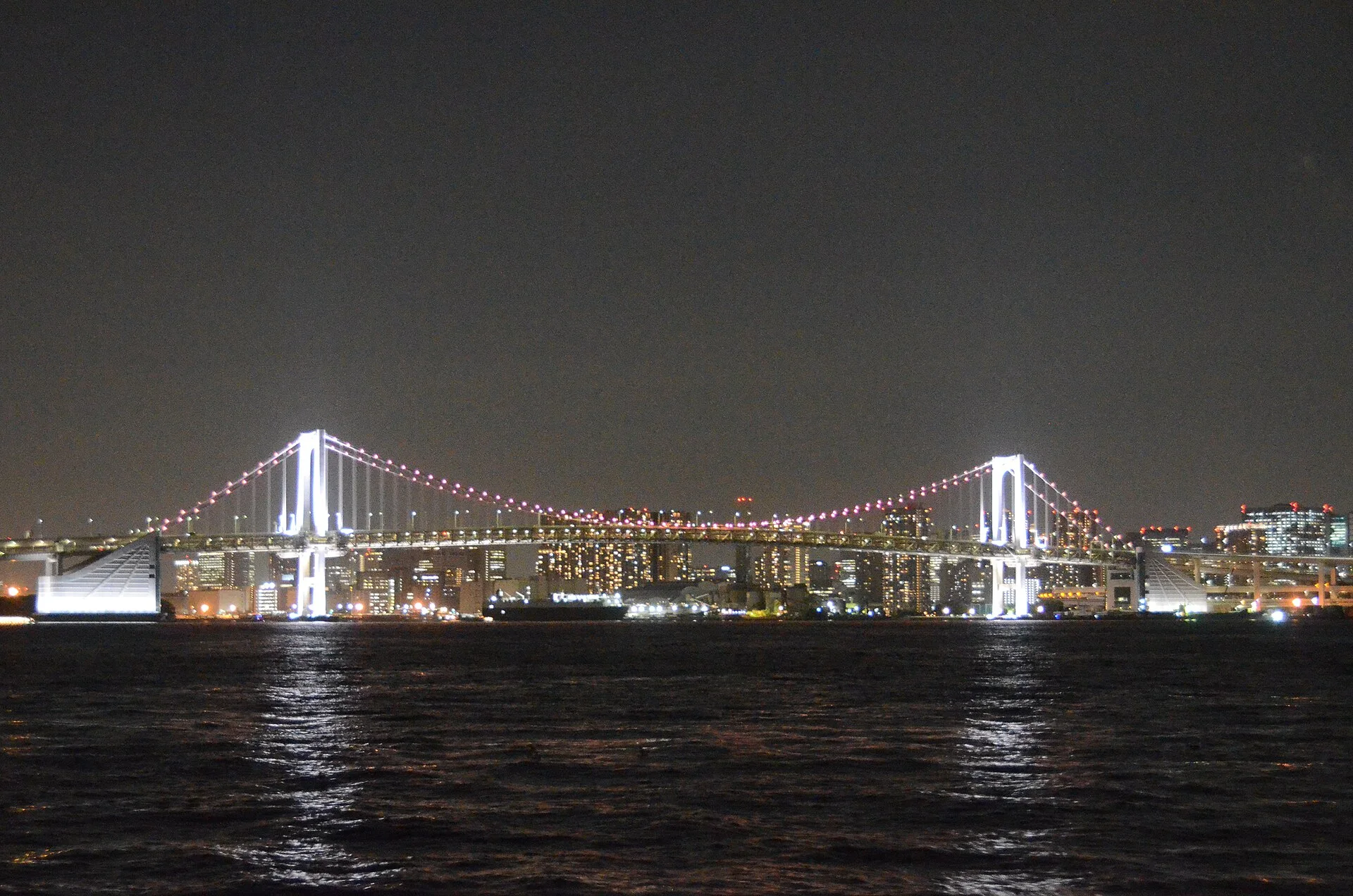
Around Senkyaku Banrai and up on the market's rooftop plaza, night views stretch across the waterfront and Rainbow Bridge, transforming the mood completely once darkness falls. Since the rooftop plaza stays open until 23:00 even on market holidays, pairing dinner at Senkyaku Banrai with a breezy evening turn overlooking the illuminated buildings rounds off a Toyosu visit nicely.
Finally, separate three names that travellers routinely mix up: "Toyosu Market" is the central wholesale complex itself; the retail shopping street inside Senkyaku Banrai is officially titled "Toyosu Outer Market" (Toyosu Jogai Market); and the historic lanes left behind at Tsukiji form the independent "Tsukiji Outer Market", running its own website with holidays linked to the central market. Keeping all three straight when searching maps prevents turning up at the wrong station - and stops you from cramming two separate outer markets into one morning.
Getting There and Parking: 4 Minutes via Yurikamome, BRT, and Buses
The easiest public transport route to Toyosu Market is the Yurikamome Line to Shijo-mae Station. A covered pedestrian walkway links the ticket barriers straight to the market complex - listed as roughly a 4-minute walk on the official access page (and around 5 minutes in the auction FAQ) - with full weather shelter and zero street crossings, making it ideal in rain or with pushchairs. Coming from Shinbashi or Shiodome, Shijo-mae sits one stop before Toyosu and accepts standard IC travel cards.
Visitors staying around the JR Yamanote Line or Tokyo Station can cut out a transfer using direct buses or BRT. Tokyo BRT from Shinbashi reaches "Toyosu-shijo-mae" in about 8 minutes with minimal walking, while Toei Bus routes include Shi 01 (from Shinbashi), Yo 12-2 and Yo 12-3 (from Toyocho), and To 05-2 connecting Tokyo Station, Ginza, and Tsukiji. Buses run less frequently than rail lines, so simply pick whichever stop sits closest to your hotel.
Drivers should note that Toyosu Market has no dedicated visitor car park. Both official market guidance and the wholesalers' association direct motorists to metered car parks near Toyosu Station (such as Times) before walking in, which takes roughly as long as arriving from the Yurikamome station. Private-hire vehicles drop off and collect at designated roadside bays around the perimeter, as main entrances prioritise pedestrians; anyone planning to pair seafood with sake or beer is far better off taking rail or bus.
Early-morning and late-evening connections require a quick timetable check. To reach the 2F observation walkway by 05:00 or Management Facilities check-in by 05:30, first trains from many central neighbourhoods arrive too late; staying overnight in Toyosu, Odaiba, or Yurakucho cuts dawn travel sharply, or check the first BRT departure from Shinbashi. Leaving Senkyaku Banrai after 21:00, keep an eye on last Yurikamome and BRT services, while the Tokyo Metro Yurakucho Line from Toyosu Station offers straightforward east-west links back across the city.
Match your approach to where you are staying: take the Yurikamome straight in from Odaiba or Kachidoki, hop on the 8-minute Tokyo BRT from Shinbashi, or ride the Yurakucho Line underground to Toyosu Station before walking or taking one stop on the Yurikamome. Saving first and last departures on your phone lets you return smoothly along Shijo-mae Station after breakfast without detours.
Once rain and luggage enter the equation, Shijo-mae Station on the Yurikamome stays the most reliable option of the three. Walking straight off the concourse onto the sheltered skybridge into Management Facilities and Fisheries Intermediate Wholesale avoids umbrellas and kerb crossings altogether, whereas Toei Bus and BRT stops normally entail a short street-level walk that feels much rougher with a cabin bag in wind and rain. On the way back with heavy bags of nori, kelp, and dried goods, however, boarding bus To 05-2 or transferring at Shinbashi spares you hauling shopping up and down underground station stairs toward Ginza or Tokyo Station.
Fitting Toyosu into a Tokyo Day
Early risers aiming for the auction do best sleeping near Toyosu or Odaiba the night before. Step onto the Fisheries Wholesale walkway at 05:00 (or check in at PR Corner by 05:30), drop down to 3F of Fisheries Intermediate Wholesale at 06:30 for breakfast, browse Uogashi Yokocho and 4F dried-goods shops at 07:30, swing by Senkyaku Banrai around 09:00 for extra bites or a foot soak, and head toward Odaiba or central Tokyo after 10:00. Packing the highlights into the morning leaves the entire afternoon free elsewhere.
Prefer a sensible wake-up call? Catch the Yurikamome to arrive just before 09:00. Tour the observation corridors and collect leaflets from Management Facilities PR Corner, sit down for brunch on 3F, then pick up dried goods in Uogashi Yokocho and on 4F; cross into Senkyaku Banrai for a second round of seafood snacks at lunch, soak your feet on 9F in the afternoon, and stay for bay sunset views from the rooftop plaza. Nothing feels rushed, and evening dining runs seamlessly late.
Two natural onward routes fan out from Toyosu. Head north a few stops on the Yurikamome past Shin-Toyosu and Ariake into Odaiba for a "morning Toyosu plus afternoon Odaiba waterfront walk" - or flip it into an "afternoon in Odaiba, dinner at Senkyaku Banrai, and early market the next morning", with plenty of hotels on either side.
Travellers pivoting toward older central districts can ride the 8-minute Tokyo BRT back to Shinbashi for easy access to Ginza shopping or Tsukiji, or take the Yurakucho Line directly from Toyosu Station. If squeezing "morning Toyosu, daytime Ginza, and evening Tsukiji" into a single day, pace your ordering so a hearty morning kaisendon does not spoil your appetite for similar stalls hours later - dedicating each day to a single market usually works better.
Groups on different body clocks can split into an "early shift" and a "lie-in crew" for everyone's benefit. Dawn starters go in at 05:00 for auction views and fresh-off-the-floor photos while everyone else leaves after 08:30, reuniting at PR Corner or the 3F restaurant entrance for brunch and dried-goods shopping without forcing anyone to struggle or wait. Comprehensive lifts and step-free corridors accommodate pushchairs and wheelchairs smoothly, provided you steer clear of the tight 05:00 auction crush.
Weather shapes the on-site experience more than you might expect. Both the market rooftop plaza and sections of the connecting walkways sit outdoors or semi-exposed, bringing harsh midday sun in summer and biting bay winds on winter dawns; standing still beside the 2F glass waiting for the auction chills you quickly, so wear proper thermal layers in colder months. Heavy rain or typhoons can occasionally disrupt wholesale deliveries or closures, so glance at official Tokyo notices beforehand and keep Senkyaku Banrai's indoor dining concourse in mind as an effortless wet-weather fallback.
Taken together, Toyosu Market and Senkyaku Banrai fit neatly into half a day. Entry to the market walkways costs nothing - time and early-morning energy are the real outlay - so once you have watched the market in motion, finished your seafood bowl, stocked up on nori and dried goods, and soaked your feet, save the afternoon for Odaiba, Ginza, or another corner of Tokyo rather than stretching out your stay artificially.
A few useful answers
When is Toyosu Market closed?
Fisheries Wholesale closes 114 days in 2026, covering all Sundays, national holidays, most Wednesdays, plus New Year (1-4 January and 31 December) and part of Obon. On closure days, the entire market including indoor restaurants shuts completely. Seven Wednesdays in 2026 are open as normal: 6 May, 12 August, 23 September, 14 October, 4 November, 25 November, and 30 December.
How can I watch the tuna auction?
Close-up viewing uses a free advance lottery capped at 100 people per day (up to 5 per group), with 05:30 check-in at Management Facilities Building 3F PR Corner for the 05:45-06:25 auction; applications pause from 25 December to 5 January. Without a lottery ticket, you can watch free through the glass from the 2F observation walkway in Fisheries Intermediate Wholesale Building, which opens at 05:00 with no headcount limit.
What is the difference between Toyosu Market and Tsukiji Outer Market?
Toyosu Market is the central wholesale market complex itself, whereas Tsukiji Outer Market is the independent retail shopping district remaining at the original Tsukiji site, with its own website and closures linked to the central market. Inside Toyosu Senkyaku Banrai (opened 2024), the retail zone is officially named "Toyosu Outer Market" (Toyosu Jogai Market), filling the outer-market dining and shopping role at Toyosu.
How do I get there without a car, and is it open at weekends?
Ride the Yurikamome Line to Shijo-mae Station and follow the covered walkway for about 4 minutes. Alternatively, Tokyo BRT from Shinbashi takes about 8 minutes to Toyosu-shijo-mae, alongside Toei Bus routes from Shinbashi, Toyocho, and Tokyo Station; there is no visitor car park on site. The market closes on Sundays and national holidays, so Saturday is the only open weekend day, and weekdays still require checking for closed Wednesdays.
Official information and references
Sources used in this guide.
- Tokyo Metropolitan Central Wholesale Market | Toyosu Market Information (Opening, Scale, Closures)
- Tokyo Metropolitan Government | Toyosu Market Facility Guide (Four-Building Layout and Floors)
- Tokyo Metropolitan Government | Observation Walkways and Opening Hours (05:00-17:00, PR Corner, Rooftop Plaza)
- Tokyo Metropolitan Government | Tuna Auction Viewing Lottery (100 Visitors, 05:45-06:25, Check-In)
- Tokyo Metropolitan Central Wholesale Market | Toyosu Market Annual Closure Calendar (2026 Daily Schedule)
- Toyosu Senkyaku Banrai | Facilities and Opening Hours (Toyosu Outer Market, Free Footbath)
- Uogashi Yokocho | Toyosu Market Intermediate Wholesalers Association (Approx. 70 Specialist Shops)