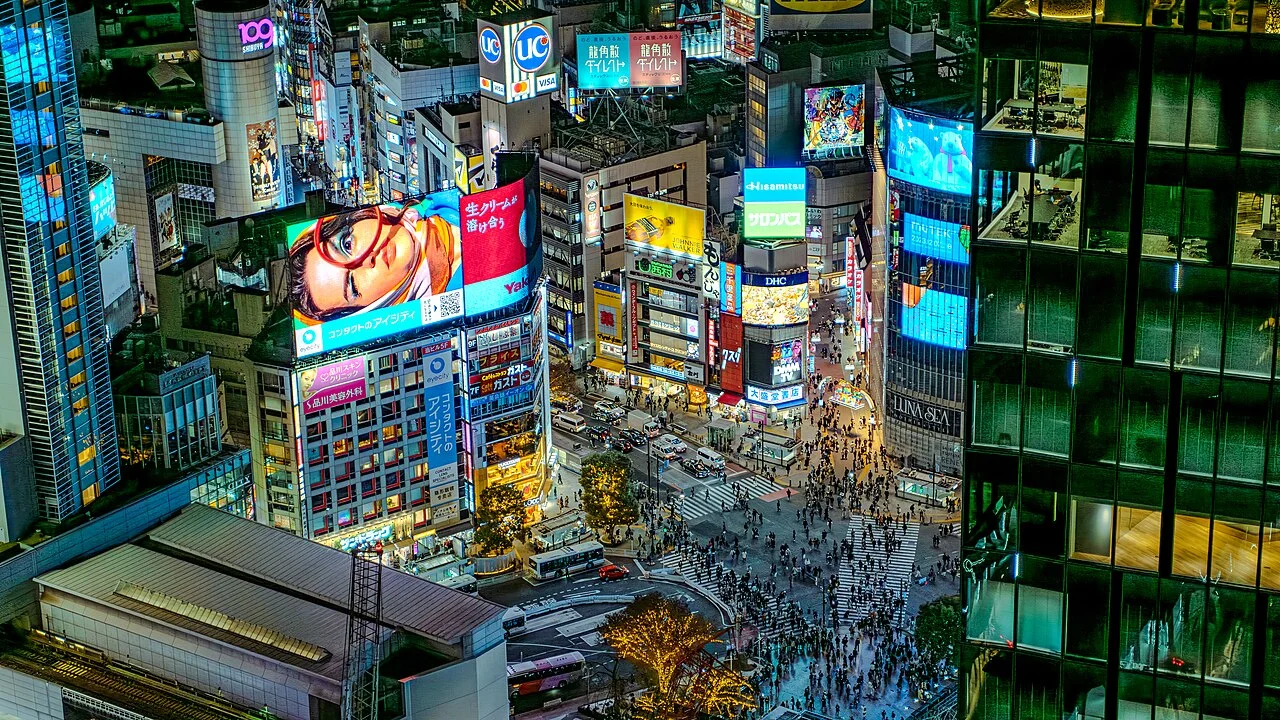
Choosing where to stay in Ikebukuro: comparing hotel entrances, station lifts, Narita and Haneda airport coaches, four-bed family rooms, connecting rooms and serviced apartments across the East Exit, West Exit and Sunshine City.
- Region & Focus
- TokyoAccommodation
- Reading Scope
- 18 min read · 11 chapters · 7 Q&As
- Official Verification
- 29 official sources checkedUpdated 22 November 2026
- Key Topics
- Where to stayNeighbourhoodsBooking
Chapter Route Map (tap any stop)
- Three areas to check on the Ikebukuro hotel map
- How staying by the East Exit compares with staying inside Sunshine City
- West Exit (Central) vs West Exit (South): different routes for different stays
- Estimating the real walk from platform to hotel door
- Narita to Ikebukuro: factoring in the walk after your transfer
- Haneda to Ikebukuro: choosing between West Exit coaches and rail
- Comparing rooms: check bed layout before nightly rates
- Serviced apartments, business hotels and bathhouse stays
- Tailoring your room choice for pushchairs, older relatives and late nights
- Tokyo itineraries where Ikebukuro makes an ideal multi-night base
- Should you change hotels for your final night?
- Quick Q&A
When choosing a hotel in Ikebukuro, start by narrowing down three distinct pockets. If you will be riding JR lines from Ikebukuro Station every day and want department stores and dining right on your doorstep, look near the East Exit. Families planning to spend half a day at Sunshine City will appreciate staying inside the complex or around Higashi-Ikebukuro Station, saving a long walk for afternoon naps or rainy spells. If you are taking the Tobu Tojo Line to Kawagoe, attending a performance at Tokyo Metropolitan Theatre, or catching an airport coach departing from the West Exit, staying on the west side makes every departure smoother. Before booking, compare your daily station entrance, the final stretch back to your hotel late at night, and the exact number of beds your group actually needs.
Three areas to check on the Ikebukuro hotel map
Hotels cluster on both the east and west sides of Ikebukuro Station. Your daily walk starts on the platform where you step off the train, so choosing the right exit shapes how much ground you cover each day. Stay near Sunshine City and you can easily drop shopping bags back in your room during the day, yet you will still face a walk back to JR Ikebukuro Station the next morning. Stay on the south side of the West Exit and an airport coach may drop you steps from the lobby, but reaching Sunshine City requires a longer trek across the station. For a multi-night stay, give more weight to routes you will walk twice a day than to the one-off arrival journey.
The station-side stretch of the East Exit is anchored by Seibu Department Store, Ikebukuro PARCO and Meiji-dori, extending south towards Green Odori and Minami-Ikebukuro Park. If your days mix anime shops, pharmacies and department stores with JR day trips across Tokyo, this pocket fits an easy rhythm of morning departures and evening browsing. When you plan to drop purchases off mid-day, measure the distance to the specific shops on your list rather than relying on broad labels—the retail strip on the east side stretches all the way to Sunshine City, making the 'East Exit area' on booking maps much larger than it first appears.
At the Sunshine City end, pay close attention to Higashi-Ikebukuro Station on the Tokyo Metro Yurakucho Line. If you are heading to Toyosu or Yurakucho in the morning and returning near the aquarium in the afternoon, Higashi-Ikebukuro puts you straight on the line. By contrast, if your itinerary relies on two Yamanote Line trips a day, staying closer to the East (Central) or East (South) exits cuts out repeated walks. When searching booking sites, check separate maps for Ikebukuro Station and Higashi-Ikebukuro Station, pinpoint your main rail line first, and compare room rates from there—the names differ by only one prefix, yet they serve completely different trains and exits.
On the west side, the West (Central) exit leads towards Ikebukuro Nishiguchi Park, Tokyo Metropolitan Theatre and Rikkyo University, while the West (South) exit sits beside LUMINE and Metropolitan Plaza. Once you locate Rikkyo-dori on a booking map, check whether the hotel entrance faces a main thoroughfare, a side street or sits tucked round the back of the building. Light sleepers should also compare window orientation, floor height and street frontage—many properties on convenient late-night routes remain quiet if you request an inward-facing room.
| Location | Best-suited itinerary | Starting landmark on booking maps |
|---|---|---|
| Ikebukuro Station East (Central) & East (South) | Frequent Yamanote or Seibu Ikebukuro Line rides, department stores and Minami-Ikebukuro | Ikebukuro Station East Exit (Central) or East Exit (South) |
| Sunshine City & Higashi-Ikebukuro Station area | Family aquarium visits, daytime nap returns and Yurakucho Line rides | Higashi-Ikebukuro Station Exits 6 & 7 or Sunshine City entrance |
| Ikebukuro Station West (Central) | Tobu Tojo Line trips and Tokyo Metropolitan Theatre performances | Ikebukuro Station West Exit (Central) |
| Ikebukuro Station West (South) | Airport coaches stopping at Hotel Metropolitan and using the JR Metropolitan Ticket Gate | Ikebukuro Station West Exit (South) |
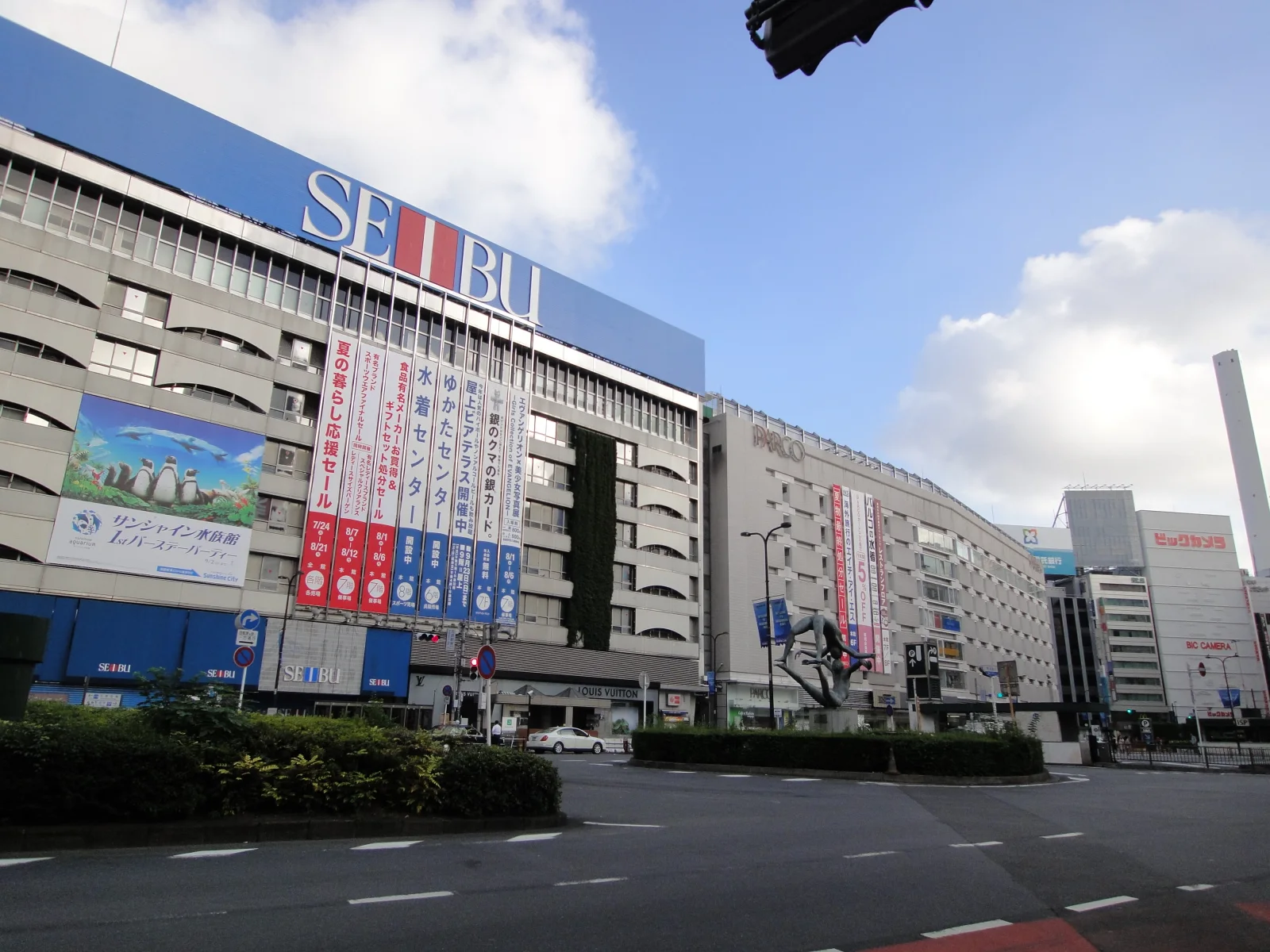
Choosing where to stay in Ikebukuro: comparing hotel entrances, station lifts, Narita and Haneda airport coaches, four-bed family rooms, connecting rooms and serviced apartments across the East Exit, West Exit and Sunshine City.
How staying by the East Exit compares with staying inside Sunshine City
If you are walking to Sunshine City with luggage for the first time, take East Exit 35 out to street level, follow Sunshine 60-dori, and take the stairs down beside the Sunshine Vision screen into the underground passage leading to the complex. Sunshine City lists the walk from Exit 35 to the complex entrance as around 8 minutes, part of which is open to the street. That 8-minute figure starts at the street-level exit, so if you arrive on the Yamanote Line, add time to come down from the platform, pass through the ticket gates and walk to Exit 35. If you are staying near Sunshine City with an early train to catch, walk the route from hotel to ticket gate the evening before.
In heavy rain, or whenever you want a fully sheltered walk, Higashi-Ikebukuro Station is far more convenient. Take the Tokyo Metro Yurakucho Line to Higashi-Ikebukuro, leave through the West Ticket Gate, and follow signs towards Exits 6 and 7 for the Sunshine City underground passage, which keeps you indoors all the way to the entrance. This direct passage is open from 07:00 to 23:00, while the underground entrance beside the Sunshine Vision screen on the Ikebukuro East Exit side is open from 07:00 to 23:30. Keep both entry points and their closing hours handy, and save a street-level route to your hotel door on your phone for early departures or late check-ins.
Sunshine City Prince Hotel sits right inside the complex. The hotel lists walking times of around 8 minutes from Ikebukuro Station and 3 minutes from Higashi-Ikebukuro Station, or around 4 minutes via the underground passage from Higashi-Ikebukuro. Arriving by JR means wheeling bags along a busy shopping street, though once checked in you can easily split up visits to the aquarium, observation deck and dinner spots across the day. If you specifically want four separate beds, the room pages list a four-bed room on the Panorama Floor—compare that against booking two twin rooms, and weigh whether splitting into two rooms makes supervising children harder.
For a short stay where quick access to JR platforms matters most, compare options such as DEL style Ikebukuro Higashiguchi in Minami-Ikebukuro. The hotel's access guide puts it around 2 minutes from East Exit (South) or Exit 38, and around 3 minutes from East Exit (Central); Exit 40 is just 30 seconds from the entrance, though it closes between 21:00 and 07:00 the next morning. Travellers arriving on evening flights should save the route from Exit 38 straight away. If you are pushing heavy suitcases and need a lift, check the positions of both exits and the hotel on the same map, and factor in the extra walk to a lift-equipped exit.
Minami-Ikebukuro also works well for casual lunches and errands. You can slot the south side of the East Exit and Minami-Ikebukuro Park into the gaps before check-in or after check-out, letting the family eat or rest inside Sunshine City when tired and saving dedicated shopping for another block of time. Each pocket suits a different pace, especially when you are rushing to leave bags at reception. For help deciding between the aquarium, observation deck and character shops, read our Ikebukuro Sunshine City family attractions guide.
West Exit (Central) vs West Exit (South): different routes for different stays
Tokyo Metropolitan Theatre is roughly a 2-minute walk from Ikebukuro Station West Exit and also connects directly via underground passage 2b. If you have tickets for an evening performance, staying near the West (Central) exit lets you drop bags back in your room before curtain up. When meeting companions separately, arrange to meet at the theatre's main entrance or on the foyer level so both those arriving underground and those walking at street level can find each other—messaging 'West Exit Square' alone often leaves people waiting at different corners.
Hotel Metropolitan Tokyo Ikebukuro sits on the West (South) side. The hotel notes a 1-minute walk from the JR Metropolitan Ticket Gate, which is open from 07:00 to 23:00, and around 3 minutes via the West (South) exit. If you are catching near-last trains or setting off before dawn, save the West (South) route on your phone in advance. For wheelchair or pushchair access, plan around station lifts instead: Tokyo Metro's exit guide lists Exit 4 as having lift access to street level, with clear signposting towards Hotel Metropolitan and Metropolitan Plaza.
Heading further west towards Rikkyo University brings you to hotel blocks tucked along Rikkyo-dori. Trace three journeys on the map before booking: daytime shopping, the walk back after dinner, and your morning route to the station. If all three follow the same straightforward street, a slightly further hotel remains easy to use. Conversely, if a listing simply says 'Ikebukuro 2-chome' or 'near West Exit', check the exact pin—the west side also has busy traffic, late-night dining and nightlife venues, so light sleepers should check room placement rather than assuming east or west guarantees quiet.
For four guests who keep different hours, Hotel Metropolitan Tokyo Ikebukuro offers a guaranteed connecting-room plan combining two twin rooms linked by an internal door, giving you two full bathrooms and toilets. The official website requires booking this as '1 room', with the quoted rate covering both adjoining rooms. For multi-generational trips or groups where someone turns in early or rises at dawn, two bathrooms prevent morning bottlenecks far better than four people sharing one room. Save four-bed rooms at Sunshine City or apartments with a dining table for families who want everyone sleeping in the same space.
Estimating the real walk from platform to hotel door
Read the JR and Tokyo Metro station maps separately. Step off a JR train and look first for the North, Central or South ticket gates, then orient yourself east or west once outside the barriers. Tokyo Metro's three lines each have their own gates, so coming out from the Fukutoshin or Yurakucho lines puts you in a very different spot from exiting the Yamanote Line. Cross-referencing Japanese signage listed on hotel websites makes it easy to tell 'East Exit (South)' apart from the 'JR South Gate'—the former describes which side of the station building you leave by, while the latter is the barrier out of the JR paid area.
Here is a reliable mental shortcut: Seibu Department Store and the Seibu Ikebukuro Line are on the east side, whereas Tobu Department Store and the Tobu Tojo Line are on the west side. Do not assume 'Tobu' (literally 'East') means East Exit—that trips up many first-time visitors. If you come out on the wrong side, look for an underground east-west passage inside the station or check a station map for the exit serving the right landmark. Wait for everyone in your group before heading up to street level so you do not end up hauling suitcases back and forth, and if it is raining, confirm your exit inside the concourse before stepping out into the station-front traffic.
Whenever a hotel advertises a '3-minute walk', check where that clock starts. Map out three legs in order: from arrival platform to ticket gate, from ticket gate to a street-level exit with a lift, and finally from that exit to reception. Hotels usually time only the last leg, leaving out weekend crowds, lift queues and detours to step-free entrances. Walk those three legs in reverse to estimate your morning departures as well, since catching an outbound train often uses a different platform entrance from the one you used returning to the hotel.
If anyone in your party cannot manage stairs, rely on the official JR and Tokyo Metro step-free maps. At JR Ikebukuro Station, both the Central 1 and South gates offer step-free routes to all platforms. JR lists the central lift on the Metropolitan Plaza side as operating from 06:10 to 23:00, and the lift outside Central 1 Gate towards the West Exit from 05:00 to 00:30 the following day. On the East Exit side, if you plan to use the Tokyo Metro lift across Meiji-dori, the official station diagram lists operating hours of 04:45 to 00:30. Save both railway maps offline—they are invaluable when travelling with two large suitcases or a pushchair.
Changing between the Marunouchi, Fukutoshin and Yurakucho lines at Ikebukuro sometimes requires passing out through a ticket gate and back in. Tokyo Metro enforces a 60-minute limit on out-of-gate transfers between these three lines at Ikebukuro: go over with an IC card and a fresh fare is charged; go over on a paper ticket and you will need a new one. Paper ticket holders must use the orange transfer gates. If you are returning from elsewhere in Tokyo and simply changing trains in Ikebukuro for dinner, follow the transfer signs; if you want to drop bags at your hotel before heading back out, plan the trip and fare as two separate journeys.
Narita to Ikebukuro: factoring in the walk after your transfer
To reach Ikebukuro by rail from Narita Airport, you can take the Keisei Skyliner to Nippori and pass through the JR transfer gate onto the inner-loop Yamanote Line bound for Ikebukuro and Shinjuku—Keisei provides step-by-step Nippori transfer guides depending on whether you hold a paper ticket or an IC card. Alternatively, take the Narita Express (N'EX) on a service bound for Shinjuku and change to a JR train for Ikebukuro there. If members of your group walk slowly or carry heavy bags, include platform transfers and the final walk from Ikebukuro Station before comparing rail against a direct coach.
Airport limousine coaches serving Ikebukuro list separate stops for Sunshine City Prince Hotel, Ikebukuro Sunshine Bus Terminal and Hotel Metropolitan Tokyo Ikebukuro. Check the stop order separately for airport-bound and city-bound services, as hotel reception desks, kerbside stops and the bus terminal each have different waiting areas. When staying near Sunshine City, open the operator's stop map first to verify whether your hotel sits on the Prince Hotel side or requires walking from another entrance towards the bus terminal. For the return journey, only plan to board at a stop that shows scheduled departure times on the timetable.
If your flight lands at Narita in the evening, check the last train and coach connections for your specific arrival terminal before you fly. Terminal 1 uses 'Narita Airport Station', while Terminals 2 and 3 both use 'Airport Terminal 2 Station' (requiring a walk from Terminal 3 to the railway concourse). Once through baggage reclaim, if you are cutting it close to the last departure, save your hotel's address and night-entrance details on a companion's phone. When travelling with children, have one adult check the next departure while the other stays with the luggage and kids in the arrivals hall until you have picked your route.
When booking return airport transport, work backwards from your airline's check-in deadline. Subtract the walk from the coach drop-off or rail platform to the check-in desks, then the journey time, transfers and waiting buffer, to find your true departure time from the hotel door. If an early flight leaves before suitable coaches or trains depart Ikebukuro, consider spending your final night near the airport or at a better-connected hub station. When switching hotels on the last day, schedule a light, bag-free morning and set the afternoon aside for collecting cases and moving rather than cramming three sights into the same day.
Haneda to Ikebukuro: choosing between West Exit coaches and rail
Airport coach services between Haneda Airport and the Ikebukuro area are operated by Kokusai Kogyo Bus, Airport Transport Service and partner operators. Haneda-bound boarding points include Ikebukuro Station West Exit Stop 91, alongside hotel stops at Hotel Metropolitan Tokyo Ikebukuro and Sunshine City Prince Hotel. If you are staying near West (Central), measure the walk to Stop 91; near West (South), check departures from Hotel Metropolitan; and if you stay at Sunshine City Prince Hotel, choose a coach that drops directly at the entrance so you can wheel bags straight to reception for storage without navigating Ikebukuro Station.
If you miss a coach, two straightforward rail routes connect Haneda and Ikebukuro. Ride the Keikyu Line to Shinagawa and change to the JR Yamanote Line via Shibuya and Shinjuku, or take the Tokyo Monorail to Hamamatsucho and change to the Yamanote Line via Tokyo Station and Ueno. Both options require just one transfer, so pick whichever leaves sooner and arrives at the right time. When checking return trains, enter your exact terminal number rather than searching generically for 'Haneda Airport', as each terminal has its own station stop and check-in hall.
On the day you arrive from the airport, plan dinner and convenience-store runs on the same side of the station as your hotel. If you reach Ikebukuro after the dinner rush, picking a sit-down restaurant still open along your main street home is far easier than dropping bags at reception and crossing the station complex again. When pre-booking a Haneda-bound coach, save both the ticketing deadline and the exact boarding stop on your itinerary—booking pages group multiple stops under 'Ikebukuro Area', so the stop name printed on your ticket is the one you need that morning.
Comparing rooms: check bed layout before nightly rates
For two adults on a short stay, check whether a room has one bed or two, and whether there is floor space to open two suitcases. Terms such as Double, Twin and Semi-double indicate the basic setup, so compare the official website's exact bed widths and floor plans next. If sharing one large bed, check whether one side sits flush against a wall—awkward if one person gets up during the night. Travellers who leave two large cases open simultaneously should also inspect the doorway clearance; these details matter far more than a room's marketing name.
When travelling as a family, enter the exact number of adults and children's ages first, then filter for eligible room types. Co-sleeping (bed-sharing) means a child shares an existing bed with an adult; if a child needs their own bed, search with them counted as occupying a bed, and include children's breakfast in the total cost. Under Hotel Metropolitan Tokyo Ikebukuro's connecting-room plan, one pre-school child may share each existing bed without extra bedding or amenities, while children aged 4 to 6 incur a separate breakfast charge on breakfast-inclusive plans. Displaying adults, children, bed count and meals together avoids surprises for parents comparing options.
Where a search result highlights only the average nightly rate, click through to the checkout total. Note down the full number of nights, room count, per-person breakfast fees, extra-bed surcharges and any taxes payable on arrival, then check the free-cancellation deadline. A cheap non-refundable rate serves a very different purpose from a slightly pricier flexible booking if flight schedules might shift. Always compare quotes for the exact same dates, guest count and bed type—across a Saturday or public holiday weekend, just one or two peak nights can pull up the average.
To decide between one four-bed room and two twin rooms, walk through bedtime and morning routines in advance. If young children need help settling or wake up looking for parents at night, a four-bed room or Japanese-Western room keeps everyone together. If two sub-groups are heading out at different times, two separate bathrooms are far more practical than an extra sofa. When you need two rooms linked internally, book an explicit 'guaranteed connecting rooms' plan for the exact room count specified on the booking page, and verify whether breakfast is included for both rooms or only one.
Serviced apartments, business hotels and bathhouse stays
For longer stays on the west side, MIMARU Tokyo Ikebukuro is a useful benchmark for apartment-style accommodation. The property lists a roughly 5-minute walk from JR Ikebukuro Station West Exit, with its step-free route pointing via the West (Central) exit. Suites feature a kitchen, dining table and fridge, with layouts spanning single beds, bunk beds and two-bedroom configurations. Its 58-square-metre upper-floor two-bedroom suite lists four single beds plus an in-room washer-dryer, whereas other apartment types rely on shared laundry facilities—check the laundry line on the room page before booking if you plan to wash children's clothes nightly.
Before paying extra for a full kitchen, picture what you will actually cook in the room. With toddlers who wake early, warming milk or putting together a quick breakfast is genuinely useful, whereas travellers eating out all day rarely need more than a fridge and microwave. Two sets of friends sharing benefit from a dining table large enough for everyone to eat takeaway meals together, and two separate bedrooms mean adults can pack cases after children go to sleep. Match the room premium to habits you will actually keep.
Business hotels work best when your room is purely for sleeping, showering and repacking between outings. For a one- or two-night stop, convenience comes down to proximity to your daily train line and either hotel breakfast or a nearby cafe that opens before you head out. On longer stays in a business hotel, check laundry logistics early: if you plan to wash clothes every couple of days, look up shared laundry opening hours and whether washers and dryers are separate machines. When you expect to run a load before bed, how far the laundry room sits from your floor quickly shapes your evening.
If you want an onsen-style soak, look at Dormy Inn Ikebukuro in Higashi-Ikebukuro 3-chome. Its 15th-floor 'Hojo no Yu' bathhouse has separate men's and women's sections, featuring an indoor bath fed with natural dark mineral spring water (kuroyu) brought in from Sosa City in Chiba Prefecture, alongside an open-air bath and sauna. The baths open from 15:00 to 10:00 the next morning, with the sauna paused from 01:00 to 05:00, making it easy to soak before bed or ahead of breakfast. Note that Dormy Inn's bathhouse rules prohibit entry for guests with tattoos; anyone needing to bathe in private should make sure their booked room includes its own bathtub rather than a shower-only unit.
Tailoring your room choice for pushchairs, older relatives and late nights
Families with pushchairs staying in Higashi-Ikebukuro can split Sunshine City across two half-days: browse the shops on the first afternoon and pop back to your room for snacks, then tackle the aquarium or observation deck the next morning. If you are commuting from elsewhere and pushing a buggy back to Ikebukuro Station, grouping everything into one stretch saves repeating the walk just for a short nap. Book timed-entry attractions for the hour your group finds easiest to get out the door on time, and even when staying inside the complex, allow time for lifts and moving between building wings.
Pushchair families can also base themselves in a larger West Exit room and dedicate one full half-day to Sunshine City. Pack rain covers, spare clothes and buggy gear in the room before heading out, and after dinner walk back via the West Exit along the same main street. If one adult may head back early with a sleeping child, save offline maps for both the street-level exit and the hotel entrance on both phones so nobody waits around. The same goes when travelling with older relatives or wheelchair users: point out seating near the station entrance in advance so anyone resting stays comfortable while others shop.
If an older companion has difficulty stepping into a high bathtub, zoom in on bathroom photos, check each room type's accessibility specs, and compare the full step-free route via ramps and lifts between the lobby and station platforms. MIMARU Ikebukuro's Accessible One-Bedroom Apartment offers four single beds alongside wide walkways and turning space; if someone uses a walking frame, verify there is still room to turn and store suitcases once the door closes, and check wheelchair boarding procedures if you intend to use airport coaches. One fewer road crossing on the map often translates into a far calmer start to the day.
For late-evening ramen, izakayas or sit-down meals, pick one reliable spot along your route back to the hotel before you need it. Department store dining floors, basement food halls and street-level restaurants all keep different last-order and closing times. Before boarding a late train back to Ikebukuro, check when your chosen restaurant stops seating, or plan to pick up bento boxes or convenience-store snacks if you will arrive later. Groups planning to share takeaway food in the room several nights should check table space and chair counts when booking; if it is only for arrival night, choosing a shop close to your exit matters more. Pair your arrival window with our Ikebukuro food guide.
Tokyo itineraries where Ikebukuro makes an ideal multi-night base
When a week-long trip heads in a different direction each day, Ikebukuro's rail hub comes into its own. JR lines run straight to Shinjuku and Shibuya, with the Fukutoshin Line also serving Shinjuku-sanchome and Shibuya; the Marunouchi Line links directly to Tokyo Station and Ginza, while the Yurakucho Line reaches Yurakucho, Toyosu and Shin-Kiba. If you are repeating the same destination daily, compare hotels against that single line first—heading to shops in Shinjuku-sanchome and catching a coach near JR Shinjuku Station both sound like 'Shinjuku', yet they drop you in different spots. Direct Yurakucho Line access to Higashi-Ikebukuro helps those staying near Sunshine City, while West Exit guests should locate their nearest Yurakucho Line gate beforehand.
For a day trip to Kawagoe, take the Tobu Tojo Line from Ikebukuro to Kawagoe or Kawagoeshi Station and walk on to the historic quarter. Note that 'Hon-Kawagoe' on some bookings refers to the separate Seibu station—if you arrive on the Tobu line from Ikebukuro, set your meeting point at a landmark or shop in the old town so companions arriving at different stations do not think they have missed each other. Staying at the West Exit puts you steps from the Tobu platforms for an early departure. Once you arrive, plan your loop through the historic district with our Kawagoe Kurazukuri walking guide.
To visit Chichibu, ride the all-reserved Seibu Limited Express Laview 'Chichibu' from Seibu-Ikebukuro Station to Seibu-Chichibu Station. When checking car hire or hotel pins, distinguish between Chichibu Railway's 'Chichibu Station' and 'Seibu-Chichibu Station' where the express terminates. Book your return seat alongside your outbound ticket; if weekend or summer festival timings feel uncertain, leave a buffer to browse and eat around Seibu-Chichibu Station before reserving. Families moving slowly or travelling from the east side should locate the Seibu Ikebukuro Line entrance ahead of time, and anyone buying express tickets on the day should allow extra minutes at the reserved-seat ticket machines.
Trips to Tokyo Disney Resort head across to the east side of the city. Guests staying near Higashi-Ikebukuro can ride the Yurakucho Line straight to Shin-Kiba and change to the JR Keiyo Line for Maihama, while another route takes the JR Yamanote Line from Ikebukuro to Tokyo Station before transferring to the Keiyo platforms. Tokyo Disneyland is walkable from JR Maihama Station, and Tokyo DisneySea is reached via the Disney Resort Line monorail. Ikebukuro works neatly as a base for a single Disney day if you want dinner back in town or are pairing it with Kawagoe; if you plan two consecutive rope-drop mornings before park opening, compare hotel rates in Maihama for those exact dates.
Over a five-night stay, different priorities point to clear trade-offs. If two evenings involve Sunshine City and daytime trips rely on the Yurakucho Line, a room near Higashi-Ikebukuro saves several walks back to JR Ikebukuro Station. If the trip centres on two theatre performances plus a Kawagoe excursion, the West Exit keeps late curtain calls and early trains on the same side. Combining a Chichibu trip with a Disney day hinges on how quickly your group gets moving in the morning—travellers facing back-to-back early starts benefit most from staying steps from the station, cutting out street crossings while everyone gathers.
Should you change hotels for your final night?
If you are heading straight from the airport to Ikebukuro on arrival night, check reception hours and locate the hotel's late-night entrance before booking. Add your flight number to the booking notes, and if you will arrive after midnight, message the property through your booking platform with both the check-in night and the post-midnight calendar date—for instance, checking in for 22 November with an estimated arrival at 00:30 on 23 November—so staff know which night to hold. Before boarding your train or coach, keep the lead guest name, Japanese street address and hotel phone number ready offline to show a taxi driver if needed.
If you plan to shop on check-out day before flying home, ask reception how late they hold bags and map out the route from the luggage desk to your airport departure point. Guests staying on the East Exit side whose airport coach leaves from the West Exit can schedule their final lunch on the west side or move bags to lockers near their departure gate after checking out. Both JR and Tokyo Metro Ikebukuro stations have coin lockers, though large suitcases need specific oversized banks; if friends store bags together, note the locker zone, nearest gate or floor alongside a photo of the receipt so everyone meets at the right spot.
Switching hotels solely for your departure route only pays off once you count packing, hauling bags, storing luggage and checking in again. If your original hotel already reaches your chosen train or coach in time, spend that final afternoon shopping and packing instead. Conversely, if your flight departs before the first train or coach leaves central Tokyo, move to an airport hotel on the final night—finish Ikebukuro shopping during the day and transfer in the evening, keeping cancellation deadlines and check-in/check-out times for both bookings handy so you know what to keep in an overnight bag.
A few useful answers
For a first stay in Ikebukuro, should I choose the East Exit or West Exit?
Choose a hotel near the East Exit if you will ride JR lines often and want department stores and anime shops nearby. Choose the West (Central) exit for Tokyo Metropolitan Theatre or Tobu Tojo Line trains to Kawagoe. Families spending long stretches at Sunshine City who need daytime nap breaks should compare staying inside Sunshine City or around Higashi-Ikebukuro Station.
Can I walk completely indoors from Ikebukuro Station to Sunshine City in the rain?
From Ikebukuro Station East Exit 35, you walk outdoors along Sunshine 60-dori until reaching the underground entrance beside the Sunshine Vision screen. To walk completely underground all the way to the Sunshine City entrance, take the Yurakucho Line to Higashi-Ikebukuro Station, leave via the West Ticket Gate towards Exits 6 and 7, and use the direct passage open from 07:00 to 23:00.
How can four people book four separate beds in Ikebukuro?
Sunshine City Prince Hotel offers four-bed rooms on its Panorama Floor, while MIMARU Tokyo Ikebukuro has apartment suites with four single beds. If two sub-groups want two separate bathrooms, Hotel Metropolitan Tokyo Ikebukuro offers a guaranteed connecting-room plan pairing two twin rooms, booked as 1 room on its official website.
From Narita Airport to Ikebukuro with heavy luggage, is the train or coach better?
If a limousine coach stops right outside your hotel, take the coach first. By rail, take the Keisei Skyliner to Nippori and change to the inner-loop JR Yamanote Line, or ride a Shinjuku-bound Narita Express (N'EX) and change to JR at Shinjuku. Compare the walk from the coach stop against the walk from your JR exit to reception.
Where do Haneda Airport coaches depart from in Ikebukuro?
Haneda-bound coaches depart from Ikebukuro Station West Exit Stop 91, as well as hotel stops at Hotel Metropolitan Tokyo Ikebukuro and Sunshine City Prince Hotel. Head to the exact stop printed on your ticket, as hotel stops and the West Exit bus stop are in separate locations.
How do you get to Tokyo Disney Resort from Ikebukuro?
From the Yurakucho Line at Higashi-Ikebukuro, ride to Shin-Kiba and change to the JR Keiyo Line for Maihama. Alternatively, take the JR Yamanote Line from Ikebukuro to Tokyo Station and transfer to the Keiyo Line. Tokyo Disneyland is walkable from JR Maihama Station, while Tokyo DisneySea connects via the Disney Resort Line.
Is Ikebukuro a good base for a week-long stay?
Yes, especially if your week covers different sides of Tokyo using JR, Tokyo Metro and private rail lines. Serviced apartments are handy when you want a kitchen or in-room laundry. Plot your most frequent train lines on a map first, then compare laundry setups, bed layouts and full seven-night totals.
Official information and references
Sources used in this guide.
- JR East Ikebukuro Station map and step-free routes
- JR East Ikebukuro Station ticket gates and facilities
- Tokyo Metro Ikebukuro Station exit numbers and lifts
- Tokyo Metro out-of-gate transfer rules
- Tokyo Metro Yurakucho Line station list
- Sunshine City rail access and underground passage
- Sunshine City Prince Hotel access guide
- Sunshine City Prince Hotel guest rooms
- DEL style Ikebukuro Higashiguchi access guide
- Tokyo Metropolitan Theatre access guide
- Toshima City Minami-Ikebukuro Park information
- Rikkyo University Ikebukuro Campus area map
- Hotel Metropolitan Tokyo Ikebukuro station and airport access
- Hotel Metropolitan Tokyo Ikebukuro four-person connecting room plan and child policy
- MIMARU Tokyo Ikebukuro room types and facilities
- MIMARU Tokyo Ikebukuro step-free walking map
- Dormy Inn Ikebukuro bathhouse facilities and opening hours
- Dormy Inn accommodation terms and bathhouse usage rules
- Narita International Airport rail access and terminal connections
- Keisei Electric Railway Nippori JR transfer guide
- JR East Narita Express (N'EX) route guide
- Airport Transport Service Ikebukuro area to Narita Airport timetable
- Kokusai Kogyo Bus Ikebukuro area and Haneda Airport coach guide
- Haneda Airport train and monorail access guide
- Tobu Railway Ikebukuro to Kawagoe and Kawagoeshi routes
- Seibu Railway Chichibu Laview Limited Express routes and reserved seats
- Chichibu Railway Chichibu Station information
- JR East Shin-Kiba Station timetable for Maihama
- Tokyo Disney Resort rail access guide