Compare Hilton Tokyo Odaiba and Grand Nikko Tokyo Daiba, both directly connected to Daiba Station. Choose by Rainbow Bridge views, three- and four-bed layouts, Haneda transfers, and Ariake exhibition access for a single night or multi-night bayfront stay.
- Region & Focus
- TokyoAccommodation
- Reading Scope
- 15 min read · 9 chapters · 6 Q&As
- Official Verification
- 29 official sources checkedUpdated 22 November 2026
- Key Topics
- Where to stayBookingNeighbourhoods
Chapter Route Map (tap any stop)
- Staying on the Waterfront: Start at Daiba Station
- Make Sure the View You Want Is Written Into the Room Plan
- Sleeping Three or Four: Match Beds Before Square Metres
- Picking the Best Line Into Odaiba by Starting Point
- Late Arrivals at Haneda: Sort the First and Last Transfers Early
- The Real Advantage of Location: Returning to the Room for Naps
- One Night for Dusk in Odaiba; Two Nights for Toyosu Mornings
- December 2026 Fireworks and 2027 Ariake Exhibitions
- Once Prices Are Compared, Lock In Cancellation Terms and Arrival Logistics
- Quick Q&A
If waking up to—or winding down with—a view of the Rainbow Bridge from your room is the priority, start by comparing Hilton Tokyo Odaiba and Grand Nikko Tokyo Daiba, both directly linked to Daiba Station. When booking, select a room category or rate plan that explicitly specifies a Rainbow Bridge view. For a one-night family stay, cluster Odaiba Marine Park and the neighbouring shopping centres around check-in and check-out so you can pop back to the room for an afternoon rest. If you have early-morning starts at Tokyo Big Sight, basing yourself in Ariake cuts out an extra train leg. And if most of your Tokyo itinerary sits in the city centre, visiting Odaiba for half a day from Shimbashi or Shibuya is just as effortless.
Staying on the Waterfront: Start at Daiba Station
Zoom in on your hotel booking map and locate Daiba Station (U07) on the Yurikamome Line. Both Hilton Tokyo Odaiba and Grand Nikko Tokyo Daiba connect directly to this station. Each hotel has its own entrance, so follow the station signage with your luggage rather than simply pinning 'Odaiba' as your destination. If your evening plan involves a stroll near the Statue of Liberty followed by dinner and night views back in the room, these two properties are the natural pair to compare. Since they sit almost side by side, room categories, bed configurations, and the final stretch back from the station will shape your stay far more than straight-line distance on a map.
Heading east along the bay brings you to Odaiba-kaihinkoen Station (U06), anchored by DECKS Tokyo Beach and Tokyo Joypolis. Families staying at the Hilton or Grand Nikko can walk out to the sandy cove and shopping centres, then ride one stop back to Daiba Station if little legs tire. When energy dips after an attraction, half the group can head back to the hotel while the rest stay out for dinner. On a first visit with a pushchair, save separate map pins for your hotel entrance and the waterfront promenade entrance: elevated mall walkways and waterside paths sit on different levels, and map apps often route the 'shortest' line down steps from a pedestrian deck.
Tokyo Teleport Station (R04) serves the Rinkai Line. Direct through-trains from Shibuya and Shinjuku run here without requiring a change. It is also the closest stop to DiverCity Tokyo Plaza; Grand Nikko's official site lists the walk from Tokyo Teleport Station to the hotel at roughly 10 minutes. That stretch works well if you want to pick up dinner on the way, though wheeling two large suitcases through the rain is another matter. When arriving from Shimbashi or Toyosu for either Daiba Station hotel, the Yurikamome Line usually spares you that outdoor walk.
Tokyo Big Sight sits over in Ariake. If you have consecutive early mornings at an exhibition or need to haul display samples, look first around Tokyo Big Sight Station and Kokusai-Tenjijo Station. DoubleTree by Hilton Tokyo Ariake, for instance, lists both Ariake Station and Kokusai-Tenjijo Station as a 1-minute walk away. Should you still want a taste of Odaiba before or after the trade fair, move over on the final evening after dismantling your stand so you can stroll along the water around breakfast the next day, instead of lugging bags to the exhibition hall first thing.
Toyosu shares the same Yurikamome Line as Odaiba. A hotel near Toyosu Station gives you an easy interchange to the Tokyo Metro Yurakucho Line, while the entrance to Toyosu Market sits beside Shijo-mae Station—the stop to target if you plan an early market visit or breakfast. Booking maps often lump this entire waterfront under 'Tokyo Bay', so before locking in two or more nights, check where your first and last stops fall each day. If two consecutive mornings start at central Tokyo museum openings, staying closer to the city centre buys extra sleep; conversely, if day two takes you from Odaiba straight to Toyosu Market, Ariake, or Toyosu, switching hotels mid-trip rarely saves time.
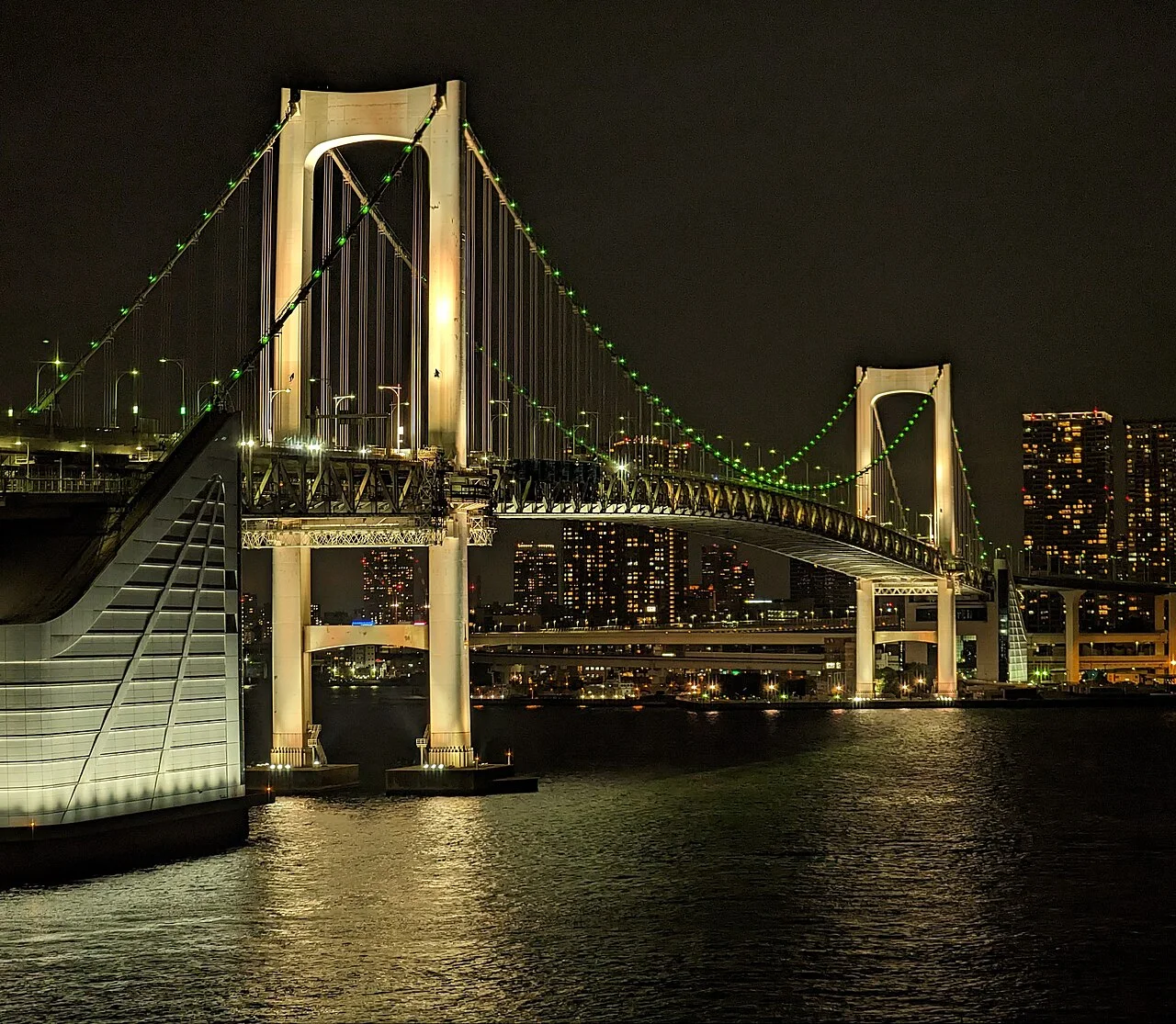
Compare Hilton Tokyo Odaiba and Grand Nikko Tokyo Daiba, both directly connected to Daiba Station. Choose by Rainbow Bridge views, three- and four-bed layouts, Haneda transfers, and Ariake exhibition access for a single night or multi-night bayfront stay.
Make Sure the View You Want Is Written Into the Room Plan
To guarantee a view of the Rainbow Bridge, look for rate plans or room names explicitly marked 'Rainbow Bridge View' or 'Rainbow Bridge Side Guaranteed' on the booking page. Check the exact nightly product title first, then verify how many view options exist under the same room category. Search results typically display a hero shot of the entire property; you have to drill down to the specific plan level to see the wording that will actually appear on your reservation. Before paying, screenshot the formal room type and plan name so you can show it at reception if staff need to check the Japanese booking record or if you are confirming details with travel companions. If you want the full span of the bridge in frame—or hope to see it from a chair inside the room rather than leaning out—state both points in your booking enquiry.
Grand Nikko Tokyo Daiba organises its guest room pages by four compass orientations. The north side faces the Rainbow Bridge, with dedicated bridge-view plans on the 20th floor and above, alongside executive-floor rooms on floors 25 to 28 that also take in Tokyo Tower. The east side looks towards Tokyo Gate Bridge and DiverCity, the west faces Shiokaze Park and the Port of Tokyo, and the south overlooks the approach to Haneda Airport. Travelling with children who love planes or trains? Check real guest photos from the south side first. If the bridge is the priority, stick strictly to the north-facing listings. Even within the 42-square-metre Premier Deluxe Triple on floors 20 to 24, the hotel sells both bridge-view and non-specified-view options on the same page, so double-check which plan you select.
Hilton Tokyo Odaiba lists Rainbow Bridge-side rooms across its catalogue and, following its 2026 refurbishment, offers the Deluxe Rainbow Bridge View Room—listed at 40 square metres with a private balcony. Because the building curves along the waterfront, balcony angles vary even within the same room category. Simply getting both bridge towers into your line of sight makes choosing straightforward, but if exact tower placement matters, ask the hotel what is visible from inside the room versus the balcony—and verify whether Tokyo Tower is an official listed view on that room page or just a distant landmark someone spotted in a photo.
A private balcony is lovely on a mild evening, though if you prefer to stay out of the breeze or are sharing with small children, examine the room photos carefully from the bedside, seating area, and window line. With children, adults should handle opening the balcony door and stepping out together. For night photography, switch off lamps near the glass, hold your phone lens close to the pane to cut reflections, and use a pulled edge of curtain to block stray side light. If most of your evening will be spent outdoors anyway, booking a standard room and walking down to Odaiba Marine Park at dusk makes plenty of sense—leaving the price difference for dinner or an extra bed.
Hilton Tokyo Odaiba has announced a two-year phased renovation starting in 2026, remaining open throughout while guest rooms and public spaces are updated in stages. Both unrenovated and refurbished rooms may appear in search results. To ensure a newly updated room, click through from the 'New Guest Rooms' links on the official renovation page before picking your dates. If your stay centres on toddler nap times or specific restaurants and lounges, check the current operating schedule on that renovation page and, if needed, ask the hotel for scheduled work hours on your check-in date.
Sleeping Three or Four: Match Beds Before Square Metres
For two adults travelling with two children, enter the children's exact ages on the booking search page first to see which room types the system permits. When comparing options, separate 'how many beds we need' from 'how many guests are staying'. A toddler may happily share a bed with an adult, whereas an older sibling will probably need a proper extra bed. Grand Nikko's FAQ states that preschool-aged children sharing an existing bed stay free of charge—limited to one child per bed and requiring advance notice—while primary school pupils and older must be booked as adults. Hilton's Japanese booking site likewise instructs travellers to include primary school children and above in the paying guest count. For children's breakfast charges, check the age brackets listed under the meal or room plan.
If three guests each need their own bed, look at Grand Nikko's Premier Deluxe Triple. Its official listing specifies bed widths of around 110 to 120 cm and lengths of roughly 190 to 205 cm—useful benchmarks when comparing against rooms that rely on a sofa bed or rollaway for the third sleeper. Should anyone in your party be close to 190 cm tall, message the hotel directly to ask the exact length of the third bed. When weighing floor area, judge whether you can still open suitcases once all beds are made up and push a buggy past the beds to the bathroom. And remember that converting a corner sofa into a bed removes daytime seating.
Parties of four can weigh up Hilton's 80-square-metre Family Room, the 40-square-metre Deluxe Rainbow Bridge View Room, and booking two standard twin rooms. Both single-room options list a maximum occupancy of four, using two permanent beds plus extra beds for the third and fourth guests. The 80-square-metre suite adds a distinct living area with table and chairs, which helps when someone naps midday or goes to bed early. Two separate twin rooms, meanwhile, give you a second bathroom—invaluable when everyone needs to get ready at the same hour in the morning. If you want connecting rooms with an internal door, request that configuration explicitly and have the hotel note it on the reservation; adjacent rooms are not the same thing.
Families needing a cot, bed guard, or step-free roll-in shower should put guest numbers, children's ages, equipment dimensions, and travel dates into a single pre-arrival enquiry. Wheelchair users should check the step-free route from the station exit to the hotel first, then confirm bathroom doorway widths and turning space inside the room. At Yurikamome Daiba Station, lifts connect the platform, ticket-gate level, and street level. For heading down to the waterfront, check the Odaiba Marine Park map for accessible toilets and routes that avoid loose sand. Because the hotels sit alongside the elevated station while the waterside paths lie below, knowing which lift to take saves more hassle than which shopping centre sits fractionally closer.
Picking the Best Line Into Odaiba by Starting Point
Coming from Ginza, Shimbashi, or Shiodome, take the Yurikamome Line. Grand Nikko Tokyo Daiba's access guide puts riding time at around 15 minutes from Shimbashi to Daiba and around 17 minutes from Toyosu to Daiba. If you transfer from a JR line at Shimbashi, allow extra minutes to follow concourse signs to the Yurikamome ticket gates; walking to Shimbashi from Ginza is also easy, provided you factor that stroll and waiting time onto the front of the journey. Note for anyone disembarking near the beach: trains from Shimbashi call at Odaiba-kaihinkoen (U06) before reaching Daiba (U07). Because the two stops are distinct, include both the station name and station code when sending meeting points.
From Shinjuku or Shibuya, look up JR Saikyo Line services running through onto the Rinkai Line. On the way in, verify that your train continues past Osaki to Tokyo Teleport Station—services terminating at Shin-Kiba carry you straight through without changing. If a train ends at Osaki, step across there to a Shin-Kiba-bound Rinkai Line train. On the return leg towards Shibuya or Shinjuku, check destination boards carefully too, as some trains turn back at Osaki. Remember that Rinkai Line platforms sit underground while the Yurikamome's Daiba Station is elevated beside the hotels; transferring between the two requires exiting the gates for a walk, so setting your hotel's full name as the route destination helps avoid an awkward extra change.
Travelling from Maihama, take the JR Keiyo Line to Shin-Kiba and change to the Rinkai Line towards Tokyo Teleport—or alight one stop earlier at Kokusai-Tenjijo if you are heading straight to an exhibition. The same interchange works in reverse when leaving Odaiba for Maihama. If you are returning after park closing time, check the Shin-Kiba departure schedule towards Tokyo Teleport for your exact arrival date. Hilton Tokyo Odaiba's access page also lists a reservable Good Neighbor Hotel Shuttle to and from Tokyo Disney Resort; anyone aiming to reach the park gates before opening should check bookable shuttle times for their stay dates before locking in morning plans.
Heading back to Odaiba late at night from central Tokyo, check both lines separately: on the Yurikamome from Shimbashi, follow trains bound for Toyosu; on the Rinkai Line from the west, look for services bound for Shin-Kiba. Coming back from dinner in Ariake runs in the opposite direction. Official timetables switch between weekday and weekend/public-holiday schedules, so toggle the right calendar tab and leave enough margin to catch the next-to-last train if dinner runs late. If you arrive via Tokyo Teleport, factor in the climb from the deep underground platform to street level plus the walk back to the hotel. Should you take a taxi instead, give the full hotel name and street address so the driver does not confuse the two properties next to Daiba Station.
During high winds or heavy rain, check service alerts for both railways before setting out. If the Yurikamome suspends operations while the Rinkai Line keeps running, switch to Tokyo Teleport Station; if waterfront gusts pick up, duck through the sheltered shopping-centre entrances closest to your hotel or dine on site. Whenever you have an unmissable flight or morning appointment the next day, confirm bookable transport and exact pick-up points ahead of time. Writing 'flexible arrival' and 'hard morning departure' onto the relevant days of your itinerary immediately clarifies which night needs extra transfer buffer.
Late Arrivals at Haneda: Sort the First and Last Transfers Early
Airport Limousine Bus routes serving Ariake and Odaiba stop at both Hilton Tokyo Odaiba and Grand Nikko Tokyo Daiba, though you must specify your terminal, travel direction, and exact hotel stop when searching timetables—several departures on the same route map skip one or more hotels. For the return trip, work backwards from your flight departure to establish the latest safe terminal arrival, pick a coach that beats it, and check whether check-out allows enough time to reach the hotel boarding point. Confirm checked-bag limits and folding rules for pushchairs too, and on busy travel days save a screenshot of the boarding-bay details from the ticket screen for the rest of your group.
By rail, combine the Tokyo Monorail with the Rinkai Line. Board a Monorail train from Haneda that calls at Tennozu Isle, tap out through the ticket gates, walk to the Rinkai Line station of the same name, and ride one stop towards Shin-Kiba to Tokyo Teleport. Airport Rapid Monorail services skip Tennozu Isle, so use the stopping-pattern table when checking departures. With two suitcases and a tired child, the walk and lifts along that interchange can take longer than expected. On your way back to the airport, verify your exact terminal on your airline booking before boarding the Monorail—Terminal 2 handles selected international flights as well as domestic ones.
If your flight lands late at Haneda and you have checked bags to collect, decide beforehand whether a taxi from the airport fits your budget. When a direct Airport Limousine coach aligns with your landing, it drops you cleanly at a fixed hotel bay; if you are relying on trains and only one connection remains before the last Rinkai Line departure, any immigration delay effectively turns into a taxi ride. The reverse applies to early-morning flights. When the first coach or train cannot get you to check-in by your airline's deadline, spending the final night beside Haneda or near Shinagawa on the Keikyu Line keeps an early wake-up, check-out, and airport transfer from colliding. If a single trip combines both a late arrival and an early departure, place Odaiba in the middle of the itinerary so you actually get to enjoy the room view.
Major waterfront events also alter bus routes due to road closures. For example, during GRAND CYCLE TOKYO on 23 November 2026, Airport Limousine Bus announced traffic restrictions across the waterfront area, with selected Haneda and Narita services bypassing Hilton Tokyo Odaiba. If your check-in or departure coincides with a local event, cross-check your booked coach against the operator's service notices and look up a matching rail arrival as backup. Whenever you read a temporary event timetable, check the valid dates at the top of the sheet rather than reusing an old PDF on a future trip.
The Real Advantage of Location: Returning to the Room for Naps
If you plan to head back to the room for an afternoon rest, keep the morning anchored to Odaiba Marine Park and the shopping centres on the same side. The boardwalk near the Statue of Liberty offers easy sea and bridge views, while children wanting sand play can head straight to the park's beach cove. Swimming is prohibited there, and foot-washing taps near the shore make clean-up simple afterwards. When a brisk bay breeze picks up, step inside the adjacent mall for nappy changes or lunch, then take the shorter route back to your hotel rather than pushing all the way down the promenade. Starting by the park pairs naturally with lunch at DECKS Tokyo Beach or Aqua City Odaiba, saving DiverCity for a later meal.
Aqua City's official guide lists a baby room equipped with nursing cubicles, changing tables, and hot water for formula, plus a limited number of loaner pushchairs available from the 3rd-floor information desk. DiverCity Tokyo Plaza provides baby rooms on the 2nd floor and beside the west atrium on the 6th floor. If you are navigating from the elevated Yurikamome level or an outdoor plaza, locate the lifts before hunting for shop entrances. Loaner buggies also have to be returned to the same mall, so if you plan to stroll from DECKS right across to DiverCity and back to your hotel, bringing your own pushchair gives far more freedom.
For families visiting Tokyo Joypolis inside DECKS Tokyo Beach, everyone does not have to move in lockstep. Same-day tickets allow re-entry up to 45 minutes before closing, making it easy to step out for lunch or an afternoon nap. Before you go, check the official attraction pages to pick one or two priority rides and verify age, height, and accompanying-adult rules. If one child misses a height cutoff, the group can split up around the shops and meet back at a designated entrance. Separate admission-only pricing from ride passes when budgeting, so accompanying adults only pay for what they intend to ride.
Shopping centre closing hours and restaurant last-order times follow separate schedules. Families eating early with toddlers should flag a specific restaurant in advance. If a late flight pushes you past normal dinner hours, pick up food at the airport before setting off or book a restaurant with late seating prior to check-in. Anyone dining at a hotel restaurant should reserve a table time first and fit the evening walk around it. Prefer room service? Check the cut-off hour and children's menu beforehand, and confirm at booking whether the hotel provides bottle sterilising, hot water, or baby-food warming.
If a family swim is on the wish list, look closely at the rules for Iori Spa TOKYO on the 5th floor of Hilton Tokyo Odaiba. Its Aqua Zone features an indoor heated pool, but hotel guests pay an additional admission fee—including accompanying adults—and children aged 15 and under must be accompanied by a guardian. Swimwear is mandatory, and inflatable rings or neck floats other than arm bands are not permitted. Entry is handled on a walk-in basis, so if you hope to swim before check-out, ask reception about available time slots on arrival before locking in breakfast. If the children only want outdoor play, timing the sandy cove at Odaiba Marine Park is far simpler.
One Night for Dusk in Odaiba; Two Nights for Toyosu Mornings
With only one night, pair Odaiba with central Tokyo neighbourhoods on the same rail side during the first half of the day. After a night in Shibuya, for example, you can hop onto a direct Rinkai Line train straight after lunch. Arrive early? Ask the hotel when it can store bags, drop everything except a daypack, and start with the nearby waterfront or shopping centres. Check in mid-afternoon, take in the view from the room, and pick a dinner spot around 17:00 or 18:00 that leaves an easy stroll back—if you paid extra for a night-view room, make sure you actually spend time inside it. The next morning, connect via Shimbashi for Ueno or Asakusa, or take the Rinkai Line back towards Shibuya and Shinjuku, deciding at check-out whether to eat breakfast before leaving.
For an anniversary or special occasion, lock in either the celebratory dinner or the bridge-view room as your fixed anchor for the evening, keeping the other flexible. Spend the afternoon along the waterfront—or head indoors if it rains—and even if dinner is outside the hotel, leave time to unwind in the room before heading out after dark. Travellers relocating from central Tokyo specifically for the bridge view should avoid booking another timed-entry attraction that same evening or catching a crack-of-dawn train the next morning; sitting by the window after a slow walk is how you get value from the room rate. If you simply want to admire the Rainbow Bridge from the shore, staying in the city centre and riding out for the evening works just as well.
Planning to stay in for breakfast? Grand Nikko Tokyo Daiba splits its morning dining across different floors in the same building: The Grill on 30th on the 30th floor serves a choice of Japanese or Western main dish with buffet bread and salad, while GARDEN DINING on the 1st floor offers a full buffet. When booking a bed-and-breakfast rate, check which venue and how many guests are included. If one person in a pair has to leave on an early train, compare room-only rates against paying on the day so the later riser can still head downstairs alone.
A two-night family itinerary works neatly by keeping day one inside Odaiba and dedicating the second morning to Toyosu Market or Ariake, returning to the waterfront in the afternoon. To reach the market, take the Yurikamome Line towards Toyosu and alight at Shijo-mae Station, then follow the pedestrian deck to the public viewing galleries. Tokyo Metropolitan Central Wholesale Market notes that on market-closed days, the wholesale viewing walkways are inaccessible and shops and eateries inside the market do not open, while opening hours on trading days vary by individual vendor. Check the official market calendar for your exact dates before promising a market breakfast; if it is closed, keep brunch in Odaiba or check individual opening details at Toyosu Senkyaku Banrai instead of dragging everyone out of bed early. Over the New Year period, verify the official 2027 market schedule directly—6 January 2027, for instance, is a trading day for seafood but a closed day for fruit and vegetables, a nuance generic travel blogs often miss. If combining breakfast with the seafood viewing deck, check which building each restaurant sits in so you do not have to double back before work or check-out.
When you have an early check-out on your final morning, visit Toyosu Market on day two so you can bring purchases back to the room to pack. On a single-night stay where the market is non-negotiable, choose between going out and back before check-out or checking out first and heading straight there. The former avoids wheeling suitcases, though you must watch the clock for check-out; the latter keeps you moving in one direction, with easy onward access from Shijo-mae to Toyosu Station and the Yurakucho Line. If you are definitely travelling with large bags, locate left-luggage lockers beforehand. And when booking seafood breakfast ahead of an early museum or attraction entry, leave generous margin for restaurant queues so you are not still paying the bill when your timed slot opens.
December 2026 Fireworks and 2027 Ariake Exhibitions
The 2026 Odaiba Rainbow Fireworks are scheduled for 5, 12, 19, and 26 December, launching at 19:00 for roughly five minutes from the water off Odaiba's Statue of Liberty—with the 19 December display synchronised to music—and cancelled in severe weather. To watch from your room, choose a dedicated fireworks-viewing plan advertised by the hotel for that season, or contact the property directly with your date, room category, and launch orientation. A standard bridge-view room frames the Rainbow Bridge reliably, whereas fireworks visibility depends on the exact angle between your window and the offshore launch barge. Spectators watching from the shore should follow the organiser's designated viewing routes rather than picking an everyday strolling spot at random.
Watching from the waterfront calls for extra slack around dinner. Because the display lasts about five minutes, crowds funnel into nearby restaurants and train stations all at once as soon as it ends. Guests staying on the bayfront side can walk back to their hotel and eat a little later; anyone returning to central Tokyo that night should check ahead whether Daiba, Odaiba-kaihinkoen, or Tokyo Teleport offers the easiest walk from their viewing spot. Organisers advise using public transport as no dedicated event parking is provided, and keeping a weatherproof dinner back-up ensures a cancellation does not derail a festive evening.
If you prefer to anchor the evening with dinner first, Hilton Tokyo Odaiba's 2026 fireworks buffet at Seascape Terrace Dining splits into two sittings at 17:00 and 19:30, with terrace fireworks viewing at 19:00—meaning guests on the second sitting must arrive by 18:50. Hotel terms apply a 100% cancellation fee from seven days before the event, and the dining plan still goes ahead as scheduled if the fireworks are cancelled due to weather. Lock in the dining package only once everyone agrees on the viewing plan, compare it separately against room-only options, and consider the 17:00 sitting if anyone needs to catch onward trains afterwards.
For Ariake exhibitions, check the Tokyo Big Sight event calendar first for registration rules, assigned halls, and opening hours. The venue's calendar typically publishes events around six months ahead; for dates further out, check the organiser's own website for announced schedules. Take the spring edition of SMART ENERGY WEEK listed for 24 to 26 March 2027: pre-registration is required, and each visitor badge applies to one named person across all three days. If companions are covering different halls, you can split up from the hotel in the morning and reconvene in Odaiba or Ariake for dinner. Leisure travellers whose dates overlap a major show should compare total stay costs and cancellation terms before writing off the bay area altogether.
Tokyo Big Sight's official access guide puts the walk from Yurikamome Tokyo Big Sight Station at roughly 3 minutes and from Rinkai Line Kokusai-Tenjijo Station at around 7 minutes. Those times only get you to the main complex, however—entrances for the East, West, and South Halls require following each show's specific floor map. From Daiba Station, ride the Yurikamome towards Toyosu directly to Tokyo Big Sight Station; from Tokyo Teleport, take the Rinkai Line towards Shin-Kiba one stop to Kokusai-Tenjijo. On day one when collecting badges, dropping off materials, or signing in, pin the exhibitor-designated hall entrance rather than the main building front—heading into the wrong wing quickly eats up your pre-opening buffer.
Once Prices Are Compared, Lock In Cancellation Terms and Arrival Logistics
Compare two bookable options using the exact same date and guest count. If a slightly smaller footprint is fine, weigh a standard twin against a guaranteed Rainbow Bridge-view twin and ask whether an evening waterfront walk satisfies your bridge-viewing plans. For groups of four, make sure the total quote includes extra-bed charges, breakfast headcount, and all taxes, then compare one quad-occupancy room side by side against two twin rooms. Run that comparison at the final step before payment, as headline 'from' prices on search pages often reflect a different date or fewer guests. For a two-night weekend stay, inspect the nightly breakdown to see which evening carries the surge—helping you decide whether a bridge-view upgrade makes sense for one night rather than both.
Record the final free cancellation date and exact cut-off time in Japan Standard Time (JST) on the same itinerary sheet as your flights. If exhibition registration dates or school holiday schedules are still fluid, compare the price gap between a flexible refundable rate and a prepaid non-refundable rate. Where fireworks are the sole reason for switching hotels, read the small print on date changes or refunds if the display is called off. To judge real transport savings rather than comparing headline room rates in isolation, factor in round-trip fares for the whole family across Tokyo, potential late-night taxi rides, and any paid breakfast you would miss due to an early check-out.
Keep check-in details in one place on your phone and share a copy with your travel companions. What actually matters on arrival is the exact room type on the confirmation, included breakfast and bed count, the hotel entrance pin, and your latest arrival time. If forwarding luggage or requesting pre-arrival storage, pass the hotel's confirmed delivery date, reception desk name, and registered guest name to the courier or sender. For crack-of-dawn departures, ask the night before whether you can settle the bill early and what time breakfast opens. At Grand Nikko Tokyo Daiba, standard check-in starts at 15:00 and check-out is by 11:00; on an early afternoon arrival, plan lunch or a waterfront stroll nearby until the room is ready, and on a relaxed final morning leave bags in the room while you walk along the bay rather than hunting for shopping-centre lockers.
A few useful answers
For Odaiba accommodation, should I choose Daiba Station, Odaiba-kaihinkoen Station, or Tokyo Teleport Station?
Choose Daiba Station on the Yurikamome Line if you are staying at Hilton Tokyo Odaiba or Grand Nikko Tokyo Daiba, as both connect directly to it. Odaiba-kaihinkoen Station is closer for DECKS Tokyo Beach and Tokyo Joypolis. Tokyo Teleport Station suits direct Rinkai Line arrivals from Shibuya and Shinjuku or plans centred on DiverCity Tokyo Plaza.
Which Odaiba hotel rooms have views of the Rainbow Bridge?
Book a room category or plan that explicitly guarantees the bridge view, such as Hilton Tokyo Odaiba's Deluxe Rainbow Bridge View Room or Grand Nikko Tokyo Daiba's designated Rainbow Bridge-side plans. If you hope to watch seasonal fireworks from your room, select a dedicated fireworks-viewing plan advertised for that year.
Do Odaiba hotels have rooms for four guests?
Yes. Both Hilton Tokyo Odaiba's 80-square-metre Family Room and 40-square-metre Deluxe Rainbow Bridge View Room list a maximum capacity of four guests, pairing two permanent beds with extra beds for the third and fourth guests. Enter your children's exact ages first, then verify the bed count and breakfast inclusions on that night's rate plan.
Can I travel from Haneda Airport to Odaiba without changing trains?
Airport Limousine Bus operates direct coaches from Haneda Airport stopping at both Daiba Station hotels—check the timetable for your arrival date, terminal, and exact hotel stop. By rail, ride the Tokyo Monorail to Tennozu Isle, walk across to the Rinkai Line station, and take a Shin-Kiba-bound train one stop to Tokyo Teleport.
Should I stay in Odaiba or Ariake for an exhibition at Tokyo Big Sight?
Stay in Ariake near Tokyo Big Sight Station or Kokusai-Tenjijo Station if you have consecutive early-morning starts at the venue. If you are only visiting an exhibition for half a day and want waterfront walks in the evening, Daiba Station connects directly to Tokyo Big Sight Station on the Yurikamome Line.
How many nights should I stay in Odaiba?
One night plus the following morning is plenty for Rainbow Bridge views and a relaxed waterfront walk. Stay two nights if you also want a full day for Toyosu Market, Ariake, or family attractions; if most of your schedule is in central Tokyo, visiting Odaiba as a half-day trip works well.
Official information and references
Sources used in this guide.
- Yurikamome Line Daiba Station map, lifts, and timetable
- Rinkai Line Tokyo Teleport Station guide and timetable
- Hilton Tokyo Odaiba access and Tokyo Disney Resort shuttle
- Hilton Tokyo Odaiba Deluxe Rainbow Bridge View Room
- Hilton Tokyo Odaiba Family Room
- Hilton Tokyo Odaiba FAQ and room view guide
- Hilton Tokyo Odaiba renovation schedule and facility operations
- Hilton Tokyo Odaiba Iori Spa TOKYO admission and family pool rules
- Grand Nikko Tokyo Daiba access map
- Grand Nikko Tokyo Daiba guest room views
- Grand Nikko Tokyo Daiba Premier Deluxe rooms
- Grand Nikko Tokyo Daiba check-in, check-out, and child bed-sharing FAQ
- Grand Nikko Tokyo Daiba breakfast venues and services
- Tokyo Monorail Tennozu Isle Station guide
- Airport Limousine Bus timetables and reservations
- Airport Limousine Bus waterfront route diversion notice for 23 November 2026
- Tokyo Port Terminal Corporation Odaiba Marine Park rules and facilities
- Tokyo Port Terminal Corporation Odaiba Marine Park map and accessible facilities
- Aqua City Odaiba baby rooms and pushchair loan service
- DiverCity Tokyo Plaza baby rooms
- Tokyo Joypolis ticket types, re-entry, and ride restrictions
- Tokyo Metropolitan Central Wholesale Market Toyosu Market opening hours and public viewing
- Tokyo Metropolitan Central Wholesale Market 2027 seafood and produce trading calendar
- Odaiba Rainbow Fireworks 2026 official organiser announcement
- Hilton Tokyo Odaiba 2026 Rainbow Fireworks dinner and cancellation terms
- Tokyo Big Sight visitor access information
- SMART ENERGY WEEK Spring 2027 official exhibition dates and visitor registration
- Tokyo Big Sight event calendar publication scope
- DoubleTree by Hilton Tokyo Ariake access information