Choose the Harajuku, Yoyogi or Sangubashi entrance. Separate worship, goshuin, Inner Garden and museum hours, then plan Takeshita Street, Omotesando or Yoyogi Park.
- Region & Focus
- Tokyo
- Reading Scope
- 30 min read · 18 chapters · 4 Q&As
- Official Verification
- 28 official sources checkedUpdated 22 November 2026
- Key Topics
- ItinerariesNeighbourhoodsSeasons
Chapter Route Map (tap any stop)
- Choose your onward direction before choosing a torii gate
- Three entrances and five station names: count both parts of the walk
- A return walk from Harajuku: South Approach, barrels and the great torii
- Yoyogi in, Harajuku out: cross the forest from the North Approach
- Sangubashi: the western approach from the Odakyu Line
- Look slowly between the forest canopy and the ground
- Worship: water purification, two bows, two claps and one bow
- Goshuin and Omikokoro: early visitors must wait until 09:00
- A separate Inner Garden walk: South Pond, irises and Kiyomasa’s Well
- June irises, then pond edges and woodland colour in autumn and winter
- The museum offers another way to understand the shrine
- Food and rest inside: entrance café and dining area
- Pushchairs, wheelchairs and large bags: divide walking into shorter stages
- One hour, three hours or a day: keep one stop optional
- Harajuku afternoon: shops on Takeshita Street, sweets at a stopping place
- Omotesando: follow the avenue to a shopping centre and leave by its station
- For a lawn break, continue outside the shrine to Yoyogi Park
- Check autumn and winter closing times and plan rainy-day alternatives
- Quick Q&A
For a morning at Meiji Jingu followed by Harajuku and Omotesando, first choose your entrance and the station where you will finish. The Harajuku entrance suits a first worship visit followed directly by shopping. Yoyogi allows a north-to-south forest walk, while Sangubashi saves Odakyu Line travellers an unnecessary station detour. The free approaches, paid Inner Garden and museum keep separate hours. Choose the parts you most want to see to leave time for worship, meals and the streets you actually want to browse.
Choose your onward direction before choosing a torii gate
For a first day combining Meiji Jingu and Harajuku, entering and leaving at Harajuku is easiest. After worship, return east of the station for lunch and Takeshita Street or Omotesando. From Shinjuku or Yoyogi, enter at Yoyogi and leave at Harajuku for a forest walk without retracing your steps. From the Odakyu Line, enter at Sangubashi. All three approaches reach the shrine buildings; you need not detour to Harajuku to begin properly.
Decide the day’s aim first. Allow about an hour for worship and the approaches alone. Add time for the Inner Garden or museum and reduce afternoon shopping. The official Q&A suggests roughly one hour for worship, or two including the garden and museum. If companions need breaks or you want to read exhibits and queue for a goshuin, treating two hours as a minimum is more comfortable.
Meiji Jingu stands in Yoyogi Kamizono-cho, Shibuya, Tokyo, with the forest shrine buildings at the centre of this route. After locating Meiji Jingu on Google Maps, find your chosen entrance. Meiji Jingu Gaien, known for its ginkgo avenue, is in another area. Yoyogi Park also has separate entrances and paths. Mark all three separately to avoid walking towards an assumed connection that actually requires returning to the street.
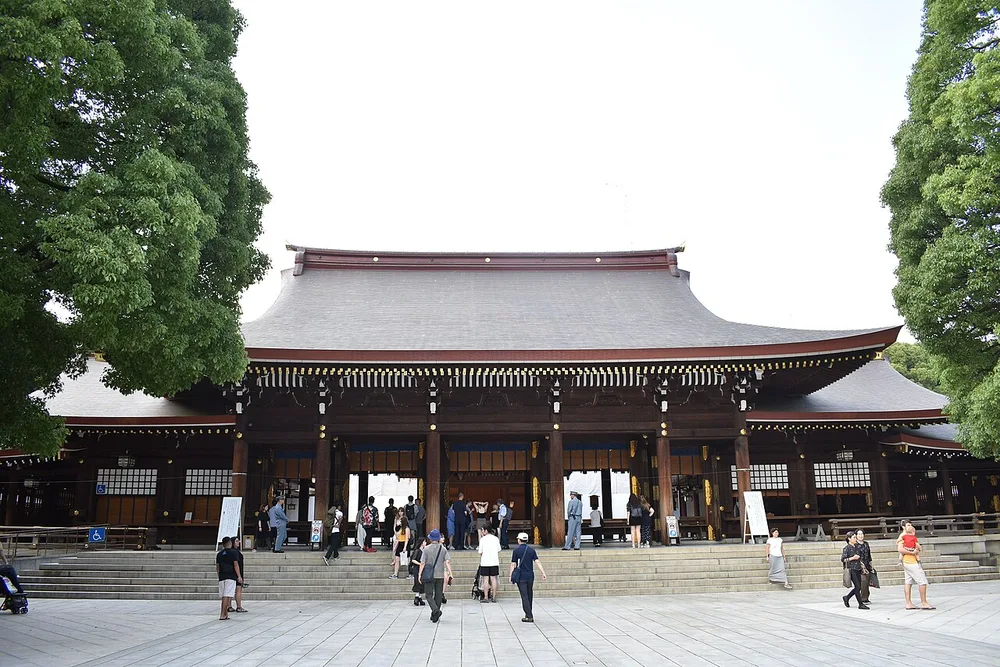
Choose the Harajuku, Yoyogi or Sangubashi entrance. Separate worship, goshuin, Inner Garden and museum hours, then plan Takeshita Street, Omotesando or Yoyogi Park.
Three entrances and five station names: count both parts of the walk
The official access map connects the Harajuku entrance to JR Yamanote Line Harajuku Station and Meiji-jingumae ‘Harajuku’ Station on the Tokyo Metro Chiyoda and Fukutoshin lines, about one minute from the entrance. JR Harajuku and the underground station have different names and separate ticket gates. Follow “Meiji Jingu” and “West Exit” signs, then identify the torii. Avoid following Takeshita Street crowds east of the station and having to return.
The northern Yoyogi entrance connects to JR and Toei Oedo Line Yoyogi Station, or Fukutoshin Line Kita-sando Station. The official map gives about five minutes from either Yoyogi or Kita-sando to the shrine entrance. Kita-sando is a station; Yoyogi is an entrance. For meetings, “outside the torii at the Yoyogi entrance” is clearer than simply “Kita-sando”, which could leave one person at the underground exit and another in the forest.
The western Sangubashi entrance is about three minutes on foot from Sangubashi Station on the Odakyu Line. The website adds about ten minutes from each entrance to the shrine buildings. Add this to the station walk, with longer for looking at trees and checking directions.
Drivers have separate rules. Vehicles may enter only at Yoyogi; Harajuku and Sangubashi remain pedestrian entrances. Bicycle and motorcycle parking is provided at the approaches, with walking inside the grounds. Drivers still walk from parking to the shrine. If companions continue to Omotesando, decide whether to return to the car after shopping or use rail instead, before discovering that the car remains in the north.
A return walk from Harajuku: South Approach, barrels and the great torii
Cross the torii at the Harajuku entrance and follow the South Approach towards the shrine buildings. It suits a first visit, with the museum and food facilities in the south and a direct return to Harajuku. Worship first, then add the Inner Garden or museum on return if wanted. Changing your mind at every junction can mean walking the same stretch of South Approach several times.
The sake and wine barrels on the South Approach are offerings. Look at the different labels as a cultural pause, then clear the path after photographs. For the shrine’s relationship with the Meiji era, save time for museum objects and explanations. The official highlights page also lists these barrel offerings among the sights.
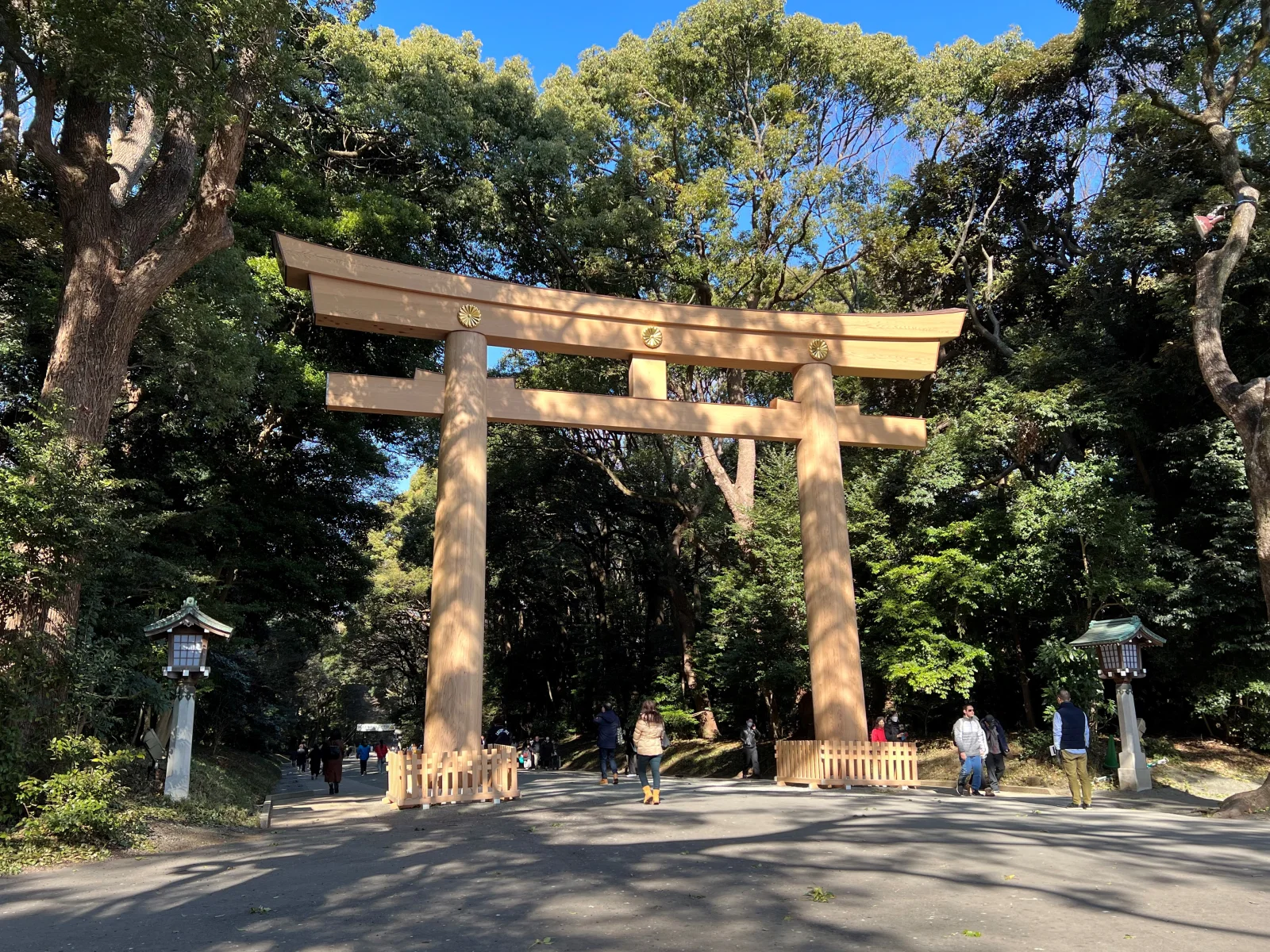
Continue towards the shrine and use the grounds map to identify the great torii and Main Approach. Official dimensions for the wooden torii are 12 metres high, 9.1 metres between pillars and pillars 1.2 metres in diameter. Its scale becomes clear close up. At junctions, follow shrine-building signs and stay out of the forest itself. Photograph the whole gate from the edge of the approach when a gap appears, rather than stopping the group in the middle.
A return route is easy to shorten. Worship, obtain a goshuin and follow the familiar South Approach back. If children tire on return, sit at a food facility before deciding whether to add the Inner Garden. A one-hour visit can finish after this main route without buying entry to every facility.
Yoyogi in, Harajuku out: cross the forest from the North Approach
From accommodation around Shinjuku, take a train to Yoyogi for a morning forest walk. Head to the Yoyogi entrance and follow the North Approach to the shrine. Worship, then leave along the South Approach for Harajuku in the afternoon. Treat the walk from Yoyogi Station to the Harajuku exit as one journey rather than returning to the starting station.
Northern map landmarks include North Pond, the Treasure Museum and lawns. The Treasure Museum is separate from Meiji Jingu Museum in the south. The official facilities page currently lists the former as closed. For collections and exhibitions, use the southern museum. In the north, focus on woodland, approach junctions and grass rather than allocating an indoor visit to a closed building.
The lawn north of the shrine buildings suits a seated break in good weather, a use explicitly described on the shrine’s worship page. To continue to Harajuku, rejoin an open approach and head south rather than cutting through trees because another path looks close. Complete goshuin arrangements in the shrine area: remembering only after the Harajuku exit adds another forest round trip.
This crossing suits people happy to walk the full route. If starting at Yoyogi with lunch booked in Sangubashi, leave west instead. For older relatives or wheelchair users who prefer a familiar return, use Harajuku both ways. Choose entrances around transport and companions rather than trying to walk every approach for different scenery.
Sangubashi: the western approach from the Odakyu Line
From Odakyu Line Sangubashi Station, head directly to the Sangubashi entrance and follow the West Approach. This is useful for accommodation along the line or arrivals from the west: about three minutes to the entrance, then roughly ten more to the shrine buildings. After worship, leave south for Harajuku shopping or return west for the Odakyu Line.
This route does not first pass the museum or barrel offerings on the South Approach. If the barrels are a priority, continue south after worship. If you only want worship and forest, a western return route is enough. These different aims explain variations in other visitors’ photographs and walking times, without making you think you chose the wrong entrance.
Groups arriving by different lines can meet at a landmark outside the shrine-building area. With older relatives, keep the main carer alongside them throughout and let others adapt to their entrance.
Look slowly between the forest canopy and the ground
Meiji Jingu was established in 1920. Its forest grew from about 100,000 donated trees and young volunteers’ work. The establishment guide explains that forestry experts designed it to renew itself after a century. The forest guide gives an area of about 70 hectares. Along the approaches, look beyond torii to evergreen crowns, woodland edges and fallen leaves to understand how this green space formed in the city.
The official forest account describes fallen trees remaining to return to the soil. Unlike a tidy park flowerbed, leaves and dead wood have ecological roles. Observe from the approaches. Animals, plants, soil, branches, leaves and fruit must neither be collected nor brought in. Children can search visually for insects and record them in photographs without disturbing soil or dead wood.
For school-age children, try a brief comparison: light on two stretches of path, fallen and evergreen leaves, or a moment listening to birds before continuing. None requires leaving the paths or completing a circuit. Watch the official forest survey film below before departure to learn about its wildlife and choose what to look for on site.
Learn about the wildlife and environment of the shrine’s planted forest before observing it from the open approaches.
Worship: water purification, two bows, two claps and one bow
Wash at the water pavilion before approaching the shrine. The shrine’s current illustrated procedure is to clean both hands, cup water in your hand to rinse your mouth, then clean your hands again. Follow the equipment provided, keeping your mouth away from the water outlet. Wait your turn and move aside afterwards. Explain unfamiliar movements beside the queue so companions can complete them simply at the water.
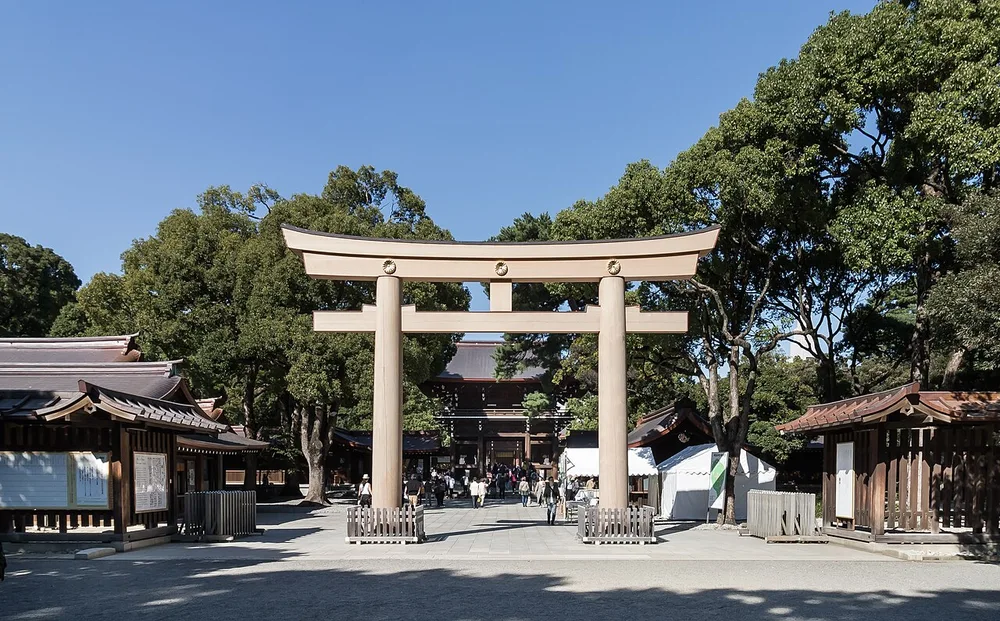
At the hall, offer a coin, stand straight, bow twice, clap twice, join your palms in prayer and bow once more. Ordinary worship is separate from paid formal prayers at Kaguraden. For the forest and ordinary worship, simply join the line at the hall. For Shichi-go-san, a baby’s first shrine visit or another life-event prayer, follow Kaguraden’s personal-prayer procedure and allow separate time.
Official photography rules prohibit photography in the main frontal worship area where people pray and ask visitors to avoid photographing amulet counters. Photograph buildings only from permitted positions. Let priests and wedding processions pass rather than following them into ritual areas. Keep photo stops separate from the worship queue so companions can wait comfortably without trying to film someone praying.
Goshuin and Omikokoro: early visitors must wait until 09:00
Goshuin are usually issued at Nagaden, the amulet counter in front of Kaguraden, from 09:00 until closing. The shrine says the reception location changes on some dates; follow signs in the shrine area that day. A forest walk at 06:00 or 07:00 is an early worship visit. To obtain a goshuin too, plan to leave after 09:00.
Worship first, then prepare a goshuin book and cash and follow staff instructions. The official Q&A distinguishes payment methods: restaurants and souvenir shops accept credit cards, but amulet counters, Kaguraden and goshuin counters do not. Keep worship cash in an accessible pouch to avoid searching a whole backpack at the counter.
Meiji Jingu’s slips are called Omikokoro. They draw on 15 waka poems each by Emperor Meiji and Empress Shoken, 30 in total, with explanations and English translations, without good- or bad-luck rankings. The official amulet and Omikokoro guide lists the choices. If you want words to take home and read slowly, this fits their purpose better than repeatedly drawing in search of a luck rating.
Choose amulets for the intended prayer, such as children’s wellbeing, study or traffic safety. Decide to one side before approaching the counter.
A separate Inner Garden walk: South Pond, irises and Kiyomasa’s Well
Meiji Jingu Inner Garden lies south of the shrine buildings and requires a separate ¥500 maintenance contribution. Unlike the free approaches, its small paths connect ponds, iris beds, Kakuuntei and Kiyomasa’s Well. It suits a slower look at terrain and plants. With only an hour, complete worship and save it for a visit with time to explore.
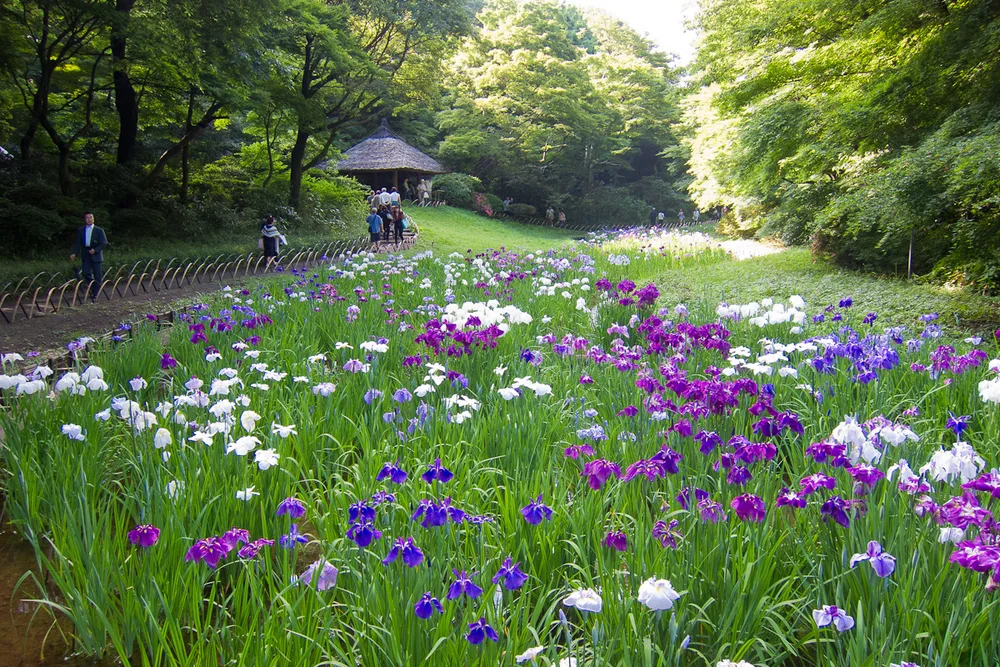
The official Inner Garden page lists usual hours of 09:00–16:30 from March to October and 09:00–16:00 from November to February. June has separate hours of 08:00–17:00, extended to 18:00 on Saturdays and Sundays. The shrine gates and garden keep separate schedules: early worship does not open the garden. Check that day’s reception signs before entering and allow time afterwards to reach the shrine exit.
Start at South Pond by observing its banks and trees, then follow open paths. Kakuuntei overlooks the pond and reconstructs the rest house Emperor Meiji built for Empress Shoken. View its relationship to the garden from outside rather than treating it as an interior attraction open on arrival. Slopes and winding paths require a secure standing position before taking a camera out for distant details.
Kiyomasa’s Well is a spring connected to the pond and iris beds. The shrine describes the tradition that Kato Kiyomasa dug it. Use that story as background while looking closely at how water emerges and flows into the garden. Give others space at the well, then continue along the open route without stepping onto banks or grassy slopes.
June irises, then pond edges and woodland colour in autumn and winter
June gives the Inner Garden its clearest flower-focused purpose. The iris beds contain about 150 varieties and 1,500 plants, viewed section by section along small paths rather than from one spot. Compare colours, forms and backgrounds slowly instead of rushing to photograph every bed. Move forward after each stretch and let people behind pass.
The official iris diary publishes conditions around the season. For a future June trip, use that year’s diary to decide whether the garden should be the focus rather than copying a previous year’s peak date onto your train booking. Without a flower-viewing plan, choose shaded approaches and the museum in summer, reducing walking on the garden’s smaller paths and shortening long outdoor stretches.
In autumn and winter, focus on South Pond and trees instead of iris beds. The official garden guide also notes migratory birds in late autumn and early winter. The ordinary approaches remain largely evergreen. For a broad ginkgo avenue, plan Gaien separately rather than searching for yellow trees after entering Harajuku. If the Inner Garden, worship and Harajuku already fill the day, save ginkgo viewing for another half-day.
The museum offers another way to understand the shrine
Designed by Kengo Kuma and opened in 2019, Meiji Jingu Museum stands beside the South Approach. The ground-floor Forest Exhibition Room introduces shrine history and daily life; upstairs are treasures and changing exhibitions. If you are interested in how the planted forest formed or the shrine’s relationship with the Meiji era, a forest walk followed by objects and displays connects the two perspectives.
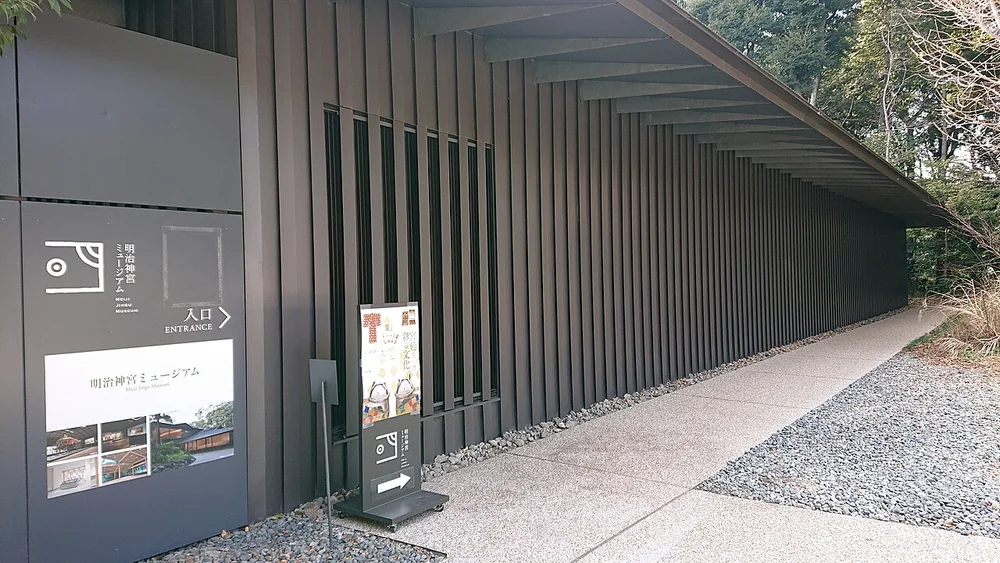
The official museum page lists 10:00–16:30 opening, last entry at 16:00, and Thursday closure unless Thursday is a public holiday. Exhibition changes also bring closures. Admission is ¥1,000, or ¥900 for high-school students and younger, with preschool children free. Primary-school children and younger need a parent or guardian. Disability certificate holders enter free, and groups of 20 or more pay ¥900. Fix an open museum day first if exhibitions matter; on an ordinary closed Thursday, use the time for worship and the Inner Garden.
Treasures described by the museum include portraits of Emperor Meiji and Empress Shoken and the restored six-horse ceremonial carriage. The temporary gallery changes by exhibition. Compared with the ground floor’s forest and daily-life account, upstairs rewards time with objects and explanations. Seeing ritual and period objects before returning to the approaches and shrine adds more understanding than treating the building merely as a rainy-day shelter. Allow a complete visit after paying, and count the outdoor approach from the station in your arrival time.
Food and rest inside: entrance café and dining area
At the Harajuku entrance, Café Mori no Terrace before the torii suits a drink, bread or a sandwich. The café page lists opening from 09:00 until the shrine closes, last orders 30 minutes before closing, with no seat reservations. Early visitors can worship first and return for a break after 09:00.
Along the South Approach, FOREST TERRACE Meiji Jingu offers a fuller rest. NOODLE & RICE BOWL serves soba, udon, ramen and rice dishes and currently lists a 10:00 opening. Restaurant Yoyogi opens at 11:00 for seated Japanese or Western meals. Both usually close with the shrine, with last orders 30 minutes earlier. Earlier autumn and winter closing makes them unsuitable for dinner after Omotesando shopping.
Sit down in the shrine’s dining area if you need lunch before Harajuku. With a later restaurant reservation, keep this a short pause. Eat takeaway food only in designated areas: shrine rules prohibit eating, drinking and smoking elsewhere.
FOREST TERRACE’s guest facilities page lists a ground-floor breastfeeding room; ask staff when needed. Use rest facilities according to your position rather than crossing the entire grounds from the northern approach in a hurry for a feed or nappy change. For children’s supplies, more indoor space and afternoon food, continuing to Omotesando’s shopping centres after the shrine may be easier.
Pushchairs, wheelchairs and large bags: divide walking into shorter stages
There is no suitcase storage in the grounds. On checkout day, leave bags at your accommodation or an arranged storage point before arriving. The long approaches are not a suitcase transfer route. For an evening airport departure, connect luggage collection to your last Harajuku or Omotesando stop rather than crossing districts afterwards.
The official English access page says wheelchairs are available at entrances. Ask staff at your chosen entrance about borrowing and return arrangements. Forest distances and surfaces matter more for wheelchair and pushchair users than map straight lines suggest. One main approach to the shrine and back is easier to adjust than a north-to-south crossing. Add the Inner Garden only after judging energy levels.
Takeshita Street is about 350 metres long, with browsing and queues adding time. Pushchair and wheelchair users can choose only the part they want, then return to the main road. After a long shrine walk, make an indoor Omotesando shopping centre the afternoon focus, with lifts, toilets and seats for a proper break. Keen shoppers can stay longer inside while others rest.
Omotesando Hills’ official family page lists baby rest spaces, breastfeeding rooms and changing tables. Free pushchair loans are for children aged 1–48 months weighing no more than 18 kg, handled at the Main Building’s ground-floor information desk from 11:00 to 19:00, with last applications at 18:00. Pushchairs may be used only inside the Main Building, never outdoors. Bring suitable transport for the morning shrine walk. If a child is asleep in your own pushchair, head along wider Omotesando after the Harajuku exit and save Takeshita Street for another visit or just a look from its entrance.
One hour, three hours or a day: keep one stop optional
For one hour, use Harajuku entrance, South Approach, the shrine buildings and the same return. After 09:00, include the goshuin queue within that hour if wanted. Add time for a garden or museum visit. If arriving less than an hour before closing, consider both the inward and outward distances. You can spend that time in Harajuku and return another morning for worship.
With about three hours, one example starts at Yoyogi at 09:00, covers worship and goshuin, follows the South Approach to the Inner Garden and finishes with food inside or back in Harajuku. Another starts at Harajuku at 10:00, visits the museum first, continues to worship and returns south for lunch. Choose one to give time to your priority. For June irises, visit the Inner Garden first, then worship and eat rather than adding a full shopping route.
A full day can mean the shrine in the morning, lunch and rest, one shopping street in the afternoon and departure from a local station. Entering at Yoyogi or Sangubashi and leaving at Harajuku already gives a substantial forest walk. Omotesando Hills and nearby streets may be enough afterwards. For youth fashion and takeaway sweets, choose Takeshita Street and nearby shops instead, following Omotesando only as far as a useful return point.
Fix the museum or restaurant you care about most, then keep one stop removable: choose between museum and Inner Garden, between Takeshita Street and Omotesando, or replace shopping with park rest. Drop that stop when companions tire and the rest of the route still works, without returning for missed landmark photographs.
Harajuku afternoon: shops on Takeshita Street, sweets at a stopping place
After leaving Harajuku entrance, return east of JR Harajuku Station for Takeshita Street and identify the street entrance towards Takeshita Exit. Tokyo’s official tourism page gives a length of about 350 metres, with clothing, accessories, photo booths and takeaway sweets. At busy weekends and holidays, agree on a meeting point at the street entrance before browsing.
With a specific purchase in mind, visit the relevant shop before deciding whether to walk the full street. For a taste of Harajuku’s atmosphere, a short stretch before returning to the main road is enough. Companions with different interests can browse briefly and meet at a clear street corner, rather than an upstairs shop with an inconspicuous sign. Omotesando is easier to plan for pushchairs, wheelchairs or those avoiding dense crowds.
Eat crêpes, sweets and other purchases in a stopping place designated or allowed by the shop, and handle packaging responsibly. Do not take food back to eat while walking through the shrine. Have a proper meal before sweets, especially for children after a long morning walk. If a seated lunch leaves energy for only two shops, finish in Harajuku and return by JR Harajuku or Meiji-jingumae Station.
Omotesando: follow the avenue to a shopping centre and leave by its station
Omotesando suits street architecture, brands and longer café stops. Walk from Harajuku towards Aoyama-dori, using the wider pavements as your main route and making short side-street detours when interested. You need not explore every lane. For Cat Street towards Shibuya, change the return plan to Shibuya rather than trying to walk both directions to the end.
For an indoor focus, choose Omotesando Hills. Official hours list shops and cafés from 11:00 to 20:00 and restaurants from 11:00 to 22:30, extended to 23:00 on Fridays, Saturdays and Sundays preceding a public-holiday Monday. Some businesses differ. If worship at 06:00 brings you here at 08:00, the main shops will still be closed. An early route needs breakfast and waiting time elsewhere.
The centre links floors by ramps and also has lifts. Check a target shop’s floor to reduce backtracking. From 21 August to early November 2026, toilets on levels B2 and 2 of the Main Building are closed for refurbishment; use toilets on other floors during that period.
At Omotesando’s eastern end, Omote-sando Station is usually a convenient finish. It serves the Ginza, Chiyoda and Hanzomon lines; choose for your accommodation. After Cat Street, plan a Shibuya return instead. Your exit need not match your entrance, and shopping need not be followed by a walk back to the shrine torii. Let the last stretch serve the journey home.
For a lawn break, continue outside the shrine to Yoyogi Park
Families prioritising an outdoor afternoon rest can go from the Harajuku side to Yoyogi Park’s Harajuku Gate. Park and shrine entrances are separate. The Tokyo Metropolitan Park Association gives about three minutes from JR Harajuku or Meiji-jingumae Station, with the park always open and ordinary admission free; some facilities charge separately. Rest on the central lawn to complete a half-day after morning worship without adding both Takeshita Street and Omotesando.
The main wooded park and activity facilities across the road are separate areas. For sitting, use paths and lawns near Harajuku Gate rather than taking children across to the event area simply because it appears on the map. Check specific rules for cycling, sport or events if interested. These uses differ from the shrine’s restrictions on running and exercise.
Weekend events can increase crowds on surrounding streets and at station entrances. Sit in the park and finish your planned food, then choose Harajuku or an open route towards Yoyogi-koen Station. For dinner plans or a sleeping child, use an exit convenient to your current position rather than circling the park for another sculpture.
Check autumn and winter closing times and plan rainy-day alternatives
Meiji Jingu’s gates follow monthly hours: 05:40–16:40 in October, 06:10–16:10 in November and 06:40–16:00 in December, compared with 05:00–18:30 in June. The shrine visit ends around 16:00 in winter; evening food in Harajuku and Omotesando follows separately. For city lights, complete daytime worship before dinner rather than saving the shrine for an evening gap after shopping.
In rain, put umbrellas away or take them out at entrances or sheltered places where stopping is allowed. Slow down on wet approaches and omit the Inner Garden’s smaller paths. Brief light rain can suit a Harajuku return route with an open museum. In heavy rain or strong winds, switch to indoor Omotesando and move the shrine to another morning. Handle any restaurant reservation first, then remove outdoor extensions to retain what can still be done.
Spring and autumn festivals, Shichi-go-san and New Year visits may use special worship routes and counters. New Year has a dedicated page for hours and transport. If worship is the purpose on these days, allow longer queues and shorten shopping. For quiet woodland, choose an ordinary morning. Read the shrine’s latest notices and current transport before leaving rather than applying one event’s restrictions throughout the year.
Harajuku entrance connects to JR Harajuku and Meiji-jingumae; Yoyogi to Yoyogi or Kita-sando; Sangubashi to the Odakyu Line. If you have reached Omotesando, leave from Omote-sando Station. Connect hotel luggage collection to your next train journey.
A few useful answers
How do I get to Meiji Jingu from Harajuku?
It’s about a minute on foot from the west exit of JR Harajuku station to the shrine’s Harajuku entrance, then about 10 minutes along the south approach to the main hall. The entrance is also about a minute’s walk from Meiji-jingumae (Harajuku) metro station.
Is Meiji Jingu free, and how long should I allow for a visit?
Allow about an hour to walk the shrine paths and pay your respects at the main hall, all free of charge. The Inner Garden costs ¥500 and standard admission to the Meiji Jingu Museum is ¥1,000. Allow around two hours if you’re visiting all three.
What time can I get a goshuin at Meiji Jingu, and can I pay by credit card?
You can get a goshuin from 9 am until the gates close, usually at Nagadono in front of the Kaguraden. Pay your respects at the main hall first, then take your goshuin book and cash to the counter. The counter doesn’t take credit cards.
Is there anywhere to leave my suitcase at Meiji Jingu?
There’s no suitcase storage at Meiji Jingu. On the day you check out, leave your luggage at your accommodation or arrange somewhere to store it in advance. If you’re going on to Harajuku or Omotesando, collect it on your way from your last stop.
Official information and references
Sources used in this guide.
- Meiji Jingu: entrance access and vehicle rules
- Meiji Jingu: worship, goshuin and monthly gate hours
- Meiji Jingu: grounds map and facilities
- Meiji Jingu: official Q&A
- Meiji Jingu: Inner Garden hours and highlights
- Meiji Jingu: irises and the current year’s diary
- Meiji Jingu Museum: visitor information
- Meiji Jingu: establishment and planted forest
- Meiji Jingu: forest guide
- Meiji Jingu: amulets and Omikokoro
- FOREST TERRACE: restaurants and cafés
- Mori no Terrace: hours and seating rules
- NOODLE & RICE BOWL: visitor information
- Restaurant Yoyogi: visitor information
- FOREST TERRACE: facilities and services
- GO TOKYO: Takeshita Street
- Omotesando Hills: opening hours
- Omotesando Hills: family services
- Omotesando Hills: latest notices
- Tokyo Metropolitan Park Association: Yoyogi Park
- Meiji Jingu: entrance wheelchairs and station approaches
- Meiji Jingu: barrel offerings and highlights
- GO TOKYO: Omotesando Hills access and facilities
- Meiji Jingu: personal prayers
- Meiji Jingu: special New Year arrangements
- Tokyo Metro: Omote-sando Station lines
- Omotesando Hills: pushchair loan eligibility and Main Building use
- GO TOKYO: Harajuku and Cat Street