Walk from Daimon Station into Zojo-ji Temple, through Shiba Park, and on to Tokyo Tower. Covers Main Hall visiting hours, the Tokugawa Shogunate Mausoleum, observation deck fares, ground-level photo angles, and late-2026 closures and New Year's Eve bell-ringing times.
- Region & Focus
- Tokyo
- Reading Scope
- 22 min read · 10 chapters · 5 Q&As
- Official Verification
- 33 official sources checkedUpdated 22 November 2026
- Key Topics
- ItinerariesNeighbourhoodsFirst trip
Chapter Route Map (tap any stop)
- Enter from Daimon Station, Leave via Another Line
- Stepping into Zojo-ji: The Main Hall and Ankokuden
- Fit the Mausoleum and Treasures Gallery into Daytime Hours
- Separate Entrances for Autumn Leaves, Lawns and the Burial Mound
- How to Buy Tickets for Tokyo Tower's Two Decks
- Framing Temple and Tower from Ground Level, Plus Illumination Schedules
- Rainy Days, Pushchairs and Wheelchair Access
- Seasonal Highlights Worth Lingering For
- Pacing the Route for Two Hours, Half a Day or an Evening
- Where to Go Next and Which Side of the Park to Stay On
- Quick Q&A
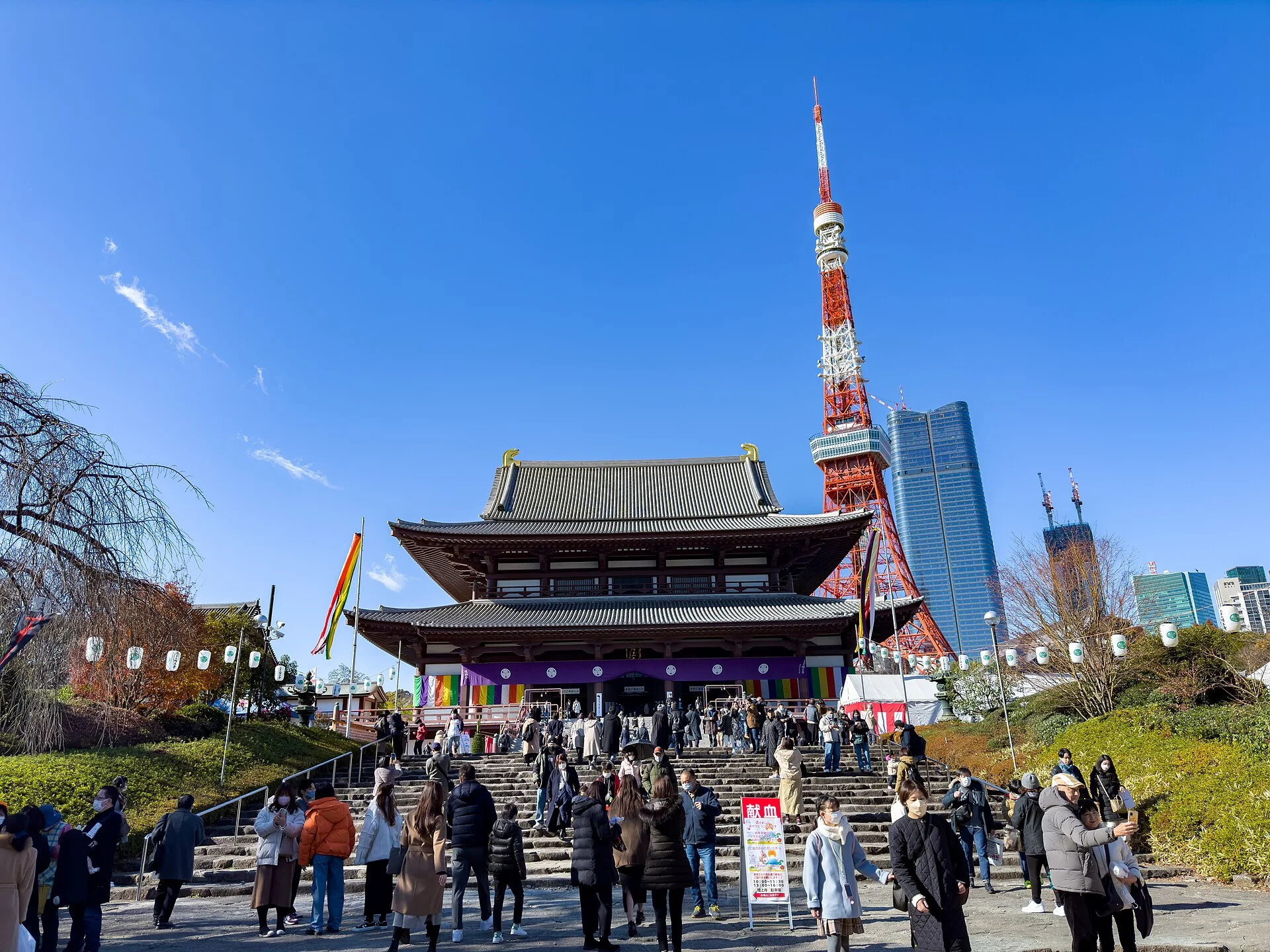
For a first visit to the Shiba Park area, leave Daimon Station via Exit A6 and follow Daimon-dori to Zojo-ji Temple, then walk through Shiba Park to Tokyo Tower before heading back via the Oedo or Hibiya lines. Allow three to four hours to linger inside the temple grounds, stroll through one of the park zones, and ride up to the 150-metre Main Deck. To frame both the Main Hall and Tokyo Tower in one shot, stay at the foot of Zojo-ji's stone steps. Note that the Tokugawa Shogunate Mausoleum is closed for works until 1 December 2026, and the Treasures Gallery closes from 22 to 31 December 2026.
Enter from Daimon Station, Leave via Another Line
Daimon Station serves both the Toei Asakusa Line and the Toei Oedo Line. From Exit A6—which reopened in March 2026—head west along Daimon-dori past the Daimon gate spanning the street until you reach Hibiya-dori. Daimon is the outer gate of Zojo-ji, and just before the temple precinct you will also pass through the middle gate, Sangedatsumon. When setting your navigation on leaving the station, search specifically for "Zojo-ji" or "Zojo-ji Sangedatsumon" to avoid mixing up the station name, the street gate, and the precinct entrance. The temple estimates a five-minute walk from Daimon Station, while Tokyo Tower's access guide lists roughly 10 minutes from Exit A6 to the tower.
If you are arriving on the Toei Mita Line, take Exit A1 at Onarimon Station and walk south along Hibiya-dori past the Tokyo Prince Hotel to the temple front. Exit A1 at Onarimon also leads directly to the base of Tokyo Tower in about six minutes, according to the tower's guide. To make the Shiba Park lawn your first stop, get off one stop further at Shibakoen Station and use Exit A4 for Minato City Shiba Park, then follow Hibiya-dori up to the temple. Shibakoen Station's street-level lift is at Exit A3; visitors with pushchairs or wheelchairs should follow the lift signs and cross at the ground-level junctions. The temple puts the walk from both Onarimon and Shibakoen stations at around three minutes, though you should allow extra time for checking maps and waiting at traffic lights.
Akabanebashi and Kamiyacho stations work best for the return leg. On the map, Akabanebashi sits just south of the tower; the walk down to the Akabanebashi Exit on the Oedo Line takes about five minutes and passes a major intersection and an uphill stretch on the way up. Kamiyacho Exit 1 is roughly a seven-minute walk along the Sakurada-dori side, making it the neater choice if you plan to continue towards Azabudai Hills afterwards. For an evening heading to Roppongi, return to Akabanebashi for the Oedo Line towards Roppongi. If you leave Zojo-ji aiming straight for the tower, walk a short way along Hibiya-dori towards Onarimon and turn left into the tree-lined lane with Jizo statues shown on Tokyo Tower's walking map; at the end of the lane, cross the main road to reach the base of the tower.
Coming from the North Exit of JR Hamamatsucho Station, the street route passes through the Daimon Station area, taking an estimated 10 minutes on foot to Zojo-ji and 15 minutes to Tokyo Tower. Hamamatsucho (JR and Tokyo Monorail) and Daimon (Toei Subway) sit next to each other as an interchange, so once you are at street level it is easy to link all three on foot. If you arrive at Hamamatsucho on a JR train from Ueno, Tokyo Station, or Shinagawa, simply walk straight up Daimon-dori to the temple rather than transferring to the underground for one short hop. When meeting friends coming from unfamiliar stations, use the foot of Zojo-ji's Main Hall stone steps as your rendezvous rather than a station exit or the construction passageway in front of the gate.
| Arrival Station | Street Exit | Best Route |
|---|---|---|
| Daimon Station | A6 | Follow Daimon-dori straight to Zojo-ji's front, then on to Tokyo Tower |
| Onarimon Station | A1 | Arrive via the Mita Line; head to the temple first or straight to the tower |
| Shibakoen Station | A4 (street lift at A3) | Start at the Minato City Shiba Park lawn, then walk to Zojo-ji |
| Akabanebashi Station | Akabanebashi Exit | Finish beneath the tower and take the Oedo Line towards Roppongi |
| Kamiyacho Station | Exit 1 | Visit the tower first, or connect to the Hibiya Line afterwards |
| JR Hamamatsucho Station | North Exit | Arrive by JR train and walk straight up Daimon-dori to the temple |
Walk from Daimon Station into Zojo-ji Temple, through Shiba Park, and on to Tokyo Tower. Covers Main Hall visiting hours, the Tokugawa Shogunate Mausoleum, observation deck fares, ground-level photo angles, and late-2026 closures and New Year's Eve bell-ringing times.
Stepping into Zojo-ji: The Main Hall and Ankokuden
Zojo-ji is the head temple of the Jodo-shu (Pure Land) school and served as the family temple of the Tokugawa shoguns. Moved to Shiba in 1598, the temple's current Main Hall (Daiden) at the top of the stone steps was rebuilt in 1974 after wartime destruction and enshrines a seated statue of Amida Nyorai. The Main Hall is open for worship from 06:00 to 17:30, with the entrance right at the top of the steps. Visitors who only want to pay their respects and take in the temple roof against Tokyo Tower can go straight in early in the morning without waiting for nearby exhibition halls to open. If a Buddhist service is underway, wait outside until the visitor aisle is clear.
Look to the right of the Main Hall to find Ankokuden, the temple's hall of prayer. Weekday opening hours are listed as 09:00 to 17:00, during which temple stamps (goshuin) and amulets are also issued here. Anyone wishing to venerate the Kuro Honzon should head to this hall: according to temple records, this hidden Buddhist image revered by Tokugawa Ieyasu is only unveiled on specific days, while an outer standing statue of Amida Nyorai (Omaedachi) is normally on view inside. Because Ankokuden does not begin issuing goshuin during the Main Hall's early-morning hours, visitors collecting temple stamps who are skipping the tower can time their arrival from 09:00 to cover both halls smoothly.
Let worshippers take the stone steps in front of the Main Hall first. You can frame photos from the open courtyard below the steps before walking over to Ankokuden beside it. Near Ankokuden you will notice neat rows of small Jizo statues wearing red knitted caps: known at the temple as Sentai Kosodate Jizo-son, they are tied to Nishimuki Kannon devotion and prayers for children's safety. Walk past them along the path, and on days when the mausoleum is closed, continue slightly further to see the Himalayan cedar labelled the "Grant Pine" (Grant-matsu), recorded by the temple as planted to mark the 1879 visit of the 18th US President, Ulysses S. Grant.
Allow a moment at the main front approach for the restoration works on Sangedatsumon. A June 2026 progress update from the temple projects repairs to wrap up in autumn 2032. While scaffolding covers the gate structure, pedestrians can still enter the grounds from Hibiya-dori through a covered temporary walkway beneath the gate; it is fairly narrow, so wait until you have cleared it before stopping for photos. A lift inside the temple provides step-free access up to the Main Hall, and wheelchairs can be borrowed on request from temple staff.
Fit the Mausoleum and Treasures Gallery into Daytime Hours
The Tokugawa Shogunate Mausoleum opens from 11:00 to 15:00 on weekdays (last admission 14:45) and from 10:00 to 16:00 on weekends and national holidays (last admission 15:45). It closes on Tuesdays, except when Tuesday falls on a national holiday. Admission is ¥500 for adults and free for senior high school students and younger, with tickets sold at the booth in front of the mausoleum gate. From 27 October to 1 December 2026, the mausoleum is closed to general visitors for reconstruction of the ticket booth; during this window, pair the Main Hall with the Treasures Gallery instead to explore the Tokugawa connection.
Six shoguns are interred here—the second, Hidetada; sixth, Ienobu; seventh, Ietsugu; ninth, Ieshige; twelfth, Ieyoshi; and fourteenth, Iemochi—alongside principal wives, concubines, and other clan members. Inside the enclosure, look for pairs that reveal reigns and family ties, such as the contrasting tombs of the 14th shogun Iemochi and his consort Princess Kazunomiya: both follow the same stupa design, yet Iemochi's is carved from stone whereas Kazunomiya's bronze monument bears the imperial chrysanthemum crest. Most of the original mausoleum buildings burned in the 1945 air raids, so the grave markers on site and the architectural model downstairs in the Main Hall tell two halves of the story—the post-war burial enclosure as it stands today and the lost splendour of the Edo-period complexes.
Located in the basement level (B1) of the Main Hall, the Treasures Gallery keeps the same opening days, last-entry cut-offs, and Tuesday closures (open on national holidays) as the mausoleum. General admission is ¥700, junior and senior high school students pay ¥300, and primary school children and younger enter free. When both venues are open, separate adult tickets total ¥1,200, whereas a combined ticket is ¥1,000. Because high school students and younger enter the mausoleum free of charge, families with teenagers can buy an adult combined ticket alongside student tickets for the gallery alone. If you arrive with only half an hour left, pick whichever of the two interests you most.
One highlight inside the gallery is the architectural model of the Taitoku-in Mausoleum, which recreates Hidetada's grand complex built by the third shogun Iemitsu across the southern grounds of the temple. Reading the model from its outer colonnades inward shows how successive gates once partitioned the precinct; stepping back outside with the temple map makes it much easier to distinguish today's burial enclosure beside the Main Hall from the footprint of the former mausoleums. The gallery also rotates pieces from its collection, including the Five Hundred Arhats scrolls and the Zojo-ji Tripitaka; the temple's October 2026 schedule lists scrolls 71 to 80 of the Five Hundred Arhats alongside the Biography of Vasubandhu and Further Biographies of Eminent Monks from the Tripitaka.
Another set of dates to plan around is 22 to 31 December 2026, when the Treasures Gallery closes for ten days before launching its next permanent exhibition on 1 January 2027. At the year-end, closures dictate your itinerary; the rest of the year, last-admission times set the pace. If you finish lunch close to 14:00 on a weekday, head straight to whichever site matters more to you. To see both comfortably, aim to arrive at the temple before lunch on weekdays, or use the extra afternoon hour on weekends to browse the gallery unhurriedly.
Separate Entrances for Autumn Leaves, Lawns and the Burial Mound
Zojo-ji sits hemmed in by distinct pockets of parkland. Originally designated in 1873 as a single park encompassing the temple, Shiba Park was separated from temple land after the Second World War; today, Tokyo Metropolitan Shiba Park—managed by the Tokyo Metropolitan Park Association—forms numbered plots wrapping around the temple walls, while Minato City Shiba Park is a separate municipal park by Shiba Toshogu Shrine at 4-8-4 Shibakoen. If you only have 20 or 30 minutes, enter a specific park name into your map rather than searching generically for "Shiba Park". Anyone wanting to sit on grass facing Tokyo Tower will find Minato City Shiba Park far easier to navigate to.
Leaving Zojo-ji's front and turning towards Shibakoen Station leads along Hibiya-dori straight to Minato City Shiba Park and Shiba Toshogu Shrine. At the centre of the municipal park lies a 5,100-square-metre lawn designated by park managers as a prime tower viewpoint. For family group photos with Tokyo Tower behind you, spread out on or around this lawn and leave the temple steps clear for worshippers. The park also features a small slide play area aimed at children aged 3 to 12. When adults have picked up takeaway lunches and children need a queue-free break, this lawn works far better than adding another ticketed museum. If the grass is damp, loop around the perimeter path before moving on.
With an extra half-hour, continue from Shiba Toshogu Shrine into the metropolitan park's Shiba Maruyama Kofun burial mound. Shiba Toshogu enshrines Tokugawa Ieyasu, and beside its approach stands an ancient ginkgo tree traditionally attributed in park guides to the third shogun Iemitsu. The keyhole-shaped kofun—a designated Tokyo Historic Site stretching 110 metres—rests on a naturally elevated ridge. Walking from the Shibakoen Station side past the lawn, shrine, and mound reveals the area's undulating terrain. Visitors with pushchairs or anyone wishing to avoid slopes should stay around the flat lawn and Hibiya-dori, saving higher viewpoints for Tokyo Tower itself.
For autumn foliage, head to Plot 19 of Tokyo Metropolitan Shiba Park near the tower, marked on maps as Momijidani (Maple Valley). Park guides describe it as a landscaped ravine built with boulders, woodland, and artificial cascades where maple trees colour along the winding paths in late autumn. Ginkgo fans and maple seekers each have their own spot, so decide first whether you want golden canopies at the shrine or red maples in the ravine. After dark, stick to the open lawn edges or main roads for tower views and keep Momijidani for daylight when steps and changes in level are easy to see. While the open grounds remain accessible 24 hours, park service centres and facilities keep separate year-end holiday closures.
How to Buy Tickets for Tokyo Tower's Two Decks
The 150-metre Main Deck is the most straightforward ticket for a first climb. Fares are ¥1,500 for adults, ¥1,200 for high school students, ¥900 for primary and junior high students, and ¥600 for children aged four and older. Regular hours run from 09:00 to 23:00, with last admission at 22:30—though entry may close early when busy. Tickets can be bought online ahead of time or at the ground-floor counter inside FootTown at the base of the tower. This level gives an unobstructed 360-degree view; scan along the windows to spot Zojo-ji's roof and the scattered plots of Shiba Park, which makes clear from above why the park has so many separate entrances.
Access to the 250-metre Top Deck requires booking the Top Deck Tour, which includes Main Deck entry in the price. Online adult tickets cost ¥3,300 versus ¥3,500 on the day, with walk-up rates ¥200 higher across every age bracket. Tours run in timed 15-minute entry slots from 09:00–09:15 through to 22:00–22:15, with Top Deck viewing open until 22:45. You ride the lift from FootTown 1F up to the Main Deck first, then check in at the Top Deck Gate on Main Deck 2F. Entering the Main Deck ahead of your slot is permitted, and once you exit the tower your visit concludes.
If you book a slot near sunset, build buffer time for the temple and meals before check-in. Official terms state that late arrivals forfeit their Top Deck booking without refund, though they may still visit the Main Deck on the same day. Changing a date requires cancelling and rebooking: customer-initiated cancellations incur a 100% fee from two days before the visit date. Should the tower suspend tours due to high winds, snow, or safety inspections, online bookings are refunded in full through the original site, while on-site buyers claim refunds at the counter with their ticket, receipt, and the payment card if bought by credit card. If your group disagrees about going up in rain, settle whether the 250-metre deck is essential before booking.
If you want to visit the Main Deck twice—once by day and again after dark—compare the ¥2,700 adult 1DAY Pass. Sold at FootTown ticket windows between 09:00 and 19:30 (with exclusions on selected dates), it uses a hand stamp for same-day re-entry to the Main Deck. Two separate adult Main Deck tickets would cost ¥3,000, so the day pass pays off only if you genuinely plan both a daytime overview and a post-dinner return. If you go up in the late afternoon and simply stay until dusk, or head to another district for dinner afterwards, a single Main Deck ticket is enough. For visitors wanting unhurried time above the city, the Tokyo Diamond Tour (¥7,000 for adults, departing hourly from 12:00 to 18:00) bundles both decks with access to a dedicated lounge.
| Ticket Type | Adult | High School | Primary & Junior High | Child (4+) |
|---|---|---|---|---|
| Main Deck | 1,500 | 1,200 | 900 | 600 |
| Top Deck Tour (Online) | 3,300 | 3,100 | 2,100 | 1,500 |
| Top Deck Tour (Walk-Up) | 3,500 | 3,300 | 2,300 | 1,700 |
| Tokyo Diamond Tour | 7,000 | 6,500 | 4,700 | 3,300 |
Framing Temple and Tower from Ground Level, Plus Illumination Schedules
Two classic angles stand out at street level. To capture Zojo-ji's sweeping eaves alongside the tower spire, stand below the Main Hall stone steps and look towards the facade: Tokyo Tower rises directly behind the right side of the roof. Stepping closer to the stairs makes the temple dominate the frame, whereas backing up into the courtyard opens up more sky so the spire fits comfortably. For a fuller view of the tower's steel lattice, move over to the Minato City Shiba Park lawn, where the sightline sweeps from green turf to the red-and-white structure beyond. The Akabanebashi intersection offers a third urban composition—framing road, traffic, and tower along a single axis from the pavement.
To see the Main Hall and Ankokuden in clear daylight, place the temple visit in the early afternoon, take your temple-and-tower shots, then stop into FootTown for a bite before stepping back outside once the tower lights up. As natural light fades, the dark tiled roof drops into shadow well before the sky and illuminated tower, so shoot any architectural details while the sun is still up. If you only have the evening free, exit directly at Akabanebashi Station to admire the lit tower on the walk up before deciding whether to buy deck tickets.
For evening exterior shots, check Tokyo Tower's official illumination calendar in advance. Alongside the classic Landmark Light—which shifts between a warm orange tone in winter and crisp white in summer—the tower runs multi-coloured Infinity Diamond Veil displays and special event lightings on set dates. If you are hoping for a specific colour scheme, check its start and finish times on the calendar before picking a dinner spot so you do not miss a timed display while seated indoors. Travellers with fixed Top Deck reservations should slot their ground-level night photos either before boarding or after coming back down, letting the flexible part of the evening work around the timed entry.
Once inside the observation decks, your camera faces out onto Tokyo's night skyline. Switch off your flash before approaching the glass, angle away from bright ceiling lights behind you, or switch to another window overlooking the streets below so interior reflections do not wash out distant lights. Tripods are prohibited on the Top Deck Tour according to the official guidelines. Anyone intending to set up a tripod at ground level in Shiba Park should note that the Tokyo Metropolitan Park Association lists conditions where an occupation permit may be required; check its photography rules beforehand. Casual phone snapshots are easy from the open plaza before the Main Hall—just keep the gate passageway and car park stairs clear for passers-by.
Rainy Days, Pushchairs and Wheelchair Access
In a passing shower, walk from Daimon into Zojo-ji, wait for the Treasures Gallery in the Main Hall basement to open, and then move on to Tokyo Tower's FootTown complex. Unlike the observation decks, the gallery's exhibits do not depend on outdoor visibility. FootTown's second floor houses a food court and souvenir shops, making it easy to shelter or pick a meeting floor if your party splits up. The walk between temple and tower still crosses open streets; if the uphill paths turn slick, stick to paved main roads rather than park trails. When low cloud swallows the upper skyline before you buy tickets, trade that hour for a sit-down meal and catch the Oedo or Hibiya lines onward.
The Open-Air Outdoor Stairs climb roughly 600 steps from the FootTown rooftop up to the Main Deck. Ascents generally run only on weekends and national holidays from 09:00 to 16:00, while descents are open daily from 09:00 to 20:00, both requiring a standard observation ticket and closing in rain, severe weather, or heatstroke alerts. Once on the outdoor staircase, you cannot switch to a lift mid-climb, though you may ride the lift down from the Main Deck. Those tackling the climb may want a short breather at the base; if part of your group is using a pushchair while others take the stairs, agree to meet on the Main Deck. Top Deck ticket holders who want to climb up should leave time for the stairs before their check-in window.
Wheelchair users have step-free lift access from Tokyo Tower's entrance to the Main Deck; lifts arrive on Main Deck 2F, and staff can assist visitors heading down to 1F. The Top Deck uses a different lift and narrower corridors: official rules cap wheelchair dimensions at 70 x 120 cm, require an accompanying carer, and cannot accommodate multiple wheelchairs on the same tour slot. If two wheelchair users want to enjoy the views together without splitting up, stick to the Main Deck. Zojo-ji's Main Hall also has a lift, and leaving unhurried road time between temple and tower—keeping park detours to the flat lawn edges—makes the route straightforward.
Families with babies or toddlers can use the nursing room on FootTown 3F, and the 1F information desk lends in-house buggies between 09:00 and 22:30 on a first-come basis for children under four weighing up to 20 kg. Because the Top Deck Tour includes stairs along the route, personal pushchairs must be left at the FootTown 1F service centre, and items whose combined length, width, and height exceed 100 cm also require cloakroom storage. If a child falls asleep or relatives prefer to rest in turns, staying on the Main Deck cuts out extra check-ins and transfers—and makes it simple to skip the park lawn if the weather turns.
Seasonal Highlights Worth Lingering For
In spring, build extra daylight into your schedule for cherry blossoms in Tokyo Metropolitan Shiba Park. The park's official flower calendar highlights cherry season across multiple plots, each marked on the precinct map. To beat the midday picnic rush on the grass, see the blossoms and Zojo-ji's Main Hall in the morning before breaking for lunch. Visiting in early April may also overlap with Zojo-ji's Gyoki Daie memorial services: the 2027 schedule runs from 2 to 7 April, with a formal procession announced for 13:30 and the daytime service at 14:00 on 5 April. Stay at the temple if you want to watch the procession, or plan gallery and tower time around the busier afternoon courtyard.
In summer, narrow your park detour to a single shaded zone. Exit Shibakoen Station, pause under the trees around Minato City Shiba Park and Shiba Toshogu Shrine, continue along Hibiya-dori to the temple, and reserve lunch for an air-conditioned restaurant. Minato City Shiba Park also sets up cooling mist areas in warm weather. Duck inside FootTown during peak midday glare and save the open lawn for late afternoon as temperatures ease. In autumn, because the maples and ginkgo stand in different corners of the park, visiting one side and leaving the same way saves crossing the temple grounds twice.
Late winter brings a quieter morning route through Plot 1 of Shiba Park, famous for its "Ginsekai" (Silver World) plum grove, which held a reopening ceremony on 5 April 2026 following refurbishment. Make the plum grove your first park stop in winter after checking the park's weekly bloom updates. After dusk, shift your resting time indoors to FootTown or the observation decks and linger on the grass only long enough for photographs. If you reach Zojo-ji after sunset on a short winter day, move the Treasures Gallery and mausoleum to another morning and simply walk from Akabanebashi to the tower base that evening.
Anyone hoping to hear Zojo-ji's New Year's Eve bell-ringing on 31 December 2026 will need to arrive earlier than in past years. According to the temple's November notice, the evening service starts at 21:30, bell-ringing starts at 21:45, and proceedings wrap up around 23:00. Public tickets to strike the bell are scheduled for distribution from 09:00 on 1 December at the temple office on the second floor of Zojo-ji Kaikan, so anyone wanting a turn at the rope must plan a separate morning stop to collect one. If you also want evening tower views on New Year's Eve, go up the tower or dine nearby first, leaving plenty of time to walk back to the temple—or pair your night transport and shrine stops using our Japan New Year's Eve and temple bell guide.
Pacing the Route for Two Hours, Half a Day or an Evening
With only two hours to spare, the leanest loop enters via Daimon Exit A6, pauses below the Main Hall steps for photos and a quick prayer, cuts through one park edge or straight along the road to Tokyo Tower, and exits via Akabanebashi or Kamiyacho. Once you have your shot from the temple steps, check the queue at the tower base before deciding on Main Deck tickets. If going up would squeeze your next commitment, simply admire the tower from Minato City Shiba Park and leave from Shibakoen Station on the Mita Line—far less stressful than rushing to catch a fixed Top Deck slot before a timed exhibition or dinner booking.
With four hours, you can cover the Tokugawa history unhurriedly by lining up your temple arrival with the mausoleum and Treasures Gallery opening hours—say 11:00 to 12:30 on a weekday. Follow that with a stroll through the park and head up the tower either before or after lunch. If your trip falls on a regular Tuesday without a national holiday, both the mausoleum and gallery will be closed; pivot after the Main Hall to Shiba Toshogu Shrine and the Shiba Maruyama Kofun mound instead, finishing ground-level sights in the morning and dedicating the afternoon to one observation deck. Visitors travelling specifically for the gallery's scrolls or model should reschedule for an open day.
For an evening-focused outing, meet around Daimon at about 15:00 to catch the temple roofs and tower in daylight first. Adjust your pace to the group—if some want the gallery while others only want the courtyard, regroup outside the Main Hall. Should you miss last entry for the gallery, visit Ankokuden before walking out to the lawn or FootTown. Sunset shifts markedly by season: in winter, catch dusk from the observation deck and eat afterwards; in summer, dine first and ascend later. To grab one more photograph of the illuminated tower on the way home, take the downhill road towards Akabanebashi Station and glance back along the avenue.
If you are budgeting upfront, split the adult ticket costs cleanly. Worship at the Main Hall, open park lawns, and street-level tower photography make a completely free half-day out. Adding the combined mausoleum-and-gallery ticket plus the Main Deck comes to ¥2,500 per adult on open days, or ¥4,300 with an online Top Deck Tour—before meals and Underground fares. Where companions have different appetites for heights, walk the Main Hall, park lawn, and tower plaza together, then split up with a meeting time at FootTown 1F or the food court so you only buy observation tickets for those going up.
Where to Go Next and Which Side of the Park to Stay On
To add a traditional landscape garden, walk back down Daimon-dori to Hamamatsucho Station's North Exit, where Kyu-Shiba-rikyu Gardens sits just one minute from the station. Open from 09:00 to 17:00 (last entry 16:30), admission is ¥150 for adults and ¥70 for visitors aged 65 and over, with standard year-end closures from 29 December to 1 January. It slots neatly after a morning at Zojo-ji and Shiba Park for a quiet circuit around the pond. If you stay on Tokyo Tower until nightfall, save the garden for another morning and look for dinner or transport back towards Daimon.
Travelling on to Ginza depends on where you finish. From the Zojo-ji or Hamamatsucho side, walk to Daimon and take the Toei Asakusa Line through Shimbashi to Higashi-Ginza—handy for the Kabukiza Theatre without backtracking. If Tokyo Tower is your final stop, follow the tower's walking signs to Kamiyacho Exit 1 and board the Hibiya Line straight to Ginza or Higashi-Ginza. Travellers combining dinner with evening shopping can pick the best stop using our Ginza shopping route by street section.
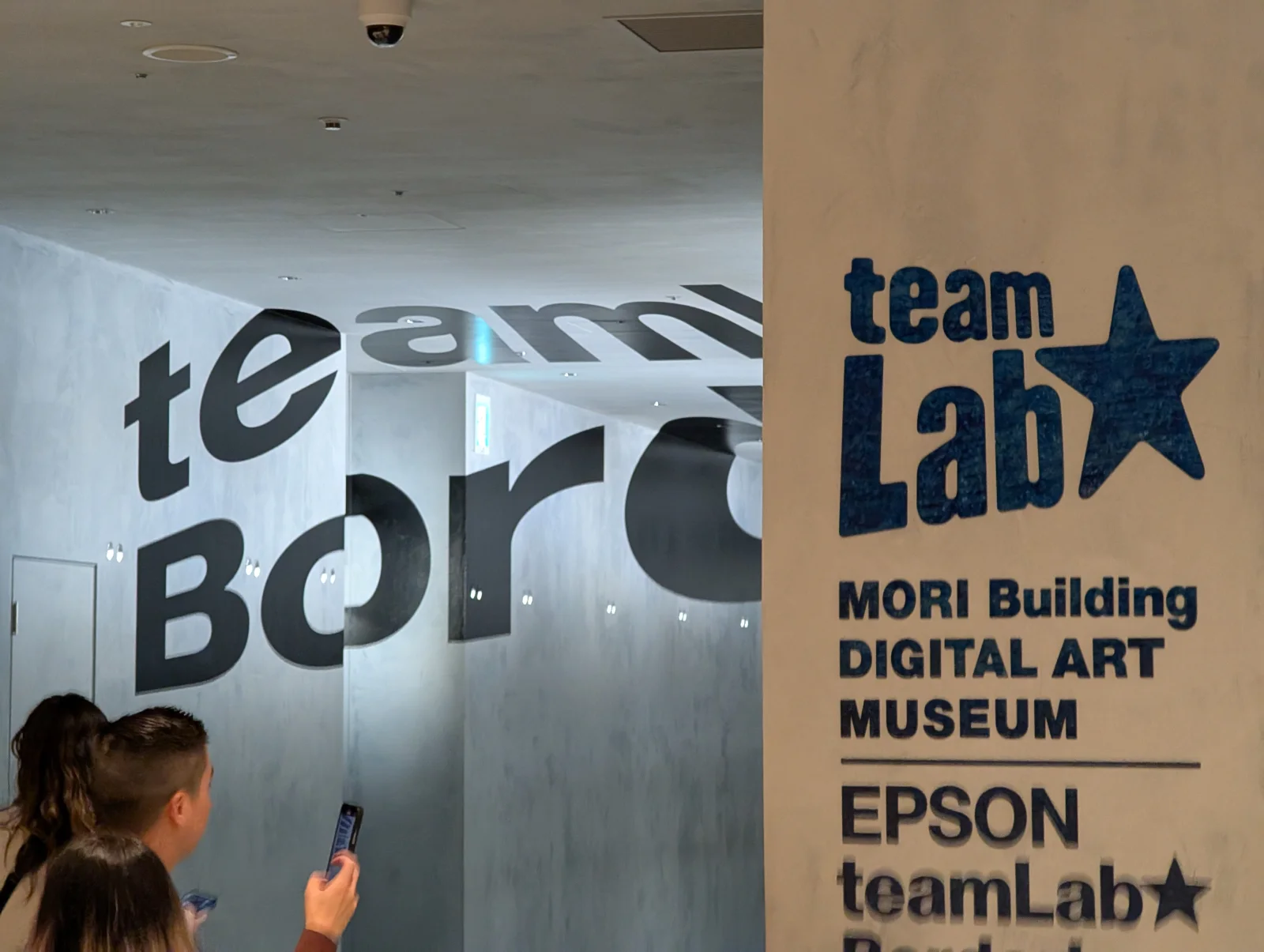
To remain in Minato Ward after leaving the tower, the Kamiyacho side feeds directly into Azabudai Hills or a timed slot at teamLab Borderless. Booked visitors should factor in queues for the down lift before walking across from Kamiyacho to locate the museum entrance. To pair two major temples instead, ride the Asakusa Line straight from Daimon to Asakusa on another morning with our Senso-ji Temple visiting route; if squeezing both into one day, give Zojo-ji the morning window when the mausoleum and gallery are open and spend the rest of the day around Asakusa.
Staying in this neighbourhood makes most sense if you want repeated walks past the tower at different hours. On the north side, the Tokyo Prince Hotel sets its official walking routes from Onarimon (Mita Line), Daimon (Toei lines), and Hamamatsucho, putting you closest to the northern edge of the temple and daytime restaurants along Daimon-dori. On the south side, The Prince Park Tower Tokyo lists Shibakoen and Akabanebashi stations as its access hubs—more convenient if you want to stroll back across Minato City Shiba Park or hop on the Oedo Line to Roppongi at night. Because the two hotel names look nearly identical, double-check the full English hotel name and street address when booking or ordering a taxi. If Shiba Park is just one afternoon in a wider Tokyo itinerary, base yourself near whichever hub serves the rest of your trip.
For travellers flying out of Haneda Airport, the Tokyo Monorail departs right beside Hamamatsucho Station. If you tackle this walk on your departure morning, leave luggage at your hotel or near your final station and check your train time to the terminal beforehand; coin lockers of varying sizes sit outside the Daimon B1 ticket gates near Exit A6, though large bays are limited. On a tight layover or final morning, keep to Zojo-ji and return straight to Hamamatsucho—walking all the way to Tokyo Tower means adding return collection time for your bags. For comparing airport rail links along this corridor, see our Tokyo airport to city transport comparison.
A few useful answers
Do you need a ticket to visit Zojo-ji Temple?
Entry to the Main Hall and Ankokuden is free. The Tokugawa Shogunate Mausoleum costs ¥500 for adults, the Treasures Gallery costs ¥700 for adults, and a combined adult ticket for both is ¥1,000.
Do you have to go up Tokyo Tower to photograph it with Zojo-ji?
No—standing at the foot of the Main Hall stone steps frames both the temple eaves and Tokyo Tower together. For more of the tower's lower lattice, walk over to the Minato City Shiba Park lawn.
Are the Tokugawa Shogunate Mausoleum and Treasures Gallery open on Tuesdays?
Both close on Tuesdays unless Tuesday is a Japanese national holiday. Last admission is 14:45 on weekdays and 15:45 on weekends and national holidays, with separate temporary closures scheduled in late 2026.
Do I need to book ahead just for Tokyo Tower's Main Deck?
No, standard Main Deck tickets can be bought on the spot at FootTown 1F or reserved online in advance. Only the 250-metre Top Deck requires booking the Top Deck Tour, which includes Main Deck entry.
What time is Zojo-ji's New Year's Eve bell-ringing in 2026?
On 31 December 2026, the service begins at 21:30, bell-ringing starts at 21:45, and the ceremony ends around 23:00. Public tickets to ring the bell are scheduled for distribution from 09:00 on 1 December at the temple office on the second floor of Zojo-ji Kaikan.
Official information and references
Sources used in this guide.
- Zojo-ji Temple: Main Hall, Ankokuden, Goshuin and Step-Free Access
- Zojo-ji Temple: Rail Access and Walking Times from Nearby Stations
- Zojo-ji Temple: Precinct Guide to the Main Hall, Ankokuden and Sangedatsumon
- Zojo-ji Temple: History and the Tokugawa Shogunate Mausoleum
- Zojo-ji Temple: June 2026 Sangedatsumon Gate Restoration Progress and Pedestrian Access
- Zojo-ji Temple: Tokugawa Shogunate Mausoleum Hours, Admission and Temporary Closure
- Zojo-ji Temple: Treasures Gallery Fares, Opening Hours and Permanent Exhibition
- Zojo-ji Temple: Treasures Gallery Late-2026 Closure and 2027 Exhibition Opening
- Zojo-ji Temple: 2026 New Year's Eve Bell-Ringing Schedule Change
- Zojo-ji Temple: 2027 Gyoki Daie Memorial Service Schedule
- Zojo-ji Temple: Walking Route from Shiba Toshogu Shrine to Tokyo Tower
- Tokyo Metropolitan Bureau of Transportation: Reopening of Daimon Station Exit A6 in 2026
- Tokyo Metropolitan Bureau of Transportation: Shibakoen Station and Step-Free Station Map
- Tokyo Metropolitan Bureau of Transportation: Toei Asakusa Line Stations and Transfers
- Tokyo Metropolitan Bureau of Transportation: Coin Locker Locations at Daimon Station
- Tokyo Metro: Hibiya Line Stations and Transfers
- Tokyo Tower: Observation Deck Opening Hours and Ticket Fares
- Tokyo Tower: Station Exits and Walking Times
- Tokyo Tower: Official Walking Routes and Exit Directions
- Tokyo Tower: Top Deck Tour Reservations, Cancellations and Visiting Conditions
- Tokyo Tower: Main Deck 1DAY Pass and Re-Entry Rules
- Tokyo Tower: Open-Air Outdoor Stairs Operating Conditions
- Tokyo Tower: Exterior Illumination and Daily Lighting Calendar
- Tokyo Tower: FootTown Floors and Facilities
- Tokyo Tower: Family Services and In-House Pushchair Hire
- Tokyo Tower: Main Deck Step-Free Access Guide
- Tokyo Metropolitan Park Association: Shiba Park Grounds, Flower Calendar and Map
- Tokyo Metropolitan Park Association: Reopening of Shiba Park Plot 1
- Minato City Shiba Park Management: Lawn, Play Area and Access
- Tokyo Metropolitan Park Association: Kyu-Shiba-rikyu Gardens Hours and Admission
- Tokyo Prince Hotel: Walking Routes from Onarimon, Daimon and Hamamatsucho
- The Prince Park Tower Tokyo: Walking Routes from Shibakoen and Akabanebashi
- Tokyo Monorail: Connections Between Hamamatsucho and Haneda Airport