Adult tickets for teamLab Borderless at Azabudai Hills start from ¥3,400. Compare timed Entrance Passes with the Flexible Pass, plus booking windows, rescheduling rules, late-2026 and January 2027 opening hours, Kamiyacho underground access, and family logistics.
- Region & Focus
- TokyoAttractions
- Reading Scope
- 21 min read · 13 chapters · 7 Q&As
- Official Verification
- 8 official sources checkedUpdated 22 November 2026
- Key Topics
- BookingItinerariesTokyo & Kanto
Chapter Route Map (tap any stop)
- Standard Ticket Tiers and Age Pricing
- When the Flexible Pass Actually Makes Sense
- Release Schedule and Mobile Ticket Entry
- How to Reschedule Existing Bookings
- Opening Hours, Closure Dates and Last Entry
- Direct Underground Access from Kamiyacho Exit 5
- Navigating a Museum Without a Map
- Building in Time for Tea and Sketching
- Child Ratios, Pushchairs and Baby Care Rooms
- Wheelchairs, Disability Concessions and Safety
- Lockers, Dress Code and Photography Rules
- Half-Day Azabudai Plans and Rainy-Day Routes
- Do Not Confuse It with teamLab Planets in Toyosu
- Quick Q&A
For a first visit to teamLab Borderless in Tokyo's Azabudai district, choose a timed slot you can reliably make and allow around two hours inside. Standard tickets specify both date and entry window, starting from ¥3,400 for adults. Only consider the ¥12,000 Flexible Pass if your arrival time on the day is genuinely unpredictable. The museum entrance sits on B1 of Garden Plaza B in Azabudai Hills, roughly a two-minute walk via the underground passage from Exit 5 of Kamiyacho Station on the Hibiya Line.
Standard Ticket Tiers and Age Pricing
The standard timed ticket is officially called the Entrance Pass. You select a date and an entry slot when booking, though that slot only governs when you join the entrance queue; once inside, you can stay until closing time. Adult and disability concession fares vary by date, so open the calendar to compare prices across your available days before picking a slot that fits the rest of your itinerary. Published starting prices are baselines—always budget according to the exact figure shown for your chosen date.
Adult pricing applies to ages 18 and over, while youths aged 13 to 17 pay ¥2,800, children aged 4 to 12 pay ¥1,500, and children aged 3 and under enter free of charge. Staff may ask visitors holding youth tickets for proof of age, such as a student ID. For families spanning multiple age brackets, enter the full headcount on the booking calendar rather than multiplying the adult base fare by the number of paying guests.
For example, two adults, one 15-year-old, and one 7-year-old visiting on a ¥3,400 adult-rate day come to ¥11,100 in total. When comparing different dates, only the two adult tickets fluctuate while the youth and child rates stay fixed. Drinks at the teahouse and custom souvenirs made from your drawings are optional extras, so compare dates using admission totals alone.
If you are travelling into Tokyo from another city, weigh modest ticket savings against transit friction. One date might be slightly cheaper yet force you to haul luggage across stations during the morning rush, whereas another lets you hop straight onto the Hibiya Line from your hotel. Lay out your fixed commitments and meeting points alongside the fare calendar to pick the most practical day.
| Ticket Type or Age Group | Price per Person | Entry Rule |
|---|---|---|
| Entrance Pass (18 and over) | From ¥3,400 | Fixed date and entry slot; dynamic pricing by date |
| Entrance Pass (13 to 17) | ¥2,800 | Fixed date and entry slot |
| Entrance Pass (4 to 12) | ¥1,500 | Fixed date and entry slot |
| Ages 3 and under | Free | Counts towards adult-to-child accompaniment ratio |
| Entrance Pass (Disability Concession) | From ¥1,700 | Dynamic pricing by date; certificate required at entry |
| Flexible Pass (Adults and Children) | ¥12,000 | Fixed date; join the queue any time before last entry |
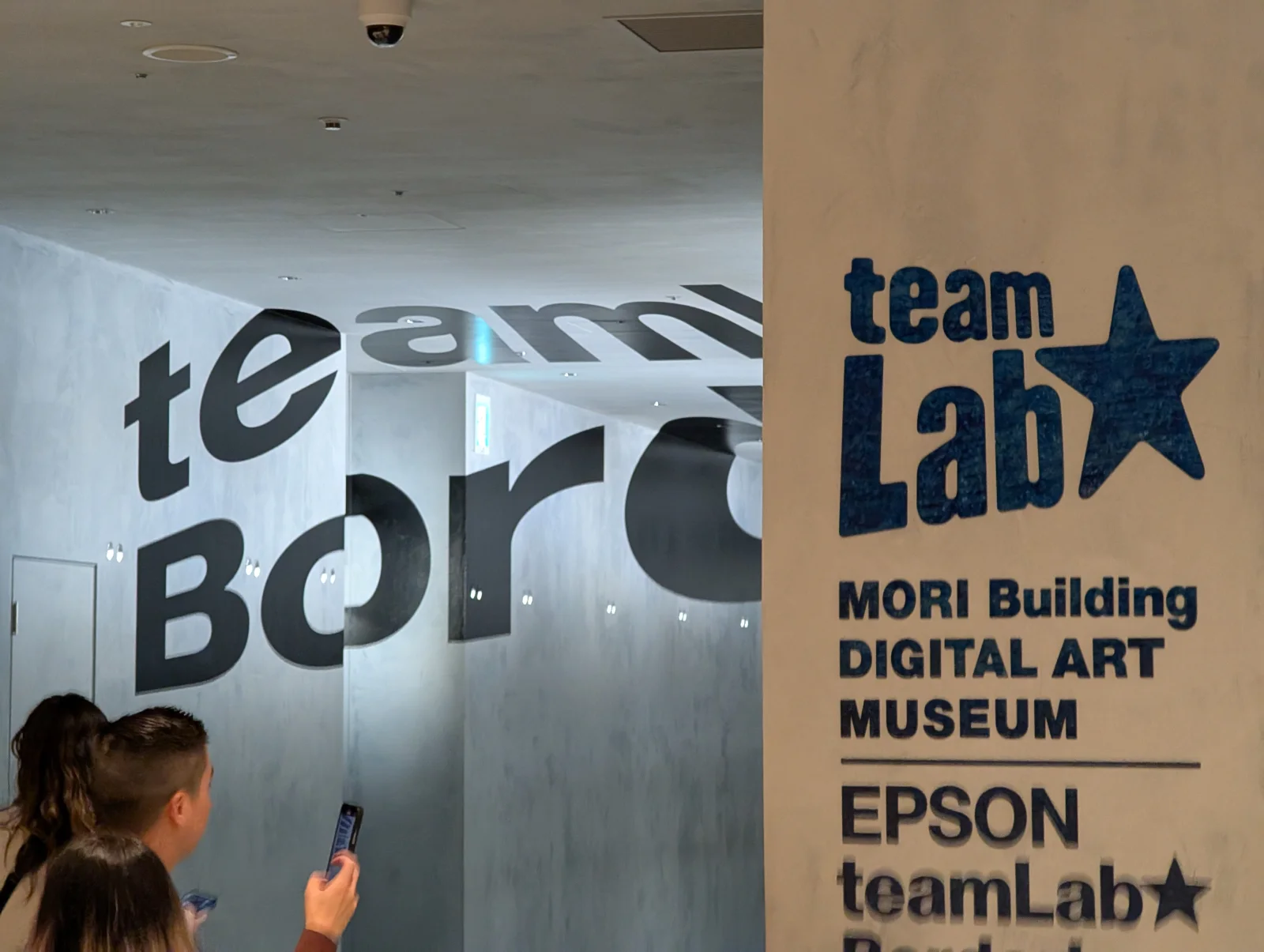
Adult tickets for teamLab Borderless at Azabudai Hills start from ¥3,400. Compare timed Entrance Passes with the Flexible Pass, plus booking windows, rescheduling rules, late-2026 and January 2027 opening hours, Kamiyacho underground access, and family logistics.
When the Flexible Pass Actually Makes Sense
The Flexible Pass buys same-day arrival freedom rather than open-ended dates—you still commit to a specific calendar day at checkout. You can arrive at any point during opening hours as long as you join the entrance queue before last entry. If you plan to turn up in the late afternoon or early evening, remember to subtract queueing time from your remaining hours before closing.
Whenever your day already revolves around a fixed meal, show, or train departure, a standard timed ticket is usually simpler and far better value. Measured against the lowest adult rate, one Flexible Pass adds ¥8,600 per person—an extra ¥17,200 for a couple. If Azabudai fits neatly before or after lunch, just leave a sensible buffer for transit and book a regular slot you can comfortably reach.
The Flexible Pass only pays off when you have a single fixed day left in Tokyo, an earlier commitment has an unpredictable finish time, and you still have a clear window before closing. Imagine a nearby meeting scheduled to wrap up by midday that could easily run into the afternoon, leaving you two or three hours before the museum shuts. If that prior engagement might drag past last entry, neither an early timed slot nor a same-day Flexible Pass can save the plan—choose another day instead.
Couples and families should start by looking for a single slot everyone can make. Each paying visitor enters on their own ticket, so someone holding a Flexible Pass who wants to explore alongside friends on timed tickets will still end up matching the group's fixed slot. Flexible Passes also cost ¥12,000 for children, making the mark-up over standard child fares even steeper. If two parties are travelling separately and want independent rescheduling options, place separate orders before paying.
Release Schedule and Mobile Ticket Entry
According to the museum's FAQs, tickets typically go on sale at the start of the month two months prior to your visit. For a trip in March, start watching for releases in early January. The booking calendar displays open dates alongside remaining availability—check first that your target date is live, then click through to verify there is enough capacity for your entire party.
Official online channels listed by the museum are its direct ticketing site and Klook. Book through the official teamLab Borderless ticket site if you want the option to reschedule later or use the built-in group ticket-sharing tool. The official site accepts major credit cards and PayPay. Before confirming payment, double-check the venue name, date, time slot, and age breakdown—especially if you have also been browsing tickets for teamLab Planets in Toyosu.
Once payment clears, open the link in your confirmation email to display your tickets on a smartphone or tablet. Visitors without a mobile device can print their tickets from the ticket page within 24 hours before the reserved date. When one person buys for the group, keep that confirmation email somewhere easy to pull up. If you have multiple attraction bookings on the go, open the Azabudai Hills pass before stepping into the underground passageway so it is ready at the entrance.
If the confirmation email goes missing, search your inbox for the sender domain borderless-azabudai.ticket.teamlab.art and check spam or promotions folders. The master order link belongs to the original purchaser. To send companions their own passes, use the share function on the ticket page, which unlocks 24 hours before admission. Friends on the same timed slot can then arrive separately with their individual tickets, though disability concession holders and their discounted companion must enter together.
For spontaneous visits, check same-day availability on your phone first. The official FAQs note that unsold tickets remain available online on the day, and remaining slots can also be bought on-site with a ¥200 surcharge per standard ticket. If you are already at Kamiyacho, check the calendar before deciding whether to head straight in or grab a bite in Azabudai Hills first. The museum does not accept resold tickets, so always top up via official channels.
How to Reschedule Existing Bookings
Direct bookings from the official website cannot normally be cancelled for a refund unless the museum closes unexpectedly. Eligible direct orders can, however, be rescheduled up to three times from the ticket page. For standard timed Entrance Passes, changes close two hours before your original entry slot—for instance, a 14:00 booking must be moved by 12:00. Flexible Passes use a cut-off two hours before that day's last entry; on a day when closing is 21:00 and last entry is 20:00, you have until 18:00.
Your new date or time slot must already be on sale and hold enough remaining tickets for everyone on the order. Multi-ticket bookings move as a single block: you cannot shift just one or two people, nor split a group across different days or slots. It is also not possible to use the rescheduling tool to upgrade standard Entrance Passes into Flexible Passes.
When switching to a date with a different price tier, the official system charges you for the new slot first and refunds the original payment afterwards. Open the ticket page once the transaction completes to verify the updated date, time, and headcount. If you booked via Klook, check the modification terms on your Klook order and handle any changes through that platform.
On days involving long-distance rail or flights, make your reschedule decision well ahead of the cut-off. If you are riding a 10:00 train back into Tokyo for a 12:30 slot, the 10:30 deadline arrives almost as soon as you depart. If you already know your train is delayed before boarding, compare replacement slots right away—waiting until you reach Tokyo may leave you locked out of changes.
Plan to arrive at the entrance during the window printed on your ticket. If severe transit delays make you miss your slot, take your original ticket to the entrance staff to ask about later admission. When you are still inside the two-hour window, switching online to an open slot you can definitely reach is always fastest. Better yet, schedule delay-prone long-distance transfers for the day before your visit.
Opening Hours, Closure Dates and Last Entry
Standard hours run from 8:30 to 21:00, with last entry at 20:00—the museum stops admitting visitors one hour before closing. Keep the two-hour viewing guideline separate from that final-hour cut-off. First-timers keen on visiting the teahouse or taking in the light installations unhurriedly should aim for 18:00 or 18:30 at the latest, while late slots suit return visitors focusing on a few specific works.
According to the official announcement checked on 22 November 2026, closing extends to 22:00 from 26 to 30 December 2026, pushing last entry to 21:00. On 26 January 2027, the museum closes early at 17:00 with last entry at 16:00. If you want two full hours on that early-closing date, target a slot around 14:30 to leave room for the queue.
Announced closure dates include 24 November and 8 December 2026, followed by 13 and 19 January 2027. On a short Tokyo trip, cross off these dates first before comparing availability on other days. Since these closures fall on Tuesdays as well as a Wednesday, checking the official opening hours, closure and last-entry notice is far more reliable than assuming Japanese museums only shut on Mondays.
Morning slots give you the rest of the day ahead and make departure timing easy to adjust. If you book the 8:30 opening slot and plan to have lunch afterwards, note that most Azabudai Hills restaurants open from 11:00, so either pair the visit with a morning café stop or pick a slightly later slot. Travellers coming from outside Minato City at dawn should also factor in commuter rush-hour transfers and hotel breakfast. If you prefer a slower start, a mid-to-late weekday morning slot still wraps up nicely around lunch.
When weekends only have evening slots left, explore the Azabudai Hills complex first and enter the museum afterwards. Late slots mainly shape what stays open once you emerge: the shops and market in Garden Plaza mostly close earlier than the museum, so finish any shopping beforehand. Use the ticket calendar to verify open days, fares, and slot availability—building flexible time around the rooms you care about most beats trying to guess the quietest hour of the day.
Direct Underground Access from Kamiyacho Exit 5
Set your navigation to teamLab Borderless: MORI Building DIGITAL ART MUSEUM at Azabudai Hills Garden Plaza B B1, 5-9 Toranomon, Minato-ku, Tokyo. From Kamiyacho Station on the Tokyo Metro Hibiya Line, follow signs for Exit 5 and walk through the connected underground passageway for about two minutes, staying on B1 until you spot the museum signage. Azabudai Hills spans several buildings, so following the station and Garden Plaza B signs is the easiest route.
If you are already riding the Namboku Line, take Exit 4 at Roppongi-itchome Station into the underground passage—the museum lists that walk at roughly six minutes. The Hibiya and Oedo Lines intersect at Roppongi Station, so if you plan to head on to Roppongi Hills for night views later, allow extra time for walking at street level or taking the Hibiya Line one stop. Visitors staying along the Hibiya Line in Ginza, Tsukiji, Ueno, or Ebisu can ride straight to Kamiyacho without changing.
Bear in mind that the 'two-minute' estimate starts from the signed exit itself. After alighting, you still need time to walk along the platform, pass through the ticket barriers, and follow station signs to Exit 5. Groups travelling with pushchairs, wheelchairs, or anyone needing lifts should agree on a clear meeting point inside the station concourse or a bright public atrium at Azabudai Hills, then walk to the entrance together at your slot time rather than waiting in the side corridors. Check the Azabudai Hills floor guide if you need lift locations, shops, or restaurants.
By taxi, ask your driver for 'teamLab Borderless' at 'Garden Plaza B', then take the stairs or lift down to B1 upon arrival. Drivers can use the Azabudai Hills P6 car park and take Lift D up to B1, where the museum entrance sits just to the left as you step out. Visitors who bought tickets online in advance can present their parking ticket at the information desk on the day for a parking discount; full details are on the Azabudai Hills museum access and floor guide.
Navigating a Museum Without a Map
As you move between rooms, glance back occasionally to see whether the imagery behind you has followed you through. Several works at Borderless migrate out of their original spaces, spilling down corridors or merging with neighbouring installations—a shift you often notice only when retracing your steps. There is no paper map handed out at the door and no fixed route. Linger wherever something catches your eye, then wander into the next room to see how the worlds connect.
For floor-to-ceiling light installations, keep the Bubble Universe and Light Sculpture series in mind. Give Bubble Universe extra time to watch the glowing spheres play across the mirrored walls; before leaving, look back from the doorway to compare the room-wide scale against inspecting a single orb up close. If a particular room has a queue, explore the quieter galleries nearby first and circle back.
The official teamLab app supplies concept notes for nearby artworks. To trace a motif you just spotted, step clear of foot traffic, open the app, and look around to see how that work interacts with adjacent pieces. Infinite Crystal World also lets visitors trigger changes via the app—ideal if someone in your group wants hands-on interaction. If companions prefer not to stare at phones inside, nominate one person to look things up and share the details once you step back into a corridor.
Visitors who remember the original Odaiba venue—open from 2018 before relocating to Azabudai Hills in February 2024—will find newer additions here. In July 2026, the museum unveiled two seasonal works centred on chrysanthemums and morning glories; watch the blossoms appear in the room, scatter their petals, and dissolve into surrounding pieces, as detailed in the teamLab July 2026 artwork announcement. Other installations also shift flowers and landscapes with the seasons.
Walk together when you first enter; if your group decides to split up later, pick one of the museum's two rest areas you have both already visited as a rendezvous point and set a time. Mirror walls and shifting projections make different directions look remarkably alike, so messaging the name of an artwork rarely helps you find each other. Adults visiting with children should stay together at all times, as dark rooms and colourful projections make it easy to lose sight of clothing colours.
Building in Time for Tea and Sketching
EN TEA HOUSE is an artwork you drink: once your cup is served, flowers bloom inside the tea and keep evolving as you drink. Everyone entering the teahouse must order at least one drink, and the official site also sells combined admission-and-tea packages. If some of your party only want to tour the galleries, decide before booking who is joining the teahouse, and keep your main meal budget for the restaurants elsewhere in Azabudai Hills.
The teahouse opens 30 minutes after the museum. On standard days with a 21:00 close, last orders are at 20:30; on extended-hours evenings running until 22:00, last orders remain 21:00. If you plan to visit the teahouse during the 26–30 December late openings, fit it into the first half of your stay rather than leaving it to the end. Holders of the 8:30 opening slot can explore a few rooms first and head over after 9:00.
Sketch Ocean is ideal for children ready to sit down for a spell—and just as absorbing for adults who enjoy colouring in. Once you finish drawing a sea creature, scan it into the digital ocean, spot where it swims onto the wall, and watch it move across perspectives. If you want a keepsake, drop by Sketch Factory to have your drawing printed onto a badge, T-shirt, or tote bag, leaving enough time to pick up your order before your next stop.
Because tickets do not allow re-entry once you exit the museum, you cannot step out for dinner and return for tea later. Anyone balancing a dinner booking with drawing time should agree on one shared activity as soon as you enter—having a single planned stop makes it much easier to regroup than drifting apart across dark rooms.
Child Ratios, Pushchairs and Baby Care Rooms
Children of primary-school age and younger must be accompanied by an adult aged 18 or over, at a minimum ratio of one adult for every five children—and free under-threes count towards that total. Six children therefore require at least two adults aged 18 or above. Older siblings aged 17 can join the visit, but they do not count as supervising adults under the museum's entry rules, so check your ratios before buying or splitting group tickets.
Pushchairs must be left in the designated buggy storage area before entering the galleries. You can wheel them along the underground passage from Kamiyacho up to the entrance, so decide ahead of time who will carry little ones and who will hold bags once you go inside. The museum asks parents not to use child safety harnesses or reins; hold hands with toddlers who can walk, and pause briefly when stepping through curtains or moving from bright spaces into dark rooms. If you have two children of very different ages, splitting responsibilities between two adults lets each child move at their own pace.
Expect low ceilings in certain passages, uneven flooring, and mirrored floors in specific installations. Children sensitive to darkness or loud audio may do better starting in calmer, well-lit rooms before trying more intense sensory spaces. If a room feels overwhelming, step straight back out the way you came. Keeping your schedule loose afterwards lets your family leave whenever everyone has had enough.
There is no nursing room inside the museum itself. Azabudai Hills provides a family baby care room on the 4th floor of Tower Plaza (open 9:00–21:00) with nursing booths, nappy-changing stations, hot water for formula, and seating for feeding solids. Arriving from Kamiyacho Station, you can also stop at the B1 nursing room in Garden Plaza A, which likewise opens at 9:00; see the Azabudai Hills family facilities guide for locations. If you need to feed or change a baby on arrival, book a slot after 9:00 so you can take care of everything before joining the queue.
To keep the visit relaxed for toddlers, begin with an artwork where colours and shapes shift gently before moving on. Let them linger in rooms that spark curiosity and treat the rest as pleasant surprises along the walk. Families aiming to finish before a midday nap should pick an early slot that gets them out ahead of lunch; if nap time falls right in the middle, visiting after the nap is far easier than cutting a session short.
Wheelchairs, Disability Concessions and Safety
Visitors holding an official disability certificate and one accompanying companion are each eligible for a discounted ticket—note that the companion still requires a paid concession ticket, while any second companion pays the standard applicable fare. Certificates issued outside Japan are accepted; bring the document to show at the door and enter together with your discounted companion. Standard child tickets cannot be discounted further, though when a child holds the disability certificate, one accompanying adult qualifies for the concession rate.
Wheelchairs and stretchers can access the museum by lift (doorway width 100 cm; cabin 160 cm wide by 135 cm deep). Certain narrow passages cannot accommodate wheelchairs, and the museum caps the number of wheelchairs and stretchers inside at one time, which may mean a short wait. If your chair's dimensions or weight raise questions about specific galleries, call the museum ahead on +81-3-6230-9666 (10:00–18:00 JST) so staff can advise and assist on arrival. Walking sticks are permitted, though anyone needing physical mobility assistance must visit with a companion.
Handlebar mobility scooters and powered wheelchairs that cannot be capped below 2 km/h must transfer to a museum-provided manual wheelchair. Mirrored-floor rooms also carry a 250 kg total weight limit, where staff manage entry depending on floor conditions. A practical approach is to tour the fully accessible galleries together first, then let companions dip into restricted rooms while the rest of the group takes a breather.
Several rooms carry safety advisories for pregnant visitors, and installations may feature flashing lights, loud soundtracks, strong scents, and reflective or uneven surfaces. Wear flat, stable shoes and pause to let your eyes adjust whenever lighting shifts abruptly. If you want to know whether a room has an alternative exit or can be bypassed, ask the gallery attendants before stepping inside.
Lockers, Dress Code and Photography Rules
Travel light with a small hands-free bag. Any item exceeding 50 cm in length is barred from the galleries, though free lockers are provided near the entrance. If you are switching hotels on the day of your visit, drop large suitcases at your next hotel or in station lockers before heading to Azabudai Hills. Food, alcohol, and open drinks are prohibited inside, though bottled water with a secure lid is allowed in designated drinking areas.
Because several installations feature mirrored floors, anyone wearing a skirt or dress can borrow a wrap-around cover provided near those rooms. Light-coloured, plain tops catch projections best in photos. Light-up shoes, glowing wristbands, and glow sticks disrupt the artworks, so leave them in a locker outside.
Photography and video for personal social sharing are welcome, provided flash and supplementary lighting stay off; monopods, tripods, and selfie sticks over 30 cm are also prohibited. Commercial shoots require prior permission. Since many projections respond to movement, step aside once the traffic behind you clears if you are waiting for a specific visual sequence rather than blocking doorways. Lower your phone screen brightness too, and watch your step as you move between dark rooms.
Half-Day Azabudai Plans and Rainy-Day Routes
Pairing a morning visit with lunch in Azabudai Hills avoids unnecessary transfers. Take a slot around 9:30, spend roughly two hours inside, and stroll straight out for lunch. The Azabudai Hills Market generally operates 10:00–20:00 and most restaurants open from 11:00, though individual venues vary—you can browse the market in Garden Plaza C before sitting down to eat. If you want to add Roppongi night views later, save the walk around Roppongi for the afternoon and budget separate travel time between the two complexes.
If only evening slots remain, explore the market and shops first, have an early bite, and book around 18:30. On standard 21:00 closing nights you can head straight out for dinner afterwards; if you hold a restaurant reservation, work backwards from seating time to allow for exiting the museum, retrieving locker items, and either walking through the complex or taking the underground one stop. When combining the museum with the Roppongi Hills observation deck on the same day, consult our Tokyo observation decks and digital art guide to compare entry slots and entrances before locking in fixed timings.
In heavy rain or biting wind, use the underground walkway from Kamiyacho Station and keep meals inside Azabudai Hills too. If you want to stay in the same complex, keep Azabudai Hills Gallery in Garden Plaza A as a rainy-day add-on if an exhibition appeals—it runs its own ticketing and exhibition calendar. In clear weather, save street-level strolling around the plaza until after your visit if you go in the morning, or shop before entering if you hold an evening slot.
If you arrive to find a closure or a sold-out day, you can easily spend half a day browsing the Azabudai Hills shops, dining, and visiting whatever show is on at the Gallery. Still at your hotel? Pick a nearby neighbourhood from our Tokyo neighbourhood half-day routes that sits close to your accommodation or next booking. If a later slot is still available and you have nothing fixed afterwards, grab lunch or browse the shops first and return to the queue later.
Do Not Confuse It with teamLab Planets in Toyosu
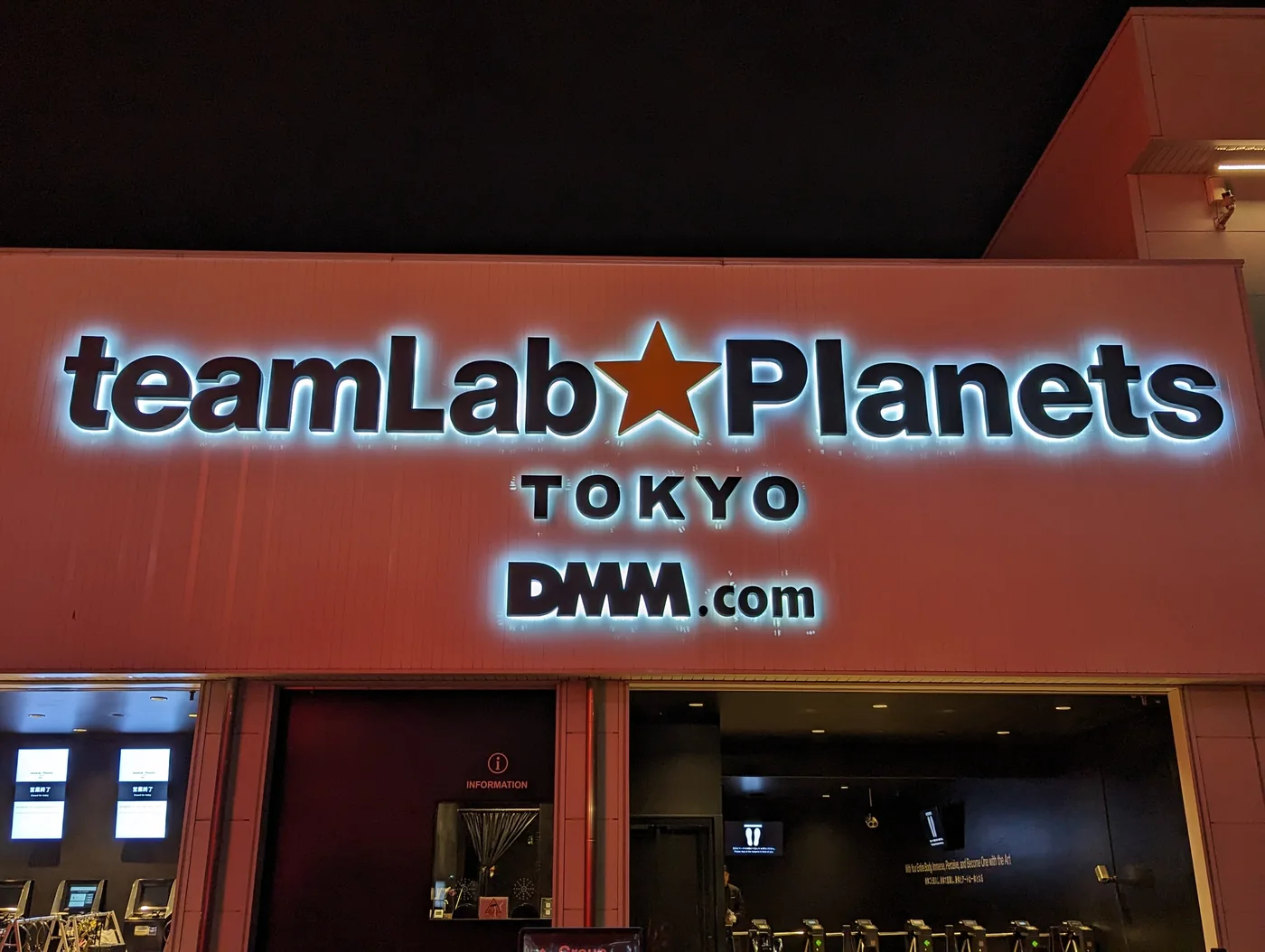
teamLab Borderless sits in Azabudai near Kamiyacho, pairing naturally with Roppongi, Toranomon, or stops along the Hibiya Line. teamLab Planets is over in Toyosu near Shin-Toyosu Station, famous for barefoot water rooms and its floating flower garden. Tickets are sold completely separately and are valid only at the venue named on your pass. If your itinerary already includes Toyosu Market or Odaiba, read our teamLab Planets Toyosu guide before choosing between the two.
If you want to experience both museums, set aside a separate half-day for each. Borderless rewards slow wandering and circling back to see how rooms interact, whereas Planets requires extra time for taking off shoes, wading through water, and drying off. With only one slot in your schedule, decide which style appeals most to your group and check which venue sits closer to your fixed reservations—trying to dash from an afternoon in Azabudai out to a timed Toyosu slot usually forces you to rush the very rooms you came to enjoy.
If someone in your party already visited the old Borderless in Odaiba, bring them here for the new Azabudai installations while leaving time to spot familiar motifs. Conversely, if they are picturing walking barefoot through knee-deep water and suspended orchids, they are thinking of teamLab Planets in Toyosu. Put both the exact museum name and its nearest station into your calendar so whoever is handling bookings does not end up at the wrong venue.
A few useful answers
How much are tickets for teamLab Borderless Tokyo in Azabudai?
Standard timed Entrance Passes start from ¥3,400 for adults (18 and over), ¥2,800 for ages 13 to 17, ¥1,500 for ages 4 to 12, and free for ages 3 and under. Adult and disability concession tickets use dynamic date-based pricing, while the Flexible Pass is a flat ¥12,000 per person.
Can I buy same-day tickets?
Yes, provided the day has not sold out. Same-day tickets can be purchased via the official online ticket site, and remaining slots are also available to buy on-site with a ¥200 surcharge per standard ticket.
Can I reschedule my tickets after purchase?
Direct bookings made on the official website can be rescheduled up to three times if capacity remains. Timed Entrance Passes must be changed at least two hours before the original slot, and Flexible Passes at least two hours before that day's last entry. Changes apply to the whole order together, and you cannot switch ticket types after buying.
Is the final entry slot enough if I only have 90 minutes?
Last entry is one hour before closing. If you want at least 90 minutes inside, choose a slot around two hours before closing or earlier to allow time for queueing and entry.
Which underground station is closest to teamLab Borderless?
Kamiyacho Station on the Tokyo Metro Hibiya Line is closest—take Exit 5 and walk about two minutes through the underground passage. From Roppongi-itchome Station on the Namboku Line, take Exit 4 for a six-minute underground walk. The entrance is on B1 of Azabudai Hills Garden Plaza B.
Can I bring a pushchair inside the galleries?
No, pushchairs must be left in the designated storage area before entering. Children aged 3 and under enter free and count towards the requirement of at least one adult aged 18 or over for every five children.
Can I leave for a meal and re-enter on the same ticket?
No, tickets allow single entry only. Plan any sit-down meal in Azabudai Hills for either before you enter or after you finish your visit.
Official information and references
Sources used in this guide.
- teamLab Borderless Official Visitor Guide and Opening Notice
- teamLab Borderless English Ticket Prices and Visitor Information
- teamLab Borderless Official Frequently Asked Questions
- teamLab Borderless Official Ticket Calendar
- Azabudai Hills Museum Access, Address and Sketch Factory
- Azabudai Hills Opening Hours, Floor Guide and Family Facilities
- teamLab Borderless July 2026 New Artwork Announcement
- teamLab Planets Toyosu Official Visitor Guide