teamLab Borderless in Azabudai Hills starts at ¥3,400 for adults. Compare timed Entrance Passes and the Flexible Pass, release and rescheduling rules, late-2026 and January 2027 hours, Kamiyacho underground access, and family tips.
- Region & Focus
- TokyoAttractions
- Reading Scope
- 21 min read · 13 chapters · 7 Q&As
- Official Verification
- 8 official sources checkedUpdated November 22, 2026
- Key Topics
- BookingItinerariesTokyo & Kanto
Chapter Route Map (tap any stop)
- Standard Ticket Prices and Age Tiers
- When the Flexible Pass Makes Sense
- Ticket Release Timing and Digital Entry
- How to Reschedule Existing Tickets
- Opening Hours, Closures, and Last Admission
- Getting There via Kamiyacho Exit 5 to Garden Plaza B
- Navigating a Museum Without a Map
- Making Time for Tea and Sketching
- Visiting with Young Kids: Ratios, Strollers, and Nursing Rooms
- Wheelchairs, Disability Discounts, and Safety Rules
- Lockers, Dress Code, and Photography
- Half-Day Azabudai Hills Itineraries and Rainy-Day Plans
- Do Not Mix It Up with teamLab Planets in Toyosu
- Quick Q&A
For your first visit to teamLab Borderless in Tokyo's Azabudai Hills, pick an entry slot you know you can make on time and budget about two hours inside. Standard tickets lock in a date and arrival window, starting at ¥3,400 for adults. Only consider the ¥12,000 Flexible Pass if your schedule makes pinning down an arrival time within a single day genuinely difficult. The museum entrance sits on B1 of Garden Plaza B in Azabudai Hills, about a two-minute walk via the underground passage from Exit 5 of Kamiyacho Station on the Hibiya Line.
Standard Ticket Prices and Age Tiers
The standard timed ticket is officially called an Entrance Pass. You choose a date and an entry window at checkout, which only governs when you join the entrance line—once inside, you can stay until closing. Adult and disability-discount fares vary by date, so compare open days first and pick a slot that fits cleanly between your other plans. Prices listed on the homepage are starting rates; check the booking calendar for the exact total on your target date.
Adults are 18 and older, youths 13 to 17 pay ¥2,800, children 4 to 12 pay ¥1,500, and kids 3 and under enter free. Staff may ask youth ticket holders for a student ID or other proof of age. Selecting exact headcounts across age brackets upfront gives you a much more accurate budget than multiplying the adult base rate by everyone in your group.
For example, two adults, one 15-year-old, and one 7-year-old would pay ¥11,100 total on a ¥3,400 adult-rate day. When comparing other dates, only the two adult fares fluctuate while the youth and child prices stay fixed. Drinks at the teahouse and custom souvenirs from the drawing room are optional extras, so compare dates by admission total first.
If you are traveling into Tokyo from another city, weigh ticket savings against transit friction. One day might be cheaper on paper but force you to haul luggage through morning rush-hour transfers, while another lets you ride straight in on the Hibiya Line from your hotel. Putting fixed transit times and group meetup spots on the same schedule usually makes the best date obvious.
| Ticket Type or Age Tier | Price per Person | Entry Policy |
|---|---|---|
| Entrance Pass (Ages 18+) | From ¥3,400 | Fixed date and time slot; dynamic daily pricing |
| Entrance Pass (Ages 13-17) | ¥2,800 | Fixed date and time slot |
| Entrance Pass (Ages 4-12) | ¥1,500 | Fixed date and time slot |
| Ages 3 and Under | Free | Counted toward child-to-adult ratio |
| Entrance Pass (Disability Discount) | From ¥1,700 | Dynamic daily pricing; valid ID required at entry |
| Flexible Pass (Adults and Children) | ¥12,000 | Fixed date; enter anytime before last admission |
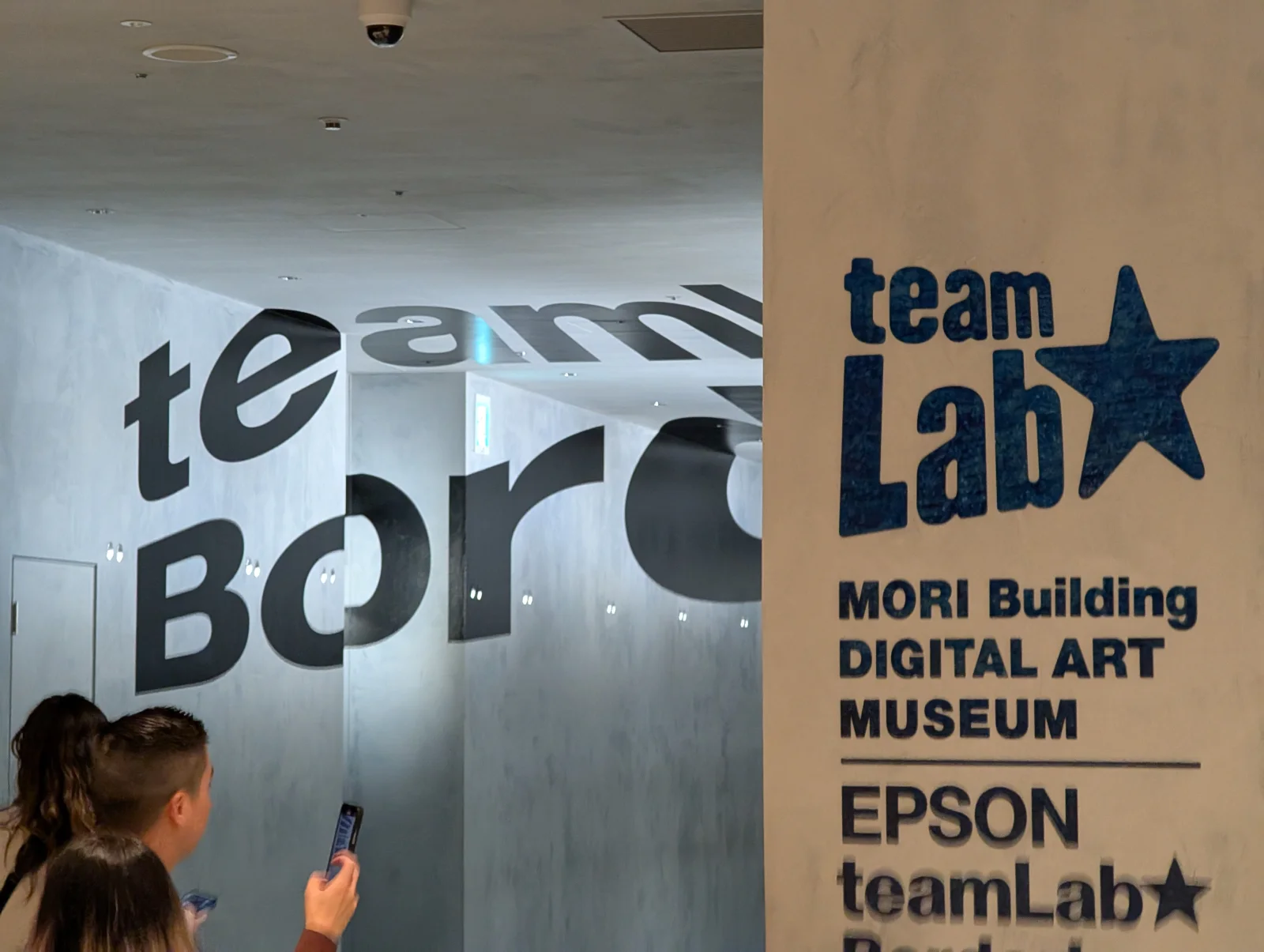
teamLab Borderless in Azabudai Hills starts at ¥3,400 for adults. Compare timed Entrance Passes and the Flexible Pass, release and rescheduling rules, late-2026 and January 2027 hours, Kamiyacho underground access, and family tips.
When the Flexible Pass Makes Sense
The Flexible Pass buys arrival flexibility within a single day, though you still have to lock in a specific date at purchase. You can show up anytime during operating hours as long as you join the queue before last admission. If you plan to arrive in the afternoon or evening, remember to factor queue time into how long you will actually have before closing.
If you already have a fixed lunch, show, or train time, a standard timed ticket is usually much easier to justify. Based on the ¥3,400 adult base rate, a Flexible Pass adds ¥8,600 per adult—or ¥17,200 for two. When Azabudai Hills sits right before or after a meal, simply leave a buffer for transit and ticket pickup and book a standard slot you can comfortably reach.
The pass earns its keep when you only have one fixed day left in Tokyo, an earlier commitment has an unpredictable end time, and you still have a multi-hour window later that evening. Say a nearby meeting should wrap up by noon but could drag into the afternoon, still leaving two or three hours before closing. If your earlier plan might run past last admission, neither an early timed slot nor a same-day Flexible Pass solves that conflict—pick a different day instead.
For couples or families, start by looking for a slot everyone can reach together. Each paying visitor enters on their own ticket, so someone holding a Flexible Pass who wants to walk in with companions on standard tickets still has to match their time slot. Children also pay the full ¥12,000 Flexible Pass rate, making the markup even steeper than for adults. If two subgroups are arriving separately and want independent rescheduling options, place separate orders before checkout.
Ticket Release Timing and Digital Entry
According to the museum's FAQ, tickets typically go on sale at the start of the month two months prior to your visit—meaning early January for a March trip. The booking calendar displays open dates alongside remaining availability, so confirm your date is live first, then click in to check whether your group size is available together.
The museum lists its official ticket site and Klook as online sales channels. Buy directly from the teamLab Borderless official ticket site if you want direct rescheduling access and built-in ticket sharing for groups. The official checkout accepts credit cards and PayPay. Before paying, double-check the venue name, date, time slot, and headcount by age tier—especially if you have also been browsing teamLab Planets in Toyosu.
After payment, open the link in your confirmation email to pull up your digital pass on a phone or tablet. Visitors without a mobile device can print their ticket from that same page within 24 hours of their reservation date. When one person buys for the whole group, keep that confirmation email easy to access. If you have tickets for multiple attractions, open the Azabudai Hills pass before heading down the underground passage so it is ready at the gate.
If you cannot find the confirmation email, search for the sender domain borderless-azabudai.ticket.teamlab.art and check your spam or promotions folders. The buyer holds the master order link inside that email, and ticket sharing opens 24 hours before the visit so you can send individual passes to friends. People in the same time slot with separate shared tickets can arrive independently, though a disability-discount visitor and their discounted companion must enter together.
For spontaneous visits, check same-day inventory on your phone first. The museum's FAQ notes that remaining same-day tickets can be bought on the official site and that same-day tickets are also available at the venue, with standard on-site tickets carrying a ¥200 surcharge per ticket. If you are already near Kamiyacho, check the calendar to see which slots remain before deciding whether to head straight in or grab a meal in Azabudai Hills first. The museum does not accept resold tickets, so always book last-minute slots through official channels.
How to Reschedule Existing Tickets
Tickets bought on the official site generally cannot be canceled for a refund unless the museum closes unexpectedly. Eligible direct orders can be changed to a different date or time slot up to three times from your ticket page. Standard timed passes must be modified at least two hours before the original entry time—meaning before 12:00 PM for a 2:00 PM slot. Flexible Passes follow a cutoff two hours before the scheduled last admission on your booked date, such as 6:00 PM on a day with 8:00 PM last admission and 9:00 PM closing.
Your target date and slot must already be on sale with enough remaining capacity for your entire party. Multi-ticket orders move as a single batch: you cannot shift just one or two people, nor split a group across different days or entry windows. The self-service change tool also cannot upgrade a standard Entrance Pass into a Flexible Pass.
When switching to a date with a different fare tier, the official system charges the new total first and then refunds the original payment once the change completes. Open your ticket page afterward to verify the updated date, time, and headcount. If you booked through Klook, check the change terms on your Klook order and process any adjustments through that platform.
Whenever you have long-distance transit on the same day, make your rescheduling call before the deadline hits. For instance, if you are taking a 10:00 AM train back to Tokyo for a 12:30 PM entry slot, the 10:30 AM cutoff arrives fast. If you spot a train delay before departure, compare replacement slots right away—waiting until you reach Tokyo often leaves you past the cutoff.
Once you hold a timed ticket, plan to arrive during your assigned window. If transit delays make you miss your slot, bring your original ticket to the entrance and ask staff about entry options. Still, whenever you are inside the two-hour window, swapping online to an open slot you can actually make is the fastest fix. Better yet, schedule delay-prone flights or intercity trains the day before your museum visit.
Opening Hours, Closures, and Last Admission
Standard hours run 8:30 AM to 9:00 PM, with last admission at 8:00 PM—the museum stops admitting visitors one hour before closing. Keep your roughly two-hour visit length separate from that one-hour cutoff. First-timers who want tea or time to linger in the light installations should aim for 6:00 PM or 6:30 PM at the latest, while later entries suit visitors who only want a quick look at a few rooms.
Per museum notices checked on November 22, 2026, hours extend to 10:00 PM (last admission 9:00 PM) from December 26 to 30, 2026, while January 26, 2027 closes early at 5:00 PM (last admission 4:00 PM). If you want two full hours on that early-closing day, aim for a slot around 2:30 PM to leave a cushion for the line.
Announced closure dates include November 24 and December 8, 2026, plus January 13 and January 19, 2027. If you only have a few days in Tokyo, rule out those dates before comparing open slots on other days. Since these closures fall on Tuesdays and Wednesdays, checking the official opening hours and closure calendar is far more reliable than assuming Japanese museums always close on Mondays.
Morning slots give you the rest of the day wide open and make departure timing flexible. If you book 8:30 AM and want lunch afterward, pick a spot that opens early or time your exit for when restaurants open after 11:00 AM. Coming from outside Minato Ward early in the morning also means factoring in hotel breakfast and rush-hour transfers, so a slightly later weekday morning slot lets you sleep in and still finish around lunch.
If a weekend only has evening slots left, explore the neighborhood first and enter later—just keep in mind what will still be open when you exit. Shops and the market in Garden Plaza mostly close earlier than the museum, so finish any shopping beforehand. Treat the ticket calendar strictly as a tool for checking open dates, pricing, and remaining slots; leaving yourself flexible time inside for must-see rooms works better than guessing which hour will feel quietest.
Getting There via Kamiyacho Exit 5 to Garden Plaza B
Set your map to teamLab Borderless: MORI Building DIGITAL ART MUSEUM at Azabudai Hills Garden Plaza B B1 (5-9 Toranomon, Minato-ku, Tokyo). From Kamiyacho Station on the Tokyo Metro Hibiya Line, follow signs for Exit 5 and walk about two minutes through the connected underground passage, staying on basement level B1 to spot the museum signs. Azabudai Hills spans several buildings, so following station signs toward Garden Plaza B keeps things simple.
If you are already riding the Namboku Line, take Exit 4 from Roppongi-itchome Station into the underground passage—the museum lists that walk at about six minutes. Roppongi Station connects the Hibiya and Oedo lines, so if you plan to visit Roppongi Hills for night views afterward, budget extra time for the street walk or one stop back on the Hibiya Line. Visitors staying along the Hibiya Line in Ginza, Tsukiji, Ueno, or Ebisu can ride straight to Kamiyacho without transferring.
Remember that the two-minute walk starts from Exit 5 itself, not from stepping off the train. Leave a few extra minutes to walk the platform, clear ticket gates, and follow concourse signs. If anyone in your group is using a stroller, wheelchair, or elevator, agree to meet at a clear station landmark or mall concourse and walk to the gate together at your slot time instead of waiting split up in the museum corridor. The Azabudai Hills floor map helps locate elevators, shops, and dining.
By taxi, show the driver both the Japanese museum name "チームラボボーダレス" and "ガーデンプラザB", then head down to B1 on arrival. Drivers can use Azabudai Hills P6 parking, take Elevator D up to B1, and turn left out of the elevator to reach the entrance. Visitors who bought tickets online in advance can present their parking ticket at the information counter on the day of their visit for a parking discount, detailed on the Azabudai Hills museum access and floor guide.
Navigating a Museum Without a Map
When you step from one room into another, glance back to see if elements from the previous artwork followed you out. Several installations migrate beyond their rooms into corridors or blend into neighboring pieces—a shift you notice most when retracing your steps. There is no handout map and no prescribed route at the entrance, so linger wherever a room catches your eye and watch how the next space connects.
For floor-to-ceiling light, start with rooms like Bubble Universe or the Light Sculpture series. Give Bubble Universe extra time to take in both the glowing spheres and their mirror reflections, then look back from the doorway before leaving to see how the scale shifts from close-up orbs to a single field of light. If a popular room has a queue, explore uncrowded galleries first and loop back.
The official app surfaces background notes on nearby artworks. When you want to trace a motif you just saw, step aside out of the walkway, open the app, and look around to see how it interacts with surrounding pieces. Infinite Crystal World also lets visitors trigger visual changes through the app, which is fun if someone in your group wants hands-on interaction. If your companions would rather stay off their phones, designate one person to check the app and compare notes outside the room.
Visitors who saw the former Odaiba location—open from 2018 before the museum relocated to Azabudai Hills in February 2024—will spot plenty of new additions. In July 2026, the museum unveiled two new works featuring chrysanthemums and morning glories, where flowers bloom across the space, scatter their petals, and dissolve into the surroundings if you stay long enough to watch the cycle unfold. Several pieces also shift their flora and scenery with the seasons, as outlined in the teamLab July 2026 new works announcement.
Walk together for a bit after entering, and if you decide to split up, pick one of the two rest areas you have both already visited as a meetup spot and set a time. Mirror walls and shifting light make different angles look nearly identical, so texting an artwork name rarely helps people find each other. Keep adults and kids together as a single group—colored clothing and projections can easily blend in the dark.
Making Time for Tea and Sketching
EN TEA HOUSE is an artwork you literally drink: flowers bloom inside your teacup once it is served, evolving as you sip. Every guest entering the teahouse must order one drink, and the official site also sells bundled admission-and-tea tickets. If some people in your group only want to see the galleries, decide before booking whether everyone is joining for tea, and budget separately for full meals elsewhere in Azabudai Hills.
The teahouse opens 30 minutes after the museum. On standard 9:00 PM closing days, last order is 8:30 PM; on extended days open until 10:00 PM, last order stays at 9:00 PM. If you visit on the late-night December 26-30 dates, go to the teahouse in the first half of your visit so you are not rushed. Guests on the 8:30 AM opening slot can tour a few galleries first and walk in after 9:00 AM.
Sketch Ocean is a welcome pause for kids who want to sit and color—or adults happy to take their time picking shades. Once you finish drawing a sea creature, scan it into the digital aquarium, hunt for where your drawing swims onto the wall, and track it as it changes direction. If you want a keepsake, stop by Sketch Factory to turn your art into a badge, T-shirt, or tote bag, leaving time for selection and printing before your next stop.
Because re-entry is not allowed on the same ticket, you cannot leave for lunch and come back for tea later. Plan tea before you exit. If you have a tight dinner reservation and still want to draw, agree at entry on the one shared activity everyone wants to prioritize—picking one anchor makes regrouping far easier than wandering randomly through dark rooms.
Visiting with Young Kids: Ratios, Strollers, and Nursing Rooms
Elementary-school-age children and younger must be accompanied by an adult 18 or older, with at least one adult for every five children—and free visitors aged 3 and under count toward that five-child limit. Six kids require at least two adults. Older siblings who are 17 can come along, of course, but only visitors 18 and up count toward the supervision requirement, so check your ratios before buying or splitting group tickets.
Strollers are permitted on the walk from Kamiyacho Station to the entrance, then must be left in the designated baggage area before entering the galleries. Decide beforehand who will carry younger children and who will hold bags. The museum asks parents not to use child safety harnesses; hold hands with toddlers who walk on their own, and pause briefly when crossing doorways or stepping from bright rooms into dark corridors. With two kids of very different ages, having two adults makes it easier to let each child move at their own pace.
Expect low ceilings, uneven floors, and mirrored surfaces in several rooms. If a child warms up slowly in dim lighting, start with calmer visual spaces before trying louder, sensory-heavy installations. Whenever a room feels overwhelming, step back out the way you came and reset in an easier space, leaving enough buffer in your schedule afterward so your exit matches your family's energy.
There are no nursing rooms inside the museum itself. Azabudai Hills operates a baby care lounge on the 4th floor of Tower Plaza from 9:00 AM to 9:00 PM with nursing stalls, diaper changing tables, hot water for formula, and seating for baby food. Coming from Kamiyacho Station, you can also stop at the B1 nursing room in Garden Plaza A, which opens at 9:00 AM as well. If you need to feed or change a baby before heading in, book a slot after 9:00 AM and check the Azabudai Hills family facilities guide.
With toddlers, watching a single cycle of shifting projections is plenty for a start—let them linger in any room that grabs their attention and treat the rest as a wander through surprises. Families aiming to finish before naptime should pick an entry slot that wraps up well before lunch. If naptime falls right in the middle of your window, shifting the museum to after the nap beats cutting the visit short since re-entry is prohibited.
Wheelchairs, Disability Discounts, and Safety Rules
Visitors with a disability certificate and one accompanying companion are each eligible for a discounted ticket; the companion still needs a paid ticket, while any second companion pays the standard rate. The museum accepts disability certificates issued in any country—just show the certificate at the gate with your discounted companion present. Child tickets cannot be discounted further, though one adult accompanying a child who holds a disability certificate can buy the discounted adult pass.
Wheelchairs and stretchers can enter by elevator (door width 100 cm; interior 160 cm wide by 135 cm deep). Some gallery passages are too narrow for wheelchairs, and the museum caps the number of wheelchairs and stretchers allowed inside at once, which can mean a short wait. If dimensions, weight, or access to specific rooms matter for your visit, call +81-3-6230-9666 (10:00 AM-6:00 PM JST) in advance; once inside, staff will guide you. Canes are allowed, and anyone needing mobility assistance must be accompanied by a companion.
Mobility scooters with handlebars and motorized wheelchairs that cannot be kept below 2 km/h must transfer to a museum-provided wheelchair. Rooms with glass or mirror floors also enforce a 250 kg total weight limit, so staff may manage entry depending on floor conditions. A practical approach is to tour the accessible galleries together first, then build in a break if an accompanying adult wants to duck into narrower rooms.
Certain areas carry safety restrictions for pregnant visitors. Installations may feature strobe lights, loud audio, scents, and reflective or uneven floors. Wear stable, flat shoes, and pause for your eyes to adjust whenever lighting shifts sharply. If you want to know whether a room has an alternate exit or can be skipped altogether, ask the staff at the doorway before walking in.
Lockers, Dress Code, and Photography
Travel light with a small hands-free bag. Items 50 cm or longer are not allowed inside the galleries, though free lockers are available near the entrance. On hotel-transfer days, drop suitcases at your next hotel or a station locker before coming to Azabudai Hills. Food, alcohol, and open drinks are prohibited inside, though bottled water or sealed containers may be brought in and consumed in designated areas.
Several galleries have mirrored floors, so guests wearing skirts or dresses can borrow a wrap cloth provided near those rooms. Wearing a light-colored, solid top helps projections show up clearly in photos. Glowing shoes, light-up bracelets, and glow sticks disrupt the dark rooms for other guests and must be left outside the exhibition space.
Photography and video for personal use and social media are welcome, but flash, external lighting, and camera supports 30 cm or longer—including monopods, tripods, and selfie sticks—are not allowed. Commercial shoots require advance permission. Because many projections react to movement, step aside once people behind you pass if you want to wait for a clean shot, keep your phone screen brightness low, and watch your step when moving between rooms.
Half-Day Azabudai Hills Itineraries and Rainy-Day Plans
A morning visit followed by lunch in Azabudai Hills keeps transit simple. Book an entry around 9:30 AM, spend roughly two hours inside, and walk straight into lunch afterward. Azabudai Hills lists general market hours as 10:00 AM to 8:00 PM and most restaurants opening from 11:00 AM, though individual shops vary—you can browse the market in Garden Plaza C before sitting down to eat. If you want Roppongi night views later, save the afternoon walk for Roppongi and budget separate transit time between the two complexes.
If only evening slots remain, stroll the shops or market first, grab a light bite, and aim for a 6:30 PM entry. With standard 9:00 PM closing, you can walk straight out to dinner. For a restaurant with a reservation, work backward from seating time to leave buffers for exiting, clearing lockers, and walking across the complex or riding one subway stop. If you are pairing the museum with the Roppongi Hills observation deck on the same day, compare deck entry hours first in our Tokyo observation decks and digital art guide before locking in a fixed time.
On rainy or windy days, stay underground all the way from Kamiyacho Station and keep meals inside Azabudai Hills. You can also add the Azabudai Hills Gallery in Garden Plaza A if its current exhibition interests you—just note it runs on separate tickets and exhibition schedules. In fair weather, save your outdoor walk around the grounds for after the museum, either around lunch after a morning slot or before shops close if you have an evening ticket.
If you run into a closure day or sold-out calendar while already in Azabudai Hills, pivot to the shops, a long lunch, and whatever is showing at the gallery. If you are still at your hotel, pick a nearby alternative from our Tokyo neighborhood half-day itineraries near your lodging or next reservation. When only a late slot is open and your afternoon is free, have an early meal and browse Azabudai Hills first before lining up.
Do Not Mix It Up with teamLab Planets in Toyosu
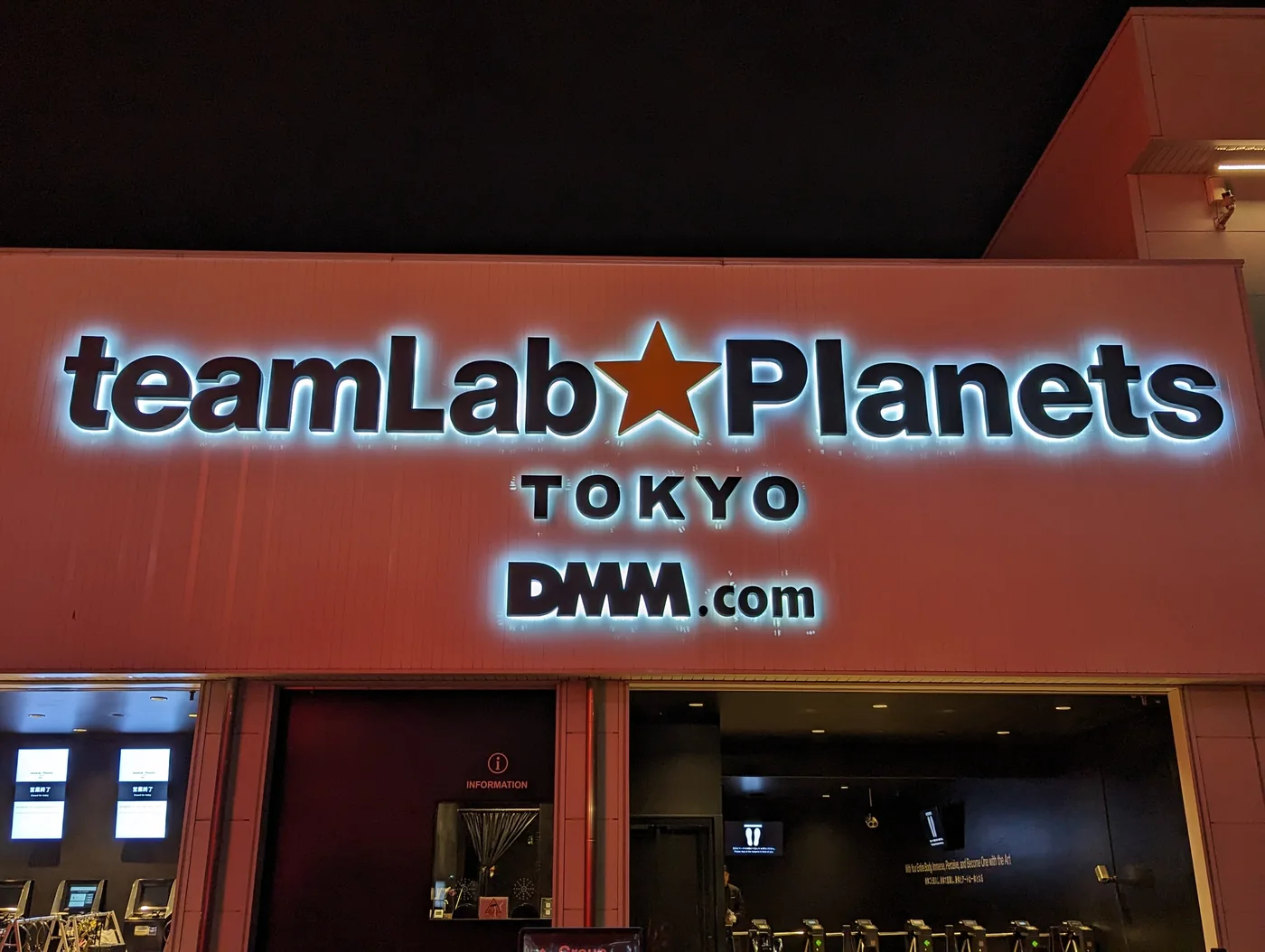
teamLab Borderless sits in Azabudai Hills near Kamiyacho, pairing naturally with Roppongi, Toranomon, and stops along the Hibiya Line. teamLab Planets is across town near Shin-Toyosu Station and features barefoot water zones alongside garden installations. Tickets are sold separately and only work at the venue printed on the pass. If your itinerary already includes Toyosu Market or Odaiba, check our teamLab Planets Toyosu guide before deciding which one fits better.
If you want to visit both, give each its own half-day. Borderless rewards wandering back and forth between interconnected rooms, while Planets involves taking off shoes, wading through water, and following a set path. With only one day free, decide which style of installation your group wants most, then check which venue sits closer to your fixed reservations—trying to rush from an afternoon Azabudai Hills slot across to a timed Toyosu entry usually shortchanges whichever museum you care about more.
Companions who visited the old Odaiba Borderless will enjoy spotting new Azabudai Hills works alongside familiar motifs, whereas anyone remembering barefoot water rooms and hanging orchids is thinking of Planets in Toyosu. Put both the exact museum name and nearest station on your shared calendar—never just "teamLab"—especially if someone else is booking the tickets.
A few useful answers
How much are tickets for teamLab Borderless in Azabudai Hills, Tokyo?
Adult Entrance Passes start at ¥3,400, youths 13 to 17 pay ¥2,800, children 4 to 12 pay ¥1,500, and kids 3 and under are free. Adult and disability-discount fares vary by date, while the Flexible Pass is ¥12,000 per person.
Can I buy same-day tickets?
Yes, when slots have not sold out. You can check and buy same-day availability on the official ticket site, and same-day tickets are also sold at the venue with a ¥200 surcharge per standard ticket.
Can I reschedule my tickets to a different day?
Orders placed on the official ticket site can be changed up to three times if sufficient tickets remain. Standard Entrance Passes must be modified at least two hours before your entry time, and Flexible Passes at least two hours before last admission on your booked date. Changes apply to the whole order together, and you cannot switch ticket types after purchase.
Is the last entry slot enough if I only have 90 minutes?
Last admission is one hour before closing. If you want at least 90 minutes inside, book a slot roughly two hours before closing or earlier to leave room for lining up and entering.
Which subway station is closest to teamLab Borderless?
Take the Hibiya Line to Kamiyacho Station Exit 5 and walk about two minutes through the underground passage. From Roppongi-itchome Station Exit 4 on the Namboku Line, the underground walk takes about six minutes. The entrance is on B1 of Azabudai Hills Garden Plaza B.
Are strollers allowed inside the museum?
No—strollers must be parked in the designated baggage area before you enter the galleries. Children 3 and under enter free, and they count toward the limit of at least one adult (18+) per five children.
Can I leave for a meal and come back in on the same ticket?
No, each ticket allows single entry only. Plan any sit-down meal in Azabudai Hills before entering or after you finish your visit.
Official information and references
Sources used in this guide.
- teamLab Borderless Official Visitor Guide and Hours
- teamLab Borderless Ticket Prices and Visitor Information
- teamLab Borderless Official FAQ
- teamLab Borderless Official Ticket Calendar
- Azabudai Hills Museum Access, Floor Map, and Sketch Factory
- Azabudai Hills Opening Hours, Directory, and Family Facilities
- teamLab Borderless July 2026 New Works Announcement
- teamLab Planets Toyosu Official Visitor Guide