Compare the ¥500 collection ticket, current Turner exhibition tickets and student and senior concessions. Plan free architecture areas, the 2027 collection closure, online ticket terms, accessibility and a Ueno half day.
- Region & Focus
- TokyoAttractions
- Reading Scope
- 35 min read · 17 chapters · 6 Q&As
- Official Verification
- 16 official sources checkedUpdated November 9, 2026
- Key Topics
- BookingItinerariesNeighborhoods
Chapter Route Map (tap any stop)
- Choose Western paintings, the current exhibition or architecture
- How it differs from Tokyo National Museum, and whether to visit both
- The collection costs ¥500; check each traveler’s eligibility first
- Turner is on now; included collection access changes in January 2027
- Student free dates, senior discounts and pair tickets
- Online tickets save the sales queue, but allow time for entry
- Free days and evening hours for autumn and winter 2026
- Go beyond the facade to the free Nineteenth-Century Hall
- See how forecourt paving, sculptures and the building relate
- Start with the Matsukata Collection without trying to see everything
- A small exhibition may be included with the collection
- Use your own phone for audio; digital architecture has its own route
- Wheelchairs, strollers and companions who need a quieter pace
- Handle photography, bags and breaks before they interrupt viewing
- Plan Café Suiren before you miss meal service
- Arrive from JR Ueno’s Park Exit and add only a short park walk
- For Friday and Saturday evenings, finish by 20:00
- Quick Q&A
For Western paintings and Rodin, start with the ¥500 collection ticket. For the Turner exhibition opening in autumn 2026, use a special-exhibition ticket and plan any collection visit on the same day. Architecture visitors can begin with the free forecourt and Nineteenth-Century Hall. Give your Ueno half day to a museum that interests you.
Choose Western paintings, the current exhibition or architecture
The best half day at the National Museum of Western Art leaves enough time for one purpose: Western painting and sculpture in the collection, a special exhibition you care about, or Le Corbusier’s Main Building from forecourt to interior. Each needs different admission. For the exterior, Nineteenth-Century Hall and shop, begin in the free areas. Buy the standard ¥500 collection ticket to enter collection galleries. The current special exhibition has separate pricing; a collection ticket cannot take you into it.
For a first visit without a specific exhibition in mind, the collection is easier to plan. The museum FAQ gives an average viewing time of about 1–1.5 hours. Allow 2–3 hours with entry, forecourt and rest. For Turner landscapes and dialogue with contemporary art, prioritize the current Tate Turner exhibition and keep the collection as a same-day addition. A Turner ticket removes the need for a separate ¥500 collection ticket.
The address is 7-7 Ueno Park. Its Japanese name is “国立西洋美術館” and its English name is The National Museum of Western Art. Use the full name for tickets, maps and meeting at the entrance. Ueno also has Tokyo National Museum and Tokyo Metropolitan Art Museum, each with popular exhibitions. “Meet at the Ueno art museum this afternoon” can send friends to different counters.
Compare the ¥500 collection ticket, current Turner exhibition tickets and student and senior concessions. Plan free architecture areas, the 2027 collection closure, online ticket terms, accessibility and a Ueno half day.
How it differs from Tokyo National Museum, and whether to visit both
The National Museum of Western Art focuses on Western painting, sculpture, prints and drawings. Its Main Building is an attraction too. Tokyo National Museum suits Japanese art, crafts and archaeology. Choose the former for Monet, Rodin and changes across periods of Western painting; give the latter another main slot for Buddhist statues, swords, ceramics and Japanese painting. Decide before buying tickets.
Ticketing, closures and free-entry eligibility are separate. Free collection admission for ages 65 and over at the Western Art museum does not apply automatically at Tokyo National Museum. Turner tickets also distinguish high-school students from junior-high age and younger. A Tokyo National Museum ticket or another exhibition ticket does not admit you here. Any reciprocal discount requires eligible tickets at the designated counter; a discount is different from shared admission.
For half a day, choose one museum with a meal or short park walk. Two consecutive museums increase standing, reading and viewing time and require a second entrance process. First-time art visitors, young children and older companions may end up rushing the second half. For depth in both, give Ueno a full day with lunch between, without a timed cross-city activity afterward. For Tokyo National Museum, see the Tokyo neighborhood guide’s museum section.
The collection costs ¥500; check each traveler’s eligibility first
The museum visitor information lists individual collection admission at ¥500 general and ¥250 for university students. High-school students and younger, anyone under 18, and people aged 65 or over enter free. University students need student ID; age-based free admission requires age evidence. List each family member’s age and school level before buying, especially high-school students and older relatives. Students and staff at National Museum of Art Campus Members institutions have separate free-entry eligibility with ID.
Two standard adults and an eight-year-old pay ¥1,000 for the collection. One adult and a 68-year-old pay ¥500. These are admission examples; budget separately for food, transport and shopping. Buy online only for those who need paid tickets. Eligible companions bring their own documents; buying them an extra ticket is unnecessary for entering together.
Holders of disability certificates listed by the museum and one companion enter the collection free. The accessibility page accepts Mirairo ID. Eligible visitors show proof at entry without joining the ticket-sales queue. Overseas visitors with other documents can ask the service desk to assess the document type before paying. Groups of 20 or more use a separate reservation process. A group rate requires 20 in the same ticket category; different eligibility categories cannot be combined into one discount.
| Visitor | Collection | Turner exhibition | Conditions |
|---|---|---|---|
| Standard adult | 500 | 2,400 | Turner includes open collection galleries on the same day |
| University student | 250 | 1,500 | Student ID; Turner free November 4–19 |
| High-school student | Free | 1,100 | Turner free November 4–19 with student ID |
| Junior-high age and younger | Free | Free | Bring age or school-level evidence |
| Age 65 and over | Free | General rate; 2,000 during specified dates | Show ID at counter October 24–November 8 |
Turner is on now; included collection access changes in January 2027
When checked October 27, 2026, the special exhibition was Turner from Tate: sublime painting in dialogue with contemporary art, running October 24, 2026–February 21, 2027 in the Special Exhibition Wing. General admission is ¥2,400, university students ¥1,500 and high-school students ¥1,100; junior-high students and younger enter free. University and high-school students must show student ID. General advance tickets at ¥2,200 ended sales October 23. That price is no longer an available ordinary ticket.
The exhibition places Turner beside contemporary art. Listed works include The Fall of an Avalanche in the Grisons, whaling-themed oils, Olafur Eliasson’s glacier images and video by The Otolith Group. If landscapes, light and natural forces interest you, with time for moving images and thematic text, it offers more than finding a familiar painting. For a quick Monet and Rodin visit, the collection and forecourt better fit the aim.
A Turner ticket includes the collection on the viewing day, but collection galleries close January 12–February 21, 2027 during the exhibition. In autumn 2026 you can combine both on one day. From mid-January 2027, Turner remains available but the same collection visit does not. The visitor page also expects collection preparation to continue through March 19, 2027. Avoid this closure if the collection is your main reason for traveling.University students viewing the Turner exhibition free November 4–19, 2026 pay an additional ¥250 for the collection; those meeting the collection’s free-admission conditions pay nothing.
Student free dates, senior discounts and pair tickets
High-school and university students can view Turner free November 4–19, 2026. Eligible students need not buy tickets first; bring student ID to the museum ticket counter. Families visiting then should establish eligibility before buying other adults’ tickets. Student free entry does not include all accompanying adults. Junior-high age and younger follow the exhibition’s normal free-entry rule.
From October 24–November 8, 2026, visitors aged 65 or over can show ID at the museum counter on the visit day and buy a general ticket for ¥2,000, a temporary ¥400 discount. A 68-year-old enters the collection free but still pays for Turner. With different interests, decide special-exhibition entry individually and meet in the free lobby or café.
The official exhibition ticket page also lists a Rakuten Travel pair ticket at ¥4,200, sold through December 20, 2026 and valid through January 11, 2027. It saves ¥600 against two ¥2,400 general tickets, but only if both want to visit within its validity. February 2027 visitors should use ordinary tickets valid for the exhibition period. The museum still displays its ¥1,500 collection Passport introduction, marked sold out. It is not available to buy for this trip.
Online tickets save the sales queue, but allow time for entry
For the collection, the museum links to official e-tix ticketing. The current ticket period is October 1, 2026–January 11, 2027. General and university tickets each admit one person once within that period, with no re-entry. Cancellation, changes, refunds and reissue are not accepted. A wrong category cannot be corrected simply by paying the difference. Check open dates and paid visitor numbers before payment.
Official Turner e-tix states that advance reservations are not required. Crowding may bring entry limits or numbered admission tickets. An online ticket removes the purchase step at the counter but can still mean a wait at the exhibition entrance. Its ordinary ticket also admits one person once during the exhibition and cannot be canceled or changed after purchase. No timed entry does not make it a good fit immediately before a fixed departure.
For either online ticket, open the QR code from the completion page or confirmation-email link and show it on your phone. You can also print one ticket per person on A4 paper, with the QR code and adjacent serial number clear. Listed payment methods are VISA, Mastercard, JCB, AMEX and d-barai; cards use 3D Secure verification. Overseas visitors can prepare their own card and email access, then check the confirmation and ticket rather than saving only a charge notification.
For separate arrivals, agree who holds each ticket and save the original link that reopens it. If eating or leaving between exhibitions, ask staff about the ticket route on entry. Collection e-tickets explicitly prohibit re-entry; do not leave after scanning and only then decide to return for a missed room. Food or merchandise packages have separate outlets, collection deadlines and change terms. Their meal or product voucher is not another exhibition ticket.
Free days and evening hours for autumn and winter 2026
The collection normally has Kawasaki Free Sunday on each month’s second Sunday, plus free entry on International Museum Day, May 18, and Culture Day, November 3. For this autumn and winter, the official list includes November 3, November 8 and December 13, 2026, and January 10, 2027. The concurrent small exhibition is included. Adjust dates to save on a collection visit if useful; Turner keeps its own admission rules.
Regular hours are 9:30–17:30, extended to 20:00 on Fridays and Saturdays. Last entry is always 30 minutes before closing. The FAQ says free collection entry on second and fourth Saturdays and after 17:00 on Fridays and Saturdays ended in April 2023. Evening hours still suit a visit after work or shopping, but current fees apply. Old guides do not give free gallery entry after 17:00.
The museum normally closes Mondays. On a Monday national or substitute holiday it opens, then closes the next weekday. Turner specifically opens November 23, 2026 and January 11, 2027, and closes November 24 and January 12. The year-end closure is December 28, 2026–January 1, 2027. Exclude these dates from a New Year museum half day. An open park does not mean open exhibitions. Allow entrance queues on free days and weekends.
Go beyond the facade to the free Nineteenth-Century Hall
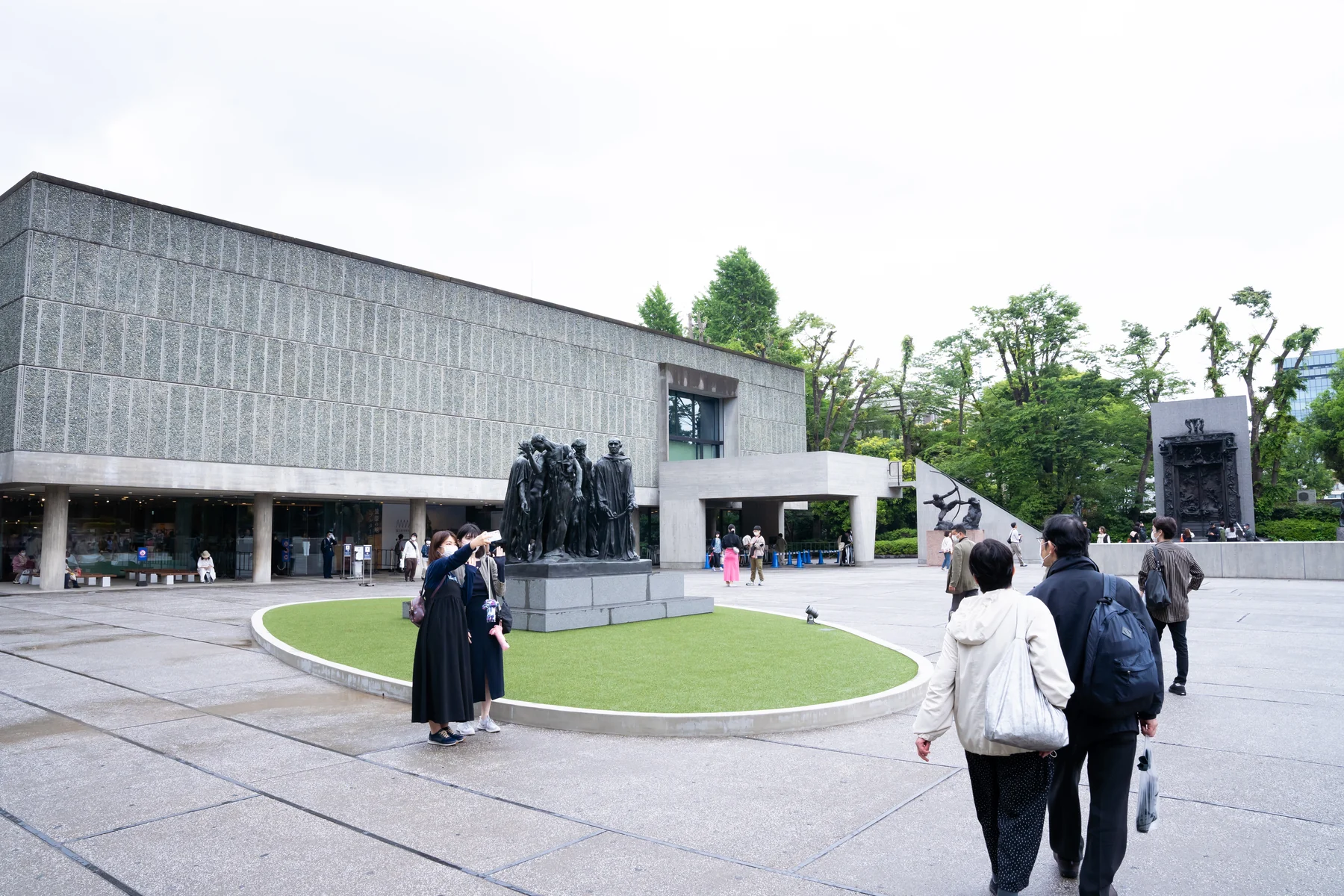
Le Corbusier’s Main Building was completed in 1959. With its forecourt, it became part of the World Heritage inscription in 2016. The full Architectural Work of Le Corbusier inscription has 17 sites in seven countries. The gray facade is a starting point. Inside, seeing how space develops around the central hall explains more than a photograph by the wall.
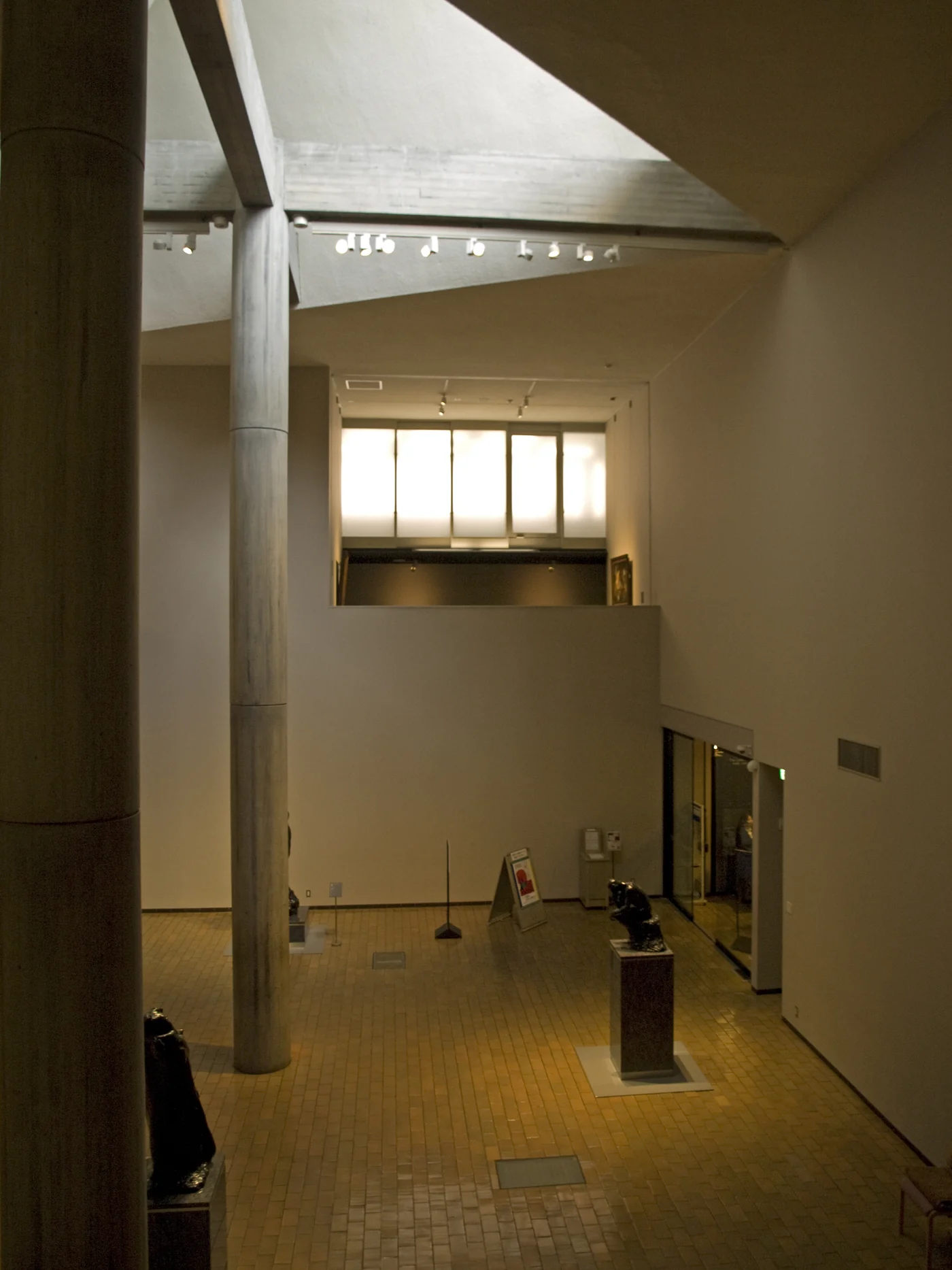
The official floor map marks the Main Building lobby, Nineteenth-Century Hall, Café Suiren and museum shop as Free Zone, with no admission ticket. A short architecture visit therefore includes indoor space. A collection ticket or valid same-day special-exhibition ticket is needed beyond the admission line for galleries such as fourteenth- to eighteenth-century painting, the Matsukata Collection and nineteenth- to twentieth-century art. Identify that line in the lobby rather than guessing that all World Heritage space is paid or all architecture free.
Distinguish later additions too. The 1979 New Wing was designed by Kunio Maekawa’s architectural office, and the 1997 Special Exhibition Wing extends under the forecourt. Today’s museum was not completed as one building in 1959. For Le Corbusier, focus on the Main Building and forecourt; for Turner, follow signs to the special galleries. Find your area on the map, then keep the rest of your time for art.
See how forecourt paving, sculptures and the building relate
The museum’s architecture introduction says the 2020–2022 forecourt renovation restored opening-era design intentions as far as possible. These include western access, an open fence, some Rodin sculpture positions and paving joints. The forecourt is more than empty ground before a gallery. Approaching from the park reveals sightlines among sculptures, open paving and the building.
From the west, look at the T-shaped lines in the paving. One extends toward The Gates of Hell, turning toward the Main Building along the way. The museum explains that these prominent joints guide movement and were restored using Modulor dimensions based on human scale and the golden ratio. You need not memorize measurements. Follow the lines and see how they lead people toward the building.
Rodin’s The Thinker, The Burghers of Calais and The Gates of Hell provide landmarks. See their overall positions, then approach within permitted paths to study poses, proportions and relationships within groups. Every photo angle need not be completed. In rain, shorten the forecourt and see the lobby; in steadier weather, visit it after the galleries. The FAQ separately restricts commercial or sales-purpose photography and use of the forecourt Thinker. Handle personal souvenir photos and commercial assets separately.
Start with the Matsukata Collection without trying to see everything
The museum was founded around the Matsukata Collection. Kojiro Matsukata began buying art in Europe during World War I, intending a museum in Japan. Economic crisis, war and other changes later dispersed the collection. Works left in France were returned as a gift, helping establish this museum in 1959. This explains the strong basis in modern French painting and sculpture in Tokyo, beyond a checklist of artists’ names.
The collection covers Western art from the late medieval period to the twentieth century. The floor map separates earlier painting, the Matsukata Collection and nineteenth- to twentieth-century art. On a first visit, choose two things to compare: clothing and light on figures, religious stories and everyday scenes, or painted color and sculptural form. Each room then gives you a concrete viewing task instead of every label requiring its last line.
With about an hour, stop at a few works that attract you and notice changes in period and subject between rooms. With 1.5–2 hours, add prints and drawings and architectural details. If a particular artist matters, check the official works-on-display list and gallery map before reading collection records. A collection record and the current display list serve different purposes; follow what is actually in the galleries.
A small exhibition may be included with the collection
From October 20, 2026–January 11, 2027, the New Wing’s second-floor prints and drawings gallery hosts Images around the Theater: from Delacroix and Daumier to Lautrec and Klinger. This small exhibition accepts the day’s collection ticket or same-day Turner ticket while open. Read venue and fee details rather than buying another ticket merely because a title says “exhibition.”
About 50 works by 19 artists connect modern urban theater culture, including Delacroix’s Hamlet series, Daumier’s audience scenes and theater posters. Add it for music, theater, printing or graphic design interests. Companions less interested in oils gain an entry through stage, publicity and audience. Paper works require different viewing distances and attention to scale. Read a small group slowly rather than rush around the room.
The collection also has concurrent features on conservation and restoration. If you normally focus on famous subjects, look instead at how works are preserved, restored and displayed for a different repeat visit. Allocate time after obtaining the day’s information. Prioritize the New Wing’s second floor for theater works and shorten general oils. After a long Turner visit, choose only a small collection section and keep a seated break.
Use your own phone for audio; digital architecture has its own route
The official collection audio guide selects 29 works and runs in your phone browser without a separate app. The museum recommends NMWA_Free_Wi-Fi. Bring your phone and headphones, find the audio mark and number beside a work, then select it online. Numbers do not follow display order, and the page includes commentary for works temporarily off display. Listen selectively rather than following all 29 in sequence.
For architecture, the museum offers a digital “World Heritage at Your Fingertips” experience. In the Nineteenth-Century Hall’s World Heritage corner, 3D displays show sections and spaces. Five QR points cover the exterior and roof, hall, lighting gallery, former director’s room and stairs. Points 3, 4 and 5 require a collection ticket to reach. If non-public spaces interest you, alternate phone views with the visible building.
Roof and former director’s room views are digital experiences, not directions to enter those spaces. With children, view one section in the hall, then choose an understandable structural detail. For deeper study, read the official architecture page at home and spend more time looking around on site than setting up at the entrance. The museum does not lend phones or headphones for the general audio guide. Bring both, with enough battery.
Wheelchairs, strollers and companions who need a quieter pace
The official accessibility information gives an accessible route from JR Ueno Station’s Park Exit. The Main Building’s first floor has a multipurpose toilet, ostomate facilities and a family toilet. The Special Exhibition Wing has an accessible toilet on basement level 2. Check the map and tell entrance staff which collection or special galleries you want, then follow elevator routes. The architectural ramp does not require all companions to follow one viewing route.
Ask about wheelchair and stroller loans, available in limited numbers. The FAQ permits your own stroller but may restrict use when crowded. For a child with fixed nap times, familiar equipment and one main gallery area are easier than relying on loans. Infants can enter. If you need to leave a gallery briefly to settle a child, tell staff first so a temporary exit is distinguished from leaving the museum.
For changing, find facilities such as those on the Main Building’s first floor or Special Exhibition Wing basement level 2. Ask the information desk for the nursing room. The museum also offers writing boards, braille and tactile maps, plus a Social Story with photos and simple text about entry and exit. Review it before departure with companions who benefit from a familiar process. Six tablets with Japanese Sign Language and Japanese-captioned collection explanations are listed for walk-up loan. Ask on arrival before choosing your viewing order.
The museum demonstrates its collection explanations in Japanese Sign Language with Japanese captions. Companions who need a loan tablet can preview the controls and explanation format, then ask at the information desk after entry.
Handle photography, bags and breaks before they interrupt viewing
Photography of collection works is generally allowed, with some exceptions. No flash or tripods; crowding may stop all photography. Works borrowed from other institutions are generally not open to photography, so follow actual signs in special exhibitions such as Turner instead of applying collection rules. Turn off flash and sound. Note title and artist for a record without blocking labels to photograph a whole wall.
Use the museum’s refundable ¥100 lockers for large hand-carried items and bring a coin. Ask staff if lockers are full. With a suitcase on arrival day, store it at your hotel or station before a proper visit. The exhibition entrance is not a place to sort the family’s bags. There is no museum parking. Drivers need paid parking around the park and must include drop-off, entry and car collection in the half day.
Outside food cannot be eaten on the premises, including the forecourt. If children need a snack first, find a permitted place before entering. Use the café inside or eat after leaving. The shop needs no exhibition ticket. Buy catalogs and cards after viewing, based on works you actually liked. Non-visiting companions can wait in free areas. Specify the Main Building lobby or café entrance rather than simply “the exit.”
Plan Café Suiren before you miss meal service
Café Suiren faces the courtyard and serves Western meals, cakes and set menus without an admission ticket. It is wheelchair-accessible, has limited high chairs and allows baby food. For a calmer half day with children or older relatives, consider it for a seated meal and decide according to the actual queue. The café accepts no individual or group reservations, so you cannot reserve a lunch seating time.
Regular hours are 10:00–17:30. Meals start at 11:00, with last orders at 16:45; drinks and cakes end at 17:15. On Fridays and Saturdays it stays open until 20:00, with meal last orders at 19:10 and café orders at 19:30. Meal service may end early. Read that day’s notice on arrival before choosing food or galleries first. Leaving Turner at 19:30 may still allow a drink but misses the meal deadline.
For the collection, view for 60–90 minutes and ask about routes before leaving the paid area. After lunch, choose accessible free areas and the forecourt. With a no-re-entry collection e-ticket, it is simpler to finish paid galleries once, then eat, shop and see the hall. Architecture-only visitors can eat first and see free areas without buying an exhibition ticket for the restaurant.
Arrive from JR Ueno’s Park Exit and add only a short park walk
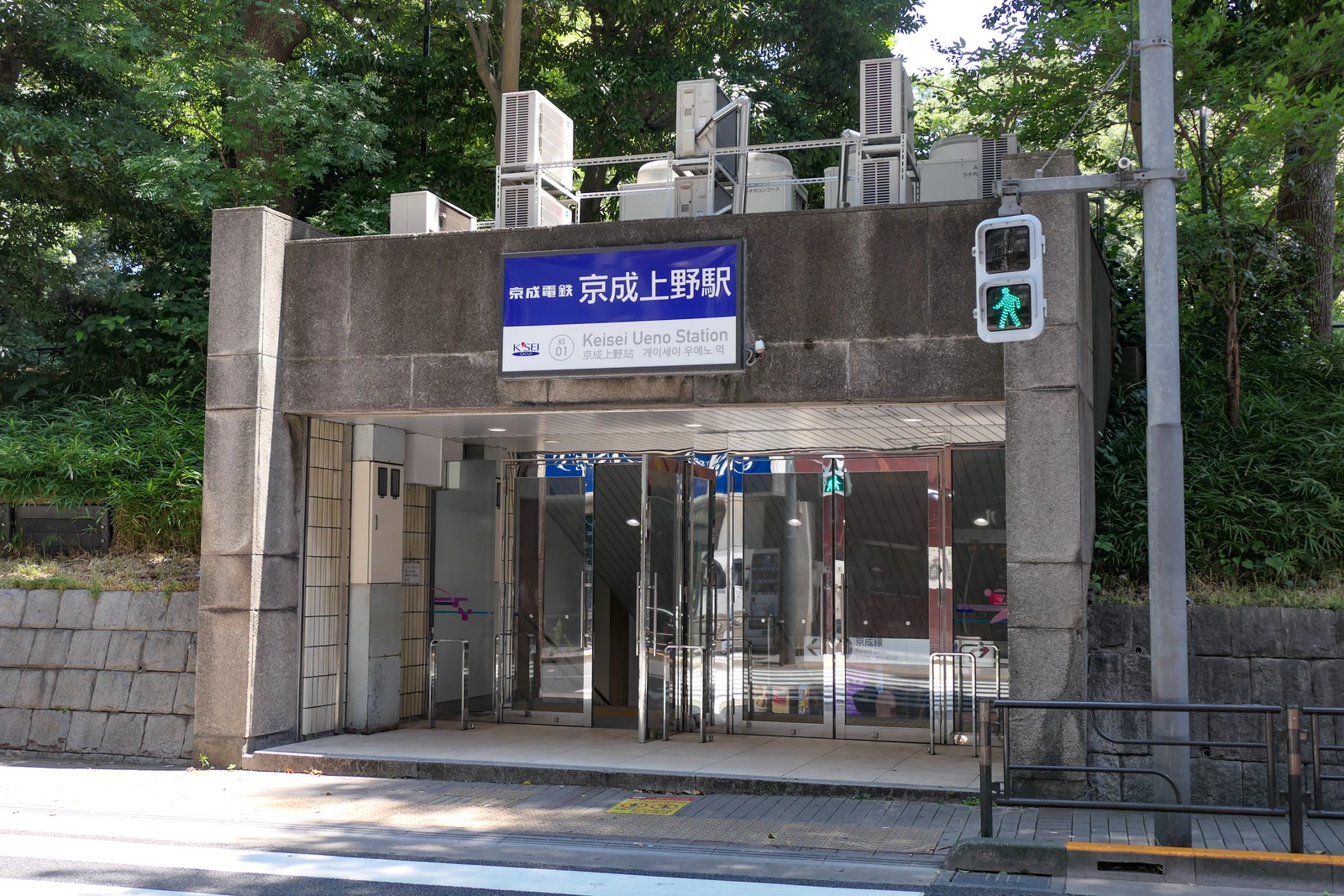
The official access page gives about one minute on foot from JR Ueno’s Park Exit, seven from Keisei Ueno and eight from Ueno Station on the Tokyo Metro Ginza and Hibiya lines. These are walks from exits. After reaching JR Ueno, you still need to find the Park Exit. Metro arrivals need not transfer onto JR for one stop to chase the one-minute claim. Walk toward Ueno Park from your actual exit.
For a collection-focused morning, enter around 9:30, see the lobby and paid galleries and finish main viewing around 11:30. After lunch, walk briefly toward the park fountain plaza and return to the station according to energy. Slow label readers can remove the afternoon walk and stay inside. If entry queues delay you, move lunch later rather than rush every room in the last half hour.
If Turner is the priority, give it the fullest morning block. Eat afterward, then decide whether you still have energy for the same-day collection. Keep the park as an easily shortened link: the path in front of the museum toward the fountain plaza gives an open view. Do not add complete zoo, Tokyo National Museum and Ameyoko visits. In rain, replace the outdoor stretch with lobby, shop and café. For other Tokyo areas on separate days, use the Tokyo half-day and full-day neighborhood plans.
For Friday and Saturday evenings, finish by 20:00
After daytime work or shopping, consider a Friday or Saturday evening. For the collection, arrive around 17:30, see priority works and then the free hall. Come earlier for Turner, including queues, video works and walks between areas. A 19:30 last entry still leaves a 20:00 closing time. With only half an hour, narrow the aim or make a short free-area visit and return for a full slot.
For dinner inside, work backward from the 19:10 meal last order. A 20:00 museum closing does not mean restaurant orders continue until then. With fixed meals, medication or children, eating before galleries is usually easier. To return to a paid area after eating, confirm your ticket’s entry and exit rules before scanning. Plan evening travel around your actual JR, Keisei or Metro route. If viewing separately, agree on a named meeting point outside the entrance.
Before leaving home, save exhibition and gallery-closure dates, your original seller’s QR code and terms, and museum access and floor maps. For visits from January 12, 2027, select an open Turner date. For the collection, choose a date using reopening notices after the expected March preparation period.
A few useful answers
Are the National Museum of Western Art and Tokyo National Museum the same?
They sell separate admission. The Western Art museum focuses on Western painting, sculpture and Le Corbusier’s building. Give Tokyo National Museum’s Japanese art, crafts and archaeology a separate main slot.
Do I need a ticket just for Le Corbusier’s architecture?
The official map marks the Main Building lobby, Nineteenth-Century Hall, café and shop as free areas. Collection galleries need a collection ticket or a valid same-day special ticket that includes them.
Do I need a collection ticket as well as a Turner ticket?
Turner includes open collection galleries on the viewing day. During January 12–February 21, 2027, the collection galleries are closed, so no extra collection visit is available.
Is the collection still free after 17:00 on Fridays and Saturdays?
That measure ended in April 2023. Current evening hours end at 20:00, with last entry at 19:30, using current prices and eligibility.
Can online tickets be canceled or reused for entry?
Official collection e-tix prohibits cancellation, changes, refunds, reissue and re-entry. Official Turner e-tix also prohibits cancellation and changes after purchase, and allows one use by one person during the exhibition.
Which early-2027 dates should I avoid for the collection?
The visitor page expects collection galleries to close for preparation January 12–March 19, 2027. Turner continues on open days through February 21. Choose collection dates using reopening notices after preparation.
Official information and references
Sources used in this guide.
- Visitor information, fares, sold-out collection Passport and closures
- Current Turner exhibition: dates, fares and student and senior offers
- Official Turner ticket types and sellers
- Official collection e-tix: validity, QR codes and cancellation rules
- Official Turner e-tix: ordinary tickets and cancellation rules
- Free and paid areas: floor map
- Main Building, forecourt restoration and digital architecture
- Formation and gift return of the Matsukata Collection
- Collection display and gallery map
- Theater images small exhibition and valid admission
- Collection smartphone audio guide
- Accessibility facilities and Social Story
- Photography, infants, strollers and storage FAQ
- Café Suiren hours and last orders
- Access from Ueno stations
- Official opening calendar