One-way water bus fares from Asakusa to Odaiba run ¥2,000 and take about 50–65 minutes. Compare Himiko, Hotaluna, and Emeraldas, plus Hinode Pier, Hamarikyu, Toyosu, reservations, and service-suspension transit backups.
- Region & Focus
- TokyoAttractions
- Reading Scope
- 20 min read · 10 chapters · 5 Q&As
- Official Verification
- 24 official sources checkedUpdated November 22, 2026
- Key Topics
- BookingItinerariesFirst trip
Chapter Route Map (tap any stop)
- Asakusa to Odaiba for the Full Route, Hinode Pier to Odaiba for the Bay
- How to Choose Between the Three Ships
- Boarding Piers at Asakusa, Hinode, and Odaiba
- Hamarikyu for the Garden, LaLaport for Toyosu
- Reservations, On-Site Cashless Payment & Cancellation Fees
- Traveling with Strollers, Wheelchairs, or Large Luggage
- Morning in Asakusa, Afternoon in Odaiba
- Going in Reverse, or Fitting a Short Cruise into a Minato Half-Day
- Land Transit Backups When Boats Are Suspended or Decks Close
- December 2026 Fireworks Night Cruises & 2027 New Year's Day Sunrise Sailings
- Quick Q&A
For a first-time Tokyo Bay cruise, spending the morning in Asakusa and taking the afternoon boat to Odaiba is the smoothest route. Departing from the pier next to Azumabashi Bridge, you glide down the Sumida River beneath downtown bridges before opening onto the bay with a water-level view of Rainbow Bridge. Tokyo Cruise's three designer vessels on this route typically cost ¥2,000 for adults and take about 50–65 minutes. If you are already near Hamamatsucho, boarding at Hinode Pier for Odaiba gets you across in roughly 20 minutes. When buying tickets, double-check which destination at the pier you are selecting and which ship actually operates your departure slot.
Asakusa to Odaiba for the Full Route, Hinode Pier to Odaiba for the Bay
To pair Asakusa and Odaiba in one day, book the "Asakusa → Odaiba Seaside Park" route directly. Himiko takes about 50 minutes, Emeraldas about 55 minutes, and Hotaluna about 65 minutes. Watching downtown neighborhoods under the bridges give way to river-mouth high-rises and the open harbor is what makes this crossing worth the time. Factor in the walk from the station to the pier and check-in separately, and you can count backward from the sailing time to plan meals or sightseeing.
If your morning starts in Tsukiji, Shiodome, or Hamamatsucho, doubling back to Asakusa only adds an extra train ride. Head straight to Hinode Pier instead. The standard fare from Hinode Pier to Odaiba Seaside Park is ¥600, or ¥1,000 on Hotaluna sailings, and either option takes about 20 minutes. When reading the timetable, match the ship name to the departure time so you do not assume the lower fare applies to every sailing all day.
The short hop works in reverse, too. From Odaiba back toward Minato Ward, take a direct boat to Hinode Pier and walk to Hamamatsucho Station for JR lines. To boat all the way back to Asakusa from Odaiba, check the afternoon direct departures first. Official fares also list an Odaiba-to-Asakusa combination with a boat transfer at Hinode Pier for ¥1,600 adult / ¥800 child, scheduled at around 70 minutes. It is only worth buying if the transfer lines up cleanly, especially if you are already in Odaiba with dinner reservations waiting after disembarking.
Both ends of the full route are easy half-day neighborhoods, so a one-way cruise links them cleanly. If your group plans to stay in Odaiba for night views or dinner, taking the Yurikamome line back is much easier to schedule. If you want to board and disembark at Asakusa, look for the "Hashi-meguri" (bridge tour) or "Skytree-meguri" round-trip loops instead. Official listings put the former at about 50 minutes and the latter at about 30 minutes, using the same pier for both arrival and departure so your walking route stays simple.
Older fares for suspended routes still appear at the bottom of the operator's timetable page. If you see Palette Town or Tokyo Big Sight listed, check the service status column at the top of that route first—regular Tokyo Cruise sailings to both stops are marked suspended. Whether you are heading to Odaiba for an exhibition, shopping malls, or the waterfront, plan your ground route to your real destination and select "Odaiba Seaside Park" as your pier on the boat ticket.
| Embarkation & Disembarkation | Adult / Child | Listed Duration | Ticketing Notes |
|---|---|---|---|
| Asakusa → Odaiba Seaside Park | ¥2,000 / ¥1,000 | Approx. 50–65 min | Standard fare for Himiko, Emeraldas, and Hotaluna |
| Odaiba Seaside Park → Asakusa | ¥2,000 / ¥1,000 | Usually approx. 55–60 min | Look for direct sailings to Asakusa first |
| Odaiba Seaside Park → Transfer at Hinode Pier → Asakusa | ¥1,600 / ¥800 | Approx. 70 min | Combined standard fare; depends on same-day connection |
| Hinode Pier ↔ Odaiba Seaside Park | ¥600 / ¥300 or ¥1,000 / ¥500 | Approx. 20 min | Higher fare applies to Hotaluna |
| Asakusa → Hinode Pier | ¥1,000 / ¥500 or ¥1,400 / ¥700 | Approx. 40 min | Higher fare applies to Hotaluna |
| Asakusa → Hamarikyu | ¥1,180 / ¥470 | Approx. 35 min | On-site ticket at Asakusa; includes garden admission |
| Toyosu (LaLaport) → Asakusa | ¥1,500 / ¥750 | Approx. 30 min | Urban Launch vessel; walk from Toyosu Station to pier |
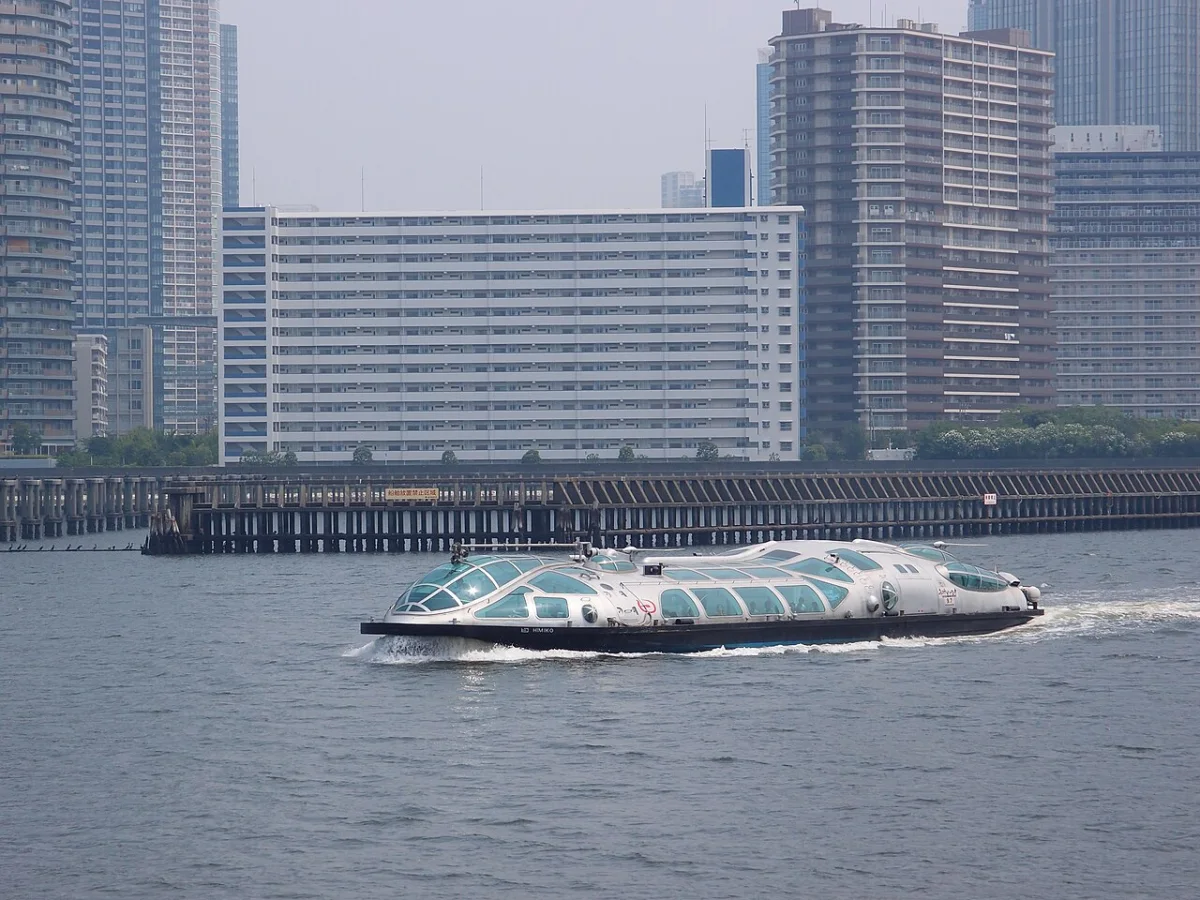
One-way water bus fares from Asakusa to Odaiba run ¥2,000 and take about 50–65 minutes. Compare Himiko, Hotaluna, and Emeraldas, plus Hinode Pier, Hamarikyu, Toyosu, reservations, and service-suspension transit backups.
How to Choose Between the Three Ships
Himiko is a silver water bus designed by Leiji Matsumoto, wrapped in curved glass from bow to flanks. It suits travelers whose main goal is sitting inside and taking in the scenery. Bridge piers pass close to the windows, and once you near the river mouth, the view opens wide enough to frame the waterfront high-rises. While the operator notes rear deck bench seating, indoor passengers get the full transition through the panoramic windows alone. Onboard announcements even feature character voices from Galaxy Express 999.
Hotaluna is the pick if you want to step outside over the bay, provided you ride the right segment. Per the operator's guidelines, the rooftop deck opens only between Hinode Pier and Odaiba (and closes in the rain); it stays closed between Hinode Pier and Asakusa, as well as on departures from Odaiba to Asakusa. Taking Hotaluna from Asakusa to Odaiba passes through Hinode Pier—buy a ticket with Odaiba as your final stop and stay aboard at Hinode as crew direct. Wait until the boat heads out toward the bay for crew permission to go up.
Emeraldas is another vessel in the Leiji Matsumoto series. Standard tickets grant regular boarding, while three booth zones can be reserved for an extra fee if your group wants guaranteed seats together. Booth inventory is separate from general tickets—click into your specific sailing to see whether reserved seating is available on that departure. It also features a rooftop deck that crew open or close depending on wind, waves, tide levels, and route; if it is closed, watch the view from inside the cabin.
A departure shift of 15 minutes usually affects your day more than which ship you ride. If you have timed plans in Odaiba, check which departure gets you there on schedule before filtering by vessel name. Himiko serves Asakusa and Odaiba, and the timetable explicitly notes it does not currently dock at Toyosu. To reach Urban Dock LaLaport Toyosu, book the Urban Launch bound for Toyosu rather than assuming a ship from an older photo still runs that pier.
Read both the month and date rows when checking maintenance closures. Using the December 2026 schedule verified at the time of writing, Himiko lists suspensions on December 1, 2, 8, 9, and 29; Hotaluna's 13:10 and 15:30 sailings are suspended on December 15 and 16; and multiple Emeraldas departures are suspended on December 22 and 23. If you want a specific ship, check the monthly calendar for active dates first, then open the booking calendar to confirm ticket availability so your entire Asakusa half-day does not hinge on a single irregular sailing.
Boarding Piers at Asakusa, Hinode, and Odaiba
The Asakusa pier is at 1-1-1 Hanakawado, Taito-ku, on the Asakusa side of Azumabashi Bridge, marked "Asakusa" on signs and tickets. Tokyo Metro Ginza Line and Tobu Line Asakusa stations are listed by the operator at about a 1-minute walk, and the Toei Asakusa Line station at about 3 minutes. From Kaminarimon Gate, walk toward the river and Azumabashi Bridge; if you are strolling through Sumida Park, loop back to the Tokyo Cruise pier beside the bridge. Searching maps for "Tokyo Cruise Asakusa Pier" drops the pin far more reliably than searching "Sumida River cruise".
Once you reach Asakusa, you can glance at the river channel from the promenade before heading into the waiting area. Kaminarimon gets crowded with photo-takers, so setting "Tokyo Cruise Asakusa Pier entrance" as your group meetup spot reduces the risk of missing the boat. Maps also display piers for other water-bus operators and riverside steps. Even right next to Azumabashi Bridge, match the signage, the operator name on your ticket, and the boarding gate.
Hinode Pier is at 2-7-104 Kaigan, Minato-ku. Coming from the Tokyo Station area, take JR to Hamamatsucho Station and walk; the operator lists the pier at about 8 minutes on foot. For a shorter walk, transfer at Shimbashi to the Yurikamome line toward Toyosu, ride past Shiodome and Takeshiba, and get off at Hinode Station—about 2 minutes from the pier. On the return into central Tokyo from Hinode, board the Shimbashi-bound train. Symphony dinner cruises operate counters near the same address, so look specifically for Tokyo Cruise signage for the water bus.
In Odaiba, boats dock at the "Odaiba Seaside Park" water bus pier directly in front of the Marine Park administration office. The operator specifically warns that typing the street address into a map app can route you elsewhere, so search "Odaiba Seaside Park Water Bus Pier" instead. Both Daiba Station and Odaiba-kaihinkoen Station on the Yurikamome line are listed at about a 5-minute walk. Tokyo Teleport Station on the Rinkai Line is about 7 minutes on foot. Stations and boats run on different layouts, so allow extra minutes to drop down from the shopping mall decks to the waterfront promenade and boarding gate.
After landing at Odaiba, if you want a waterfront stroll, linger in Seaside Park along the shore with Rainbow Bridge in view before riding up to the mall levels. If you have a timed indoor exhibition, follow your venue address straight from the pier and save the beach walk for afterward. When splitting up—some arriving by boat, others by train—pick a named mall entrance or station ticket gate to meet. Telling everyone "Odaiba pier" or "near Rainbow Bridge" often leaves people waiting on different elevated walkways.
Hamarikyu for the Garden, LaLaport for Toyosu
The boat from Asakusa to Hamarikyu takes about 35 minutes. Tickets are sold at the Asakusa pier vending machines for ¥1,180 adult / ¥470 child, which already includes admission to Hamarikyu Gardens. Select "Hamarikyu" as your destination when buying. While some regular sailings continue onward to Hinode Pier, tickets bought for Hinode Pier do not allow disembarking at Hamarikyu—make sure you buy the right stop from the start.
The Hamarikyu pier is currently disembarkation-only. Start your walk beside the tidal pond, cross to Nakajima-no-Ochaya teahouse, and head out to one of the street gates. Exit via Otemon Gate for Tsukiji Shijo or Shimbashi stations, or Naka-no-Gomon Gate for Shiodome or Hamamatsucho stations. The garden is generally open 09:00–17:00 (last entry 16:30) and closed December 29 through January 1. If your trip falls over those year-end closure days, book straight through to Hinode or Odaiba instead of making a detour for the garden.
If the garden is your main focus, walking to Otemon Gate from Tsukiji Shijo or Shiodome stations works just as well. Standard walk-up garden admission at Otemon Gate is ¥300, or ¥150 for visitors aged 65 and older. Entering after a rain shower, you can gauge footwear conditions as you stroll from Shioiri-no-ike Pond to the teahouse and then wander toward Shiodome for food. Going on foot saves boat wait times for the grounds themselves and pairs smoothly with a Tsukiji lunch plan.
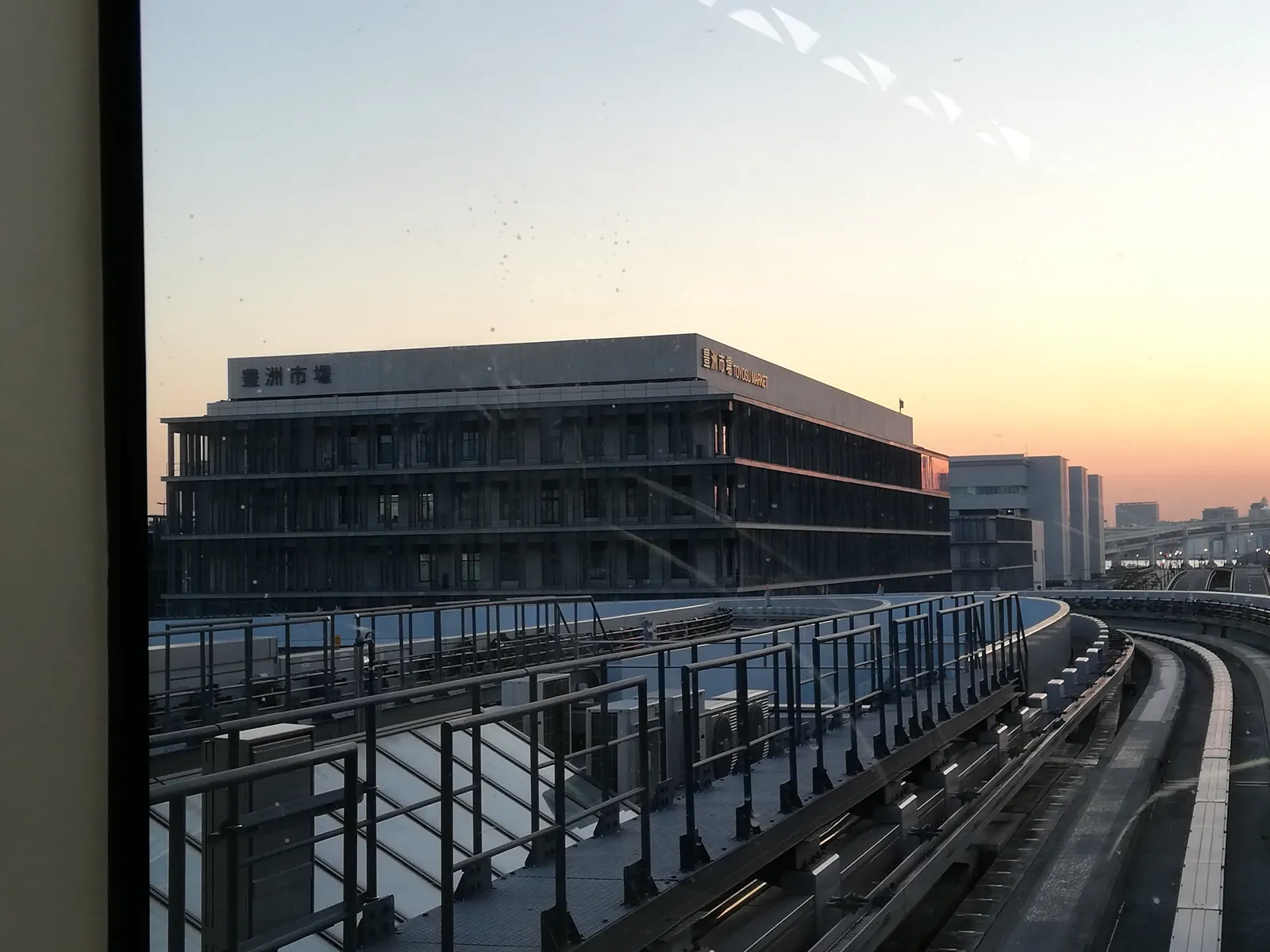
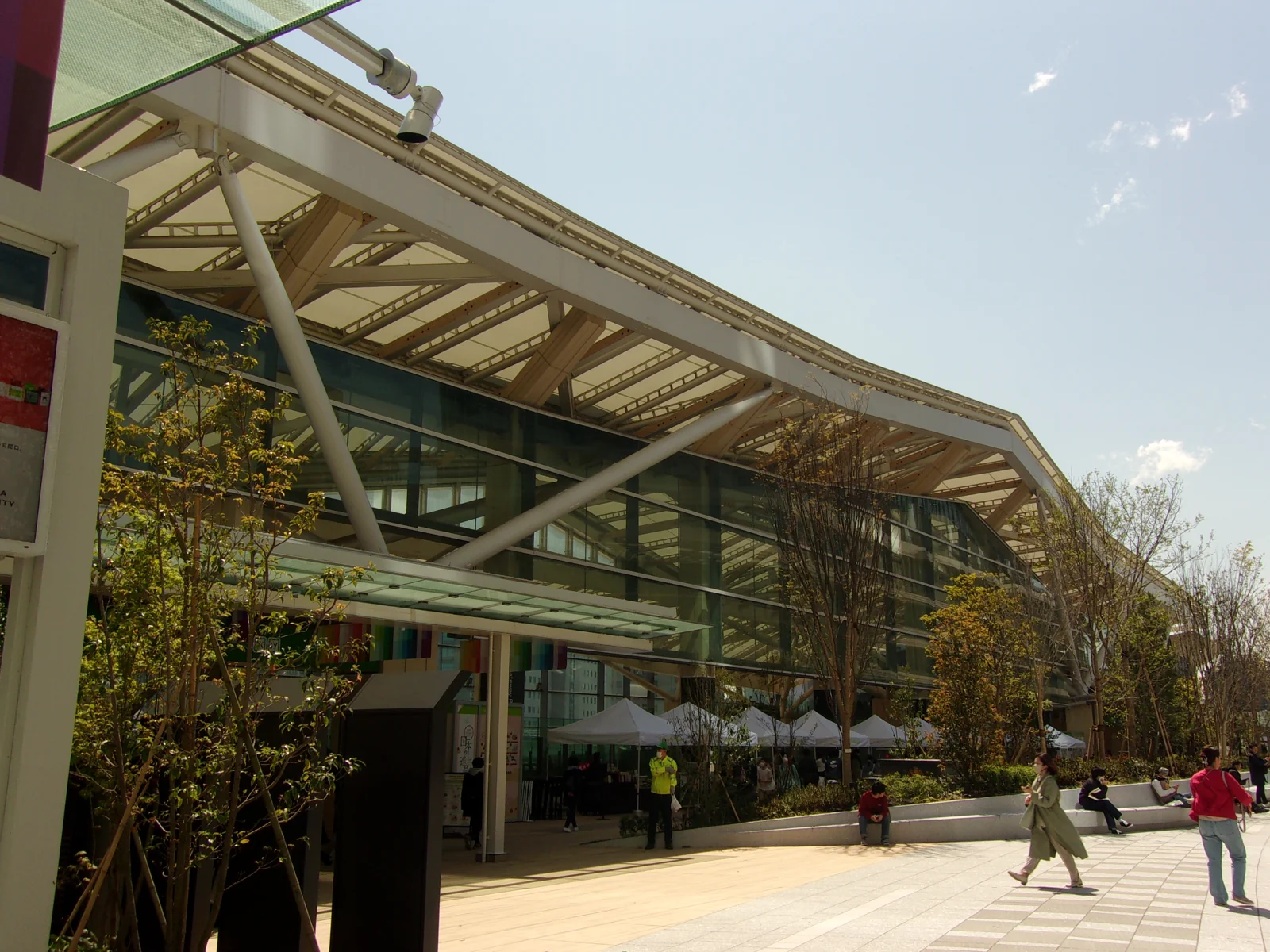
Toyosu to Asakusa is operated by Urban Launch for ¥1,500 adult in about 30 minutes. The pier sits by the water in the 1F courtyard of Urban Dock LaLaport Toyosu; both the Tokyo Metro Yurakucho Line and the Yurikamome line stop at Toyosu Station, listed by the operator at about a 5-minute walk. There is no permanent shore staff at this pier—follow posted instructions at the entrance and wait for ship crew to board you. After visiting Toyosu Market, ride the Yurikamome from Shijo-mae Station toward Toyosu (one stop past Shin-Toyosu) and walk to the LaLaport courtyard.
Note that the "Toyosu Market" pier near Shijo-mae Station and the LaLaport pier near Toyosu Station are separate stops. The operator splits "Toyosu" and "Toyosu Market" into two columns on its daily operations page. To catch the Asakusa sailing, follow signs and ticket labels showing "Toyosu" and the shopping complex name. In reverse, look for "Bound for Toyosu" Urban Launch departures on the timetable from Asakusa, then pair arrival with shopping or dining at the mall.
Departures from Toyosu to Asakusa cluster around specific time windows. If you finish a market breakfast and just miss the morning boat, you can have lunch at LaLaport while waiting for an afternoon sailing, or take the Yurakucho Line from Toyosu Station to Ginza-itchome and walk to the Ginza Line for Asakusa. If you hold afternoon timed tickets elsewhere, work backward from the actual departure time before deciding whether to wait.
Reservations, On-Site Cashless Payment & Cancellation Fees
Online bookings for regular sailings open on the 1st of the month prior to travel, and available seats stay bookable up to 5 minutes before departure. Special sailings open one week ahead. Enter via the TOKYO CRUISE reservation page, pick your date, select embarkation and disembarkation piers, then confirm the departure time, vessel, and passenger count. Booking 5 minutes before departure only works if you are already standing at the pier; if you still need to walk from the station and find the queue, do not treat the booking cutoff as your arrival time.
Standard credit-card orders must clear payment and reach the confirmation screen. Keep your confirmation email, e-ticket, and booking number on one phone and agree in advance who in your party will show it. If the email does not arrive right away, check your spam folder first. According to the official FAQ, if you saw the confirmation screen but cannot locate the email, give pier staff your booking name and reserved departure time so they can look it up. When booking for a whole family, save the order number offline before leaving your hotel so you can read it off smoothly at check-in.
Tokyo Cruise operates cashless payment at the piers—accepted credit cards, e-money, and QR payments work, and e-money top-ups are not available on site. Bringing a credit card that supports overseas transactions is the simplest option for visitors. Before lining up for the next Odaiba boat on site, you can also open the booking page on your phone to check remaining seats. Reserved passengers board priority-first; if you see two lines after buying a ticket, ask staff which queue is for reservation holders.
Child fares apply to ages 6 through 11; passengers 12 and older pay adult fares. Infants aged 1 through 5 ride free at a ratio of one infant per paying adult, with additional infants charged the child fare. On a standard Asakusa-to-Odaiba run, two adults, an 8-year-old, and a 4-year-old pay ¥5,000 total. Hamarikyu fares differ, and seasonal event cruises follow their own event pricing.
Individual regular bookings are canceled via the cancellation link inside the confirmation email. Canceling 7 or more days before the sailing date is free; 6 to 2 days prior incurs a 10% fee; from the day before up to departure time incurs a 30% fee; and after departure is 100%. A Saturday ticket canceled by the previous Saturday falls in the free window, whereas changing your mind on Friday hits the 30% tier. Before changing dates, directions, or times, confirm availability on the new sailing first, then cancel the old ticket and rebook. If fewer people show up in your party, the official FAQ instructs notifying pier staff on site to reduce headcount under the same fee schedule.
Treat round trips as two separate one-way legs—regular sailings offer no round-trip discount. To cruise both ways, check the earlier last departure for the return leg first, then choose your outbound boat so you are not rushing straight back to the pier after lunch. If you prefer wandering Odaiba freely, book the outbound cruise only and return by rail from one of the island's stations. Save separate one-way e-tickets clearly by direction—such as Asakusa → Odaiba outbound and Odaiba → Hinode Pier return—and double-check the embarkation pier before pulling up the QR code.
Traveling with Strollers, Wheelchairs, or Large Luggage
Strollers can generally roll aboard unfolded, though crew may ask you to fold them when the cabin is crowded. Before boarding, move bottles, water, and essentials into a small daypack so you do not have to dig through a parked stroller mid-crossing. Kids have plenty to watch through the windows—bridge piers and passing vessels—without splitting the family to climb onto a deck. If your child's patience caps out at 20–30 minutes, the short Hinode Pier to Odaiba run fits much more easily between lunch and nap time.
The operator states that wheelchairs can usually board directly, but tide levels change the boarding ramp angle. During extreme low tides, if the slope exceeds safe boarding limits, wheelchair access may not be possible on that sailing. If accessibility is essential for your trip, send your date, piers, and sailing time to the operator in advance to confirm conditions at both docks. If Miraikan is on your Odaiba itinerary, the museum's access page maps barrier-free routes from Tokyo Teleport and Telecom Center stations as an immediate ground backup if a boat is canceled.
For a group hoping to sit near one another, queue together for the same sailing at the pier, then tuck phones and loose bags away before stepping onto the ramp so one hand stays free for the handrail. When traveling with slower walkers, treat the river-to-bay leg as a seated mid-day break: take a direct boat to Odaiba, then use the station and mall elevators once you disembark.
Per the operator's English FAQ, standard luggage is limited to one piece per person with combined dimensions (L + W + H) within 2 meters. Boarding ramps can be uneven or sloped, so a bag you can lift with one hand beats juggling two rolling suitcases. If you checked out of an Asakusa hotel and are staying in Minato Ward or Odaiba that night, forward or drop off your bags first rather than hauling suitcases along the beach. When traveling with loaded strollers, large bags, and a wheelchair, skipping a Hinode Pier transfer is usually worth far more than saving ¥400.
Outside food and drinks are not allowed aboard Himiko, Hotaluna, or Emeraldas, though items purchased at the Tokyo Cruise Cafe at Asakusa or Hinode piers may be brought onboard; outside food is permitted on other vessels. Eating in Asakusa before boarding keeps things stress-free. If lunch has to be in Odaiba, add boarding, crossing, and walking time to your timeline rather than treating the scheduled arrival time as your restaurant seating time.
Morning in Asakusa, Afternoon in Odaiba
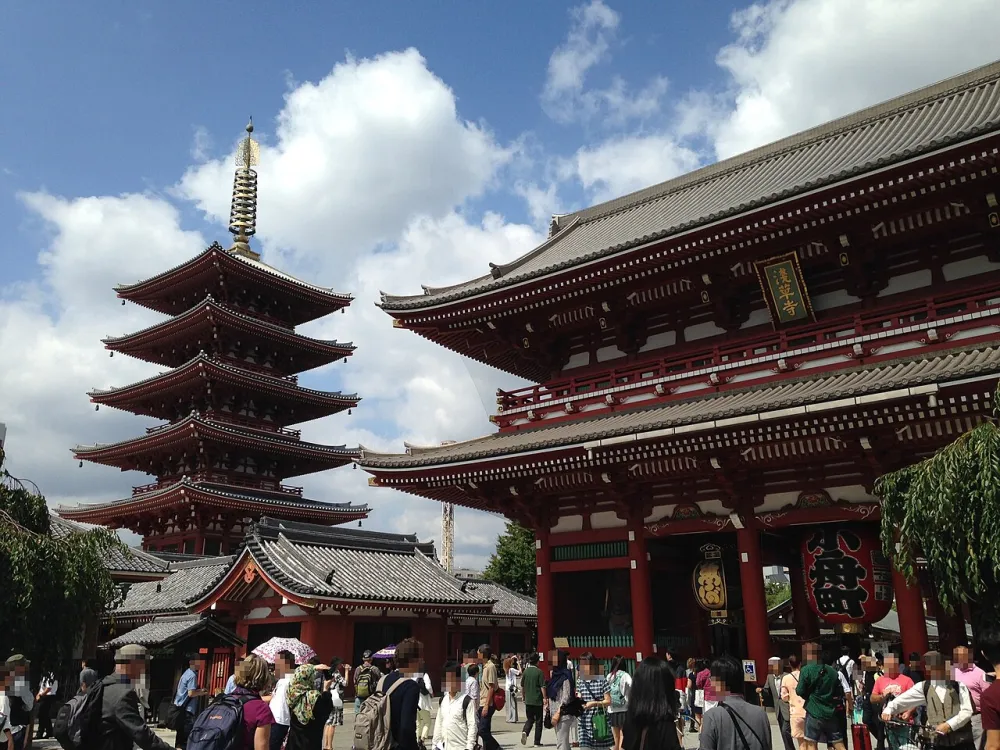
Use the boat departure as your afternoon handoff point. Walk from Kaminarimon Gate through Senso-ji Temple in the morning, then look for lunch along Denboin-dori or the side streets off Nakamise. If you eat early, leave enough buffer to stroll back to Azumabashi Bridge—and switch restaurants if a line looks too slow. If lunch is planned for Odaiba instead, catch a late-morning sailing and find a table after landing rather than herding a group through Asakusa hunting for a guaranteed fast seat.
Departing Asakusa, the riverfront around Azumabashi Bridge comes into view first. Heading downstream past Komagata Bridge, steel trusses and bridge piers sweep past the glass quickly. For bridge photos, shoot a wide frame showing the river and both banks first, then snap the steel girders right as the vessel approaches the span. Further down near Kiyosu Bridge, the channel widens enough on clear days to frame both the bridge arch and the towers behind it.
Approaching Tsukuda and Tsukishima, rows of residential high-rises line the opposite bank. Hold your camera steady at the window for a beat as the hull cuts across wakes—capturing the water texture gives cleaner foreground depth than panning continuously along the glass. Once out in the harbor, watch which way the bow turns before choosing a window seat for Rainbow Bridge or the Odaiba shoreline. Vessel layouts, river bends, and seasonal sunlight all shift, so rules of thumb like "sit left outbound" or "sit right inbound" rarely hold across every sailing and stop pattern.
Cabin glare becomes noticeable under angled sunlight; hold your lens close to the glass without touching it, turn off flash, or shoot from the shaded edge of a window frame. If you are traveling with kids, turning bridge shapes and colors into a spotting game beats staring at a phone map. When the rooftop deck is open, save going up until the boat enters the bay, then head back inside to warm up instead of standing in the wind all the way from the Sumida River.
Once at Odaiba, two simple options keep plans from crowding each other. In fair weather, walk a short stretch of Seaside Park before taking an elevator up into the malls for a meal. In strong wind or rain, head straight indoors and step back out to the water if the skies clear. Visitors heading to Miraikan in the afternoon can hop on the Yurikamome near Seaside Park to Tokyo International Cruise Terminal or Telecom Center stations—both put you closer to the museum doors than walking straight from the beach.
Going in Reverse, or Fitting a Short Cruise into a Minato Half-Day
If you are staying in Odaiba, Toyosu, or Ariake, run the route backward. Spend the morning along the Odaiba waterfront or malls, then board an afternoon boat from Odaiba Seaside Park to Asakusa. Take an earlier afternoon departure if you want to browse Asakusa shops before they start closing up. If you are mainly after evening street views, aim for a late-afternoon arrival, walk across Azumabashi Bridge for views of the river and Tokyo Skytree, and pick the Ginza, Tobu, or Toei Asakusa Line back to your hotel.
The reverse direction opens straight onto wide harbor water. From the windows, you can pick out the waterfront promenades, malls, and bridges you just walked past before the river narrows back into the Sumida bridge sequence. If anyone in your group tends to cut check-in close, meet at a specific mall landmark first and walk down to the shore together rather than splitting up with screenshots of different piers.
Spending half a day in Hamamatsucho or Shiodome pairs neatly with the 20-minute crossing from Hinode Pier to Odaiba. Take a morning stroll through Kyu-Shiba-rikyu Gardens beside JR Hamamatsucho Station's North Exit before walking over to Hinode—note that Kyu-Shiba-rikyu is a separate garden from the "Hamarikyu" included on the Asakusa boat combo ticket. Visiting Kyu-Shiba-rikyu first lets you step out in time for your sailing, and if your itinerary circles back to Hamamatsucho later, you can ride the Yurikamome straight back from Odaiba to Hinode.
Building your day around the boat does not mean cramming all three waterfront districts in at once. Continuing from Asakusa to Odaiba and then on to Toyosu Market usually pushes the market into the afternoon; flipping the order—hitting the market in the morning and sailing from LaLaport Toyosu to Asakusa—cuts your major cross-town transit down to a single ride. Save Toyosu for another day if you want unhurried shopping in Odaiba. With only two or three hours free, pick either the river segment or the bay crossing so you still have time to enjoy wherever you step ashore.
Land Transit Backups When Boats Are Suspended or Decks Close
Before heading out, check Today's Service Status and filter by your departure pier for times, destinations, and operating status. That page tracks whether boats are running, not seat inventory—head back to the booking calendar to check ticket availability. Parentheses on the monthly timetable mark irregular sailings, and during off-peak seasons or maintenance windows, a listed row may carry zero departures that month. Bookmark the daily status page, reservation portal, and pier map on your phone so you can choose between the riverfront and the subway before leaving a restaurant.
When boats still run in the rain, simply stay inside the cabin. Strong winds, rough seas, or extreme tides can close the rooftop deck, shift departure times, or cancel sailings altogether. If only the deck closes while the boat operates, your ticket still gets you to Odaiba as planned. When the operator announces a cancellation, look for notices linked to your confirmation email or ticketing platform and contact the original seller with your sailing details and booking number. If the boat runs normally and you cancel yourself, standard cancellation fees for your ticket type still apply.
If Asakusa-to-Odaiba boats are suspended, take the Tokyo Metro Ginza Line from Asakusa Station to Shimbashi, transfer to the Yurikamome bound for Toyosu, and get off at Odaiba-kaihinkoen or Daiba Station depending on your stop. If your goal was simply bay views rather than arriving immediately, move an Odaiba lunch or indoor museum slot earlier in the day. Even riding entirely by rail, the elevated Yurikamome still crosses Rainbow Bridge with sweeping views over Tokyo Port.
If Hinode Pier departures are canceled, walk back to Yurikamome Hinode Station and ride toward Toyosu straight into Odaiba. Already in Odaiba and heading back to central Tokyo? Catch the Rinkai Line from Tokyo Teleport Station or the Yurikamome back to Shimbashi for transfers. On your departure day, never gamble a Shinkansen or airport train connection on the day's last boat—leave enough cushion to take the train if a sailing is missed or scrubbed.
When wind and rain hit a family outing, pivot immediately to an indoor-heavy neighborhood. If you are already in Odaiba, save the promenade for a dry break; if you are still in Asakusa, stay downtown instead of forcing a wet bay crossing just to keep the original route intact. In summer heat, if a short harbor ride gets canceled, walk Odaiba's air-conditioned mall skybridges and drop down to the water once it cools off. If you booked two cruises in one day, sort out any refund or rebooking on the first paid leg before deciding whether to keep the second.
December 2026 Fireworks Night Cruises & 2027 New Year's Day Sunrise Sailings
On December 5, 12, 19, and 26, 2026, winter night illumination and fireworks cruises run from Asakusa to Odaiba, listed at 18:00 and 18:10. Fares are ¥4,000 adult / ¥2,000 child for an approximately 60–70 minute voyage. Book through the event page by selecting your date and "Depart Asakusa / Arrive Odaiba." The 18:10 Emeraldas sailing offers select paid reserved seats. At the time of verification, the 18:00 departure on December 19 showed unavailable, leaving the 18:10 boat as the remaining option.
The cruise passes illuminated Sumida River bridges before timing its approach to Odaiba with fireworks around 19:00. Inclement weather can cancel the fireworks alone; the operator notes that if the boat still sails, regular event fares stand with no partial refund for canceled fireworks. Keep that policy alongside your cancellation deadline if you are booking solely for fireworks photography. Disembarkation is at Odaiba, so leave time to walk to the Yurikamome or Rinkai Line—to return to Asakusa at night, ride to Shimbashi and transfer to the Ginza Line.
Two round-trip 2027 New Year's Day sunrise cruises are scheduled. The Asakusa sailing departs at 05:30 and returns to Asakusa in about 3 hours 10 minutes (¥5,000 adult / ¥2,600 child). The Hinode Pier sailing departs at 06:00 and returns to Hinode Pier in about 2 hours 10 minutes (¥4,500 adult / ¥2,600 child). Both head offshore near Haneda, making post-cruise breakfast and transit easiest to plan around your original pier. Check-in opens at 04:40 at Asakusa and 05:00 at Hinode Pier, with boarding required 15 minutes before departure. Verify overnight New Year's Eve train schedules in advance, or measure walking distance from your hotel to the exact pier you booked.
New Year's Day sunrise sailings follow their own event cancellation rules: free 7 or more days before departure, 30% from 6 to 4 days prior, and 100% from 3 days prior onward. The operator explicitly posted a correction on the event page overriding the standard fee figures printed in confirmation emails, so follow the event notice when canceling. Both piers return to their own starting dock—the later Hinode Pier boat will not drop passengers off at Asakusa. Pack a windproof outer layer, as waiting on the dock before dawn feels colder than the cruise itself.
If your priority is dining on the water at night, look straight to Symphony cruise ships near Hinode Pier. Operated by a separate company with its own check-in counter, Symphony sells dinner plans by meal and seating tier, and one-way Asakusa water bus tickets are not valid aboard. If you plan to cruise to Odaiba by day and return to Hinode for a dinner cruise at night, calculate your Odaiba departure around ground transit and Symphony's check-in cutoff rather than assuming a seasonal night water bus serves as a return transfer.
A few useful answers
How long does the water bus from Asakusa to Odaiba take, and how much does it cost?
Himiko takes about 50 minutes, Emeraldas about 55 minutes, and Hotaluna via Hinode Pier about 65 minutes. Standard one-way fares are ¥2,000 for adults and ¥1,000 for children; seasonal event cruises carry separate pricing.
Can I book the Tokyo Bay water bus online on the same day?
Regular sailings can be booked online up to 5 minutes before departure if seats remain. Tickets for Hamarikyu are sold exclusively at the Asakusa pier ticket machines.
Can I re-board from the same pier after visiting Hamarikyu Gardens?
No, the Hamarikyu pier is disembarkation-only. After touring the gardens, exit via Otemon Gate or Naka-no-Gomon Gate to reach Shiodome, Tsukiji Shijo, Shimbashi, or Hamamatsucho stations.
Can I take a water bus from Odaiba back to Asakusa after dark?
Check the day's final Odaiba departure first—most regular sailings wrap up in the afternoon. If you stay by the bay for dinner, take the Yurikamome line to Shimbashi and transfer to the Tokyo Metro Ginza Line back to Asakusa.
What if I booked a Tokyo Bay cruise and want to switch to a different pier on the day of travel?
Check availability on the new sailing in the reservation system first, then cancel your original ticket via the link in your confirmation email and rebook. Canceling a regular booking on the day of departure before sailing incurs a 30% fee, and 100% after departure.
Official information and references
Sources used in this guide.
- Tokyo Cruise Timetable & Fares
- Tokyo Cruise Regular Service Reservations
- Tokyo Cruise General Booking Calendar
- Tokyo Cruise Frequently Asked Questions
- Tokyo Cruise Daily Service Status
- Tokyo Cruise Asakusa Pier Guide
- Tokyo Cruise Hinode Pier Guide
- Tokyo Cruise Odaiba Seaside Park Pier Guide
- Tokyo Cruise LaLaport Toyosu Pier Guide
- Tokyo Cruise Fleet Overview
- Himiko Design & Cabin Layout
- Hotaluna Vessel Details & Rooftop Deck Access
- Emeraldas Vessel Details & Reserved Seating
- Hamarikyu Gardens Visitor Information
- Hamarikyu Gardens Gates & Access
- Kyu-Shiba-rikyu Gardens Visitor Information
- Yurikamome Hinode Station Timetable
- Tokyo Metro Ginza Line Shimbashi Station Timetable
- Tokyo Metro Yurakucho Line Stations & Transfers
- Miraikan Access & Barrier-Free Routes
- Tokyo Cruise December 2026 Odaiba Fireworks Night Cruise
- Tokyo Cruise 2027 New Year's Day Sunrise Cruise
- Symphony Cruise Pier Access
- Tokyo Cruise English FAQ on Baggage & Same-Day Tickets