Plan Sensoji around Main Hall, Yogodo Hall, and shop hours. Choose among four Asakusa stations, walk from Kaminarimon through Nakamise and Hozomon to the Main Hall, then add Asakusa Shrine, the Sumida River, or Kappabashi.
- Region & Focus
- Tokyo
- Reading Scope
- 30 min read · 20 chapters · 4 Q&As
- Official Verification
- 14 official sources checkedUpdated November 22, 2026
- Key Topics
- ItinerariesNeighborhoodsRail travel
Chapter Route Map (tap any stop)
- Choose worship, shops, or night views: arrival time changes the visit
- Four Asakusa stations: choose the railway before choosing your approach
- Strollers and wheelchairs: plan station elevators and the Main Hall elevator separately
- Kaminarimon: see the wind and thunder gods, then the dragon under the lantern
- Nakamise’s 250 meters: look on the way in, shop on the way back
- Hozomon and the five-story pagoda: look back for the giant straw sandals
- Purification, incense, and the Main Hall: follow the route and pray with palms together
- Inside the Main Hall: ceiling paintings and the Semui plaque
- Goshuin at Yogodo Hall: service starts at 8:00 a.m.; visit the Main Hall first
- Read your fortune, and tie bad fortunes only where designated
- Three daily services: understand the offering before joining a goma ritual
- Add Asakusa Shrine east of the Main Hall; its goshuin is separate
- The tourist information center opposite Kaminarimon: orientation or a rest stop
- Put lunch along your exit route, and leave Nakamise snacks for spare time
- The eastern half day: Azuma Bridge and one bank of Sumida Park
- The western half day: Kappabashi for people who want tableware
- If taking a water bus, make the boat your main afternoon connection
- Build a workable three-to-four-hour visit, then add one afternoon branch
- New Year, summer, and year-end: events change the focus
- In rain or when children tire, finish in the streets near food and stations
- Quick Q&A
Plan the time-limited stops first for a half day at Sensoji: the Main Hall closes at 5:00 p.m., goshuin at Yogodo Hall generally ends at 4:30 p.m., and Nakamise shops set their own hours. A morning walk from Kaminarimon to the Main Hall, followed by worship, a goshuin, and a seated meal, then either the Sumida River or Kappabashi in the afternoon, is usually easier than linking every eastern Tokyo attraction into one long route. Early architecture photographs, daytime shopping, and illuminations after dinner each suit a different plan. Before arriving, distinguish the four stations called Asakusa so you can start from your own route.
Choose worship, shops, or night views: arrival time changes the visit
For the Main Hall, a goshuin, and Nakamise shopping, plan a morning visit with three to four hours. This half day includes walking, worship, queues, and a seated meal. With only an hour, follow the main approach from Kaminarimon through Nakamise and Hozomon to the Main Hall. If you have an afternoon reservation elsewhere, obtain the goshuin after worship and leave shopping for the return, completing the stops with service hours first.
The Main Hall generally opens at 6:00 a.m. and closes at 5:00 p.m.; from October to March, opening is 6:30 a.m. Yogodo Hall issues goshuin from 8:00 a.m. to 4:30 p.m., with special hours at New Year and Shiman Rokusen-nichi. Record these separately: a winter Main Hall visit at 6:30 a.m. leaves time before goshuin service starts. If you arrive at 4:40 p.m., visit the Main Hall and save the goshuin for another visit.
Early morning suits gate architecture, roof tiles, and an approach uninterrupted by shopping. For snacks and souvenirs, arrive during the day. Nakamise shops are individually operated, so after early worship you can leave for breakfast and return to shop. If arriving in the evening, visit the Main Hall before 5:00 p.m. and see the lights after dinner. A night-view-only visit can begin with dinner, without hurrying to an already closed amulet counter.
Walking around the temple grounds and visiting the Main Hall are free. Incense, amulets, goshuin, and formal prayers each involve their own offering or fee, so budget by the activities you want. The area also suits visitors who do not shop: after the main approach, turn to side halls or the river for a complete half day.
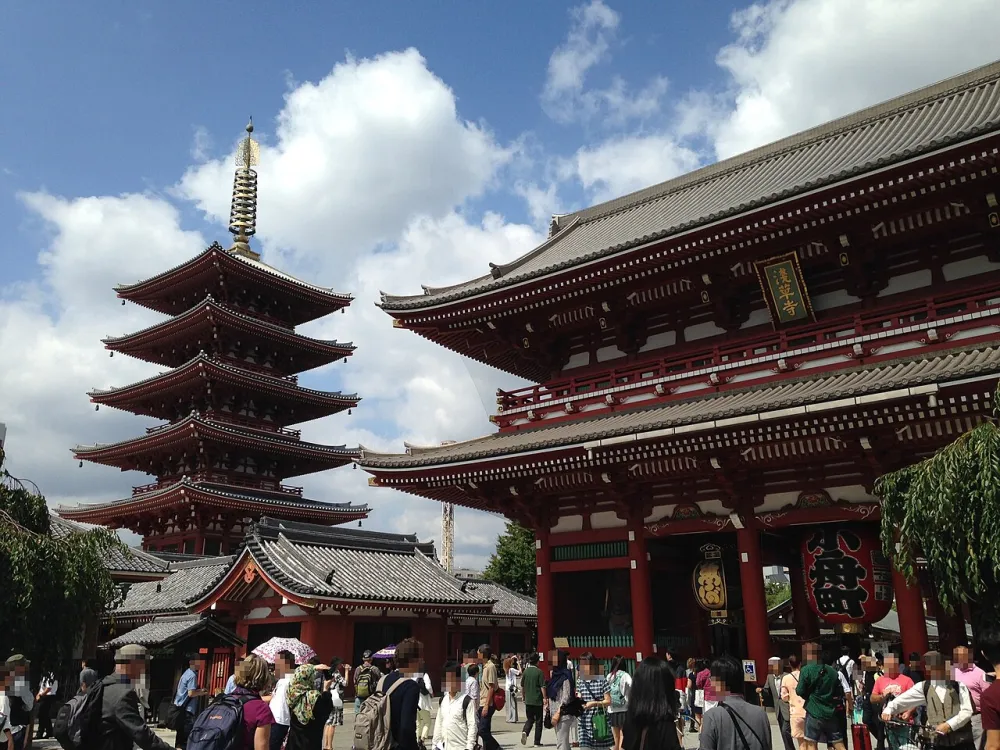
Plan Sensoji around Main Hall, Yogodo Hall, and shop hours. Choose among four Asakusa stations, walk from Kaminarimon through Nakamise and Hozomon to the Main Hall, then add Asakusa Shrine, the Sumida River, or Kappabashi.
Four Asakusa stations: choose the railway before choosing your approach
Save both Sensoji Main Hall and Kaminarimon on your map. Kaminarimon is south of the hall, with Nakamise between them. Start at Kaminarimon for the full first-time approach. If your train brings you west of the temple and you want a brief visit, enter the grounds first and head south to Kaminarimon afterward rather than making a long detour to follow a fixed direction.
Tokyo Metro Ginza Line Asakusa Station suits arrivals from Ueno, Ginza, or Shibuya. Follow signs for Sensoji and Kaminarimon; Exit 1 is a common starting point. Above ground, identify Kaminarimon-dori and follow signs to the red gate. The Ginza Line terminates here, but still check your return platform and train direction. After shopping, do not simply follow a crowd into another operator’s entrance.
The temple lists Exit A4 of Toei Asakusa Line Asakusa Station as an approach. This line connects toward Nihombashi, Shimbashi, and Oshiage, with trains running through to different destinations. For the Skytree area in the afternoon, taking the Asakusa Line to Oshiage and the Tobu Line to TOKYO SKYTREE Station are two different options. Choose your station according to the ticket or IC route you will actually use.
Tobu Asakusa Station is near the Sumida River and eastern streets. Walking from there to Kaminarimon and then north is straightforward, and leaves the river convenient for the end. Tsukuba Express Asakusa Station is by Kokusai-dori near the shopping streets west of the temple. It is in a different location from the Ginza Line, Toei, and Tobu stations. For meetings, specify the operator, exit, and street landmark rather than “the Asakusa Station exit.”
Sensoji officially estimates about five minutes on foot from the Tobu, Ginza Line, and Tsukuba Express Asakusa stations, and Toei Asakusa Line Exit A4, to the temple. This is an access estimate. Walking from Kaminarimon to the Main Hall while taking photos, shopping, and queuing takes much longer. Separate walking and sightseeing time so an entire Nakamise visit does not become a five-minute item.
Strollers and wheelchairs: plan station elevators and the Main Hall elevator separately
For a step-free route, open the Tokyo Metro Asakusa facilities page and Toei Asakusa station map before arrival. The Ginza Line facilities page lists an elevator between the Sensoji/Kaminarimon ticket gates and Exit 1. A transfer elevator to the Toei Asakusa Line and an additional street elevator opened on May 23, 2026. Follow the signs for your actual platform, gate, and elevator to avoid discovering stairs only after leaving the gates.
The temple grounds are mostly level. The Main Hall has front steps; for its elevator, go left as you face the hall. Make this turn before entering the crowd waiting in front so companions can reach the same worship level together. With a stroller, stop and inspect the route before the steps rather than lifting, folding, or sorting belongings in the middle of the crowd.
The toilet blocks to the right of Hozomon and far behind the Main Hall each have one multifunction toilet with wheelchair handrails, a changing table, and a baby seat. The temple says neither has ostomy facilities. If you need those, include the first-floor accessible toilet at the Asakusa Culture Tourist Information Center opposite Kaminarimon. Choose a facility before deciding your approach and exit to save a search around the Main Hall.
Kaminarimon: see the wind and thunder gods, then the dragon under the lantern
Kaminarimon’s formal name is Furaijinmon, the Wind and Thunder God Gate, and it is Sensoji’s outer gate. For first-visit photos, look beyond the central “Kaminarimon” lettering. From a place that does not block passage, see the wind and thunder god statues on either side. As you pass through, look up at the dragon carving beneath the lantern. Turn back after passing to see the Tenryu and Kinryu dragon figures on the rear, another pair of details.
The present Kaminarimon was rebuilt in 1960 through a donation from Konosuke Matsushita. The gate burned several times and remained unreconstructed for 95 years after a nineteenth-century fire. The current gate and the surviving, repaired statues therefore have different histories. Knowing this makes the architecture more interesting than treating every red gate as a relic from one period.
The 3.9-meter-tall lantern is an easy distant meeting marker, but up close it can tempt a whole group to stop in the passage. Move aside after taking your photo, and glance at the dragon carving while passing through. If your camera needs longer adjustment, leave the main flow first. Families can meet at a clearly identified street corner outside the gate, then enter Nakamise together, making it easier for children to stay with the group.
Nakamise’s 250 meters: look on the way in, shop on the way back
Nakamise Shopping Street runs about 250 meters from Kaminarimon to Hozomon. Vermilion shops line the approach, with crafts, souvenirs, and snacks inviting frequent stops. If you want a morning goshuin or lunch, look at shopfronts and prices first and remember one or two places to return to after worship. You will also carry fewer bags into the Main Hall.
Each shop sets its own hours. The approach may be accessible even while shop shutters are closed. Early visitors can still walk the full approach for architecture while shops are closed. For selecting designs or asking about products, shop during the day. If you want only one food shop, find its details in the official Nakamise directory and plan around its business days.
Buy small quantities of ningyo-yaki cakes, rice crackers, and other freshly made snacks. Eat hot food where the shop designates or permits, then return to the approach. Deal with skewers, wrappers, and cups there too, rather than squeezing into another shop with open food. Companions interested in crafts and snacks can browse separately for a short time, with a fixed meeting point outside a particular shop.
Nakamise grew through the shared development of temple worship and commerce outside its gates. The temple records that early residents received permission to open shops in exchange for tasks such as cleaning the grounds, gradually forming the street. Today, worshipers and shoppers still use the same path. Stop beside a shop when buying and leave room for people viewing displays when heading to the Main Hall, allowing both paces.
Hozomon and the five-story pagoda: look back for the giant straw sandals
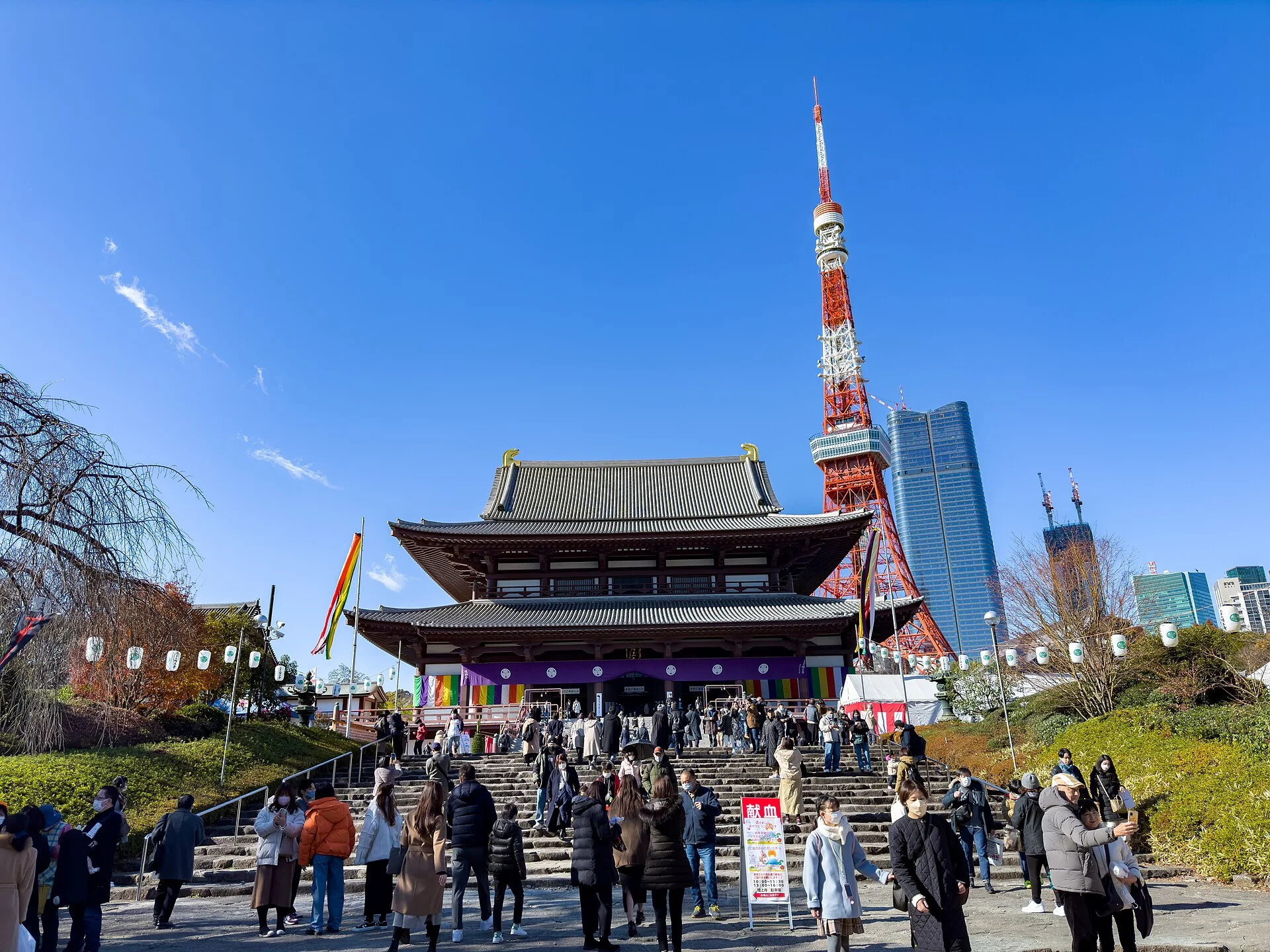
Hozomon at the end of Nakamise is also called Niomon, with Nio guardian statues on either side. Its front lantern differs from Kaminarimon’s. Read the plaque and look at the guardians, then pass through and turn back to see the giant straw sandals. These express the Nio’s power; the temple explains their protective meaning through the idea of guardians large enough to wear them. For children, comparing the sandals with human size can be more engaging than remembering building dates.
Hozomon was rebuilt in 1964. Its upper floor stores sutras and temple treasures, including a Yuan-dynasty edition of the Buddhist canon, giving the gate its current “Treasure House” name. Ordinary visits focus on the exterior; the upper level is not an observation deck. After seeing the sandals behind the gate, continue to the Main Hall.
The five-story pagoda is southwest of the Main Hall. Rebuilt in 1973, it enshrines Buddha relics brought from Sri Lanka on its top level. Visitors usually view the tiers of eaves from outside or photograph it with Hozomon. Worship and memorial access inside the pagoda precinct have designated participants and ceremonies; do not plan to climb it for a Tokyo view. After the gate and pagoda, turn toward the Main Hall to keep the route clear.
Purification, incense, and the Main Hall: follow the route and pray with palms together
Before the Main Hall, you can cleanse your hands at Sensoji’s purification fountain. The temple describes completing the sequence with one ladleful: hold the ladle in the right hand to wash the left, switch hands to wash the right, pour water into the left hand to rinse the mouth, then raise the ladle so remaining water runs down the handle before returning it. Do not touch the ladle with your mouth. Help young children beside the water rather than requiring every action while they struggle to stand securely.
The area around the large incense burner is for incense offerings and prayers. If offering incense, follow the instructions at the incense counter and burner, and move clear of the entrance before sorting belongings. Anyone avoiding smoke can pass beside it and go directly to the Main Hall. Young children and smoke-sensitive companions need not remain in the densest smoke simply to copy everyone else.
Sensoji enshrines Sho Kanzeon Bosatsu, the Bodhisattva Kannon. Its worship guidance is to join your palms and recite “Namu Kanzeon Bosatsu.” Stay quiet near the offering box and make room for the next person after your prayer. This is Buddhist temple worship. If you later visit neighboring Asakusa Shrine, follow its two bows, two claps, and one bow. The sites are close, but use each place’s practice.
Inside the Main Hall: ceiling paintings and the Semui plaque
Sensoji Main Hall is also called Kannondo. Rebuilt in 1958 in the style of the hall destroyed during the war, it later received lightweight titanium roof tiles. At the front, shift your attention from the large lantern to the eaves, then enter the outer worship area and look at the ceiling. The scale changes from the street’s distant view to looking upward inside.
The plaque above the outer worship area reads “施無畏” (Semui), referring to Kannon’s removal of fear and anxiety. Ryushi Kawabata’s dragon painting occupies the center of the ceiling, flanked by celestial figures painted by Insho Domoto. After photographing Kaminarimon, pause here for the paintings to see what the Main Hall contains beyond another red gate view. Stand securely before looking up, leaving the passage beside you clear.
If the current visitor route allows you into the tatami inner worship area, remove your shoes first. The central sanctuary holds the hidden principal image; everyday worship consists of praying toward it with palms together. The exterior, ceiling, and inner area’s sacred furnishings are the main features ordinary visitors can see. Companions wanting more detail can continue after moving out of the front prayer area, with others waiting at an agreed place.
The eighteenth of each month is Kannon’s special worship day, with more devotees in the hall. During a service, follow directions on where to stand and move conversation and camera adjustments outside. Visitors wanting a brief prayer can leave afterward; those wishing to hear chanting can stay where they do not disturb the service. The whole group need not wait at the same pace.
Goshuin at Yogodo Hall: service starts at 8:00 a.m.; visit the Main Hall first
Sensoji’s goshuin counter is at Yogodo Hall, west of the Main Hall, to your left when facing it. It offers two goshuin, for Sho Kanzeon Bosatsu and Daikokuten of the Asakusa Seven Lucky Gods, as well as goshuin books. Decide which you want before reaching the counter so you can ask clearly without comparing numerous online pictures there.
Usual hours are 8:00 a.m.–4:30 p.m., with special hours at New Year and Shiman Rokusen-nichi. In the morning, worship at the Main Hall before going to Yogodo. In an afternoon plan, put this before shopping and the river. If staying nearby, you can visit early, have breakfast, then return when service starts instead of waiting continuously at the counter.
Yogodo enshrines guardian Buddhist images associated with the twelve zodiac signs, and Daikokuten in its outer worship area. If you have time while waiting, look at the hall and surrounding stone objects. If time is short, focus on worship and the goshuin rather than delaying your next meal to see every corner. This small section west of the Main Hall connects conveniently to the western shopping streets. For the Sumida River, return toward the eastern grounds.
A goshuin records a temple visit. Prepare a dedicated book and payment, then follow that day’s procedure at the counter. After receiving the book, move away before putting it away, with companions waiting to the side rather than blocking the queue. Asakusa Shrine has a separate goshuin counter. For both, allow another worship stop and queue within the half day.
Read your fortune, and tie bad fortunes only where designated
Sensoji uses the Kannon Hundred Fortunes. Follow the displayed sequence to make the offering, shake the cylinder, read the stick’s number, and take a fortune slip from the matching drawer. Return the stick to the cylinder and close the drawer. If visiting as a pair, step aside to read together and leave the counter for the next worshiper.
In discussing bad fortunes, the temple emphasizes patience and honest living to turn bad fortune toward good. It asks those who draw a bad fortune to tie it at a designated place in the grounds and form a bond with Kannon. Reading the different fields on the slip can be a pause after worship. There is no need to repeatedly occupy the counter until you draw wording you like.
Adults can help children identify the number. Keep slips you will take home safely; tie bad fortunes to the designated racks, never trees, railings, or cultural properties.
Three daily services: understand the offering before joining a goma ritual
The Main Hall’s three daily services are generally at 6:00 a.m., 10:00 a.m., and 2:00 p.m. From October to March, the morning service moves to 6:30 a.m. If you want to hear chanting during your visit, reach the hall before one of them. This times your visit around a service; allow separately for Kaminarimon and shops. Formal prayers and memorial dedications have their own applications and offerings, explained in the temple’s worship and prayer guidance.
Wooden goma prayer sticks for the Fudo goma fire ritual are available at the incense counter. The temple’s official video explains their purpose and how to make a prayer, useful before deciding whether to participate. Travelers simply interested in the Main Hall can also use it to recognize offerings and rituals they encounter. Watch before leaving, then compare the offerings shown with the service in front of you.
For a family that only wants a child to hear chanting once, the whole morning need not revolve around a service. Complete your worship, pause briefly while the child still has energy, then go for food or river views. If the family wants formal prayers, make the application, service, and collection of the prayer tablet the day’s main activity, reducing shopping and other sights accordingly.
The temple explains the wooden prayer sticks used for Fudo goma fire rituals and how to make a prayer, corresponding to this section’s discussion of services and offerings.
Add Asakusa Shrine east of the Main Hall; its goshuin is separate
Asakusa Shrine stands east of Sensoji Main Hall. It honors three people connected with the discovery and enshrinement of the Kannon image and is also called Sanja-sama. Its story connects with Sensoji, but worship spaces and counters are separate. To visit both temple and shrine, head east after the Main Hall, then continue toward the river.
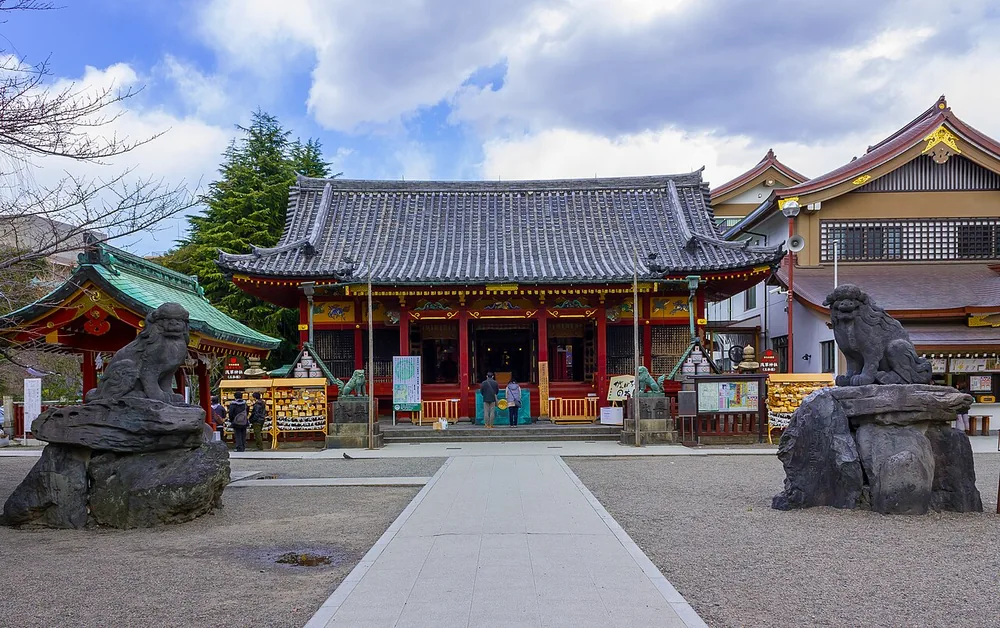
Shrine worship follows two bows, two claps, and one bow. The shrine lists goshuin for Asakusa Shrine, Ebisu of the Asakusa Seven Lucky Gods, and Hikan Inari Shrine, generally ¥500 each. Pray first, then tell the counter which you want. Daikokuten’s goshuin is issued at Sensoji’s Yogodo Hall; Ebisu’s is at Asakusa Shrine.
The shrine’s published office hours are 9:00 a.m.–4:00 p.m. on weekdays and 9:00 a.m.–4:30 p.m. on weekends and national holidays. Goshuin reception may change with the day’s crowds. Each person may leave one book and receive one of each type. For goshuin at both sites, use the earlier part of the day. Those who only want the grounds and architecture need not add counter waiting to the whole group’s standing time.
New Year, the Sanja Matsuri, and Natsumode may bring limited-period goshuin; follow the current shrine notice. Without a specific collecting goal, an ordinary visit and regular goshuin are sufficient. Leave other time for lunch or the river to make the half day more relaxed.
The tourist information center opposite Kaminarimon: orientation or a rest stop
The Asakusa Culture Tourist Information Center is across the street in front of Kaminarimon. After 9:00 a.m., use the free eighth-floor observation terrace to identify the broad alignment of Kaminarimon, Nakamise, the Main Hall, and the river from above before starting the walk. If you have worshiped already, visit afterward on the way toward Azuma Bridge.
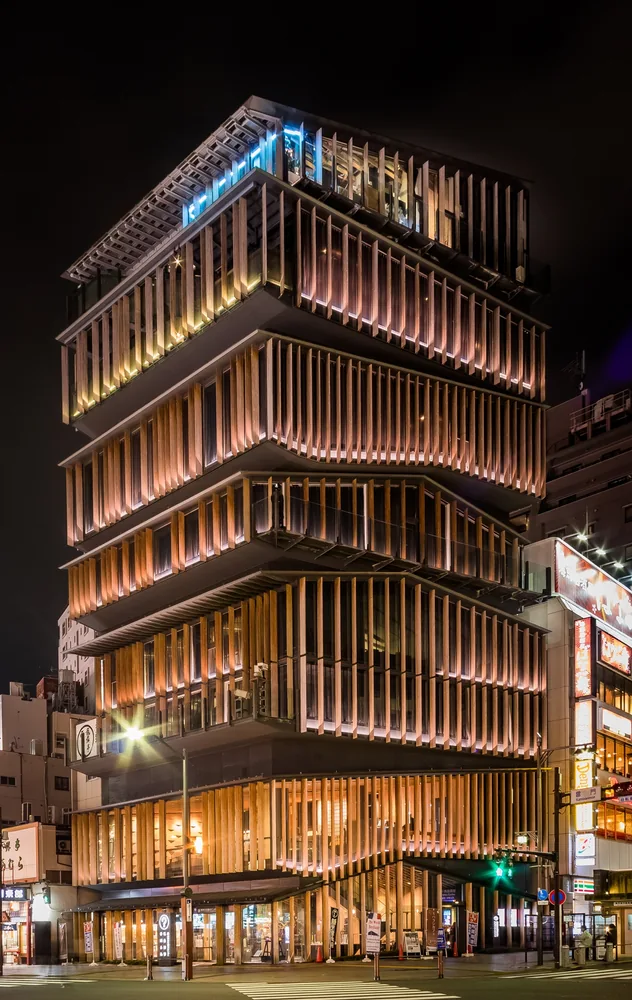
First-floor tourist information runs 9:00 a.m.–8:00 p.m., with Japanese, English, Chinese, and Korean service. The eighth-floor terrace stays open until 10:00 p.m. Facilities differ by floor: the second floor has a nursing room with a formula water heater and diaper-changing bed; the first-floor accessible toilet has ostomy facilities and an adult changing bed. Families and those needing these facilities can include the center on arrival or before leaving Asakusa rather than searching only after becoming tired.
The sixth-floor multipurpose space has seats and normally permits rest and boxed meals; events may suspend its use for rest and eating. If planning a simple lunch there, check that day’s use before buying takeout. The free eighth-floor terrace is separate from the paid cafe seating, so no order is needed simply to see the view.
Visit the eighth-floor terrace before 10:00 p.m. Complete tourist inquiries and use of the second-floor childcare facilities before 8:00 p.m.
Put lunch along your exit route, and leave Nakamise snacks for spare time
Before lunch after the Main Hall, decide whether the afternoon leads east to the river or west to the kitchenware district. Heading east, find a restaurant with seats near Kaminarimon, Tobu Station, or the river. Heading west, eat along the western shopping streets instead of crossing Nakamise again for one snack. Choose tempura rice bowls, soba, set meals, or sukiyaki to suit your appetite. The purpose is a meal where you actually sit and rest.
With older adults or children, prioritize seating and clear menus and prices. If the queue exceeds what everyone is willing to wait, choose another place nearby.
Check restaurant hours separately from small shops. An open Nakamise snack shop does not mean nearby restaurants serve meals all afternoon. If you leave the Main Hall after 1:00 p.m., find somewhere still serving before taking more photographs. Put reserved meals into the itinerary and adjust free walks around them to preserve a full meal break.
Buy souvenirs after worship. For food, check storage, expiration dates, and whether it can tolerate the rest of the day outdoors. If continuing along the river or boarding a boat, leave melt-prone or refrigerated items until last. For comparisons among dining districts, read Tokyo food neighborhoods and dining choices and plan full meals separately from snacks on this temple approach.
The eastern half day: Azuma Bridge and one bank of Sumida Park
After visiting the temple, return east to the river for Sumida River and Tokyo Skytree views near Azuma Bridge. To keep the half day in Asakusa, walk through Sumida Park on the Taito bank. Water, shade, and the skyline replace the dense shopping streets. Turn back when you wish; there is no need to cross a bridge just to make a loop.
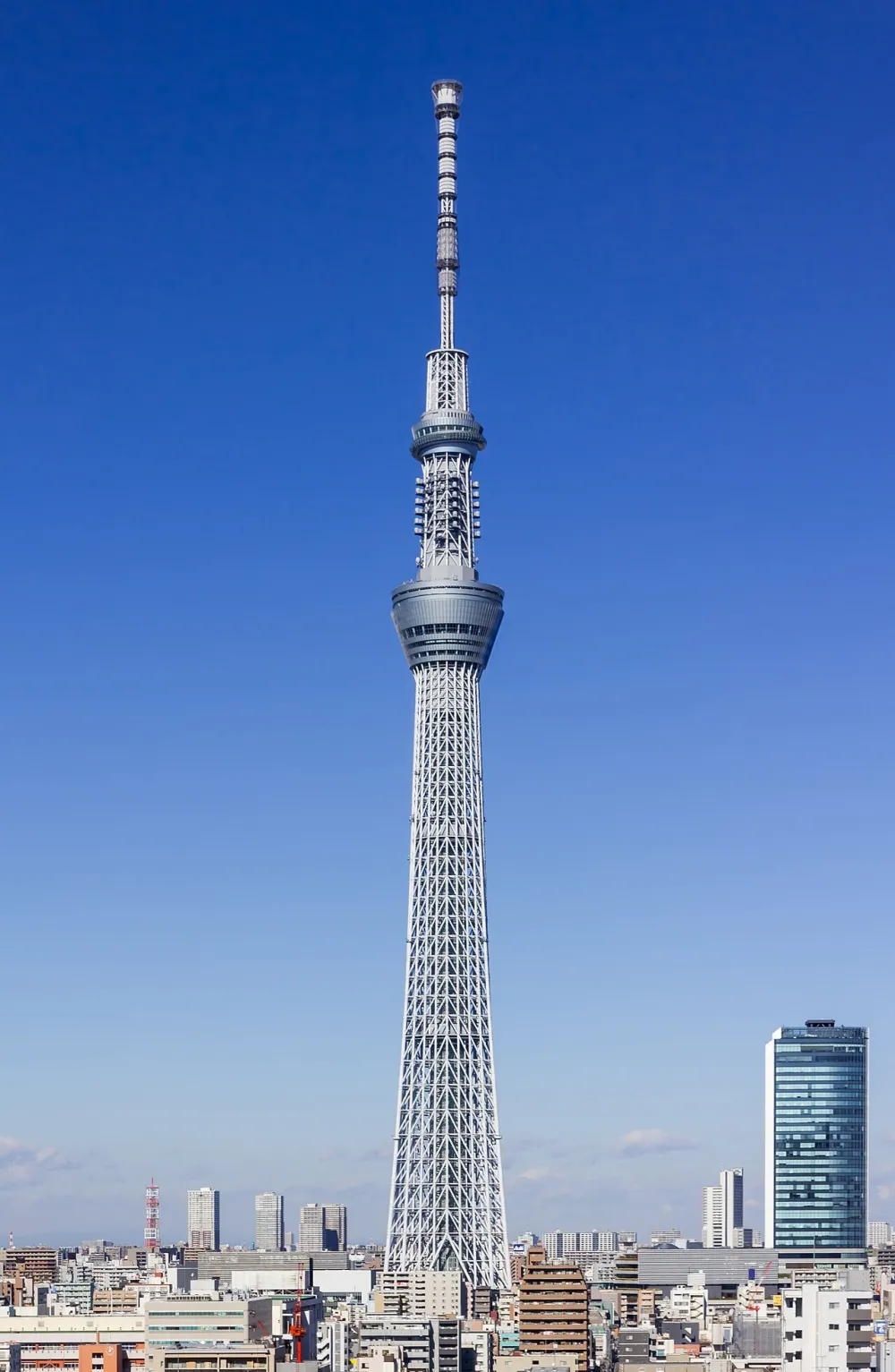

For a short outing, see the view near Azuma Bridge, then return to the Tobu, Ginza Line, or Toei station. For more walking, continue north along the same bank, keeping your final station as the direction for the return.
Sumida Park is known for spring cherry blossoms. About a kilometer of flowering scenery on both banks between Azuma Bridge and Sakura Bridge deserves dedicated viewing time. If Sensoji is this trip’s focus, choose a short river section near Asakusa. If blossoms are the focus, put the park in the morning and keep the temple to worship and a meal. Reordering these two different activities allows more time than rushing through both.
If seeing Skytree makes you want to go there, first decide whether you want only the shopping complex below or have a timed observation-deck ticket. With a reservation, shorten the river walk’s turnaround point toward the station and allow separately for the final train or walking connection. Cross the river for a longer walk only if your time is flexible. In wind or rain, return to the streets for food; the river stop can be brief.
The western half day: Kappabashi for people who want tableware
For bowls, plates, kitchen tools, or food replicas, give the afternoon to Kappabashi Dougu Street. It is west of the temple, so continuing west after worship, Yogodo Hall, and lunch makes more sense than visiting the river first and doubling back. Allow separately for the walk from the temple, browsing, and wrapping purchases, then choose a convenient return station.
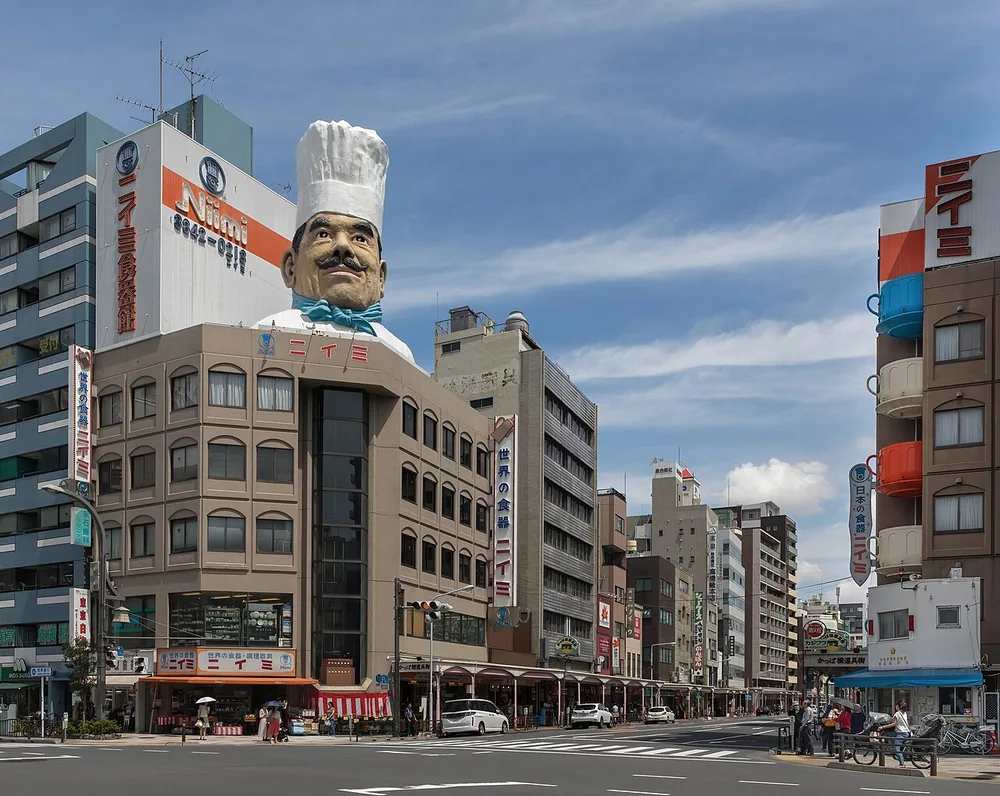
The shopping street association says almost all shops welcome ordinary retail customers, but about 70 percent close on Sundays and national holidays. For comparing professional tools or several tableware shops, prioritize daytime on a weekday or Saturday. If Sunday is your only option, choose shops from the official Sunday-and-holiday opening list before selecting a stretch. The street is not a mall where all stores open together every day.
Browsing here differs from Nakamise. Nakamise suits small snacks and souvenirs; Kappabashi may involve picking up tableware, comparing dimensions, and asking about packaging. Decide what size you need at home and how much weight you can carry back. If some companions do not want kitchenware, agree on a meeting time instead of asking everyone to compare store after store.
Once cups, plates, and replicas are bought, begin the return. Leave heavy purchases until the end of the day and choose a restaurant along the route afterward. If you have already stood for a long morning, shorten the visit to a few chosen shops. This branch suits purposeful shopping; for open views or children who need room to move, choose the Sumida River.
If taking a water bus, make the boat your main afternoon connection
To leave Asakusa by water, check Tokyo Cruise’s Asakusa pier at 1-1-1 Hanakawado, near Azuma Bridge and Tobu Station. Its Asakusa route page lists destinations including Hinode Pier, the Hama-rikyu disembarkation point, and Odaiba Seaside Park. Check the actual destination, operating date, and departure before deciding where to spend the afternoon. Tokyo Cruise is cashless: on-site payment uses credit cards, electronic money, or mobile payment; ordinary online bookings accept only credit cards or WeChat Pay. Prepare a supported payment method for on-site tickets.
A boat works well as a replacement for one afternoon land connection: worship in the morning, lunch, check in at the pier, then sail to the next neighborhood. Kappabashi is easier on another day if you want both. Once “take a boat” becomes a particular departure, shorten Nakamise and the river walk accordingly rather than continuing north just before your booking.
For regular scheduled services, cancellation fees are calculated from the sailing date: free seven days or more before, 10 percent six to two days before, 30 percent from the previous day until departure, and 100 percent after departure. Groups of 15 or more have separate rules. Reducing passenger numbers also incurs cancellation fees. Wheelchair boarding depends on tides and ramp angles; unsafe weather or sea conditions can suspend sailings. Read these conditions alongside the schedule. Travelers wanting flexibility can keep a river walk as that day’s alternative.
If booking and payment are complete but no email arrives, save the completion screen and do not buy again. The operator says staff can check using the booking time and name on site. Plan your next connection from the actual disembarkation point. With a one-way boat ticket, connect luggage, dinner, and accommodation to that bank rather than returning to Asakusa just to collect belongings.
Build a workable three-to-four-hour visit, then add one afternoon branch
For a first visit arriving around 10:00 a.m., walk through Kaminarimon and Nakamise, see the Nio guardians and sandals at Hozomon, then worship in the Main Hall. Continue to Yogodo if you want a goshuin, decide whether to add Asakusa Shrine, then sit down for lunch. This puts the temple first and fits shopping into remaining time. By around noon, you can judge how much energy remains for the afternoon.
After worship, split if useful: goshuin visitors go to Yogodo, shoppers to Nakamise or the western stores, then meet at the lunch restaurant’s full address. Avoid meeting at the incense burner, Main Hall steps, or directly beneath Kaminarimon’s lantern.
Choose the river, Kappabashi, or a water bus for the afternoon. The river is easiest to shorten: turn back toward the station when tired. Kappabashi needs shop opening and purchase time and suits serious browsing. A boat requires a fixed departure around which all earlier activities fit. To do all three, split them into two half days, leaving your accommodation with lighter bags on one of them.
With only 90 minutes, reach Kaminarimon from your nearest station, follow the main approach to the Main Hall, decide on a goshuin according to the time, then head directly toward your return station. The short version removes meals and branches while retaining the full worship approach. Returning visitors can enter from the west, worship first, then continue to Yogodo, Asakusa Shrine, and the river. Save Kaminarimon for another route entering or leaving to the south.
New Year, summer, and year-end: events change the focus
On Kannon’s monthly eighteenth-day observance, at New Year, and during major festivals, faith and events again become the grounds’ main purpose. If you want the crowds and activity, treat waiting, services, and markets as part of the day and reduce fixed-time stops afterward. For architectural details, an ordinary morning makes lingering easier. Stroller families may especially prefer the short version on busy days, deciding whether to extend only after a seated meal.
Shiman Rokusen-nichi and the Hozuki Market on July 9 and 10 are Sensoji summer events. Goshuin uses special hours on these dates, so do not plan directly from the usual 8:00 a.m.–4:30 p.m. schedule. Keep the temple’s annual event notice as the page to read before leaving. In heat, visit the Main Hall and goshuin counter in the morning, eat indoors at midday, and move river walking to a time when you are comfortable outdoors.
Taito City has announced the 2026 Hagoita Market for December 17–19 in Sensoji’s grounds, from 9:00 a.m. to 7:30 p.m., closing at 7:00 p.m. on the final day. For decorative hagoita paddles, browse in the afternoon and combine it with worship before the Main Hall closes. If you also want a Yogodo goshuin, obtain it before the market. Market hours, goshuin service, and the Main Hall end separately; choose an arrival time for the activity you actually want.
Nightly illumination runs from sunset until about 11:00 p.m., lighting the Main Hall, five-story pagoda, Hozomon, and Kaminarimon. A short approach walk after dinner shows the eaves and gate outlines at night. After the Main Hall’s 5:00 p.m. closing, the night route focuses on outdoor architecture. If you also want the information center’s elevated view, finish its terrace before 10:00 p.m., then leave toward your station.
In rain or when children tire, finish in the streets near food and stations
In rain, keep a short Kaminarimon-to-Main-Hall visit and replace the river with the tourist information center and a seated meal. Nakamise is an outdoor approach, with people moving in and out beneath shop eaves. Keep umbrella tips and backpacks close, and move beside the passage before stopping for photos. Slow down on wet Main Hall steps; elevator users should keep their planned step-free route.
When children tire or a companion’s knees hurt, choose the east or west side directly from the Main Hall and return to streets with food and stations. Once worship and desired goshuin are complete, a meal can be the last stop before returning. You do not need the northernmost river section or every purchase on a list. A rest where you can truly sit is more useful than standing at the next popular photo point.
Check which Asakusa station you need for the return. For Ueno or Ginza, look for the Ginza Line; for Nihombashi, Shimbashi, or Oshiage, the Toei Asakusa Line; Tobu and Tsukuba Express each have their own street entrances. Keep the line, station, and exit on your phone, pack your shopping, then enter. If staying nearby, save the lights for a brief walk after dinner and return to your room with fewer belongings during the day.
A few useful answers
What’s the best route for a half-day visit to Sensoji?
Allow three to four hours in the morning to start at Kaminarimon, walk through Nakamise and Hozomon to the main hall, pay your respects, and sit down for lunch. If you only have an hour, follow the same route and finish at the main hall.
When is the Sensoji main hall open, and what can you see at night?
The main hall normally opens at 6:00 a.m. and closes at 5:00 p.m. From October through March it opens at 6:30 a.m. The exteriors of Kaminarimon, Hozomon, the five-story pagoda, and the main hall are lit from sunset until around 11:00 p.m.
Where and when can you get a goshuin at Sensoji?
Goshuin are issued at Yogodo Hall, just west of the main hall and to your left as you face it. Pay your respects before you go. Hours are usually 8:00 a.m. to 4:30 p.m., with special hours over New Year and for Shiman Rokusennichi on July 9 and 10.
Which Asakusa Station exit should you use for Sensoji?
On the Tokyo Metro Ginza Line, take Exit 1 toward Kaminarimon. On the Toei Asakusa Line, use Exit A4. Tobu’s Asakusa Station is near the Sumida River, and the Tsukuba Express station is west of the temple.
Official information and references
Sources used in this guide.
- Sensoji: access and Main Hall hours
- Sensoji: halls and approach
- Sensoji: goshuin
- Sensoji: FAQs and accessible facilities
- Sensoji: Main Hall services and prayers
- Tokyo Metro: Asakusa Station facilities
- Tokyo Metro: new accessible route notice, May 2026
- Asakusa Shrine: goshuin and worship practice
- Taito City: Asakusa Culture Tourist Information Center floors
- Kappabashi Dougu Street: business days and retail sales
- Tokyo Cruise: Asakusa pier
- Tokyo Cruise: reservations, cancellations, and boarding conditions
- Taito City: 2026 Hagoita Market
- Sensoji: night illumination