Walk from Daimon Station through Zojoji Temple and Shiba Park to Tokyo Tower. Covers Main Hall hours, the Tokugawa Mausoleum, deck fares, photo angles, and late-2026 closures.
- Region & Focus
- Tokyo
- Reading Scope
- 22 min read · 10 chapters · 5 Q&As
- Official Verification
- 33 official sources checkedUpdated November 22, 2026
- Key Topics
- ItinerariesNeighborhoodsFirst trip
Chapter Route Map (tap any stop)
- Enter via Daimon Station, Leave on Another Line
- Inside Zojoji: Spot the Main Hall and Ankokuden
- Fit the Mausoleum and Treasures Gallery into Daytime Hours
- Separate Entrances for Foliage, Lawns, and the Ancient Mound
- How to Buy Tickets for Tokyo Tower's Two Decks
- Ground-Level Temple-and-Tower Angles and Lighting Schedules
- Rainy Days, Strollers, and Wheelchair Access
- Seasonal Stops Worth Extra Time
- 2-Hour, Half-Day, and Evening Pacing Options
- Where to Go Next and Which Side to Stay On
- Quick Q&A
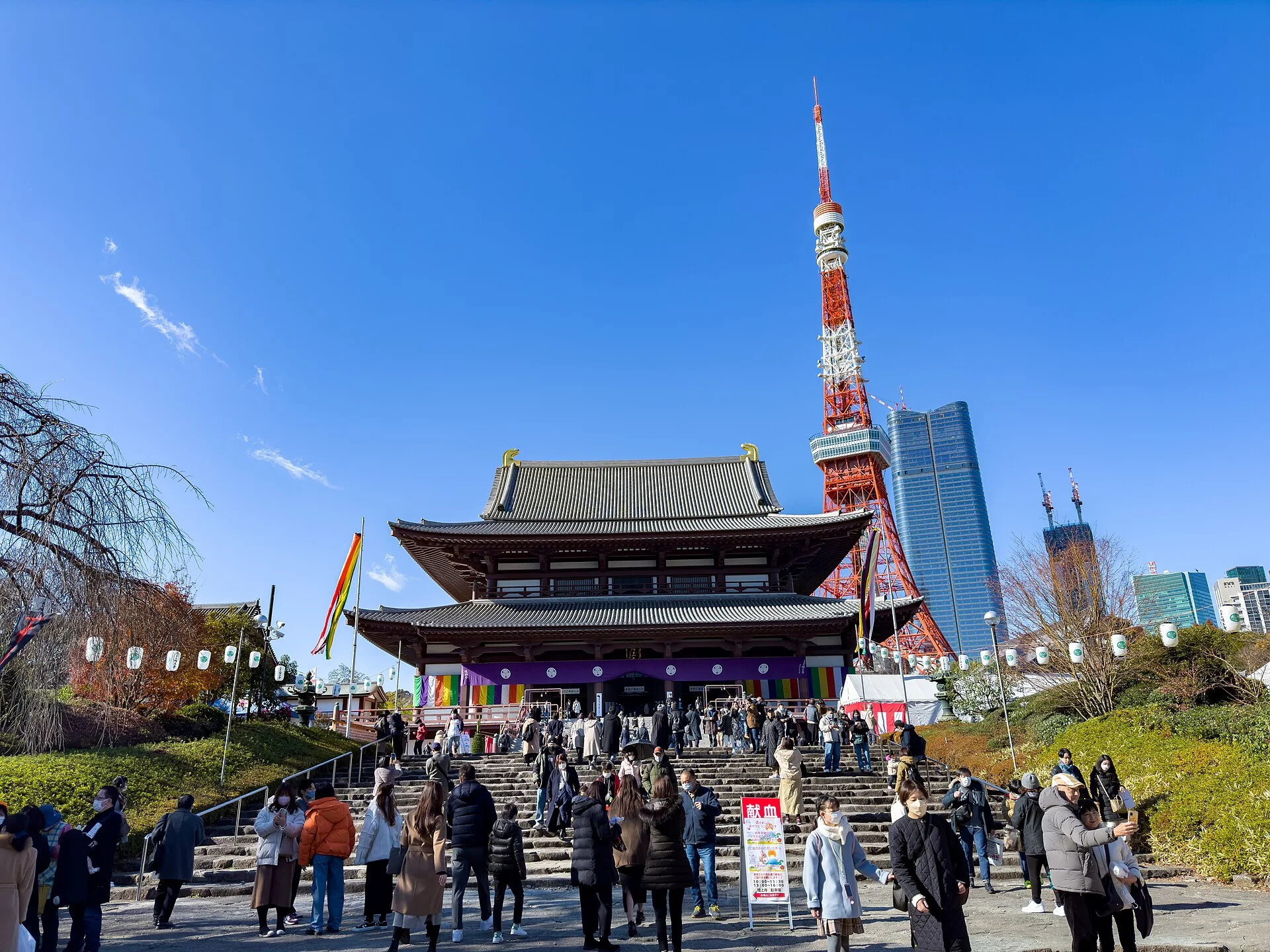
For a first visit to the Shiba Park area, exit Daimon Station at Exit A6 and follow Daimon-dori to Zojoji Temple, then continue through Shiba Park to Tokyo Tower. Leave via the Oedo or Hibiya lines nearby. Plan 3 to 4 hours to browse the temple grounds, stroll one section of the park, and ride up to the 150-meter Main Deck. To frame the Main Hall and the tower together, shoot from the bottom of Zojoji's stone steps. Note that the Tokugawa Shoguns' Mausoleum is closed for construction through December 1, 2026, and the Treasures Gallery closes from December 22 through 31.
Enter via Daimon Station, Leave on Another Line
The Toei Asakusa and Oedo lines share Daimon Station. Take Exit A6, which reopened in March 2026, and walk west along Daimon-dori past the street-spanning Daimon gate toward Hibiya-dori. Daimon is Zojoji's front gate, and just before the temple courtyard you will pass through the middle gate, Sangedatsumon. When using a map app, set your destination to "Zojoji" or "Zojoji Sangedatsumon" right as you exit so you do not confuse the station name, the roadside gate, and the actual temple entrance. Zojoji estimates a 5-minute walk from Daimon Station, while Tokyo Tower lists about 10 minutes from Exit A6.
Arriving on the Mita Line, use Onarimon Station Exit A1 and walk south down Hibiya-dori past the Tokyo Prince Hotel to reach the temple. Exit A1 also leads straight to the base of Tokyo Tower in about 6 minutes, according to tower estimates. If you want to start on the Shiba Park lawn, get off one stop further at Shibakoen Station and take Exit A4 toward Minato City Shiba Park before walking up Hibiya-dori to the temple. Shibakoen Station's street-level elevator is at Exit A3, so follow elevator signs if you have a stroller or wheelchair and cross at street level. Temple estimates put the walk from both Onarimon and Shibakoen at about 3 minutes, though you should buffer extra time for map checks and traffic lights.
Akabanebashi and Kamiyacho work best for the trip back. On a map, Akabanebashi sits just south of the tower; it is roughly a 5-minute walk from the Oedo Line's Akabanebashi Exit to the base, crossing a major intersection and climbing a short slope. Kamiyacho Station Exit 1 is about a 7-minute walk along Sakurada-dori. Head toward Kamiyacho if you plan to browse Azabudai Hills afterward, or return to Akabanebashi to catch the Oedo Line toward Roppongi at night. To walk directly from Zojoji to the tower, head briefly toward Onarimon along Hibiya-dori, then turn left into the tree-lined lane marked with Jizo statues on the tower's walking map. That lane meets a main avenue—cross the crosswalk and you are nearly at the base.
Coming from JR Hamamatsucho Station's North Exit, walk through the Daimon area along the street; Zojoji lists a 10-minute walk and Tokyo Tower lists 15 minutes. Hamamatsucho's JR and Tokyo Monorail platforms sit right next to Daimon's Toei subway lines, making it easy to link them on foot at street level. If you are riding JR from Ueno, Tokyo Station, or Shinagawa, simply walk straight up Daimon-dori from Hamamatsucho instead of transferring to the subway just to shave off a few blocks. If you are meeting friends coming from unfamiliar stations, meet at the bottom of the Main Hall's stone steps rather than at a subway exit or the construction walkway in front of the gate.
| Station | Street Exit | Best Route Fit |
|---|---|---|
| Daimon Station | Exit A6 | Walk Daimon-dori to Zojoji's front approach, then continue to the tower |
| Onarimon Station | Exit A1 | Mita Line arrival; head to the temple first or straight to the tower |
| Shibakoen Station | Exit A4 (Elevator at A3) | Start on the Minato City Shiba Park lawn, then walk to Zojoji |
| Akabanebashi Station | Akabanebashi Exit | Finish at the tower and catch the Oedo Line toward Roppongi |
| Kamiyacho Station | Exit 1 | Walk straight to the tower, or catch the Hibiya Line afterward |
| JR Hamamatsucho Station | North Exit | Arrive by JR and walk straight up Daimon-dori to the temple |
Walk from Daimon Station through Zojoji Temple and Shiba Park to Tokyo Tower. Covers Main Hall hours, the Tokugawa Mausoleum, deck fares, photo angles, and late-2026 closures.
Inside Zojoji: Spot the Main Hall and Ankokuden
Zojoji is the head temple of the Jodo sect of Pure Land Buddhism and served as the family temple of the Tokugawa shoguns. The temple relocated to Shiba in 1598, though the Main Hall (Daiden) at the top of the stone steps is a 1974 postwar reconstruction housing a seated statue of Amida Buddha. The Main Hall opens from 6:00 AM to 5:30 PM, with the entrance directly at the top of the steps. Visitors who only want to pay respects and see the temple rooflines against the tower can arrive early and walk right in without waiting for the museum or ticketed areas to open. If a Buddhist service is underway, wait outside until the worship path clears.
Look to the right of the Main Hall to find Ankokuden, the temple's prayer hall. Weekday hours are listed as 9:00 AM to 5:00 PM, during which temple stamps (goshuin) and amulets are also distributed at Ankokuden. This is the hall to visit for the "Kurohonzon" (Black Honzon), a hidden Buddhist image revered by Tokugawa Ieyasu that is only unveiled on specific dates; on regular days, an open-display standing Amida statue sits before the altar. Ankokuden's stamp desk is not open during the Main Hall's early morning hours, so if you want a goshuin without climbing the tower, start your visit at 9:00 AM to cover both halls in one sweep.
Let worshippers climb the stone steps in front of the Main Hall while you frame photos from the courtyard below, then head over to Ankokuden. Nearby, rows of small Jizo statues wearing red knitted caps make up the "Sentai Kosodate Jizo" (Thousand Child-Rearing Jizo), tied to Nishimuki Kannon devotion and prayers for children's safety. Walk along the path past them, and on days when the mausoleum is closed, stop by the Himalayan cedar marked as the "Grant Pine." Temple records note that U.S. President Ulysses S. Grant planted it here during his 1879 visit to Japan.
Give yourself extra time at the front entrance for restoration work on the Sangedatsumon gate. According to the temple's June 2026 progress update, repairs are scheduled to finish in fall 2032. Scaffolding currently shrouds the gate, and visitors enter from Hibiya-dori through a narrow temporary walkway underneath. Pass all the way through the passage before stopping to take photos. Wheelchair users can reach the Main Hall via a temple elevator, and loaner wheelchairs are available on request from temple staff.
Fit the Mausoleum and Treasures Gallery into Daytime Hours
The Tokugawa Shoguns' Mausoleum opens from 11:00 AM to 3:00 PM on weekdays (last entry 2:45 PM) and from 10:00 AM to 4:00 PM on weekends and national holidays (last entry 3:45 PM). It closes on Tuesdays unless a national holiday falls on a Tuesday. Adult admission is ¥500, and high school students and younger enter free; buy tickets at the booth in front of the mausoleum. From October 27 through December 1, 2026, the mausoleum is closed to general visitors for ticket booth renovations. During that closure, pair the Main Hall with the Treasures Gallery to explore the Tokugawa connection.
Six shoguns are buried here—the 2nd (Hidetada), 6th (Ienobu), 7th (Ietsugu), 9th (Ieshige), 12th (Ieyoshi), and 14th (Iemochi)—alongside official wives, concubines, and other family members. Once inside, take note of their eras and family pairings: the 14th shogun Iemochi and his wife, Imperial Princess Kazu-no-miya, have matching tomb pagodas set side by side, his carved in stone and hers cast in bronze with imperial chrysanthemum crests. Most of the original mausoleum buildings burned down in the 1945 air raids, so the surviving stone monuments outside and the architectural model downstairs offer two complementary views—one of the consolidated postwar burial ground, and one of the lost Edo-period complex.
The Treasures Gallery sits on the B1 floor beneath the Main Hall and keeps the same opening hours, last-entry cutoffs, and Tuesday closure (open on holidays) as the mausoleum. Admission is ¥700 for adults, ¥300 for junior high and high school students, and free for elementary school children and younger. When both sites are open, buying separate adult tickets totals ¥1,200, while a combo ticket costs ¥1,000. Because high schoolers and younger enter the mausoleum free, families with middle or high school students should buy the adult combo ticket plus student gallery tickets. If you only have half an hour left, pick just one ticket based on what you want to see.
Inside the gallery, a large-scale model of the Taitokuin Mausoleum recreates Hidetada's lavish memorial complex, originally built by the third shogun Iemitsu on the southern side of the temple grounds. Study the model from the outer gatehouses inward to see how successive gates divided the courtyards; when you step back outside and check the temple map, it becomes much easier to tell the current burial plot apart from the historic mausoleum footprint. The gallery also rotates works such as the Five Hundred Arhats paintings and Zojoji's Three Editions of the Buddhist Canon. An October 2026 temple notice lists scrolls 71 through 80 of the Five Hundred Arhats alongside the *Life of Vasubandhu* and *Continued Biographies of Eminent Monks* from the canon collection.
Another closure to plan around is December 22 through 31, 2026, when the Treasures Gallery closes for ten days before launching its next permanent exhibition on January 1, 2027. At year-end, closure dates dictate your itinerary order; on regular days, last-entry cutoffs are the main constraint. If you finish lunch near 2:00 PM on a weekday, pick either the mausoleum or the gallery right away. To see both comfortably, arrive before lunch on a weekday, or take advantage of the extra hour on weekends to linger in the gallery.
Separate Entrances for Foliage, Lawns, and the Ancient Mound
Zojoji sits wedged between several distinct park parcels. Designated in 1873, Shiba Park originally encompassed the temple grounds; after the war, the temple land was separated, leaving the Tokyo Metropolitan Park Association's Shiba Park broken into numbered zones wrapping the temple walls. Meanwhile, Minato City Shiba Park is a separate municipal park near Shiba Toshogu Shrine at 4-8-4 Shibakoen. If you only have 20 or 30 minutes, enter a specific park name into your map app rather than searching generically for "Shiba Park"—especially if you want the grassy lawn with clear tower views.
Step out of Zojoji's front gate and turn toward Shibakoen Station to follow Hibiya-dori down to Minato City Shiba Park and Shiba Toshogu Shrine. At the center of the municipal park lies a 5,100-square-meter lawn that park managers specifically highlight as a tower viewpoint. For family photos with Tokyo Tower behind you, find an open spot on or around this lawn so you are not blocking foot traffic on the temple steps. The park also has a small slide play area for children ages 3 to 12. If adults grab takeout lunch and kids need an unhurried break without waiting in line, this stop works far better than squeezing in another ticketed attraction. When the grass is wet, loop the paved perimeter path before moving on.
With an extra half hour, continue from Shiba Toshogu Shrine to the Shiba Maruyama Kofun burial mound inside Tokyo Metropolitan Shiba Park. Shiba Toshogu enshrines Tokugawa Ieyasu, and its approach features a ginkgo tree said in temple guides to have been planted by the third shogun Iemitsu. The 110-meter keyhole-shaped kofun is a Tokyo Metropolitan Historic Site perched atop a natural rise. Walking from Shibakoen Station across the lawn, through the shrine, and up to the mound reveals how sharply the terrain shifts. Visitors with strollers or anyone avoiding slopes can stick to the flat lawn and Hibiya-dori, saving higher elevations for Tokyo Tower.
For autumn maple leaves, head to Zone 19 of Tokyo Metropolitan Shiba Park near the tower, labeled "Momiji Valley" on maps. Park guides describe it as a landscaped ravine of rocks, trees, and artificial waterfalls where you can trace red maples along the path in fall. Ginkgo fans and maple chasers have different stops, so pick between golden canopies at the shrine or red leaves in the ravine. After dark, stay by the open lawn or main streets to watch the tower light up, and keep the ravine walk for daylight when steps and drop-offs are easy to see. While the open park grounds stay accessible 24 hours, the service center and staffed facilities follow year-end and New Year holiday closures.
How to Buy Tickets for Tokyo Tower's Two Decks
The 150-meter Main Deck is the simplest ticket for a first visit: ¥1,500 for adults, ¥1,200 for high school students, ¥900 for elementary and junior high students, and ¥600 for children age 4 and up. Regular hours run from 9:00 AM to 11:00 PM with last entry at 10:30 PM, though queues can close earlier during peak crowds. You can book online ahead of time or buy general tickets at FootTown 1F beneath the tower. From the Main Deck's 360-degree windows, look down to spot Zojoji's roofs and the separate green pockets of Shiba Park—an easy way to see why each park parcel has its own street entrance.
The 250-meter Top Deck requires a reserved Top Deck Tour ticket, which includes Main Deck admission. Adult tickets cost ¥3,300 online or ¥3,500 on-site, with a ¥200 surcharge on every age tier at the ticket counter. Tours depart in 15-minute entry windows from 9:00–9:15 AM through 10:00–10:15 PM, with Top Deck viewing open until 10:45 PM. Take the elevator from FootTown 1F up to the Main Deck, then check in at the Top Deck Gate on Main Deck 2F. You may enter the Main Deck ahead of your slot, but leaving the tower ends your admission.
If you book a sunset slot, build buffer time for the temple and meals before your check-in window. Official rules state that late arrivals forfeit their Top Deck reservation with no refund, though you can still visit the Main Deck that same day. To change dates after purchase, you must cancel and rebook; guest-initiated cancellations incur a 100% fee starting two days before the visit date. If the tower suspends tours due to high winds, snow, or safety inspections, online bookings receive full refunds through the original sales platform, while on-site buyers claim refunds at the counter with their ticket, receipt, and original credit card if paid by card. If your group disagrees about going up in the rain, settle whether you truly need the 250-meter level before booking.
Want to see the Main Deck by day and again after dark? Compare the ¥2,700 adult 1DAY Pass. Sold at FootTown counters between 9:00 AM and 7:30 PM (unavailable on select blackout dates), it allows same-day re-entry to the Main Deck with a hand stamp. Two separate single tickets cost ¥3,000, so the pass only pays off if you are certain you will visit in daylight and come back after dinner. If you plan to go up in the late afternoon and wait for nightfall—or head elsewhere after dinner—a single Main Deck ticket is enough. For a longer stay, the official Tokyo Diamond Tour covers both decks plus lounge access for ¥7,000 per adult, departing hourly from 12:00 PM to 6:00 PM.
| Ticket Type | Adult | High School | Elem. / Jr. High | Ages 4+ |
|---|---|---|---|---|
| Main Deck | ¥1,500 | ¥1,200 | ¥900 | ¥600 |
| Top Deck Tour (Online) | ¥3,300 | ¥3,100 | ¥2,100 | ¥1,500 |
| Top Deck Tour (On-site) | ¥3,500 | ¥3,300 | ¥2,300 | ¥1,700 |
| Tokyo Diamond Tour | ¥7,000 | ¥6,500 | ¥4,700 | ¥3,300 |
Ground-Level Temple-and-Tower Angles and Lighting Schedules
Two distinct ground-level compositions stand out. To capture Zojoji's tile roofs alongside the spire, stand at the base of the Main Hall's stone steps looking toward the hall; Tokyo Tower rises right behind the eaves on the right. Stepping closer to the stairs makes the temple fill the frame, while backing up into the courtyard gives you enough sky to keep the spire tip uncropped. For a fuller view of the tower's red-and-white lattice, move over to the Minato City Shiba Park lawn, where green grass leads straight up to the tower. The Akabanebashi intersection offers a third urban angle from the sidewalk, lining up city streets and headlights straight toward the lit frame.
To see the Main Hall and Ankokuden in crisp daylight, visit Zojoji in the early afternoon, snap your temple-and-tower shots, grab a bite in FootTown, and step back outside once the tower lights switch on. As natural light fades, the dark temple roofs lose detail faster than the illuminated tower and sky, so shoot roof tiles before dusk. If you only have the evening free, exit directly at Akabanebashi to watch the lit tower as you walk uphill, then decide whether to buy an observation ticket.
Check Tokyo Tower's official illumination calendar before planning ground-level night photos. The tower alternates between its classic Landmark Light—warm orange in winter, crisp white in summer—and the color-changing Infinity Diamond Veil, along with special event lightings on select dates. Look up exact start and end times for any limited-edition colors before sitting down to dinner so you do not miss the display while inside a restaurant. If you hold a timed Top Deck reservation, schedule your street-level photo walk either before going up or after coming back down.
Inside the decks, you are shooting city lights through glass. Turn off your flash, press close to a window angled away from bright interior fixtures, and look down toward the street grid to keep window glare from washing out distant buildings. Top Deck rules prohibit tripods entirely. If you want to set up a tripod at ground level in Shiba Park, check the Tokyo Metropolitan Park Association's photography rules, as certain setups require an occupancy permit. Casual smartphone shots work cleanly from the open courtyard in front of the Main Hall—just keep temple gate passages and parking stairways clear for foot traffic.
Rainy Days, Strollers, and Wheelchair Access
During passing showers, start from Daimon at Zojoji, head down into the Treasures Gallery once it opens, and then shift over to FootTown at the base of Tokyo Tower. The underground gallery offers indoor exhibits unaffected by poor visibility, and FootTown 2F houses a food court and shops where companions can set a meeting floor before splitting up. You will still walk outdoors between the temple and the tower; when uphill paths turn slick, stick to paved city streets rather than park trails. Low clouds can swallow the view from the decks—if you have not bought tickets yet, spend that hour over a meal and hop on the Oedo or Hibiya line toward your next stop.
The Open-Air Outdoor Stairs climb roughly 600 steps from FootTown's roof to the Main Deck. Ascents generally run only on weekends and national holidays from 9:00 AM to 4:00 PM, while descents are open daily from 9:00 AM to 8:00 PM. Regular deck admission still applies, and the stairs close during rain, severe weather, or heatstroke alerts. Once you start climbing, there is no mid-route elevator transfer, though you can ride the elevator back down from the Main Deck. If part of your group takes the stairs while someone pushes a stroller, arrange to meet up on the Main Deck; anyone with a Top Deck reservation must finish the climb well before check-in.
Wheelchair users have step-free elevator access from Tokyo Tower's entrance to the Main Deck. Elevators arrive on Main Deck 2F; ask tower staff to guide you if you need to reach 1F. The Top Deck uses a smaller elevator and tighter corridors: official guidelines cap wheelchair dimensions at 70 × 120 cm, require an accompanying assistant, and allow only one wheelchair per tour group. If two wheelchair users want to sightsee together, stick to the Main Deck. Zojoji's Main Hall also has an elevator, and between the temple and tower you should allow extra time along flat street sidewalks and opt for the level Shiba Park lawn if you want a quick park stop.
Parents with strollers can use the nursing room on FootTown 3F. The 1F information counter also lends in-house strollers free from 9:00 AM to 10:30 PM on a walk-up basis for children under age 4 and under 20 kg. Because the Top Deck Tour includes stairs, personal strollers must be left at the FootTown 1F service center, and bags with total dimensions (length + width + height) over 100 cm must also be checked. If a toddler falls asleep or part of your group wants to rest in turns, staying on the Main Deck avoids an extra check-in and transfer and makes it easy to skip the park lawn altogether.
Seasonal Stops Worth Extra Time
In spring, pad your daytime schedule to linger in Tokyo Metropolitan Shiba Park for cherry blossoms. The park's official flower calendar highlights spring sakura across multiple numbered zones marked on its map. To beat picnic crowds spreading onto the lawns, hit the blossoms and Zojoji's Main Hall in the morning before looking for lunch. If you visit in early April, check the temple's Gyoki-e memorial schedule: in 2027, services run from April 2 to 7, with an April 5 notice listing a procession at 1:30 PM and the main daytime service at 2:00 PM. Stay at the temple if you want to watch the procession, or time your gallery and tower visit to steer clear of the afternoon courtyard crowds.
In summer, keep your park walk focused on a single shaded area. Exit at Shibakoen Station for the tree cover near Shiba Toshogu Shrine, follow Hibiya-dori to Zojoji, and duck into an air-conditioned restaurant for lunch. Minato City Shiba Park also operates cooling mist zones. Save FootTown for the midday heat and cross the open lawn later in the afternoon once temperatures dip. In autumn, maples and ginkgos sit in separate corners; if you only want one, enter and exit from that same side rather than crossing the temple grounds twice.
Late winter brings a quieter morning route to Zone 1 of Shiba Park, famed for its "Ginsekai" plum grove, which held a reopening celebration on April 5, 2026 after renovations. Make the plum grove your main park stop in winter and check the park's weekly bloom updates beforehand. After sunset in colder months, shift rest breaks indoors to FootTown or the observation decks and keep outdoor lawn time brief for photos. If you reach Zojoji after dark on a winter afternoon, save the Treasures Gallery and Mausoleum for another daylight visit and walk straight up from Akabanebashi to see the lit tower.
To hear Zojoji's Joya no Kane New Year's Eve bells on December 31, 2026, plan on an earlier evening than at many temples. Per a November temple announcement, the New Year's Eve service begins at 9:30 PM, bell ringing starts at 9:45 PM, and the event wraps up around 11:00 PM. General bell-ringing tickets are scheduled for distribution starting at 9:00 AM on December 1 at the Zojoji Kaikan 2F temple office, so anyone hoping to strike the bell must pick up a ticket in advance. If you want to see Tokyo Tower that night too, go up the deck or dine near the base first, leaving plenty of time to walk back to the temple. For late-night transit and pairing other shrines or temples, see our Japan New Year's Eve and Joya no Kane guide.
2-Hour, Half-Day, and Evening Pacing Options
With only two hours, take the most direct route: enter via Daimon Exit A6, photograph and pay respects at the Main Hall steps, cut past one edge of the park or stick to the avenue to Tokyo Tower, and depart from Akabanebashi or Kamiyacho. Once you have the temple-and-tower shot from the courtyard, gauge the tower's ticket queue before deciding on the Main Deck. If going up would squeeze your next reservation, admire the tower from the Minato City Shiba Park lawn instead and leave via Shibakoen Station on the Mita Line. That keeps your schedule far more flexible ahead of a timed dinner or exhibition than pre-booking a fixed Top Deck window.
With four hours, you can move at an unhurried pace. To dive into Tokugawa history, time your arrival for the mausoleum and Treasures Gallery opening—11:00 AM to 12:30 PM on weekdays works well—then walk the park and head up the tower before or after lunch. On non-holiday Tuesdays, both the mausoleum and gallery are closed, so replace them with Shiba Toshogu Shrine and the Shiba Maruyama Kofun after visiting the Main Hall, finishing at ground level before choosing one observation deck. Anyone traveling specifically for the exhibits should reschedule for an open day.
For a night-view plan, meet at Daimon around 3:00 PM to photograph the temple roofs and tower in daylight. Adjust temple time to your group—if some want the gallery while others only want the courtyard, regroup outside the Main Hall. If you miss the gallery's last entry, visit Ankokuden instead before walking to the lawn or FootTown. Sunset shifts with the seasons: in winter, catch sunset from the deck and have dinner afterward; in summer, eat early and ride up after dark. For one last look at the illuminated tower on your way out, walk down toward Akabanebashi Station and turn around along the wide avenue.
Budgeting ahead is straightforward using adult fares. Visiting the Main Hall, open park zones, and ground-level viewpoints makes for a zero-ticket half-day. On open days, adding the Mausoleum-and-Gallery combo ticket plus the Main Deck totals ¥2,500 per adult; upgrading to an online Top Deck Tour brings ticket spending to ¥4,300 before meals and transit. If friends have mixed interest in observation decks, walk the temple, park lawn, and tower base together, then split up and reconvene at FootTown 1F or the 2F food court so only the people heading up need to buy tickets.
Where to Go Next and Which Side to Stay On
For a traditional garden stop, walk back down Daimon-dori to Hamamatsucho Station's North Exit to visit Kyu-Shiba-rikyu Gardens, just a 1-minute walk from the exit. Hours run from 9:00 AM to 5:00 PM (last entry 4:30 PM), admission is ¥150 for adults and ¥70 for seniors 65+, and the garden typically closes from December 29 through January 1. It pairs cleanly with a morning temple or park walk around its central pond. If you stay at the tower until nightfall, save the garden for another daytime outing and stick to Daimon for dinner or trains.
Heading to Ginza afterward? Pick your departure station based on where you finish. From Zojoji or Hamamatsucho, walk to Daimon and ride the Toei Asakusa Line straight to Higashi-Ginza via Shimbashi—convenient for the Kabukiza Theatre without backtracking. If you end at Tokyo Tower, follow the tower's walking signs to Kamiyacho Exit 1 and take the Hibiya Line directly to Ginza or Higashi-Ginza. If you are weaving shopping around dinner, check our Ginza street-by-street shopping guide to choose the best stop.
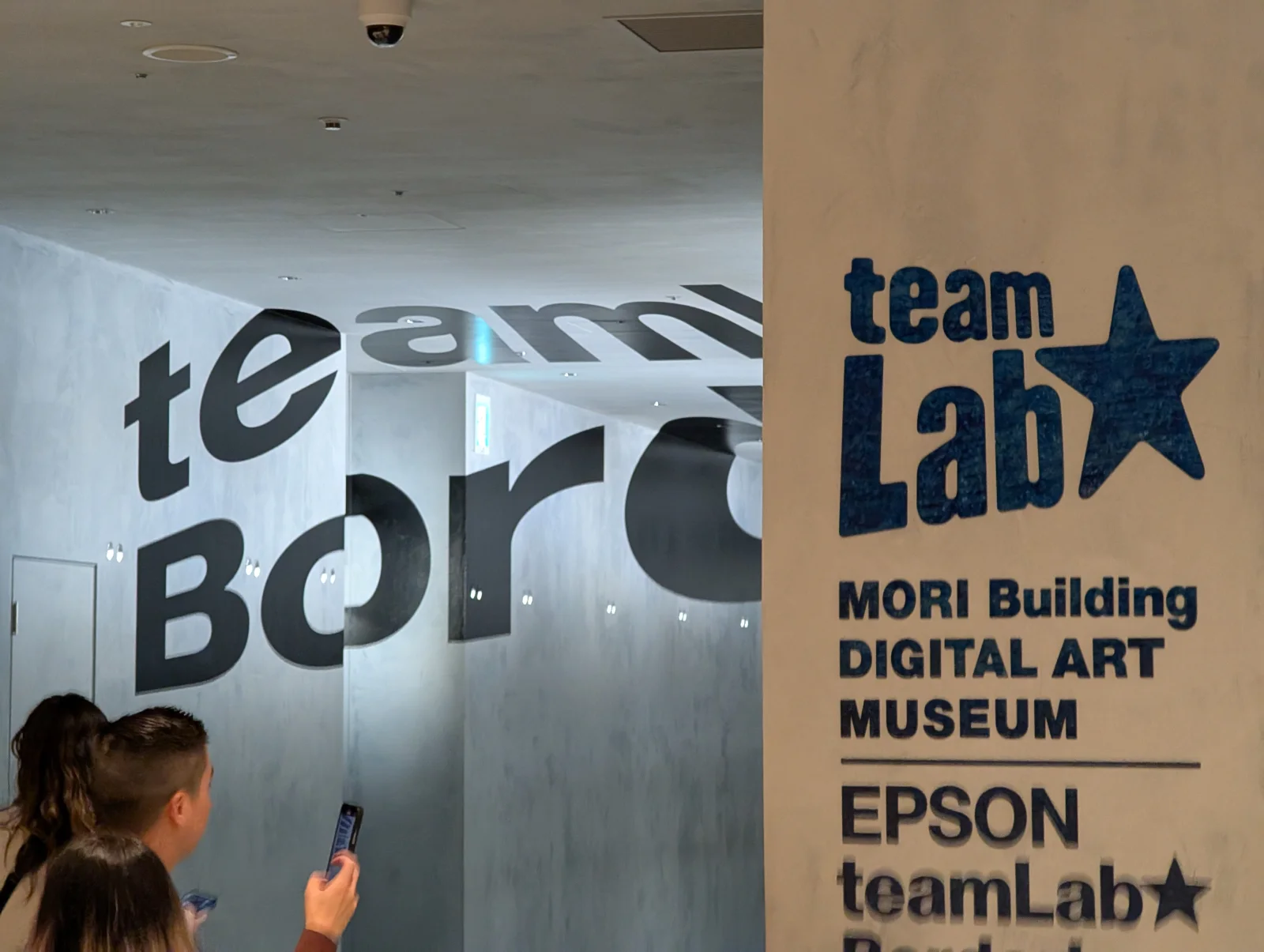
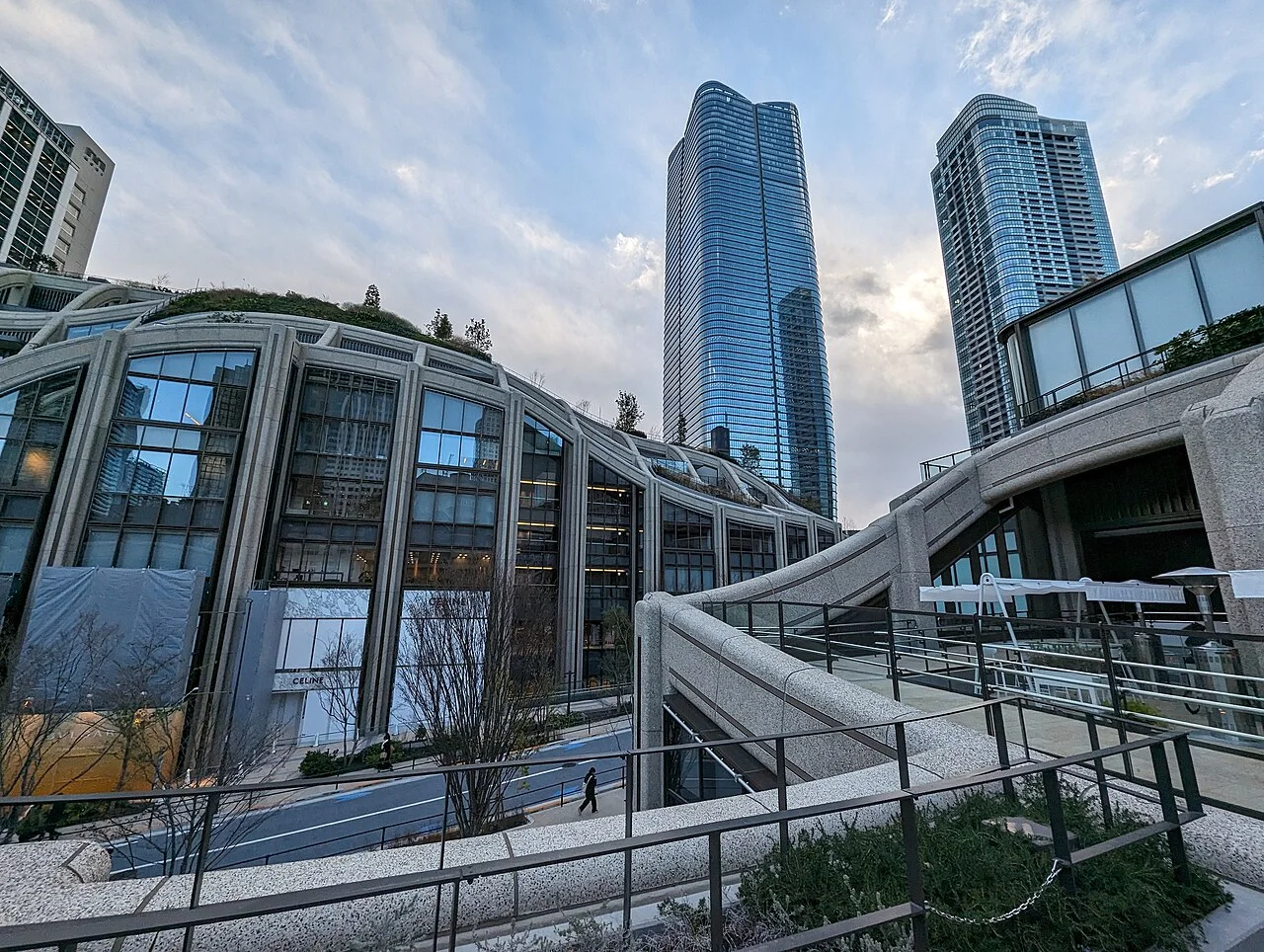
To stay in Minato Ward after leaving the tower, the Kamiyacho side connects smoothly to Azabudai Hills or a timed ticket at teamLab Borderless—just leave buffer time for the down elevator at the tower before walking over to the gallery entrance. If you want to pair another major temple, catch the Asakusa Line straight from Daimon to Asakusa using our Sensoji Temple visit route on another morning. Combining both in one day means prioritizing Zojoji's mausoleum and gallery hours first, then spending the rest of the day shopping and eating around Asakusa.
Staying in this neighborhood makes the most sense if you plan to walk to the tower more than once. On the north side, the Tokyo Prince Hotel lists walking routes from Onarimon (Mita Line), Daimon (Toei lines), and Hamamatsucho, putting you steps from the temple's north edge and daytime dining along Daimon-dori. On the south side, The Prince Park Tower Tokyo lists Shibakoen and Akabanebashi stations, which gives a smoother walk back from the Minato City Shiba Park lawn or late-night Oedo Line rides from Roppongi. Because the two hotel names sound alike, double-check the full English name and street address when booking or ordering a taxi. If Shiba Park is just one afternoon stop on a wider Tokyo trip, book near the main hubs that anchor the rest of your itinerary.
Flying out of Haneda Airport and hoping for one last walk? The Tokyo Monorail departs right beside JR Hamamatsucho Station. On a departure-morning stroll, leave bags at your hotel or in lockers near your return station and check your airport train time first. Daimon Station has coin lockers outside the B1 ticket gates near Exit A6, in mixed sizes with limited large compartments. With only a brief window before your flight, walk to Zojoji and retrace your steps back to Hamamatsucho; going all the way to Tokyo Tower adds extra time to loop back for luggage. To compare airport rail options, see our Tokyo airport-to-city transit comparison.
A few useful answers
Do I need a ticket to visit Zojoji Temple?
Entering the Main Hall and Ankokuden is free. The Tokugawa Shoguns' Mausoleum costs ¥500 for adults, the Treasures Gallery costs ¥700 for adults, and a combo ticket for both is ¥1,000.
Do I need to go up Tokyo Tower to photograph it with Zojoji?
No. Stand at the bottom of the Main Hall's stone steps to frame the temple eaves and tower together, or head to the Minato City Shiba Park lawn for a fuller view of the tower.
Are the Tokugawa Mausoleum and Treasures Gallery open on Tuesdays?
Both close on Tuesdays unless a Japanese national holiday falls on a Tuesday. Last entry is 2:45 PM on weekdays and 3:45 PM on weekends and holidays. Each site also has separate scheduled closures in late 2026.
Do I need advance reservations for the Tokyo Tower Main Deck?
No. You can buy general Main Deck tickets on-site at FootTown 1F or online in advance. Advance timed reservations are required for the 250-meter Top Deck Tour, which includes Main Deck entry.
What time is Zojoji's New Year's Eve bell ringing in 2026?
On December 31, 2026, the service begins at 9:30 PM, bell ringing starts at 9:45 PM, and the ceremony wraps up around 11:00 PM. General bell-ringing tickets are scheduled for handout starting at 9:00 AM on December 1 at the Zojoji Kaikan 2F office.
Official information and references
Sources used in this guide.
- Zojoji Temple | Main Hall, Ankokuden, Goshuin, and Wheelchair Access
- Zojoji Temple | Rail Access and Walking Times from Nearby Stations
- Zojoji Temple | Temple Grounds: Main Hall, Ankokuden, and Sangedatsumon
- Zojoji Temple | Temple History and Tokugawa Family Mausoleum
- Zojoji Temple | June 2026 Sangedatsumon Restoration Progress and Access
- Zojoji Temple | Tokugawa Shoguns' Mausoleum Hours, Fares, and Closure Notice
- Zojoji Temple | Treasures Gallery Fares, Hours, and Permanent Exhibition
- Zojoji Temple | Treasures Gallery Late-2026 Closure and 2027 Exhibition
- Zojoji Temple | 2026 New Year's Eve Bell Ringing Schedule Update
- Zojoji Temple | 2027 Gyoki-e Memorial Service Schedule
- Zojoji Temple | Walking Route from Shiba Toshogu Shrine to Tokyo Tower
- Tokyo Metropolitan Bureau of Transportation | Reopening of Daimon Station Exit A6 (2026)
- Tokyo Metropolitan Bureau of Transportation | Shibakoen Station Accessibility Map
- Tokyo Metropolitan Bureau of Transportation | Toei Asakusa Line Stations and Transfers
- Tokyo Metropolitan Bureau of Transportation | Daimon Station Coin Locker Locations
- Tokyo Metro | Hibiya Line Stations and Transfers
- Tokyo Tower | Observation Deck Hours and Ticket Fares
- Tokyo Tower | Station Exits and Walking Times
- Tokyo Tower | Official Walking Directions and Exit Guide
- Tokyo Tower | Top Deck Tour Reservations, Cancellations, and Conditions
- Tokyo Tower | Main Deck 1DAY Pass and Re-entry Rules
- Tokyo Tower | Open-Air Outdoor Stairs Operating Conditions
- Tokyo Tower | Illumination Types and Daily Lighting Calendar
- Tokyo Tower | FootTown Floors and Facilities
- Tokyo Tower | Family Services and In-House Stroller Rentals
- Tokyo Tower | Main Deck Accessibility Guide
- Tokyo Metropolitan Park Association | Shiba Park Zones, Flower Calendar, and Map
- Tokyo Metropolitan Park Association | Reopening of Shiba Park Zone 1
- Minato City Shiba Park Management | Lawn, Playground Equipment, and Access
- Tokyo Metropolitan Park Association | Kyu-Shiba-rikyu Gardens Hours and Admission
- Tokyo Prince Hotel | Walking Routes from Onarimon, Daimon, and Hamamatsucho
- The Prince Park Tower Tokyo | Walking Routes from Shibakoen and Akabanebashi
- Tokyo Monorail | Access Between Hamamatsucho and Haneda Airport