Plan your shopping order from Ginza 1-chome to 6-chome. Compare Ginza Mitsukoshi, Matsuya Ginza, Itoya, and GINZA SIX, with subway exits, weekend street closures, 2026–2027 New Year hours, and Japan's new tax-free refund rules.
- Region & Focus
- TokyoNeighborhoods and shopping
- Reading Scope
- 20 min read · 10 chapters · 6 Q&As
- Official Verification
- 32 official sources checkedUpdated November 22, 2026
- Key Topics
- NeighborhoodsTravel budgetTokyo & Kanto
Chapter Route Map (tap any stop)
- Start at the 4-Chome Crossroads to Pick Your Side of Ginza
- Which Ginza Station Exit Puts You Nearest Each Store
- Pick Pens and Paper at Itoya First, Then See Design Objects at Matsuya
- Navigating Ginza Mitsukoshi: Plan Food Purchases Around When You Will Eat Them
- Which Floors to Visit in GINZA SIX Depends on What Is Still on Your List
- Around Harumi-dori and the Side Streets, Street Addresses Beat Store Names
- Weekend Pedestrian Closures and Rainy-Day Detours
- Starting November 2026: Pay Tax Upfront, Claim Your Refund at Departure
- 2026–2027 New Year Closures: GINZA SIX Shuts for Two Days
- Pairing Half-Day and Evening Routes by Your Return Direction
- Quick Q&A
For a first shopping trip in Tokyo's Ginza, the smoothest route runs south from Itoya in 2-chome toward GINZA SIX in 6-chome. Start with stationery at Itoya, add Matsuya Ginza for Japanese design, and bundle food souvenirs at Ginza Mitsukoshi in 4-chome. With only two hours, pick two stops. On rainy days, use the underground passageway from Ginza Station straight into GINZA SIX; on clear weekends, save Chuo-dori for an afternoon stroll. Tax-free shoppers will also need to rethink their upfront budget: starting November 1, 2026, Japan switches to a pay-tax-first system, refunding the consumption tax only after customs verifies your goods at departure.
Start at the 4-Chome Crossroads to Pick Your Side of Ginza
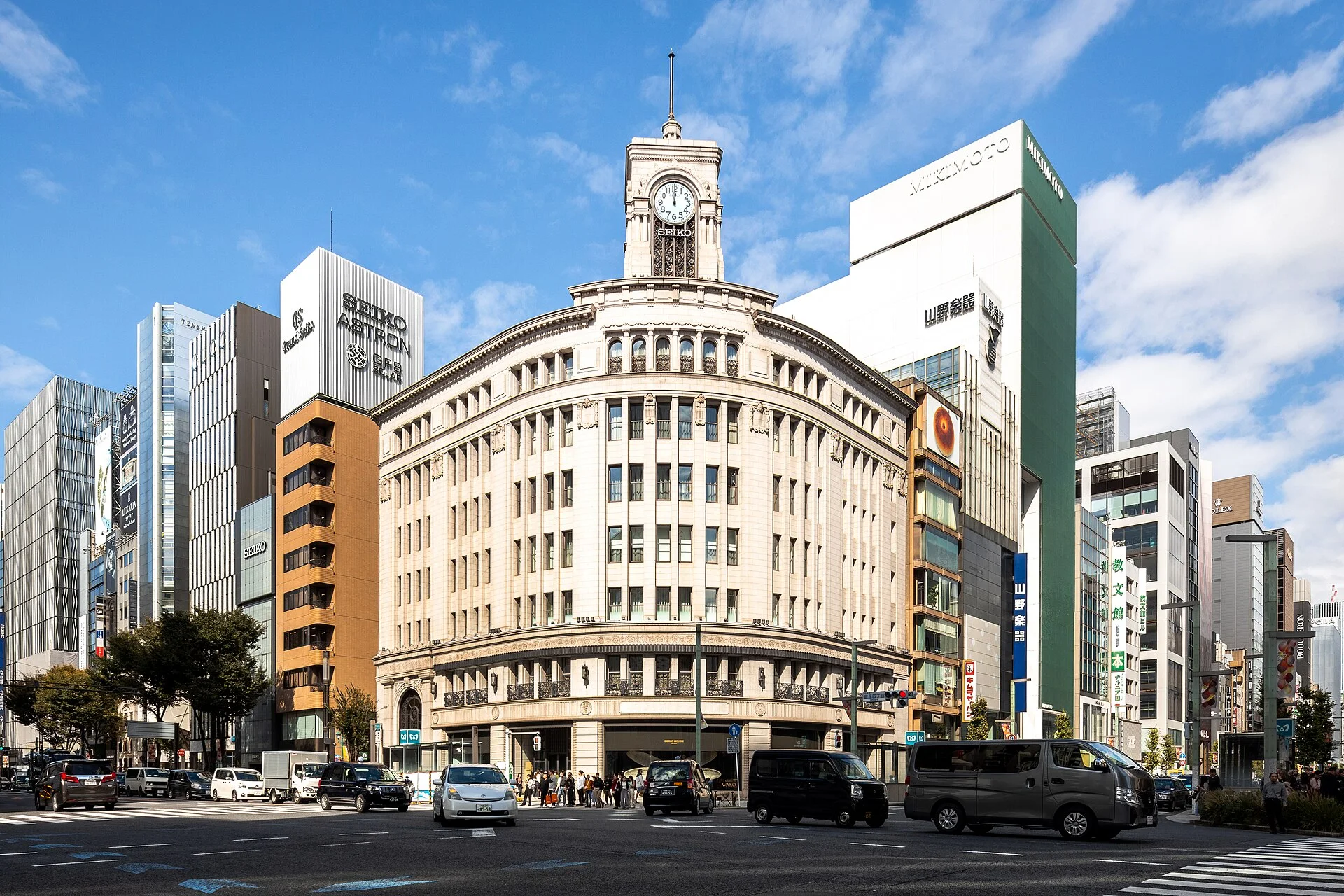
Chuo-dori is also known locally as Ginza-dori. Zoom in on a map until you see the Ginza 4-Chome Crossing—Wako Clock Tower, Ginza Mitsukoshi, and GINZA PLACE sit on different corners of this single intersection. Head north toward Kyobashi and you pass Matsuya Ginza in 3-chome, then Itoya in 2-chome. Head the opposite way toward Shimbashi and GINZA SIX rises along Chuo-dori in 6-chome. If your group splits up, meeting at the Mitsukoshi main entrance side is far easier than simply saying 'Ginza 4-chome.'
If you are after pens, planners, tableware, or design objects, start from 1-chome or 2-chome: enter Itoya in the morning, then move to Matsuya's 7th floor once it opens at 11:00. Treat 4-chome as the fork in the road. Shoppers with sweets and cosmetics on their list turn into Mitsukoshi; those looking for luxury flagships, art books, or a rooftop terrace keep walking toward 6-chome. If you fly out the next day, buy items meant for your cabin or checked bags first, then see how much time remains for window-shopping.
When designer luxury is the main goal, make 6-chome your starting point. Handle time-consuming stops—trying on shoes, fitting clothes, or viewing watches that happen to be in stock—before walking back toward 4-chome. Specific items are often stocked only at designated flagship stores, so check exact street numbers and entrances. Trying on comparable pieces at two brands will get you the right fit faster than squeezing every appealing storefront along Chuo-dori into one afternoon.
If people in your group have completely different interests, splitting up at 4-chome saves energy. Those browsing cosmetics at Mitsukoshi can stay indoors, while anyone photographing the clock tower and streetscapes walks a short stretch above ground before everyone reunites in front of the 6th-floor bookstore at GINZA SIX. Agree on both the floor and the store name, and leave time to ride the elevator up from the underground concourse. If you have a dinner or show reservation, use that venue as your final meeting point.
| Destination | Best For | How to Enter |
|---|---|---|
| Itoya | Pens, planners, paper goods, and engraved gifts | Ginza-itchome Station Exit 8 or Ginza Station Exit A13 |
| Matsuya Ginza | Curated Japanese design and tableware | Direct underground connection via Ginza Station Exit A12 |
| Ginza Mitsukoshi | Food gifts, prepared deli meals, and cosmetics | Ginza Station Ginza 4-Chome Crossing Gate |
| GINZA SIX | Luxury flagships, art books, food, and rooftop walks | Ginza Station Exit A3, or via underground passage to B2 |
Plan your shopping order from Ginza 1-chome to 6-chome. Compare Ginza Mitsukoshi, Matsuya Ginza, Itoya, and GINZA SIX, with subway exits, weekend street closures, 2026–2027 New Year hours, and Japan's new tax-free refund rules.
Which Ginza Station Exit Puts You Nearest Each Store
Tokyo Metro's Ginza Station serves the Ginza Line (G09), Marunouchi Line (M16), and Hibiya Line (H09). From Tokyo Station on the Marunouchi Line, Ginza is just one stop toward Ogikubo. From Ueno or Tsukiji, take the Hibiya Line; from Shibuya, take the Ginza Line. Follow the exit signs for your target store once you arrive. Even if your group enters the station on different lines, you can still meet at the same street-level storefront in 4-chome.
To go straight to GINZA SIX, take street-level Exit A3—the mall lists the walk at about 2 minutes. In the rain, follow the underground passageway signs marked GINZA SIX directly into B2. You can reach this corridor from Tokyo Metro Ginza and Higashi-ginza stations as well as the Toei Asakusa Line at Higashi-ginza. When short on time, simply follow the underground signs for the building name, then pick an elevator up to the bookstore or rooftop once you reach B2.
Ginza Mitsukoshi sits right off Ginza Station's Ginza 4-Chome Crossing Gate, listed by the store as a 1-minute walk. Coming from Higashi-ginza, take the underground passage toward Ginza Station to reach Mitsukoshi in about 2 minutes. If you enter the New Building (Shinkan) and plan to head to the Main Building's cosmetics floors, check the floor guide first: the store notes that the 2nd floors of the Main Building and New Building do not connect directly, so you will need to return to a connected floor before crossing over.
Take Exit A12 for Matsuya Ginza and Exit A13 for Itoya, which sits roughly 300 meters north along Chuo-dori toward Kyobashi. If you are already riding the Yurakucho Line, leave Ginza-itchome Station via Exit 8 and cross Chuo-dori toward Shimbashi—Itoya's official guide puts that walk at about 1 minute. On the same line, Mitsukoshi recommends Exit 9, roughly a 5-minute walk. Travelers with strollers needing an elevator to street level at Ginza-itchome Station can use Exit 6.
Ginza Station's accessibility guide notes an elevator linking the 4-Chome Crossing Gate to Exit A7. If you use a wheelchair or have large luggage, follow the elevator pictograms from the platform—saving Tokyo Metro's accessible route map on your phone is far more useful than screenshotting an exit list alone. Travelers connecting to JR trains can also walk from Yurakucho Station: Mitsukoshi estimates about 9 minutes from the JR Central or Ginza exits, while GINZA SIX lists roughly 10 minutes from JR Yurakucho Station's Ginza Exit. Calculating your schedule from building entrances and ticket gates gives a much truer estimate than measuring station-to-station distance on a map.
Pick Pens and Paper at Itoya First, Then See Design Objects at Matsuya
Itoya's 2-chome flagship consists of G.Itoya facing Chuo-dori and K.Itoya tucked behind it. Inside the main building, the 1st floor covers cards and seasonal events, the 4th floor stocks planners and refills, and the 5th floor is dedicated to writing instruments, ink refills, and notebooks. Enter from the main building and cross into the rear annex after seeing your target floors. K.Itoya handles custom framing on B1, so put the annex earlier in your loop if you are specifically hunting for original items or bespoke services.
If you are restocking planner refills, bring your old notebook or snap photos showing the ring count, paper dimensions, and the SKU of your current insert. Buying a new bound planner is easier if you first decide whether you want a full-week spread, a page-a-day layout, or a simple monthly calendar. Amid an entire floor of leather covers, binders, and paper stocks, lock in that layout preference before testing paper with your go-to pen. The same goes for pen refills: bringing the pen itself is best, or take clear photos of both the barrel model and both ends of the refill.
When buying an engraved pen as a gift, check which items qualify first. Itoya's flagship accepts engraving orders on select in-store fountain pens, leather goods, pencils, and photo albums, with pencil engraving available year-round. Before paying, type the exact capitalization, spacing, and pickup deadline into your phone's notes app and double-check it with the clerk. If you are short on time that day, ask for the pickup time before deciding whether to add engraving, request gift wrapping, or take the item as-is. For custom orders placed on New Year's Eve, make sure the pickup window fits the next day's train or flight.
Itoya's shopping floors typically open at 10:00, with the website listing a regular 19:00 closing time on Sundays and national holidays and extended hours on select dates. There are no coin lockers inside the store. If you have just checked out of your hotel with a carry-on suitcase, leave bags with your hotel or start at a 6-chome mall with baggage storage. Browsing Itoya hands-free makes a huge difference, especially when holding different paper weights and notebooks up to the light to compare shades.
Matsuya Ginza is just a short walk south from Itoya toward 4-chome. On the 7th floor, Design Collection features products selected by members of the Japan Design Committee—head straight up if you want design books, tableware, and compact home goods. Before buying plates or glasses, check the diameter and height to make sure the box will pack flat in your carry-on. Confirming heat resistance and dishwasher suitability with staff is more reliable than buying on brand name or origin alone. Matsuya's retail floors normally run 11:00–20:00 (closing early at 19:30 on Sundays or the last day of a holiday weekend, while 8th-floor restaurants keep separate hours), so rather than waiting outside Matsuya's doors, spend that first morning hour inside Itoya.
Navigating Ginza Mitsukoshi: Plan Food Purchases Around When You Will Eat Them
Ginza Mitsukoshi's retail floors generally operate 10:00–20:00. In the basement food halls, start on B2 by category: Kayuan in the Main Building curates regional confections from across Japan, La Cave handles wine and spirits, and GINZA Tea covers tea leaves. Eat-in counters on B2 and B3 have their own last-order times, so check the store's dining schedule if you want a sit-down meal. You can pick up prepared deli dishes and packaged gifts in the same sweep—just time that pickup right before heading back to your hotel.
For gift boxes you are bringing home to share, check whether the best-by date is printed on the outer box or on each individually wrapped piece, then count the days between your flight home and when you will hand them out. Fresh cream pastries, chilled items, and bento meant to be eaten the same day belong after your 6-chome loop. If you are heading to a theater show or dinner next, save bag space for room-temperature sweets that travel easily. When buying multiple boxes, assign each one to a recipient before paying so two oversized tins do not crowd out room meant for clothes.
Ginza Mitsukoshi provides paid coin lockers: ambient lockers are on Main Building B2 and New Building 12F, while refrigerated lockers sit on Main Building B2 and B3. If you buy chilled deli food during the day before continuing elsewhere, use a refrigerated locker only if your route brings you back through the food hall to collect it. If you plan to take the subway straight down after eating on New Building 12F, pick an ambient locker on the floor you will pass on your way out. Keep your passport and receipts on you before locking bags away, so you do not have to hike back downstairs before visiting the 7th-floor tax-free counter.
If you are replacing a favorite cosmetic product, bring a photo of the empty bottle showing the shade code, volume, and exact product name. Before grabbing a value set, check whether you will actually use every piece inside, especially boxes mixing full-size bottles with mini samples. To swatch foundation, arrive earlier in the day, step outside into natural daylight, and walk the neighborhood before committing to a shade. Keep cosmetics shopping separate from deli runs so you only have to descend into the basement food hall once before leaving 4-chome.
Mitsukoshi's Gift Certificate Salon on the 5th floor of the New Building requires advance reservations after 18:00—keep that errand separate from casual sweets shopping if you are picking up vouchers for friends or family in Japan. The floor map also notes that entry to the Art Aquarium is on the 9th floor of the New Building. If half your group goes to the exhibition while the rest test makeup, specify 'New Building 9F' or 'Ginza 4-Chome Crossing Gate' so nobody waits on the wrong side of the complex.
Which Floors to Visit in GINZA SIX Depends on What Is Still on Your List
Shops and cafes in this 6-chome complex usually open 10:30–20:30, with restaurants generally open 11:00–23:00 (individual hours are listed in the directory). With only one hour left, check for the specific brands you want to compare, then pair one shopping stop with either the rooftop or the 6th floor. If souvenirs are your priority, start on B2, where the food hall sits right off the entrance. Because the building holds dozens of boutiques and split escalator banks, meeting at the 1st-floor Chuo-dori entrance, the 6th-floor bookstore, or back down on B2 keeps everyone easy to find.
Ginza Tsutaya Books on the 6th floor keeps regular hours of 10:30–21:00 and is great for photo books, art monographs, and showcases by contemporary Japanese creators. Softcover editions and exhibition catalogs pack easily, whereas oversized hardcovers warrant checking dimensions, weight, and protective wrapping first—if your suitcase has no flat space left, jot down the title and ISBN instead. Inside the bookstore, the FOAM CONTEMPORARY gallery generally runs 11:00–19:00 and closes on Mondays; plan around gallery hours rather than heading up right before the bookstore closes.
For fresh air, head up to the rooftop GINZA SIX Garden, usually open 7:00–23:00 unless closed by the building for bad weather. Around winter sunset the rooftop can get breezy, so visitors carrying drinks or traveling with older relatives can rest indoors on the 6th floor and step out when the wind drops. Special rooftop events have separate admission rules, meaning mall browsing, garden time, and event entry should be budgeted as separate blocks. If weather shuts the roof down, shift that break into the bookstore downstairs.
If your bags are already overflowing, Sagawa Express operates a baggage storage and delivery counter at TERMINAL GINZA on the 1st floor, typically open 10:30–20:30—convenient if you enter from the Mihara-dori side. Confirm the final pickup cutoff or check whether your hotel accepts courier deliveries before buying more. The in-house tax-free counter keeps the same 10:30–20:30 hours for eligible store receipts; any registered tax-free purchases that must leave Japan with you need to stay in the bags you carry to the airport rather than going into boxes shipped home.
If you are hunting for niche labels while someone in your family just needs a thermal base layer, UNIQLO Ginza sits right in 6-chome on Chuo-dori at 6-9-5 Ginza, usually open 11:00–21:00 across floors 1 through 12. Split up and agree to regroup at street level on the same block. Another flagship, UNIQLO TOKYO, sits up in 2-chome at Marronnier Gate Ginza 2. When you only need a single basic item, pick whichever branch is closest—wandering through both 12-story flagships will swallow half your afternoon.
Around Harumi-dori and the Side Streets, Street Addresses Beat Store Names
The easiest landmark in 4-chome is the Wako Clock Tower. Completed in 1932, this stone building curves around the corner with four clock faces pointing down each avenue. Exit A9 or A10 brings you up beside the main store, and Exit B1 connects directly indoors on rainy days. Harumi-dori runs crosswise, leading toward Yurakucho and Hibiya in one direction and toward Higashi-ginza and Kabukiza Theatre in the other. Across the corner stands GINZA PLACE, which houses Sony Store Ginza for testing cameras and gear. Apple Ginza is at a separate address in the Saegusa Building at 3-5-12 Ginza—save the exact street address and floor when meeting friends, picking up orders, or testing lenses.
The parallel lanes flanking Chuo-dori all carry their own names, making street signs reliable turning markers. Namiki-dori leads to MUJI Ginza in 3-chome, where retail floors fill levels 1 to 5, MUJI Diner sits on B1, and ATELIER MUJI occupies the 6th floor; the store lists daily hours of 11:00–21:00. Skip straight to the retail floors for snacks and everyday essentials, or ride up to the 6th floor first for the design exhibition before shopping on the way down. Guests checking into MUJI HOTEL GINZA can use the hotel entrance along Ginza Renga-dori at the back.
Back in 6-chome, GINZA SIX's Ginza Passage cuts straight through to Mihara-dori for a quick detour along the side street before looping back indoors. Slot this stretch before lunch or an exhibition, because directories and street numbers are often shared inside multi-tenant buildings and riding elevators takes longer than scanning street-level storefronts along Chuo-dori. If you collect vintage cameras or wristwatches, shortlist two shops with their floor numbers and target models beforehand; if one happens to be closed, pivot back toward 4-chome for window-shopping or indoor browsing.
After photographing the 4-chome clock tower, mechanical watch fans can walk over to The Seiko Museum Ginza on Namiki-dori at 4-3-13 Ginza, about a 1-minute walk from Ginza Station Exit B2 or B4. Admission is free, and the museum is open 10:30–18:00 (closed Mondays and over the New Year holidays), with reservations prioritized. On rainy days when part of your group has little interest in shopping, check the website for an open time slot; first-floor lockers have limited capacity, so leave large suitcases at your previous storage spot. After seeing the wadokei (traditional Japanese clocks) and historic Seiko pieces, you can head back to 4-chome if you want to inspect current models.
To combine a kid-friendly museum stop with gift shopping, book an afternoon slot at the museum, browse Matsuya in the morning, and stroll over to Namiki-dori after lunch. The building has elevator access, plus an accessible restroom and a private nursing room on the 5th floor. Any adult browsing the main 4-chome stores can walk west to meet outside the museum before heading together to the Yurakucho Line or JR trains—the museum lists JR Yurakucho Station's Central and Ginza exits at roughly a 4-minute walk.
Weekend Pedestrian Closures and Rainy-Day Detours
Ginza's official weekend pedestrian zone closes Chuo-dori from 1-chome through 8-chome on Saturdays, Sundays, and Japanese national holidays. Hours run 12:00–17:00 from October through March and 12:00–18:00 from April through September, though police may cancel closures during severe weather or over the New Year holidays. You can walk freely down the middle of the roadway, while cyclists must dismount and push their bikes. For clean full-street photos, walk from 4-chome toward 6-chome around lunch, then loop back along whichever side has the shops you want.
Cross streets such as Harumi-dori stay open to traffic, so obey pedestrian signals at intersections. If you are calling a taxi or getting picked up by car, set the pickup on an open side street and text the exact street address to the driver. Dedicated shoppers should tackle clerk-assisted errands before noon, then treat Chuo-dori as a relaxed promenade after 12:00 rather than juggling shopping bags and a camera while rushing back for a meal.
If it rains while you are pushing a stroller, enter Mitsukoshi near Ginza Station's Ginza 4-Chome Crossing Gate or walk underground from Higashi-ginza straight into GINZA SIX B2, and anchor your visit in one building. Inside Mitsukoshi, pair the basement food hall with a single cosmetics floor; inside GINZA SIX, take the elevator up to the 6th floor and save the rooftop for when the sky clears. If Itoya is a must-visit, the short street-level walk from Ginza-itchome Station Exit 8 minimizes rain exposure. When switching to a rainy-day plan, drop one unscheduled side-street shop and put that time toward items that require comparing prices or trying things on.
If you want street shots once a downpour passes, start on the 4-chome clock tower corner and duck back under covered arcades along Harumi-dori once you have the photo. Shake out wet umbrellas before entering shops, and slip paper sweet bags and books inside a waterproof tote. Dusk arrives early in autumn and winter, so companions hoping to photograph architecture and street scenes should shoot outdoors first before heading into late-closing bookstores and restaurants.
Starting November 2026: Pay Tax Upfront, Claim Your Refund at Departure
Under Japan's revised tax-free rules taking effect November 1, 2026, shoppers pay the tax-inclusive price at participating stores and register the purchase at the counter. Short-term visitors must present an original physical passport so staff can verify eligibility on the spot. Qualifying purchases made by the same traveler on the same day at the same tax-free store must total at least ¥5,000 before tax. When a department store or mall operates a centralized tax-free counter, purchases made that same day by the same person across eligible tenants can be combined toward the threshold—but separate receipts from Itoya and Mitsukoshi cannot be pooled into a single Ginza total.
When buying high-ticket items in Ginza, make sure your credit card has enough limit for the full tax-inclusive amount, and ask the store where registration takes place, how the refund is issued, and whether an administrative fee applies. Where a building uses a centralized desk, gather your receipts before leaving the complex. Matsuya Ginza's FAQ also notes that travelers enter their refund payout details on a registration portal, so keep any instruction slip clipped to your receipts. Refunds are processed by the retailer or operator once Japan Customs confirms the goods are being taken out of the country.
Ginza Mitsukoshi handles tax-free registration at the Overseas Customer Service Counter on the 7th floor of the New Building. Buy cosmetics upstairs and snacks in the basement, then bring everything up together before leaving. For luxury watches or jewelry, ask staff to write down the post-registration price, refund method, and handling fee so you can compare the true net cost against another shop's tax-inclusive sticker price. At Matsuya Ginza, pre-reserving items online for in-store pickup carries a 2.15% service fee on the tax-inclusive total of eligible goods according to the store's FAQ—factor that fee out of your expected tax refund when doing the math.
You must depart Japan within 90 days of the purchase date and present both your passport and the registered items for customs confirmation at your departure airport or seaport. Japan Customs guidance specifies that tax-free goods going into checked baggage must be confirmed before you hand suitcases to the airline, and items must be accessible in case an officer requests a physical inspection. If you fly a domestic leg before an international connection, complete confirmation at the final airport where you actually exit Japan. Leave extra time for repacking and inspection, and never bury your passport beneath layers of shopping bags.
At the airport, follow signs for Tax Refund or Customs and scan your passport at a tax-refund kiosk. According to Japan Customs, a green screen completes confirmation automatically, while a red screen directs you to bring your passport and purchased goods to an inspection counter. Airline check-in and customs confirmation are separate steps, so travelers checking bags should clear customs confirmation first before zipping items into checked luggage. If you are wearing a registered coat or have unboxed electronics, pack them near the top of your bag where they are easy to reach.
The new system drops special sealed bags for consumables, eliminates the separate consumable-versus-general-goods split, and removes the old spending cap on consumables. Even so, food and cosmetics must still leave Japan unused: anything eaten, drunk, or used up inside the country cannot be presented and will not be refunded. Because customs checks purchases on a per-transaction basis, missing even one item from a receipt can disqualify the entire transaction. Pay separately for snacks you plan to eat that night versus gift boxes you are bringing home, and buy travel sunscreen for hotel use at standard tax-included prices.
When comparing prices in-store, weigh the tax-inclusive tag, any refund processing fees, and what the same item costs back home. Remember that your card is charged the full yen amount at checkout, while the refund arrives later. If you need warranty coverage, photograph the model number and proof of purchase as an extra backup. At departure customs, keep each traveler's name matched to their own registered transactions, and have everyone carry the items they personally bought in their own bag.
2026–2027 New Year Closures: GINZA SIX Shuts for Two Days
GINZA SIX has announced full closures on January 1 and January 2, 2027. On December 31, 2026, shops and cafes from B2 to the 5th floor open 10:30–18:00, while restaurants on the 6th and 13th floors run 11:00–21:00. If you arrive in Ginza on New Year's Eve afternoon with perfume, gift boxes, or clothing on your list, finish shopping before 18:00 and head upstairs for dinner afterward. Any exchange slips for different sizes should be scheduled for a business day before you fly out.
Normal operations resume on January 3, 2027, with B2 through the 5th floor open 10:30–20:00 and restaurants on the 6th and 13th floors running 11:00–22:30. At opening time that morning, entry is restricted to the 1st-floor Chuo-dori and 4-chome entrances; the underground passageway, Ginza Passage, and Mihara Terrace open only after the initial entry queue clears. To get inside right at opening, take Ginza Station Exit A3 to street level; if you prefer to browse indoors without queuing outside, spend the first part of the morning elsewhere and circle back to 6-chome later.
From November 14, 2026 through February 14, 2027, the rooftop hosts a seasonal synthetic-ice skating rink. Admission including skate rental is ¥2,000 for high school students and older, and ¥1,500 for junior high students and younger. Children under 3 are not permitted on the ice, and preschool-age children must be accompanied by a parent and wear a helmet. Gloves are mandatory on the rink and can be purchased on-site. If some members of your group prefer not to skate, set a meeting spot on the rooftop or inside the bookstore so only skaters pay for rink time.
The rink generally opens at 14:00 on weekdays and 11:00 on weekends and national holidays, closing at 20:30 with last admission at 20:00. From December 19 to December 30 it opens daily at 11:00, and on December 31 it closes at 18:00 with last entry at 17:30. It is closed January 1 and 2, then runs 11:00–20:30 on January 3. Whenever wind or rain affects rooftop operations, Tsutaya Books downstairs makes an easy backup—check the mall's daily event status before heading up so kids are not waiting at the door in skating gear.
Pairing Half-Day and Evening Routes by Your Return Direction
For a brisk two-hour stationery and gift run, arrive at Itoya at 10:00 and stick to two targeted floors. Walk into Matsuya right when it opens at 11:00 and head straight up to the 7th floor. Leave 4-chome before noon—or duck quickly into Mitsukoshi B2 for shelf-stable sweets—and you can still continue to Yurakucho and Hibiya for the afternoon. Sitting down for meals inside both Itoya and Matsuya leaves little time for testing pens, comparing paper, and waiting on gift wrapping, so decide upfront whether you want a sit-down lunch or would rather save shopping for later.
For a half-day route built around flagship stores and books, take Ginza Station Exit A3 to GINZA SIX, pick one boutique plus the 6th-floor bookstore, and have lunch inside the mall or along Mihara-dori. Stroll back up Chuo-dori to 4-chome in the afternoon, browse one floor of Matsuya, and finish with food shopping at Mitsukoshi before heading down to the subway. If dinner is in Higashi-ginza, bump Mitsukoshi ahead of dinner so you can board the train right after your meal. If you have afternoon Kabukiza Theatre tickets, anchor your cutoff time before shopping starts and skip backtracking to 2-chome or 3-chome.
On weekends combining Tsukiji with Ginza, eat breakfast first and walk from Higashi-ginza toward Ginza 4-chome. Step onto Chuo-dori closer to 12:00 once the pedestrian zone opens, then pick one building along the way for an exhibition, coffee, or warm layers. If everyone wants to browse indoors while only one person plans to keep shooting photos outside, choose a fixed meeting point on the same side of the avenue to cut down on crossing Harumi-dori. Heading back from Tsukiji toward Yurakucho also lines up naturally with picking up gift boxes at Mitsukoshi or walking down Namiki-dori to MUJI.
If you are staying in Ginza 2-chome or 3-chome and end up with heavy bags, drop purchases at your hotel first and head back out hands-free for dinner. Travelers staying near Tokyo Station can ride the Marunouchi Line straight back from Ginza Station; those staying in Shimbashi can walk south from 6-chome or ride the Ginza Line one stop. Before starting your last leg if you have reserved train seats, confirm your departure station, ticket gate, and latest store exit time. Leave checked bags at your hotel so you are not hauling heavy tinned sweets or art books down side streets—or compare station lockers, hotel holding, and courier options in our Japan luggage forwarding and storage guide.
A few useful answers
If I only have two hours in Ginza, which two stops give the best return?
Pick Itoya and Matsuya Ginza for stationery and design objects. For food gifts paired with luxury flagships, go with Ginza Mitsukoshi in 4-chome and GINZA SIX in 6-chome.
Which Ginza Station exit leads to GINZA SIX?
Exit A3 brings you to street level about a 2-minute walk away. On rainy days, follow the underground passageway directly into B2, which also connects from Higashi-ginza.
What are the hours for Ginza's weekend pedestrian zone?
On Saturdays, Sundays, and national holidays, Chuo-dori closes to vehicles from 12:00–18:00 (April–September) and 12:00–17:00 (October–March) between 1-chome and 8-chome, subject to police cancellation during severe weather or New Year holidays.
In late 2026, do I still receive my Ginza tax-free refund at the store counter?
No. Starting November 1, 2026, you pay the tax-inclusive price and register your purchase in-store, then receive your refund from the store or operator after departing within 90 days and clearing Japan Customs verification.
Is GINZA SIX open on January 1 and January 2, 2027?
No, it is closed both days and reopens on January 3. At opening on January 3, entry is through the 1st-floor Chuo-dori and 4-chome doors only, with underground access opening once the entry line clears.
For a first visit to Itoya, where are the planners and pen refills?
Enter G.Itoya from Chuo-dori: planners and refills are on the 4th floor, while writing instruments and ink refills are on the 5th floor. The K.Itoya annex sits directly behind it.
Official information and references
Sources used in this guide.
- Official Ginza Town Guide | Chuo-dori Pedestrian Zone Area and Hours
- Official Ginza Town Guide | Streets of Ginza
- Official Ginza Town Guide | Ginza Subway Exit Map 2026
- Tokyo Metro | Ginza Station Accessibility Facilities
- Tokyo Metro | Ginza-itchome Station Exits and Elevators
- GINZA SIX | Station Exits and Underground Passageway
- GINZA SIX | Store, Rooftop, and Service Hours
- GINZA SIX | Visitor Services, Tax-Free Counter, and Baggage Storage
- GINZA SIX | 2026–2027 New Year Closures and Entrance Notice
- GINZA SIX | 2026–2027 Rooftop Skating Rink Announcement
- Ginza Tsutaya Books | Store and Gallery Hours
- Ginza Mitsukoshi | Business Hours and Access
- Ginza Mitsukoshi | Building Floor Guide and Food Halls
- Matsuya Ginza | Business Hours and Services
- Matsuya Ginza | 7F Design Collection
- Matsuya Ginza | Tax-Free Refund Registration FAQ
- Itoya | Ginza Flagship Access, Floors, Hours, and Custom Services
- Itoya | Flagship Lockers and Regular Closures FAQ
- GINZA PLACE | Floor Guide and Tenants
- Apple Ginza | Current Location and Hours
- MUJI Ginza | Flagship Store Floors and Hours
- MUJI | MUJI HOTEL GINZA Entrance Guide
- Ginza Komatsu | UNIQLO Ginza
- Marronnier Gate Ginza | UNIQLO TOKYO Location and Hours
- The Seiko Museum Ginza | Free Admission, Reservations, and Facilities
- Japan Tourism Agency | New Tax-Free Shopping System and Departure Customs Confirmation
- National Tax Agency | Tax-Free Shop System, Minimums, and Eligibility
- Ginza Mitsukoshi | Ambient/Refrigerated Lockers and 7F Tax-Free Counter
- Wako | 4-Chome Main Store Access
- Wako | History of the 1932 Clock Tower
- The Seiko Museum Ginza | Namiki-dori Address and Exits
- Japan Customs | Departure Tax Refund Kiosks and Inspection Procedures