Plan your shopping route from Ginza 1-chome to 6-chome. Compare Ginza Mitsukoshi, Matsuya, Itoya, and GINZA SIX with underground exits, weekend road closures, 2026–2027 New Year hours, and Japan's new tax-free rules.
- Region & Focus
- TokyoNeighbourhoods and shopping
- Reading Scope
- 20 min read · 10 chapters · 6 Q&As
- Official Verification
- 32 official sources checkedUpdated 22 November 2026
- Key Topics
- NeighbourhoodsTravel budgetTokyo & Kanto
Chapter Route Map (tap any stop)
- Start at 4-chome Crossing and Pick Your End of Ginza
- Which Ginza Station Exit Puts You Nearest Each Shop
- Start with Pens and Paper at Itoya, Then Browse Design at Matsuya
- Navigating Ginza Mitsukoshi: Time Food Purchases by When You Will Eat Them
- Which Floors to Visit at GINZA SIX Depends on Your Shopping List
- Harumi-dori and Side Streets: Why Street Numbers Beat Shop Names
- Weekend Pedestrian Closures and Rainy-Day Routes
- From November 2026: Pay Tax-Inclusive First, Claim Refunds on Departure
- 2026–2027 New Year: GINZA SIX Closes for Two Days
- Half-Day and Evening Pairings: Match Your Route to Your Train Home
- Quick Q&A
For a first shopping trip in Tokyo's Ginza, the smoothest route runs from Itoya in 2-chome down to GINZA SIX in 6-chome. Pick up stationery at Itoya first, add Matsuya Ginza for Japanese design, and leave edible souvenirs for Ginza Mitsukoshi in 4-chome. If you only have two hours, pick two stops. On rainy days, use the underground passage from Ginza Station straight into GINZA SIX; on dry weekends, save Chuo-dori for an afternoon stroll. Anyone planning tax-free shopping will need to recalculate their budget: from 1 November 2026, Japan switches to paying the tax-inclusive price upfront, with refunds issued after customs confirmation on departure.
Start at 4-chome Crossing and Pick Your End of Ginza
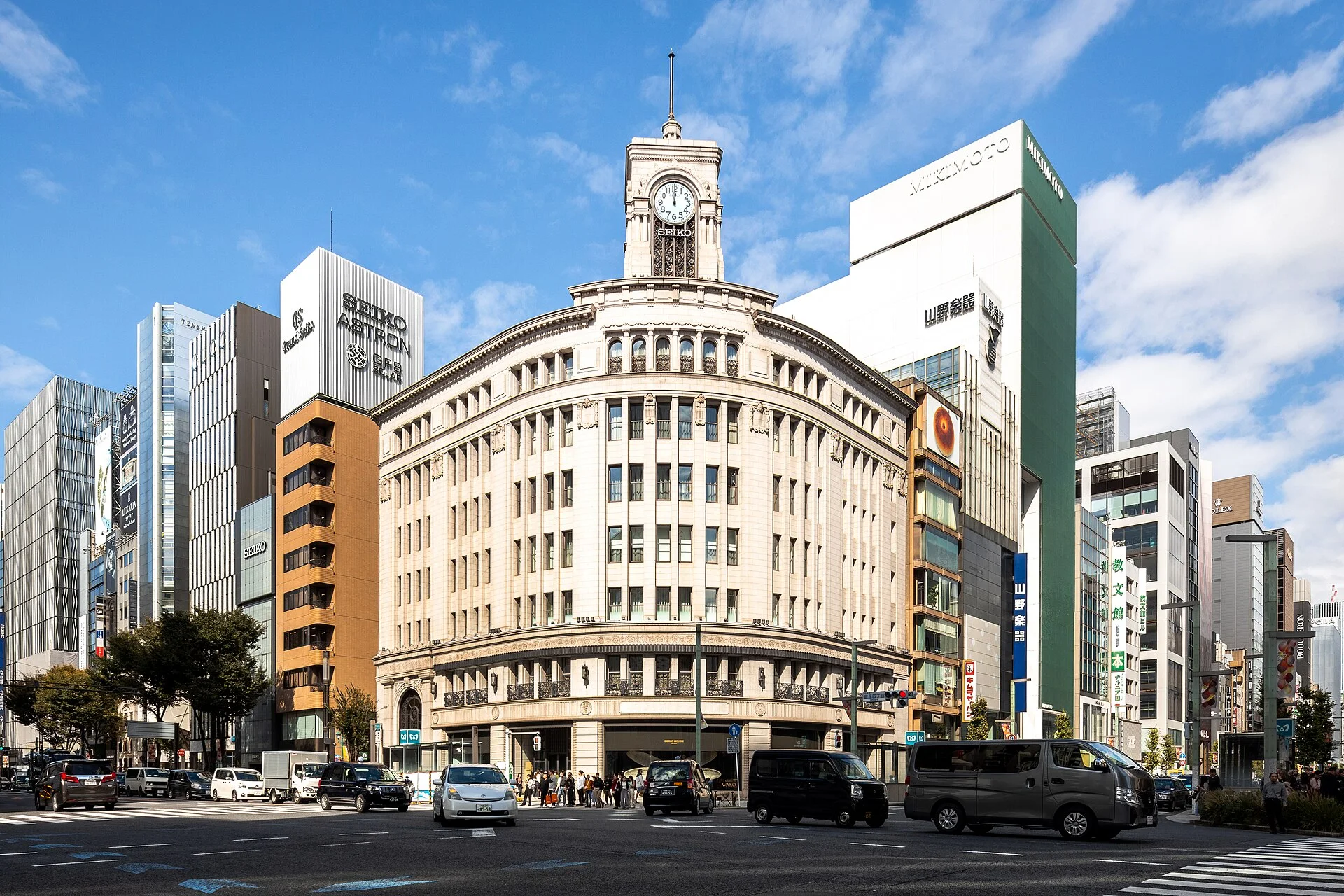
Chuo-dori is also known locally as Ginza-dori. Zoom in on your map until you see Ginza 4-chome Crossing: the Wako Clock Tower, Ginza Mitsukoshi, and GINZA PLACE occupy opposite corners of the same junction. Heading towards Kyobashi brings you first to Matsuya Ginza in 3-chome and then Itoya in 2-chome. Walking the opposite way towards Shimbashi leads along Chuo-dori to GINZA SIX in 6-chome. If your group splits up, meeting outside the main entrance of Mitsukoshi is far easier than saying 'meet at Ginza 4-chome'.
If you are after pens, planners, tableware, or design pieces, begin in 1-chome or 2-chome with Itoya in the morning, then head up to 7F at Matsuya once it opens at 11:00. Treat 4-chome as the halfway fork. Shoppers with sweets and cosmetics on their list can turn into Mitsukoshi, while anyone wanting flagship boutiques, art books, or the rooftop garden can continue towards 6-chome. If you fly the next day, buy everything destined for your cabin bag first before deciding whether there is still time to browse.
When luxury fashion is the main goal, start in 6-chome. Tackle time-consuming errands such as trying on shoes, jackets, or watches while stock is fresh, then work back towards 4-chome. Certain pieces are only carried at specific flagships, so check the street number and entrance beforehand. Trying one or two comparable items at two houses is a much better way to find the right fit than trying to squeeze every attractive window display on Chuo-dori into one afternoon.
For companions with very different tastes, splitting up at 4-chome saves everyone's feet. Those browsing cosmetics at Mitsukoshi can stay indoors, while anyone photographing the clock tower and streetscape can take a short walk above ground before regrouping outside the 6F bookshop at GINZA SIX. Agree on the exact floor and shop name, and allow time to take the lift up from the underground concourse. If you have a dinner or theatre booking, make that venue your final meeting point.
| Destination | Best For | How to Enter |
|---|---|---|
| Itoya | Pens, planners, paper goods, and engraved gifts | Ginza-itchome Station Exit 8 or Ginza Station Exit A13 |
| Matsuya Ginza | Japanese design picks and tableware | Direct underground access via Ginza Station Exit A12 |
| Ginza Mitsukoshi | Food gifts, deli counters, and cosmetics | Ginza Station 4-chome Crossing Ticket Gate |
| GINZA SIX | Luxury boutiques, art books, food hall, and rooftop | Ginza Station Exit A3, or underground passage to B2 |
Plan your shopping route from Ginza 1-chome to 6-chome. Compare Ginza Mitsukoshi, Matsuya, Itoya, and GINZA SIX with underground exits, weekend road closures, 2026–2027 New Year hours, and Japan's new tax-free rules.
Which Ginza Station Exit Puts You Nearest Each Shop
Tokyo Metro's Ginza Station serves the Ginza Line (G09), Marunouchi Line (M16), and Hibiya Line (H09). From Tokyo Station on the Marunouchi Line, Ginza is one stop towards Ogikubo; take the Hibiya Line from Ueno or Tsukiji, or the Ginza Line from Shibuya. Once off the train, follow the exit signs for your specific store. Even if people in your group arrive on different lines, you can still meet at street level outside the same 4-chome shopfront.
For a direct run to GINZA SIX, take Exit A3 to street level for roughly a 2-minute walk as listed by the complex. In the rain, follow the underground passage signposted for GINZA SIX straight into B2, accessible from Tokyo Metro Ginza and Higashi-ginza stations as well as the Toei Asakusa Line at Higashi-ginza. When short on time, follow the mall's name underground and pick the lift up to the bookshop or rooftop once you reach B2.
Ginza Mitsukoshi sits right by Ginza Station's Ginza 4-chome Crossing Ticket Gate, listed as a 1-minute walk. Coming from Higashi-ginza, the underground passage towards Ginza Station brings you to Mitsukoshi in about 2 minutes. If you enter the New Building intending to reach cosmetics in the Main Building, check the floor guide first: Mitsukoshi notes there is no connecting walkway between 2F of the Main Building and 2F of the New Building, so you must switch wings on a floor that links them.
Matsuya Ginza connects via Exit A12, while Itoya uses Exit A13, around 300 metres along Chuo-dori towards Kyobashi. If you are already on the Yurakucho Line, leave Ginza-itchome Station via Exit 8 and cross Chuo-dori towards Shimbashi; Itoya lists this as roughly a 1-minute walk. On the same line, Mitsukoshi recommends Exit 9 for about a 5-minute walk. With a pushchair at Ginza-itchome Station, use Exit 6 for lift access.
Ginza Station's step-free guide lists a lift from the 4-chome Crossing Ticket Gate up to Exit A7. For wheelchairs or heavy luggage, follow the lift icons from the platform and save Tokyo Metro's step-free map on your phone rather than relying solely on an exit list. Travellers connecting to JR lines can walk from Yurakucho Station instead: Mitsukoshi lists roughly 9 minutes from the JR Central or Ginza exits, and GINZA SIX lists about 10 minutes from the JR Yurakucho Ginza Exit. Timing your walk between actual entrances and ticket gates is far more reliable than judging station distance on a map.
Start with Pens and Paper at Itoya, Then Browse Design at Matsuya
In 2-chome, Itoya's main G.Itoya building faces Chuo-dori with K.Itoya tucked behind it. The ground floor (1F) of G.Itoya holds greeting cards and pop-up events, 4F is dedicated to planners and refills, and 5F stocks pens, ink refills, and notebooks. Enter from the front, explore your preferred floors, then cross through to K.Itoya at the back; its B1 level offers framing consultations, so shoppers looking for original goods or bespoke services may want to start at the rear building.
When restocking planner refills, bring your old binder or photograph the ring count, sheet size, and product code. If buying a new diary, decide first whether you want a week-to-view spread, a page per day, or a simple monthly grid. Narrowing down the layout across a whole floor of leather covers and loose-leaf paper lets you test paper weight with your everyday pen right away. The same goes for ink refills: bringing the pen itself is easiest, or take clear photos of both the barrel model and both ends of the cartridge.
If you want an engraved pen as a gift, check which lines qualify before choosing. The flagship offers engraving on selected fountain pens, leather goods, pencils, and photo albums bought in-store, with pencil engraving available year-round. Write out the exact capitalisation, spacing, and collection date in a phone note so staff can double-check it at the till. If you are short on time, ask for the pickup window before adding engraving or gift wrapping, and factor collection times into next-day train or flight plans around New Year's Eve.
Itoya's shopping floors normally open at 10:00, with the official website listing a regular 19:00 closing time on Sundays and public holidays alongside extended dates. There are no coin lockers inside the store. If you have just checked out of your hotel with a cabin suitcase, leave bags with the hotel concierge or start in 6-chome where luggage storage is available. Itoya is much easier to navigate hands-free, particularly when holding different paper stocks and notebooks up to the light to compare shades.
Matsuya Ginza is a short walk back towards 4-chome from Itoya. Head straight up to the 7F Design Collection, curated by members of the Japan Design Committee, for design books, tableware, and compact homeware. Before buying plates or glasses, check the diameter and height to make sure the box will lie flat in your hand luggage, and ask staff about heat resistance and dishwasher use rather than buying on brand name alone. Matsuya's main floors usually trade 11:00–20:00, closing early at 19:30 on Sundays or the final day of a long weekend, while 8F restaurants keep separate hours—so spend your first morning hour at Itoya instead of queueing outside Matsuya.
Navigating Ginza Mitsukoshi: Time Food Purchases by When You Will Eat Them
Ginza Mitsukoshi's main sales floors generally open 10:00–20:00. In the basement food hall, start on B2 according to what you need: Kayuan in the Main Building gathers regional Japanese sweets, La Cave handles wine and spirits, and GINZA Tea covers tea leaves. Sit-down counters on B2 and B3 enforce their own last-order cut-offs, so check the store's dining timetable if you plan to eat there. Takeaway deli dishes and boxed gifts can be bought in one sweep just before heading back to your hotel.
If you are buying gift boxes to take home and share, check whether the best-before date is printed on the outer box or on individual wrappers, and count the days between your flight home and handing them out. Fresh cream pastries, chilled items, and bento boxes meant to be eaten the same day are best bought after you finish in 6-chome. If you are heading to a show or dinner next, save bag space for ambient-temperature snacks, and tally your recipients before buying so two bulky boxes do not swallow the luggage room reserved for clothes.
Mitsukoshi provides paid coin lockers: ambient lockers are on Main Building B2 and New Building 12F, while refrigerated lockers sit on Main Building B2 and B3. Chilled deli items bought midday can stay cold if your route naturally loops back through the basement food hall. If you are heading straight onto the underground after dinner on New Building 12F, pick an ambient locker on a floor along your exit path, and keep your passport and receipts on you so you do not have to unlock a basement locker before heading up to the 7F tax-free desk.
For skincare or make-up replacements, bring a photo of your empty bottle showing the shade code, volume, and full product name. Before picking a gift set, check whether you will actually use every miniature packed alongside the full-size item. Arrive earlier in the day if you want to test foundation, step outside into natural daylight after swatching, and walk the block before committing to a shade. Separating cosmetics shopping from food runs lets you drop into the basement food hall just once before leaving 4-chome.
The Gift Certificate Salon on New Building 5F requires an appointment after 18:00, so handle formal vouchers for friends in Japan separately from casual sweet shopping. Floor maps also mark New Building 9F as the entrance for the Art Aquarium Museum. If part of your group goes to the exhibition while others test make-up, specify 'New Building 9F' or 'the 4-chome Crossing Ticket Gate' so nobody waits on the wrong side of the block.
Which Floors to Visit at GINZA SIX Depends on Your Shopping List
Shops and cafés in 6-chome's GINZA SIX typically run 10:30–20:30, with restaurants open 11:00–23:00 and individual hours listed in the building directory. With only an hour to spare, pick one or two boutiques you want to compare and pair them with the 6F bookshop or the rooftop garden. If edible gifts are the priority, start on B2 where the food hall greets you straight from the underground passage. Because the floorplate is wide and escalators are staggered, agree to regroup at the ground-floor (1F) Chuo-dori entrance, the 6F bookshop, or back on B2.
On 6F, Ginza Tsutaya Books normally opens 10:30–21:00 and is well worth browsing for photography monographs, art books, and Japanese contemporary artists. Compact paperbacks and exhibition catalogues pack easily, whereas heavy hardbacks warrant checking dimensions, weight, and protective wrapping—or simply noting the title and ISBN if your suitcase lacks flat space. The adjacent FOAM CONTEMPORARY gallery usually opens 11:00–19:00 and closes on Mondays, so time your visit for the gallery rather than arriving just before the bookshop shuts.
For fresh air, head up to the rooftop GINZA SIX Garden, generally open 7:00–23:00 weather permitting. Around sunset in winter the terrace can turn brisk, so older companions or anyone carrying hot drinks may want to rest on 6F first and step outside during a calmer spell. Special rooftop events have separate entry rules, so budget time separately for browsing, visiting the garden, and attending an event—and fall back on the bookshop if wind forces the roof to close.
If your bags are already full, TERMINAL GINZA on 1F houses a Sagawa Express counter for cloakroom storage and parcel delivery, usually open 10:30–20:30 and handy for the Mihara-dori entrance. Confirm the final pickup cut-off or whether your hotel accepts courier deliveries before buying more. The complex's tax-free counter also typically operates 10:30–20:30 for participating tenants; anything registered for a tax refund must travel with you to the airport on departure, never inside a parcel shipped home.
If you want independent labels while someone in your party just needs thermal layers, UNIQLO's Ginza flagship sits on Chuo-dori at Ginza 6-9-5, generally open 11:00–21:00 across 1F to 12F. Split up and agree to meet at street level within 6-chome. Another massive flagship, UNIQLO TOKYO, occupies Marronnier Gate Ginza 2 in 2-chome; if you only need one extra jumper, pick whichever branch is closest rather than losing half your afternoon to two multi-storey stores.
Harumi-dori and Side Streets: Why Street Numbers Beat Shop Names
The easiest landmark in 4-chome is the Wako Clock Tower, a curved stone building completed in 1932 whose four clock faces look out over the junction. Exits A9 and A10 bring you up near the main store, while Exit B1 offers direct sheltered access in bad weather. Harumi-dori runs crosswise towards Yurakucho and Hibiya in one direction and Higashi-ginza and Kabukiza Theatre in the other. Opposite Wako stands GINZA PLACE, home to Sony Store Ginza for cameras and audio gear, while Apple Ginza now trades from the Saegusa Building at Ginza 3-5-12—save exact street addresses and floor numbers for pickups, lens trials, or meetups.
Every side street running parallel to Chuo-dori has its own name, making street signs reliable turning points. Namiki-dori leads to MUJI Ginza in 3-chome, where retail spans 1F to 5F, MUJI Diner occupies B1, and ATELIER MUJI sits on 6F; the store generally opens 11:00–21:00. Stick to the retail floors for groceries and household staples, or start at the 6F exhibition before browsing downwards. Guests staying at MUJI HOTEL GINZA can reach the hotel entrance from the rear Ginza Renga-dori side.
Back in 6-chome, Ginza Passage cuts through GINZA SIX to Mihara-dori for a short loop through the side lanes. Save this detour for before dinner or an exhibition, as small boutiques often post only a plaque and street number at a shared lift lobby, taking longer to navigate than Chuo-dori storefronts. Vintage camera and watch collectors should pick two target dealers, note their floor numbers and reference models beforehand, and switch back to 4-chome window displays if a shop happens to be closed.
After photographing the Wako Clock Tower, horology fans can walk a minute from Ginza Station Exit B2 or B4 to the Seiko Museum Ginza at Ginza 4-3-13 on Namiki-dori. Admission is free, opening hours are 10:30–18:00 (closed Mondays and over the New Year period), and priority is given to advance bookings. On a rainy day when non-shoppers want a break, reserve an online slot beforehand and leave large bags at your previous storage point, as lockers on 1F are limited—then decide afterwards whether to revisit 4-chome for current-production watches.
To pair clock-watching with gift shopping for children, book the museum for the afternoon after browsing Matsuya in the morning and having lunch before walking over to Namiki-dori. The building has a lift, with an accessible toilet and private nursing room on 5F. Another adult browsing the 4-chome flagship can stroll west to meet outside, then walk together to the Yurakucho Line or JR Yurakucho Station, which the museum lists as roughly 4 minutes on foot to either the Central or Ginza exit.
Weekend Pedestrian Closures and Rainy-Day Routes
Ginza's official weekend pedestrian zone closes Chuo-dori from 1-chome to 8-chome on Saturdays, Sundays, and Japanese national holidays. Hours run 12:00–17:00 from October to March and 12:00–18:00 from April to September, subject to cancellation by police during severe weather or the New Year period. Pedestrians may walk down the middle of the road, while cyclists must dismount and push. To photograph the full avenue, walk from 4-chome to 6-chome around midday and double back along the side you want to shop.
Cross streets such as Harumi-dori remain open to traffic, so obey pedestrian signals at junctions. If you are ordering a taxi or meeting someone by car, pick a side street open to vehicles and send the exact street number to your driver. Focused shoppers should wrap up consultations and fittings before noon, then treat Chuo-dori as a promenade after 12:00 rather than juggling shopping bags and a camera while rushing back for a table.
If it rains while you are out with a pushchair, enter Ginza Mitsukoshi via the 4-chome Crossing Ticket Gate or follow the underground corridor from Higashi-ginza straight into GINZA SIX B2 and anchor your time around one complex. At Mitsukoshi, pair the basement food hall with a cosmetics floor; at GINZA SIX, ride the lift to 6F for the bookshop and wait for a break in the weather before visiting the roof. If Itoya is essential, Ginza-itchome Station Exit 8 keeps the outdoor dash shortest, and trimming an aimless side-street stop frees up time for items you genuinely need to compare or try on.
If the rain clears and you want street photos, shoot the Wako Clock Tower side first and slip back under covered arcades via Harumi-dori. Fold wet umbrellas before stepping into shops, and tuck paper sweet bags and books inside a waterproof tote. Because autumn and winter light fades early, finish outdoor architectural shots before heading into late-closing bookshops and restaurants.
From November 2026: Pay Tax-Inclusive First, Claim Refunds on Departure
Under Japan's revised tax-free rules taking effect on 1 November 2026, shoppers pay the full tax-inclusive price at participating stores and register their purchase at the time of sale. Short-stay visitors must present their physical passport in-store so staff can verify eligibility. Qualifying purchases by the same traveller on the same day at the same tax-free shop must total at least ¥5,000 before tax; at department stores or complexes with a consolidated counter, receipts from eligible tenants processed at that counter on the same day count towards the threshold, whereas separate receipts from Itoya and Mitsukoshi cannot be combined.
When buying big-ticket pieces in Ginza, allow enough credit card limit for the full tax-inclusive total and ask which desk handles registration, how the refund is paid, and whether an admin fee applies. If a complex uses a centralised counter, gather your receipts and queue before leaving the building. Matsuya Ginza's official FAQ notes that travellers must enter their refund details on a registration portal, so keep any printed instructions alongside your receipts. Refunds are issued by the retailer or operator once Japanese customs confirms the goods are leaving the country.
Ginza Mitsukoshi's tax-free counter is at the Foreign Customer Service Counter on New Building 7F, making it easy to buy cosmetics upstairs and sweets in the basement before processing everything together on the way out. For luxury watches or jewellery, ask staff to write down the post-registration net price, refund method, and handling fee so you can compare against the tax-inclusive price elsewhere. Matsuya Ginza's FAQ states that its pre-order-online, collect-in-store service carries a handling fee of 2.15% of the tax-inclusive total of eligible goods, which eats directly into the consumption tax you expect to recover.
You must depart Japan within 90 days of purchase and present both your passport and the registered items for customs verification at your exit airport or port. Japan Customs guidelines require any tax-free goods going into checked hold luggage to be verified before you hand bags to the airline, and items must be accessible if manual inspection is requested. If you take a domestic flight before an international connection, verification takes place at your final international departure airport—so allow extra time to pack and avoid burying your passport under shopping bags.
At the airport, follow signs for Tax Refund or Customs and scan your passport at the refund kiosk. According to Japan Customs, a green screen completes verification, while a red screen directs you to bring your passport and purchases to an inspection counter. Airline check-in and customs checks are separate steps, so clear customs before packing checked bags—and if you plan to carry a worn coat or unboxed electronics, keep them in an easy-to-open layer of your luggage.
The new system abolishes special sealed bags for consumables as well as the old split and spending cap between consumables and general goods. However, food and cosmetics still have to leave Japan: anything eaten, drunk, or used up in-country cannot be shown and will not be refunded. Because customs checks by whole transaction, missing even one item voids the refund for that entire receipt—so ring up evening snacks separately from gift boxes to take home, and buy holiday sunscreen at regular tax-included prices.
When comparing prices in-store, weigh the sticker price, any processing fee, and what you would otherwise pay back home. Your card is charged the full yen amount at checkout, with the refund arriving later. Photograph model numbers and receipts for items with warranties, and keep your own record of each transaction. At departure customs, make sure each purchase matches the named traveller, and have companions carry their own registered items in their own hand luggage.
2026–2027 New Year: GINZA SIX Closes for Two Days
GINZA SIX will close completely on 1 and 2 January 2027. On 31 December 2026, shops and cafés from B2 to 5F will trade 10:30–18:00, while restaurants on 6F and 13F will open 11:00–21:00. If you arrive in Ginza on New Year's Eve afternoon with perfume, gifts, or clothing on your list, finish shopping before 18:00 and head upstairs for dinner afterwards—and if you hold an exchange slip for sizing, plan to return on an earlier trading day before flying out.
Normal trading resumes on 3 January 2027, with B2 to 5F open 10:30–20:00 and restaurants on 6F and 13F open 11:00–22:30. At opening time on 3 January, entry is restricted to the 1F Chuo-dori and 4-chome entrances, while the underground passage, Ginza Passage, and Mihara Terrace open only once the morning queue clears. Take Ginza Station Exit A3 to be near the front, or browse elsewhere first and loop back to 6-chome once the rush eases.
From 14 November 2026 to 14 February 2027, the rooftop hosts a seasonal synthetic-ice skating rink. Tickets including skate hire are ¥2,000 for upper-secondary students and adults, and ¥1,500 for junior-secondary pupils and younger. Children under three cannot skate, pre-schoolers must be accompanied by a parent and wear a helmet, and gloves are mandatory for all skaters (available to buy on site). If part of your group is sitting out, agree to meet on the roof or in the bookshop so paid rink time goes to those actually skating.
The rink generally opens at 14:00 on weekdays and 11:00 on weekends and public holidays, closing at 20:30 with last admission at 20:00. From 19 to 30 December it opens daily at 11:00, closing at 18:00 on 31 December (last admission 17:30); it is closed on 1 and 2 January and runs 11:00–20:30 on 3 January. If wind or rain closes the rooftop, Ginza Tsutaya Books downstairs makes an easy backup—check the complex's live event status before heading up so children are not left waiting at the gate in skates.
Half-Day and Evening Pairings: Match Your Route to Your Train Home
For a two-hour stationery and gift sprint, reach Itoya at 10:00 and cover two targeted floors before walking to Matsuya when it opens at 11:00 and heading straight to 7F. You can clear 4-chome before noon—or duck into Mitsukoshi B2 for ambient sweets—and continue to Yurakucho and Hibiya for the afternoon. Sitting down for a long meal inside Itoya or Matsuya eats into the time needed to test pens, compare paper, and wait for gift wrapping, so decide upfront whether lunch waits until afterwards.
For a half-day focused on flagships and books, leave Ginza Station at Exit A3 for GINZA SIX, pick one boutique plus the 6F bookshop, and eat lunch inside or along Mihara-dori. Stroll back up Chuo-dori to 4-chome in the afternoon, browse one floor of Matsuya, and finish with Mitsukoshi's food hall before descending to the underground. If dinner is in Higashi-ginza, visit Mitsukoshi before eating and board the train there afterwards; for an afternoon kabuki performance, set your shopping cut-off strictly before curtain-up and skip doubling back to 2-chome or 3-chome.
To combine Ginza with Tsukiji at the weekend, have breakfast in Tsukiji and walk across from Higashi-ginza towards 4-chome. Step onto Chuo-dori around 12:00 once the pedestrian closure begins, pausing at one building for an exhibition, coffee, or a quick clothing stop. If everyone wants to browse indoors while only one person plans to shoot outside, pick a fixed meeting spot on the same side of the road to cut down on crossing Harumi-dori. Travellers heading back through Yurakucho can round off the loop with Mitsukoshi gift boxes or MUJI on Namiki-dori.
If you are staying in 2-chome or 3-chome, drop heavy purchases back at your hotel before heading out hands-free for dinner. Guests near Tokyo Station can hop straight back on the Marunouchi Line from Ginza, while those staying in Shimbashi can walk south from 6-chome or ride one stop on the Ginza Line. Whenever you have a reserved train to catch, work backwards from your station, ticket gate, and final shop departure time—and pick up stored bags straight before boarding rather than lugging jars and hardbacks through side streets. For further storage and delivery options, see our Japan luggage forwarding and storage guide.
A few useful answers
Which two stops give the best value if I only have two hours in Ginza?
Pick Itoya and Matsuya Ginza for stationery and design pieces. For edible gifts alongside flagship boutiques, choose Ginza Mitsukoshi in 4-chome and GINZA SIX in 6-chome.
Which Ginza Station exit should I take for GINZA SIX?
Exit A3 brings you to street level for about a 2-minute walk. In wet weather, follow the underground passage straight into B2, which also connects from Higashi-ginza.
What hours does Ginza's weekend pedestrian zone operate?
On Saturdays, Sundays, and Japanese national holidays, Chuo-dori closes from 1-chome to 8-chome between 12:00 and 18:00 from April to September, and 12:00 to 17:00 from October to March. Police may cancel closures during severe weather or New Year.
Will I get an instant tax-free refund in-store at the end of 2026?
From 1 November 2026, you pay the full tax-inclusive price and register your purchase in-store. Once you depart within 90 days and clear Japanese customs verification, the retailer or operator issues your refund.
Is GINZA SIX open on 1 and 2 January 2027?
No, it is closed on both days and reopens on 3 January. At opening time on 3 January, only the 1F Chuo-dori and 4-chome entrances are open until the queue clears, after which the underground passage reopens.
Where are planners and pen refills located at Itoya?
Enter G.Itoya from Chuo-dori: planners and refills are on 4F, and writing instruments, ink refills, and notebooks are on 5F. The second building, K.Itoya, sits directly behind it.
Official information and references
Sources used in this guide.
- Ginza Official | Chuo-dori Pedestrian Zone Area and Hours
- Ginza Official | Guide to Ginza's Streets
- Ginza Official | Ginza Underground Exit Map 2026
- Tokyo Metro | Ginza Station Step-Free Facilities
- Tokyo Metro | Ginza-itchome Station Exits and Lifts
- GINZA SIX | Station Exits and Underground Passage
- GINZA SIX | Store, Rooftop, and Service Hours
- GINZA SIX | Visitor Services, Tax-Free, and Luggage Storage
- GINZA SIX | 2026–2027 New Year Closures and Entrance Notice
- GINZA SIX | 2026–2027 Rooftop Skating Rink Announcement
- Ginza Tsutaya Books | Shop and Gallery Opening Hours
- Ginza Mitsukoshi | Opening Hours and Access
- Ginza Mitsukoshi | Building Floor Guides and Food Hall
- Matsuya Ginza | Opening Hours and Visitor Services
- Matsuya Ginza | 7F Design Collection
- Matsuya Ginza | Tax-Free Refund Registration FAQ
- Itoya | Ginza Flagship Access, Floors, Hours, and Custom Services
- Itoya | Flagship Lockers and Regular Holiday Hours FAQ
- GINZA PLACE | Floor Guide and Tenants
- Apple Ginza | Current Address and Opening Hours
- MUJI Ginza | Flagship Floors and Opening Hours
- MUJI | MUJI HOTEL GINZA Entrance Guide
- Ginza Komatsu | UNIQLO Ginza Store
- Marronnier Gate Ginza | UNIQLO TOKYO Address and Hours
- The Seiko Museum Ginza | Free Admission, Bookings, and Facilities
- Japan Tourism Agency | New Tax-Free Shopping Rules and Exit Customs Check
- National Tax Agency | Tax-Free Shop System, Thresholds, and Conditions
- Ginza Mitsukoshi | Ambient/Chilled Lockers and 7F Tax-Free Counter
- Wako | 4-chome Main Building Access
- Wako | History of the 1932 Clock Tower
- The Seiko Museum Ginza | Namiki-dori Address and Nearest Exits
- Japan Customs | Airport Tax Refund Kiosks and Inspection Procedure