Walk from JR Ueno Station's Shinobazu Exit through Ameyoko to Takeya, Yoshiike, and Matsuzakaya in Okachimachi. Includes station exits, opening hours, rainy-day plans, and the November 2026 tax-free refund rules.
- Region & Focus
- TokyoNeighbourhoods and shopping
- Reading Scope
- 18 min read · 11 chapters · 5 Q&As
- Official Verification
- 34 official sources checkedUpdated 22 November 2026
- Key Topics
- NeighbourhoodsFirst tripTokyo & Kanto
Chapter Route Map (tap any stop)
- Where to Start Your Ueno Shopping Walk
- Where to Turn Off Along Ameyoko
- What Souvenirs to Pack and What to Eat in Tokyo
- Checking Packaging Before Comparing Drugstore Prices
- How to Split Your Visit Between Takeya's Two Buildings
- West of Okachimachi: Yoshiike, Matsuzakaya, and PARCO_ya
- Specialist Shops for Trainers and Trading Cards
- Combining Ueno Park Museums with the Market
- Tax-Free Shopping From November 2026: Pay Tax First
- Adapting Your Route for Rain, New Year, and Children
- Departure Day from Narita: Leave the Last Bag Near Keisei Ueno
- Quick Q&A
For shopping in Ueno, start at JR Ueno Station's Shinobazu Exit and walk into Ameyoko to grab a bite, pick up snacks and toiletries, and continue towards Okachimachi to catch your train onwards. To stock up on everyday essentials, head east along Kasuga-dori to Takeya. For boxed department-store gifts and souvenirs, save time for Matsuzakaya on the west side of Okachimachi. From November 2026, tax-free shopping in Japan shifts to paying the tax-included price in store and receiving a refund after customs verification on departure, so factor that extra step into your airport schedule when flying out of Narita.
Where to Start Your Ueno Shopping Walk
On your first visit, enter Ameyoko from JR Ueno Station's Shinobazu Exit and follow the elevated tracks south towards Okachimachi. Tokyo's official tourism site lists this shopping street at roughly 500 metres long, ending near JR Okachimachi Station's North Exit. The walk between the two stations is short; what takes time is browsing, trying things on, and queueing to pay. If you only have a brief morning slot, allow 90 minutes to stroll the main street, pop into one food shop, and catch a train from Okachimachi. If you plan to cover two drugstores, a department store, and Takeya, set aside half a day.
When arriving at JR Ueno Station, look on the platform for signs to the Shinobazu Gate, then follow the corridor out through the Shinobazu Exit. If you have already exited via the Central Gate, leave through the Hirokoji Exit and head towards Ameyoko from there. If you are visiting exhibitions in Ueno Park first, use the Park Gate, which opens directly onto the park side. When meeting friends, specify "outside JR Ueno Station Shinobazu Exit" or "outside JR Ueno Station Park Gate" in your messages so nobody ends up waiting at the wrong exit.
If you take the Tokyo Metro Ginza Line or Hibiya Line to Ueno, look for Exits 5a or 5b to reach the shopping street. Travelling with a pushchair on the Ginza Line? Take the lift from the Park-direction ticket gate up to street level via Exit 5a. On the Hibiya Line, the street-level lift is near the South Showa-dori ticket gate; take it up to the surface and walk towards Ameyoko. If Takeya is your first stop, ride the Hibiya Line to Naka-Okachimachi Station and leave by Exit 3, which the store lists as about a 1-minute walk. Heading straight for PARCO_ya? Take the Ginza Line to Ueno-hirokoji Station (Exit A1) or the Toei Oedo Line to Ueno-okachimachi Station (Exit A6).
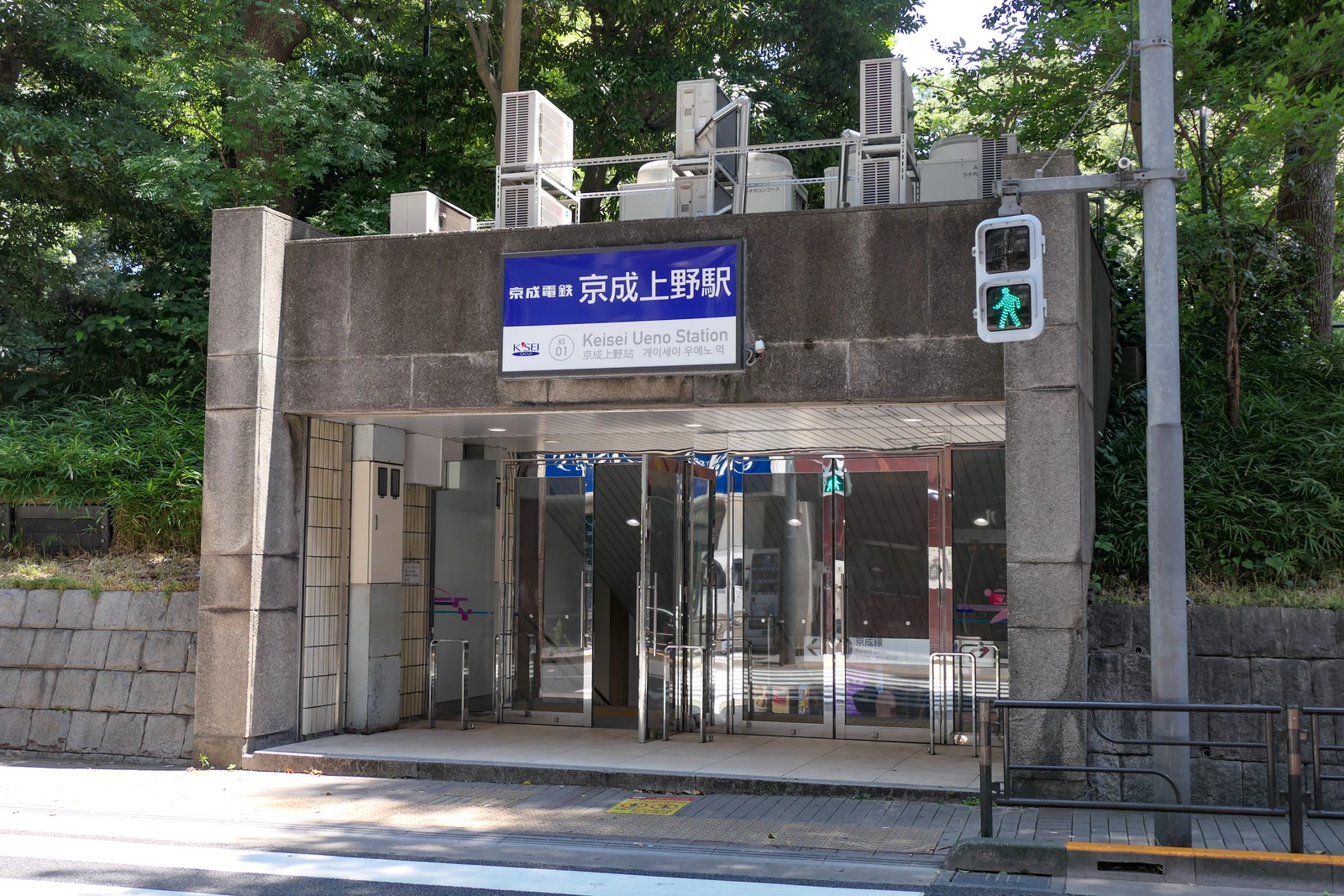
Because the station names sound almost identical, check the railway operator as well when planning your return journey. JR Okachimachi, Tokyo Metro Naka-Okachimachi, Tokyo Metro Ueno-hirokoji, and Toei Ueno-okachimachi all sit in the Okachimachi area, with entrances on different street corners. Keisei Ueno Station sits next to Shinobazu Pond, so you will need to head back to the north end to catch the Skyliner to Narita Airport. Save the full station name and specific exit on your map before setting off, and check the line icon whenever you search for "Okachimachi".
| First Stop | Station and Exit to Look For |
|---|---|
| North end of Ameyoko | JR Ueno Station Shinobazu Exit, or Tokyo Metro Ueno Station Exits 5a / 5b |
| South end of Ameyoko, Yoshiike | JR Okachimachi Station North Exit |
| Takeya | Tokyo Metro Naka-Okachimachi Station Exit 3 |
| PARCO_ya | JR Okachimachi Station South Exit, or Tokyo Metro Ueno-hirokoji Station Exit A1 |
| Museums in Ueno Park | JR Ueno Station Park Gate |
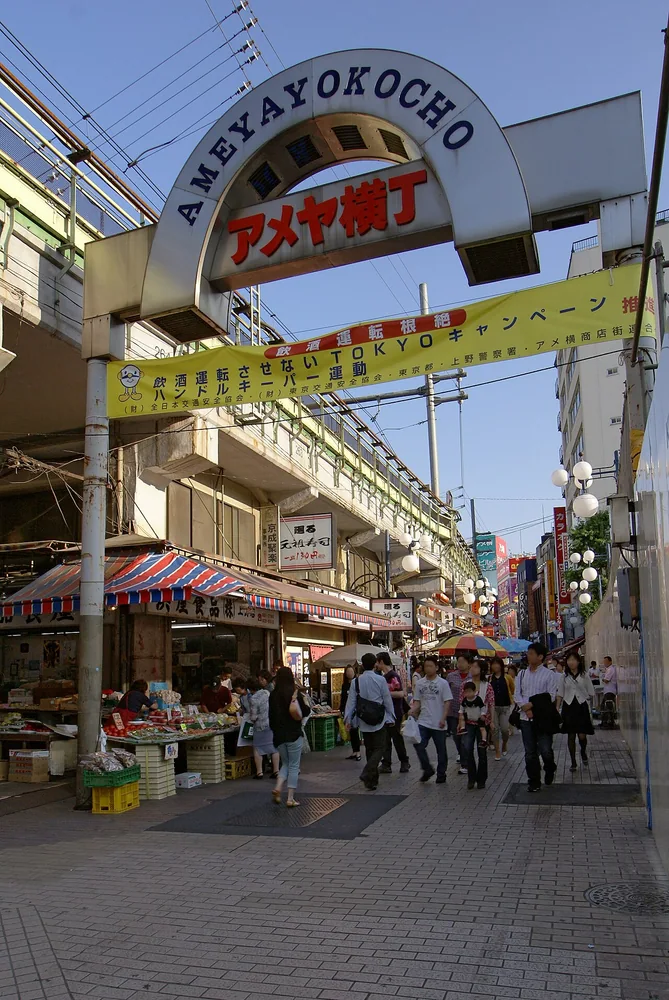
Walk from JR Ueno Station's Shinobazu Exit through Ameyoko to Takeya, Yoshiike, and Matsuzakaya in Okachimachi. Includes station exits, opening hours, rainy-day plans, and the November 2026 tax-free refund rules.
Where to Turn Off Along Ameyoko
Walking south from Ueno beside the railway tracks, you will reach Ueno 4-chome and spot the Ameyoko Center Building (Ameyoko Senta Biru). It makes a reliable landmark. If you are hunting for spices or cooking ingredients, head down to its basement floor. Near the tracks sits Ameyoko Plaza, a separate cluster of stalls. Keep both names saved if your group splits up to shop, as they make straightforward meeting points.
The basement food hall in Ameyoko Center Building stocks spices, Asian ingredients, and dried groceries. The ground-floor directory lists shoes, bags, clothing, and accessories, so check the floor board before climbing the stairs rather than wandering level by level. Standard building hours are 10:00 to 20:00; it closes on the third Wednesday of each month, except in December when it stays open daily. Next door, Ameyoko Plaza also lists general hours of 10:00 to 20:00, with individual eateries setting their own closing times. If you arrive on that closed third Wednesday, go straight to Niki no Kashi for sweets or down to Yoshiike in Okachimachi for groceries.
Niki no Kashi operates two storefronts in Ueno 4-chome. For a broad food haul, pin "Niki no Kashi Big-kan" at 4-6-1 Ueno, listed by the shopping street association as open 10:00 to 20:00. It carries snacks, seasonings, and packaged foods under one roof. If you are buying treats to share at work, count how many people you need to cover and check the number of individually wrapped pieces per bag. If you just want to sample a flavour yourself, stick to small packs, especially if you still have a museum visit or train ride ahead. Bag anything you plan to eat on the trip separately before leaving the shop so repacking at the hotel stays tidy.
At street stalls, a single price tag may refer to a whole box, one bag, or a set bundle, so check the quantity before paying. Look out for "yori" (starting from), "ko-iri" (pieces per pack), and "honjitsu kagiri" (today's special price). When stallholders call out deals, you can ask directly: "Kore wa hitofukuro no nedan desu ka?" (Is this the price for one bag?), or "Futatsu de ikura desu ka?" (How much for two?), and decide once you hear the total. Chain shops simply ring up the shelf tag and promotional signs. A bargain only pays off if you can actually finish the portion.
If you buy cut fruit or street snacks to eat on the spot, finish them in the designated standing area beside the stall. Step aside into a clear gap where you can keep your footing and leave the lane open before taking photos. Stalls along this stretch push crates right up to the walkway, so even two or three people stopping abreast to read prices forces everyone behind to squeeze past. Duck into an alcove by a shopfront when checking ingredients or digging for your wallet.
What Souvenirs to Pack and What to Eat in Tokyo
For nori seaweed, kombu kelp, bonito flakes, and traditional snacks, both Ameyoko and Yoshiike are worth browsing. With loose items, check whether they are sold by weight or by the packet; for gifts, choose sealed packs with clear ingredient lists, best-before dates, and storage instructions. On Japanese labels, look for "yo-reizo" (keep refrigerated), "yo-reito" (keep frozen), and "joon" (room temperature). Even the same type of dried fish may need different storage before and after opening. Read the labels in the shop and skip anything that needs continuous chilling.
Once you reach Okachimachi, Yoshiike's flagship store is ideal for specific culinary ingredients. The ground floor focuses on fresh seafood, Basement 1 stocks processed seafood, seaweeds, deli dishes, and general groceries, and Basement 2 carries alcohol and household goods. Yoshiike's food floors generally open from 09:30 to 20:30. If you want a packet of dried seaweed for soup at home, head straight to Basement 1 and take a moment to check the origin, usage notes, and pack weight. If your hotel room has a fridge, pick up prepared supper dishes at the end of your shopping loop. If you are just curious about a classic Tokyo fishmonger, a quick turn around the ground floor fits easily before catching your train.
Travellers staying somewhere with a kitchen can pick up fresh fish or chilled ingredients for dinner. Only buy short-shelf-life pastries if you are sharing them in Tokyo that same day. Before catching trains and flying home, prioritise compact, crush-resistant boxes with clearly labelled contents. Seaweed and rice crackers take up plenty of luggage volume, so count your recipients before grabbing oversized tins. For teas or seasonings, keep in mind that glass jars add weight, whereas sachets and pouches are far easier to split among friends. If a recipient has food allergies, keep the original outer box and Japanese ingredient label intact rather than decanting items.
When flying home, eat fresh meat, jerky, ham, and other processed meat products while you are still in Japan. Vacuum-packed meat is also subject to quarantine restrictions. Check snacks, retort pouches, and instant noodles carefully for meat chunks or meat-based fillings. If you are unsure about an item, check your home country's customs and biosecurity regulations before packing it and declare anything uncertain at the quarantine counter on arrival. Any ingredients you intend to cook at your accommodation are simpler to buy in a regular tax-included transaction than mixed into a tax-free souvenir receipt.
Checking Packaging Before Comparing Drugstore Prices
Save photos of both the front and back of any regular items on your phone before you shop. Check millilitres on eye drops, sheet counts on face masks, and gram weights on toothpaste, and remember that refill pouches make no sense if you do not already own the dispenser bottle. Even under the same brand name, always calculate the unit price across sizes and editions. A classic trap is seeing a facial wash bottle and its refill pouch side by side and grabbing the cheaper tag without noticing it is only a refill.
In the first shop you browse, note down the tax-included prices and exact product codes, plus one backup alternative. If that branch has all the right sizes in stock, buying everything at one counter saves you queueing all over again elsewhere. When shopping in a group, step out of the aisle to merge everyone's identical items onto a single shared note. Split up to check stock across nearby branches, then pay separately according to who is carrying what in their departure luggage. Keeping receipts separate is essential if companions fly home on different dates, since customs checks link the tax-free record to the individual buyer's passport.
Skincare ranges often share similar packaging across different scents, textures, and SPF ratings, so match the exact specification printed on the box. If testers are out on the counter, try them there rather than opening sealed packs back at the hotel. When buying on behalf of family, send a photo of the full box for confirmation before paying. For over-the-counter medicines, show a photo of your current box and its active ingredients to the in-store pharmacist or staff. If an item is out of stock, ask for an equivalent with the same active ingredients and purpose. Always follow the Japanese packaging and pharmacist advice on dosage, contraindications, and age limits rather than splitting large family-sized packs among relatives.
Factor the next hour of your schedule into any price comparison. If you are only missing one or two items and still need to reach the park or catch a train, set a clear cut-off for doubling back. If your main haul involves heavy bottles and you are staying near Ueno, buy small items first, drop them at your hotel, and walk back down Hirokoji towards Okachimachi for the rest. When grouping tax-free purchases for airport inspection, sort bags by receipt back in your room that evening so packing becomes effortless.
How to Split Your Visit Between Takeya's Two Buildings
Takeya sits east of JR Okachimachi Station along Kasuga-dori, roughly a 3-minute walk from the North Exit or steps from Naka-Okachimachi Station Exit 3 on the Hibiya Line. Head straight to "TAKEYA1" (Food & Daily Goods) for groceries, toiletries, cleaning supplies, and drugstore items. Walk next door to "TAKEYA3" (Fashion) for suitcases, travel bags, clothing, and bedding. Some map pins point to Takeya's general name first, so verify the building address before heading in: TAKEYA1 is at 4-12-1 Taito, and TAKEYA3 is at 4-11-3 Taito.
Takeya's main floors inside TAKEYA1 (Levels 1–3) normally open from 09:00 to 23:00. According to the official floor guide, biscuits, instant drinks, kombu, and packaged foods are on the 1st floor, while medicines, supplements, and cosmetics are on the upper Takeya-operated floors. DAISO on the 4th floor closes at 21:00, and Summit supermarket across Basement 1 and 2 generally stays open until 23:00. Pick up fresh supper items at Summit, but remember that if you want snacks and toiletries from Takeya's own floors processed on one tax-free receipt, you must check out together at the central 3rd-floor counter in TAKEYA1; Summit and DAISO ring up separately as regular taxed purchases. Plan your baskets before browsing to cut down on lift rides.
TAKEYA3 generally opens from 10:00 to 19:00, so if you are visiting both buildings, buy suitcases or anything requiring a fitting before moving on to the food hall. If you are unsure whether you need another suitcase, estimate how much space remains in your current bags and check both exterior dimensions and empty weight. Exterior measurements include wheels and handles, which is what airlines count towards baggage limits. If you want to transfer purchases into a new case right away, keep a foldable tote handy for later stops so you are not wheeling an empty suitcase into restaurants and chemists before repacking at the hotel.
Late arrivals to Ueno can easily slot Takeya in after dinner. If all you need is next-day breakfast, tea bags, and boxed snacks to take home, TAKEYA1 and the basement supermarket cover everything. If you want to browse bags and luggage in TAKEYA3, arrive well before 19:00 and leave time to test wheels and telescopic handles. Travellers doing a quick evening top-up can walk in with a short list and hit two or three aisles directly. If you are staying on the west side of Okachimachi, save fragile or chilled items for the very last stop.
West of Okachimachi: Yoshiike, Matsuzakaya, and PARCO_ya
Where Ameyoko meets Kasuga-dori, Yoshiike and the department stores sit on the west side of the JR tracks, while Takeya lies east down Kasuga-dori. If you only have an hour left, pick one side rather than rushing both. If you spot chilled seafood at Yoshiike before heading over to Takeya for a suitcase, note the aisle and come back for the perishable food on your walk back to Okachimachi Station. That saves carrying an extra bag and keeps cold items out of the fridge for less time.
Matsuzakaya Ueno is the place for formal boxed food gifts, cosmetics, and department-store clothing. Basement 1 and the 1st floor generally open from 10:00 to 20:00, Mezzanine 2 and the 2nd floor close at 19:00, and Floors 3–8 close at 18:30. The tax-free counter on Mezzanine 2 operates until 20:00. Start on the upper fashion floors first and pick up bulky gift boxes on the lower levels last. If you are catching a Shinkansen or connecting train later, leaving upper-floor shopping until close to closing time means getting caught out by the earlier 18:30 shutter.
PARCO_ya Ueno is about a 1-minute walk from JR Okachimachi Station's South Exit. Retail floors from Basement 1 to the 5th floor generally open 10:00 to 20:00, while the 6th-floor restaurant level normally runs 11:00 to 23:00, with individual last-order times. Because PARCO_ya and Matsuzakaya have separate entrances and addresses, pin the exact building you want. Stay in Okachimachi for dinner after your shopping is done, or work backwards from the 20:00 retail close if you still want to browse clothes after an early meal. For an afternoon bite, pick one of the restaurants offering continuous all-day service.
If part of your group is buying toiletries while others are browsing clothes, agree to meet at either the North or South Exit of JR Okachimachi Station. Decide your walking direction in advance if you plan to cover both sides of the street and leave from the same station. Travellers heading south from Ueno can finish Ameyoko, step into Matsuzakaya or PARCO_ya, and board JR at Okachimachi. Those with only Takeya on their list should use Naka-Okachimachi Exit 3 and ride the same Hibiya Line onwards.
Specialist Shops for Trainers and Trading Cards
High-volume trainer shops along the arcade are great for finding comfortable walking shoes. London Sports Ameyoko at 6-4-8 Ueno stocks trainers, sportswear, and swimwear, generally open 10:00 to 20:00. On discounted pairs, check the model code, outsole type, and left/right sizing tags, then try them on wearing the socks you actually walk in on holiday. Testing whether the forefoot pinches or the heel slips is far more reliable than converting your usual size from home. Because aisles are narrow, ask staff for the closest size first and compare from there.
To hunt down toys or sports and trading cards in person, check the shopping street's official directory by category before walking up and down. Popular series come in multiple waves and editions, so compare exact titles, character names, and product codes instead of relying on box art alone. For mint-in-box collectables, inspect the corners for dents and check the factory seals. If buying shokugan (candy toys) for children, check the box for small-part warnings and verify whether it is a blind single box or a labelled set. Leave rigid space in your suitcase if the display case, card sleeve, or box itself holds collector value.
If you are taking shoes, clothing, or collectables far from Tokyo, ask upfront whether wrong sizes or duplicates can be exchanged. When exchanges are permitted, photograph the receipt, shopfront, and price tag before heading back to your hotel, and note the return deadline. For shoes meant to be your main walking pair on the trip, lace up both feet and take several strides across the shop floor; if your toes brush the front, switch up a size or wider fit before buying.
Combining Ueno Park Museums with the Market
Both the Tokyo National Museum and the National Museum of Western Art pair cleanly with an Ameyoko shopping trip on the same day. With timed morning exhibition tickets, arrive via JR Ueno Station's Park Gate, enjoy the galleries unhurried, and walk down to the market afterwards. The National Museum of Western Art sits closest to the Park Gate; its permanent museum shop can be entered without an exhibition ticket and carries collection-inspired gifts, art postcards, and selected past exhibition catalogues. Even a quick stop before shopping is enough to pick up a postcard, whereas temporary special-exhibition shops follow the ticketed gallery route.
At the Tokyo National Museum, shops are spread across the Honkan (Japanese Gallery), the Toyokan (Asian Gallery), and the Main Gate Plaza, each with a different focus. Normally, the Toyokan shop is the place for books on Asian art, though the museum has announced that the Toyokan will be closed from 30 November to 31 December 2026; during that period, plan shop visits around the Honkan and Main Gate Plaza opening days. Smaller paper goods, bookmarks, and ukiyo-e motifs are easy to pick up at either of those two branches. For gallery routes and year-end opening dates, see our Tokyo National Museum guide. Nearby, the National Museum of Nature and Science has a permanent shop in Basement 1 of the Japan Gallery stocking specimens, field tools, and science kits; visitors who only want to shop can request a 30-minute shop pass at the general information desk.
For heavy exhibition catalogues, flip through a display copy first to check the language, format, and weight. If you are still walking the market afterwards, ask staff to wrap the book corners cleanly and keep food or drinks in a separate bag. Once your shopping bags get heavy, save the museum for another morning or drop purchases back at your hotel first. Picking just one museum per day leaves plenty of energy in the afternoon to browse Ameyoko and Okachimachi properly.
If you are leaving via JR, you can pick up last-minute gifts inside the ticket gates at ecute Ueno; passengers entering solely to shop will need a platform ticket or an eligible IC-card station-entry service. Those taking the metro or Keisei line can browse atré Ueno outside the ticket gates instead, where retail floors generally run 10:00 to 21:00 and restaurants and cafés open 11:00 to 22:30. If you only want one final stop for gifts, pick the complex directly along your departure route.
Tax-Free Shopping From November 2026: Pay Tax First
For tax-free purchases made from 1 November 2026 onwards, travellers pay the full tax-included price at the till. Eligible visitors register their passport details in store and select a refund method following shop instructions. As a rule, a single traveller must spend at least ¥5,000 before tax at the same shop on the same day to qualify. Under the revised system, general goods and consumables can be combined towards that total. In department stores, spending across different boutiques only combines if they share the same central tax-free counter; purchases at two unrelated drugstores must each meet the minimum separately.
When shopping at Takeya and Matsuzakaya, factor in queueing time at the tax-free counter as well. Takeya lists a ¥0 handling fee for tax-free processing under the new system. At Matsuzakaya Ueno, eligible same-day purchases are processed at the Mezzanine 2 tax-free counter with both items and receipts presented, subject to a refund handling fee of up to 2.3% of the tax-excluded total. Before adding an extra box just to reach the threshold, weigh how much you will actually use against the extra upfront spend. Track your tax-free refund separately from in-store savings, and make sure your card limit or cash budget covers the full tax-included total at checkout.
When tallying up a drugstore basket whose price tags show both "zeinuki" (tax-excluded) and "zeikomi" (tax-included) figures, use the tax-excluded total to check the ¥5,000 threshold and the tax-included total to budget at the register. For instance, if two items come to ¥4,800 before tax and a third item is another household staple you genuinely need, add its tax-excluded price in. If that third item is a snack you plan to open back at the hotel, pay for it separately as a regular taxed purchase. Keep your paper receipts alongside the tax-free registration slip so you can trace any refund back to the exact store.
The revised rules do away with sealed bags for consumables, so simply pay regular tax at the till for any food, drinks, or cosmetics you plan to use during the trip. According to the Japan Tourism Agency, customs verifies eligibility per registered transaction: if a single tax-free receipt covers tea, biscuits, and face masks and you eat the biscuits before leaving Japan, the entire transaction loses its refund eligibility. Separating immediate-use items at the register on the day of purchase is far easier than sorting packets in your hotel room later.
You must depart Japan within 90 days of purchase and complete customs verification at your final exit airport or port. When flying out, bring your passport and the purchased goods to the departure hall verification point before checking your hold luggage. At Narita Airport's international terminals, follow airport signage to the tax-refund kiosks or connect to the dedicated departure-floor Wi-Fi to submit your claim via Visit Japan Web. If the system flags an item for physical inspection, present that purchase at the customs counter. Once cleared, the refund is issued via the method chosen in store; even where airport cash-refund machines are available, check whether the store you bought from supports that payout option.
Adapting Your Route for Rain, New Year, and Children
In light drizzle, you can still take a short walk down Ameyoko and duck into the Ameyoko Center Building basement or Ameyoko Plaza for a spell. Once the rain gets heavy enough that umbrellas bump into everyone on the street, move meals and shopping indoors under one roof. Heading into PARCO_ya from JR Okachimachi South Exit or staying inside atré Ueno next to JR Ueno cuts down on juggling shopping bags, umbrellas, and your phone outdoors. With young children, wait out heavy showers inside a department store where seating is easier to find and lunch can come first; agree on an indoor meeting point at the station and slip wet umbrellas into waterproof sleeves before entering shops.
At the end of December, Ameyoko fills with locals buying New Year ingredients such as crab, kazunoko herring roe, and salmon roe. If you want to watch the fishmongers' banter and festive market energy, allow time for a slow stroll and pause at the edges of the busiest junctions. To stock up reliably on daily goods, stick to Takeya or station complexes with published schedules. For the 2026–2027 year-end holiday, Takeya has announced that TAKEYA1 Food & Daily Goods closes early at 20:00 on 31 December 2026 while TAKEYA3 keeps its 10:00–19:00 hours; both buildings, along with Summit and DAISO, close from 1 to 3 January 2027 and reopen as usual on 4 January. Stock up on New Year's Day breakfast items during the day on 31 December. Nearby, Ueno Marui closes its retail floors from 31 December 2026 to 3 January 2027, though its Basement 1 Starbucks stays open as usual.
During cherry blossom season, visit Ueno Park in the morning and walk down to the market around midday or afternoon with one priority shop in mind. Carry only a small bag through the park and leave heavier purchases until you are back on the street. If some in your group prefer blossom viewing while others just want to shop, split up from the Park Gate and Shinobazu Exit and regroup outside the Hirokoji Exit later. If you stay together the whole time, stopping after snack shopping works well, saving multi-storey department stores for a rainy day or another afternoon.
To beat weekday crowds, start from Ueno after 10:00 towards Okachimachi, hit only the specific market stalls on your list, and move indoors for lunch. Starting in the evening? Trim the walk to either the Ueno Station end or the Okachimachi end. Ueno Marui normally opens 11:00 to 20:00, making its MUJI and Loft branches handy near the station for travel organisers and small essentials. If you have already spent a few nights in Ueno, check shops closest to your hotel first to avoid doubling back one last time.
Departure Day from Narita: Leave the Last Bag Near Keisei Ueno
If you are staying in Ueno and flying out of Narita, pick your specific Skyliner departure first and fit your final shopping around it. The Keisei Skyliner runs direct from Keisei Ueno Station with reserved seating on every train. Alight at Narita Airport Terminal 1 Station for Terminal 1, or one stop earlier at Airport Terminal 2 Station for Terminals 2 and 3. Narita Airport's access guide puts the walk from the train station at about 5 minutes to Terminal 2 and 10 minutes to Terminal 3. Build in extra minutes to reach your airline check-in desk and complete pre-bag-drop tax-free verification.
For morning flights, finish your shopping the evening before. With an evening flight and an hour to spare, store your bags at your hotel or near Keisei Ueno first, then dip into the north end of Ameyoko. Keisei Ueno Station provides coin lockers plus a staffed left-luggage counter outside the ticket gates, generally open 09:00 to 18:00. If you are storing large suitcases, choose a locker bank or counter close to the gate you will depart from. Leaving bags on the JR Ueno side means walking back to collect them and then hauling them across to Keisei Ueno, which often takes longer than buying one last box of sweets.
If you only have one household item left on your list, you can pick it up right outside Keisei Ueno Station's ticket gates. The station lists a Matsumoto Kiyoshi branch generally open 09:00 to 22:00 and a souvenir shop outside the gates open 09:00 to 19:00. Picking up biscuits at the station cuts out extra walking with heavy bags. If you do head down to larger Okachimachi stores for specific items, pack your tax-free goods and receipts neatly before returning to the north end so all that remains at the station is collecting your luggage and boarding on time.
With half a day free to cover the entire market, take JR to Okachimachi, browse the shops near Kasuga-dori first, and work your way north towards Ueno. If you are departing later from Keisei Ueno, lock in bulky gifts at the south end and leave just one familiar stop at the north end. Travellers with large suitcases are better off keeping final purchases on one side of the area, picking up half their bags from the hotel, and heading straight to storage or the station. For walking routes between accommodation around Keisei Ueno and Okachimachi, see our Ueno, Keisei Ueno, and Okachimachi hotel comparison.
Before entering the ticket gates, keep your passport, boarding details, and tax-free purchase receipts within easy reach. Quick access matters more than neat wrapping when items may be requested for inspection. At the airport, complete customs verification via the kiosk or your phone before checking hold bags and clearing security. Keep snacks for the wait at the gate in your cabin bag, and pack each tax-free receipt's items together near the top or outer pocket of your suitcase in case an officer asks to see them.
A few useful answers
Which exit should I take from JR Ueno Station to reach Ameyoko?
Take the Shinobazu Exit. To start from the southern end and walk north, use JR Okachimachi Station's North Exit; from Tokyo Metro Ueno Station, use Exits 5a or 5b.
Are Takeya's snacks, drugstore items, and suitcases in the same building?
Snacks and drugstore items are in TAKEYA1, while suitcases and clothing are in TAKEYA3. Takeya's main floors in TAKEYA1 generally open 09:00 to 23:00, and TAKEYA3 generally opens 10:00 to 19:00.
Where can I shop in Ueno if it rains?
Next to Ueno Station, browse atré Ueno; in Okachimachi, head into Matsuzakaya, PARCO_ya, or Takeya. In lighter rain, you can shorten the outdoor stretch and duck into Ameyoko Center Building or Ameyoko Plaza.
Do Ueno drugstores still deduct tax at the till?
From 1 November 2026 onwards, you pay the tax-included price in store. Eligible travellers who meet the spend threshold must depart within 90 days, clear customs verification before checking hold luggage, and receive their refund via the method registered at purchase.
Which station do I use for the Skyliner from Ueno to Narita Airport?
Board at Keisei Ueno Station. Get off at Narita Airport Terminal 1 Station for Terminal 1, or Airport Terminal 2 Station for Terminals 2 and 3.
Official information and references
Sources used in this guide.
- GO TOKYO - Ameyoko and Nearest Stations
- JR East - Ueno Station Map
- Tokyo Metro - Ueno Station Step-Free Access
- Ameyoko Center Building - Opening Hours and Access
- Ameyoko Center Building - Floor Guide and Shop Categories
- Ameyoko Plaza - Opening Hours and Access
- Ueno Ameyoko Shopping Street - Niki no Kashi Big-kan
- Ueno Ameyoko Shopping Street - Hamaya Foods New Year Ingredients
- Ueno Ameyoko Shopping Street - London Sports Ameyoko
- Ueno Ameyoko Shopping Street - Shop Directory
- Mitsui Fudosan Retail Management - Yoshiike Food Hall Hours
- Yoshiike Flagship Store - Floor Guide
- Customs Administration, Ministry of Finance (Taipei Customs) - Passenger Food Carry-On and Quarantine Guidelines
- Takeya - Building Hours and Access
- Takeya - Floor Guide
- Takeya - 2026–2027 Year-End and New Year Opening Hours
- Takeya - Tax-Free Refund Guide from November 2026
- Takeya - TAKEYA1 Central Checkout and Building Guide
- Matsuzakaya Ueno - Floor Opening Hours
- Matsuzakaya Ueno - Tax-Free Service and Handling Fee
- PARCO_ya Ueno - Opening Hours and Entrances
- The National Museum of Western Art - Museum Shop Access
- Tokyo National Museum - Museum Shops
- Tokyo National Museum - Late 2026 Exhibitions and Toyokan Closure Notice
- National Museum of Nature and Science - Museum Shop Pass
- ecute Ueno - Ticketed Gate Shop Entry Rules
- atré Ueno - Opening Hours
- Ueno Marui - Opening Hours and Stores
- Marui - 2026–2027 Year-End and New Year Opening Hours
- Japan Tourism Agency - Revised Tax-Free Shopping Refund System
- Keisei Electric Railway - Skyliner Reserved Seating and Route
- Keisei Electric Railway - Keisei Ueno Station Baggage Services
- Narita International Airport - Walk Times Between Rail Stations and Terminals
- Narita International Airport - Departure Tax-Free Customs Inspection