Buy nori seaweed and kitchen knives at Uogashi Yokocho, have lunch and a foot bath at Senkyaku Banrai, then browse LaLaport Toyosu. Includes rail and bus routes, 2027 market closure dates, plus family and wet-weather plans.
- Region & Focus
- TokyoNeighbourhoods and shopping
- Reading Scope
- 20 min read · 13 chapters · 6 Q&As
- Official Verification
- 39 official sources checkedUpdated 22 November 2026
- Key Topics
- NeighbourhoodsFoodRail travel
Chapter Route Map (tap any stop)
- Pick the right station before you set off
- Taking the Metro from Ginza, or the Yurikamome and BRT from Shimbashi
- Uogashi Yokocho: head to Block 6, fourth floor in the morning
- How to pick nori, dried goods and kitchen knives you will actually use
- Plan around the fisheries calendar—some Wednesdays are open
- Senkyaku Banrai: browse the second floor before committing to a sit-down meal
- Free foot bath on the eighth floor; buy a Manyo Club pass if you want a full bath
- Navigate LaLaport Toyosu by building—pick two anchor shops first
- Pushchairs, KidZania and splitting up a group
- Stick underground in heavy rain; pick one short stretch of waterfront in the cold
- Pairing Toyosu with Tsukiji, Ariake or Odaiba
- Pay tax-included prices in store and claim your refund at the airport
- How to pace half a day, a full day or a check-out morning
- Quick Q&A
Shopping in Toyosu splits neatly into morning and afternoon. For nori seaweed, bonito flakes or Japanese kitchen knives, arrive at Shijo-mae Station in the morning and head into Uogashi Yokocho in Block 6 of Toyosu Market. For grilled seafood and boxed sweets, neighbouring Toyosu Senkyaku Banrai runs from morning until early evening and stays open even on market holidays. Clothing, children's wear, a supermarket and a food court are concentrated at LaLaport beside Toyosu Station, two stops away on the Yurikamome line. If you are travelling with children, caught in heavy rain, or arriving from central Tokyo in the afternoon, starting straight at Toyosu Station saves time and effort.
Pick the right station before you set off
On a map, 'Toyosu' looks compact enough to cover from a single station. Searching for the specific shop or complex you want in your navigation app is much faster. For culinary dried goods and specialist cookware, look for Uogashi Yokocho and get off at Shijo-mae Station. For a seafood meal, Japanese gift shops or a foot bath, use the same station and follow the second-floor skybridge to Senkyaku Banrai. Only start at Shin-Toyosu Station if you have a timed ticket for teamLab Planets; head to Toyosu Station for children's clothes and high-street brands.
If you only have two hours, pick one side. Around Shijo-mae, your time is best spent picking up dried ingredients and choosing one spot to eat. The Toyosu Station side suits anyone shopping from a list of sizes or specific items—shoes, clothing and daily essentials are spread across different wings, and trying things on with children requires factoring in a break. If you just want a waterfront photo, the waterside promenade outside LaLaport Building 1 saves you a separate trip to Shijo-mae.
Covering both sides works provided you can arrive in the morning and it is a market trading day. Put the early-closing market shops first and leave the late-closing shopping centre for afterwards so your schedule can absorb a lunch queue. If you are having breakfast in central Tokyo before coming out, choose one side based on the hours left. Anyone buying heavy cookware, ceramics or bulky bags of clothes should leave the heaviest haul until last, near the station you will use to head back to your hotel.
| What you want to do | Station to exit | Where to head first |
|---|---|---|
| Buy nori, bonito flakes and kitchen knives | Shijo-mae (U14) | Market Block 6, Fisheries Intermediate Wholesale Market Building, 4F |
| Eat seafood, buy boxed souvenirs and soak in a foot bath | Shijo-mae (U14) | Senkyaku Banrai 2F skybridge |
| Shop for clothes, visit the supermarket and eat with children | Toyosu (Y22 / U16) | LaLaport Building 1, towards Tokyo Metro Exit 2b |
| Visit teamLab Planets | Shin-Toyosu (U15) | Museum entrance, at your ticketed entry slot |
Buy nori seaweed and kitchen knives at Uogashi Yokocho, have lunch and a foot bath at Senkyaku Banrai, then browse LaLaport Toyosu. Includes rail and bus routes, 2027 market closure dates, plus family and wet-weather plans.
Taking the Metro from Ginza, or the Yurikamome and BRT from Shimbashi
From the Ginza area, catch the Tokyo Metro Yurakucho Line from Ginza-itchome Station (Y19) towards Shin-Kiba and alight at Toyosu (Y22). You can board the same line by transferring from JR Yurakucho Station. For LaLaport, follow signs for Exit 2b to the underground entrance. As the complex spans several buildings, once you see Toyosu Bayside Cross you can use the floor-level passages on the station side—check which building your target shop is in before looking for the floor.
If you are heading to the market first, exit Tokyo Metro Toyosu Station via Exit 7—which has a street-level lift—and follow signs to the Yurikamome line. The two operators use separate ticket gates. From Toyosu (U16) towards Shimbashi, the train stops at Shin-Toyosu (U15) and then Shijo-mae (U14). In reverse, riding from the market back to Toyosu is the quickest hop between the two areas. An adult single paper ticket is ¥190, or ¥189 with a transport IC card. If you are only travelling back and forth between Toyosu and Shijo-mae, the ¥820 adult one-day pass costs more than two single fares, so save the pass for days when you are riding further along the waterfront.
If you are staying around Shimbashi, take the Yurikamome directly from Shimbashi (U01) to Shijo-mae, or check the Tokyo BRT stop timetable. Tokyo BRT runs services from Shimbashi to 'Toyosu-shijo-mae' and 'Michi-no-Terrace Toyosu (Toyosu-shijo-mae)'. Both stops are walkable to the market; the Tokyo Metropolitan Government visitor access map lists them at roughly four minutes and eight minutes on foot respectively. The adult Tokyo BRT fare is ¥240 by IC card or ¥250 in cash or contactless card (¥120 and ¥130 for children). From Shimbashi, look for Harumi-Toyosu Route services marked 'Michi', or trunk-route buses stopping at B03 Toyosu-shijo-mae. Harumi-Toyosu Route buses showing only 'Toyosu' on the destination display terminate near B23 by Toyosu Station, so check carefully if you are heading for market souvenirs. If you are taking children to the early-morning tuna auction with a strict check-in time, the Yurikamome from Shimbashi is easier to time reliably.
Travellers staying in Kachidoki or Tsukishima often spot the Toei Oedo Line on the map first. At Tsukishima, you can change inside the station to the Tokyo Metro Yurakucho Line and ride one stop towards Shin-Kiba to Toyosu; neither Toyosu nor Shijo-mae has an Oedo Line platform. To continue from Toyosu Market to Odaiba, board the Yurikamome at Shijo-mae towards Shimbashi, passing Ariake along the way. Searching exact station names in your map app gives far more accurate journey times than typing 'Toyosu' as a neighbourhood.
Uogashi Yokocho: head to Block 6, fourth floor in the morning
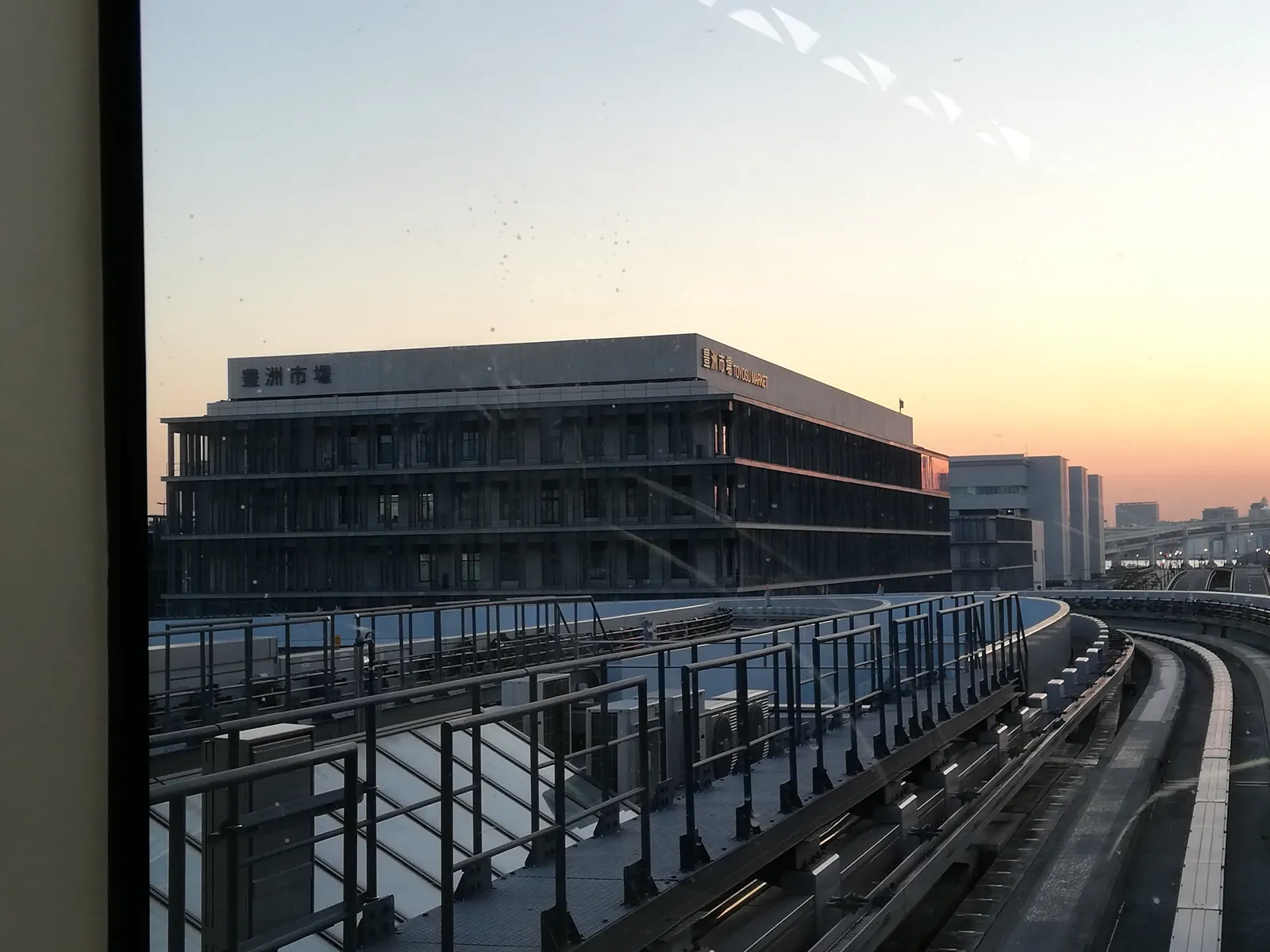
After tapping out of the ticket gates at Shijo-mae Station, stay on the elevated pedestrian deck and follow signs for the Fisheries Intermediate Wholesale Market Building and Block 6. General visitors enter through the public entrance and head up to Uogashi Yokocho on the fourth floor. Wholesale trading and logistics occupy the lower levels, so the building separates visitor and commercial foot traffic. If you want breakfast, there are eateries on the third floor of the same building as well as dining halls in other blocks—pick the floor first and check queue lengths rather than blindly following the crowd.
The Tokyo Metropolitan Government lists public viewing walkways and the dining and retail areas as open from 05:00 to 17:00 on market trading days, while Uogashi Yokocho's official site notes hours from early morning until around midday. You can still enter the market building in the afternoon, though many specialist stalls will already have pulled down their shutters. Individual shops keep their own hours, so if you dislike waiting, arrive in the morning, visit your must-buy stall first, and only then join the breakfast queue. Even if your shopping takes just half an hour, you will still have plenty of time to stroll back towards Toyosu Station.
The first-floor wholesale market sells to trade buyers; everyday groceries and retail-ready ingredients for general visitors are concentrated on the fourth floor. After watching the market floor from the viewing windows, you can browse the upper gallery for sheets of nori, kombu kelp for dashi stock, tamagoyaki rolled omelette and tableware. If you came hoping to buy a whole fresh fish, switch plans to a cooked meal or time your trip for one of the public fresh-fish sales days. Weekday market operations run around commercial buyers, unlike a supermarket fish counter.
If you are only here to shop, you can skip the tuna auction in Block 7 altogether. To include the auction, turn towards Block 7 from Shijo-mae Station. The auction-level viewing deck requires winning an advance lottery, while the general upper viewing gallery is open without booking on trading days. For the January 2027 sessions announced by the metropolitan government, applications run from 15:00 on 2 December 2026 to 23:59 on 8 December 2026 (JST), with results released on 17 December. When booking hotels and planning your first train, check the meeting time on your winning slot first and schedule Block 6 shopping afterwards. For planning the order of the different market blocks alongside shopping, pair this route with our Toyosu Market visitor guide.
How to pick nori, dried goods and kitchen knives you will actually use
If you want a few light, packable ingredients, start at Maruyama Noriten or Hayashiya Noriten. For home cooking, choose nori by how you plan to use it—full or pre-cut sheets for rice balls, and shredded styles for sprinkling over rice. For Japanese dashi stock, pair kombu kelp from Kanbutsu Akiyama with bonito flakes from Wadakyu on the same sweep. Comparing packet weights and storage instructions is more practical than just comparing sticker prices. If you are sharing souvenirs among friends, individually sealed small packs save you from having to split a large gift box later.
Cookware is worth the detour only when you know what job it needs to do. For everyday home cooking, look at household knives at specialist bladesmiths such as Aritsugu or Togen Masahisa Shoten, and talk through what you normally chop, which hand you use and how the handle feels in your grip. A sashimi slicer or a heavy deba fish-butchering knife each has a narrow role; if you want a blade you will reach for daily, start with meat and vegetable prep. Bamboo sushi mats, whetstones and pots in various sizes are also available from specialist stalls. Ask whether fragile or heavy pieces can be packed securely, and check whether you can drop them back at your hotel later in the day.
For local snacks and ready-to-eat items, the Uogashi Yokocho directory includes tamagoyaki, pickles, miso and bento boxes. Check the label on anything fresh—eat tamagoyaki the same day, and reserve sealed, ambient-stable items for long journeys home. Eating and drinking are prohibited in the market corridors and on corridor benches, so take a seat inside a restaurant or save takeaway bentos for a designated dining area.
At the end of the year, shopping at Uogashi Yokocho for New Year ingredients—simmering kombu, sweet black beans, chestnuts, dried soba noodles for New Year's Eve and small table accessories—is far easier to plan than chasing generic seafood gift hampers. When picking a last-minute gift box, think about how the recipient cooks: keen home cooks appreciate proper dashi ingredients, whereas office colleagues are better served by individually wrapped snacks. If you are continuing on to Odaiba or a shopping centre afterwards, flat, room-temperature packs with minimal glass jars are easiest to carry on the train.
Plan around the fisheries calendar—some Wednesdays are open
Check the Fisheries column on the Tokyo Metropolitan Central Wholesale Market annual calendar before locking in dates. Uogashi Yokocho follows market trading days, and around public holidays you cannot assume which weekdays are closed. For instance, the fisheries market is closed on 23 November and 23 December 2026; on 30 December only the fruit and vegetable section closes while fisheries stays open. Fisheries then closes for the New Year break from 31 December 2026 to 4 January 2027, so year-end shoppers should pick an open fisheries date first. Trading resumes on 5 January, then on 6 January fisheries is open while produce closes—anyone visiting both buildings needs to check both columns.
If your visit falls during the New Year break and you switch to a shopping-centre day, note that LaLaport adjusts its festive hours too. On 31 December 2026, retail shops open at 10:00 and all sections close at 18:00. On 1 January 2027, retail and the food court close at 19:00 and restaurants at 20:00, though individual outlets may publish separate hours; normal trading resumes from 2 January. If you arrive on the afternoon of 31 December, sort out dinner or next morning's breakfast first and spend whatever time remains browsing. On New Year's Day, remember the food court shuts an hour earlier than sit-down restaurants.
For public fresh-fish sales between late 2026 and early 2027, look out for the Tokyo Metropolitan Government's 'Sanriku-Joban & Noto Yumeichirakuza' pop-up market. Held on the fourth floor of Block 6, the next announced trading dates are 5 and 19 December 2026, 16 and 30 January 2027, and 6 and 20 February 2027, from 09:00 to 13:00. Stock ranges from fresh fish fillets and sashimi to processed seafood and tinned specialities. If you still have several stops left in your day, tinned regional goods make an easy-to-carry souvenir; save chilled items for your final stop if you have a kitchen or plan to eat them that evening.
There is still a sensible way to visit Shijo-mae on a weekend or market holiday. Skip the wholesale market buildings and make Senkyaku Banrai your first stop. It operates independently of the wholesale market and stays open on market closures, barring occasional maintenance or severe-weather closures posted on its website. If your main goal for lunch is a specific restaurant inside the wholesale market, move the trip to a trading day rather than settling for whatever is open near the station. If you just want a stroll and a bite to eat, save Senkyaku Banrai and the foot bath for a holiday and keep the market for another morning.
Senkyaku Banrai: browse the second floor before committing to a sit-down meal
The skybridge from Shijo-mae Station feeds directly into the second floor of Senkyaku Banrai. Step into Toyosu Menuki Odori and Mekiki Yokocho to browse street snacks, prepared foods and Japanese-style gifts. Toyosu Engimono's official shop page lists hours of 10:00–18:00, making this floor ideal for boxed sweets and compact traditional souvenirs. Strolling a loop here works well if some people in your group just want a sweet treat and want to split up briefly. If you want a proper sit-down meal, check which restaurants are open on the third floor first, then come back down the same way to finish your shopping.
Official Tokyo tourism listings put general retail hours at 10:00–18:00, second-floor Mekiki Yokocho dining until 18:00, and third-floor restaurants until 20:00 (with some staying open to 22:00 and a handful of second-floor stalls opening at 09:00). If you arrive in the afternoon, tackle the souvenir shops that shut at 18:00 before spending two hours in the baths, otherwise only dinner spots will still be serving when you emerge. For dinner around 19:00, check individual restaurant pages and last-order times and leave early-closing counters for another day.
While fish, prawns and scallops dominate Senkyaku Banrai, non-seafood options are also available. If your group cannot agree on what to eat, look at the curry or ramen spots on the first floor, or head up to the third floor for full sit-down menus. Seafood rice bowl prices and portion sizes vary widely between stalls, so check whether the menu price covers a full bowl, a smaller serving or a set with side dishes. If you only want a taste, buy one ready-to-eat snack and save your main meal budget for dinner. Groups wanting to sit together should pick a restaurant with clear table seating rather than queueing at separate stalls and hunting for space afterwards.
Free foot bath on the eighth floor; buy a Manyo Club pass if you want a full bath
Entry to the Senkyaku Banrai shopping lanes is free. The eighth-floor 'Senkyaku Banrai Ashiyu Teien' foot bath garden is also free, typically open 09:00–22:00, and makes an easy short rest straight from the shopping floors. The tenth-floor 'Tenbo Ashiyu Teien' panoramic foot bath sits inside the paid hot-spring facility. Decide which floor you want before taking the lift; if someone in your party does not want a full bath, arrange to meet back on the second floor after the free foot bath.
For the full communal baths, Tokyo Toyosu Manyo Club's standard admission costs ¥3,850 for adults plus ¥150 bathing tax, covering loungewear, towels and general facilities. Standard entry runs from 10:00 until 03:00 the following morning, with a late-night surcharge after 03:00. If you only want a shower and quick soak after an early market visit, check the 05:00–09:00 morning bath slot at ¥2,200 for adults plus ¥150 bathing tax. Day-use bathing and overnight rooms are priced separately. If you want to shop and then bathe, finish your shopping before 18:00 and enter the paid spa afterwards.
In winter, put your coat back on before walking out of the heated spa area onto the skybridge. The eighth-floor foot bath is outdoors, so your upper body is exposed to the breeze. If it is raining and you simply need a rest, have lunch indoors first and go up to the foot bath once the weather clears instead of waiting for a bench in the wind. Under facility rules, children aged seven and over, or at least 120 cm tall, must use the bath corresponding to their gender; if one adult is accompanying a child who would need to enter separately, stick to the free foot bath instead.
Navigate LaLaport Toyosu by building—pick two anchor shops first
Coming up from Toyosu Station's underground passage brings you closest to Building 3 on the station side, while most major fashion outlets and KidZania are in Building 1. Shop locations follow a 'Building + Floor + Port' format. UNIQLO is on the second floor of Building 1 North Port, and MUJI is on the second floor of Building 1 South Port—same floor, opposite wings. Knock out clothes and home basics on the second floor first before heading downstairs to eat. If you fancy picking up tea or browsing furniture midway through, stick to the wing you are already in rather than hauling bags back and forth across the connecting bridges.
The Marina Kitchen food court is on the first floor of Building 1 South Port. Families looking for a quick lunch can head straight here for udon, tempura rice bowls and other fast counters. For groceries after clothes shopping, SANWA supermarket is on the first floor of Building 2 and is listed on the mall's shop page as open 10:00–22:00. If you have a kitchenette or want breakfast supplies for the next morning, leave chilled items until the very end. Travellers heading back to central Tokyo later in the evening can grab bottled water and breakfast here rather than lugging food around all day from Shijo-mae.
General shops and service counters open 10:00–21:00, the food court runs 11:00–21:00, and some restaurants stay open until 23:00. If you arrive at opening time, bear in mind the food court starts an hour later at 11:00. For an early coffee nearby, the centre's individual hours table lists Starbucks in Building 3 B1F as opening at 07:00, well ahead of most retail stores. Checking which buildings hold your target shops and picking one lunch spot beforehand saves backtracking through the wrong wing.
Pushchairs, KidZania and splitting up a group
With a pushchair from the Yurakucho Line, take the underground passage towards Exit 2b into LaLaport and use the lifts inside. Building 1 floor maps mark baby rooms, nappy-changing stations and accessible multi-purpose toilets. The centre also provides coin-return loan pushchairs for children aged 4 months to under 48 months and under 100 cm tall, available in Building 1—save a pin or note on your phone of where you picked it up if you are also carrying luggage. Senkyaku Banrai currently offers no left-luggage or pushchair storage service, so factor your pushchair into meeting plans if your group wants to bathe or split up there.
KidZania Tokyo is on the third floor of Building 1 North Port. Standard sessions run 09:00–15:00 and 16:00–21:00, with the venue cleared between sessions. When spaces remain, the official site accepts same-day online bookings up to 12:00 for the first session and 18:00 for the second, though late booking cut-offs differ from session entry times. If you want the full session, arrive according to the official check-in schedule. Since most mall shops only open at 10:00, the morning session uses a dedicated check-in route; the official assembly point for the early slot is on the first floor of Building 1 Center Port. Before the afternoon session starts, you can browse for clothes, grab an early snack and head up to the third-floor entrance.
When some of your group just want to shop, set your pre-meal meeting point at a specific shop along a main corridor or at the entrance to the food court in Building 1—saying 'first floor of LaLaport' leaves people waiting in different buildings. Parents with toddlers can time nappy changes around lunch, while everyone else stashes heavy bags in Building 1 coin lockers or at the centre's luggage services. If the lockers in your wing are full, pause buying rather than trekking across buildings hunting for an empty one.
Stick underground in heavy rain; pick one short stretch of waterfront in the cold
In pouring rain with luggage, the simplest plan is to take Exit 2b from Yurakucho Line Toyosu Station, grab a bite on the station side of Building 3, and walk indoors along the connecting walkways into Building 1. If you still want to show children the market on a trading morning, take the Yurikamome to Shijo-mae and use the pedestrian deck straight into Block 6. Because the skybridge is elevated and exposed to wind and rain, anyone who dislikes the chill can stick to one market building and ride straight back. Riding the two stops between LaLaport and Shijo-mae saves pushing a buggy across wet street crossings under an umbrella.
Tokyo Gas Science Museum ('Gas-tena-ni') next to Toyosu Park closed permanently on 23 September 2026. Older maps and station signs may still show the name; for an indoor children's activity on a rainy day, book the cinema inside LaLaport Building 1 or stay inside the mall for lunch and a break. If your family already has KidZania tickets, head straight to your booked session instead of looking for indoor backups around the park.
For waterside views, pick one spot on whichever side you are visiting. From Toyosu Station, step outside LaLaport Building 1 to stretch your legs in Koto City's Toyosu Park and walk back the same way. From Shijo-mae, head towards the tip of the pier in Toyosu Gururi Park for views of the Rainbow Bridge. Koto City lists the park promenade at roughly 4.5 km, so with shopping bags in hand, walk just a short section and save the exposed tip for calmer weather. If it is nearly dark when you leave the market, take a quick look at the water and head back to the train.
If you are walking on to Shin-Toyosu for teamLab Planets, keep raincoats, wet umbrellas and shopping bags manageable. Official ticketing access notes put the museum roughly one minute on foot from Shin-Toyosu Station, so in bad weather you can hop on the Yurikamome for one stop straight to your timed slot. When combining half a day of shopping and eating with the exhibition, avoid buying fragile ceramics or bulky sweet boxes beforehand—do your shopping afterwards so you do not have to repack everything for the museum lockers.
Pairing Toyosu with Tsukiji, Ariake or Odaiba
After eating sushi or street food in Tsukiji Outer Market, continuing to LaLaport at Toyosu Station in the afternoon is the smoothest pairing. Tsukiji excels for graze-as-you-go snacks and also has Tsukiji Uogashi for general shoppers. Only add a morning stop at Toyosu Block 6 if you want specialist cookware or specific grades of dried goods. When combining both markets, start at whichever stall has the earliest closing time. From Tsukiji, walk to Shintomicho Station on the Yurakucho Line, board towards Shin-Kiba and ride via Tsukishima to Toyosu; if you had a late breakfast, go straight to the shopping centre and skip an extra transfer to Shijo-mae.
If you are attending an exhibition at Tokyo Big Sight on the same day, Ariake makes the cleanest next shopping stop. Heading towards Shimbashi from Shijo-mae, the Yurikamome stops first at Ariake-tennis-no-mori and then Ariake. Ariake Garden lists walks of roughly three minutes from Ariake-tennis-no-mori Exit 2A, four minutes from Ariake Exit 2B, and six minutes from Kokusai-tenjijo Station Exit A on the Rinkai Line. Get off one stop early if shopping is your goal, or stay on to Tokyo Big Sight Station for the exhibition halls. After the show, returning towards Shinjuku via the Rinkai Line to Osaki and changing to JR from Kokusai-tenjijo avoids doubling back.
Over in Odaiba, DiverCity Tokyo Plaza packs in character merchandise stores, with the official floor map listing both Doraemon Future Department Store and the ONE PIECE Mugiwara Store. If character goods are the priority, limit the market to a single block, eat lunch, then ride the Yurikamome straight to Odaiba. If you already bought daily essentials, children's clothes and homeware at LaLaport earlier, Odaiba works well in the afternoon for targeted character shopping and waterfront views. If you want time to compare clothes across two huge malls, move the market visit to another day rather than spending the late afternoon in transit.
If you are based around Ginza or Shimbashi, you can play the waterfront by ear and ride back to Shimbashi from whichever stop you finish at. If you end the afternoon at LaLaport, take the Yurakucho Line straight back to Ginza-itchome. Working backwards from your hotel station is simpler than buying day passes upfront and hunting for routes to justify them. Carrying bags between two malls on the same day wears you down fast, so save ceramics, knives and supermarket top-ups for the final leg back to your room.
Pay tax-included prices in store and claim your refund at the airport
Check accepted payment methods before ordering or queueing to pay. Senkyaku Banrai's official FAQ notes that card, mobile payment and IC card acceptance varies by stall. Keep small-denomination yen notes handy in the market for a packet of nori or a fresh tamagoyaki. For bigger purchases, budget using the tax-included shelf price: from 1 November 2026, Japan's visitor tax-free scheme switched to paying tax upfront in store and claiming the consumption-tax refund after customs verifies the goods at departure. Present your passport at the till for eligible items so the purchase is registered; the standard threshold remains ¥5,000 before tax per shop on the same day.
Keep snacks you intend to open that evening separate from sealed gifts you are taking home right at the checkout. The Japan Tourism Agency treats each transaction as a single unit: if you bundle gift nori with hotel snacks on the same tax-free receipt and fail to present even one item to customs, the entire receipt loses its refund. Buy only what you actually need—if a basket is below the threshold, just pay normally without stressing over the paperwork. LaLaport's updated November tax-free store list separates outlets by how they process claims: UNIQLO and MUJI handle registration in store, whereas HANDS and GAP appear on the centre's tax-free counter list. To combine same-day spends from two shops towards the minimum, check first that both use the same tax-free operator at the designated counter.
You must leave Japan within 90 days of purchase to claim your refund. Do not check shopping bags into hold luggage before visiting the tax-free kiosks or customs inspection desks at your departure airport. At designated airports such as Haneda and Narita, parts of the process can be handled via Visit Japan Web within the international departure hall's dedicated network zone. If a kiosk flags an inspection, take your goods to the staffed counter to show them. Anyone buying kitchen knives, liquids or bulky items should clear customs verification at the airport before checking those bags into the hold so you are not caught with packed items already down the conveyor belt.
Make sure you can read the ingredients and storage rules on food packaging before buying it to take home. Food leaving Japan must also comply with your destination's customs rules—check restrictions on meat and unprocessed animal or plant products beforehand, and eat anything with unclear ingredients before you fly. Pack knives, kitchen shears and other sharp utensils inside a rigid box or sheath in your checked hold luggage. On days when you are moving from the market to your hotel and then onto the airport, buying only what you can pack safely is worth far more than chasing one extra tax-free receipt.
How to pace half a day, a full day or a check-out morning
For a half-day on a trading morning, aim for Shijo-mae around 08:30, pick up nori or cookware in Block 6, and have an early lunch or brunch inside the market. Cross to Senkyaku Banrai after 10:00 to browse the second floor and rest in the free foot bath before heading back from Shijo-mae after lunch. If your target market stall has not opened yet, check neighbouring stalls on the same floor for similar goods. If your first-choice sushi counter already has a huge queue, save your shopping time by eating at Senkyaku Banrai and still finishing your gift list.
For a full day covering both the market and the mall, buy dried goods at Uogashi Yokocho in the morning, eat at Senkyaku Banrai, and take the Yurikamome to Toyosu Station after midday. To include teamLab Planets in the middle at Shin-Toyosu, pick just one side to linger on—say, two quick food purchases at the market in the morning, the exhibition after lunch, LaLaport later in the afternoon, and the Yurakucho Line back into town in the evening. Squeezing Odaiba into the same day usually crowds any timed-entry slots. On a weekend when children are booked into the morning KidZania session, stay in Building 1 for afternoon shopping and save Shijo-mae for a separate morning.
If you are travelling back and forth along the Yurakucho Line, staying by Toyosu Station is practical. Mitsui Garden Hotel Toyosu Premier connects directly underground towards Exit 2b and sits roughly one minute on foot from the Yurikamome Toyosu Station North Exit. You can drop bags in your room before eating dinner in Building 1, and pick up last-minute items at the same station on check-out day. If you win an early tuna auction slot, check the timing of the first train and the walk from your hotel lobby to the meeting point.
For the dawn tuna auction or splitting time between the market and teamLab Planets, Hotel JAL City Tokyo Toyosu is listed by the hotel at roughly two minutes on foot from Shijo-mae and three minutes from Shin-Toyosu. You can step straight out to the market in the morning, though reaching the big shopping centre after dinner takes a short Yurikamome hop. If you are only visiting Toyosu once, there is no need to move hotels with luggage just to shave off a couple of train stops—if you are already staying near Ginza, taking the Metro straight back after afternoon shopping is effortless. Before a morning flight, keep tax-free goods and receipts packed at the top of your suitcase so you do not have to unpack everything at the airport.
A few useful answers
Should I get off at Toyosu Station or Shijo-mae Station for shopping?
Use Toyosu Station for clothing and LaLaport, and Shijo-mae Station for market dried goods and Senkyaku Banrai. Shin-Toyosu Station sits between them, making it a two-stop ride on the Yurikamome line.
Can I still shop at Uogashi Yokocho in the afternoon?
Most specialist stalls close around midday. Go on a trading morning for market dried goods and cookware; if you arrive at Shijo-mae in the afternoon, Senkyaku Banrai's retail lanes generally stay open until 18:00.
Is Senkyaku Banrai open at weekends and on market closure days?
Yes, Senkyaku Banrai operates separately from the wholesale market. Inside the market itself, Uogashi Yokocho follows the Tokyo Metropolitan market calendar and also closes over the New Year break.
Do I need a ticket for the foot baths at Senkyaku Banrai?
The eighth-floor Senkyaku Banrai Ashiyu Teien foot bath garden is free, while the tenth-floor Tenbo Ashiyu Teien panoramic foot bath is included with paid entry to Manyo Club.
Where is best to go if it is raining and I only have half a day?
Taking the underground passage towards Exit 2b from Yurakucho Line Toyosu Station straight into LaLaport is the easiest wet-weather route. For seafood, ride the Yurikamome to Shijo-mae and take the skybridge into Senkyaku Banrai.
Do shops at LaLaport deduct consumption tax at the till?
From November 2026, you pay the tax-included price in store. Once eligible purchases are registered at the till, you receive your consumption-tax refund after customs verifies the goods at your departure airport within 90 days of purchase—check in at customs before dropping off hold luggage.
Official information and references
Sources used in this guide.
- Tokyo Metropolitan Central Wholesale Market | Toyosu opening hours, visits and public shopping
- Tokyo Metropolitan Central Wholesale Market | Market blocks and floor guide
- Tokyo Metropolitan Central Wholesale Market | 2026 trading and closure calendar
- Tokyo Metropolitan Central Wholesale Market | 2027 trading and closure calendar
- Tokyo Metropolitan Central Wholesale Market | Tuna auction lottery and January 2027 application dates
- Tokyo Metropolitan Central Wholesale Market | Toyosu Market public transport access map
- Tokyo Metropolitan Central Wholesale Market | Sanriku-Joban & Noto Yumeichirakuza
- Uogashi Yokocho | 4th floor map and opening hours
- Uogashi Yokocho | Directory of stalls and goods
- Toyosu Senkyaku Banrai | FAQ: opening hours, foot baths, payments and pushchairs
- Toyosu Senkyaku Banrai | Floor guide and shops
- GO TOKYO | Opening hours by zone at Toyosu Senkyaku Banrai
- Tokyo Toyosu Manyo Club | Day-visit bathing rates
- Tokyo Toyosu Manyo Club | Admission plans and hours
- Tokyo Metro | Toyosu Station floor plan and exits
- Yurikamome | Station order, fare lookup and one-day pass
- Yurikamome | Paper ticket and transport IC card fares
- Tokyo BRT | Standard fares
- Tokyo BRT | Shimbashi boarding stops and route timetables
- LaLaport Toyosu | Opening hours by zone
- LaLaport Toyosu | 2026–2027 New Year opening hours
- LaLaport Toyosu | List of tax-free shops
- LaLaport Toyosu | Train and bus access
- LaLaport Toyosu | Floor map
- LaLaport Toyosu | SANWA supermarket
- LaLaport Toyosu | Pushchair loan service
- KidZania Tokyo | Sessions and same-day booking
- KidZania Tokyo | Timed-entry check-in routes
- teamLab Planets Official Tickets | Access information
- Koto City | Toyosu Gururi Park promenade
- Tokyo Gas | Toyosu Science Museum closure notice
- Tsukiji Outer Market | Shops and services at Tsukiji Uogashi
- Tokyo Metro | Shintomicho Station
- Ariake Garden | Station exits and walking times
- DiverCity Tokyo Plaza | Floor map and character shops
- Japan Tourism Agency | Visitor tax-free refund procedure
- Animal and Plant Health Inspection Agency (Taiwan) | Inbound animal product quarantine
- Mitsui Garden Hotel Toyosu Premier | Access
- Hotel JAL City Tokyo Toyosu | Access