Buy nori and kitchenware at Uogashi Yokocho, grab lunch and a footbath at Senkyaku Banrai, and browse LaLaport Toyosu. Includes two-station transit, 2027 market holidays, and family/rainy-day routes.
- Region & Focus
- TokyoNeighborhoods and shopping
- Reading Scope
- 20 min read · 13 chapters · 6 Q&As
- Official Verification
- 39 official sources checkedUpdated November 22, 2026
- Key Topics
- NeighborhoodsFoodRail travel
Chapter Route Map (tap any stop)
- Pick Your Station First
- Subway from Ginza, Yurikamome or BRT from Shimbashi
- Uogashi Yokocho: Hit Block 6 Fourth Floor in the Morning
- How to Pick Nori, Dried Goods, and Knives You Will Actually Use
- Check the Seafood Market Calendar—Even Wednesdays Aren't Always Closed
- Senkyaku Banrai: Browse the Second Floor Before Committing to a Meal
- Free Footbath on 8F, or Pay for Manyo Club Entry to Bathe
- Navigate LaLaport Toyosu by Building, Starting with Two Anchor Stores
- Strollers, KidZania, and Splitting Up a Group
- Stay Underground in Heavy Rain, Pick Short Waterfront Walks in the Cold
- Connecting with Tsukiji, Ariake, or Odaiba
- Pay Tax-Included Prices In-Store, Claim Your Refund at the Airport
- Half-Day, Full-Day, and Check-Out Day Plans
- Quick Q&A
A shopping day in Toyosu splits cleanly into morning and afternoon. For nori, bonito flakes, or Japanese knives, start at Shijo-mae Station in the morning and head into Uogashi Yokocho in Block 6 of Toyosu Market. Next door, Toyosu Senkyaku Banrai runs from morning through early evening for grilled seafood and boxed sweets, and stays open even on market holidays. Clothing, kids' wear, a supermarket, and the food court are clustered at LaLaport by Toyosu Station, two stops away on the Yurikamome Line. If you are traveling with kids, caught in heavy rain, or arriving from central Tokyo in the afternoon, starting straight at Toyosu Station saves energy.
Pick Your Station First
Looking at a map, "Toyosu" can make it seem like everything is walkable from a single station. Searching your exact destination gets you there much faster. For cooking ingredients and specialty kitchenware at Uogashi Yokocho, get off at Shijo-mae Station. For seafood meals, Japanese-style souvenirs, or a footbath, use the same station and cross the second-floor skywalk to Senkyaku Banrai. Only start at Shin-Toyosu Station if you have timed tickets for teamLab Planets, and head to Toyosu Station for kids' clothing or mall brands.
If you only have two hours, pick one side. At Shijo-mae, your time is best spent picking up dried goods and choosing one spot to eat. The Toyosu Station side suits shoppers with a size or item checklist—shoes, clothing, and daily goods are spread across different wings, and trying things on with kids calls for a built-in break. If you just want a waterfront photo, the promenade right outside LaLaport Building 1 gives you bay views without riding over to Shijo-mae.
Covering both sides works best when you arrive in the morning on a market-open day. Put the early-closing market shops first and leave the mall for later, so your schedule has room to absorb a meal line. If you are having breakfast downtown first, choose one side based on the hours you have left. Anyone buying heavy cookware, ceramics, or bulky bags of clothes should save the heaviest load for the station closest to their ride back.
| What You Want to Do | Get Off At | Where to Head First |
|---|---|---|
| Buy nori, bonito flakes, and kitchen knives | Shijo-mae (U14) | Market Block 6, Fisheries Intermediate Wholesale Market Bldg 4F |
| Eat seafood, buy boxed souvenirs, soak feet | Shijo-mae (U14) | Senkyaku Banrai 2F skywalk |
| Shop apparel, groceries, and family dining | Toyosu (Y22 / U16) | LaLaport Building 1, via Metro Exit 2b |
| Visit teamLab Planets | Shin-Toyosu (U15) | Museum entrance, enter at your ticketed time slot |
Buy nori and kitchenware at Uogashi Yokocho, grab lunch and a footbath at Senkyaku Banrai, and browse LaLaport Toyosu. Includes two-station transit, 2027 market holidays, and family/rainy-day routes.
Subway from Ginza, Yurikamome or BRT from Shimbashi
From the Ginza area, catch the Tokyo Metro Yurakucho Line at Ginza-itchome Station (Y19) toward Shin-Kiba and get off at Toyosu (Y22). You can also board the same line by transferring from JR Yurakucho. To reach LaLaport on arrival, follow signs for Exit 2b to the underground entrance. Because the mall spans several buildings, once you spot Toyosu Bayside Cross, use the station-side walkway on your level—check which building a store is in first, then head to its floor.
If you are heading to the market first, exit the Toyosu subway station via Exit 7—which has a street-level elevator—and follow signs to transfer to the Yurikamome Line. The two operators use separate ticket gates. From U16 Toyosu toward Shimbashi, the train stops at U15 Shin-Toyosu and then U14 Shijo-mae. In reverse, riding from Shijo-mae back to Toyosu is the shortest hop between the two areas. An adult single paper ticket costs ¥190, or ¥189 with a transit IC card. If you are only riding between Toyosu and Shijo-mae, the ¥820 adult one-day pass costs more than two single rides—save it for days when you are visiting other bayfront stops.
If you are staying near Shimbashi, take the Yurikamome Line from U01 straight to Shijo-mae, or check the Tokyo BRT timetable. Tokyo BRT buses from Shimbashi stop at either "Toyosu Shijo-mae" or "Michino Terrace Toyosu (Toyosu Shijo-mae)." Both stops are walkable to the market, marked as roughly 4 minutes and 8 minutes on foot on the Tokyo Metropolitan Government visitor transit map. Tokyo BRT adult fares are ¥240 by transit IC card or ¥250 by cash or contactless credit card; child fares are ¥120 and ¥130, respectively. From Shimbashi, look for Harumi-Toyosu Route buses marked "Michi" or trunk-route buses stopping at B03 Toyosu Shijo-mae. Harumi-Toyosu buses signed only "Toyosu" stop at B23 near Toyosu Station instead, so double-check the destination sign if you are heading for market shopping. If you have an early-morning meetup time for the tuna auction with kids, the Yurikamome Line from Shimbashi is easier to time reliably.
If you are staying in Kachidoki or Tsukishima, the Toei Oedo Line often stands out first on maps. At Tsukishima, you can transfer inside the station to the Tokyo Metro Yurakucho Line and ride one stop toward Shin-Kiba to Toyosu. Neither Toyosu nor Shijo-mae has an Oedo Line platform. To continue from Toyosu Market to Odaiba, board the Yurikamome at Shijo-mae toward Shimbashi, passing through Ariake along the way. Searching specific station names gives far more accurate travel-time estimates than simply typing "Toyosu" for the whole district.
Uogashi Yokocho: Hit Block 6 Fourth Floor in the Morning
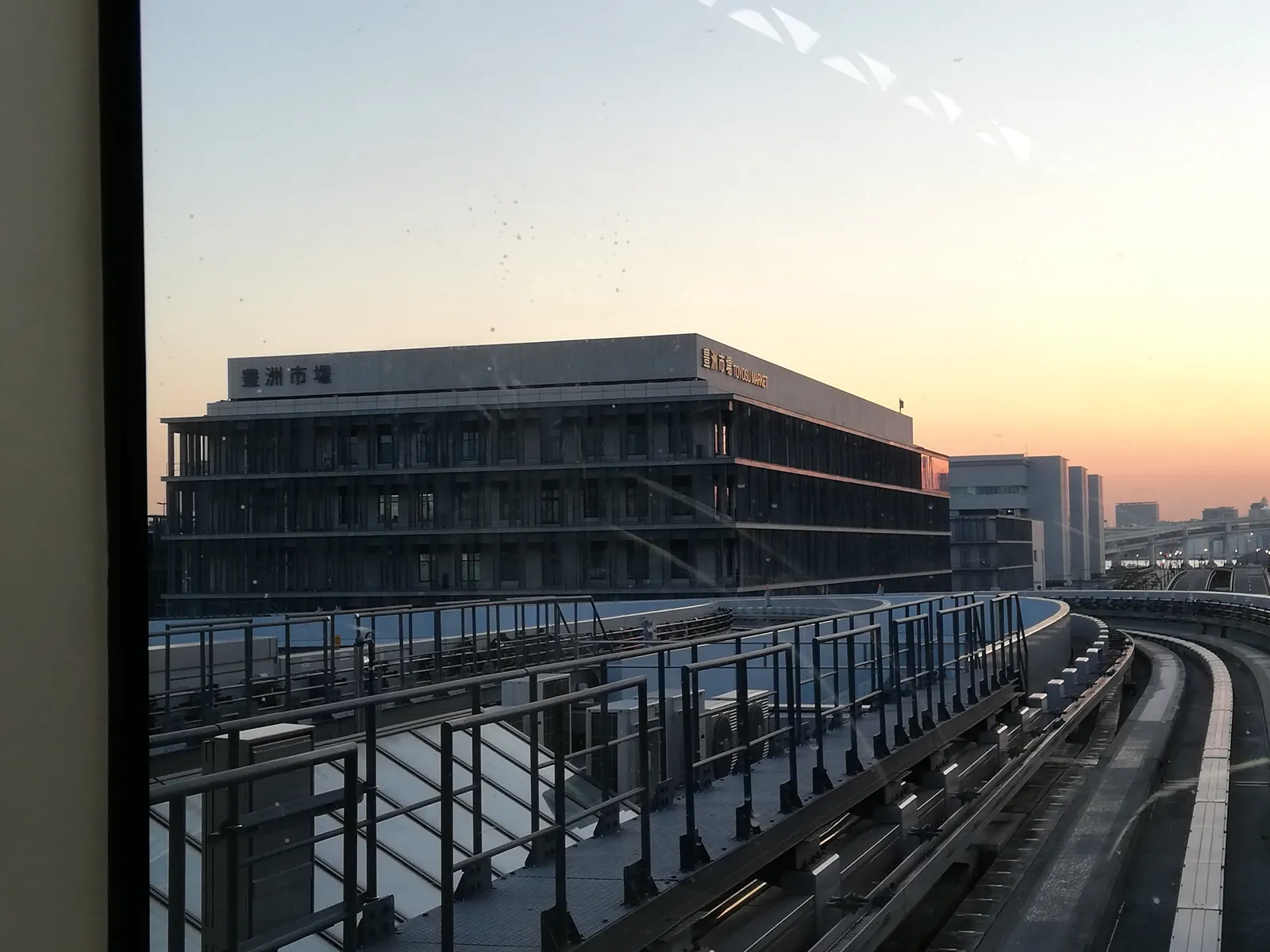
Once you exit the ticket gates at Shijo-mae Station, stay on the elevated pedestrian walkway and follow signs for "Fisheries Intermediate Wholesale Market Building" and "Block 6." General visitors use the public entrance and head up to Uogashi Yokocho on the 4th floor. Market trading and deliveries take place on the lower floors, so you will see separate circulation routes inside the same building. For breakfast, there are restaurants on the 3rd floor of the same building as well as dining spots in other blocks—pick your floor and check the end of the line first rather than blindly following the crowd.
The Tokyo Metropolitan Government lists public viewing corridors and dining/retail hours as 5:00–17:00 on market-open days, while the official Uogashi Yokocho site notes that shops run from early morning until around noon. You can still enter the market building after midday, but the specialty shops you came for may already be closed. Individual shops set their own opening and closing times; to beat the waits, arrive in the morning, hit the one shop you care about most first, and then line up for breakfast. Even if shopping only takes half an hour, you will still have plenty of buffer to walk back toward the station.
The ground-floor wholesale market sells to trade buyers, whereas retail ingredients and everyday kitchen supplies are concentrated on the visitor-accessible 4th floor. Walking up from the auction viewing windows, you can pick up sheets of nori, dashi kelp, tamagoyaki, and tableware. If you came hoping to buy a whole fresh fish, switch gears to a sit-down meal or aim for one of the special public fish-sale days. On regular days, the market runs on trade schedules rather than like a supermarket seafood counter.
If you only want to shop, you can skip the tuna auction in Block 7 altogether. If you want to watch the auction too, turn toward Block 7 from Shijo-mae first. The lower viewing deck right next to the auction floor requires an advance lottery entry, while the upper public viewing corridor is open without reservation on market days. For the January 2027 sessions announced by the city, applications open from December 2 at 15:00 through December 8 at 23:59 JST, with results released on December 17. When booking your hotel and planning the first train, check your winning slot's check-in time first and save Block 6 shopping for afterward. Shopping and full market tours follow different paths, so pair this with our Toyosu Market visitor guide to sequence the blocks.
How to Pick Nori, Dried Goods, and Knives You Will Actually Use
If you want lightweight pantry staples, start with Maruyama Nori or Hayashiya Nori. For home cooking, choose nori by how you use it: full or pre-cut sheets for onigiri, and shredded packs for topping rice bowls. For making Japanese dashi, you can pair kelp from Kanbutsu Akiyama with bonito flakes from Wadakyu in the same sweep. Comparing package weight and storage instructions is more practical than just comparing sticker prices. If you are gifting multiple people, pick individually sealed small packs so you do not have to split a large tin yourself.
Kitchenware is worth the time when you have a clear use in mind. For everyday home cooking, check household knives at blade shops like Aritsugu or Togen Masahisa Shoten, and tell the staff what you normally prep, your dominant hand, and how the handle feels in your grip. Sashimi knives and heavy deba cleavers have specialized roles; if you want a knife you will reach for daily, start with meat and vegetable prep needs. Bamboo sushi mats, whetstones, and pots in various sizes also have dedicated stalls. Before buying heavy ceramics or cookware, ask if the shop can reinforce the wrapping, and plan to drop heavy items at your hotel toward the end of the day.
For local bites, the Uogashi Yokocho directory includes tamagoyaki, pickles, miso, and bento boxes. Check storage labels before buying anything meant to be eaten soon: keep fresh tamagoyaki for the same day, and choose factory-sealed, room-temperature items for longer travel. Eating and drinking are prohibited in the market corridors and on corridor benches, so sit inside a restaurant for a quick bite or save takeaway bento for a designated dining area.
Around year-end, shopping Uogashi Yokocho for New Year's dashi kelp, simmered beans, chestnuts, dried soba noodles, and small tableware items is much easier to plan than hunting down a generic "seafood gift box." When grabbing a last-minute gift, think about how the recipient will use it. Friends who cook at home get real mileage out of dashi ingredients, while small packaged snacks work better for coworkers. If you are heading on to Odaiba or a mall afterward, flat, shelf-stable packs without glass jars are the easiest to carry on transit.
Check the Seafood Market Calendar—Even Wednesdays Aren't Always Closed
Look up the Fisheries column on the Tokyo Metropolitan Central Wholesale Market annual calendar first. Uogashi Yokocho follows the market's open-and-closed schedule, and holiday weeks do not follow standard weekday assumptions. Fisheries is closed on November 23 and December 23, 2026, while December 30 is a produce-only holiday with the fisheries section open. From December 31, 2026 through January 4, 2027, the fisheries market closes for the New Year break, so plan year-end visits on open fisheries days. Trading resumes on January 5, and on January 6 fisheries is open while produce is closed—check both columns if you plan to visit both buildings.
If you turn a New Year holiday day into a mall day instead, note that LaLaport adjusts its year-end and New Year hours too. On December 31, 2026, retail opens at 10:00 and all categories are scheduled to close at 18:00. On January 1, 2027, retail and the food court run until 19:00 and restaurants until 20:00 (with individual exceptions), returning to normal hours on January 2. If you arrive on the afternoon of December 31, grab a proper meal or breakfast supplies for the next morning first, then browse with the time left. On New Year's Day, remember the food court closes an hour earlier than full-service restaurants.
If you want to catch a public fresh-fish market event in late 2026 or early 2027, aim for the city-announced "Sanriku-Joban & Noto Yumeichi Rakuza." Held on the 4th floor of Block 6, upcoming announced dates are December 5 and 19, 2026, January 16 and 30, 2027, and February 6 and 20, 2027, from 9:00 to 13:00. Offerings range from fresh fillets and sashimi to processed seafood and canned goods. If you still have several stops ahead, the canned seafood section makes for easy-to-pack regional souvenirs, while refrigerated items are best saved for your last stop of the day.
Shijo-mae Station still works well on market holidays. Simply skip the wholesale market building and make Senkyaku Banrai your first stop. It operates independently of the wholesale market and stays open on market holidays, with separate announcements on its website for maintenance or severe-weather closures. If your main lunch target is a specific restaurant inside the market building, move your visit to an open day instead of scrambling around the station. If you just want a stroll and a bite, save Senkyaku Banrai and the footbath for a weekend or holiday, and leave the market for another morning.
Senkyaku Banrai: Browse the Second Floor Before Committing to a Meal
The skywalk from Shijo-mae Station connects straight to the 2nd floor of Senkyaku Banrai. Step into Toyosu Menuki-odori and Mekiki Yokocho to find street snacks, ready-to-eat seafood, and Japanese-style goods on one level. The official shop page for Toyosu Engimono lists hours from 10:00 to 18:00, making it an easy stop for boxed sweets or small gifts. Doing a loop on this floor first lets everyone browse as they go, and makes it easy to split up briefly if someone only wants dessert. If you want a sit-down meal, check what is open on the 3rd floor first and pick up souvenirs on your way back down.
Official Tokyo tourism listings put regular retail hours at 10:00–18:00, 2nd-floor Mekiki Yokocho dining until 18:00, and 3rd-floor dining until 20:00, with select restaurants open until 22:00 and some 2nd-floor stalls opening at 9:00. If you arrive in the afternoon, start at the souvenir shops that close early so you do not return from a two-hour soak to find only dinner spots left open. For dinner around 19:00, check each restaurant's page for last-order times and skip the earlier-closing stalls.
You will find plenty of grilled fish, shrimp, and scallops at Senkyaku Banrai, alongside non-seafood options. If your group has different cravings, check the curry and ramen spots on the 1st floor or head up to the 3rd floor for sit-down dining. Kaisen-don prices and portion sizes vary by stall—check whether the menu price covers a full rice bowl, a single skewer, or a set meal with sides. If you just want a quick taste, split one hot snack and save your meal budget for dinner. Groups wanting to sit together should pick a spot with clear table service rather than waiting in separate stall lines and hunting for seats afterward.
Free Footbath on 8F, or Pay for Manyo Club Entry to Bathe
Admission to the shopping streets at Senkyaku Banrai is free. The "Senkyaku Banrai Footbath Garden" on the 8th floor is also free, typically open 9:00–22:00, making it an easy quick break straight from the shopping floors. The "Observation Footbath Garden" on the 10th floor sits inside the paid hot-spring facility. Decide which floor you want before heading to the elevator; if someone in your group is skipping the baths, they can enjoy the free footbath and meet everyone back on the 2nd floor.
For the full public baths, Tokyo Toyosu Manyo Club's standard adult admission is ¥3,850 plus ¥150 bathing tax, covering loungewear, towels, and general facility access. Standard entry runs from 10:00 until 3:00 the next morning, with a late-night surcharge after 3:00. If you just want a quick shower and soak after an early market morning, look at the 5:00–9:00 morning bath rate at ¥2,200 plus ¥150 bathing tax. Day-use bath admission is billed separately from overnight guest rooms. If you want to soak without rushing your shopping, finish buying souvenirs before 18:00 and head into the baths afterward.
In winter, bundle up before stepping back onto the open skywalk from the warm bath area, and note that your upper body stays exposed to the breeze at the open-air 8th-floor footbath. If it is raining and you just need a break, grab lunch indoors first and save the footbath for when the weather clears rather than waiting for a seat in the wind. For families using the main baths, house rules require children aged 7 and older or 120 cm and taller to use the bath matching their gender. If one parent is accompanying kids who would have to split up, stick with the free footbath instead.
Navigate LaLaport Toyosu by Building, Starting with Two Anchor Stores
Emerging underground from Toyosu Station puts you right by Building 3, while most major retail stores and KidZania are in Building 1. Store locations follow a "Building + Floor + Port" format. UNIQLO is in Building 1 North Port 2F, and MUJI is in Building 1 South Port 2F—same floor, opposite ends. Knock out apparel and daily necessities on the 2nd floor first, then head downstairs to eat. If you want to grab tea or browse home goods along the way, stick to the building you are already in so you are not hauling shopping bags back and forth across connecting walkways.
The Marina Kitchen food court sits on Building 1 South Port 1F. For a fast family lunch, check this floor for udon, tendon rice bowls, and casual counters. When you are ready for groceries, SANWA supermarket is on Building 2 1F, listed as open 10:00–22:00 on the mall directory. If you are staying in a room with a kitchenette or picking up breakfast for the next morning, buy chilled groceries last. For travelers heading back downtown late, using SANWA for water and morning supplies beats carrying market food around all day.
General shops and service counters open 10:00–21:00, the food court runs 11:00–21:00, and select restaurants stay open as late as 23:00. If you arrive right at 10:00 to shop, keep in mind the food court is not open yet. If you are staying nearby and want an early start, the mall's extended-hours list shows the Starbucks on Building 3 B1F opening at 7:00, well ahead of retail. When you only need specific items, map out which buildings they are in and pick one meal spot beforehand so you do not waste steps backtracking through the wrong wing.
Strollers, KidZania, and Splitting Up a Group
Coming from the Yurakucho Line with a stroller, use the underground passageway toward Exit 2b and take the mall elevators once inside. Building 1 floor maps mark nursing rooms, diaper-changing stations, and accessible restrooms. The mall also offers coin-return rental strollers in Building 1 for children aged 4 months to under 48 months and up to 100 cm tall—save a quick note on your phone of where you picked it up if you are also carrying bags. Senkyaku Banrai does not offer stroller check or storage, so factor stroller parking into your meetup plan if you intend to bathe or split up there.
KidZania Tokyo is in Building 1 North Port 3F. Its two standard sessions run 9:00–15:00 and 16:00–21:00, with the venue cleared between shifts. When space remains, the official website accepts same-day bookings up to 12:00 for the first shift and 18:00 for the second, though late-booking cutoffs differ from arrival times. To get the full session, follow the official check-in flow. Because most mall stores do not open until 10:00, the morning shift uses a dedicated entry route, with the official early check-in meetup point at Building 1 Center Port 1F. Before the evening shift starts, you have time to shop for clothes or grab an afternoon snack before heading back up to the 3rd-floor entrance.
If part of your group just wants to shop, set your pre-meal meetup point at an actual shop or the food court entrance inside Building 1. Simply saying "LaLaport first floor" easily leaves people waiting in different buildings. Parents with toddlers can time diaper changes around lunch, while the rest of the group stashes heavy bags in Building 1 coin lockers or checks the mall's baggage services. When lockers are full, pausing a round of shopping saves far more energy than trekking between buildings hunting for an empty locker.
Stay Underground in Heavy Rain, Pick Short Waterfront Walks in the Cold
When it is pouring and you have bags, the easiest move is taking Exit 2b from the Yurakucho Line's Toyosu Station, grabbing a bite on the station side of Building 3, and following the indoor walkways into Building 1 to shop. If you still want kids to see the market on an open morning, ride the Yurikamome to Shijo-mae and walk straight across the skywalk into Block 6. Because the skywalk is elevated and open to the sides in spots, wind-driven rain still blows in—if you dislike the cold wind, finish shopping in one building and head right back to the station. Riding the two stops between the mall and Shijo-mae keeps strollers out of street crossings and umbrellas.
The Tokyo Gas Science Museum (Gas-tenaani) next to Toyosu Park closed permanently on September 23, 2026. Station signs and older maps may still show the name, so if you need an indoor backup for kids, book the movie theater in LaLaport Building 1 or plan meals and downtime inside the mall. If your family already has KidZania tickets, stick straight to your booked session on a rainy day instead of hunting for indoor alternatives near the park.
You can sample waterfront views from either side. On the Toyosu Station side, step out of LaLaport Building 1 into Koto Ward's Toyosu Park for a quick stretch, then duck right back indoors. On the Shijo-mae side, head toward the pier tip of Toyosu Gururi Park for views of the Rainbow Bridge. Koto Ward lists the full park promenade at about 4.5 km, so walk just one short stretch if you are carrying shopping bags, and save the exposed tip for calm, mild weather. If it is already nearing dusk when you leave the market, take a quick look at the water and hop back on the train.
If you are continuing to Shin-Toyosu for teamLab Planets, keep raincoats, wet umbrellas, and shopping bags manageable. Official ticketing directions list a roughly 1-minute walk from the Shin-Toyosu Station exit, making it easy to ride one stop straight to your entry window in the rain. When pairing half a day of shopping and dining with the museum, avoid buying fragile tableware or bulky food boxes beforehand—save shopping until after the exhibit so you are not repacking bags at the lockers.
Connecting with Tsukiji, Ariake, or Odaiba
LaLaport at Toyosu Station pairs naturally with an afternoon after morning sushi or street snacks at the Tsukiji Outer Market. Tsukiji is great for small street bites and browsing Tsukiji Uogashi, which welcomes general shoppers; save a morning at Toyosu Block 6 when you specifically want pro-grade kitchenware or particular grades of dried goods. When combining both markets, start at whichever shop closes earlier if there is a must-visit store on your list. From Tsukiji, walk to Shintomicho Station on the Yurakucho Line, board toward Shin-Kiba, and ride via Tsukishima to Toyosu. If you already had a late breakfast, go straight to the mall and skip an extra transfer back to Shijo-mae.
If you are attending an expo at Tokyo Big Sight on the same day, Ariake is the cleanest shopping add-on. Riding the Yurikamome from Shijo-mae toward Shimbashi brings you to Ariake-tennis-no-mori and then Ariake Station. Ariake Garden lists a roughly 3-minute walk from Ariake-tennis-no-mori Exit 2A, about 4 minutes from Ariake Station Exit 2B, and around 6 minutes from Rinkai Line Kokusai-tenjijo Station Exit A. Hop off a stop early if the mall is your goal, or ride through to Tokyo Big Sight Station for the exhibition halls. After your event, planning your return via Kokusai-tenjijo Station on the Rinkai Line toward Osaki (connecting to JR lines for Shinjuku) cuts down on backtracking.
Odaiba's DiverCity Tokyo Plaza packs in character-goods stores, including the Doraemon Future Department Store and the ONE PIECE Mugiwara Store on its official floor map. If character shops are your main focus, limit the market to a single block, eat lunch, and ride the Yurikamome over to Odaiba. If you have already picked up daily goods, kids' clothes, and homeware at LaLaport, Odaiba makes a better afternoon stop for specific character wishlists and bayfront views. Trying to seriously compare clothing across two giant malls in one day usually means rushing—give the market its own morning instead of sitting on a train before 5 p.m.
If you are staying around Ginza or Shimbashi, ride back to Shimbashi from whichever bayfront stop ends your route. If you finish your afternoon at LaLaport, simply hop on the Yurakucho Line straight back to Ginza-itchome. Working backward from where your hotel sits saves time compared with buying day passes first and figuring out stops later. The trade-off with visiting two malls in one day is carrying bags—leave pottery, knives, and supermarket runs for the final leg straight back to your room.
Pay Tax-Included Prices In-Store, Claim Your Refund at the Airport
Check accepted payment methods before lining up at the register. Senkyaku Banrai's official FAQ notes that credit cards, mobile payments, and transit IC cards vary by vendor, so keep small yen bills handy for buying nori or tamagoyaki at the market. Budget major purchases using tax-included prices: starting November 1, 2026, Japan's tourist tax-free system switches to paying tax upfront at the register and receiving a consumption-tax refund at departure after customs verifies the goods. Present your passport at checkout as instructed by the store to register eligible purchases, keeping in mind the standard minimum of ¥5,000 before tax per store per day.
Ring up snacks you plan to open that night separately from gifts you are taking home unopened. Japan Tourism Agency rules assess each transaction as a single unit: if you bundle gift nori with hotel snacks on one tax-free receipt and fail to present even one item at customs, the entire receipt loses its refund eligibility. Stick to what you actually need—if your total is under the threshold, just shop normally. LaLaport's tax-free store list (updated in November) splits stores by refund process: UNIQLO and MUJI handle tax-free registration in-store, while HANDS and GAP use the mall's tax-free counter. If you plan to combine receipts across two stores to hit the minimum, verify that both use the same tax-free operator first, since only eligible same-day purchases can be combined at designated counters.
You must depart Japan within 90 days of purchase to claim your refund. Do not hand checked bags containing tax-free goods to the airline yet—stop at the tax-free kiosks or customs inspection area at your departure airport to complete verification before dropping your luggage. At designated airports such as Haneda and Narita, part of the process can also be completed via Visit Japan Web while connected to the dedicated network in the international departures lobby. If the kiosk flags an inspection, bring the items to the designated counter to show them. Always clear tax-free verification before checking knives, liquids, or bulky items so they do not disappear down the baggage belt mid-process.
Read ingredient lists and storage instructions before buying food to take home. Bringing food back also depends on your destination country's customs and biosecurity rules—check official import restrictions before purchasing items containing meat or unprocessed plant or animal products. If you cannot verify the ingredients at the counter, eat it in Japan. Pack sharp kitchenware like knives and scissors inside hard cases or protective sheaths in your checked luggage. On moving days from market to hotel to airport, carrying only what you can pack safely beats chasing one extra tax-free receipt.
Half-Day, Full-Day, and Check-Out Day Plans
On a market-open morning, aim to arrive at Shijo-mae around 8:30, pick up nori or kitchenware in Block 6, and grab brunch inside the market. Head over to Senkyaku Banrai's 2nd floor after 10:00, browse the shops, hit the free footbath, and catch your train back from Shijo-mae in the afternoon. On a half-day plan, if your target shop hasn't opened yet, check neighboring stalls on the same floor for similar goods. If the sushi line you wanted is already too long, protect your shopping time and eat at Senkyaku Banrai instead.
For a full day covering both market and mall, buy dried goods at Uogashi Yokocho in the morning, have lunch at Senkyaku Banrai, and shift over to Toyosu Station after midday. To add teamLab Planets, slot it at Shin-Toyosu in between and spend longer on just one shopping side—for instance, picking up two pantry items at the market in the morning, visiting the exhibit in the afternoon, browsing LaLaport afterward, and riding the Yurakucho Line back downtown. Squeezing Odaiba into the same day usually crowds out timed reservations. On weekends when kids book the morning KidZania shift, stay in Building 1 for afternoon shopping and save Shijo-mae for another morning.
If you are staying along the Yurakucho Line or popping back into central Tokyo repeatedly, basing yourself near Toyosu Station works smoothly. Mitsui Garden Hotel Toyosu Premier connects directly underground via the Metro Exit 2b corridor and sits about a 1-minute walk from the Yurikamome Toyosu Station North Exit. You can drop bags, head to Building 1 for dinner, and grab last-minute items right from the same station on check-out day. If you land an early-morning market slot, check the walk from your hotel to the platform, first-train times, and the walk to the auction meetup point.
For the early-morning tuna auction or easy access between the market and teamLab, Hotel JAL City Tokyo Toyosu lists a 2-minute walk to Shijo-mae and a 3-minute walk to Shin-Toyosu. You can step out the door and walk right to the market, though reaching the big mall after dinner adds a short Yurikamome ride. If you are only visiting Toyosu once, there is no need to haul luggage and switch hotels for one night just to shave off a few minutes. Keeping a base near Ginza makes a post-shopping subway ride effortless. And if you are checking bags early the next morning, keep tax-free receipts and purchases easy to pull out before leaving your room so you are not repacking your entire suitcase at the airport.
A few useful answers
Should I go to Toyosu Station or Shijo-mae Station for Toyosu shopping?
Get off at Toyosu Station for clothing and LaLaport, and at Shijo-mae Station for market dried goods and Senkyaku Banrai. Only Shin-Toyosu Station sits between them—two stops apart on the Yurikamome Line.
Can I still shop at Uogashi Yokocho in the afternoon?
Most specialty stalls close around noon. Visit on a market-open morning for dried goods and kitchenware; if you arrive at Shijo-mae in the afternoon, Senkyaku Banrai retail generally stays open until 18:00.
Is Senkyaku Banrai open on weekends and market holidays?
Yes. Senkyaku Banrai operates separately from the wholesale market. Inside the market building, Uogashi Yokocho follows the Tokyo Metropolitan Market open-and-closed calendar, including the New Year holiday closure.
Do you need a ticket for the footbaths at Senkyaku Banrai?
The 8th-floor Senkyaku Banrai Footbath Garden is free. The 10th-floor Observation Footbath Garden is included with paid admission to Tokyo Toyosu Manyo Club.
Where is best to shop if it rains and I only have half a day?
Taking the underground passage from Yurakucho Line Toyosu Station Exit 2b into LaLaport is the easiest weatherproof option. If you specifically want seafood, ride the Yurikamome to Shijo-mae and cross the skywalk into Senkyaku Banrai.
Do LaLaport stores give instant tax-free discounts at the register?
Starting November 2026, you pay the tax-included price upfront. Once registered at eligible stores, you receive the consumption-tax refund after departing Japan within 90 days of purchase and verifying your items with Japanese customs before checking luggage.
Official information and references
Sources used in this guide.
- Tokyo Metropolitan Central Wholesale Market | Toyosu Opening Hours, Viewing, and General Shopping
- Tokyo Metropolitan Central Wholesale Market | Market Blocks and Floor Uses
- Tokyo Metropolitan Central Wholesale Market | 2026 Market Holiday Calendar
- Tokyo Metropolitan Central Wholesale Market | 2027 Market Holiday Calendar
- Tokyo Metropolitan Central Wholesale Market | Tuna Auction Lottery and January 2027 Application Dates
- Tokyo Metropolitan Central Wholesale Market | Toyosu Market Public Transit Map
- Tokyo Metropolitan Central Wholesale Market | Sanriku-Joban & Noto Yumeichi Rakuza
- Uogashi Yokocho | 4th Floor Map and Opening Hours
- Uogashi Yokocho | Shops and Product Directory
- Toyosu Senkyaku Banrai | Hours, Footbaths, Payment Methods, and Strollers
- Toyosu Senkyaku Banrai | Floor Guide and Shops
- GO TOKYO | Toyosu Senkyaku Banrai Area Opening Hours
- Tokyo Toyosu Manyo Club | Day-Use Bathing Rates
- Tokyo Toyosu Manyo Club | Admission Plans and Hours
- Tokyo Metro | Toyosu Station Map and Exits
- Yurikamome Line | Station List, Fare Calculator, and One-Day Pass
- Yurikamome Line | Paper Ticket and Transit IC Card Fares
- Tokyo BRT | Regular Fares
- Tokyo BRT | Shimbashi Boarding Stops and Route Timetables
- LaLaport Toyosu | Opening Hours by Area
- LaLaport Toyosu | 2026-2027 Year-End and New Year Hours
- LaLaport Toyosu | Tax-Free Store Directory
- LaLaport Toyosu | Train and Bus Access
- LaLaport Toyosu | Floor Map
- LaLaport Toyosu | SANWA Supermarket
- LaLaport Toyosu | Stroller Rentals
- KidZania Tokyo | Sessions and Same-Day Reservations
- KidZania Tokyo | Timed Entry Flow
- teamLab Planets Official Tickets | Access Information
- Koto City | Toyosu Gururi Park Promenade
- Tokyo Gas | Toyosu Science Museum Closure Notice
- Tsukiji Outer Market | Tsukiji Uogashi Shops and Services
- Tokyo Metro | Shintomicho Station
- Ariake Garden | Station Exits and Walking Times
- DiverCity Tokyo Plaza | Floor Map and Character Goods Stores
- Japan Tourism Agency | Tourist Tax-Free Refund Process
- Animal and Plant Health Inspection Agency | Imported Animal Product Quarantine
- Mitsui Garden Hotel Toyosu Premier | Access
- Hotel JAL City Tokyo Toyosu | Access