Walk from JR Ueno's Shinobazu Exit through Ameyoko to Takeya, Yoshiike, and Matsuzakaya in Okachimachi. Includes station exits, store hours, rainy-day backups, and Japan's post-November 2026 tax-free rules.
- Region & Focus
- TokyoNeighborhoods and shopping
- Reading Scope
- 18 min read · 11 chapters · 5 Q&As
- Official Verification
- 34 official sources checkedUpdated November 22, 2026
- Key Topics
- NeighborhoodsFirst tripTokyo & Kanto
Chapter Route Map (tap any stop)
- Where to Start Your Ueno Shopping Walk
- Where to Duck Off the Main Ameyoko Strip
- What to Pack for Home vs. Eat in Tokyo
- Drugstore Price Checks: Compare Sizes Before Checking Out
- Navigating Takeya's Two Buildings
- West of Okachimachi: Yoshiike, Matsuzakaya, and PARCO_ya
- Specialty Stops for Sneakers and Trading Cards
- Museum Days: Hit the Park First, Market Second
- Tax-Free Shopping From November 2026: Pay Tax Upfront
- Adjusting Your Route for Rain, New Year's, or Kids
- Narita Departure Day: Keep Your Last Bag Near Keisei Ueno
- Quick Q&A
For a classic Ueno shopping run, enter Ameyoko from JR Ueno Station's Shinobazu Exit, grab a bite, pick up snacks and drugstore staples, and head toward Okachimachi for your train. To stock up on everyday groceries and household goods, walk east along Kasuga-dori to Takeya; for boxed department-store gifts, save time for Matsuzakaya on the west side of Okachimachi. Under Japan's tax-free rules taking effect in November 2026, you pay the tax-included price at the register and receive your refund after customs verification upon departure—so build that extra step into your airport arrival time if you are flying out of Narita.
Where to Start Your Ueno Shopping Walk
On a first visit, enter Ameyoko from the Shinobazu Exit of JR Ueno Station and follow the train tracks south toward Okachimachi. Tokyo's official tourism site lists this shopping street at roughly 500 meters, ending near JR Okachimachi Station's North Exit. The walk between the two stations is short; what takes time is browsing, trying things on, and waiting at registers. If you only have a morning window, budget 90 minutes to walk the main strip, hit one food shop, and catch a train from Okachimachi. To cover two drugstores, a department store, and Takeya, set aside half a day.
Starting at JR Ueno Station, follow platform signs for the Shinobazu Gate and take the Shinobazu Exit to the street. If you are already outside the Central Gate, leave via the Hirokoji Exit and walk toward Ameyoko. For museums in Ueno Park, use the Park Gate, which opens directly onto the park side. When meeting friends, specify "outside JR Ueno Station Shinobazu Exit" or "outside JR Ueno Station Park Gate" so nobody ends up searching across different exits.
If you arrive on the Tokyo Metro Ginza or Hibiya Line at Ueno, use Exits 5a or 5b for the shopping street. With a stroller on the Ginza Line, take the elevator from the Park-direction ticket gate to street level near Exit 5a. On the Hibiya Line, the street-level elevator sits by the South Showa-dori Gate; take that up and walk over to Ameyoko. Heading straight to Takeya? Ride the Hibiya Line to Naka-Okachimachi Station and take Exit 3, listed by the store as about a 1-minute walk. For PARCO_ya, ride the Ginza Line to Ueno-hirokoji Station (Exit A1) or the Toei Oedo Line to Ueno-okachimachi Station (Exit A6).
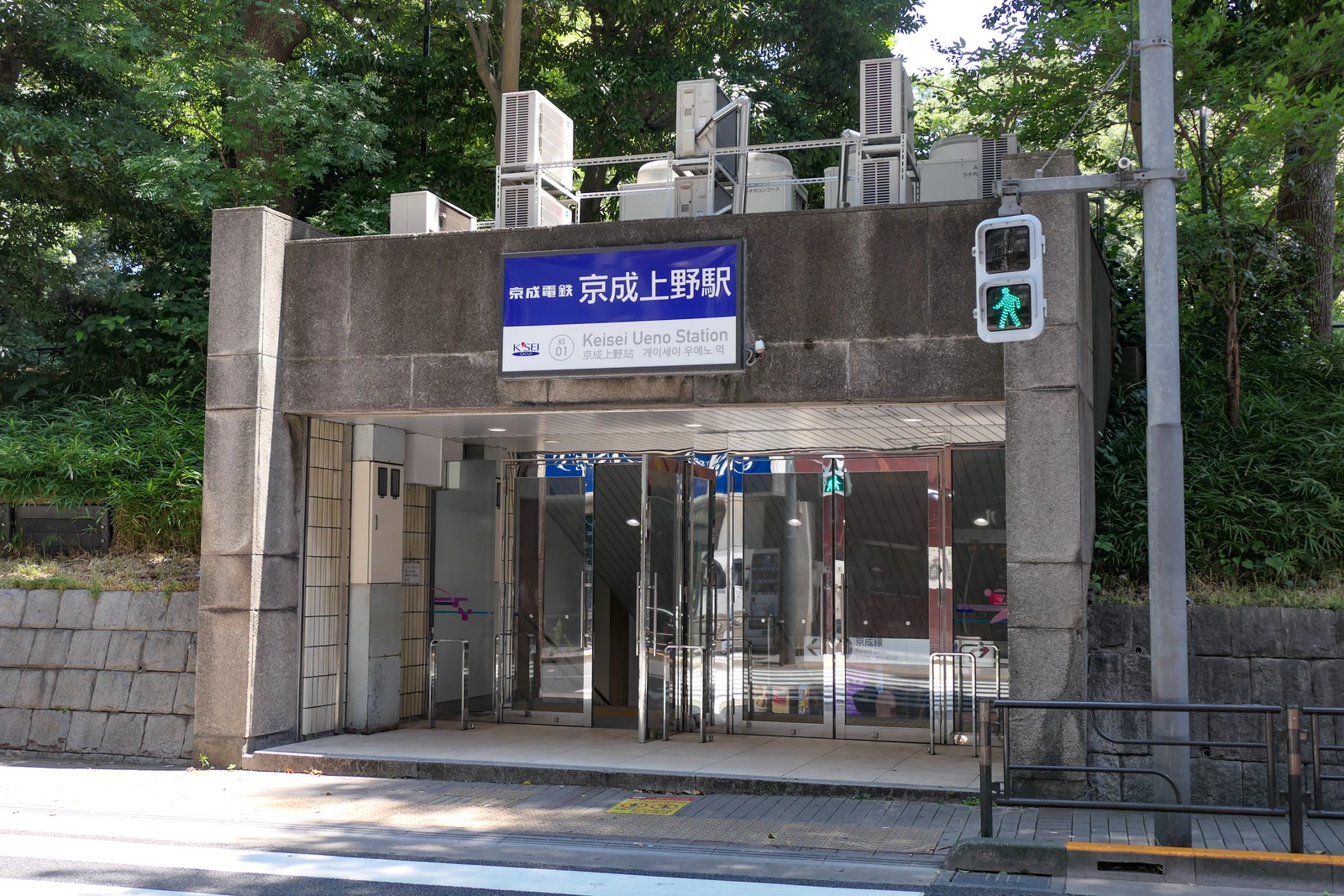
Station names around here look alike, so check the rail operator before heading back. JR Okachimachi, Tokyo Metro Naka-Okachimachi, Tokyo Metro Ueno-hirokoji, and Toei Ueno-okachimachi all serve the same neighborhood, but their entrances sit at different intersections. Keisei Ueno Station sits beside Shinobazu Pond, meaning you will walk back north to catch the Skyliner to Narita. Pin the exact station name and entrance on your map before you start, and tap the line icon when searching "Okachimachi" to confirm which entrance you want.
| First Stop | Station Exit to Use |
|---|---|
| North end of Ameyoko | JR Ueno Station Shinobazu Exit, or Tokyo Metro Ueno Station Exits 5a / 5b |
| South end of Ameyoko, Yoshiike | JR Okachimachi Station North Exit |
| Takeya | Tokyo Metro Naka-Okachimachi Station Exit 3 |
| PARCO_ya | JR Okachimachi Station South Exit, or Tokyo Metro Ueno-hirokoji Station Exit A1 |
| Ueno Park museums | JR Ueno Station Park Gate |
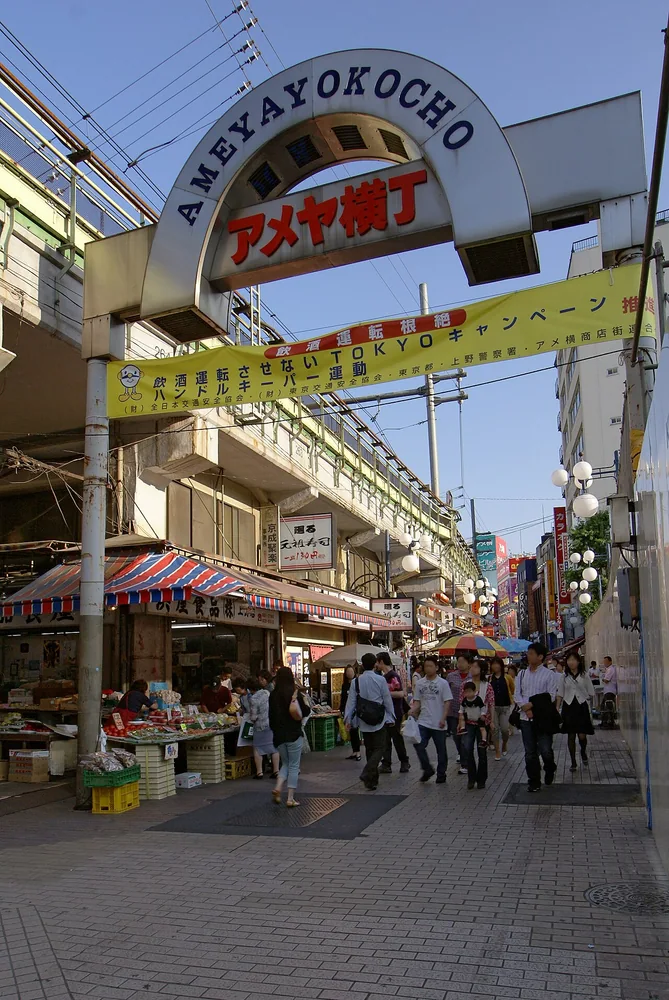
Walk from JR Ueno's Shinobazu Exit through Ameyoko to Takeya, Yoshiike, and Matsuzakaya in Okachimachi. Includes station exits, store hours, rainy-day backups, and Japan's post-November 2026 tax-free rules.
Where to Duck Off the Main Ameyoko Strip
Walking south from the Ueno end alongside the tracks into Ueno 4-chome, you will spot the Ameyoko Center Building. It makes an easy landmark, and its B1 floor is worth a detour for spices and pantry staples. Closer to the tracks sits Ameyoko Plaza, a separate cluster of shops. Save both names on your phone so anyone splitting up to shop has a clear meeting point.
The Center Building's basement food hall stocks spices, pan-Asian ingredients, and dry groceries. Check the 1F directory for shoes, bags, apparel, and accessories before climbing stairs unnecessarily. Standard building hours are 10:00-20:00, closed on the third Wednesday of each month (open daily in December). Next door, Ameyoko Plaza also posts 10:00-20:00 building hours, though individual eateries set their own closing times. If you arrive on the Center Building's closed Wednesday, head to Niki no Kashi for sweets or down to Yoshiike in Okachimachi for groceries.
Ueno 4-chome has two Niki no Kashi storefronts. For the main food selection, map "Niki no Kashi Big Kan" at 4-6-1 Ueno, listed by the shopping street association as open 10:00-20:00. It carries snacks, seasonings, and packaged foods side by side. If you are buying office treats, count recipients first and check how many individual packets sit inside each bag. If you just want to sample flavors yourself—especially before a museum visit or train ride—stick to small packs, and bag anything you plan to eat on the trip separately at checkout so unpacking at the hotel is effortless.
Price tags at a single stall may apply to a full box, one bag, or a set count, so verify the unit before paying. On Japanese signs, "yori" means "starting from," "ko-iri" shows the piece count inside, and "honjitsu kagiri" marks a one-day special. At market stalls where vendors call out deals, ask "Kore wa hitofukuro no nedan desu ka?" (Is this the price for one bag?) or "Futatsu de ikura desu ka?" (How much for two?) before deciding. Chain shops stick to posted tags and promo signs. Either way, a bargain only counts if you will actually finish what you buy.
When grabbing cut fruit or street snacks along the strip, eat in the designated spot beside the stall. If you want a storefront photo, step back somewhere out of the traffic flow. Vendors stack crates close to the walkway here, so two or three people stopping abreast to read prices can bottle up the lane behind them. Step into a recess next to a shop before sorting toppings or digging for your wallet.
What to Pack for Home vs. Eat in Tokyo
For nori, kelp, bonito flakes, and dry snacks, both Ameyoko and Yoshiike work well. With loose market goods, check whether the price is by weight or by pack; for gifts, stick to factory-sealed packages showing ingredients, best-by dates, and storage instructions. Look for "yoreizo" (refrigerate), "yoreito" (keep frozen), and "joon" (room temperature)—even the same dried fish can have different storage rules before and after opening. Inspect gift bags in the store so you do not accidentally haul chilled items around all afternoon.
Down in Okachimachi, Yoshiike's flagship store is ideal for specific culinary ingredients. The 1F focuses on fresh fish, B1 stocks processed seafood, seaweed, and prepared foods, and B2 carries alcohol and household staples. Yoshiike's food floors generally run 9:30-20:30. If you only want seaweed for soup back home, head straight to B1 and take time to compare origin, use, and pack size. If your hotel room has a fridge, save prepared dinner items for last after finishing your other stops—or simply browse the 1F fish counters before hopping on your train.
Renting a place with a kitchen lets you turn fresh fish or chilled market finds into dinner. Save short-shelf-life pastries for same-day sharing in Tokyo. If you are taking trains and flying home later, favor compact, crush-resistant boxes with clear labeling. Nori and rice crackers eat up suitcase space fast; when one giant box will not fit, rethink how many people you are actually gifting. Tea and seasonings in glass jars add weight quickly, whereas sachets or pouches divide easily—and for anyone with food allergies, keep the original box and Japanese ingredient label intact rather than repacking loose bags.
Eat fresh meat, jerky, ham, and other processed meat products in Japan rather than packing them for your flight home. Vacuum-sealed meats are still subject to agricultural quarantine in most countries. Check snack, retort-pouch, and instant-noodle ingredient lists for meat chunks or meat fillings, and declare any questionable items at your arrival customs or quarantine counter. If you plan to cook an item in your hotel or apartment anyway, pay regular tax at the register so it does not complicate your tax-free gift bundle.
Drugstore Price Checks: Compare Sizes Before Checking Out
Save front-and-back photos of the exact products you want on your phone before walking in. Check milliliters for eye drops, sheet counts for face masks, and grams for toothpaste—and factor in the cost of an empty bottle if you grab a refill pouch by mistake. Even within the same brand, formulas and pack sizes vary, so calculate the unit price first; a cheaper tag on a refill pouch does no good if you do not own the dispenser.
At your first store, jot down tax-included prices, exact product variants, and one backup option. If that branch already has your sizes in stock and lets you check out in one stop, paying slightly more saves waiting in multiple lines. Shopping in a group? Pause off the main walkway to combine overlapping items onto one shared note, split up to check stock across stores, and pay separately according to who is taking which bag through customs. Separate checkouts are essential if travel companions fly home on different dates, since customs links each tax-free record to the individual buyer.
Skincare lines often share near-identical packaging across scents, textures, and SPF ratings, so match the exact label on the box. Use counter testers whenever available instead of discovering a mismatch after opening the seal at your hotel. When buying for family back home, send a full product photo to confirm before paying. For over-the-counter medicines, show a photo of the current box and ingredients to the in-store pharmacist or staff, or ask for an equivalent formula if a brand is out of stock. Follow the Japanese box and pharmacist instructions for dosage, warnings, and age limits rather than grabbing a look-alike multipack to split up.
Build your next hour into any price-comparison math. If you only need one or two more items and still have a museum or train to catch, set a firm cutoff for backtracking. Staying near Ueno with heavy liquids on your list? Drop off smaller bags at your hotel first, then walk along Hirokoji toward Okachimachi for the bulk items. Keep tax-free purchases sorted in separate bags by receipt back in your room so every item is accounted for before airport inspection.
Navigating Takeya's Two Buildings
Takeya sits east of JR Okachimachi Station along Kasuga-dori—about a 3-minute walk from the North Exit, or right outside Naka-Okachimachi Exit 3 on the Hibiya Line. Head into "TAKEYA1" (Food & Lifestyle Building, 4-12-1 Taito) for groceries, toiletries, cleaning supplies, cosmetics, and pharmaceuticals. Next door, "TAKEYA3" (Fashion Building, 4-11-3 Taito) handles suitcases, travel bags, apparel, and bedding. Some map apps route you to a single Takeya pin, so check the building name and street number before heading inside.
Takeya's own floors in TAKEYA1 (1F-3F) normally operate 9:00-23:00. According to the floor guide, 1F covers cookies, instant drinks, kelp, and packaged foods, while medicines, supplements, and beauty products sit on the upper Takeya floors. Inside the same building, DAISO on 4F closes at 21:00 and the Summit Supermarket on B1-B2 generally stays open until 23:00. Pick up ready-to-eat hotel snacks at Summit, and bring Takeya-floor snacks and drugstore goods up to the 3F centralized counter if you are combining them into one tax-free purchase; Summit and DAISO ring up separately as regular taxed sales. Plan separate baskets before you start riding elevators.
TAKEYA3 generally runs 10:00-19:00, so if you are visiting both buildings, shop for suitcases or clothes that need trying on before crossing over to the food hall. Unsure whether you need a new suitcase? Check how much room remains in your current bags, then verify external dimensions (including wheels and handles, since airlines measure the full exterior) and empty weight. If you plan to pack new purchases into a new suitcase on the spot, keep one lightweight tote free so you are not dragging an empty roller through restaurants and drugstores.
Late-evening arrivals in Ueno can easily slot Takeya after dinner. For next-day breakfast, tea bags, and packaged snacks, TAKEYA1 and the basement Summit cover everything. If TAKEYA3 luggage is on your list, arrive well before 19:00 with time to test wheels and telescopic handles. Quick evening restockers can grab two or three aisles from a short list and check out fast—and if your hotel is west of Okachimachi, save fragile or chilled items for the very last stop.
West of Okachimachi: Yoshiike, Matsuzakaya, and PARCO_ya
When Ameyoko meets Kasuga-dori, stay west of the JR tracks for Yoshiike or department stores, or walk east along Kasuga-dori for Takeya. With just an hour left, pick one side rather than bouncing back and forth. If you want chilled food from Yoshiike plus a suitcase from Takeya, scope out Yoshiike's shelves first, walk east for the bag, and buy the cold food on your walk back to Okachimachi Station so you carry less weight and keep perishables cold.
Matsuzakaya Ueno is the spot for formal gift boxes, department-store cosmetics, and apparel. General hours run 10:00-20:00 on B1 and 1F, until 19:00 on M2F and 2F, and until 18:30 on 3F-8F, while the M2F tax-free counter stays open until 20:00. Start on upper apparel floors and pick up bulky food gifts on B1 last. If you are catching a Shinkansen or connection later, arriving near closing time leaves you locked out of upper floors first.
PARCO_ya Ueno sits about 1 minute from JR Okachimachi Station's South Exit. Retail floors (B1-5F) normally open 10:00-20:00, and the 6F dining floor runs 11:00-23:00 (check individual restaurants for last order). PARCO_ya and Matsuzakaya sit in separate buildings with different addresses, so save the exact building you want. After shopping, you can stay right in Okachimachi for dinner—or if you want to browse clothes after eating, work backward from the 20:00 retail closing time, or grab an afternoon meal at one of the restaurants with all-day service.
Splitting up between drugstores and clothing boutiques? Agree on either the North or South Exit of JR Okachimachi Station as your meetup point. If you want both sides of the neighborhood and plan to depart from the same station, map your walking loop in one direction: finish Ameyoko, hit Matsuzakaya or PARCO_ya, and board at JR Okachimachi. If Takeya is your only target, use Naka-Okachimachi Exit 3 and hop right back on the Hibiya Line when finished.
Specialty Stops for Sneakers and Trading Cards
High-volume shops along Ameyoko are handy for finding sneakers that fit comfortably. London Sports Ameyoko (6-4-8 Ueno) carries athletic shoes, sportswear, and swimwear, generally open 10:00-20:00. On clearance racks, verify the model, sole type, and left/right tags before trying pairs on with the socks you actually wear while traveling. Checking forefoot width and heel slip in person works far better than converting your usual shoe size from home. In tight aisles, ask staff for the closest size first and compare from there.
Looking for toys or sports and trading cards? Use the Ameyoko shopping street directory's store categories to pinpoint specialty shops beforehand. Popular franchises come in multiple print runs and editions, so compare series titles, character names, and product codes rather than buying off box art alone. Collectors should inspect box corners and factory seals; for candy-toy boxes meant for kids, check small-part warnings and whether a box is blind-packed or a guaranteed full set. Leave rigid luggage space if the box, sleeve, or card condition matters.
Before buying clothes, shoes, or collectibles to carry onward, ask whether exchanges are allowed for wrong sizes or duplicates. Where exchanges are permitted, photograph the receipt, storefront, and hangtags before leaving, and note the return window. For shoes meant to handle miles of sightseeing, lace up both feet and walk several paces—if your toes touch the front, switch sizes or widths before buying.
Museum Days: Hit the Park First, Market Second
Both the Tokyo National Museum and the National Museum of Western Art pair easily with an Ameyoko walk. If you hold timed morning tickets, enter via JR Ueno Station's Park Gate, enjoy the galleries unhurried, and save shopping for afterward. The National Museum of Western Art sits closest to the Park Gate, and its permanent museum shop is open without an exhibition ticket—stocking collection-inspired goods, postcards, and select past catalogs—making it an easy quick stop, whereas special-exhibition shops follow the ticketed gallery route.
At the Tokyo National Museum, shops sit across the Honkan (Main Gallery), Toyokan (Asian Gallery), and Main Gate Plaza, each with a slightly different curation. Toyokan normally carries strong Asian art book selections, though the museum announced Toyokan's closure from November 30 through December 31, 2026—during that window, plan your browsing around Honkan and Main Gate Plaza open days. Smaller paper goods, bookmarks, and ukiyo-e accessories are easy to pick up at either of those two shops; check gallery routes and year-end hours in our Tokyo National Museum guide. Next door at the National Museum of Nature and Science, the B1 shop in the Japan Gallery stocks specimens and science kits, and visitors just wanting to shop can request a 30-minute shop pass at the information desk.
Flip through heavy exhibition catalogs in person to check language, trim size, and weight before buying. If you are heading down to the market afterward, have staff wrap the book corners and carry food or drinks in a separate bag. Already hauling heavy shopping bags? Save the museum for another morning or drop bags at your hotel first. One museum per day leaves plenty of energy to browse Ameyoko and Okachimachi afterward.
Heading home on JR? Once inside the Ueno ticket gates, ecute Ueno offers a convenient last stop for packaged gifts (non-passengers need a platform ticket or compatible IC entry service). For subway or Keisei travelers, browse atré Ueno outside the gates—shops generally run 10:00-21:00 and restaurants/cafes 11:00-22:30. If you only want one final pickup point, pick whichever sits directly along your departure path.
Tax-Free Shopping From November 2026: Pay Tax Upfront
Starting November 1, 2026, tax-free purchases in Japan require paying the full tax-included price at the register. Eligible travelers register their passport or qualifying ID in-store and choose a refund method offered by the retailer. As a rule, a single traveler must spend at least ¥5,000 before tax at the same store on the same day to qualify. General goods and consumables can now be combined toward that threshold, though department stores only combine purchases across participating floors that share a single tax-free counter—receipts from two unrelated drugstores cannot be pooled.
At Takeya and Matsuzakaya, factor the tax-free counter into your schedule as well as your budget. Takeya charges a ¥0 handling fee under the revised refund system. At Matsuzakaya Ueno, bring eligible same-day items and receipts to the M2F tax-free counter, where refund handling fees run up to 2.3% of the tax-excluded total. Before adding an extra box just to clear the threshold, calculate how much you actually save versus what you are spending upfront—because you still need enough credit card limit or cash to cover the tax-included total on the spot.
When tallying a drugstore basket, shelf tags typically show both "zeinuki" (tax-excluded) and "zeikomi" (tax-included) prices: use the tax-excluded price to track the ¥5,000 minimum and the tax-included price for your register total. If two needed items total ¥4,800 before tax, adding a third staple you will take home makes sense; if that third item is a snack you plan to open at the hotel tonight, ring it up separately with tax. Keep every receipt alongside your tax-free registration slip so you can trace any refund later.
The new rules eliminate mandatory sealed plastic bags for consumables. Still, buy anything you plan to eat, drink, or use before leaving Japan in a separate, taxed transaction. According to the Japan Tourism Agency, customs verifies each tax-free purchase by transaction: if a single transaction includes tea, cookies, and face masks and you eat the cookies in Tokyo, the entire transaction becomes ineligible for a refund. Separating immediate-use items at checkout saves headaches when packing.
You must depart Japan within 90 days of purchase and complete customs verification at your final departure airport or port. When flying, clear passport verification in the departure hall with your tax-free goods on hand before checking luggage. At Narita Airport's international terminals, follow airport signage to the refund kiosks or connect to the dedicated Wi-Fi in the departure lobby to submit via Visit Japan Web; if flagged for physical inspection, present the items at customs as directed. Once customs confirms the exit, your refund processes via the method registered at purchase—even if you spot cash refund machines at the airport, payout depends on what the original store supports.
Adjusting Your Route for Rain, New Year's, or Kids
In light rain, you can still duck through Ameyoko briefly and spend most of your time in the Center Building's basement or Ameyoko Plaza. Once rain gets heavy enough that umbrellas collide in the crowd, shift food and shopping under one roof: PARCO_ya from JR Okachimachi South Exit or atré right at JR Ueno keeps you out of the weather and cuts down on juggling bags, wet umbrellas, and your phone. With kids, grab lunch and a seated break inside a mall before deciding whether to brave the market, and pick an indoor station meetup point with umbrella sleeves ready.
Late December brings dense crowds shopping for New Year's ingredients like crab, herring roe (kazunoko), and salmon roe. Leave extra stroll time if you want to watch the market banter, and step aside from crowded corners rather than getting wedged in. For straightforward pantry shopping, stick to Takeya or station malls with posted schedules. Year-end hours shift slightly for 2026-2027: Takeya announced TAKEYA1 closes early at 20:00 on December 31, 2026 (TAKEYA3 keeps 10:00-19:00), and both buildings plus Summit and DAISO close January 1-3, 2027, reopening normally on January 4. Stock up on January 1 hotel breakfast items during the day on December 31; note that Ueno Marui's retail floors close December 31 through January 3, though its B1 Starbucks stays open.
Visiting during cherry blossom season? Tour Ueno Park in the morning with just a small daypack, then head down to the market around lunch or afternoon to carry heavier bags. If half your group wants blossoms and half wants shopping, split at the Park Gate and Shinobazu Exit and regroup outside the Hirokoji Exit later. Walking together the whole way? Cap the market portion at snacks and save department stores for bad weather or another day.
To dodge weekday crowds, start after 10:00 from Ueno toward Okachimachi, knock out targeted market stops first, and head indoors for lunch. Starting in the evening? Trim the loop to just the Ueno Station end or just Okachimachi. Ueno Marui normally operates 11:00-20:00, making its MUJI and Loft floors practical for last-minute organizers and small goods right by the station—and if you have already stayed in Ueno a few nights, check shops closest to your hotel first to avoid an extra backtrack.
Narita Departure Day: Keep Your Last Bag Near Keisei Ueno
If you are staying in Ueno and flying out of Narita, lock in your Keisei Skyliner train time before planning last-minute shopping. The all-reserved Skyliner runs nonstop from Keisei Ueno Station to Narita Airport: get off at Narita Airport Terminal 1 Station for Terminal 1, or one stop earlier at Airport Terminal 2 Station for Terminals 2 and 3. Narita Airport's access guide estimates about a 5-minute walk to Terminal 2 and 10 minutes to Terminal 3. Build in platform-to-counter walking time plus pre-bag-drop tax-free customs verification.
For morning flights, finish shopping the night before. With an evening flight and an hour to spare, arrange hotel bag pickup or locker storage on the Keisei Ueno side first, then dip into the north end of Ameyoko. Keisei Ueno Station has coin lockers plus a staffed baggage counter outside the ticket gates generally open 9:00-18:00. Choose storage near your final departure gate from the start—having to retrieve bags on the JR Ueno side and haul them over to Keisei takes longer than grabbing one last box of gifts.
Down to one last drugstore item? You can grab it right outside Keisei Ueno's ticket gates, where the station lists a Matsumoto Kiyoshi generally open 9:00-22:00 and an outside souvenir shop open 9:00-19:00; snack boxes inside the gates also cut down on hauling bags back and forth. If you are making one targeted run to bigger Okachimachi stores first, pack receipts and tax-free goods away before walking north so you only need to zip a bag or grab stored luggage at the station.
With half a day free to cover the whole strip, ride JR to Okachimachi, start near Kasuga-dori, and work your way north toward Ueno. Lock down bulky gifts in the southern half early so only one known stop remains at the north end before Keisei Ueno. Travelers with large suitcases do best clustering final stops on the Keisei side and grabbing stored bags before boarding. For hotel location trade-offs across the neighborhood, see our Ueno, Keisei Ueno, and Okachimachi hotel guide.
Before entering the Keisei gates, keep your passport, flight details, and tax-free receipts in an easy-to-reach pocket—accessibility matters more than neat packing when customs asks to see an item. Clear airport customs verification via kiosk or phone before checking bags and clearing security. Keep flight snacks in your personal carry-on, and group each tax-free transaction together by receipt near the outer edge of your bag in case an officer requests a quick check.
A few useful answers
Which JR Ueno Station exit leads to Ameyoko?
Take the Shinobazu Exit. To start from the southern end instead, use the North Exit of JR Okachimachi Station, or Exits 5a and 5b from Tokyo Metro Ueno Station.
Are Takeya's snacks, drugstore items, and suitcases in the same building?
Snacks, cosmetics, and drugstore goods are in TAKEYA1, while suitcases and apparel are next door in TAKEYA3. Takeya's own floors in TAKEYA1 generally run 9:00-23:00, and TAKEYA3 runs 10:00-19:00.
Where should I shop in Ueno on a rainy day?
Head to atré Ueno right at JR Ueno Station, or Matsuzakaya, PARCO_ya, and Takeya in Okachimachi. In lighter rain, shorten the outdoor stretch and browse inside Ameyoko Center Building or Ameyoko Plaza.
Do Ueno drugstores deduct tax at the register?
From November 1, 2026, you pay the tax-included price at checkout. Qualifying purchases must leave Japan within 90 days of purchase, pass customs verification before bag drop, and are refunded via the method registered in-store.
Which station does the Narita Skyliner depart from in Ueno?
Board at Keisei Ueno Station. Get off at Narita Airport Terminal 1 Station for Terminal 1, or Airport Terminal 2 Station for Terminals 2 and 3.
Official information and references
Sources used in this guide.
- GO TOKYO | Ameyoko Shopping Street & Nearest Stations
- JR East | Ueno Station Map
- Tokyo Metro | Ueno Station Accessibility & Elevators
- Ameyoko Center Building | Hours & Access
- Ameyoko Center Building | Floor Map & Store Directory
- Ameyoko Plaza | Hours & Access
- Ueno Ameyoko Omote-dori | Niki no Kashi Big Kan
- Ueno Ameyoko Omote-dori | Hamaya Foods New Year Ingredients
- Ueno Ameyoko Omote-dori | London Sports Ameyoko
- Ueno Ameyoko Omote-dori | Store Directory
- Mitsui Fudosan Retail Management | Yoshiike Food Floor Hours
- Yoshiike Flagship Store | Floor Guide
- Taipei Customs, Ministry of Finance | Food & Quarantine Rules for Travelers
- Takeya | Building Hours & Access
- Takeya | Floor Guide
- Takeya | 2026-2027 Year-End & New Year Hours
- Takeya | Tax-Free Refund Guide (From November 2026)
- Takeya | TAKEYA1 Centralized Tax-Free Checkout & Buildings
- Matsuzakaya Ueno | Floor Hours
- Matsuzakaya Ueno | Tax-Free Service & Handling Fees
- PARCO_ya Ueno | Hours & Access
- National Museum of Western Art | Museum Shop Admission
- Tokyo National Museum | Museum Shops
- Tokyo National Museum | Late-2026 Exhibits & Toyokan Closure Notice
- National Museum of Nature and Science | Museum Shop Pass
- ecute Ueno | Inside-Gate Shopping Entry Rules
- atré Ueno | Opening Hours
- Ueno Marui | Hours & Store Directory
- Marui | 2026-2027 Year-End & New Year Hours
- Japan Tourism Agency | New Tax-Free Refund System for Travelers
- Keisei Electric Railway | Skyliner Reserved Seating & Route
- Keisei Electric Railway | Keisei Ueno Station Baggage Services
- Narita International Airport | Train Stations & Terminal Walking Times
- Narita International Airport | Pre-Departure Tax-Free Customs Verification