Start your autumn foliage walk at Inokashira Park from Nanai Bridge, Inokashira Benzaiten, and Gotenyama. Practical details on Kichijoji and Inokashira-koen stations, seasonal boat hire and last-entry times, plus combining Inokashira Park Zoo and the Ghibli Museum.
- Region & Focus
- TokyoAutumn leaves
- Reading Scope
- 24 min read · 8 chapters · 5 Q&As
- Official Verification
- 35 official sources checkedUpdated 22 November 2026
- Key Topics
- SeasonsNeighbourhoodsTokyo & Kanto
Chapter Route Map (tap any stop)
- Peak Autumn Timing and Half-Day Priorities
- Entering via Kichijoji or Inokashira-koen Station
- Following the Pond to Nanai Bridge, Benzaiten, and Gotenyama
- Reflections, Fallen Leaves, and Autumn Waterbirds
- Rowboats, Pedal Boats, and Swan Boat Fares
- Picking One Zone at Inokashira Park Zoo for Families
- Booking Ghibli Museum Tickets Before Choosing Your Route
- Wrapping Up in Kichijoji and Wet-Weather Alternatives
- Quick Q&A
For autumn foliage in Inokashira Park, pencil in late November to early December. On a first visit, head onto Nanai Bridge for views over Inokashira Pond, then follow the western bank to Benzaiten and Gotenyama, allowing an hour for an unhurried loop. If you plan to hire a swan boat, last ticket sales are at 15:50 from November to February, and the boathouse closes on Wednesdays from December to February. Coming from Shinjuku, Kichijoji Station is the most direct arrival point; from Shibuya, take a Keio Inokashira Line Local service to the eastern end of the pond, then finish in Kichijoji for a meal and the train back.
Peak Autumn Timing and Half-Day Priorities
Mitaka City has previously documented Japanese maples turning red at Inokashira Park in late November, and its seasonal city bulletins list late November to early December as the main foliage window. For 2026, the Musashino City Tourism Organization scheduled its guided autumn walk for 29 November, taking in Nanai Bridge, Benzaiten, and Gotenyama. If you are staying in Tokyo for several days, keep two half-day slots open and pick whichever day looks best once recent pondside photos start appearing. Searching online for recent dated photos of the park and Nanai Bridge will show how far the colour has turned along the water.
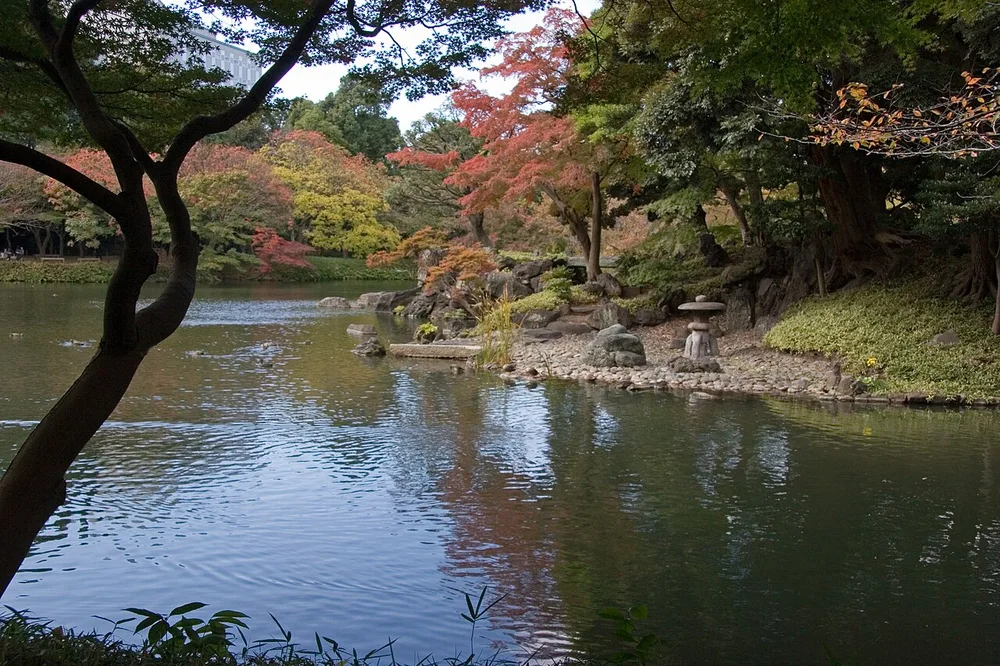
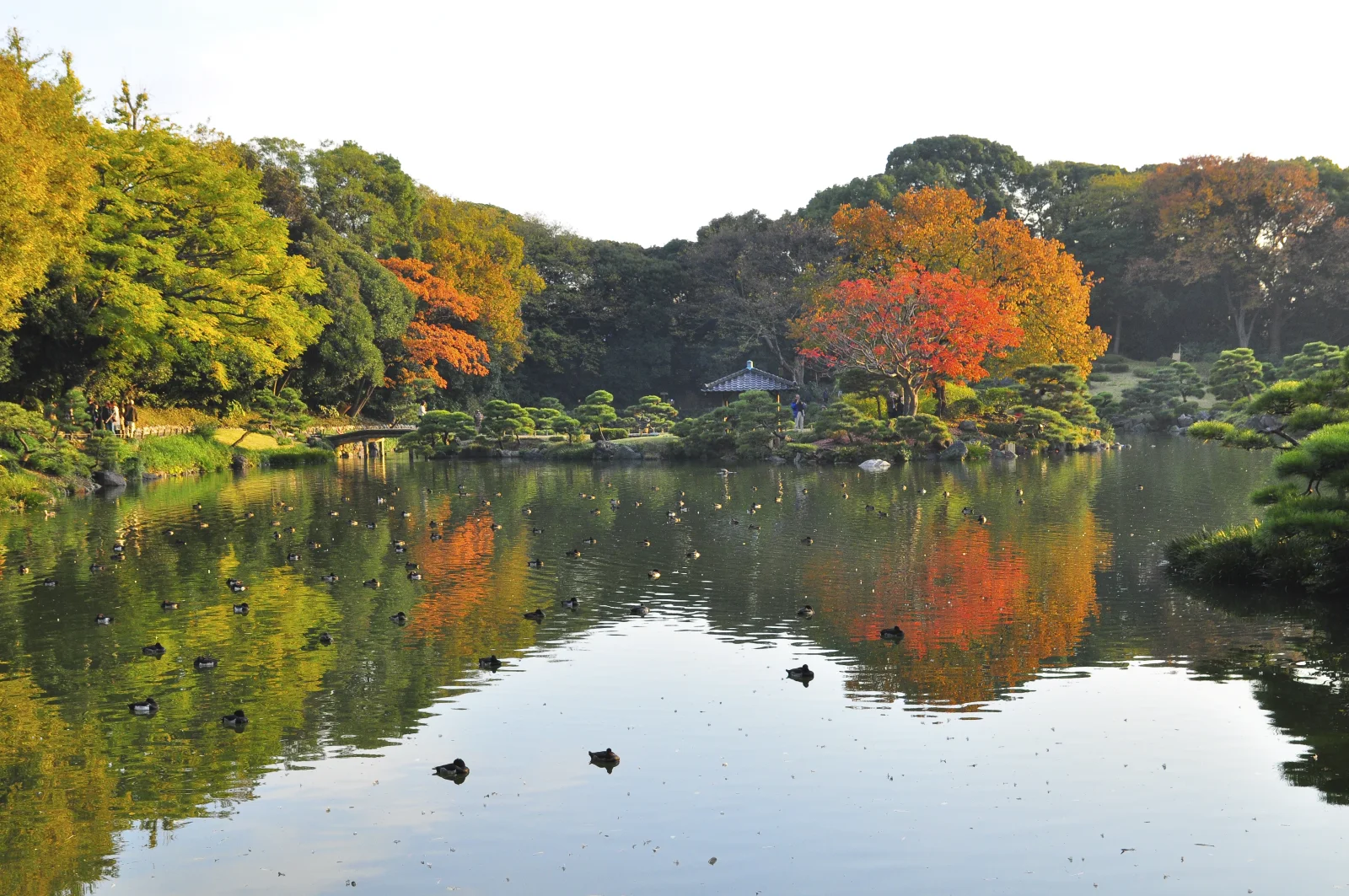
To catch autumn reflections on the water, start around Nanai Bridge and then shift your vantage point along the shore. Where low branches hang closest to the pond, you can often frame both the leaves and their mirrored colour together. If a breeze ripples the surface, walk further along the bank in search of sheltered water, or turn towards the western end of the pond. The vermilion railings of the Bentendo hall and the deciduous woodland of Gotenyama each offer a distinct backdrop, giving a half-day stroll more variety than waiting on the bridge for a single still reflection.
The two ends of the pond offer very different scenery. Arriving from Inokashira-koen Station brings you to the headwaters of the Kanda River, where the stream flows out of the park. At the western end lie Benzaiten and the Ochanomizu spring area, where vermilion temple buildings sit beneath waterside trees. That western side also connects naturally to the Ghibli Museum, Mitaka, via the West Garden, while returning to Kichijoji simply means turning off the northern end of Nanai Bridge towards the station's South Exit.
Allow roughly an hour for a full circuit of the pond with brief stops, or a little longer if you want time for photography and the Benzaiten approach. Entering near Nanai Bridge makes it easy to split the loop into an eastern leg towards Suimon Bridge and a western leg to Benzaiten, cutting short whenever you wish. On a half-day visit, pick just one ticketed highlight — boating, Inokashira Park Zoo, or the Ghibli Museum — so the paths do not feel rushed. Put timed Ghibli entry in your diary first, check last admission for the boathouse and zoo, and save Kichijoji's shopping arcades for dusk.
The official guided autumn walk on 29 November 2026 covers roughly 4 kilometres from Kichijoji Station to the front of Inokashira Park Zoo's Main Park, lasting two hours at ¥1,000 per person, with applications open until 23 November or until full. Even on a self-guided walk, you can follow the same sequence: look across the pond from the bridge, walk east to the Kanda River source, then loop back to Benten Pond and the wooded hillside. With only an hour to spare, skip the eastern out-and-back and concentrate on the bridge and western shore.
Start your autumn foliage walk at Inokashira Park from Nanai Bridge, Inokashira Benzaiten, and Gotenyama. Practical details on Kichijoji and Inokashira-koen stations, seasonal boat hire and last-entry times, plus combining Inokashira Park Zoo and the Ghibli Museum.
Entering via Kichijoji or Inokashira-koen Station
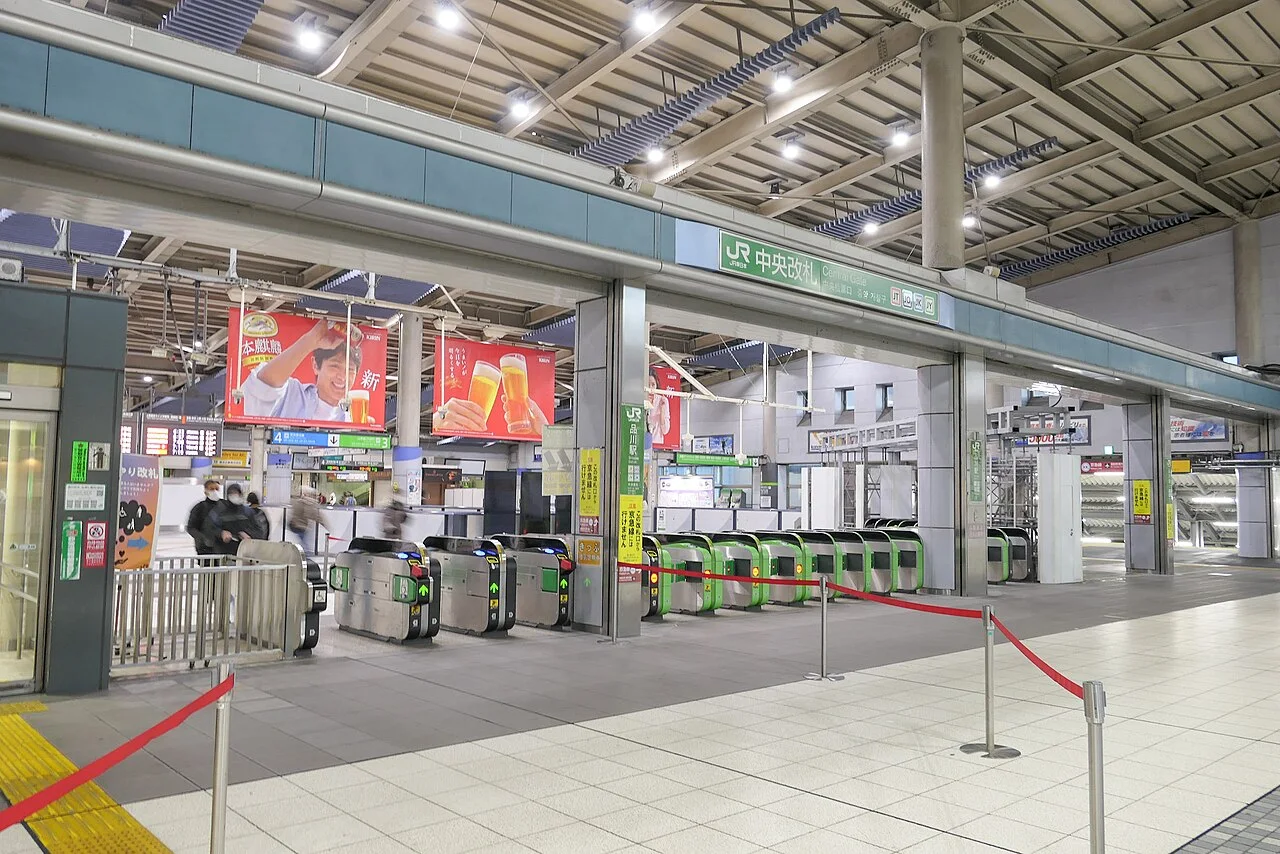
From Shinjuku or elsewhere along the JR Chuo Line, board a Chuo Line Rapid train that stops at Kichijoji, or take the Chuo-Sobu Line Local service; always check the stopping pattern before boarding, as limited express and special rapid services vary. Leave JR Kichijoji Station by the South Exit, signed as the Park Exit (Koen-guchi), and follow shop-lined Nanai-bashi-dori straight towards the greenery. Official park guidance puts the walk from the station to the park entrance at about 5 minutes, though reaching the western end of the pond takes extra time.
From Shibuya, the Keio Inokashira Line gives you two options. Ride an Express train to the terminus at Kichijoji if you want to grab breakfast or meet travel companions at the station, or take a Local service one stop short to IN16 Inokashira-koen Station, which sits roughly 1 minute on foot from the park entrance. Because Keio Express trains skip IN16, check the train type on the Shibuya platform indicators before boarding. If you accidentally board an Express, stay on to Kichijoji and walk down Nanai-bashi-dori rather than waiting on an intermediate platform.
A one-way route links both ends of the park cleanly. Start at Inokashira-koen Station on the eastern side, view the Kanda River source near the sluice gate, cross Nanai Bridge, and continue west to Benzaiten before finishing in Kichijoji for a meal — taking the Keio Line back to Shibuya or JR towards Shinjuku. If you are arriving from Shinjuku and heading on to Shimokitazawa afterwards, reverse the walk: enter from Kichijoji and depart on a Shibuya-bound Keio Local train from Inokashira-koen. If companions plan to head back early, agree beforehand whether to meet by the pond or at Kichijoji Station, as the two stations sit at opposite ends.
The Tokyo Subway Ticket covers Tokyo Metro and Toei Subway lines only, so both the JR Chuo Line and the Keio Inokashira Line require separate fares. For a simple day trip here, pay with a Suica, PASMO, or single paper ticket, and save subway passes for days packed with central Tokyo metro hops. On the Keio Line from Shibuya, the fare to either Kichijoji or Inokashira-koen is ¥230 for both paper tickets and IC cards, so splitting up between the two stops costs the same.
JR Kichijoji Station has coin lockers — check the station floor map to locate them — whereas Inokashira Park Zoo explicitly notes that it has no coin lockers on site. If you are changing hotels that day, leave bags at your accommodation or budget time to return to Kichijoji Station. Travellers walking straight through from Inokashira-koen Station to Kichijoji should travel light to avoid doubling back for luggage. Step-free routes via lifts can be checked in advance on the station maps for both JR Kichijoji South Exit and Keio Inokashira-koen Station.
If you are driving with relatives who prefer shorter walks, note the two Tokyo Metropolitan car parks. First Parking on the Gotenyama side is handy for the park information centre and the western end of the pond and operates 24 hours; Second Parking near the West Garden is closer to the Ghibli Museum, admitting vehicles from 8:00 to 19:00 with exit required by 21:00. Standard cars pay ¥400 for the first hour and ¥200 per 30 minutes thereafter, capped at ¥1,600 for 12 hours from entry. Official access rules prohibit turning right into the car parks from Kichijoji-dori or queueing on the street, so programme your satnav for your chosen car park and drive on if it is full.
Following the Pond to Nanai Bridge, Benzaiten, and Gotenyama
Nanai Bridge spans the waist of the pond right below the park entrance from Kichijoji, making it an easy first stop for orientation. Looking east, the water opens out towards the boathouse and the Kanda River source; looking west, it narrows past the Ochanomizu basin towards tree-shaded Benten Pond. Once you spot the Nanai Bridge sign, you are midway along the water, and crossing here is the quickest shortcut when you only want to walk half the loop.
The bridge takes its name from Inokashira Pond's older moniker, Nanai-no-ike (Pond of Seven Wells). Tokyo Metropolitan Bureau of Construction records note that several natural springs once fed the basin, while Tokyo Metropolitan Park Association archives trace the bridge's current name to a public naming competition when it was rebuilt in 1953. It is easy to treat the water as one continuous lake from the span, yet lakeside maps distinguish sections such as Ochanomizu Pond and Boat Pond right where the shoreline shifts. Glance over both railings for wide views, then step aside at the bridgeheads if you linger to take photos.
Arriving from Inokashira-koen Station, the first landmark is the Kanda River source beside Suimon Bridge, where the urban river separates from the pond. During the Edo period, Inokashira Pond served as the headwater for the Kanda Aqueduct supplying Edo Castle and the surrounding city, a system finally retired in 1898 with the arrival of modern piped waterworks. Looking back towards the pond from the sluice gate, you can clearly see the channel widening into the basin — a rewarding stop to point out to children on the park map before heading towards the swan boats.
At the western end of the pond, look for the Ochanomizu marker on the park map. Citing the Edo Meisho Zue, the Bureau of Construction explains that the name comes from a tradition of Tokugawa Ieyasu drawing spring water here to brew tea; although the natural woodland springs have long since ceased flowing unaided, water is now pumped up from a well. Follow the signposted path onto Benten Pond, where the vermilion Bentendo hall comes into view across the water. Stepping onto the shrine island and looking back past its red balustrades brings the foliage and water much closer together, giving angles you cannot get from Nanai Bridge.
After visiting the shrine, you can climb the old Benzaiten approach towards Mitaka's residential streets to see the Black Gate (Kuromon). Mitaka City records note that the present island hall was rebuilt in 1927, while stone bridges and ablution basins donated by Edo merchants still carry carved inscriptions; beside the Black Gate, a 1745 stone marker records the distance to the shrine on a plinth inscribed with Edo-period theatres and actors' names. Walking this approach after seeing the hall from the pond makes it easier to picture how worshippers once arrived. With a pushchair, keep to the wide waterside promenade — or take turns walking up the stone steps while someone stays with the children by the shore.
Gotenyama rises along the western side of the park; follow the park map towards the Zoo Main Park and Information Centre to find the trails heading up into the trees. After strolling along the water, it is worth climbing into this autumn deciduous woodland, which the Bureau of Construction notes is dominated by hornbeams, konara oak, and sawtooth oak in layered shades of russet and gold. Lower your phone to frame fallen leaves along the path or look up through gaps in the canopy. Anyone wishing to spare their legs can wait on the lakeside path and reunite near Benzaiten without tackling the gradient.
On the park's step-free access map, a solid red line runs from near Inokashira-koen Station past the Kanda River headwaters along the northern bank and crosses Nanai Bridge to the southern side. By contrast, the Kichijoji-dori entrance on the Gotenyama side is marked with a dashed red line warning of steep gradients that require assistance. Visitors with wheelchairs or pushchairs will find it far easier to enter and exit via Keio Inokashira-koen Station, avoiding the hardest climb. On the Kichijoji side, check the two access paths at the edge of the park first before deciding whether to descend near Nanai Bridge or take another entrance.
Reflections, Fallen Leaves, and Autumn Waterbirds
Japanese maples, ginkgo, and zelkova line the pond, creating rich contrasts as they turn at different speeds. Early in the season, focus on details: a single maple branch dipping towards the water, or yellow leaves against dark ripples beside the bridge. Once colour fills the canopy, shoot across to the opposite shore so the pond splits the row of trees into twin halves — sunlight hitting the far bank makes red leaves stand out sharply against deeper shadows. If bright glare hits the water, move down towards the bridgehead for a lower angle, or wait until passing boats clear and the wake settles.
Overcast skies soften harsh contrast, making it easier to pick out subtle reds, browns, and yellows beneath the trees. Walking over damp fallen leaves with a large umbrella can be slippery and awkward on busy paths, so keep bridge-top stops brief and step onto wider banks for longer shoots. Tokyo park rules allow tripods only where there is ample room; avoid blocking walkways side by side, and never move stones, snap branches, or feed birds for a shot. When checking your phone, pause off the path first, as both the waterside edges and bridge approaches require your attention.
Even after peak foliage fades, the pond stays lively with waterbirds. Bureau of Construction checklists include resident eastern spot-billed ducks and little grebes alongside winter visitors such as northern pintails, northern shovelers, and tufted ducks. Little grebes vanish abruptly beneath the surface and pop up metres away — standing back behind the embankment rail with children to guess where the next one will emerge is half the fun. Because the shallows serve as vital feeding and resting habitat, the park strictly asks visitors not to feed wildlife.
In recent years, Inokashira Pond has undergone ecological restoration through kaibori — draining the basin, dredging the bed, and removing non-native fish so native aquatic plants can regenerate. A September 2026 pond bulletin also noted a phytoplankton bloom turning the water green at times. When you spot green water from the bridge, shift your focus to the submerged weeds, shallow edges, and resting waterfowl. To get a closer look at what lives below the surface, stop by the Aquatic Life Park, where glass tanks showcase local fish, amphibians, and waterbirds up close.
If the weather clears briefly after rain, stick to the bank nearest your arrival station. From the Keio side, stroll between Inokashira-koen Station and Nanai Bridge; from Kichijoji, drop down from the Park Exit to cross the bridge and head straight back. Photographers carrying extra gear should save the second angle for the western shore rather than chasing treetops up slick slopes. If you linger until dusk for still water and have dinner booked in Kichijoji, stick to the main lit park avenues on the walk back so timing stays predictable.
Rowboats, Pedal Boats, and Swan Boat Fares
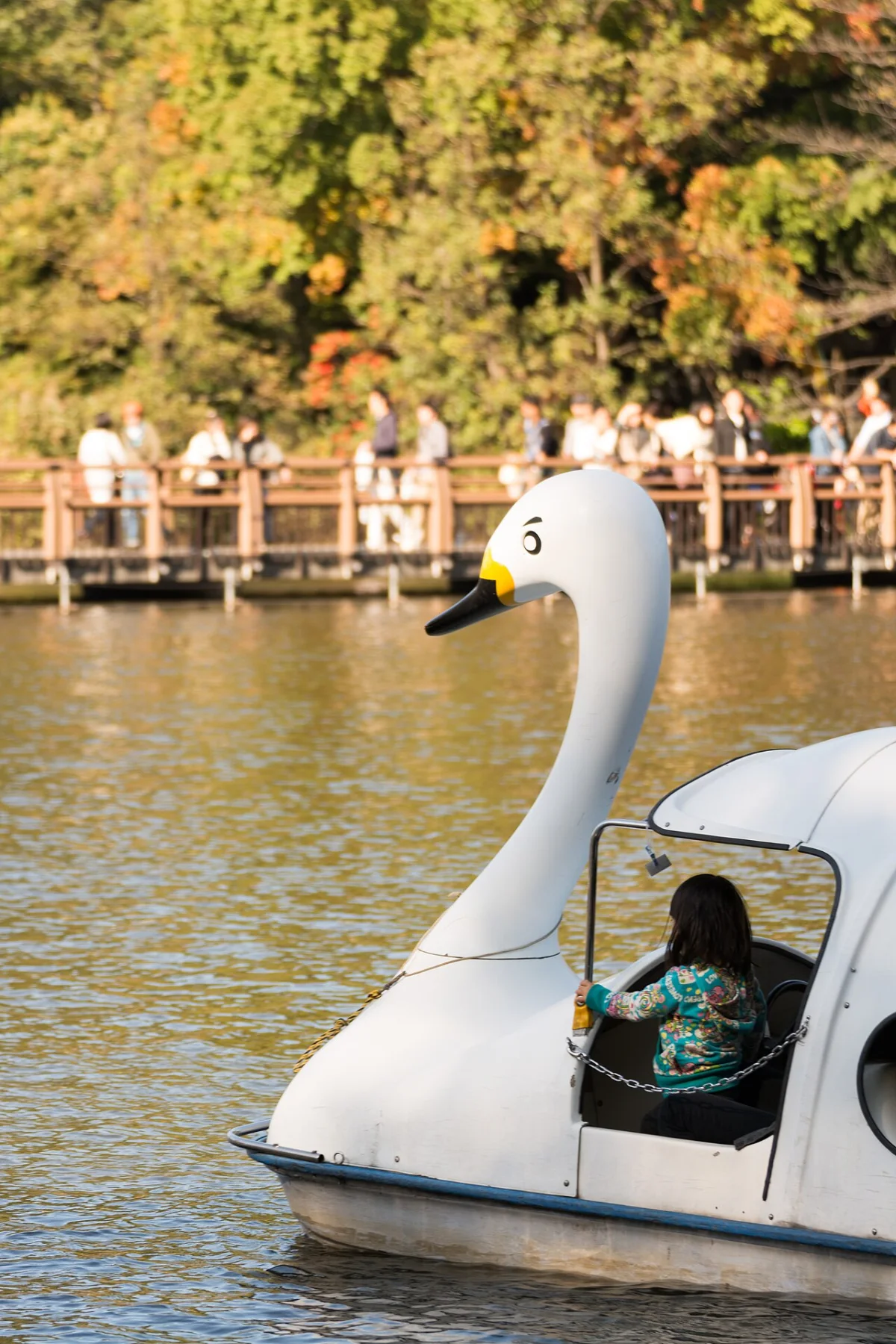
The Inokashira Pond boathouse sits just off the southern end of Nanai Bridge — cross over and follow signs for the boat pier. Current Tokyo Metropolitan Park Association rates are ¥800 per 30 minutes for a rowboat, and ¥1,000 per 30 minutes for either a standard pedal boat or a swan boat. Fares are charged per vessel, meaning two adults sharing a swan boat pay ¥500 each, while groups of three adults wanting one boat will need a rowboat, the only option rated for three adults.
Park Association visitor guidance caps both types of pedal boat at two adults plus one small child. A party of two adults and two children should budget for two boats and confirm the pairing with staff at the ticket window. In a rowboat, have the most confident rower take the centre seat; on a first pedal-boat outing, agree who is steering before pushing off. Because the jetty gets busy during departures and landings, save photos until you are safely clear of the dock.
From November to February, the boathouse opens from 9:30 to 16:50, with last ticket sales at 15:50, and closes on Wednesdays from December through February. In October and March, hours extend to 17:20 with last entry at 16:20. Work backwards from the cut-off time when planning your afternoon: if you anticipate a long lunch or want to explore the Zoo Main Park first, put boating before lunch and stroll past Gotenyama towards the zoo afterwards.
Your 30-minute slot includes launching and returning to the jetty, so practise turning within sight of the pier first and watch the boundaries and return time set by staff. Paddling out with a tailwind feels effortless, whereas heading back into a headwind takes noticeably longer. Keep camera straps securely looped over your neck out on the water, tuck long coats and umbrella handles inside the hull, and board children from a spot where an adult can steady them while listening to the safety briefing.
If boating is your main waterside activity, glance down from Nanai Bridge first to gauge the queue and check which boat type is boarding. Should anyone in your group prefer to stay on dry land, arrange a clear meeting spot on the southern bank near the pier — they can photograph the boats from the bridgehead or wander along the shore for autumn leaves rather than standing idle in the ticket queue.
If high winds or maintenance curtail operations, pivot smoothly to photographing the water from the bridgehead and walking west to Benzaiten, putting that spare half-hour into the western shore. Afternoon visitors arriving after the 15:50 cut-off can simply continue along the pond towards Kichijoji. If a boat ride is the main reason for your trip, call the boathouse directly on 0422-42-3712 before setting out to confirm it is running.
| Months | Opening Hours | Last Ticket | Closed |
|---|---|---|---|
| October, March | 9:30–17:20 | 16:20 | No regular weekly closure |
| November | 9:30–16:50 | 15:50 | No regular weekly closure |
| December to February | 9:30–16:50 | 15:50 | Wednesdays |
Picking One Zone at Inokashira Park Zoo for Families
Inokashira Park Zoo is a separate ticketed attraction split into two areas: the Main Park off Kichijoji-dori and the lakeside Aquatic Life Park. Coming from Nanai Bridge, you reach the Aquatic Life Park first via the Nanai Gate or Benten Gate; the Main Park sits along the western street edge, marked 'Zoo', and is where to start if the squirrels are top of your list. Because the public park and zoo gates sit side by side along the fence, agree to meet specifically at the Zoo Main Gate or Nanai Gate rather than just 'the zoo entrance'.
A single admission ticket covers both the Main Park and the Aquatic Life Park; you exit the gated zone for a roughly 5-minute walk between them, so keep your ticket handy to show at the second gate. Hours run from 9:30 to 17:00, with last entry at 16:00 — enter your first area before 15:00 if you want at least half an hour in each plus walking time. Admission is ¥400 for adults, ¥200 for visitors aged 65 and over, ¥150 for junior high school students, and free for primary school children and younger (as well as junior high pupils living or studying in Tokyo with a student handbook).
The zoo usually closes on Mondays, shifting to the Tuesday when Monday falls on a public or substitute holiday. On Monday 23 November 2026 (a national holiday), the Main Park hosts Japanese squirrel talks and closes the following day on Tuesday 24 November; year-end closure runs from Monday 28 December 2026 before reopening on 2 January 2027. The surrounding public park paths remain open free of charge throughout, so double-check closing days for the Ghibli Museum, zoo, and boathouse side by side over the New Year period.
The Main Park's Squirrel Trail (Risu no Komichi) walkthrough enclosure is scheduled to close from 15 to 20 December 2026 for facility maintenance and animal health checks. Visitors arriving that week can still view Japanese squirrels outside the breeding building or explore the Seibo Kitamura Sculpture Museum, which preserves the studio where the Nagasaki Peace Statue was sculpted alongside indoor and outdoor works — ideal when a passing shower sends you inside.
Over in the Aquatic Life Park, the indoor Aquatic Life Pavilion continues the theme of lakeside nature watching. After spotting diving birds from Nanai Bridge, step inside to see the little grebe tank alongside freshwater fish and creatures from streams, ponds, and marshes. With only an hour left in the afternoon, spending your ticket on this waterside annex leaves a much shorter walk back to Kichijoji. If children want rides, the Main Park also has a small Sports Land amusement corner with a merry-go-round and coin-operated rides at ¥100 per go — let them pick one ride beforehand to keep schedules on track.
Looking for little grebes and seeing swans sit in two separate spots at the Aquatic Life Park. From 10 November 2026, whooper swan exhibits at the Swan Terrace were suspended for avian disease precautions, so head straight into the Aquatic Life Pavilion for indoor waterside species, including its permanent water spider display. Afterwards, exit through Nanai Gate and follow signs to the Main Park if you still have time for the squirrels or the carousel.
Dogs on short, controllable leads are welcome along the main paths of the free public park. When travelling in a group and one person ducks out to buy drinks or snacks, wait in a wider plaza by a bridge or park gate rather than on a tight path bend. With toddlers who tire quickly, pairing the Aquatic Life Park with a short lakeside stretch — or turning back at Nanai Bridge and exiting via the opposite station — spares little legs from retracing the entire route.
Booking Ghibli Museum Tickets Before Choosing Your Route
The Ghibli Museum, Mitaka stands in the West Garden of Inokashira Park, a short walk beyond the western end of the pond following signs for the West Garden and the museum. If you hold a 10:00 entry slot, the cleanest approach is from the South Exit of JR Mitaka Station, walking about 15 minutes along the Tamagawa Josui canal directly to the museum, then strolling east past Benzaiten and Nanai Bridge to finish at Kichijoji Station.
A community bus also links Mitaka Station South Exit with the museum in roughly 5 minutes. Single fares are ¥230 for adults (cash or IC card), and ¥120 in cash or ¥50 by child IC card for children; return discount tickets have been discontinued, and the museum route does not run on closed days. Riding the bus in and walking back through the park to Kichijoji works particularly well if it is raining ahead of your timed entry.
Entry is strictly by advance reservation for a specified date and time slot, with no tickets sold on the door. International visitors should book via the Lawson Ticket English portal linked from the museum's official English website; tickets for the following month go on sale at 10:00 JST on the 10th of each month. Admission rules allow entry within one hour of your designated slot, so allow plenty of margin for cross-town trains or station queues.
Standard admission is ¥1,000 for adults and university students, ¥700 for junior and senior high school students, ¥400 for primary school pupils, ¥100 for children aged four and over, and free for under-fours. Starting with November 2026 entries, a new QR ticket system took effect, with the domestic Lawson portal charging a ¥110 system fee per ticket for either mobile QR tickets or paper collection at Lawson Loppi kiosks. Overseas visitors should use the international ticket portal via the museum's English website and follow the collection instructions provided with their booking.
The museum normally closes on Tuesdays, subject to exceptions on the official calendar: in late 2026 it closes for maintenance from 4 to 18 November (reopening 19 November) and for the winter break from 27 December 2026 to 2 January 2027. Ticket holders visiting between late November and 26 December can also see seasonal Christmas decorations themed to the exhibition 'The Studio of Yuriko Yamawaki'. If your trip falls right at the end of December, separate your autumn park walk from your museum visit across different days.
If you secure a 13:00 or 14:00 slot, spend the morning walking from Kichijoji around the western half of the pond, stop for lunch, and head on to the West Garden; check the boathouse queue from the bridge first before committing to a boat. With only the late 16:00 slot available, enjoy the pond in morning or midday light and make the museum your early-evening finale. For other bookable animation and character stops around the city, see our Tokyo character and studio itineraries to avoid clashing reservations.
Wrapping Up in Kichijoji and Wet-Weather Alternatives
Kichijoji Station's South Exit feeds straight back onto the park approach, so if you simply want a meal afterwards, check restaurants along Nanai-bashi-dori — agree on a latest sit-down time beforehand in case popular spots have long queues. To pick up prepared food for your hotel, head into the Atre Kichijoji complex right at the South Exit before boarding your train, and leave grocery or clothes shopping until after the walk so you only carry water and a camera around the pond.
To browse another neighbourhood block, cut through the station concourse to the North Exit. Looking across the station square, follow the Sunroad sign into the covered shopping arcade, or turn right beside the exit into Harmonica Yokocho. Sunroad offers a broad, straightforward pedestrian promenade, while Harmonica Yokocho packs tiny shops and bars into narrow alleys — Musashino tourism guides even highlight a commemorative manhole cover beneath the yellow entrance sign, which doubles as a handy meeting point. From there, Nakamichi-dori is best for slow browsing once you are done walking the park.
If heavy rain hits while you are in the park, walk out to the North Exit and head to Coppice Kichijoji, taking the lift to the 7th floor of the FF Building for the Musashino City Kichijoji Art Museum. Usually open 10:00–19:30, it closes on the last Wednesday of each month, from 29 December to 3 January, and during exhibition changeovers; admission is ¥100 for permanent galleries and typically ¥300 for special exhibitions. From 12 November 2026 to 28 February 2027, the Yozo Hamaguchi Memorial Room presents the copperplate mezzotint exhibition Hibi no Mukogawa — though if rain arrives on the final Wednesday of the month, stick to the station mall and covered Sunroad arcade instead.
When you have an hour to fill before a late-afternoon train, visiting the museum from the North Exit is far easier to time than heading down to the pond and climbing back up. Look closely at the fine dark lines and glowing patches of colour emerging from shadow in Yozo Hamaguchi's mezzotints, then step into the adjacent Hideo Hagiwara Memorial Room. Companions who prefer shopping can browse different floors of Coppice and meet back at the ground-floor entrance, keeping shopping bags well clear of the lakeside.
On days that start wet from the morning, tackle lunch, shopping, or booked museum slots first. If the sky clears briefly before dusk, Nanai Bridge is close enough to Kichijoji for a quick look and turn-back, or a 30-minute walk from Inokashira-koen Station to the bridge lets you take in the Kanda River source and pond without completing the full loop. If rain falls on a Tuesday without Ghibli tickets, check whether the Zoo's Aquatic Life Pavilion is open or settle into a North Exit restaurant.
If you still have energy for shops on the way back, hop straight onto the Keio Inokashira Line for Shimokitazawa's vintage stores, or ride all the way to the Shibuya terminus for department stores. To fit another foliage spot into your Tokyo stay, pair this lakeside walk with a ginkgo avenue or walled garden on separate half-days using our Tokyo autumn foliage area guide to match stops near your hotel or next train line.
A few useful answers
When is the best time to see autumn foliage at Inokashira Park?
Set aside time between late November and early December, checking recent photos around Inokashira Pond and Nanai Bridge that week. If you only have time for a short walk, enter from Kichijoji, cross Nanai Bridge, and follow the western shore past Benten Pond and Gotenyama.
Is Inokashira Park free to enter?
Yes, the public park is free and open 24 hours. The boathouse, Inokashira Park Zoo, and the Ghibli Museum operate separately and each requires its own ticket.
Do Keio Express trains from Shibuya stop at Inokashira-koen Station?
No, Express services skip Inokashira-koen Station. Take a Local train to alight at IN16 for the eastern end of the pond, or ride an Express to Kichijoji and walk about 5 minutes from the South Exit.
What is the last ticket time for swan boats during autumn foliage season?
From November to February, last ticket sales are normally at 15:50 with closing at 16:50. Swan boats cost ¥1,000 per boat for 30 minutes, and the boathouse closes on Wednesdays from December to February.
Can you visit Inokashira Park Zoo and the Ghibli Museum in the same afternoon?
The zoo stops admitting visitors at 16:00, while the Ghibli Museum follows strict timed-entry slots. On a half-day visit, anchor your afternoon around your Ghibli slot and fit in either the Zoo Main Park or the Aquatic Life Park if timing allows; to see both zoo areas comfortably, start in the morning.
Official information and references
Sources used in this guide.
- Tokyo Metropolitan Bureau of Construction | Inokashira Onshi Park Facilities and Park Map
- Tokyo Metropolitan Bureau of Construction | Step-Free Access Route Map
- Mitaka City | Inokashira Benzaiten, Stone Marker, and Kuromon (Black Gate)
- Tokyo Metropolitan Bureau of Construction | Nanai Bridge, Gotenyama, Inokashira Pond, and Kanda River Source
- Tokyo Metropolitan Bureau of Construction | Autumn Tree Species in the Park
- Tokyo Metropolitan Bureau of Construction | Park Rules and Etiquette
- Tokyo Metropolitan Bureau of Construction | Inokashira Pond Bulletin (September 2026)
- Tokyo Metropolitan Park Association | Inokashira Park Hours, Access, and Parking
- Tokyo Metropolitan Park Association | Boat Capacities, Current Fares, and Last Ticket Times
- Tokyo Metropolitan Park Association | History of Nanai Bridge and the Aquatic Life Park
- Musashino City Tourism Organization | 2026 Inokashira Park Autumn Foliage Guided Walk
- Mitaka City Bulletin | City Autumn Foliage Season and Inokashira Park (2023)
- Mitaka City Bulletin | Inokashira Park Autumn Foliage Record (22 November 2017)
- Musashino City Tourism Organization | Kichijoji Shopping Streets and Inokashira Park Visitor Map
- Musashino City Tourism Organization | Kichijoji Harmonica Yokocho
- Keio Corporation | Inokashira-koen Station Train Types, Timetable, and Accessibility
- Keio Corporation | Inokashira Line Fares from Shibuya Station
- JR East | Kichijoji Station Lines and Coin Lockers
- Tokyo Metro | Tokyo Subway Ticket Eligible Lines
- Inokashira Park Zoo | Main Park and Annex, Opening Hours, and Admission
- Inokashira Park Zoo | Opening Calendar (April 2026 to March 2027)
- Inokashira Park Zoo | November 2026 Keeper Talks
- Inokashira Park Zoo | Park Exhibits and On-Site Facilities
- Inokashira Park Zoo | Temporary Closure Notice for the Squirrel Trail
- Inokashira Park Zoo | Autumn Exhibit Updates and Zoo Notices
- Tokyo Zoological Park Society | Inokashira Park Zoo 2026 Animal Exhibits Pamphlet
- Ghibli Museum, Mitaka | Tickets, Entry Slots, and Admission Fees
- Ghibli Museum, Mitaka | International English Ticket Sales via Lawson Ticket
- Ghibli Museum, Mitaka | QR Ticket System and System Fee from November 2026
- Lawson Ticket | Ghibli Museum Domestic and International Ticket FAQ
- Ghibli Museum, Mitaka | Access, Walking Route, and Community Bus
- Ghibli Museum, Mitaka & Lawson Ticket | Opening Calendar
- Ghibli Museum, Mitaka | 2026 Christmas Decorations
- Musashino City Kichijoji Art Museum | Opening Hours and Admission Fees
- Musashino City Kichijoji Art Museum | Yozo Hamaguchi Memorial Room 2026–27 Exhibition