Compare Shinjuku Gyoen, Gaien, Koishikawa Korakuen, Kiyosumi, Mizumoto and Hamarikyu by area and November–December colour, with half-day routes, family breaks, entrances and evening options.
- Region & Focus
- TokyoAutumn leaves
- Reading Scope
- 38 min read · 15 chapters · 4 Q&As
- Official Verification
- 24 official sources checkedUpdated 22 November 2026
- Key Topics
- SeasonsItinerariesNeighbourhoods
Chapter Route Map (tap any stop)
- Choose your range for the day: gardens, tree-lined avenues or watersides
- Read the month first, then check current conditions at the same park
- West Tokyo: Shinjuku Gyoen first, department stores after closing
- West Tokyo: Gaien for ginkgo, Yoyogi for lawns and a slower walk
- Bunkyo and Suidobashi: use either of Koishikawa Korakuen’s gates
- Around Komagome: Rikugien’s pond or Kyu-Furukawa’s slopes and house
- East Tokyo near a station: Kiyosumi’s short circuit and flat half-pond route
- Eastern riverside: pair Sumida Park with Asakusa and choose a bank
- North-eastern wetlands: give Mizumoto more time, including the bus
- Southern pondside: Hamarikyu with Shimbashi or Shiodome, meals outside
- Choose central Tokyo or Tachikawa: travel for the scale you want
- Four combinations you can adapt into a full day
- Evening leaves need fresh energy: decide whether to enter again
- With children or older companions, connect accessible paths, seating and meals
- Budget for both tickets and calendars; shorten outdoor sections in rain
- Quick Q&A
Start with one direction and one kind of autumn view. For leaves reflected in a pond, give a city garden half a day. For ginkgo photographs, a stretch of Aoyama can be enough. For children who need lawns and waterside space, set aside a day for a larger park. Compare November and December colour, entrance access and your companions’ stamina to enjoy the views without rushing around an entire autumn list.
Choose your range for the day: gardens, tree-lined avenues or watersides
With only half a day free, choose within the area you will already be in. From Shinjuku or Shibuya, compare Shinjuku Gyoen with Aoyama’s ginkgo avenue. If heading to Suidobashi or Iidabashi, visit Koishikawa Korakuen before lunch. Around Ginza or Shimbashi, a pondside walk at Hamarikyu fits more easily. Treat Mizumoto Park or Tachikawa as the day’s main destination, allowing time for return travel and movement inside. Trying to complete the whole autumn list soon uses up your daylight on train changes.
Your preferred scenery matters too. Paid gardens focus attention on leaves reflected in ponds. Ginkgo avenues provide a more direct composition of yellow rows. Open parks are easier with children who want to walk, sit down, eat and then play. A riverside walk can connect with a neighbourhood stroll, while Mizumoto’s wetland woods need a fuller period outdoors. Their access and visit lengths differ greatly.
Suggested visit times include walking and rests. Calculate rail and bus travel separately from your accommodation.
| Area | Places to compare first | How to spend your time |
|---|---|---|
| West | Shinjuku Gyoen, Meiji Jingu Gaien, Yoyogi Park | Choose one main half-day stop; add shopping or lunch outside |
| North and Bunkyo | Koishikawa Korakuen, Rikugien, Kyu-Furukawa Gardens | Look closely at pond gardens; add a second only if energy allows |
| East | Kiyosumi Gardens, Sumida Park, Mizumoto Park | Kiyosumi with its neighbourhood, Sumida with the riverside, Mizumoto for a full outdoor day |
| South | Hamarikyu Gardens | Garden in daylight, followed by dining in Ginza or Shimbashi |
| Tama | Showa Kinen Park | Build a day around park distances, lunch and the journey home |
Compare Shinjuku Gyoen, Gaien, Koishikawa Korakuen, Kiyosumi, Mizumoto and Hamarikyu by area and November–December colour, with half-day routes, family breaks, entrances and evening options.
Read the month first, then check current conditions at the same park
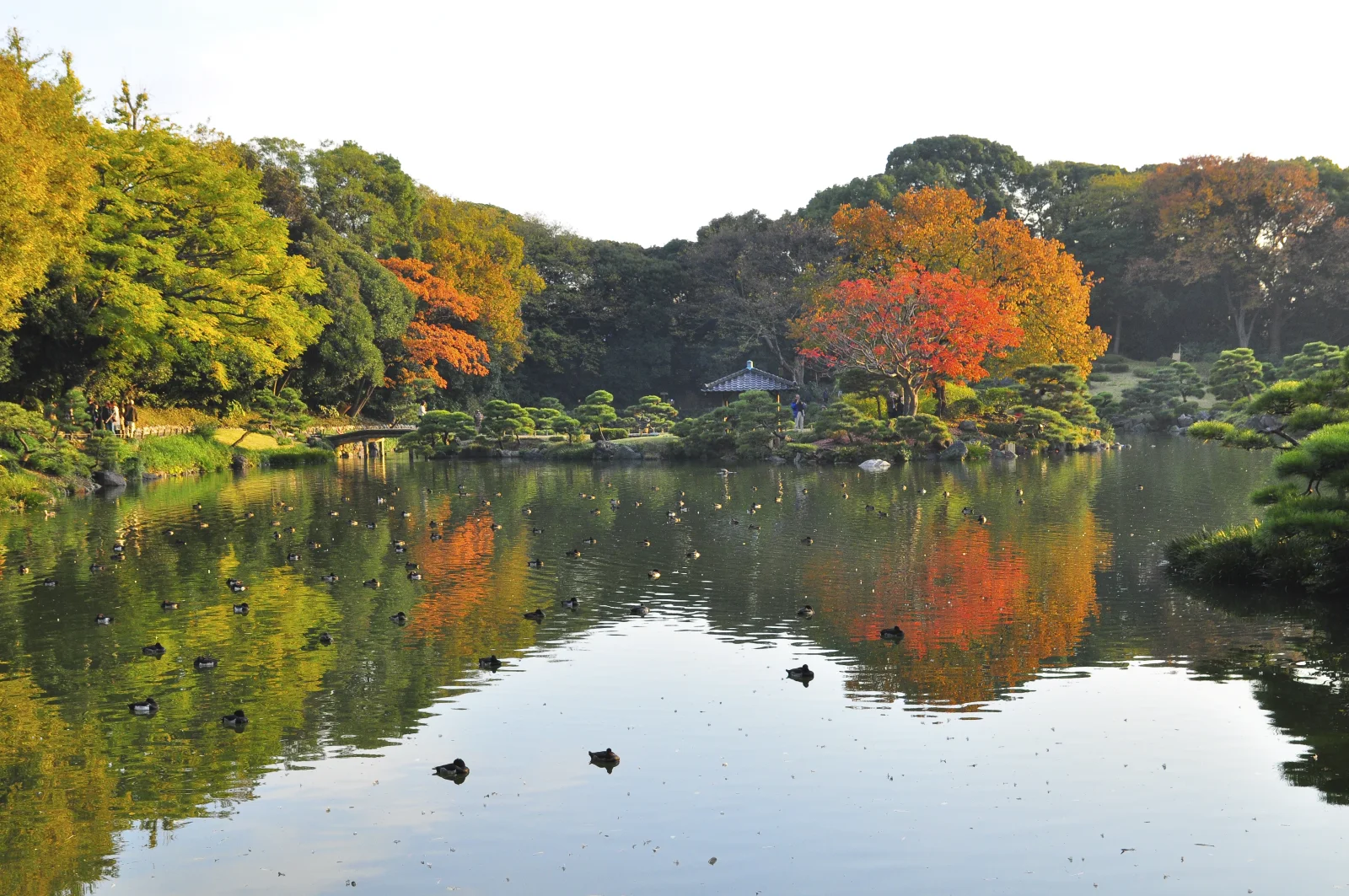
Autumn colour in central Tokyo usually comes later than in the mountains. The GO TOKYO autumn-leaves guide places the main city viewing period between mid-November and early December. Rikugien’s usual range can extend into mid-December, while Hamarikyu and Koishikawa Korakuen are generally listed for late November to early December. Use these ranges to choose a week when booking accommodation, then use each garden’s recent photographs to choose your order after reaching Tokyo.
From late October to early November, city visits can still focus on gardens, flower displays and neighbourhoods in their own right. Shinjuku Gyoen opens daily during its 1–15 November chrysanthemum exhibition, and Kyu-Furukawa also offers autumn roses. If extensive autumn foliage is your sole aim, compare mountain and city destinations before departure. See the Tokyo day trips and overnight stays guide for footwear, daylight and return planning on mountain routes. Do not turn a city half-day into an unprepared mountain walk at the last minute.
From late November, consider a different tree species or part of the park before changing destinations. Gaien’s yellow leaves, garden maples and Mizumoto’s dawn redwoods have different colours. One photograph shows only what was in the frame at that moment. Check both capture date and place: entrance ginkgo trees, pondside maples and deeper woods may progress differently. With only one sunny morning left, a place with recent images and direct transport gives you more time among the views than crossing Tokyo according to online rankings.
West Tokyo: Shinjuku Gyoen first, department stores after closing
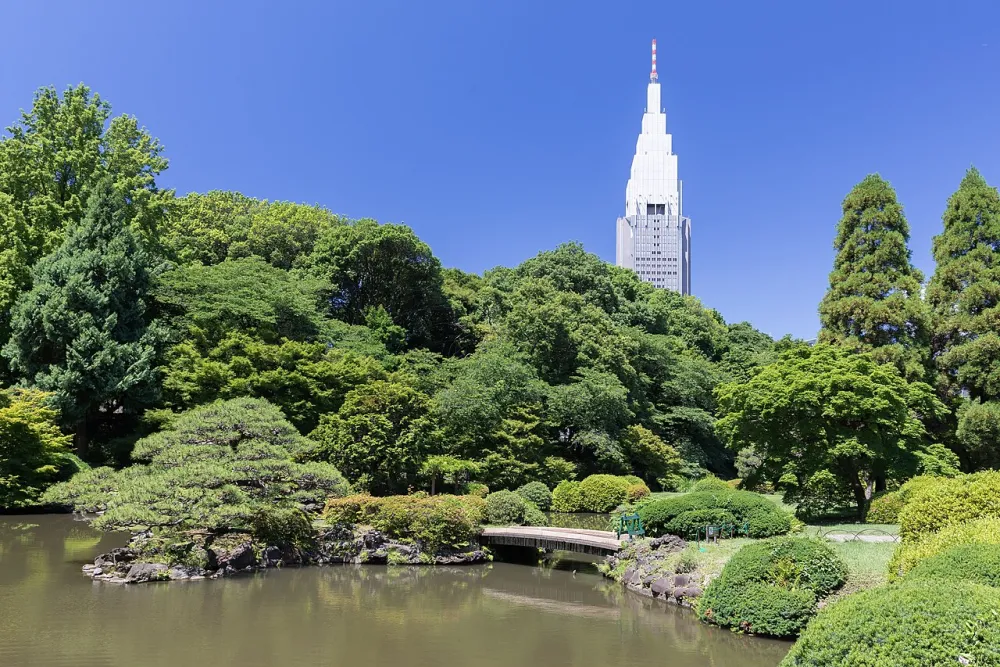
Shinjuku Gyoen suits a balance of gardens, lawns and city dining. Enter in the morning, see tree shapes and reflections beside the Japanese Garden ponds, rest on an open lawn, then return to Shinjuku for food and shopping in the afternoon. With only two hours, there is no need to cover every garden style. Footbridges, water and distant high-rise buildings in its photographs show how close this garden is to the city.
Choose your gate first. The official walk from the South Exit of JR Shinjuku Station to Shinjuku Gate is about ten minutes. By metro, compare Shinjuku-sanchome Station for Shinjuku Gate and Shinjuku-gyoenmae Station for Okido Gate, or JR Sendagaya Station for Sendagaya Gate. Those last three walks are about five minutes each; specific exits are on the Ministry of the Environment access map. Use Shinjuku Gate if returning to shop in Shinjuku. For the Sobu Line home, consider Sendagaya instead of crossing the whole garden again.
Put autumn and winter hours directly in your plan: from 1 October to 14 March, opening is 09:00–16:30, with last entry at 16:00. Standard admission is ¥500; those aged 65 and over and students at high-school level and above pay ¥250. Junior-high-school-age children and younger enter free. It normally closes on Mondays, or the next weekday if Monday is a national holiday, with special daily opening on 1–15 November. If Monday is your only free day, apply this rule before choosing another garden. Do not finish shopping and reach the gate at 15:50. The visitor information gives full conditions.
Shinjuku Gyoen has space to sit, but lawn use has clear limits. Alcohol, cycles and balance bikes cannot be brought in, and balls and many kinds of sports equipment are restricted. The children’s area has separate rules allowing certain soft play equipment for primary-school children and younger. If children want football or cycling, choose a park with suitable facilities. Distinguishing a garden walk from active play helps everyone know what the day will involve.
West Tokyo: Gaien for ginkgo, Yoyogi for lawns and a slower walk
The Meiji Jingu Gaien Ginkgo Avenue fits directly into half a day in Aoyama. The operator describes roughly 300 metres from the Aoyama entrance to the circular road, lined with 146 ginkgo trees. The rows draw your eye towards the far end, unlike a pond garden’s emphasis on reflections. Allow time for a slow walk between neighbourhood dining and shopping. You do not need a distant garden to fill out the day.
Approach the Aoyama end from Gaienmae Station or Aoyama-itchome Station, according to your hotel route. The official Gaien access page lists railway approaches, and the seasonal avenue introduction identifies the avenue. Stay in pedestrian space for photographs and find a safe pavement position for a central perspective; the road still carries traffic. Agree a meeting side after leaving the avenue so some companions do not stop for photographs while others reach the far end.
If your companions care more about sitting on grass and resting after a walk, choose Yoyogi Park. General admission is free and the park is always open. JR Harajuku Station, Meiji-jingumae Station and Yoyogi-koen Station are each about three minutes from their corresponding entrances. Entering from Harajuku and leaving towards a western station can connect the walk with a different return route. Check the park map and access information and keep your chosen area small.
Gaien, the shrine approach beside Harajuku and Yoyogi Park each have their own entrances and purposes. For an afternoon meal in Harajuku, Yoyogi minimises travel. For ginkgo photographs and an Aoyama walk, stay at Gaien. Although trains connect the two, chasing the avenue, lawns and shops in one half-day can mean leaving each place just as you begin to enjoy it.
Bunkyo and Suidobashi: use either of Koishikawa Korakuen’s gates
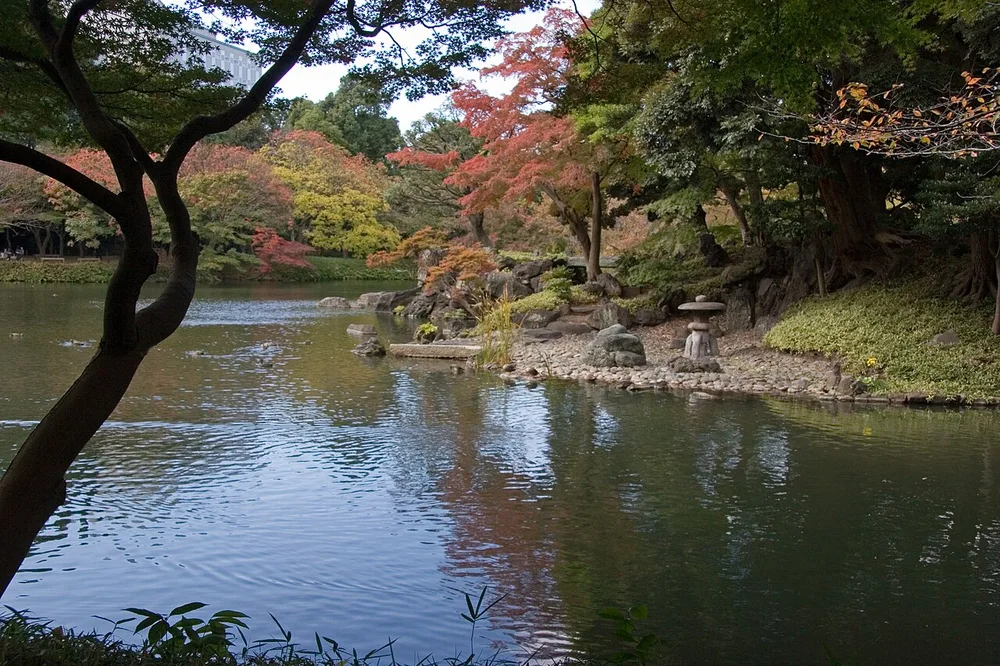
Koishikawa Korakuen is a city option for maples with an easy return journey. Hills, bridges and water around its central Daisensui pond let you see the same foliage from different distances. Allow a morning or about two hours around lunch, walk slowly around the main pond, then choose the side that interests you. On a first visit, you do not need to find every named view on the map. Stay longer at an angle you like.
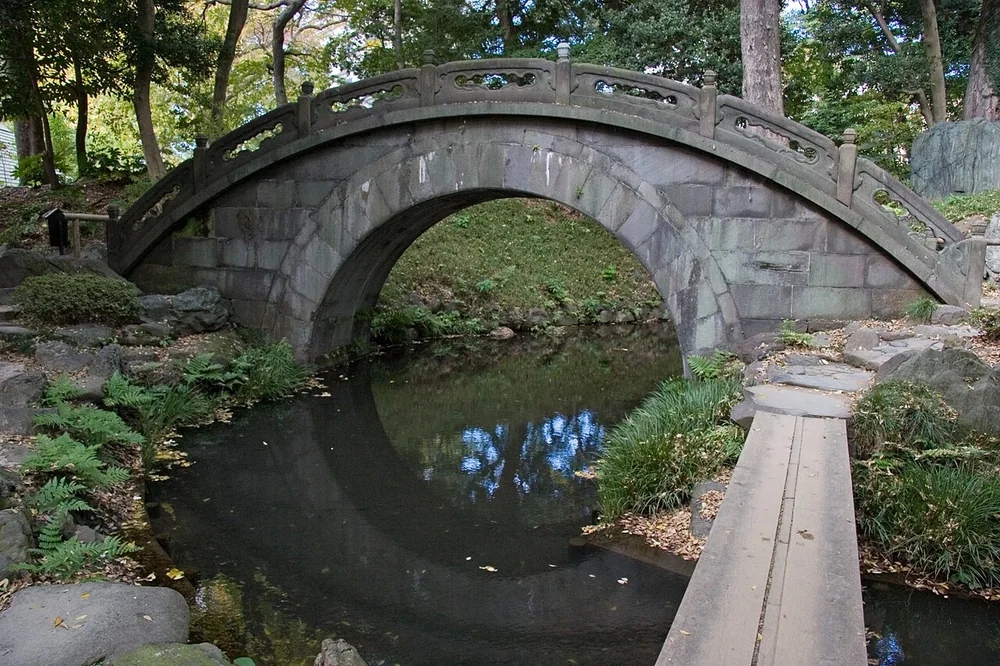
Its two gates change the final walk. The East Gate is about five minutes from JR Suidobashi Station’s West Exit or six minutes from Exit 2 of Korakuen Station. The West Gate is about three minutes from Exit C3 of Iidabashi Station on the Oedo Line, or eight minutes from JR Iidabashi’s East Exit. These are the gate walks listed in the official access information. Sobu Line users can enter east, leave west and return from Iidabashi. With a pushchair or luggage, check station lift exits first. The nearest staircase is not always the easiest route.
Daytime hours are 09:00–17:00, with last entry at 16:30. Admission is ¥300, or ¥150 for those aged 65 and over. Primary-school children and younger, and junior-high-school pupils living or studying in Tokyo, enter free. Packed lunches may be eaten on designated endai benches. Picnic sheets cannot be spread on paths or in planting, and alcohol cannot be brought in. This allows a brief seated lunch while keeping the garden suited to quiet viewing. For a long picnic or children running about, choose an open park.
Keep paths clear when photographing autumn colour. The official FAQ says periods with crowds, including autumn foliage, can have bans on monopods, tripods and selfie sticks. Portrait-led shoots and wedding photography need separate permission. A handheld camera or phone can record the changing pondside views. Waiting for an empty scene in the middle of a narrow path blocks others. Let companions meet you at the exit rather than making everyone follow your photography pace.
Around Komagome: Rikugien’s pond or Kyu-Furukawa’s slopes and house
With half a day to the north, choose a main destination between Rikugien and Kyu-Furukawa Gardens. Rikugien’s pond and artificial hills suit a focus on circuit paths and maples. At Kyu-Furukawa, the Western-style house, upper Western garden and lower Japanese garden show how changes in level alter a landscape. Give Kyu-Furukawa priority if building exteriors and garden layout interest you.
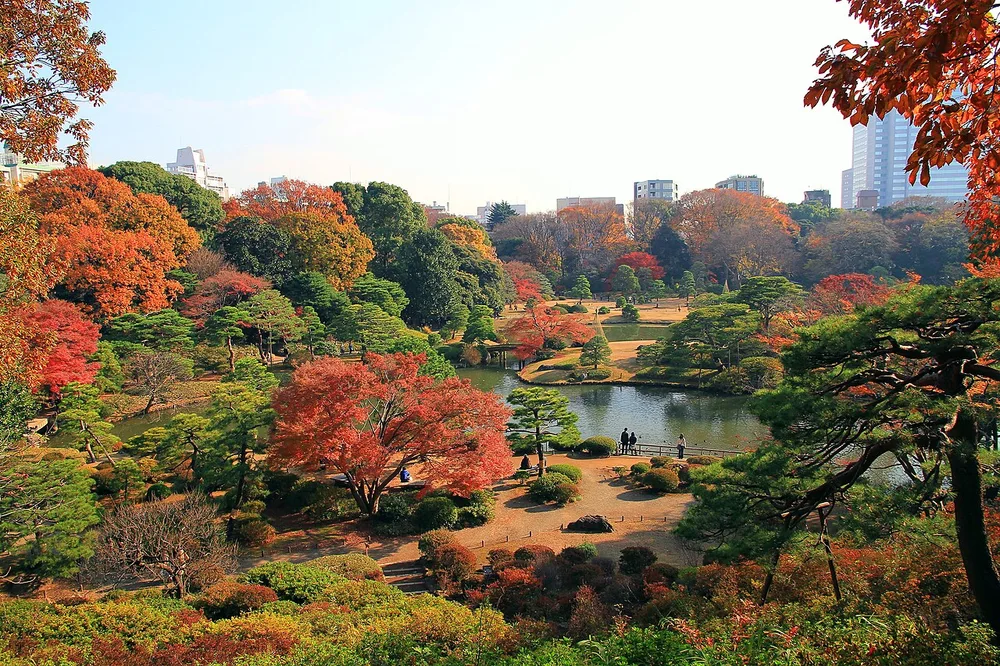
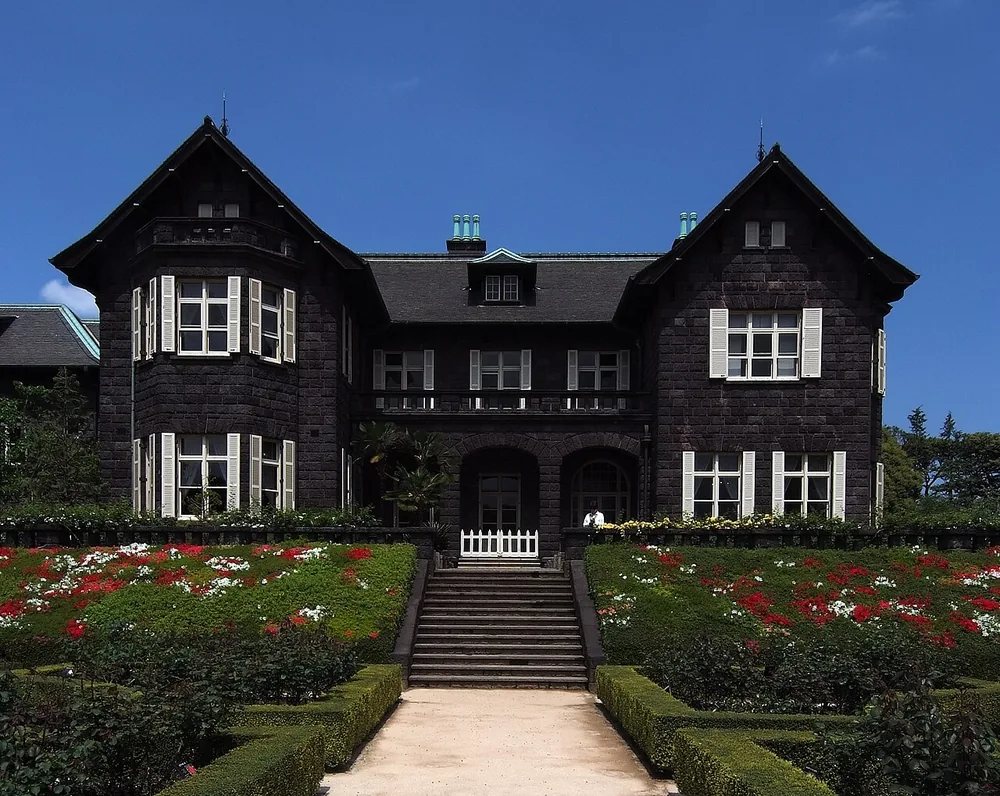
Kyu-Furukawa is about seven minutes from JR Kami-Nakazato Station or Nishigahara Station on the Namboku Line, and about 12 minutes from Komagome Station. Standard daytime admission is ¥150, or ¥70 for those aged 65 and over. Hours are 09:00–17:00, with last entry at 16:30. The Western-style house has separate hours and admission. For leaves and the house exterior, estimate a garden visit first. Add an interior visit separately if wanted, keeping the two tickets and schedules distinct. The official admission and access page also provides an accessible map.
Changes in level are a practical condition to compare in advance. Kyu-Furukawa explicitly lists numerous steps and slopes. Wheelchair users should choose accessible sections from the map, while pushchair routes also benefit from less repeated climbing and descending. If gentle walking is the priority, compare Kiyosumi’s flat half-pond route. Autumn roses and maples can each be a reason to visit. Choose what you actually want to see in your travel week.
If both gardens interest you, their combined daytime ticket costs ¥400, or ¥200 for those aged 65 and over, which the operator states has no expiry date. You do not have to rush both in one afternoon to use it. Save one for the next sunny day if preferred. For Rikugien’s daytime entrance, separate evening tickets and dining in Komagome, see the Rikugien daytime and autumn evening guide.
East Tokyo near a station: Kiyosumi’s short circuit and flat half-pond route
A visit to Kiyosumi Gardens combines well with a walk around Kiyosumi-Shirakawa. Exit A3 of Kiyosumi-shirakawa Station on the Oedo and Hanzomon lines is about three minutes away. There is only one garden entrance, so you leave from the same place. The operator estimates about 40 minutes for a circuit. Allow 60–90 minutes to linger over pond stones and waterbirds, then return to the neighbourhood for lunch. A short visit can be complete without crossing the river to another garden.
Views here often centre on water, notable stones and reflections. The isowatari stepping stones along the shore change your viewing angle. They need different footing from ordinary paths; after rain or with young children, stay on the flat main route. The official FAQ specifies a flat wheelchair route around half the pond and wheelchair loans. Families avoiding steps can make this half-pond route the main walk and return along it, without making everyone use stepping stones to complete a circuit.
Hours are 09:00–17:00, with last entry at 16:30. Admission is ¥150, or ¥70 for those aged 65 and over. Food and drink are allowed at benches and outdoor tables, but picnic sheets and alcohol are not. Use suitable seating for a packed snack beside the water. For hot food or a longer meal at a table, dining in the neighbourhood is easier. The pavilion beside the pond is a reserved-use facility. Enjoy it as part of the view and arrange lunch elsewhere.
For half a day, a morning garden visit, lunch and a short afternoon neighbourhood walk are enough. The Hanzomon and Oedo lines offer different return directions, making Kiyosumi-Shirakawa a useful start or finish for an eastern Tokyo day. Do not assume it is a short walk from Asakusa merely because both lie in the east.
Eastern riverside: pair Sumida Park with Asakusa and choose a bank
If Asakusa is already in your plans, use the Taito-side Sumida Park for a riverside walk before or after a meal. GO TOKYO lists about five minutes on foot from Asakusa Station. The riverfront overlooks the Sumida River and the opposite cityscape. Its value lies in open water, tree shadows and a change from the streets. For dense maples and a traditional pond scene, Kiyosumi or Koishikawa Korakuen is a more direct choice.
Parks with the same name occupy both banks. The Sumida-side Sumida Park is in Mukojima. Its official information lists Honjo-azumabashi Station or Tokyo Skytree Station as nearby options, with a Japanese garden, playgrounds and other facilities inside. For meetings, specify ‘Taito side in Asakusa’ or ‘Sumida side in Mukojima’. Sending only ‘Sumida Park’ can lead to a bridge crossing to find each other that takes longer than the planned stroll.
For a short family route, allow time at the Taito-side playground, then choose a small riverside section. The Sumida Park Information Centre in Taito has a nursing room, toilets and rest benches. It opens 09:30–18:00 and closes over New Year and on the Sumida River Fireworks day. You can shorten an outdoor walk, but still need to match the facilities’ hours. The Sumida-side park is always open, while individual facilities have their own schedules. If you want a boat trip, check tickets and piers separately rather than making the walk depend on catching one departure.
North-eastern wetlands: give Mizumoto more time, including the bus
Mizumoto Park brings dawn redwood woods, broad water and large lawns into a longer day. Its wetland scenery follows Koaidame, with dawn redwoods, poplars and waterside trees on a very different scale from a small pond garden. Autumn colour includes brick reds and yellow-browns. Choose a garden for maple close-ups. Choose Mizumoto when you want a whole morning among water and trees.
The park is free and always open, but the station is followed by a bus journey. The official access page lists Keisei buses from JR Joban Line Kanamachi Station or Keisei-Kanamachi Station towards Togasaki bus depot or Nishi-Mizumoto Sanchome. Alight at Mizumoto Koen, then walk about seven minutes. If staying on the Chiyoda Line, first compare routes connecting with the Joban Line. Include arrival, the bus wait, the walk from the stop and distances inside the park, rather than counting train minutes alone.
The seasonal circular bus is another easily missed difference. The operator lists a route from and back to Kanamachi Station along the park, running 09:00–16:40 on weekends and national holidays from March to November. For a December autumn visit, do not reuse that seasonal timetable. Check the day’s ordinary buses and return stop. Establish one clear arrival and departure route, then choose the dawn redwood grove or central square from the park map. Covering every area would be too long for a family seeking an easy half-day.
Start with the waterside and dawn redwoods, sit down midway, then add lawns in the afternoon according to energy. Return to your chosen exit early enough to find the correct bus direction. If heavy rain has already begun in the morning, change to a garden near a station or an indoor day rather than gradually dropping activities after reaching Kanamachi. Mizumoto’s space is its attraction; give the return journey similarly generous time.
Southern pondside: Hamarikyu with Shimbashi or Shiodome, meals outside
At Hamarikyu Gardens, you can photograph a tidal pond, tree colour and high-rise buildings in the same frame. This bayside city garden offers enough for a lingering pond circuit. The official FAQ estimates one to one and a half hours around the whole garden; allow two hours with photographs and seated rests. An afternoon garden visit followed by early-evening dining in Shimbashi is easier than lingering elsewhere after lunch and rushing to enter late.
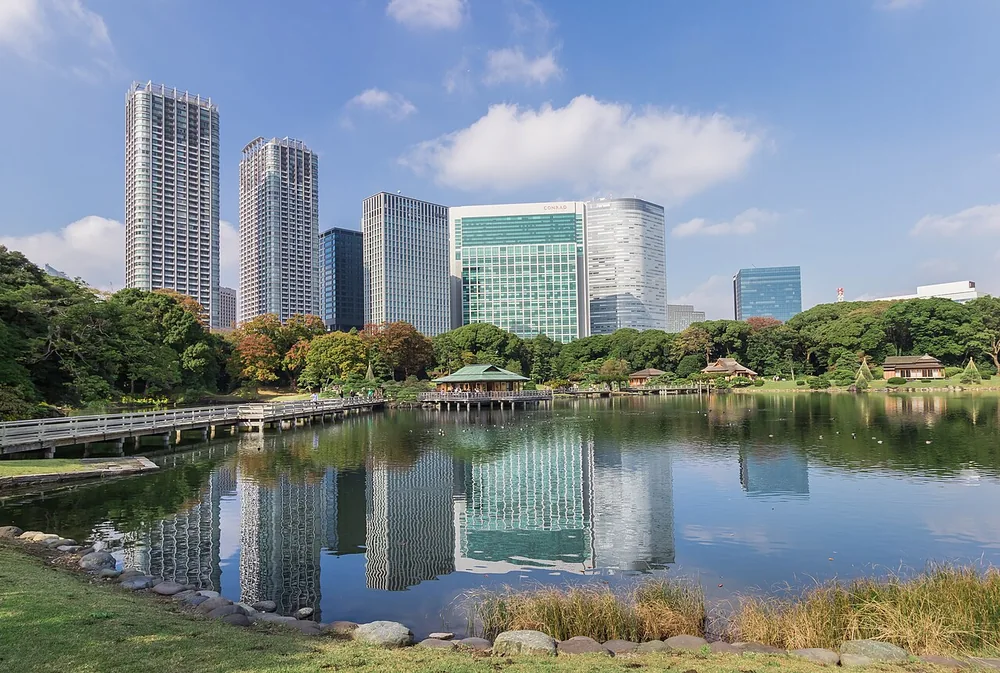
Choose between two land entrances to suit your return. Otemon is about seven minutes from Shiodome Station or Tsukijishijo Station, and 12 minutes from Shimbashi Station. Naka-no-Gomon is about five minutes from Shiodome Exit 10 or 15 minutes from JR Hamamatsucho Station. These are the estimates in the official entrance access information. Pushchair and wheelchair users can use the separate street-level and underground walking maps. Choose an easy route before the shortest one.
Admission is ¥300, or ¥150 for those aged 65 and over. Primary-school children and younger, and junior-high-school pupils living or studying in Tokyo, enter free. Primary-school children and younger need a guardian. Hours are 09:00–17:00, with last entry at 16:30, and closure from 29 December to 1 January. Shinjuku Gyoen’s usual Monday closure does not apply to Hamarikyu. If your free day is Monday, this is a city garden worth comparing first.
There is no restaurant serving full meals inside. Packed lunches can be eaten on benches and similar seating. Picnic sheets are limited to Uchibori Square and the outdoor-table square, and alcohol cannot be brought in. Snack kiosks cannot provide a full meal for the whole family. The official FAQ sets out these uses. From Shimbashi, eat near the station before entering or leave a full meal until afterwards. Then the garden can follow the pace of a pondside walk, without a hungry search for a restaurant.
Choose central Tokyo or Tachikawa: travel for the scale you want
For long ginkgo avenues, broad lawns and a Japanese garden offering another autumn view, Showa Kinen Park can fill its own day. In western Tokyo, its entrances lead to different areas. Estimate the journey in stages: city centre to station, station to gate, gate to your destination. If you also have a Ginza lunch or Asakusa reservation, a central garden fits the full day more easily.
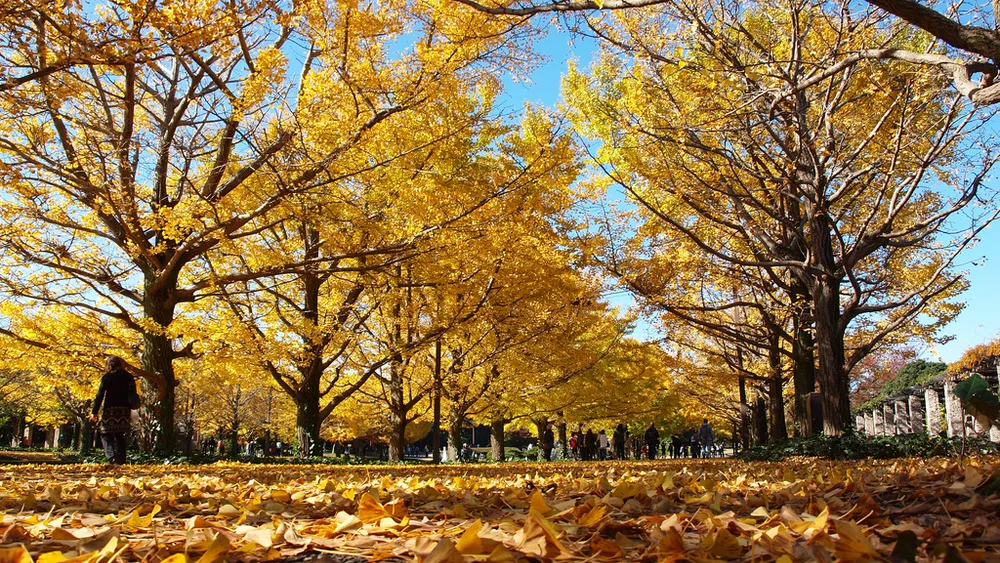
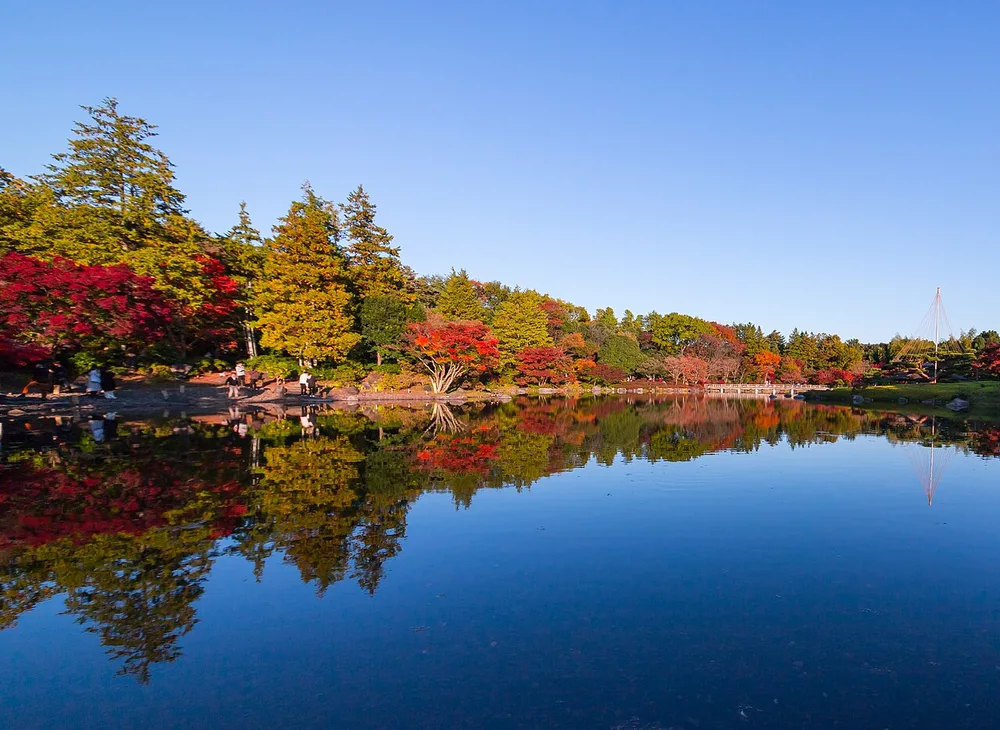
Using Nishi-Tachikawa Station or Tachikawa Station gives a different first walk inside. To combine ginkgo, the garden and children’s play equipment, choose two of these first, then plan lunch, hire equipment or park transport. Evening opening has separate gates and garden tickets. See the Showa Kinen Park autumn routes guide for entrances, transport and daytime versus evening areas, then remove this day from the city itinerary once you choose it.
With only three Tokyo days, you could keep one half-day for city autumn colour, one for neighbourhoods or museums, then decide whether the third should be Tachikawa. If you already chose a long outdoor day at Mizumoto, you do not need another large park simply to have seen ‘all of Tokyo’s autumn’. Conversely, staying in Tachikawa or already travelling on the Chuo Line may make Showa Kinen easier than crossing central Tokyo for two gardens. Accommodation should change the order of your list.
Four combinations you can adapt into a full day
For a western shopping day, start at Shinjuku Gyoen, dividing the morning between Japanese Garden and lawn, then return to Shinjuku-sanchome after lunch. To add Aoyama’s ginkgo, reduce shopping and make Gaien the only afternoon addition. Shinjuku Gyoen closes at 16:30 in autumn and winter. Complete it first, then finish with dining and shops without the same closure pressure, rather than letting shopping delays consume garden time.
For a Bunkyo garden day, pair Koishikawa Korakuen with lunch in Suidobashi or Iidabashi. If you have a clear interest in another garden style, go to Komagome in the afternoon for either Rikugien or Kyu-Furukawa. Leave that second choice until the day. Between gardens, allow for gates, platforms and street walking, not just station-to-station minutes. Photographers may gain more from staying in one garden as the light changes than from rushing through three.
For a slower eastern day, start at Kiyosumi Gardens and eat lunch outside. If you want the river in the afternoon, take a train to Asakusa and choose one bank of Sumida Park. With children, drop the area change and rest in Kiyosumi-Shirakawa. If you chose Mizumoto from the outset, give the day to that direction rather than treating it as a small extra after an Asakusa meal. Parks with a final bus leg need more spare time than gardens beside metro stations.
For the south, eat lunch in Shimbashi, enter Hamarikyu at Otemon, then choose Otemon or Naka-no-Gomon for the return. Save energy for Ginza shopping afterwards if wanted. Families with pushchairs can instead head straight to Shiodome for the train.
Evening leaves need fresh energy: decide whether to enter again
Daylight suits layers of leaf colour, landforms and pondside details. Night viewing focuses on illuminated trees and specially opened areas. If you mainly want to see the leaves themselves, a daytime visit is enough. For a garden evening, eat early and drop the afternoon’s second large park. Walking from day into night often uses up energy first on waiting for opening and travelling to and from stations.
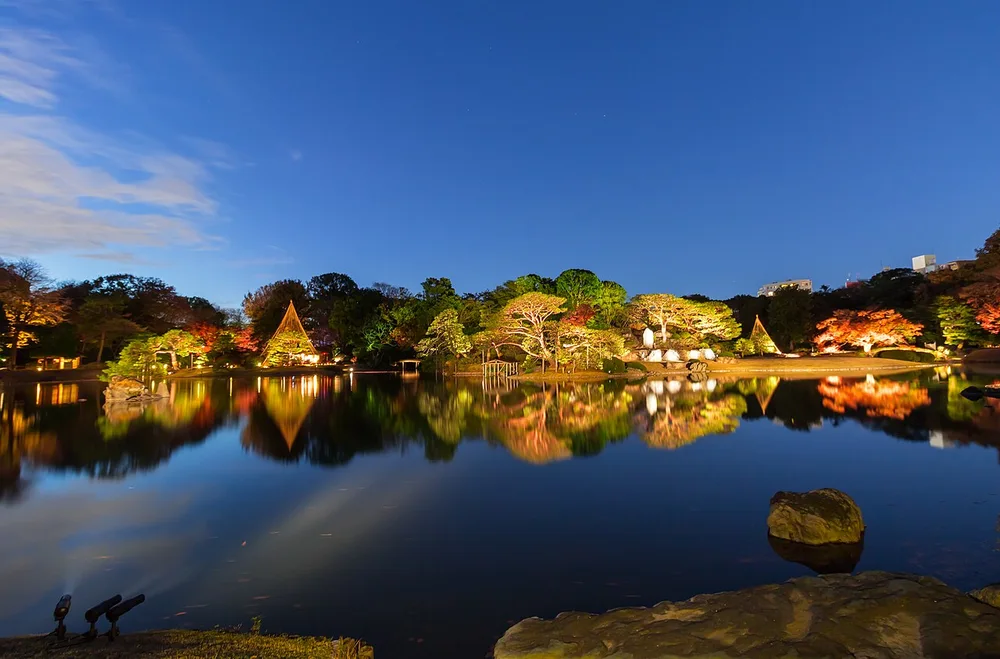
Rikugien’s 2026 evening event runs from 25 November to 6 December, 18:00–20:30, with last entry at 19:30. After daytime closing at 17:00, the garden is cleared before separate evening-ticket admission. Advance sales open at 09:00 on 1 November. The official 2026 notice and event website give full ticket details. If you combine Kyu-Furukawa, daytime Rikugien and the evening session, also allow for dinner and the wait to re-enter. A day ticket already completes a visit focused simply on pond views in daylight.
Evening tickets also affect a rainy-day change of plan. Purchasers can cancel 2026 Rikugien advance tickets until 23:59 the day before entry. Same-day tickets cannot be cancelled or refunded after purchase. If severe weather cancels the event, ticket prices are refunded; if it proceeds, weather does not qualify for a refund. Buy for your chosen date if committed to going. If you still want to decide by weather, put the advance cancellation deadline into your plan. Evening entry is through the main gate; exit is through the main gate or Someimon.
The Tokyo Metropolitan Park Association video below shows the 2022 evening event and was published in 2023. Use it to see the lighting and pond reflections, while using the 2026 announcement for tickets and times. Families can keep to one evening event and leave by an authorised route once children tire. Prioritise a clear exit and railway home. Evening foliage does not have to be the compulsory end of a daytime park day.
Footage of the 2022 evening event, published by the Tokyo Metropolitan Park Association in 2023, showing garden lighting and pond reflections.
With children or older companions, connect accessible paths, seating and meals
With a wheelchair or pushchair, compare changes in level before popularity. Kiyosumi lists a flat half-pond route. Kyu-Furukawa has many steps and slopes, so choose accessible sections from its map. At Shinjuku Gyoen, connect a main path, a lawn rest and one exit into a short route. ‘Five minutes from the station’ answers only station to gate. Whether you then need to cross the garden is the real burden of the day.
Choose packed-lunch arrangements with the destination. Koishikawa Korakuen uses designated endai benches; Kiyosumi has benches and outdoor tables; Hamarikyu limits picnic sheets to specified squares. For a long stay beneath trees, choose a park whose rules suit that use. If the family needs hot food, a high chair or a fixed midday rest, eat a full meal and use toilets outside first, then enter for one main area. That is often easier than carrying food but never finding suitable seats.
Children’s free-admission conditions differ. Shinjuku Gyoen admits junior-high-school-age children and younger free. The Tokyo metropolitan gardens discussed here admit primary-school children and younger, plus junior-high-school pupils living or studying in Tokyo. Do not apply Shinjuku Gyoen’s age rule to a garden where overseas junior-high-school pupils pay standard admission. List ages and school eligibility before buying, so you get the right tickets without returning to the counter.
Walking time should include rests. If older companions or young children want to sit after the first section, find seats and drop the second garden. If someone wants only a few photographs, agree a specific exit and meeting time.
Budget for both tickets and calendars; shorten outdoor sections in rain
Standard adult daytime prices fall into two useful groups: Kiyosumi and Kyu-Furukawa are ¥150 each; Koishikawa Korakuen, Rikugien and Hamarikyu are ¥300 each. Shinjuku Gyoen is ¥500. For one or two gardens, separate tickets make the cost easy to calculate. The nine metropolitan gardens’ annual pass costs ¥4,000 and suits repeated visits within a year. It excludes Shinjuku Gyoen and Showa Kinen Park, and special evening events use their own ticket rules. Bring proof of age for prices for those aged 65 and over, showing it as required at each garden.
The ticket-price difference between two gardens is often smaller than the time and meal disruption from crossing districts. To save money, choose one paid garden and add a free park or neighbourhood walk. Calculate fares for the routes you will actually take. Separate short city trips from full days in Tachikawa or Mizumoto for a budget that matches the plan.
For late December, rule out New Year closures first. The metropolitan gardens covered here close from 29 December to 1 January; Shinjuku Gyoen closes from 29 December to 3 January. A general park being always open is separate from service-centre, kiosk and nursing-room hours.
In rain, shorten the outdoor section and put a seated meal first. Avoid Kiyosumi’s stepping stones, garden slopes and leaf-covered areas by staying on main paths. Swap a large park with a bus leg, such as Mizumoto, with an indoor day. If you bought a special evening ticket, handle the booking under its change and cancellation terms first. For an unreserved half-day, choose a route near your accommodation with clear entrances and exits. If the rain stops long enough for a short walk, enjoy that one area at an easy pace.
A few useful answers
When should I go to central Tokyo for autumn colour?
Mid-November to early December is the usual window. Koishikawa Korakuen and Hama-rikyu are generally best from late November to early December, and Rikugien can still have colour in mid-December.
Which should I choose for half a day of autumn colour, Shinjuku Gyoen or Meiji Jingu Gaien?
Choose Shinjuku Gyoen for red leaves by the pond and a sit on the grass, then head back into Shinjuku for a meal or a browse round the shops. For an avenue of golden ginkgos, go to Meiji Jingu Gaien and carry on into Aoyama for something to eat.
Where in Tokyo can I see autumn leaves in a wheelchair?
At Kiyosumi Gardens, a level path takes you halfway round the pond and you can return the same way. Wheelchairs are available to borrow. The entrance is about three minutes on foot from exit A3 at Kiyosumi-shirakawa metro station.
Is there a separate ticket for Rikugien’s 2026 evening illuminations?
Yes, you’ll need an evening ticket. The event runs from 25 November to 6 December 2026, from 18:00 to 20:30, with last admission at 19:30. Visitors leave when the garden closes at 17:00, and evening admission is through the main gate.
Official information and references
Sources used in this guide.
- GO TOKYO | Autumn-leaf timing and places in Tokyo
- Shinjuku Gyoen | Visitor information
- Shinjuku Gyoen | Access
- Shinjuku Gyoen | Garden rules
- Meiji Jingu Gaien | Ginkgo avenue
- Meiji Jingu Gaien | Access
- Yoyogi Park
- Koishikawa Korakuen | Admission and access
- Koishikawa Korakuen | Visitor rules
- Kyu-Furukawa Gardens
- Kyu-Furukawa Gardens | FAQs
- Kiyosumi Gardens
- Kiyosumi Gardens | FAQs
- GO TOKYO | Taito City Sumida Park
- Sumida Park Information Centre
- Sumida City Sumida Park
- Mizumoto Park
- Hamarikyu Gardens
- Hamarikyu Gardens | FAQs
- Rikugien | 2026 special evening opening
- Rikugien | Special evening event website
- Tokyo metropolitan paid parks | Admission and closures
- Rikugien | Daytime admission and combined garden ticket
- Taito City | Sumida Park playground